
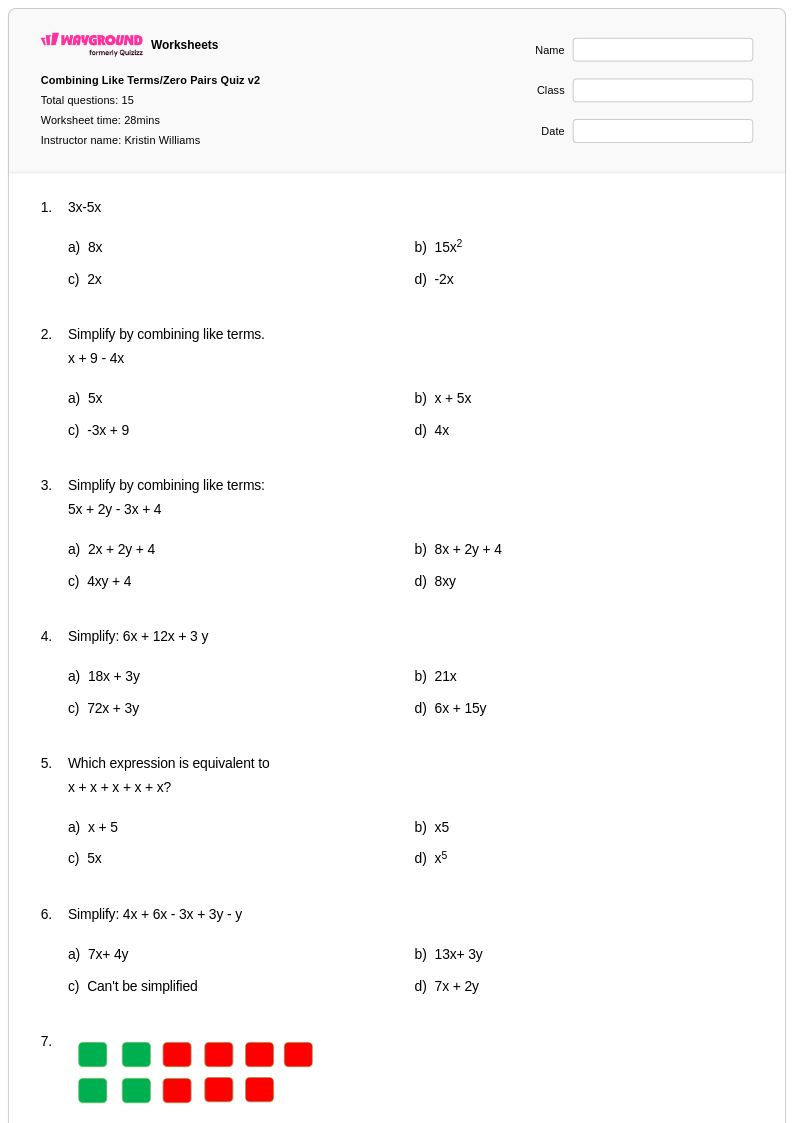
15 Q
1st - 5th
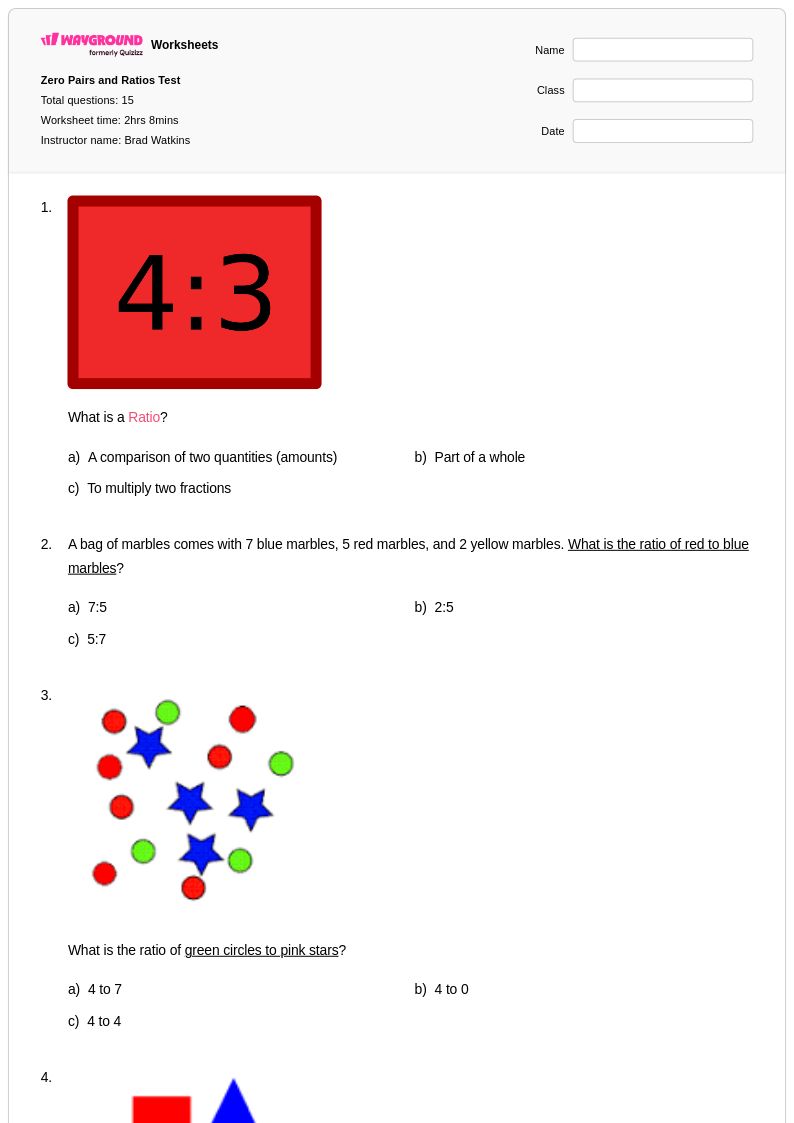
15 Q
1st - 5th
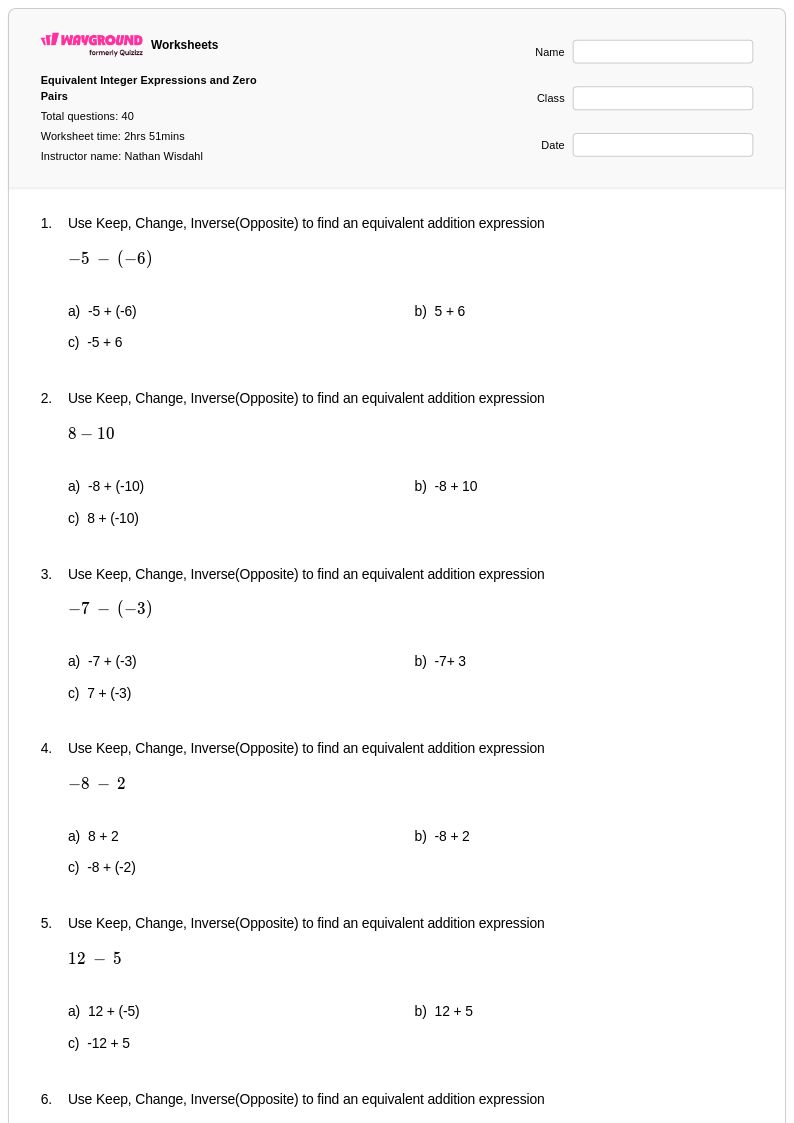
40 Q
1st - 5th
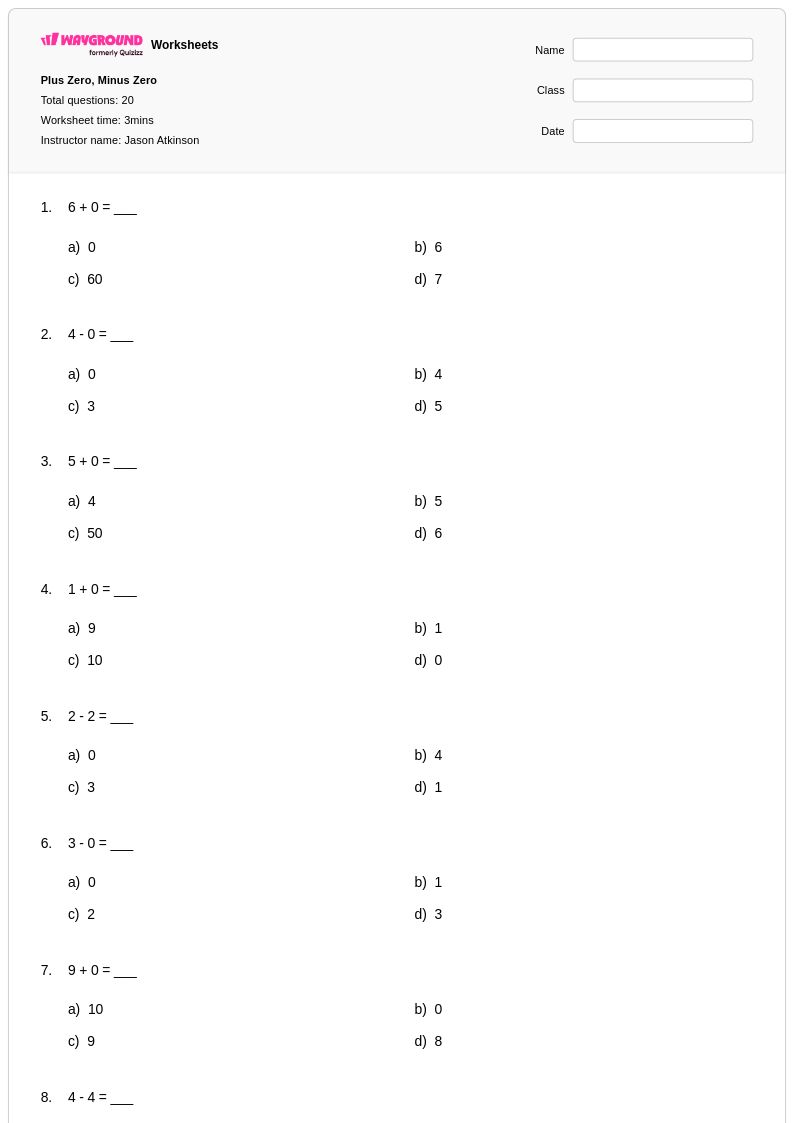
20 Q
2nd - Uni
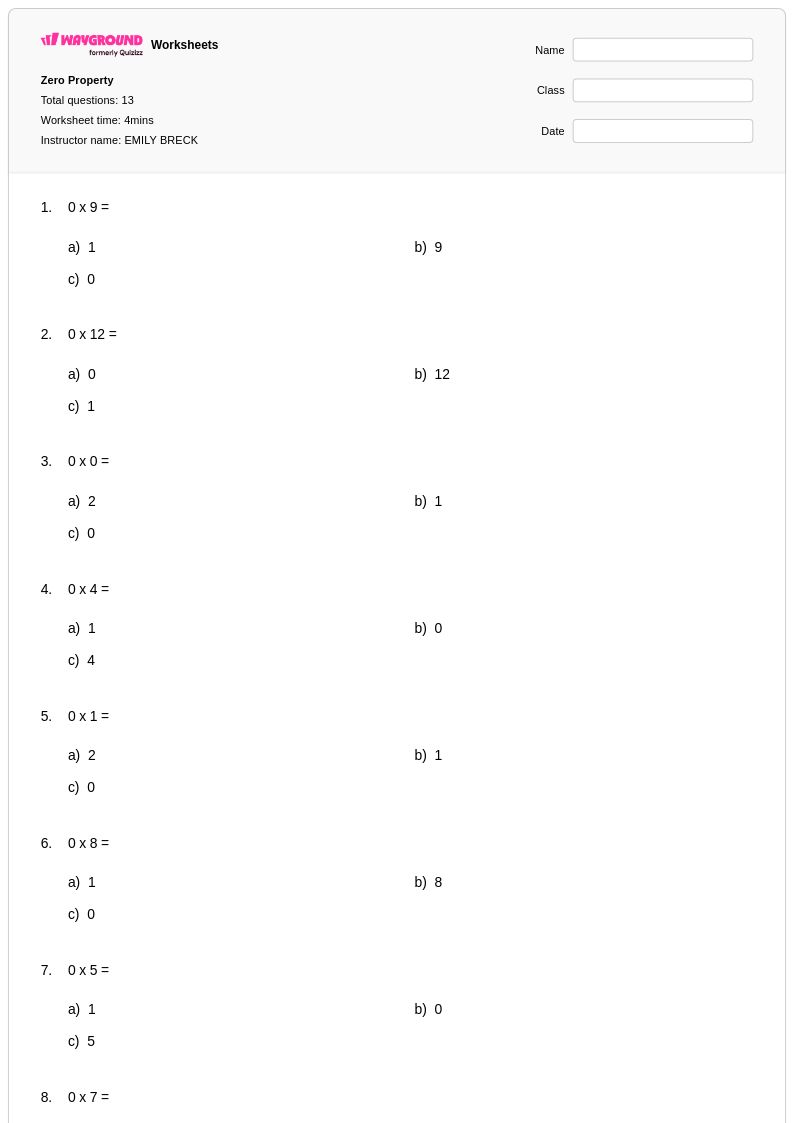
13 Q
2nd - 4th
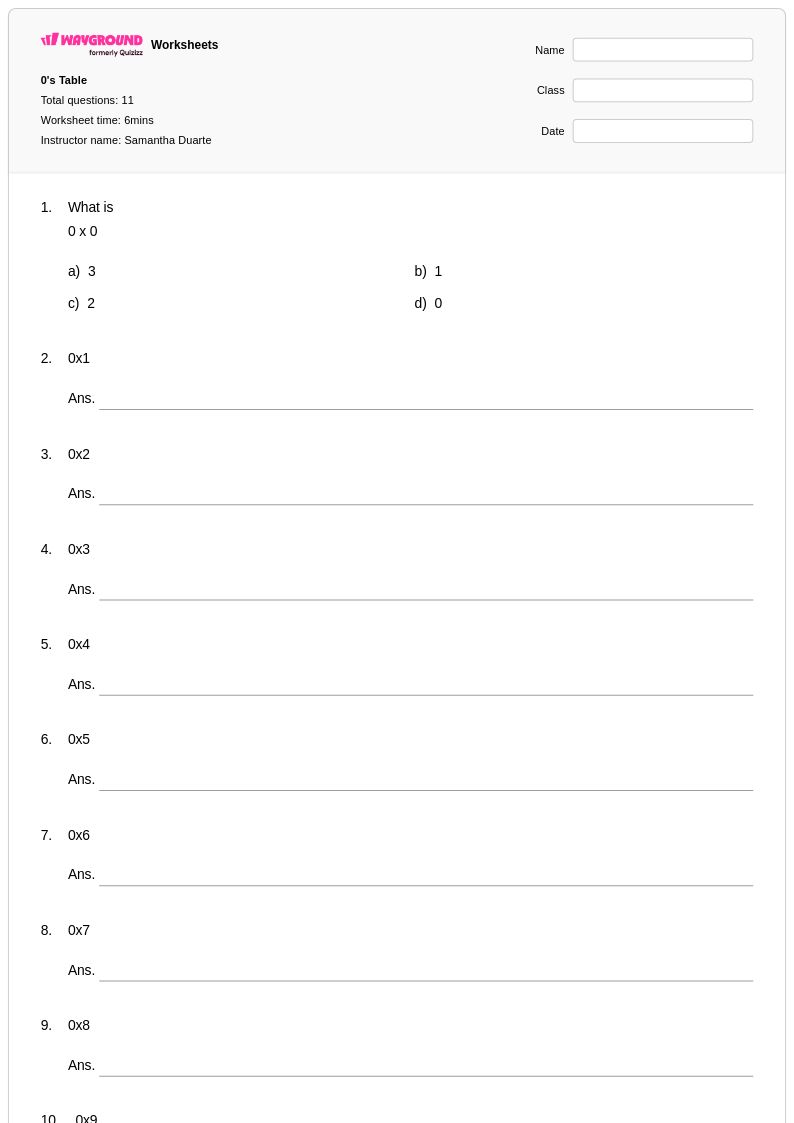
11 Q
2nd - 3rd
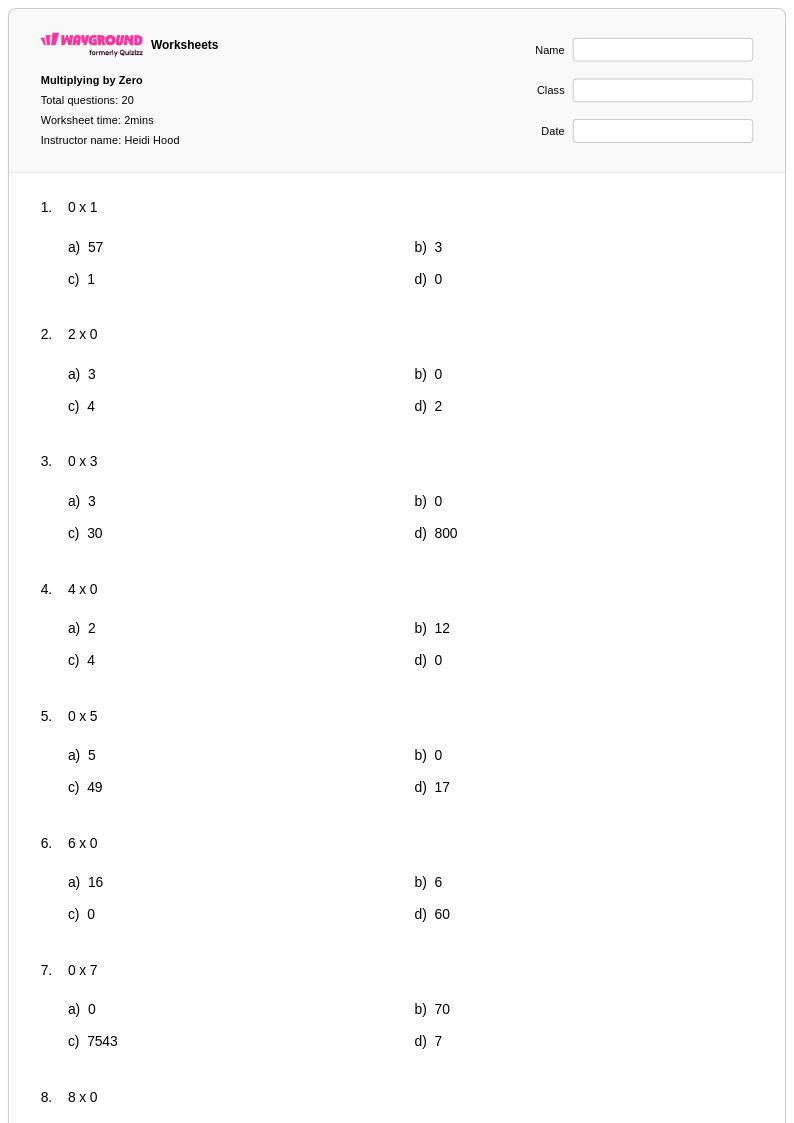
20 Q
2nd - 5th
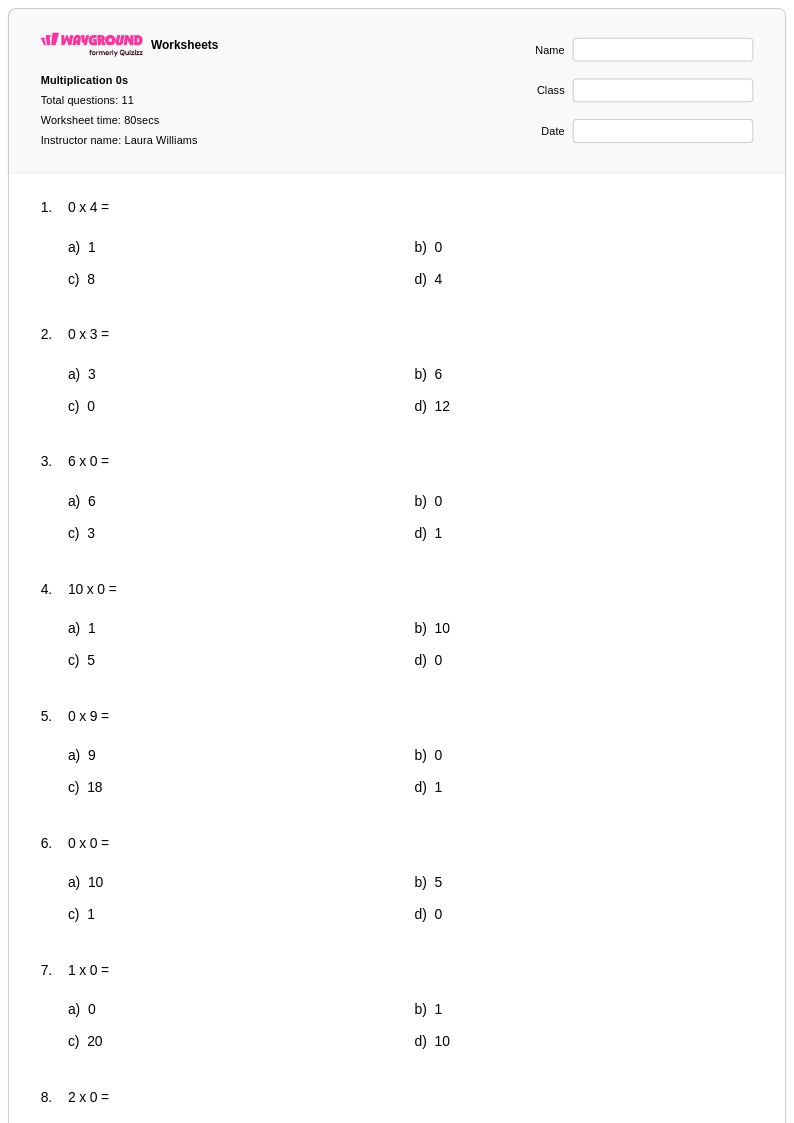
11 Q
2nd - 5th
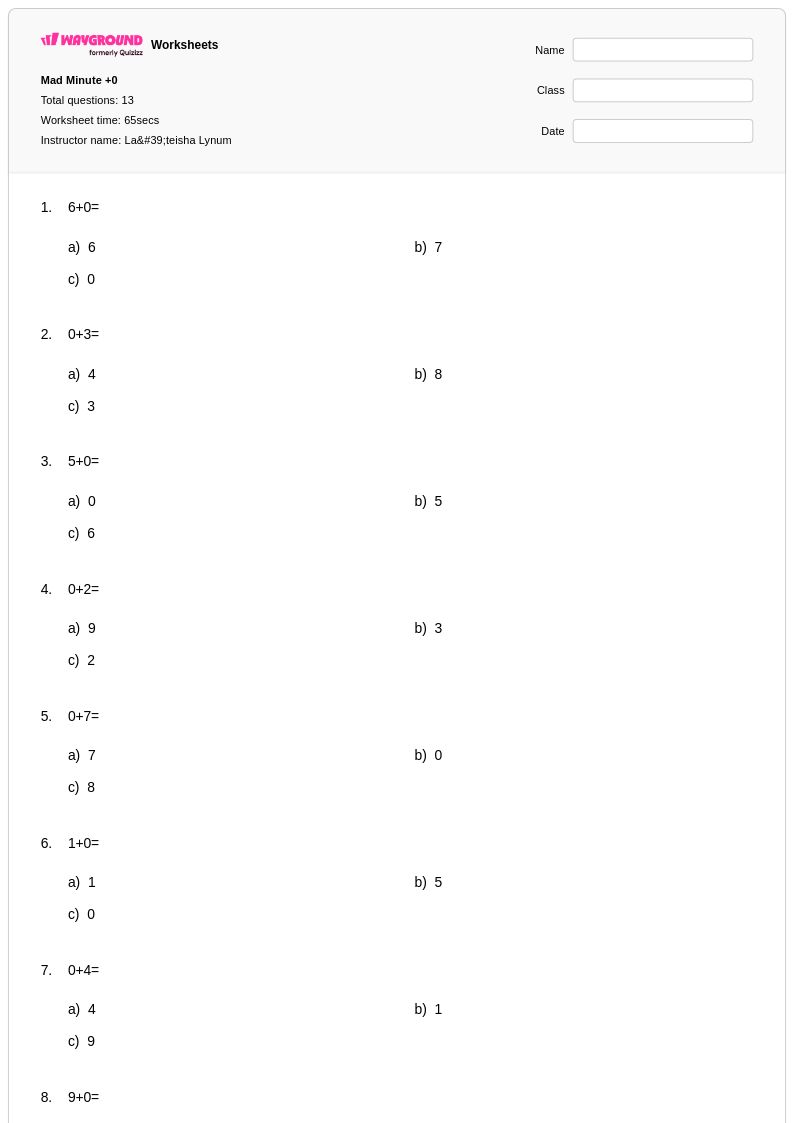
13 Q
2nd
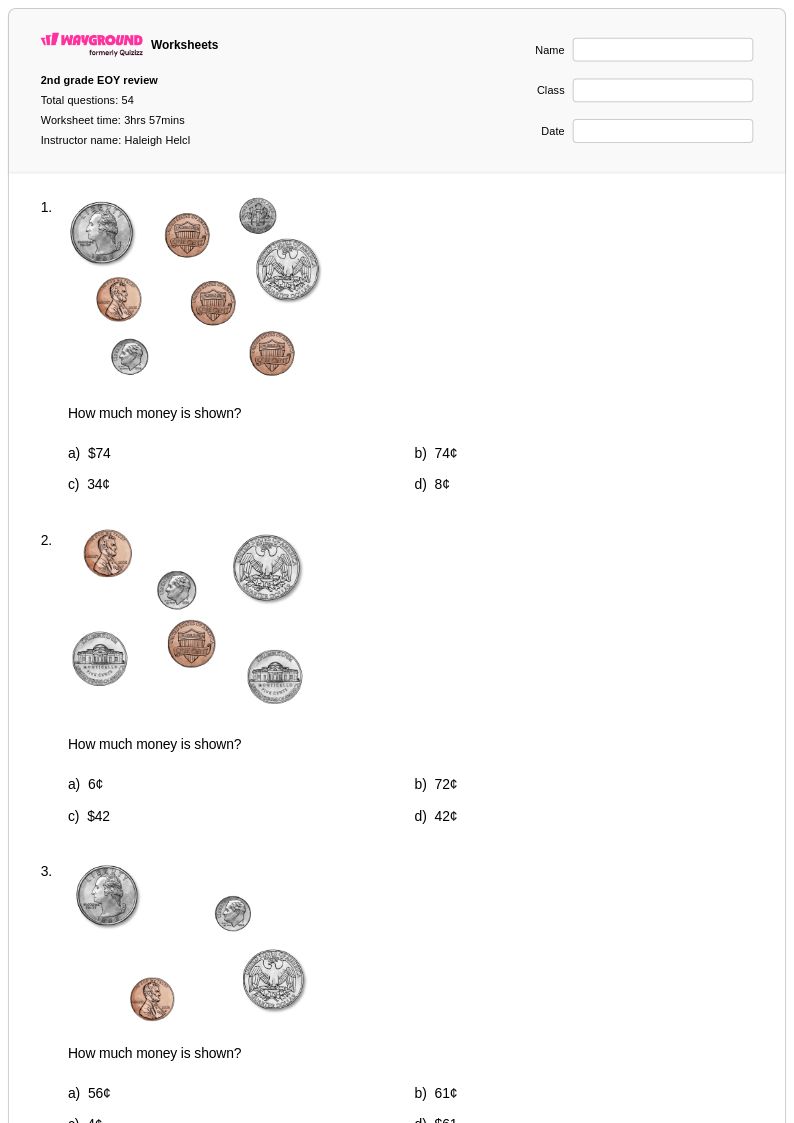
66 Q
2nd
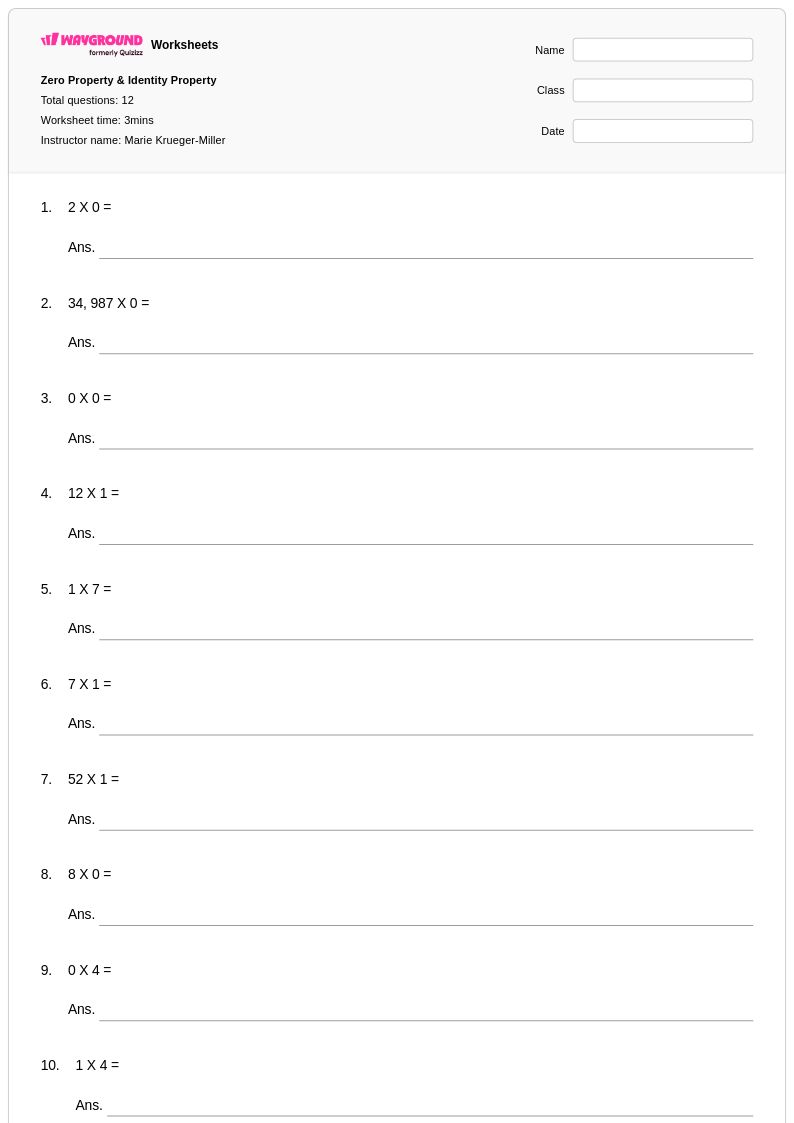
12 Q
2nd - 4th
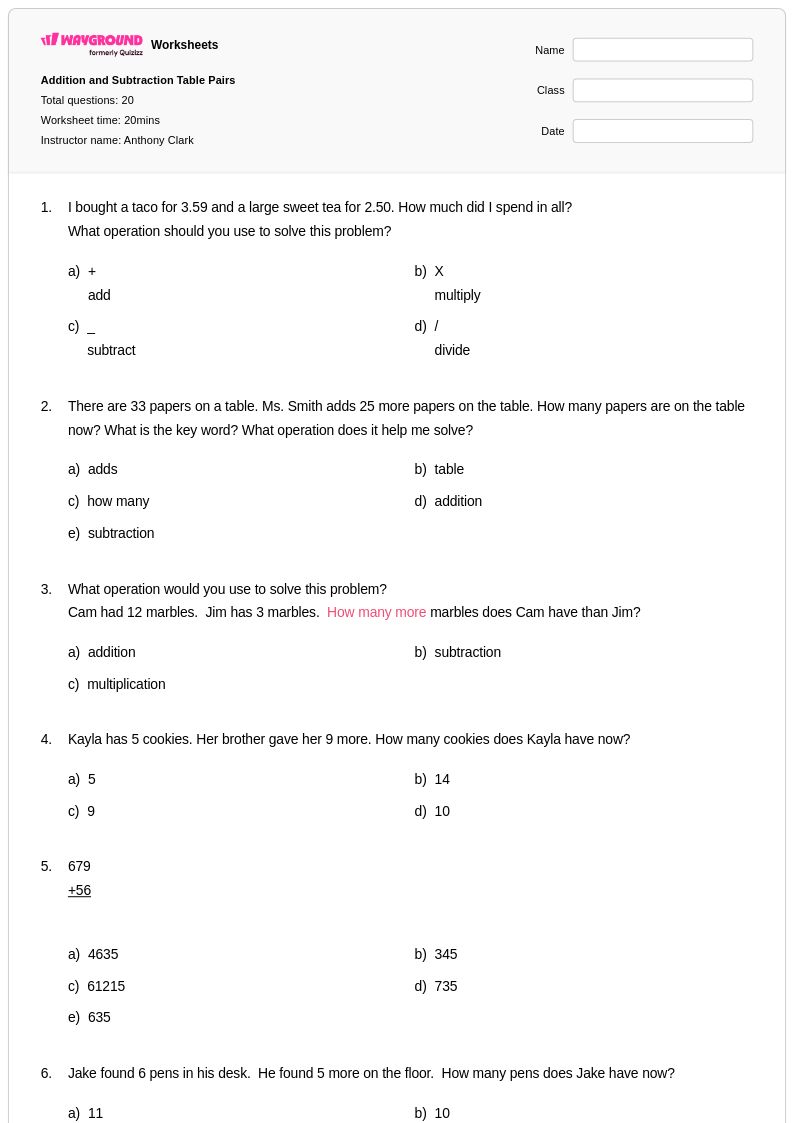
20 Q
1st - Uni
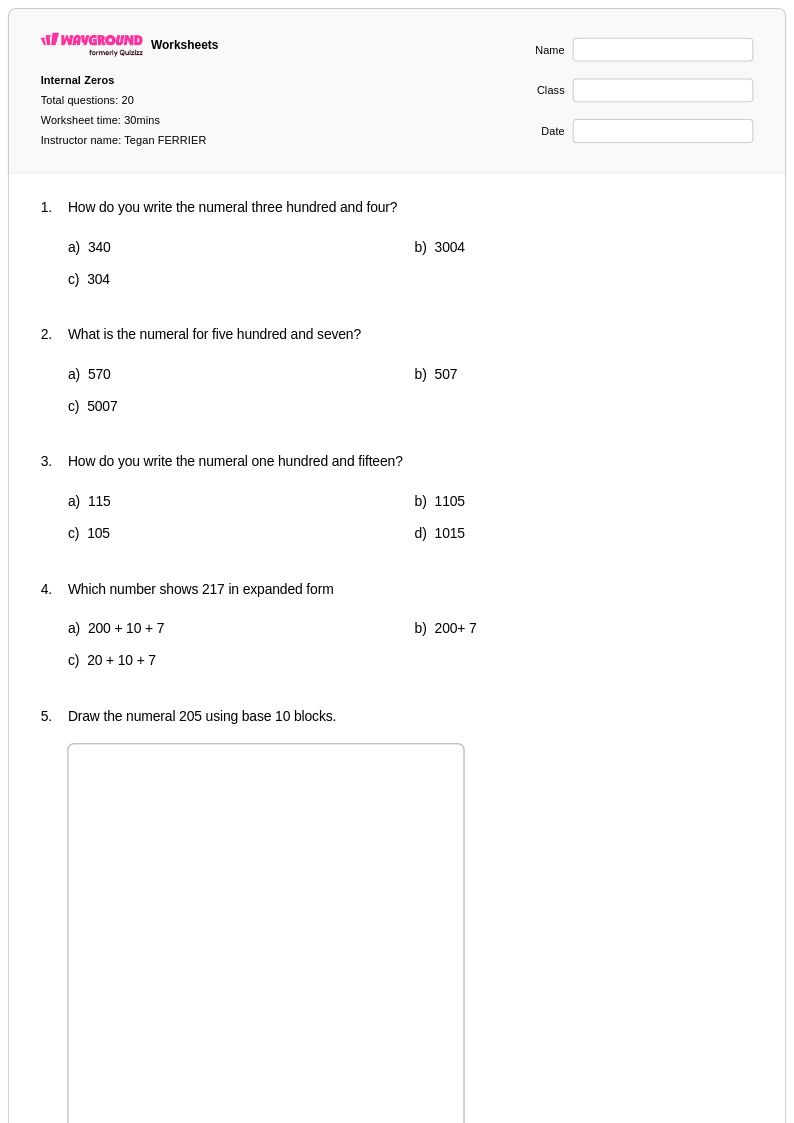
20 Q
2nd
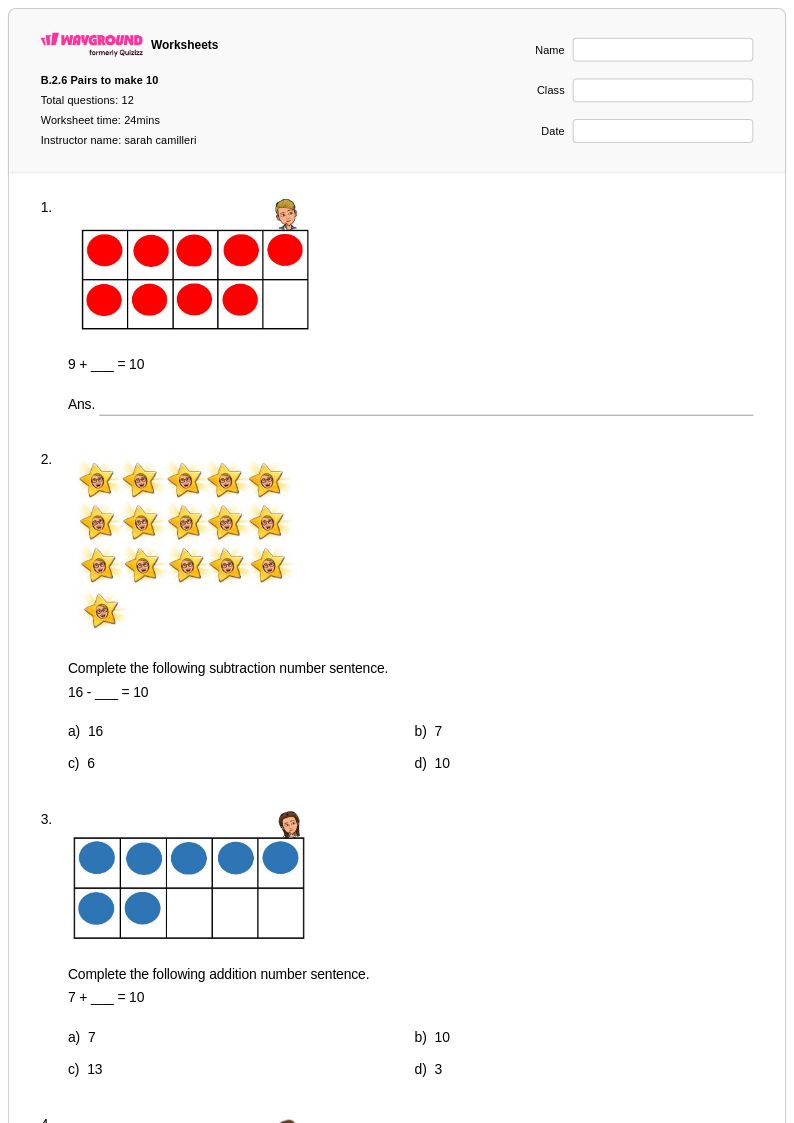
12 Q
2nd
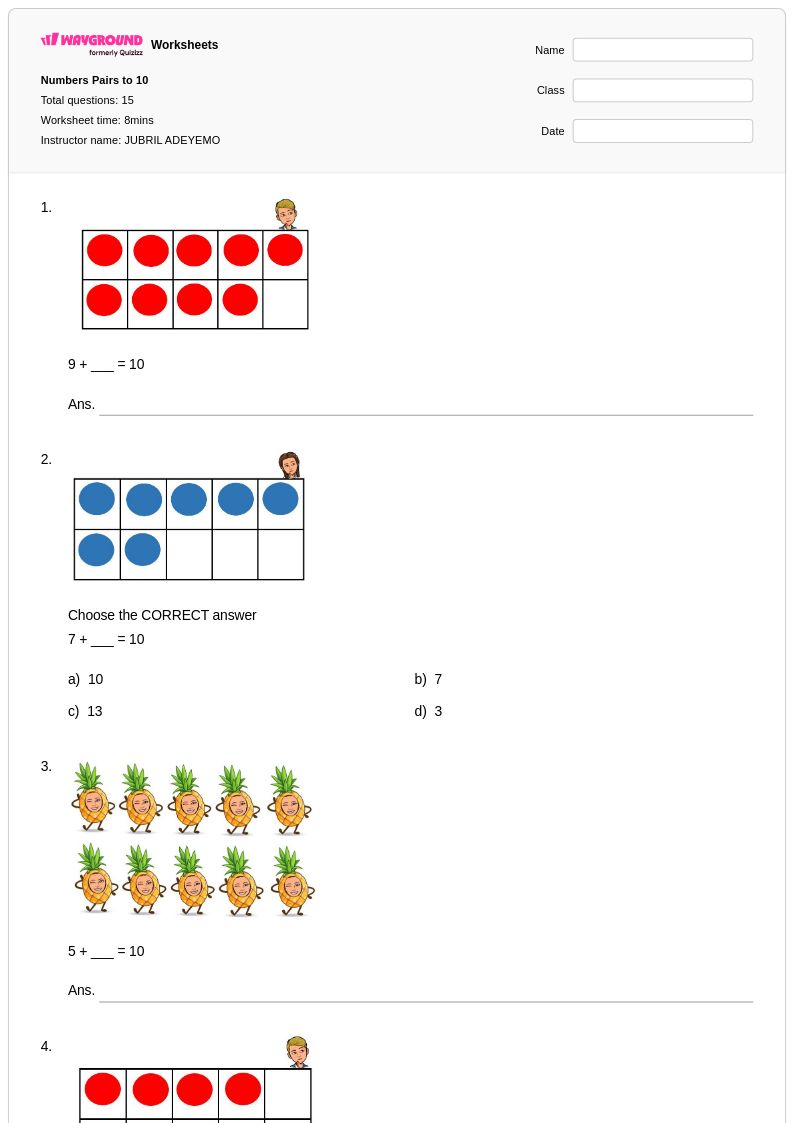
15 Q
2nd
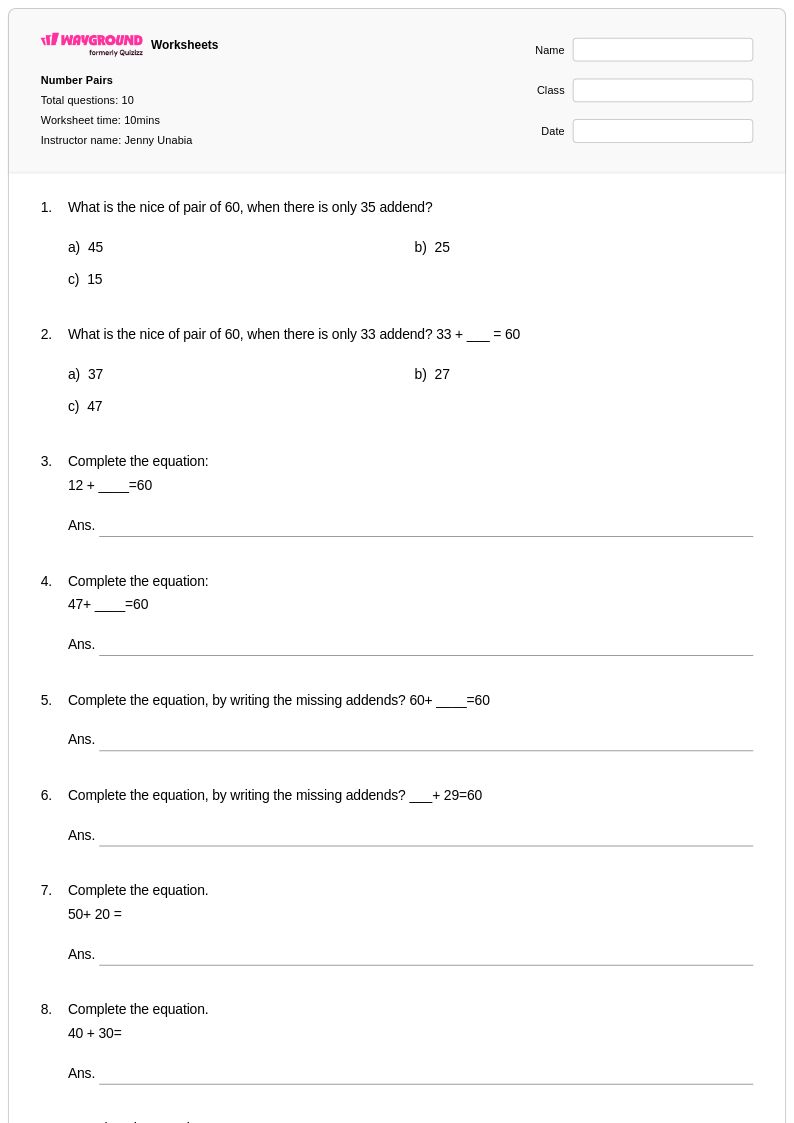
10 Q
2nd
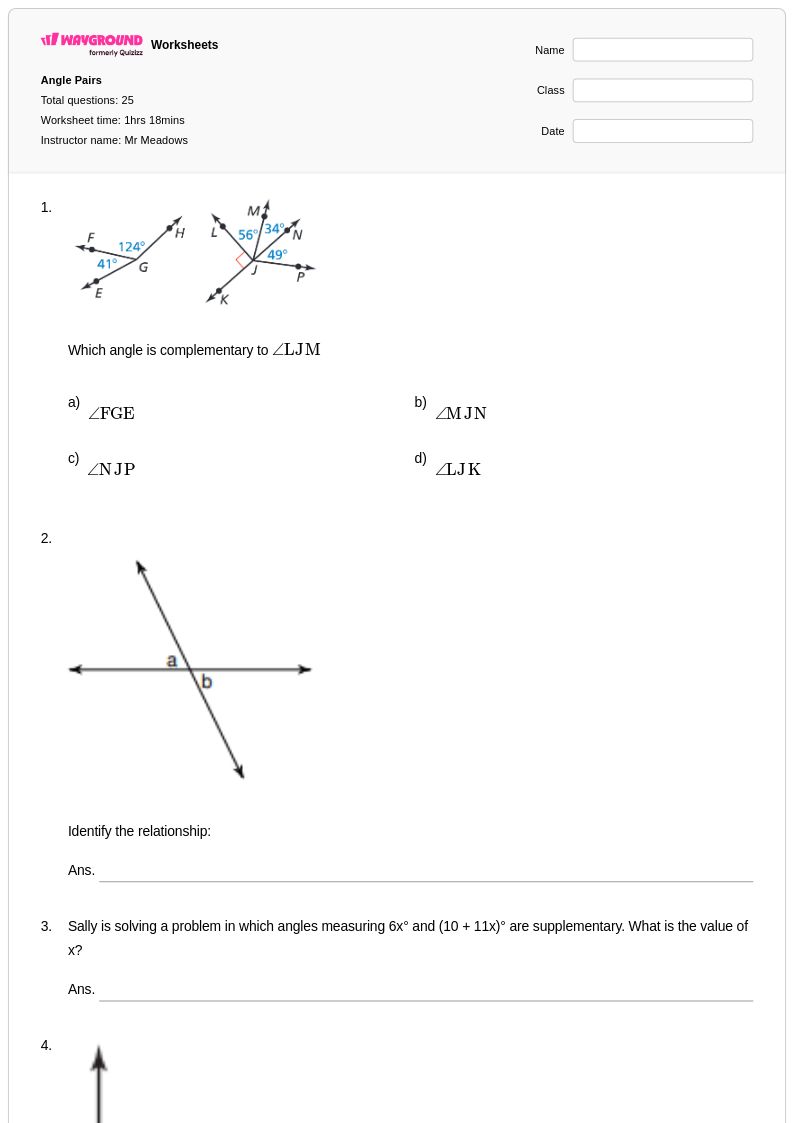
25 Q
2nd
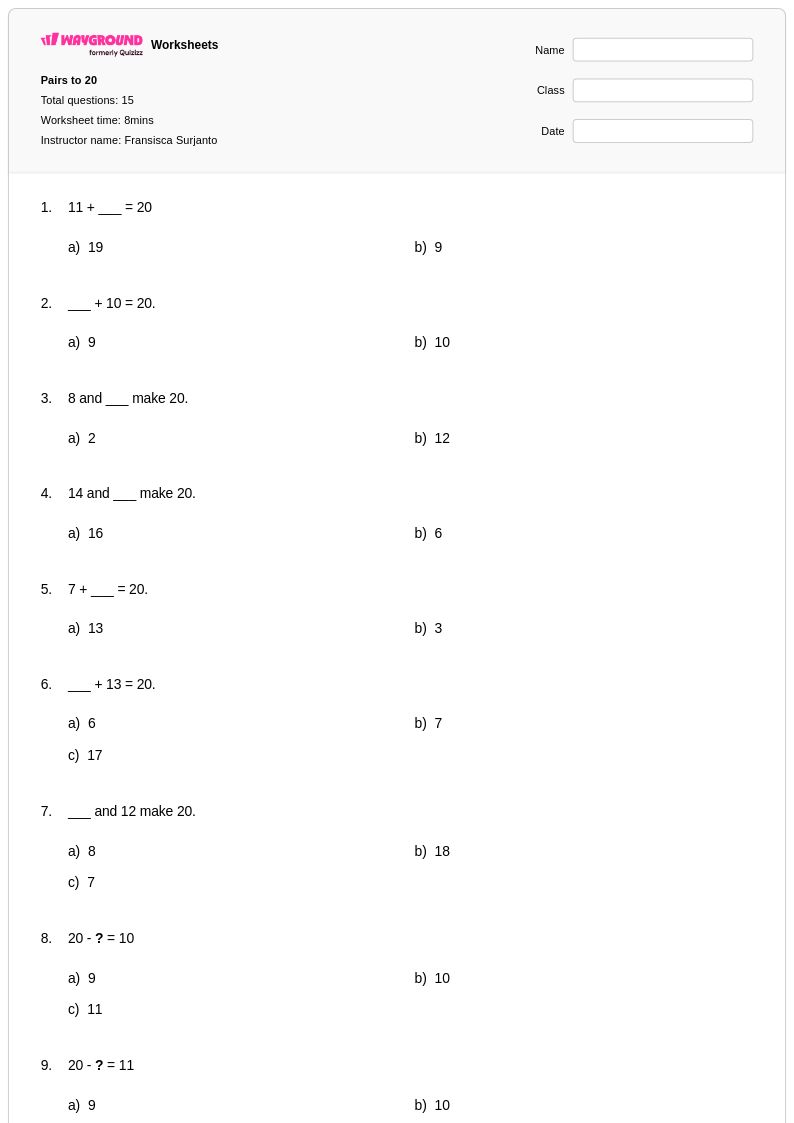
15 Q
2nd
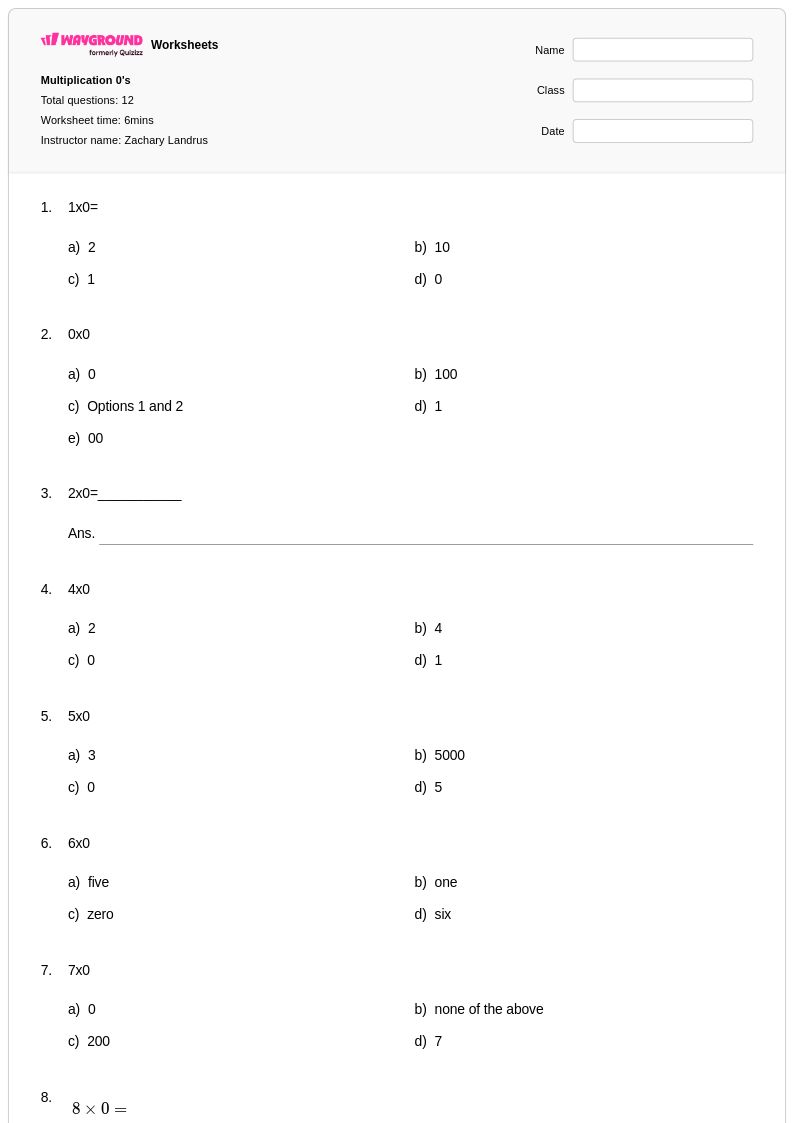
12 Q
2nd - 4th
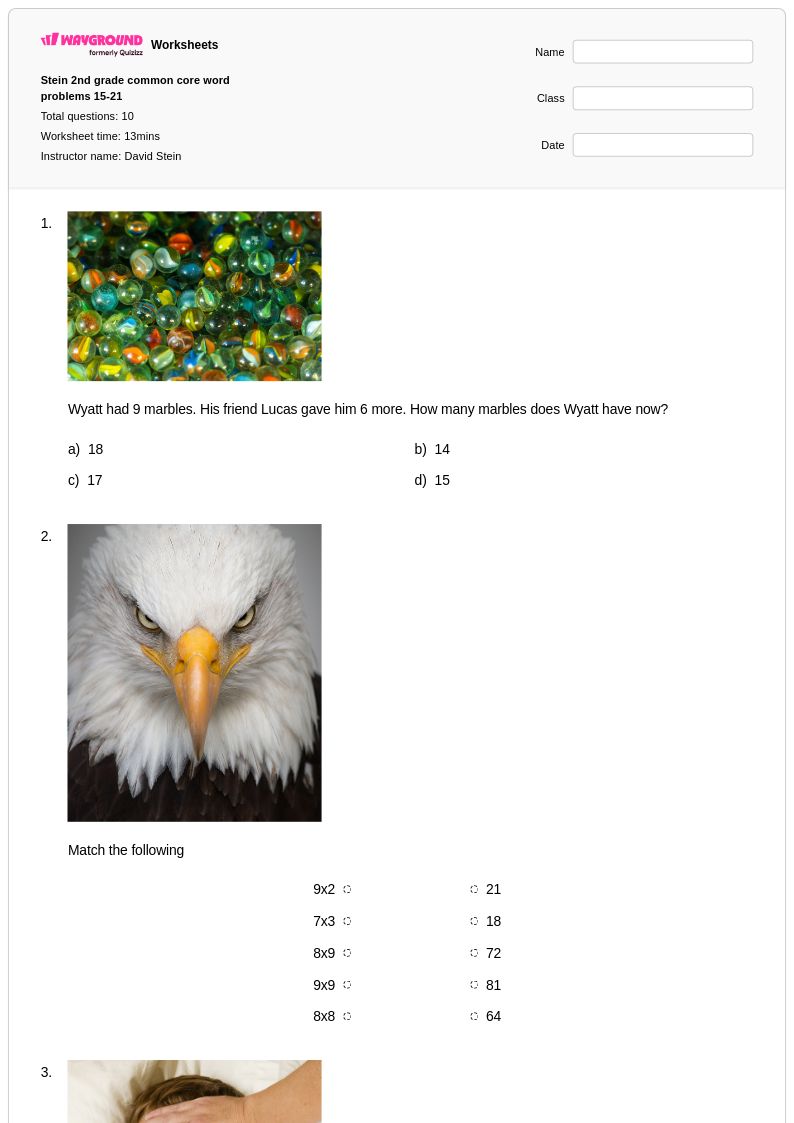
10 Q
2nd
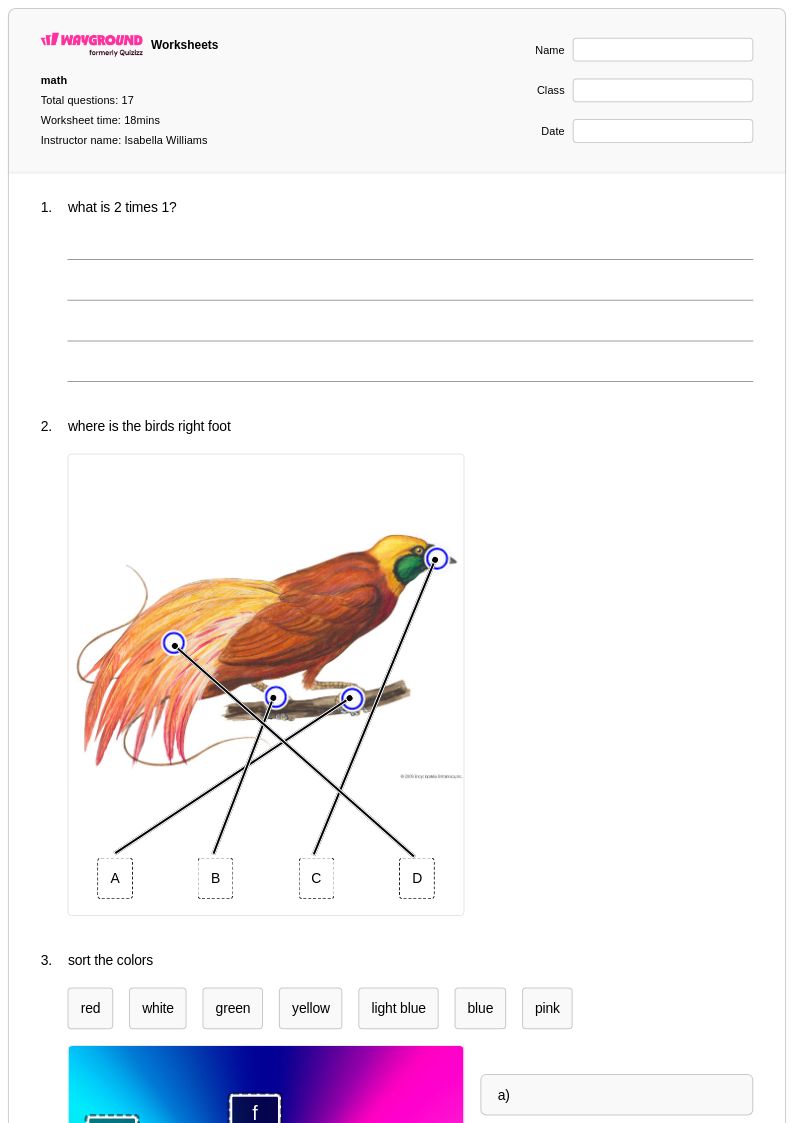
17 Q
2nd
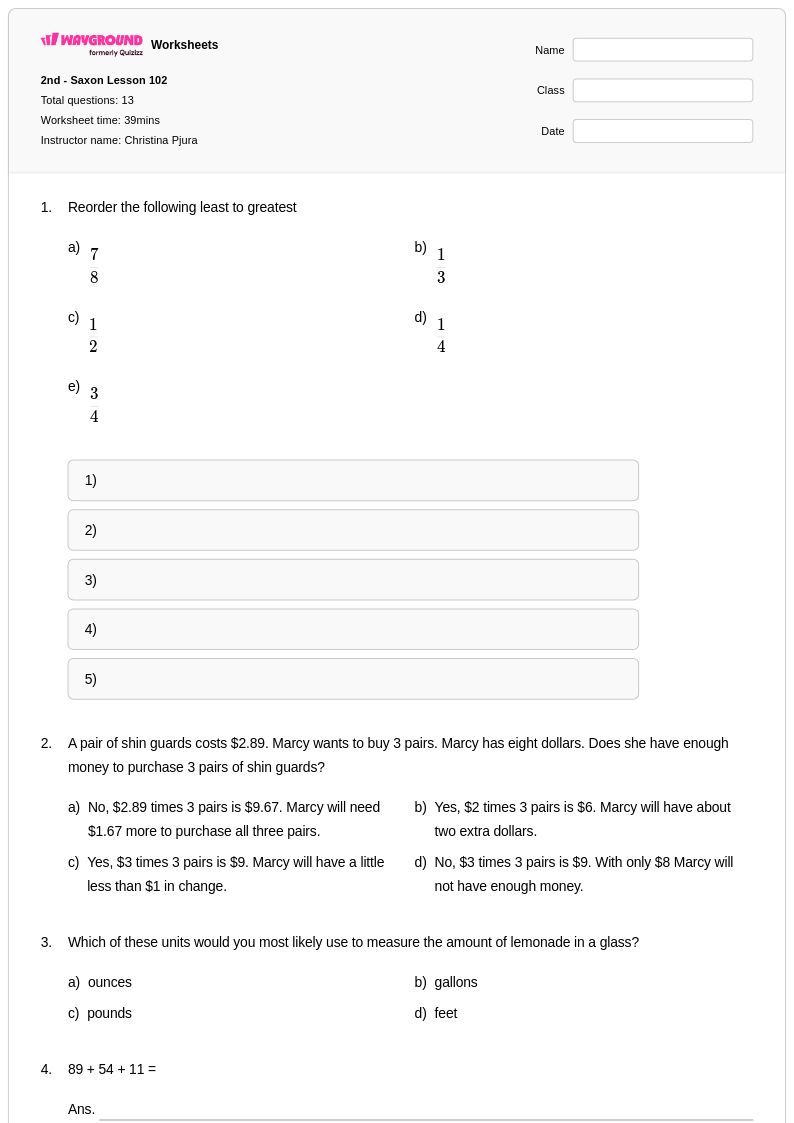
13 Q
2nd
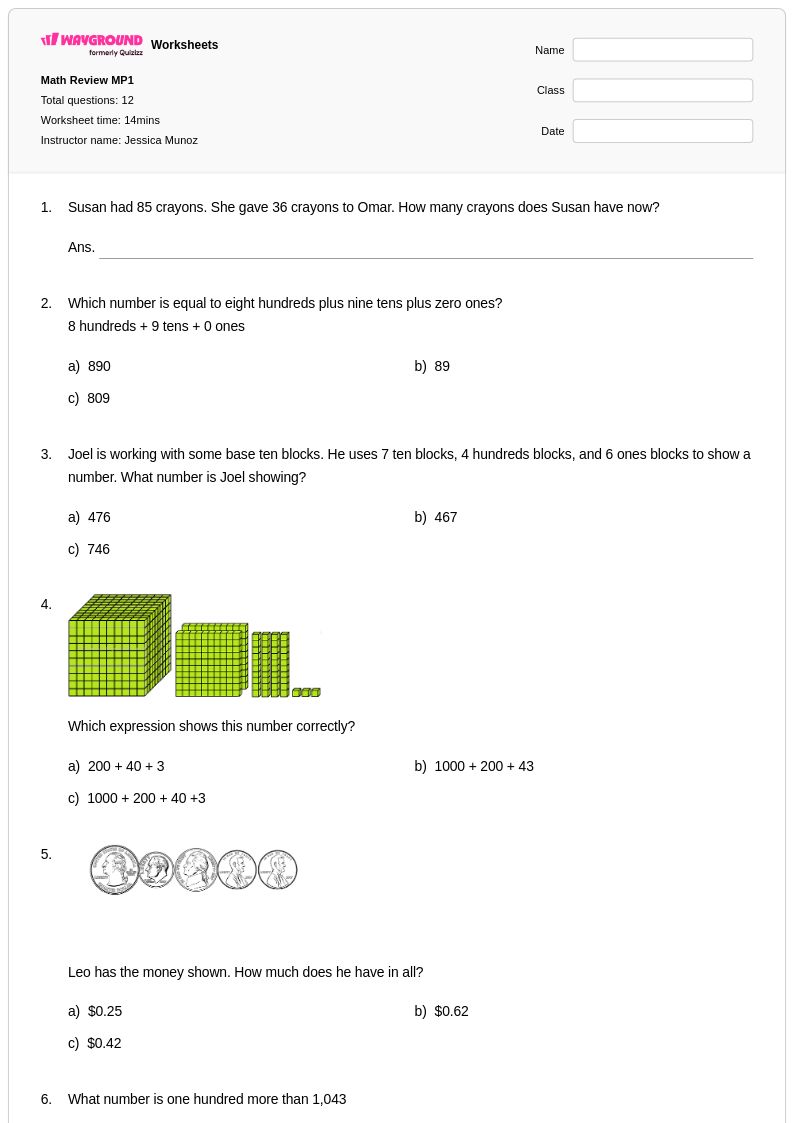
12 Q
2nd
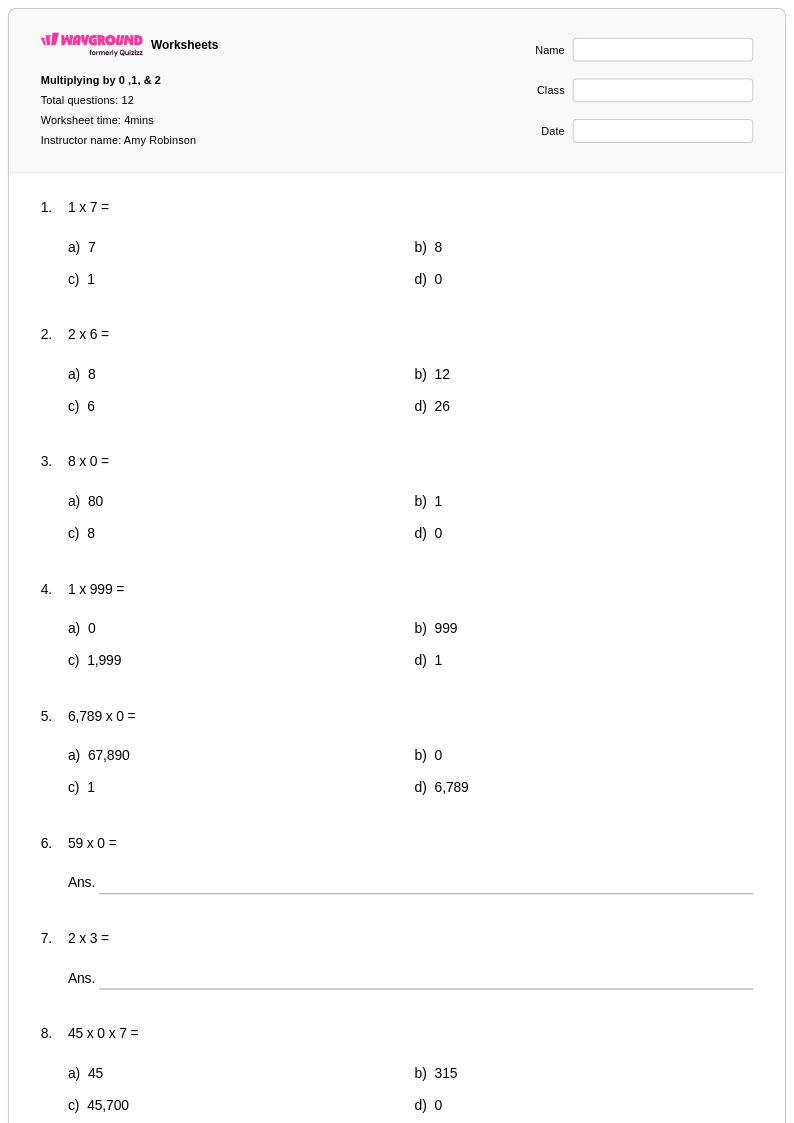
12 Q
2nd - 3rd
Explore Other Subject Worksheets for class 2
Explore printable Zero Pairs worksheets for Class 2
Zero pairs worksheets for Class 2 students available through Wayground (formerly Quizizz) provide essential practice in understanding additive inverses and the foundational concept that combining opposite quantities results in zero. These carefully designed printables introduce young learners to the mathematical relationship between positive and negative elements through visual representations, manipulatives-based activities, and structured practice problems that build conceptual understanding. Students work with concrete examples using objects, numbers, and visual models to recognize how pairs of opposite values cancel each other out, strengthening their number sense and preparing them for more advanced algebraic thinking. Each worksheet includes comprehensive answer keys and free pdf formats that make it easy for educators to implement meaningful practice sessions that reinforce this critical mathematical concept.
Wayground (formerly Quizizz) supports teachers with an extensive collection of zero pairs resources drawn from millions of teacher-created materials, offering robust search and filtering capabilities that help educators quickly locate grade-appropriate content aligned with mathematical standards. The platform's differentiation tools enable teachers to customize worksheets for various learning levels within their Class 2 classrooms, while flexible formatting options provide both printable and digital versions to accommodate diverse instructional needs. These comprehensive resources facilitate effective lesson planning by offering multiple approaches to teaching zero pairs, support targeted remediation for students who need additional practice with inverse relationships, and provide enrichment opportunities for advanced learners ready to explore more complex applications of this foundational number sense concept.