
21 Q
2nd
20 Q
2nd
16 Q
2nd
16 Q
2nd
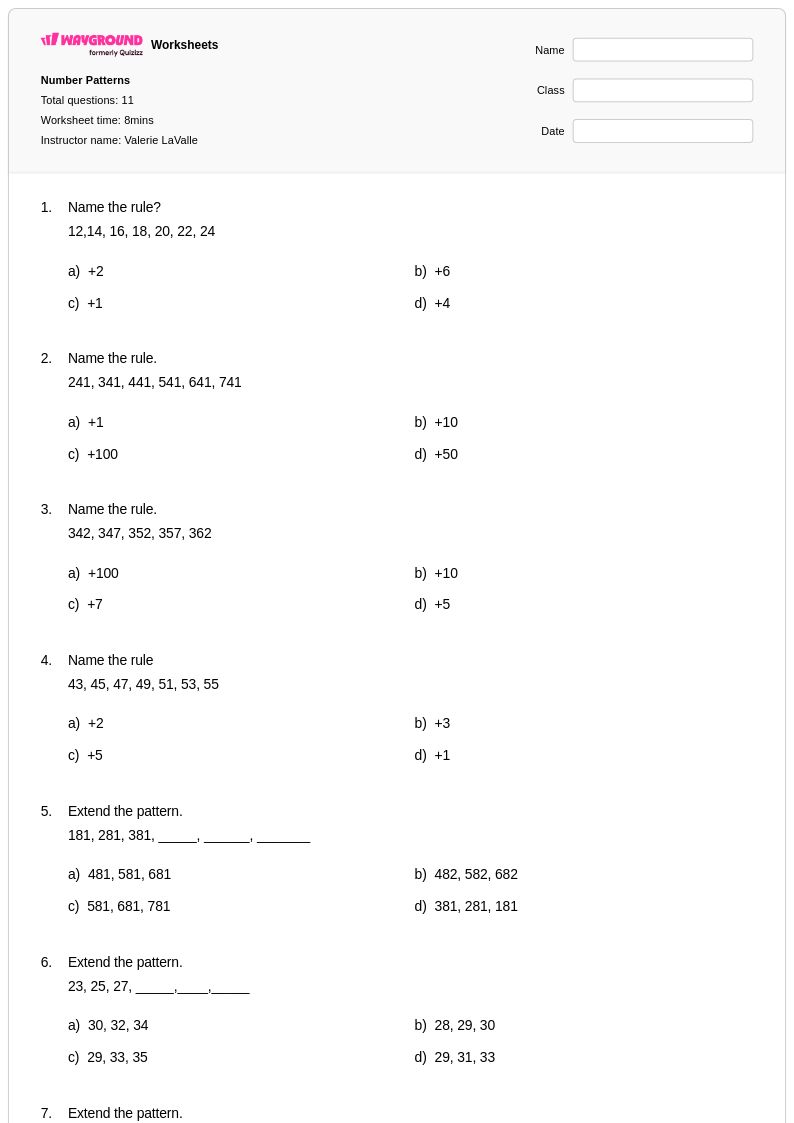
11 Q
2nd
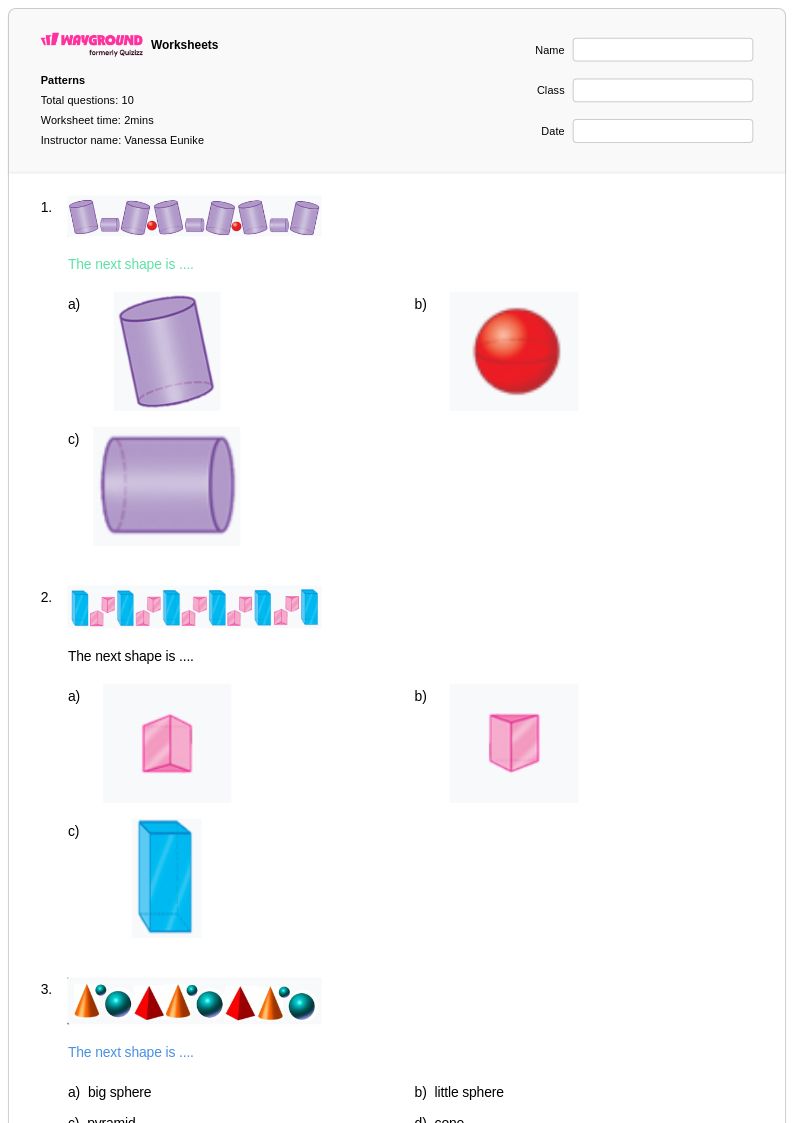
10 Q
2nd
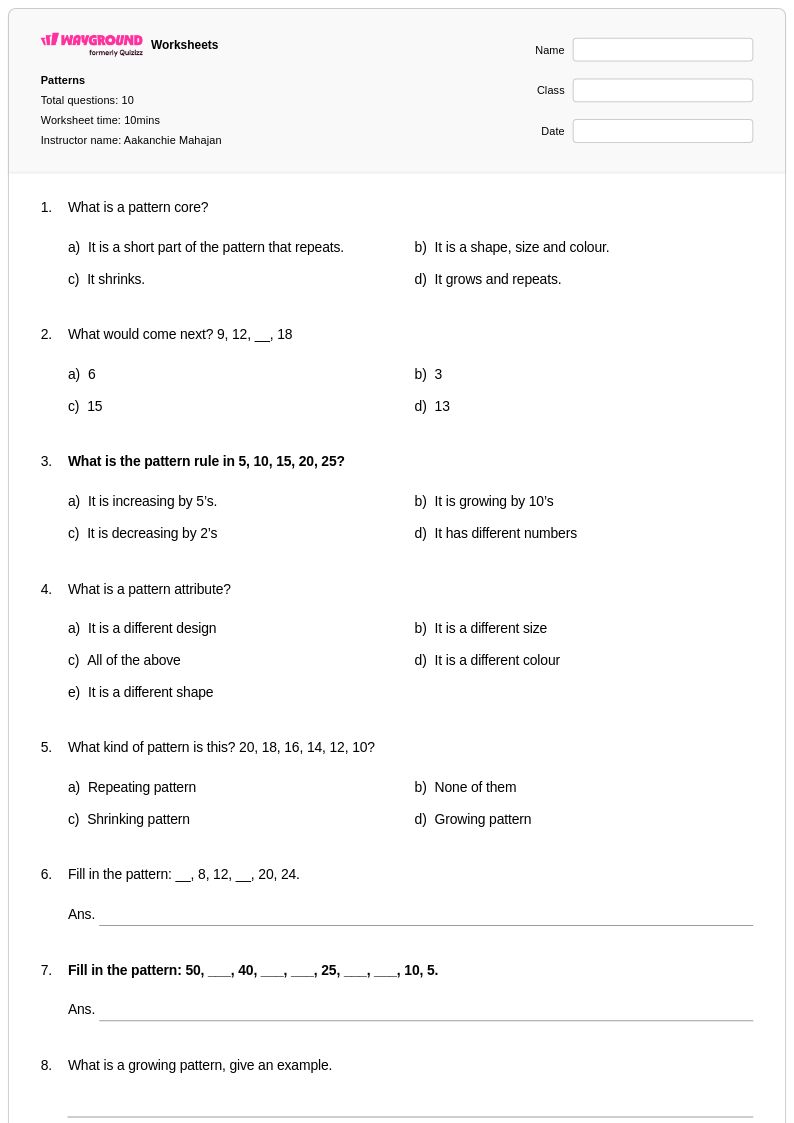
10 Q
2nd
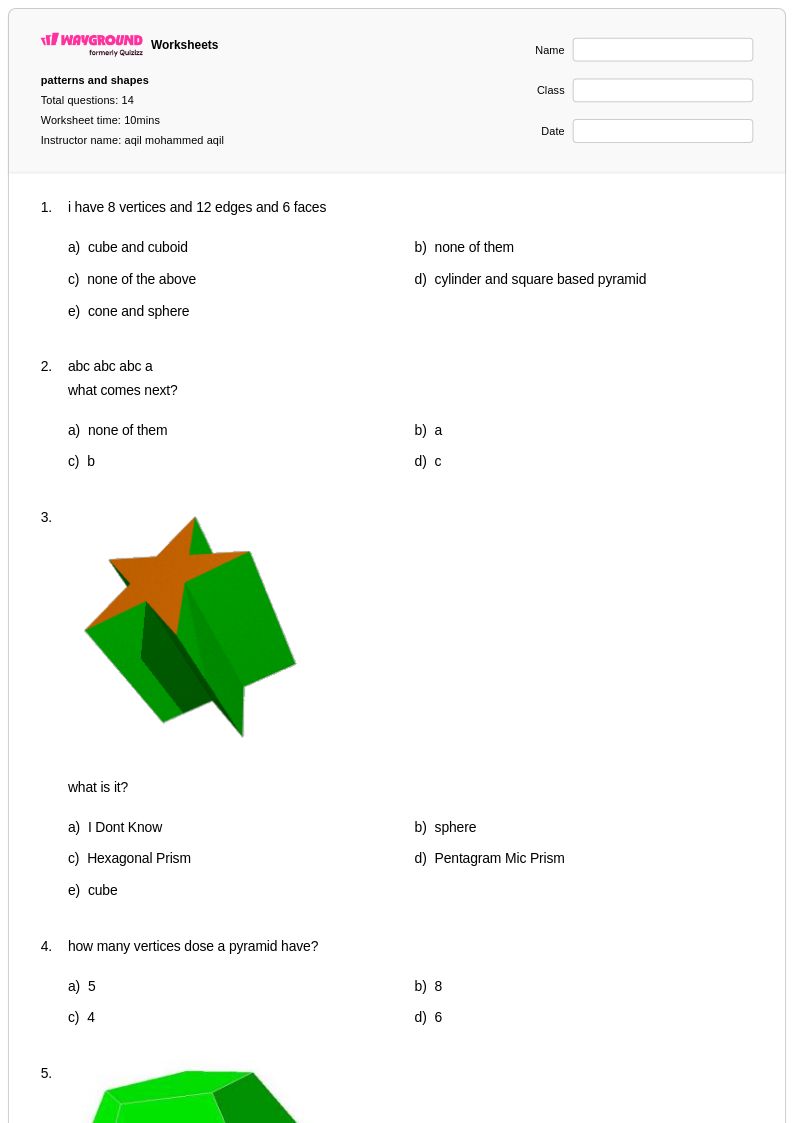
14 Q
2nd
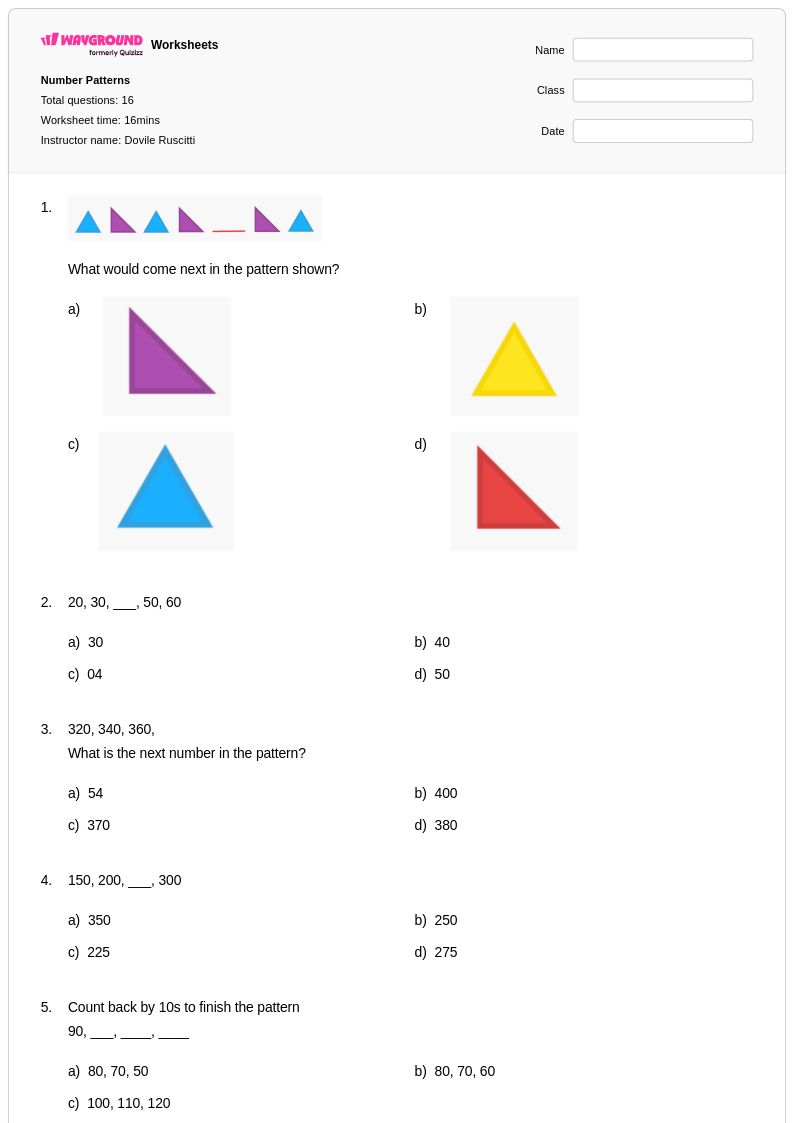
16 Q
1st - 4th
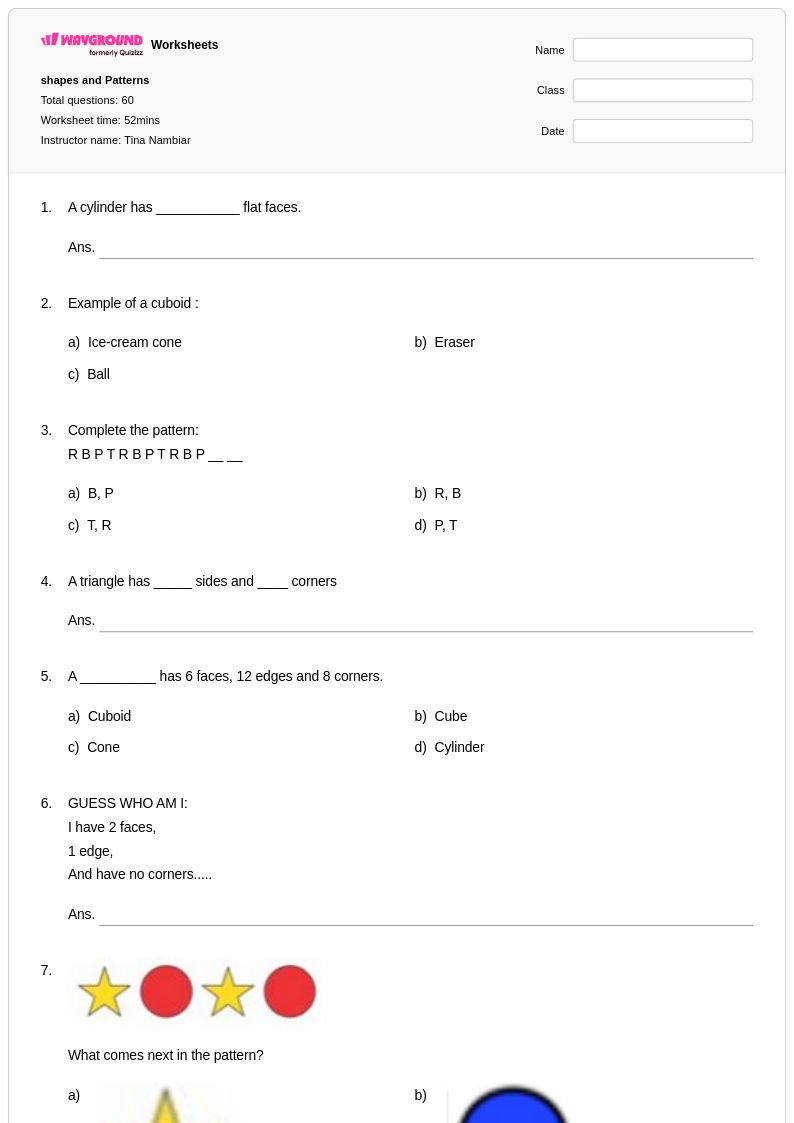
60 Q
2nd
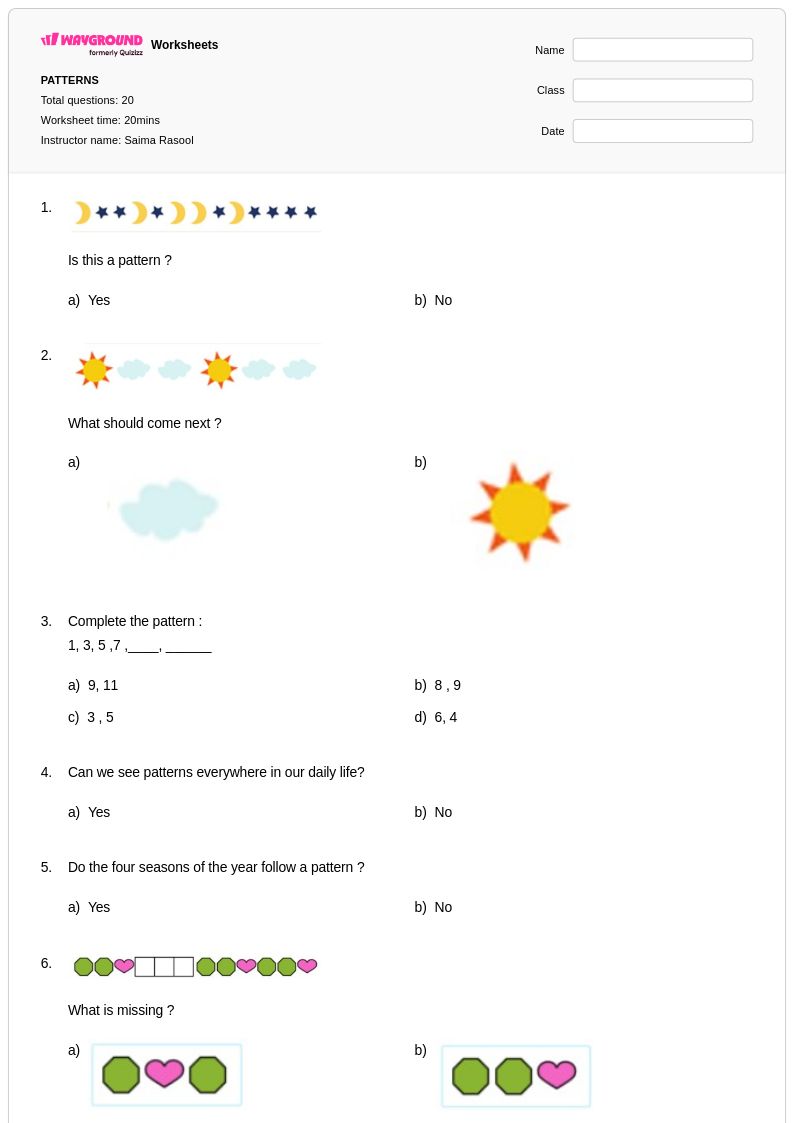
20 Q
2nd
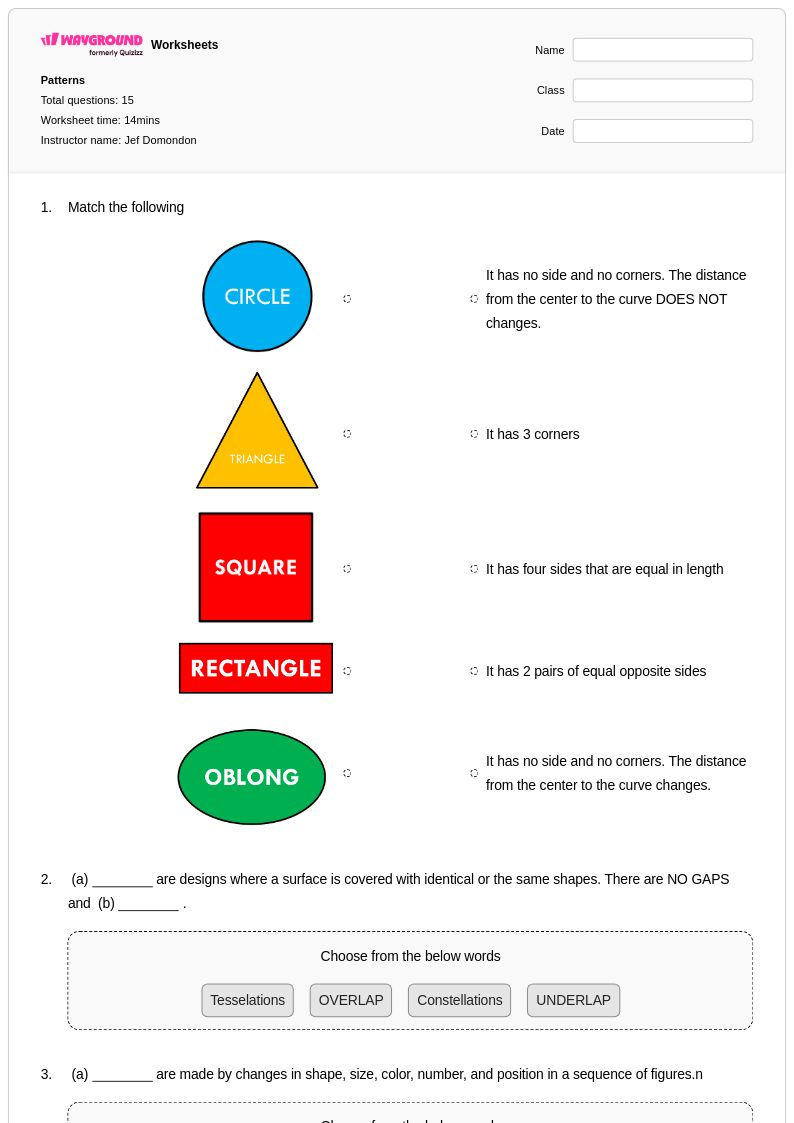
15 Q
2nd
15 Q
2nd
8 Q
2nd
10 Q
1st - 12th
10 Q
1st - 5th
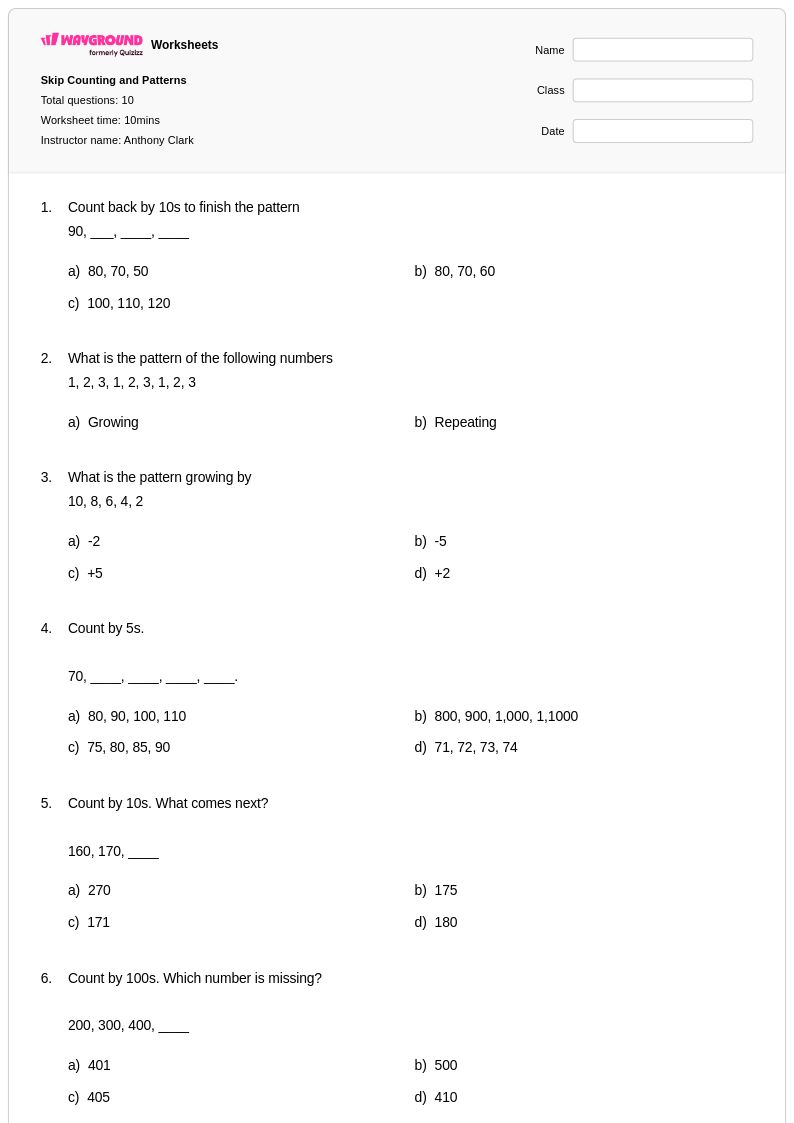
10 Q
2nd - Uni
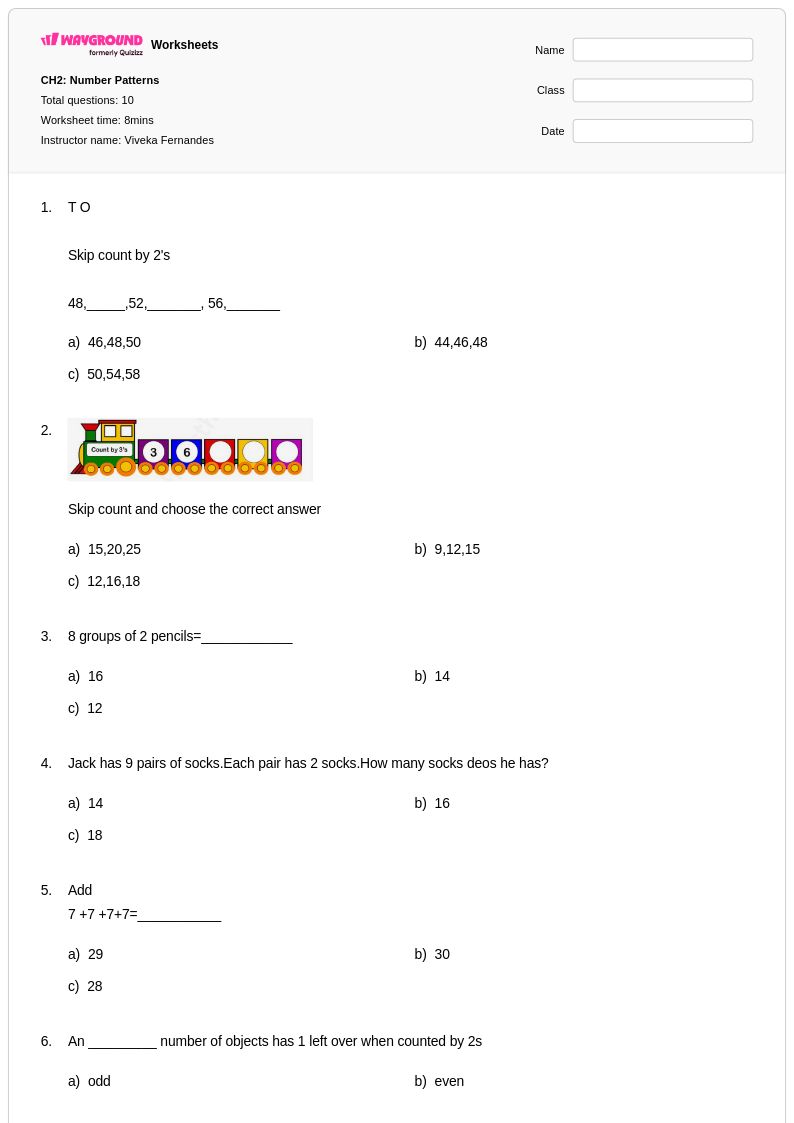
10 Q
2nd
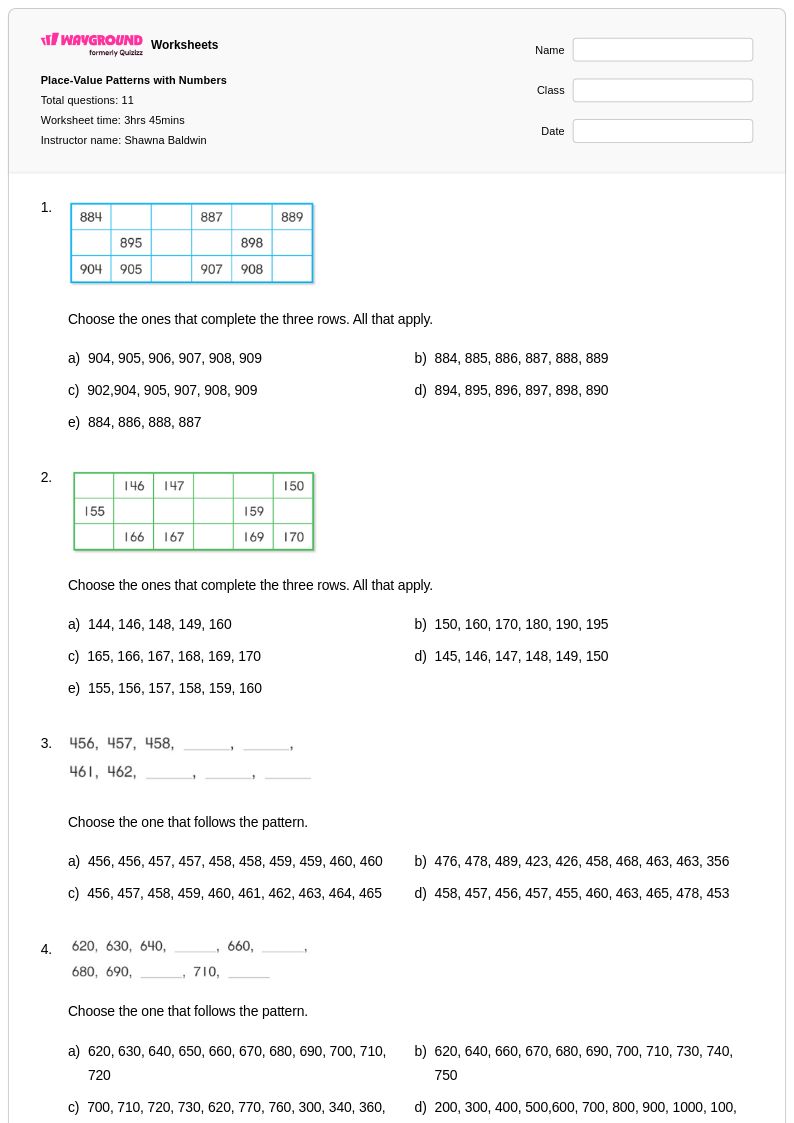
11 Q
2nd
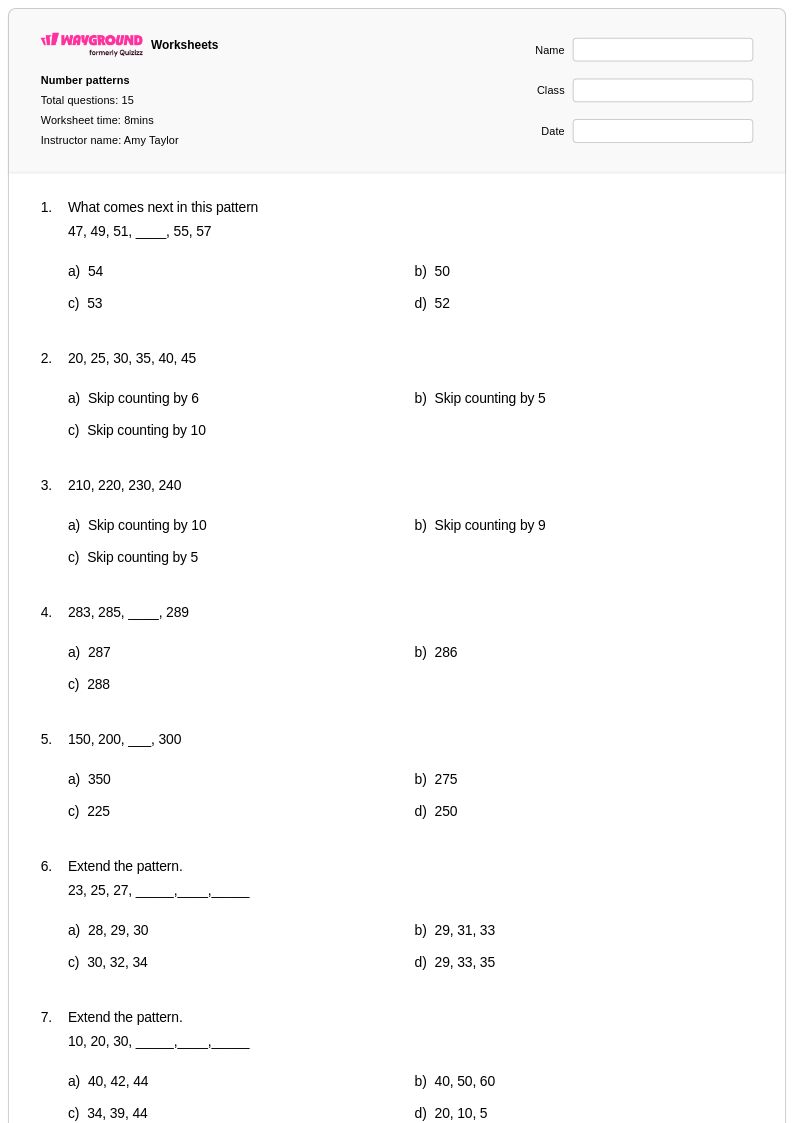
15 Q
2nd
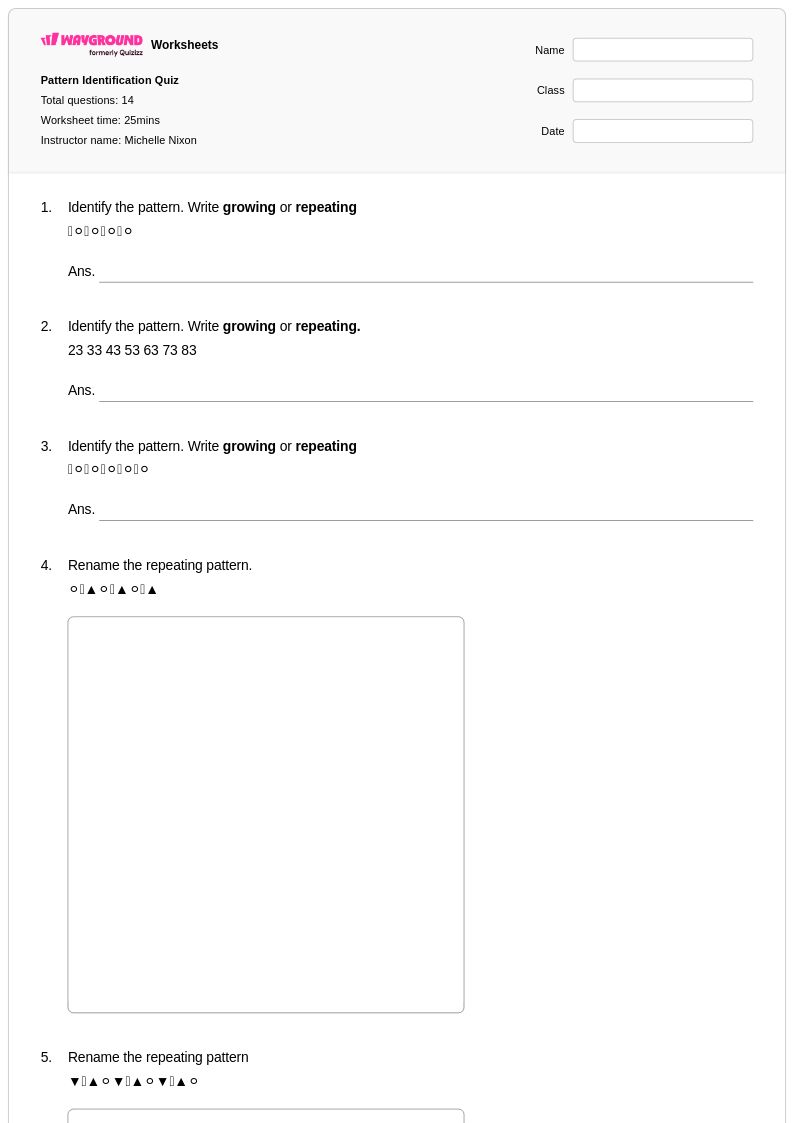
14 Q
2nd
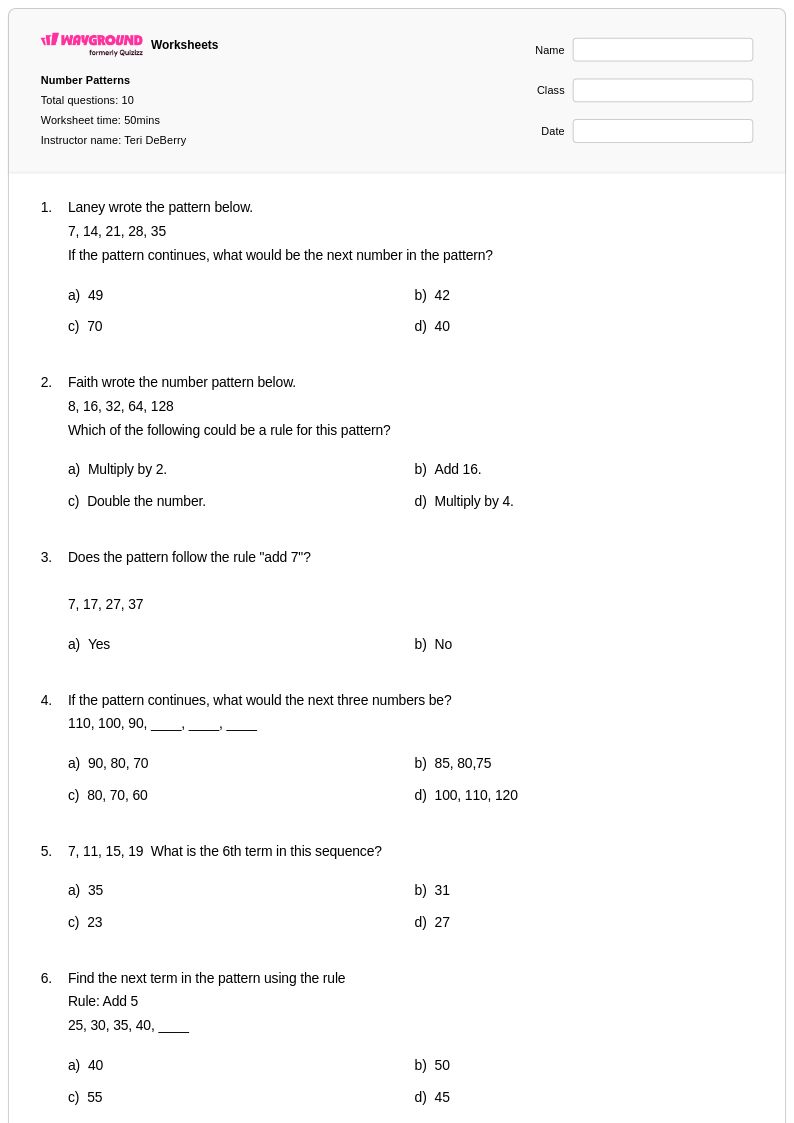
10 Q
2nd - 3rd
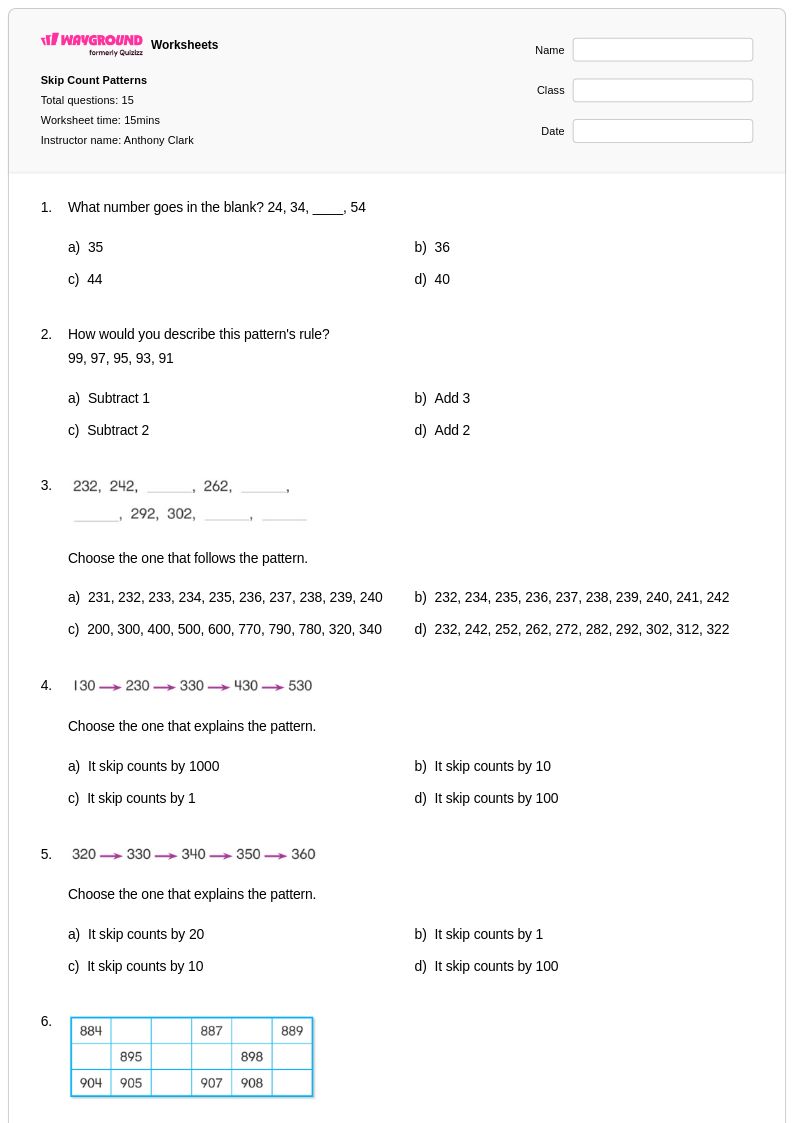
15 Q
2nd - Uni
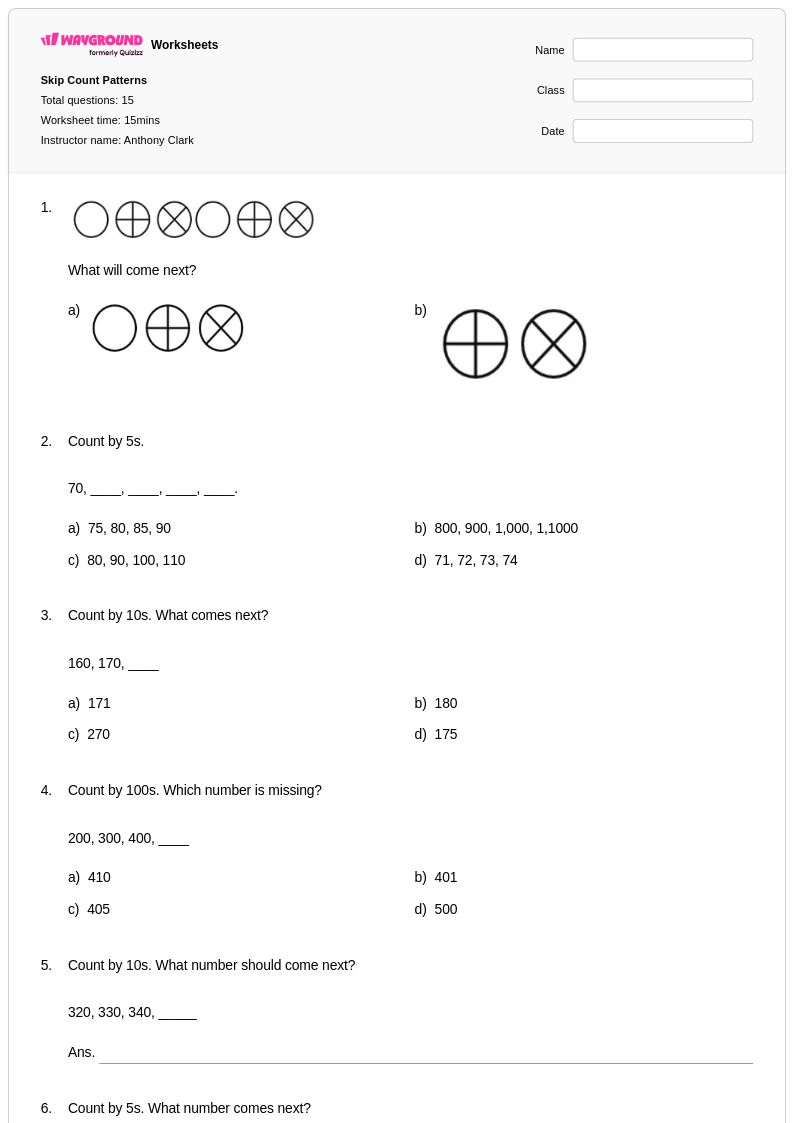
15 Q
2nd - Uni
Explore Color Patterns Worksheets by Grades
Explore Other Subject Worksheets for class 2
Explore printable Color Patterns worksheets for Class 2
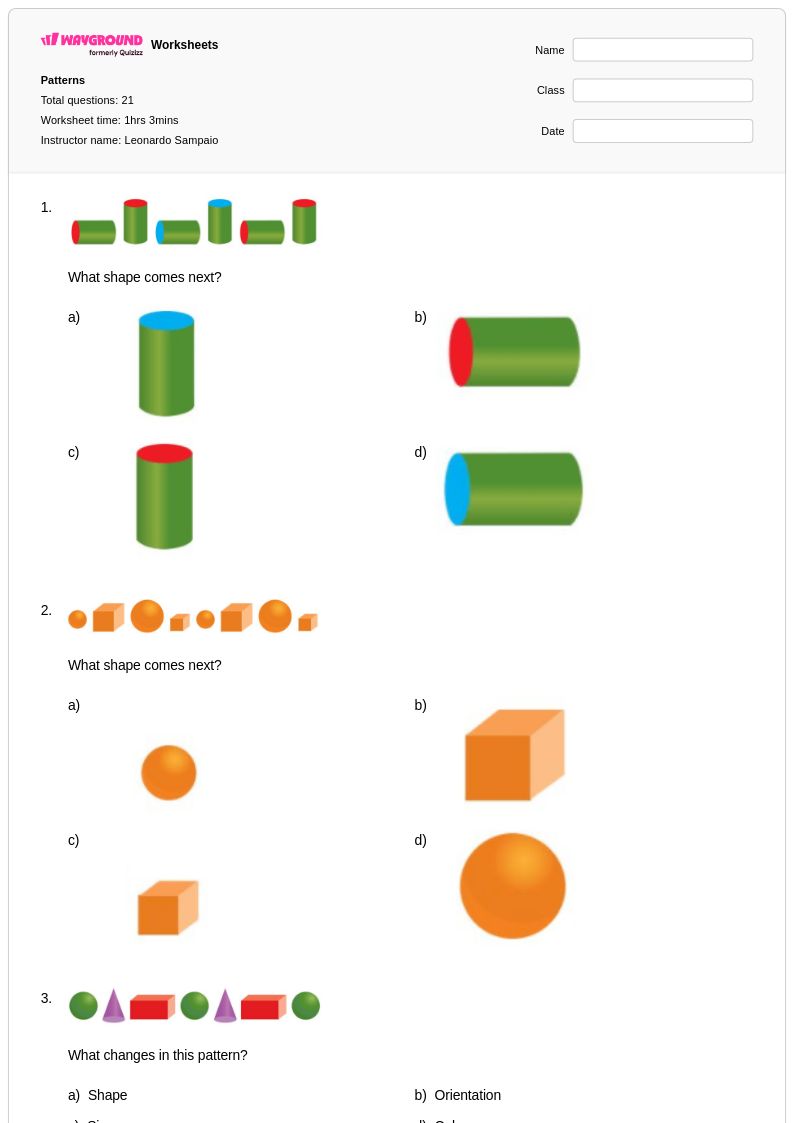
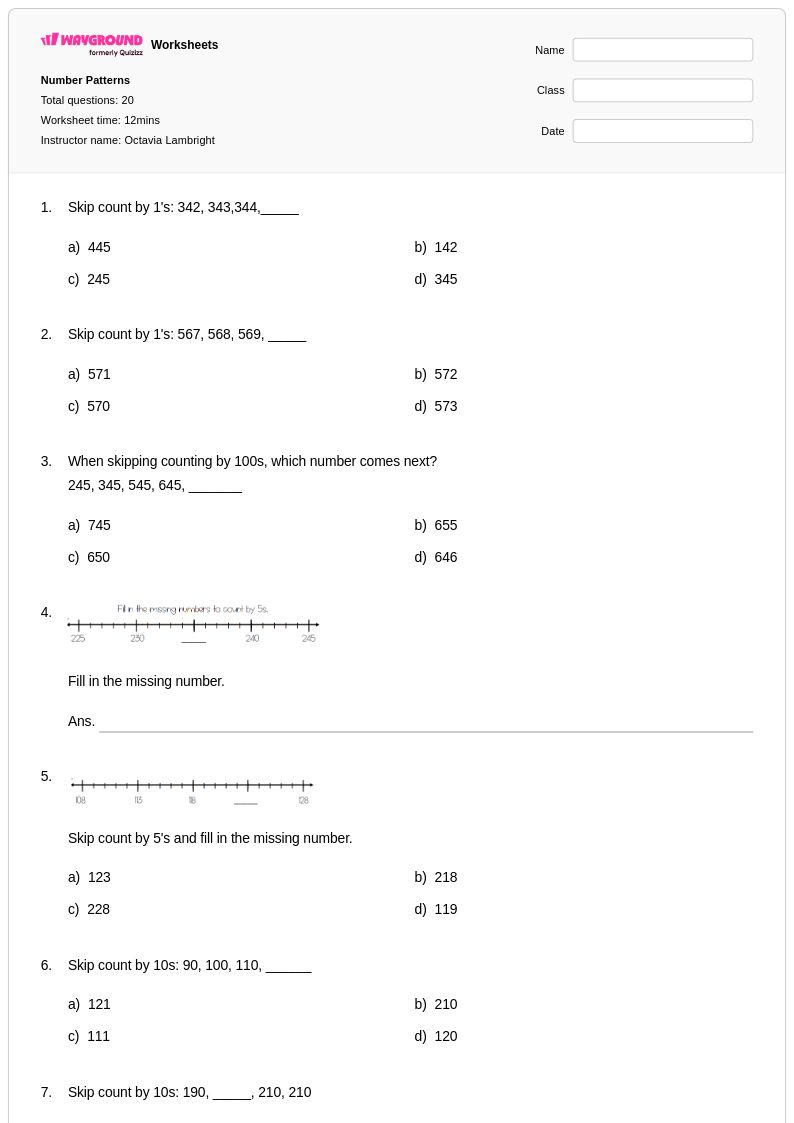
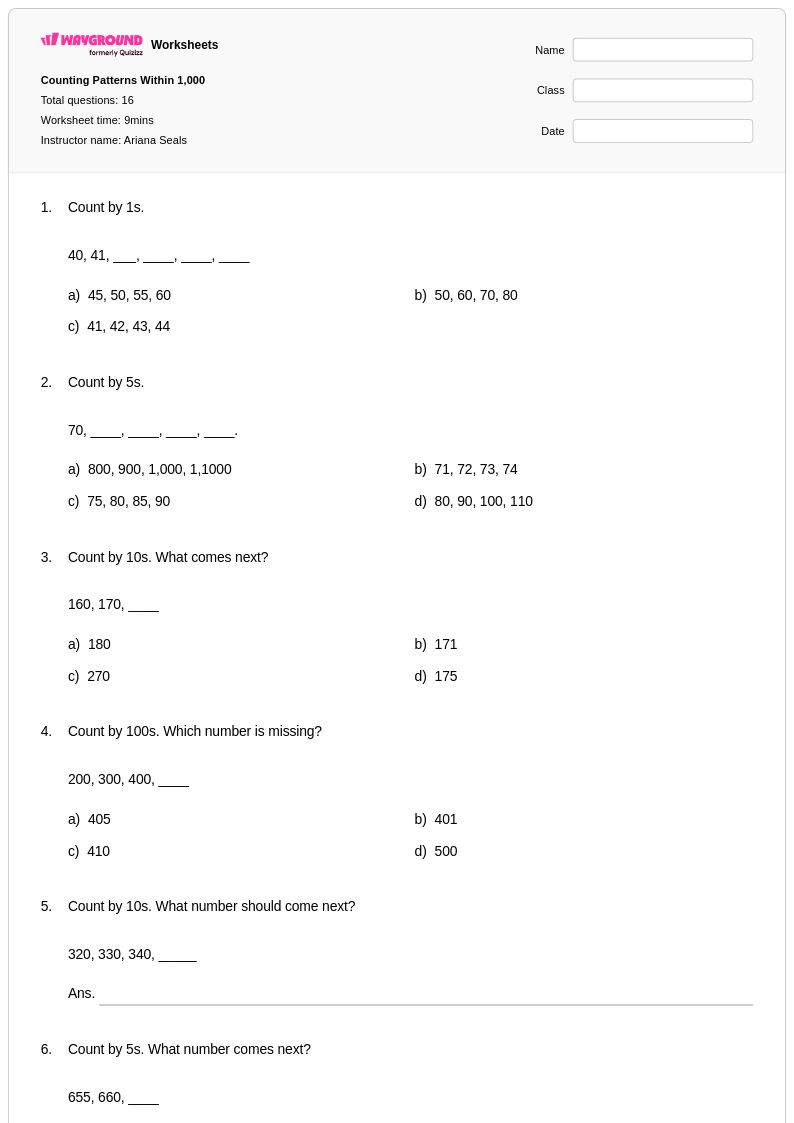
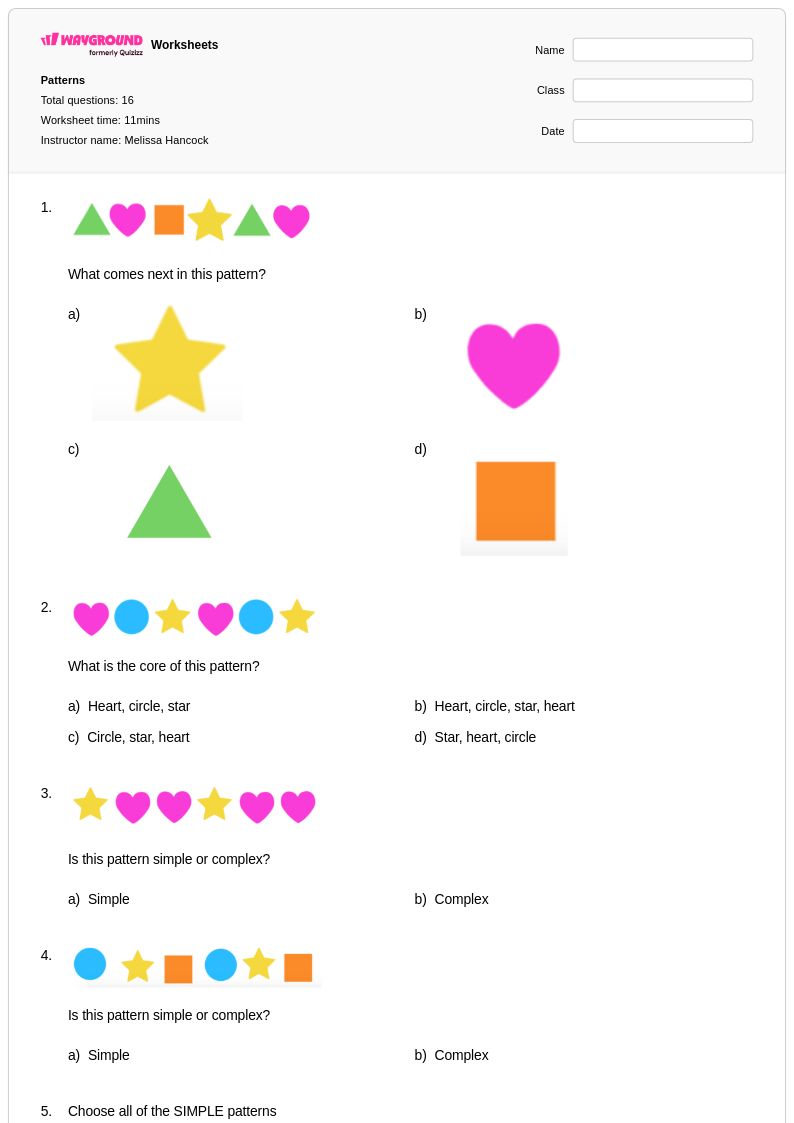
Color patterns worksheets for Class 2 students available through Wayground (formerly Quizizz) provide essential practice in recognizing, extending, and creating visual sequences that strengthen foundational number sense skills. These comprehensive printables guide young learners through identifying repeating color patterns, predicting what comes next in a sequence, and understanding the underlying mathematical structures that govern pattern recognition. Students develop critical thinking abilities as they work through practice problems that progress from simple AB patterns to more complex ABAB and ABC sequences, building the cognitive framework necessary for algebraic thinking in later grades. Each worksheet includes a detailed answer key, making it easy for educators to assess student understanding and provide targeted feedback on this fundamental mathematical concept that bridges visual learning with logical reasoning.
Wayground (formerly Quizizz) supports teachers with an extensive collection of color pattern resources created by millions of educators worldwide, offering robust search and filtering capabilities that allow instructors to locate materials perfectly aligned with Class 2 learning standards and individual classroom needs. The platform's differentiation tools enable teachers to customize worksheets for various skill levels, ensuring that struggling learners receive appropriate scaffolding while advanced students encounter enriching challenges that extend their pattern recognition abilities. These versatile resources are available in both printable PDF format for traditional classroom use and digital formats for interactive learning experiences, providing flexibility for lesson planning, targeted remediation sessions, and independent practice opportunities. Teachers can seamlessly integrate these materials into their mathematics instruction to reinforce pattern concepts across multiple learning modalities while building students' confidence in mathematical reasoning.
FAQs
How do I teach color patterns to second graders?
What color pattern exercises work well in Grade 2?
What mistakes do second graders make with color patterns?
How can I use Wayground Grade 2 color patterns worksheets?
How do Grade 2 color patterns support the Common Core math progression?
How can I differentiate Grade 2 color pattern practice?
What grade level are these color pattern worksheets for?