
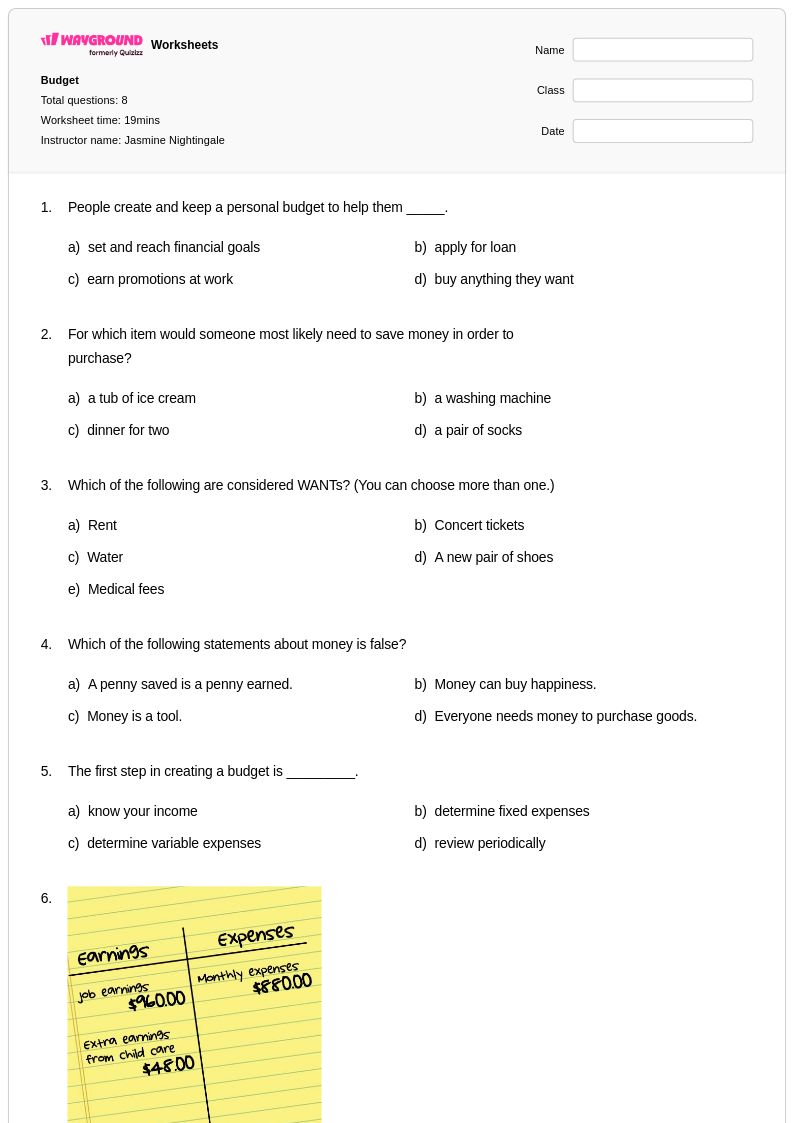
8 Q
5th - 6th
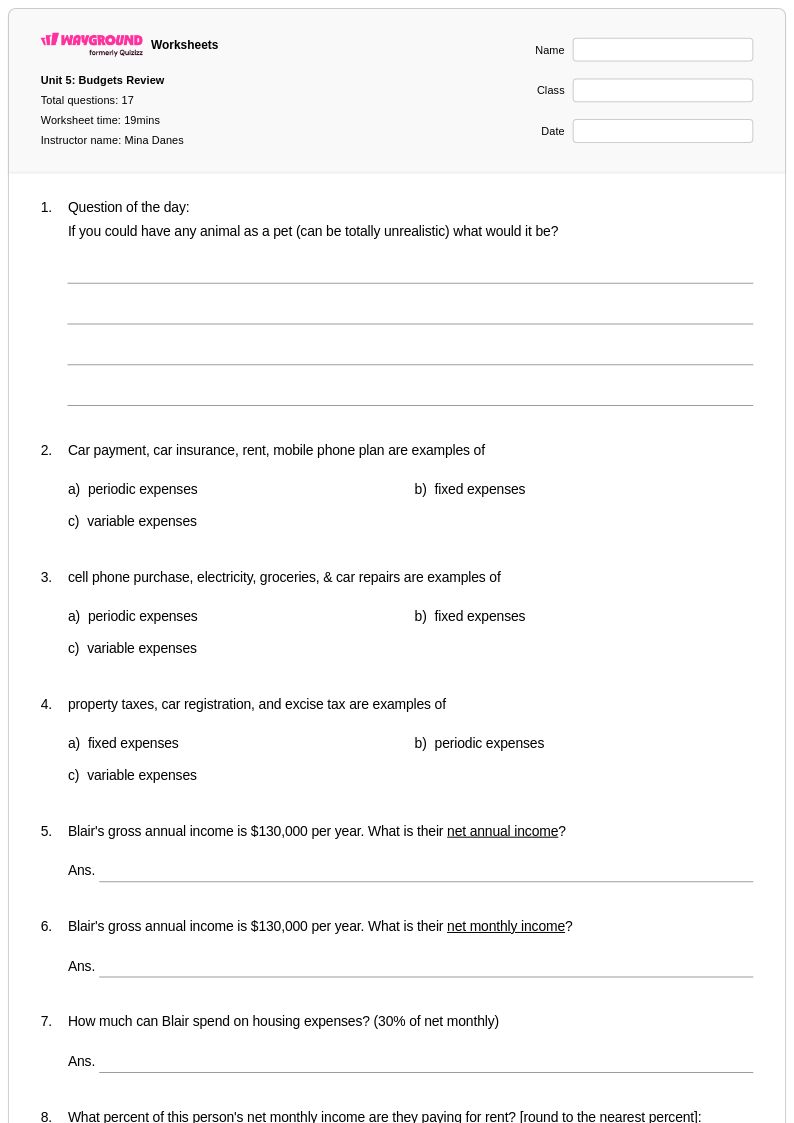
17 Q
6th - PD
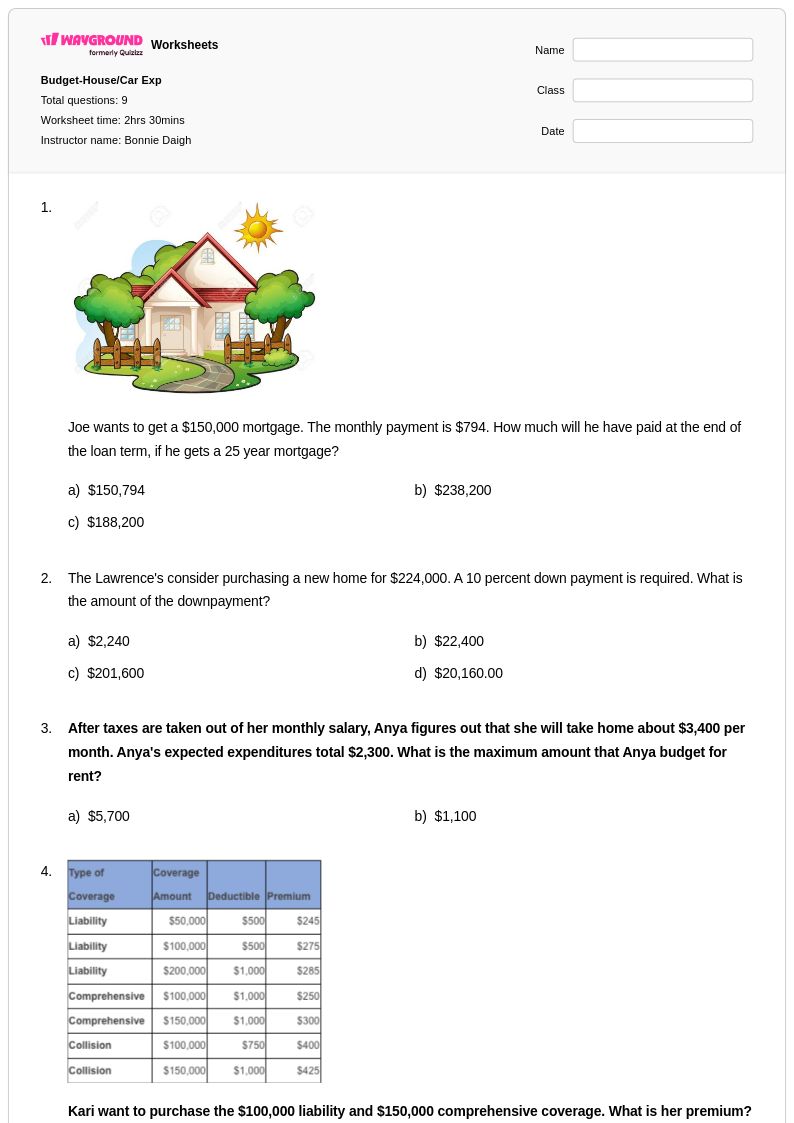
9 Q
6th - 10th
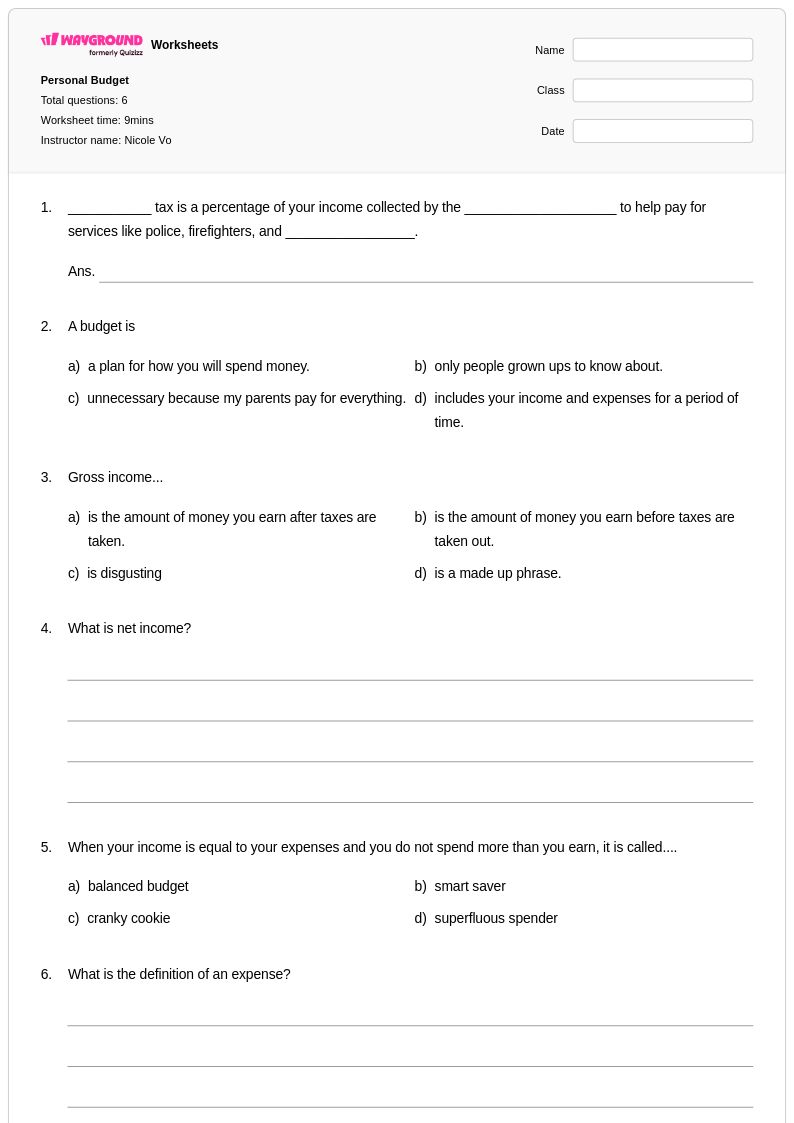
6 Q
4th - 6th
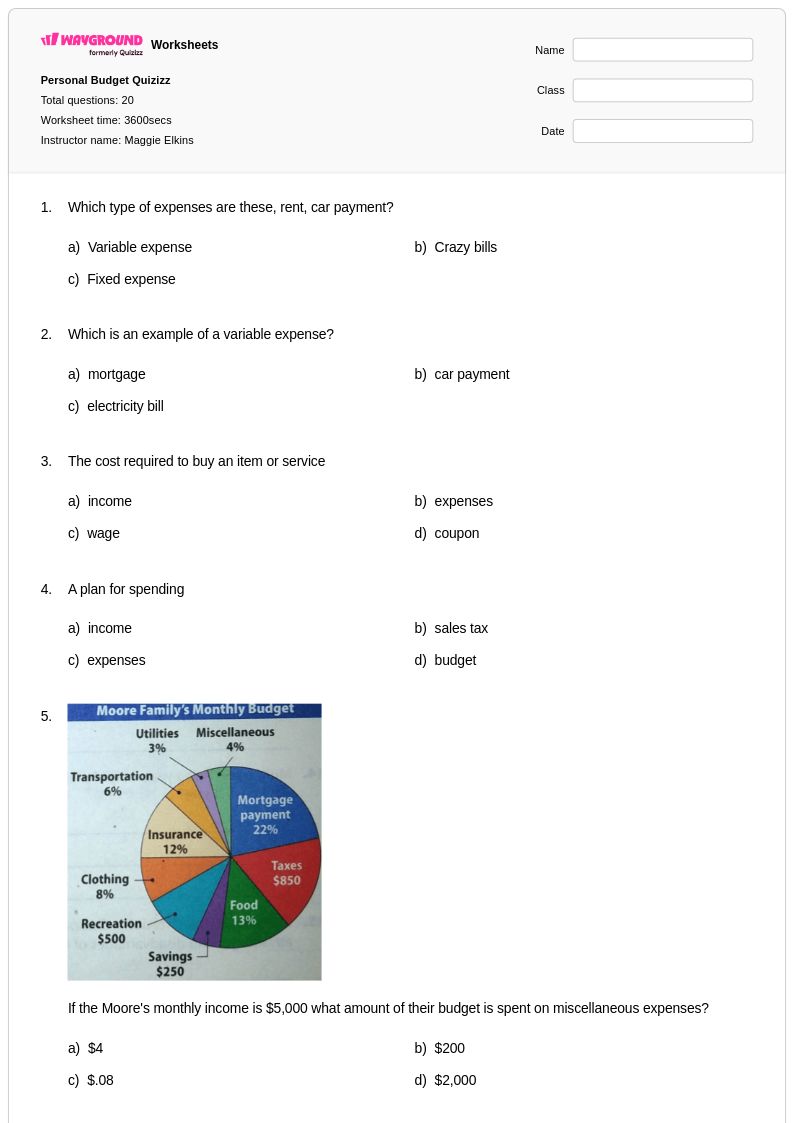
20 Q
6th - 7th
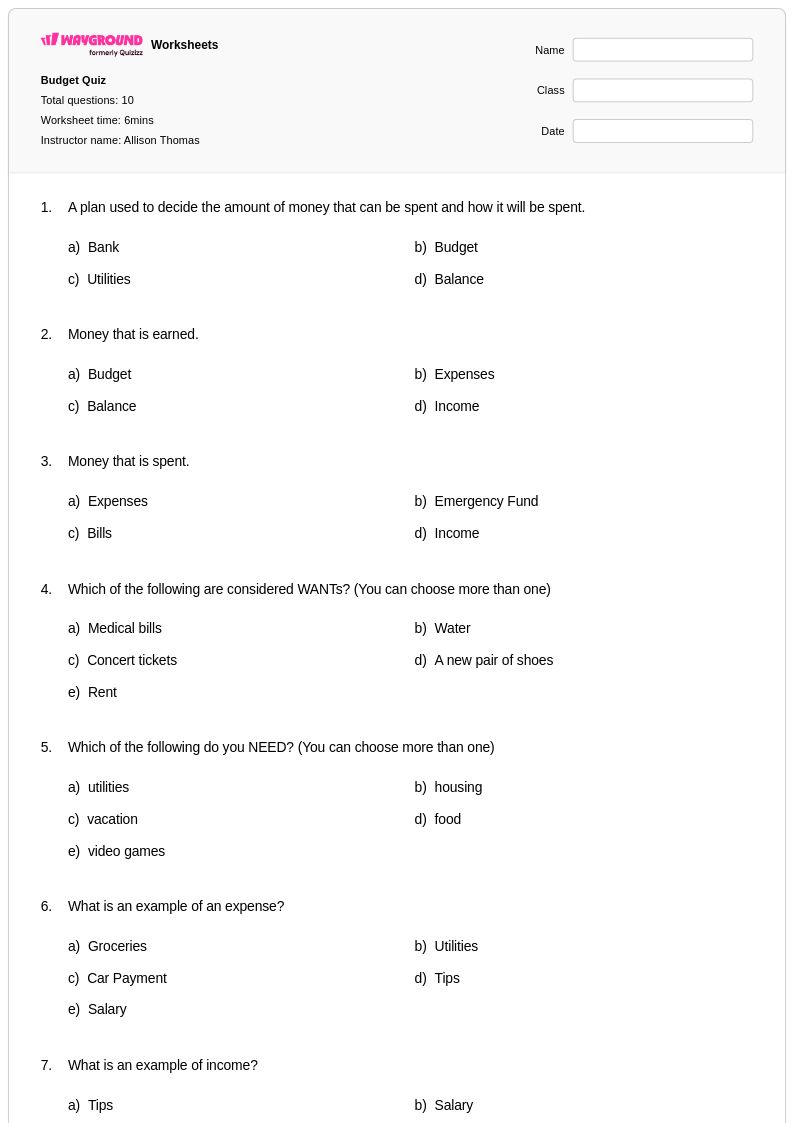
10 Q
6th - 12th
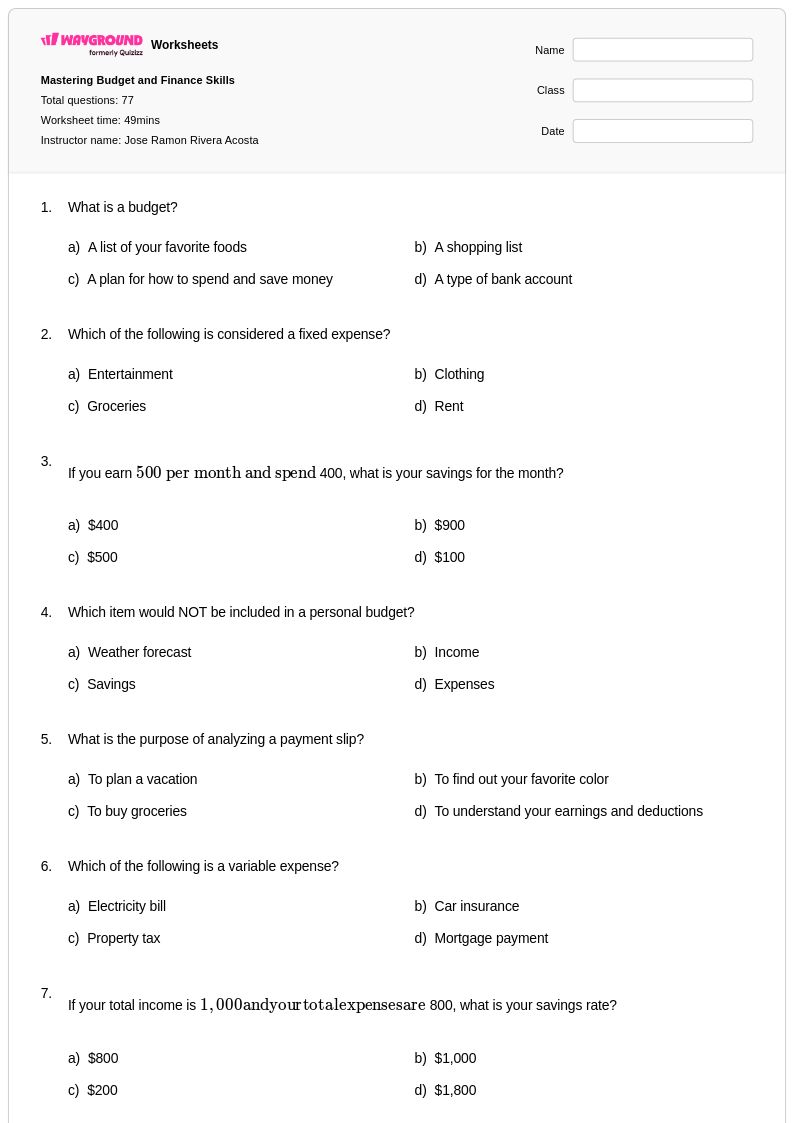
77 Q
6th
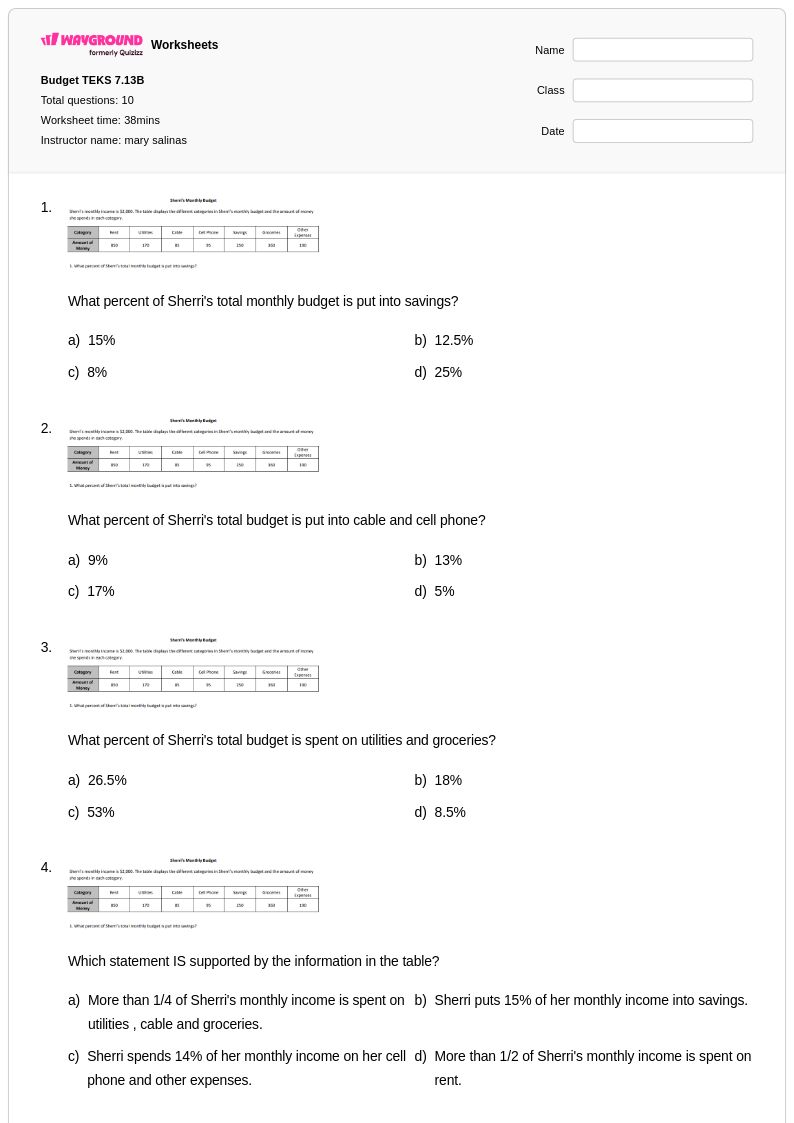
10 Q
6th - 8th
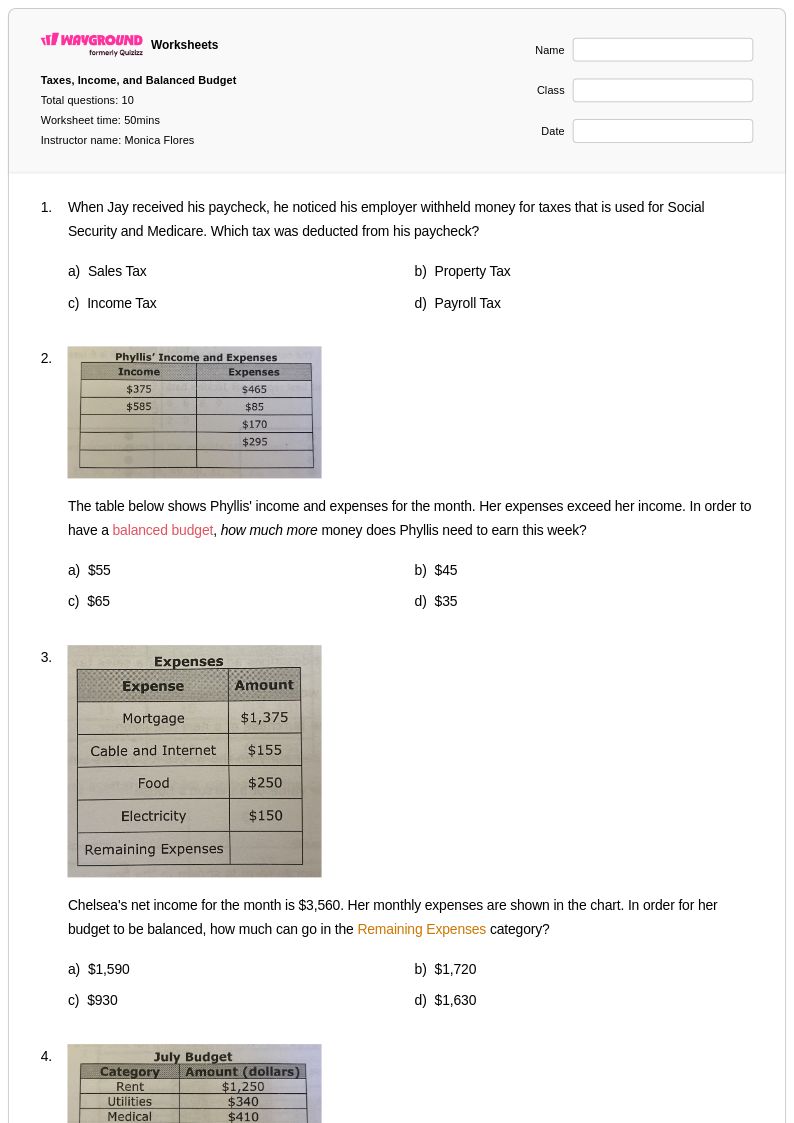
10 Q
4th - 6th
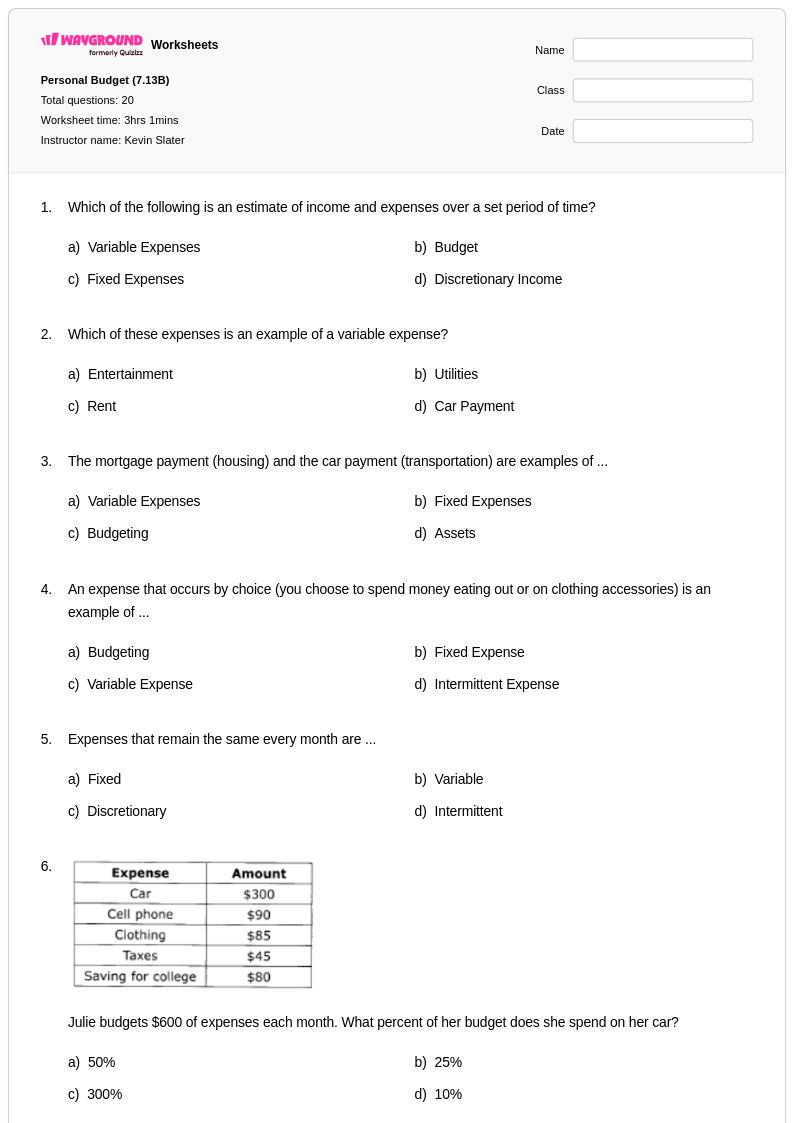
20 Q
6th - 7th
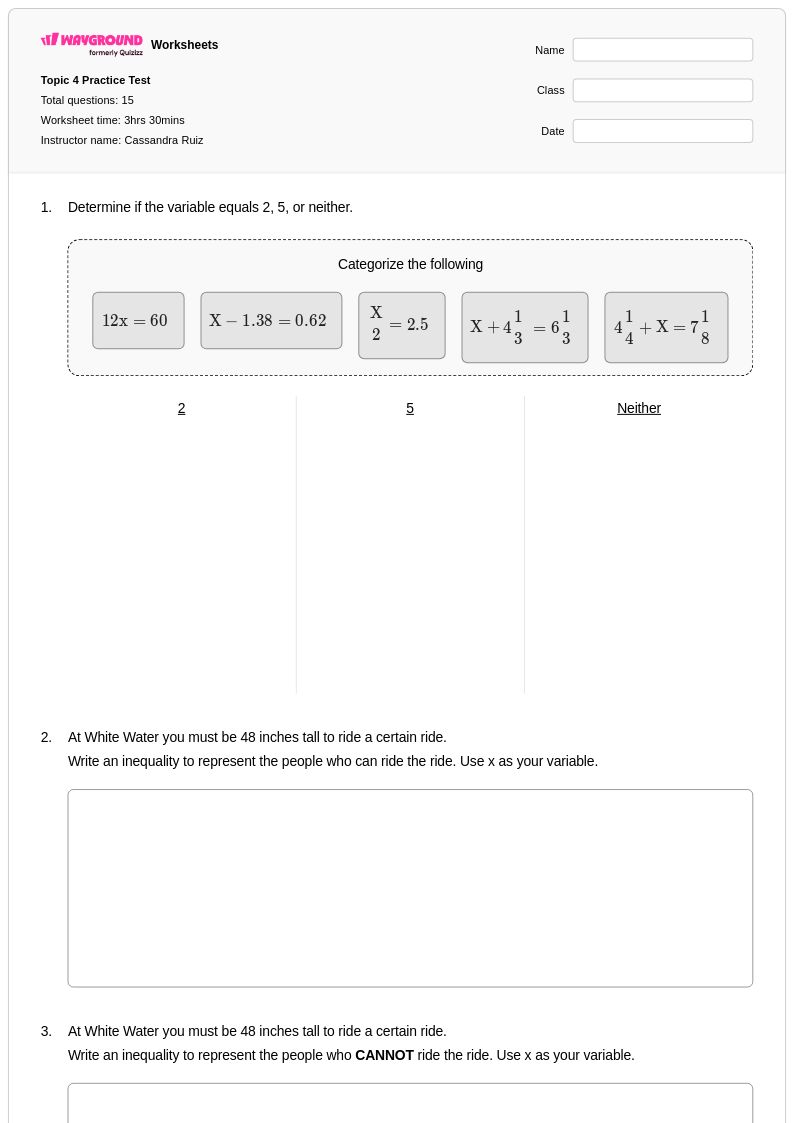
15 Q
6th
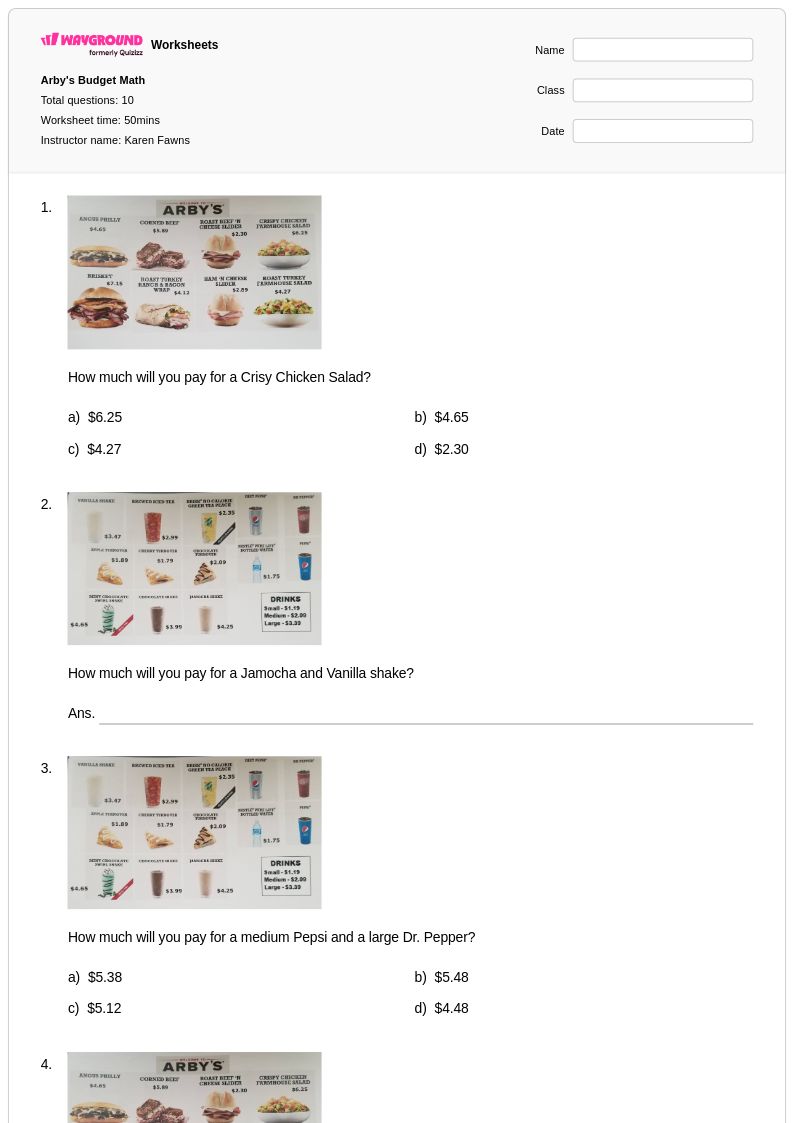
10 Q
5th - 12th
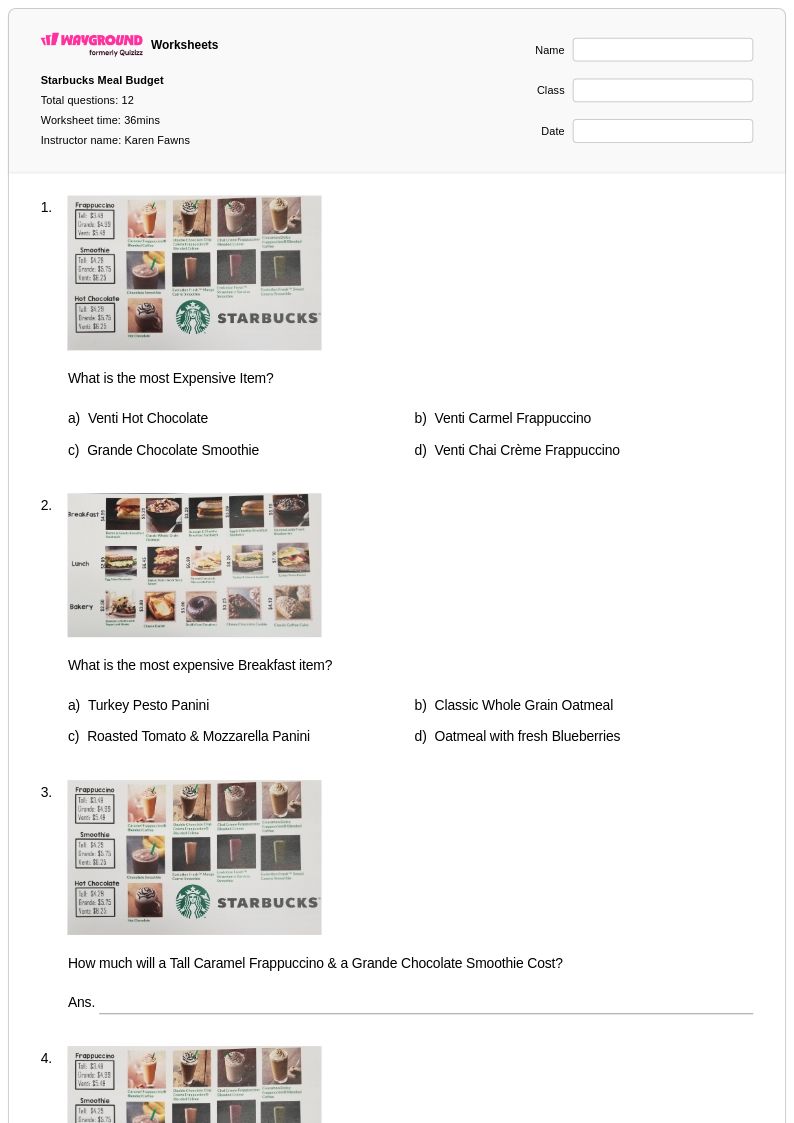
12 Q
6th - 12th
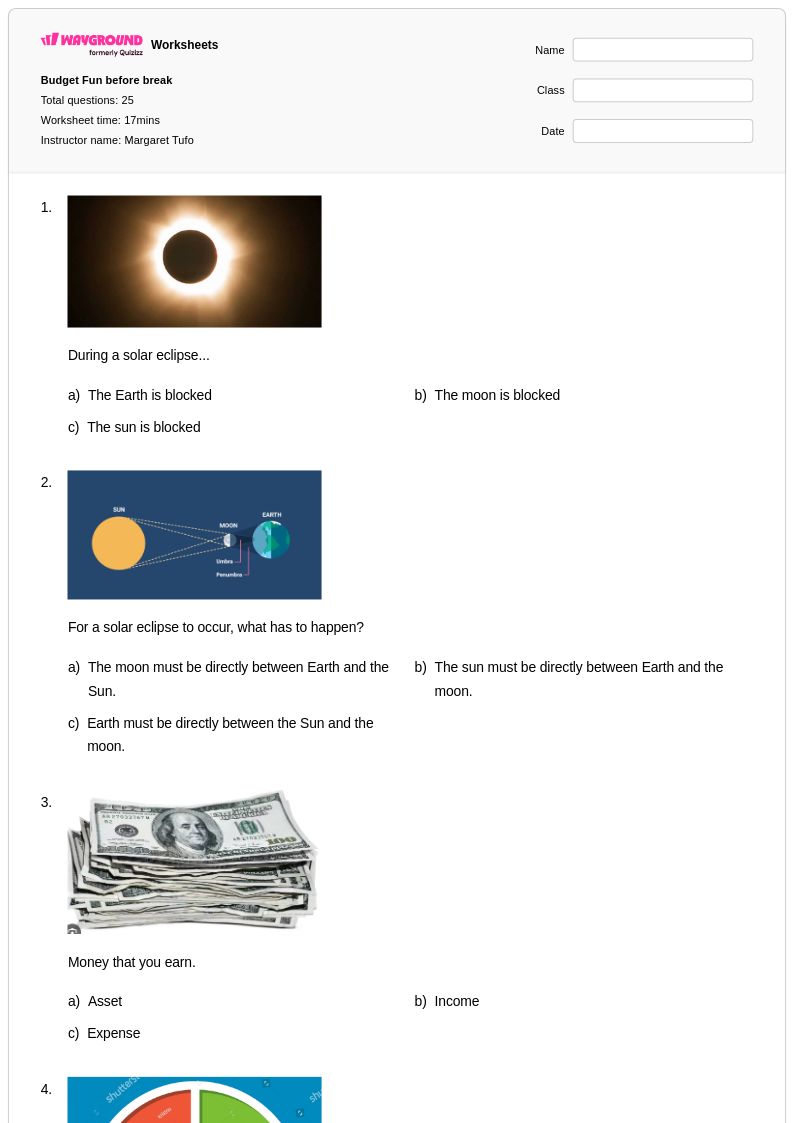
25 Q
4th - 8th
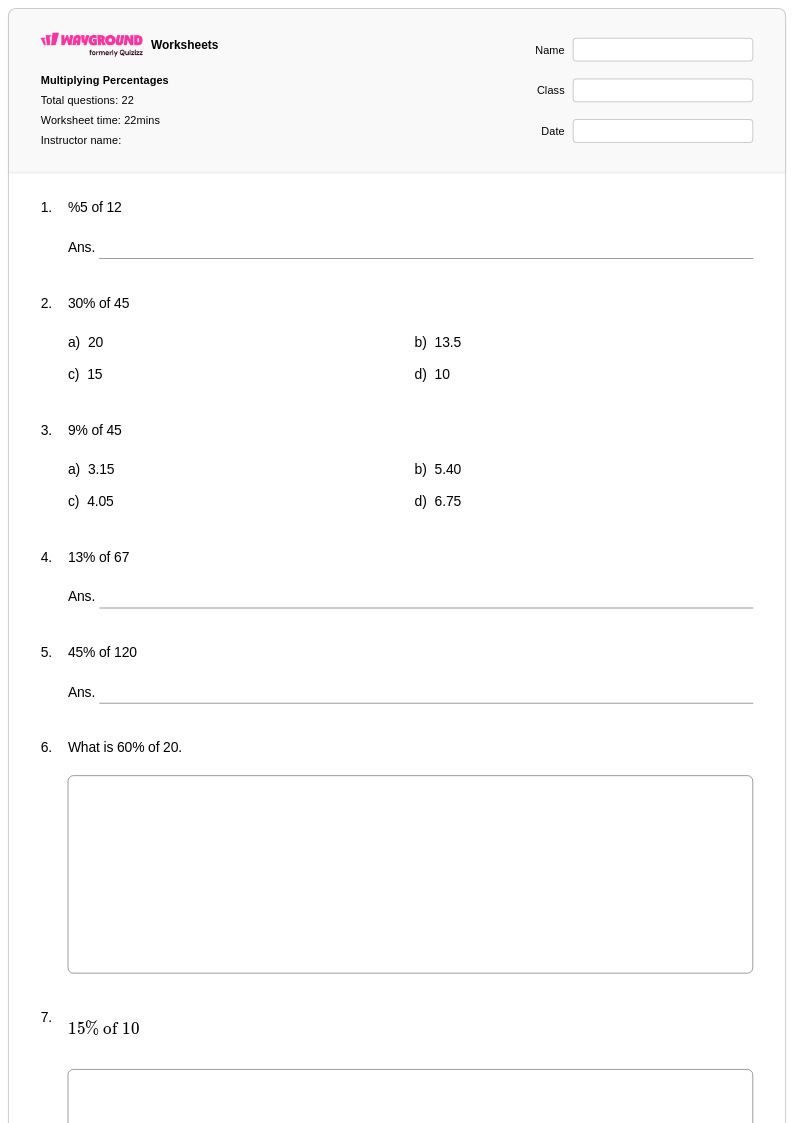
22 Q
6th - 8th
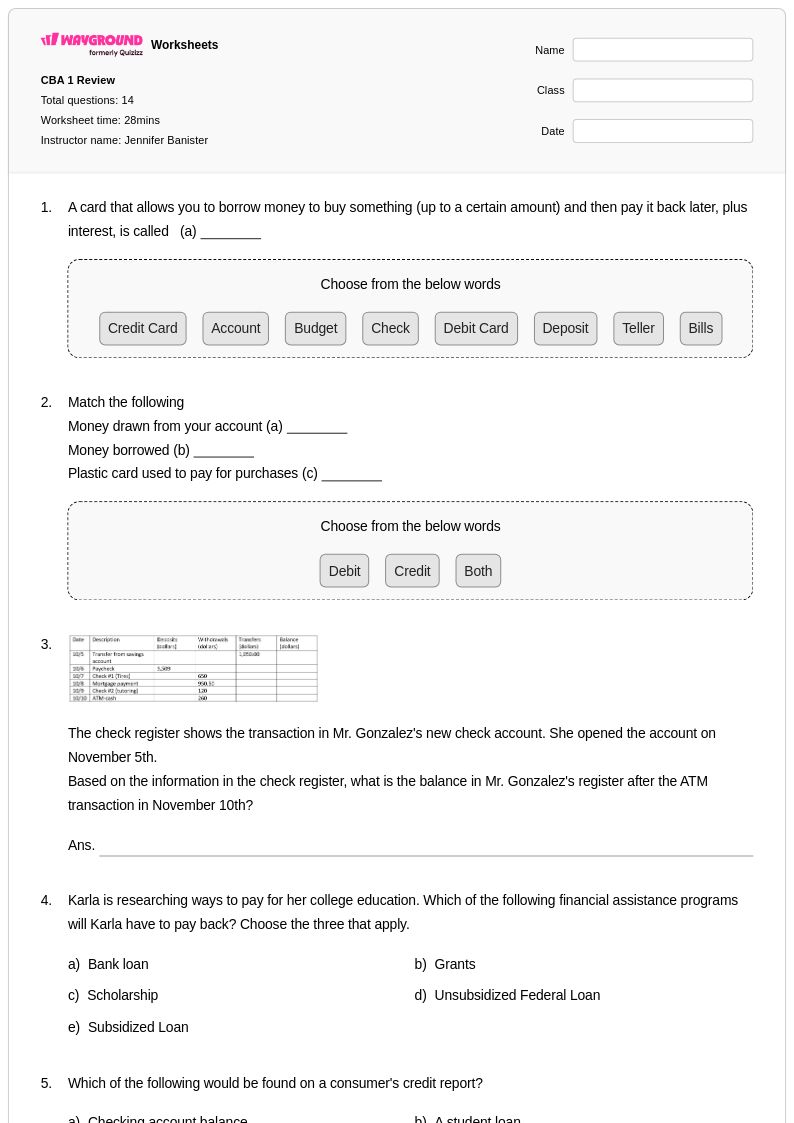
14 Q
6th - 8th
8 Q
6th - 8th
10 Q
6th
15 Q
5th - 7th
15 Q
6th
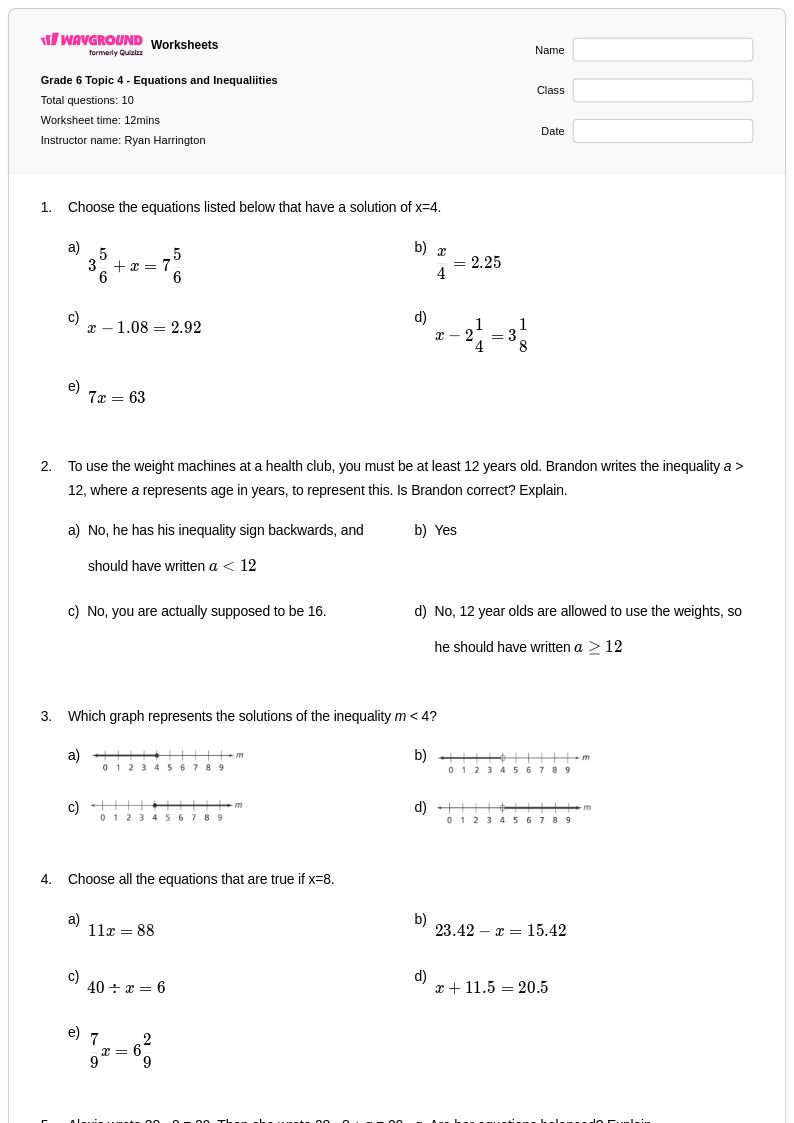
10 Q
6th
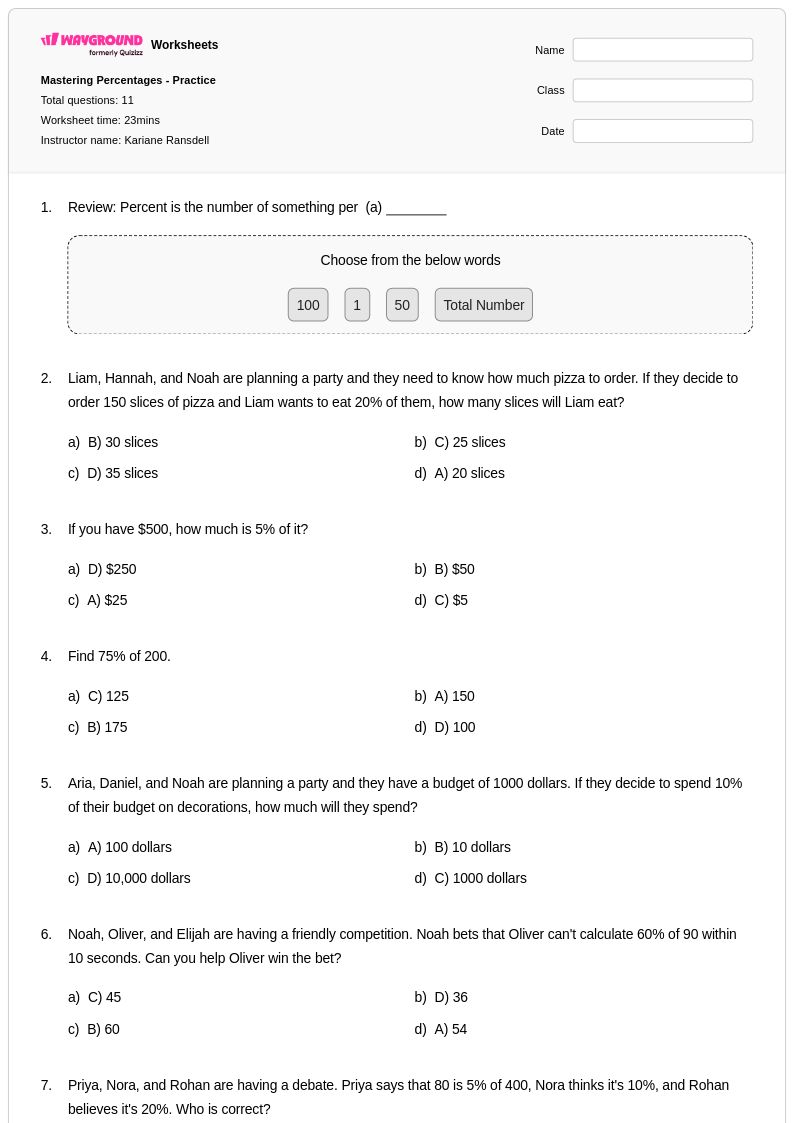
11 Q
6th
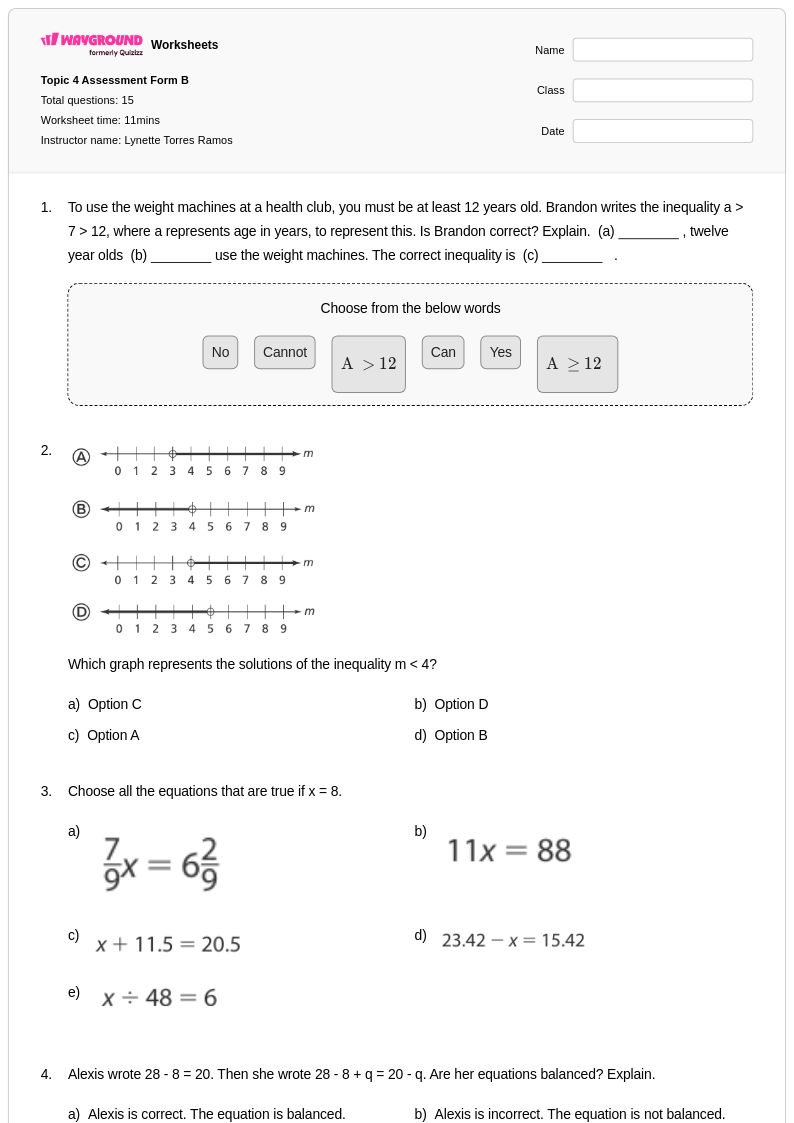
15 Q
6th
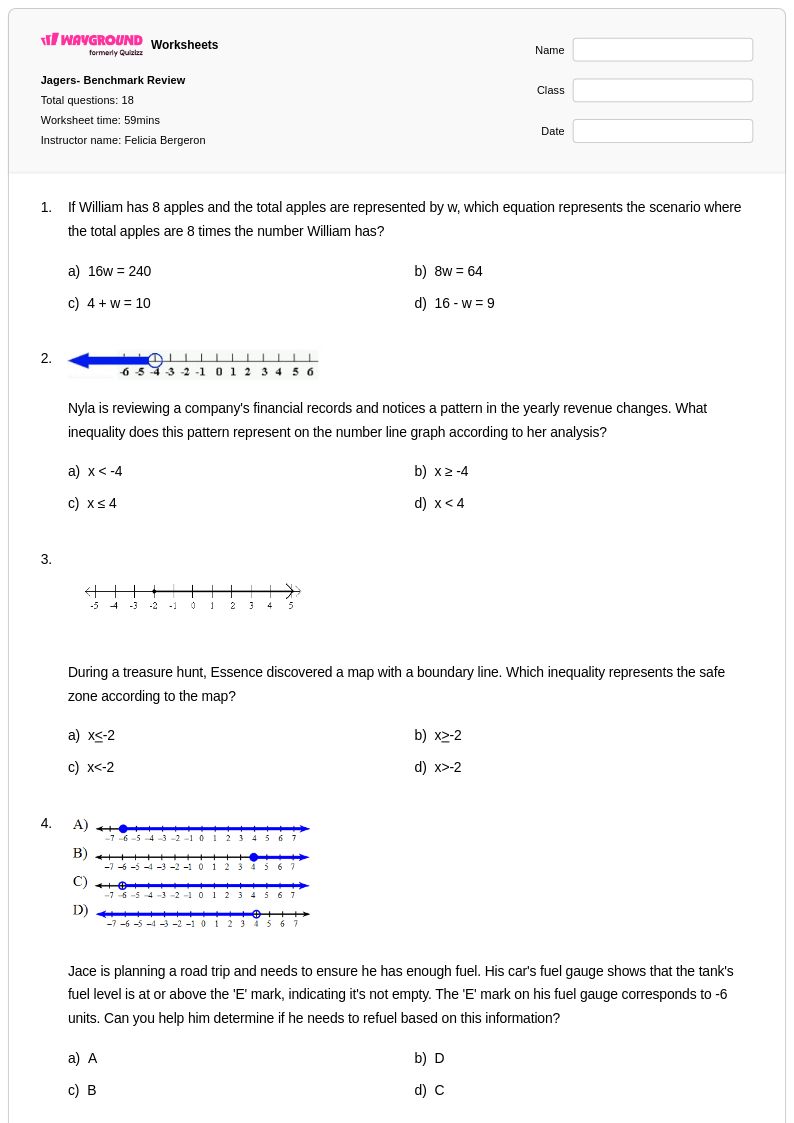
18 Q
6th
Explore Other Subject Worksheets for class 6
Explore printable Budget Planning worksheets for Class 6
Budget planning worksheets for Class 6 students available through Wayground (formerly Quizizz) provide essential practice in managing personal finances and making informed spending decisions. These comprehensive resources help sixth-grade students develop critical mathematical skills while learning to create realistic budgets, track income and expenses, and understand the difference between needs and wants. The worksheets feature real-world scenarios that challenge students to allocate funds for various categories such as housing, food, transportation, and entertainment, strengthening their ability to perform calculations with decimals, percentages, and whole numbers. Each printable resource includes detailed answer keys and practice problems that guide students through the budget creation process, from identifying income sources to balancing expenditures, making these free materials invaluable for building foundational financial literacy skills.
Wayground (formerly Quizizz) supports educators with millions of teacher-created budget planning resources specifically designed for Class 6 mathematics instruction. The platform's robust search and filtering capabilities allow teachers to quickly locate worksheets that align with curriculum standards and match their students' specific learning needs. These versatile materials are available in both printable pdf formats and digital versions, enabling flexible classroom implementation for whole-group instruction, small-group work, or independent practice. Teachers can easily customize the worksheets to provide differentiated instruction, using simpler budget scenarios for remediation or more complex financial planning challenges for enrichment, while the extensive collection ensures educators have access to varied practice opportunities that reinforce mathematical concepts within meaningful financial contexts.
FAQs
How do I teach budget planning to sixth graders?
What exercises help Grade 6 students practice budget planning?
What mistakes do sixth graders commonly make when creating a budget?
How can I use a Grade 6 budget planning worksheet in class?
How does Grade 6 budget planning connect to Common Core math?
How can I differentiate budget planning practice for a mixed-ability Grade 6 class?
What grade is budget planning typically taught in?