
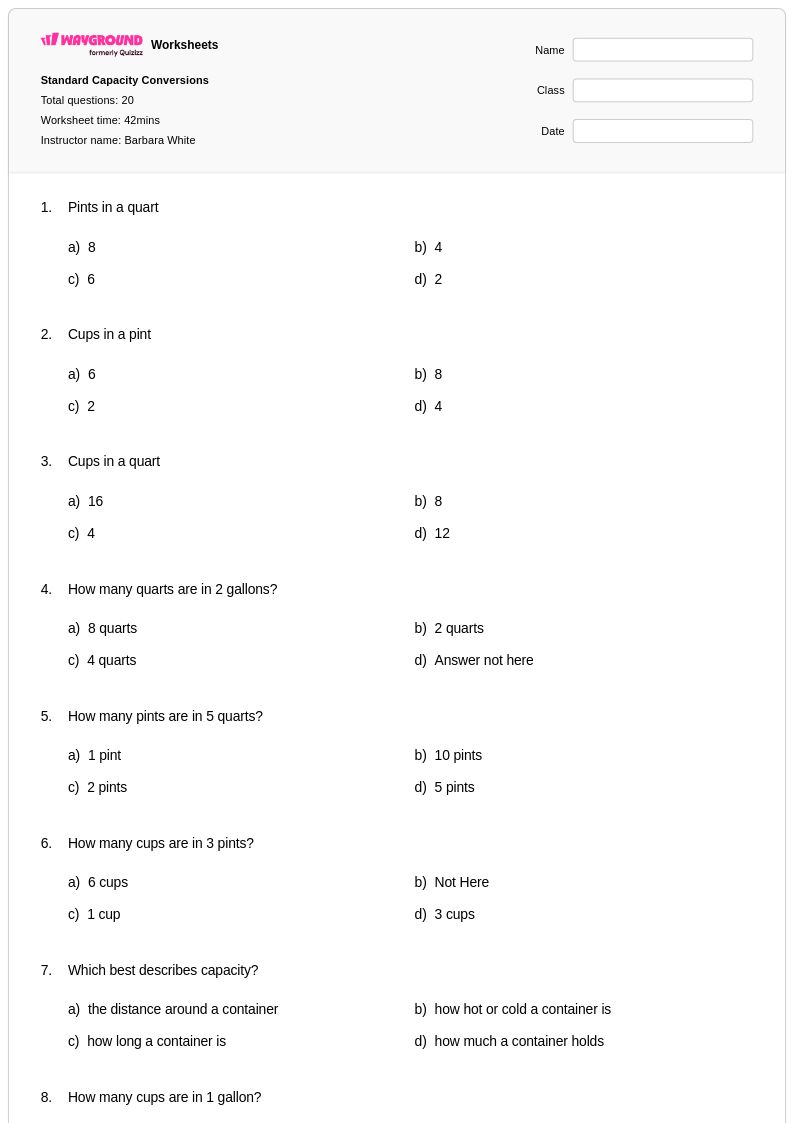
20 Q
4th
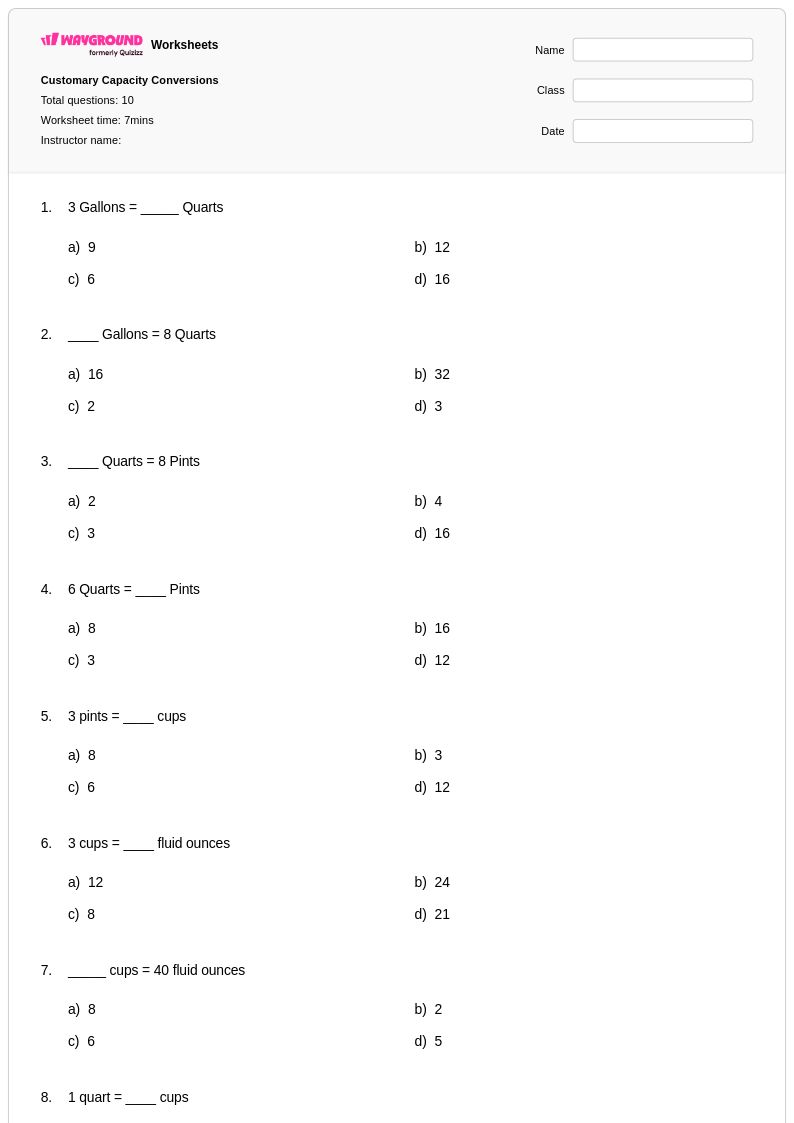
10 Q
4th
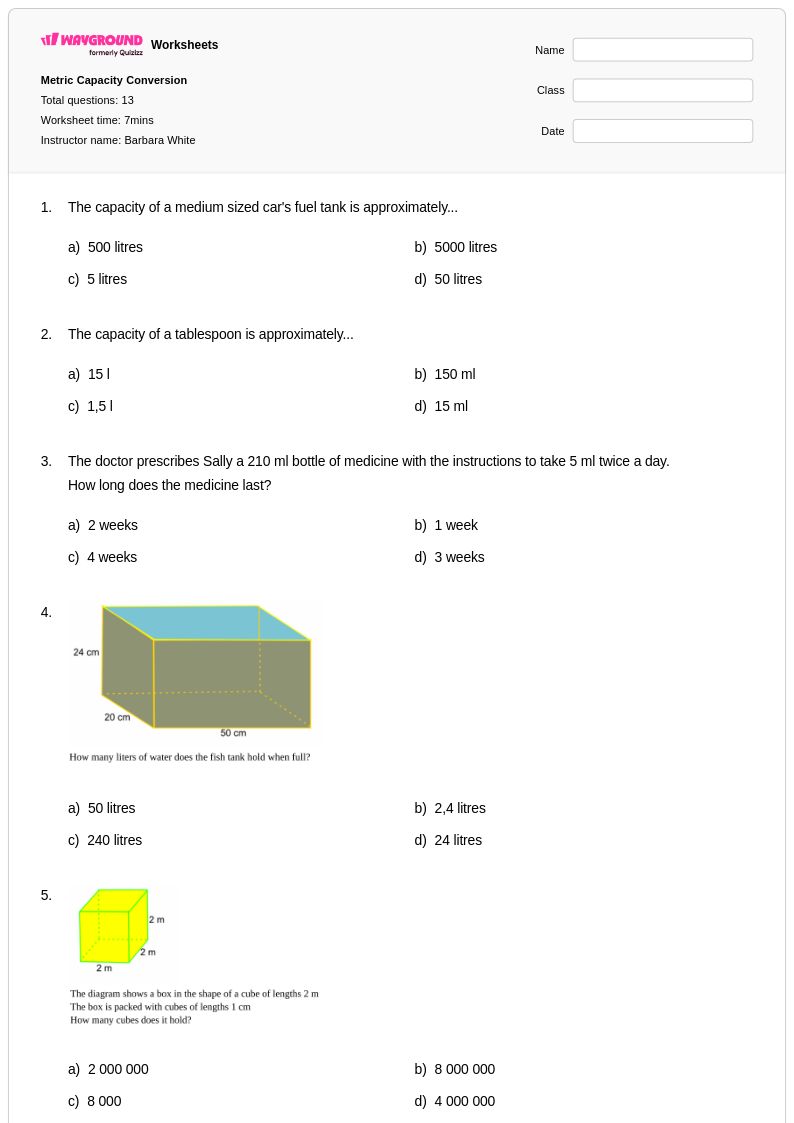
13 Q
7th - 9th

13 Q
9th
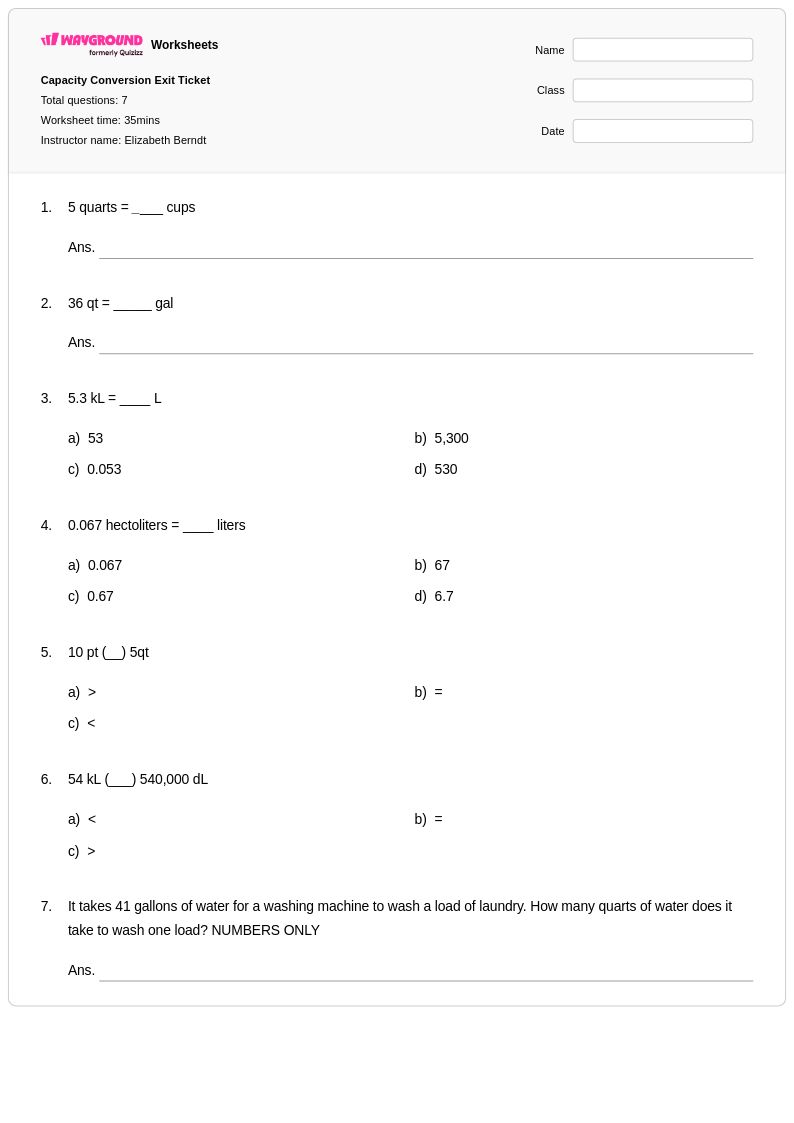
7 Q
6th

20 Q
5th
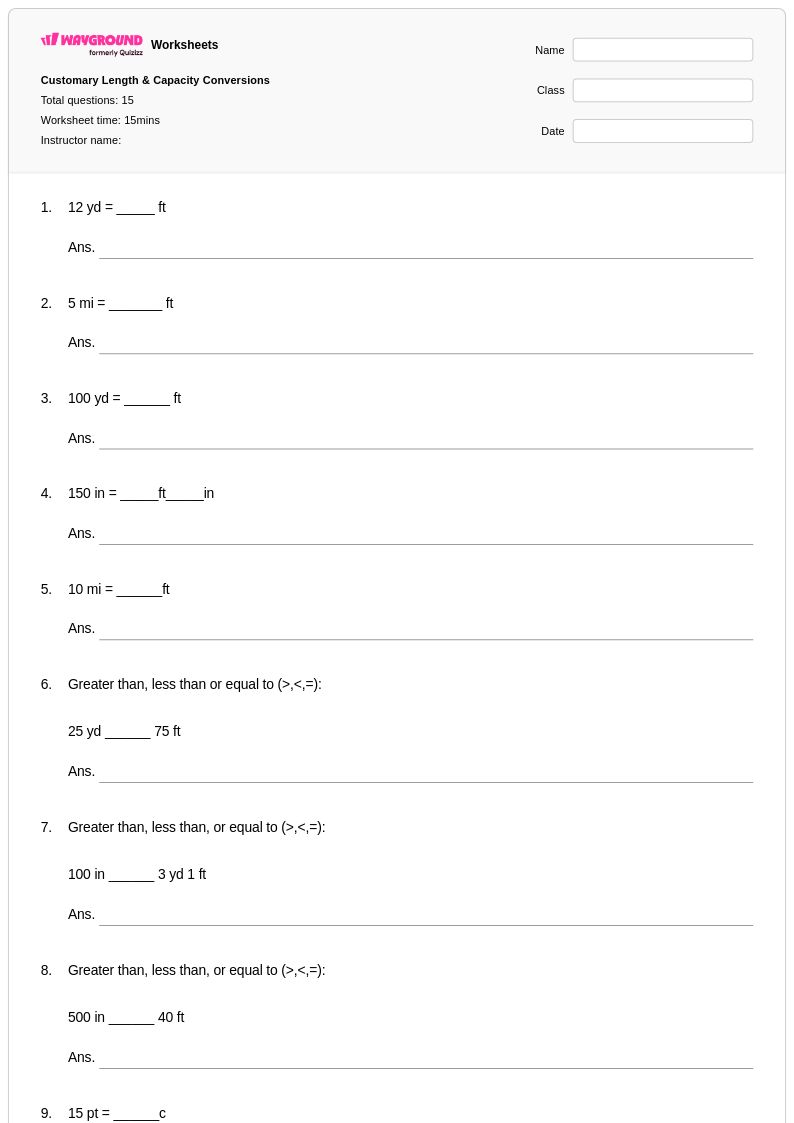
15 Q
5th
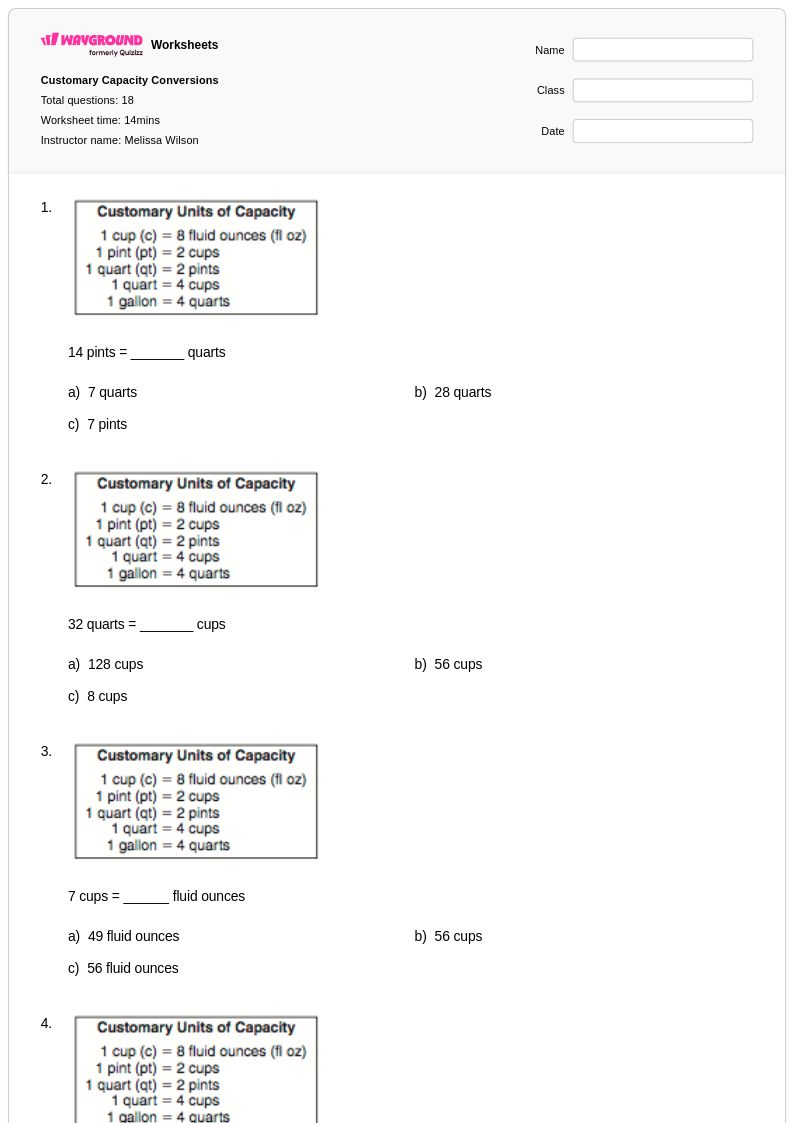
18 Q
5th
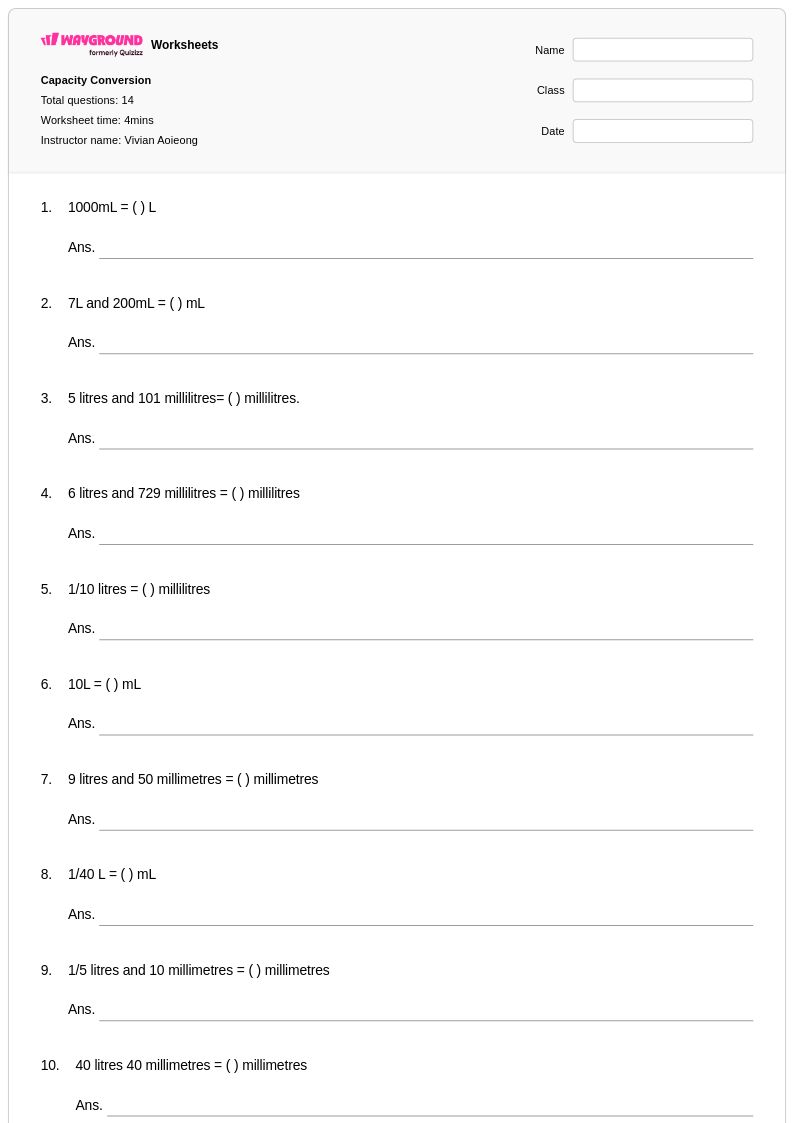
14 Q
3rd
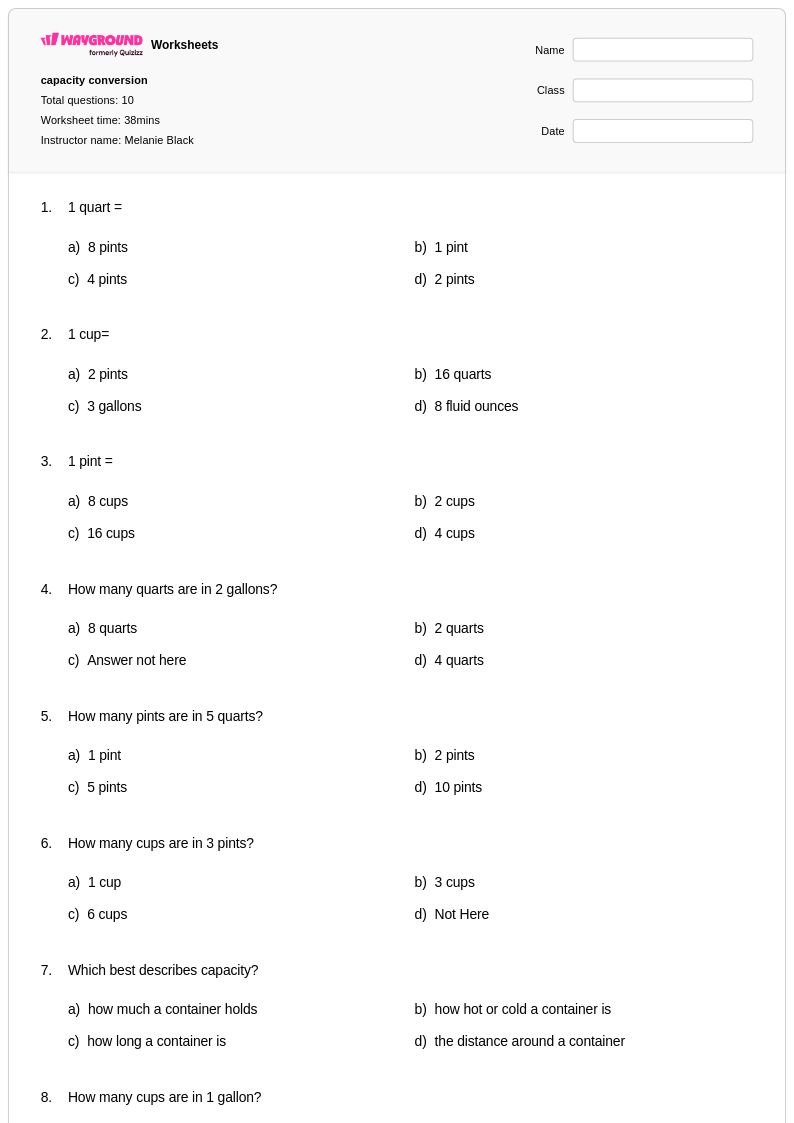
10 Q
4th
24 Q
5th
6 Q
4th
10 Q
4th
20 Q
5th - Uni
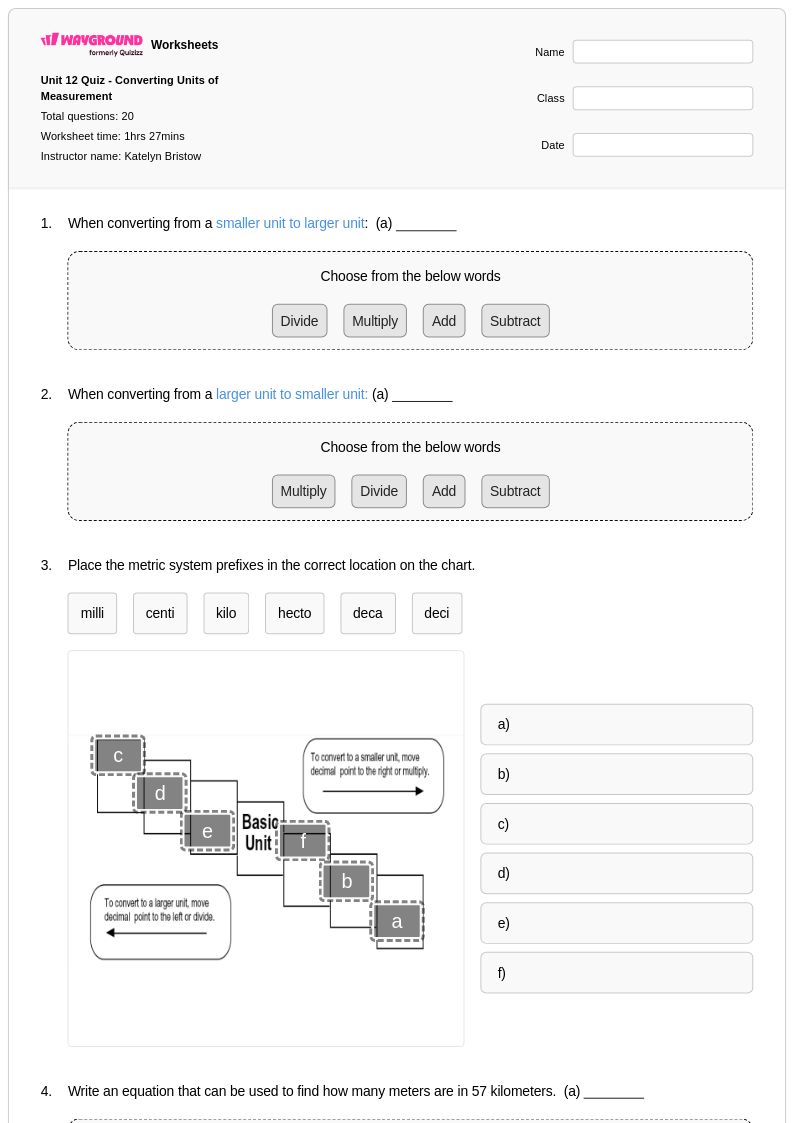
20 Q
5th
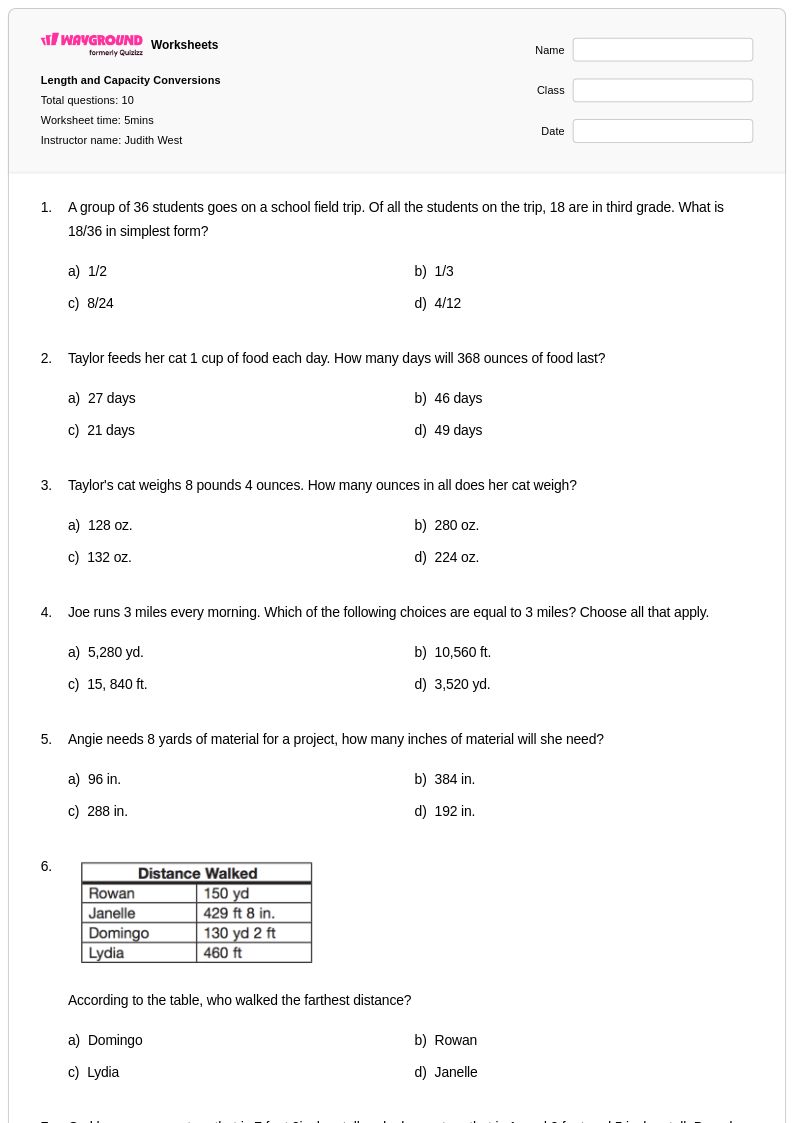
10 Q
5th
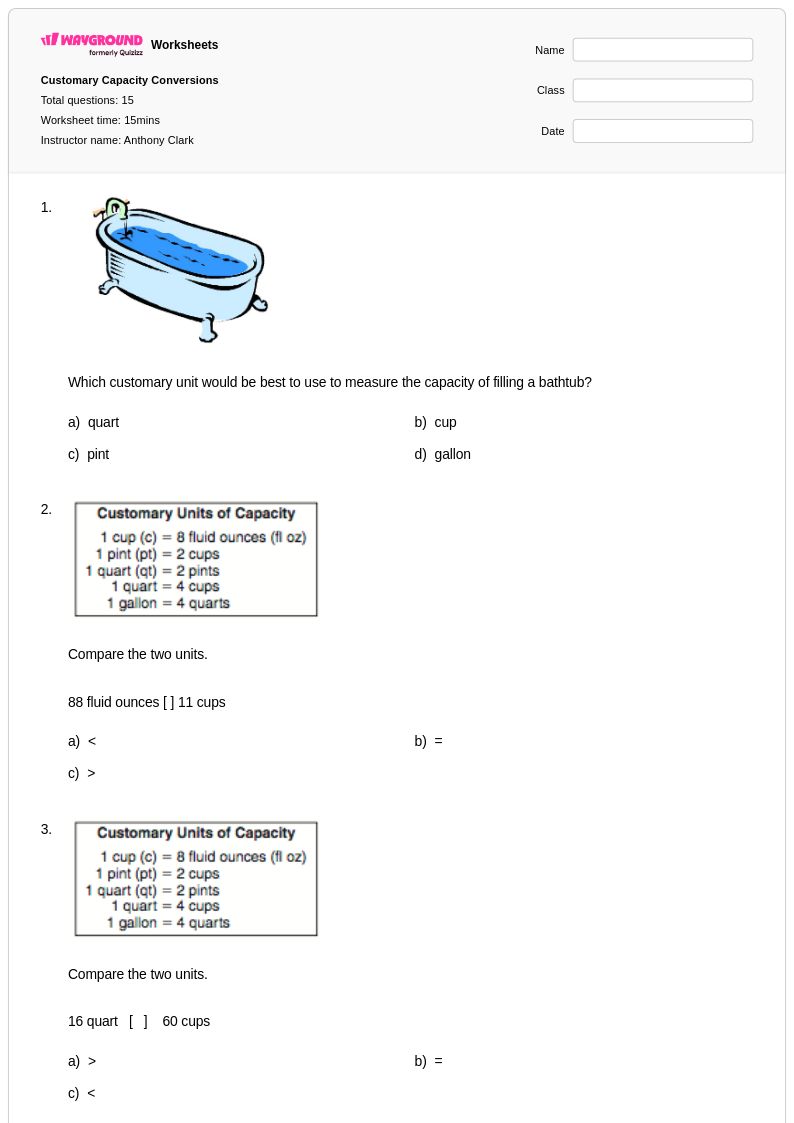
15 Q
5th - Uni
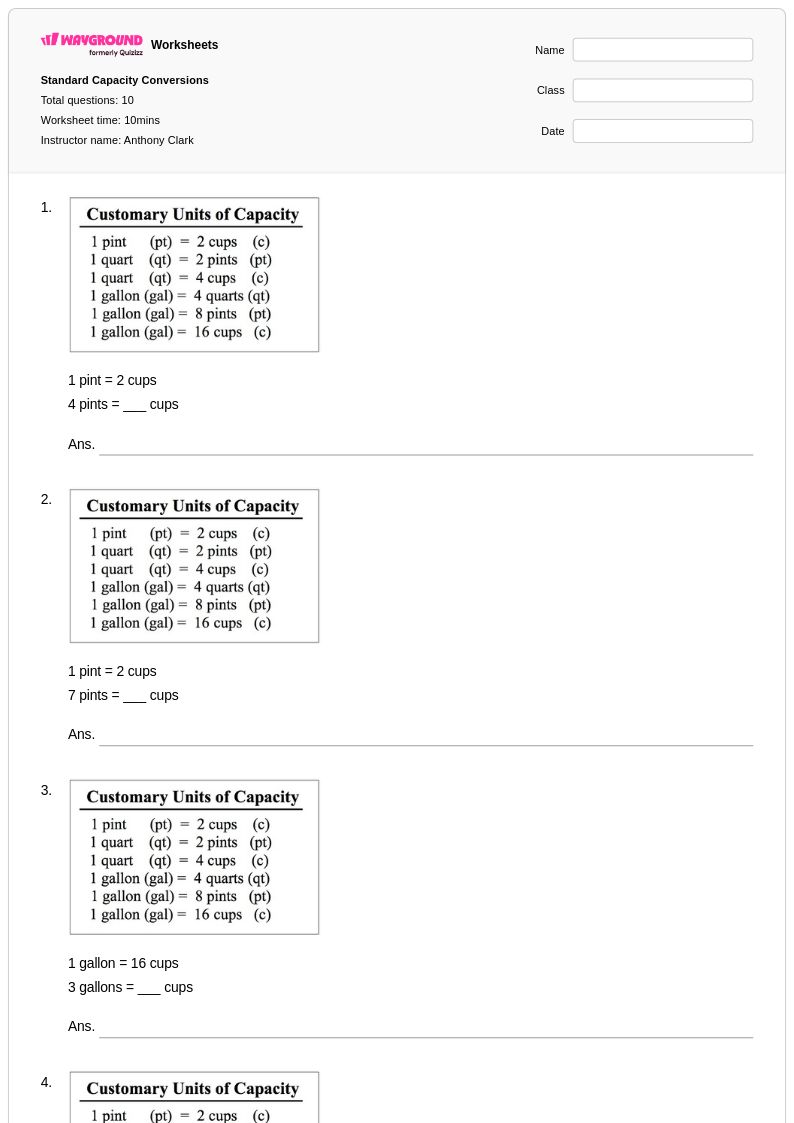
10 Q
5th - Uni
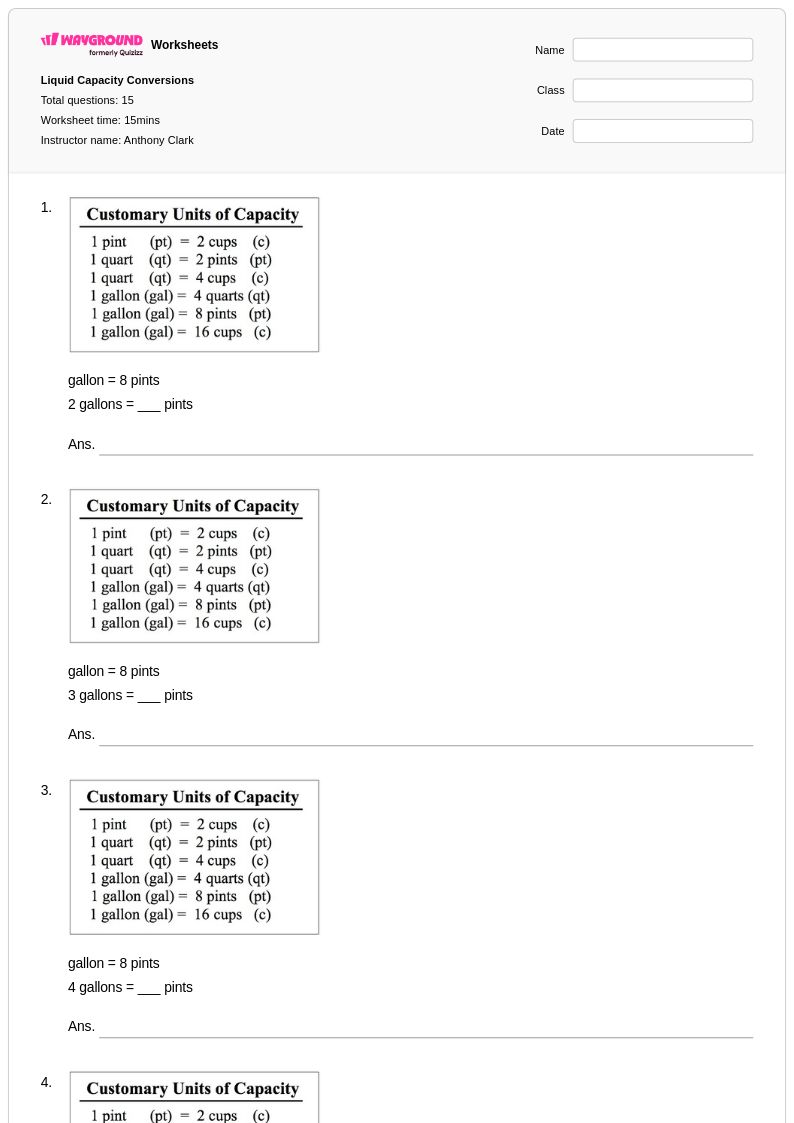
15 Q
5th - Uni

15 Q
5th - Uni
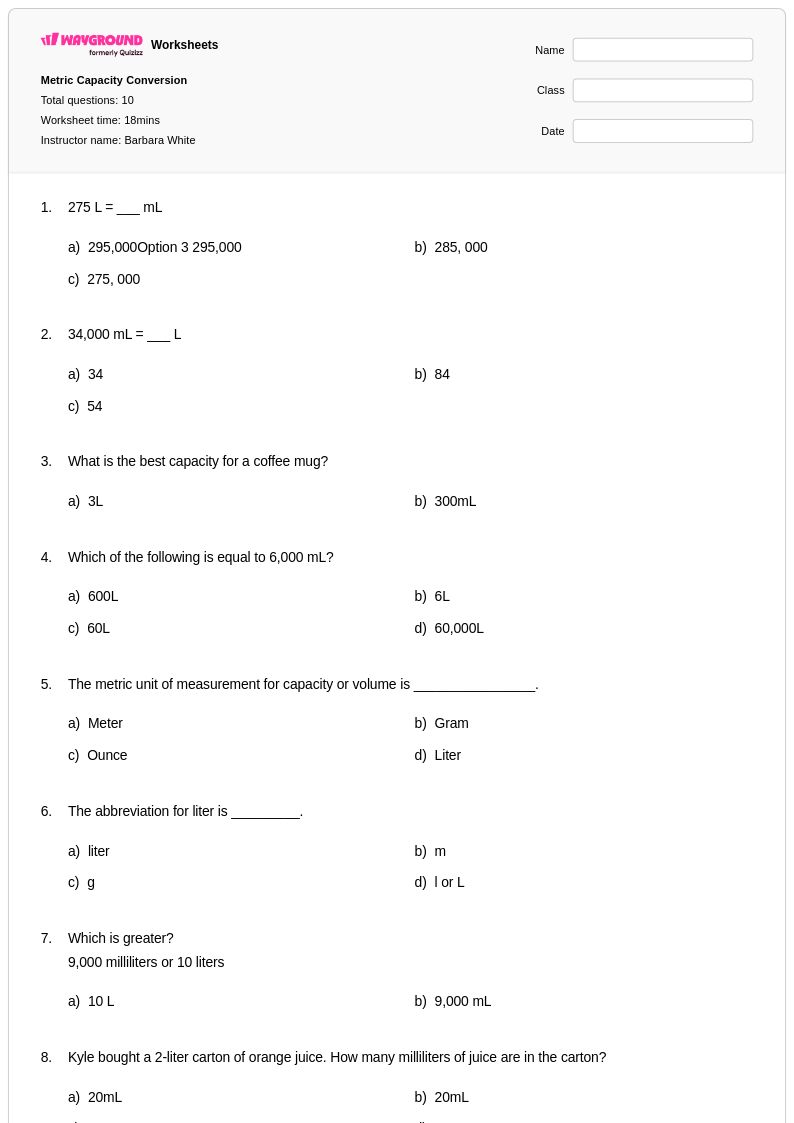
10 Q
5th
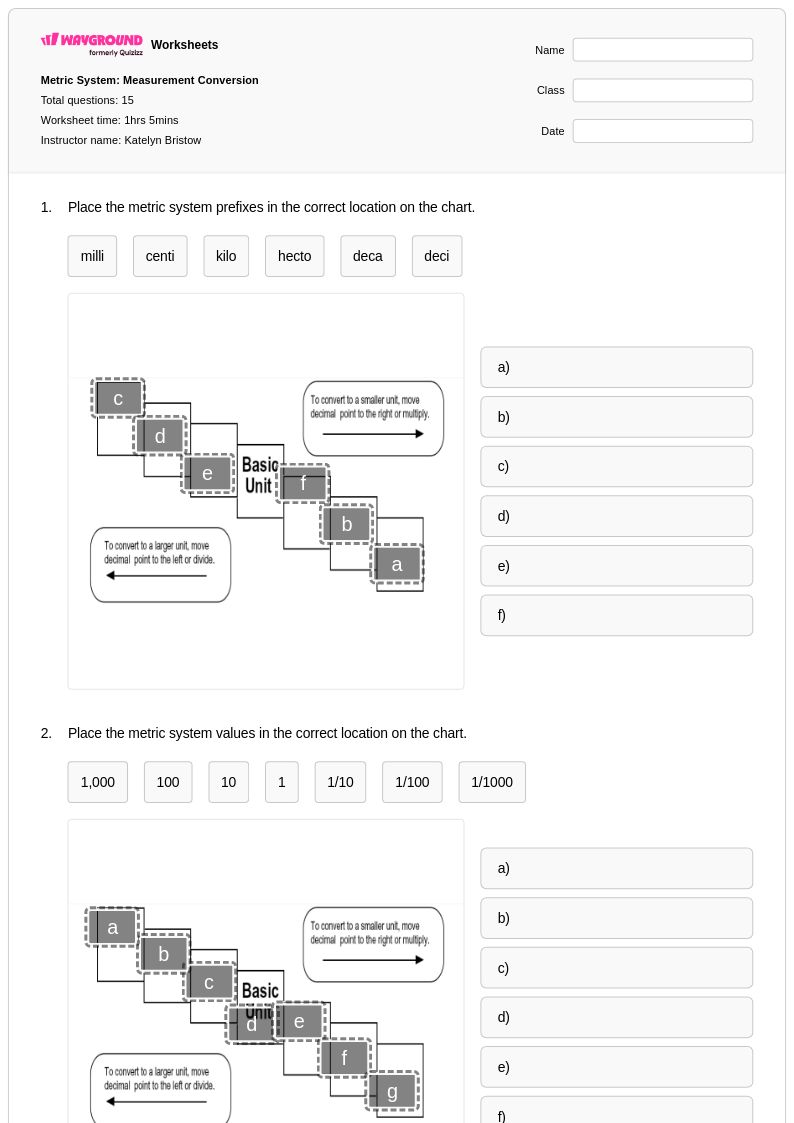
15 Q
5th
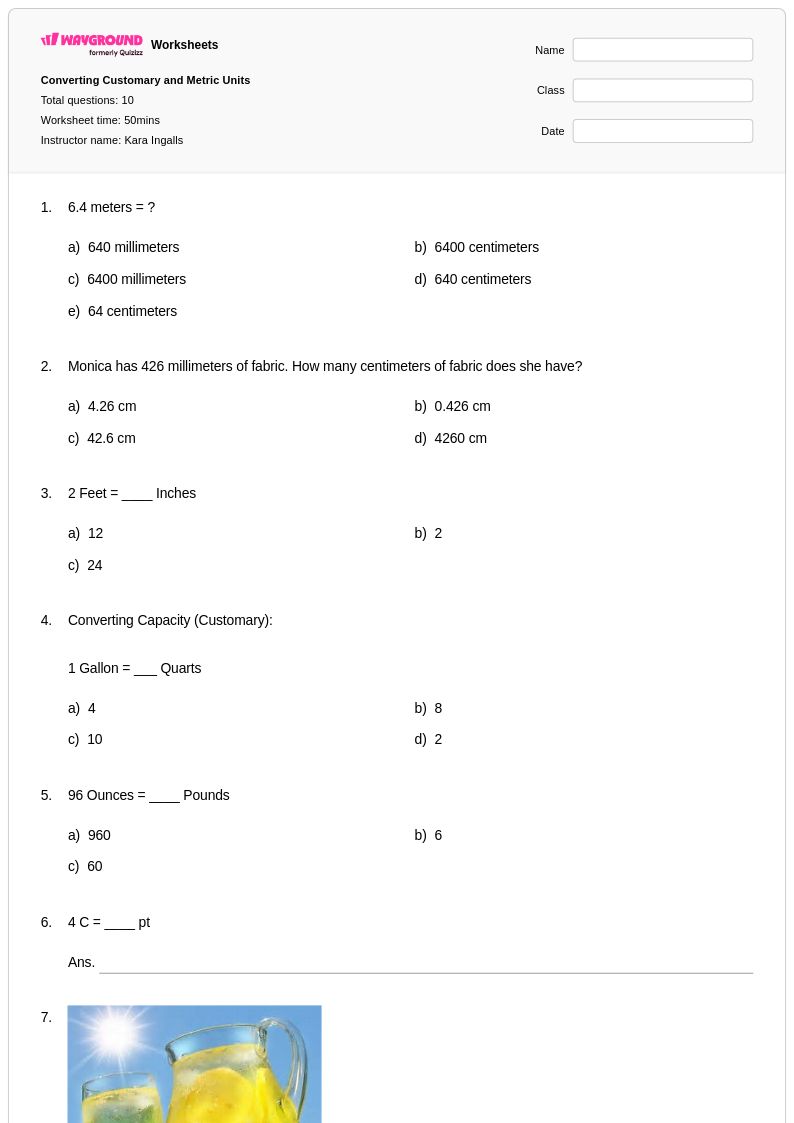
10 Q
5th
10 Q
4th
Explore Worksheets by Subjects
Explore printable Capacity Conversion worksheets
Capacity conversion worksheets available through Wayground (formerly Quizizz) provide comprehensive practice for students learning to convert between different units of liquid and dry measurement. These expertly designed worksheets strengthen essential mathematical skills including understanding equivalencies between metric and customary units, applying conversion factors, and solving real-world problems involving gallons, liters, quarts, milliliters, cups, and other capacity measurements. Students work through systematically structured practice problems that build confidence in converting between larger and smaller units, while answer keys enable immediate feedback and self-assessment. The collection includes free printables in convenient pdf format, ensuring teachers have access to ready-to-use resources that reinforce fundamental measurement concepts through engaging, hands-on practice.
Wayground (formerly Quizizz) empowers educators with millions of teacher-created capacity conversion resources that streamline lesson planning and enhance mathematical instruction. The platform's robust search and filtering capabilities allow teachers to quickly locate worksheets aligned with specific learning standards and tailored to diverse student needs. Advanced differentiation tools enable customization of difficulty levels, problem types, and formatting options, supporting both remediation for struggling learners and enrichment opportunities for advanced students. Available in both printable and digital formats including downloadable pdf versions, these comprehensive worksheet collections facilitate flexible implementation across various learning environments while providing consistent skill practice that builds mathematical fluency and conceptual understanding in measurement conversion.
FAQs
How do I teach capacity conversions?
What exercises help students practice capacity conversions?
What mistakes do students commonly make when converting capacity units?
How can I use a capacity conversion worksheet in my classroom?
How do capacity conversions fit into the Common Core math progression?
How can I differentiate capacity conversion practice?