
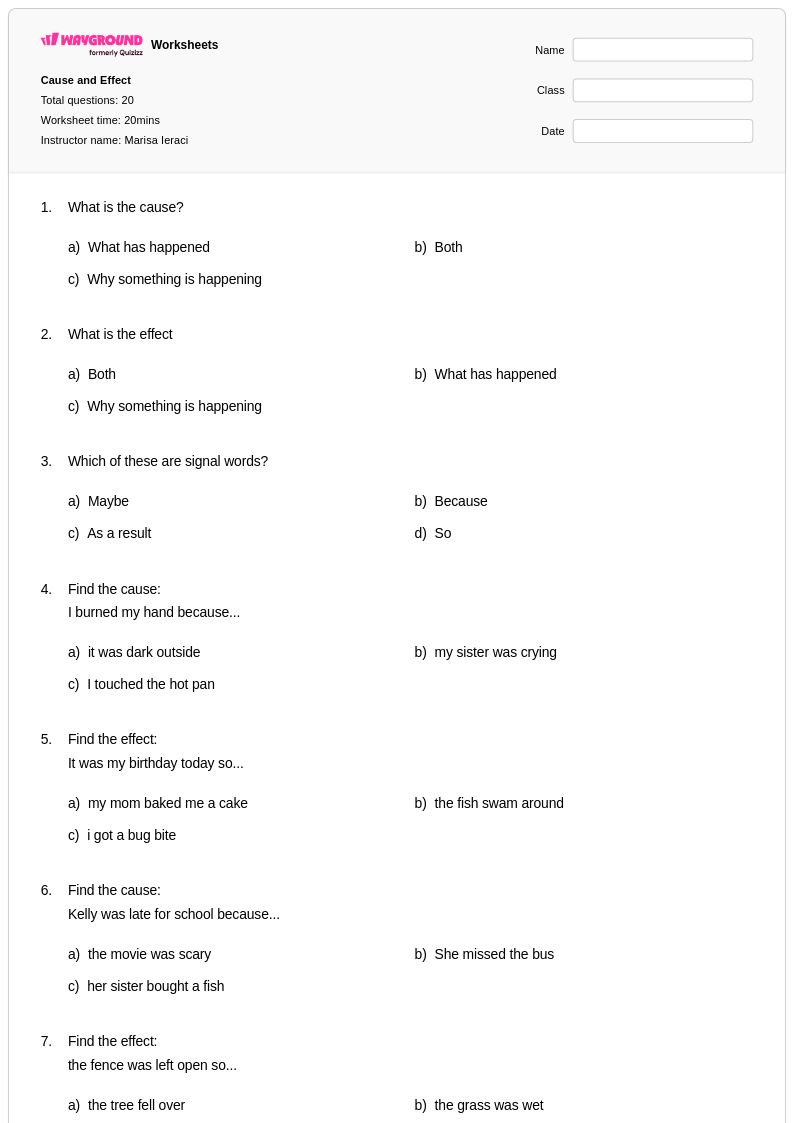
20Q
3rd
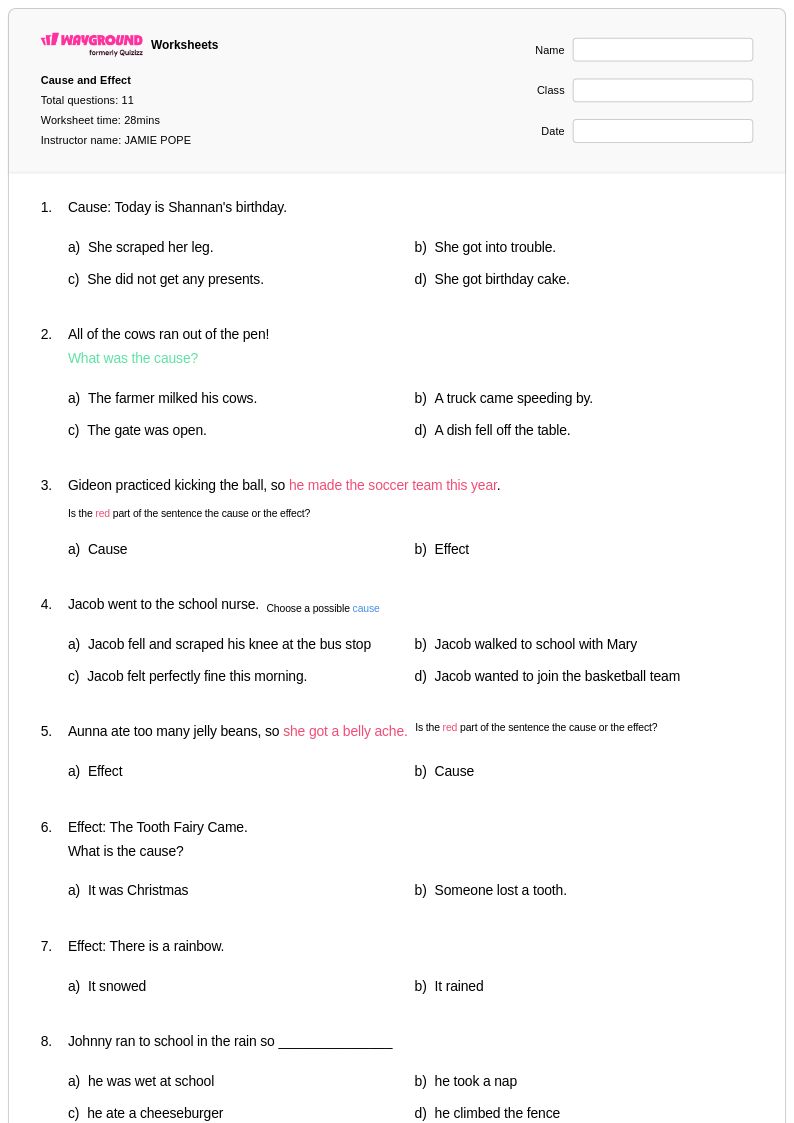
11Q
1st - 3rd
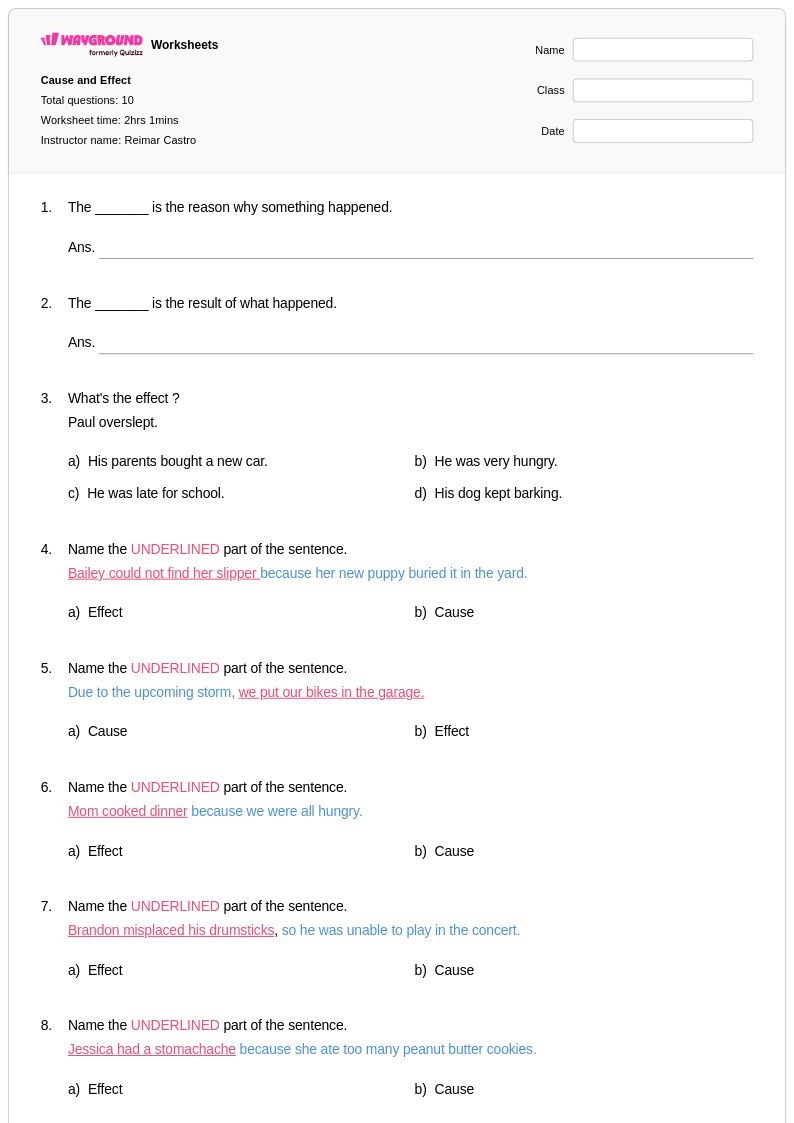
10Q
3rd
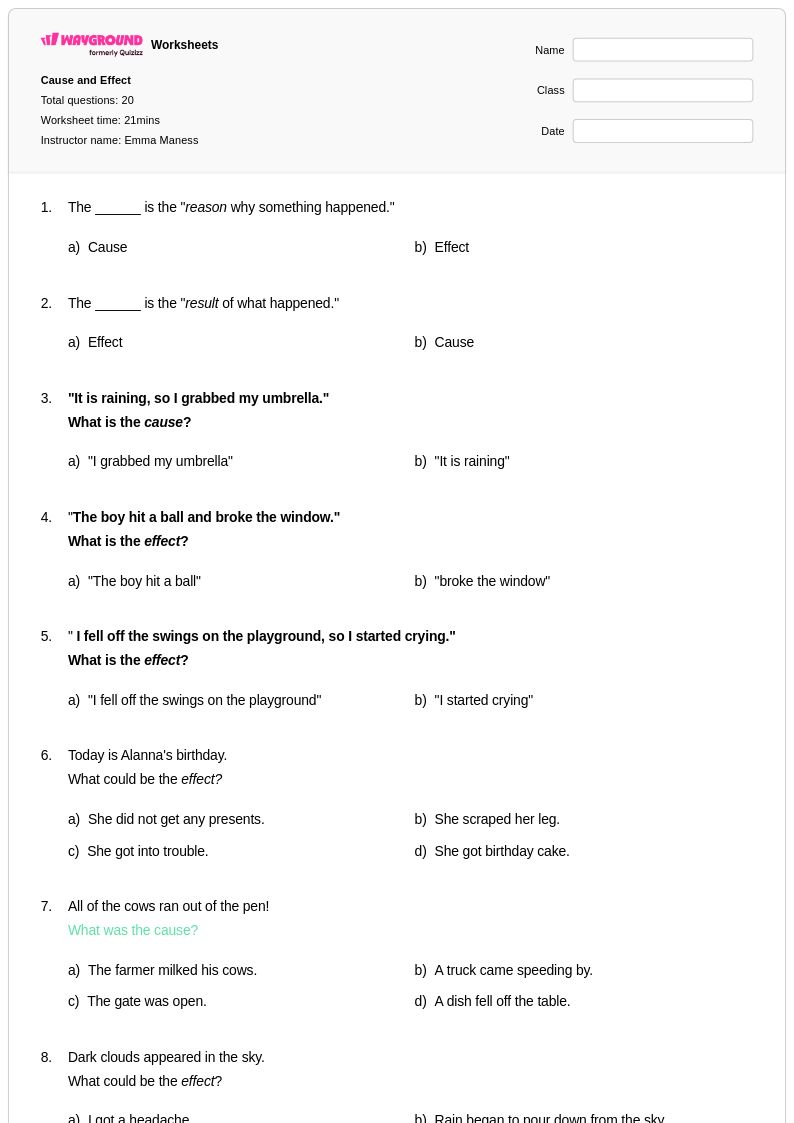
20Q
3rd
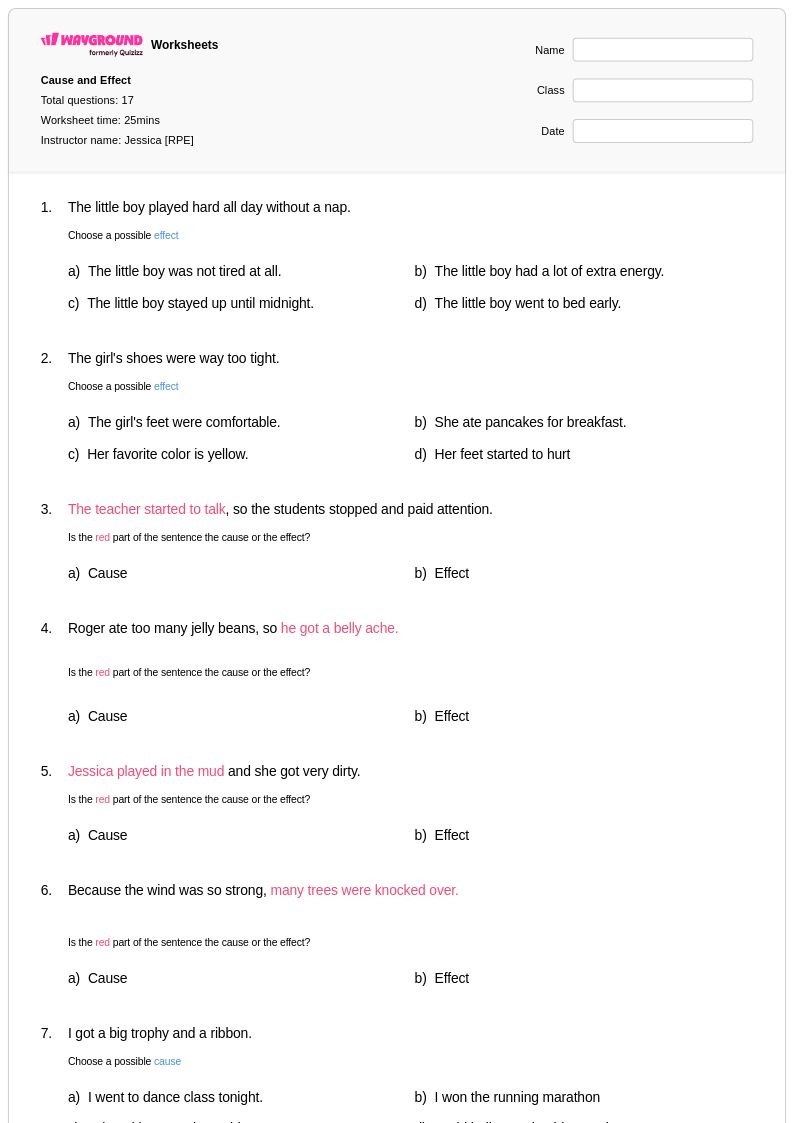
17Q
3rd
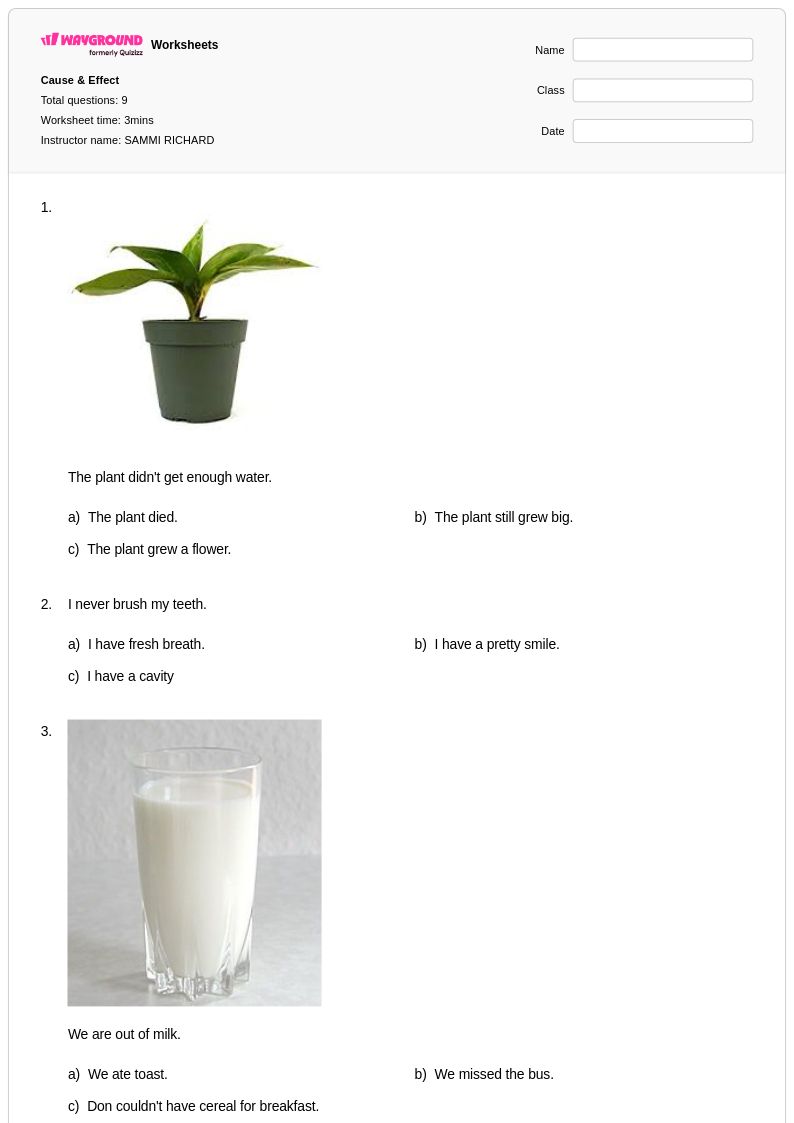
9Q
3rd
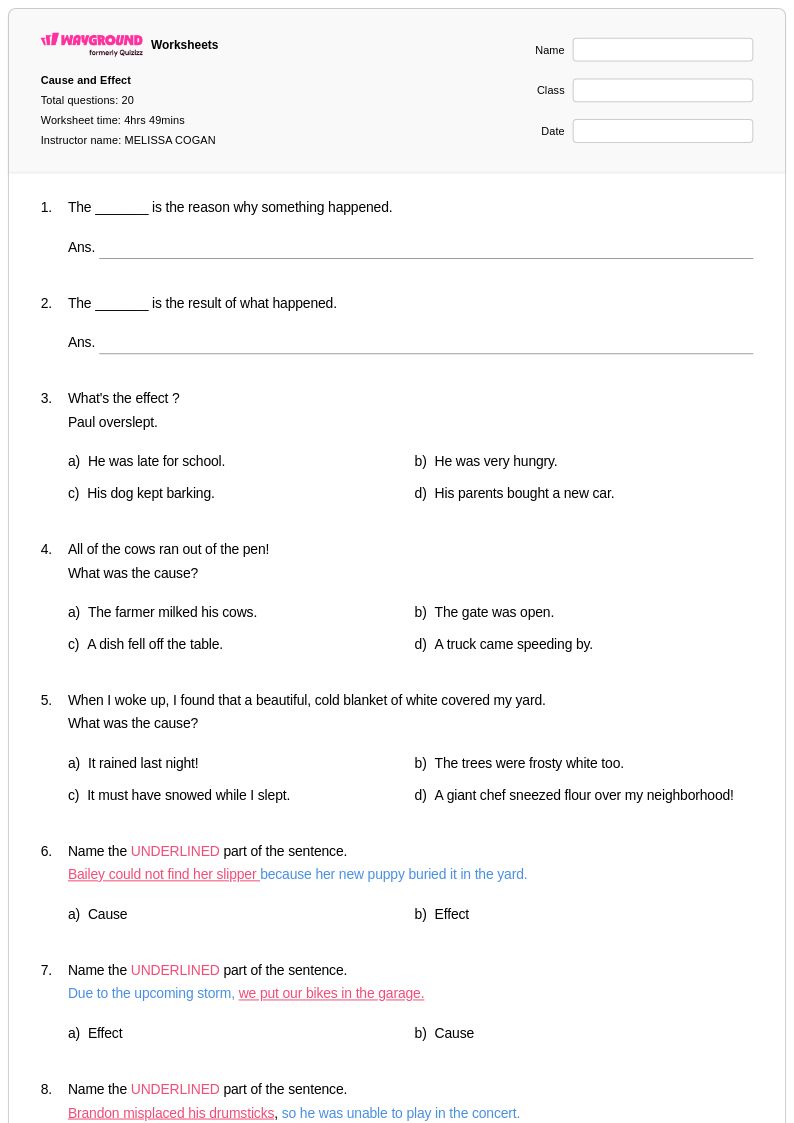
20Q
3rd
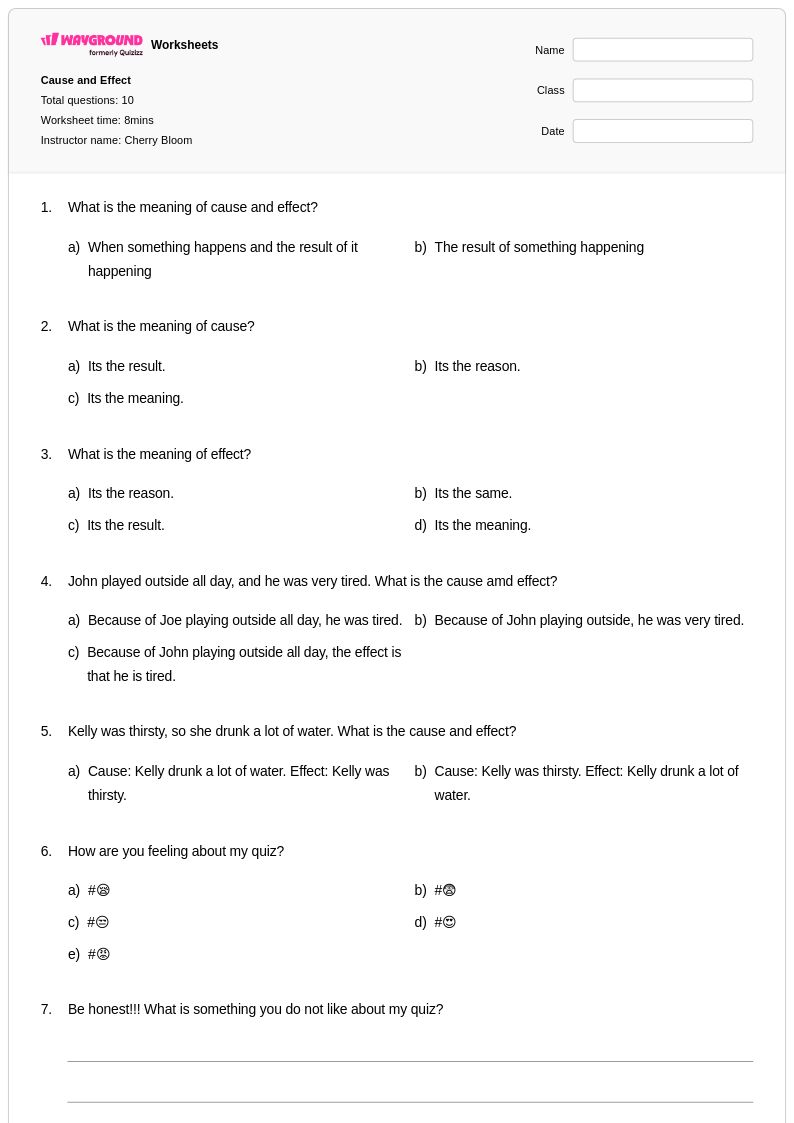
10Q
3rd - 4th
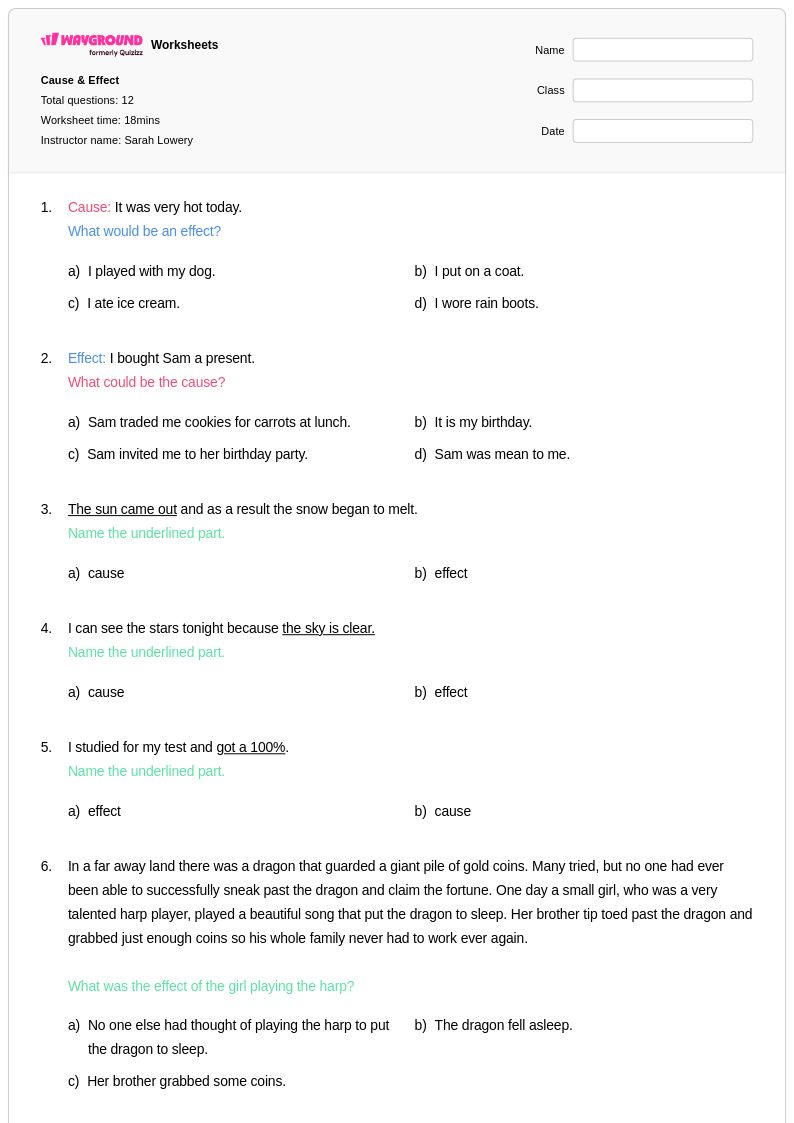
12Q
2nd - 4th
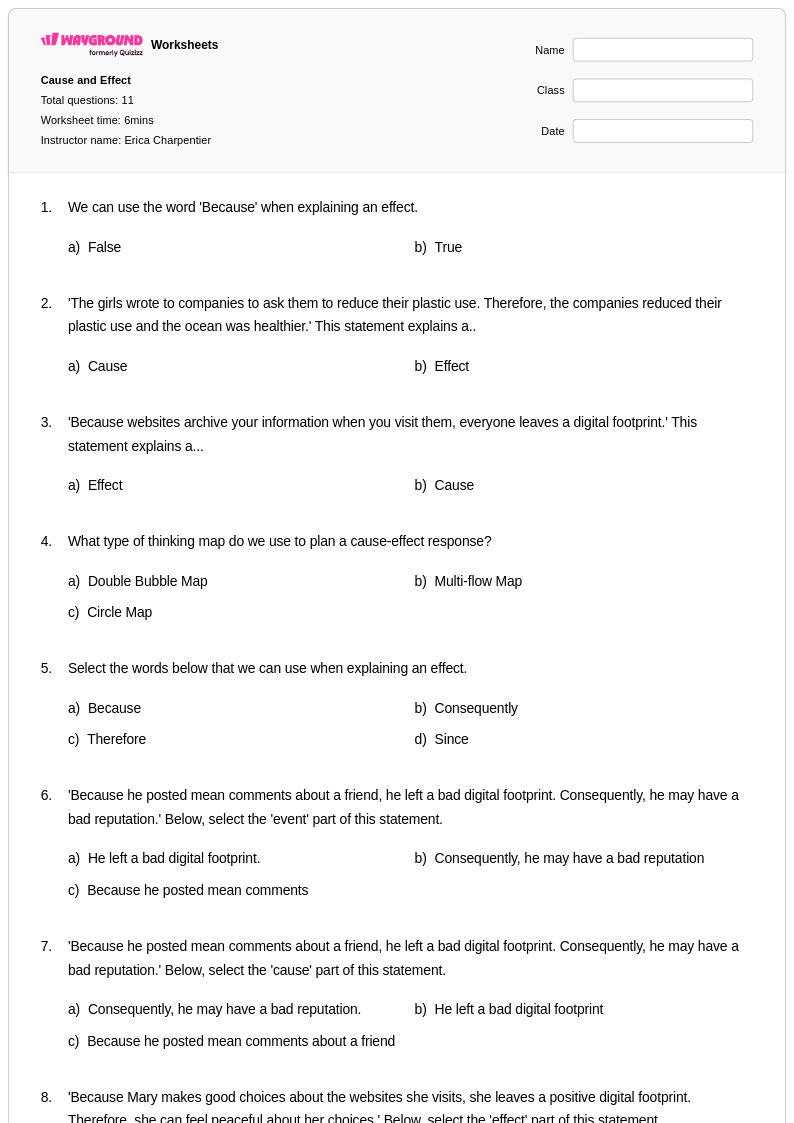
11Q
3rd
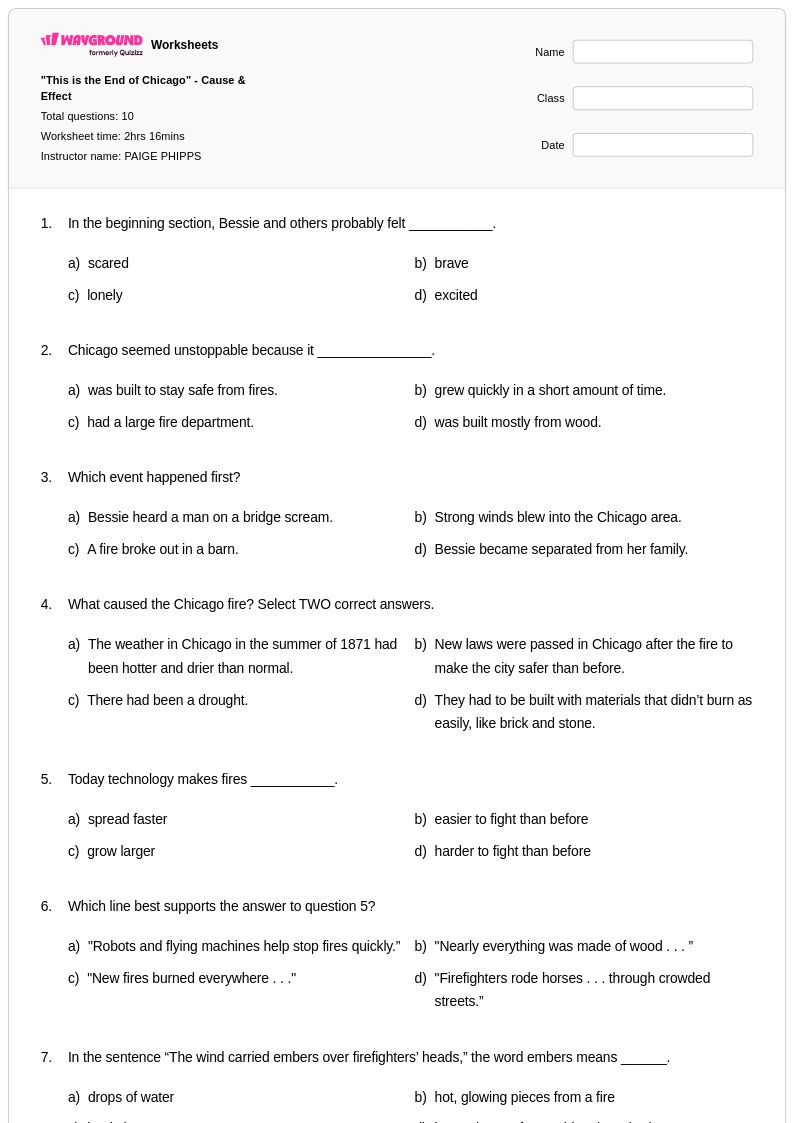
10Q
3rd
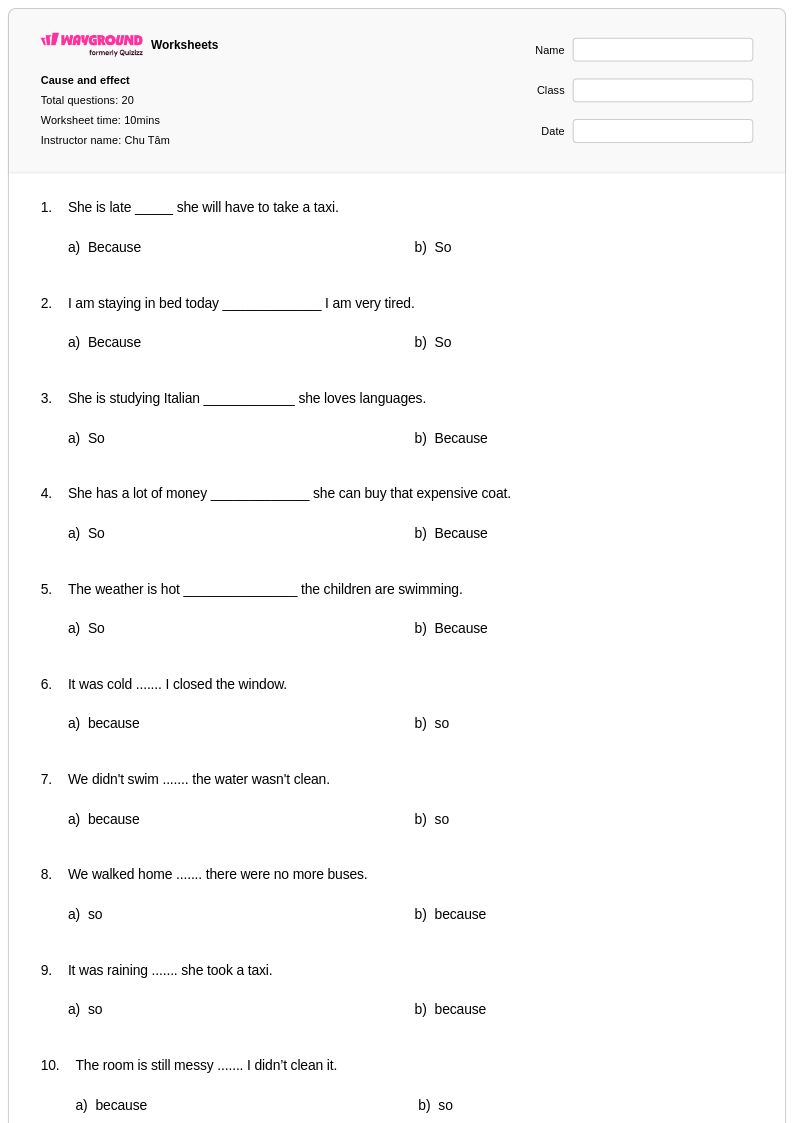
20Q
3rd
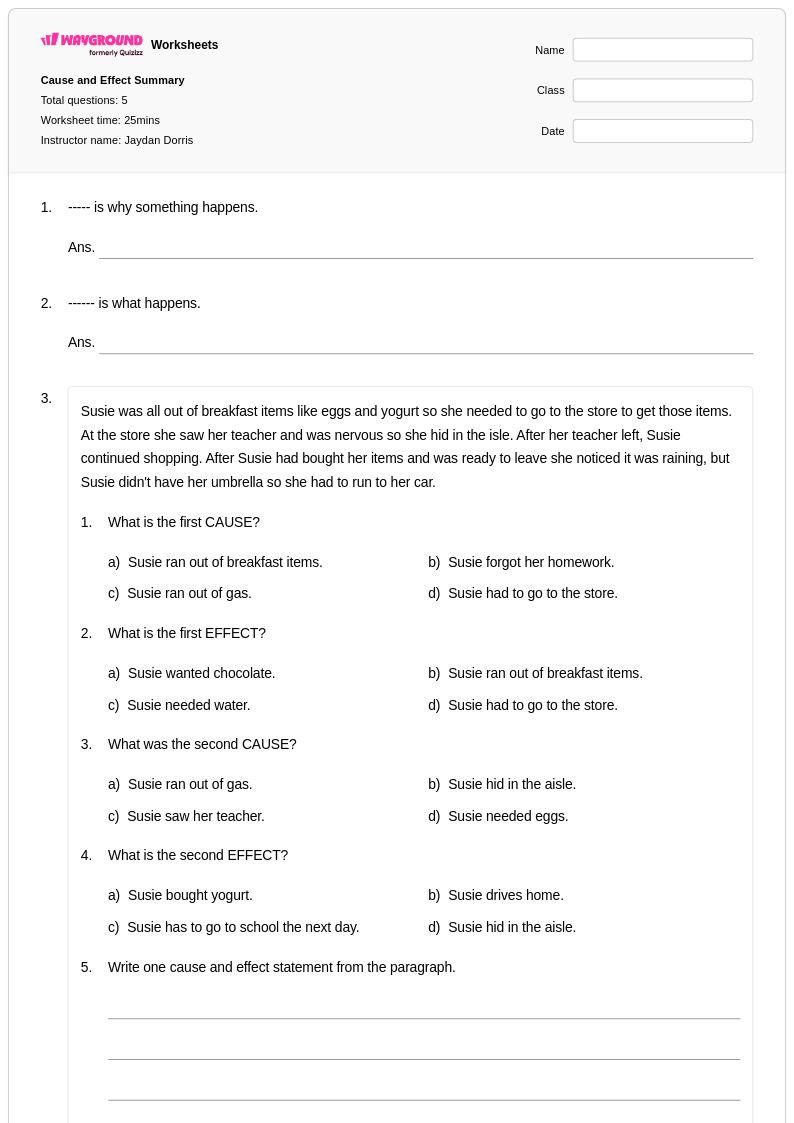
10Q
3rd
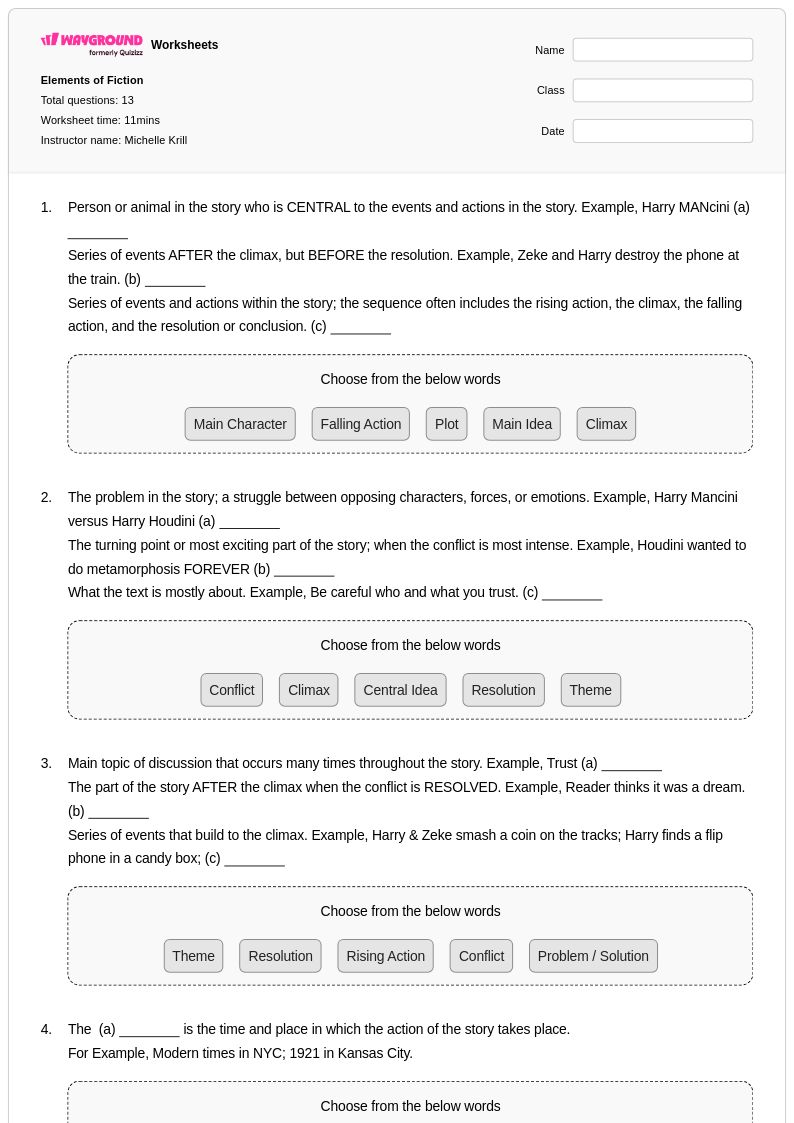
13Q
3rd
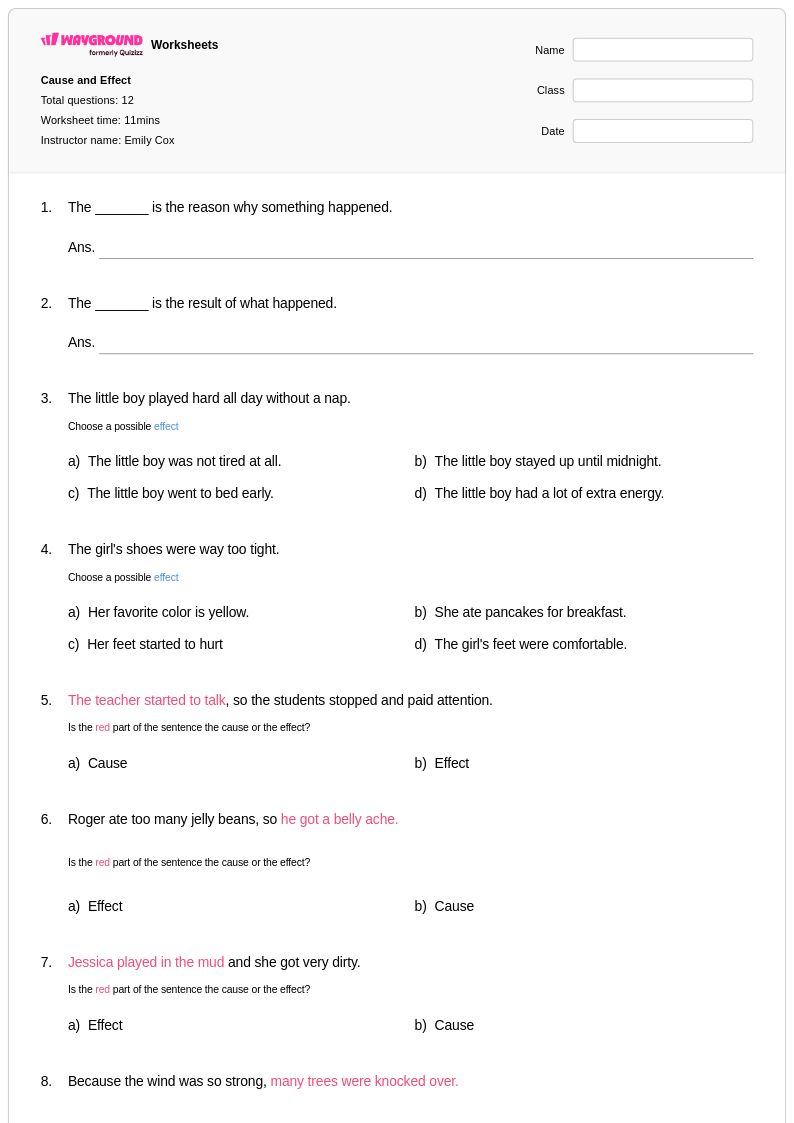
12Q
3rd - 5th
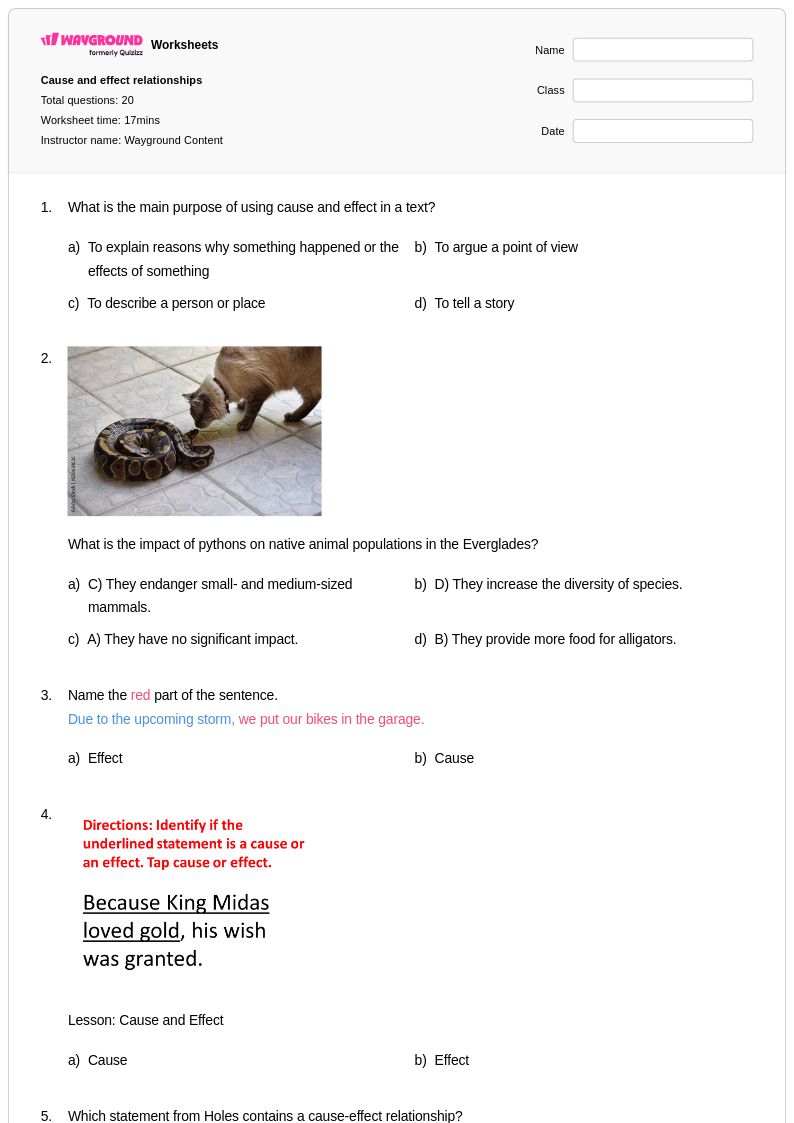
20Q
3rd - 8th
10Q
3rd
6Q
3rd
10Q
3rd
10Q
3rd
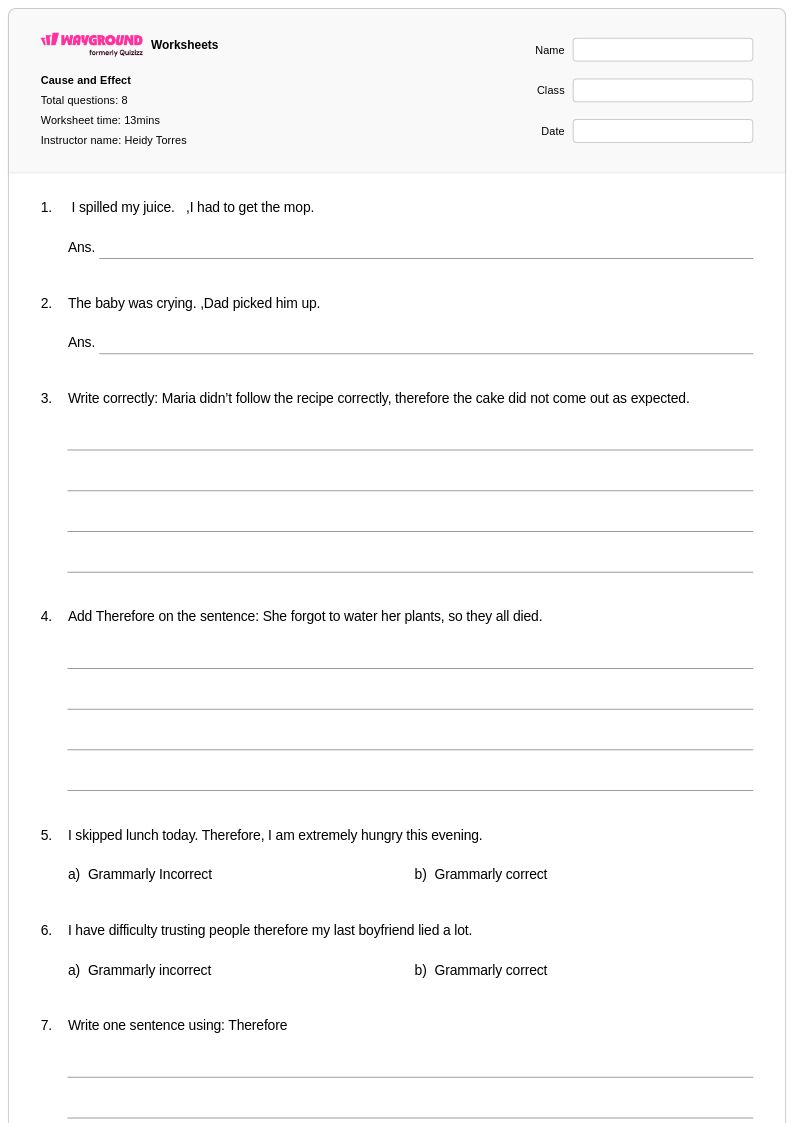
8Q
3rd
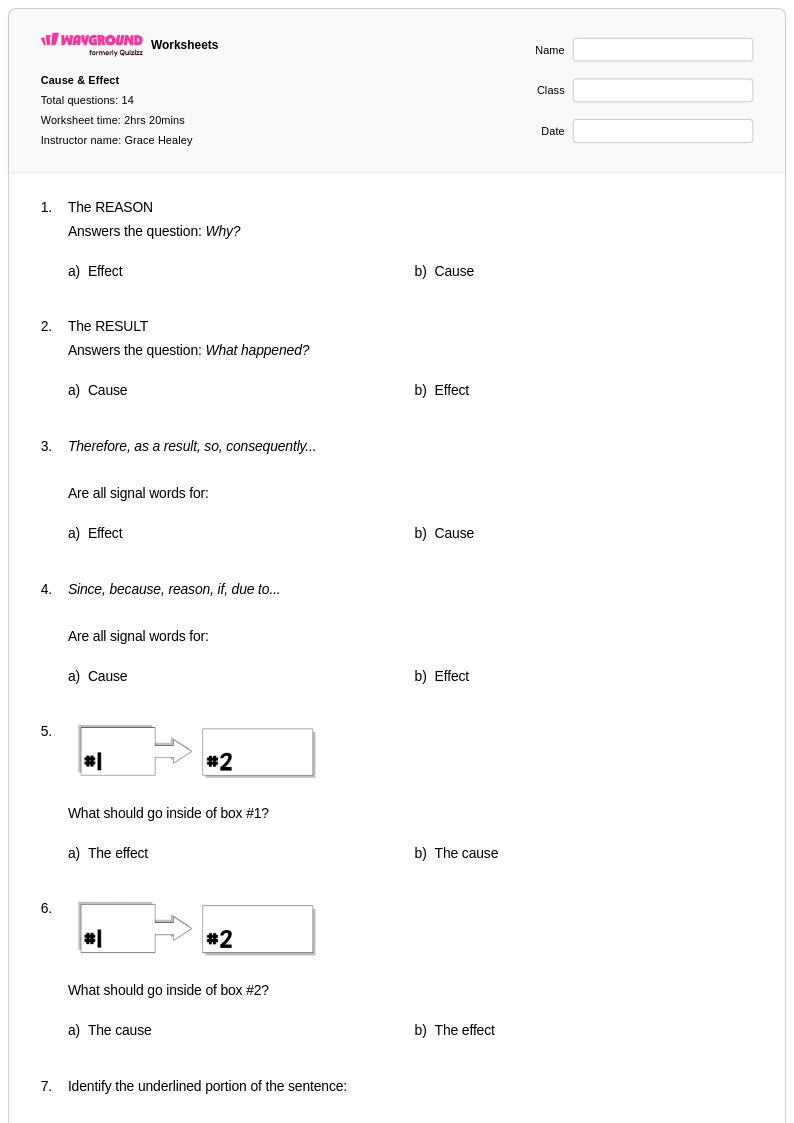
14Q
2nd - 4th
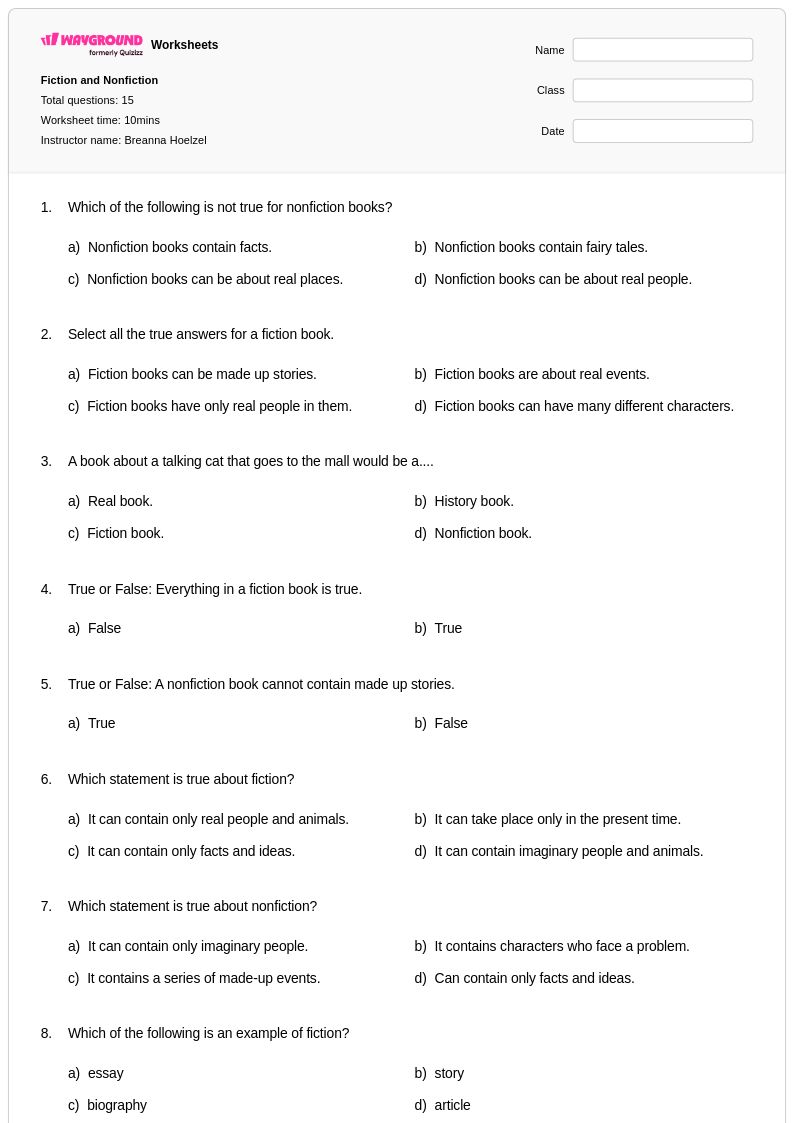
15Q
3rd - 5th
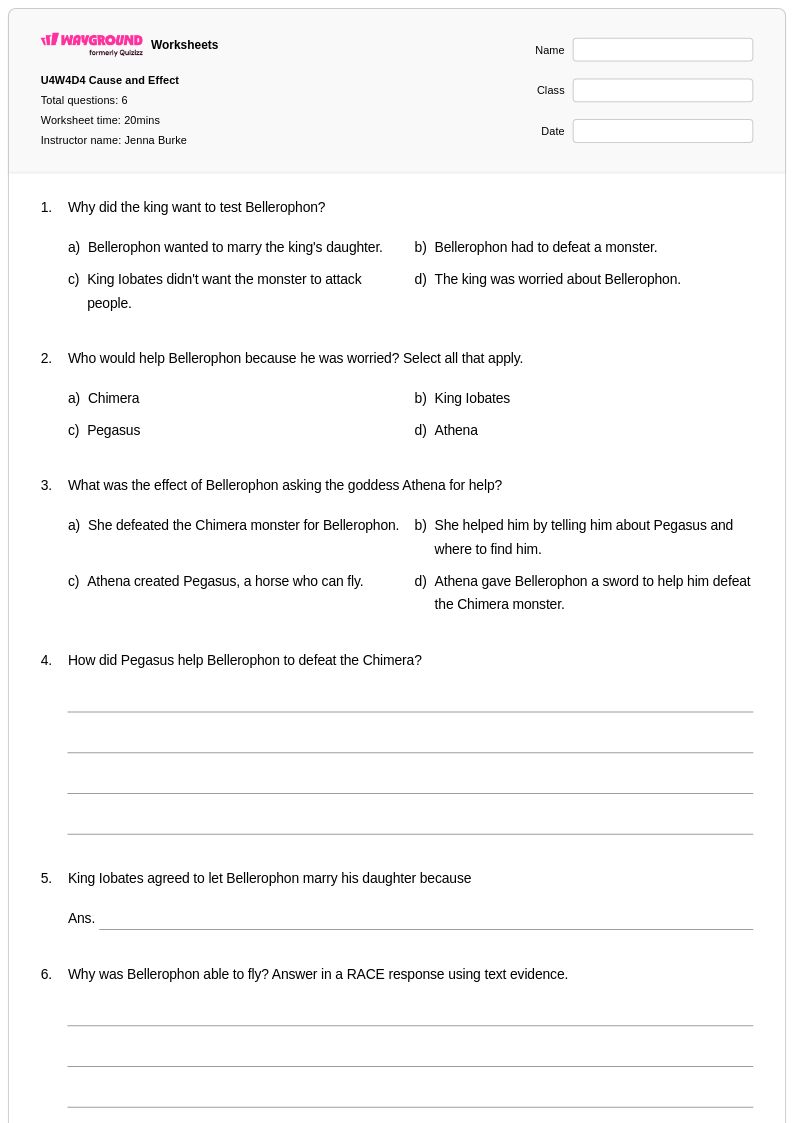
6Q
3rd
Explore planilhas Identifying Cause and Effect in Fiction por notas
Explore outras planilhas de assuntos para class 3
Explore printable Identifying Cause and Effect in Fiction worksheets for Class 3
Identifying cause and effect relationships in fiction represents a fundamental reading comprehension skill that Class 3 students must master to become proficient readers and critical thinkers. Wayground's extensive collection of worksheets focusing on this essential literacy concept provides young learners with structured practice in recognizing how events, actions, and decisions within stories connect and influence one another. These carefully designed resources strengthen students' analytical thinking abilities as they work through engaging fiction passages and practice problems that challenge them to identify what happens in a story and why it happens. Each worksheet includes a comprehensive answer key to support both independent learning and guided instruction, while the free printable format ensures accessibility for all classrooms and learning environments.
Wayground, formerly Quizizz, empowers educators with millions of teacher-created resources specifically designed to support cause and effect instruction in Class 3 English curricula. The platform's robust search and filtering capabilities allow teachers to quickly locate worksheets that align with their specific standards and learning objectives, while built-in differentiation tools enable customization based on individual student needs and reading levels. These versatile resources are available in both printable PDF format and interactive digital versions, providing flexibility for various instructional settings and learning preferences. Teachers can seamlessly integrate these materials into their lesson planning for initial skill introduction, targeted remediation for struggling readers, or enrichment activities for advanced students, ensuring that every learner receives appropriate practice in this critical reading comprehension strategy.