Free Printable Cell Structure and Process Worksheets for Class 11
Class 11 Biology worksheets and printables help students master cell structure and processes through comprehensive practice problems, free PDF resources, and detailed answer keys available on Wayground.
Explore printable Cell Structure and Process worksheets for Class 11
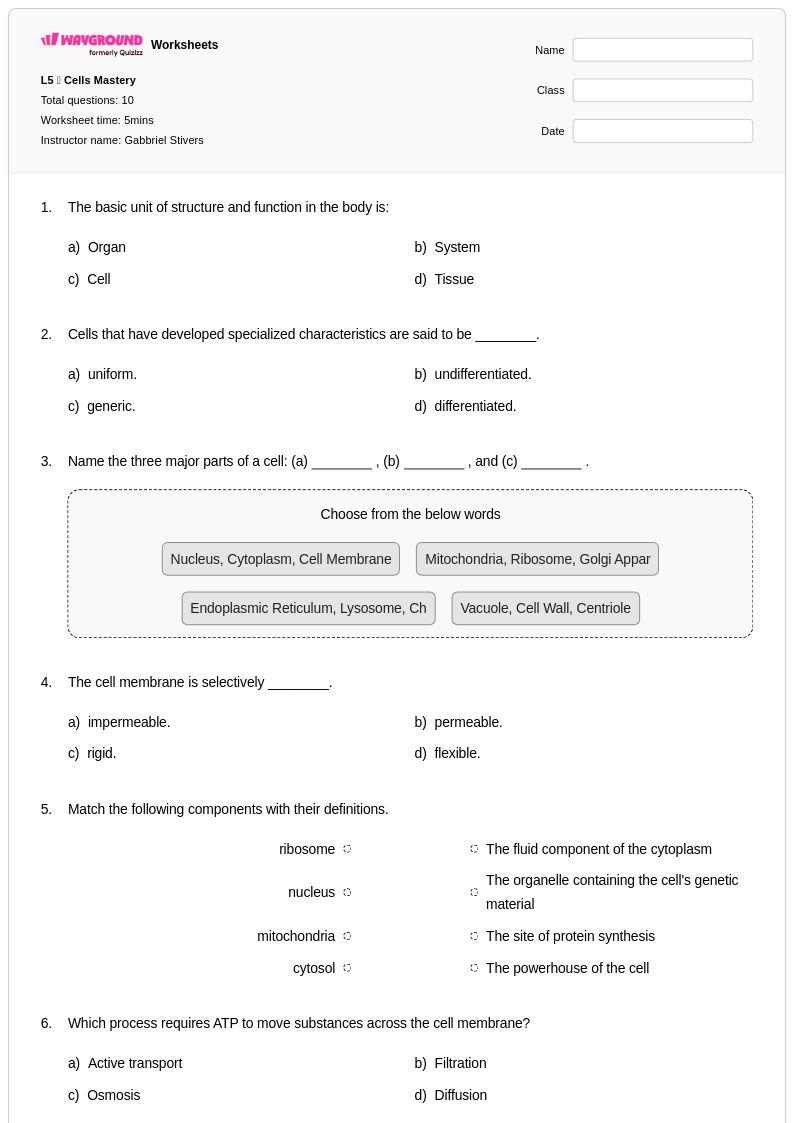
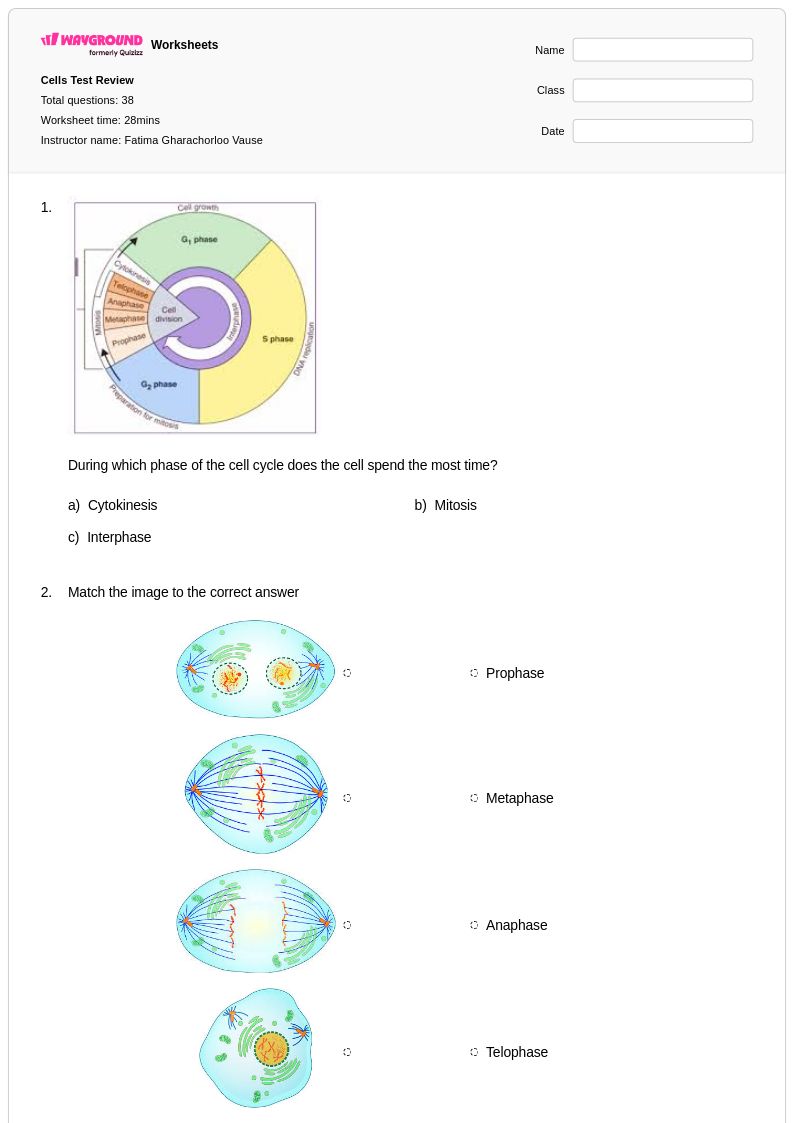
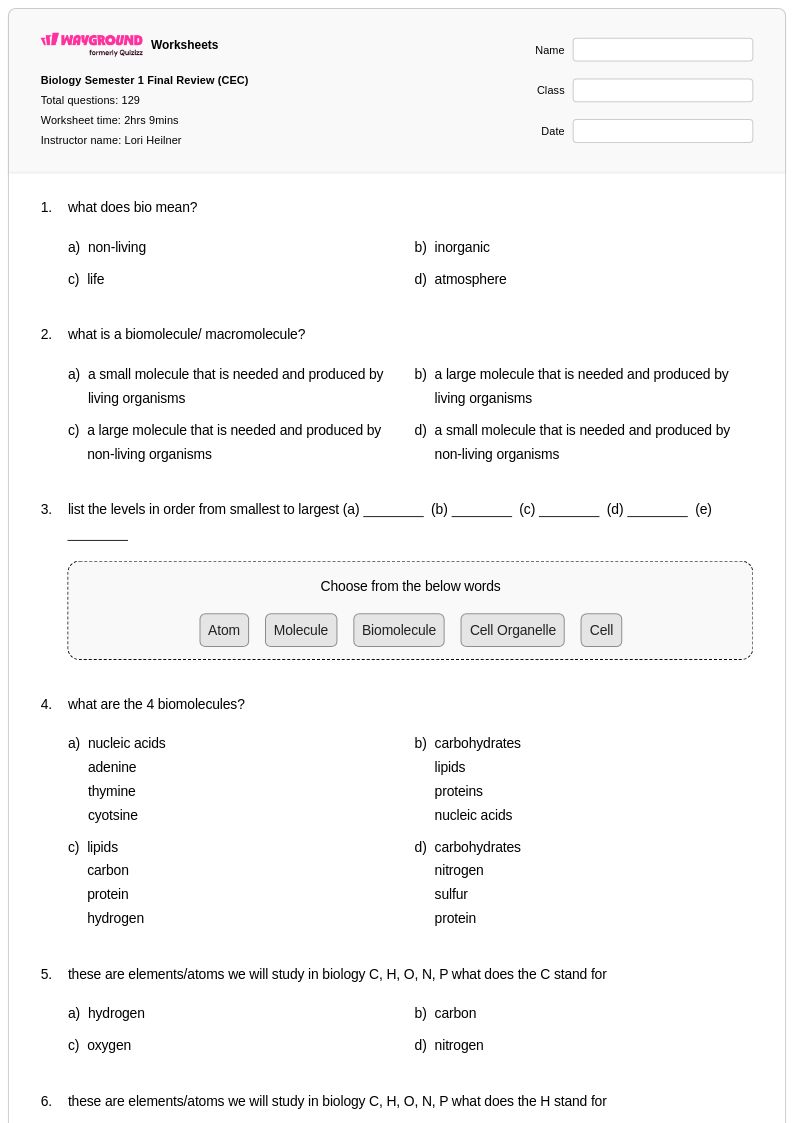
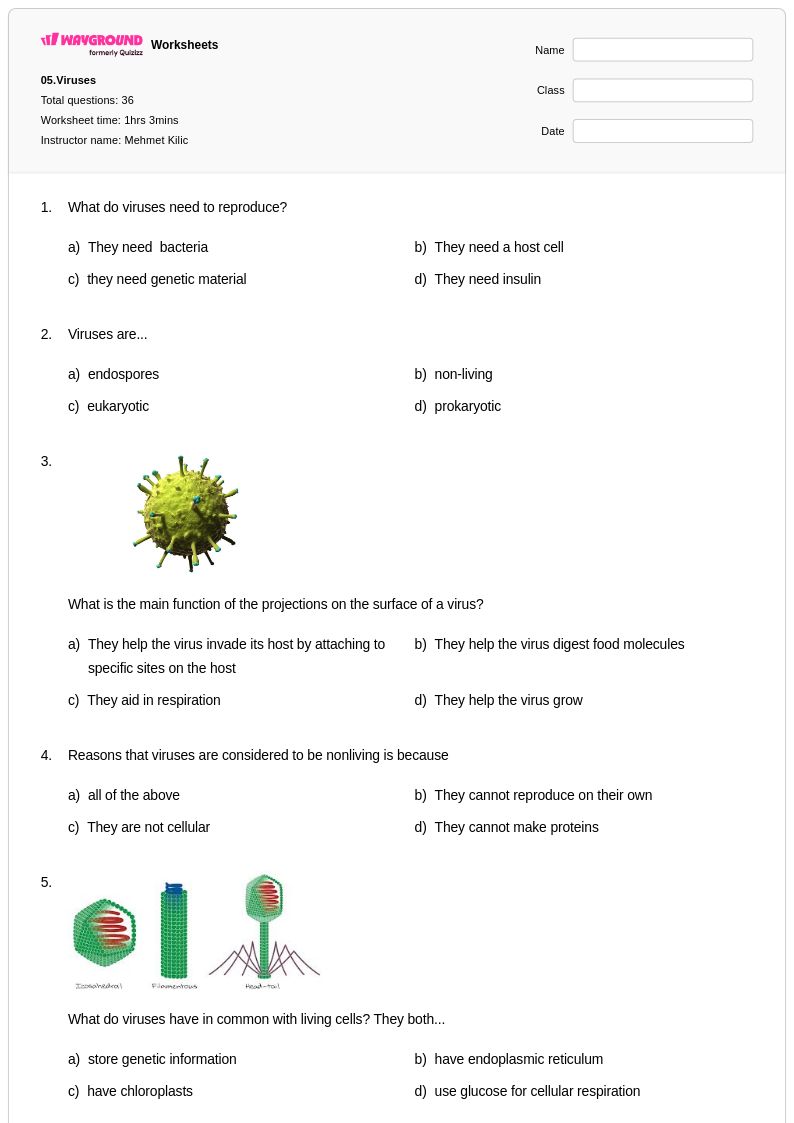
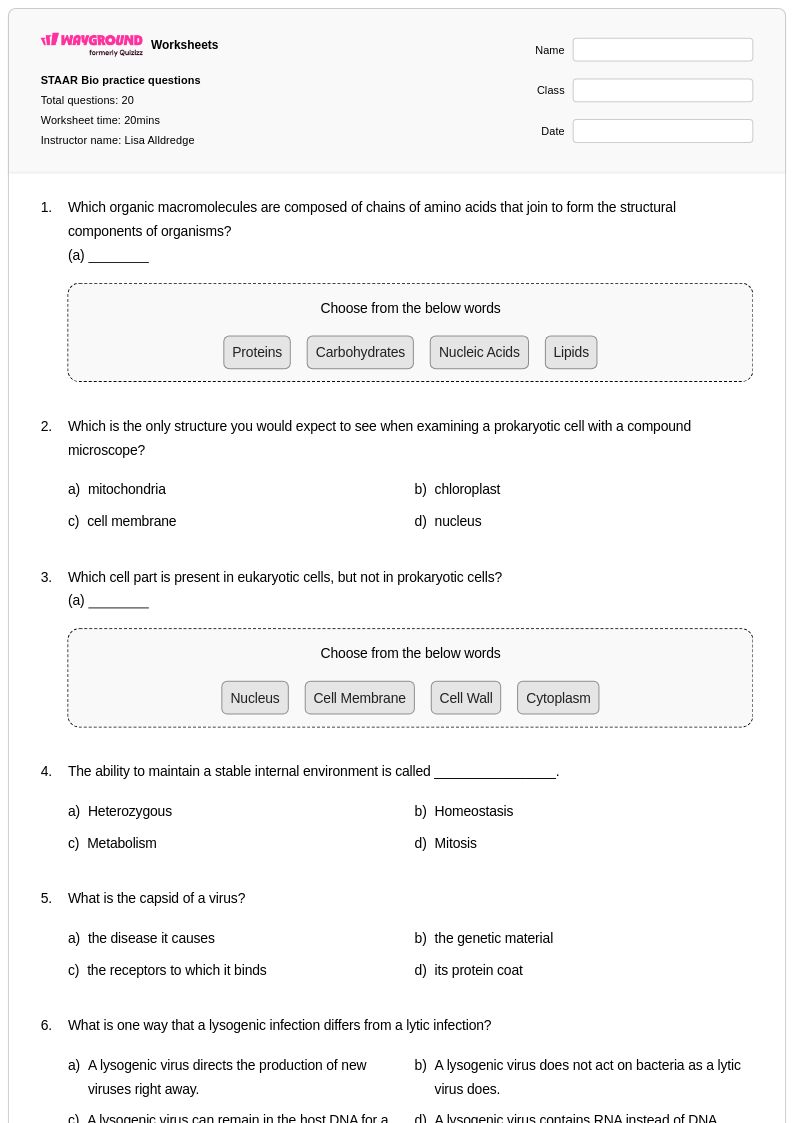
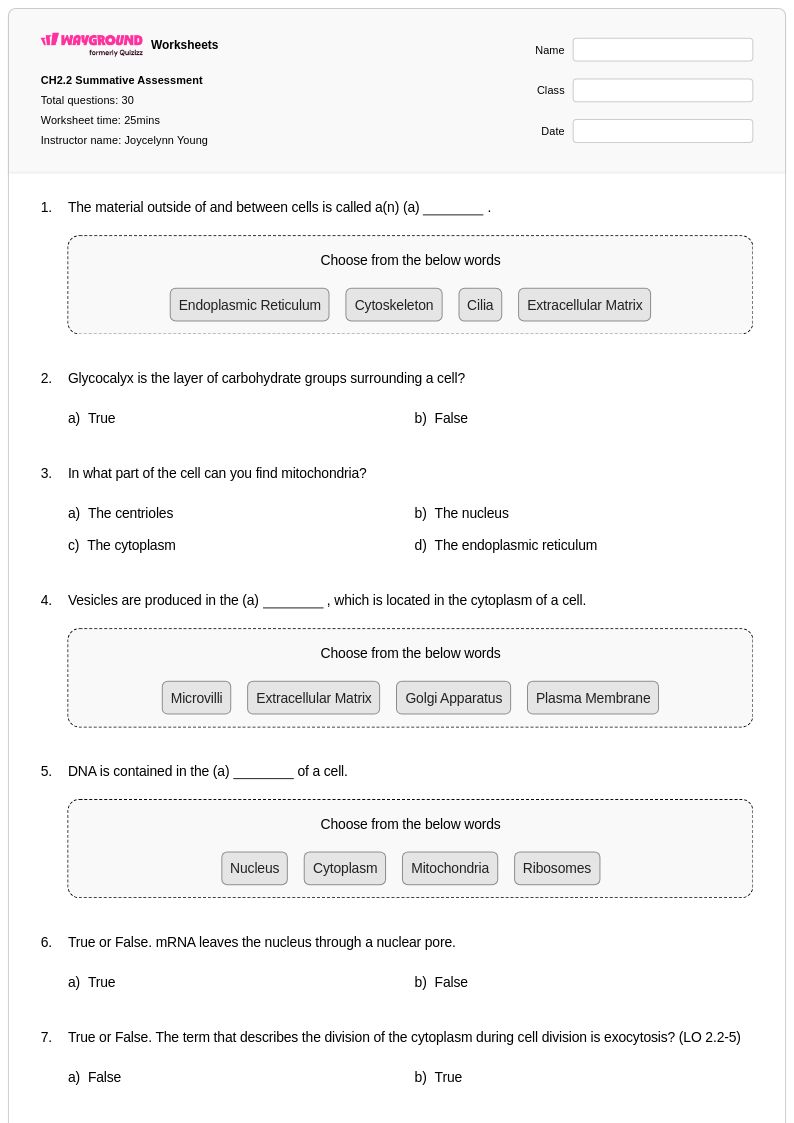
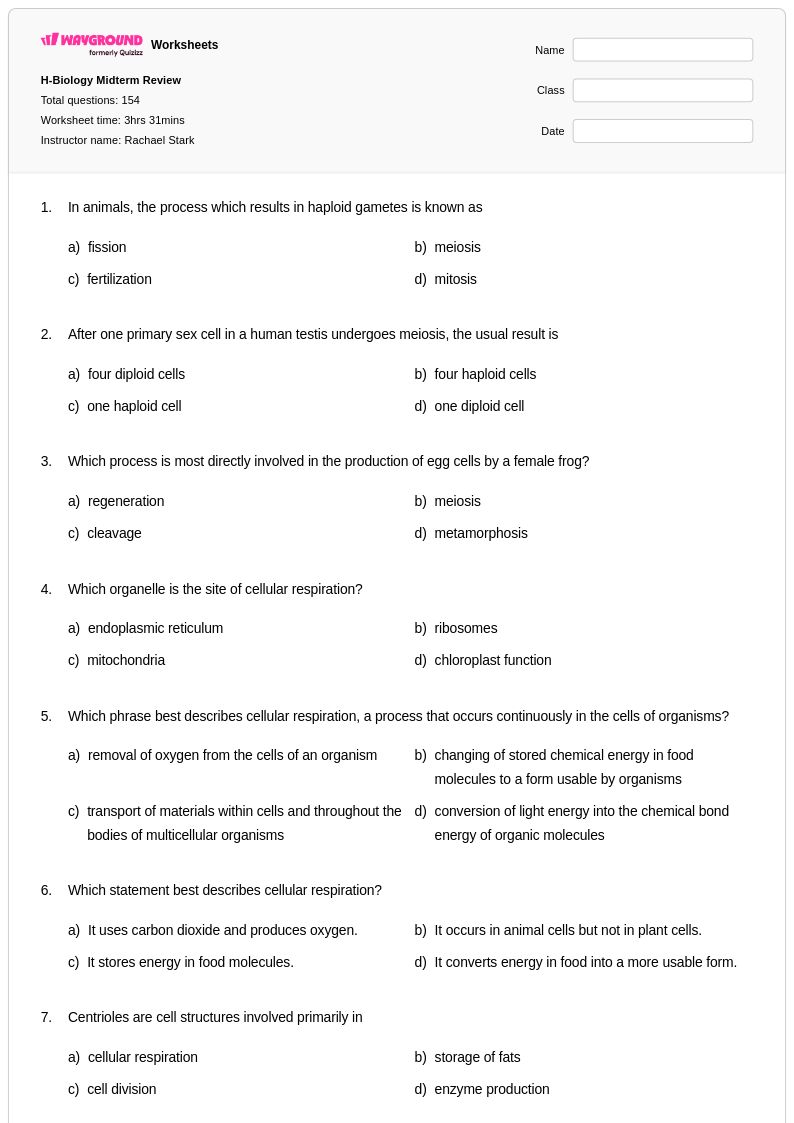
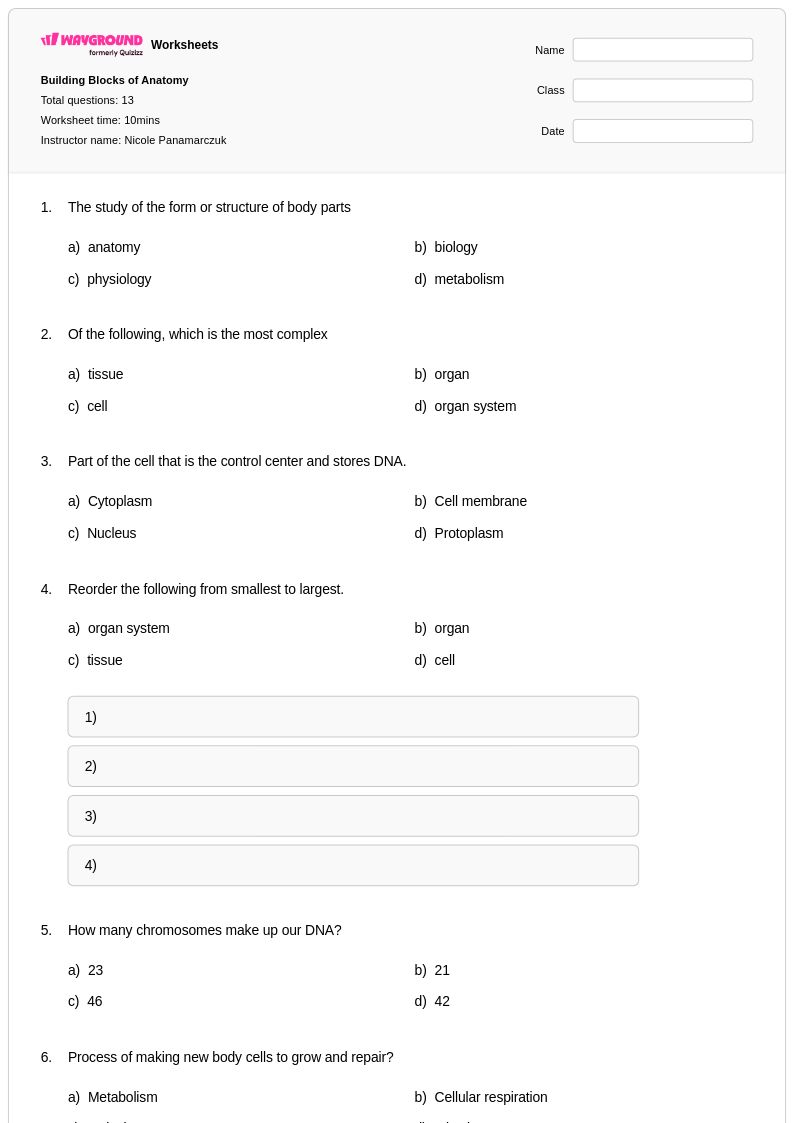
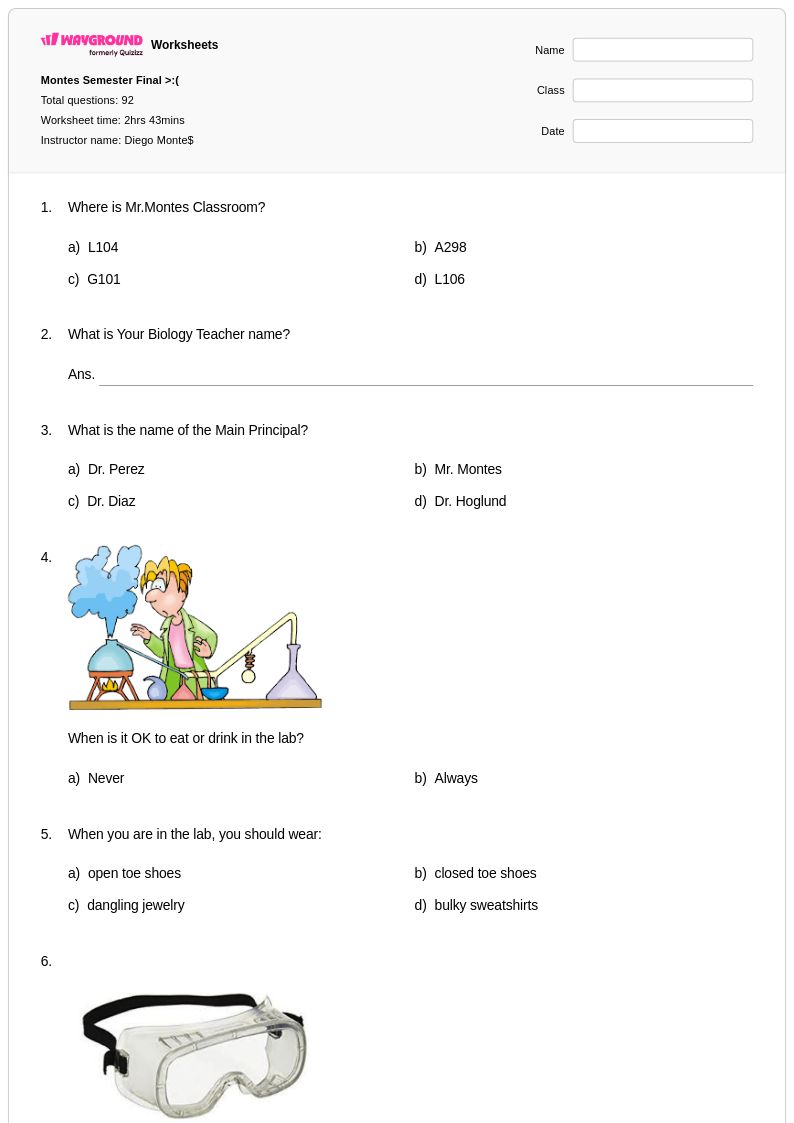
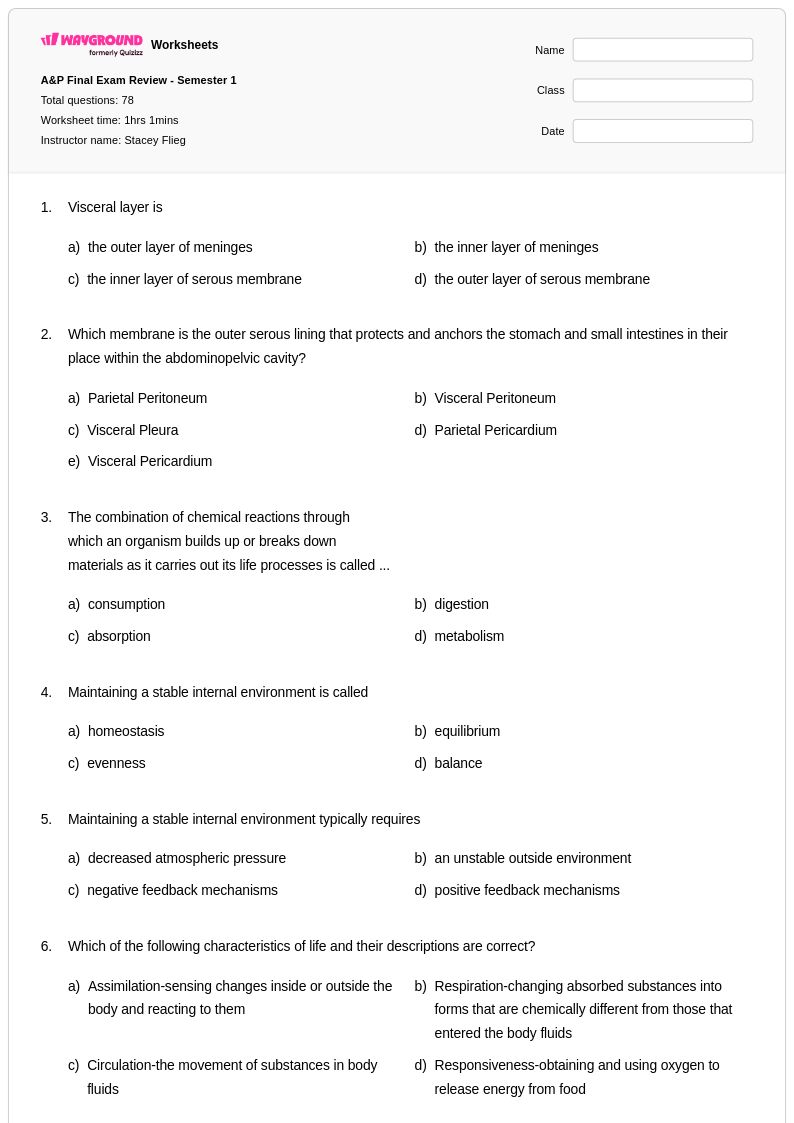
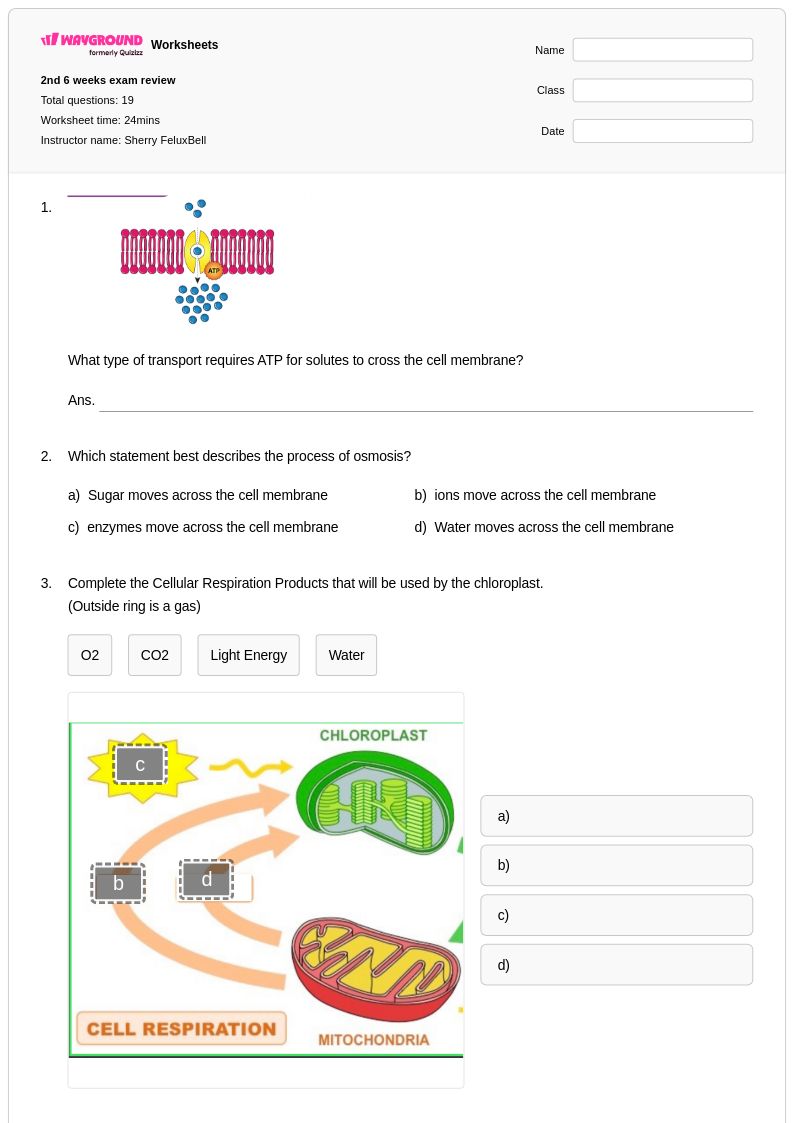
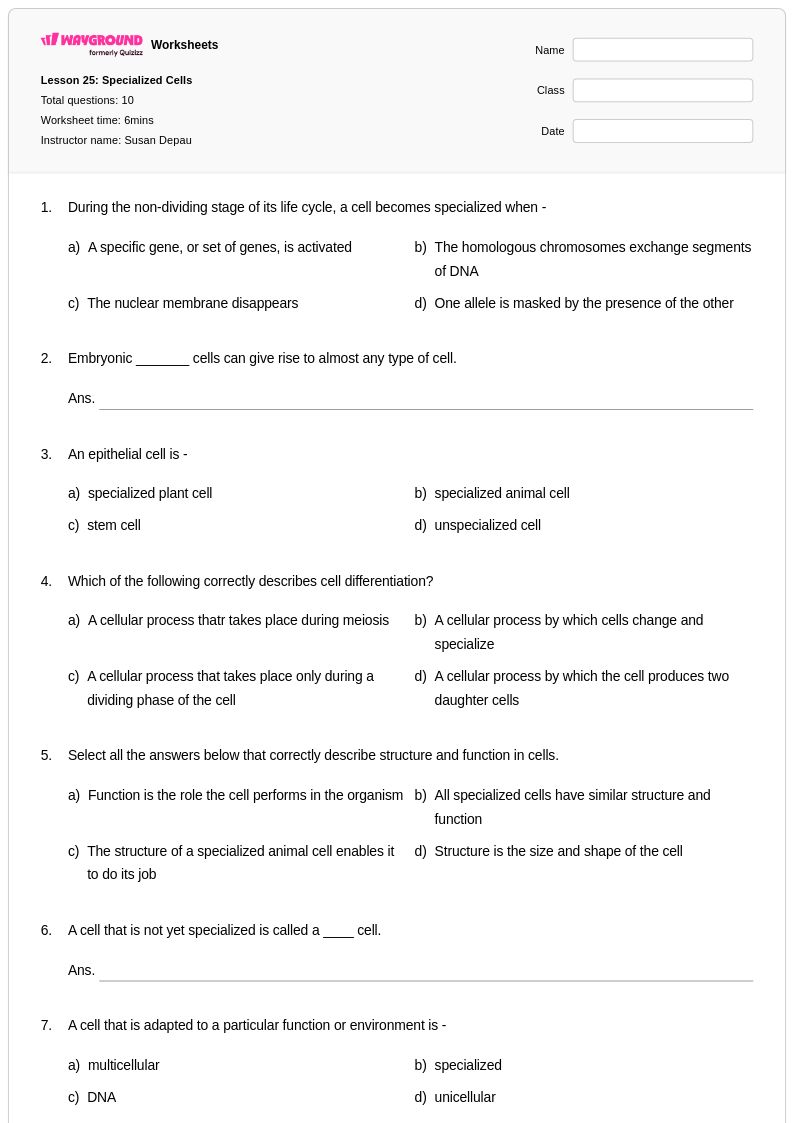
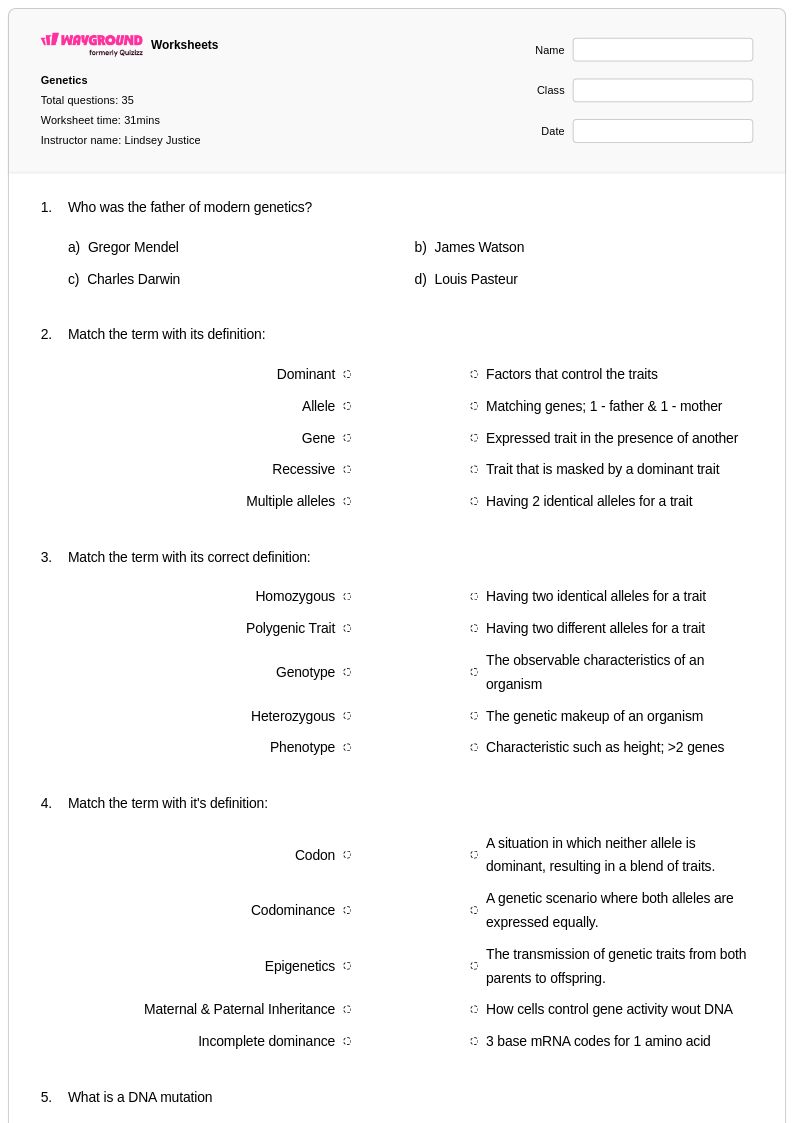
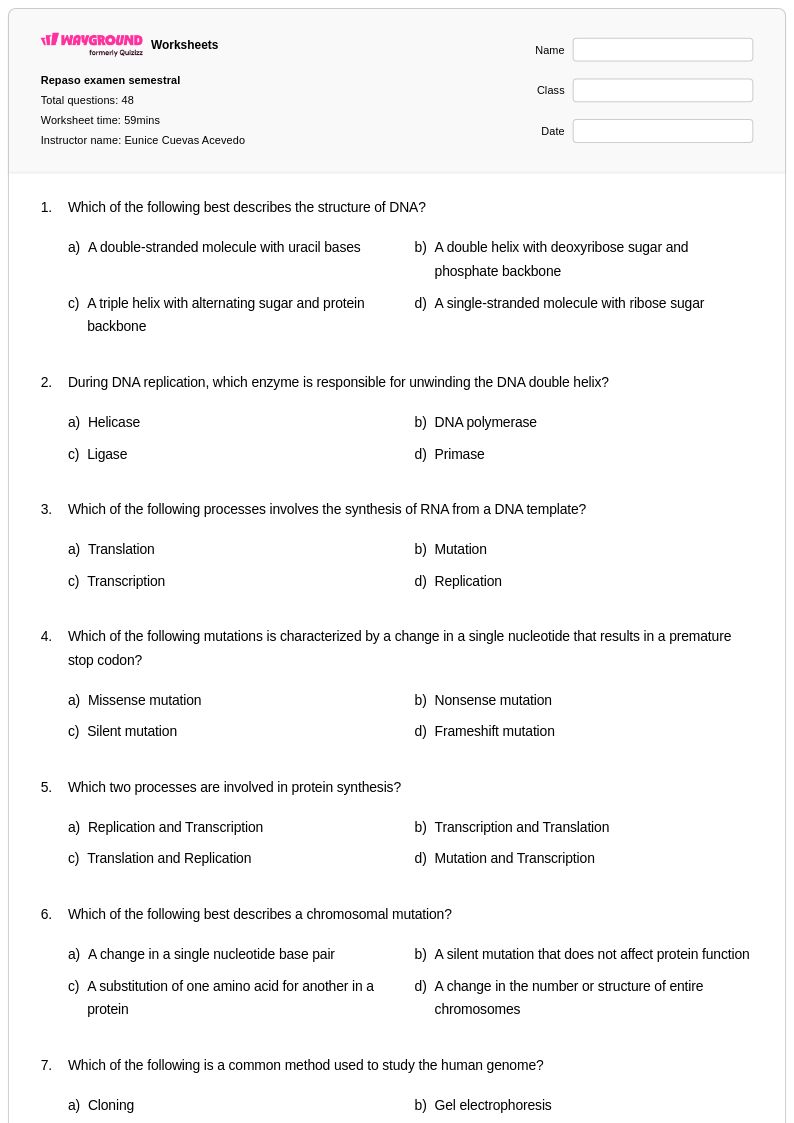
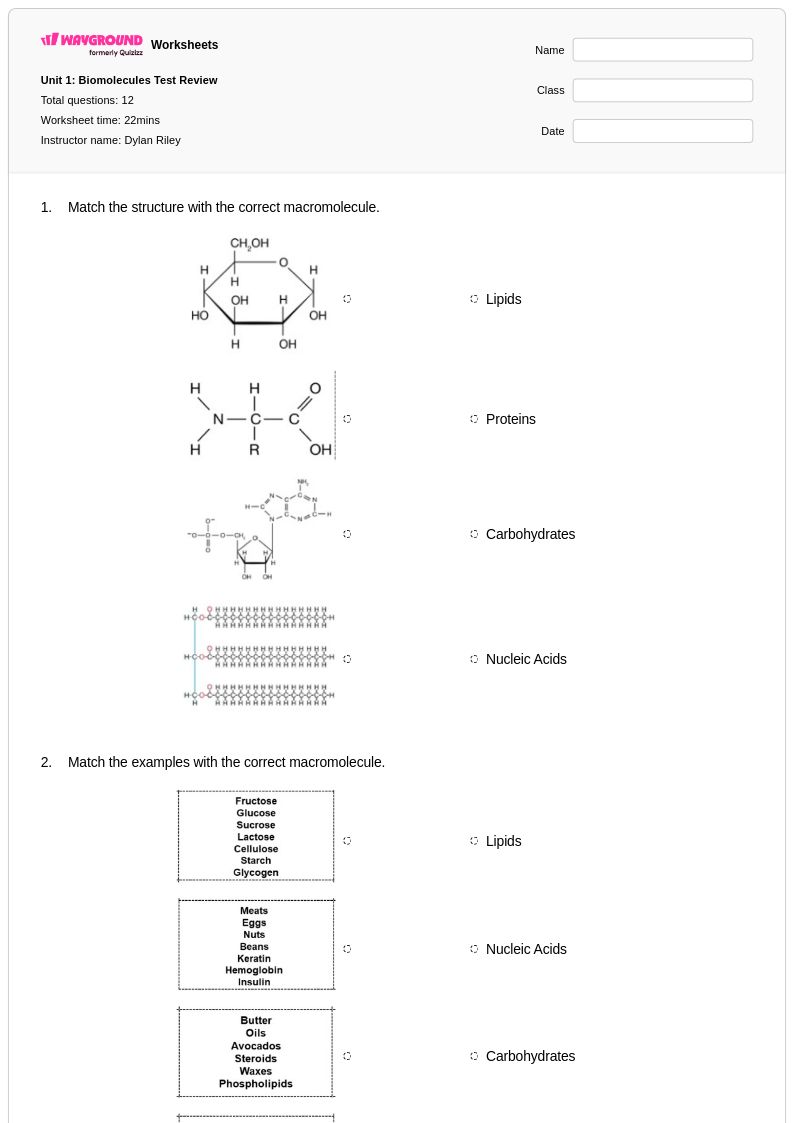
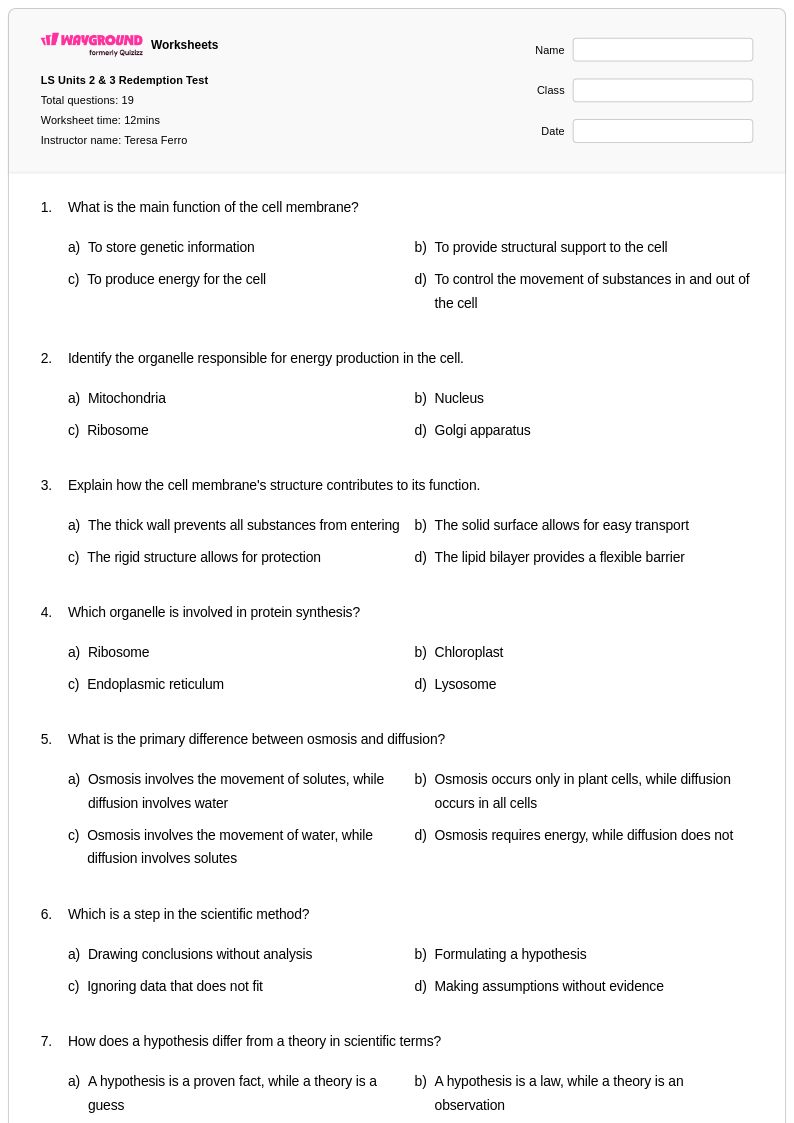
Cell structure and process worksheets for Class 11 students available through Wayground (formerly Quizizz) provide comprehensive coverage of advanced cellular biology concepts essential for upper-level high school science education. These expertly designed resources strengthen critical analytical skills by guiding students through detailed explorations of organelle functions, membrane transport mechanisms, cellular respiration pathways, and photosynthesis processes. The collection includes practice problems that challenge students to identify cellular components in electron micrographs, analyze metabolic pathways, and explain the relationships between structure and function in various cell types. Each worksheet comes with a complete answer key to support independent learning and self-assessment, while the free printables offer flexibility for both classroom instruction and homework assignments in pdf format.
Wayground (formerly Quizizz) empowers educators with millions of teacher-created cell structure and process resources that streamline lesson planning and enhance student engagement in Class 11 biology courses. The platform's robust search and filtering capabilities allow teachers to quickly locate worksheets aligned with specific curriculum standards and learning objectives, while built-in differentiation tools enable customization for diverse student needs and ability levels. These comprehensive collections support effective remediation by providing targeted practice on challenging concepts like ATP synthesis and cellular transport, while also offering enrichment opportunities through advanced problem-solving scenarios. Available in both printable pdf format and interactive digital versions, these resources facilitate seamless integration into traditional classroom settings, hybrid learning environments, and remote instruction, ensuring that students develop mastery of fundamental cellular processes regardless of their learning context.
FAQs
How do I teach cell structure and organelles effectively?
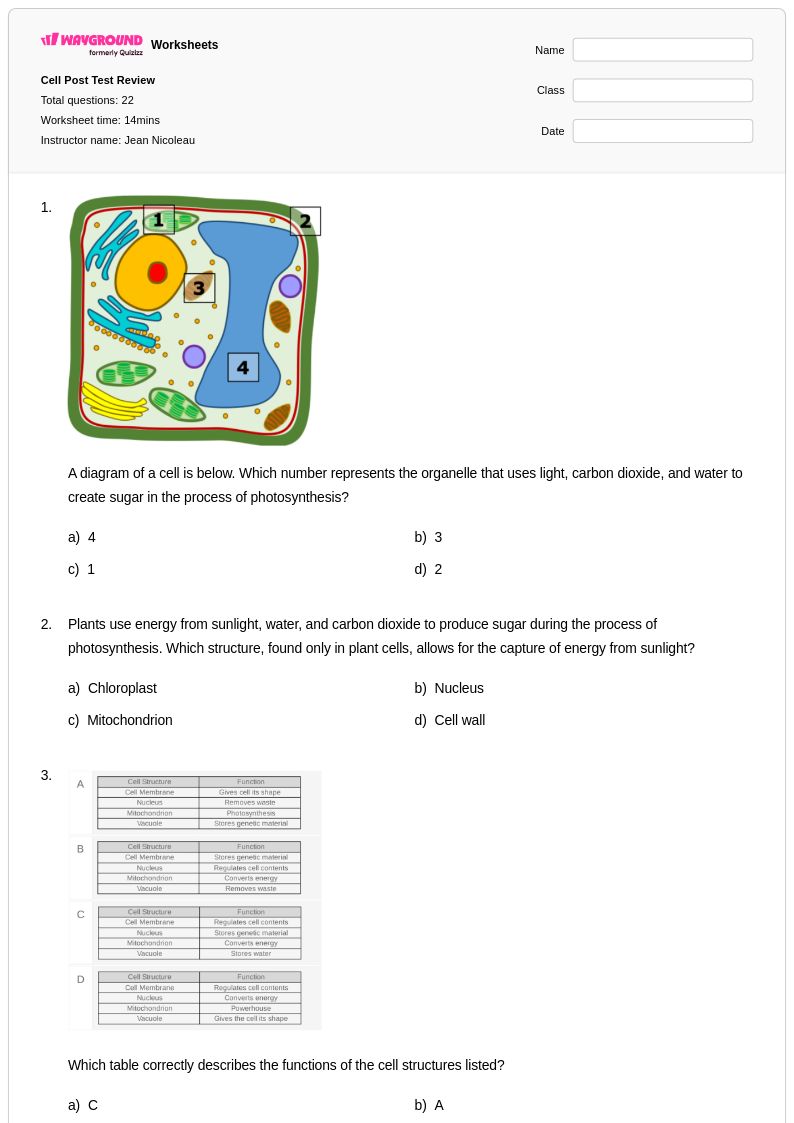
Start by anchoring instruction in visual models — labeled diagrams of plant and animal cells help students connect organelle names to their physical locations before tackling function. Build from structure to function by having students compare organelles to real-world analogies (e.g., the mitochondria as a power plant) to make abstract concepts concrete. Reinforce with guided practice that asks students to identify organelles, describe their roles, and distinguish between prokaryotic and eukaryotic cell types.
What's the best way to help students practice identifying cell organelles?
Labeling diagrams is one of the most effective practice formats for cell organelle identification because it requires students to recall and place information simultaneously. Pairing diagram work with short-answer questions about organelle function deepens retention beyond surface-level memorization. Worksheets that present both plant and animal cell diagrams side by side also help students practice comparison, which is a common assessment task in cellular biology units.
What mistakes do students commonly make when learning about cellular processes like respiration and photosynthesis?
A frequent misconception is that photosynthesis and cellular respiration are opposites that cancel each other out, when in fact both processes can occur simultaneously in plant cells. Students also often confuse the reactants and products of each process, especially the role of ATP as an energy currency rather than a direct fuel source. Targeted practice problems that ask students to trace molecular pathways and write out equations help surface and correct these errors before assessments.
How do students commonly confuse prokaryotic and eukaryotic cells?
Students frequently overgeneralize by assuming all cells have a nucleus, making it difficult for them to categorize prokaryotes correctly. Another common error is conflating 'no nucleus' with 'no DNA,' when prokaryotic cells do contain genetic material — just not membrane-bound. Comparison charts and structured diagrams that explicitly highlight the presence or absence of membrane-bound organelles are effective tools for addressing this confusion.
How do I use cell structure and process worksheets from Wayground in my classroom?
Cell structure and process worksheets on Wayground are available as printable PDFs, making them easy to distribute in traditional classroom settings, and in digital formats suited for device-based or blended learning environments. Teachers can also host worksheets as interactive quizzes directly on Wayground, enabling real-time student responses and immediate feedback. All worksheets include complete answer keys, reducing prep time and supporting efficient grading.
How can I differentiate cell biology worksheets for students with different learning needs?
Wayground supports several student-level accommodations that are particularly useful during complex biology units. Teachers can enable Read Aloud for students who need audio support when reading dense scientific terminology, reduce answer choices to lower cognitive load for struggling learners, and extend time on digital assignments for students who need additional processing time. These accommodations can be assigned to individual students without affecting the experience of the rest of the class, and settings are saved for reuse across future sessions.