
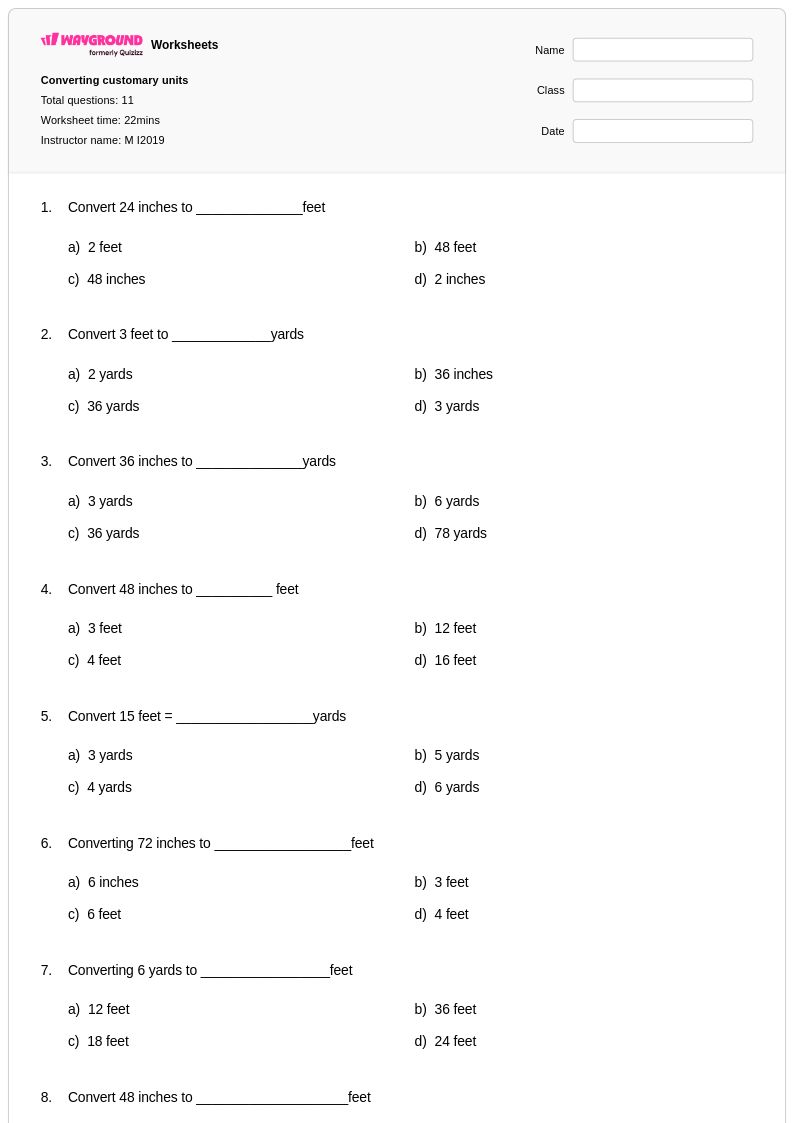
11 Q
6th
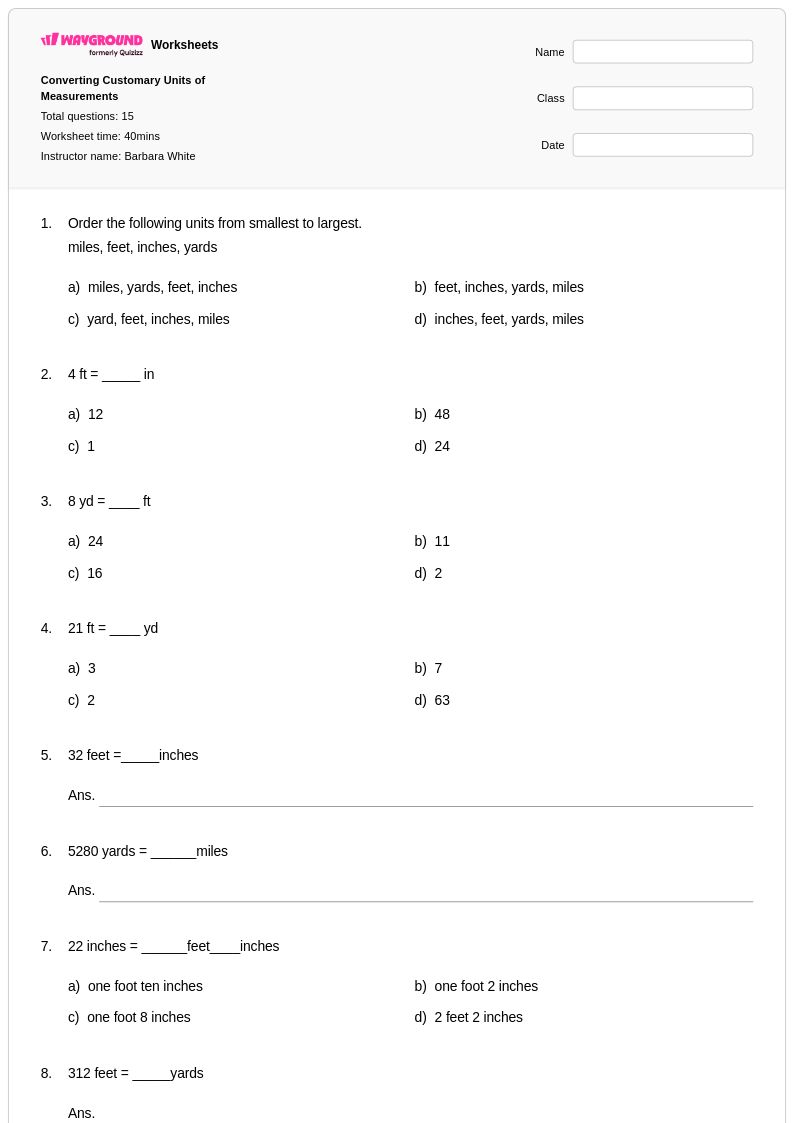
15 Q
5th
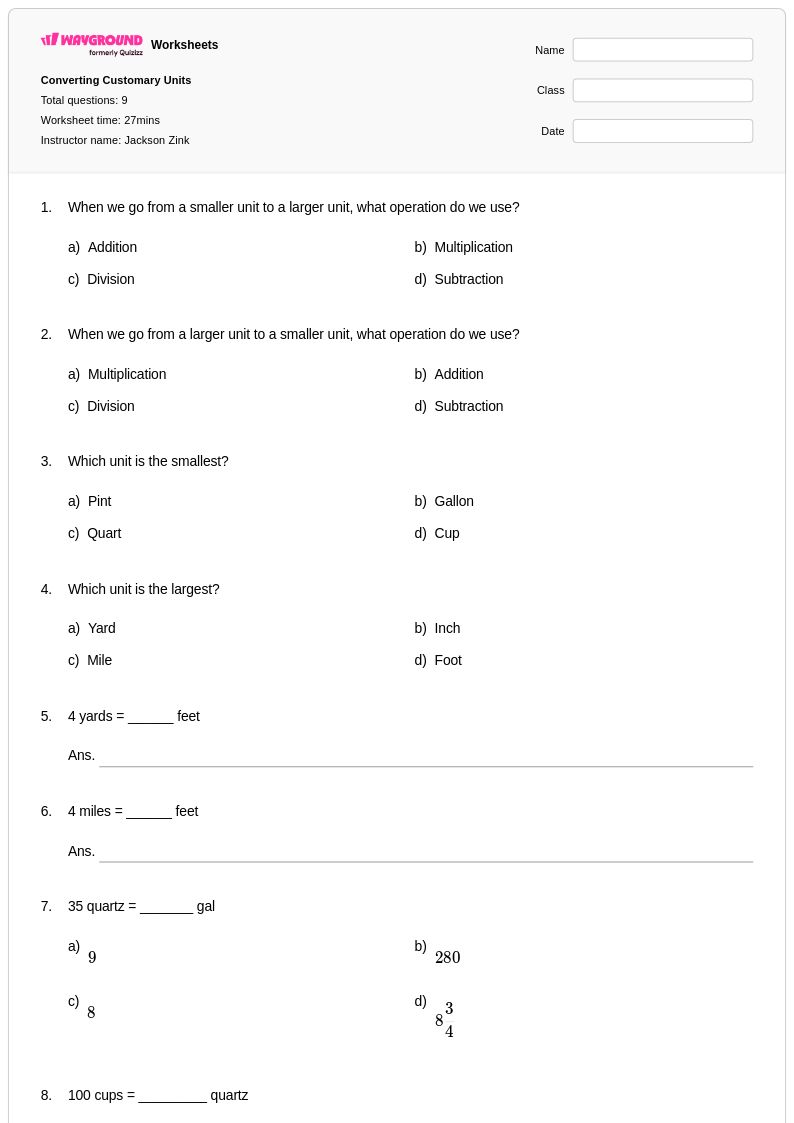
9 Q
5th - 6th
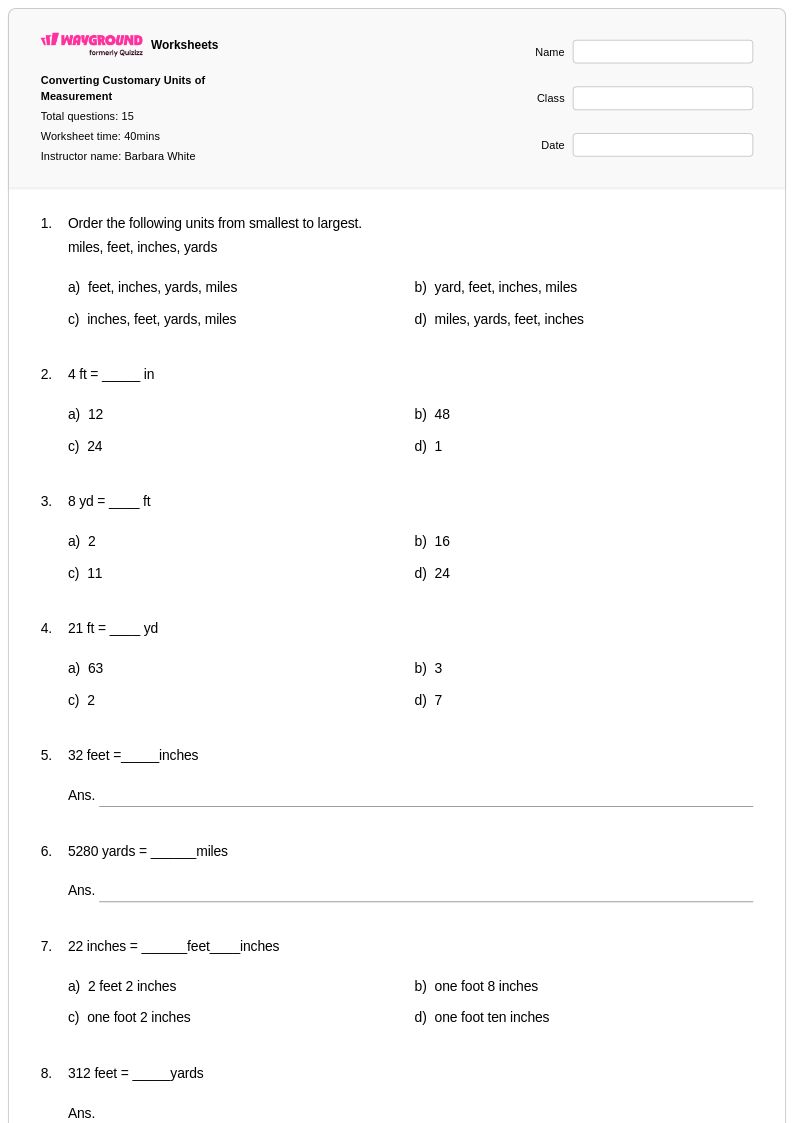
15 Q
5th
13 Q
6th - Uni
13 Q
4th
15 Q
5th - Uni
15 Q
5th
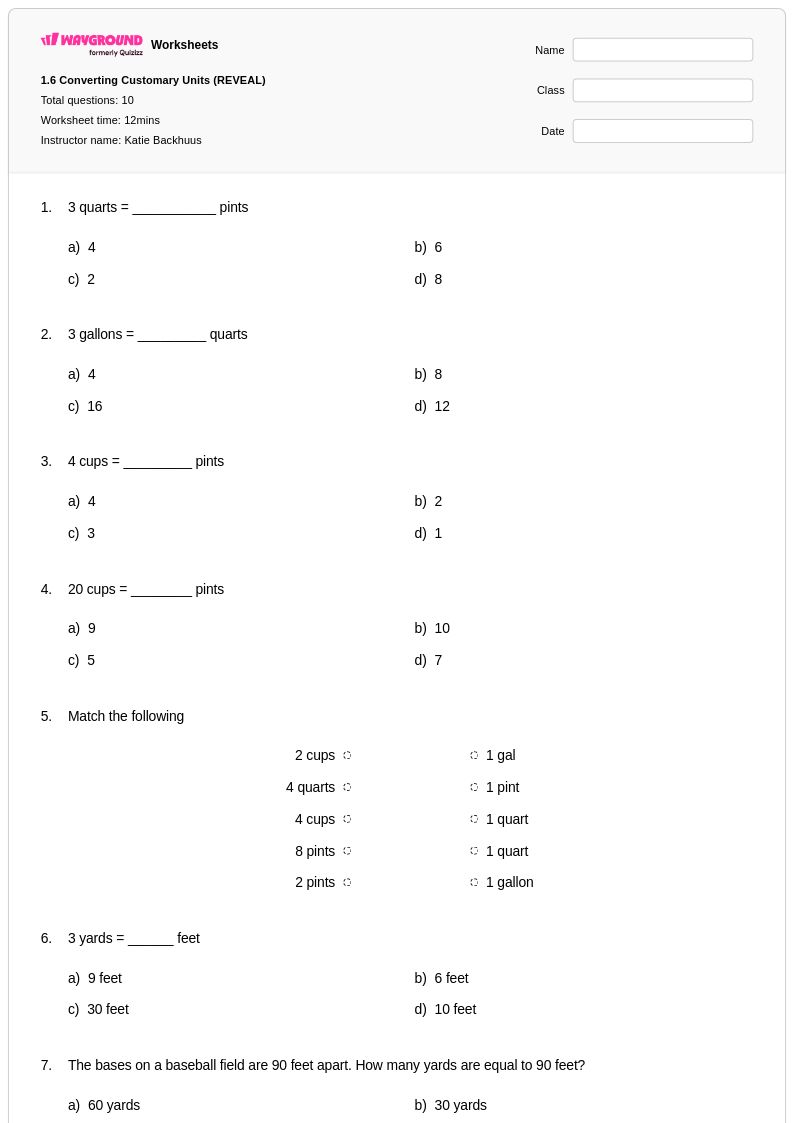
10 Q
6th
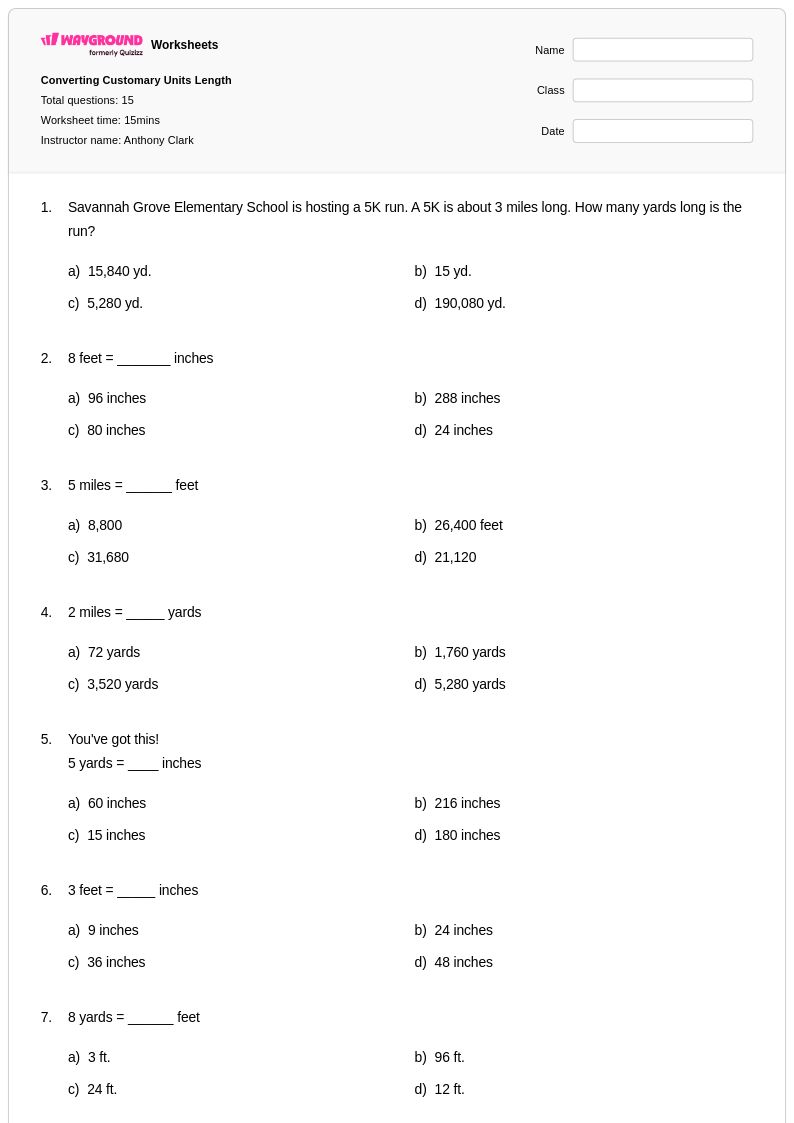
15 Q
5th - Uni
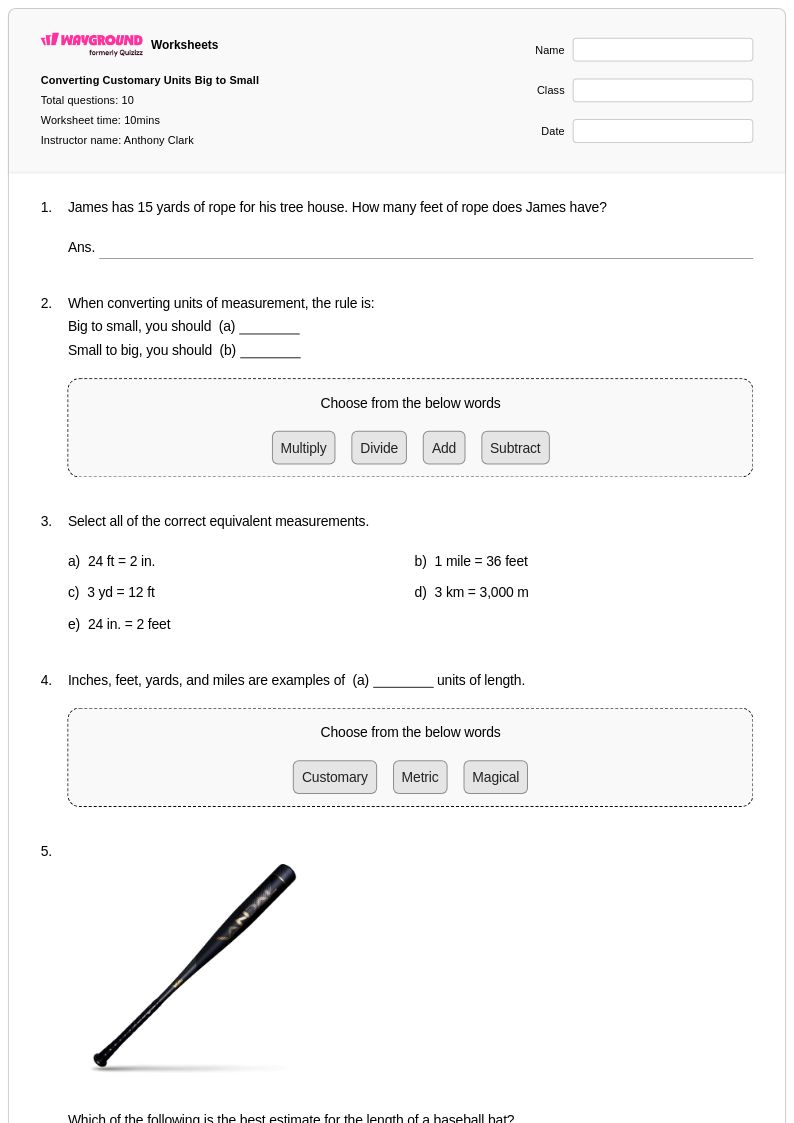
10 Q
4th - Uni

16 Q
3rd
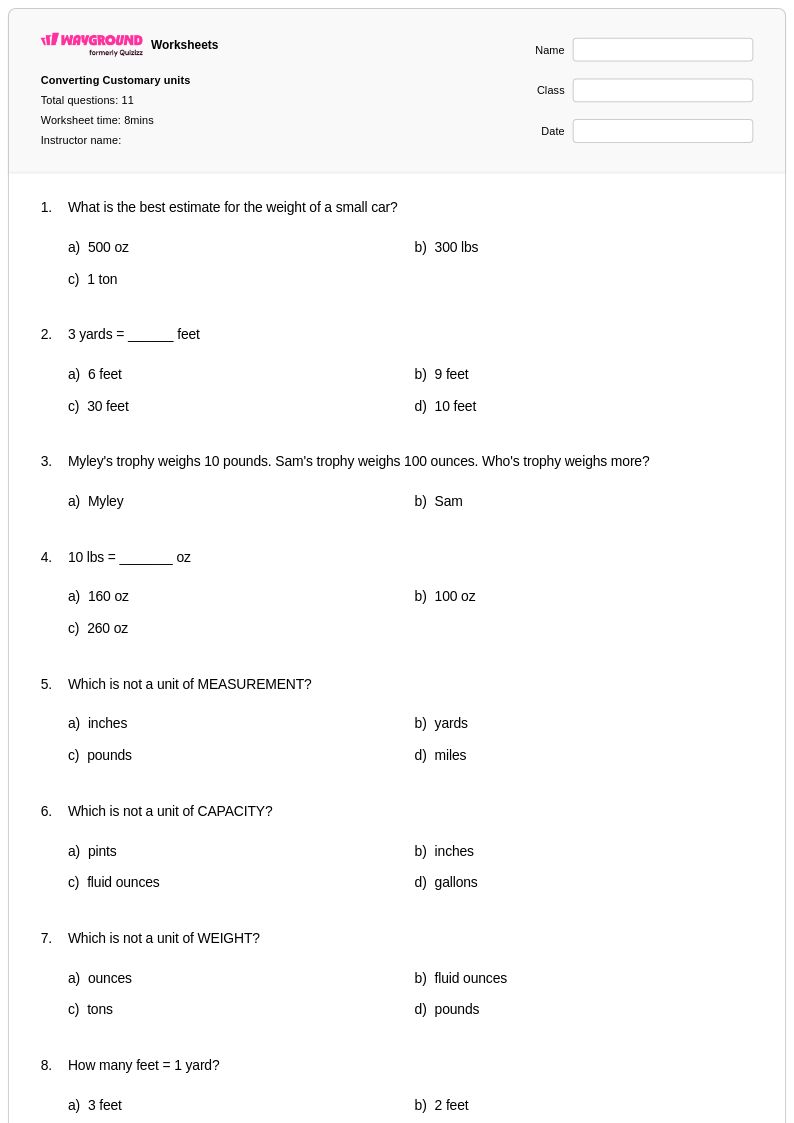
11 Q
4th
15 Q
5th - 6th
20 Q
5th - Uni
19 Q
5th - Uni
10 Q
4th
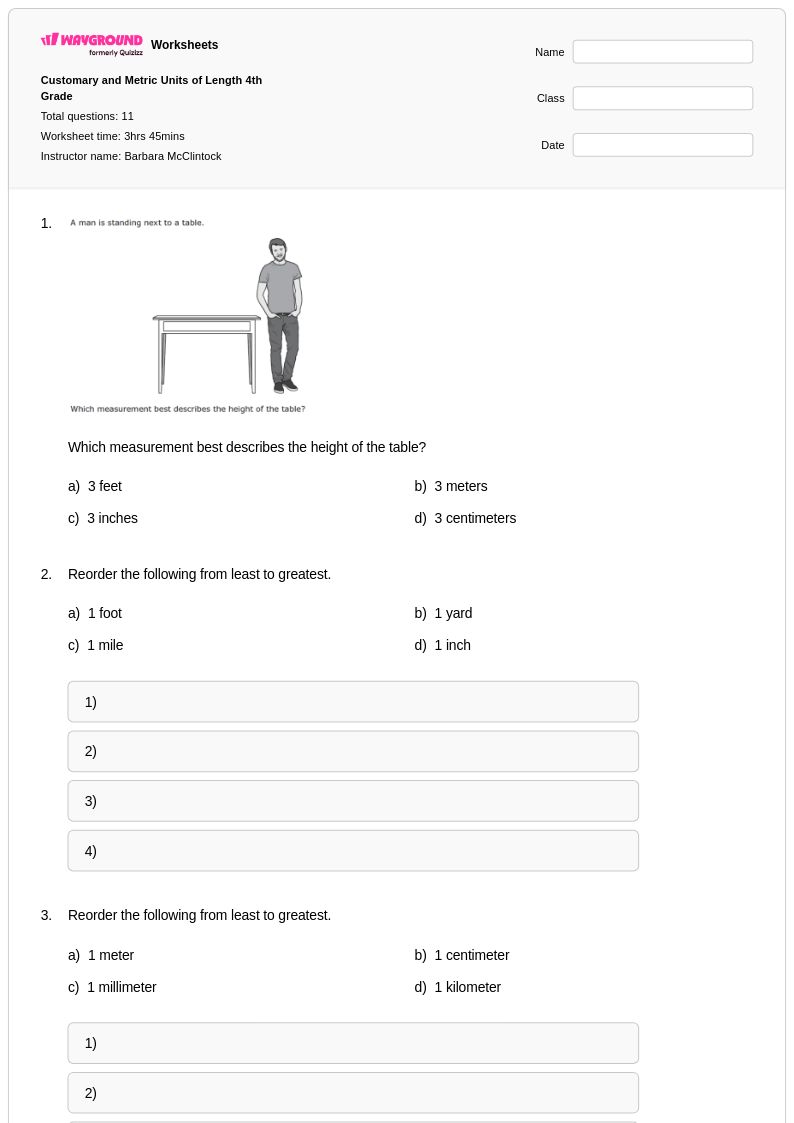
11 Q
4th
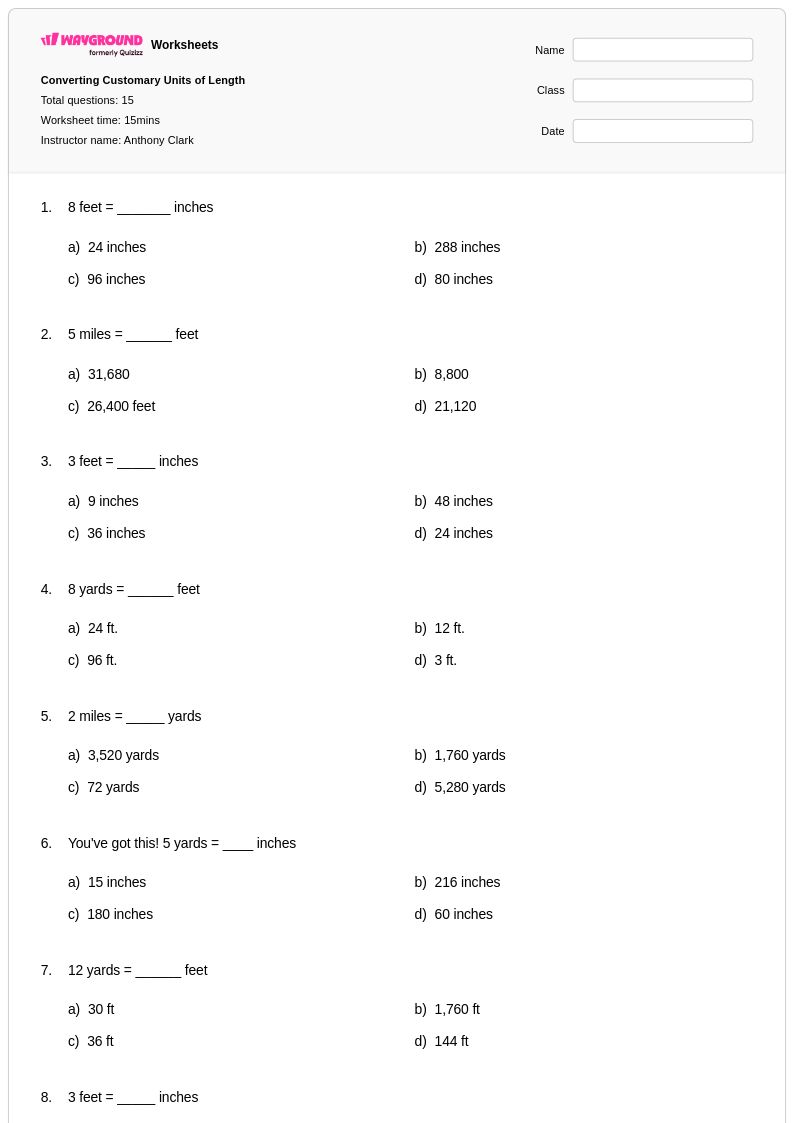
15 Q
4th - Uni
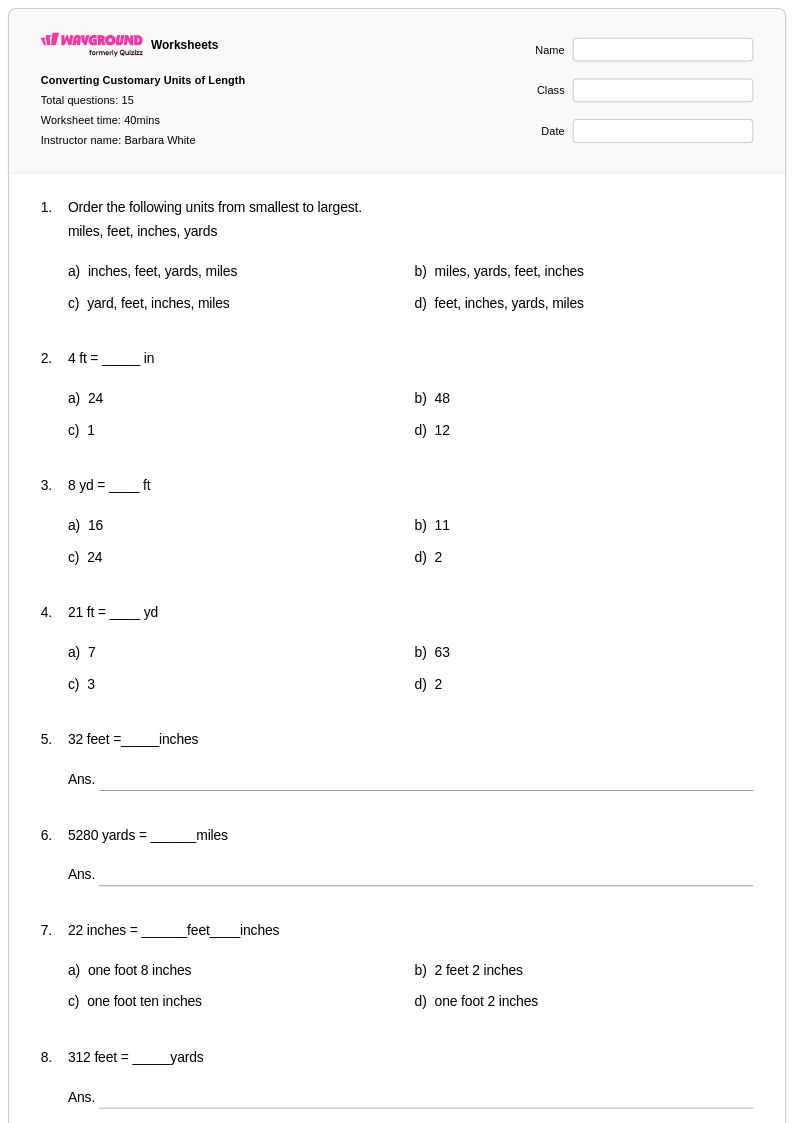
15 Q
5th
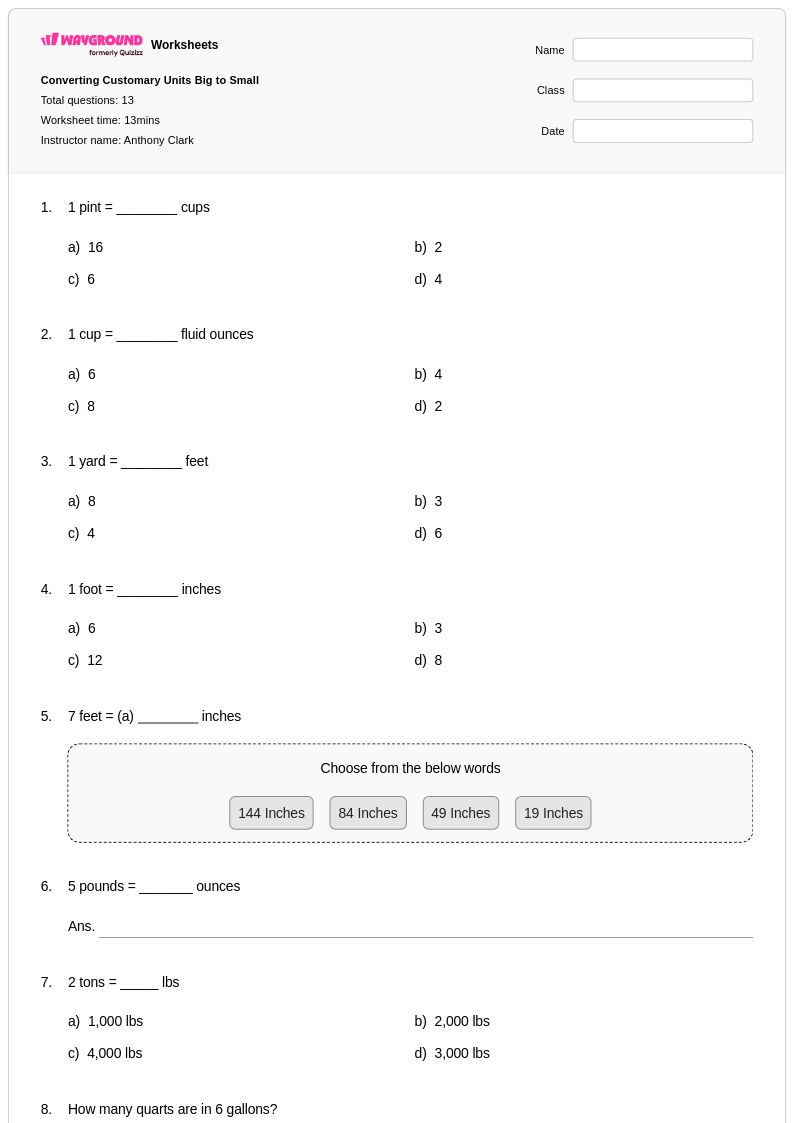
13 Q
4th - Uni
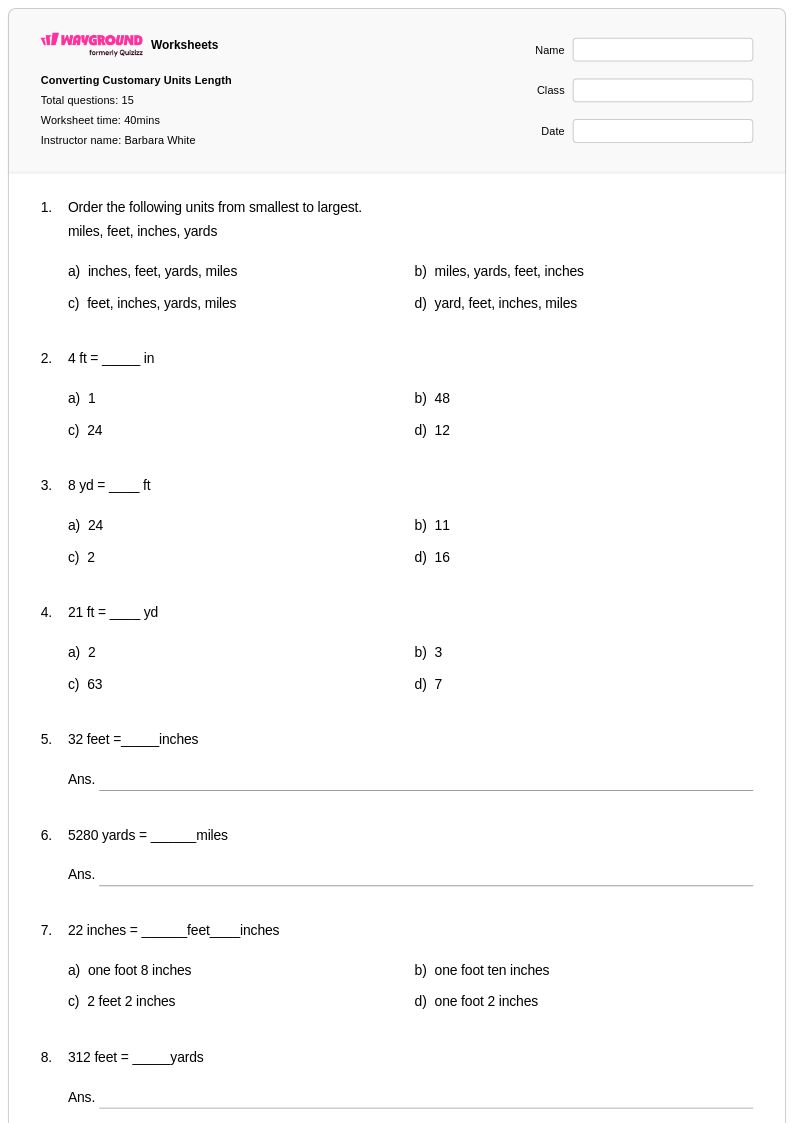
15 Q
5th
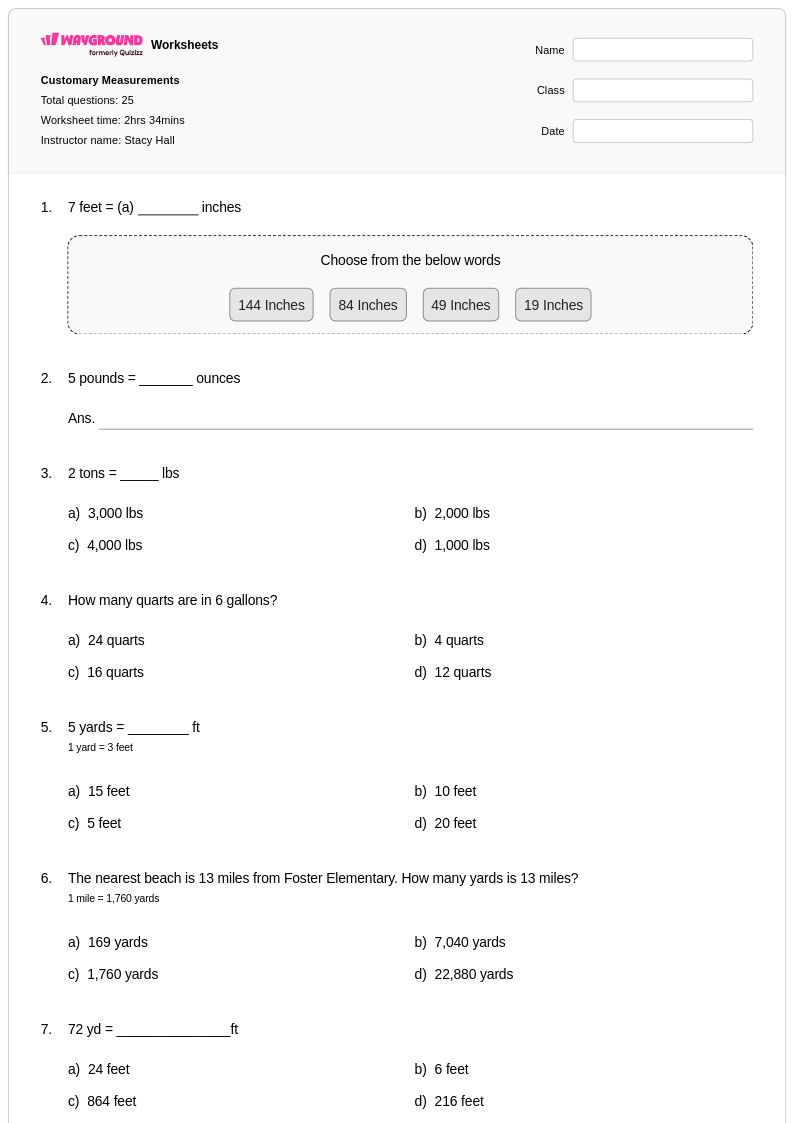
25 Q
4th
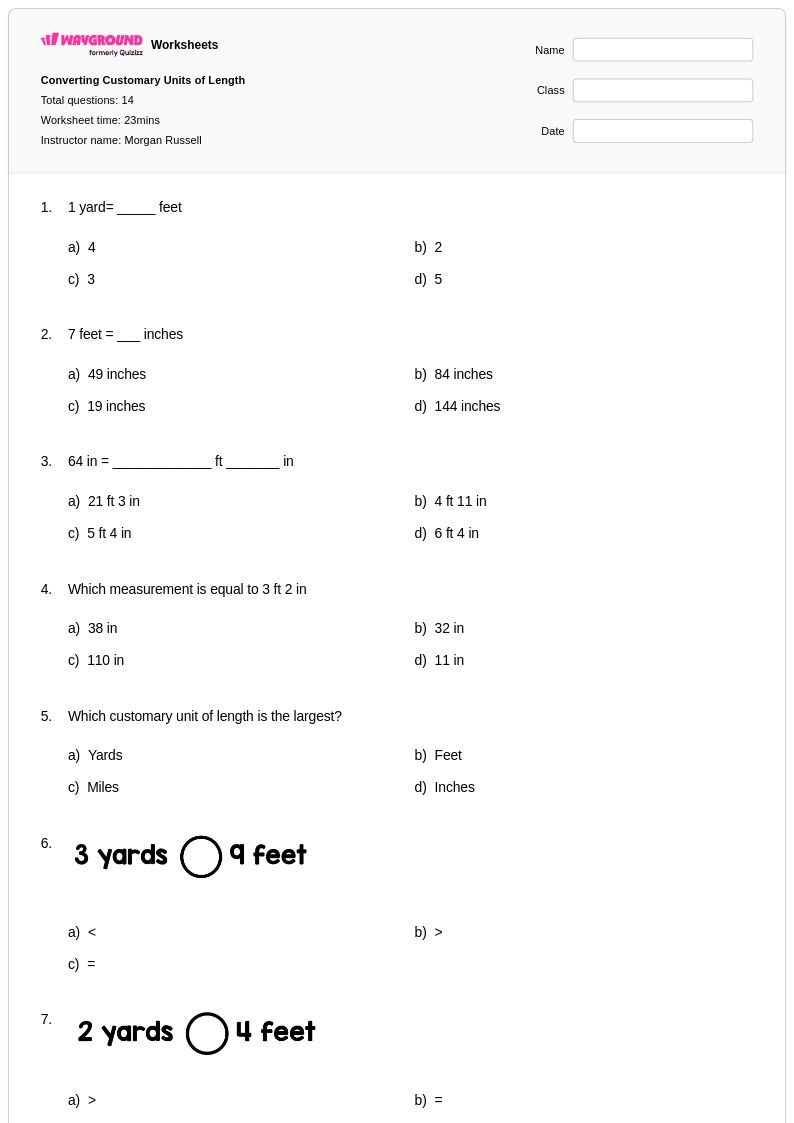
14 Q
5th
Explore Converting Customary Units Worksheets by Grades
Explore Other Subject Worksheets for kindergarten
Explore printable Converting Customary Units worksheets for Kindergarten
Converting customary units worksheets for kindergarten through Wayground (formerly Quizizz) introduce young learners to the foundational concepts of measurement comparison and unit relationships within the American system. These carefully designed printables help students develop early understanding of how different units relate to each other, such as recognizing that feet are longer than inches or that cups hold less liquid than gallons. The practice problems focus on simple, concrete comparisons using visual aids and manipulatives-friendly formats that align with kindergarten developmental stages. Each worksheet comes with a comprehensive answer key, making it easy for educators to provide immediate feedback and support student learning. These free resources strengthen critical thinking skills while building the mathematical vocabulary essential for future measurement work.
Wayground (formerly Quizizz) supports kindergarten teachers with an extensive collection of millions of teacher-created customary unit conversion resources that can be easily filtered by specific learning objectives and skill levels. The platform's robust search functionality allows educators to quickly locate worksheets that match their curriculum needs, while built-in differentiation tools enable teachers to modify content for diverse learning abilities within the classroom. These materials are available in both printable pdf format and interactive digital versions, providing flexibility for various instructional settings and student preferences. Teachers can customize worksheets to focus on specific unit comparisons or measurement concepts, making these resources invaluable for targeted skill practice, remediation activities, and enrichment opportunities that help solidify kindergarten students' understanding of measurement relationships.
FAQs
How do I introduce customary units to kindergarten students?
What activities help kindergarten students practice customary measurement?
What mistakes do kindergarten students make with customary units?
How can I use a kindergarten customary units worksheet?
How does kindergarten customary measurement fit the Common Core math progression?
How can I differentiate customary measurement practice in kindergarten?
What should kindergarten students learn about customary units?