Free Printable Counting Numbers to 100 Worksheets for Kindergarten
Kindergarten counting numbers to 100 worksheets provide free printables and practice problems to help young learners master number recognition, sequencing, and counting skills through engaging PDF activities with answer keys.
Explore printable Counting Numbers to 100 worksheets for Kindergarten
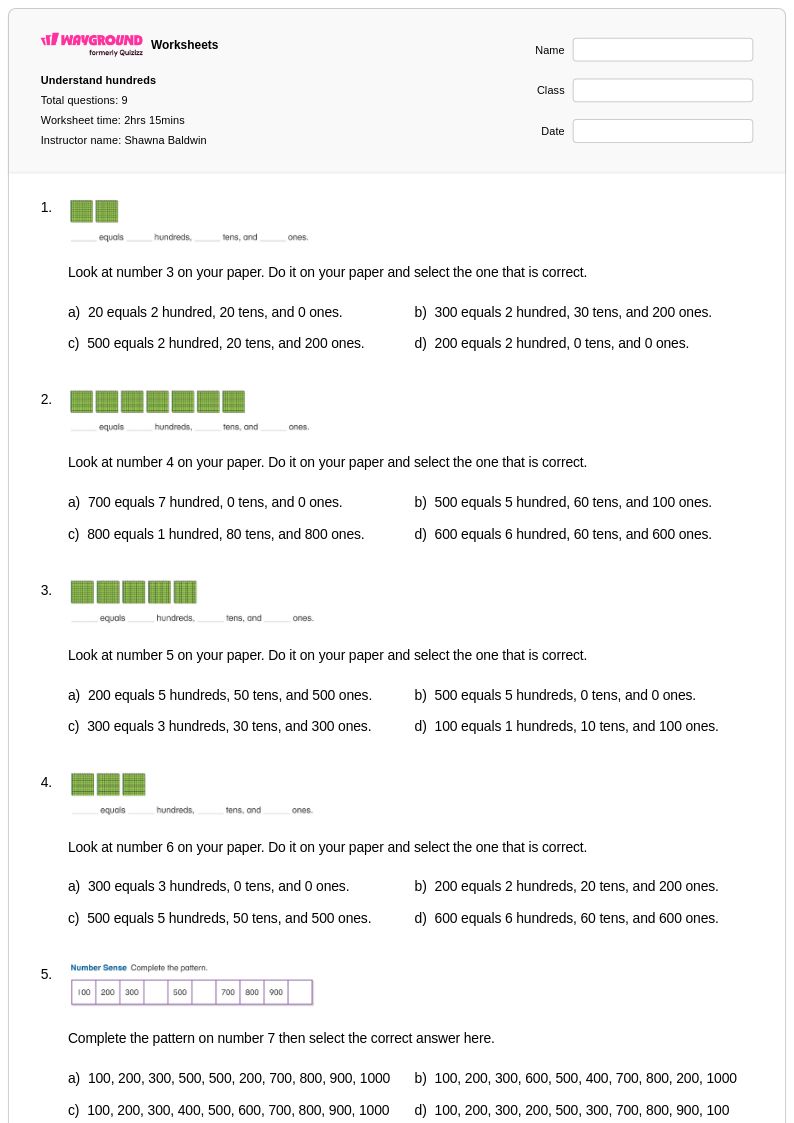
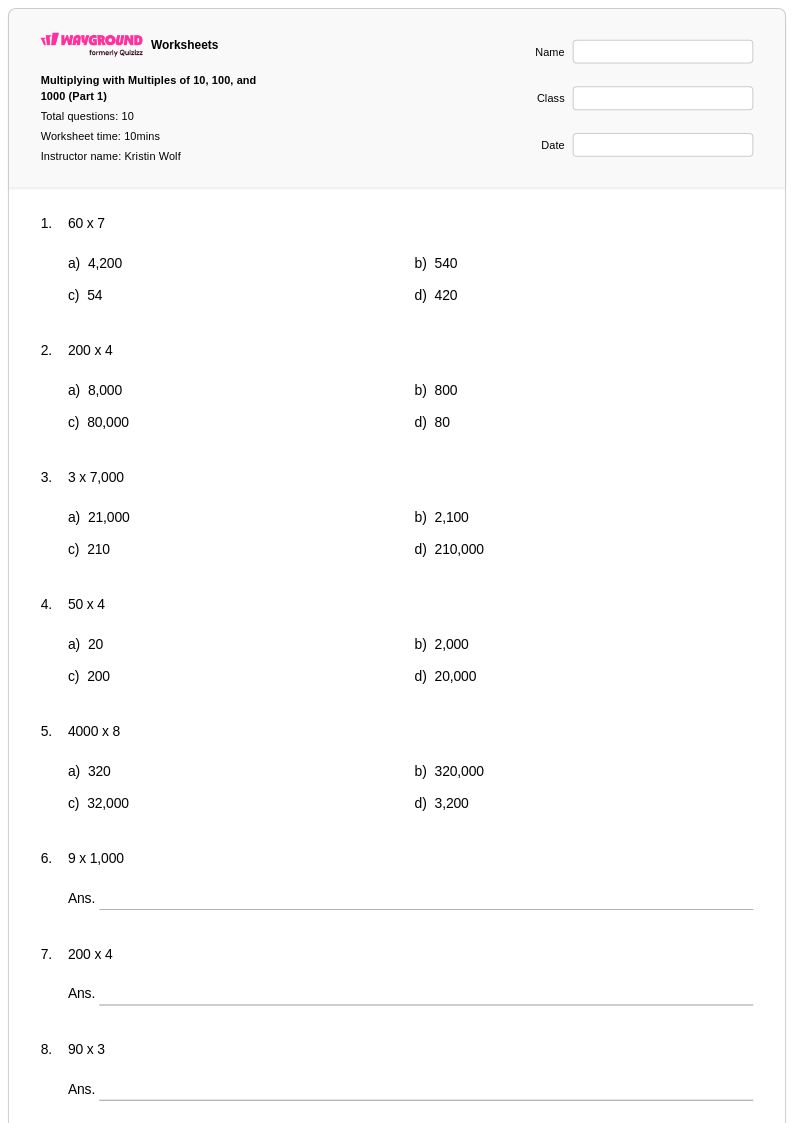
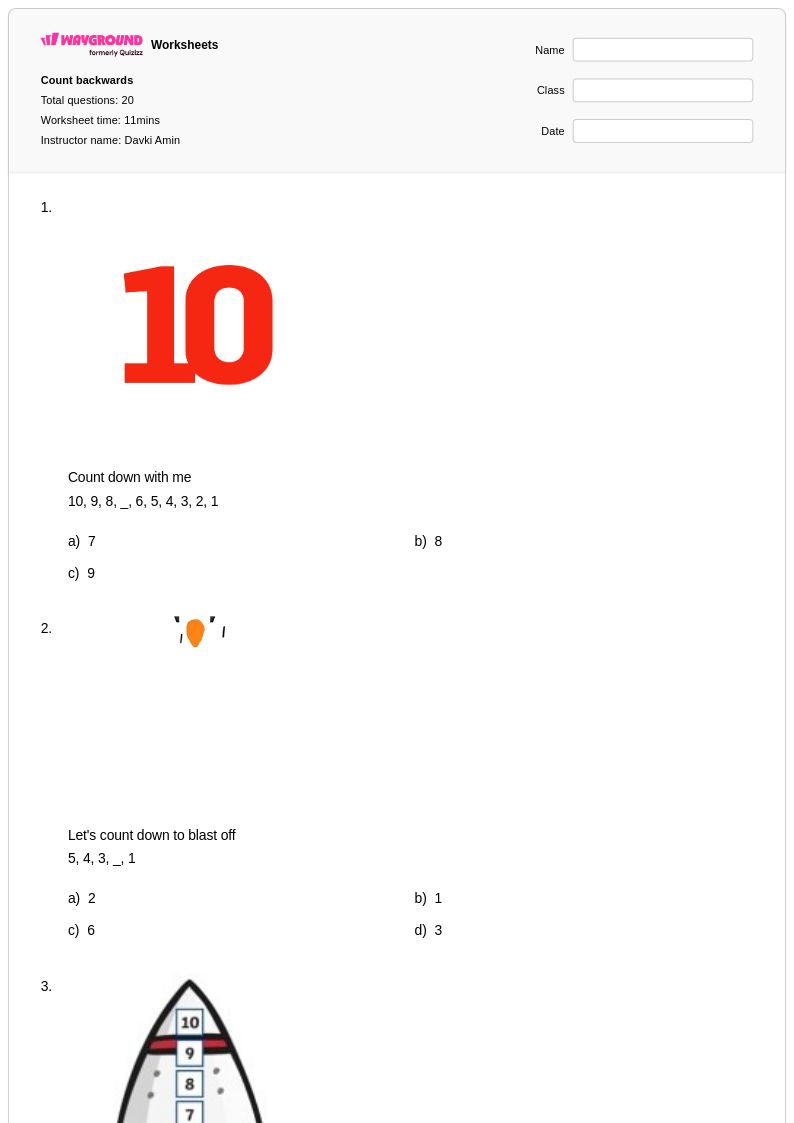
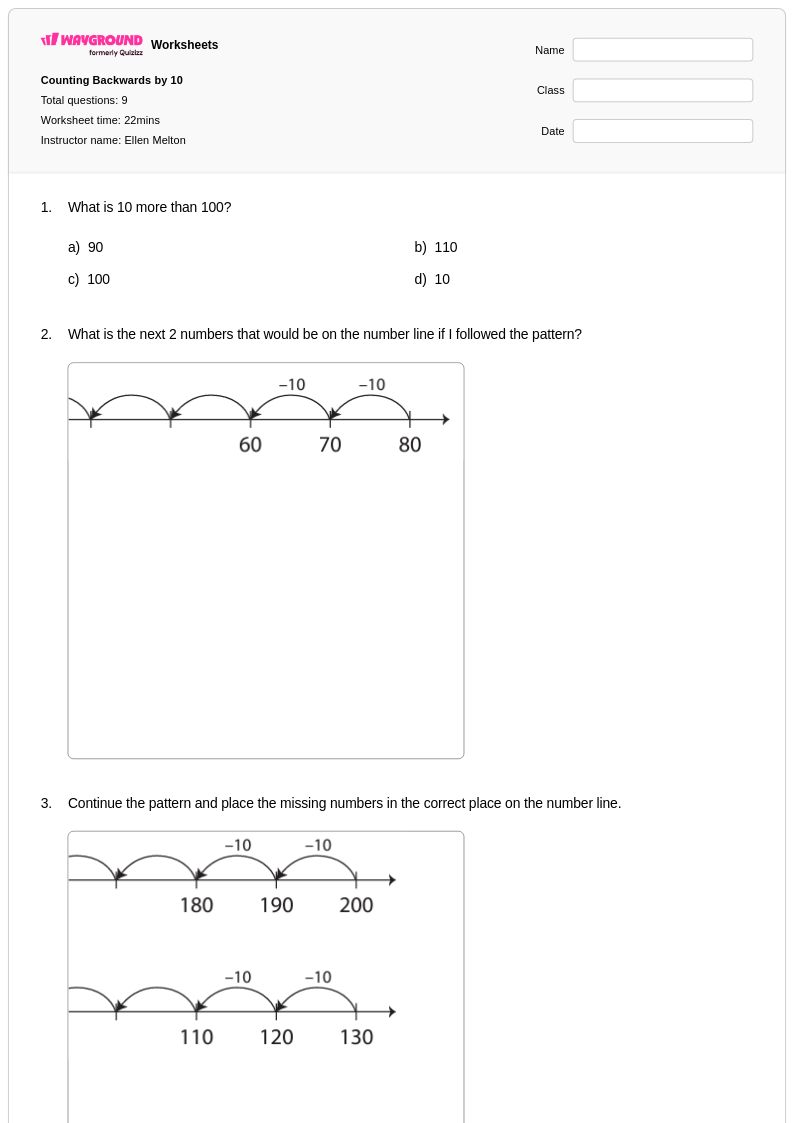
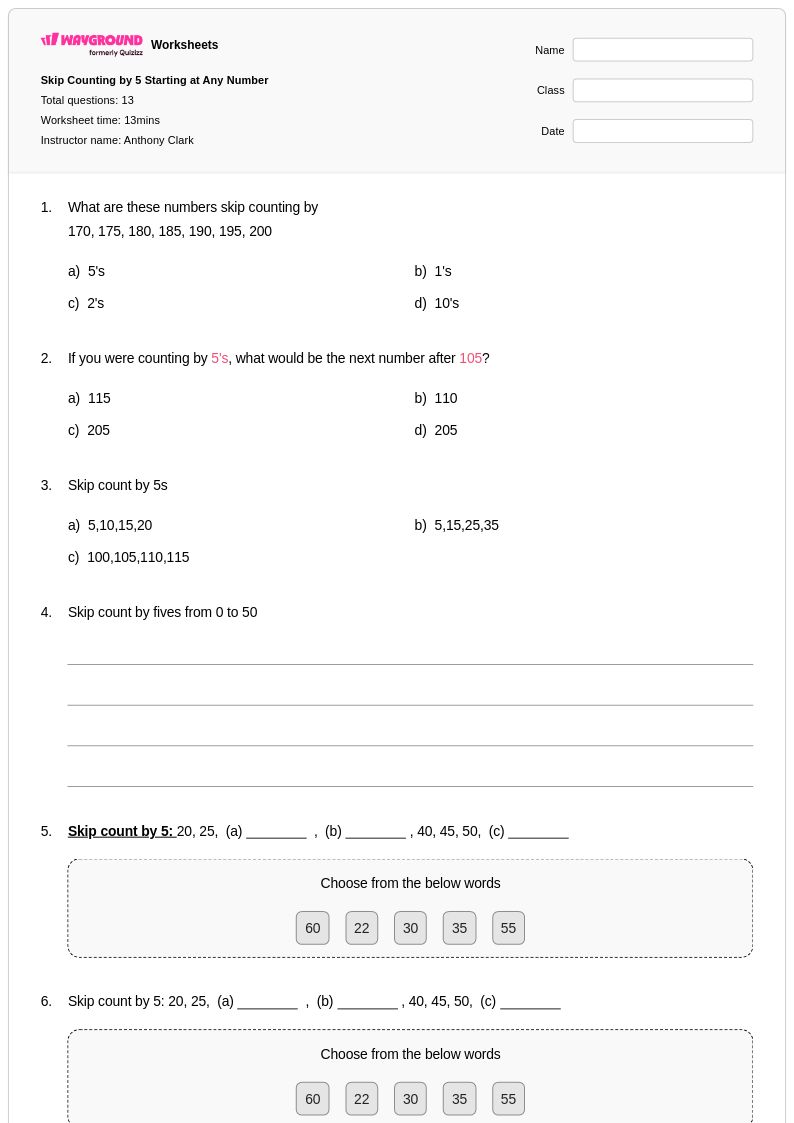
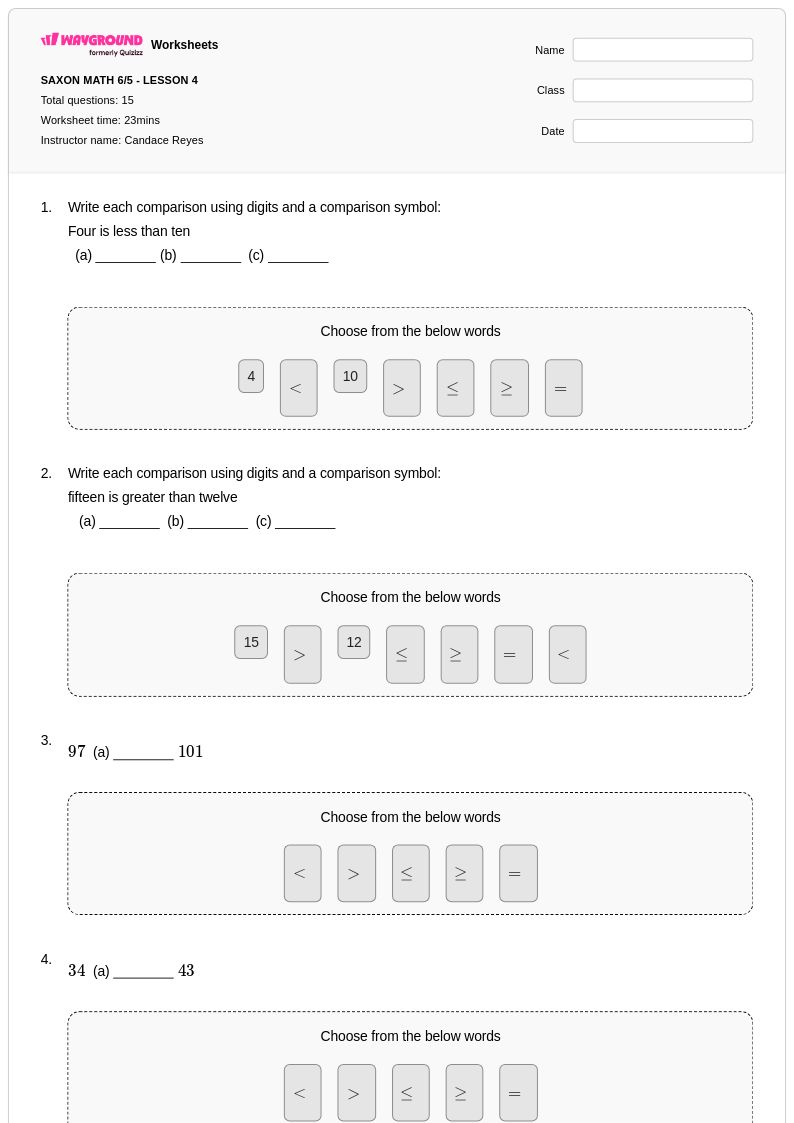
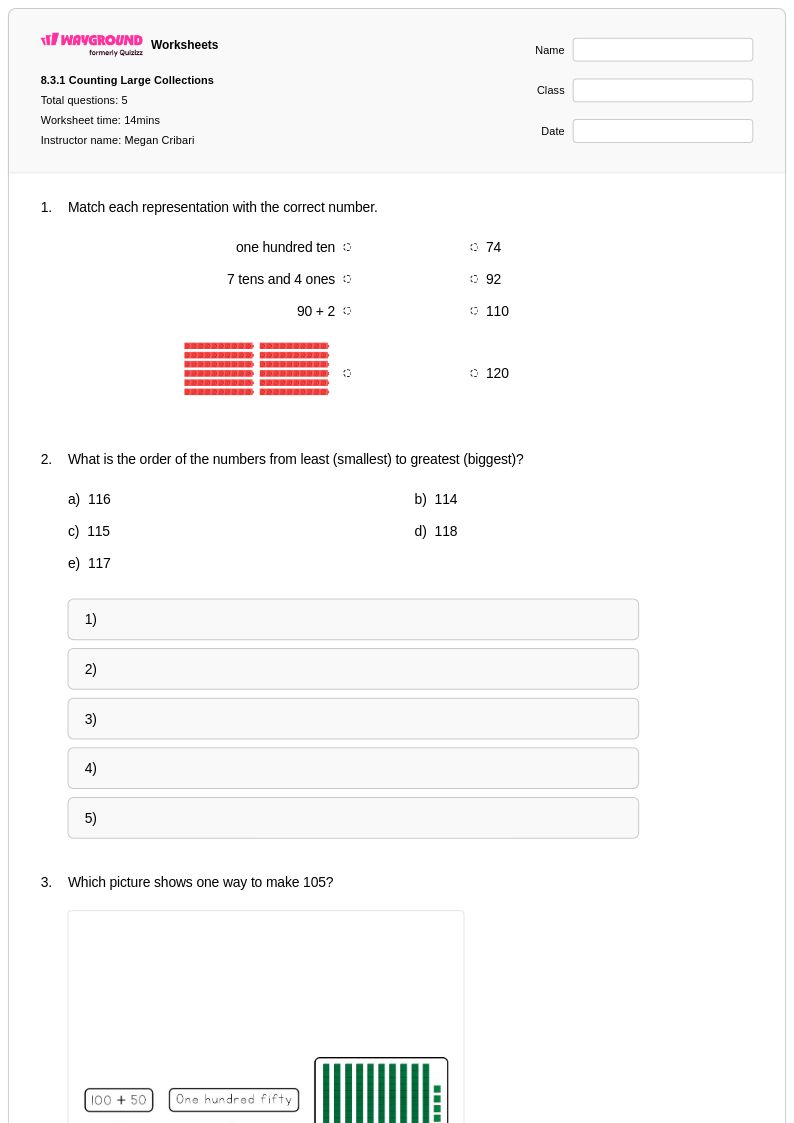
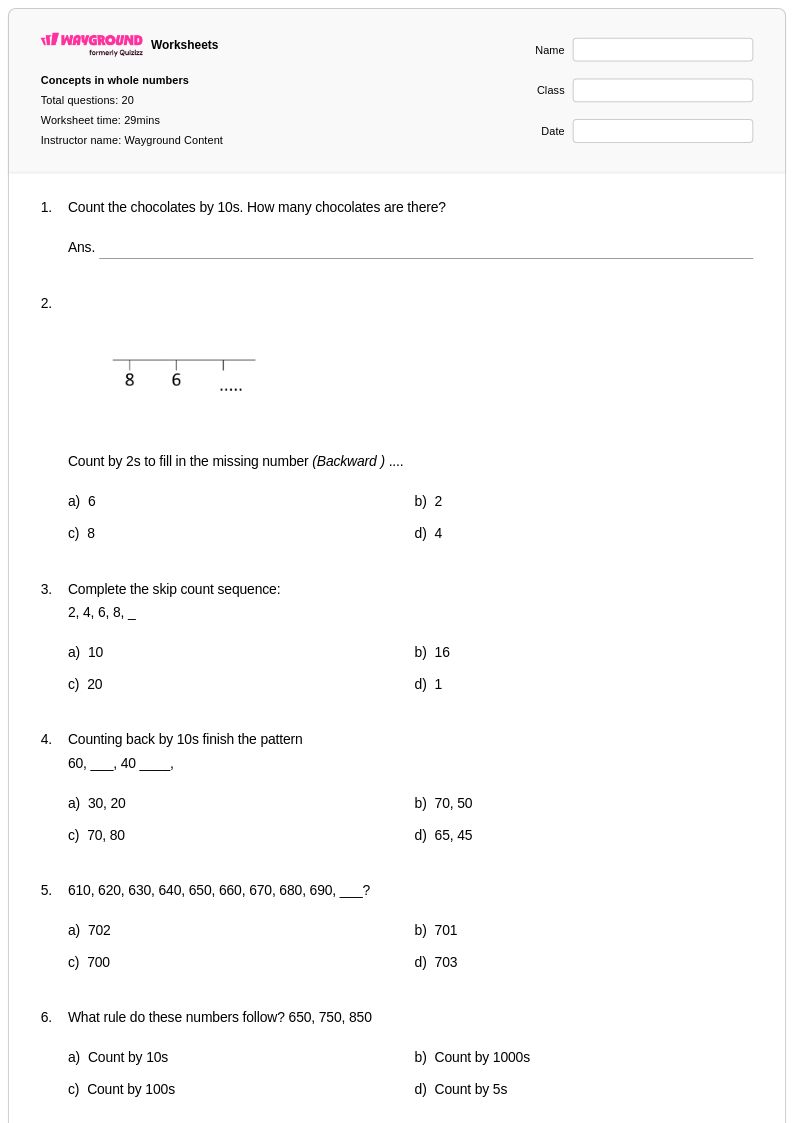
Counting numbers to 100 worksheets available through Wayground (formerly Quizizz) provide kindergarten students with essential practice in developing foundational numerical skills that form the backbone of mathematical understanding. These carefully designed printables focus on helping young learners master the sequential progression of numbers from 1 to 100, strengthening their ability to recognize number patterns, understand quantity relationships, and build confidence with basic counting principles. Each worksheet collection includes comprehensive practice problems that guide students through various counting exercises, from simple number recognition to more complex skip counting patterns, with complete answer keys provided to support both independent learning and teacher-guided instruction. The free pdf format ensures easy accessibility for classroom use, homework assignments, and supplemental practice sessions.
Wayground (formerly Quizizz) empowers educators with millions of teacher-created counting worksheets that can be easily searched, filtered, and customized to meet diverse kindergarten classroom needs. The platform's robust organizational tools allow teachers to quickly locate standards-aligned materials that target specific counting skills within the 1-100 range, while built-in differentiation features enable seamless adaptation for students at varying skill levels. Teachers can effortlessly modify existing worksheets or combine multiple resources to create comprehensive practice sets, with all materials available in both printable pdf format for traditional classroom use and digital formats for interactive learning experiences. This flexibility significantly enhances lesson planning efficiency while providing targeted resources for remediation, skill reinforcement, and enrichment activities that support each child's mathematical development journey.
FAQs
How do I teach kindergarten students to count to 100?
Build the sequence gradually with manipulatives, movement, songs, number lines, and a hundred chart. Have students touch or move one object per number, connect quantities to written numerals, and discuss patterns such as repeated ones digits before progressing to missing-number and skip-counting tasks.
What counting-to-100 exercises work well in kindergarten?
Kindergarten students benefit from numeral matching, fill-in-the-blank sequences, dot-to-dot activities, number-line completion, and counting groups of objects. Short, repeated practice with forward counting, decade transitions, and simple patterns helps children build accuracy without overwhelming working memory.
What mistakes do kindergarten students make when counting to 100?
Common errors include skipping numbers, repeating a number, losing one-to-one correspondence, reversing numerals, and hesitating at decade changes such as 29 to 30. Some children can recite the sequence but cannot identify a requested numeral or represent its quantity, so teachers should check all three skills separately.
How can I use a kindergarten counting-to-100 worksheet from Wayground?
Wayground worksheets are available as printable PDFs and digital formats, allowing teachers to host a digital quiz or print the activity for paper-based, off-screen practice. Every worksheet includes a complete answer key, and printed submissions can be scanned or captured for grading with the Wayground for Teachers app.
How does counting to 100 align with Common Core kindergarten math?
Counting to 100 aligns with the Common Core emphasis on learning the number sequence, writing numerals, and connecting numbers to quantities. Kindergarten practice typically develops forward counting and number recognition first, creating a foundation for comparing values and understanding place value in later grades.
How can I differentiate counting-to-100 worksheets in kindergarten?
Use shorter number ranges, visible number lines, and fewer missing entries for children still developing the sequence; offer backward counting or skip-counting patterns to students ready for enrichment. Wayground can provide extended time, Read Aloud, reduced answer choices, and reading mode, while worksheet versions can be adjusted with larger text, wider spacing, a dyslexia-friendly font, or translation.
What grade do students learn to count to 100?
Counting to 100 is a central kindergarten skill, although children often begin oral counting and numeral recognition in preschool. Kindergarten instruction strengthens accurate sequencing, written-number recognition, and connections between numerals and quantities so students are ready for Grade 1 number relationships.