
11 T
2nd
6 T
3rd
13 T
3rd
12 T
1st
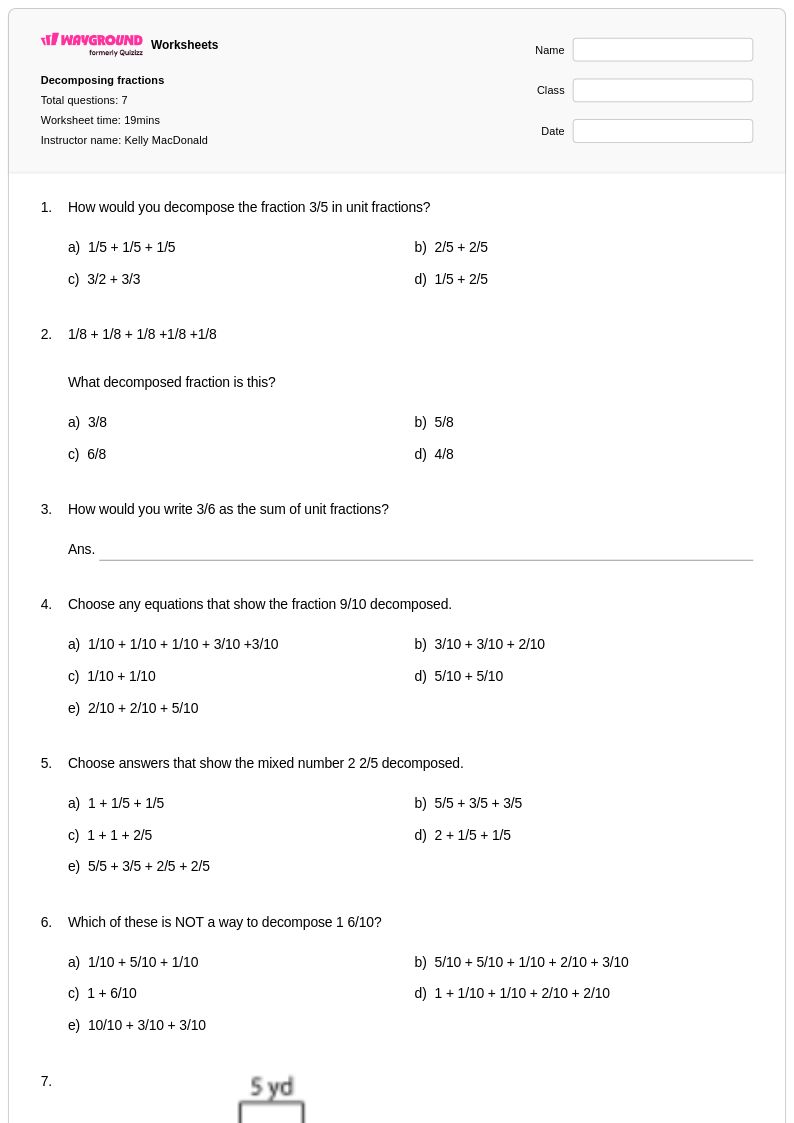
7 T
4th
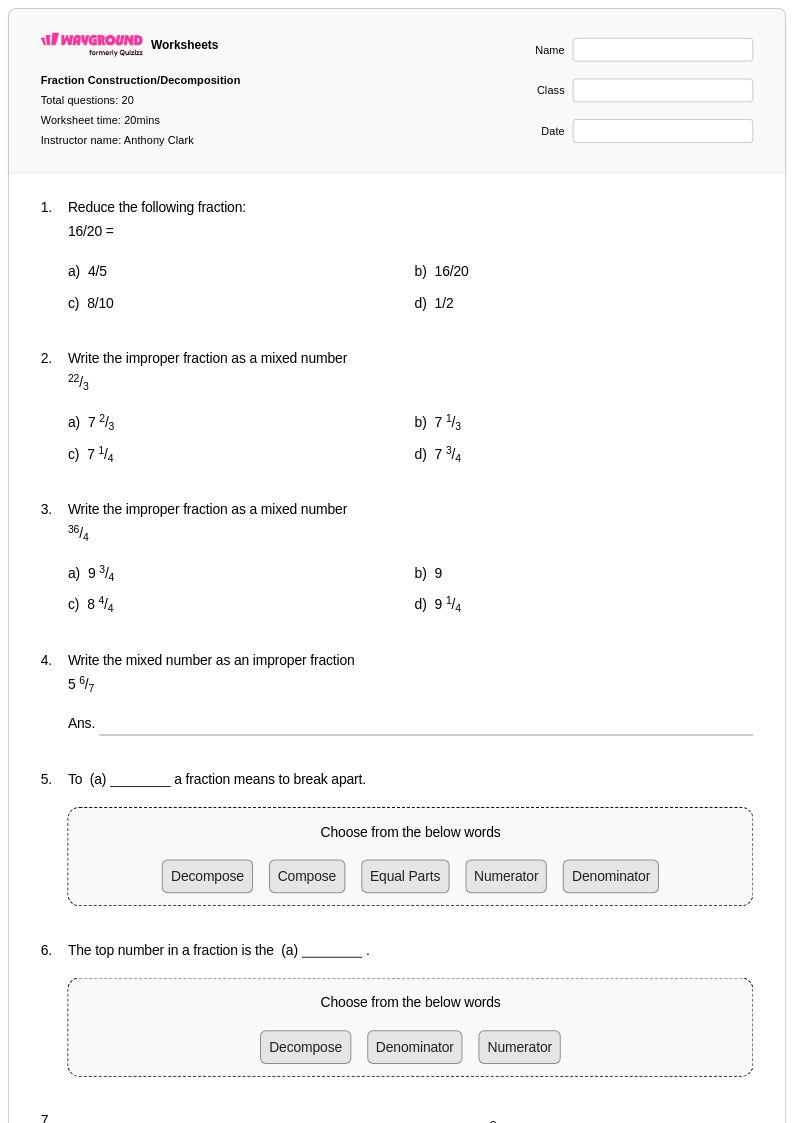
20 T
4th - Uni
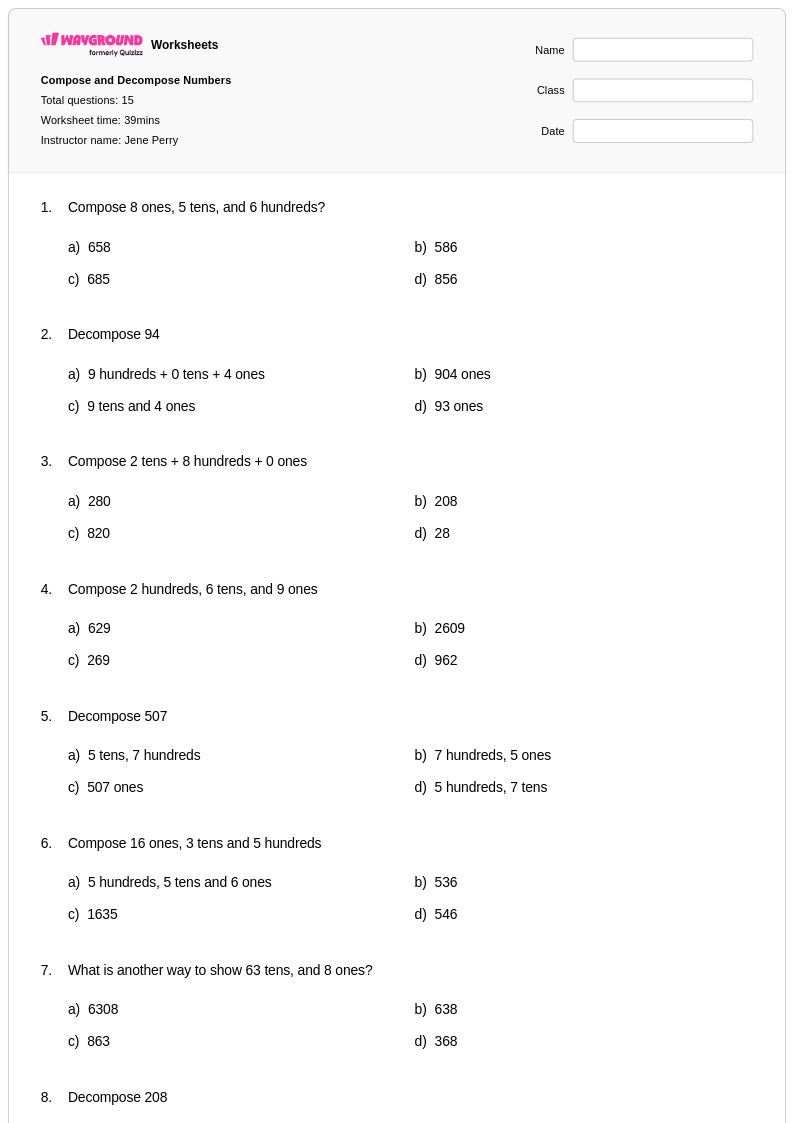
15 T
2nd
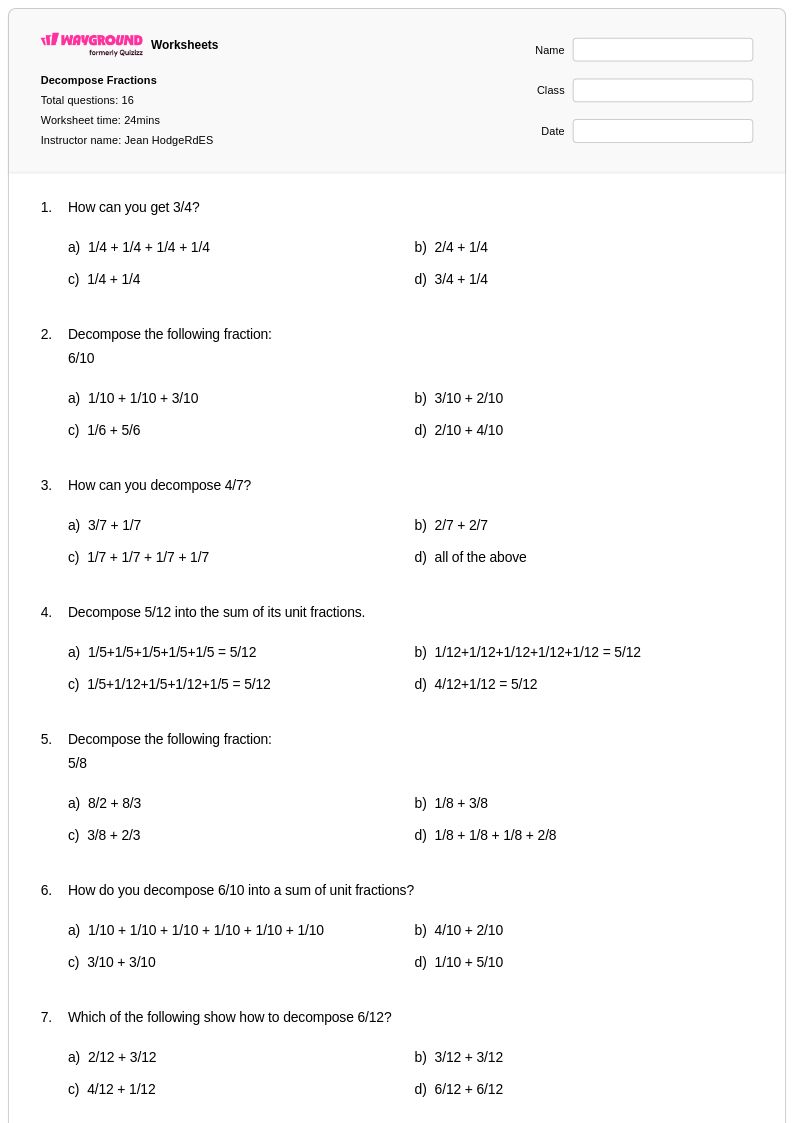
16 T
4th
10 T
4th
30 T
4th
20 T
4th
20 T
4th
18 T
4th
14 T
3rd
20 T
6th - Uni
20 T
4th
20 T
11th - Uni
12 T
4th
5 T
2nd
15 T
11th
12 T
7th
20 T
8th
24 T
3rd
13 T
3rd
Jelajahi Number Decomposition Lembar Kerja berdasarkan Nilai
Jelajahi Lembar Kerja Mata Pelajaran Lainnya untuk kindergarten
Explore printable Number Decomposition worksheets for Kindergarten
Number decomposition worksheets for kindergarten students available through Wayground (formerly Quizizz) provide essential foundational practice in breaking apart numbers into smaller component parts. These carefully designed printables help young learners develop critical mathematical reasoning by exploring how numbers can be separated and recombined in multiple ways, such as understanding that the number 5 can be decomposed into 3+2, 4+1, or 2+2+1. Each worksheet focuses on building conceptual understanding through visual representations, manipulatives-based activities, and hands-on practice problems that make abstract number relationships concrete and accessible. Teachers can access comprehensive answer keys and free pdf downloads that support systematic skill development, allowing students to progress from simple decompositions of numbers 1-5 to more complex breakdowns of numbers up to 10 as their number sense strengthens.
Wayground (formerly Quizizz) empowers educators with millions of teacher-created number decomposition resources specifically designed for kindergarten mathematics instruction. The platform's robust search and filtering capabilities enable teachers to quickly locate worksheets aligned with specific learning standards and differentiate instruction based on individual student needs and developmental levels. These customizable resources are available in both printable and digital formats, including easily downloadable pdf files that facilitate seamless integration into lesson plans and homework assignments. Teachers can leverage these extensive collections for targeted skill practice, remediation support for struggling learners, and enrichment opportunities for advanced students, while the flexible formatting options accommodate diverse classroom environments and teaching approaches to ensure every kindergarten student builds a solid foundation in number decomposition concepts.
FAQs
What grade do students learn to decompose numbers?
How do I teach number decomposition in kindergarten?
What activities help kindergarteners practice decomposing numbers?
What shows that a kindergartener understands number decomposition?
How can I use these kindergarten worksheets?
How does this align with kindergarten math standards?