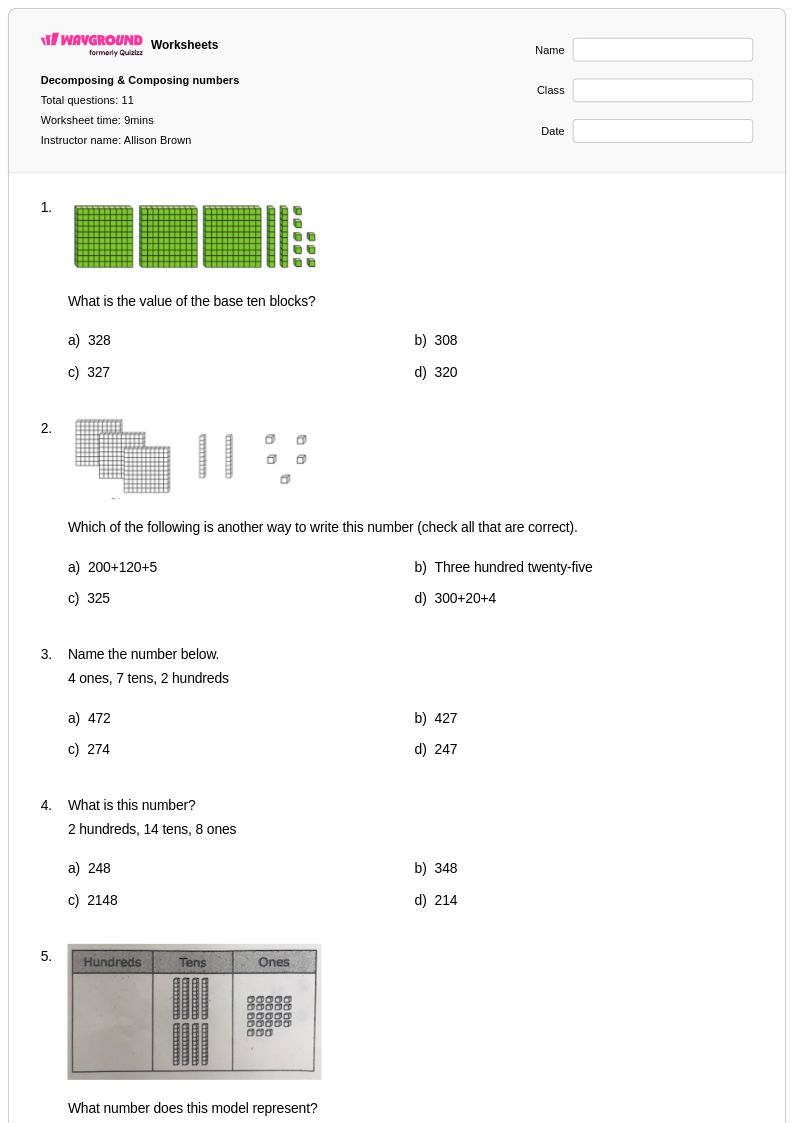
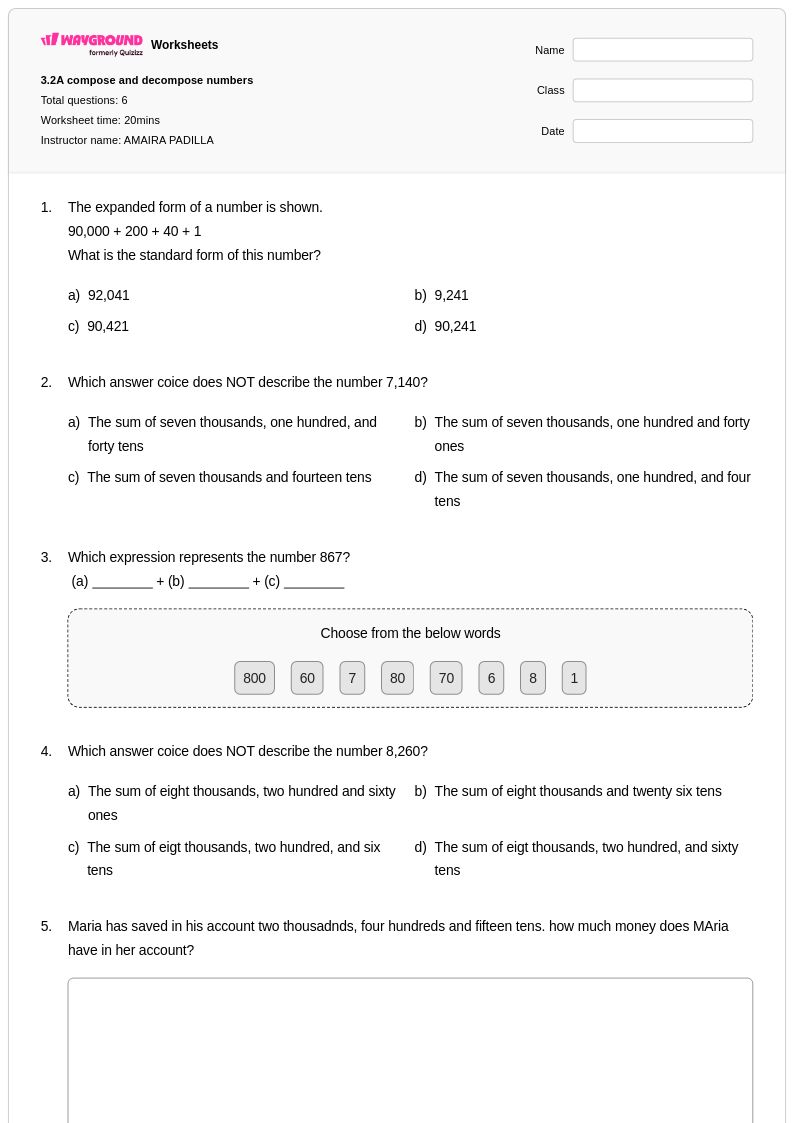
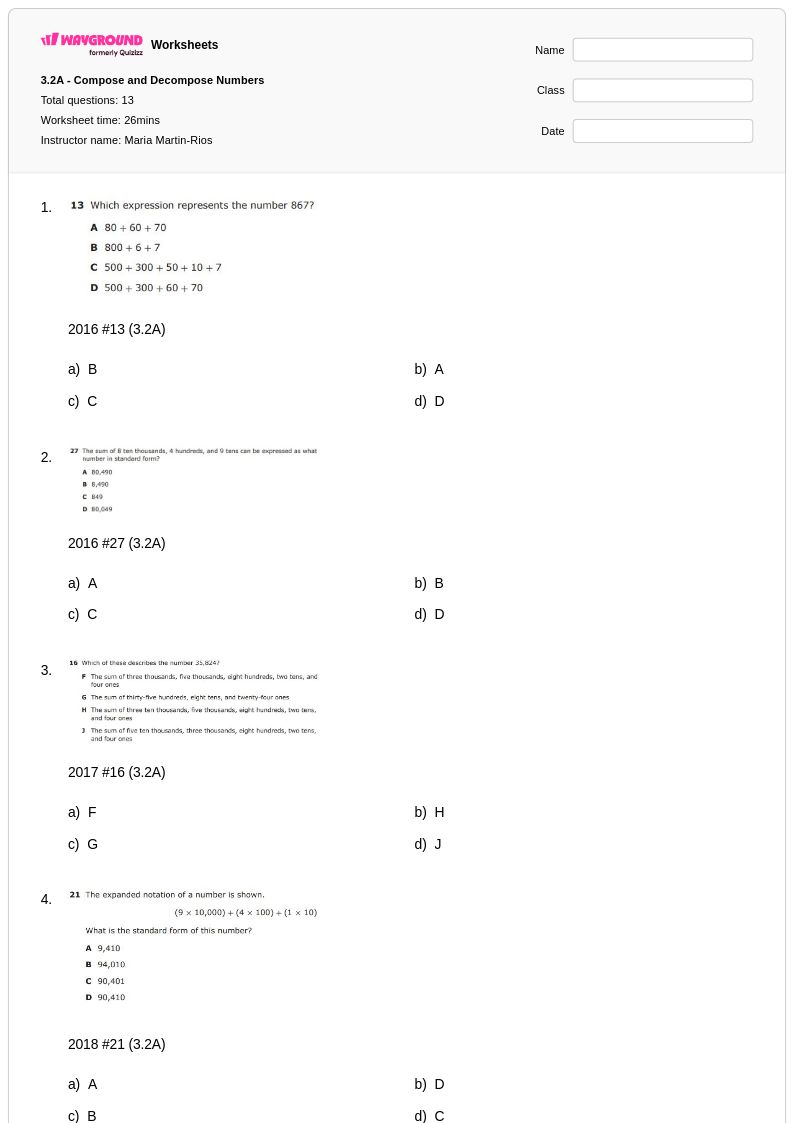
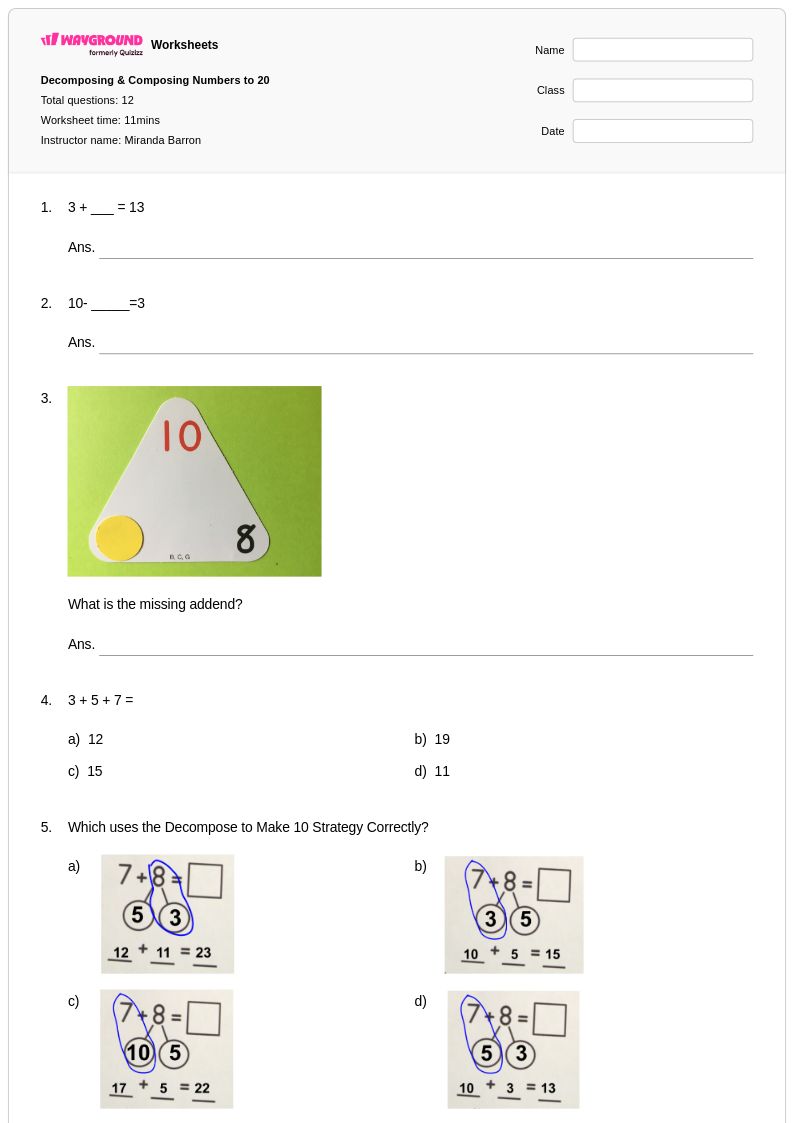
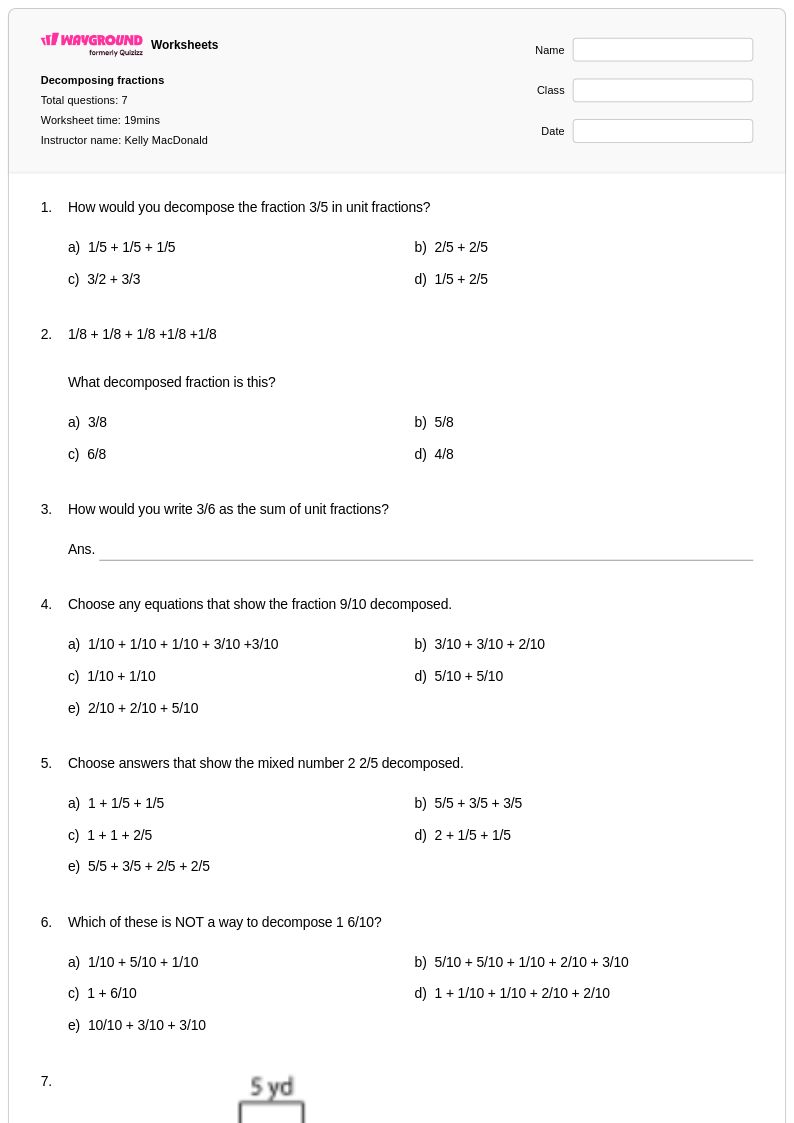
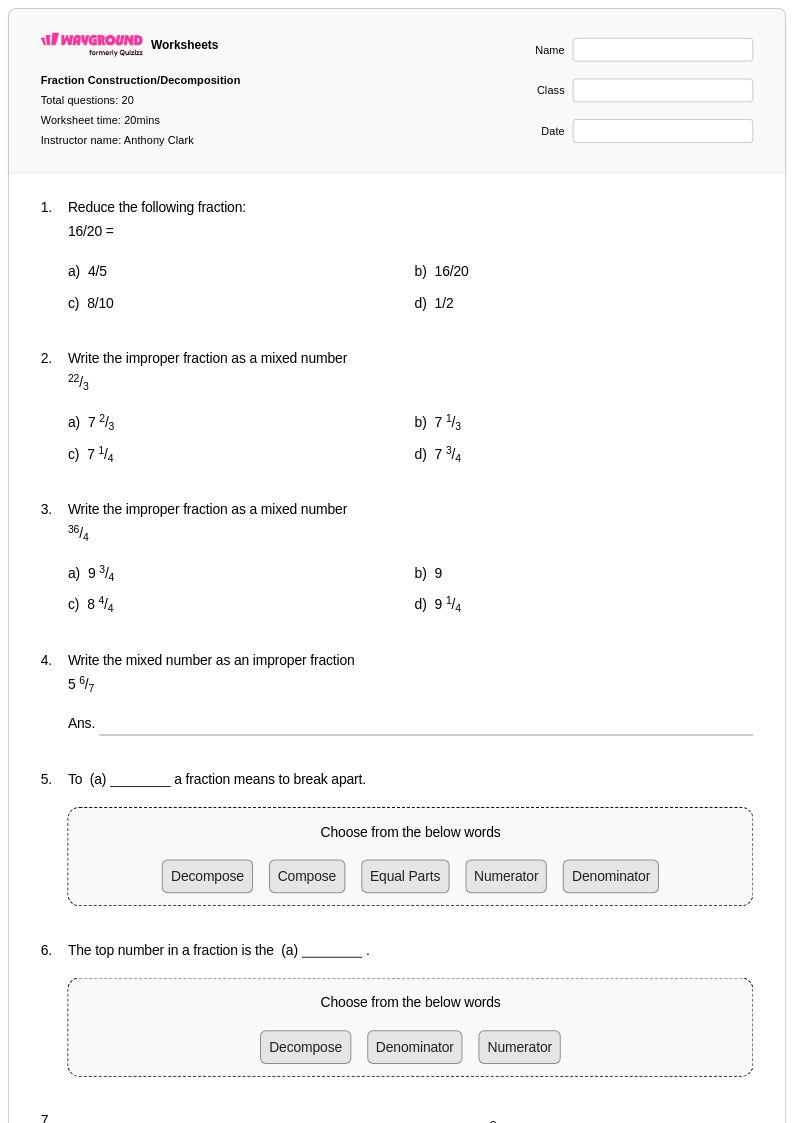
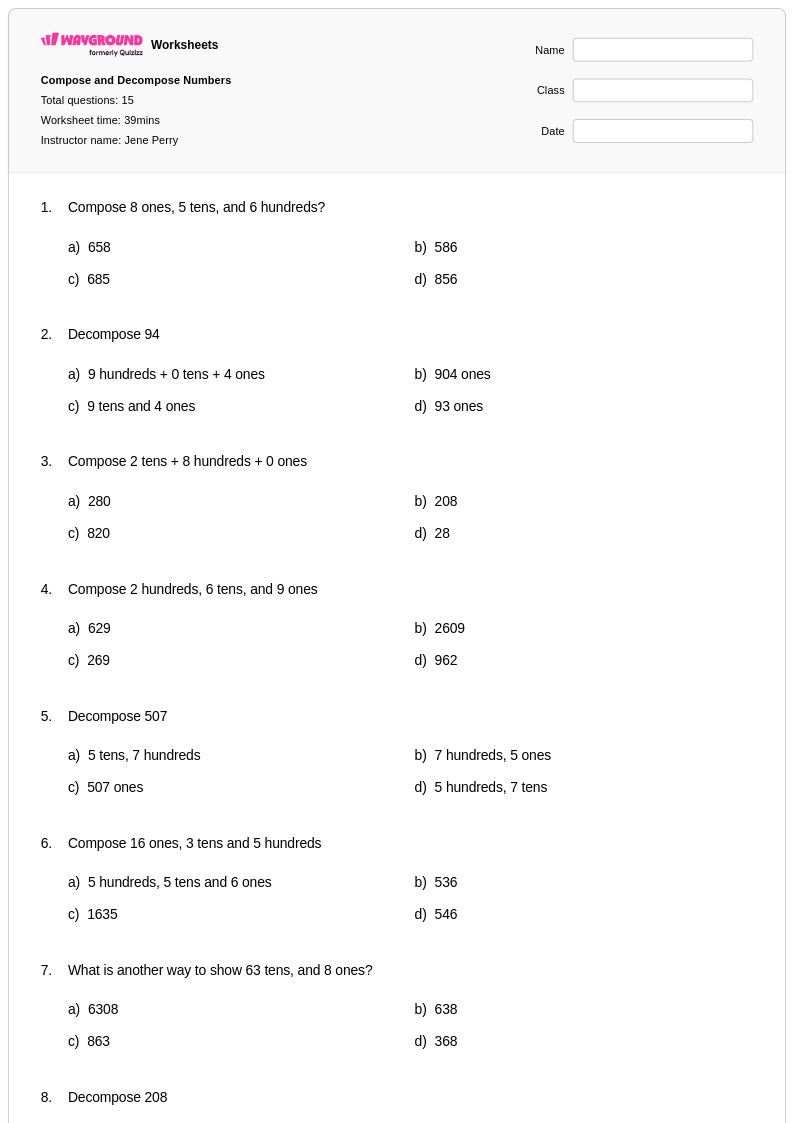
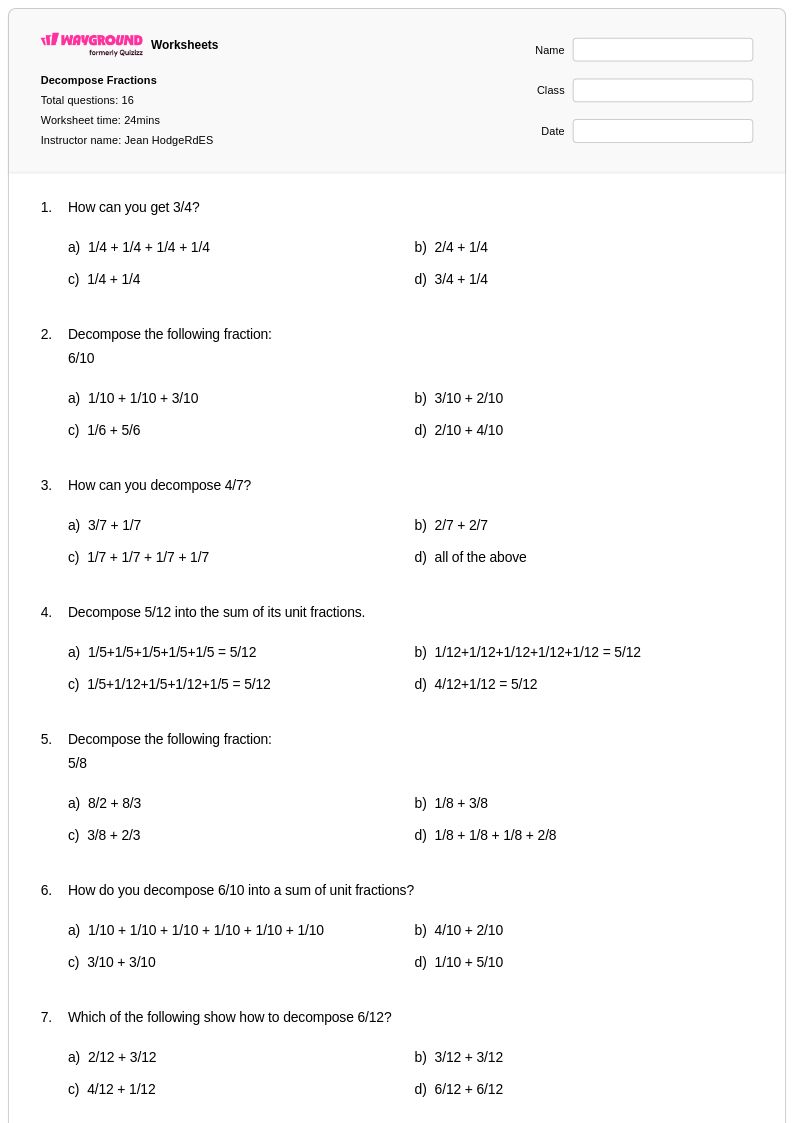
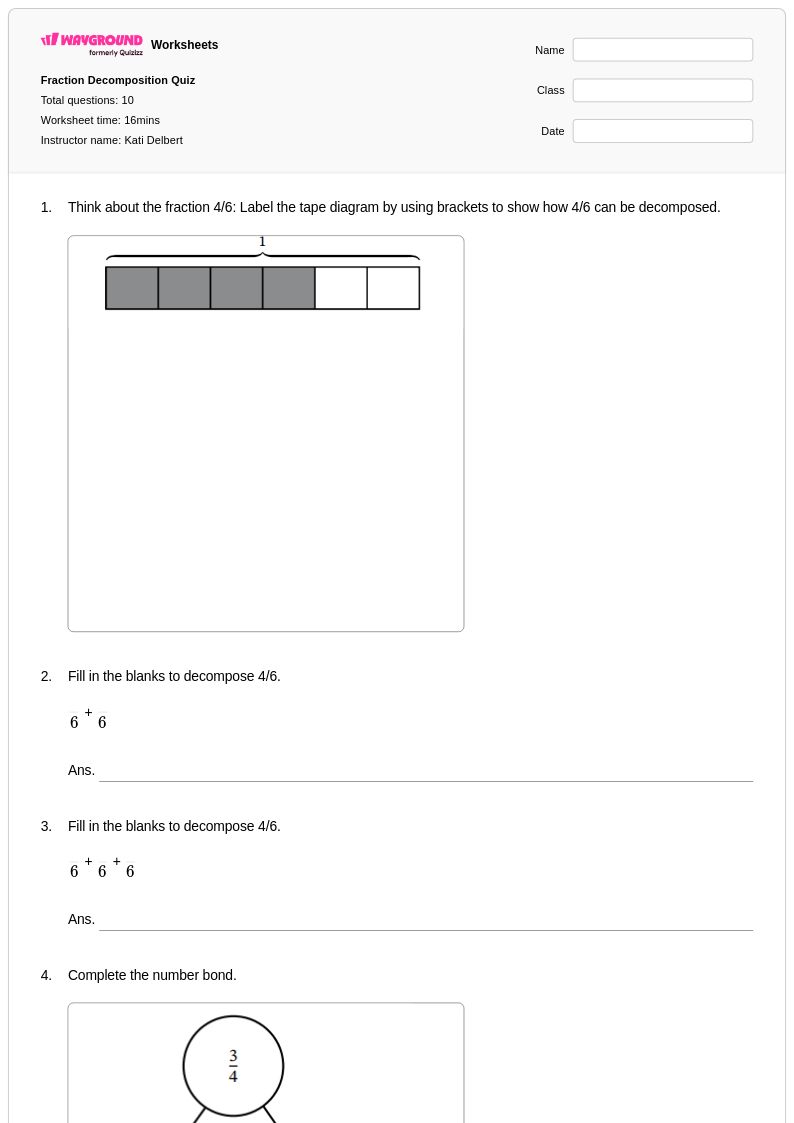
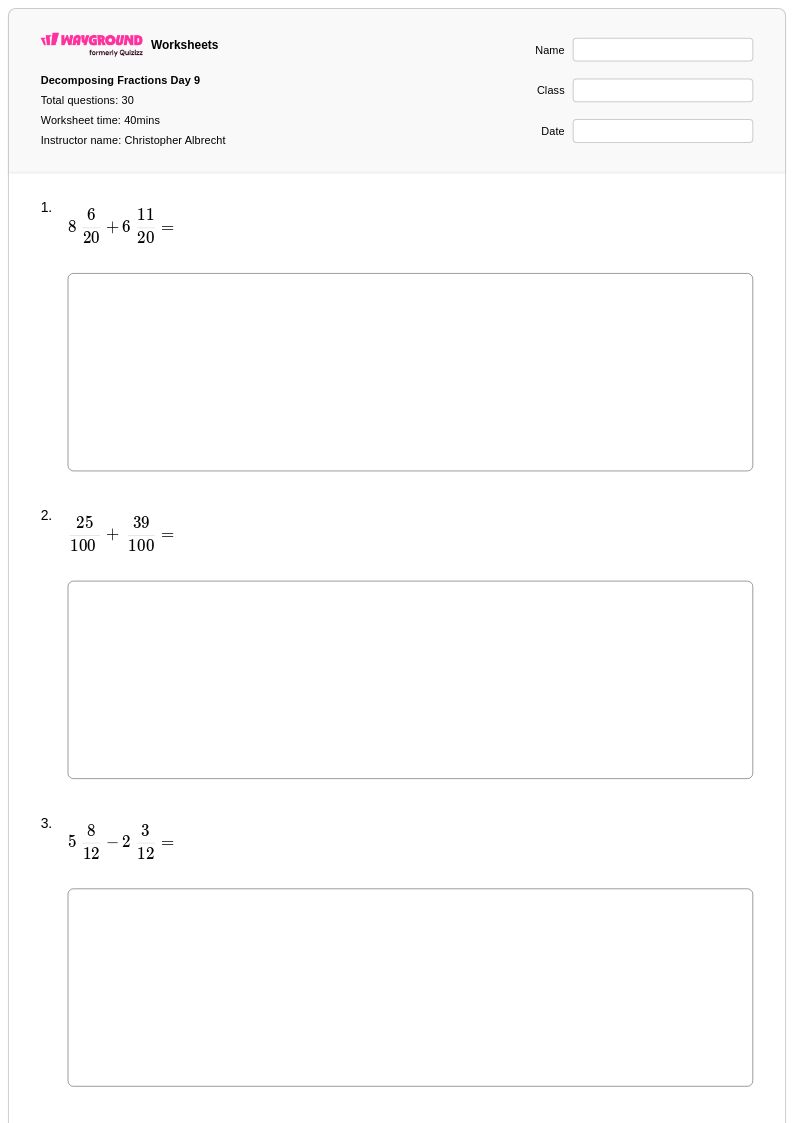
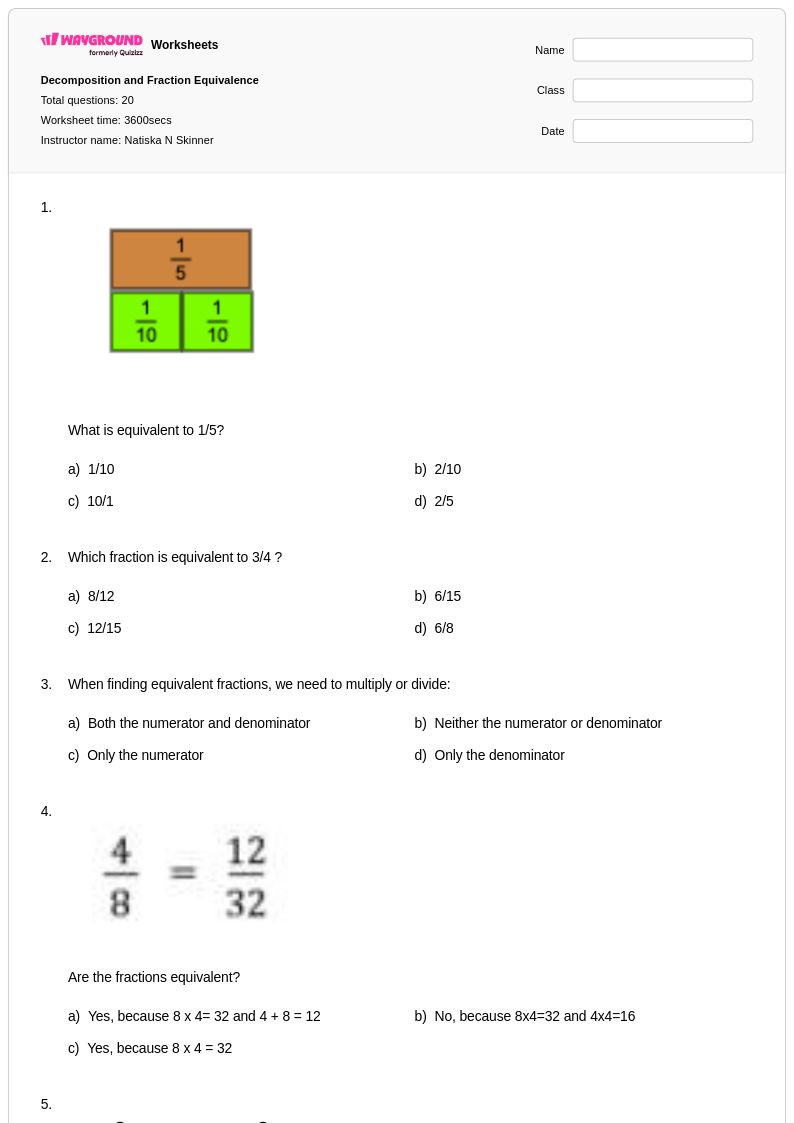
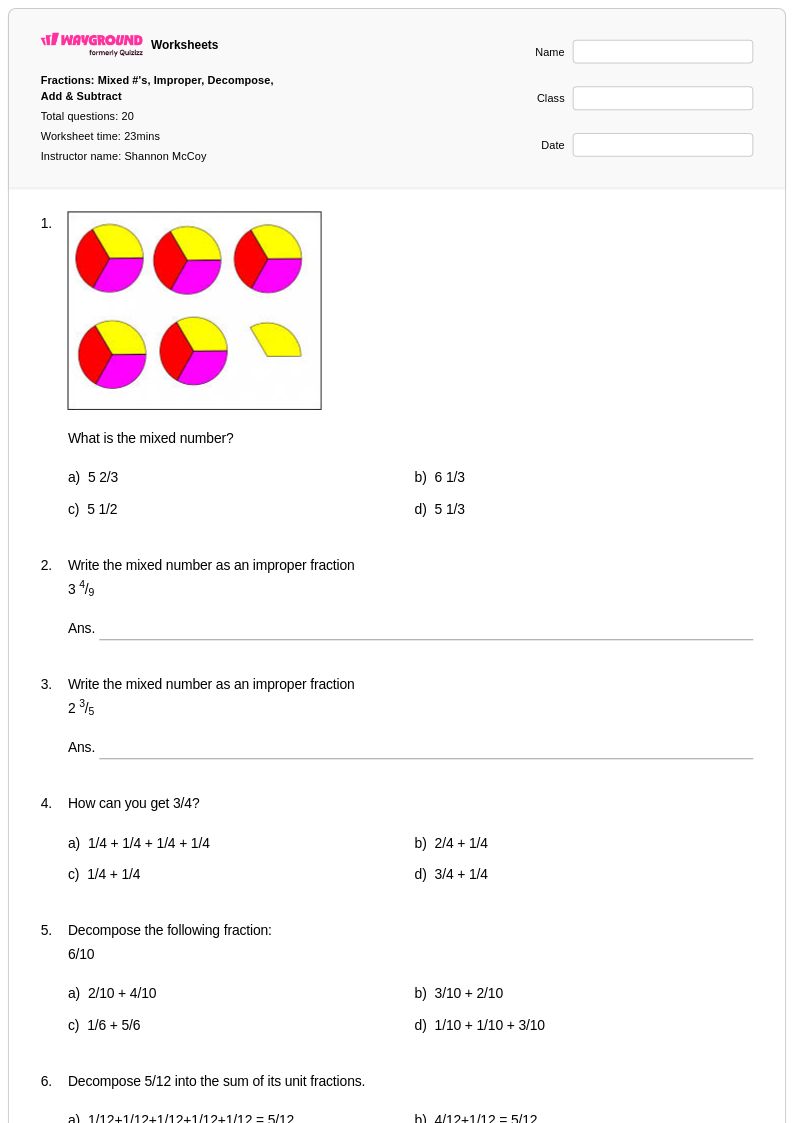
Explore Wayground's free number decomposition worksheets and printables that help students master breaking numbers apart and putting them together through engaging practice problems with complete answer keys.
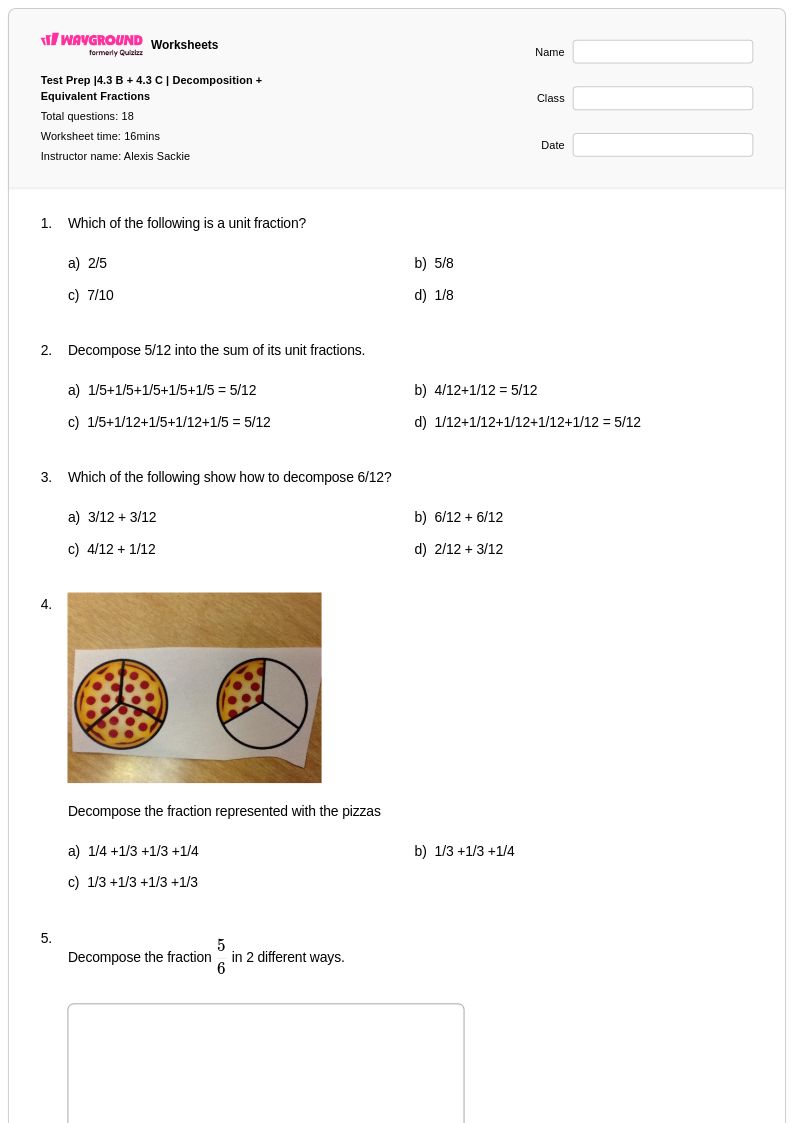
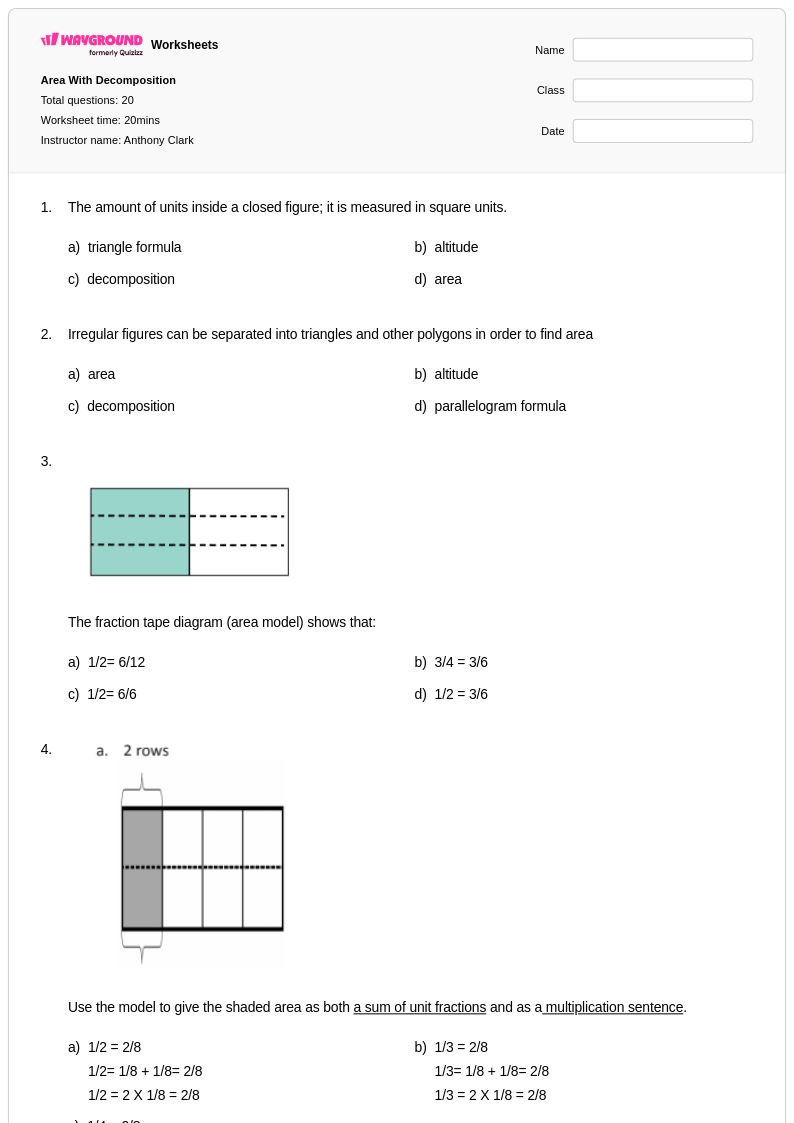
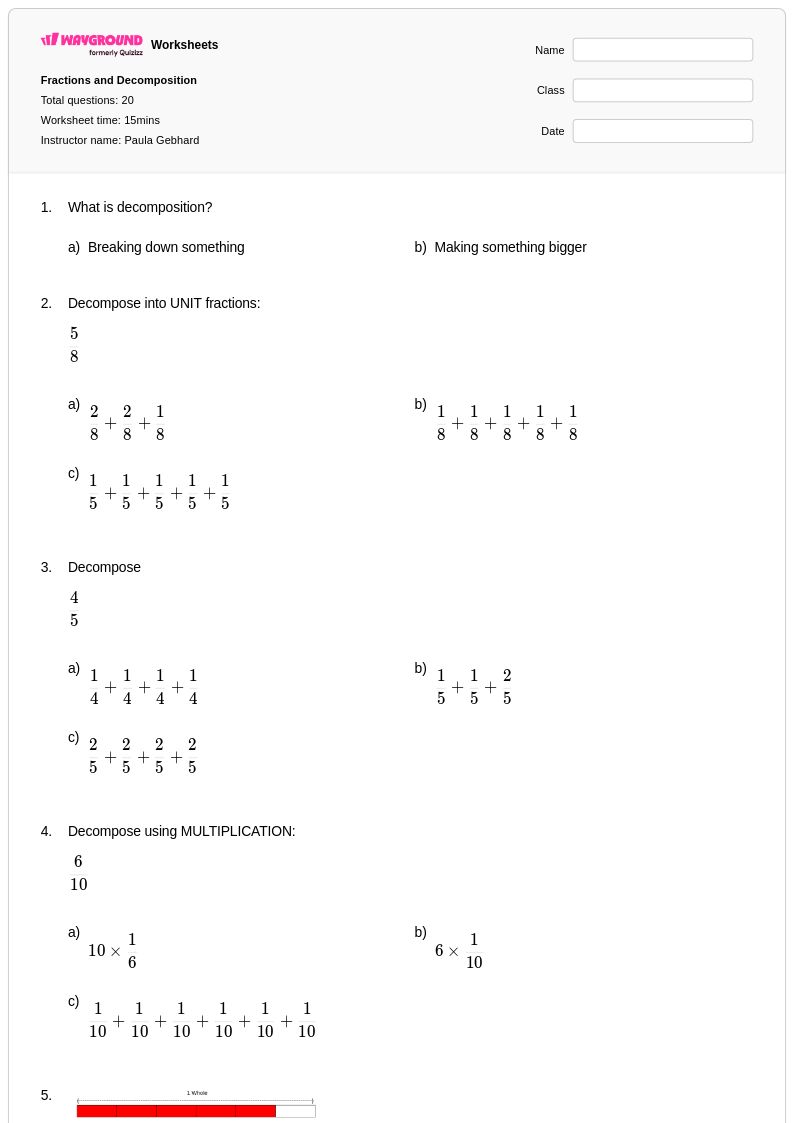
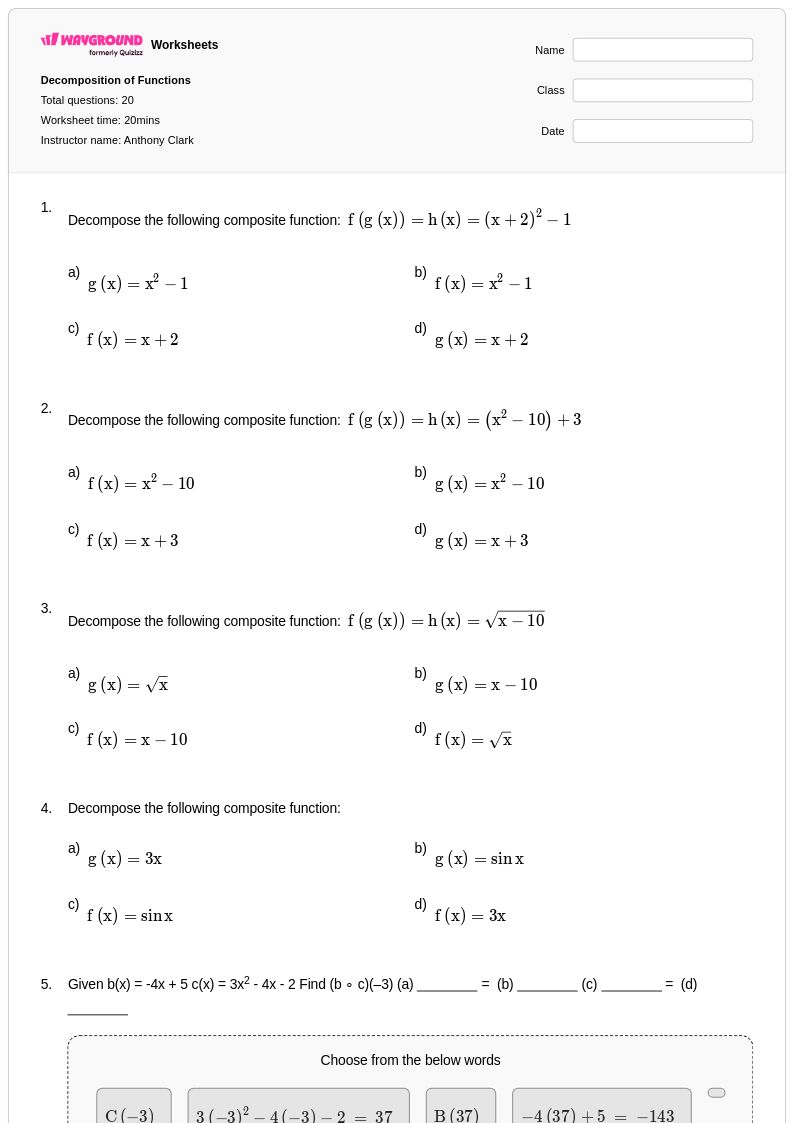
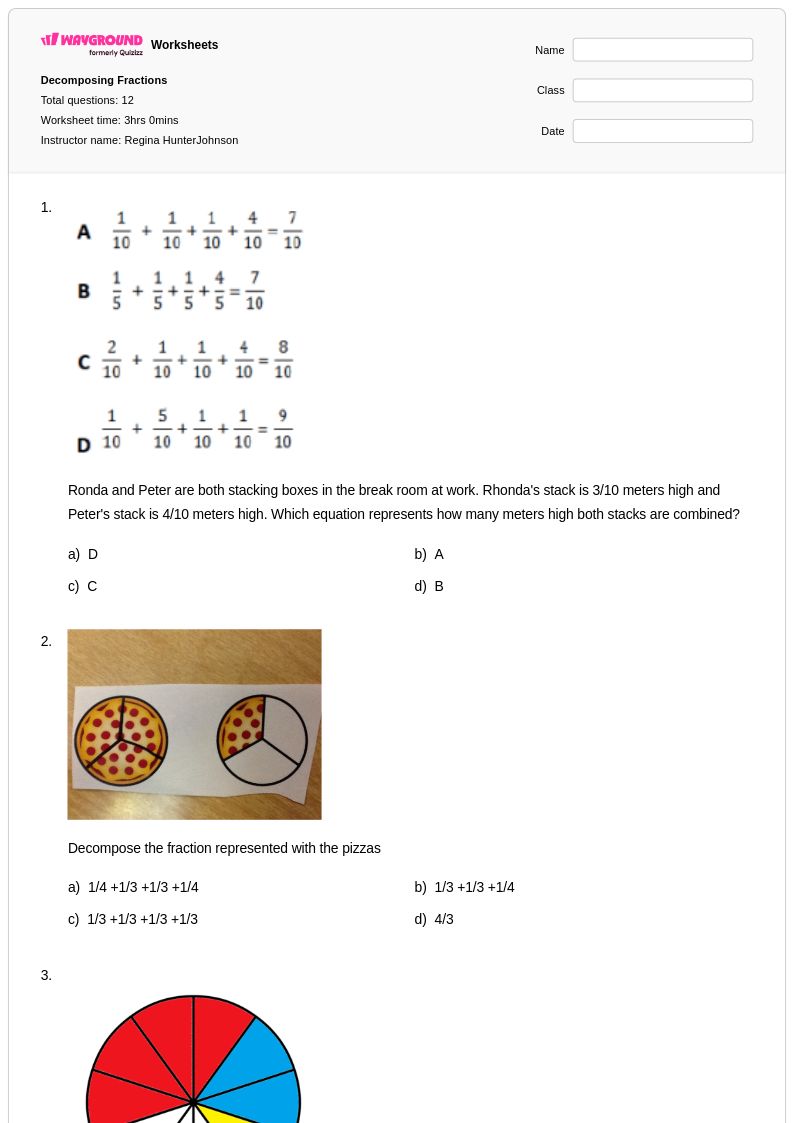
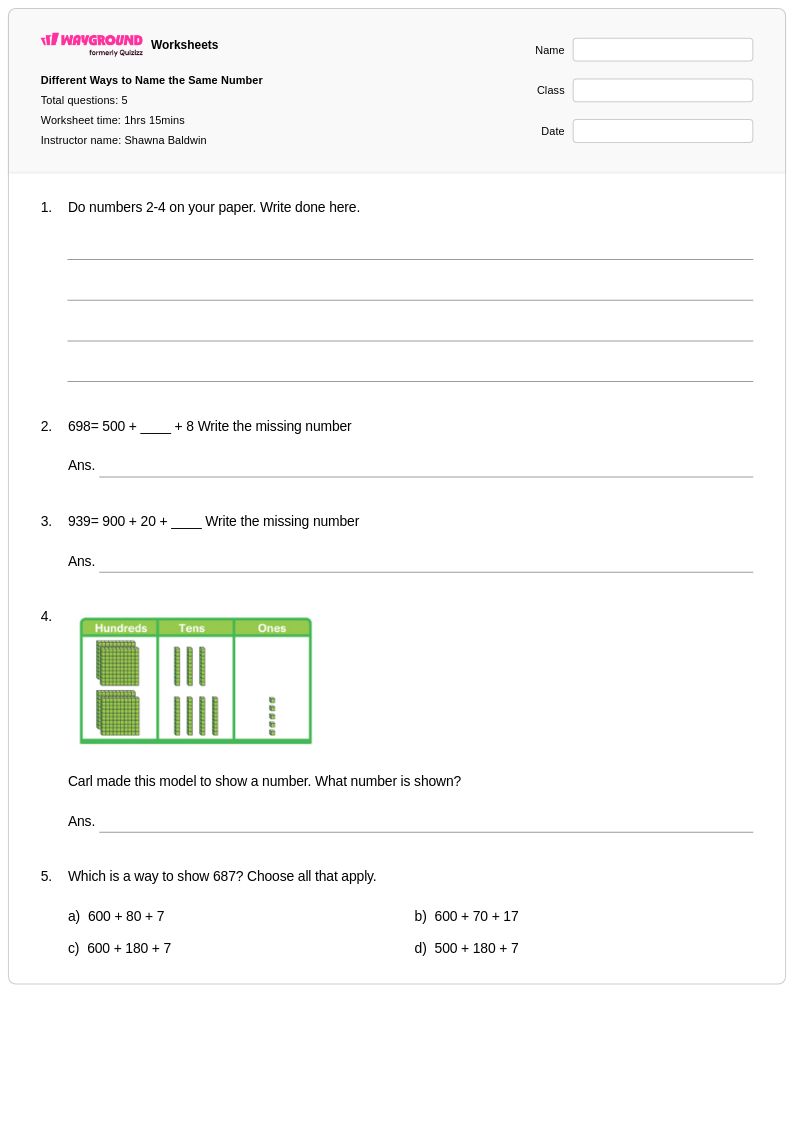
Number decomposition worksheets available through Wayground (formerly Quizizz) provide students with essential practice in breaking down numbers into their component parts, a fundamental skill that strengthens mathematical reasoning and numerical fluency. These comprehensive worksheets guide learners through various decomposition strategies, including breaking numbers into tens and ones, exploring different additive combinations, and understanding part-whole relationships that form the foundation of arithmetic operations. Each worksheet collection includes detailed answer keys and is available as free printable pdf resources, featuring carefully structured practice problems that progress from concrete representations to abstract number manipulation, ensuring students develop both conceptual understanding and procedural fluency in number decomposition techniques.
Wayground (formerly Quizizz) empowers educators with millions of teacher-created number decomposition resources that can be easily searched, filtered, and customized to meet diverse classroom needs and standards alignment requirements. The platform's robust differentiation tools allow teachers to modify worksheets for varying skill levels, while the flexible format options enable seamless integration of both printable pdf materials and interactive digital activities into lesson plans. These comprehensive resources support effective instructional planning by providing ready-made materials for initial skill introduction, targeted remediation for struggling learners, and enrichment opportunities for advanced students, all while offering the adaptability teachers need to address individual learning goals and pacing requirements in their number sense instruction.
FAQs
How do I introduce number decomposition to my students?
Start with concrete objects like blocks or counters. Ask students to show the number 7, then ask them to split the group into two smaller groups and describe what they have (e.g., a group of 5 and a group of 2). This hands-on approach helps build a physical understanding of part-whole relationships before moving to more abstract representations like number bonds.
What exercises help students practice number decomposition?
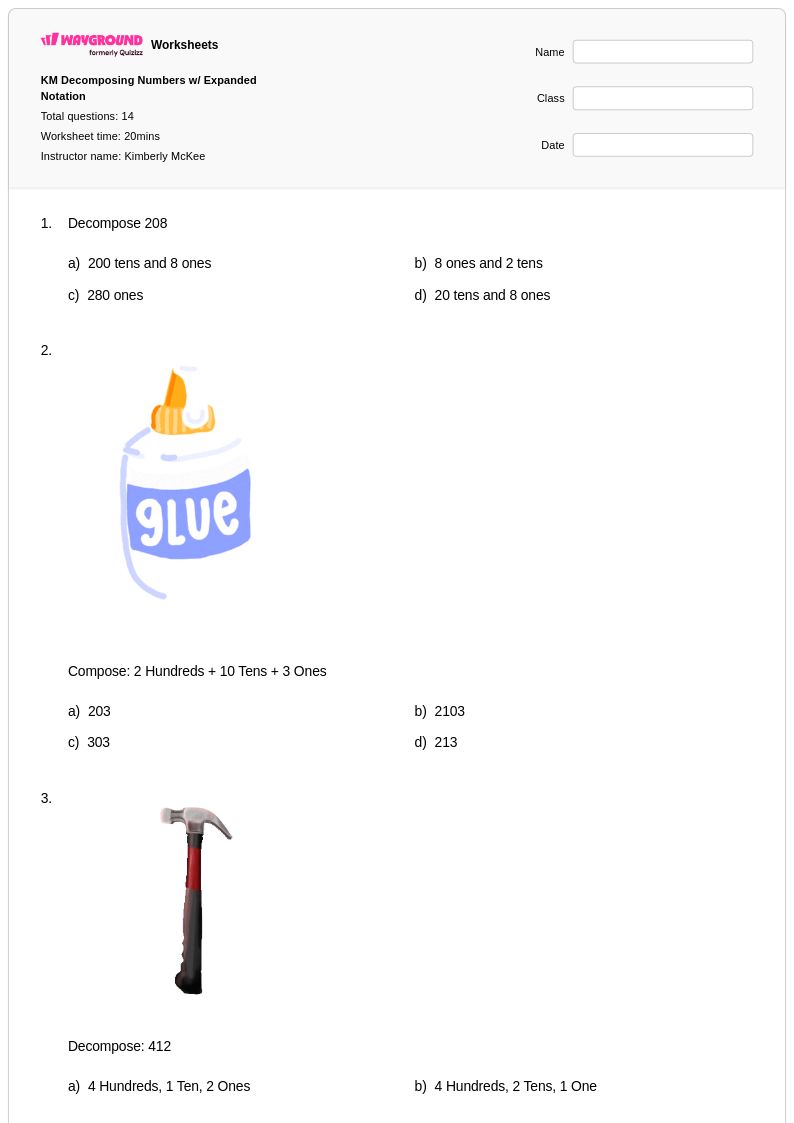
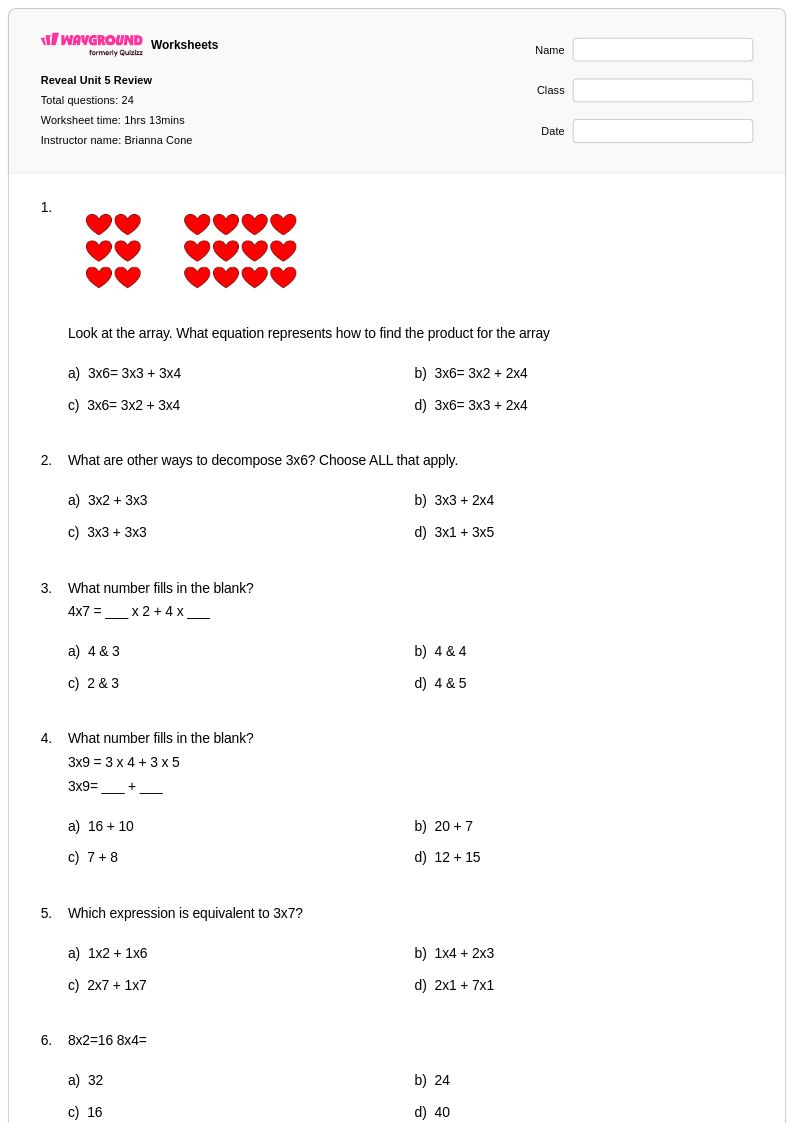
Effective practice moves from concrete to abstract. Start with activities using number bonds and ten frames to visualize breaking numbers apart. Then, progress to worksheets that ask students to find different additive combinations for a given number (e.g., 8 = 4+4, 5+3, 6+2) and to decompose two-digit numbers into tens and ones.
What are common student mistakes with number decomposition?
A frequent mistake is confusing place value, especially with two-digit numbers. For example, a student might decompose 34 into 3 + 4 instead of 30 + 4. Another common issue is only recognizing one or two ways to break down a number, indicating a need for more practice with flexible thinking.
How can I use these number decomposition worksheets?
Wayground worksheets can be used in multiple ways to fit your classroom. You can host a worksheet as a digital quiz on the platform or print it as a PDF for hands-on paper practice. Every worksheet includes a complete answer key, and for printed assignments, you can use the Wayground for Teachers app to quickly scan and grade student work.
How does number decomposition fit into the math curriculum?
Number decomposition is a foundational concept aligned with Common Core's emphasis on number sense. In early grades, it's crucial for understanding addition and subtraction as putting together and taking apart. Later, it underpins place value concepts and mental math strategies for multi-digit arithmetic.
How can I support students who struggle with number decomposition?
For students needing extra support, use Wayground's digital accommodation features like Read Aloud for word problems or Reduced Answer Choices to lower cognitive load. For printable work, you can create a scaffolded version of a worksheet by adjusting the font size and spacing to improve readability.