
20 Q
9th - Uni
20 Q
9th - 12th
20 Q
11th - Uni
20 Q
9th - 11th
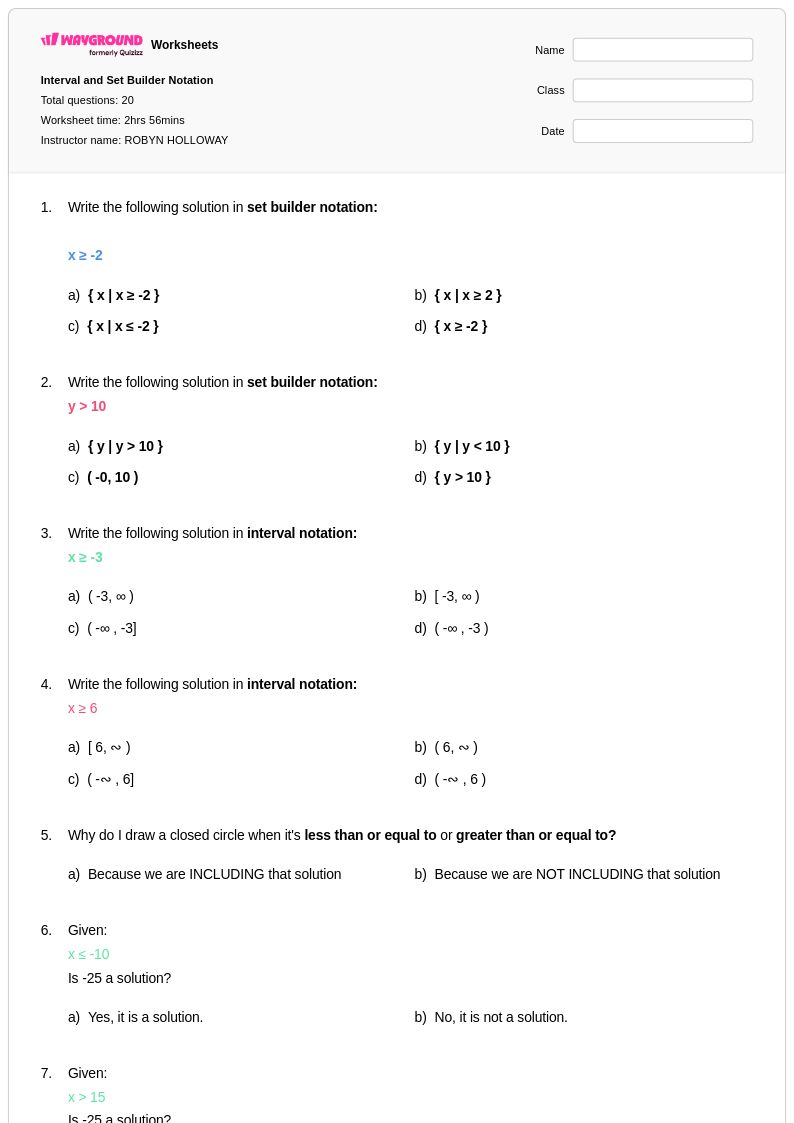
20 Q
10th
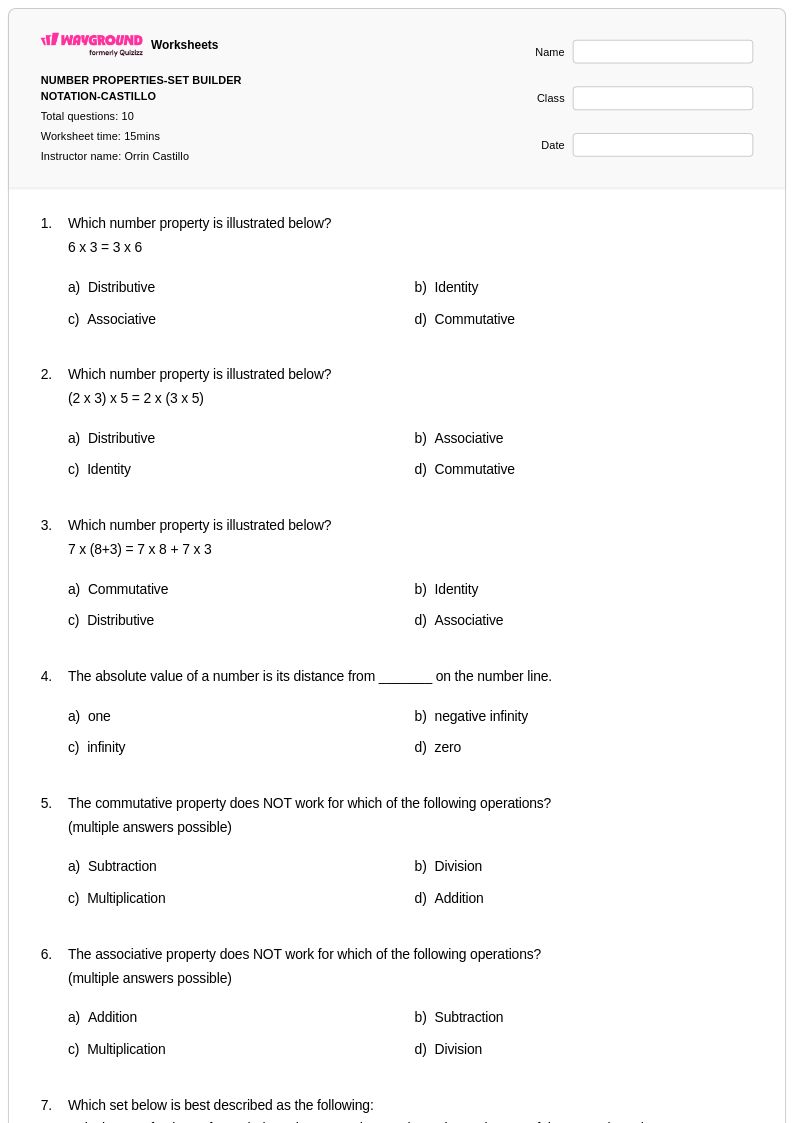
10 Q
11th
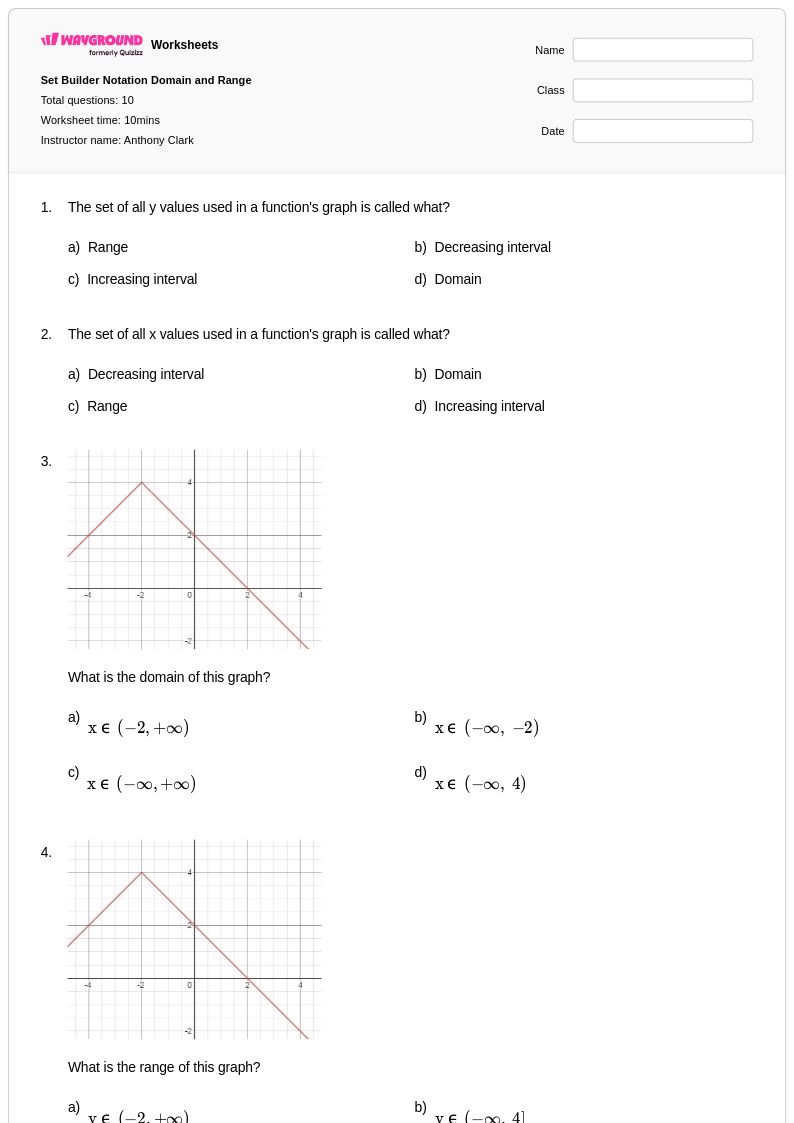
10 Q
9th - Uni
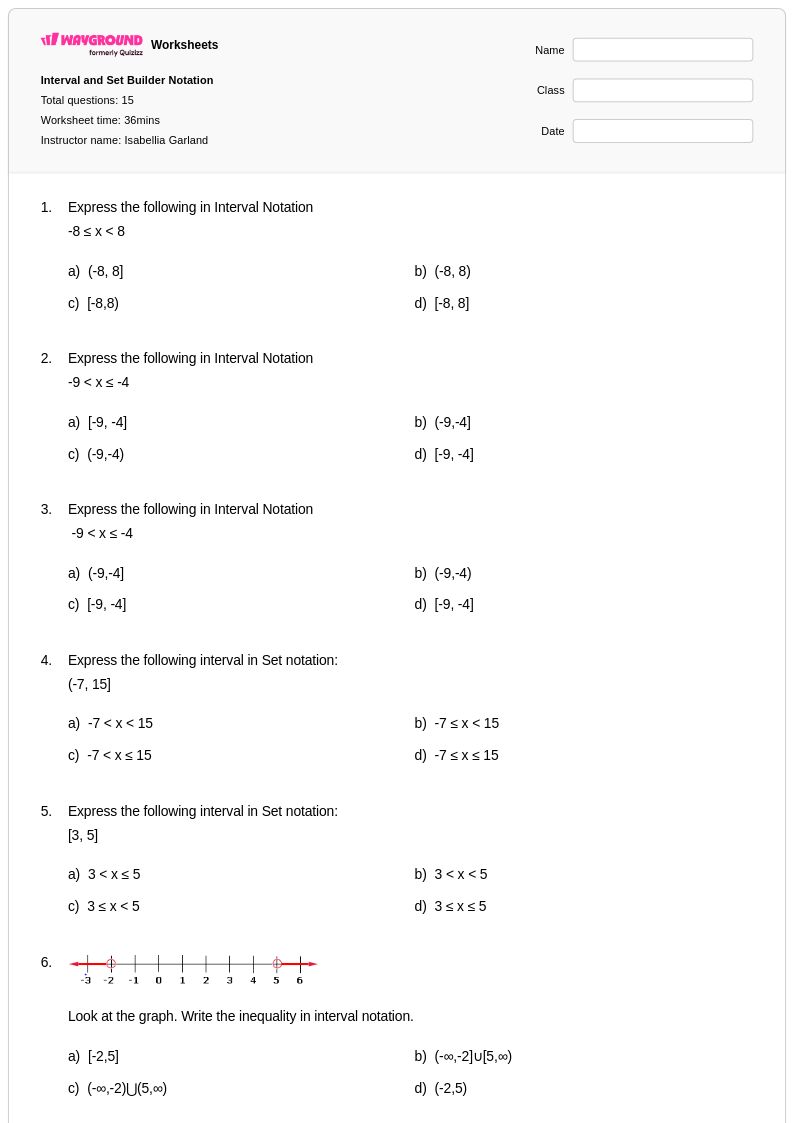
15 Q
9th - 12th
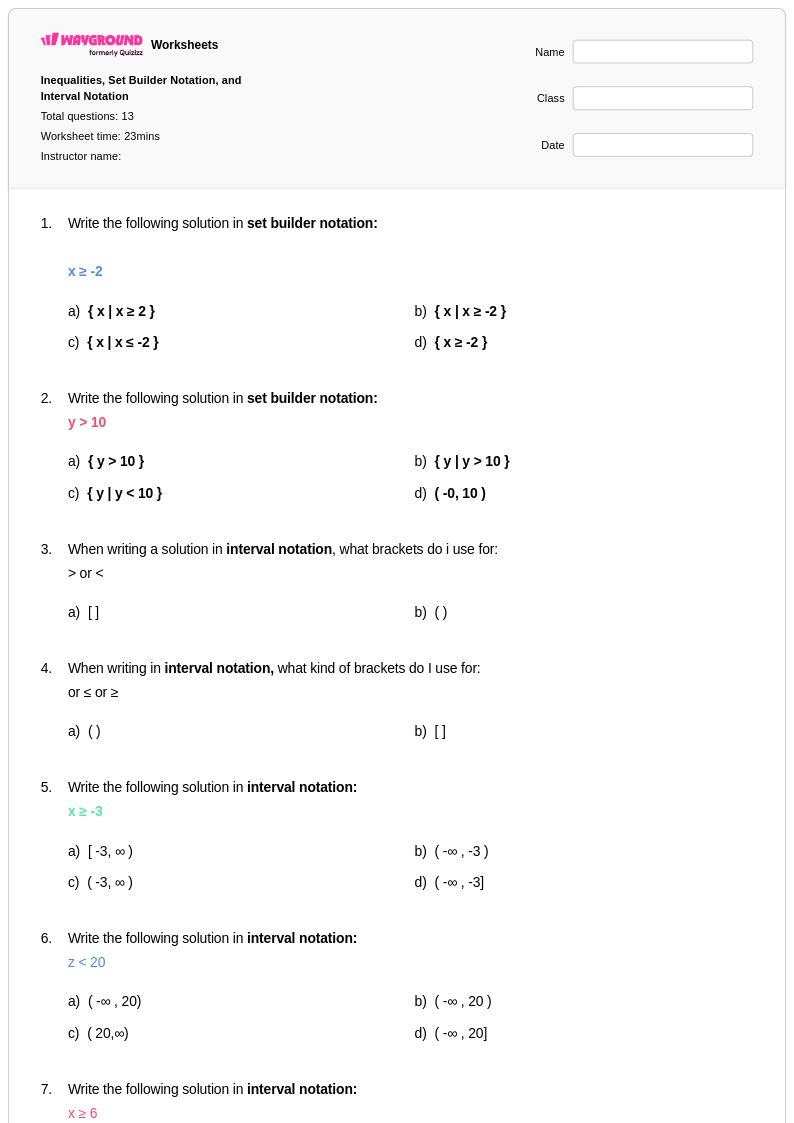
13 Q
9th
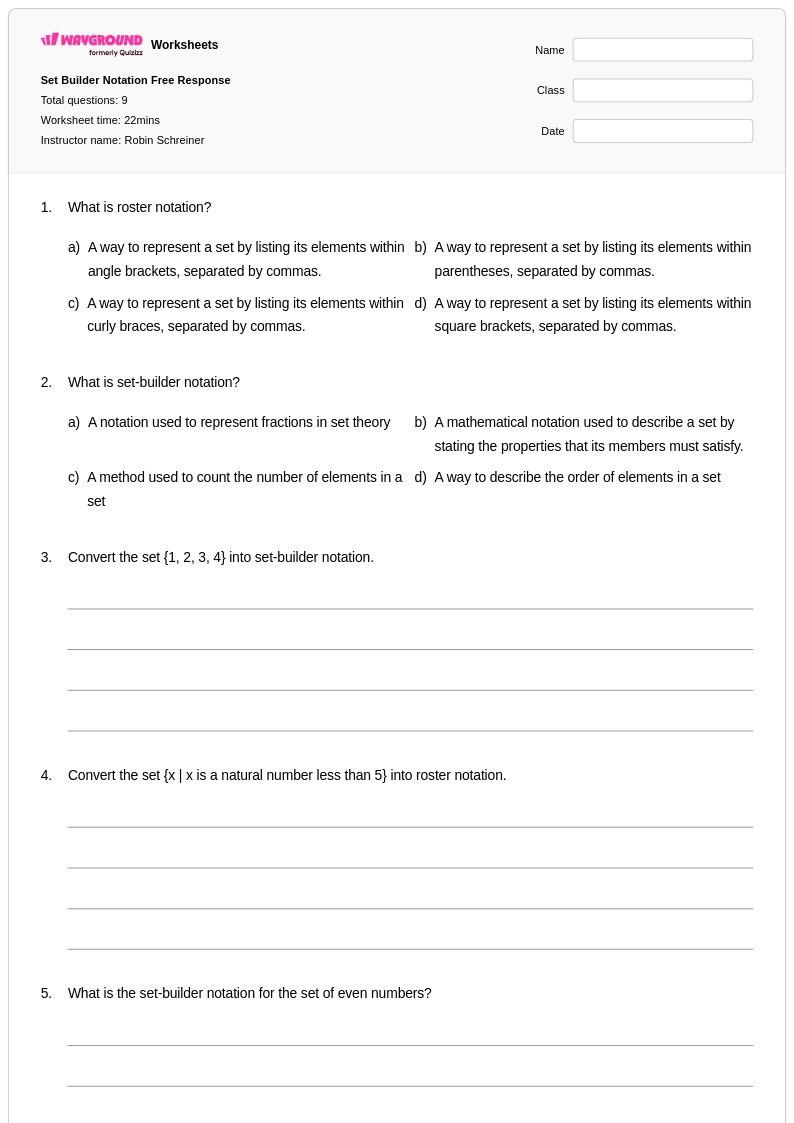
9 Q
9th
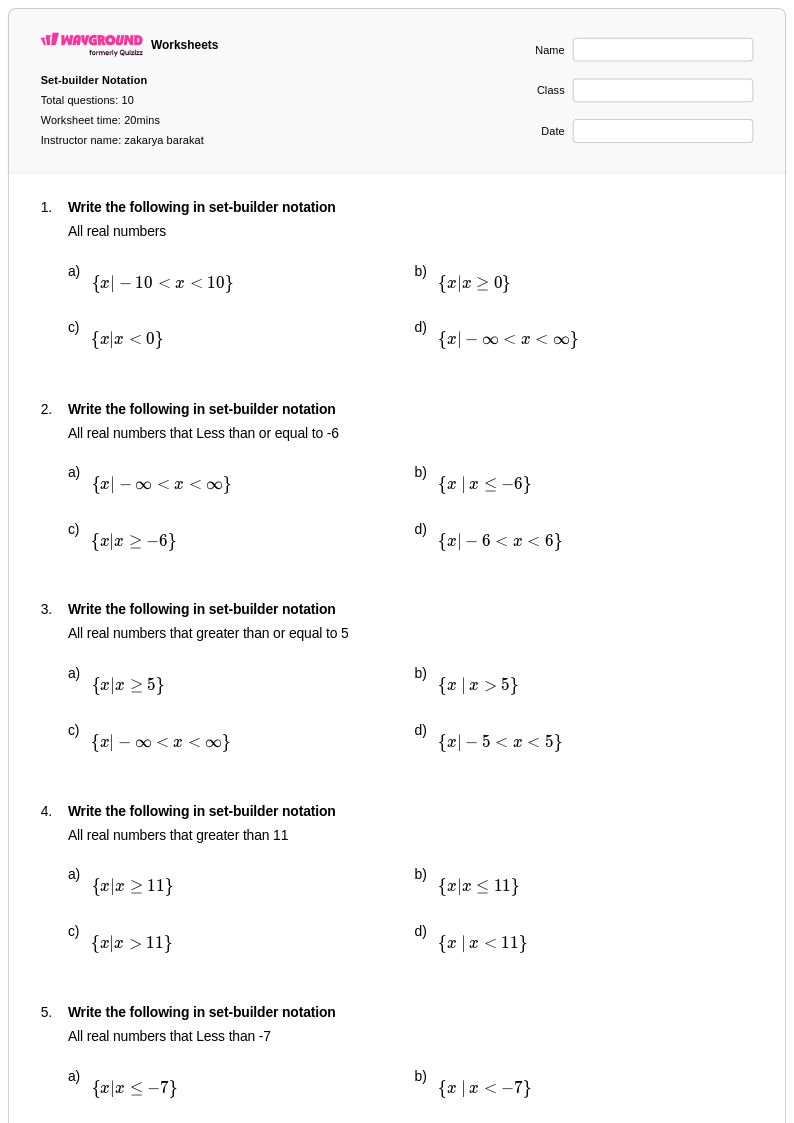
10 Q
10th
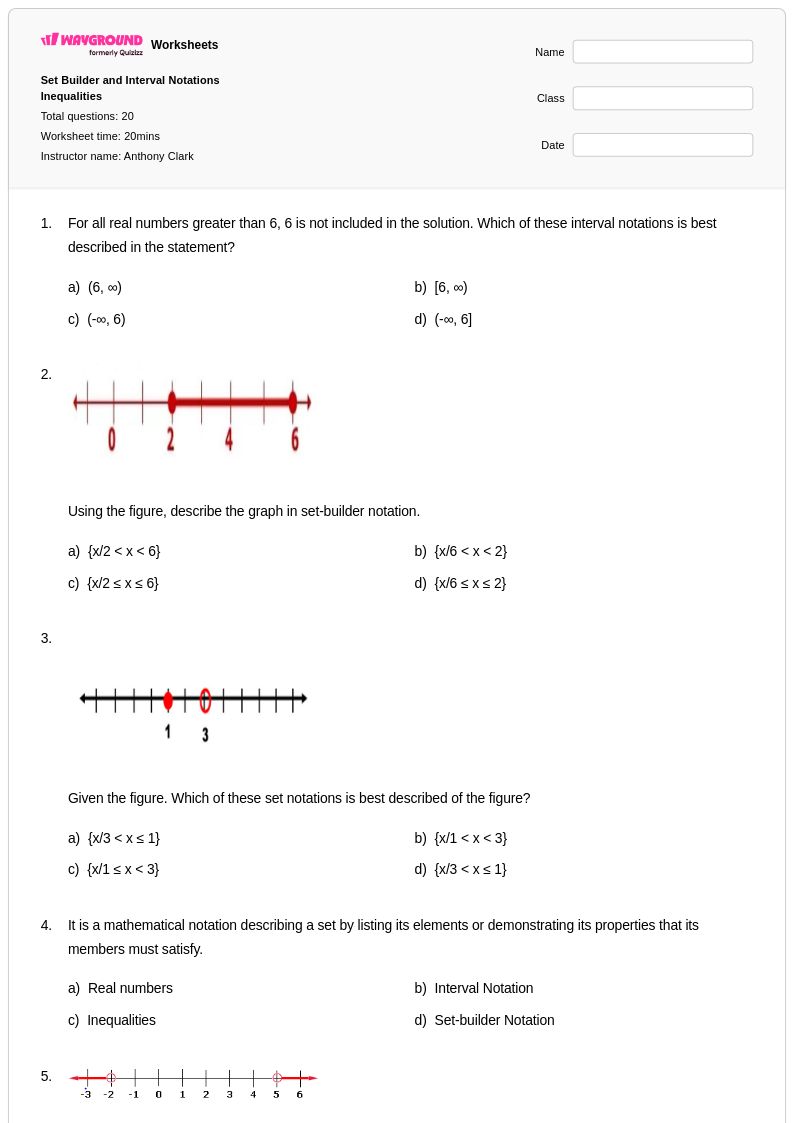
20 Q
10th - Uni
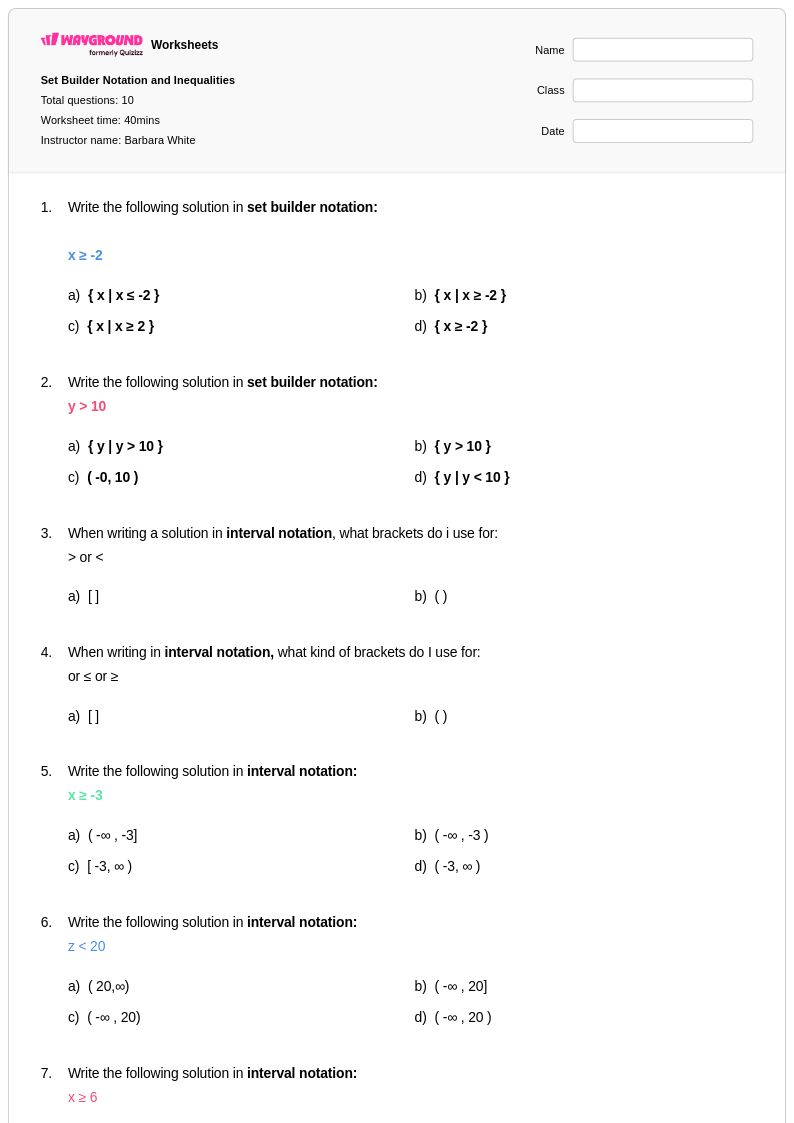
10 Q
9th
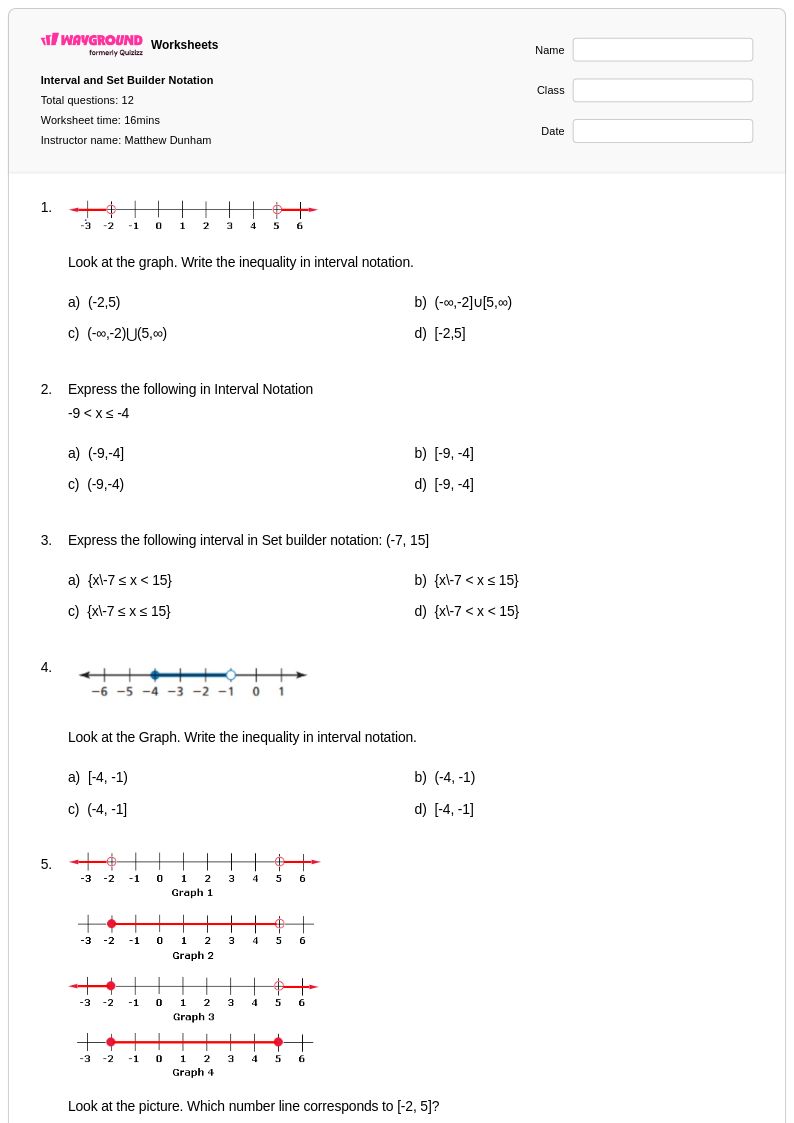
12 Q
10th - 12th
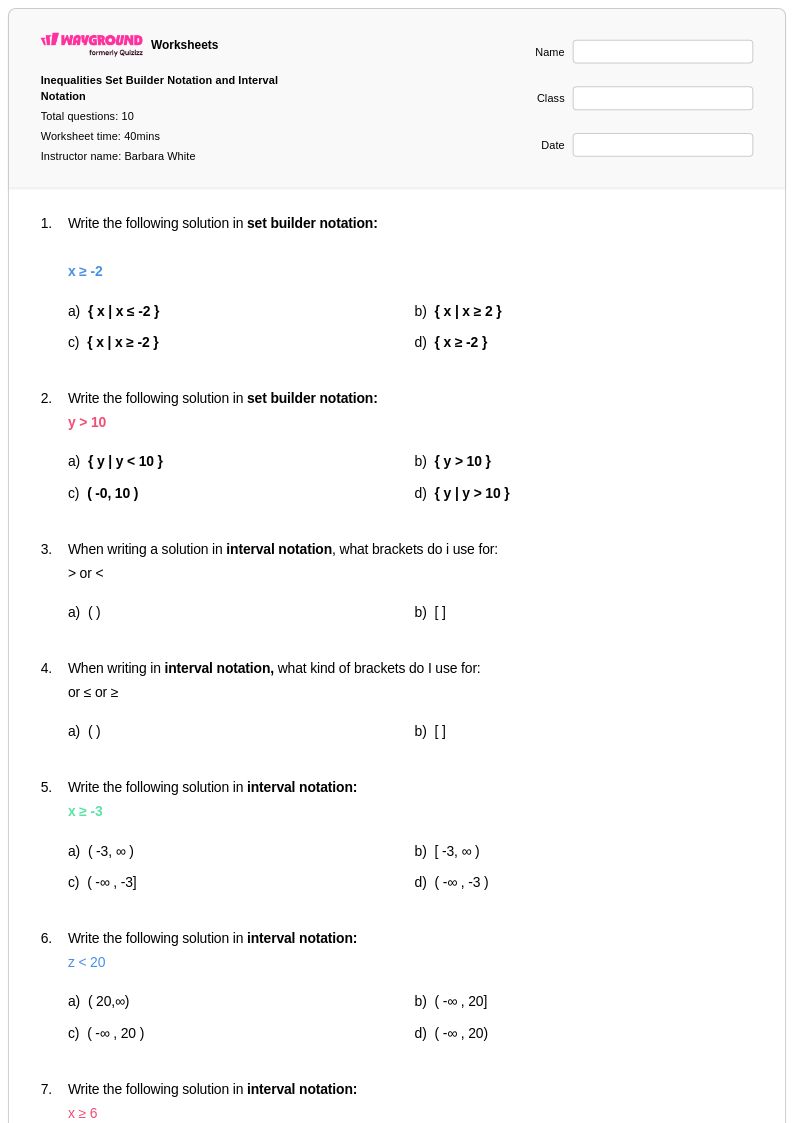
10 Q
9th
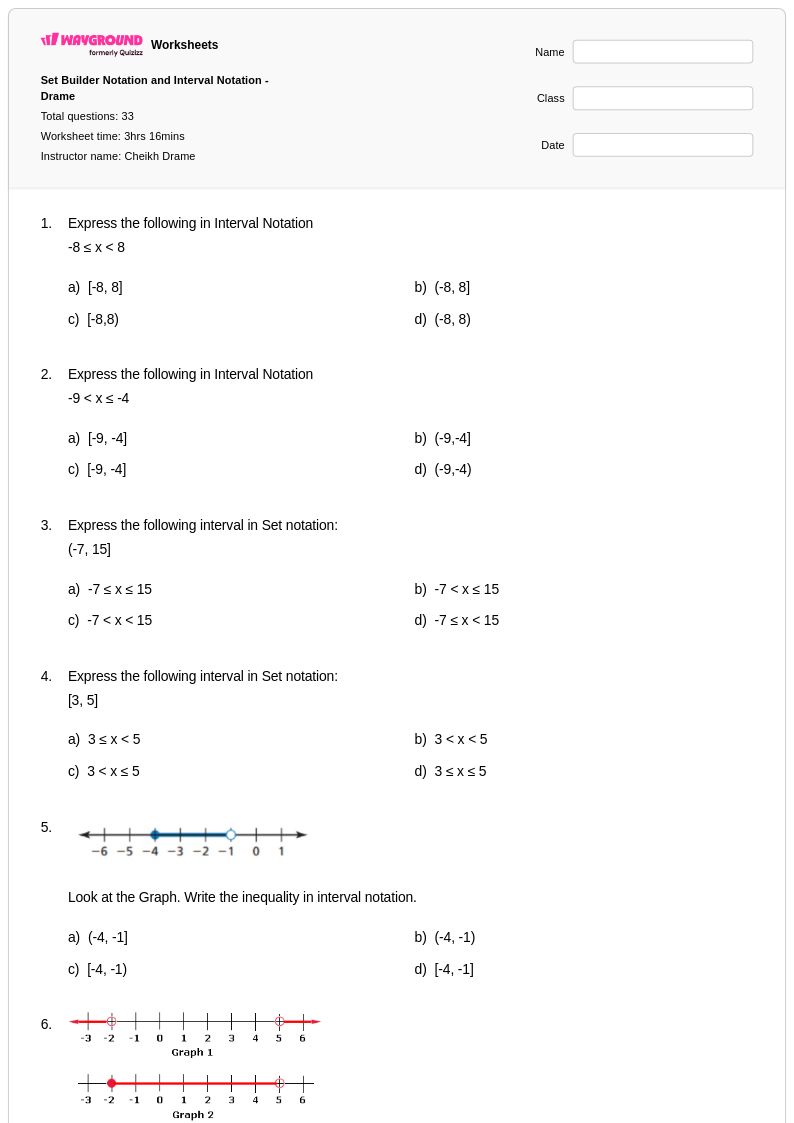
33 Q
9th
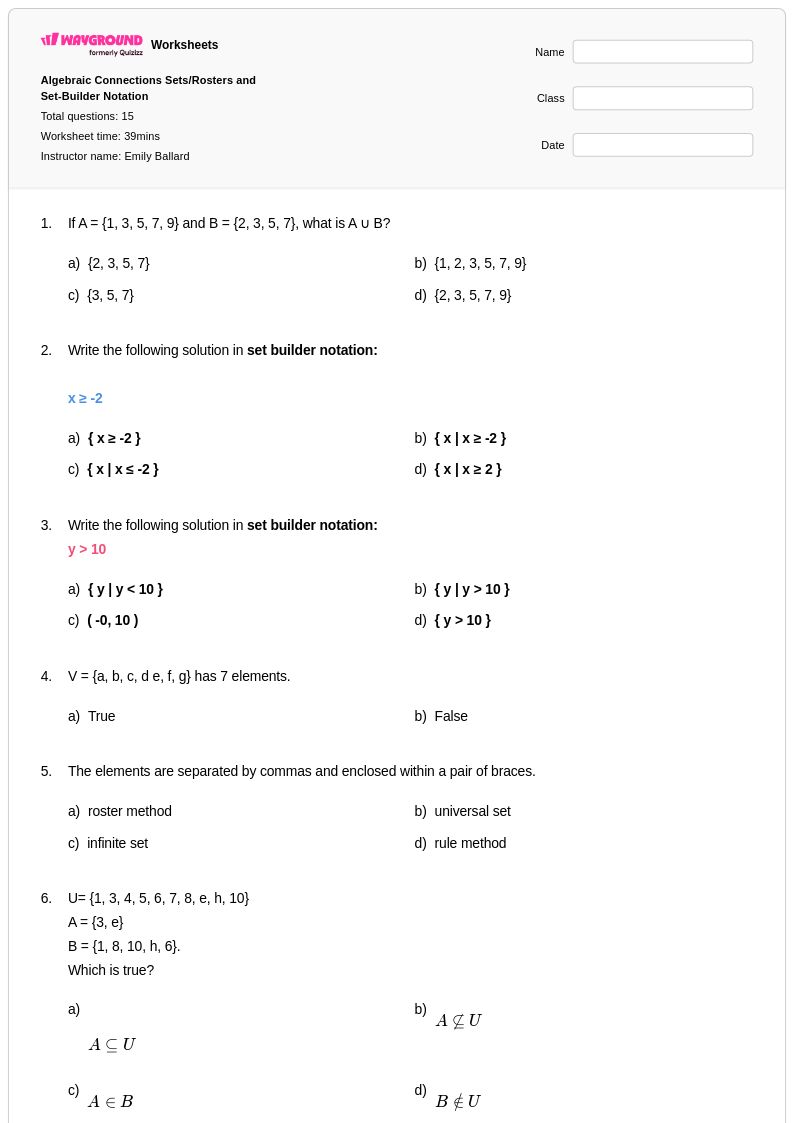
15 Q
11th
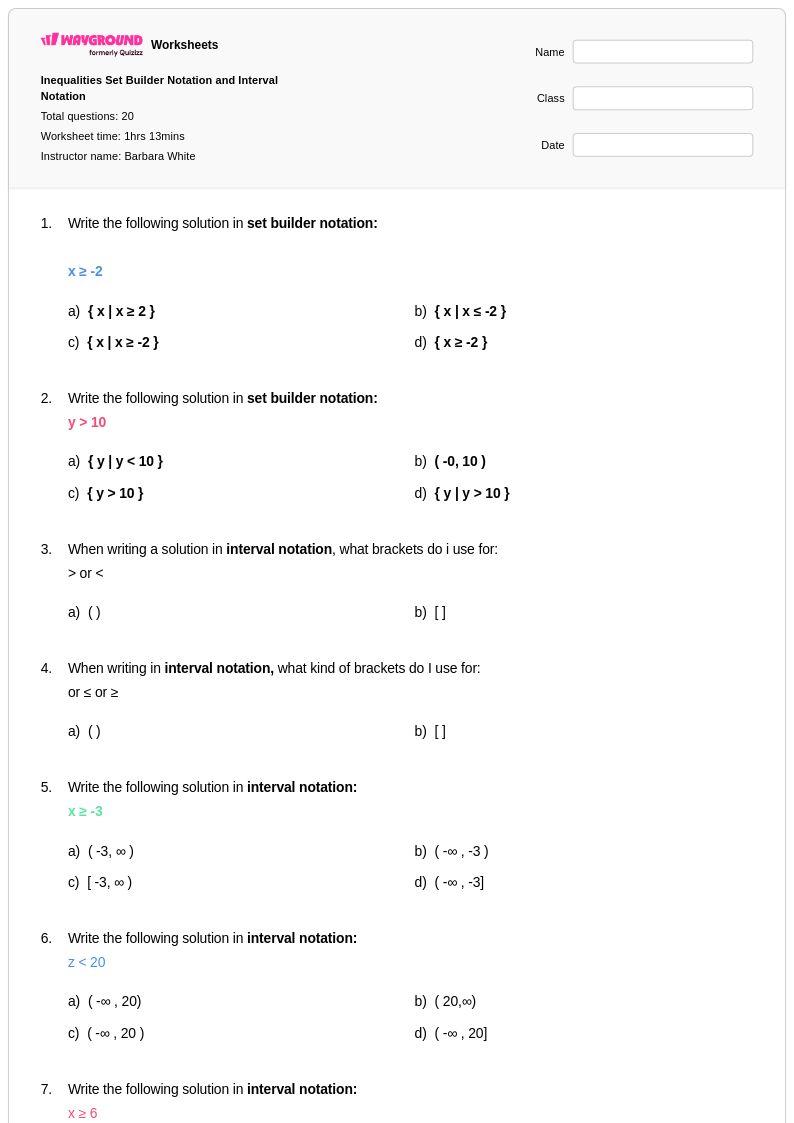
20 Q
12th
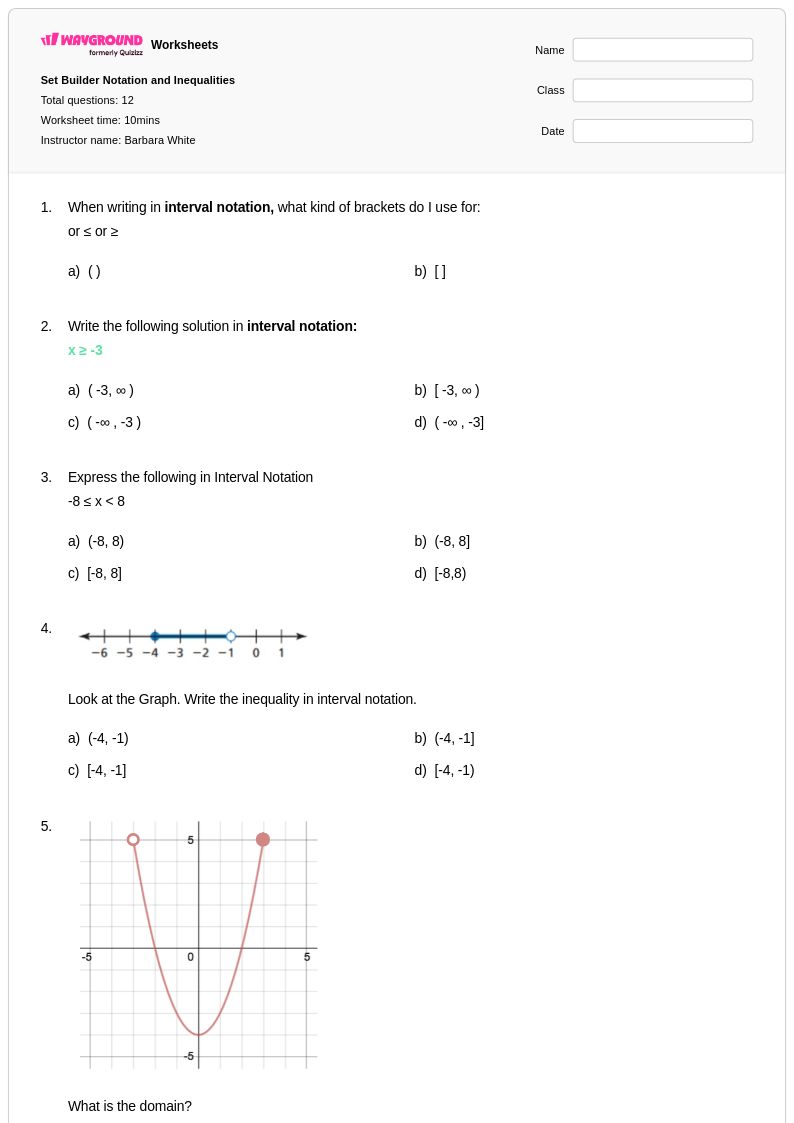
12 Q
8th - 9th
12 Q
9th - 11th
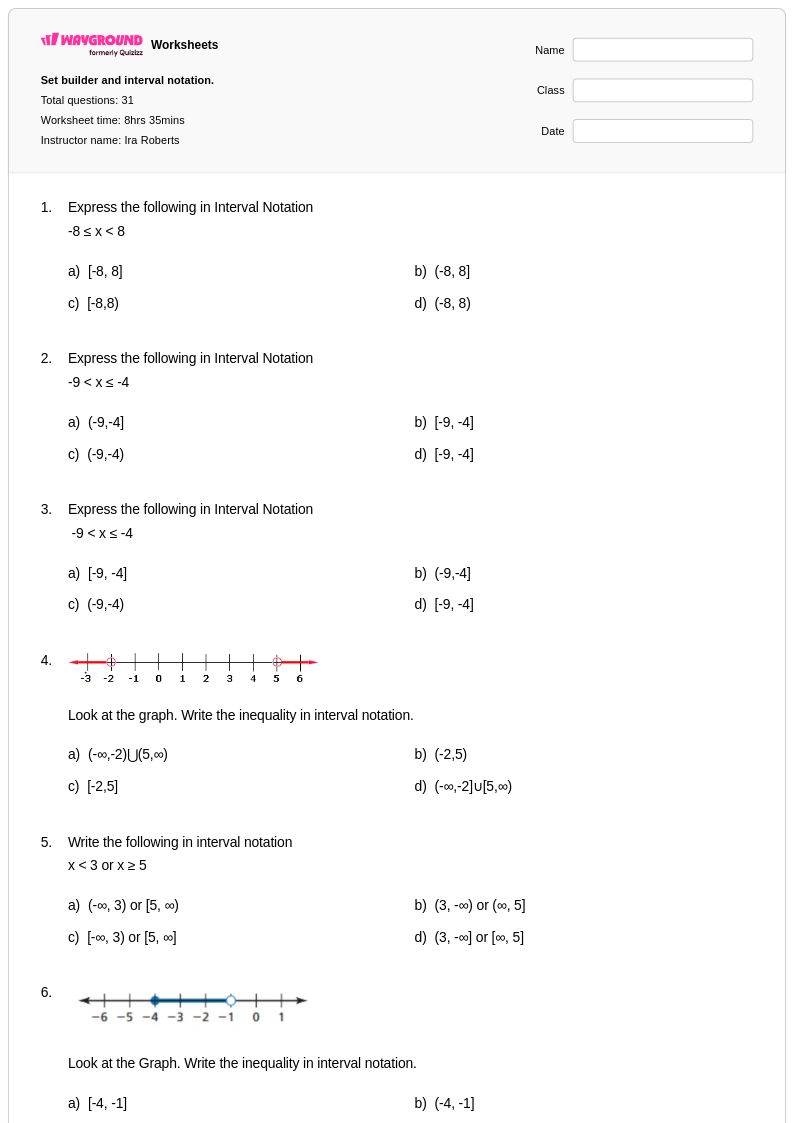
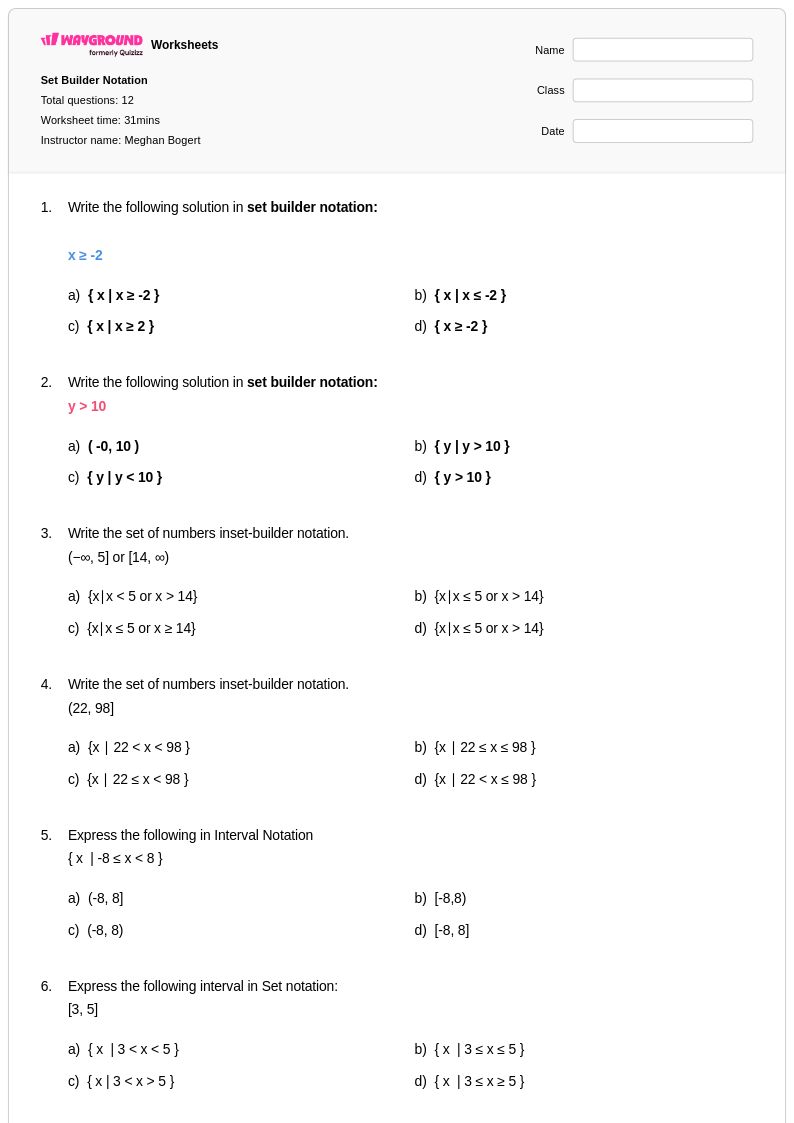
31 Q
10th
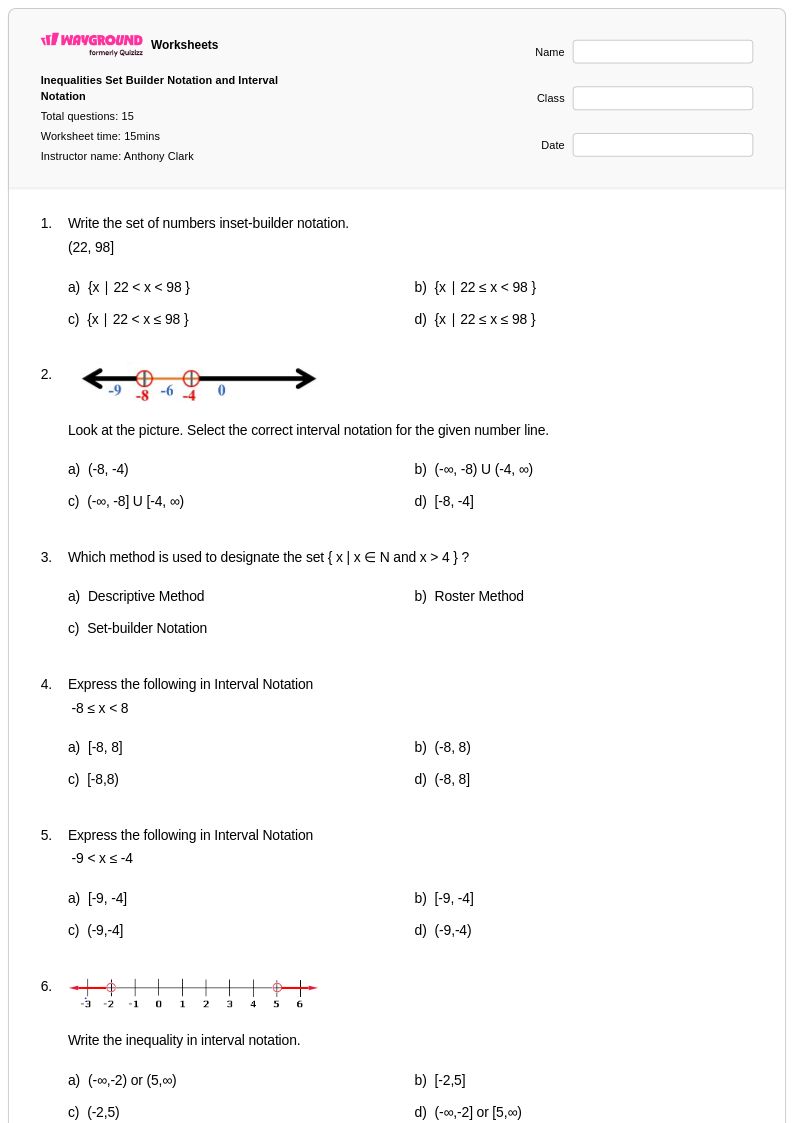
15 Q
11th - Uni
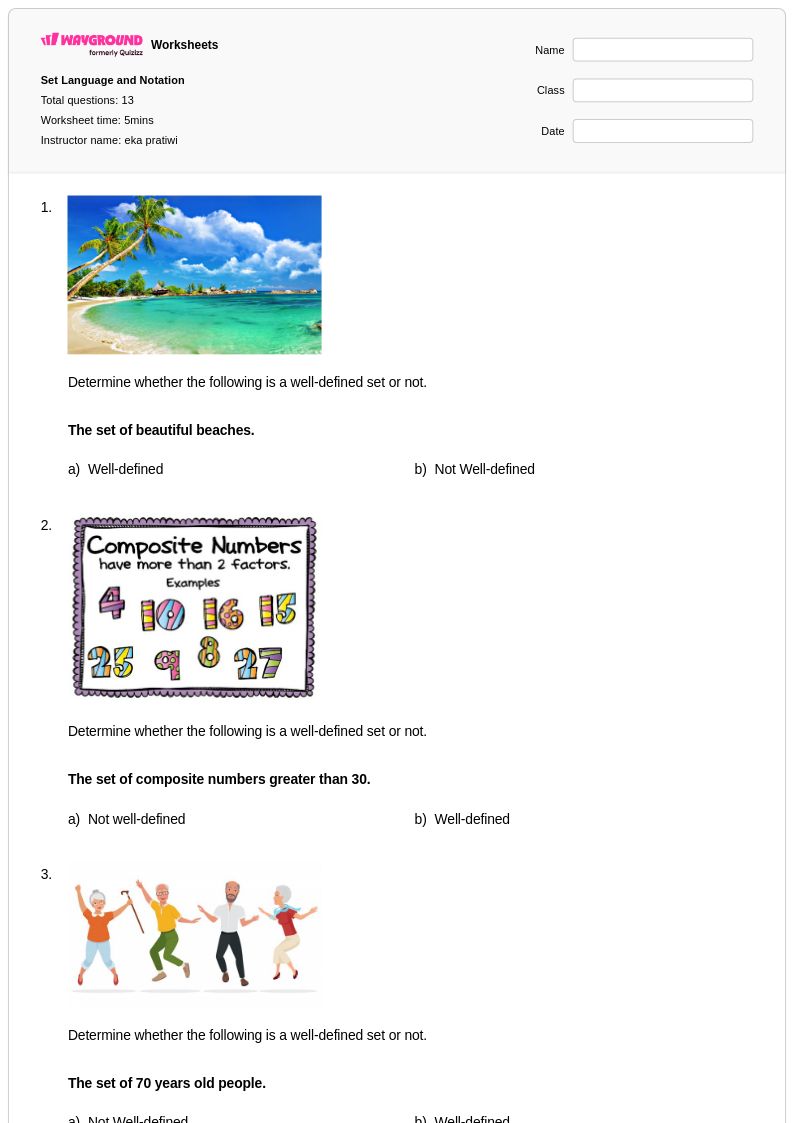
13 Q
8th
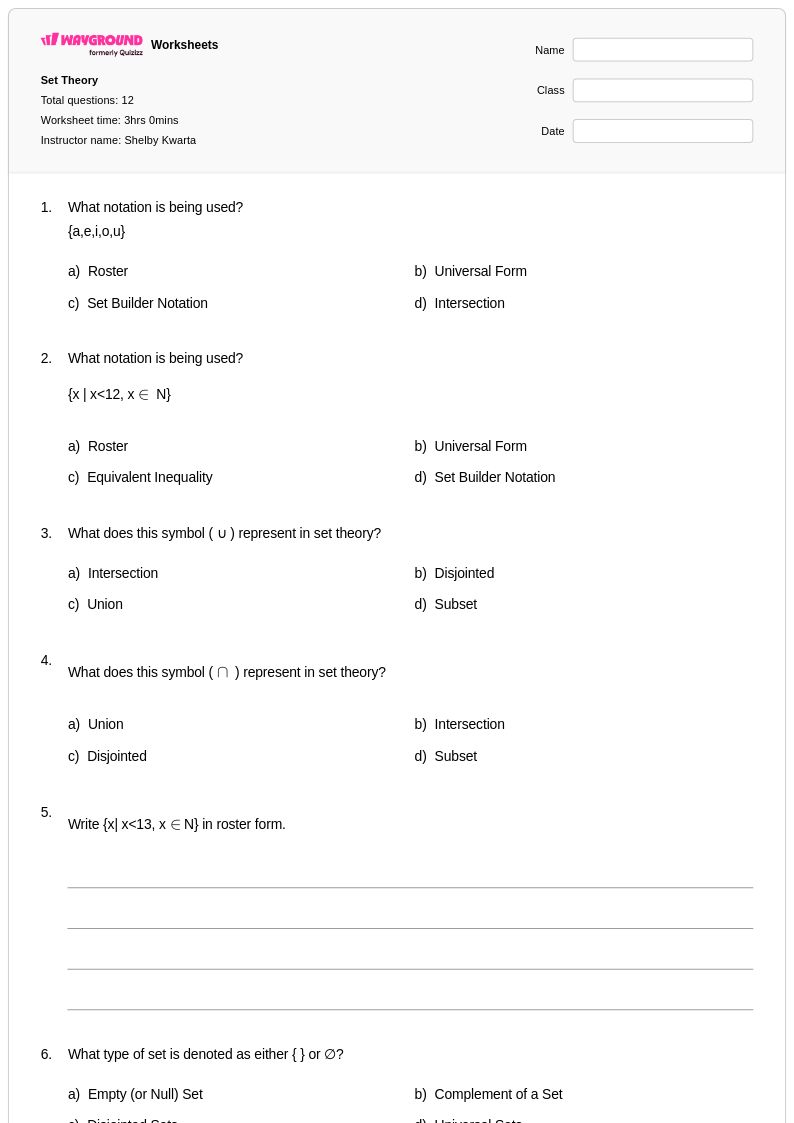
12 Q
10th - Uni
Explore Worksheets by Subjects
Explore printable Set Builder Notation worksheets
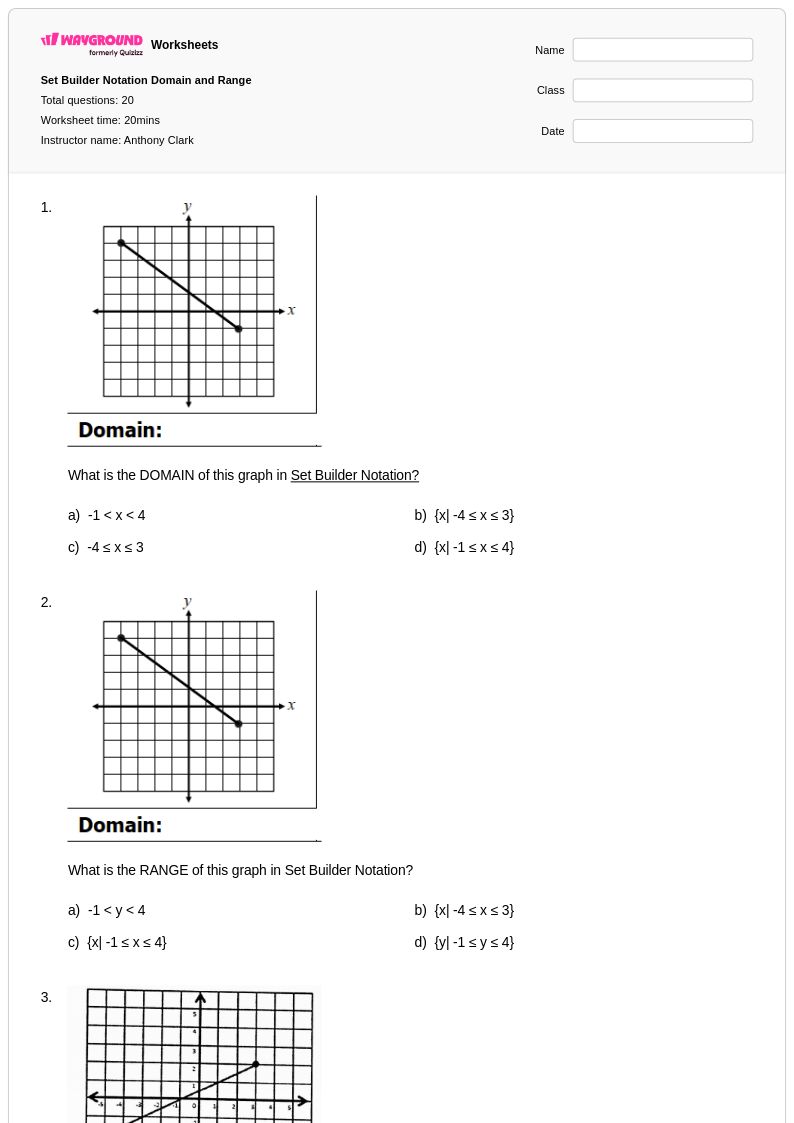
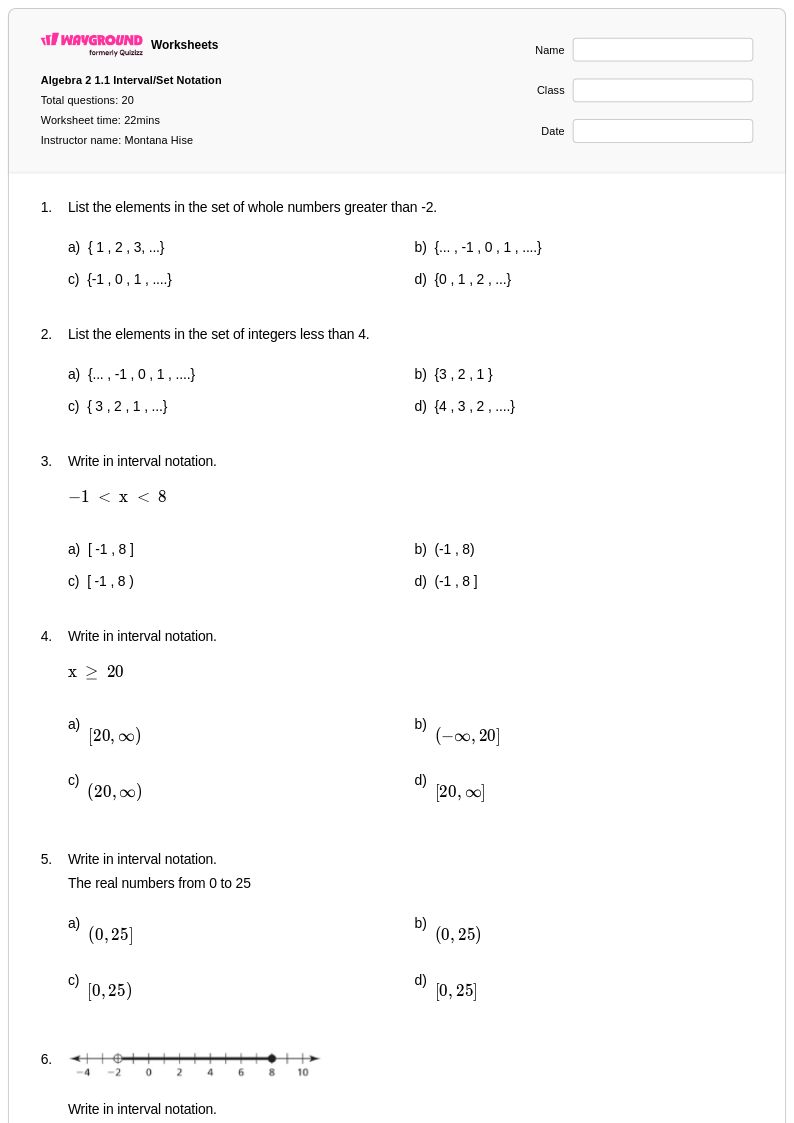
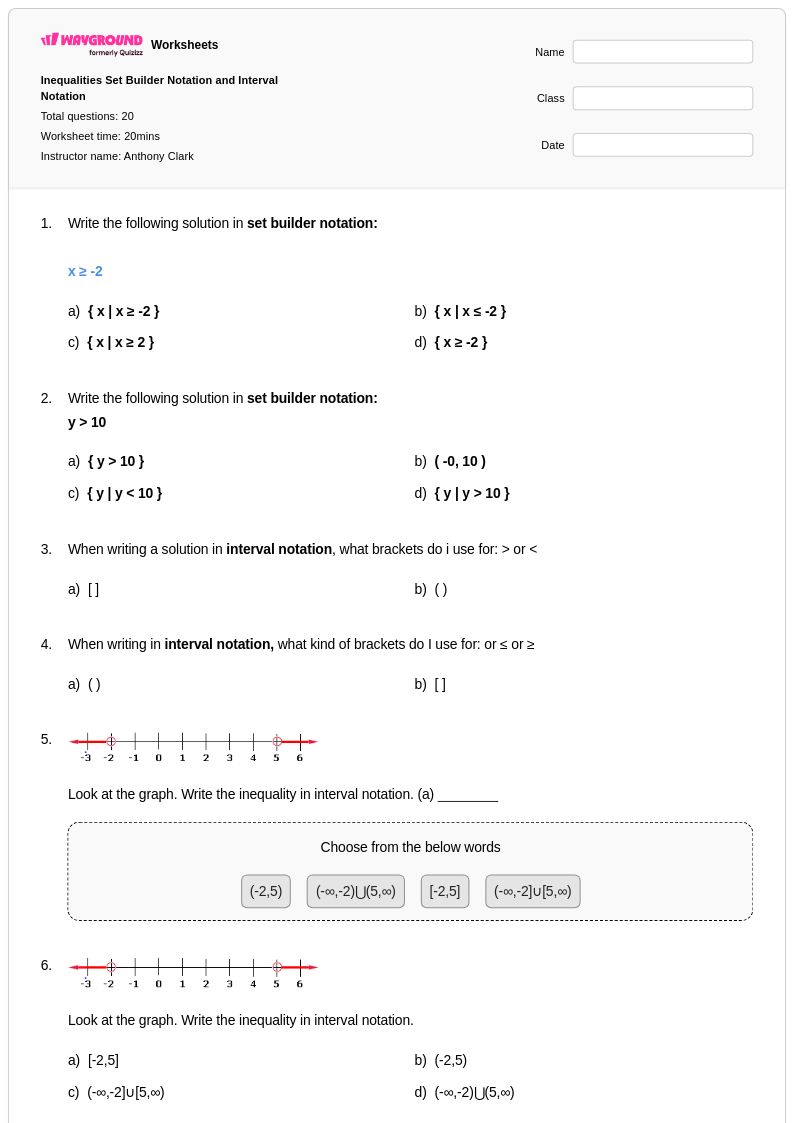
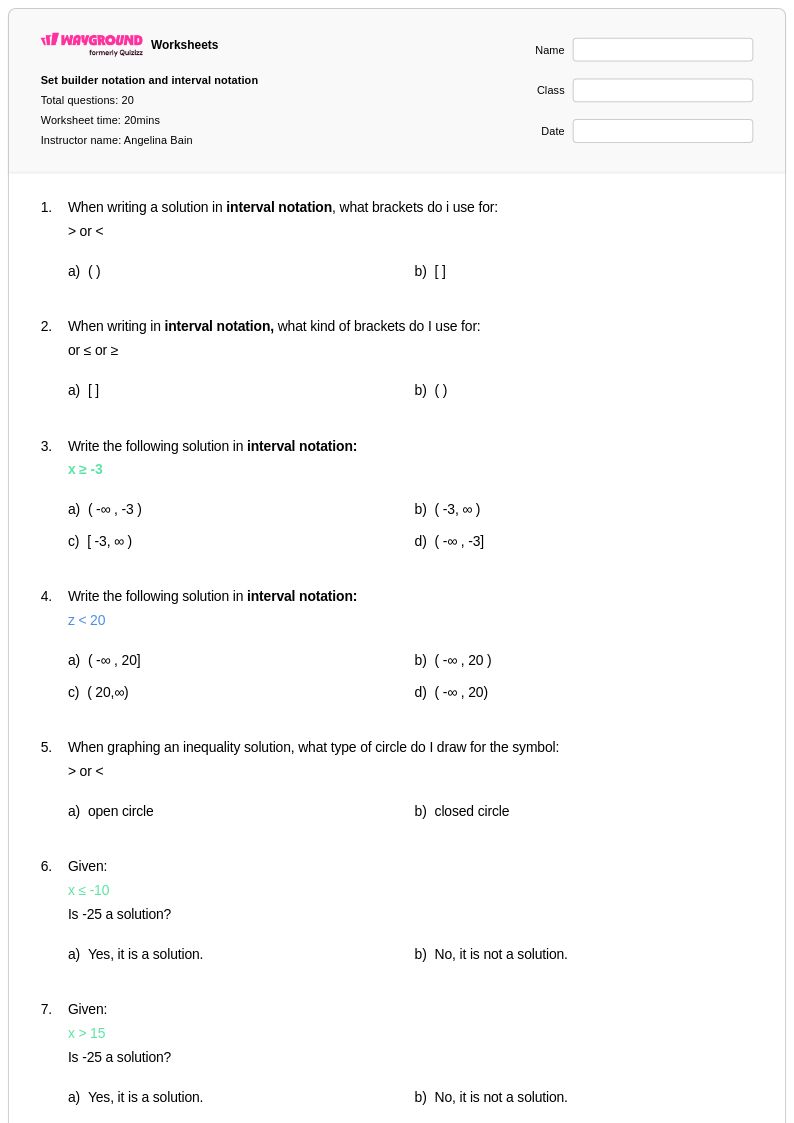
Set builder notation worksheets available through Wayground (formerly Quizizz) provide comprehensive practice for students learning to express sets using mathematical symbols and conditions. These expertly designed worksheets strengthen critical mathematical thinking skills by teaching students to translate between verbal descriptions and symbolic representations of sets, understand domain restrictions, and work with various types of mathematical conditions. Students develop proficiency in reading and writing set builder notation through carefully scaffolded practice problems that progress from basic concepts to more complex applications. Each worksheet includes a complete answer key and is available as a free printable pdf, making it easy for educators to incorporate this essential number sense skill into their mathematics curriculum.
Wayground (formerly Quizizz) supports mathematics teachers with millions of teacher-created resources specifically focused on set builder notation and broader number sense concepts. The platform's robust search and filtering capabilities allow educators to quickly locate worksheets that align with specific learning objectives and mathematical standards, while differentiation tools enable teachers to customize content for students at varying skill levels. These resources are available in both printable pdf format and digital formats, providing flexibility for classroom instruction, homework assignments, and independent practice. Teachers can effectively use these worksheet collections for lesson planning, targeted remediation of misconceptions about set notation, enrichment activities for advanced learners, and ongoing skill practice to ensure students master this fundamental mathematical concept that serves as a foundation for advanced mathematical thinking.
FAQs
How do I teach set-builder notation?
What exercises help students practice set-builder notation?
What are common mistakes when writing set-builder notation?
How can I use this set-builder notation worksheet with my class?
How does learning set-builder notation fit into the math curriculum?
How can I support struggling students with set-builder notation?