
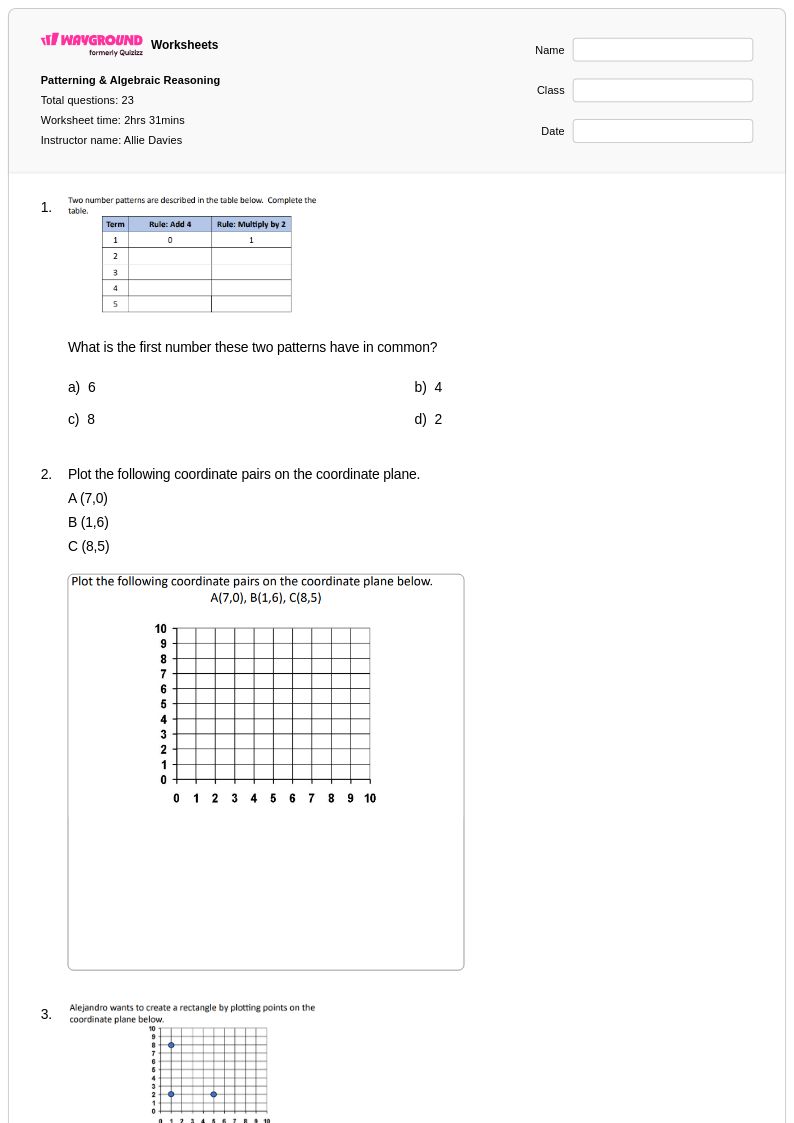
23 Q
5th
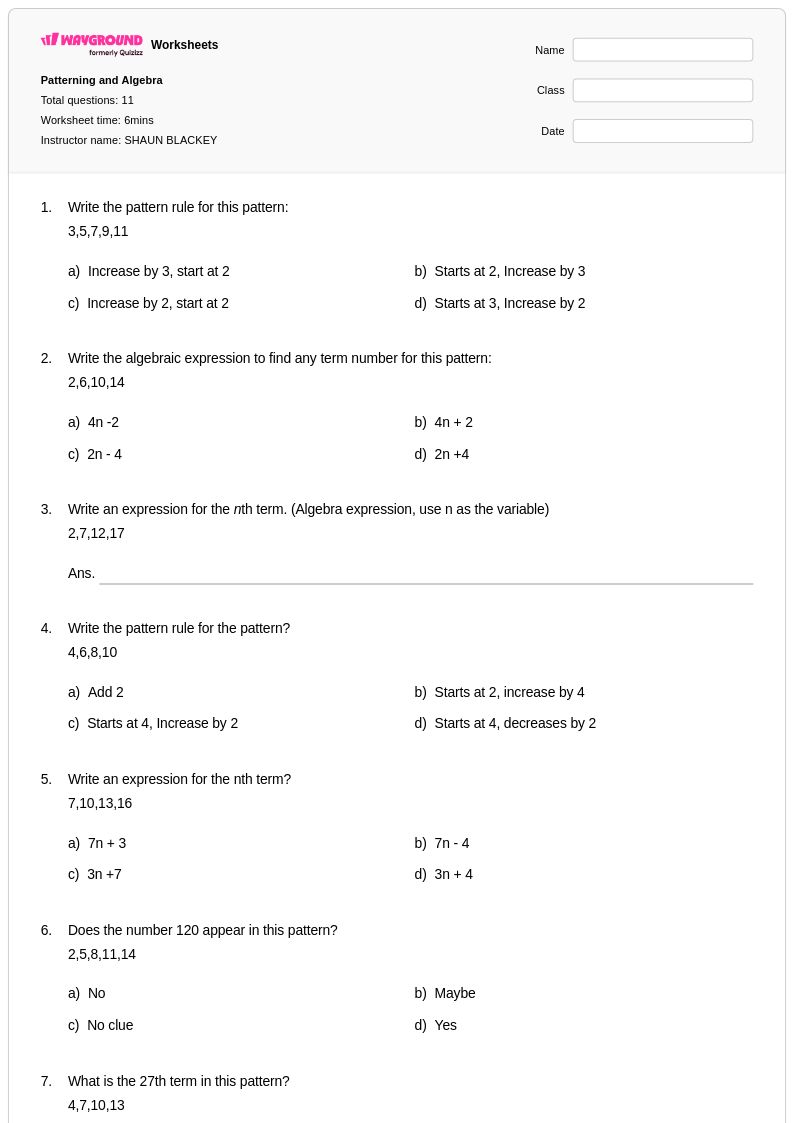
11 Q
7th - 8th
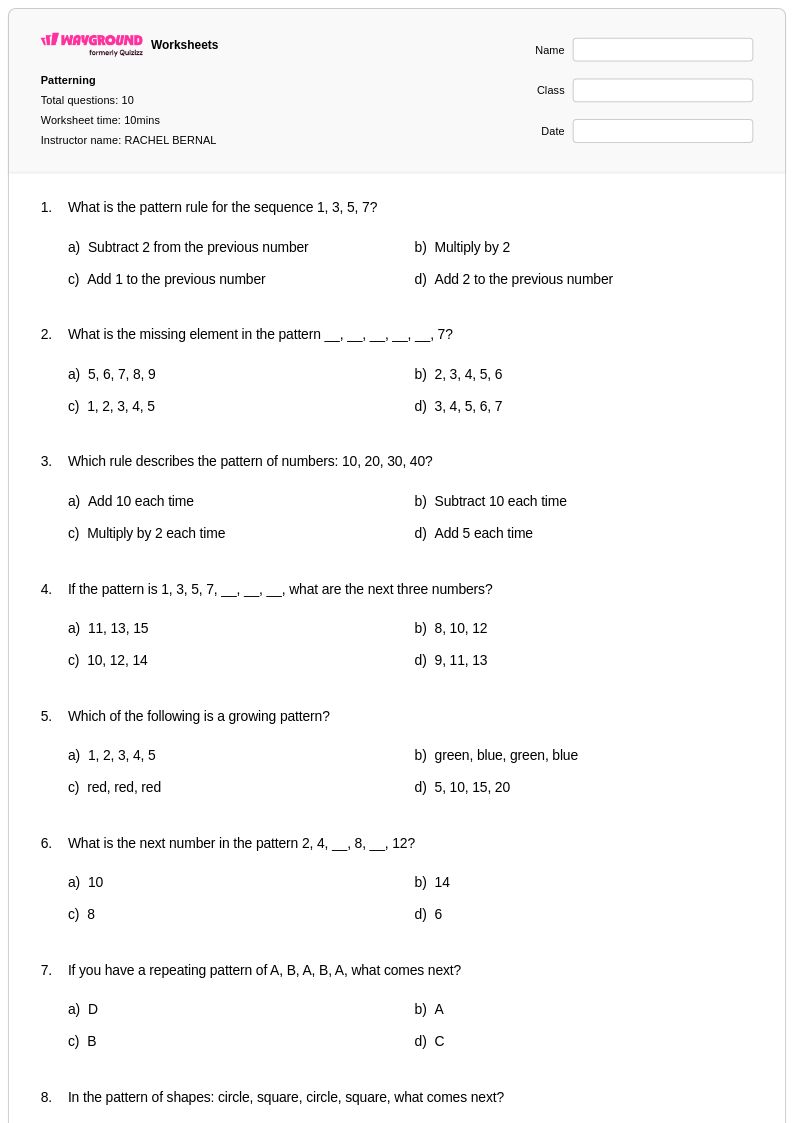
10 Q
4th
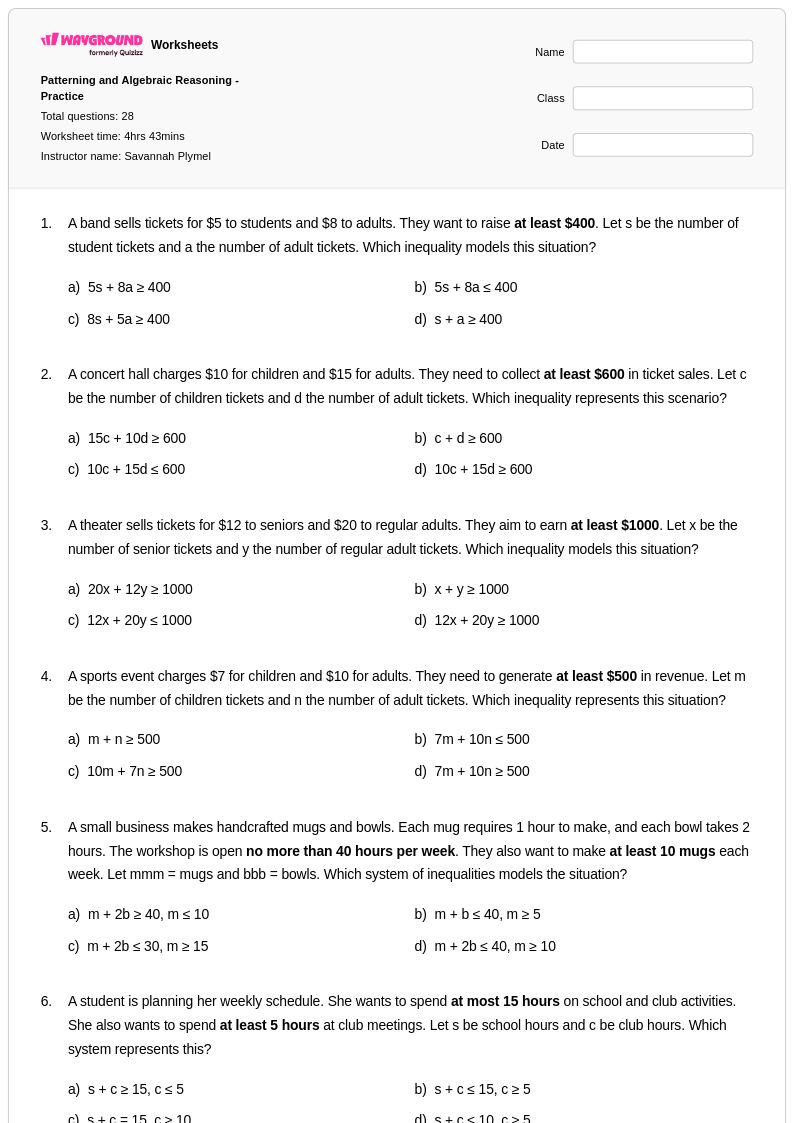
28 Q
9th - 12th
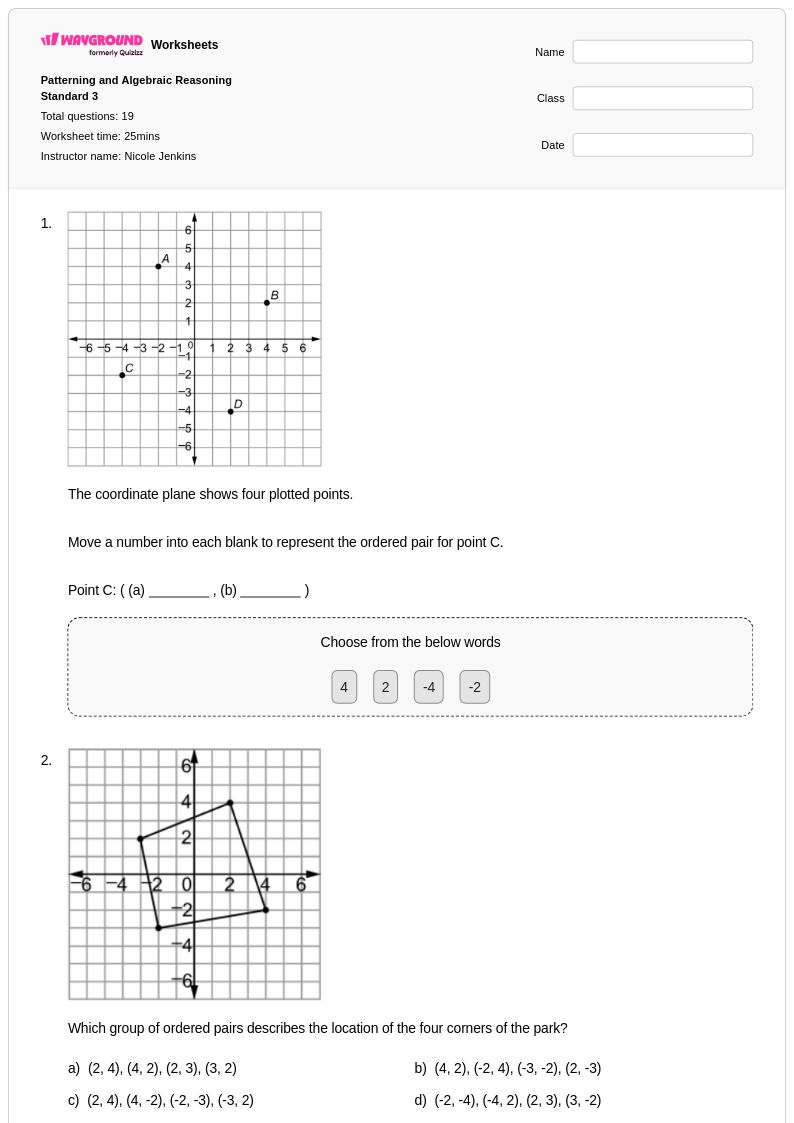
19 Q
6th
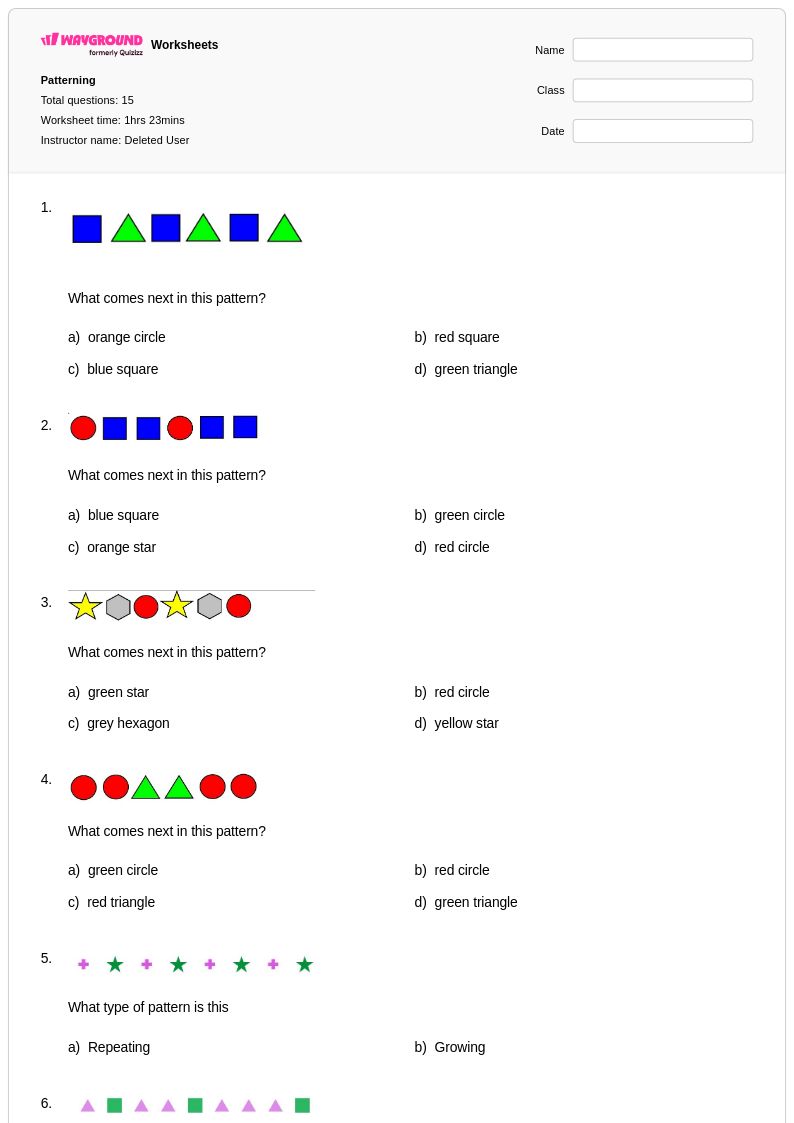
15 Q
1st
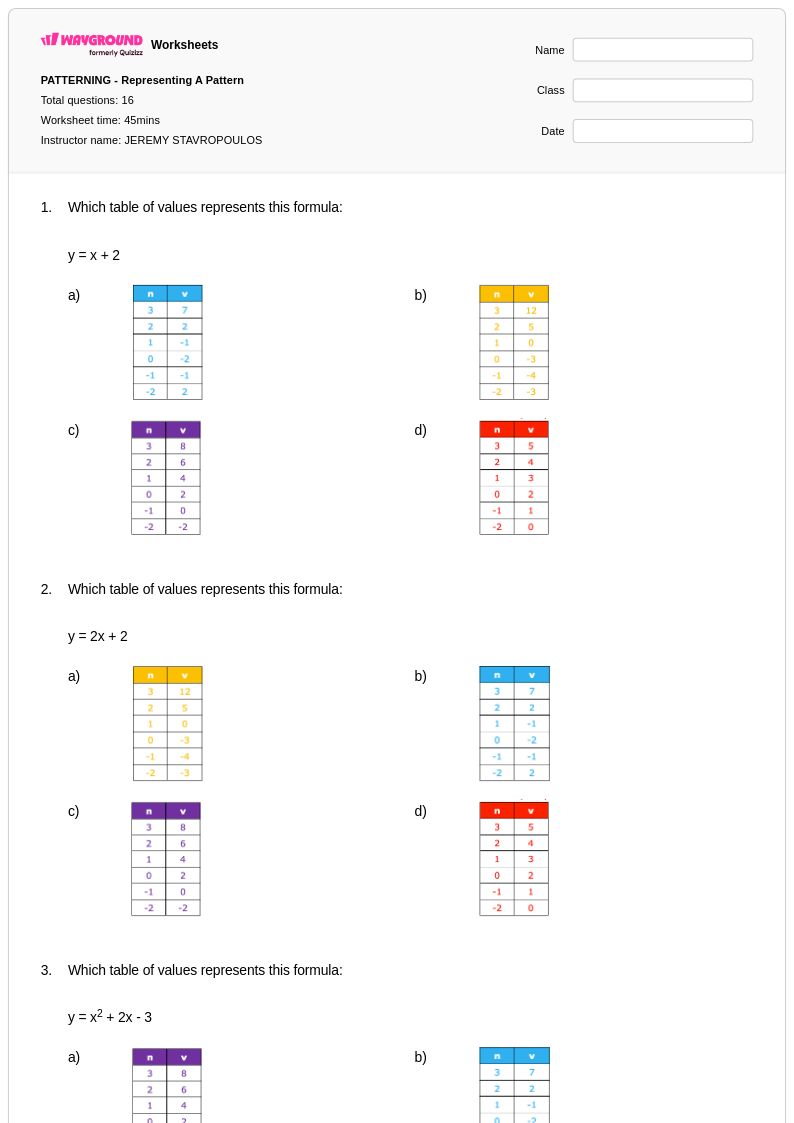
16 Q
8th
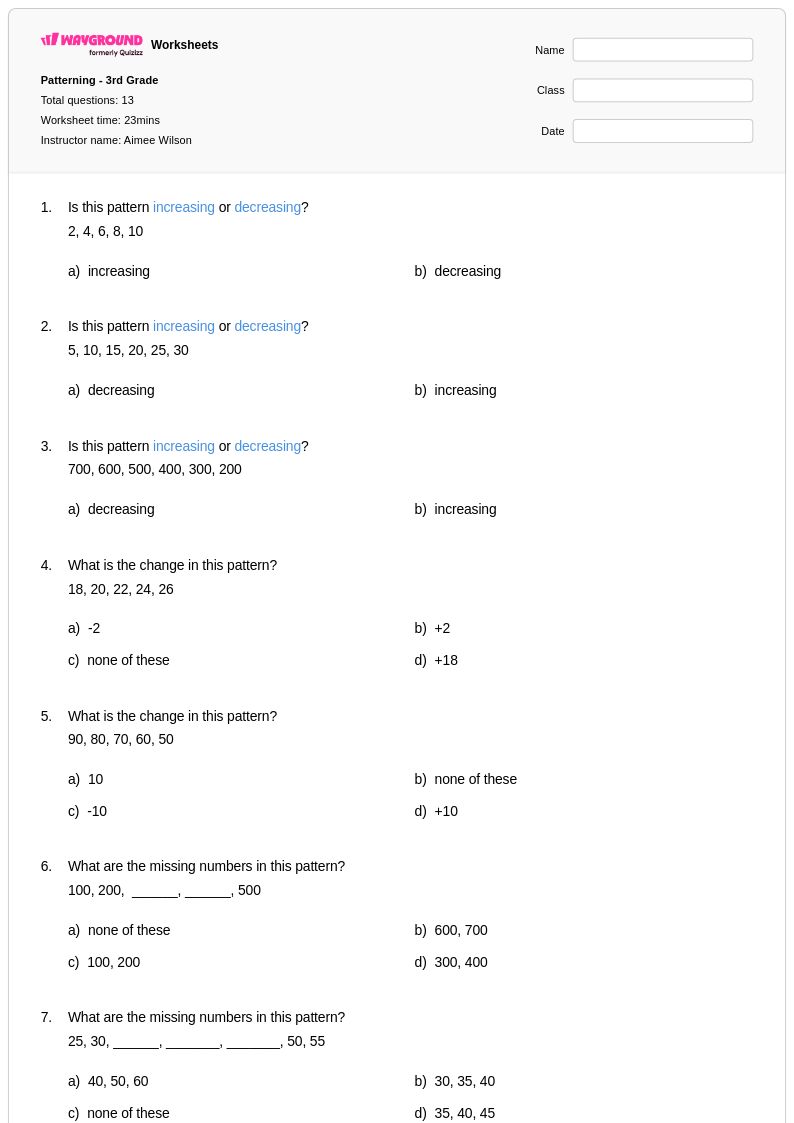
13 Q
2nd - 3rd
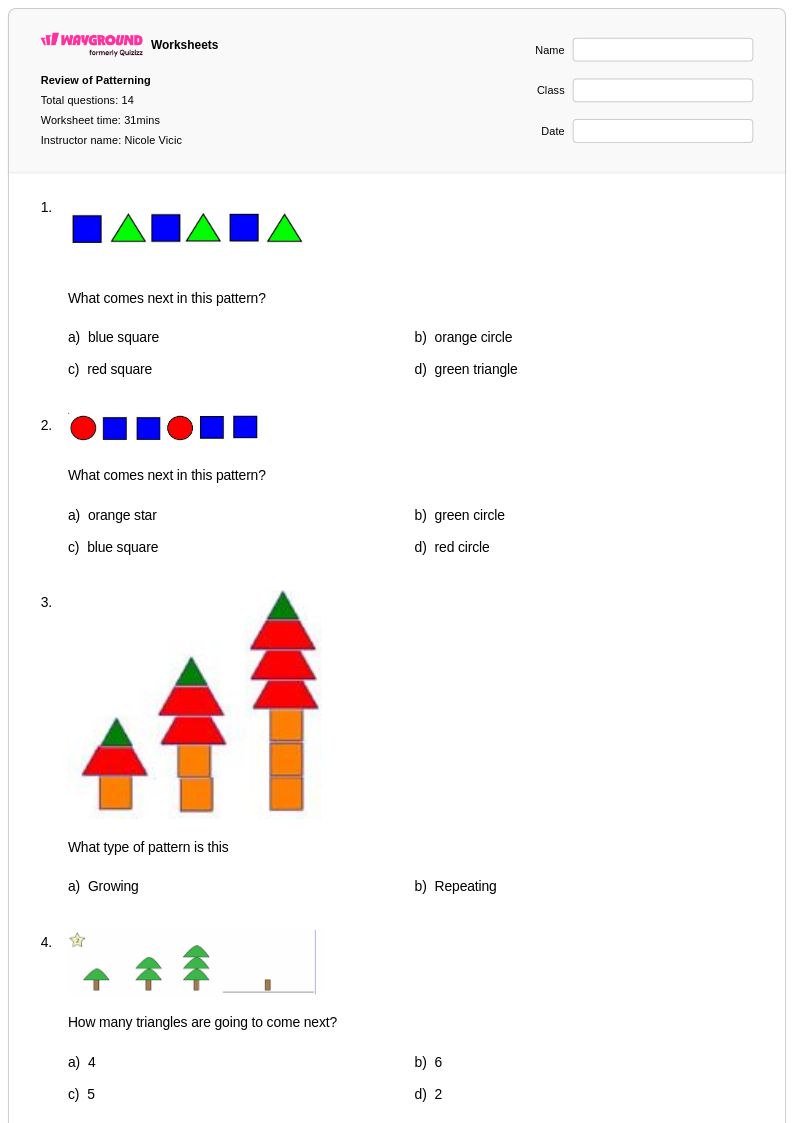
14 Q
1st - 2nd
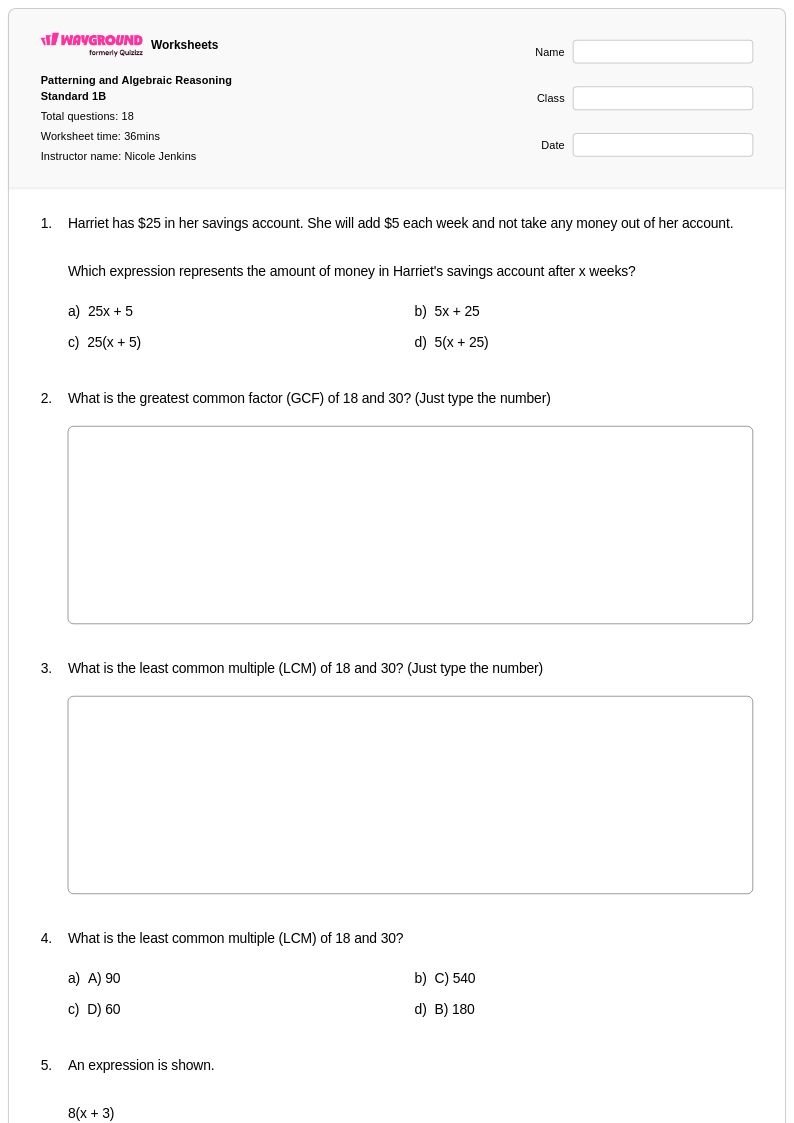
18 Q
6th
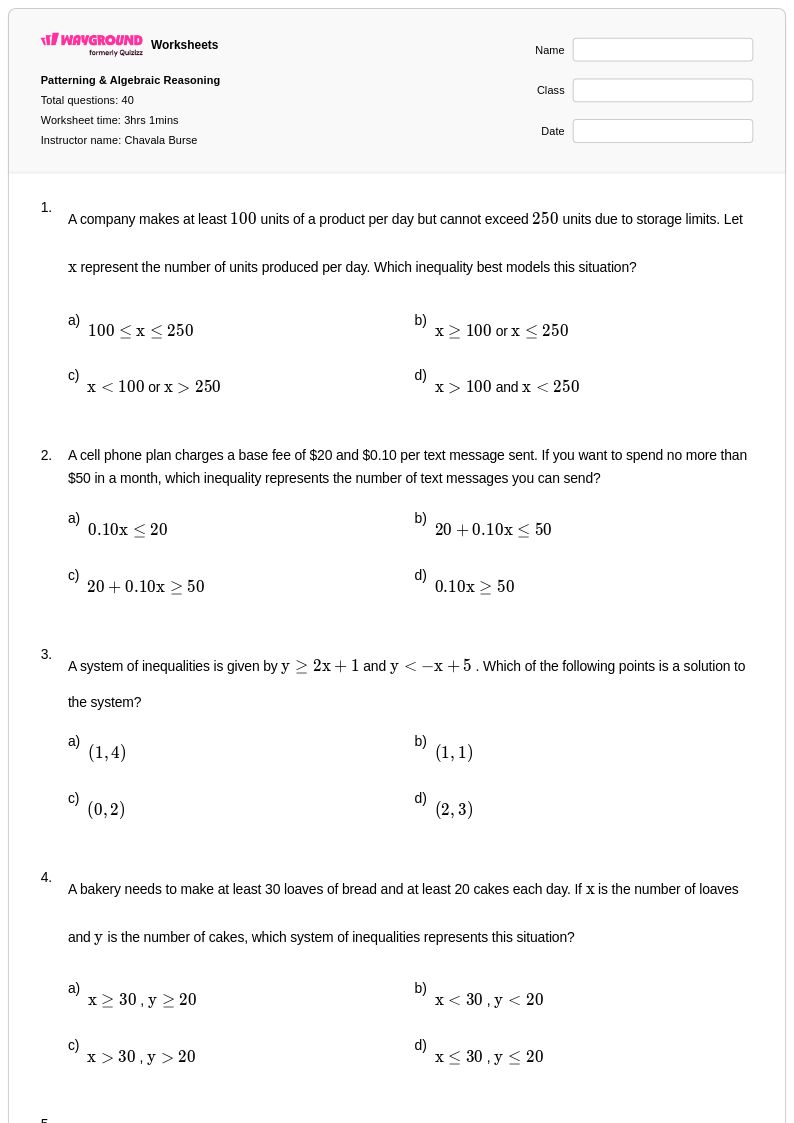
40 Q
9th
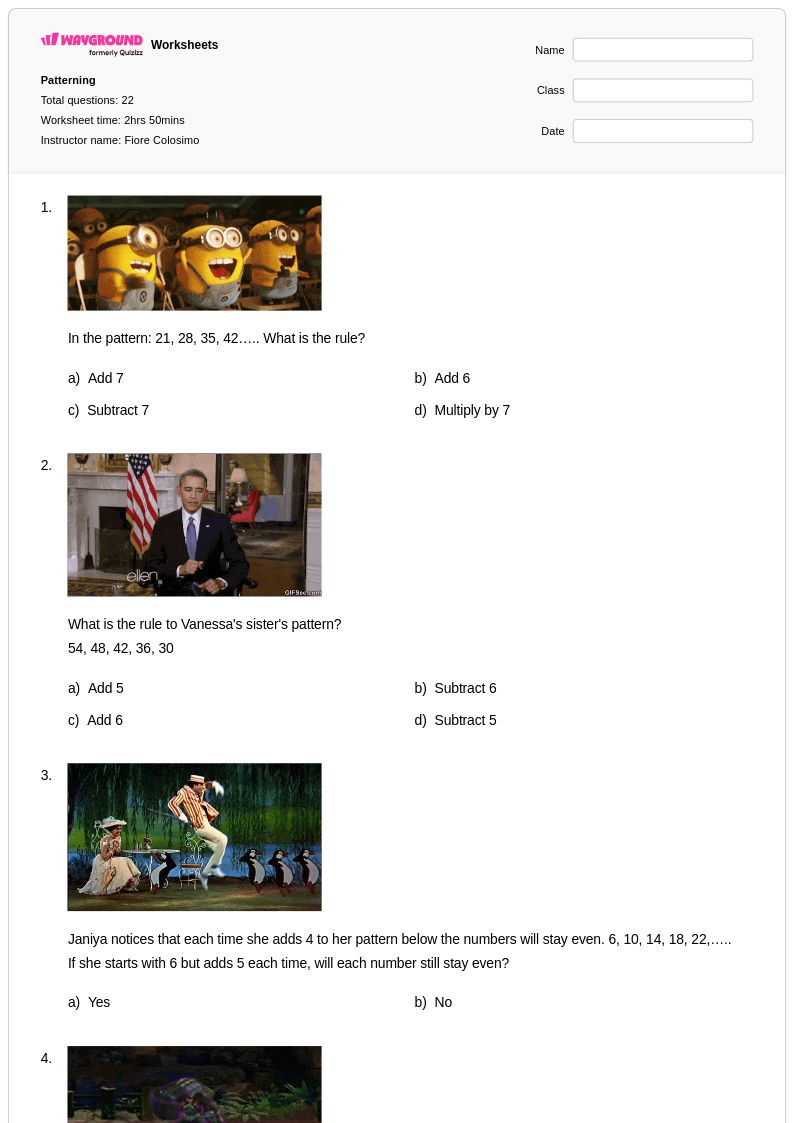
22 Q
5th
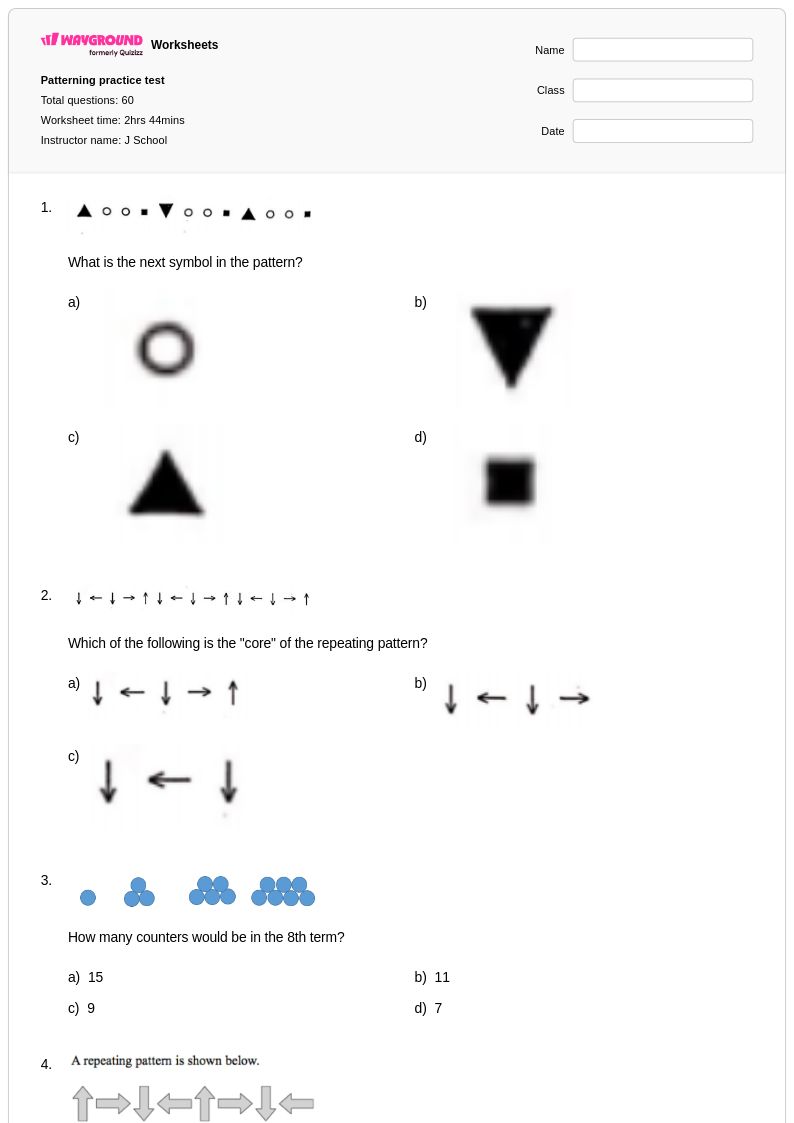
60 Q
7th - 8th
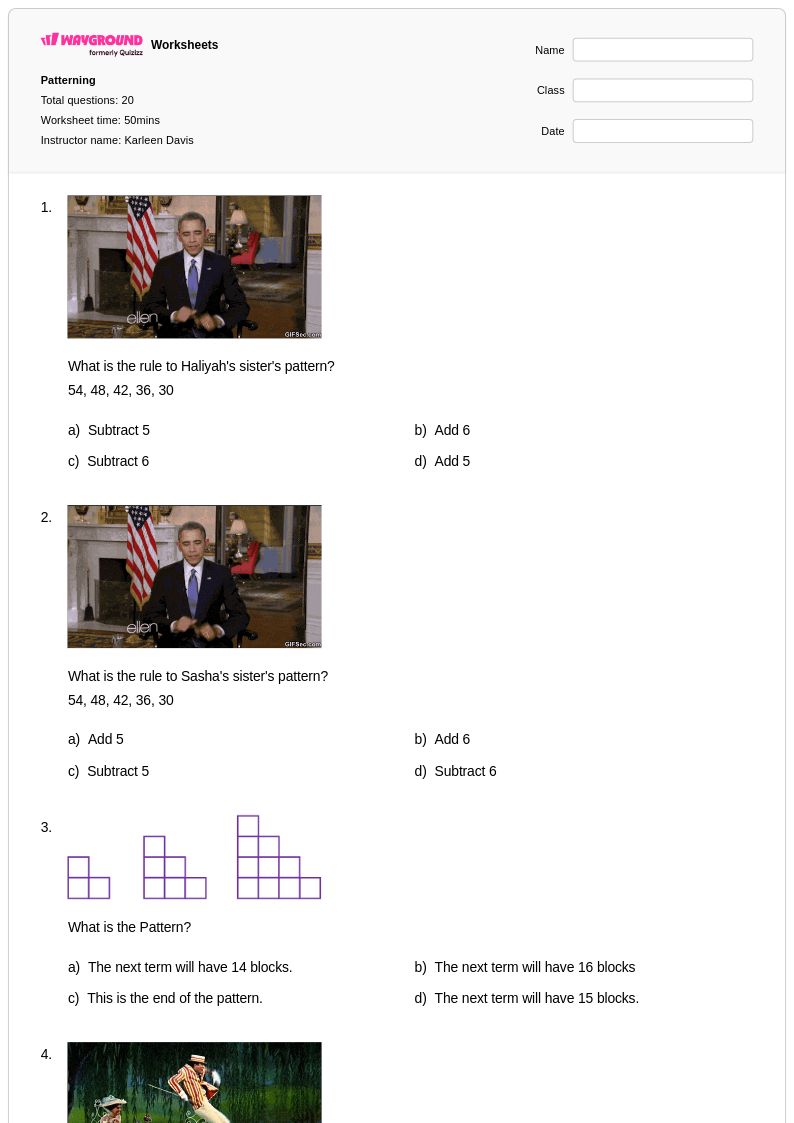
20 Q
4th - 5th
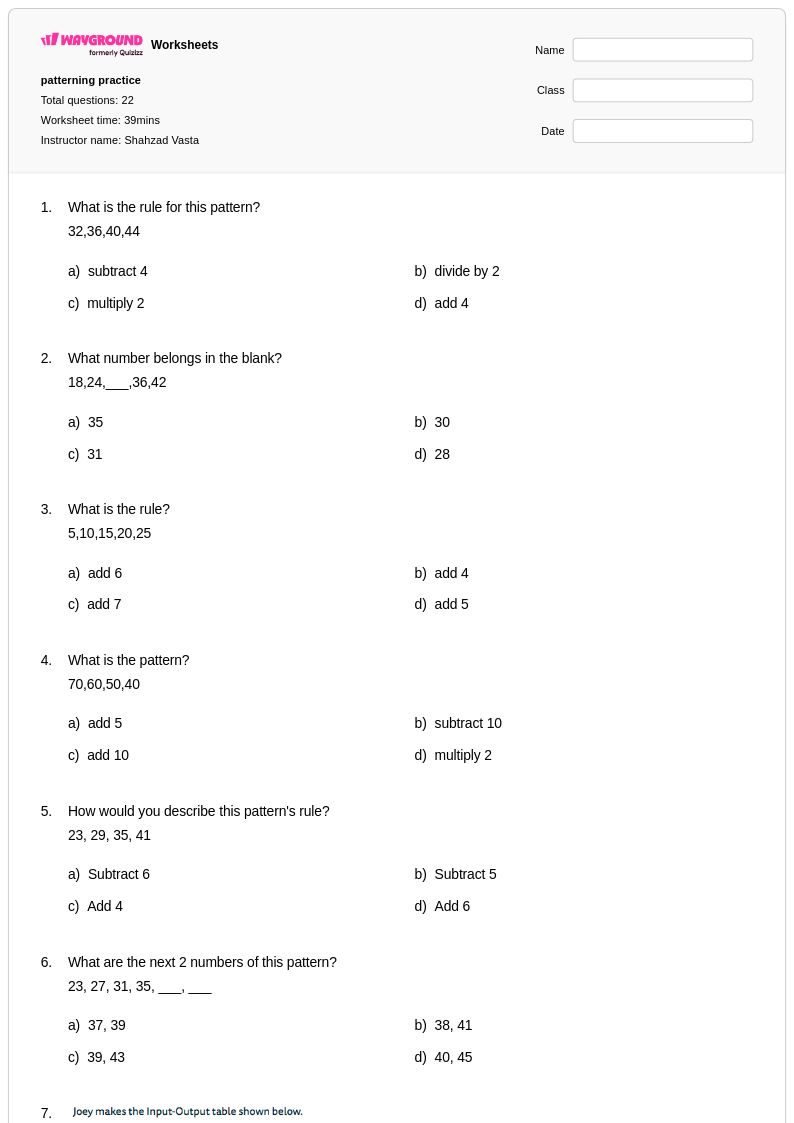
22 Q
4th
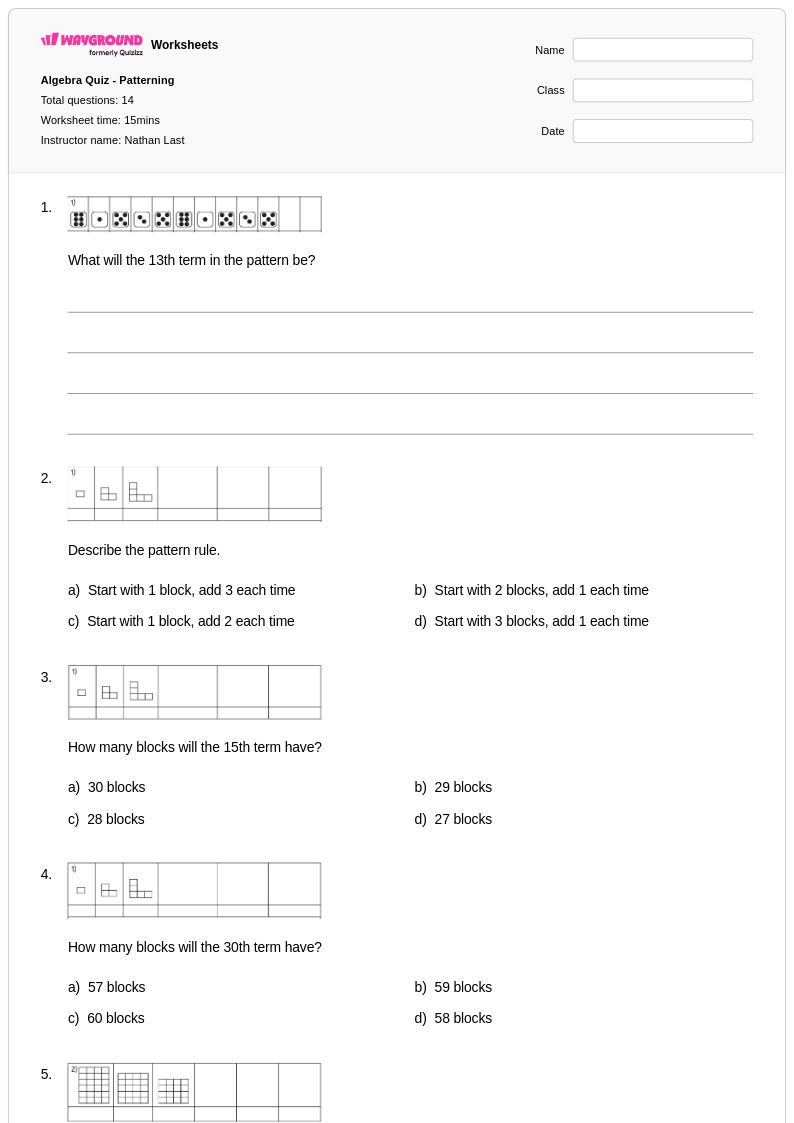
14 Q
7th
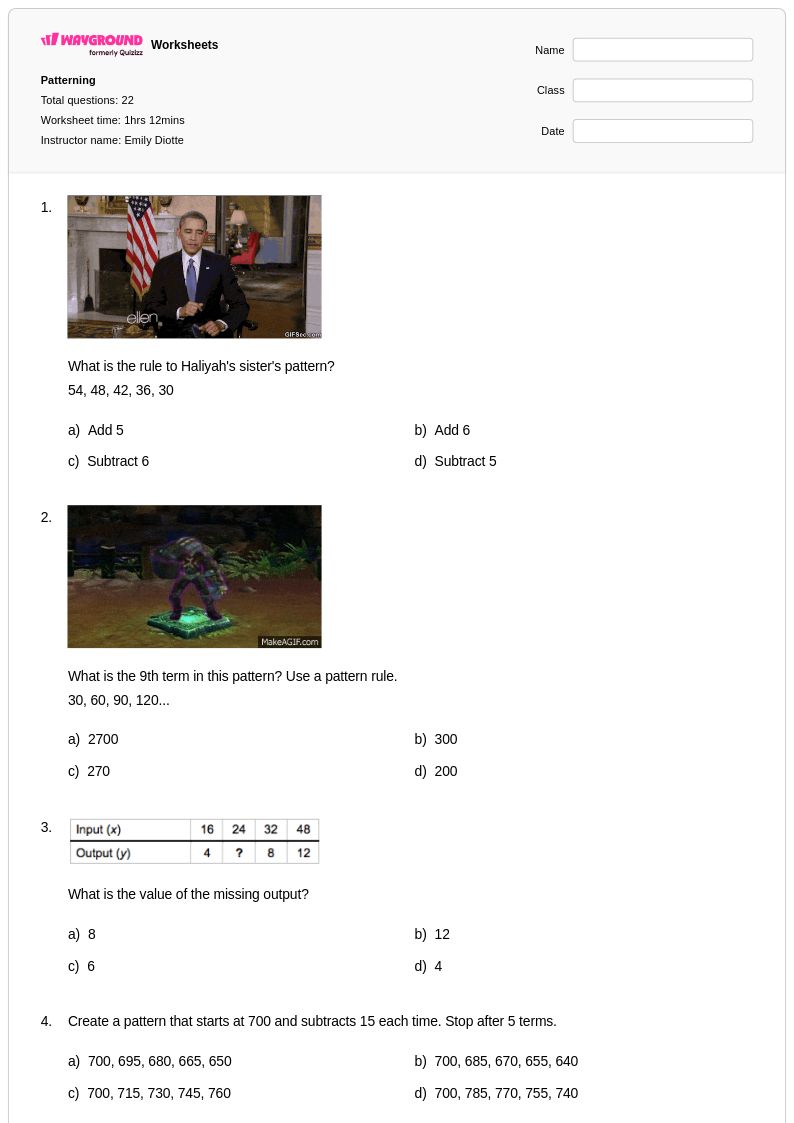
22 Q
6th
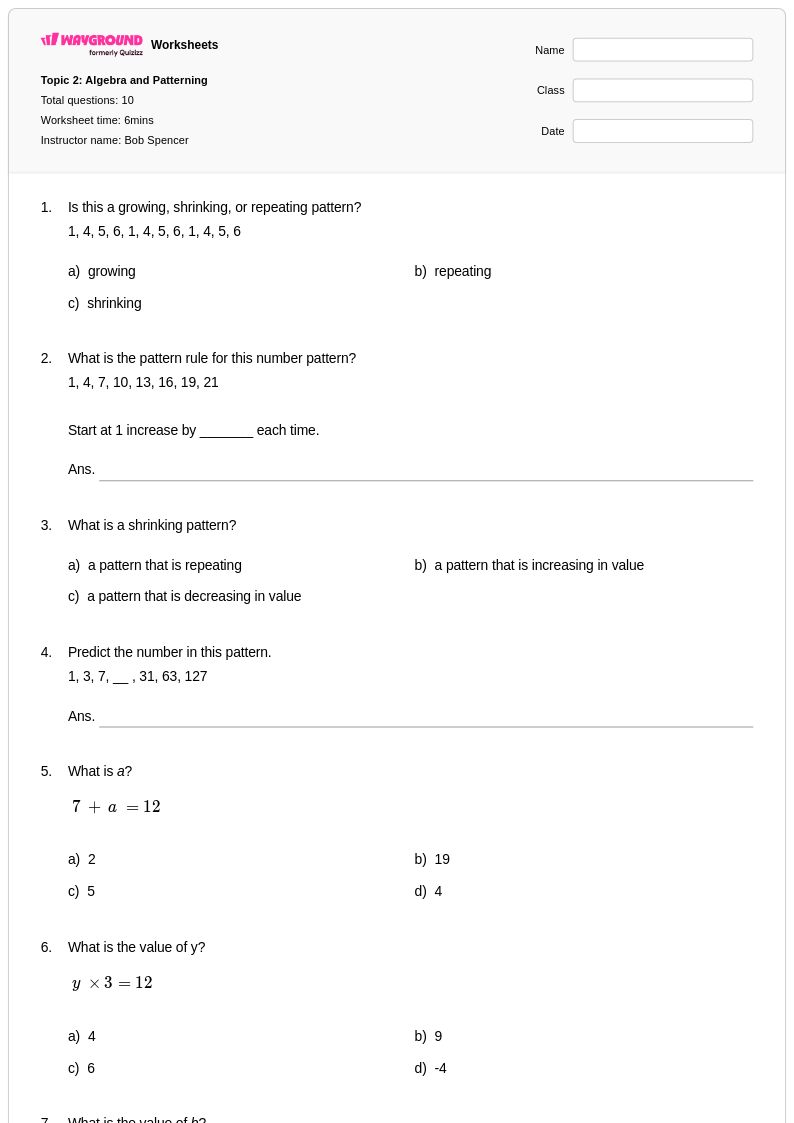
10 Q
3rd - 8th
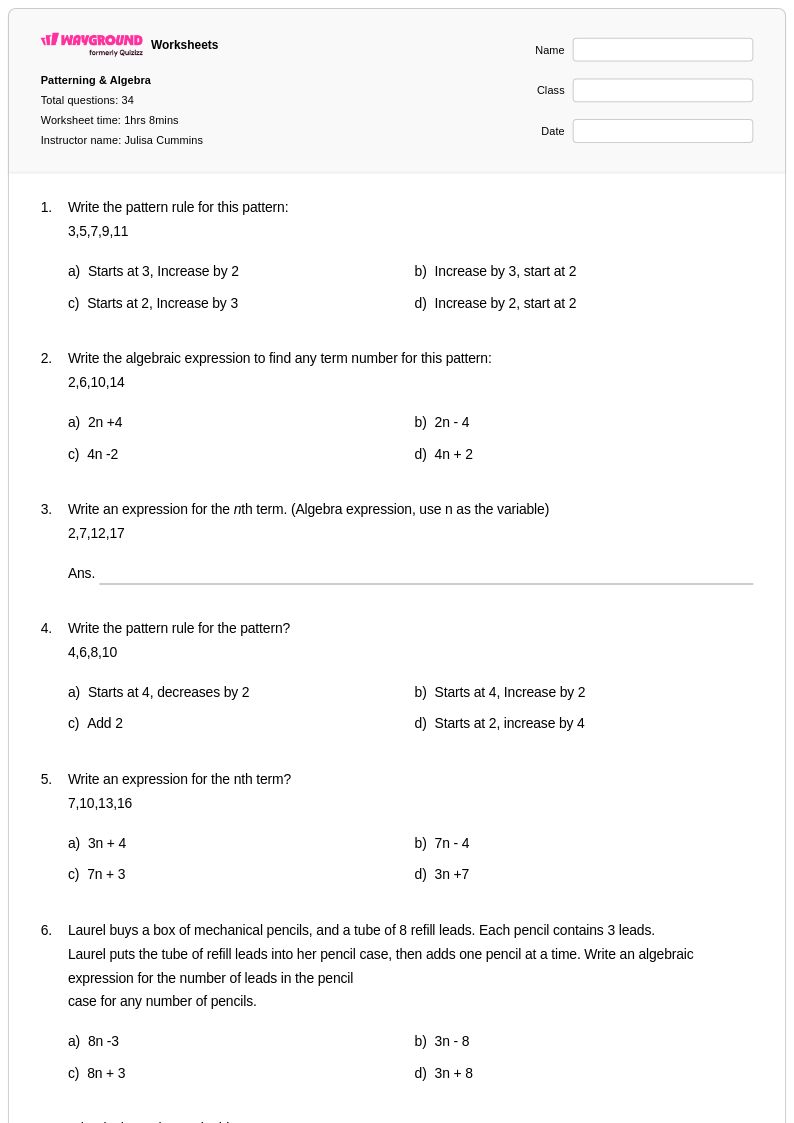
34 Q
7th - 8th
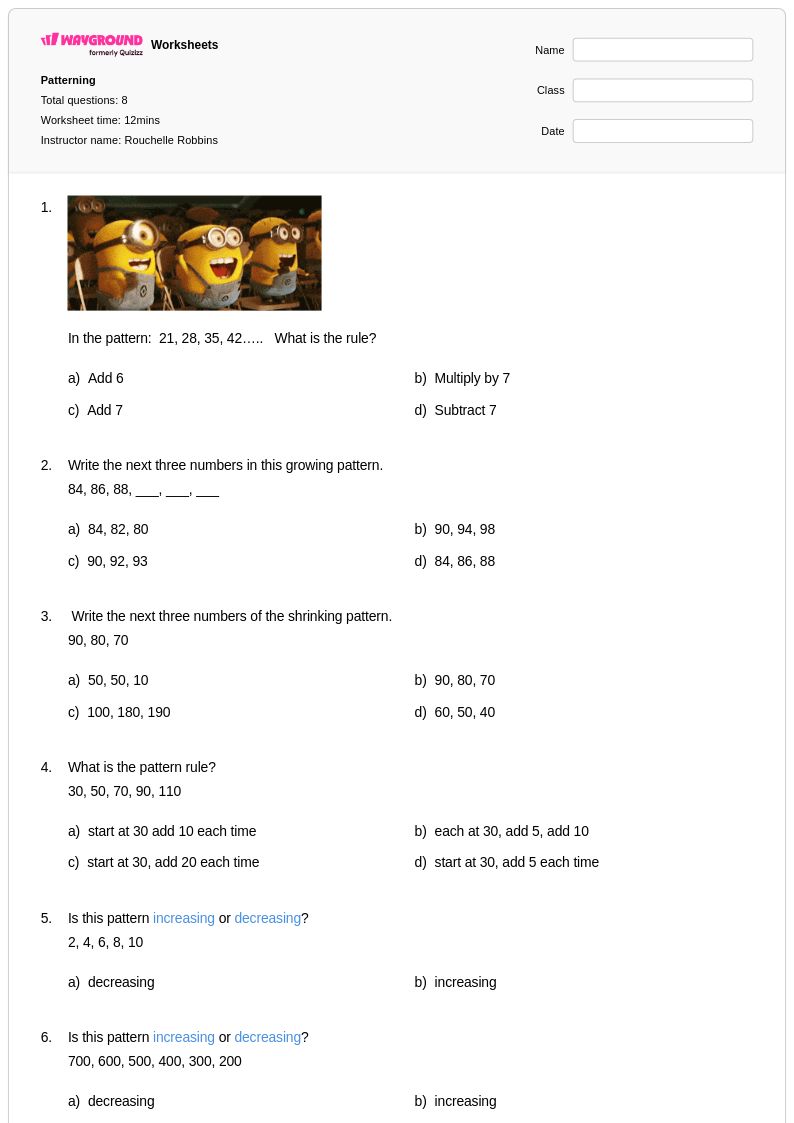
8 Q
4th
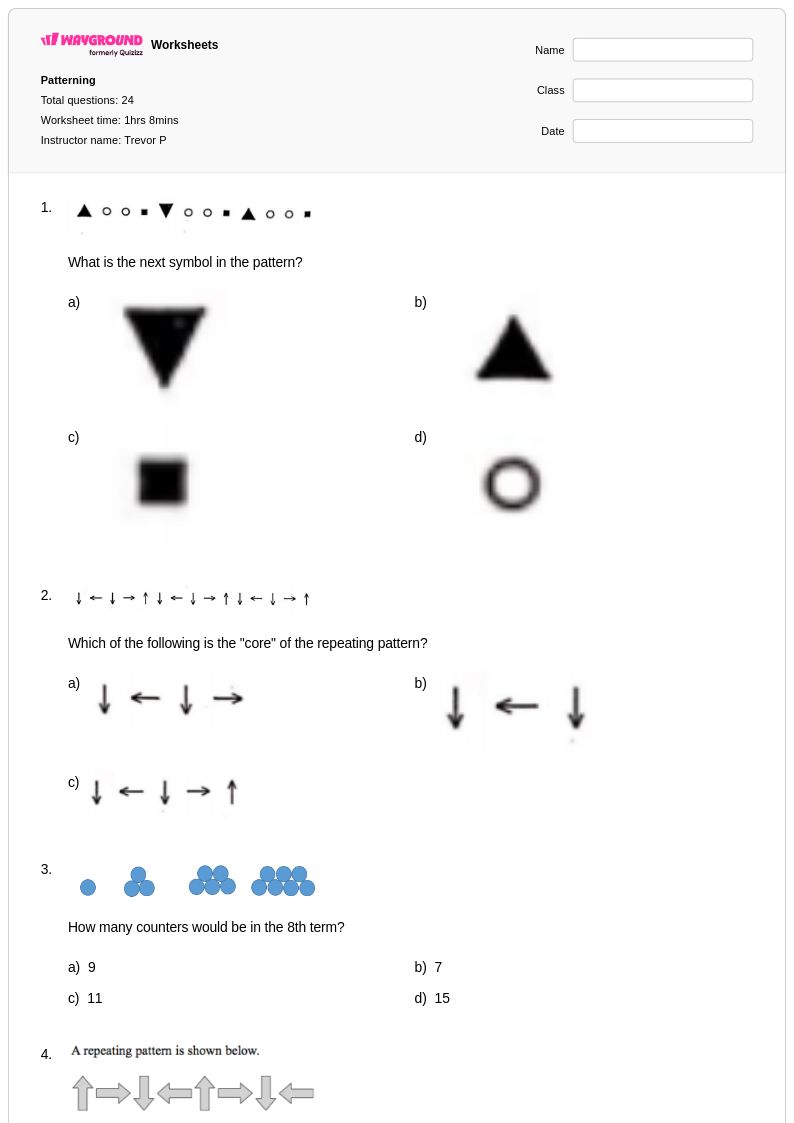
24 Q
7th
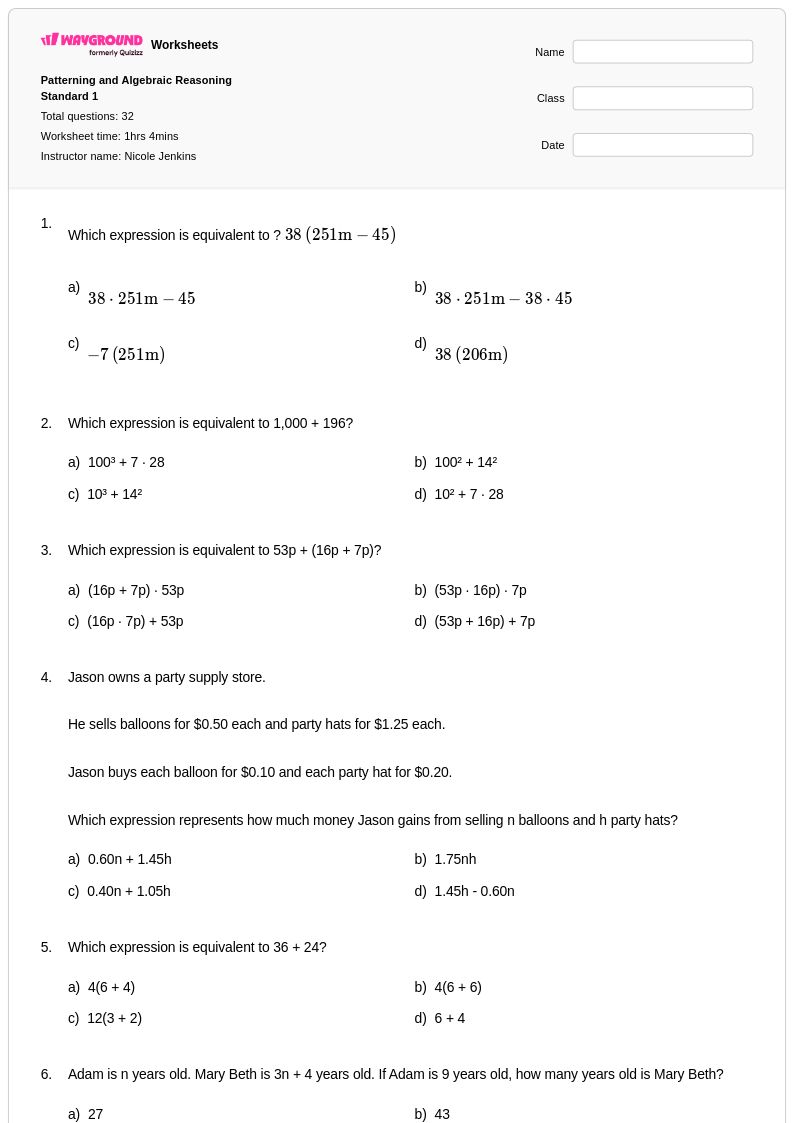
32 Q
6th
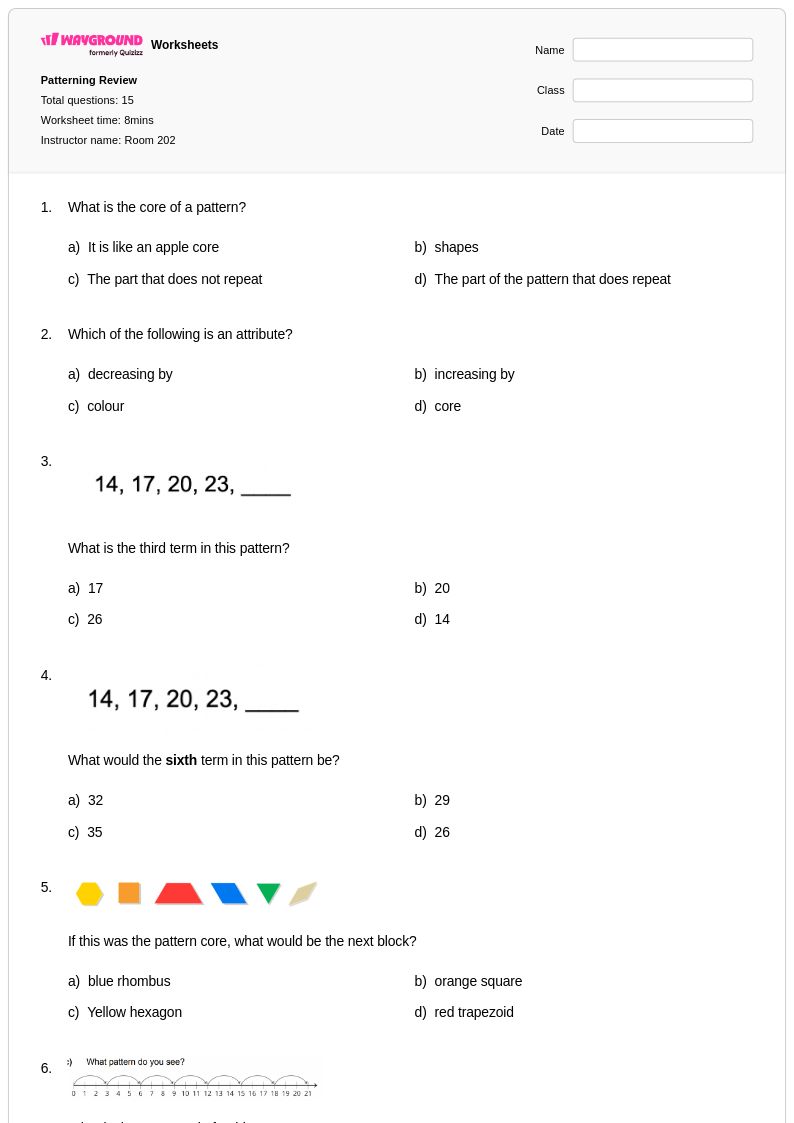
15 Q
3rd
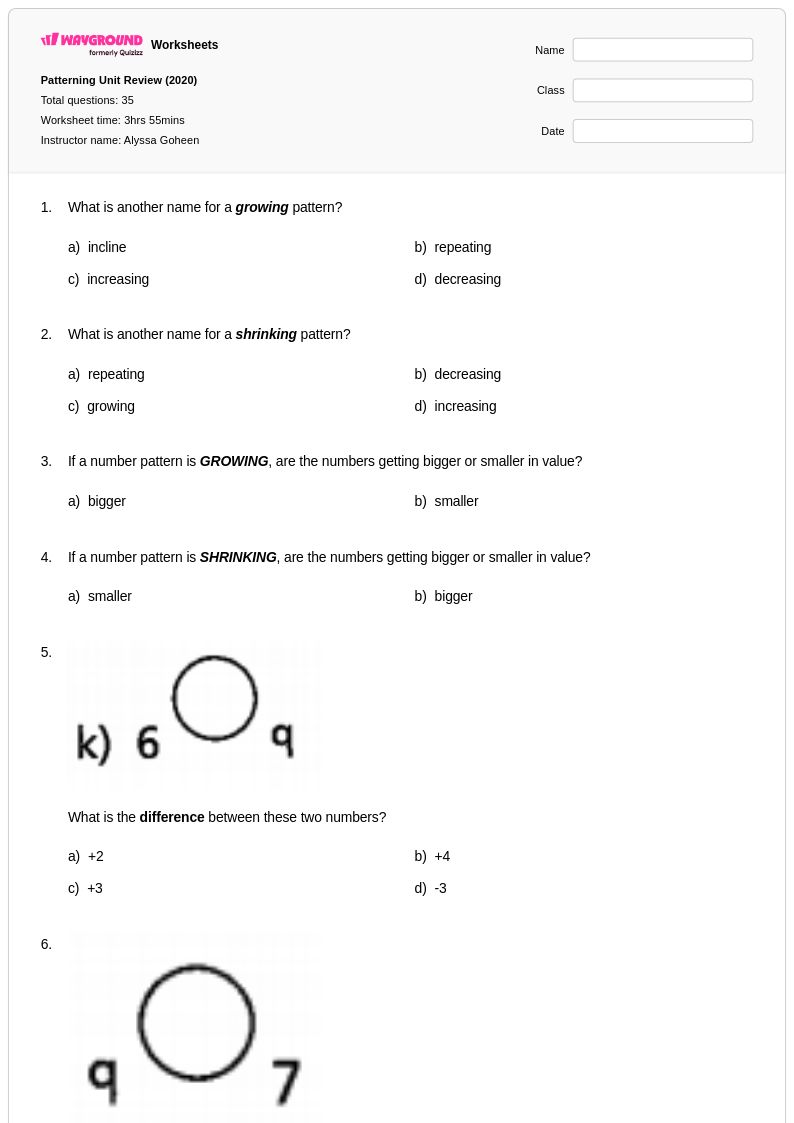
35 Q
3rd
Explore Worksheets by Subjects
Explore printable Patterning worksheets
Patterning worksheets available through Wayground (formerly Quizizz) provide students with essential practice in recognizing, extending, and creating mathematical sequences and patterns. These comprehensive resources strengthen critical number sense skills by engaging learners in identifying numerical relationships, predicting subsequent terms in sequences, and understanding the underlying rules that govern pattern formation. The collection includes diverse practice problems that progress from simple repeating patterns to more complex growing patterns and algebraic sequences, ensuring students develop both visual and analytical pattern recognition abilities. Each worksheet comes with a detailed answer key and is available as a free printable pdf, making it convenient for teachers to implement pattern-based learning activities that build foundational mathematical thinking skills.
Wayground (formerly Quizizz) supports mathematics educators with an extensive collection of millions of teacher-created patterning worksheets that can be easily searched and filtered to match specific instructional needs. The platform's robust standards alignment ensures that pattern recognition activities correspond with curriculum requirements, while built-in differentiation tools allow teachers to customize worksheet difficulty levels for diverse learners. These resources are available in both printable and digital formats, including downloadable pdfs, providing flexibility for classroom instruction, homework assignments, and remote learning environments. Teachers can efficiently plan targeted skill practice sessions, implement remediation strategies for struggling students, and offer enrichment opportunities for advanced learners, all while accessing high-quality patterning materials that promote deep mathematical understanding and logical reasoning development.
FAQs
How do I teach patterning to my students?
What types of exercises help students practice patterning?
What are common student mistakes when learning patterns?
How can I use these patterning worksheets in my classroom?
How does patterning fit into the math curriculum?
How can I differentiate patterning practice for my students?