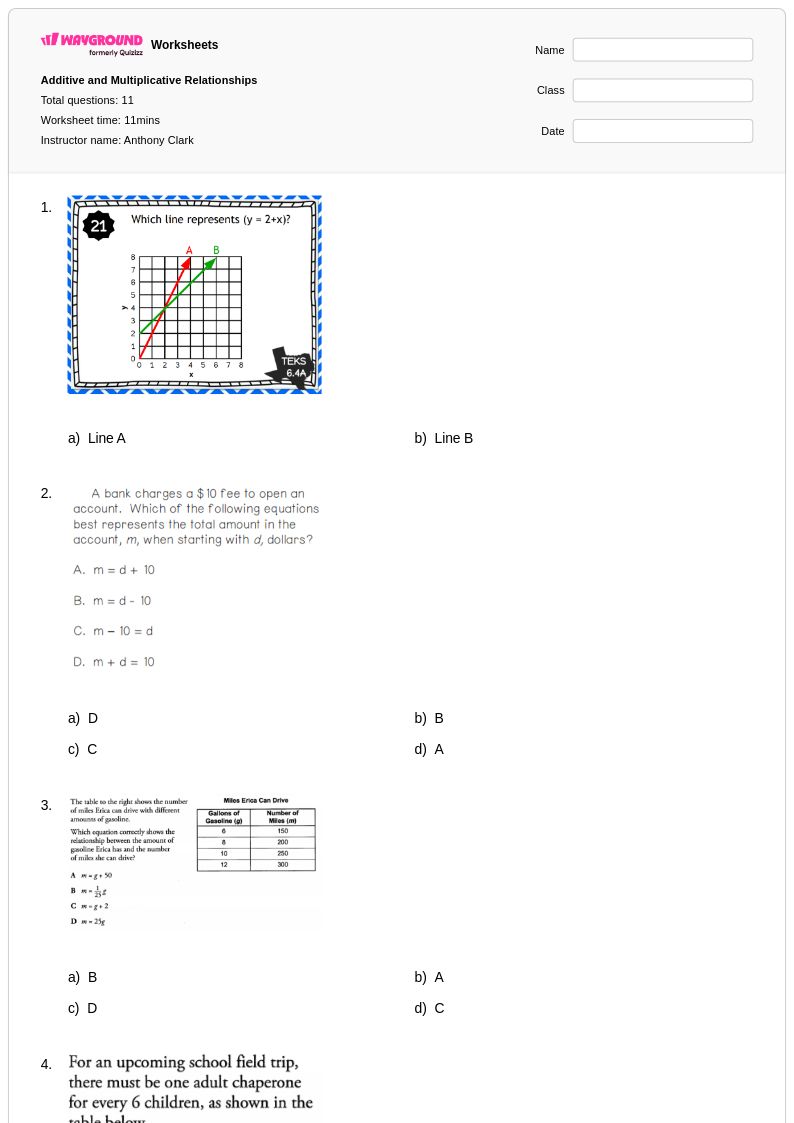
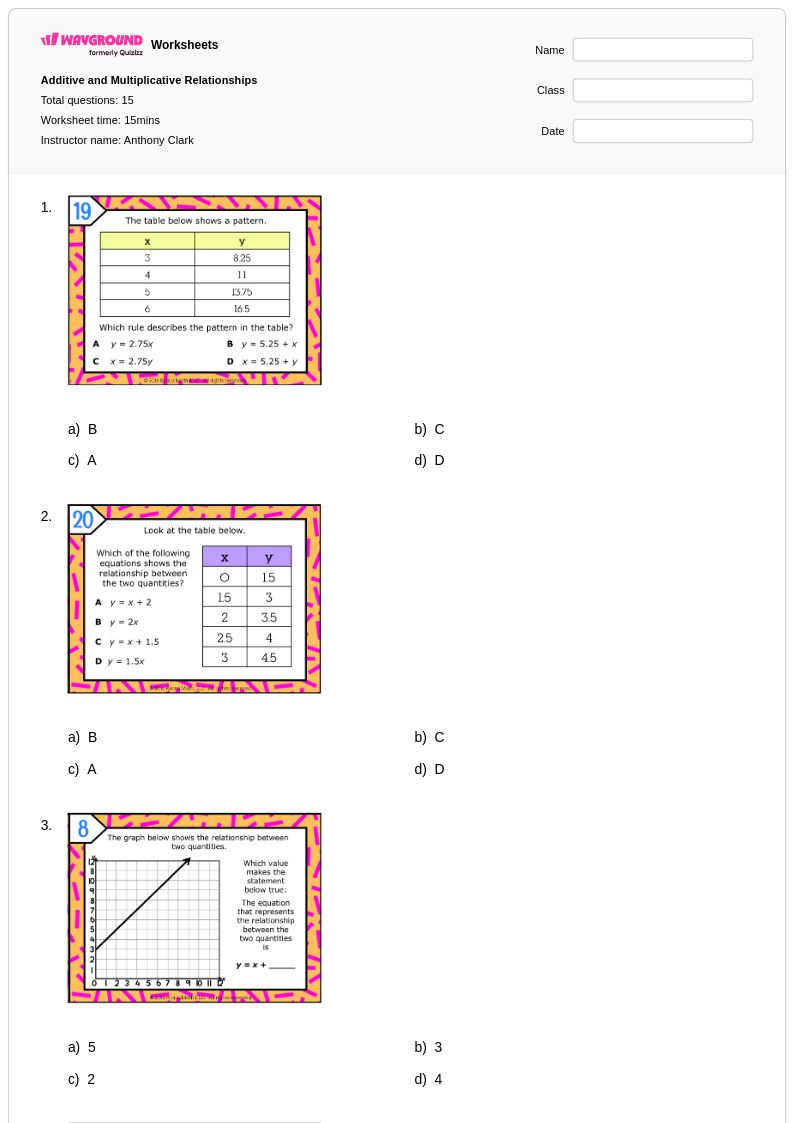
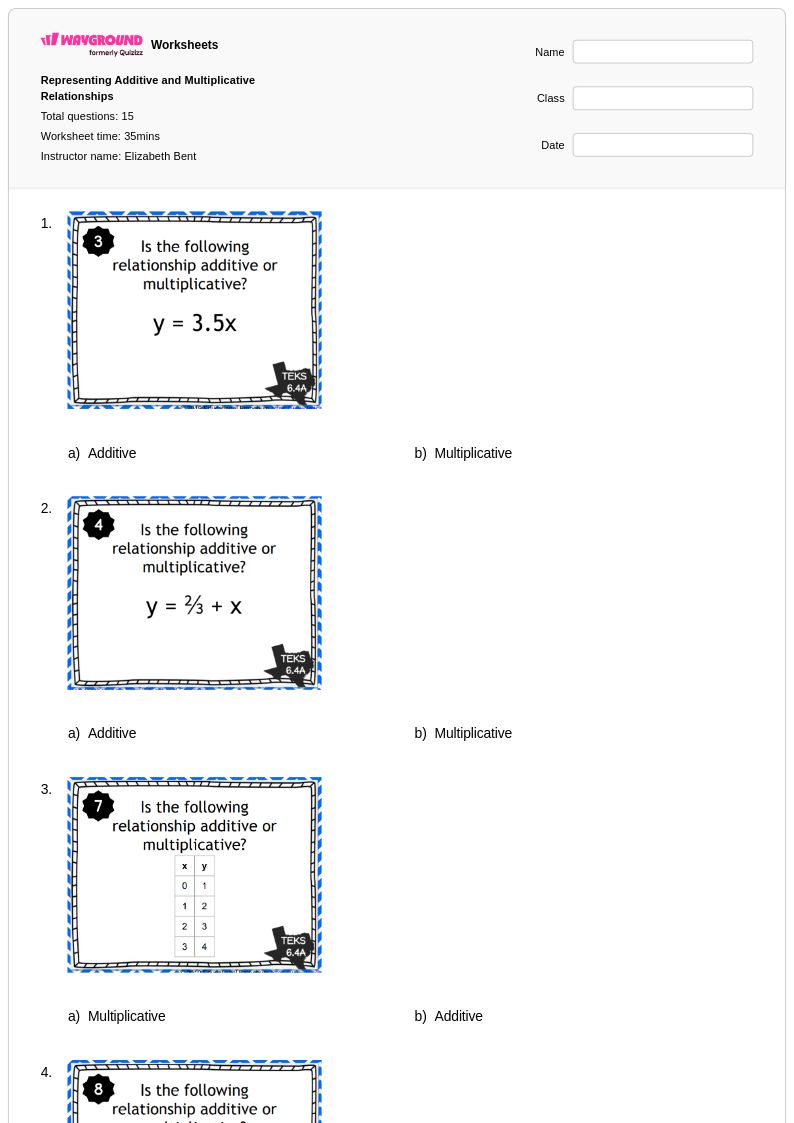
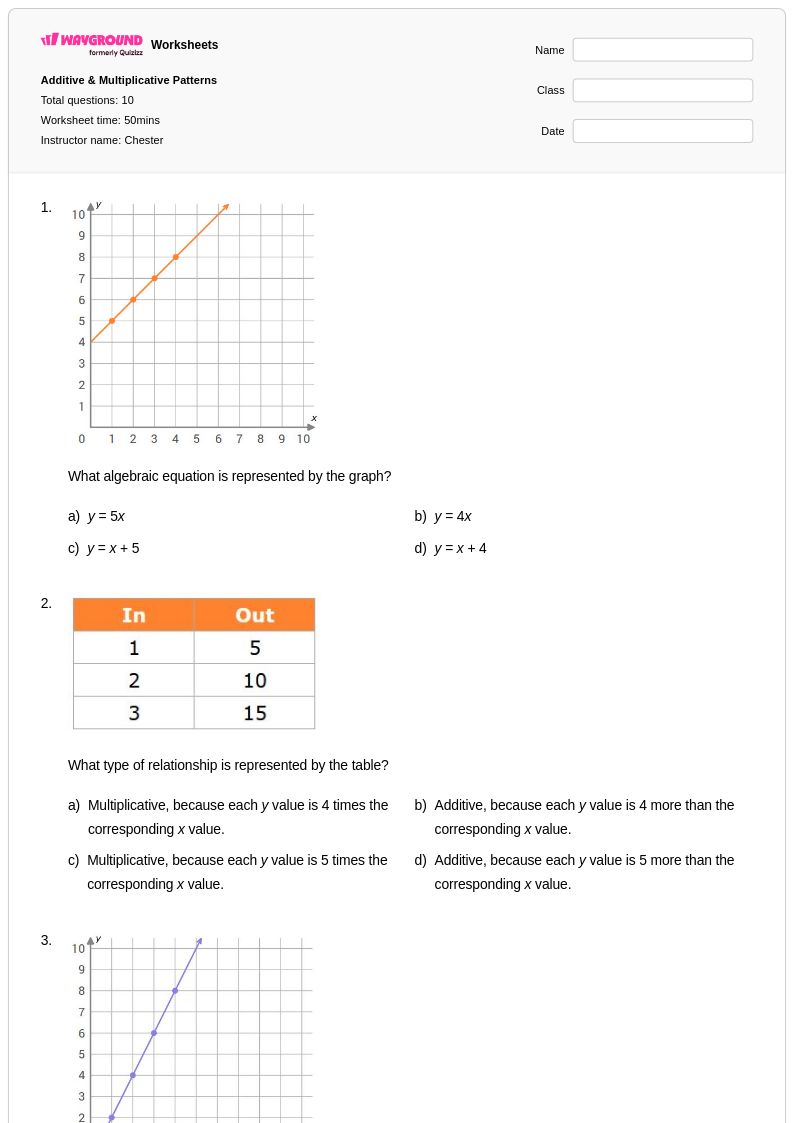
Free Printable Additive and Multiplicative Relationships worksheets
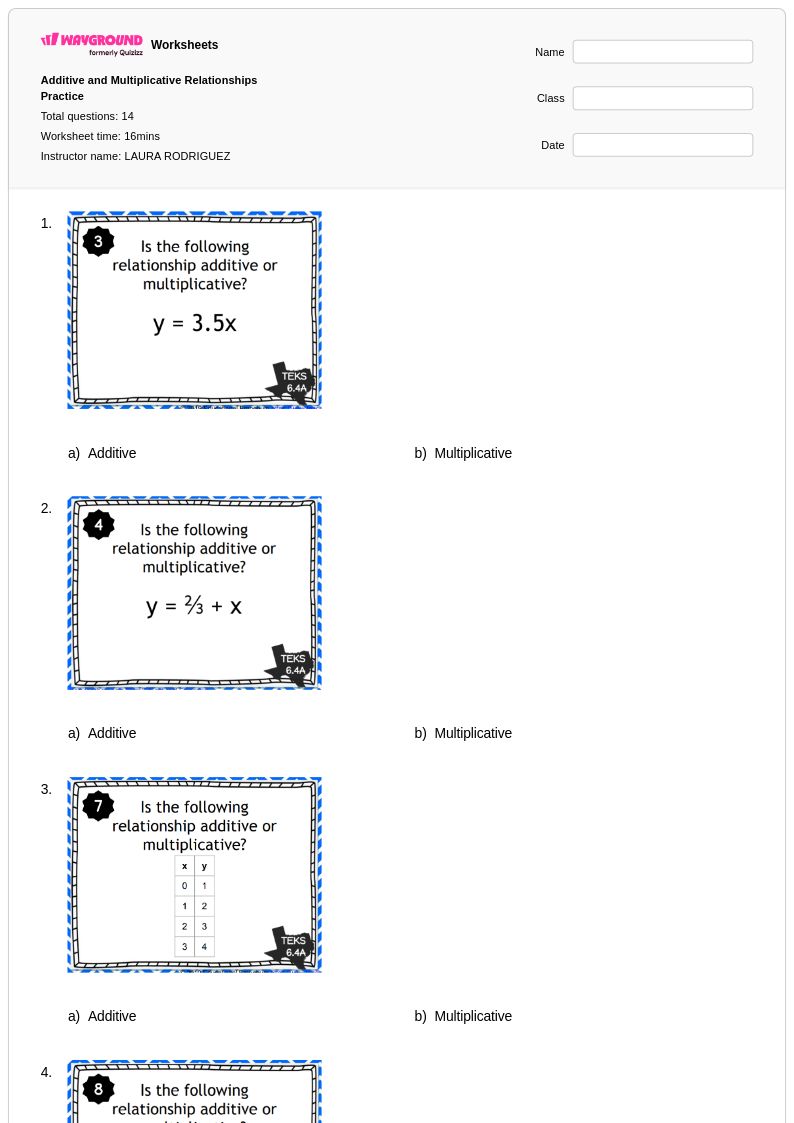
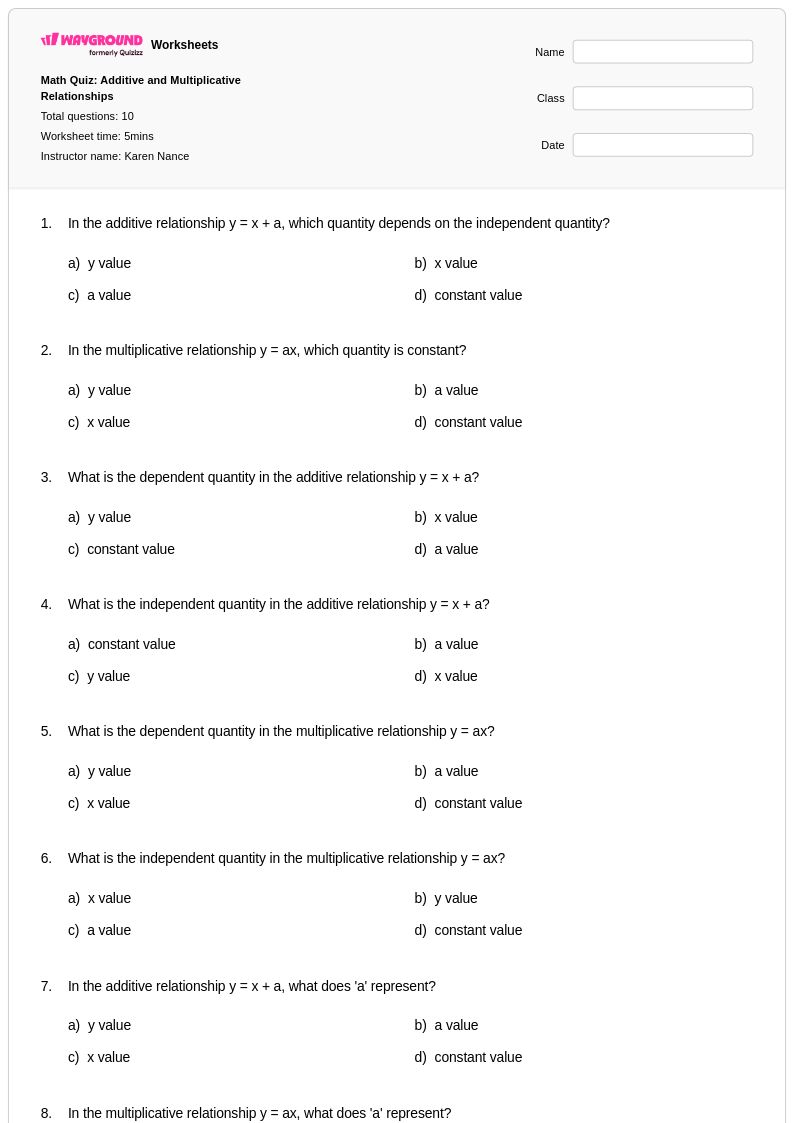
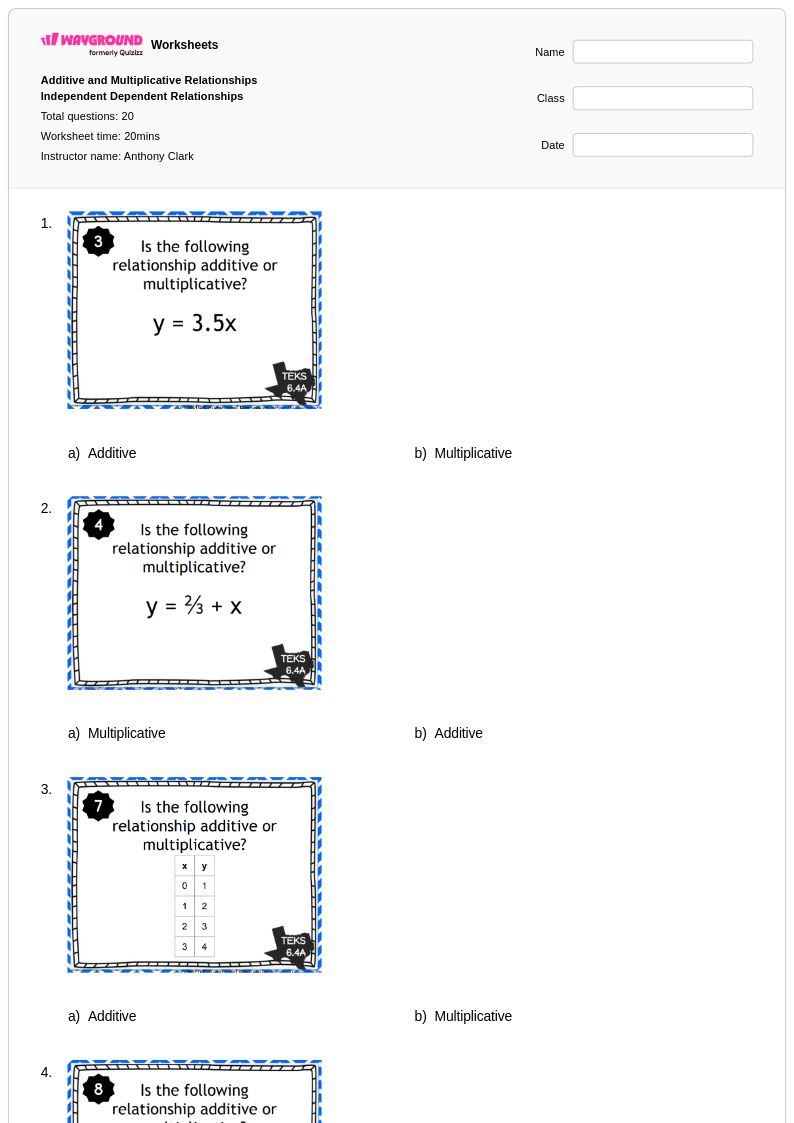
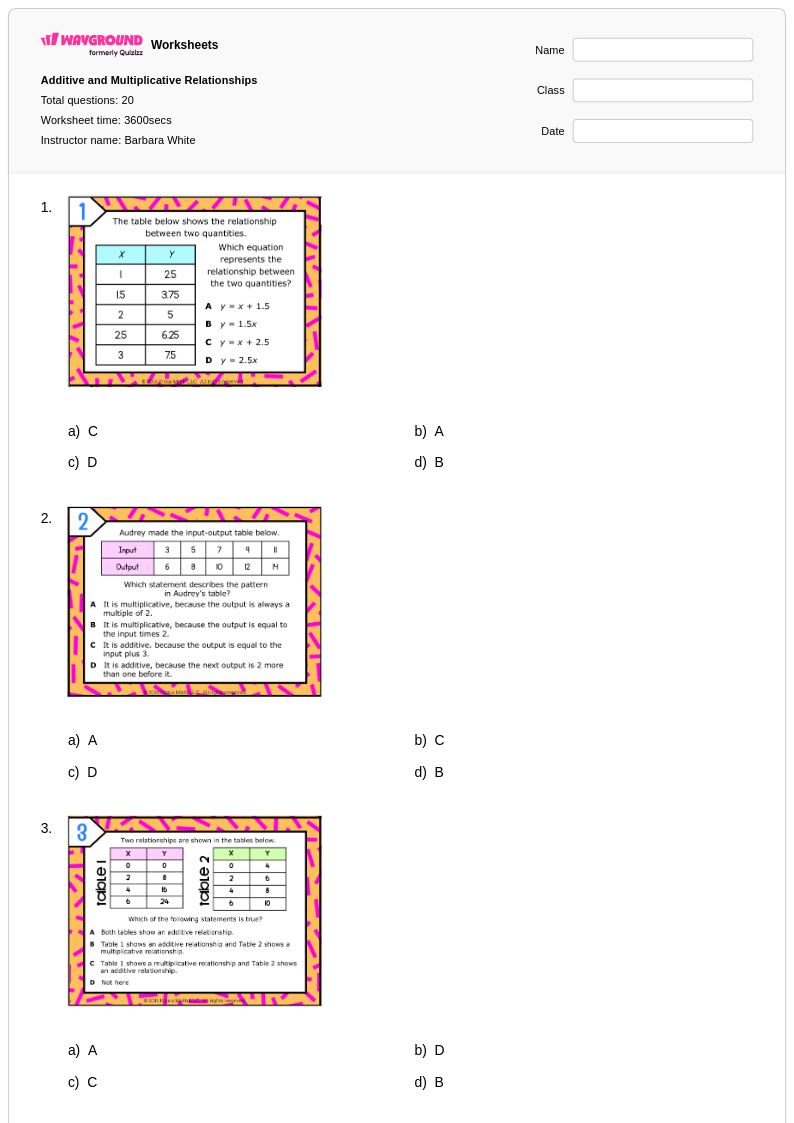
Explore Wayground's free printable worksheets and practice problems designed to help students master additive and multiplicative relationships through engaging PDF exercises with comprehensive answer keys.
Explore printable Additive and Multiplicative Relationships worksheets
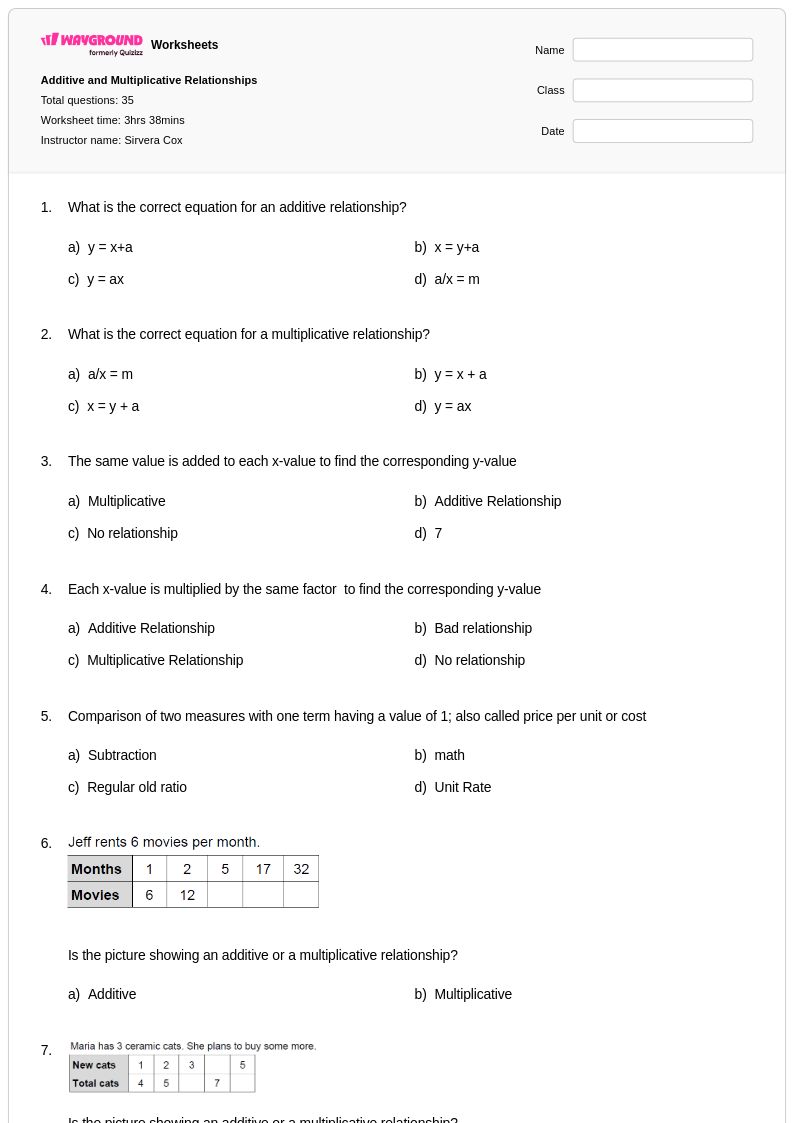
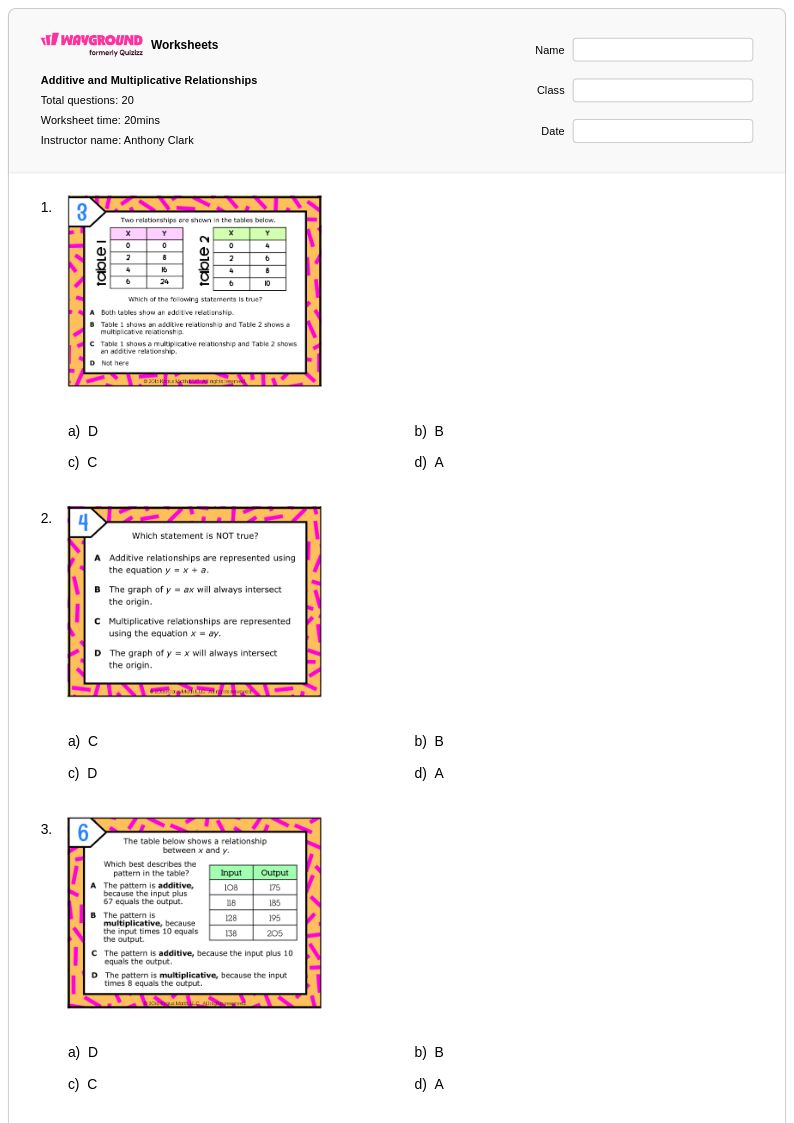
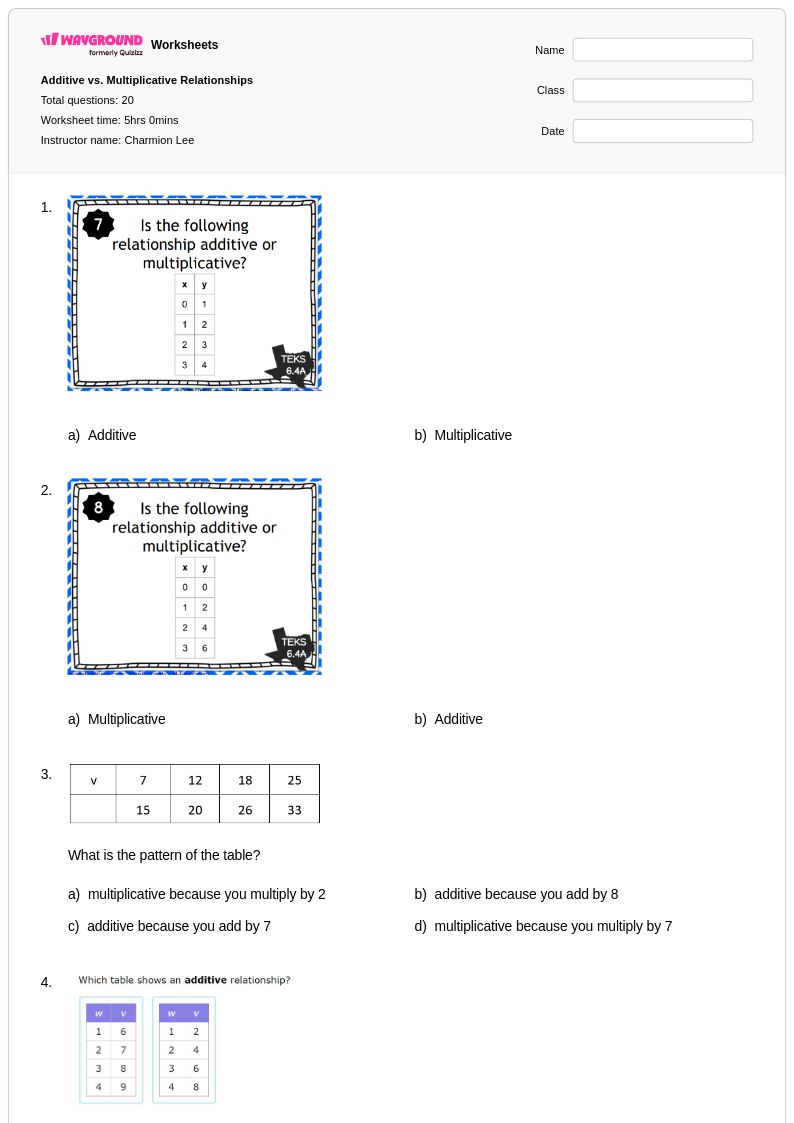
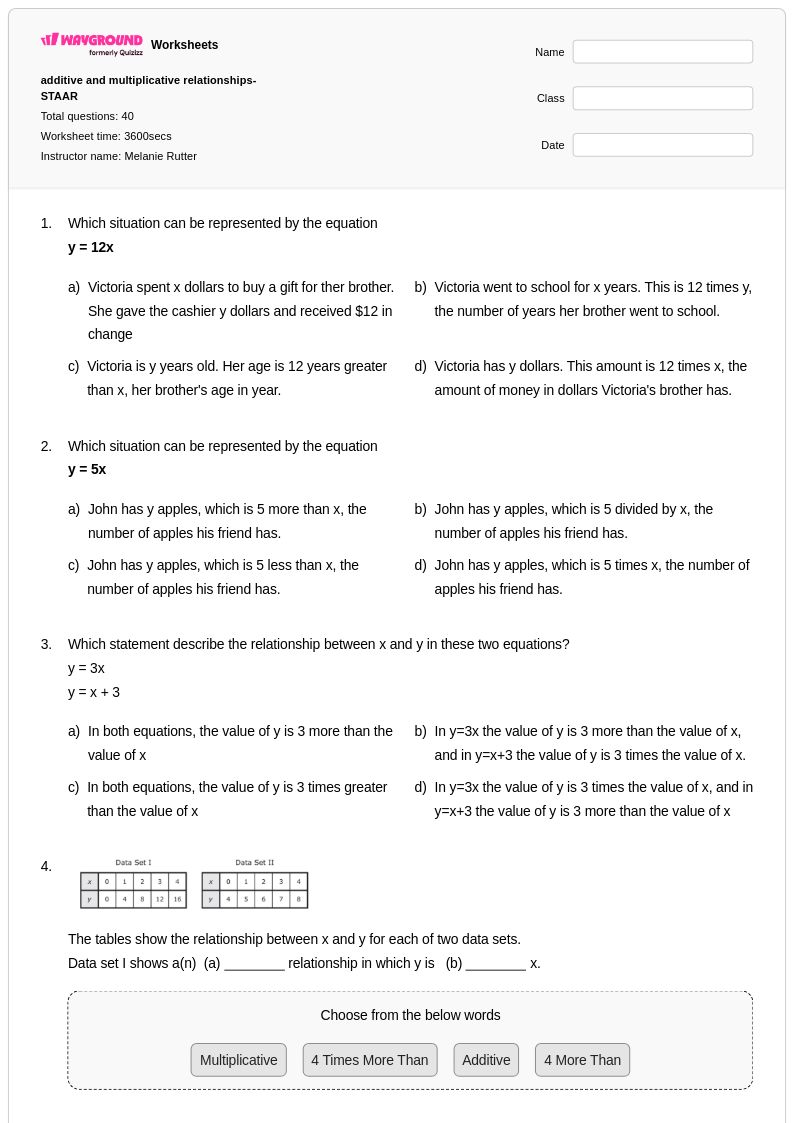
Additive and multiplicative relationships form the cornerstone of mathematical fluency, and Wayground's comprehensive worksheet collection provides educators with expertly crafted resources to develop these essential number sense concepts. These worksheets systematically guide students through the fundamental connections between addition and multiplication, helping them understand how these operations relate to one another through patterns, properties, and problem-solving strategies. Each worksheet includes detailed answer keys and is available as free printable pdfs, making it simple for teachers to implement targeted practice problems that strengthen students' ability to recognize multiplicative thinking as repeated addition, explore factor relationships, and develop computational flexibility across both operations.
Wayground, formerly Quizizz, empowers teachers with millions of educator-created resources specifically designed to support additive and multiplicative relationship instruction through robust search and filtering capabilities that align with mathematical standards. The platform's differentiation tools enable teachers to customize worksheets based on individual student needs, whether for remediation of foundational concepts or enrichment of advanced multiplicative reasoning skills. Available in both printable and digital pdf formats, these resources streamline lesson planning while providing flexible options for skill practice, allowing educators to seamlessly integrate targeted number sense activities that build conceptual understanding and procedural fluency in additive and multiplicative relationships.
FAQs
How should I teach additive and multiplicative relationships?
Use equal groups, arrays, number lines, and tables to contrast adding a fixed amount with multiplying by a fixed factor. Ask students to describe how each representation changes and to justify whether a pattern or comparison is additive or multiplicative.
What exercises help students practice additive and multiplicative relationships?
Effective exercises include translating repeated addition into multiplication, completing input-output tables, comparing additive and multiplicative patterns, and solving equal-group problems. Tasks that ask students to represent one relationship with an equation, table, diagram, and verbal rule develop flexible reasoning across both operations.
What mistakes do students make with additive and multiplicative relationships?
Students often assume every growing pattern is multiplicative, confuse adding a constant with multiplying by a factor, or describe multiplication only as faster repeated addition. They may also compare quantities using a difference when the context requires a multiplicative comparison, so tables and diagrams should be used to test the stated relationship.
How can I use an additive and multiplicative relationships worksheet on Wayground?
Wayground worksheets are available as printable PDFs and digital formats, so teachers can host a digital quiz or distribute printed practice; every worksheet includes a complete answer key. Completed paper worksheets can be scanned or captured for grading with the Wayground for Teachers app, and printable PDFs support structured practice without requiring a device.
How do additive and multiplicative relationships fit the Common Core math progression?
Common Core moves students from understanding multiplication through equal groups and arrays to comparing quantities multiplicatively and analyzing numerical patterns. This progression helps students distinguish additive change from multiplicative scaling while connecting models, equations, tables, and verbal descriptions.
How can I differentiate practice with additive and multiplicative relationships?
Begin with concrete equal-group models and repeated-addition equations, then advance to abstract tables, multiplicative comparisons, and problems requiring students to defend their classification. Wayground supports extended time, Read Aloud, reduced answer choices, and reading mode, while alternate worksheets can use adjusted spacing, larger text, a dyslexia-friendly font, or translation.