Enhance students' number ordering skills with Wayground's comprehensive collection of free worksheets, printables, and practice problems that include detailed answer keys to build strong mathematical foundations.
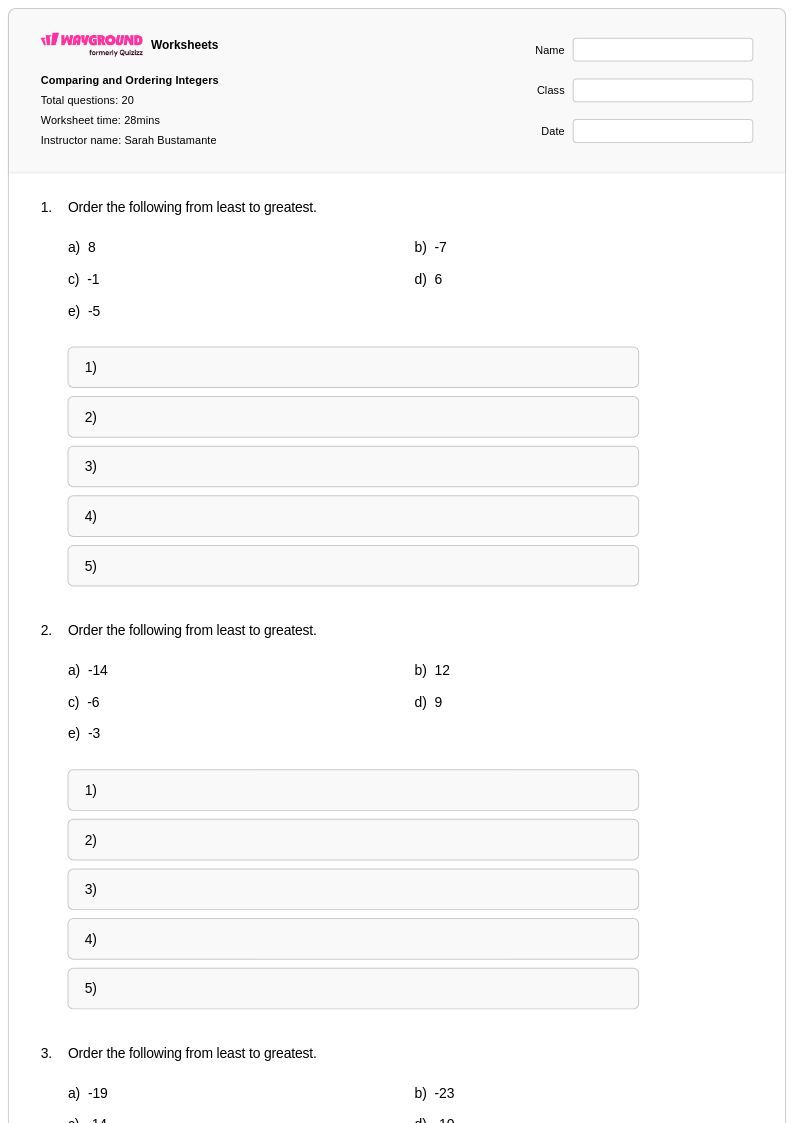
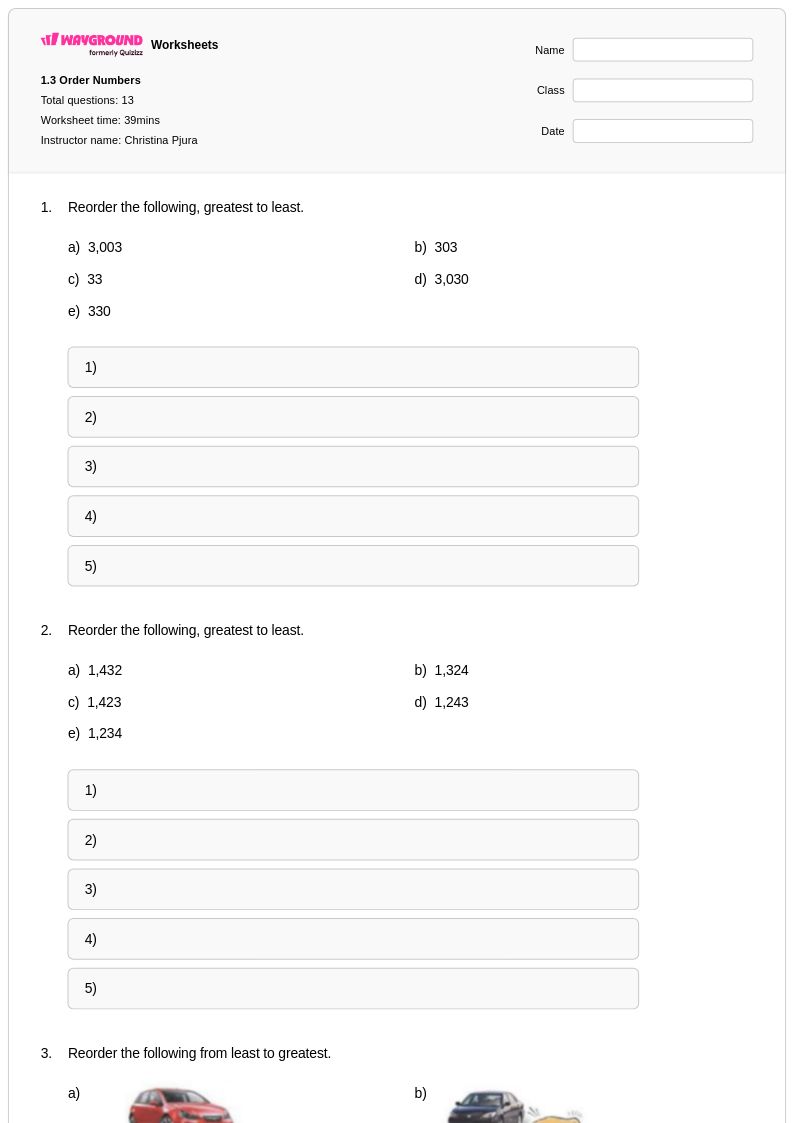
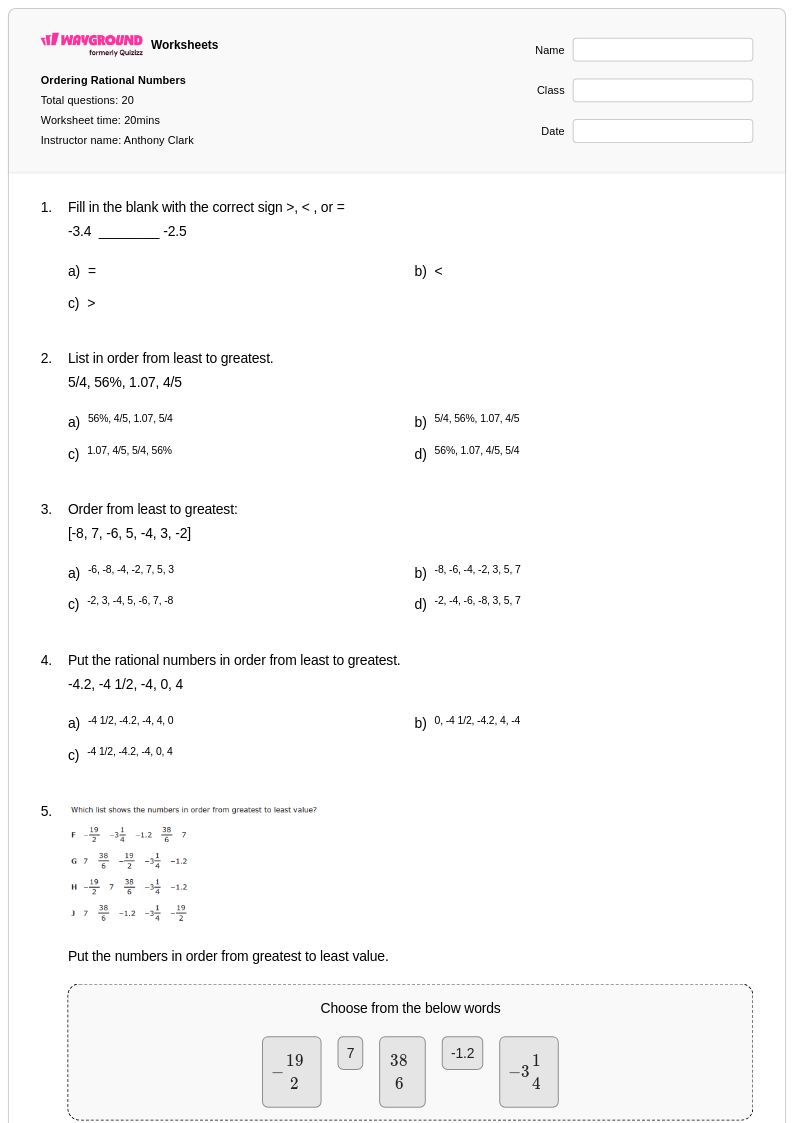
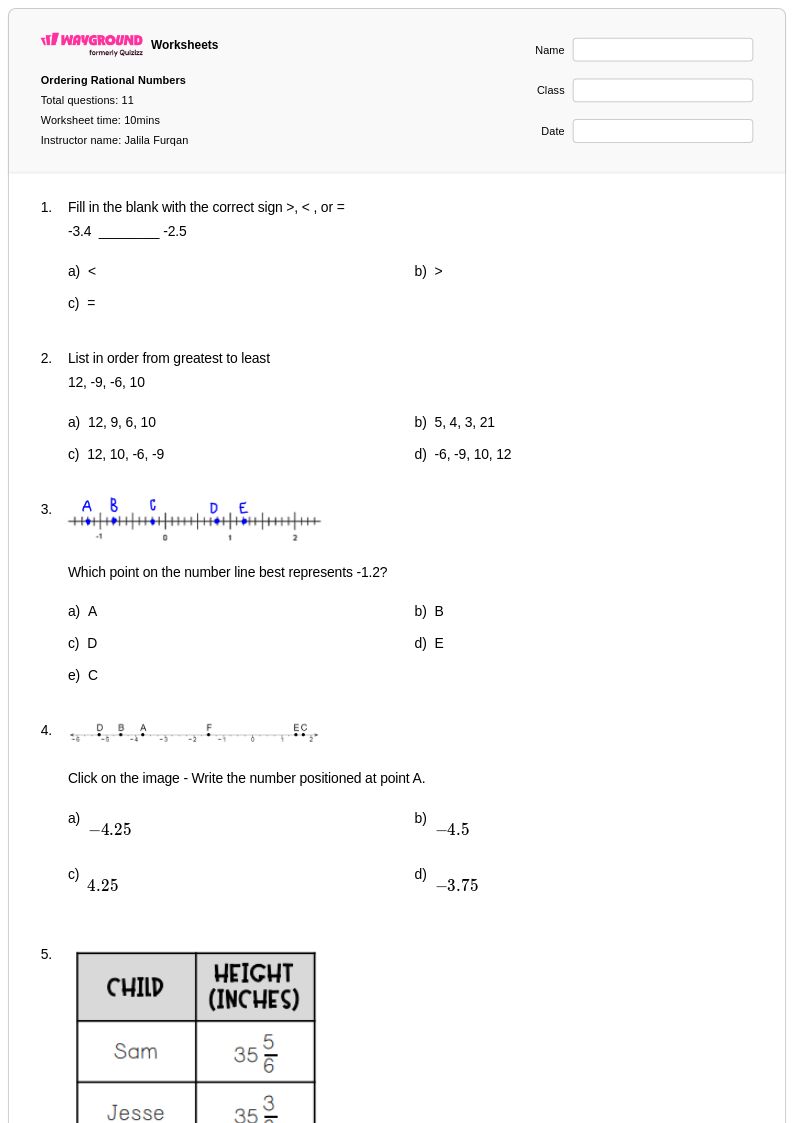
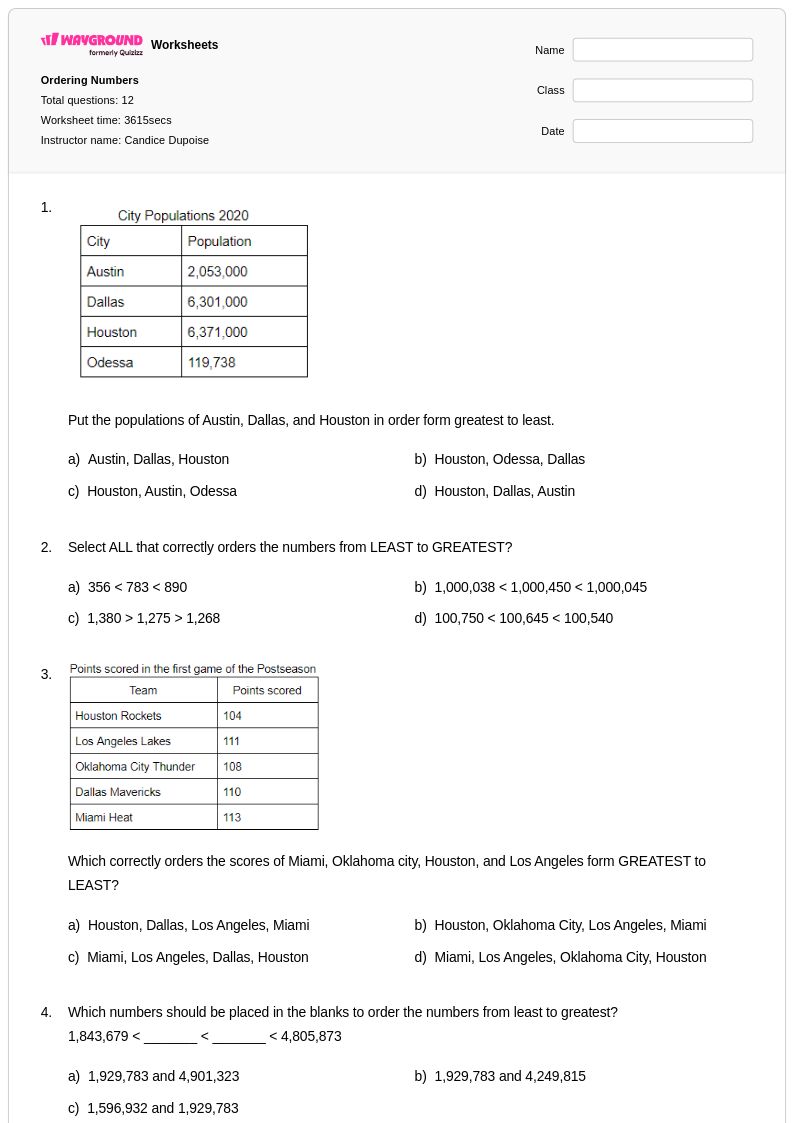
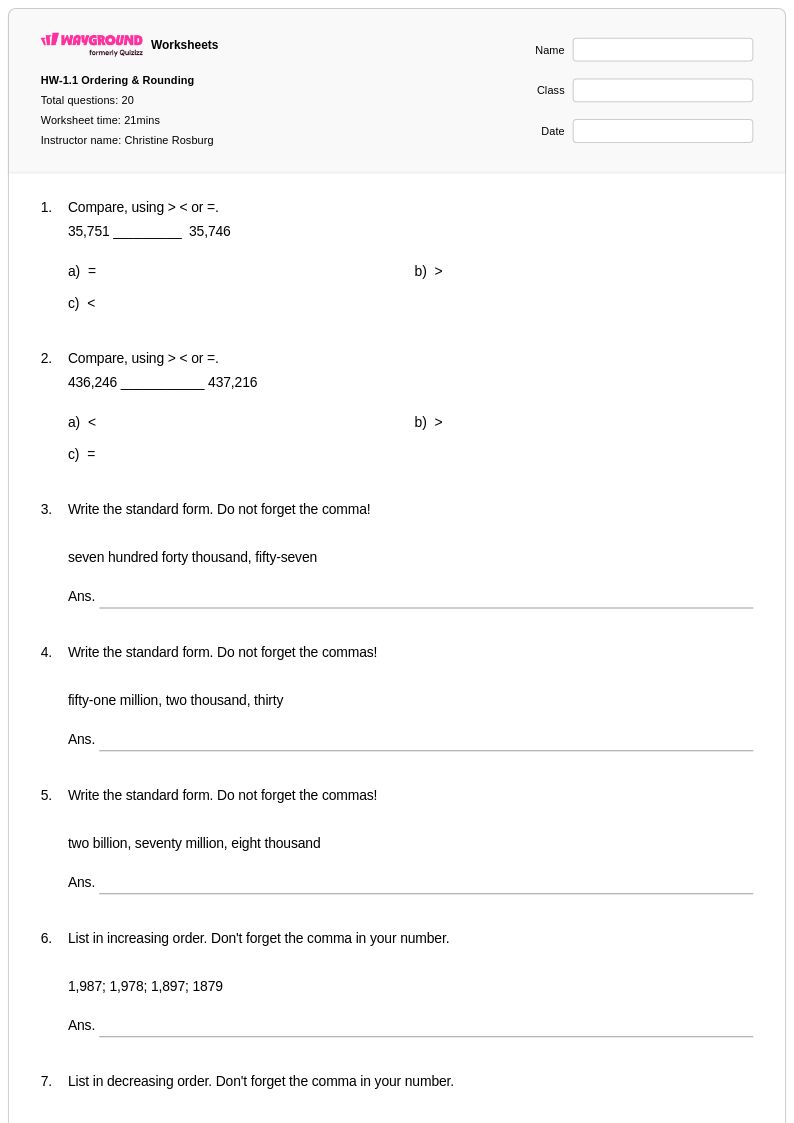
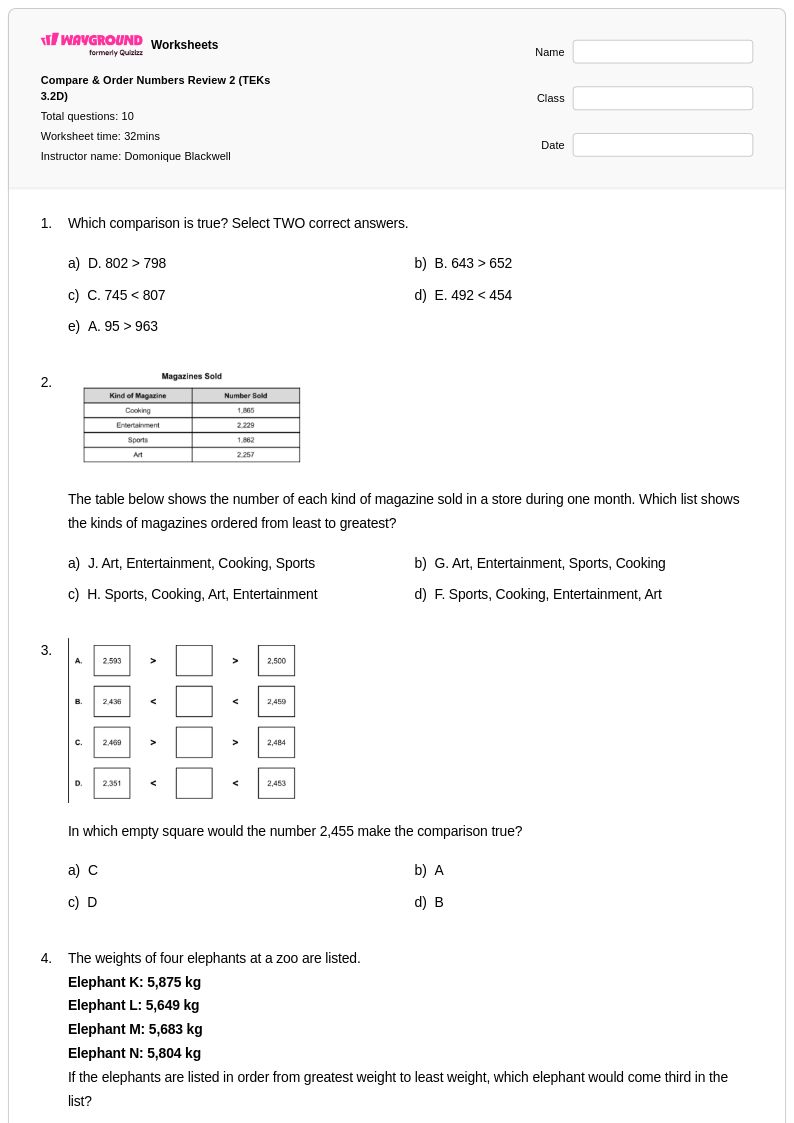
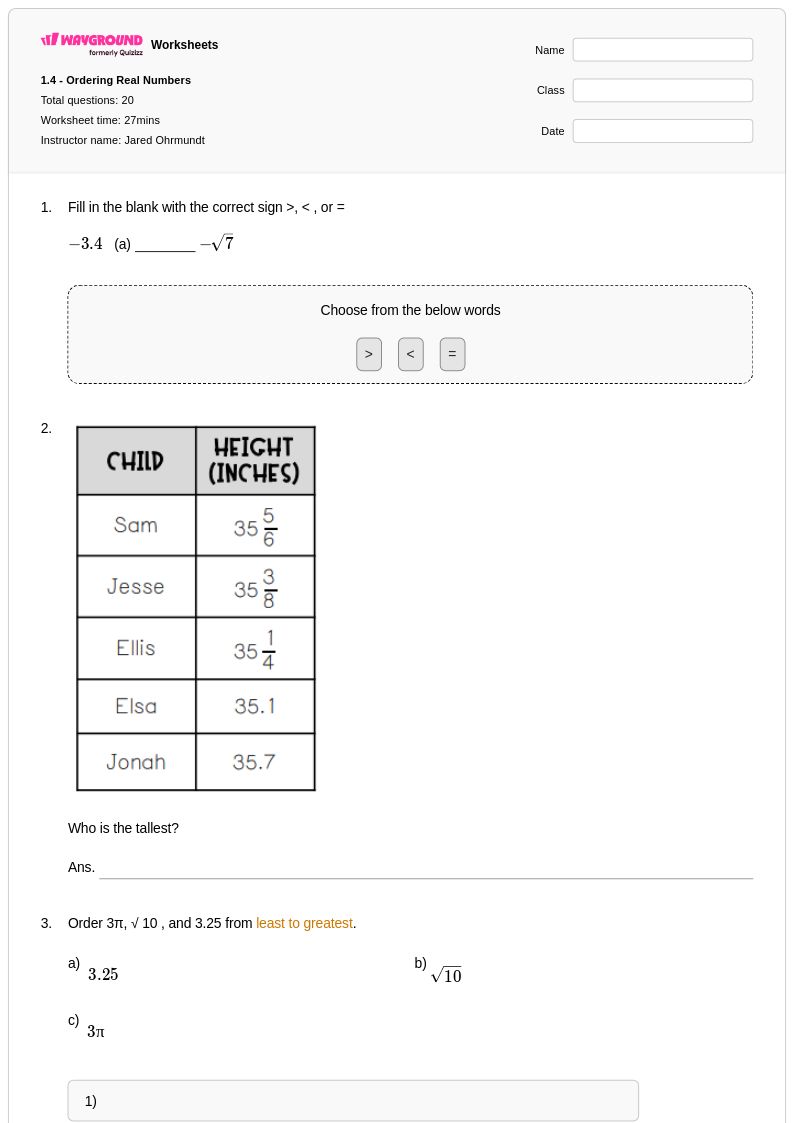
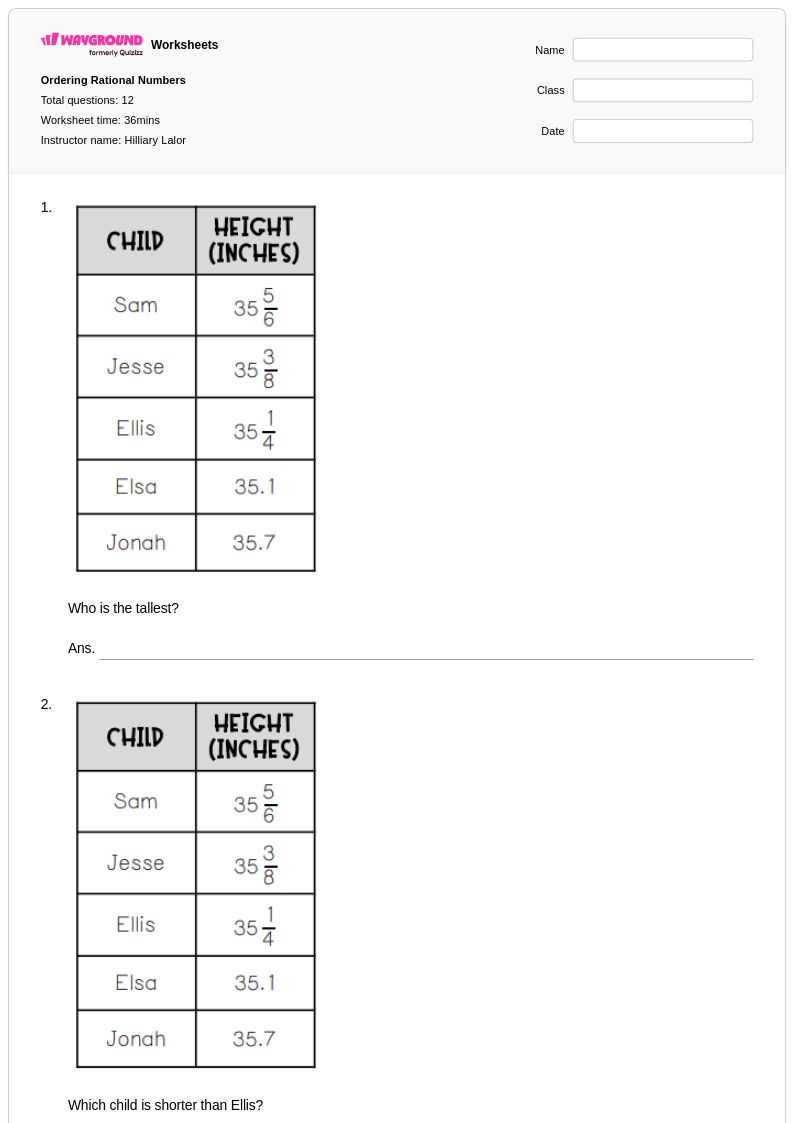
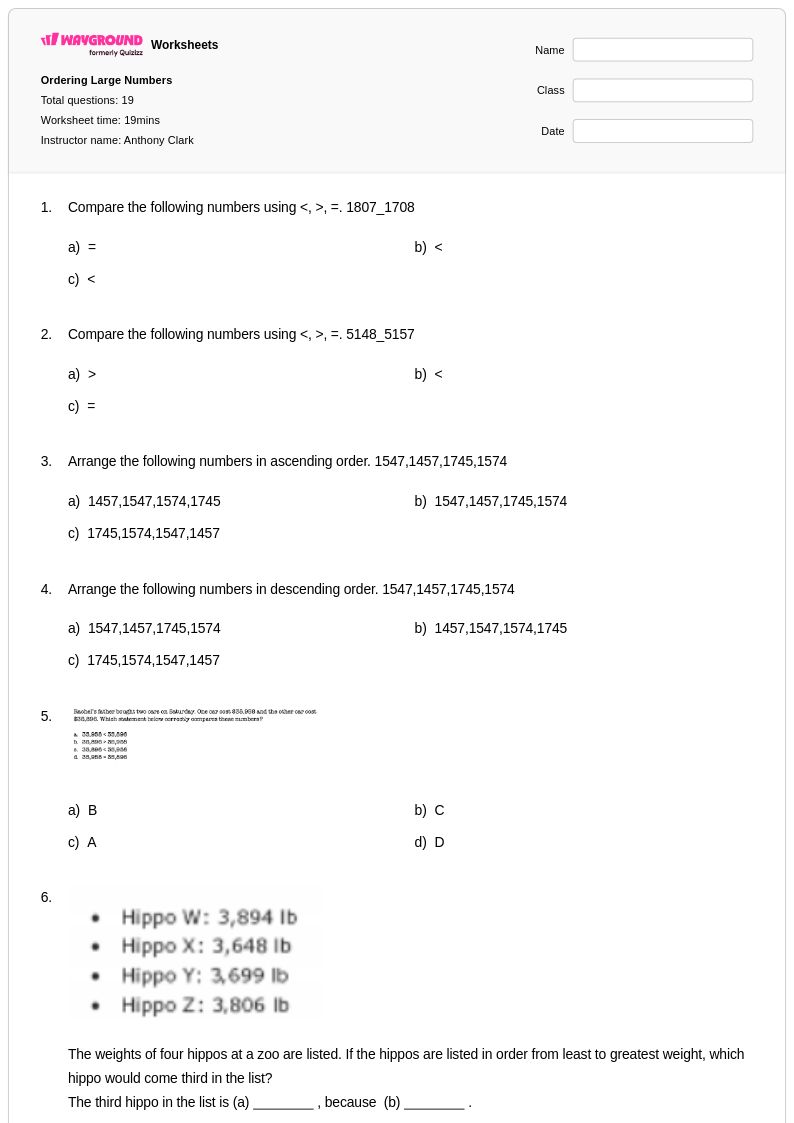
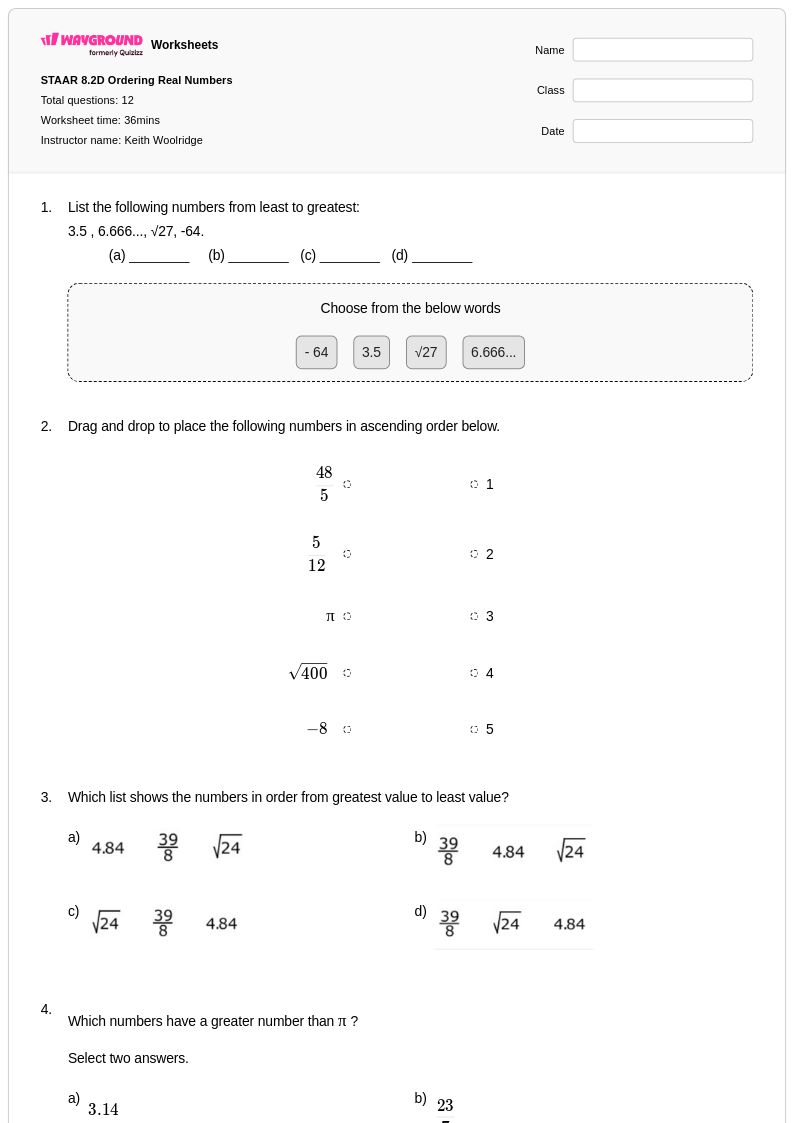
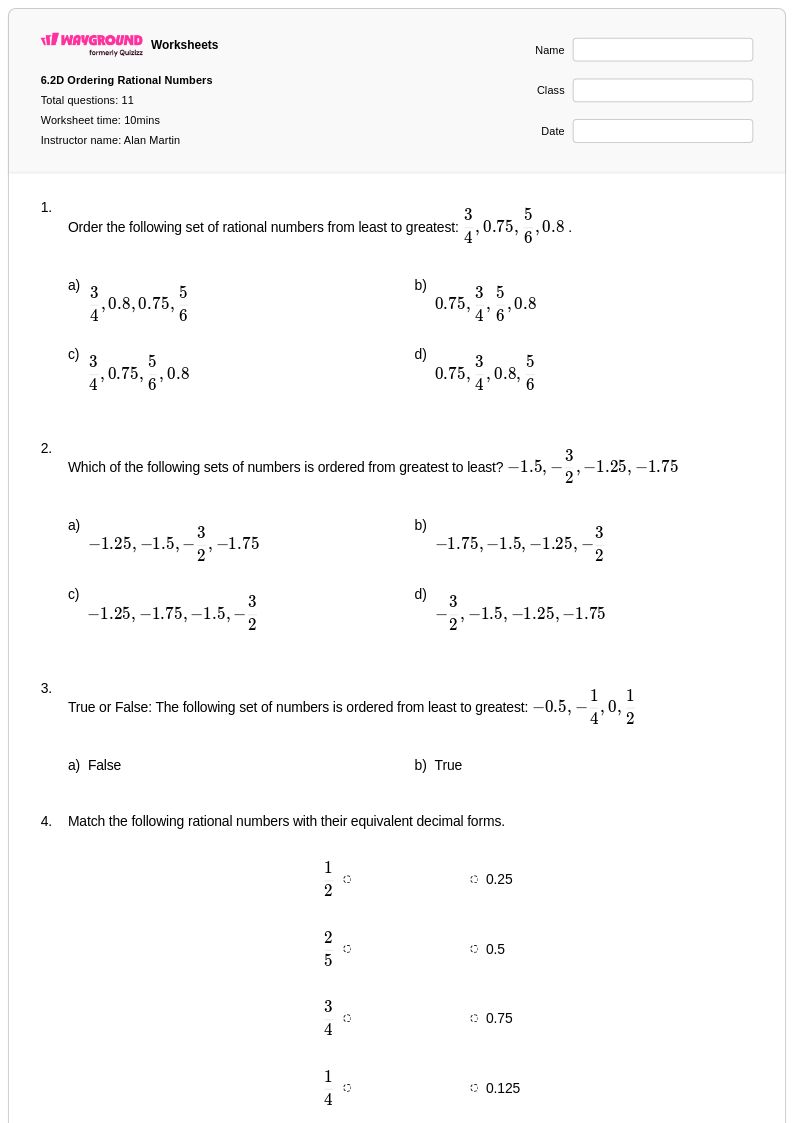
Number ordering worksheets available through Wayground (formerly Quizizz) provide essential practice for students developing fundamental mathematical reasoning skills. These comprehensive printables focus on sequencing numbers in ascending and descending order, comparing numerical values, and understanding positional relationships within number systems. Students work through carefully structured practice problems that reinforce their ability to identify patterns, recognize number magnitude, and apply logical thinking to arrange quantities systematically. Each worksheet includes detailed answer keys and is available as free pdf downloads, making it easy for educators to implement consistent number sense instruction that builds confidence in mathematical foundations.
Wayground (formerly Quizizz) empowers teachers with millions of educator-created number ordering resources that streamline lesson planning and differentiated instruction. The platform's robust search and filtering capabilities allow instructors to quickly locate worksheets aligned with specific learning standards and customize content to meet diverse student needs. Teachers can seamlessly transition between printable pdf formats for traditional classroom use and digital versions for technology-integrated learning environments. These flexible tools support targeted remediation for struggling learners, enrichment opportunities for advanced students, and systematic skill practice that reinforces number sense concepts across varied mathematical contexts, ensuring every student develops strong foundational understanding of numerical relationships and ordering principles.
FAQs
How do I teach number ordering to my students?
Start with concrete manipulatives like counting blocks or a physical number line to help students visualize quantity. Once they grasp the concept, transition to pictorial representations and then to abstract numbers. Consistently use vocabulary like "before," "after," "between," "least," and "greatest" in daily routines, such as lining up or discussing the date.
What exercises help students practice ordering numbers?
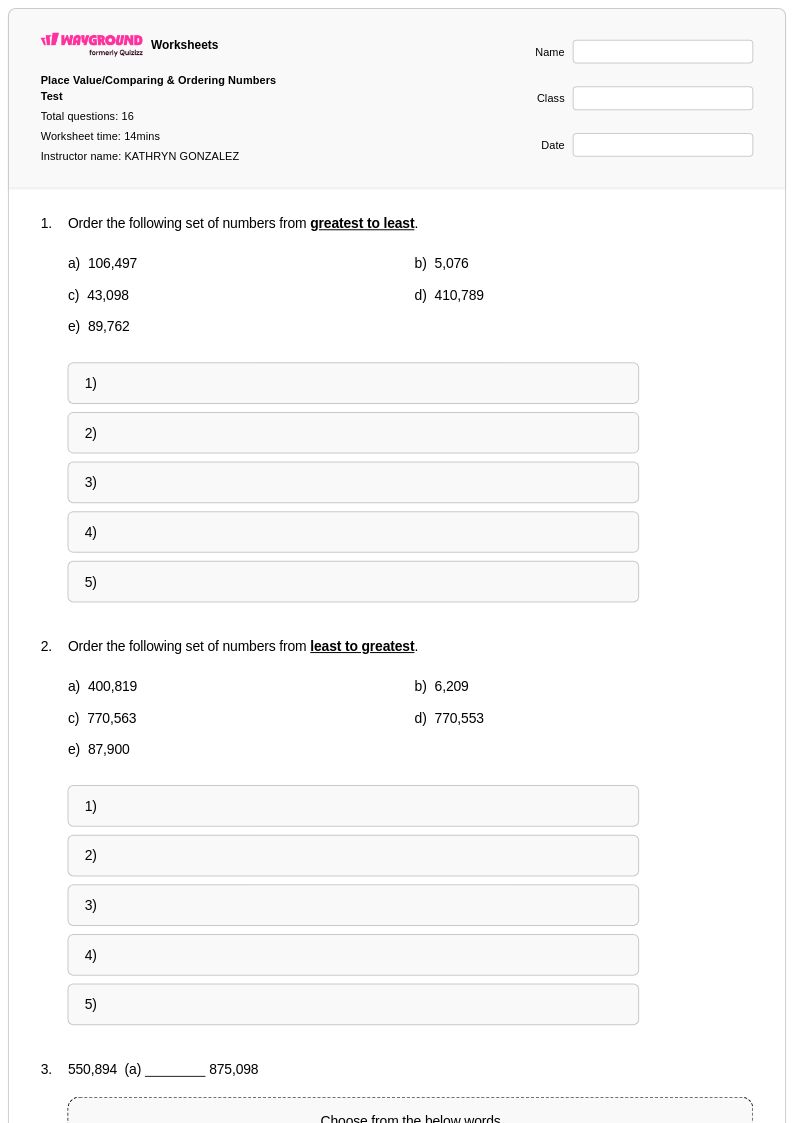
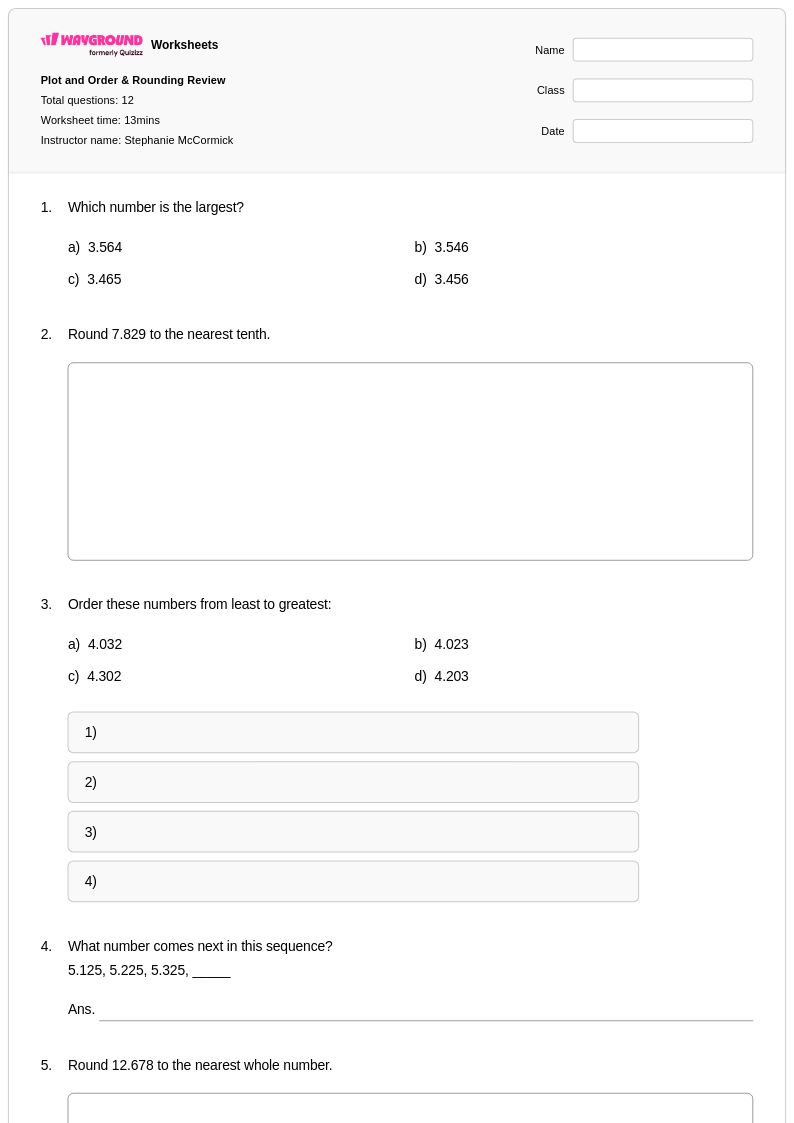
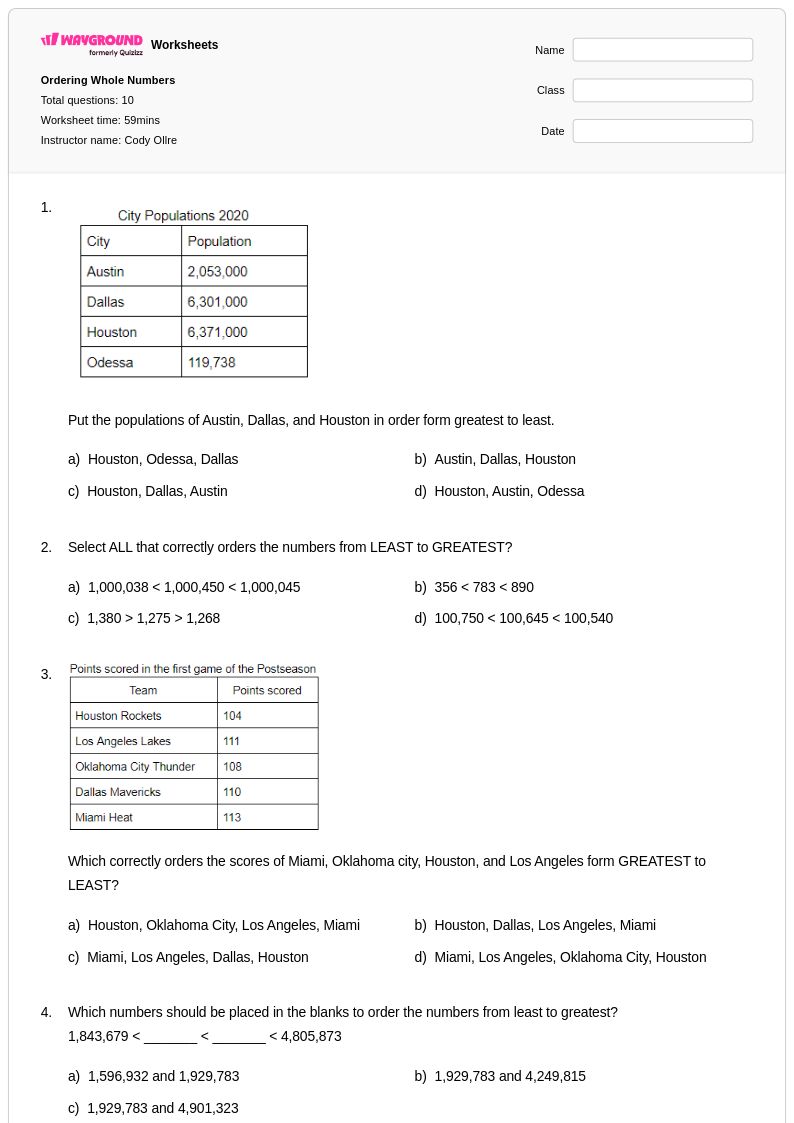
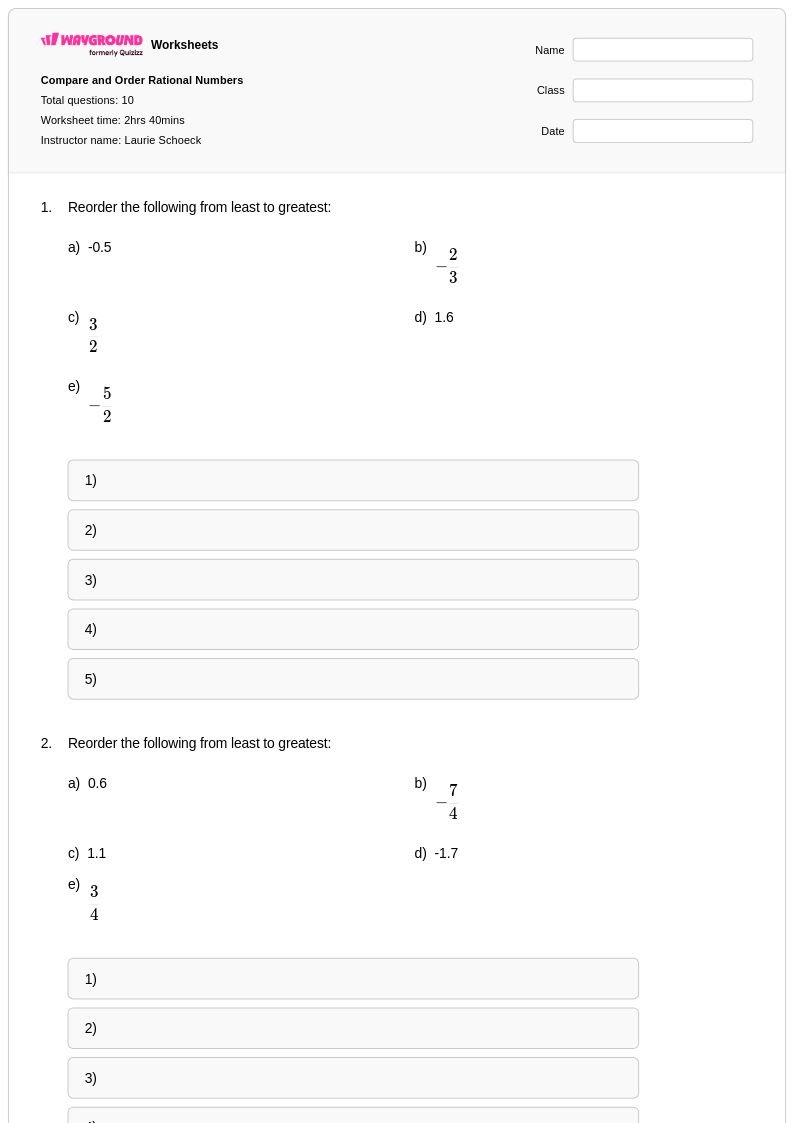
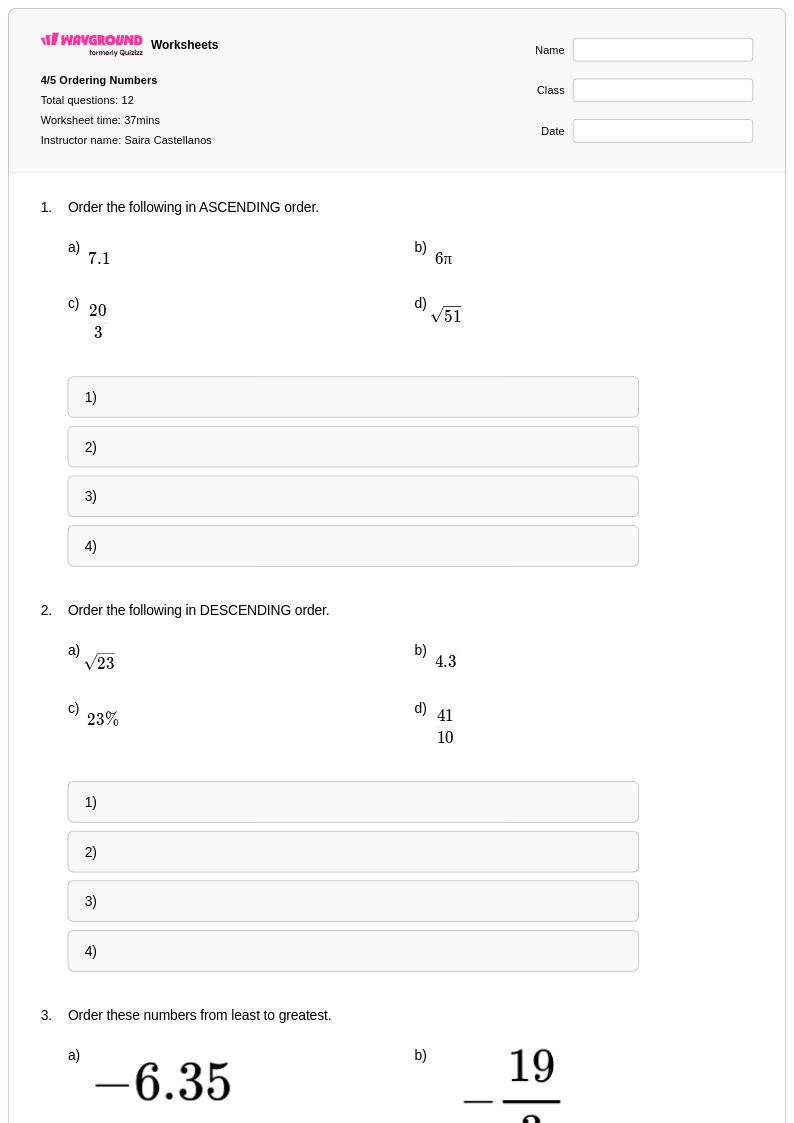
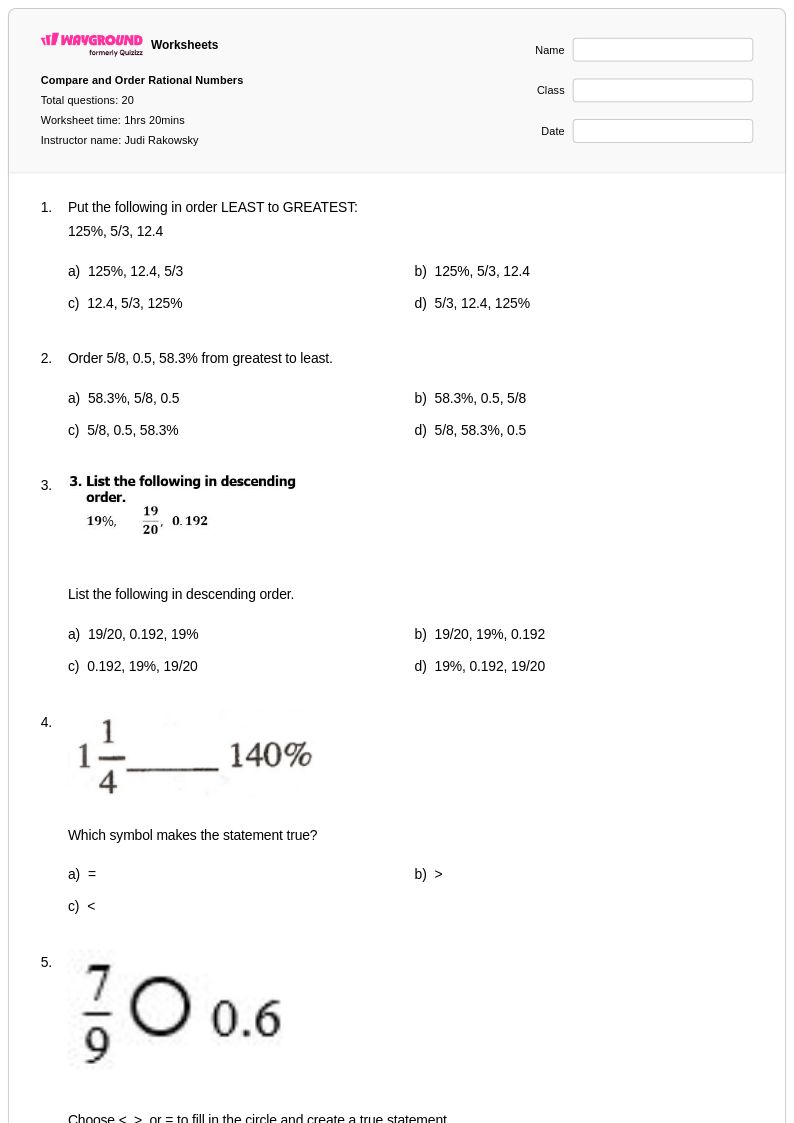
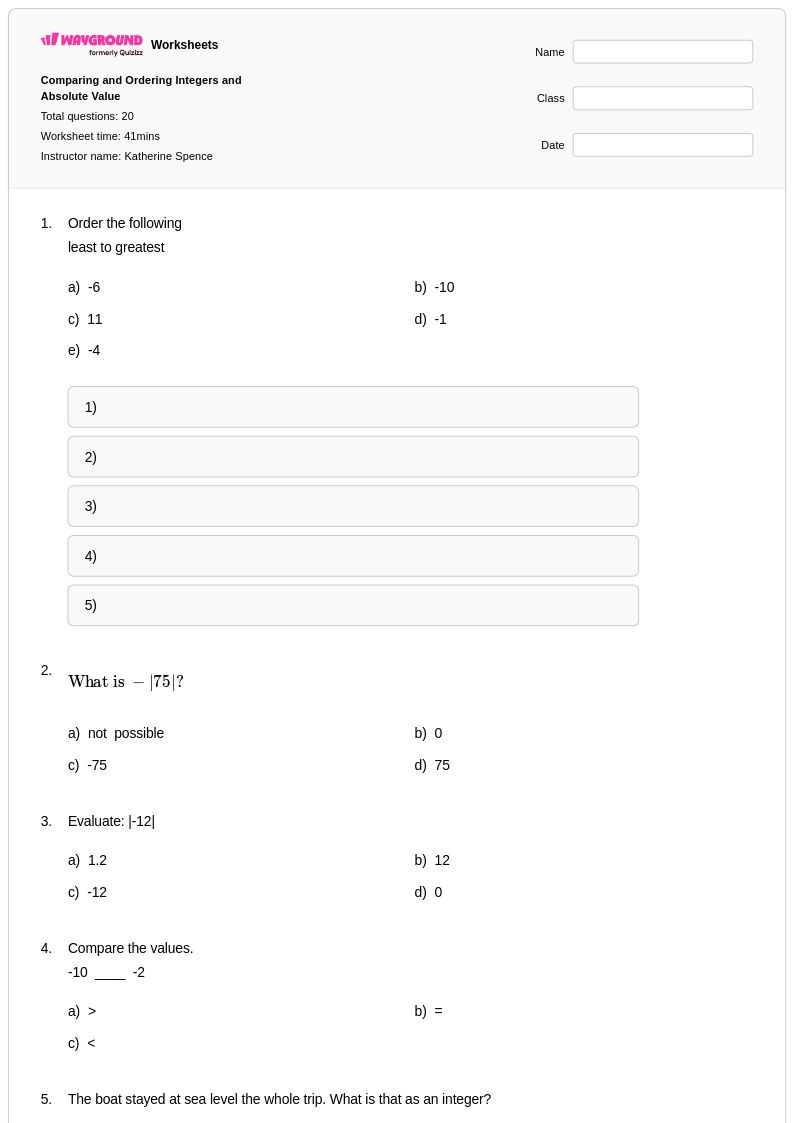
Effective practice includes a variety of tasks. Ask students to fill in missing numbers on a number line, arrange a mixed set of number cards from least to greatest, and identify the smallest or largest number in a group. Worksheets that mix ascending and descending order tasks help build flexible thinking.
What are common mistakes students make when ordering numbers?
A frequent error is reversing the order, especially when asked for descending (greatest to least) sequence. Students may also struggle with place value when comparing multi-digit numbers, for instance, thinking 112 is greater than 121 because they are only comparing the last digits. Transposing digits, like writing 12 as 21, is also common in early stages.
How can I use this number ordering worksheet in my class?
This resource is flexible for any classroom setup. You can assign it as a digital activity on the Wayground platform or download the printable PDF for offline practice. Each worksheet includes a full answer key, which simplifies grading and allows for student self-correction. For paper assignments, you can use the Wayground for Teachers app to quickly scan and grade student work.
How does learning to order numbers fit into the math curriculum?
Number ordering is a foundational skill in the Common Core State Standards for early elementary math. It builds directly on number recognition and counting. Mastering number order is a prerequisite for understanding place value, comparing numbers, and later performing operations like addition and subtraction on a number line.
How can I differentiate this topic for diverse learners?
For students needing support, use Wayground's digital accommodation features like Read Aloud for word problems or Reduced Answer Choices to limit distractions. For printable versions, you can adjust the font size and spacing to improve readability. For an extra challenge, ask advanced students to order larger sets of numbers or work with non-consecutive integers.