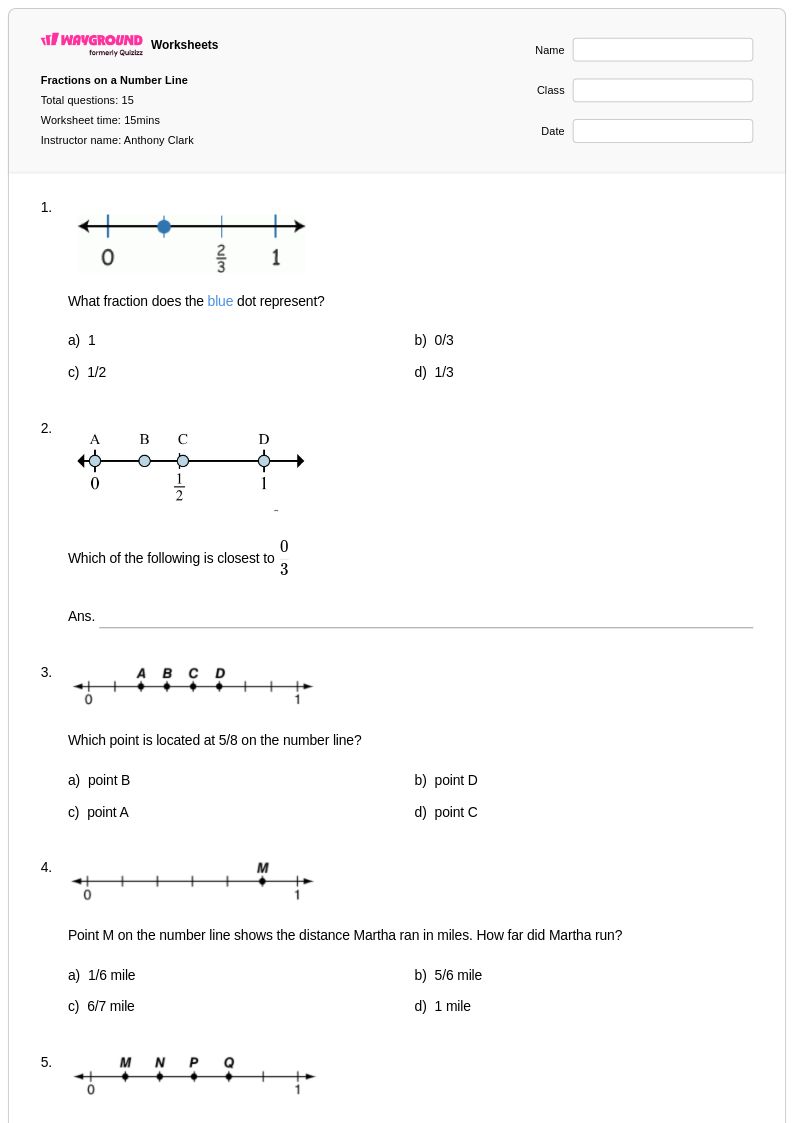
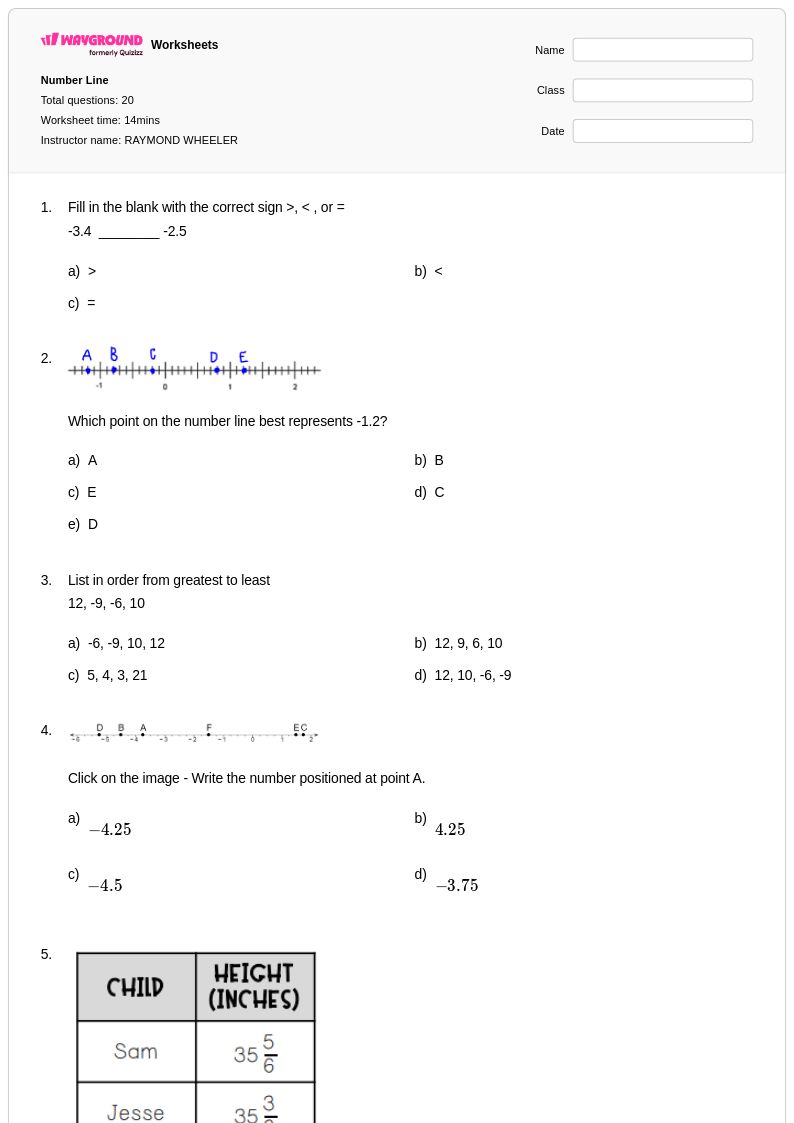
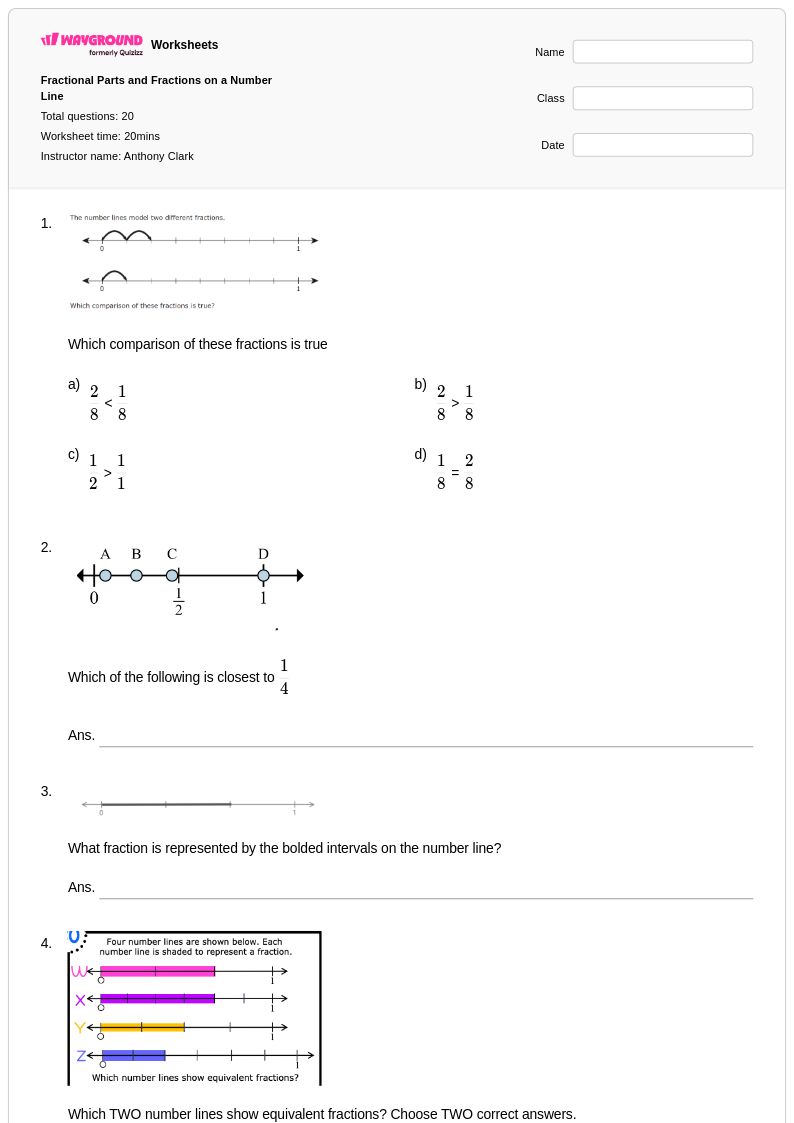
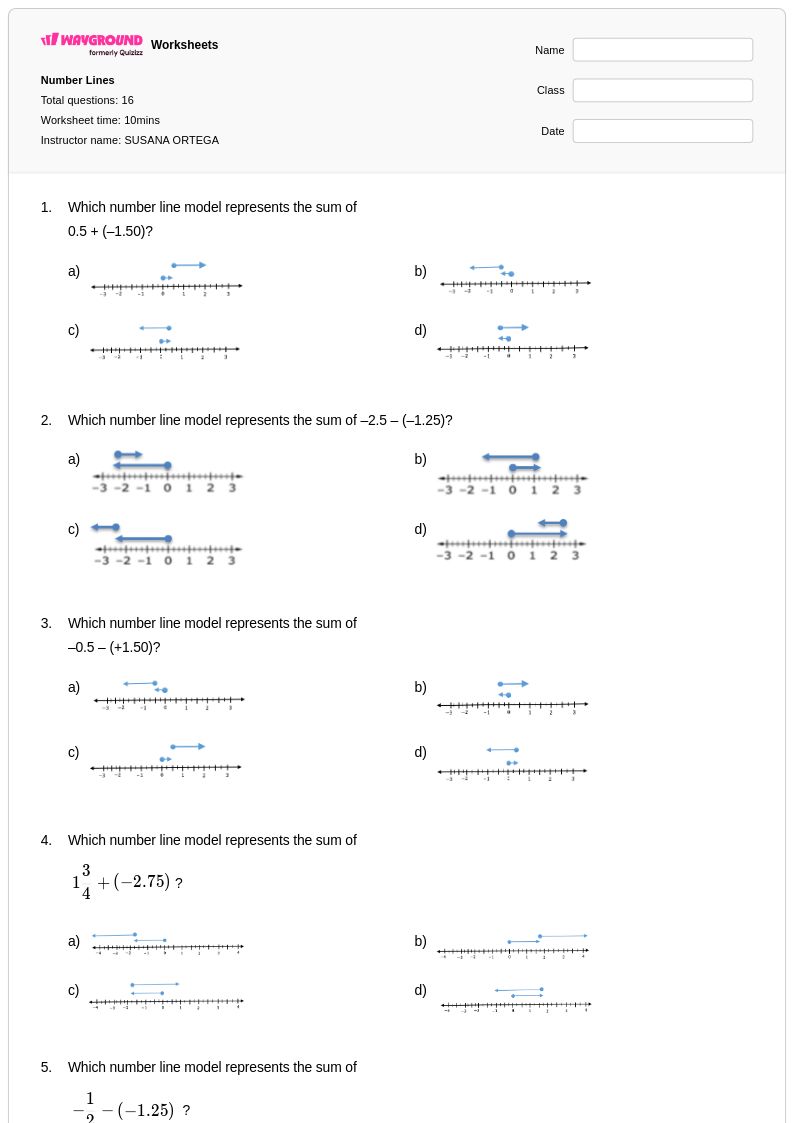
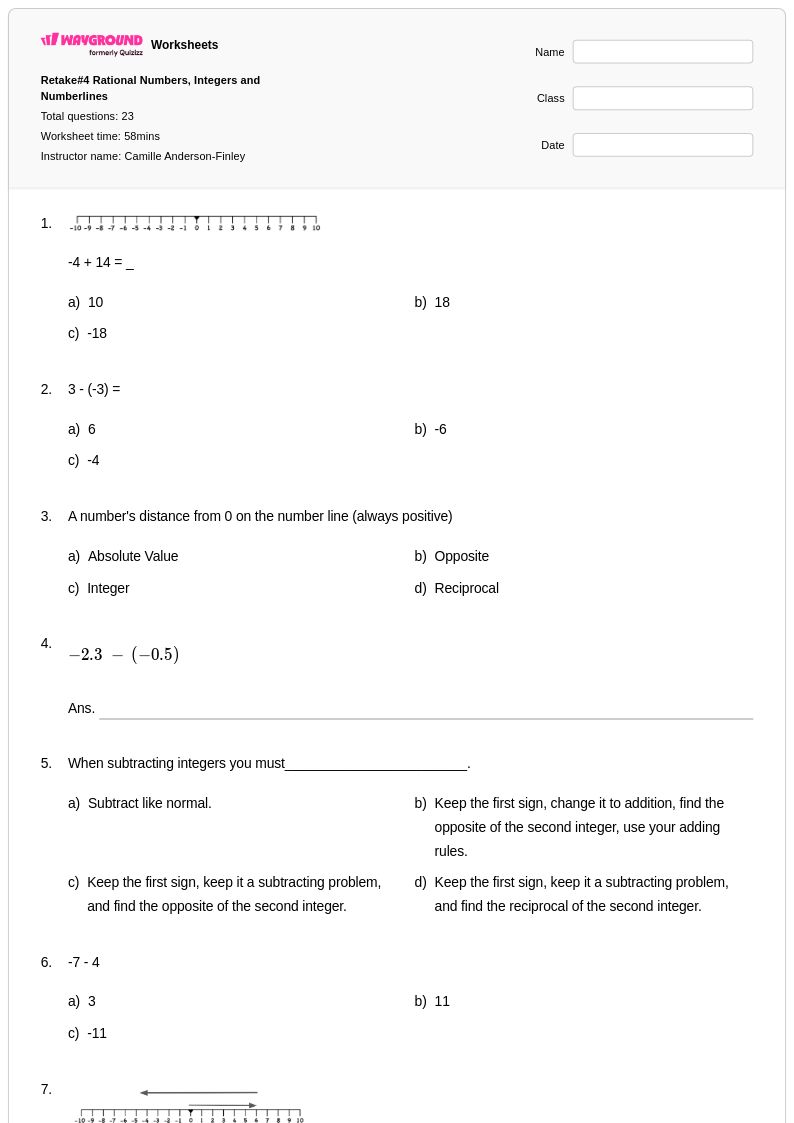
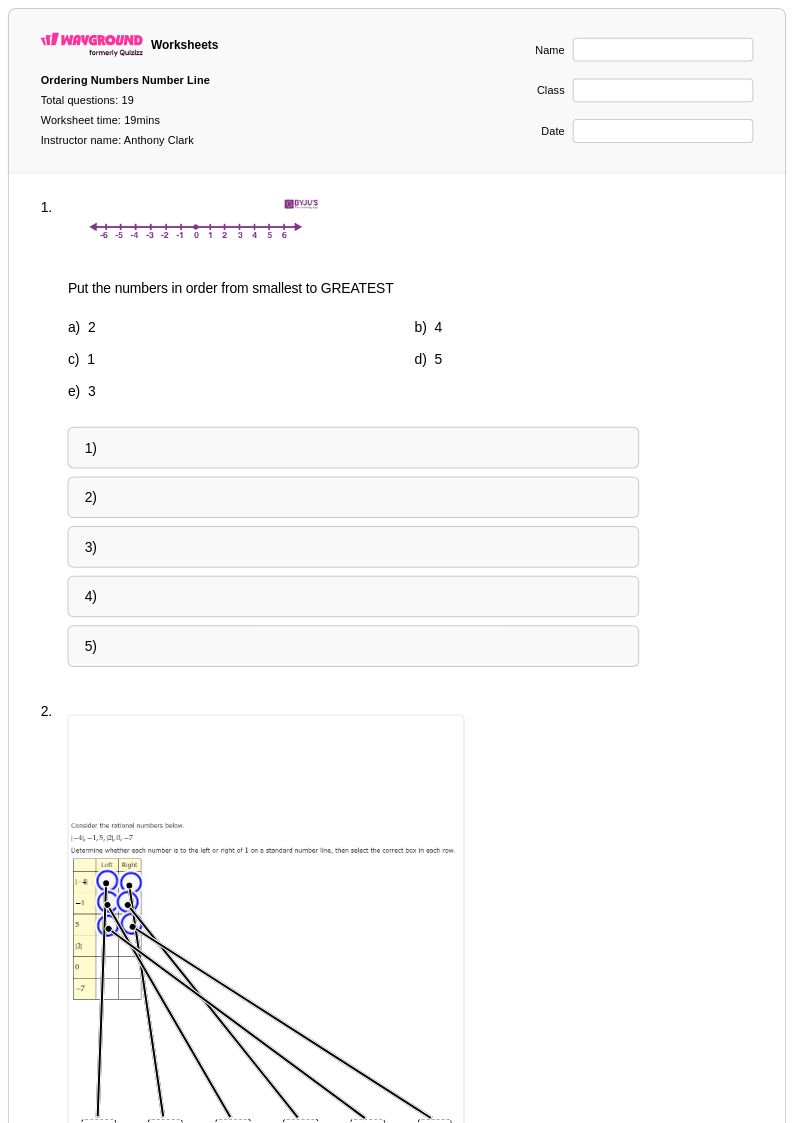
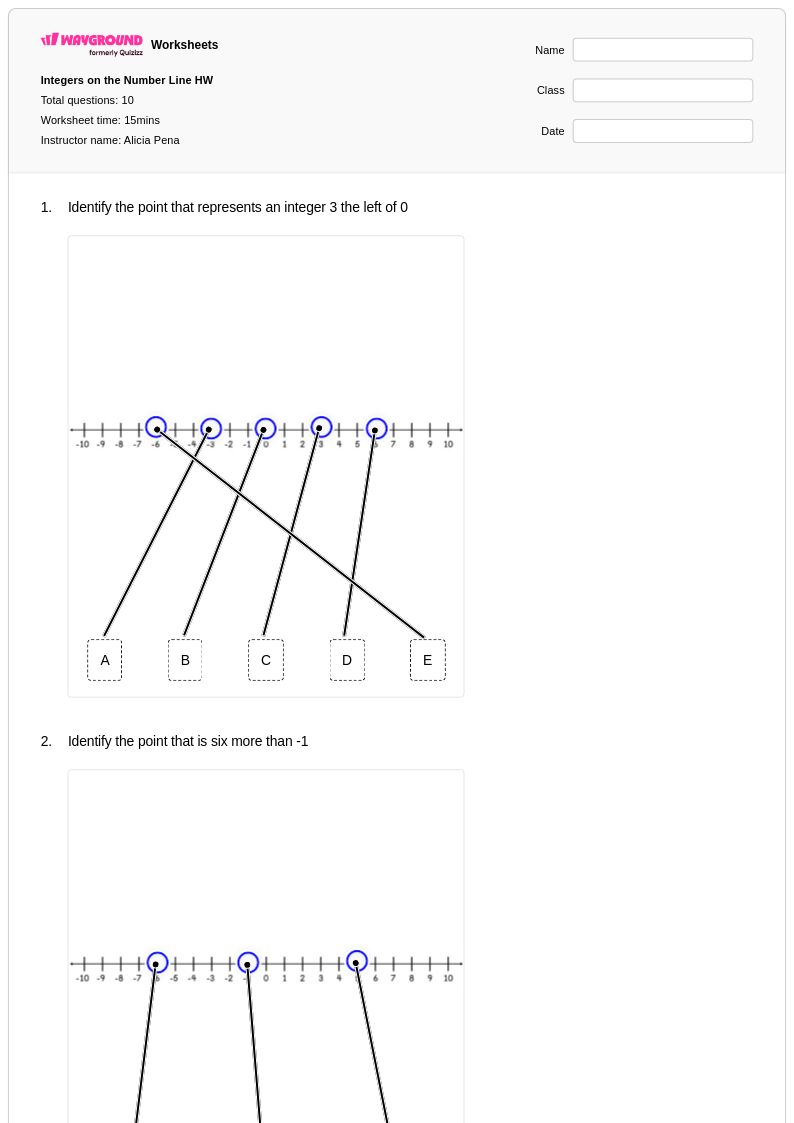
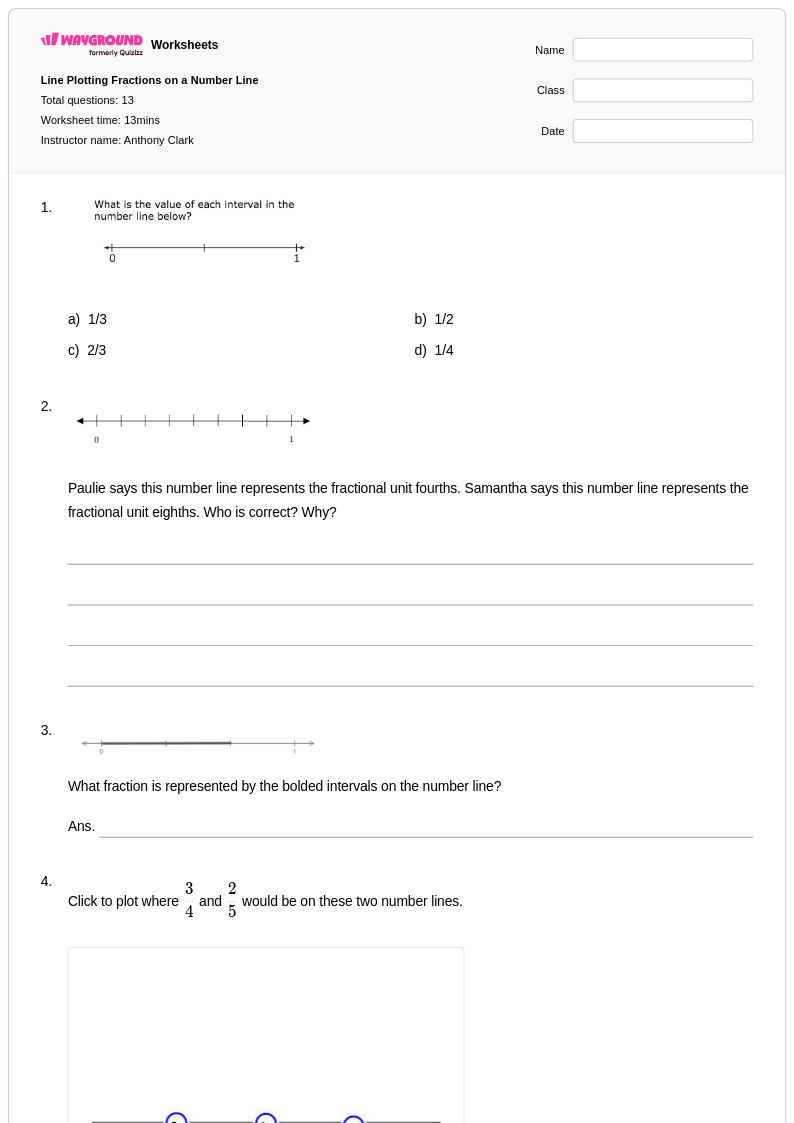
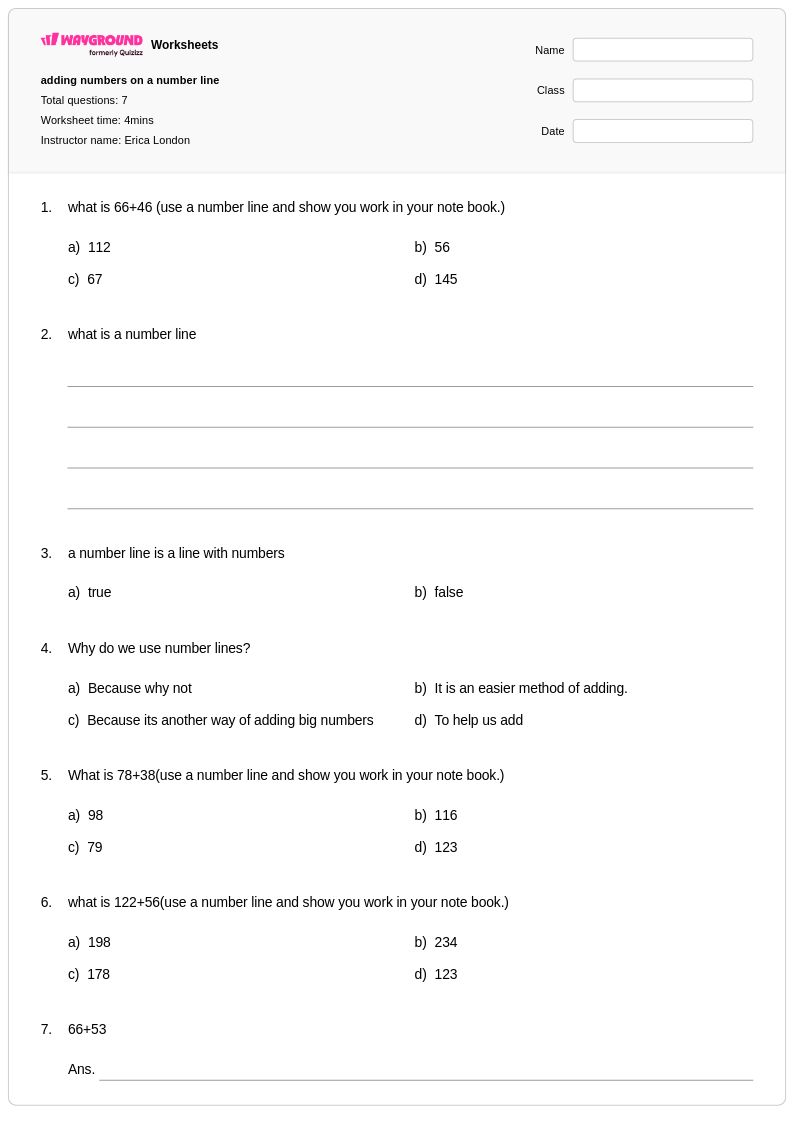
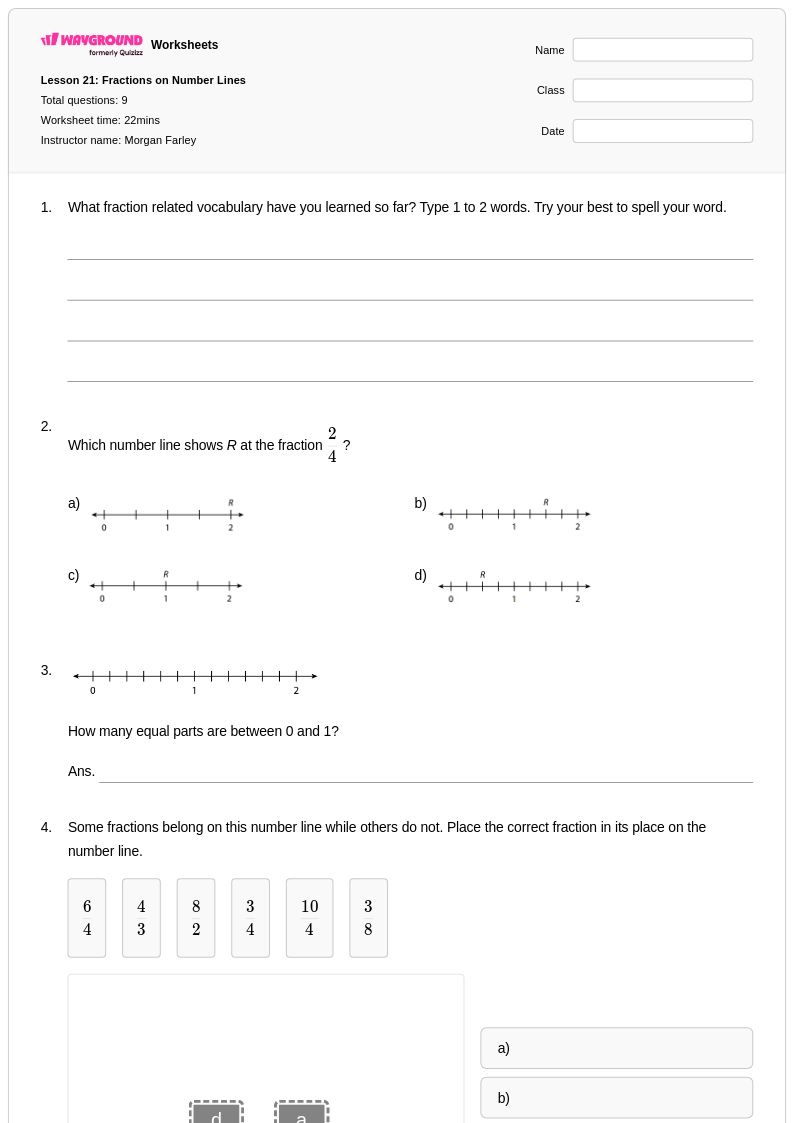
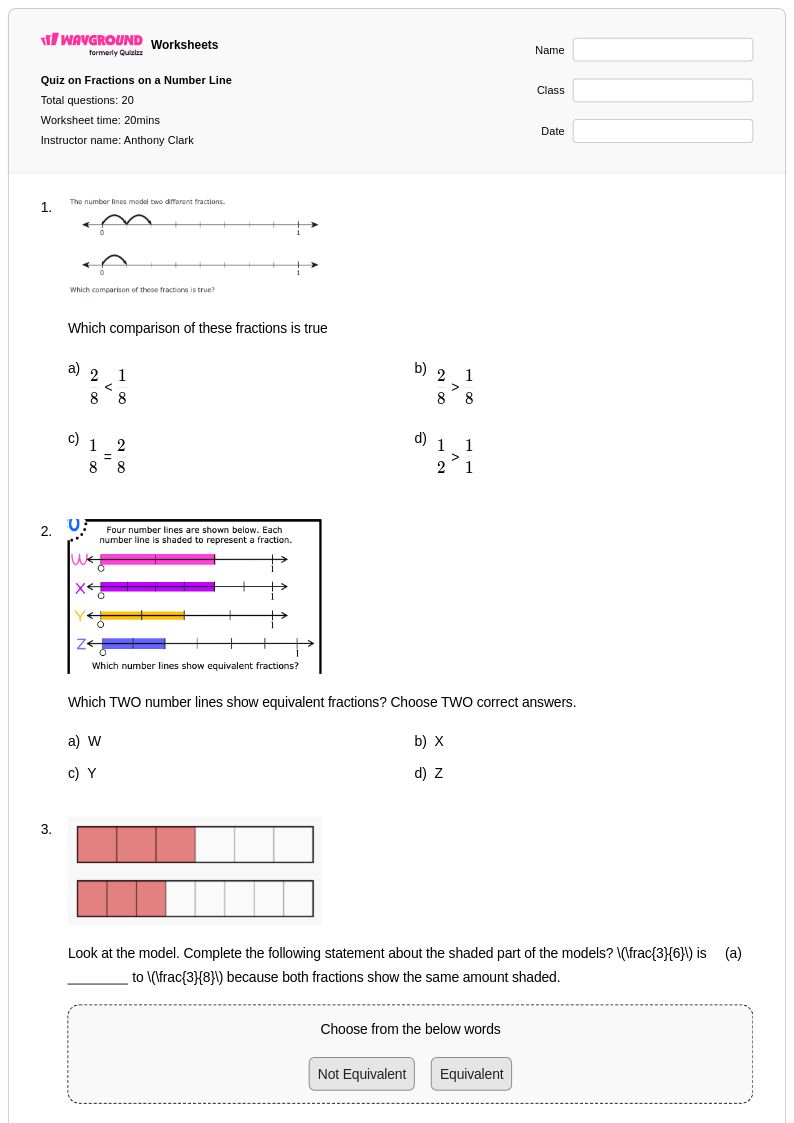
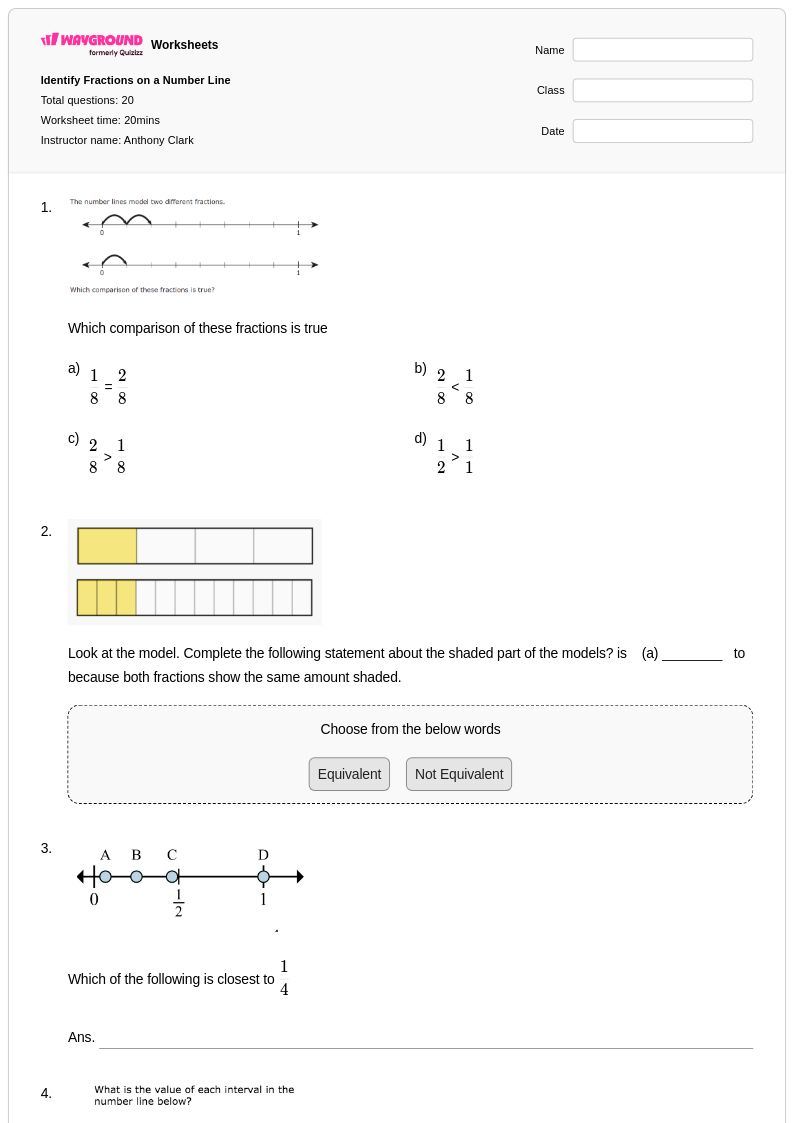
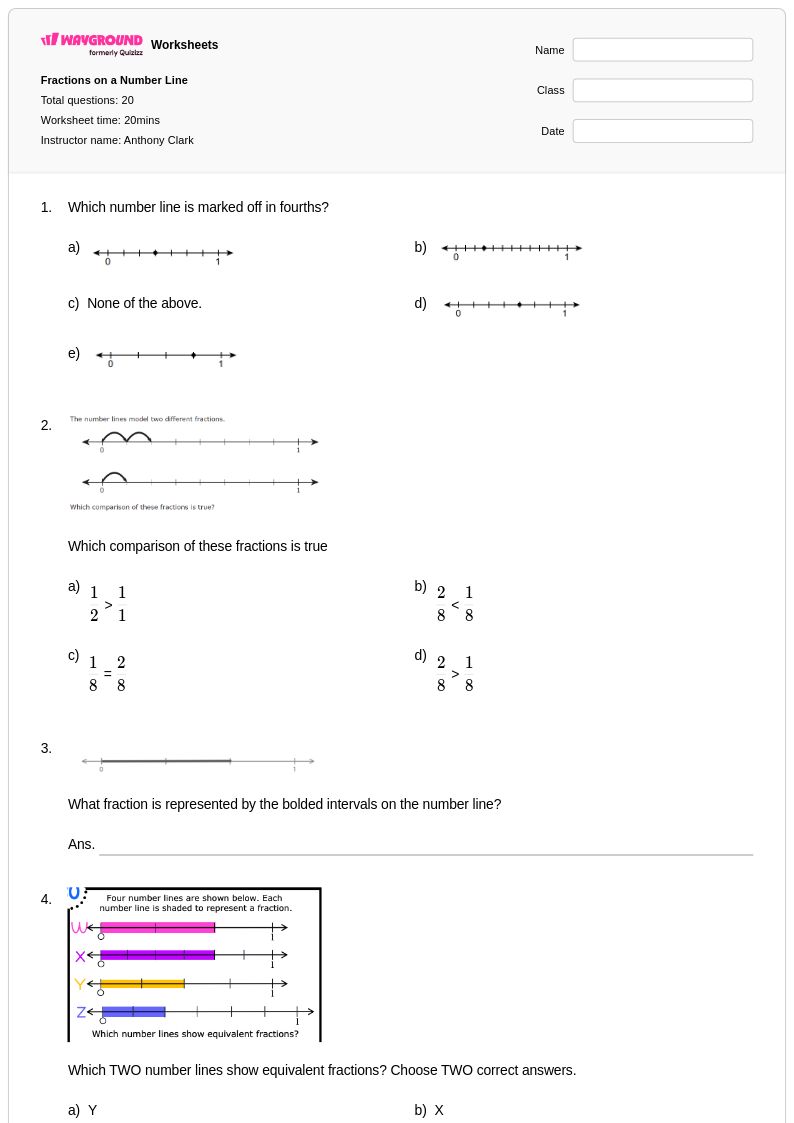
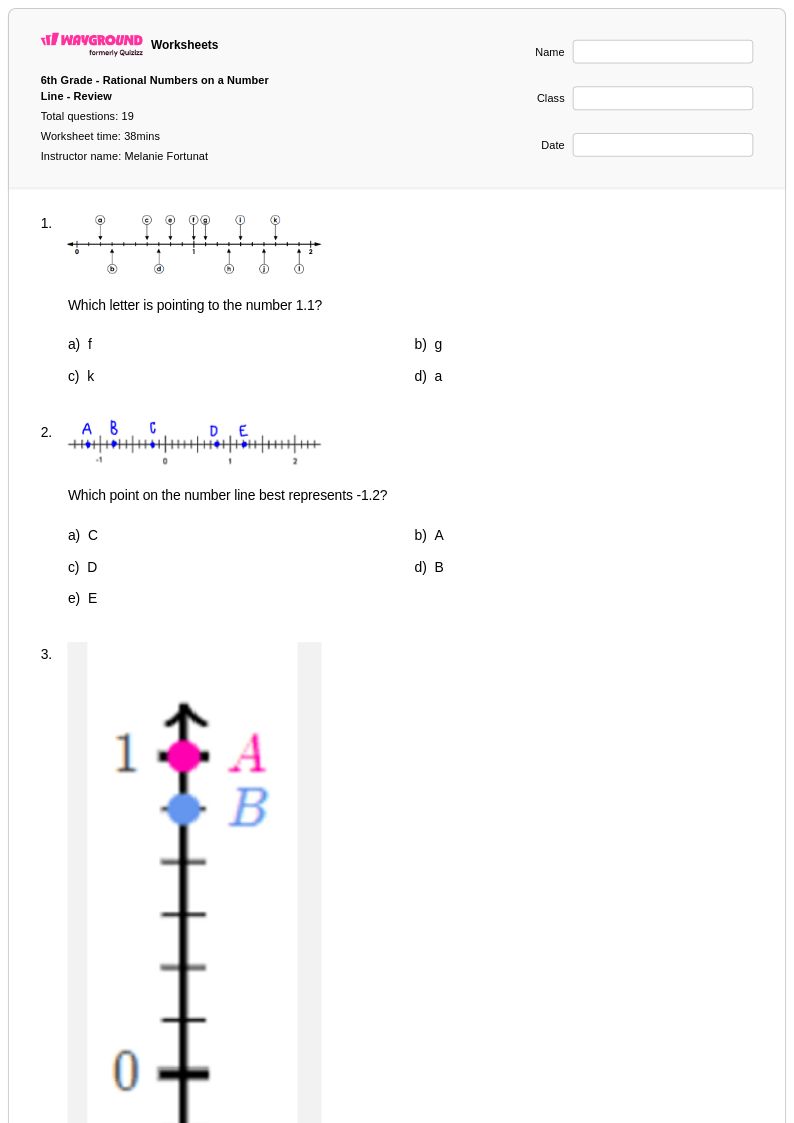
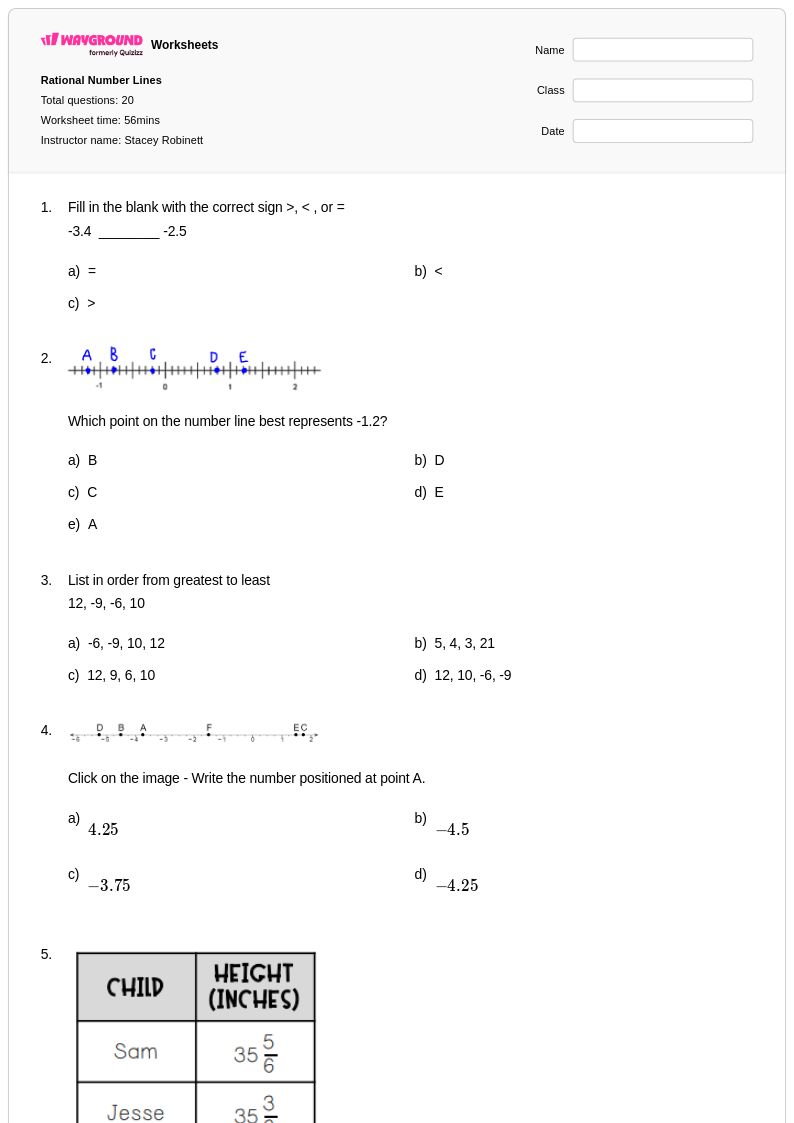
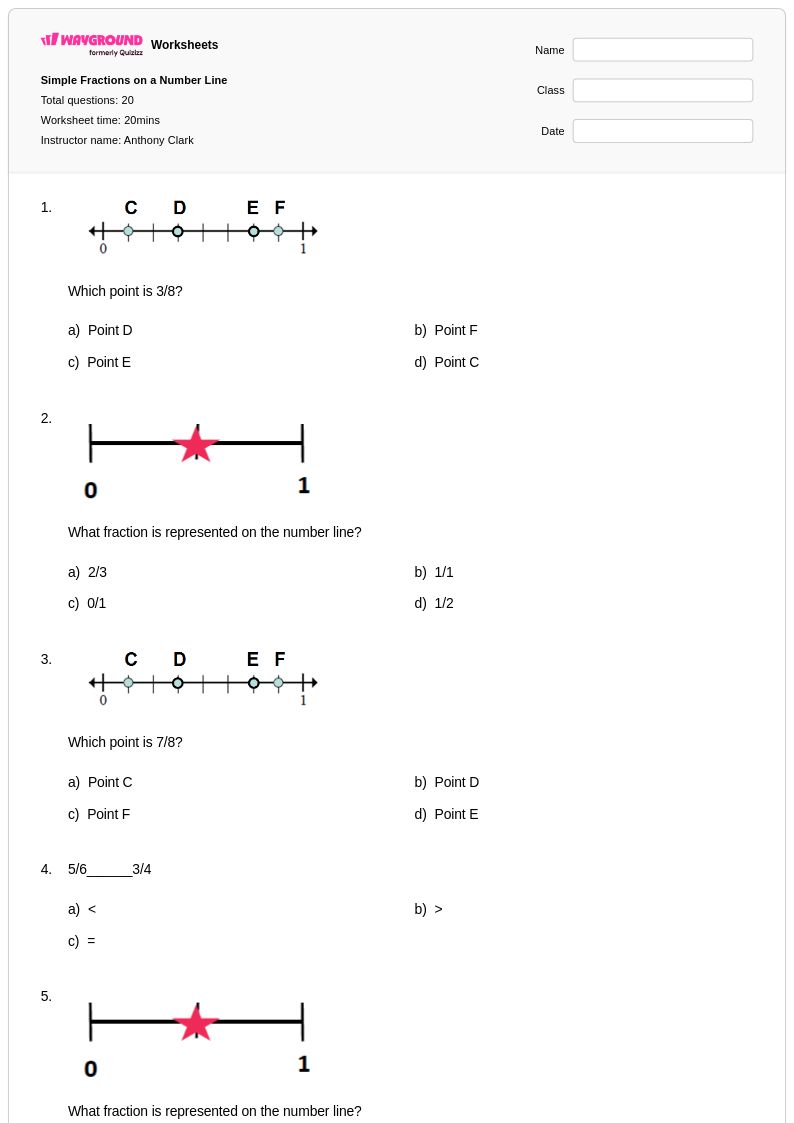
Free Printable Finding Missing Numbers on a Number Line worksheets
Wayground's free printable worksheets help students master finding missing numbers on a number line through engaging practice problems and comprehensive answer keys in convenient PDF format.
Explore printable Finding Missing Numbers on a Number Line worksheets
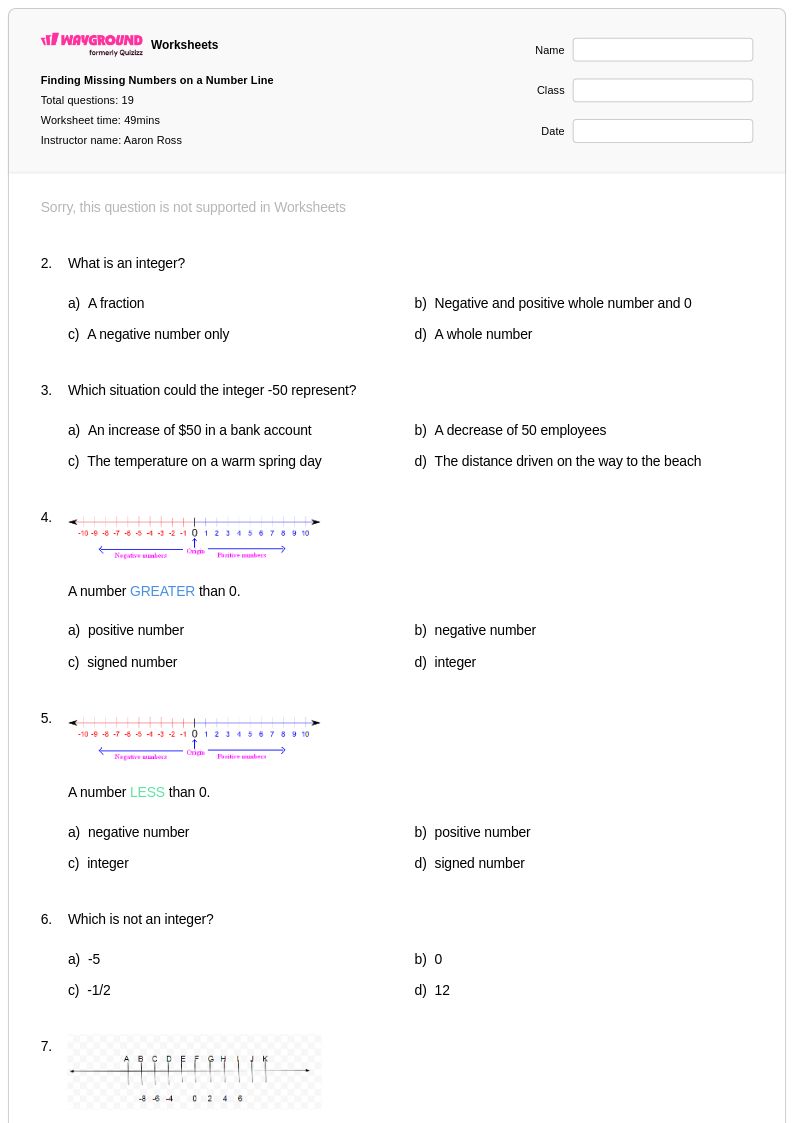
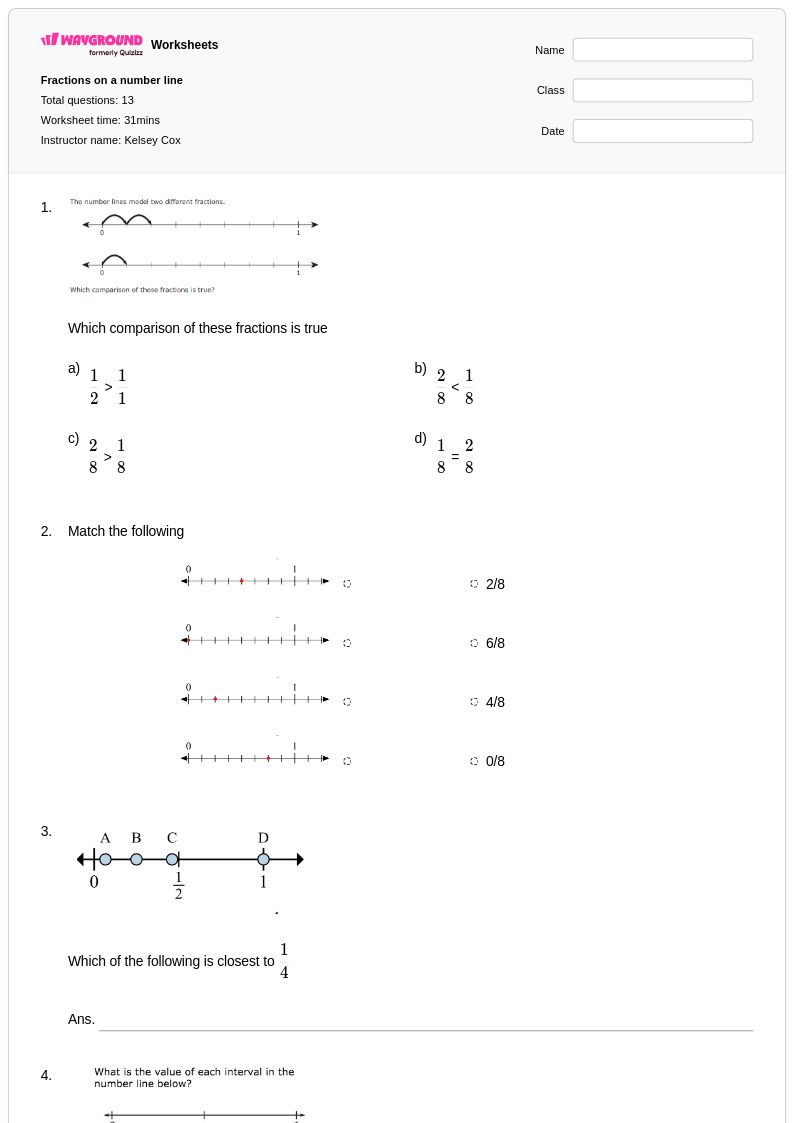
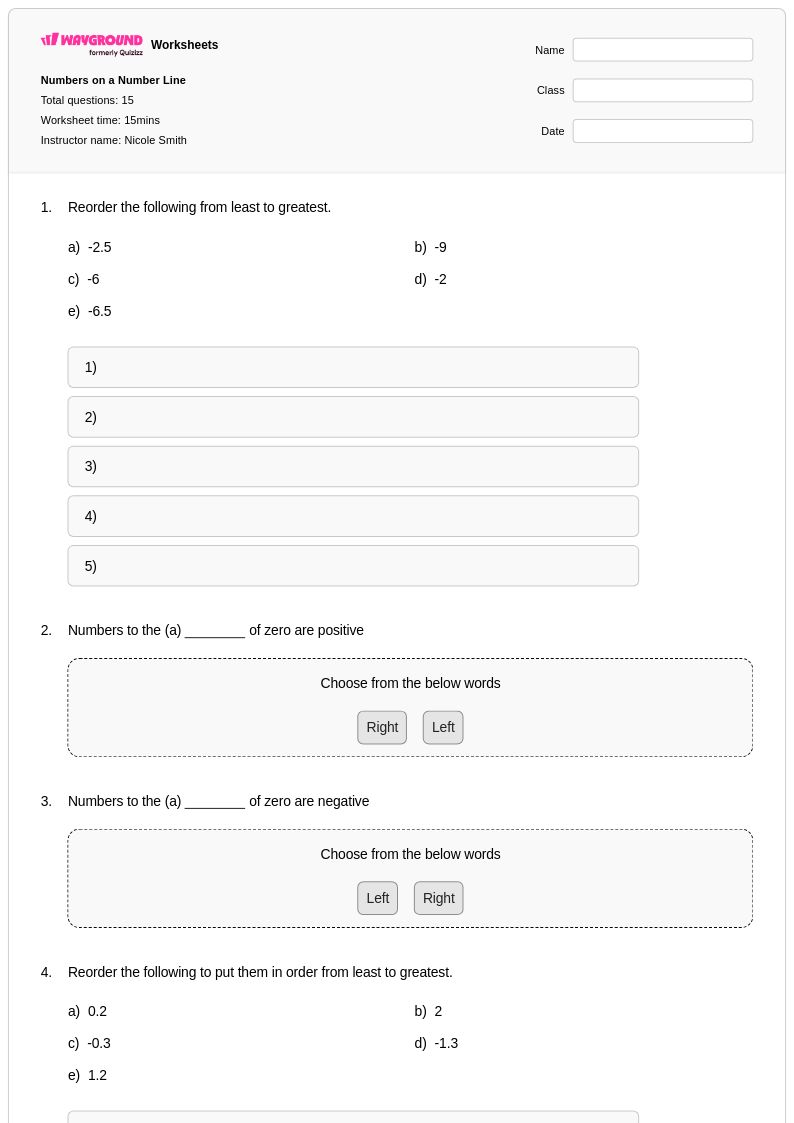
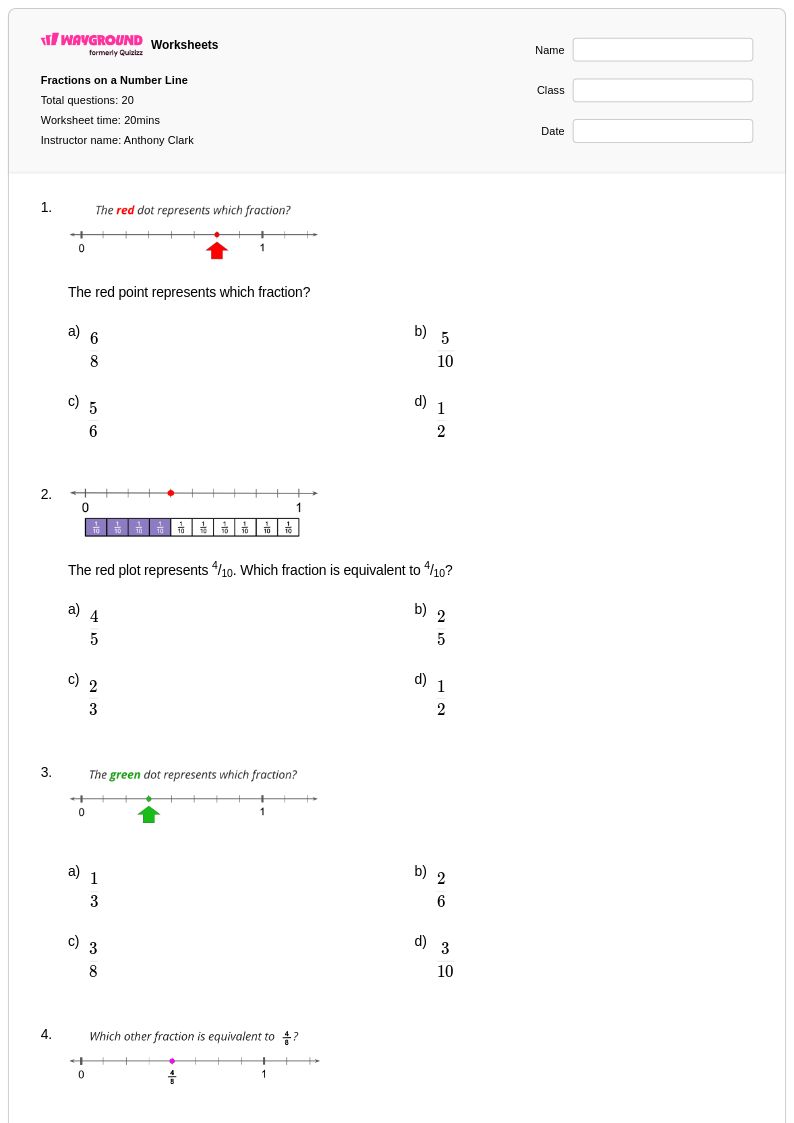
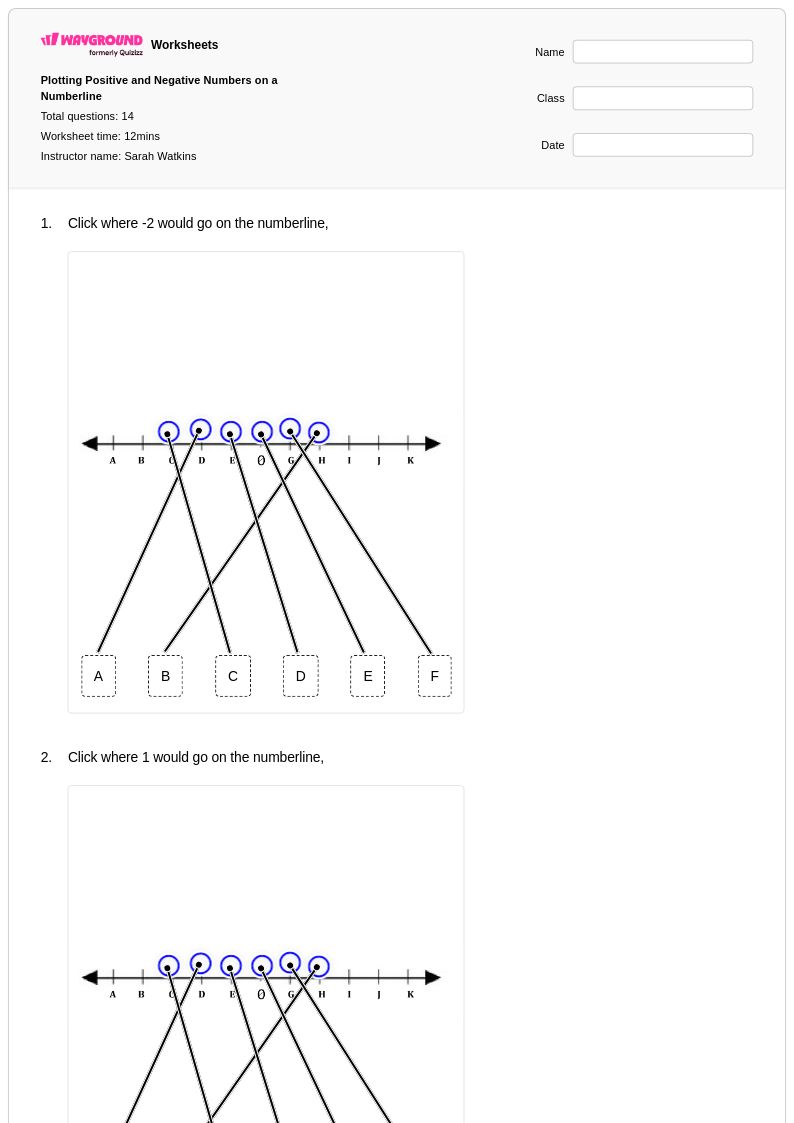
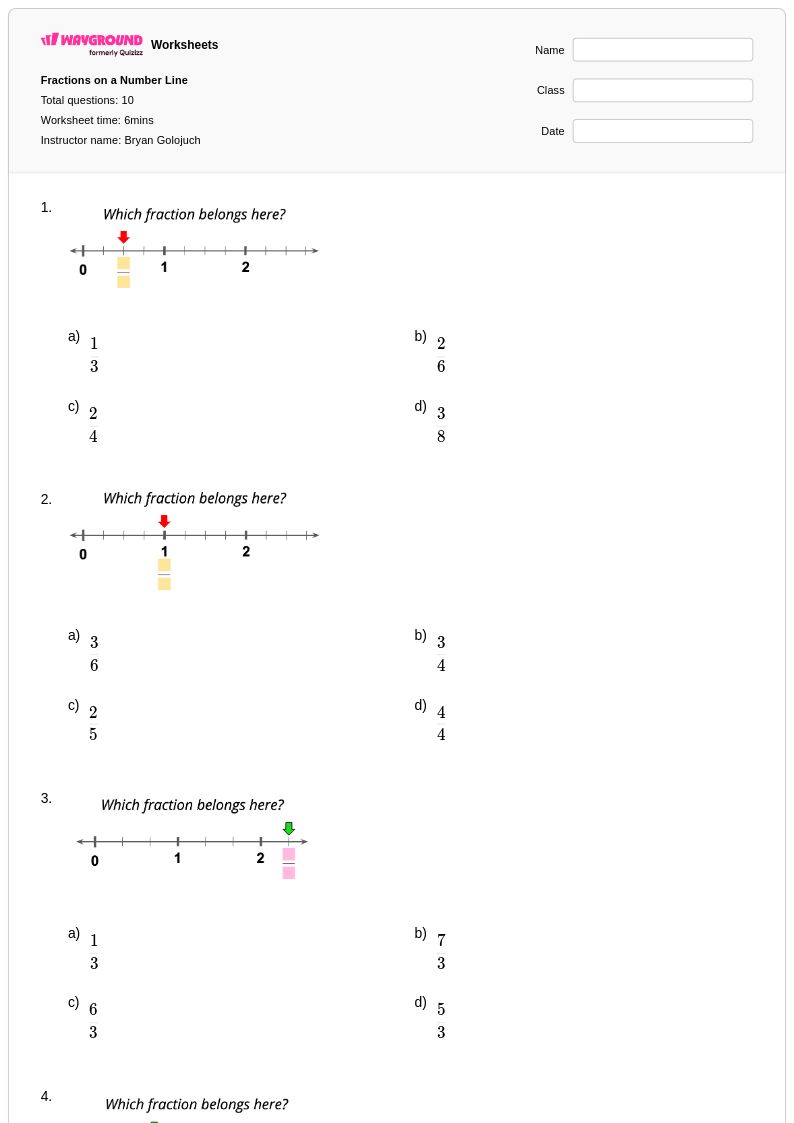
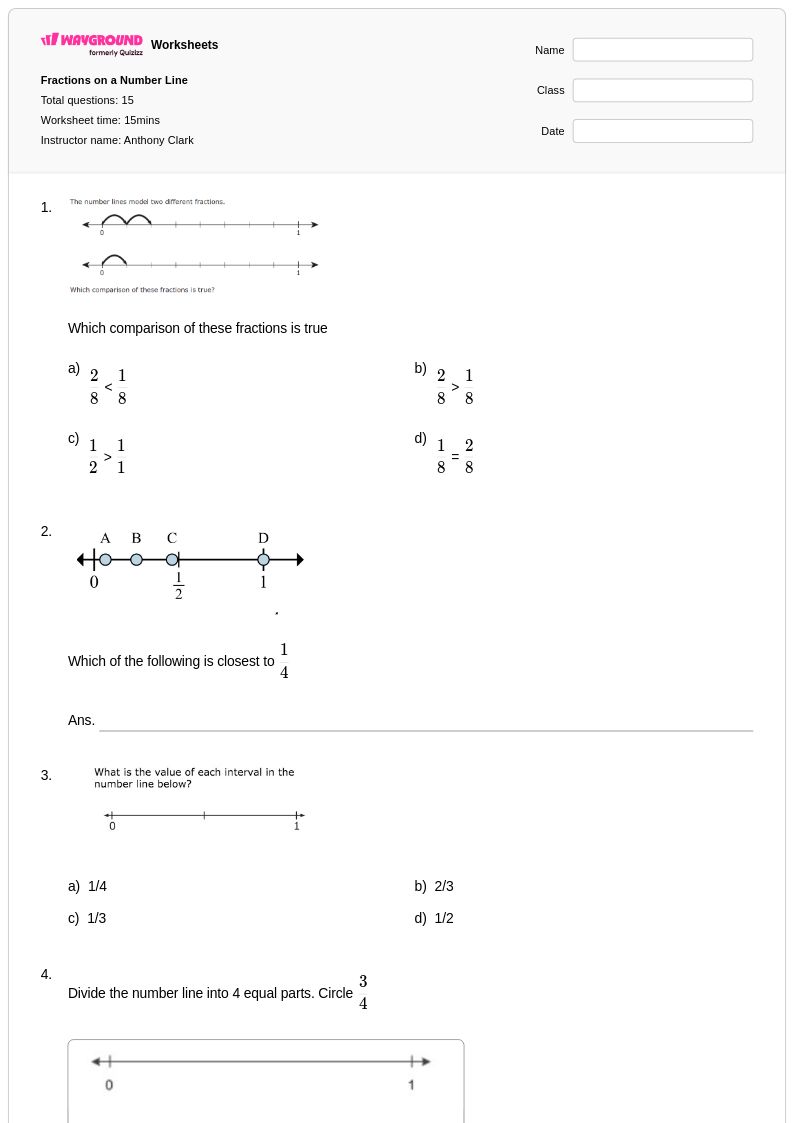
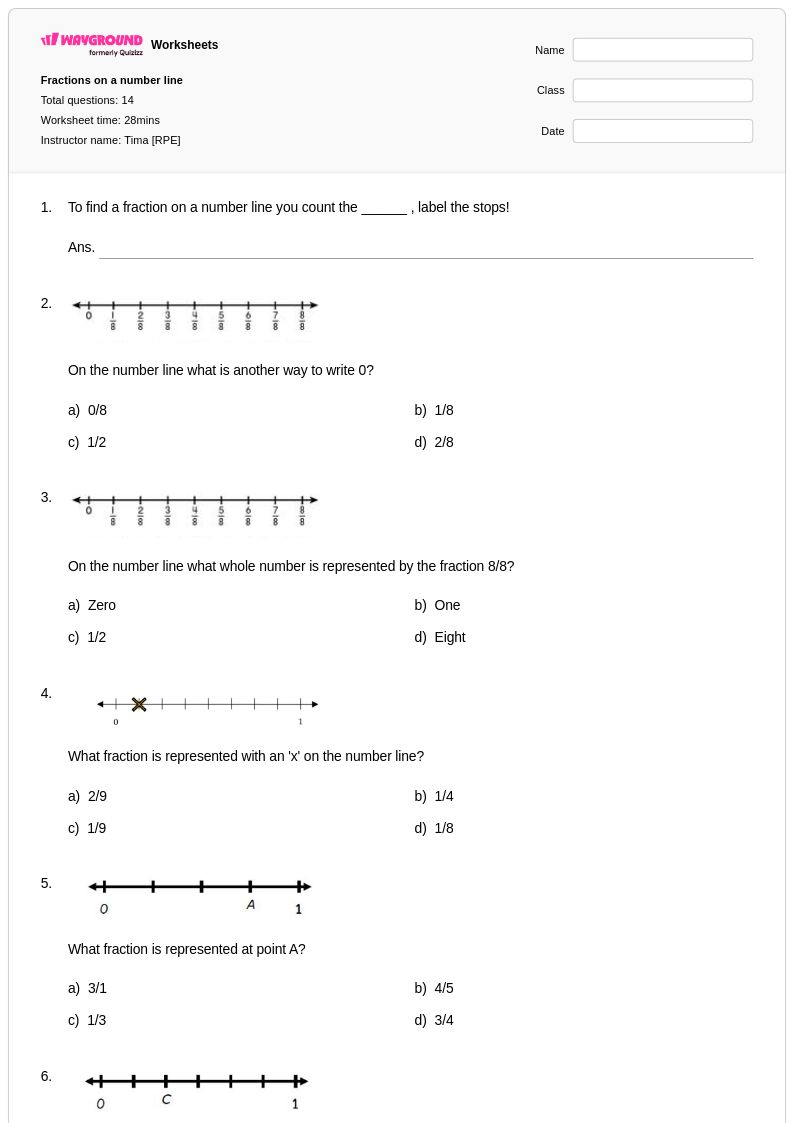
Finding missing numbers on a number line worksheets available through Wayground (formerly Quizizz) provide students with essential practice in developing spatial number sense and understanding numerical relationships. These comprehensive worksheets strengthen critical mathematical skills including skip counting, recognizing number patterns, understanding intervals between numbers, and visualizing numerical sequences in a linear format. Students work through carefully designed practice problems that challenge them to identify missing values by analyzing the given numbers and determining the consistent intervals or patterns present on each number line. The collection includes free printable resources with corresponding answer keys, making it easy for educators to implement immediate assessment and provide targeted feedback on student understanding.
Wayground (formerly Quizizz) empowers teachers with access to millions of educator-created worksheet resources specifically designed for number line activities, featuring robust search and filtering capabilities that allow instructors to quickly locate materials appropriate for their specific classroom needs. The platform's comprehensive collection supports differentiated instruction through customizable worksheets that can be modified to accommodate varying skill levels, from basic sequential counting to more complex pattern recognition challenges. Teachers benefit from flexible formatting options, including both digital interactive versions and downloadable PDF printables, enabling seamless integration into lesson planning whether for whole-group instruction, small group remediation, or individual enrichment activities. These tools facilitate systematic skill practice while providing educators with the resources necessary to address diverse learning needs and support students' progression in fundamental number sense concepts.
FAQs
How do I teach students to find missing numbers on a number line?
Start by making sure students can identify the interval — the consistent gap between each marked number. Have them find two consecutive known values, subtract to get the interval, then count forward or backward to fill the blanks. A common anchor move: cover the missing number with your finger, read the numbers on either side aloud, and ask, 'What comes between these?' Once students can do that reliably with consecutive numbers, introduce skip-counting sequences (by 2s, 5s, 10s) so they practice applying the same interval logic at different scales.
What exercises help students practice finding missing numbers on a number line?
The most effective practice moves from structured to open-ended: begin with number lines that have only one gap, then increase to two or three gaps, then present lines where students must also determine the interval themselves. Mixing formats helps too — some problems where the missing number is in the middle, some at the endpoints. These worksheets include problems across that range, so you can assign earlier sections for initial practice and later sections for independent challenge.
What mistakes do students commonly make when finding missing numbers on a number line?
The most frequent error is miscounting the spaces rather than the intervals — students count tick marks instead of the gaps between them, which throws off every answer that follows. A second common mistake is assuming the interval is always 1; students who skip this check will fill in consecutive numbers even on a skip-counting line. When you see a pattern of wrong answers that are consistently off by one step, the interval-identification step is almost always where the breakdown happened.
How do I use these number line worksheets in my classroom?
Each worksheet is available as a printable PDF with a complete answer key included, so you can hand it out for independent practice or use it as a quick formative check. If you prefer a paperless route, you can host the same worksheet as a digital quiz on Wayground — students complete it on their devices and you get instant results. For paper submissions, the Wayground for Teachers app lets you scan or capture student work to grade it without manual re-entry.
How does Common Core sequence number line skills across grade levels?
Common Core introduces number lines in the primary grades as a tool for counting and representing whole numbers, then builds toward using them to place fractions and compare values in grades 2 and 3. Finding missing numbers sits right at the foundation of that progression: it builds the spatial number sense students need before they can reliably place a fraction like 3/4 between 0 and 1, or locate a three-digit number between two benchmarks. Students who struggle to identify intervals on a whole-number line will hit the same wall again when number lines shift to fractions.
How can I differentiate number line practice for mixed-ability classes?
For students who need more support, Wayground's reduced answer choices accommodation limits the options displayed, which lowers the cognitive load while keeping the core skill intact. The worksheet-level tools let you increase font size or apply a dyslexia-friendly font for students who find dense number lines visually overwhelming. For the digital version, extended time can be set per student so faster finishers aren't waiting while others are still working through the interval-identification step.
What grade level covers finding missing numbers on a number line?
This skill spans kindergarten through grade 3. Kindergarteners work with simple consecutive sequences within 10 or 20, first and second graders extend to larger ranges and skip-counting patterns, and third graders apply the same logic to number lines that may include three-digit numbers or serve as a bridge to fractions. The core skill — identifying an interval and using it to fill a gap — stays the same; the number range and interval complexity grow.