Free Printable DNA Replication Worksheets for Class 11
Class 11 DNA Replication worksheets from Wayground offer comprehensive printables and practice problems with answer keys to help students master the molecular mechanisms of genetic material duplication in cells.
Explore printable DNA Replication worksheets for Class 11
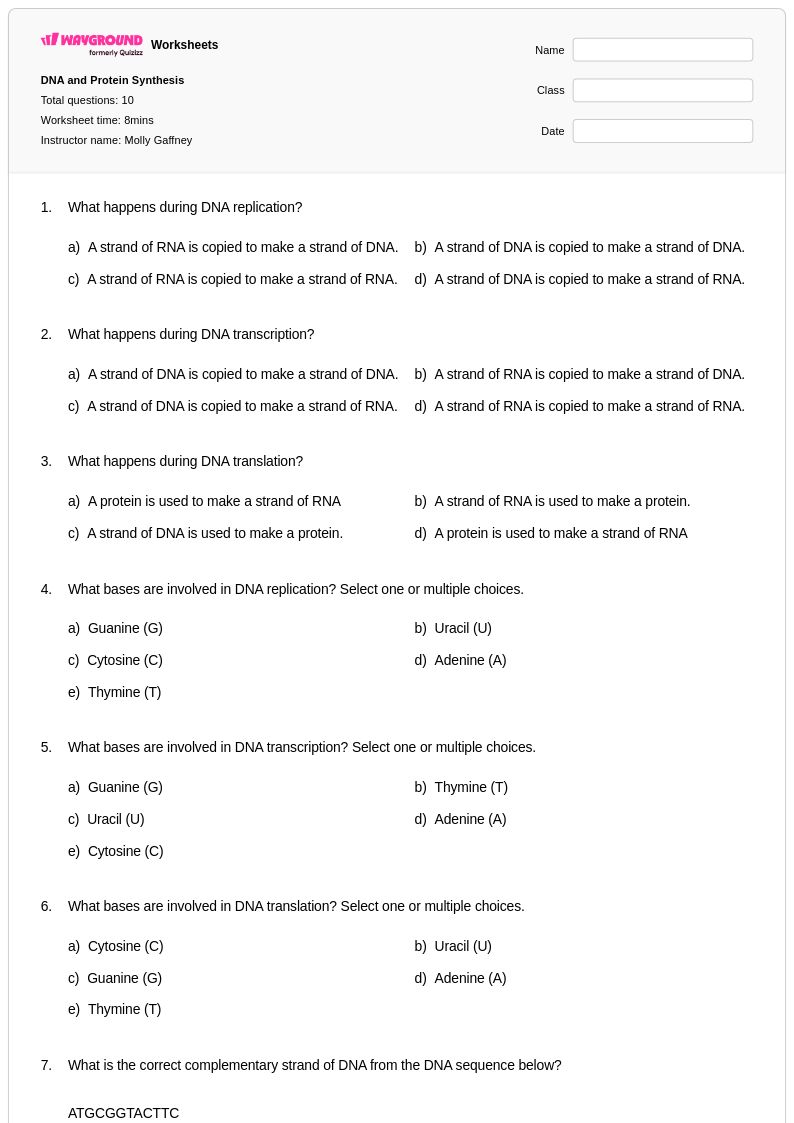
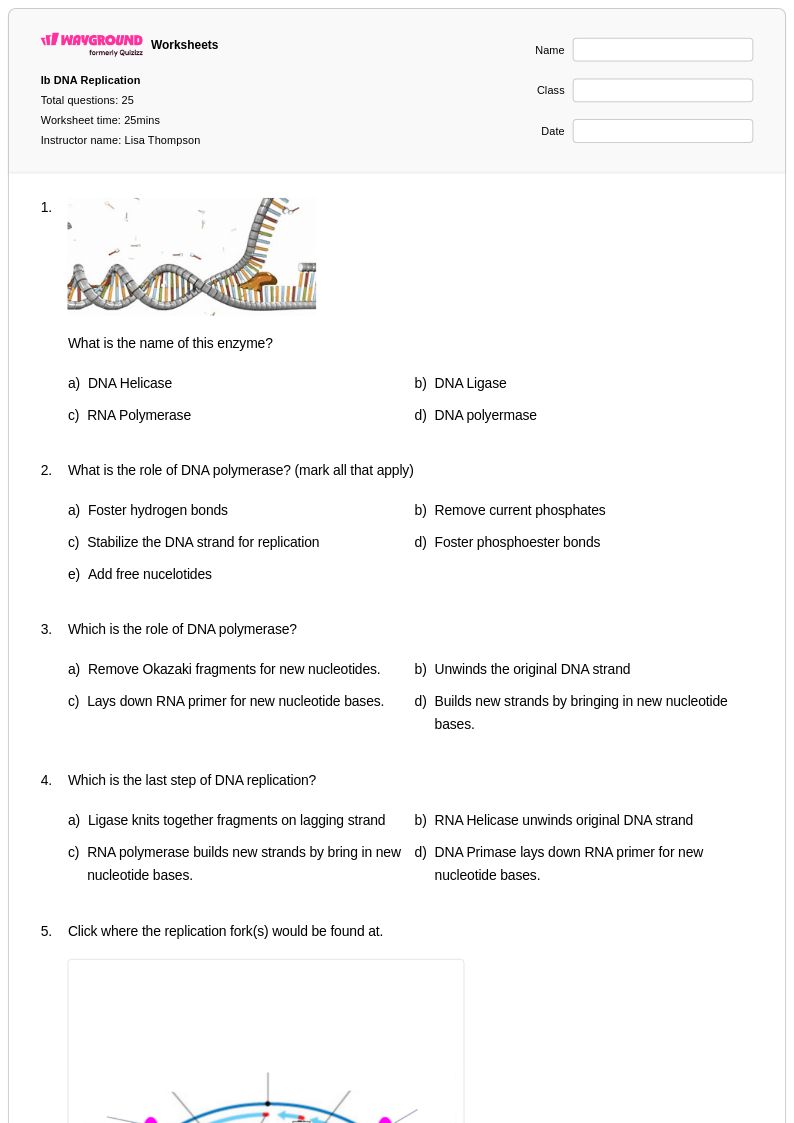
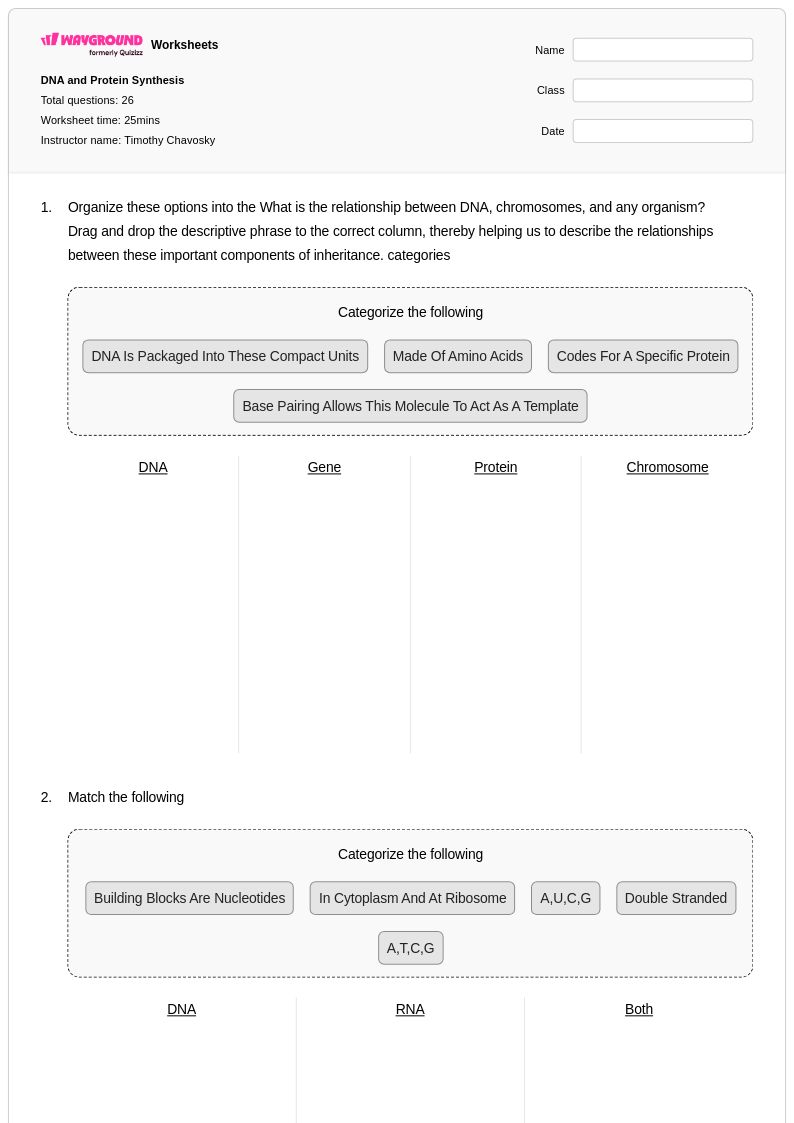
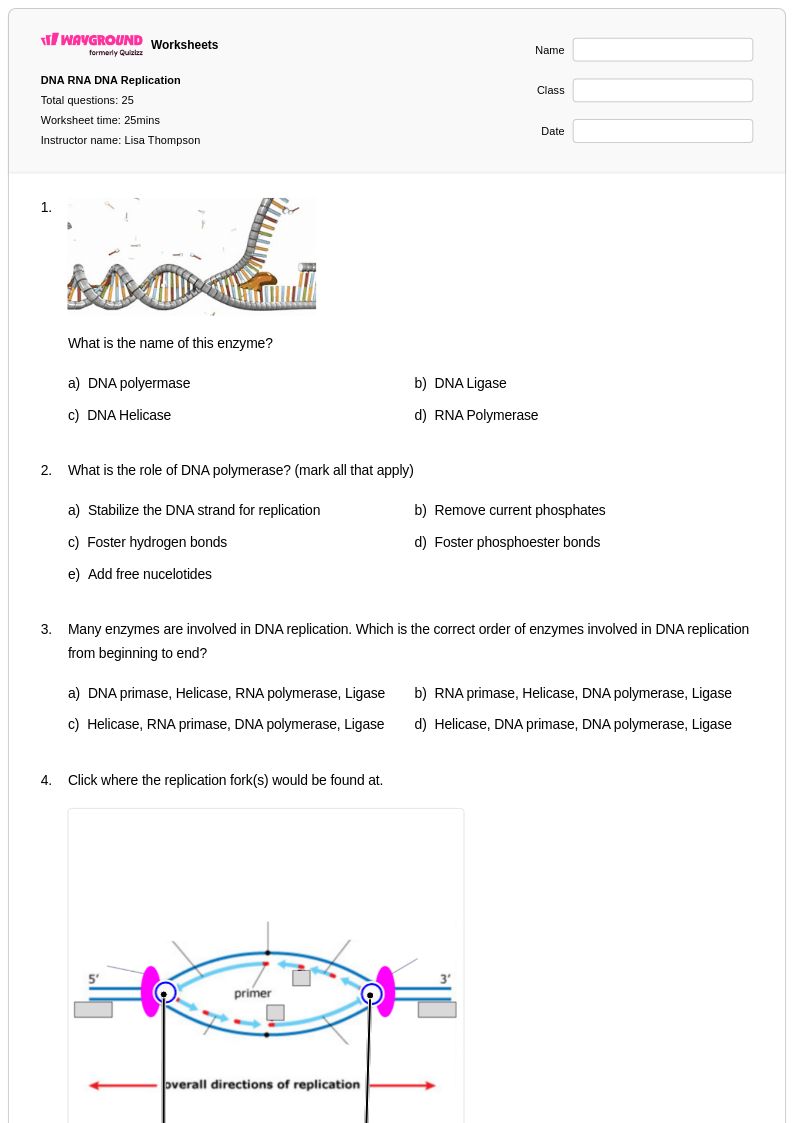
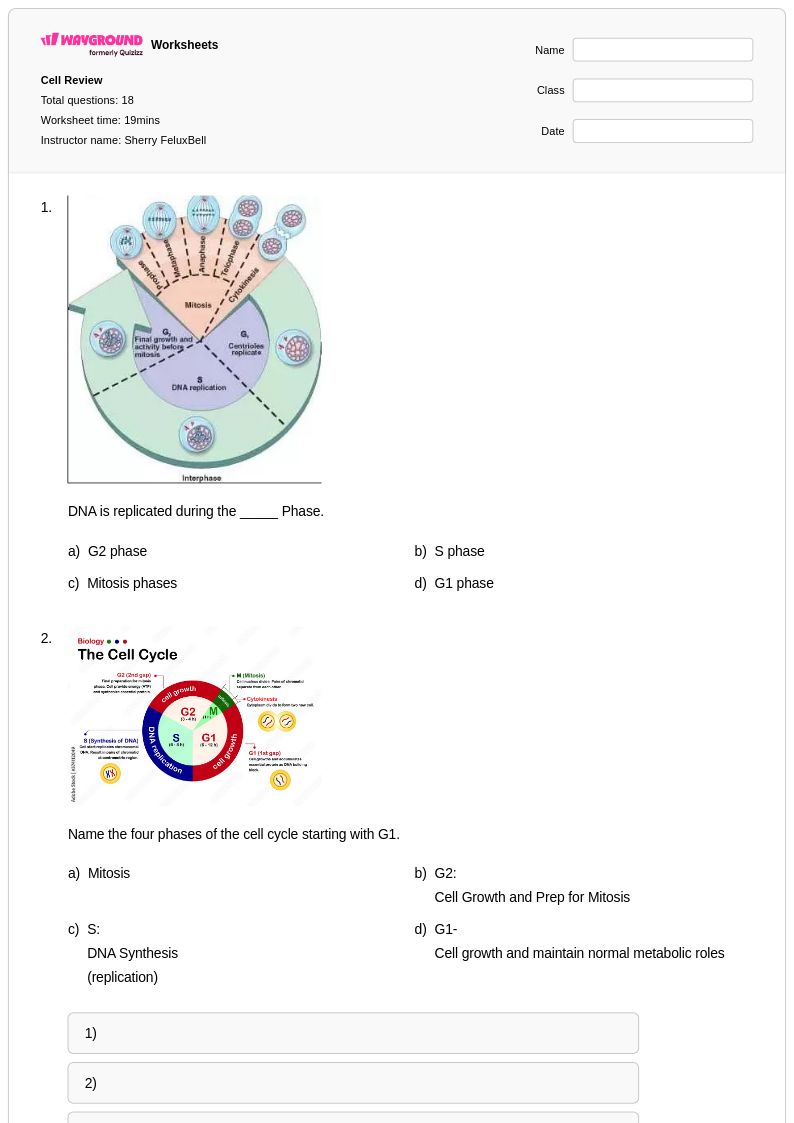
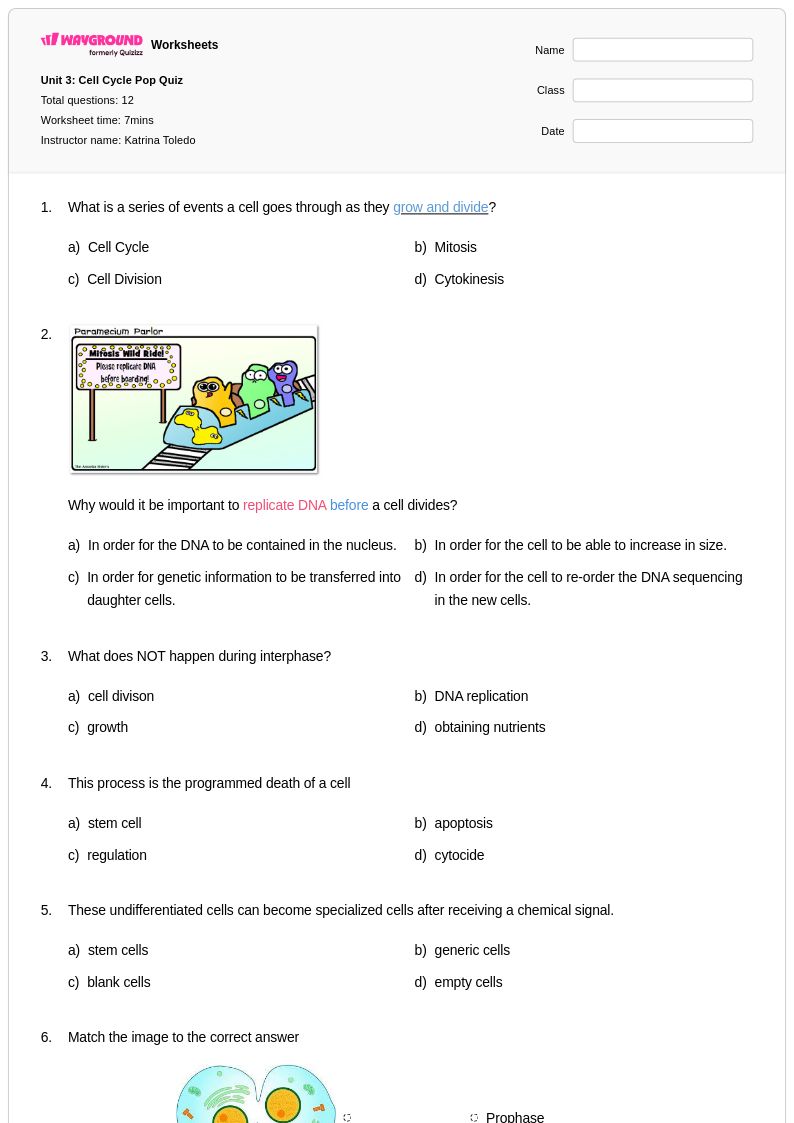
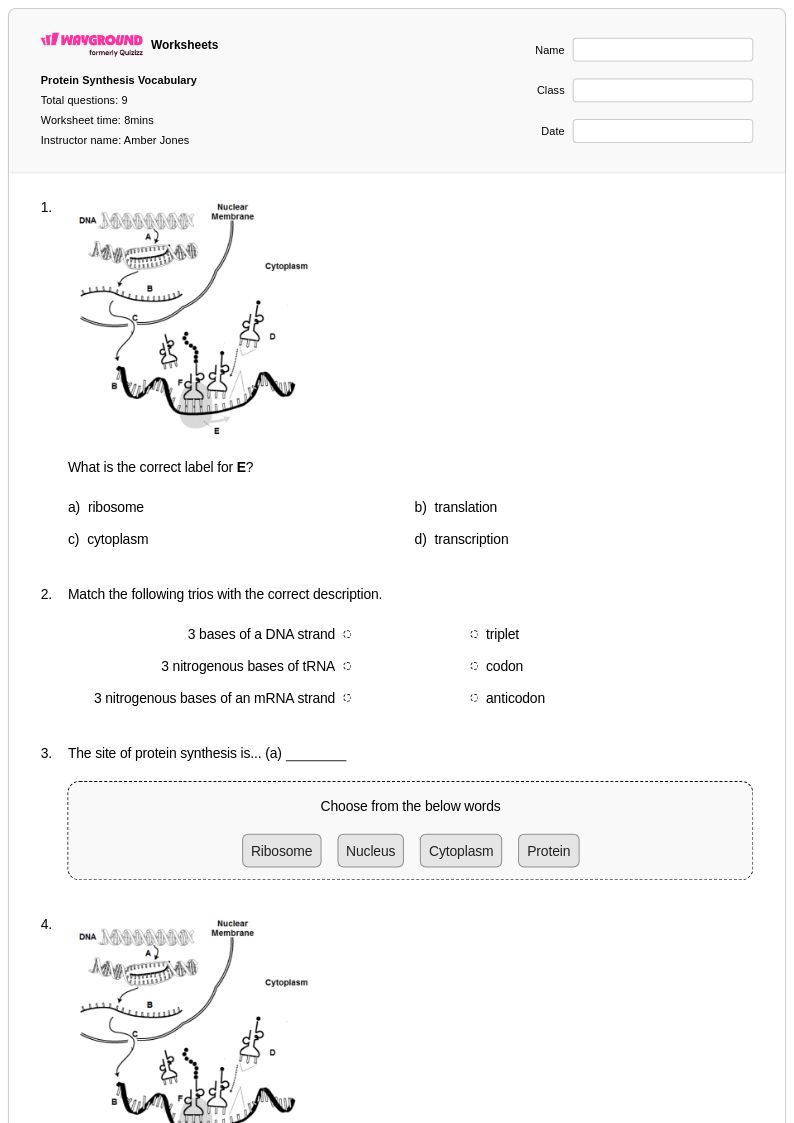
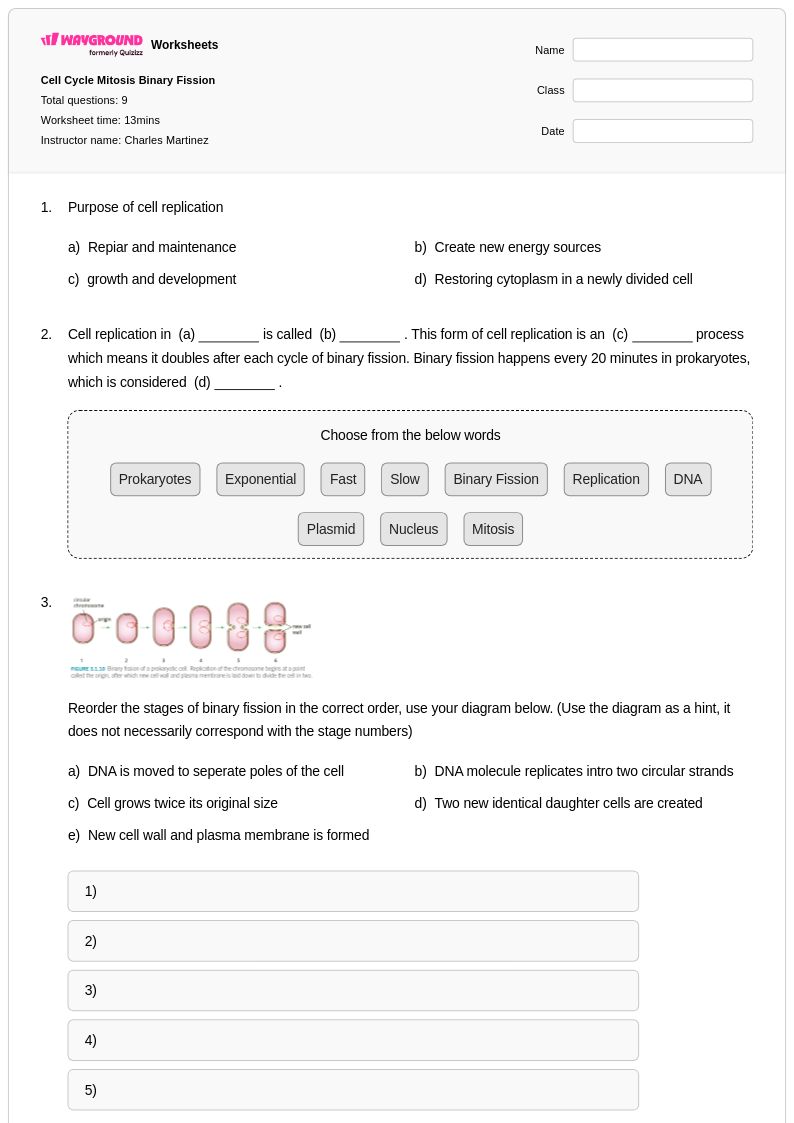
DNA replication worksheets for Class 11 students available through Wayground (formerly Quizizz) provide comprehensive coverage of this fundamental molecular biology process that underlies cellular reproduction and genetic inheritance. These expertly crafted resources guide students through the intricate mechanisms of DNA duplication, including the roles of DNA helicase, primase, DNA polymerase, and ligase enzymes in creating identical copies of genetic material. The worksheets strengthen critical analytical skills by challenging students to trace the semi-conservative replication process, identify leading and lagging strand synthesis patterns, and understand the significance of Okazaki fragments in discontinuous DNA synthesis. Each resource includes detailed answer keys and practice problems that reinforce understanding of replication fork dynamics, proofreading mechanisms, and the molecular precision required for accurate genetic transmission. These free printables and pdf materials effectively bridge theoretical knowledge with practical application, ensuring students master both the biochemical complexity and biological significance of DNA replication.
Wayground (formerly Quizizz) empowers educators with an extensive collection of millions of teacher-created DNA replication worksheets specifically designed for Class 11 biology instruction. The platform's robust search and filtering capabilities enable teachers to locate resources that align with specific curriculum standards and match their students' varying proficiency levels in molecular biology concepts. Advanced differentiation tools allow instructors to customize worksheet difficulty, focusing on particular aspects of DNA replication such as enzyme function, directionality constraints, or error correction mechanisms to meet diverse learning needs. Available in both printable and digital formats including downloadable pdfs, these resources seamlessly integrate into lesson planning workflows and support various instructional approaches from initial concept introduction to targeted remediation and enrichment activities. Teachers can efficiently scaffold student understanding of complex biochemical processes while providing focused skill practice that builds confidence in analyzing molecular mechanisms essential for advanced biology coursework.
FAQs
How do I teach DNA replication to high school biology students?
Start by establishing the purpose of DNA replication — producing identical genetic copies before cell division — before introducing the molecular machinery involved. Use a sequenced approach: begin with helicase unwinding the double helix, then move through primer attachment, leading and lagging strand synthesis, and finally the sealing role of ligase. Visual diagrams and step-by-step labeling activities help students build a mental model of the process before working through practice problems independently.
What exercises help students practice DNA replication?
Effective practice for DNA replication includes sequencing activities where students order the steps of replication, enzyme-function matching tasks, and strand synthesis problems that require students to write complementary base sequences for both the leading and lagging strands. Problems that isolate individual enzyme roles — such as identifying what happens when helicase or ligase is absent — push students to apply conceptual understanding rather than recall steps by rote.
What mistakes do students commonly make when learning DNA replication?
The most frequent misconception is confusing the leading and lagging strands — students often struggle to understand why one strand is synthesized continuously while the other is built in Okazaki fragments. Another common error is misidentifying the directionality of DNA synthesis, specifically that DNA polymerase can only add nucleotides in the 5' to 3' direction. Students also frequently conflate the roles of helicase and DNA polymerase, or overlook the necessity of RNA primers before synthesis can begin.
How do I explain semiconservative replication to students who are confused by the concept?
Semiconservative replication means each new DNA molecule retains one original (parental) strand and one newly synthesized strand. A useful analogy is unzipping a jacket and using each half as a template to build a brand-new matching half — the result is two jackets, each with one original side. Reinforce this with the Meselson-Stahl experiment as evidence, which students find compelling because it directly disproves conservative and dispersive models through observable data.
How can I use DNA replication worksheets from Wayground in my classroom?
Wayground's DNA replication worksheets are available as printable PDFs for traditional classroom and lab use, as well as in digital formats for technology-integrated or hybrid learning environments — including the ability to host them as a quiz directly on Wayground. Each worksheet includes a complete answer key, making them practical for homework assignments, formative assessment, or structured review sessions. Teachers can also customize existing materials or create personalized versions to target specific concepts such as enzyme function or strand synthesis directionality.
How do I differentiate DNA replication instruction for students at different skill levels?
For students who are struggling, focus first on the big picture — what replication accomplishes and why — before introducing enzyme names and strand directionality. Simplified diagrams with labeled steps and sentence-completion exercises reduce cognitive load while still building accurate understanding. For advanced learners, introduce error-correction mechanisms like proofreading by DNA polymerase or the implications of replication errors in mutation and disease contexts. Wayground also supports individual accommodations such as read aloud, reduced answer choices, and extended time, which can be assigned per student without disrupting the rest of the class.