Free Printable Earth's Crust Worksheets for Class 6
Explore Class 6 Earth's Crust free worksheets and printables from Wayground that help students master rock layers, tectonic plates, and crustal composition through engaging practice problems with complete answer keys.
Explore printable Earth's Crust worksheets for Class 6
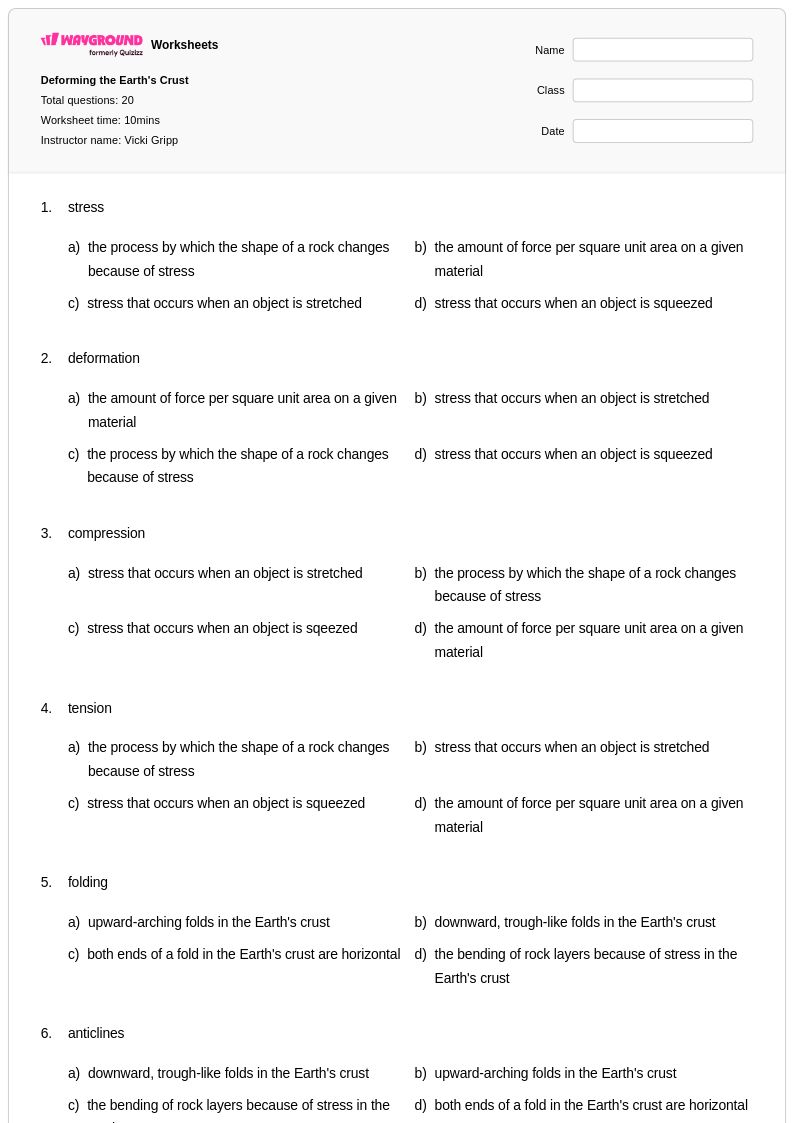
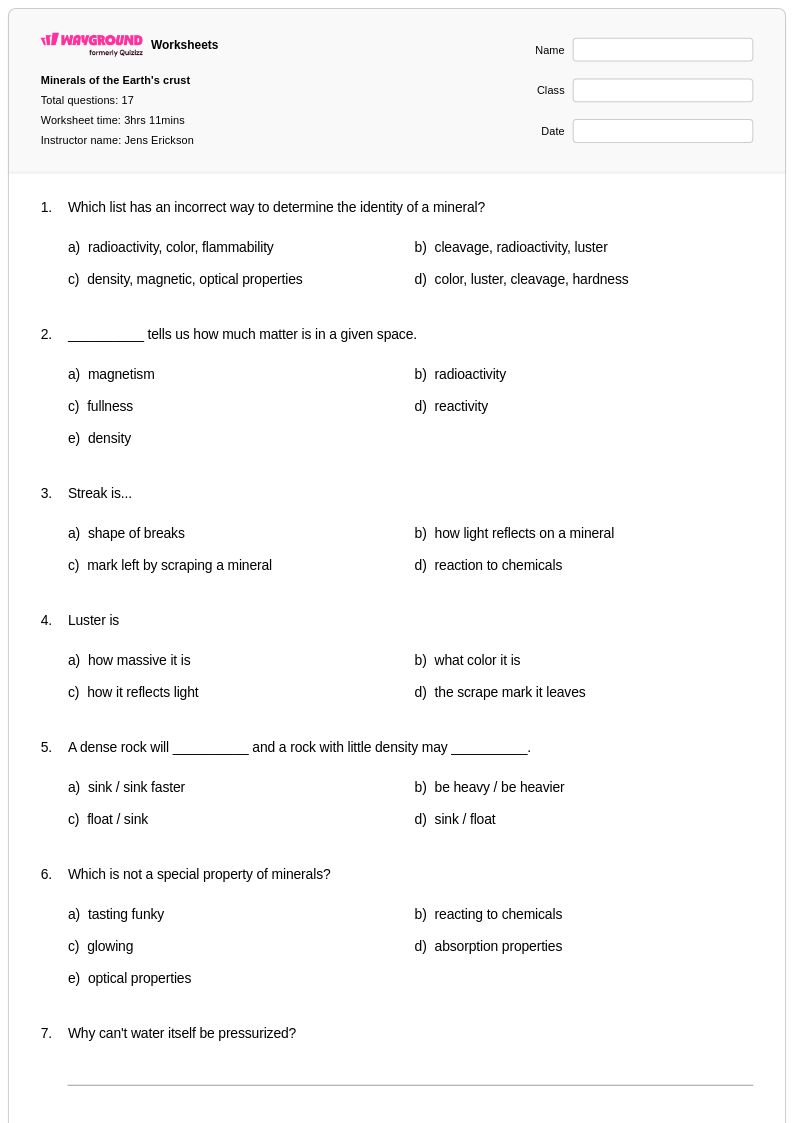
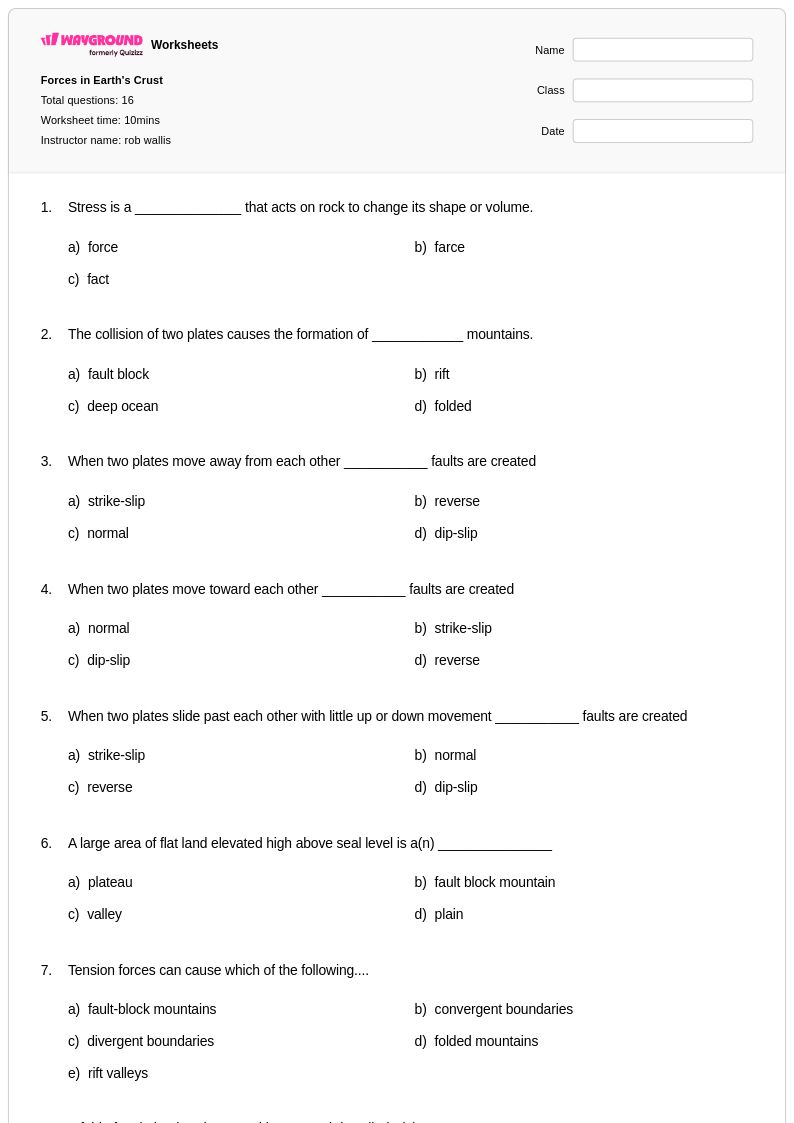
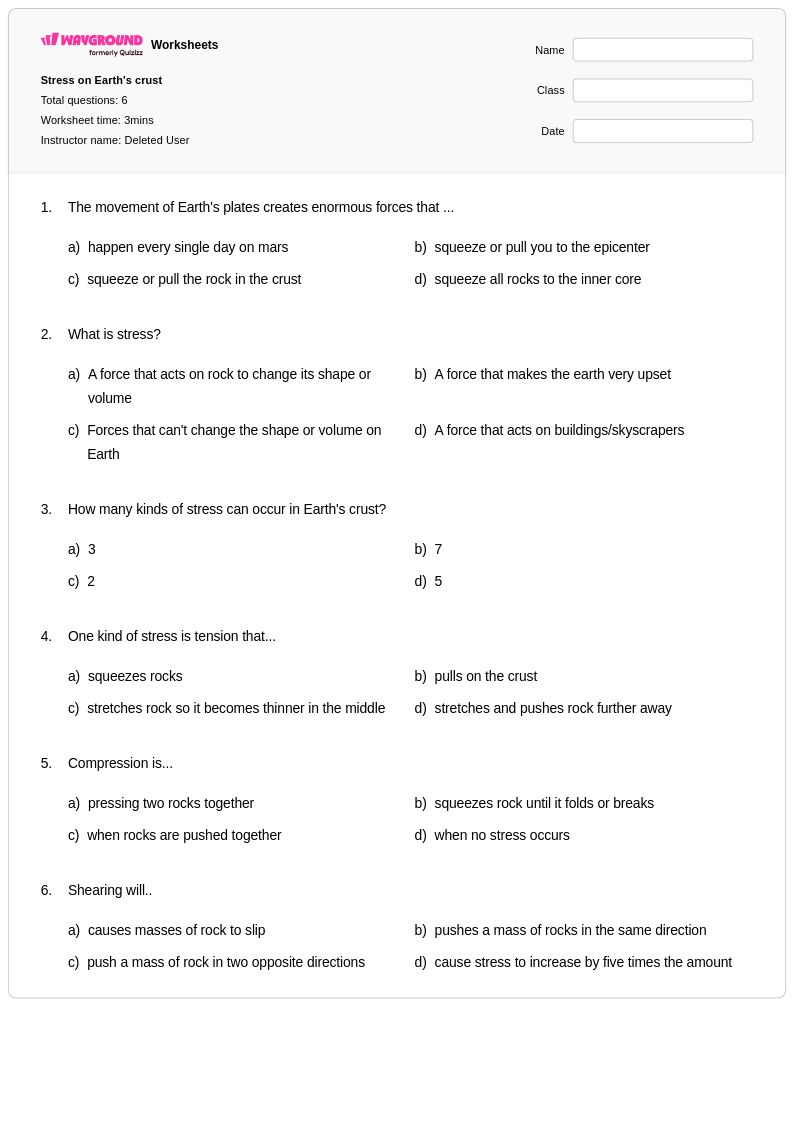
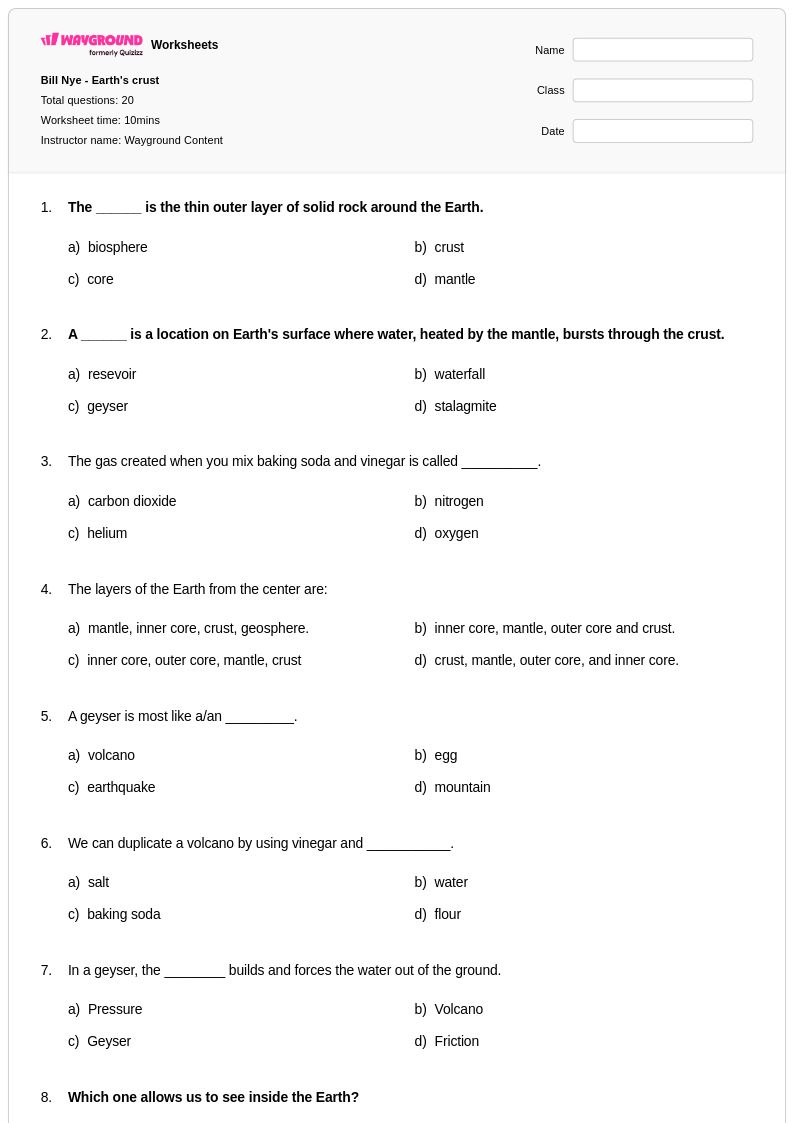
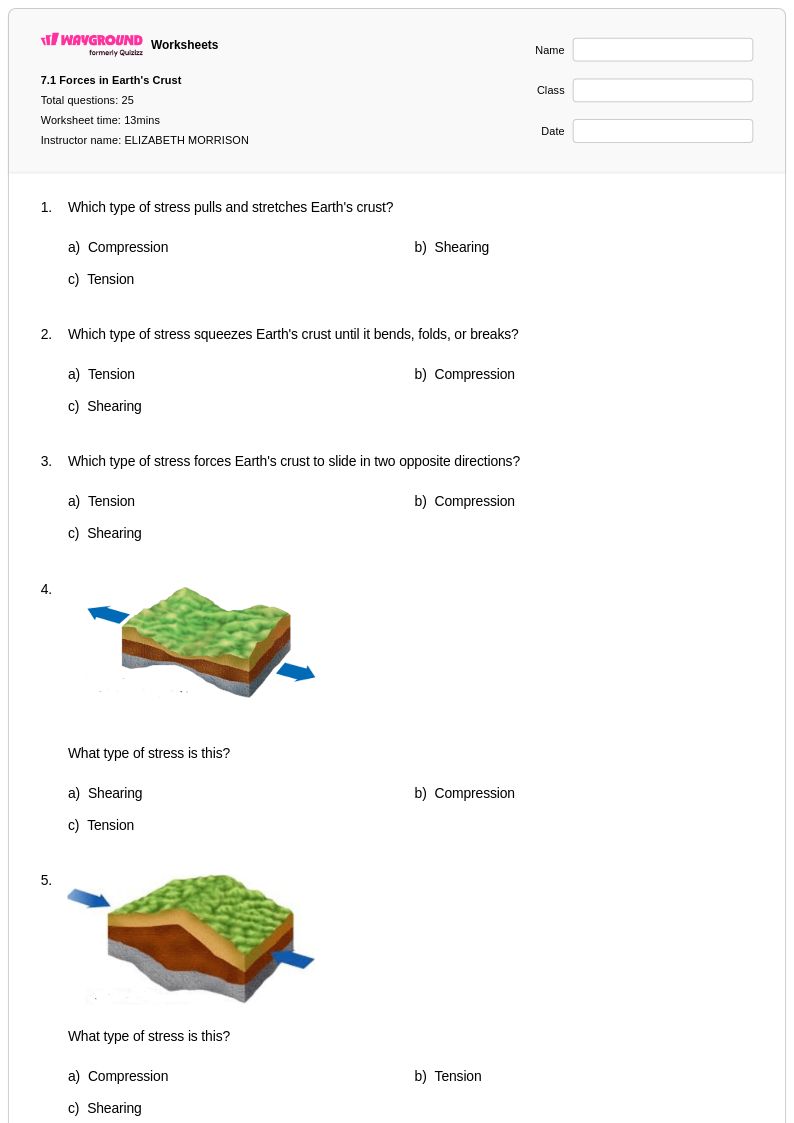
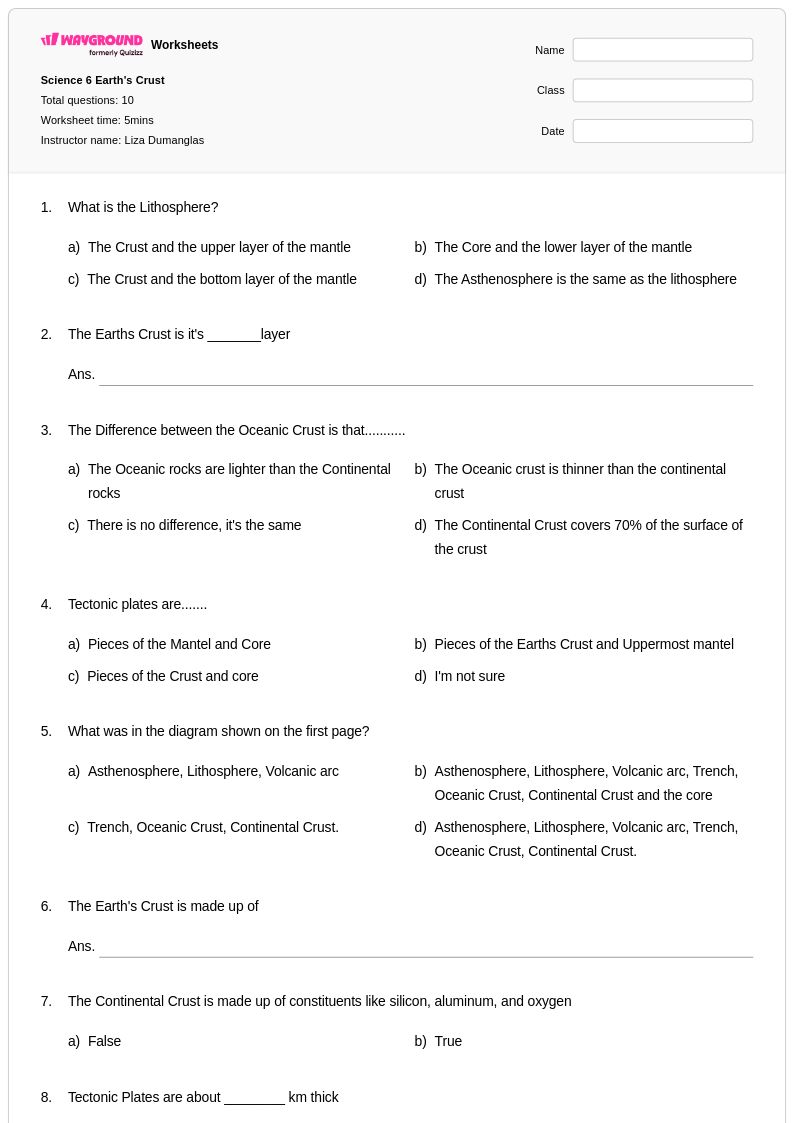
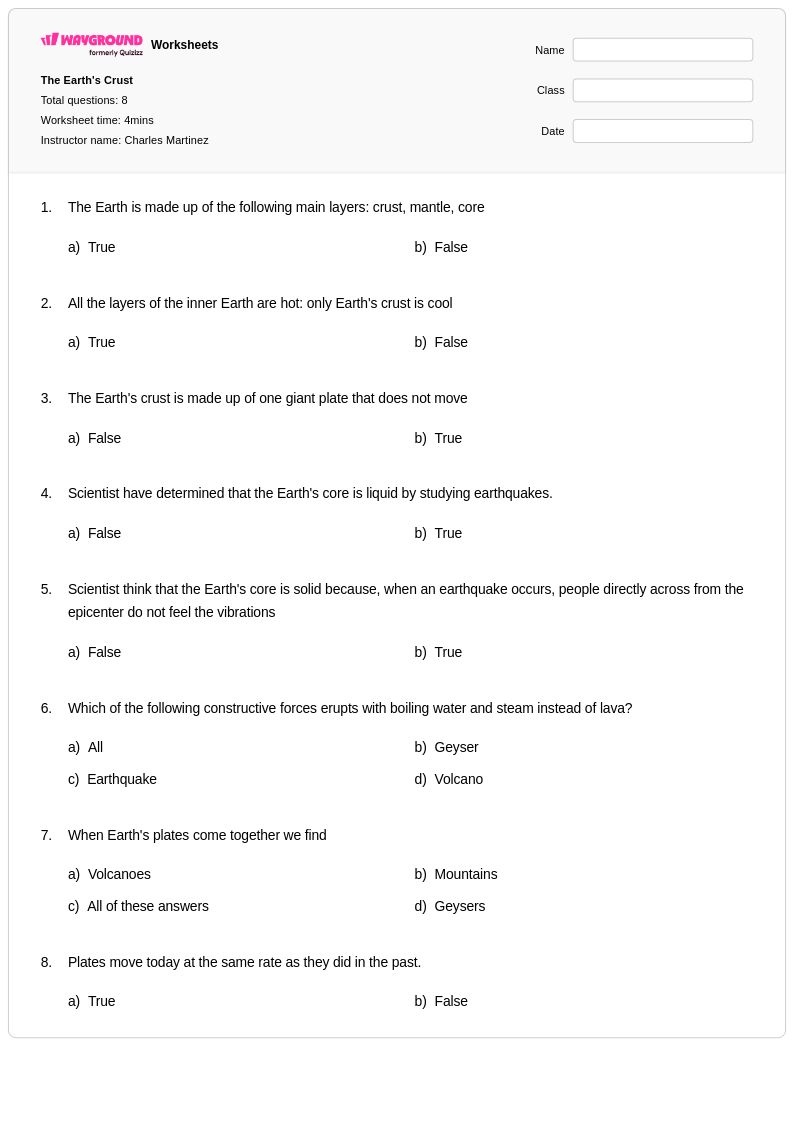
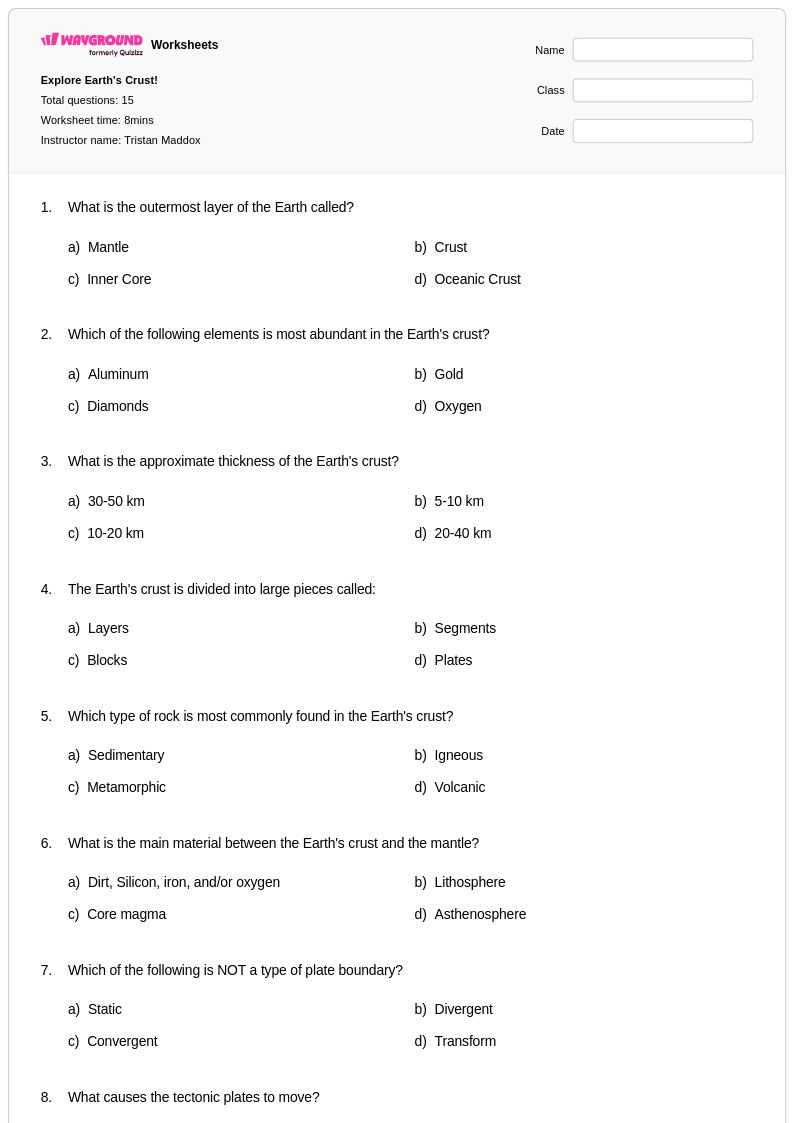
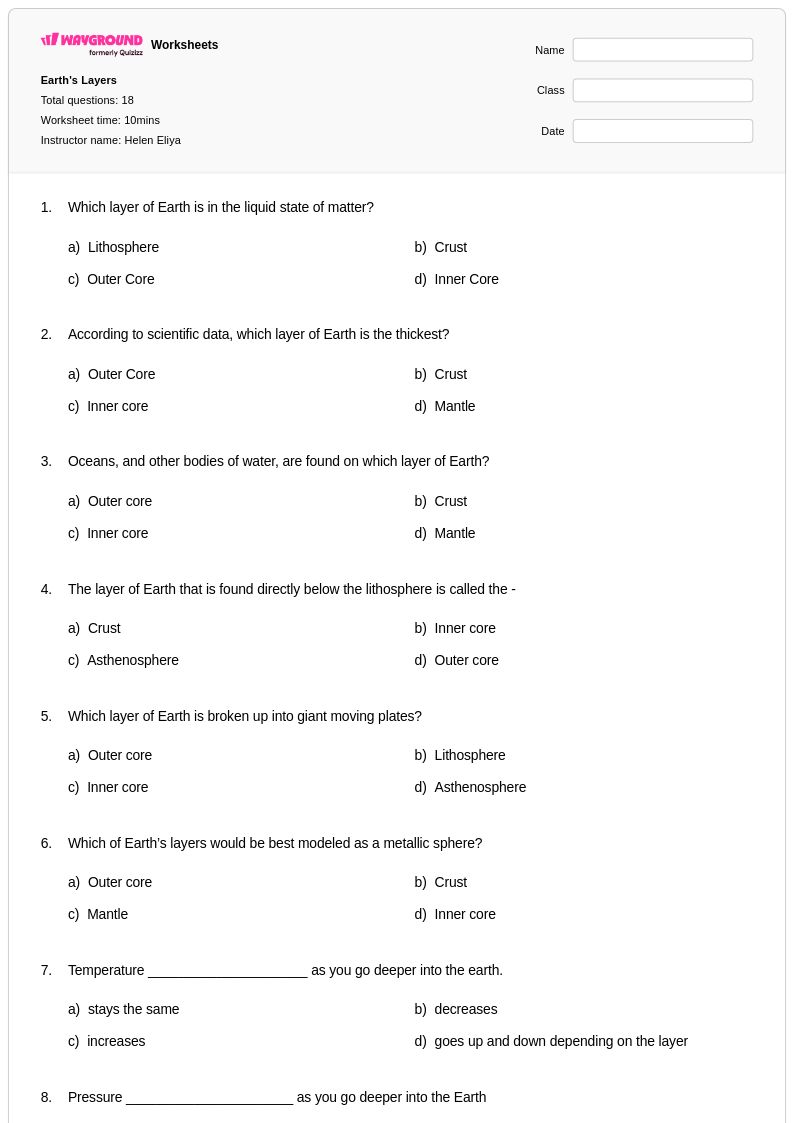
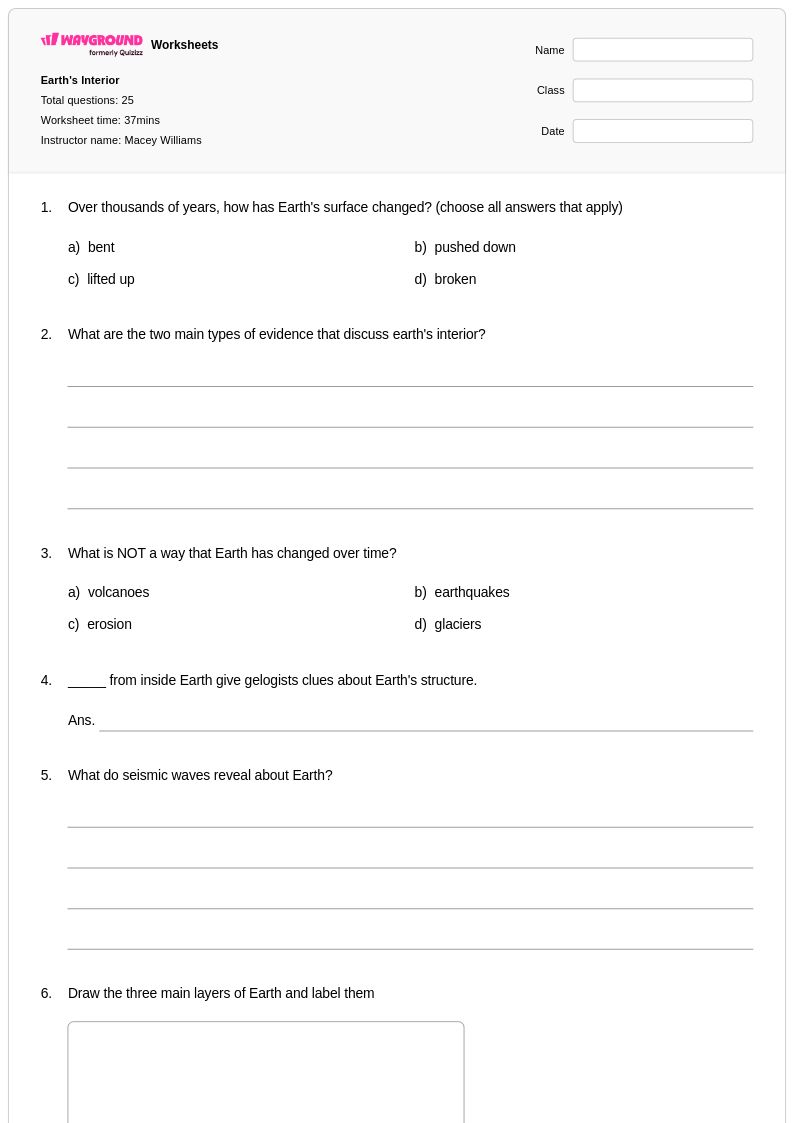
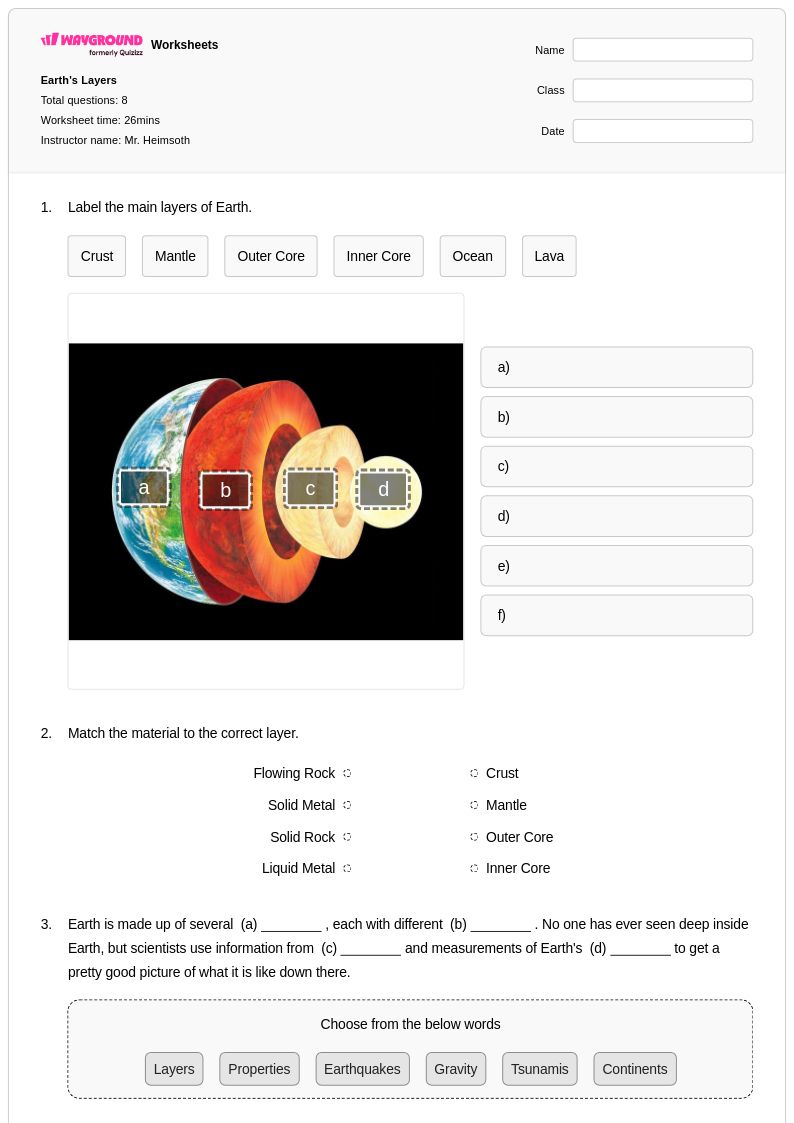
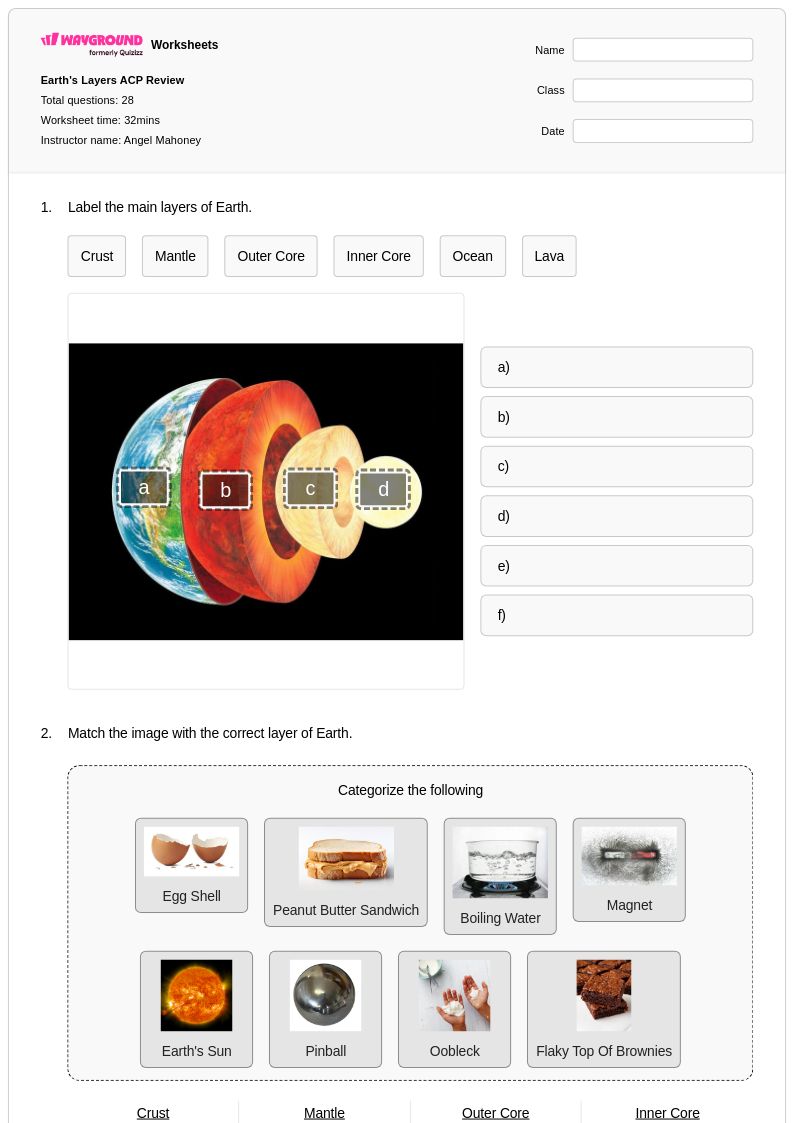
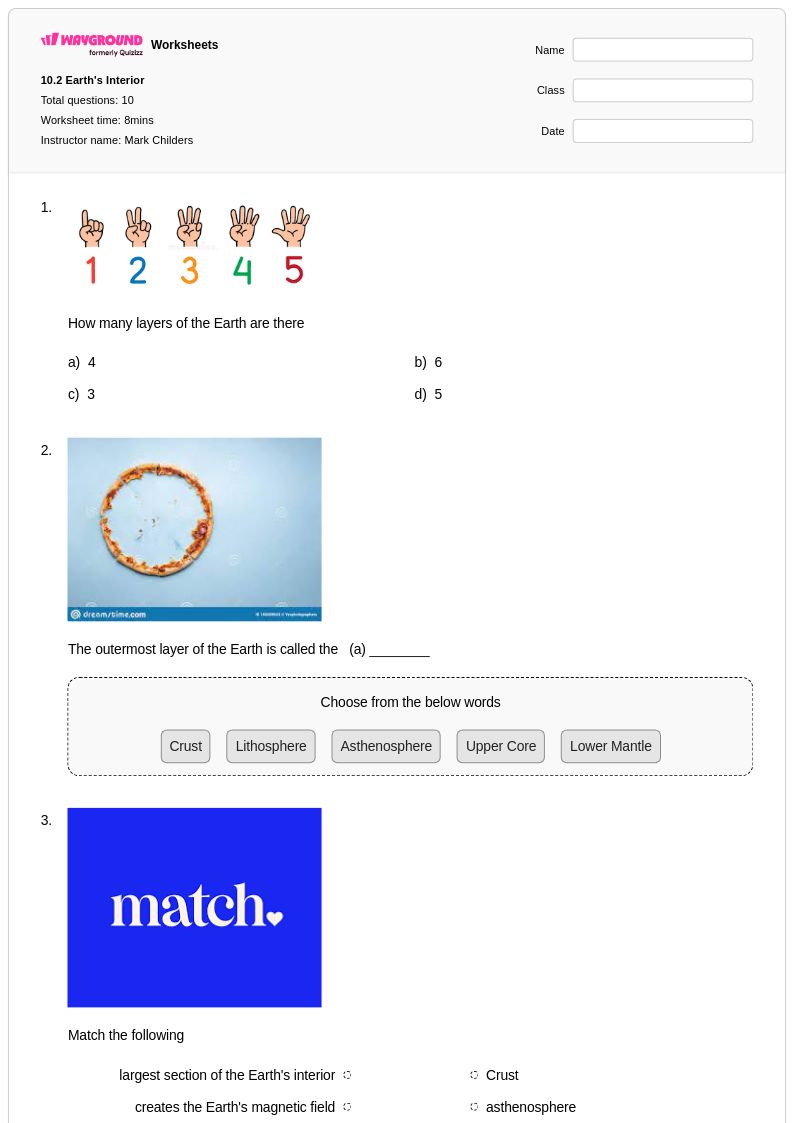
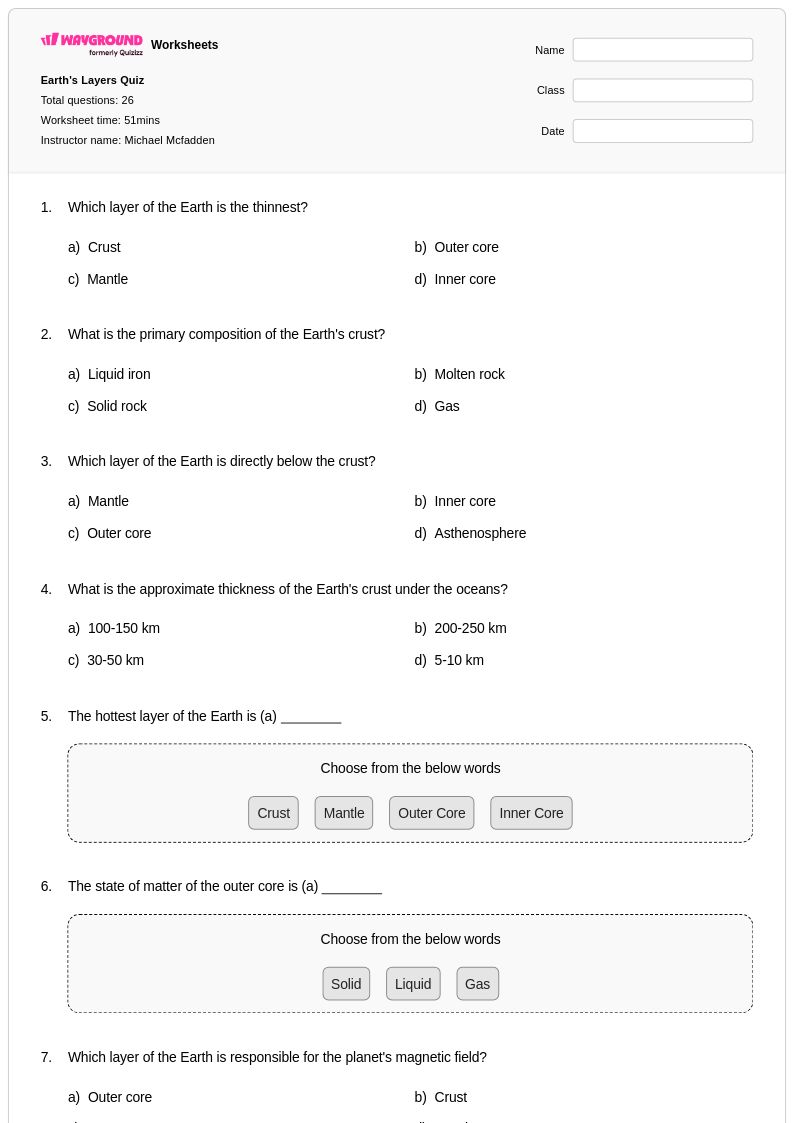
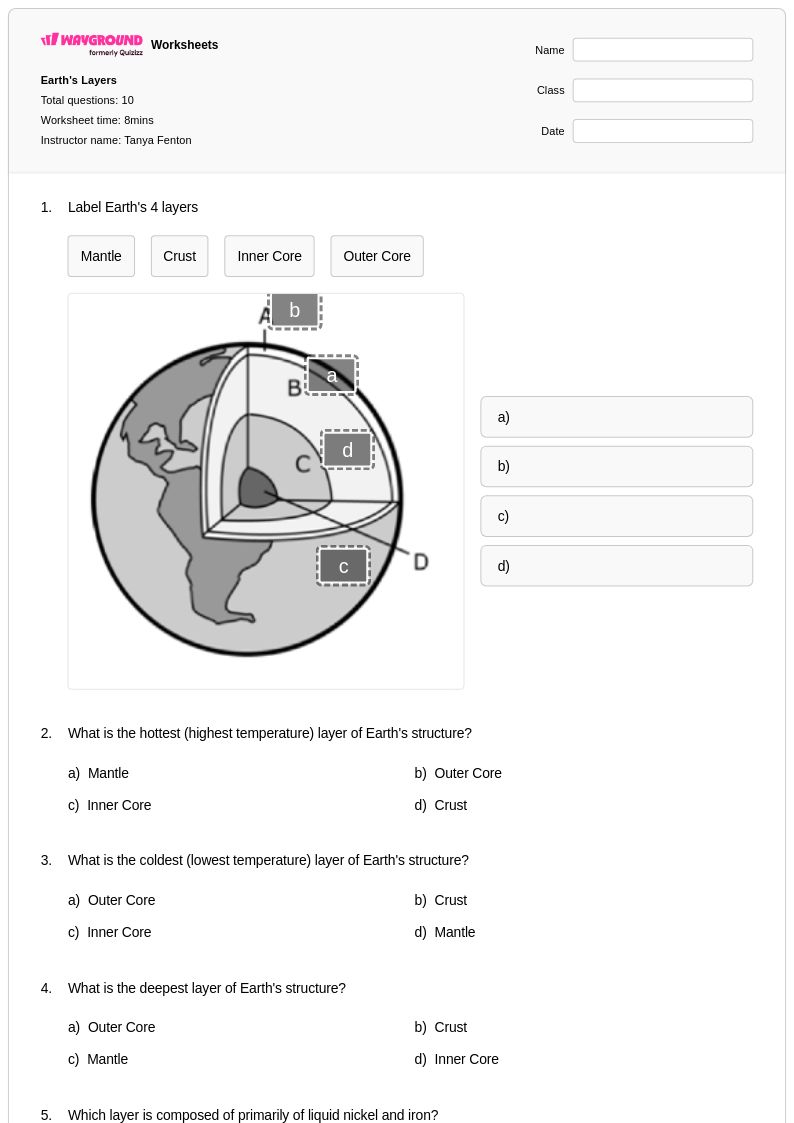
Earth's Crust worksheets for Class 6 students available through Wayground provide comprehensive practice opportunities for understanding the outermost layer of our planet and its geological processes. These educational resources strengthen students' knowledge of crustal composition, including the differences between oceanic and continental crust, plate tectonics fundamentals, and the formation of various landforms through geological activity. The worksheet collection includes detailed practice problems covering topics such as crustal thickness variations, rock types found in different crustal layers, and the relationship between crustal movement and earthquakes or volcanic activity. Each worksheet comes with a corresponding answer key to support effective learning assessment, and teachers can access these materials as free printables in convenient pdf format for classroom distribution or homework assignments.
Wayground's extensive collection of teacher-created Earth's Crust resources provides educators with millions of high-quality materials specifically designed to support Class 6 Earth and Space Science instruction. The platform's robust search and filtering capabilities allow teachers to quickly locate worksheets aligned with specific educational standards and learning objectives, while built-in differentiation tools enable customization based on individual student needs and abilities. These flexible resources are available in both printable and digital formats, including downloadable pdf versions, making them suitable for various classroom environments and teaching approaches. Teachers can effectively utilize these materials for lesson planning, targeted remediation of challenging geological concepts, enrichment activities for advanced learners, and regular skill practice to reinforce understanding of crustal processes and Earth's dynamic geological systems.
FAQs
How do I teach Earth's crust to middle school students?
Start by distinguishing between continental and oceanic crust, emphasizing differences in thickness, density, and mineral composition. Use cross-section diagrams to help students visualize crustal layers in relation to the mantle. From there, connect crustal structure to plate tectonics so students understand how geological features like mountains, trenches, and volcanoes form. Hands-on activities comparing rock samples can reinforce abstract concepts with tangible evidence.
What worksheets help students practice Earth's crust concepts?
Effective practice worksheets for Earth's crust cover crustal thickness variations between continental and oceanic plates, mineral composition comparisons, and the rock cycle's role in crustal formation. Problems that ask students to interpret geological cross-sections or analyze density relationships between crustal types are especially useful for building analytical skills. Wayground's Earth's Crust worksheets include practice problems across these concepts and come with detailed answer keys to support independent review.
What common mistakes do students make when learning about Earth's crust?
One of the most frequent misconceptions is confusing the crust with the lithosphere — students often use these terms interchangeably, when in fact the lithosphere includes both the crust and the uppermost mantle. Students also commonly assume that continental crust is denser than oceanic crust, when the opposite is true. Another persistent error is treating the rock cycle as a fixed sequence rather than a dynamic, non-linear process that continuously reshapes crustal material.
How does plate tectonics connect to Earth's crust?
Earth's crust is the outermost layer of the lithospheric plates that move across the asthenosphere, making plate tectonics inseparable from understanding crustal processes. At convergent boundaries, denser oceanic crust subducts beneath continental crust, recycling material back into the mantle. At divergent boundaries, new oceanic crust forms as magma rises and solidifies. These processes explain crustal thickness variations, the distribution of geological features, and why oceanic crust is geologically younger than continental crust.
How can I use Earth's crust worksheets for students with different learning needs?
Wayground allows teachers to apply individualized accommodations directly to Earth's Crust worksheets, including Read Aloud for students who benefit from audio support, reduced answer choices to lower cognitive load for struggling learners, and extended time settings configurable per student. These accommodations can be assigned to individual students while the rest of the class receives default settings, keeping differentiation discreet. Because settings are saved and reusable, teachers do not need to reconfigure them for each new session.
Can I use Earth's crust worksheets for both in-class and at-home assignments?
Yes. Wayground's Earth's Crust worksheets are available as printable PDFs for traditional classroom distribution and in digital formats for technology-integrated environments, including the option to host them as a quiz directly on Wayground. This flexibility makes them suitable for in-class instruction, homework assignments, and supplemental study. The included answer keys support independent learning, so students can self-assess whether completing the material at school or at home.