Free Printable Energy Conversion Worksheets for Class 6
Explore Wayground's free Class 6 energy conversion worksheets and printables that help students master how energy transforms between different forms through engaging practice problems and comprehensive answer keys.
Explore printable Energy Conversion worksheets for Class 6
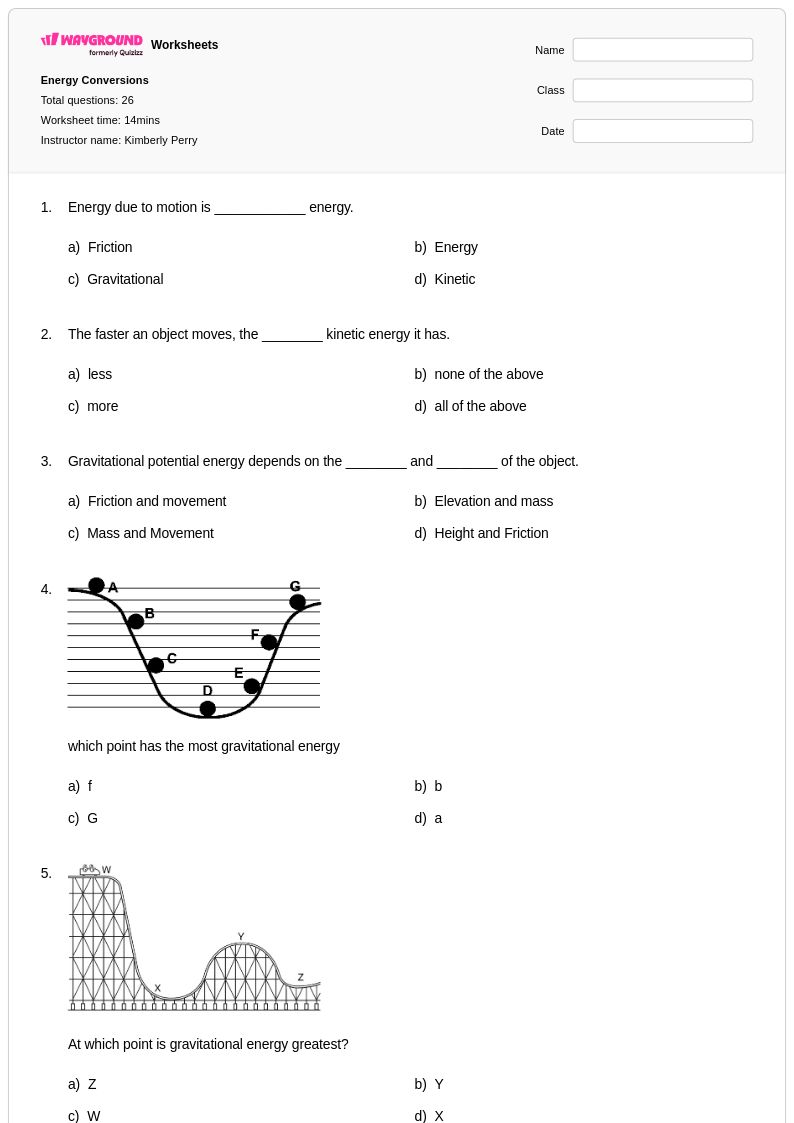
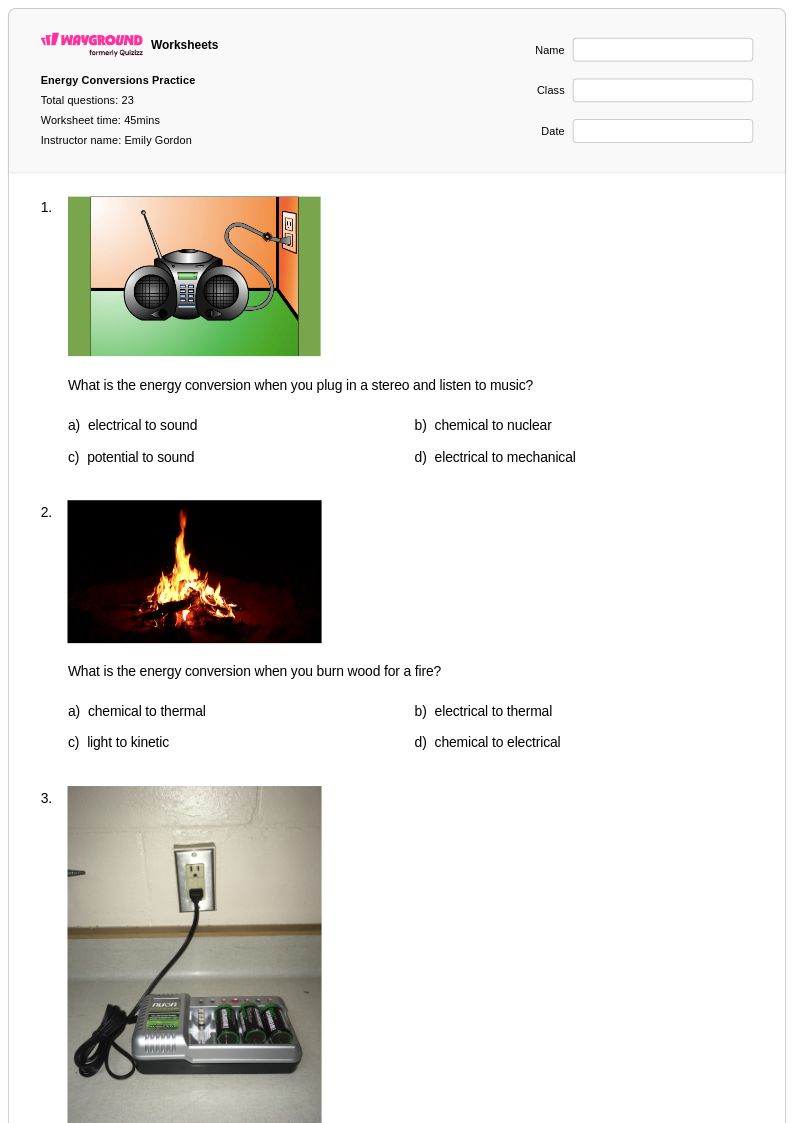
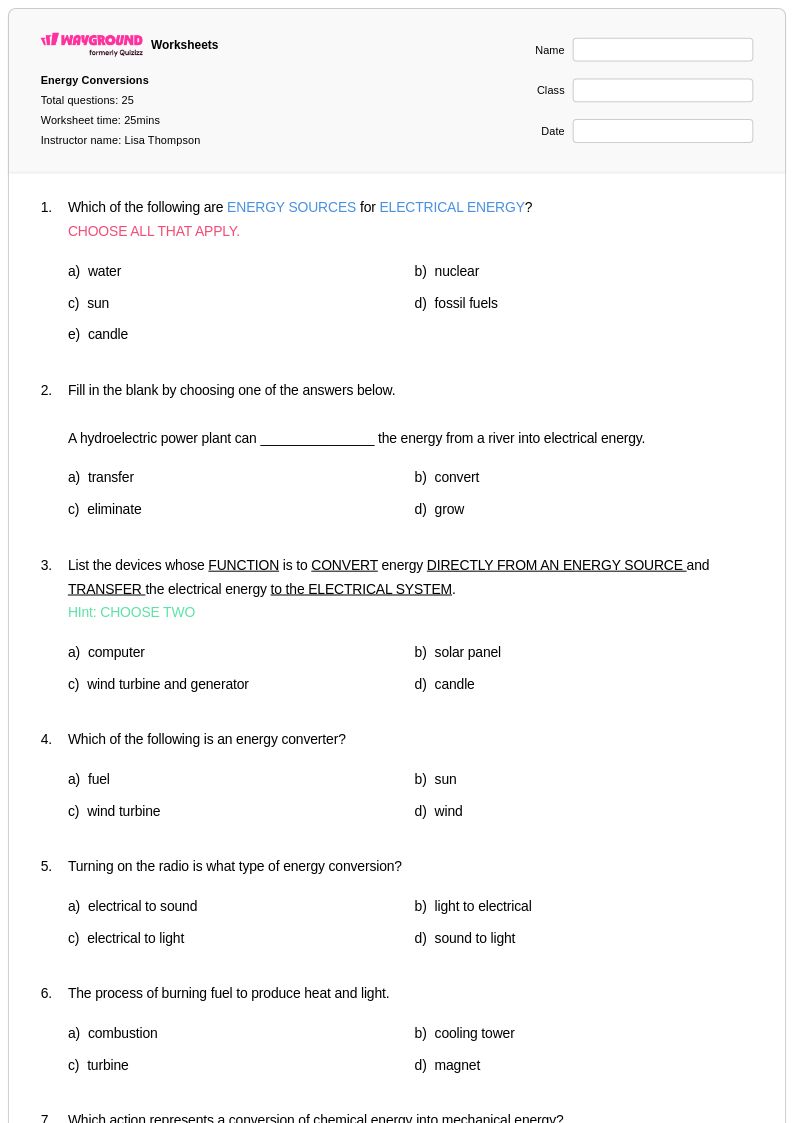
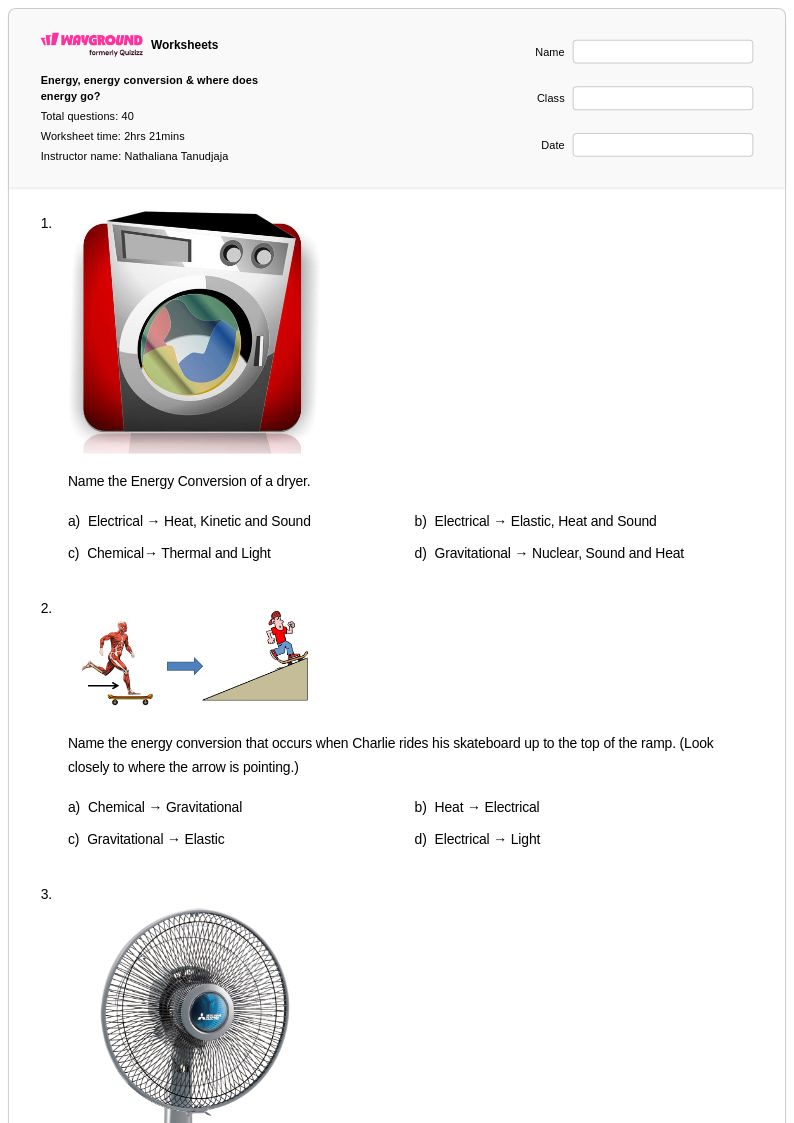
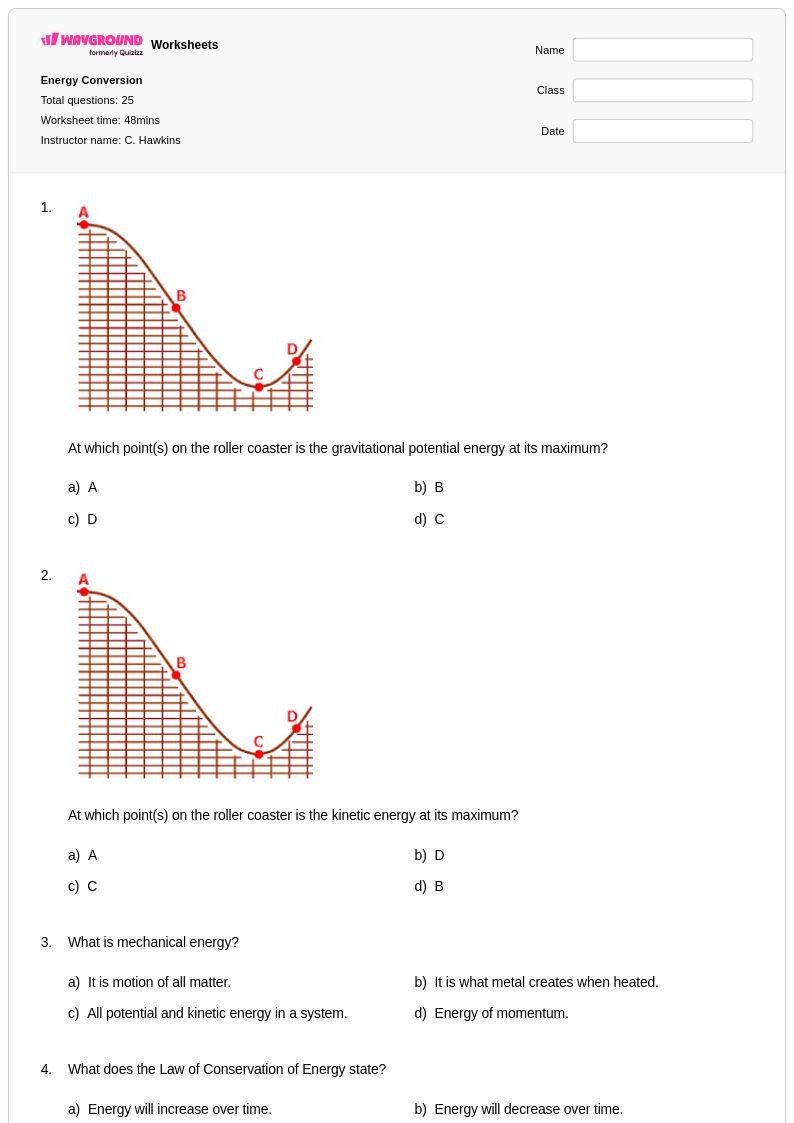
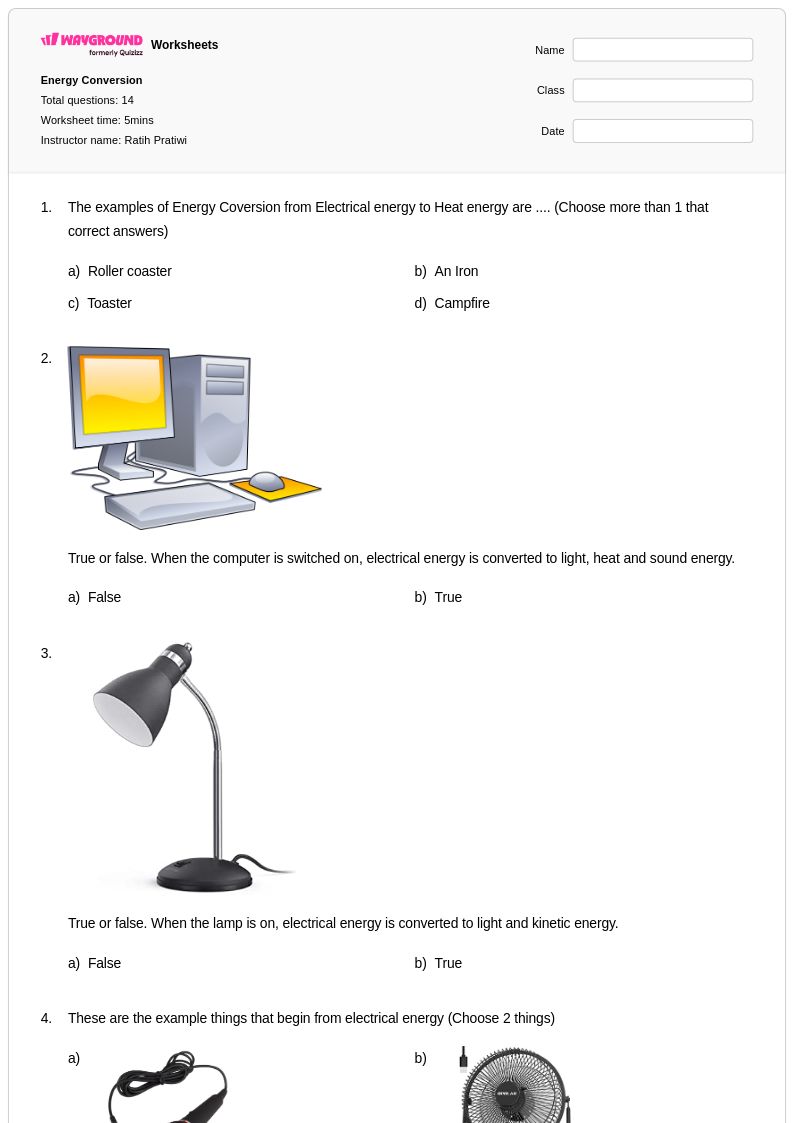
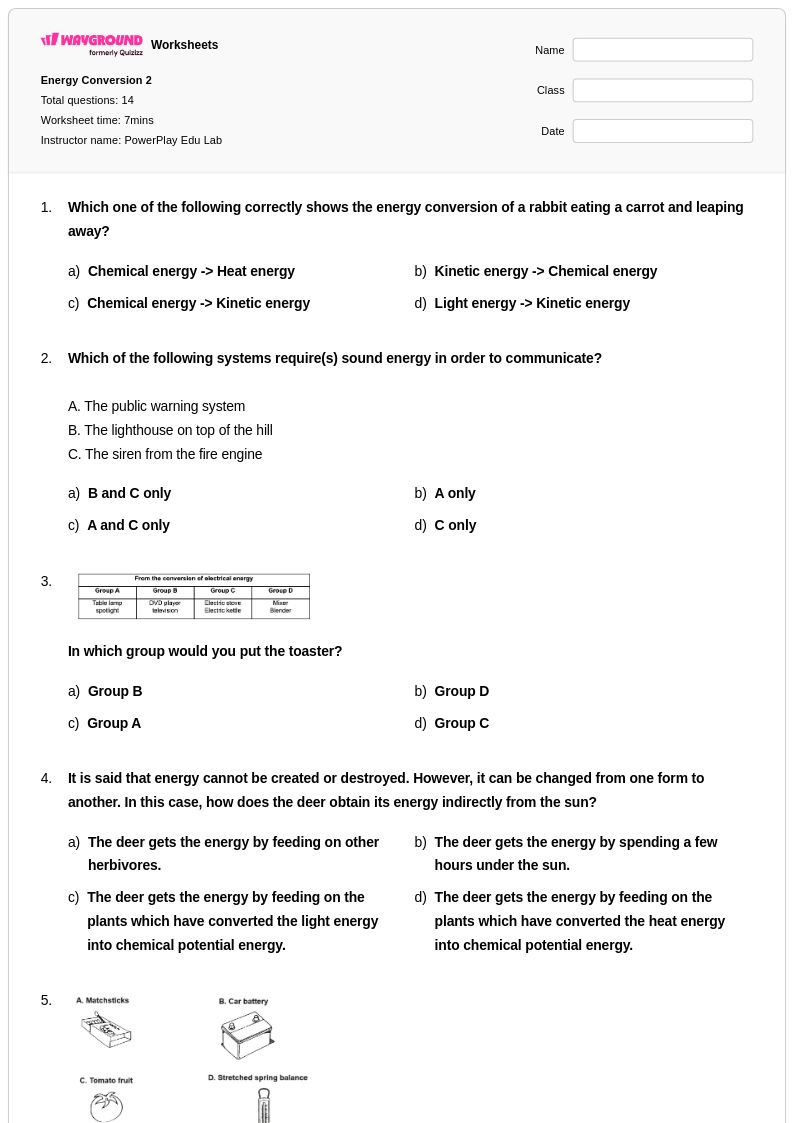
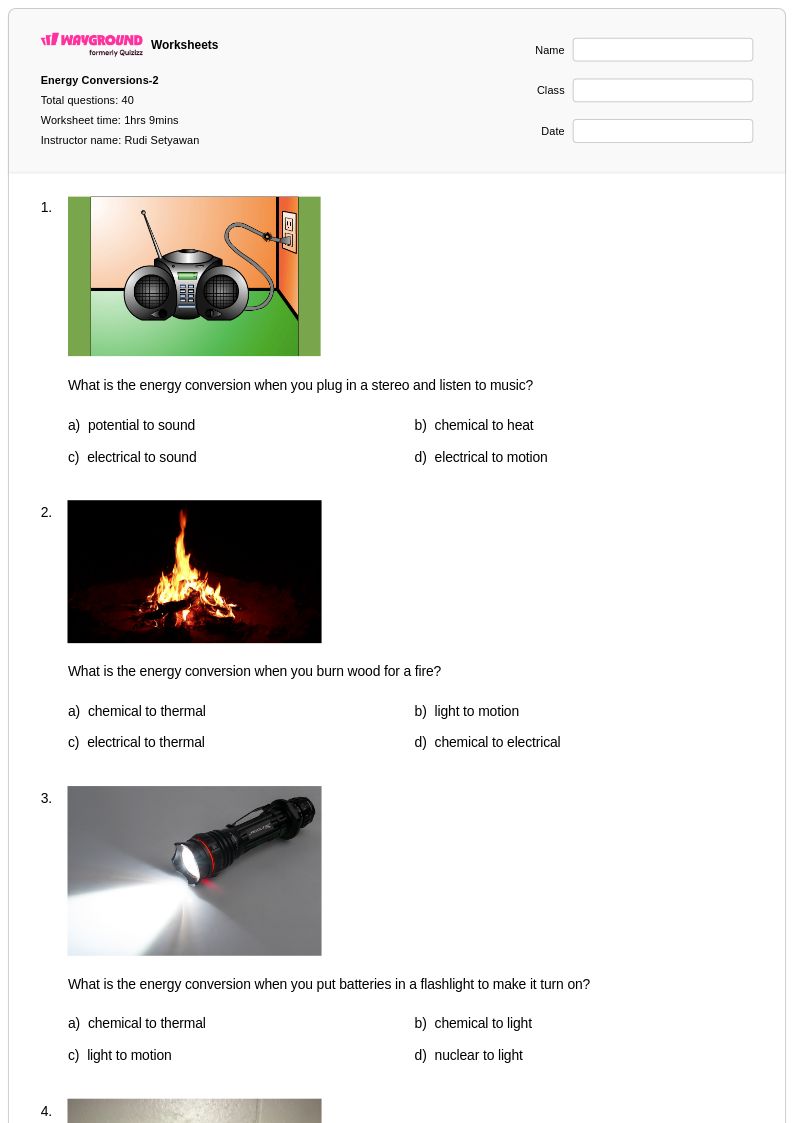
Energy conversion worksheets for Class 6 students available through Wayground (formerly Quizizz) provide comprehensive coverage of how energy transforms from one form to another in everyday situations and scientific contexts. These educational resources focus on fundamental concepts including potential and kinetic energy transformations, mechanical energy changes, and the conservation of energy principle that governs all energy conversions. Students engage with practice problems that demonstrate energy conversion in familiar scenarios like roller coasters, pendulums, and simple machines, while developing critical thinking skills about energy flow and transformation processes. Each worksheet collection includes detailed answer keys and free printable versions in pdf format, enabling students to work through energy conversion scenarios systematically and verify their understanding of these essential physics concepts.
Wayground (formerly Quizizz) supports educators with millions of teacher-created energy conversion resources that can be easily searched and filtered by specific learning objectives and curriculum standards. The platform's robust differentiation tools allow teachers to customize worksheets based on individual student needs, offering both remedial support for struggling learners and enrichment activities for advanced students ready to explore more complex energy transformation scenarios. Teachers can access these materials in both printable pdf formats for traditional classroom use and digital formats for interactive learning experiences, making lesson planning more efficient and flexible. The comprehensive search functionality and standards alignment features help educators quickly identify appropriate energy conversion practice materials for skill reinforcement, formative assessment, and targeted intervention activities that strengthen student mastery of fundamental physics principles.
FAQs
How do I teach energy conversion to middle and high school students?
Start by grounding students in the different forms of energy (kinetic, potential, thermal, electrical, chemical) before introducing transformation between them. Use real-world systems like a swinging pendulum, a toaster, or a car engine to make abstract concepts tangible. Once students can identify input and output energy types in familiar contexts, transition into the conservation of energy principle and quantitative problem-solving.
What kinds of practice problems help students understand energy conversion?
Effective practice progresses from identification tasks, where students label the energy transformations in a diagram or scenario, to calculation problems involving kinetic and potential energy, and then to efficiency problems that require students to account for energy losses as heat. Multi-step problems involving real systems, such as a hydroelectric dam or a solar panel circuit, build the analytical reasoning students need for advanced physics coursework.
What mistakes do students commonly make when solving energy conversion problems?
The most common error is treating energy conversion as a one-to-one swap without accounting for energy losses, particularly heat, which violates the conservation of energy principle in practice. Students also frequently confuse energy type with energy amount, misidentifying what form energy takes at each stage of a transformation. A targeted misconception is assuming that 100% efficiency is achievable in real systems, which leads to systematic errors in efficiency and power calculations.
How can I differentiate energy conversion worksheets for students at different skill levels?
For students who need additional support, reduce problem complexity by providing energy type labels or partially completed diagrams, and focus first on identification before introducing calculation. For advanced learners, include multi-step efficiency problems and scenarios involving thermodynamic or electrical systems. On Wayground, teachers can apply individual accommodations such as reduced answer choices or read-aloud support for specific students, while the rest of the class works through standard versions without disruption.
How do I use Wayground's energy conversion worksheets in my classroom?
Wayground's energy conversion worksheets are available as printable PDFs for traditional classroom use and in digital formats for technology-integrated environments, making them suitable for in-class practice, homework, lab follow-up, and test preparation. Teachers can also host worksheets as a quiz directly on Wayground, enabling real-time visibility into student responses and progress. Both formats include complete answer keys to support independent student review and efficient teacher grading.
How do I assess whether students truly understand energy conversion versus just memorizing terms?
Genuine understanding shows when students can explain why energy is lost as heat in real systems, not just name the transformation. Assess depth by presenting novel scenarios, such as a wind turbine or a muscle contraction, and asking students to trace each energy conversion step and calculate efficiency. Common surface-level errors, like ignoring thermal losses or misapplying conservation of energy to open systems, are reliable signals that conceptual understanding needs reinforcement.