Free Printable Energy Transfer Worksheets for Class 12
Explore Wayground's comprehensive Class 12 energy transfer worksheets featuring free printables and practice problems with answer keys to help students master heat conduction, radiation, convection, and thermodynamic principles in physics.
Explore printable Energy Transfer worksheets for Class 12
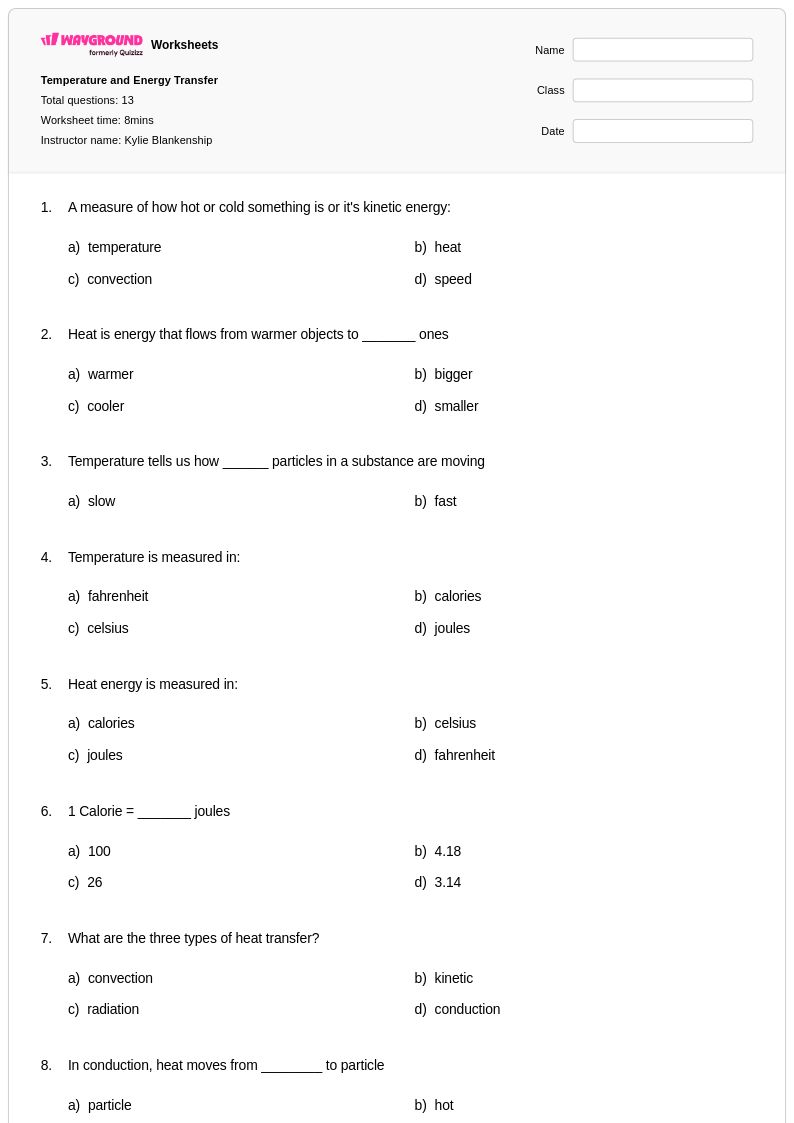
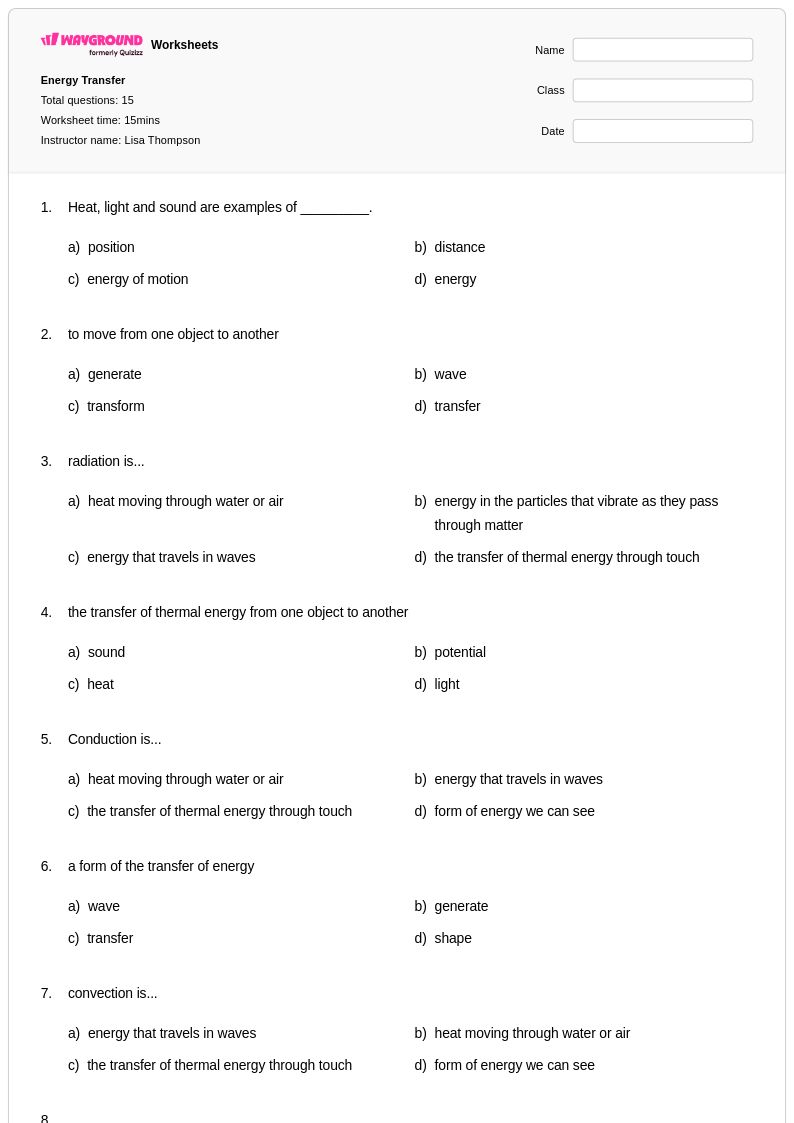
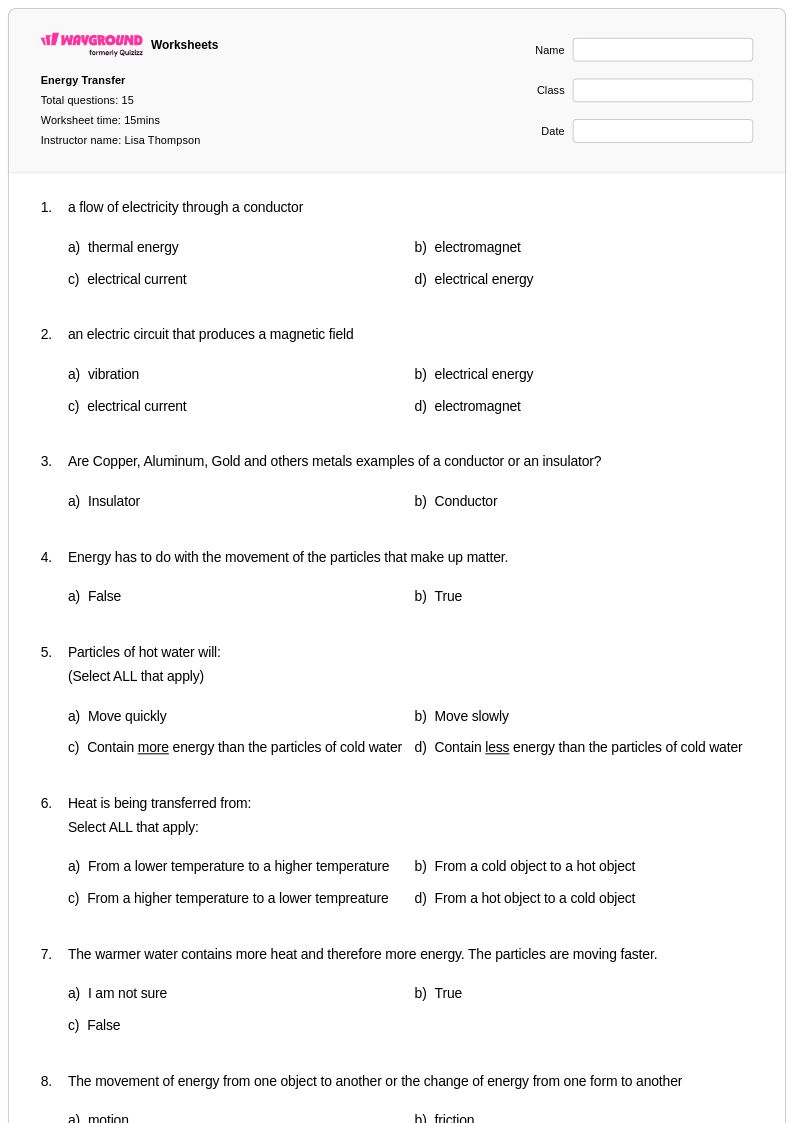
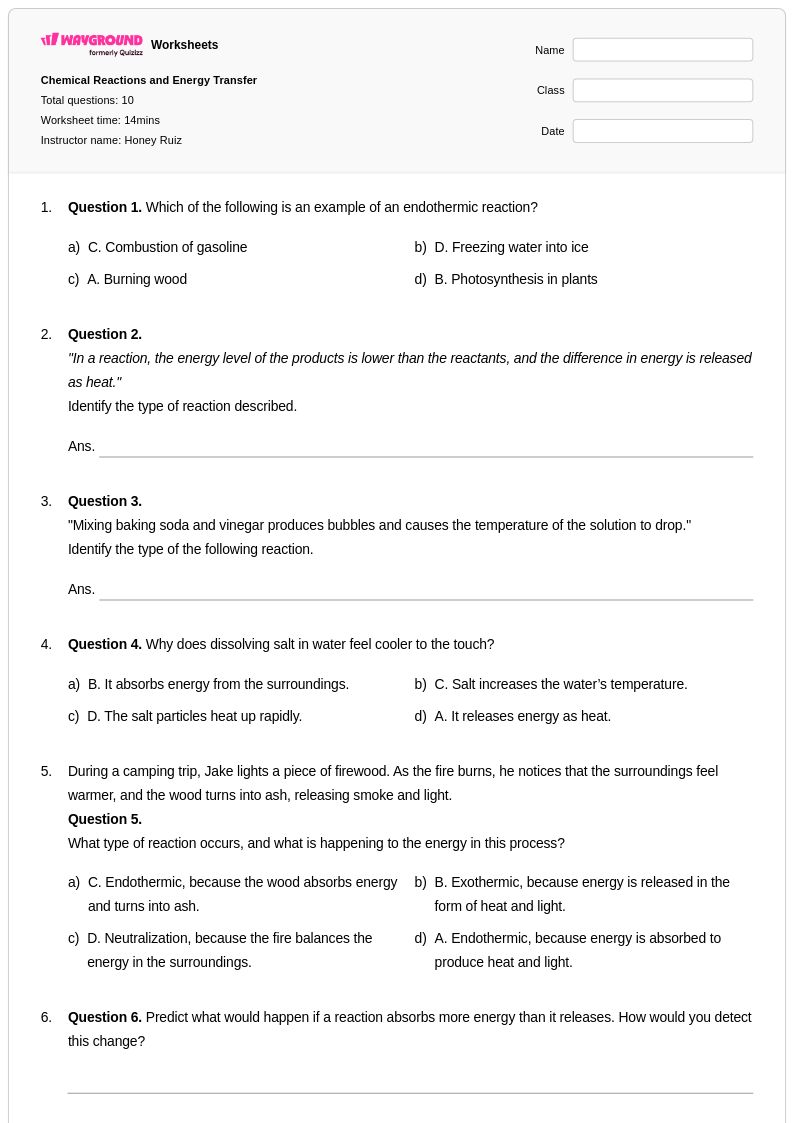
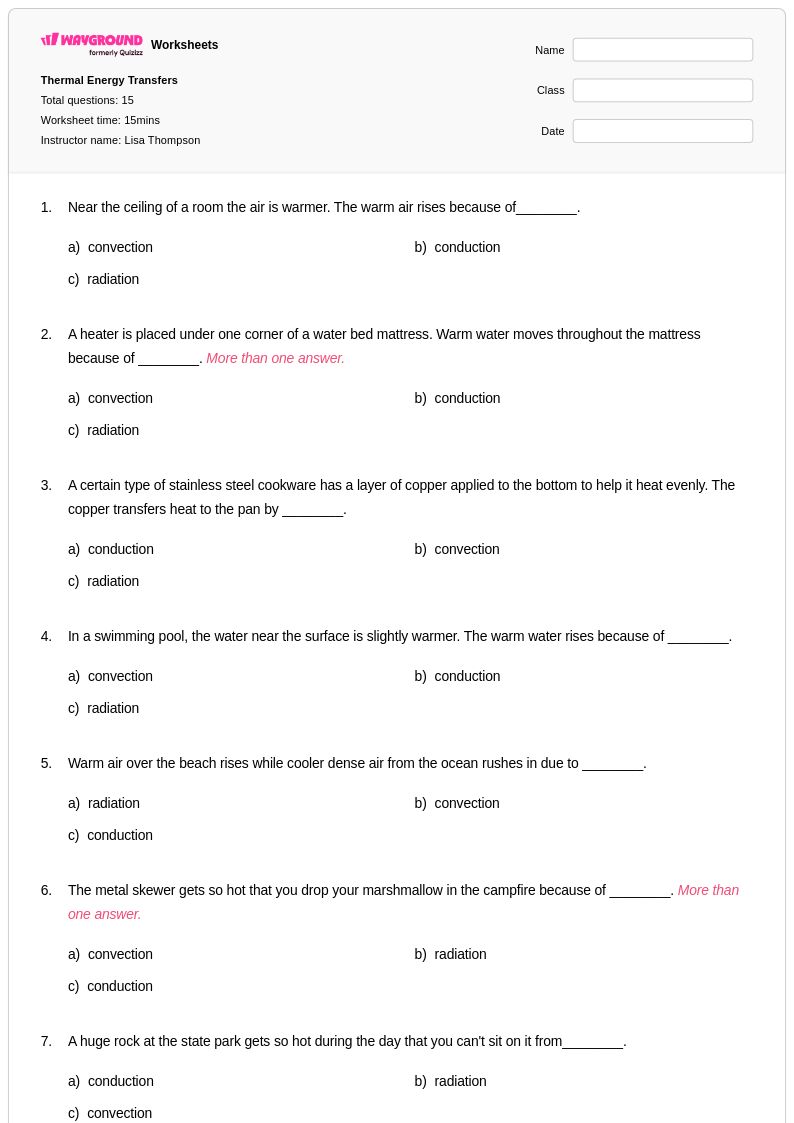
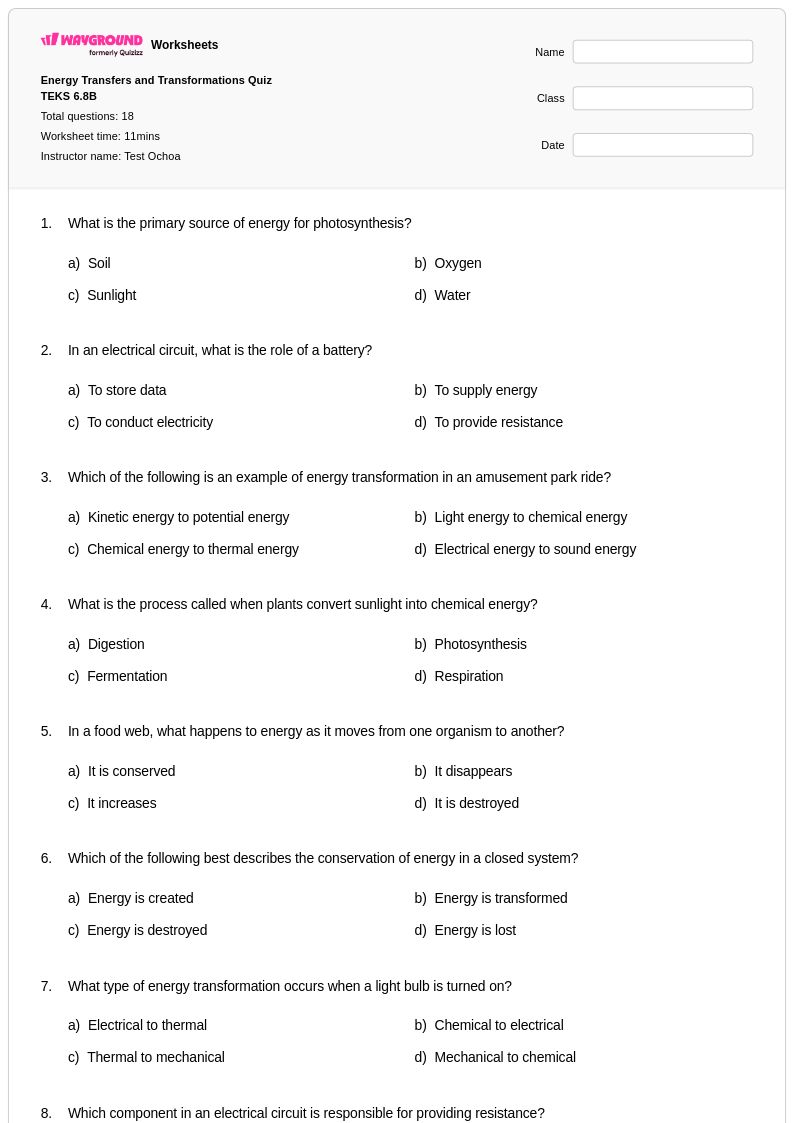
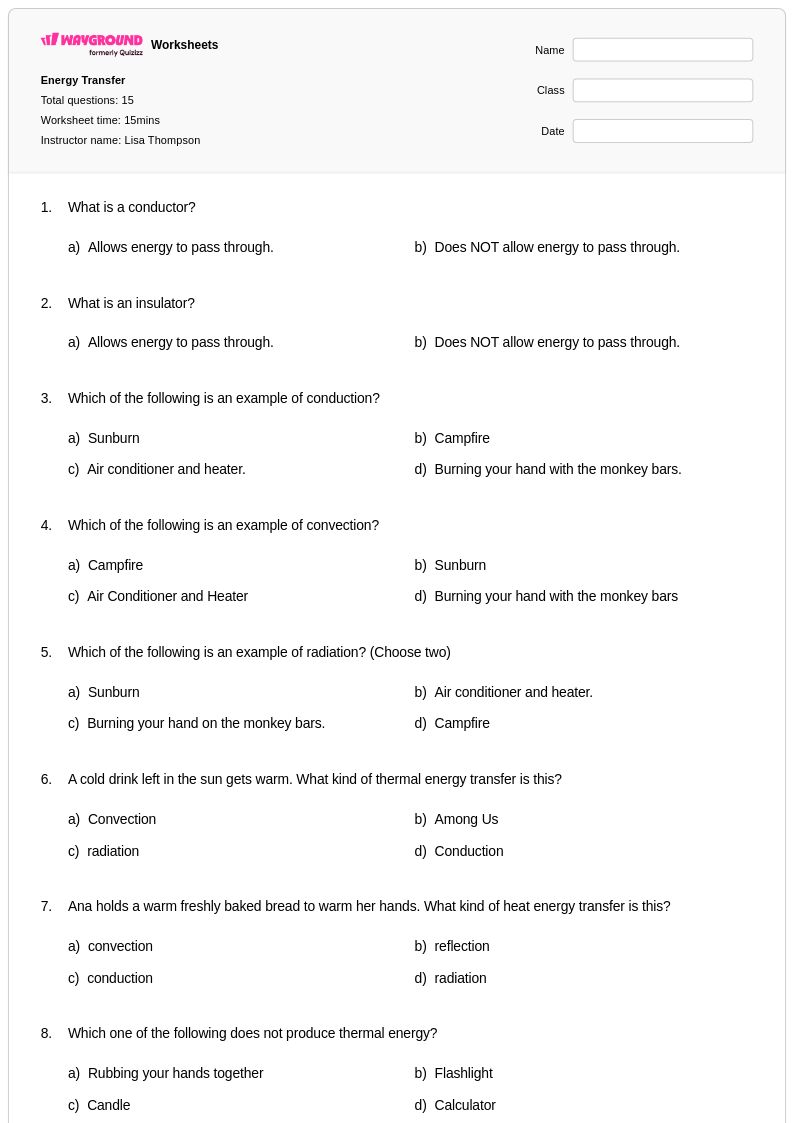
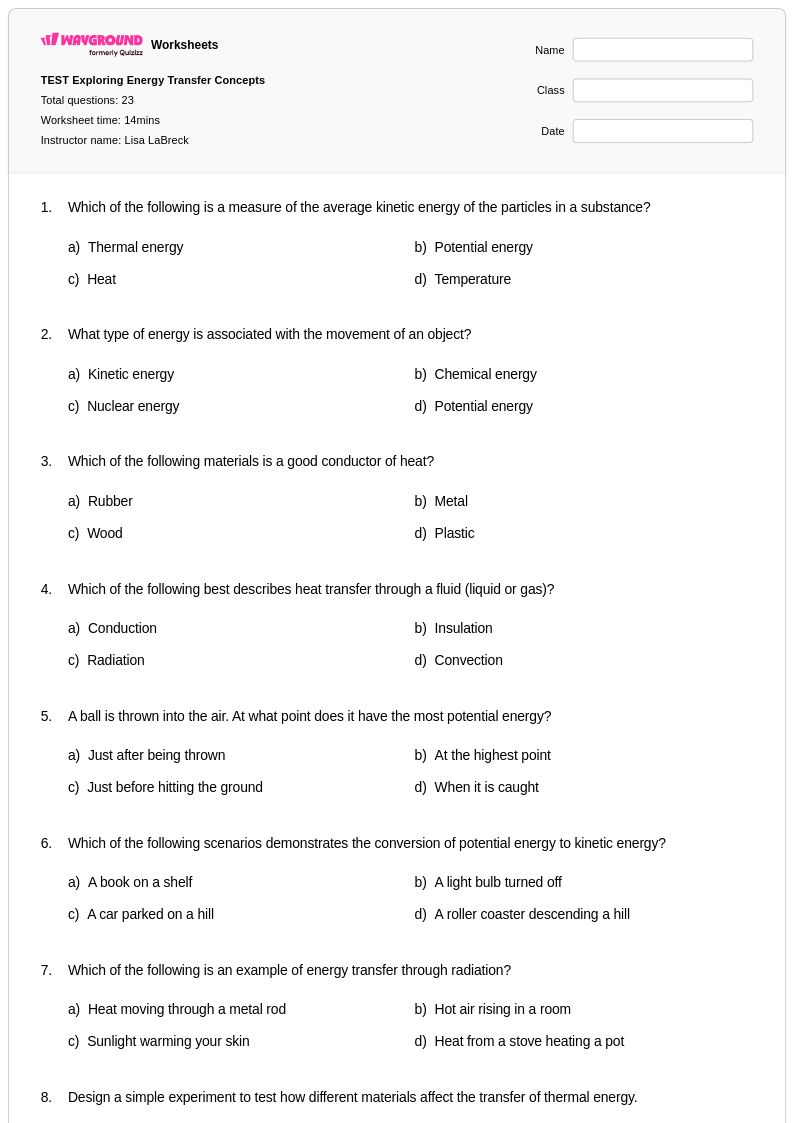
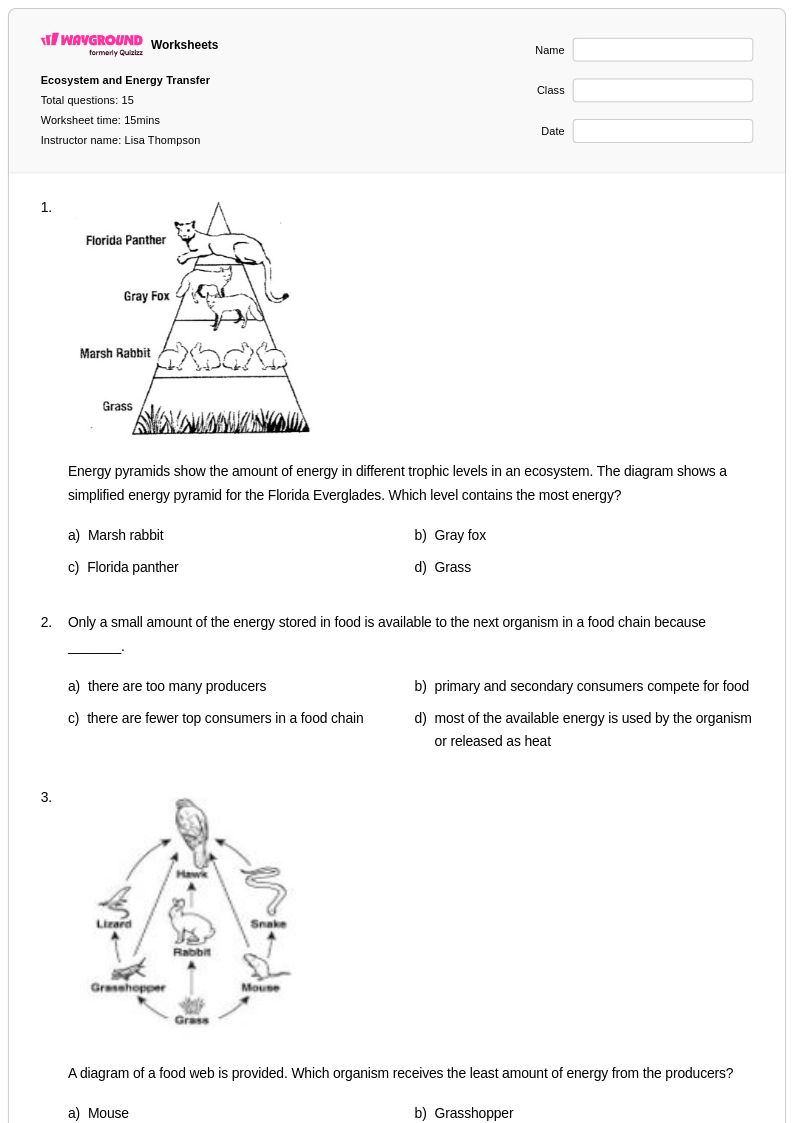
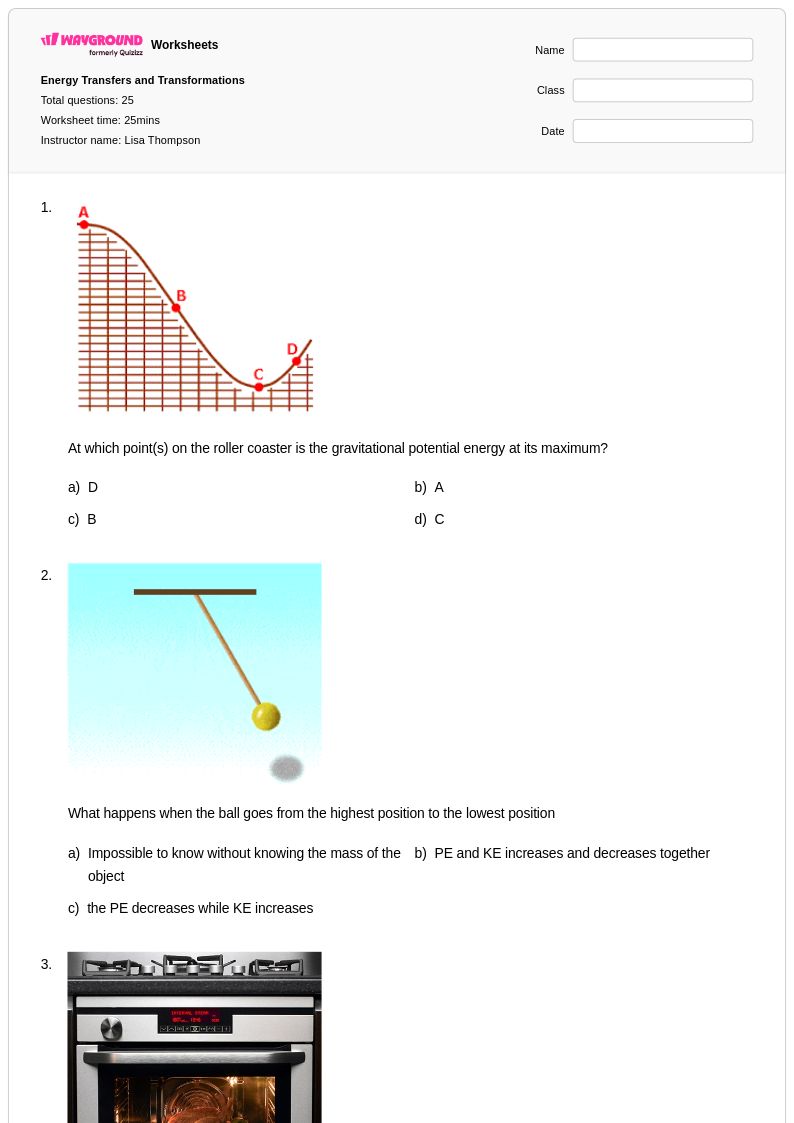
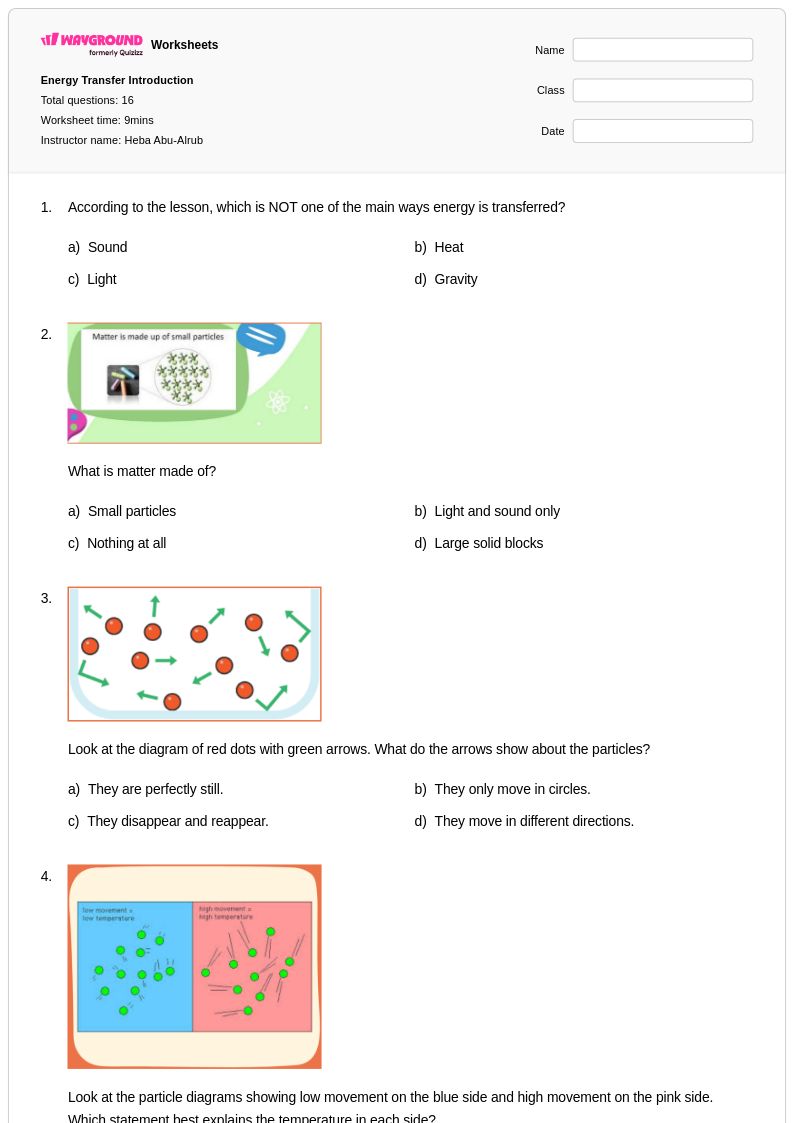
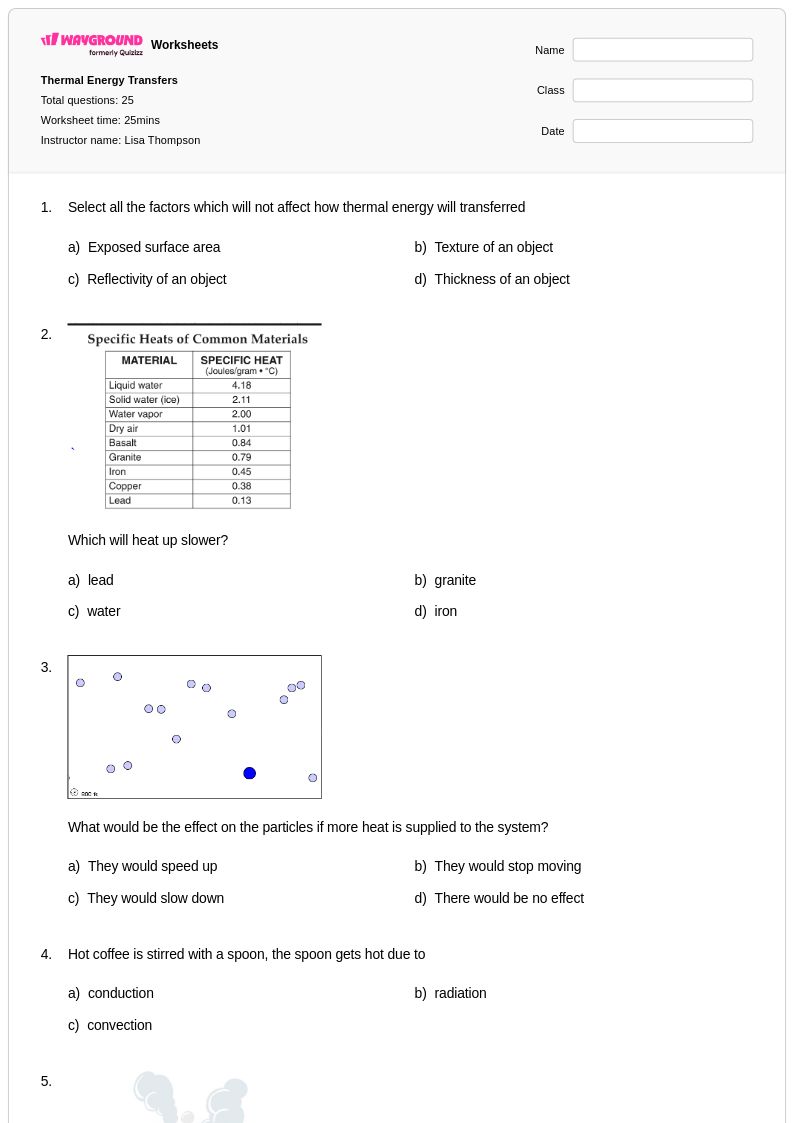
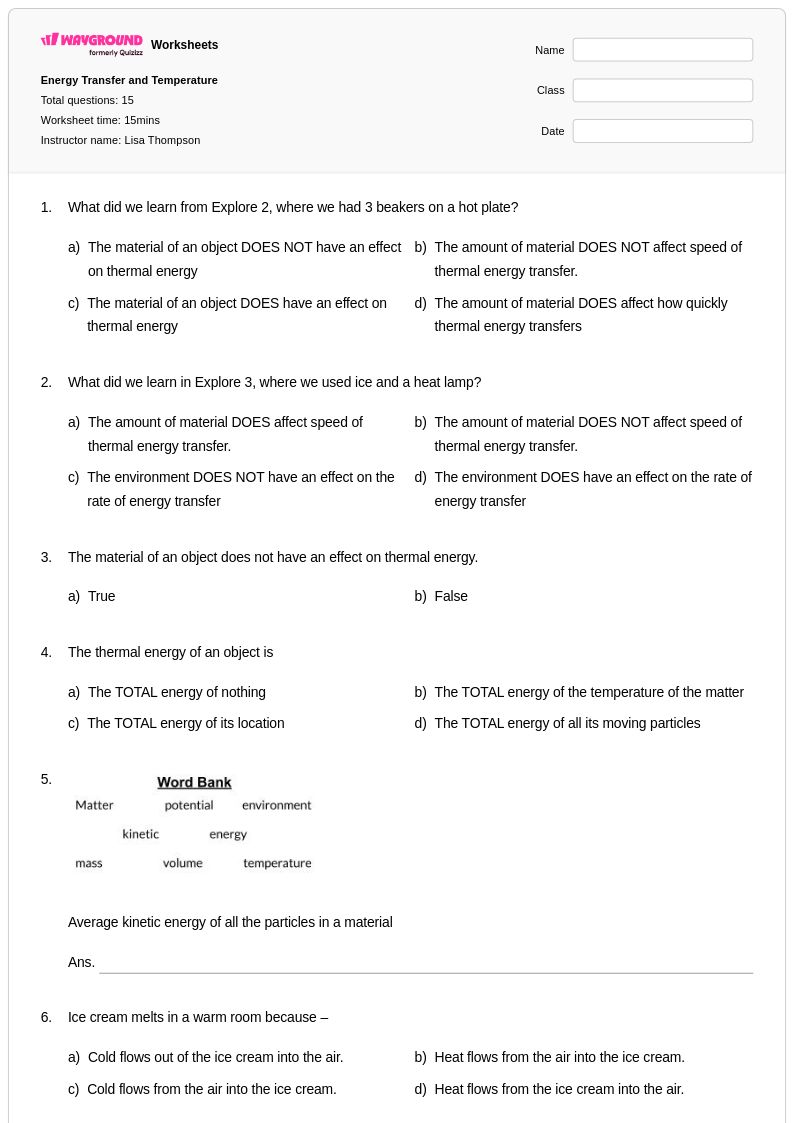
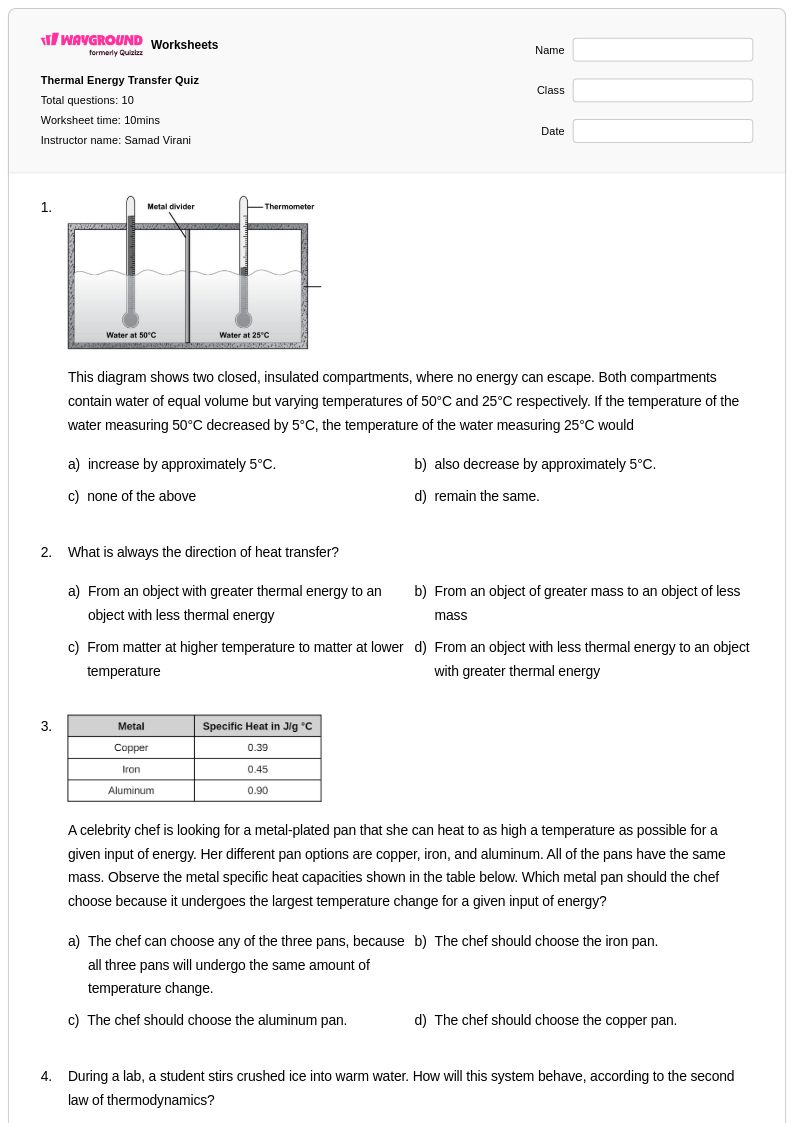
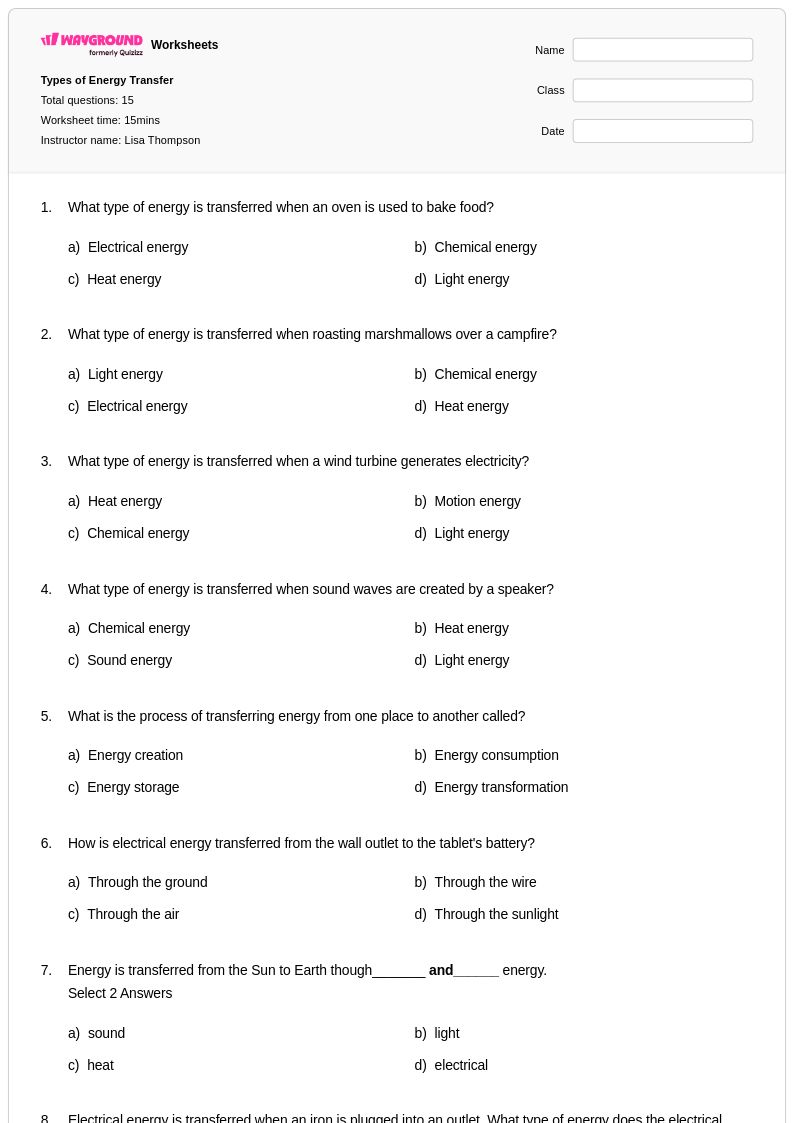
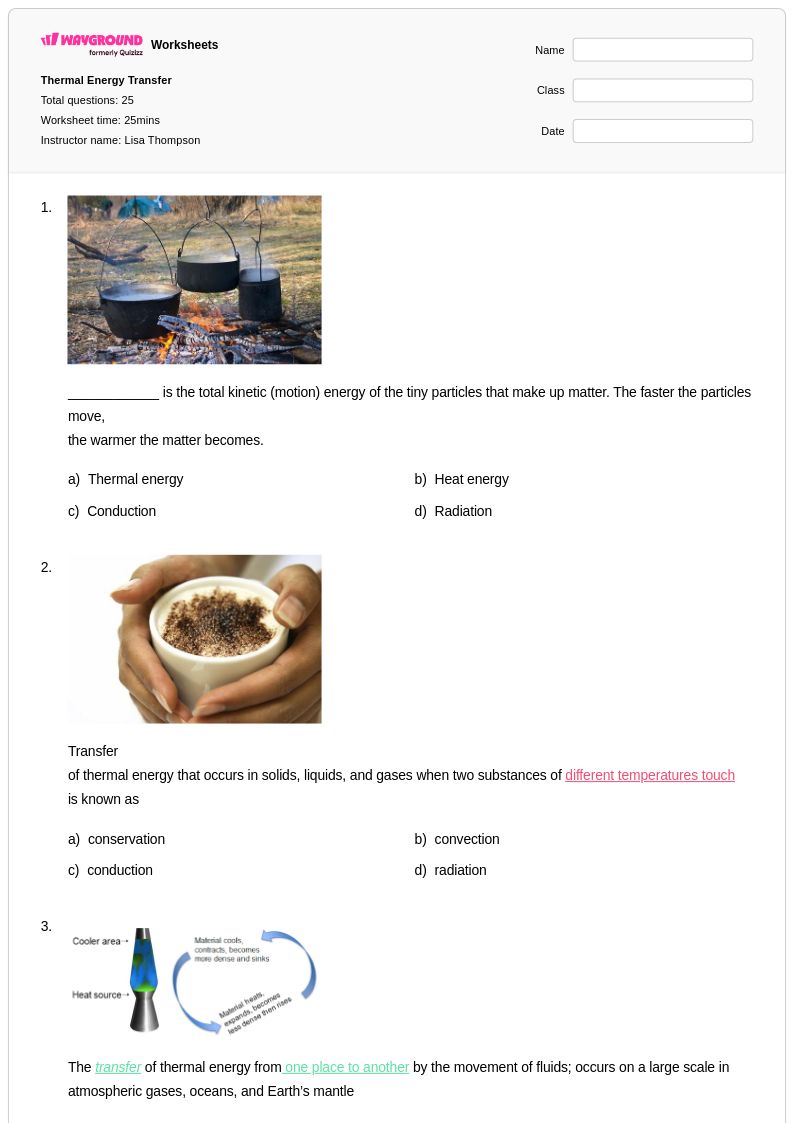
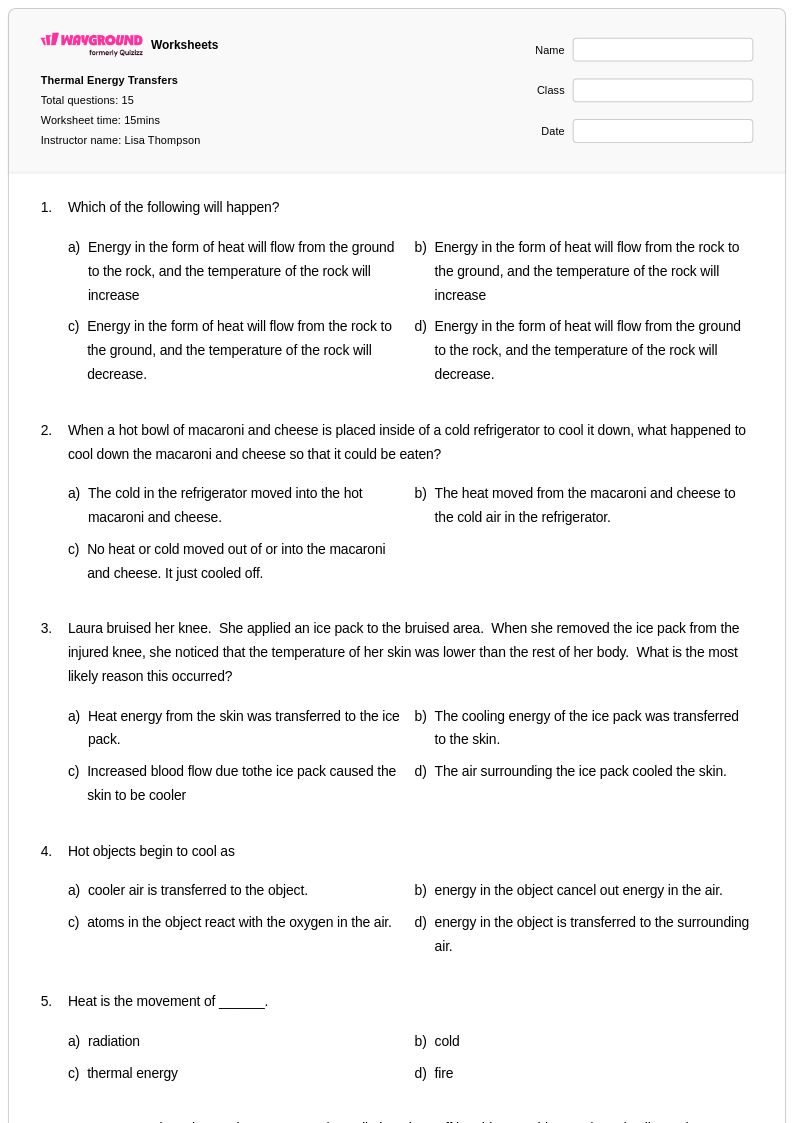
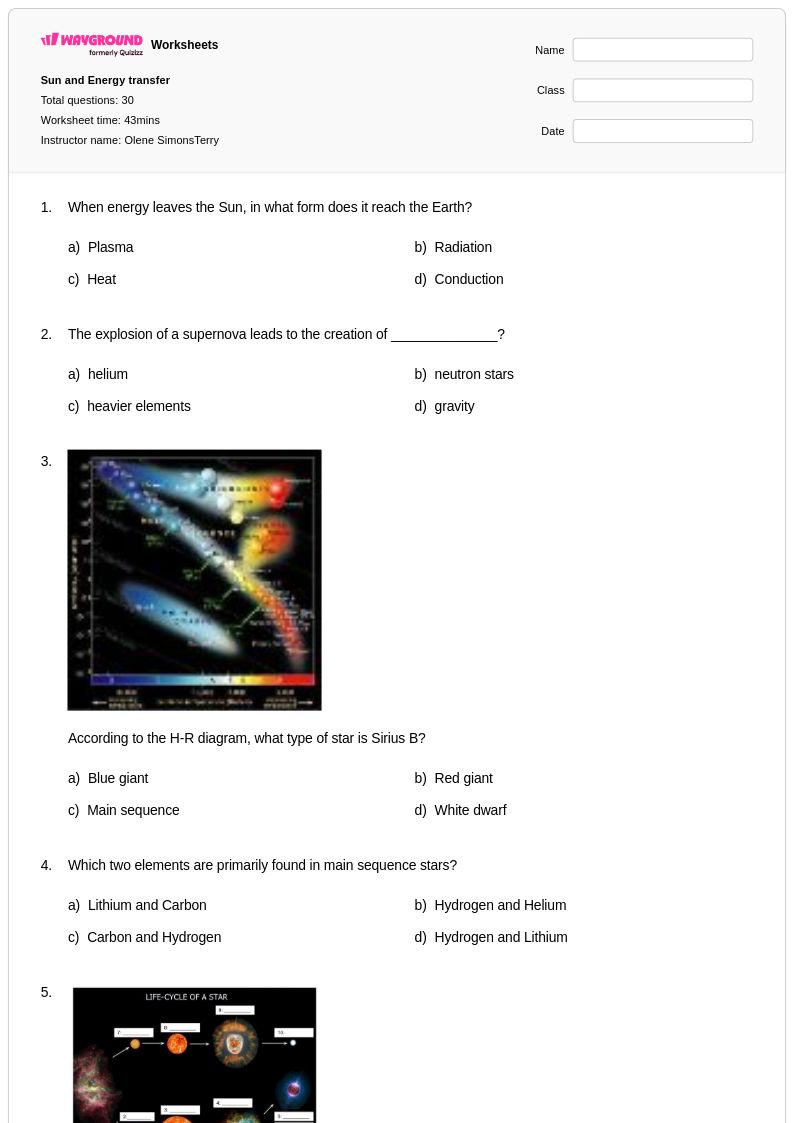
Energy transfer worksheets for Class 12 physics students available through Wayground (formerly Quizizz) provide comprehensive practice with the fundamental principles governing how energy moves between systems and transforms from one form to another. These expertly designed worksheets strengthen students' analytical skills in examining kinetic and potential energy conversions, thermodynamic processes, wave energy propagation, and electromagnetic energy transfer mechanisms. Each worksheet collection includes detailed practice problems that challenge students to apply conservation of energy principles, calculate energy efficiency in real-world scenarios, and analyze complex energy transformations in mechanical, thermal, and electrical systems. The accompanying answer keys enable students to verify their understanding of energy transfer calculations and conceptual applications, while the free printable pdf format ensures accessibility for both classroom instruction and independent study sessions.
Wayground (formerly Quizizz) empowers educators with millions of teacher-created energy transfer resources that can be seamlessly integrated into Class 12 physics curricula through advanced search and filtering capabilities. The platform's standards-aligned worksheet collections support differentiated instruction by offering varying complexity levels, from foundational energy conservation problems to advanced thermodynamics and quantum energy transfer scenarios. Teachers can customize these digital and printable materials to match their specific lesson objectives, whether focusing on mechanical energy systems, heat transfer mechanisms, or electromagnetic radiation principles. This flexible resource ecosystem facilitates targeted skill practice, enables effective remediation for struggling students, and provides enrichment opportunities for advanced learners, while the comprehensive pdf collections ensure that energy transfer concepts can be reinforced through both interactive digital exercises and traditional worksheet-based practice.
FAQs
How do I teach energy transfer to middle and high school students?
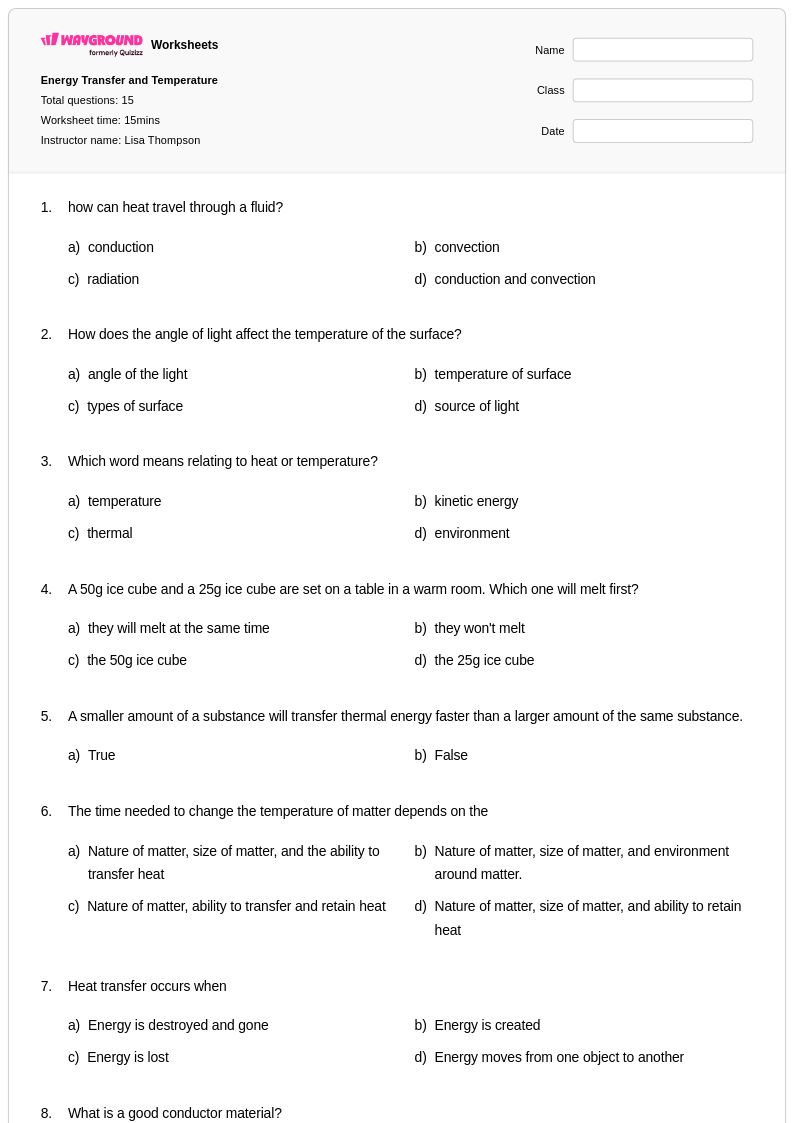
Start by grounding students in the three primary mechanisms of heat transfer: conduction, convection, and radiation. Use concrete, everyday examples such as a metal spoon heating up in soup (conduction), warm air rising in a room (convection), and sunlight warming skin (radiation) before introducing formal definitions. From there, build toward mechanical work and electromagnetic energy transfer so students can connect physical mechanisms to mathematical relationships. Structured practice problems that progress from conceptual identification to quantitative calculation help solidify understanding at each stage.
What exercises help students practice energy transfer concepts?
Effective practice includes diagram-labeling tasks where students identify the transfer mechanism in a given scenario, fill-in-the-blank problems reinforcing key vocabulary, and calculation problems applying energy conservation principles. Scenario-based questions, such as analyzing heat loss in a building or energy conversion in a circuit, push students to apply multiple concepts simultaneously. Progressively challenging problem sets that move from basic identification to multi-step quantitative analysis are especially useful for building both conceptual fluency and problem-solving skill.
What mistakes do students commonly make when learning about energy transfer?
One of the most common errors is conflating heat and temperature, leading students to incorrectly describe energy transfer as the movement of temperature rather than thermal energy. Students also frequently misidentify the mechanism at work, for example labeling convection as conduction when both seem to involve physical contact or proximity. Another persistent misconception is treating energy transfer as a creation or destruction process rather than a conservation one. Targeted practice problems that force students to distinguish between mechanisms and apply conservation principles directly address these error patterns.
How can I use energy transfer worksheets to support students with different learning needs?
Energy transfer worksheets on Wayground are available in both printable PDF formats for traditional classroom use and digital formats for technology-integrated environments, including the option to host them as a quiz on Wayground. In digital mode, teachers can apply individual student accommodations such as extended time, read-aloud support for question text, and reduced answer choices to lower cognitive load for students who need it. These settings can be assigned to specific students while the rest of the class receives default settings, making differentiation seamless and unobtrusive. Adjustable font sizes and reading themes are also available to support accessibility.
How do energy transfer worksheets support energy conservation principles specifically?
Well-designed energy transfer worksheets include problems that require students to track energy as it moves between objects or changes form, reinforcing that total energy in a closed system remains constant. This might involve calculating the heat lost by one object and gained by another in a thermal equilibrium problem, or tracing energy from a food source through a biological system. Answer keys with detailed explanations allow students to check not just their final answer but their reasoning process, which is critical for internalizing conservation as a principle rather than a formula.
At what grade level are energy transfer worksheets most appropriate?
Energy transfer is introduced conceptually as early as upper elementary school, but the topic is most commonly taught in middle school physical science (grades 6-8) and reinforced with mathematical rigor in high school physics (grades 9-12). Worksheets that progress from qualitative identification of transfer mechanisms to quantitative problem-solving involving thermodynamic equations are best suited for grades 8 through 10, where students are developing both the conceptual framework and the algebra skills needed to handle energy calculations.