Free Printable Evaluating Ideas Worksheets for Class 8
Class 8 students master evaluating ideas through Wayground's comprehensive reading comprehension worksheets, featuring printable PDFs with practice problems and answer keys to develop critical thinking skills.
Explore printable Evaluating Ideas worksheets for Class 8
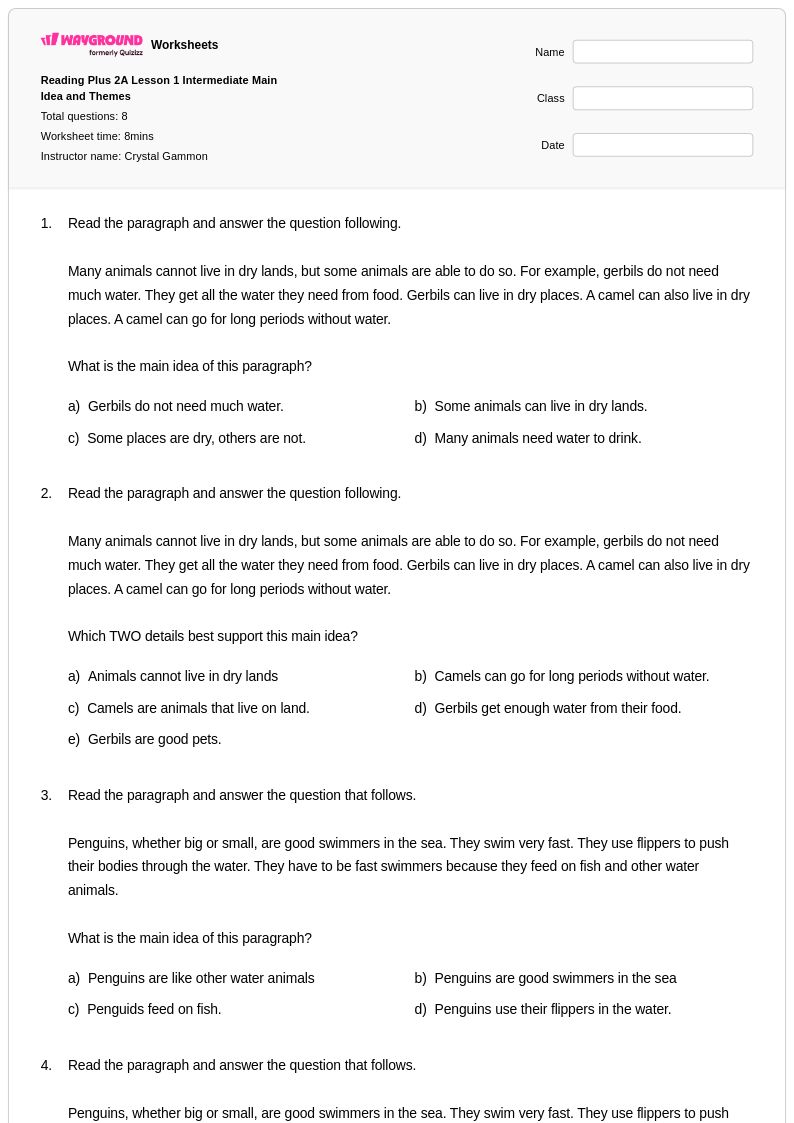
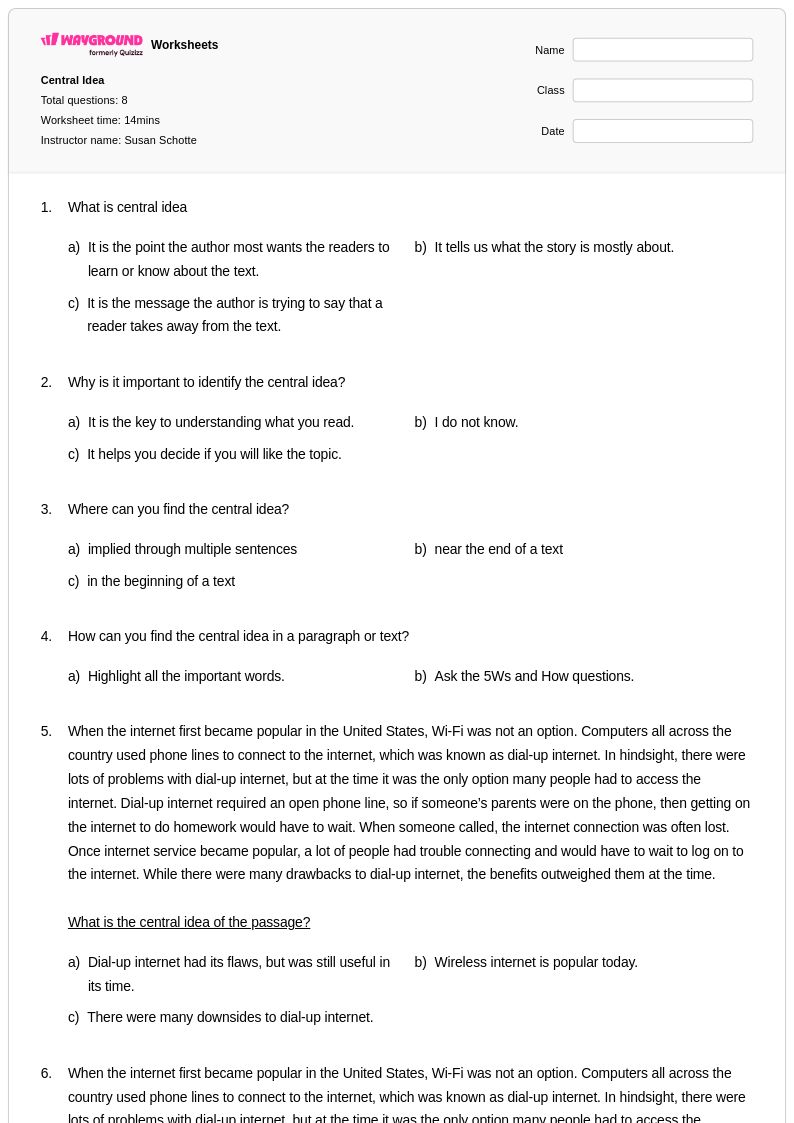
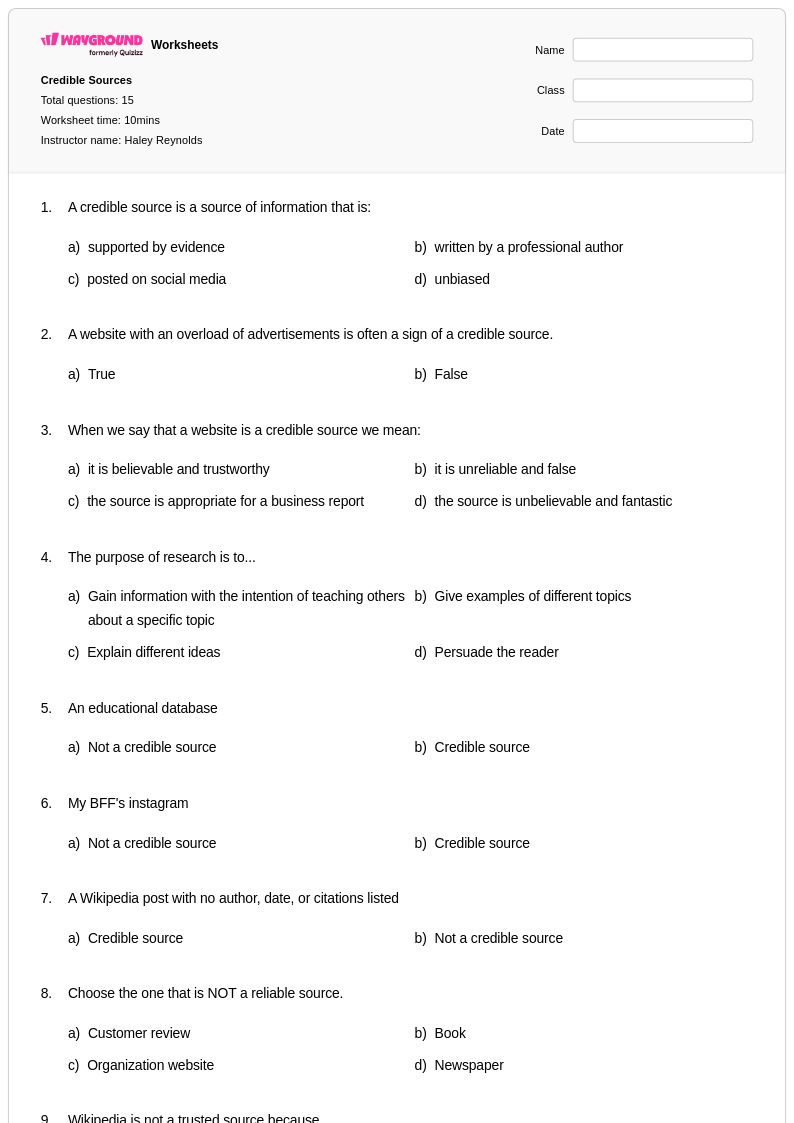
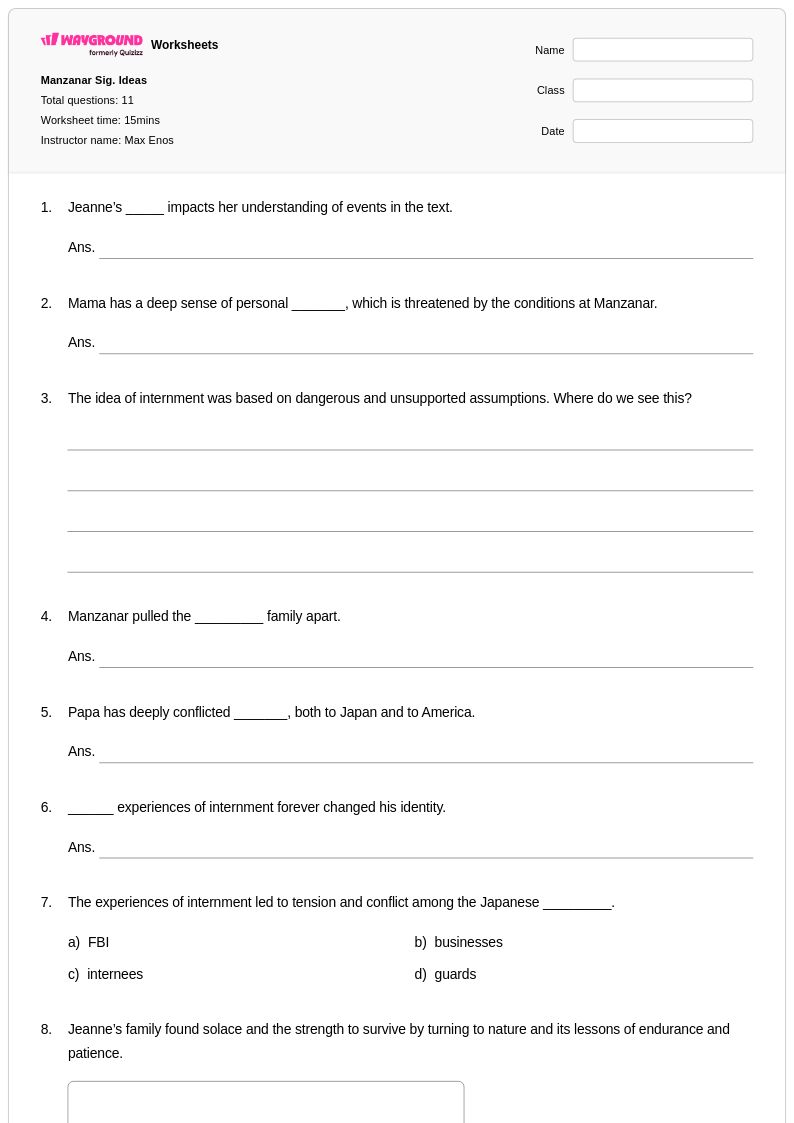
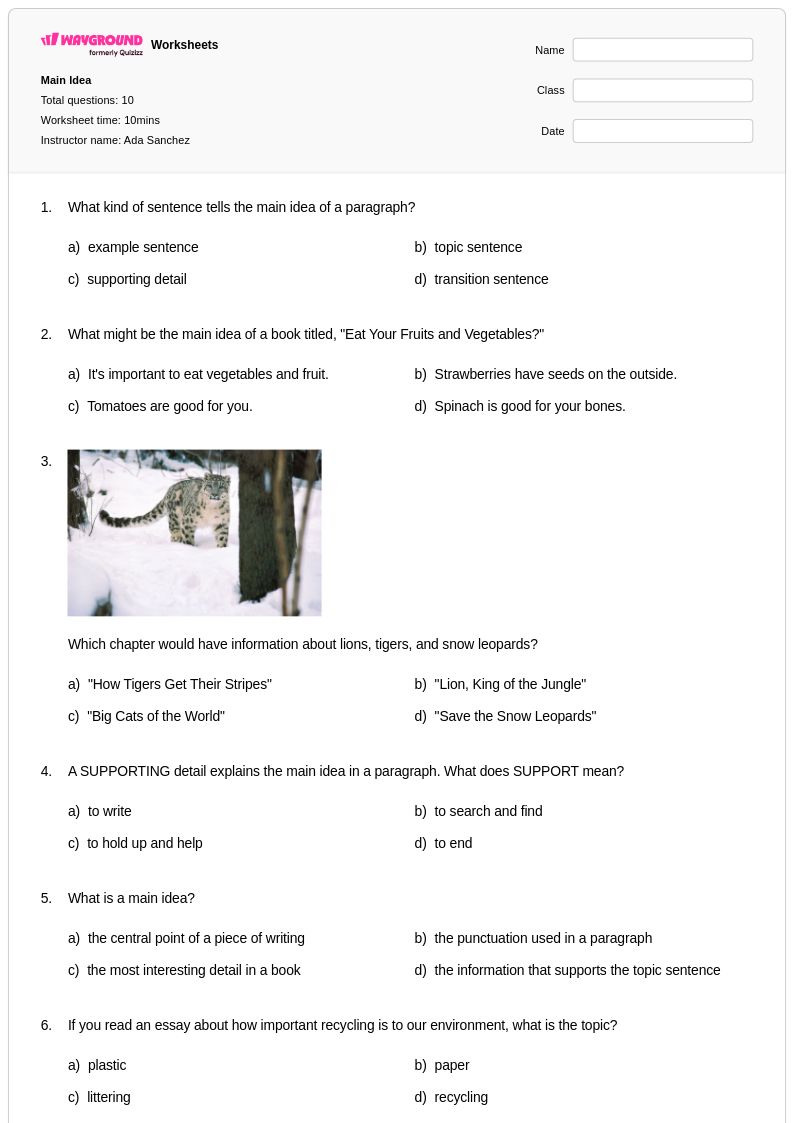
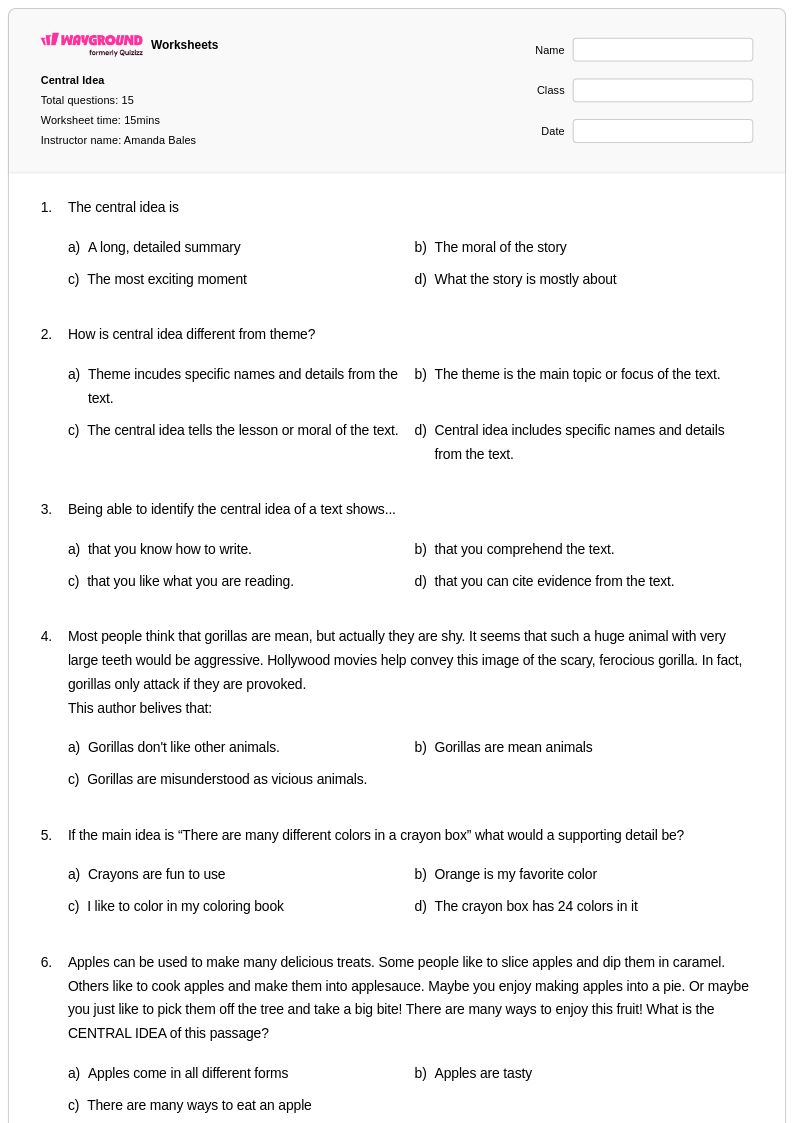
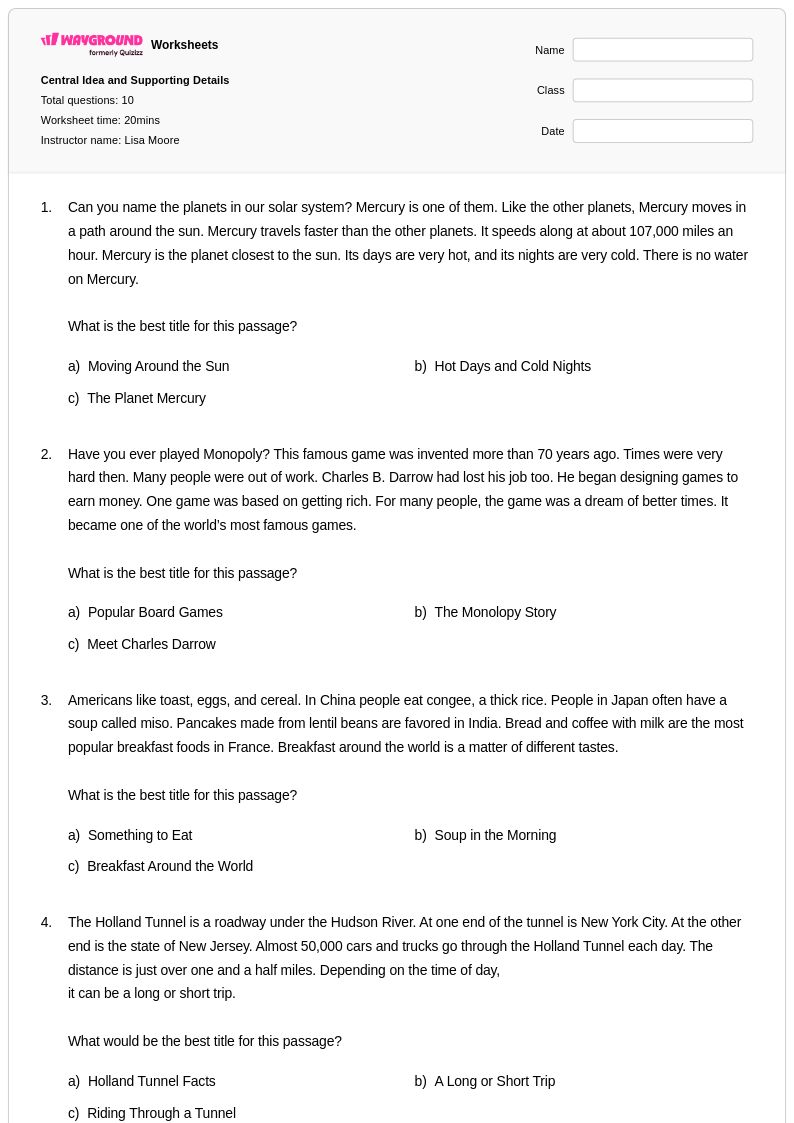
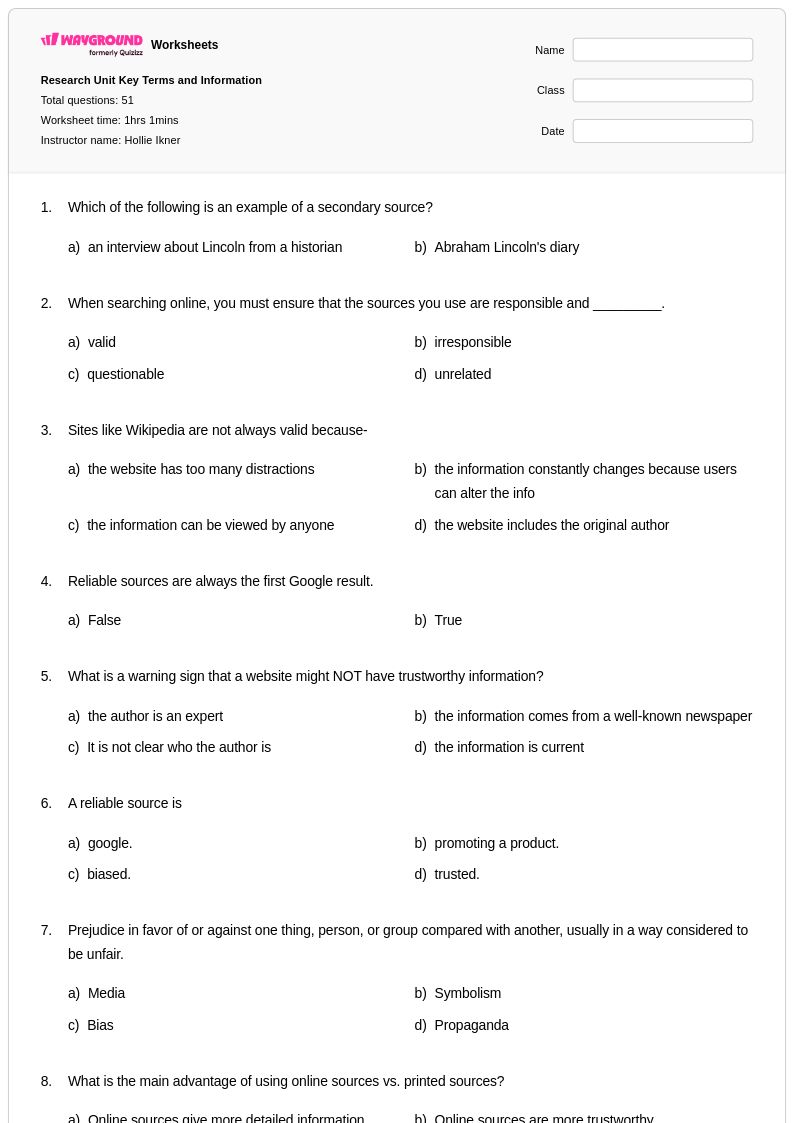
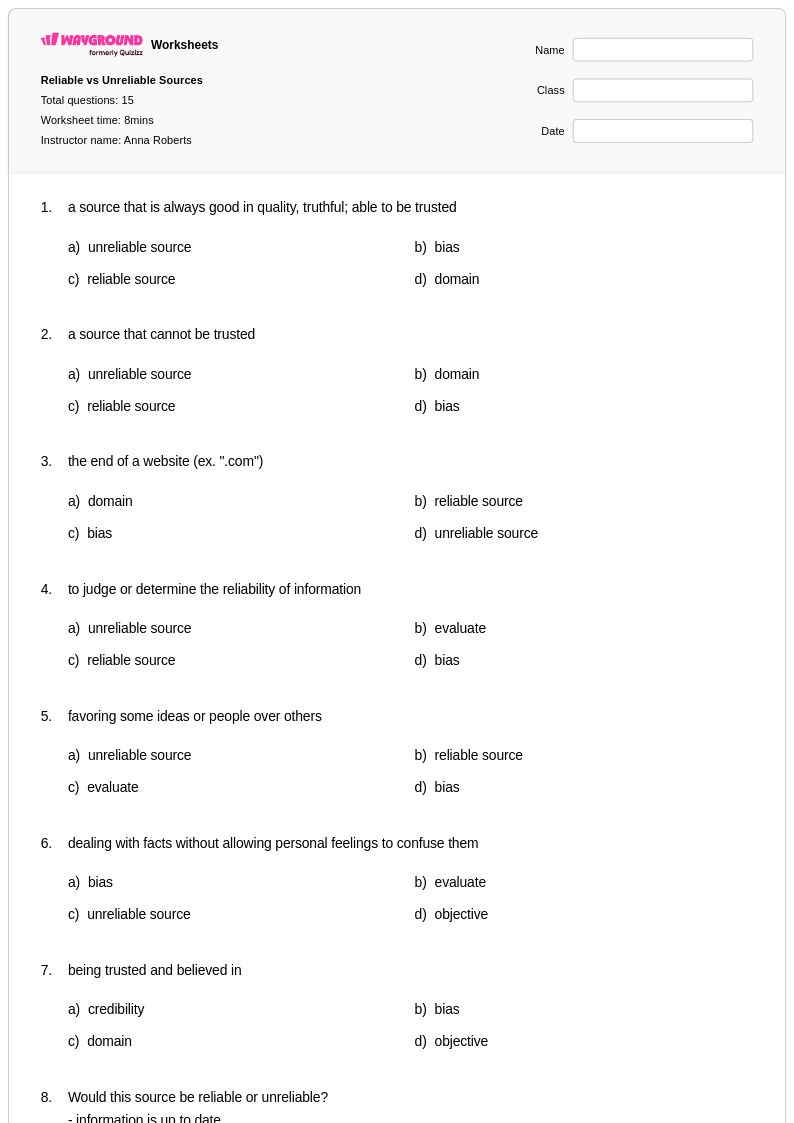
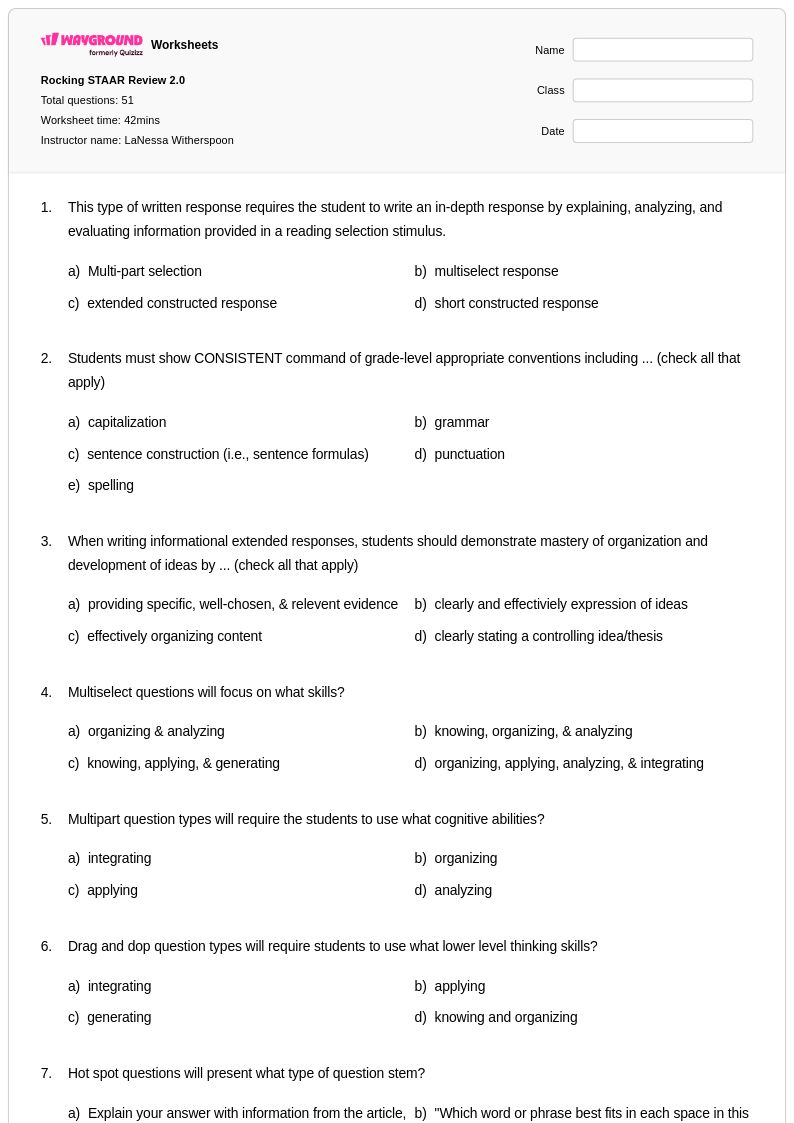
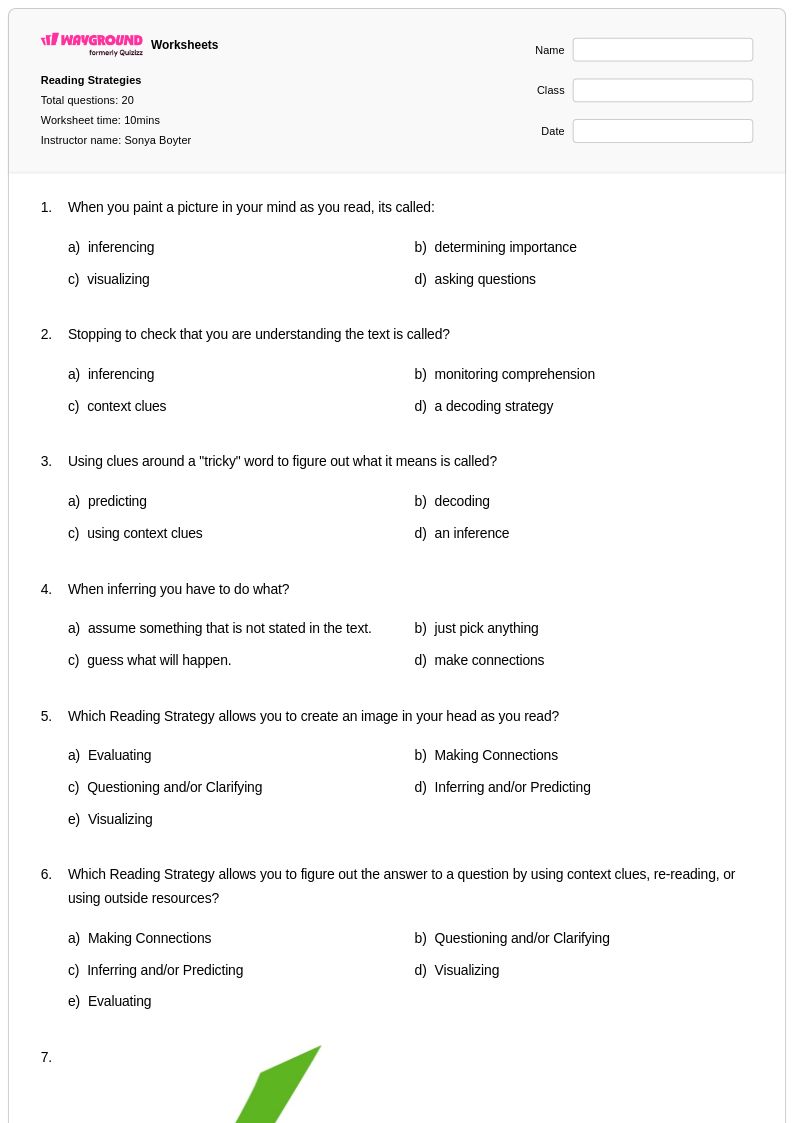
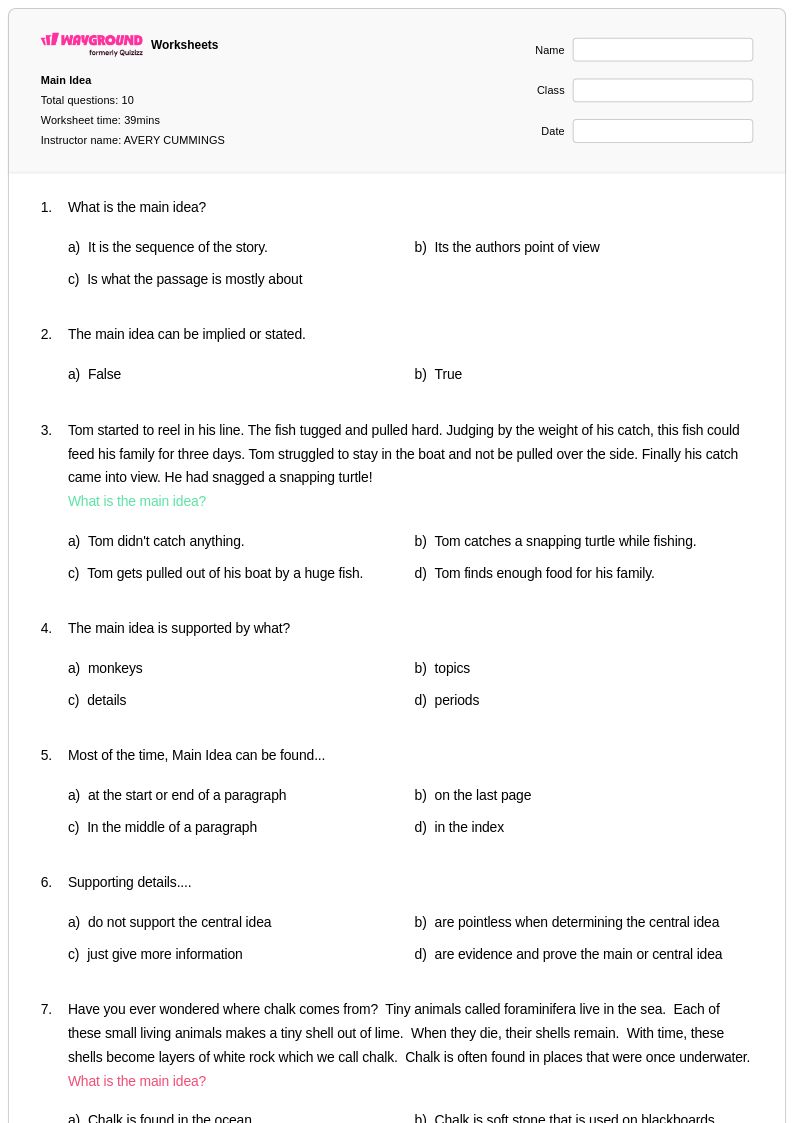
Evaluating Ideas worksheets for Class 8 students through Wayground (formerly Quizizz) provide comprehensive resources designed to strengthen critical thinking and analytical reading skills essential for academic success. These carefully crafted worksheets guide eighth-grade students through the complex process of assessing arguments, analyzing evidence, and determining the credibility and effectiveness of various viewpoints within texts. Students develop advanced comprehension abilities as they practice distinguishing between fact and opinion, identifying bias, evaluating the strength of supporting details, and making informed judgments about author perspectives and intentions. Each worksheet includes structured practice problems that challenge students to think deeply about textual content, while accompanying answer keys enable both independent study and guided instruction. These free printable resources offer systematic skill-building opportunities that prepare students for more sophisticated literary analysis and real-world critical thinking applications.
Wayground (formerly Quizizz) empowers educators with an extensive collection of millions of teacher-created worksheets specifically focused on evaluating ideas and other essential reading comprehension strategies for Class 8. The platform's robust search and filtering capabilities allow teachers to quickly locate resources that align with curriculum standards and match their students' specific learning needs. Advanced differentiation tools enable educators to customize worksheet difficulty levels and content focus, ensuring appropriate challenge levels for diverse learners while maintaining academic rigor. Teachers can seamlessly integrate these materials into their lesson planning for initial instruction, targeted remediation, or enrichment activities, with resources available in both printable pdf format for traditional classroom use and digital formats for technology-enhanced learning environments. This comprehensive worksheet library supports consistent skill practice and assessment, helping educators track student progress in developing critical evaluation abilities that transfer across all academic disciplines.
FAQs
How do I teach students to evaluate ideas in a text?
Teaching students to evaluate ideas begins with helping them slow down and interrogate what an author is actually claiming, rather than accepting content at face value. Start by modeling how to distinguish fact from opinion, then progress to evaluating the quality of evidence used to support a claim. Structured graphic organizers and guided annotation prompts help students internalize these steps before applying them independently. Repeated practice across different text types, such as informational articles, persuasive essays, and editorials, builds transferable critical thinking habits.
What exercises help students practice evaluating ideas?
Effective practice exercises for evaluating ideas include identifying whether statements are facts or opinions, spotting author bias, assessing the credibility of sources cited in a passage, and judging whether evidence logically supports a given conclusion. Worksheets that present short passages followed by structured analytical questions are particularly useful because they give students a contained context in which to apply each skill. Varying the text genre across practice sessions ensures students develop flexible evaluative thinking rather than pattern-matching to a single format.
What mistakes do students commonly make when evaluating ideas?
One of the most common errors is conflating personal agreement with logical validity — students often judge an argument as strong simply because they agree with its conclusion, rather than examining the quality of its evidence. Another frequent mistake is failing to distinguish between an author's stated facts and their interpretive claims, leading students to accept opinion as objective truth. Students also tend to overlook author bias unless it is explicitly labeled, so instruction should include practice with texts where bias is subtle or embedded in word choice.
How can I use evaluating ideas worksheets to support different skill levels in my class?
Evaluating ideas worksheets can be tiered by text complexity and question demand to support remediation, core instruction, and enrichment within the same lesson. For struggling readers, pairing a simpler text with scaffolded sentence stems helps build evaluative language before students apply it independently. For advanced learners, open-ended analysis prompts that require students to construct and defend their own judgments provide an appropriate challenge. On Wayground, teachers can apply accommodations such as read aloud and reduced answer choices to individual students, ensuring the same worksheet is accessible across varying readiness levels without disrupting the rest of the class.
How do I use Wayground's evaluating ideas worksheets in my classroom?
Wayground's evaluating ideas worksheets are available as printable PDFs for traditional classroom use and in digital formats for technology-integrated environments, giving teachers flexibility depending on their setting. Teachers can also host worksheets as a live or self-paced quiz directly on Wayground, making it easy to collect student responses and monitor progress in real time. The included answer keys allow for efficient grading and provide a basis for targeted feedback or whole-class discussion after the activity.
How do I assess whether students can genuinely evaluate ideas versus just summarize them?
Genuine evaluation requires students to move beyond restating what a text says and instead make a judgment about its quality, validity, or reasoning. To assess this, look for whether students can explain why evidence is or is not sufficient, not just identify that evidence exists. Tasks that ask students to compare two opposing arguments and justify which is better supported tend to surface this distinction clearly. If students consistently describe without judging, targeted practice with evaluative sentence frames can help bridge the gap between comprehension and critical analysis.