Free Printable Expressions and Equations Worksheets for Class 6
Explore Wayground's free Class 6 expressions and equations worksheets featuring printable PDFs with practice problems and answer keys to help students master algebraic fundamentals through structured mathematical exercises.
Explore printable Expressions and Equations worksheets for Class 6
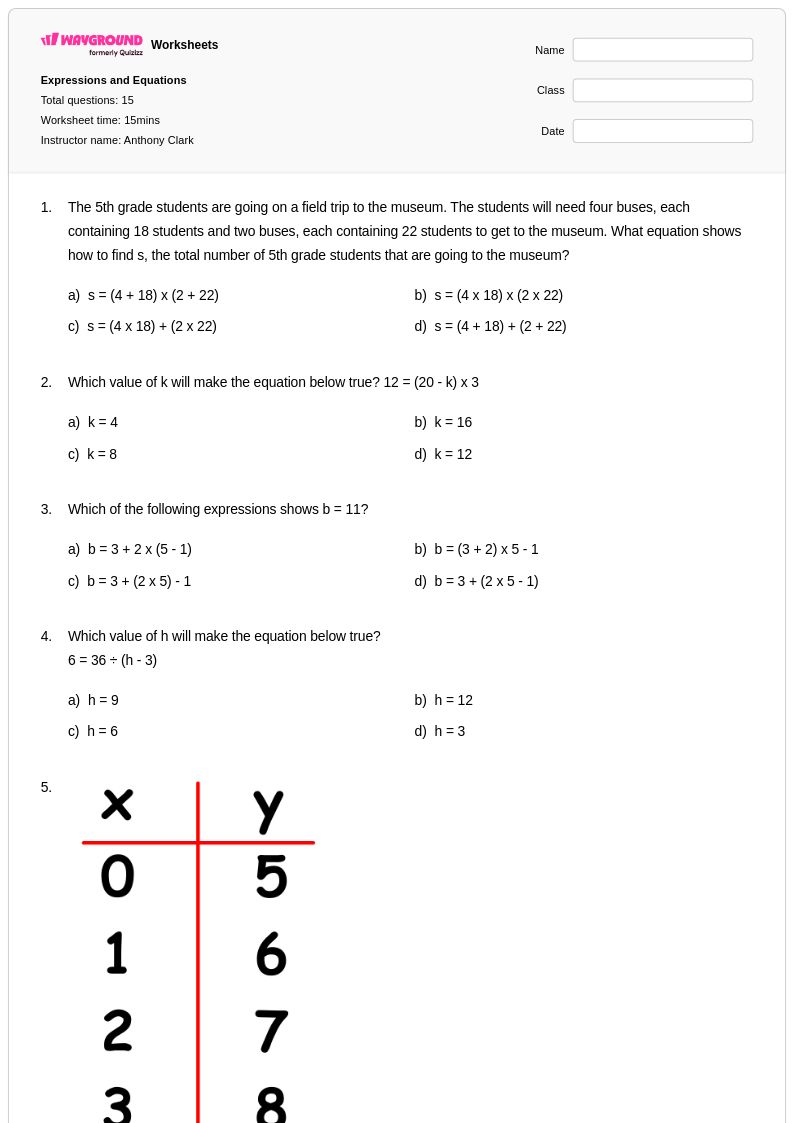
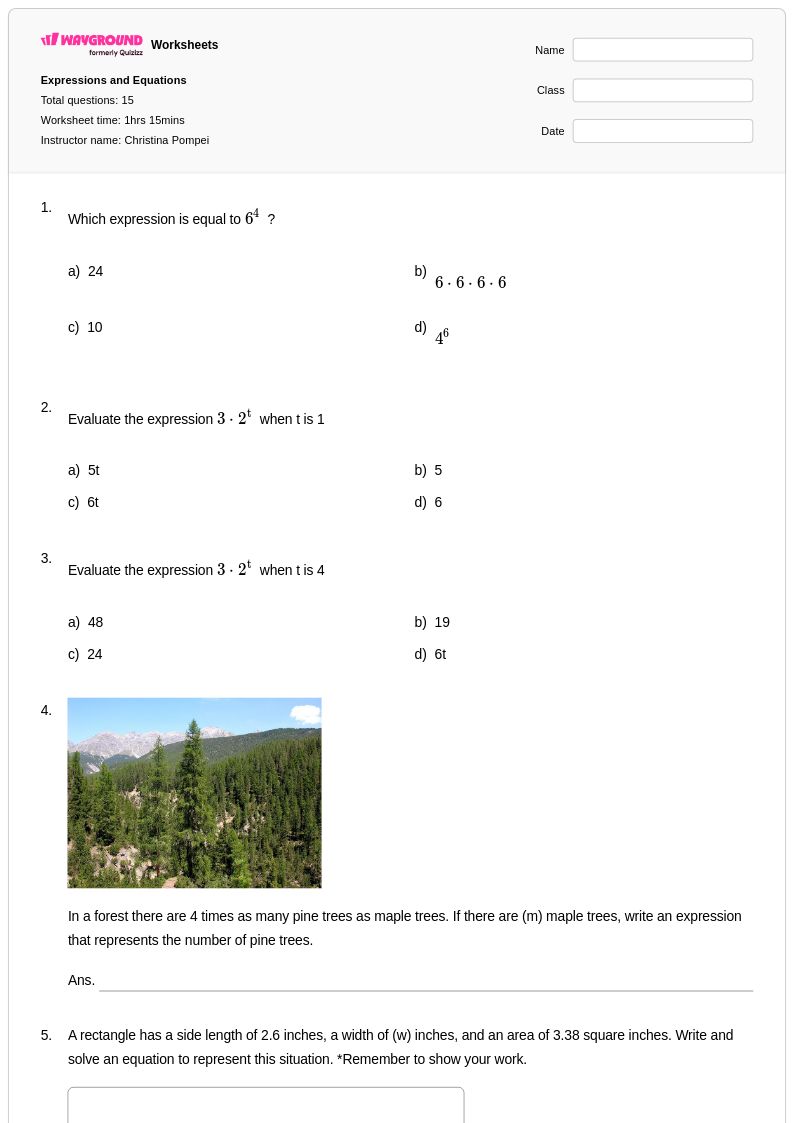
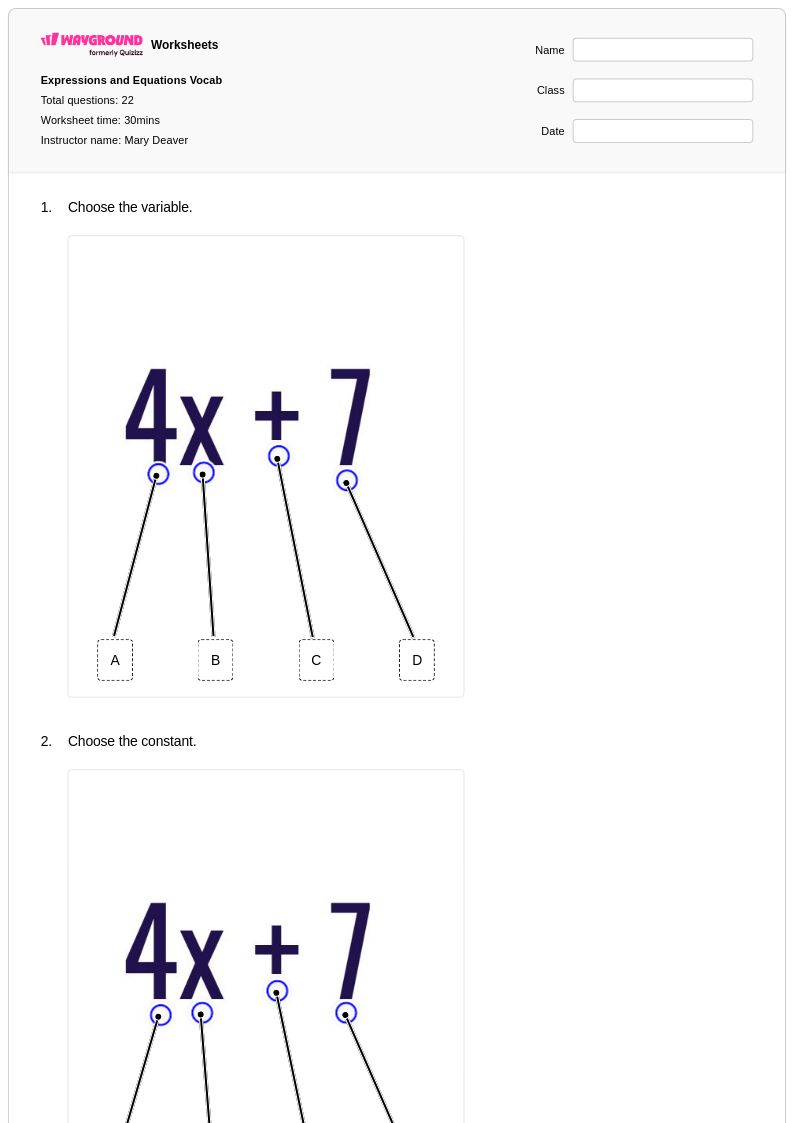
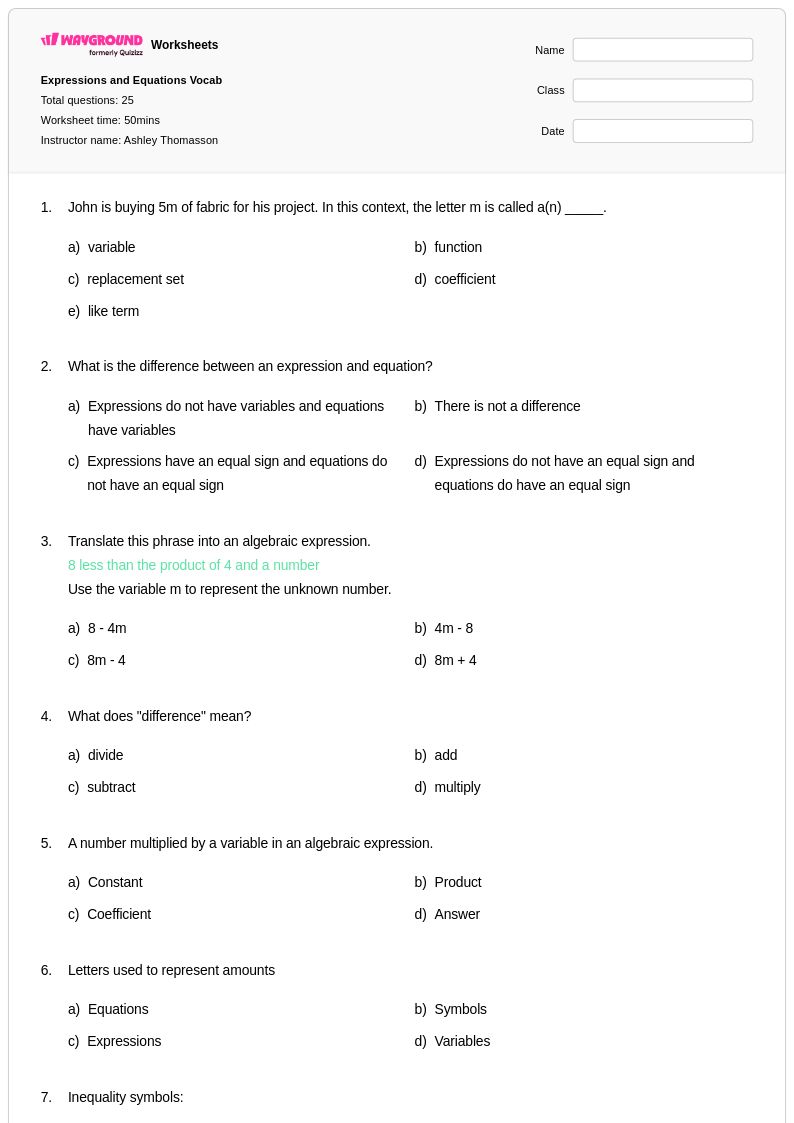
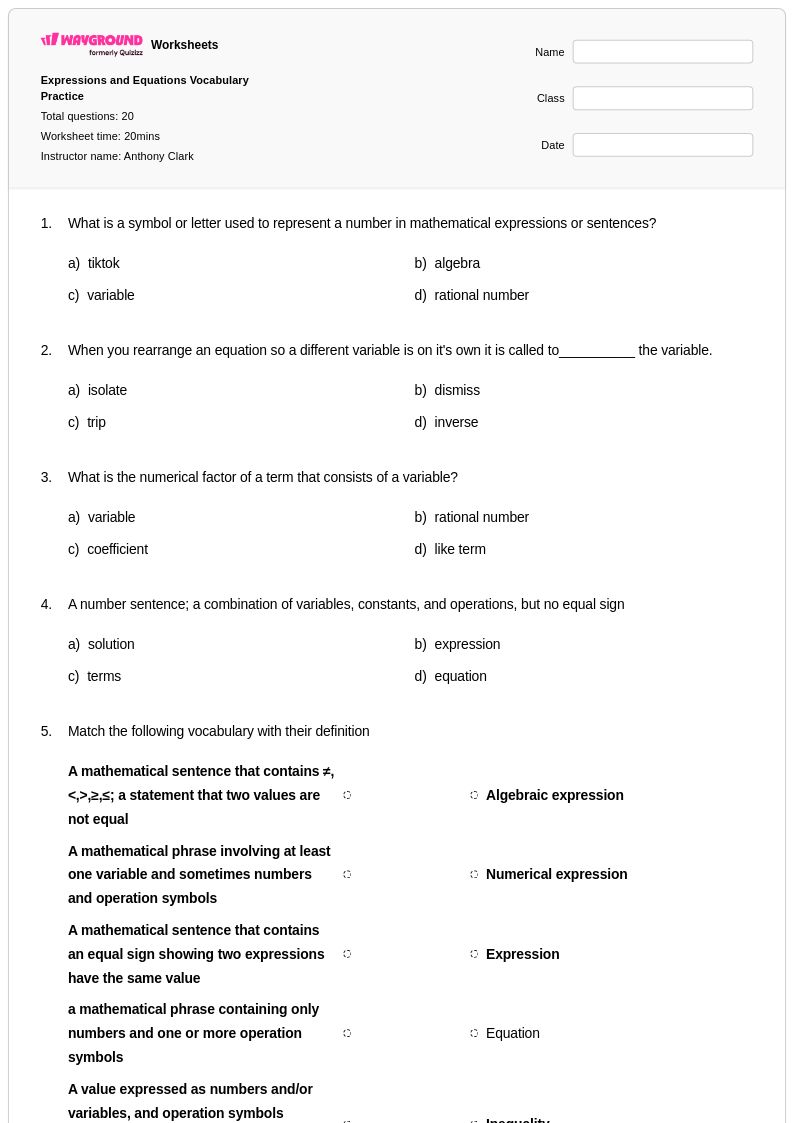
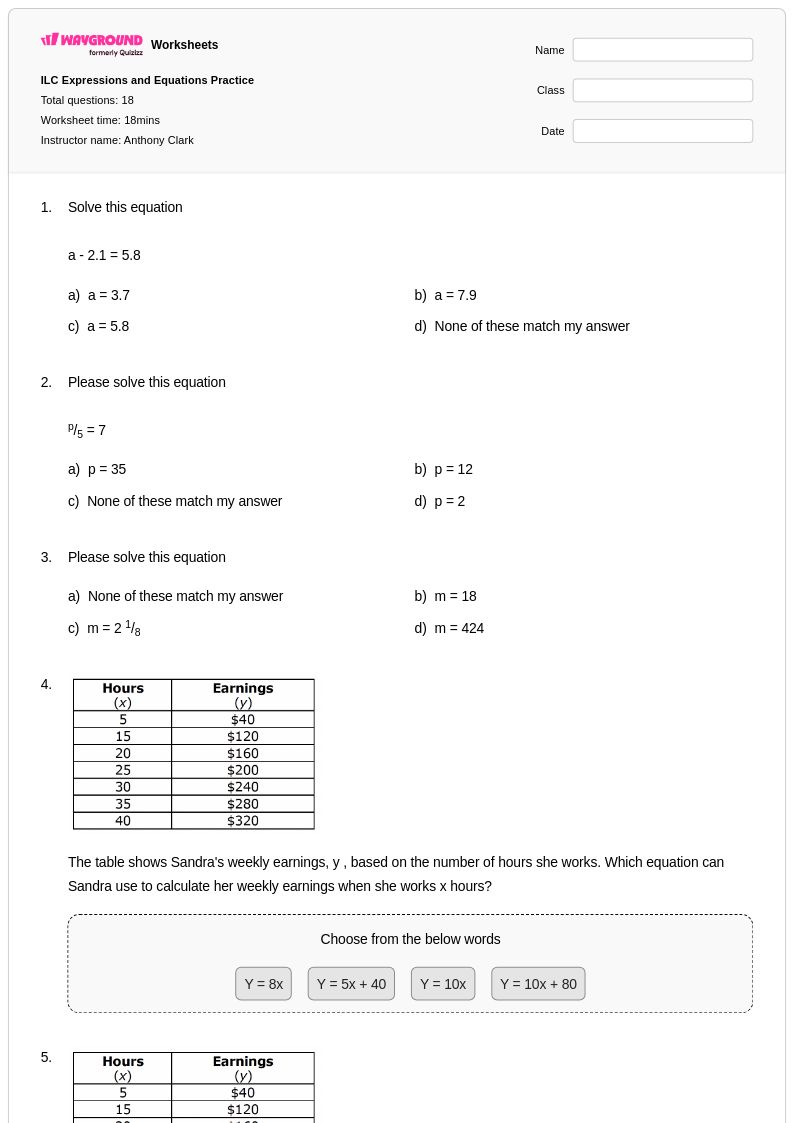
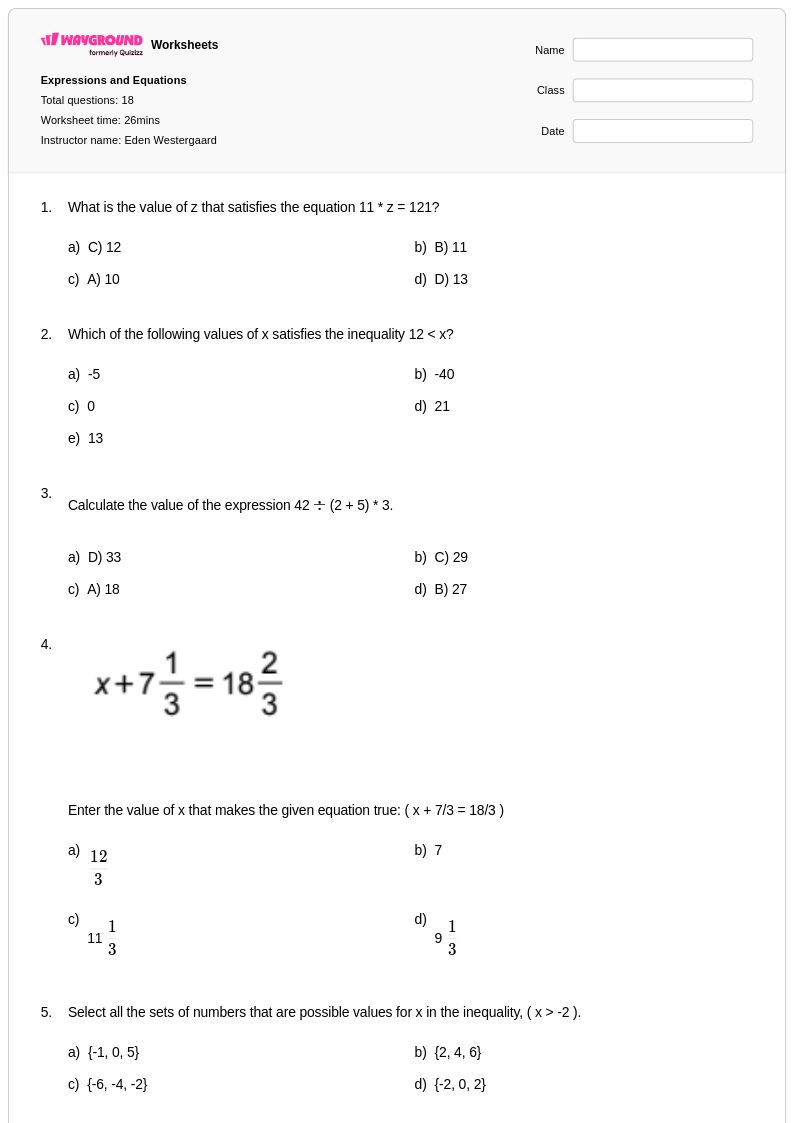
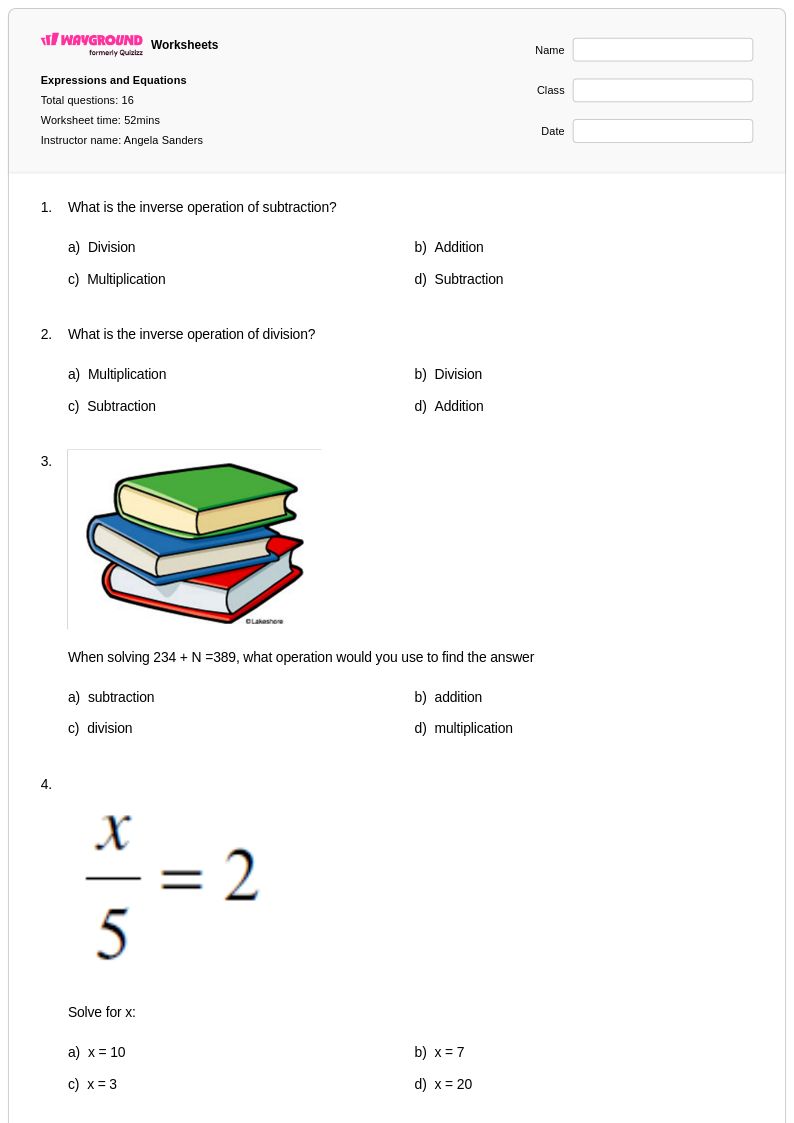
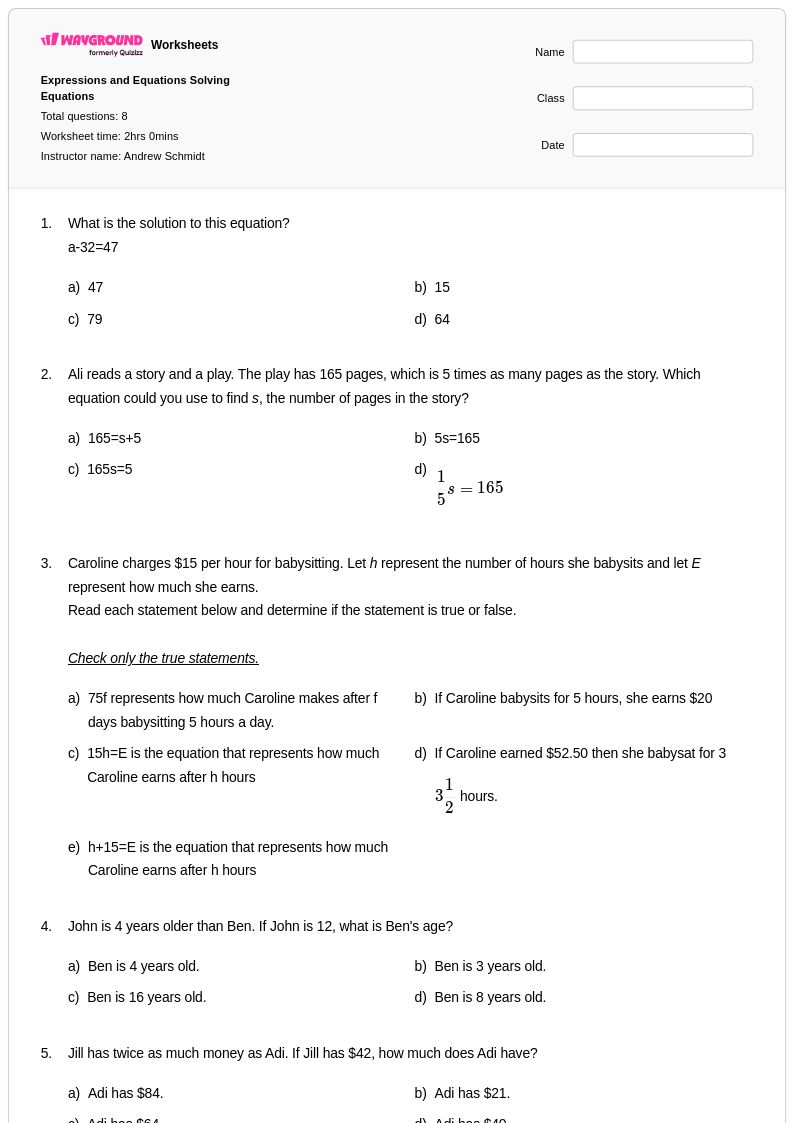
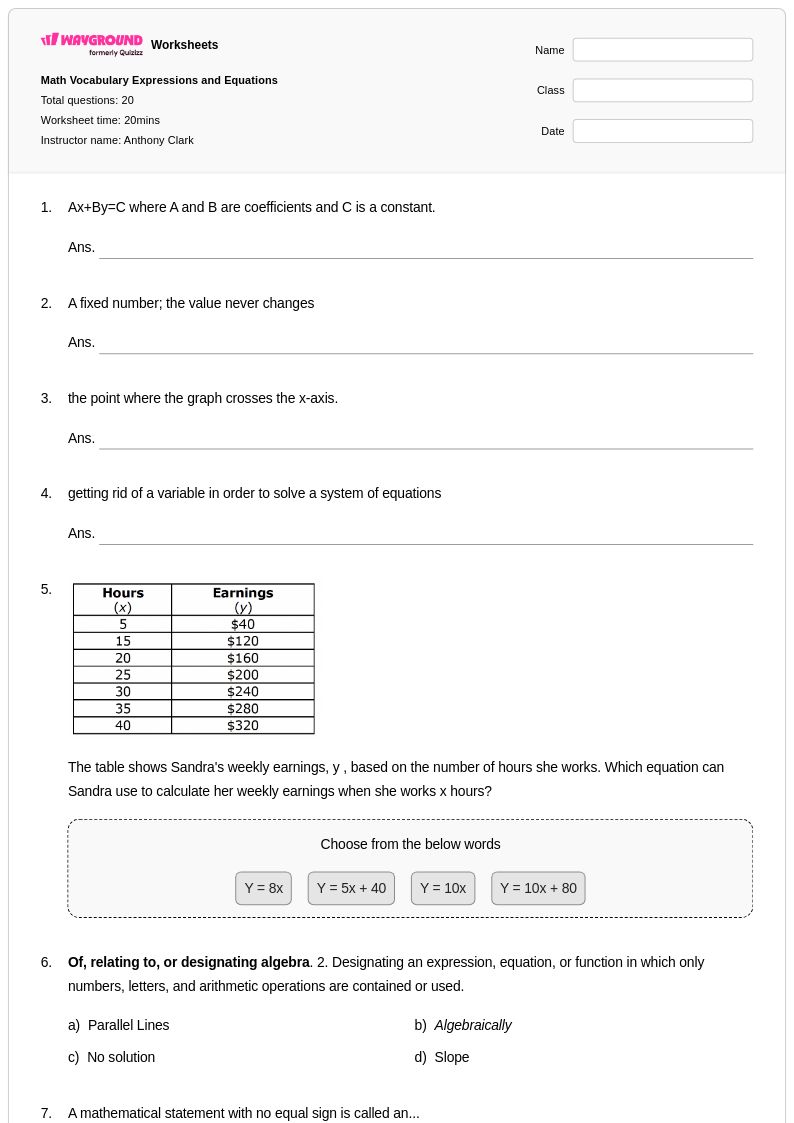
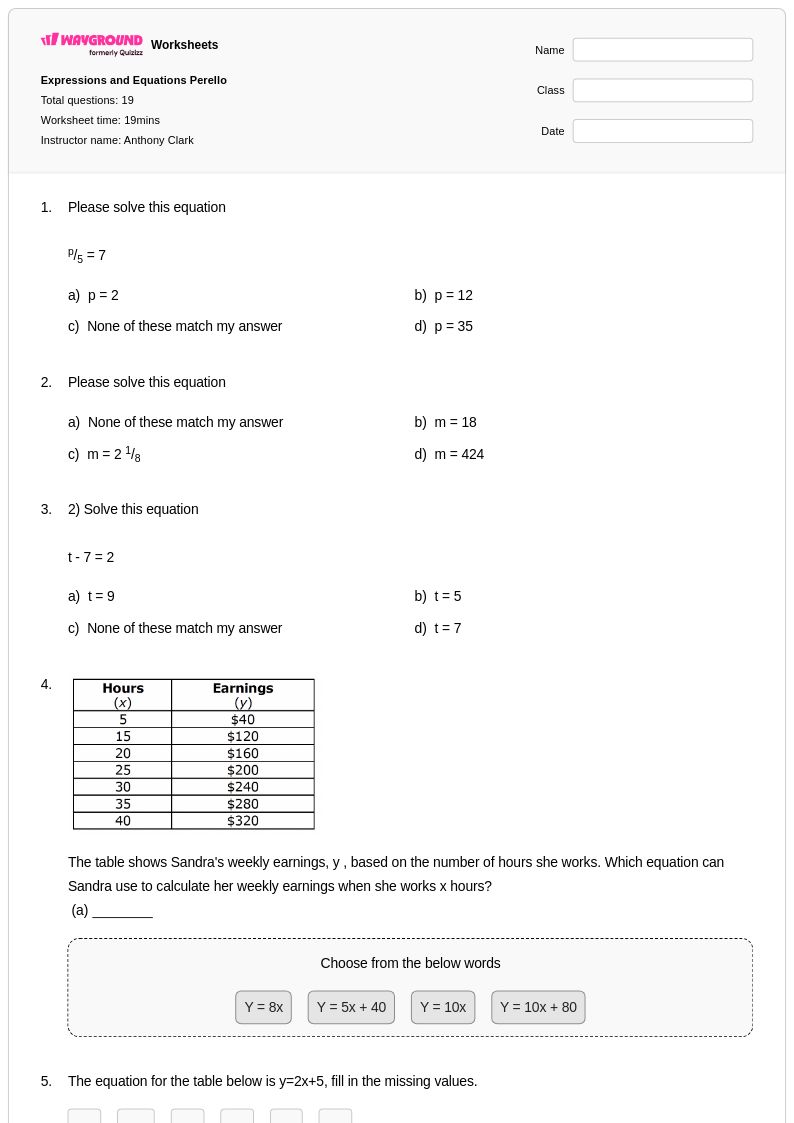
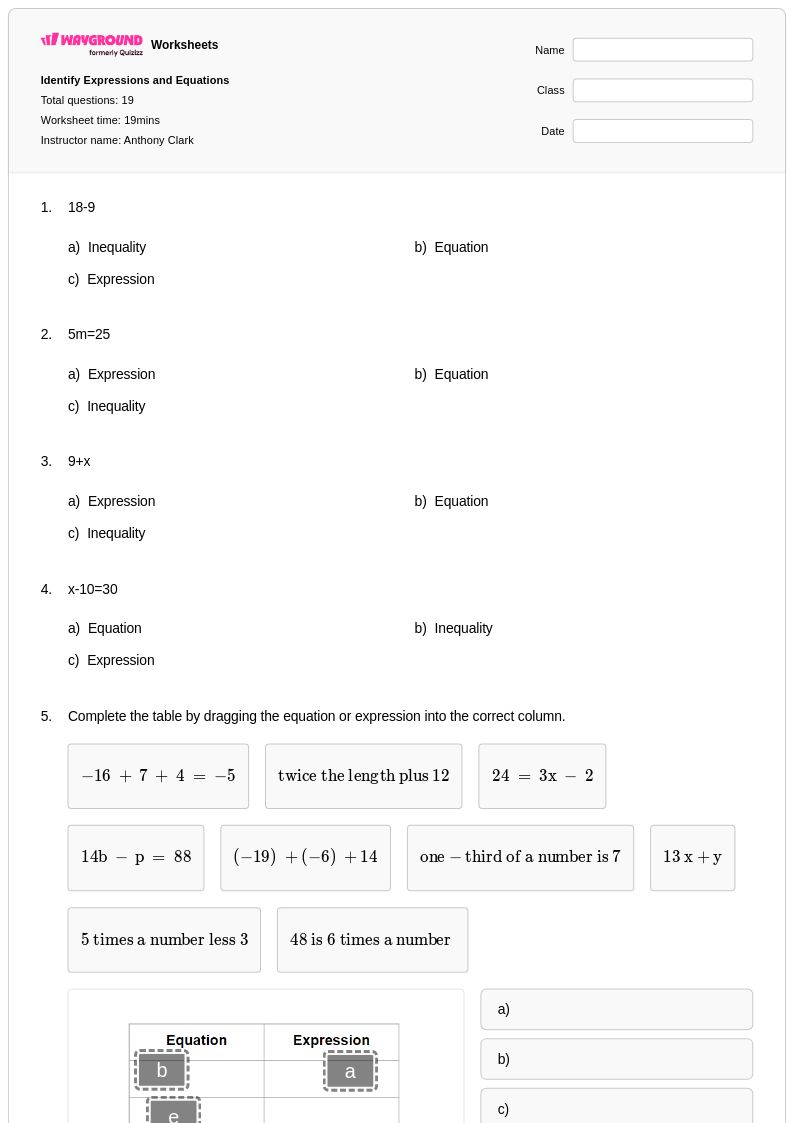
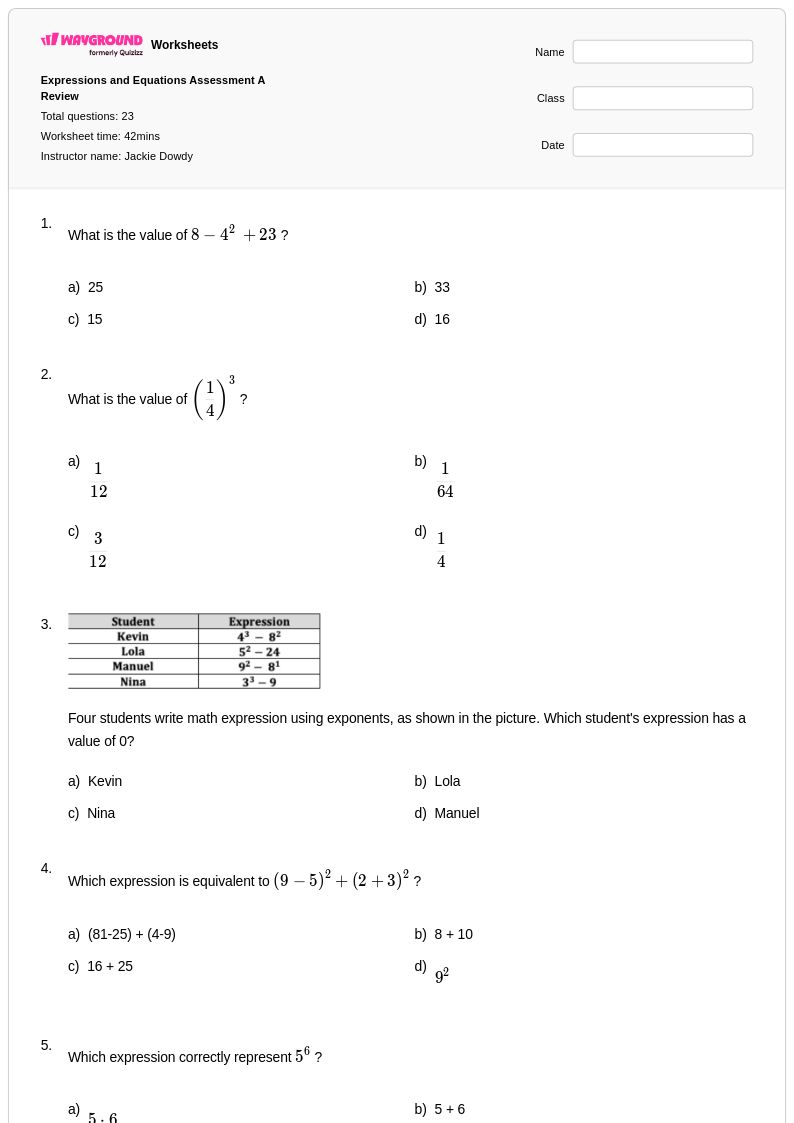
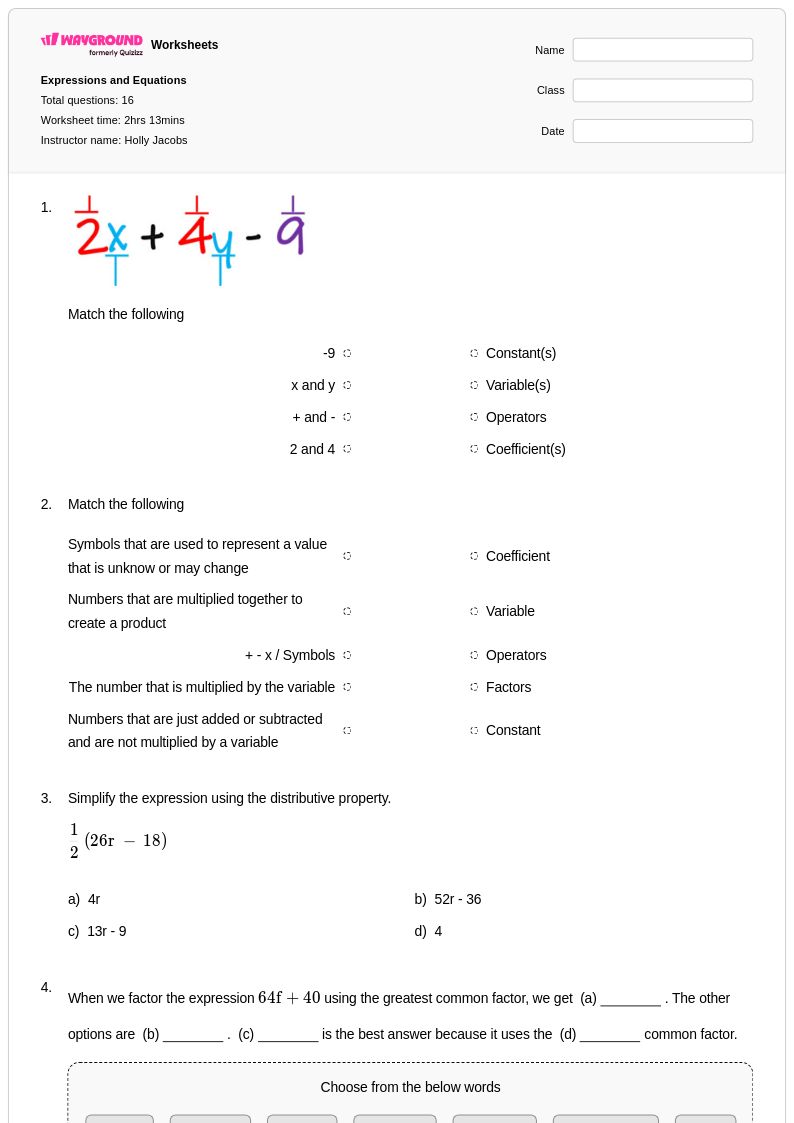
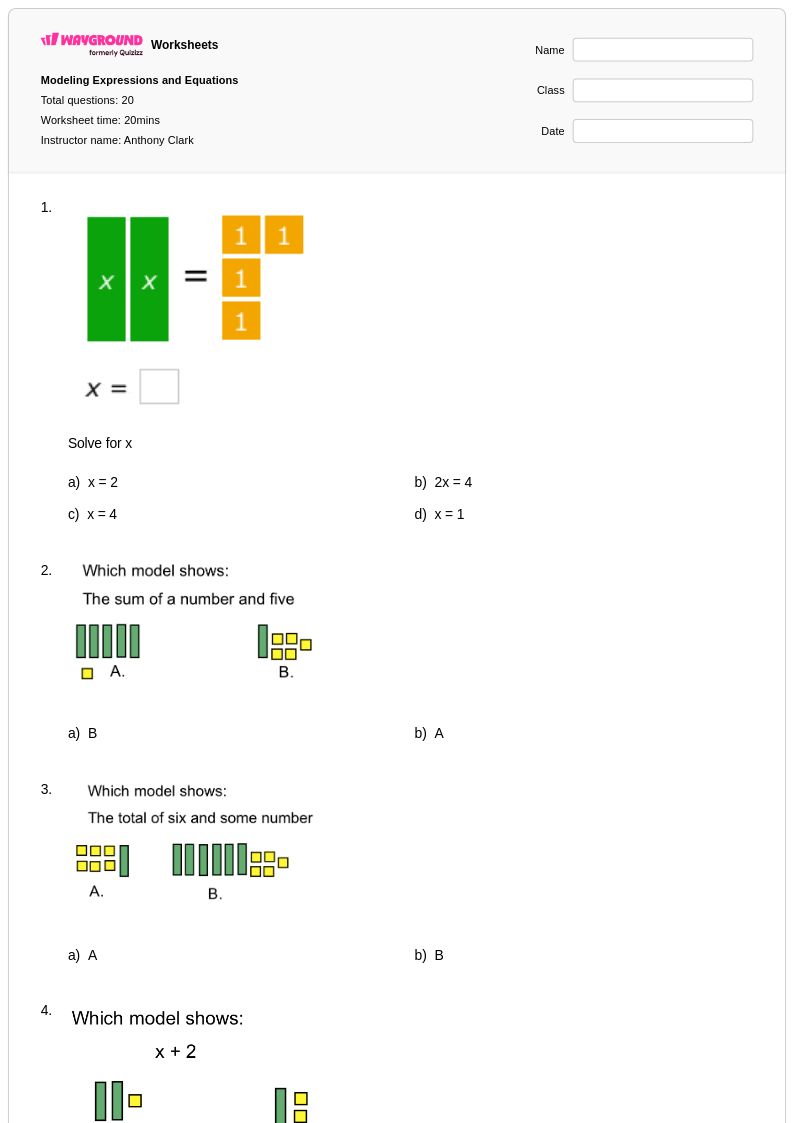
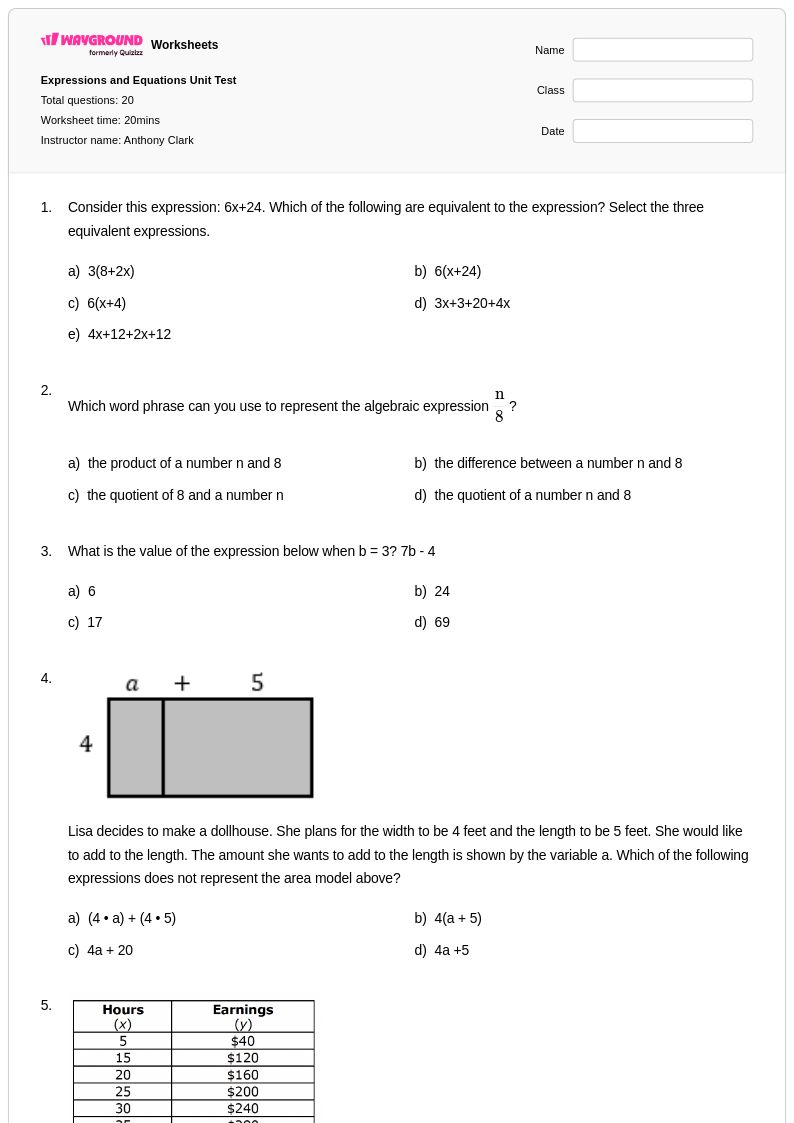
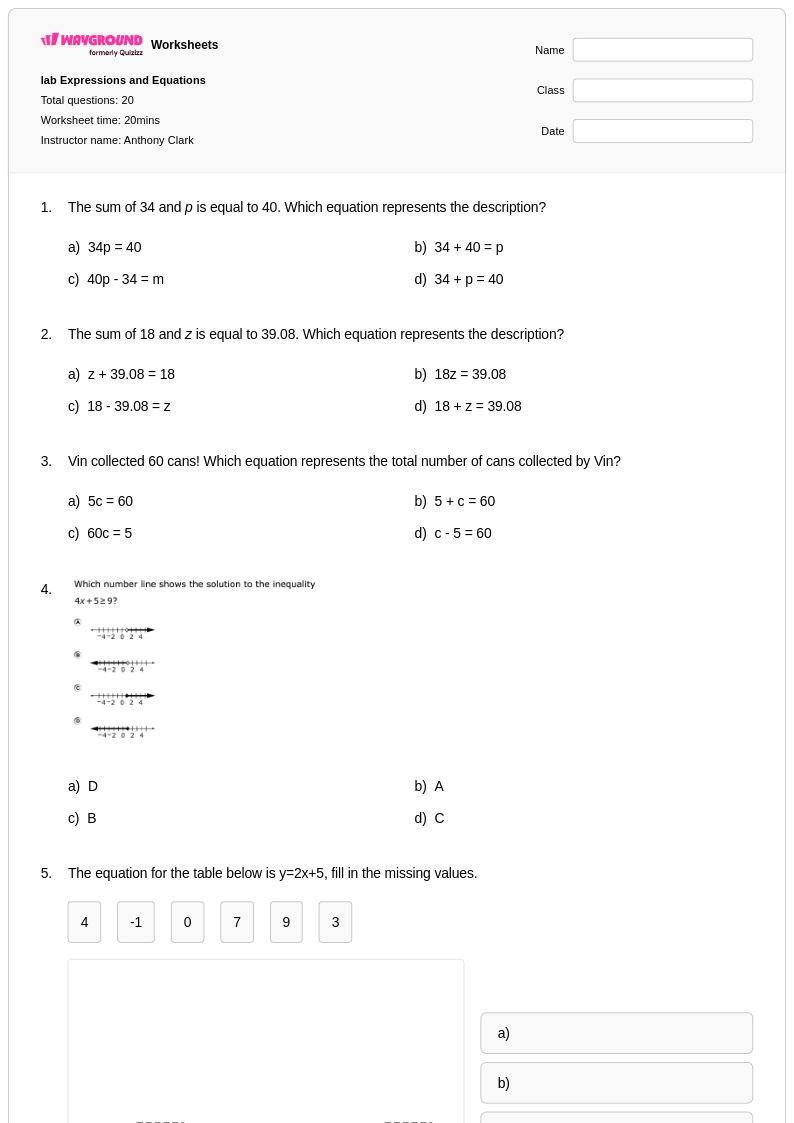
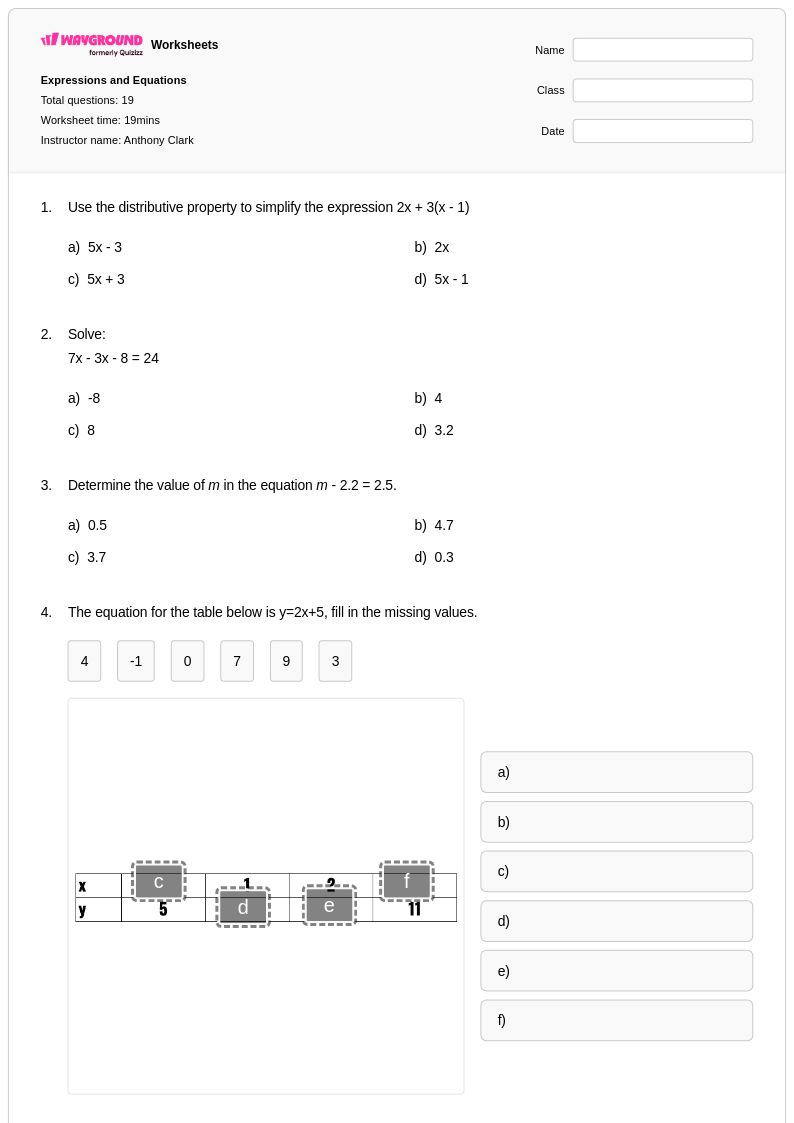
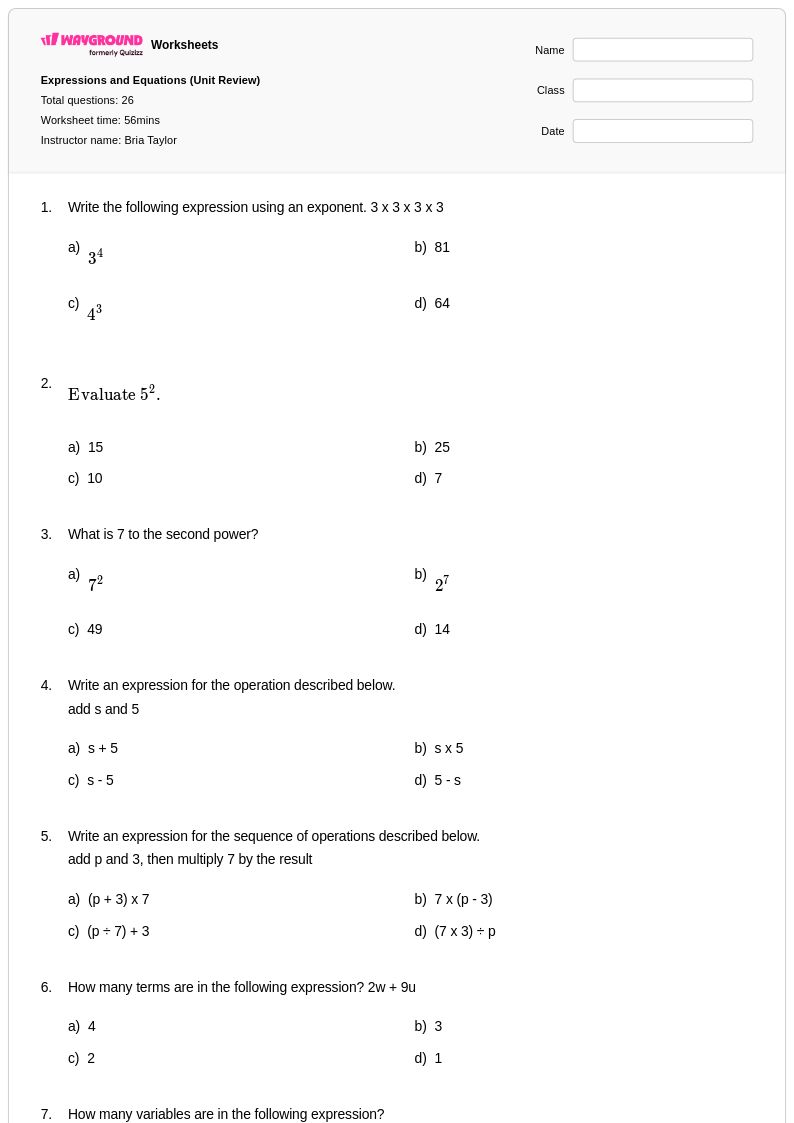
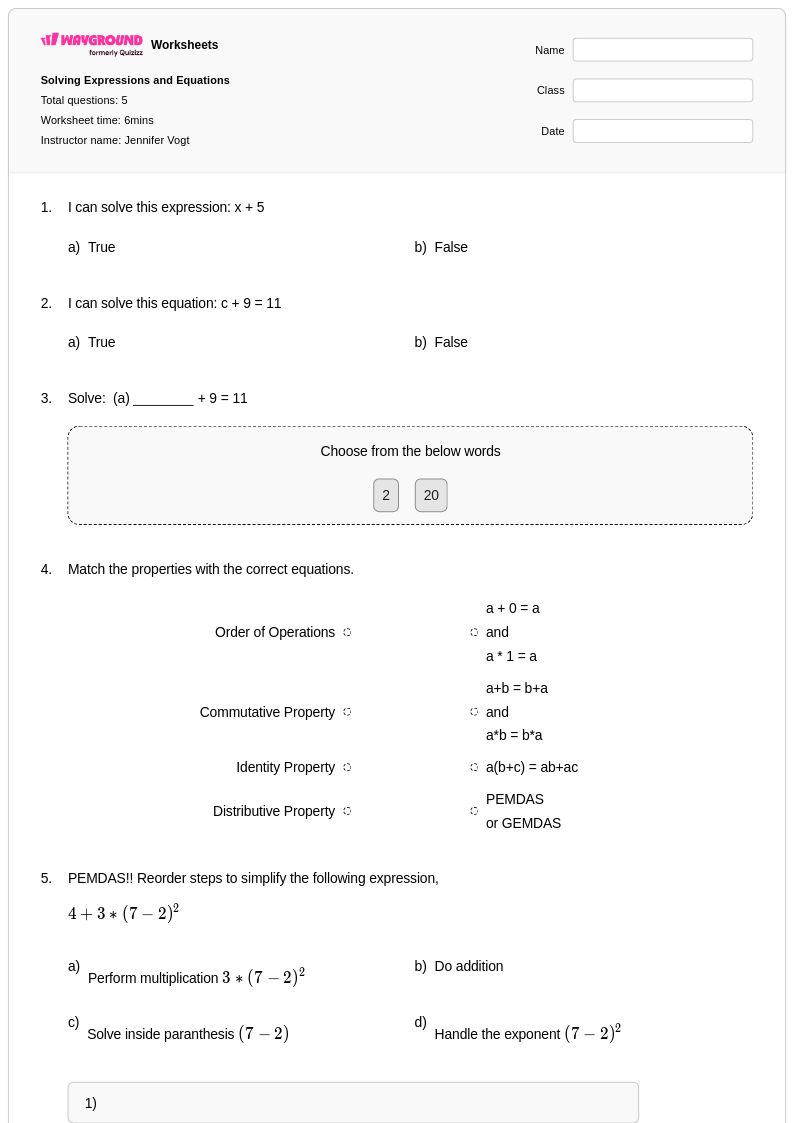
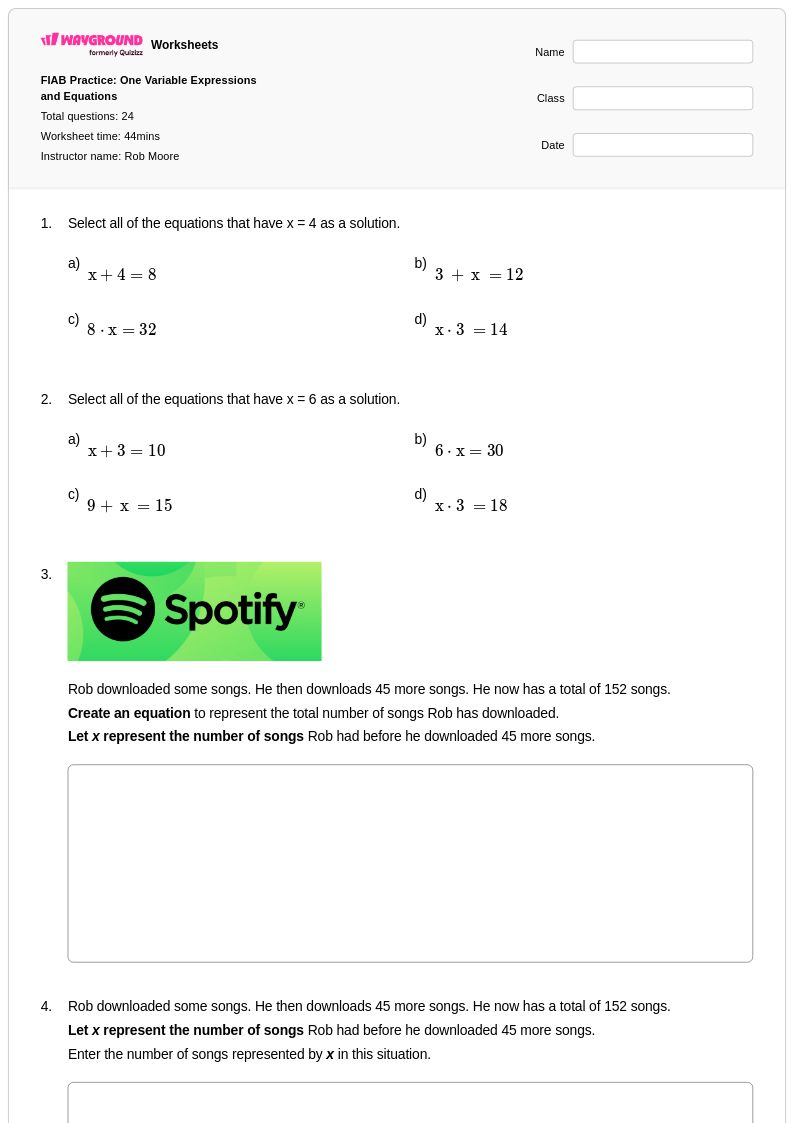
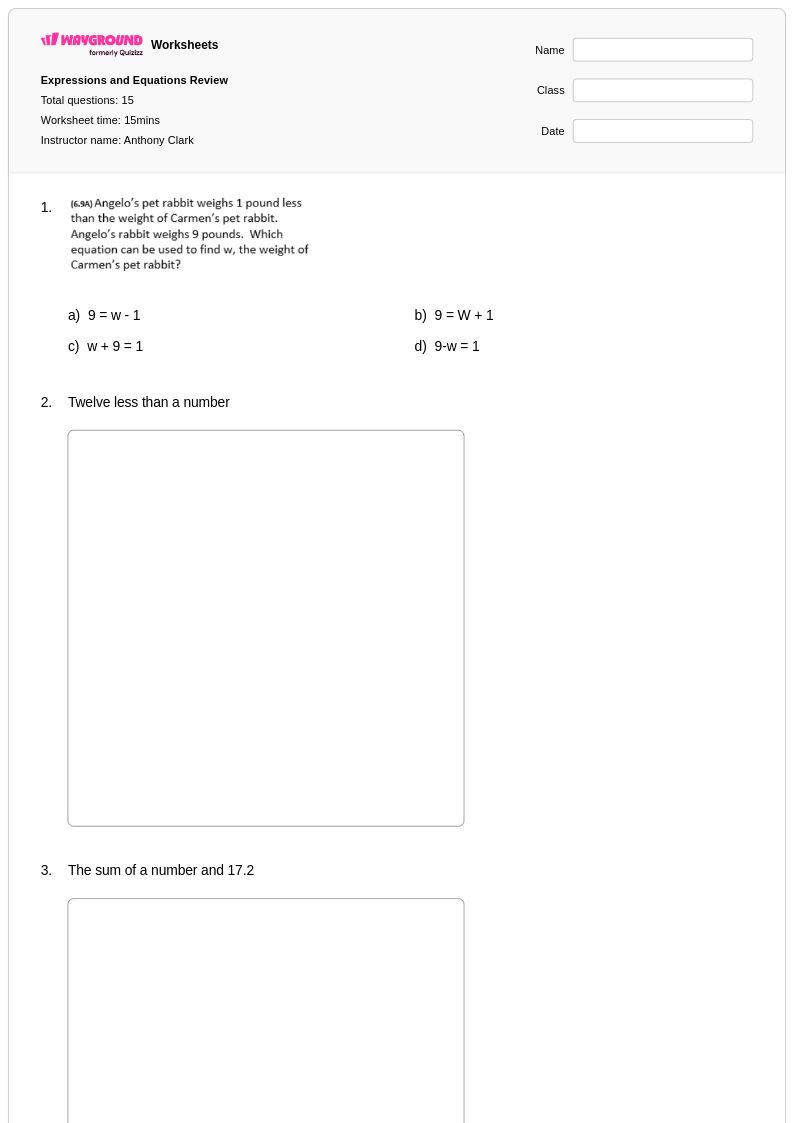
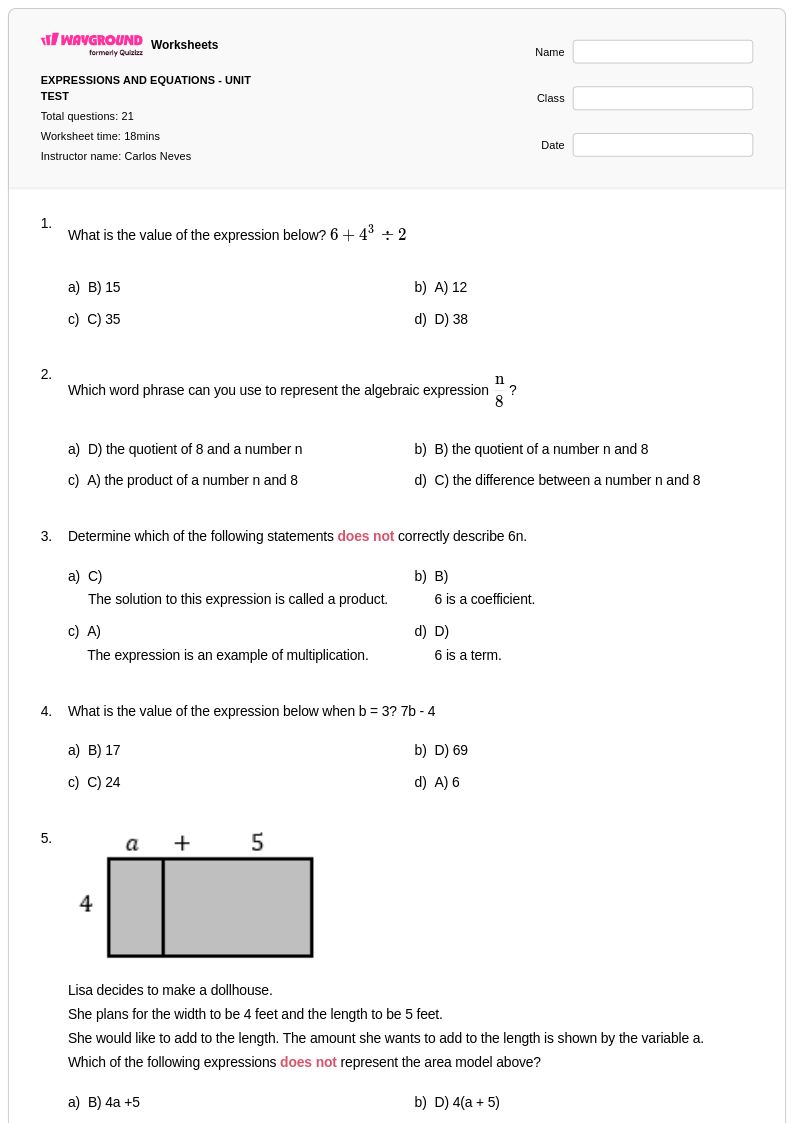
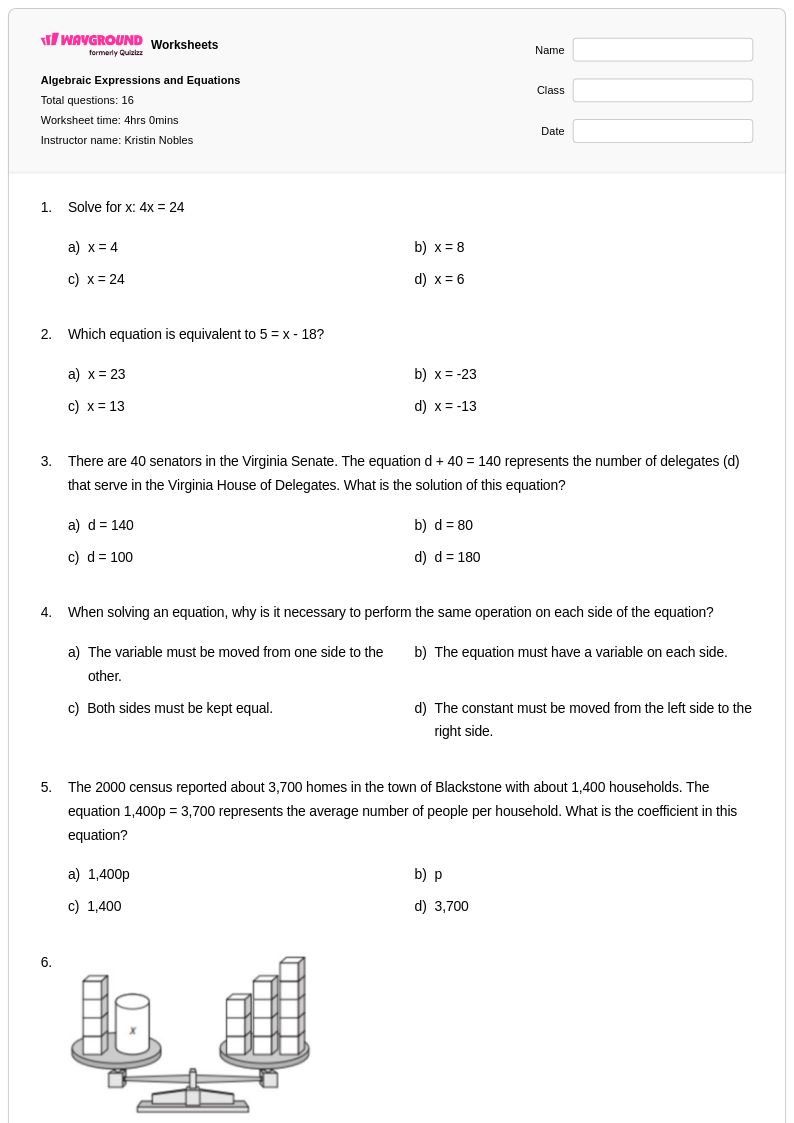
Class 6 expressions and equations worksheets available through Wayground (formerly Quizizz) provide comprehensive practice opportunities for students developing foundational algebraic thinking skills. These carefully designed resources help sixth graders master essential concepts including writing and evaluating algebraic expressions, understanding the relationship between variables and constants, solving one-step equations, and recognizing equivalent expressions through the distributive property. Each worksheet collection includes detailed answer keys that support both independent practice and guided instruction, while the free printable format ensures accessibility for classroom and home use. The practice problems progress systematically from basic expression writing to more complex equation solving, allowing students to build confidence as they transition from arithmetic to algebraic reasoning.
Wayground's extensive mathematics worksheet library empowers teachers with millions of educator-created resources specifically tailored to Class 6 expressions and equations instruction. The platform's robust search and filtering capabilities enable quick identification of materials aligned to state standards and specific learning objectives, while built-in differentiation tools help teachers customize content for diverse learner needs. Teachers can seamlessly integrate these resources into lesson planning by selecting from printable pdf formats for traditional assignments or digital versions for interactive learning experiences. This flexibility supports targeted remediation for struggling students, enrichment activities for advanced learners, and systematic skill practice that reinforces classroom instruction, making it an invaluable resource for comprehensive algebraic concept development at the middle school level.
FAQs
How do I teach expressions and equations to 6th graders?
Sixth grade is where students make the leap from arithmetic to algebraic thinking, and that transition is the whole challenge. Ground the concept of a variable in something concrete first — 'x is the number of students; write an expression for the total cost if each pays $5' — before moving to abstract manipulation. Evaluating expressions by substituting values is a good bridge: it reinforces that a variable is a placeholder for a number, not a mystery to be feared. Hold off on solving equations until students can write and evaluate expressions fluently.
What skills should 6th graders practice with expressions and equations worksheets?
At Grade 6, the core skills are: writing algebraic expressions from verbal descriptions, evaluating expressions by substituting given values, identifying equivalent expressions using the distributive property, and solving one-step equations with whole numbers. Worksheets that mix expression-writing with evaluation — rather than drilling one skill at a time — help students see how the two tasks connect.
What mistakes do 6th graders commonly make with expressions and equations?
The most persistent error is treating a variable as a label rather than a quantity — writing '5a' to mean '5 apples' rather than '5 times some number of apples.' This leads to nonsensical answers when students try to evaluate or simplify. A close second: confusing an expression with an equation and trying to 'solve' something like 3x + 2 when there's no equals sign. Catching these early in Grade 6 prevents them from compounding in Grade 7.
How do I use these Grade 6 worksheets in my classroom?
The worksheets include complete answer keys, so they're ready to use for homework, warm-ups, or end-of-unit review without extra prep. For paper practice — which works well when you want students working without devices — print the PDF and collect submissions; the Wayground for Teachers app lets you scan student work for grading. If you prefer digital, host the worksheet as a quiz on Wayground and review results before the next class.
Is expressions and equations a Common Core topic in Grade 6?
Yes. Common Core places expressions and equations squarely in Grade 6, marking it as the formal entry point into algebraic reasoning. At this grade, students are expected to write and evaluate expressions involving whole-number exponents, apply properties of operations to generate equivalent expressions, and solve one-step equations and inequalities. This work builds directly toward the two-step equations and rational number operations students encounter in Grade 7.
What grade do students learn expressions and equations?
Expressions and equations are introduced formally in Grade 6 under Common Core, though students encounter informal precursors — like missing-number problems — in earlier grades. Grade 6 is where variables, expression writing, and one-step equation solving are taught as explicit skills. The concepts deepen through Grades 7 and 8 as students move to multi-step equations, inequalities, and eventually systems of equations.
How can I support struggling 6th graders with expressions and equations?
For students who find the symbolic notation overwhelming, Wayground's Read Aloud feature can help — hearing a problem read aloud reduces the cognitive load of decoding text and lets students focus on the math. Reduced answer choices is another useful accommodation for students who freeze when faced with multiple options on equation-solving problems. Both can be set per student so the rest of the class isn't affected.