Free Printable Fact Families Worksheets for Kindergarten
Explore Wayground's free kindergarten fact families worksheets and printables that help young learners master mixed operations through engaging practice problems with comprehensive answer keys included.
Explore printable Fact Families worksheets for Kindergarten
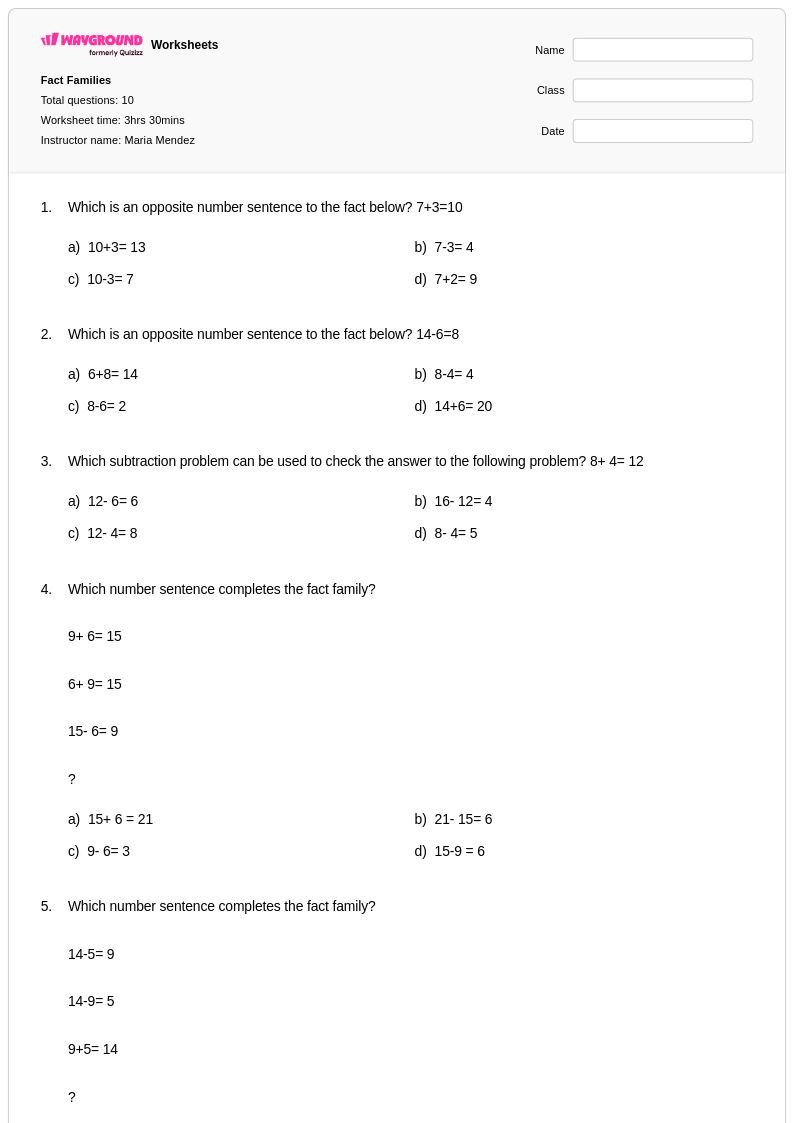
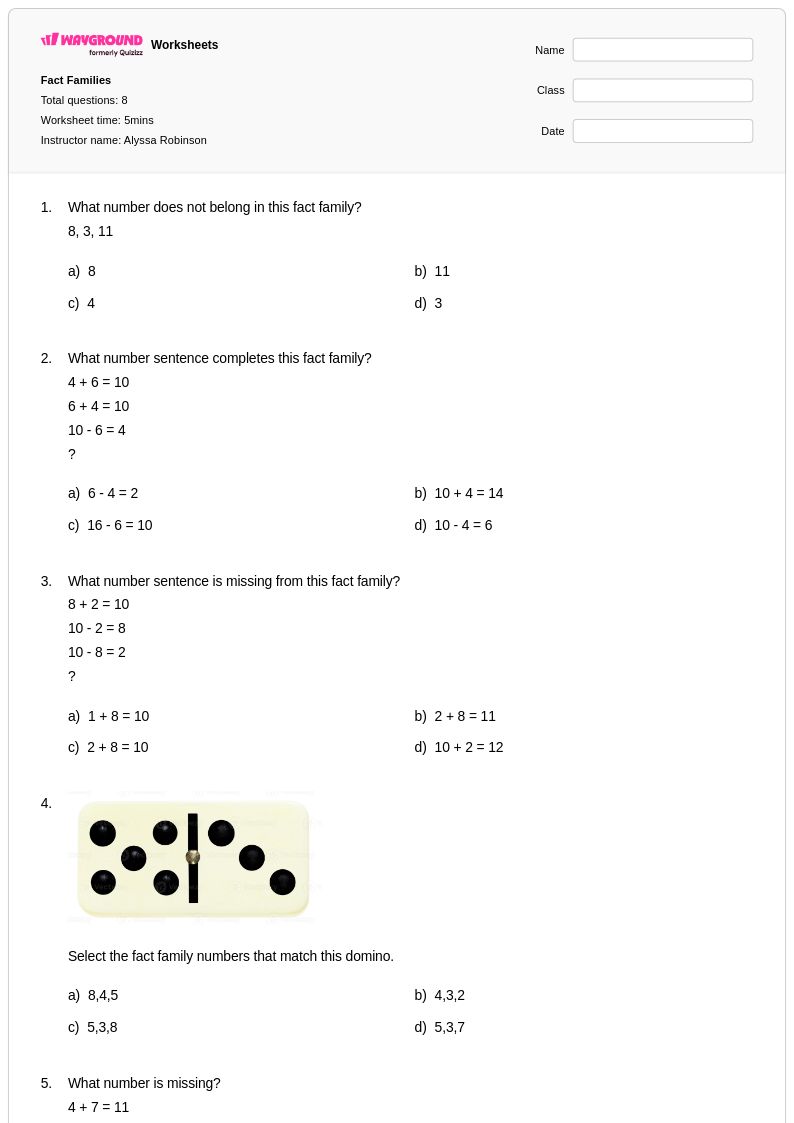
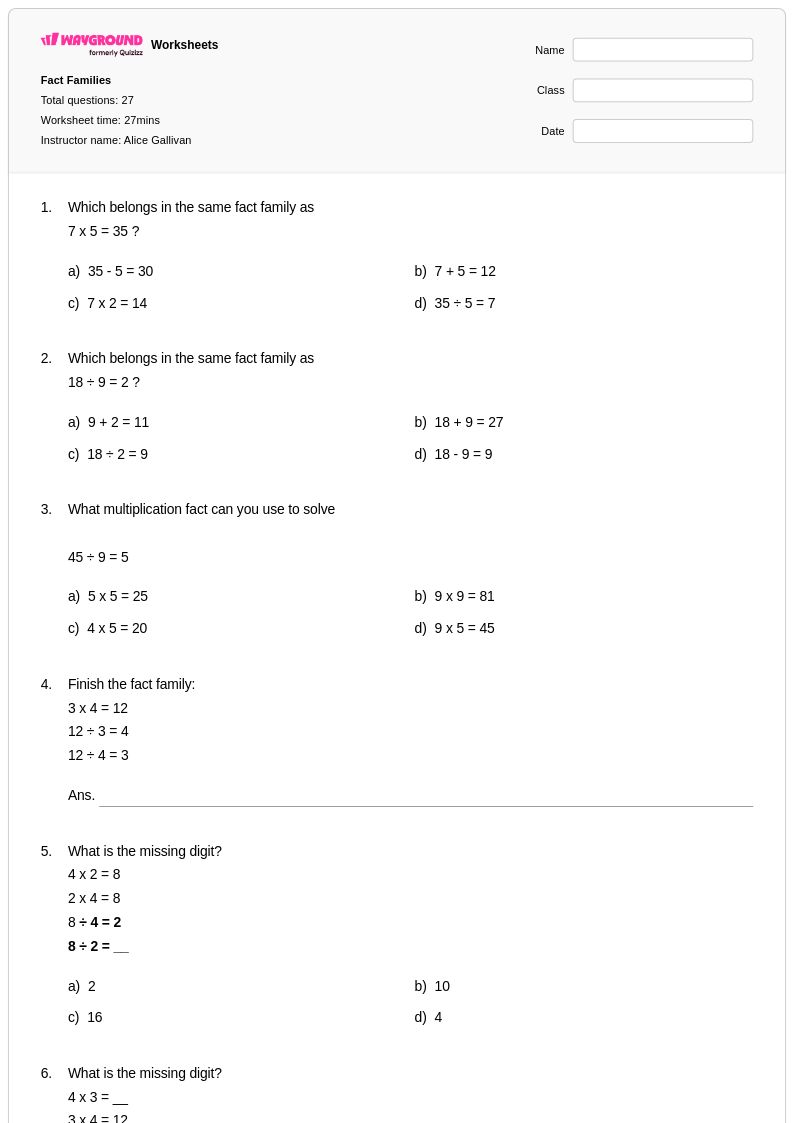
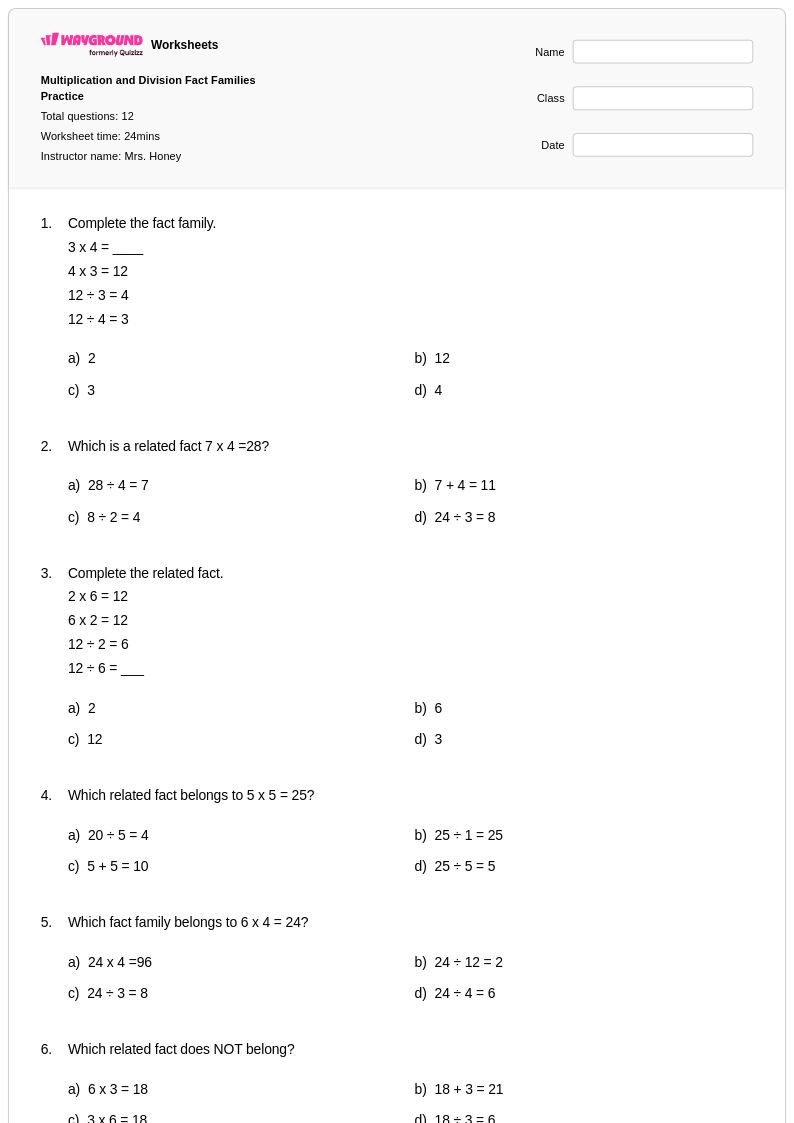
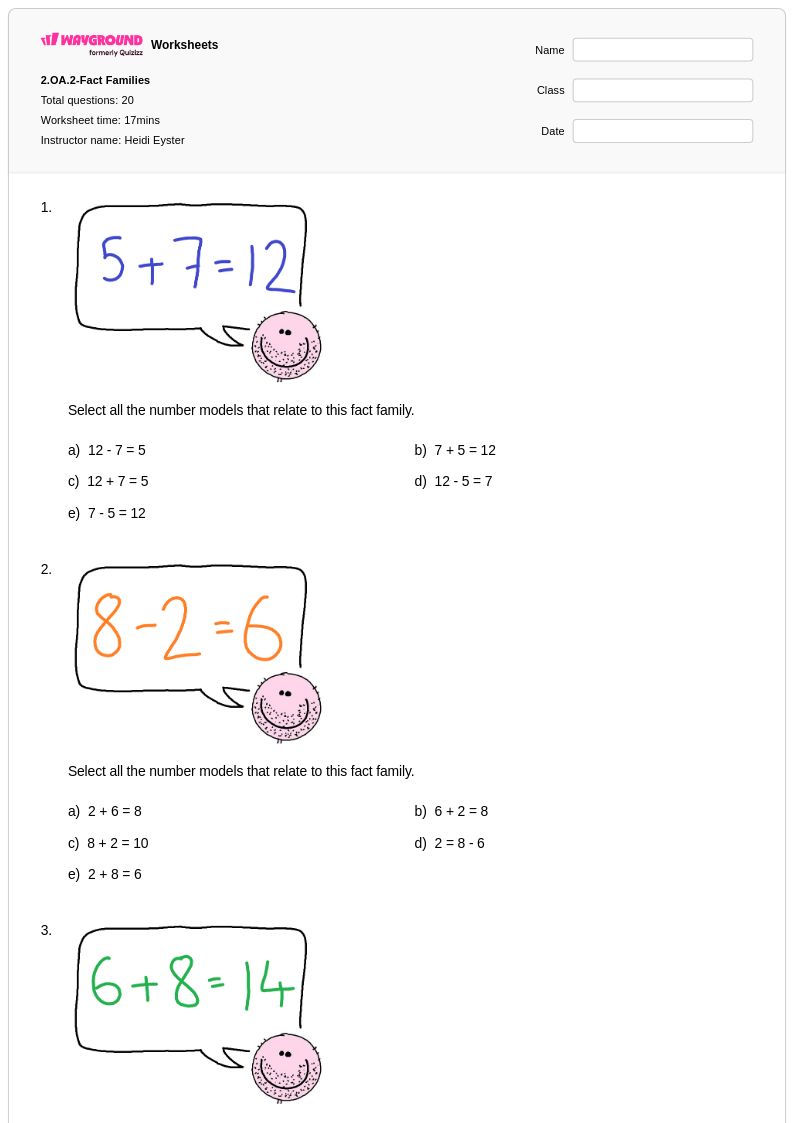
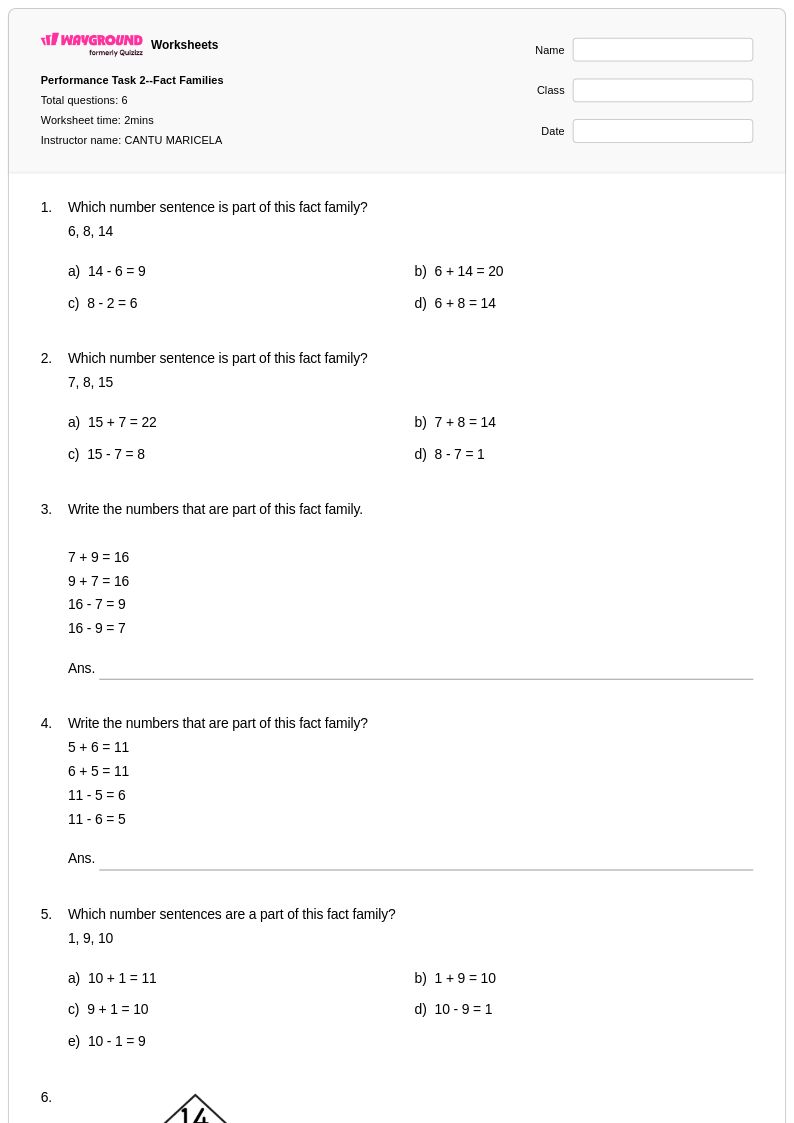
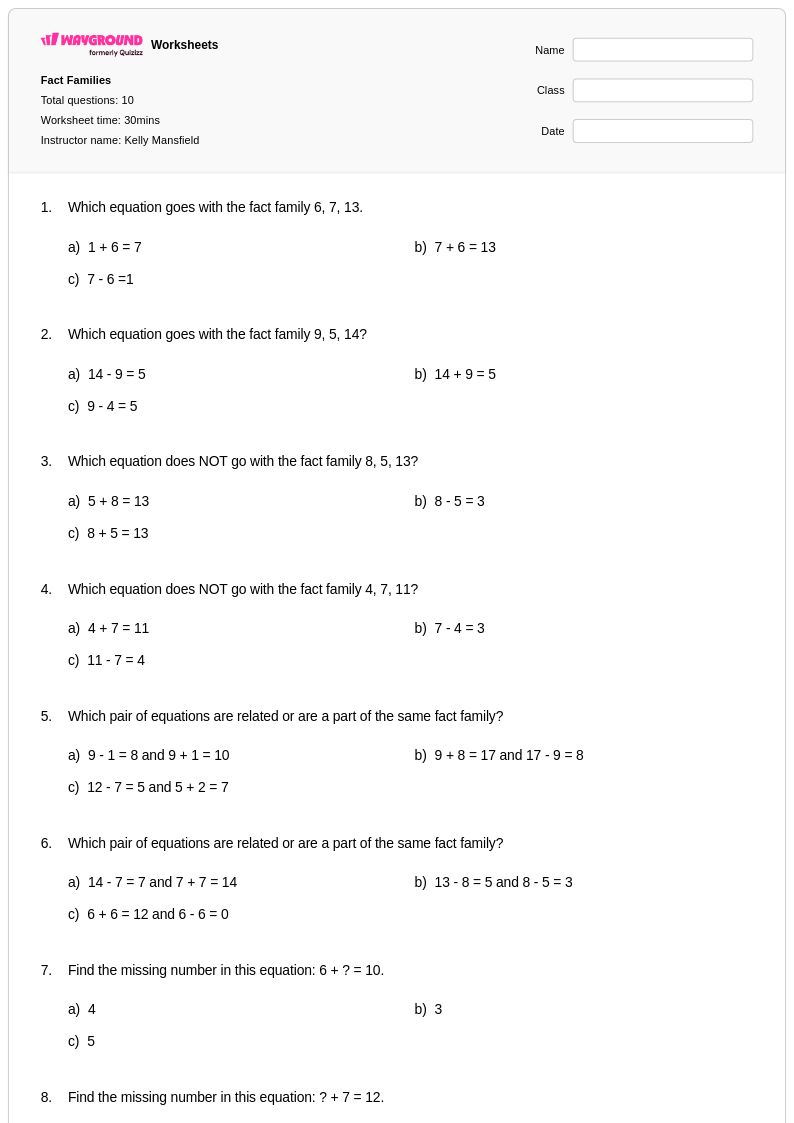
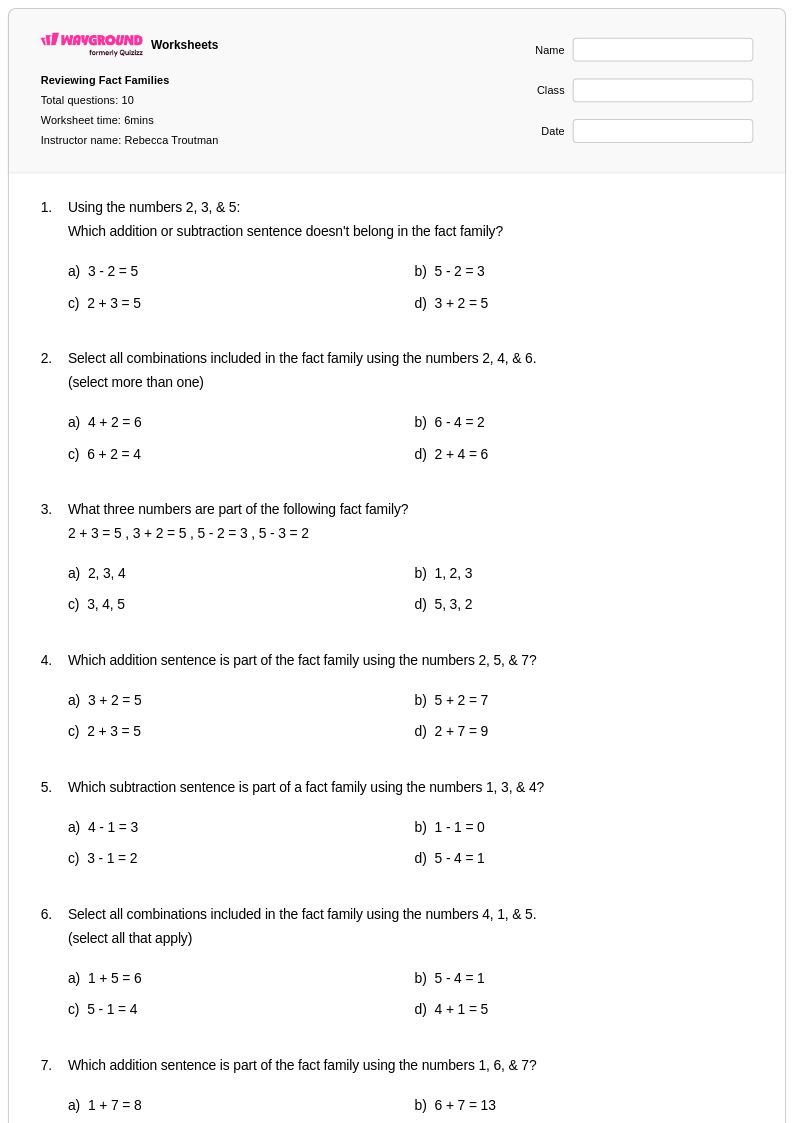
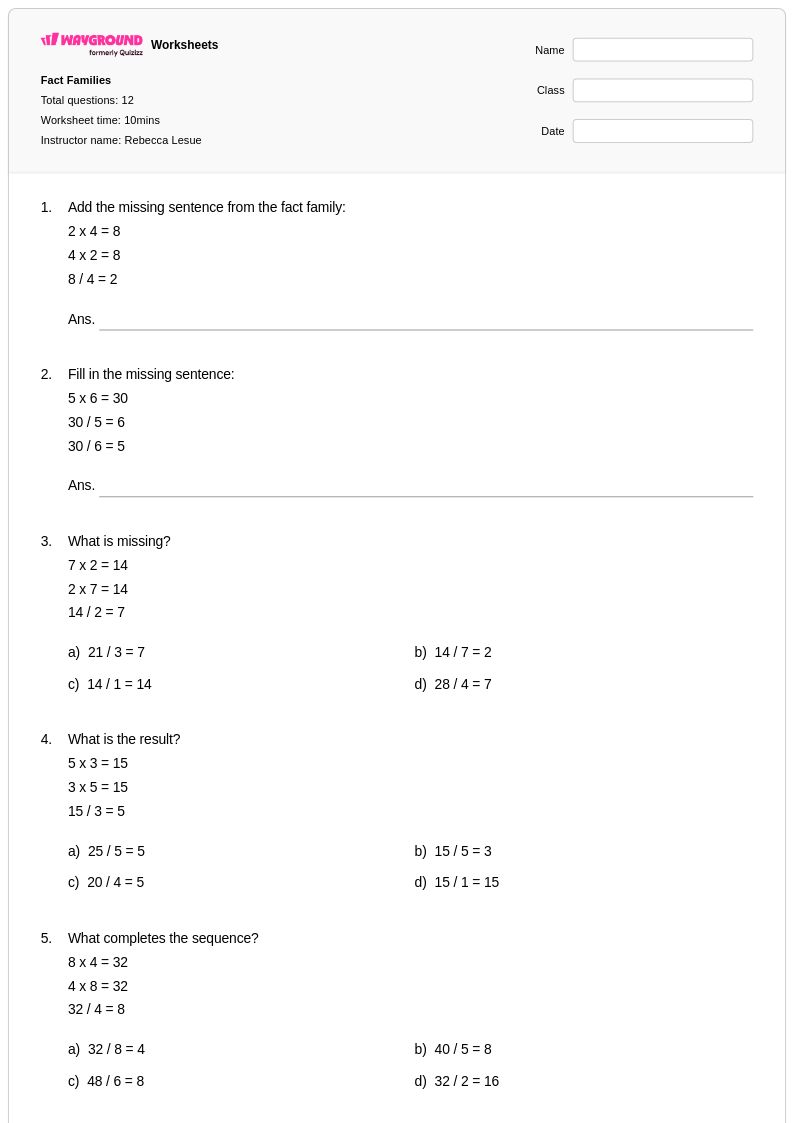
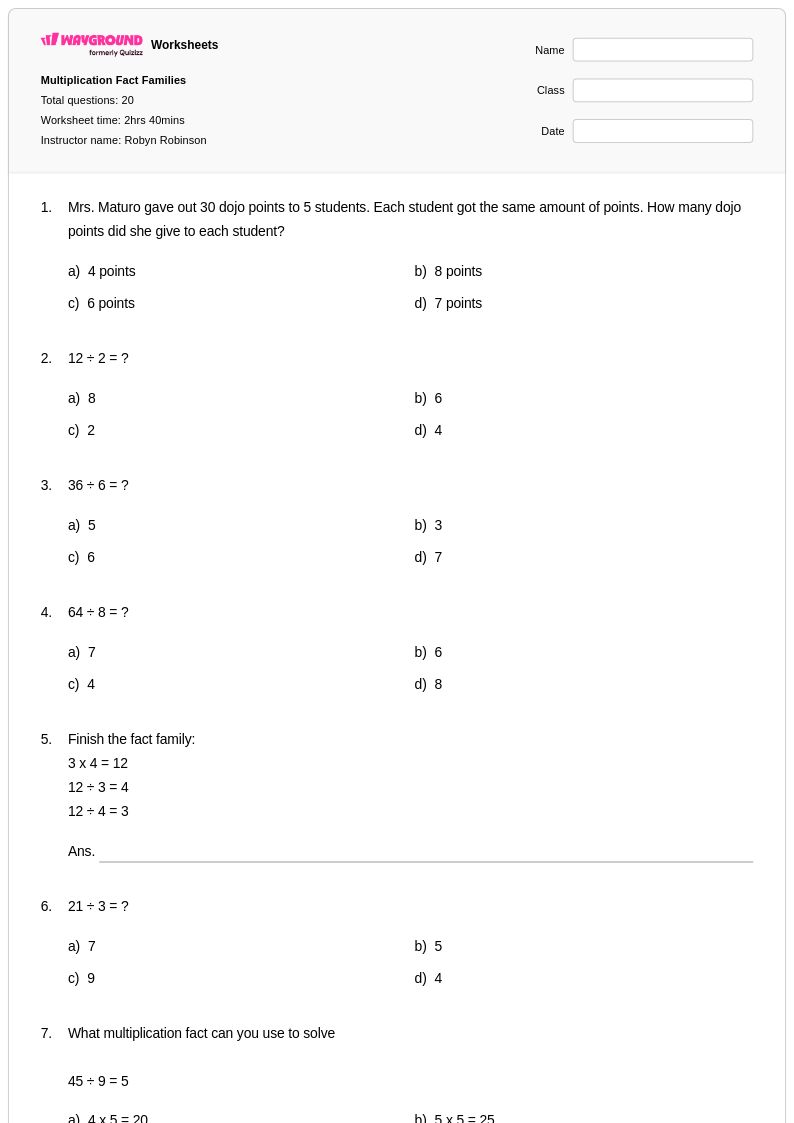
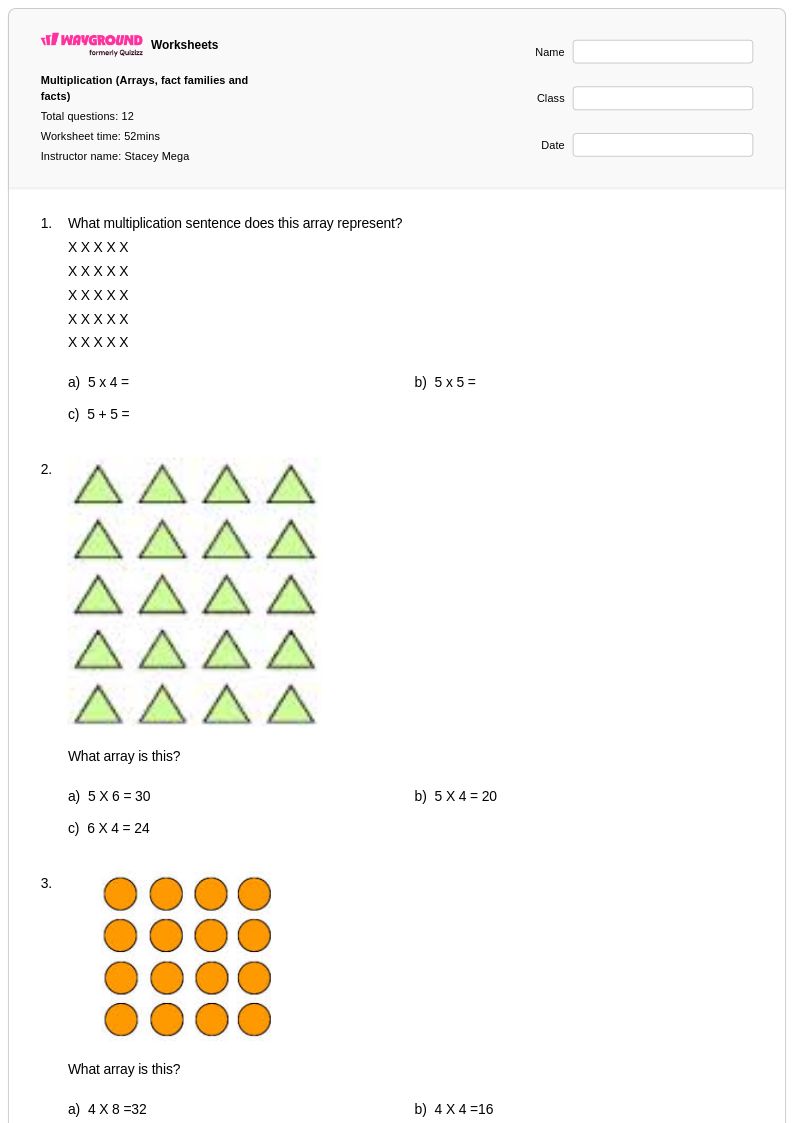
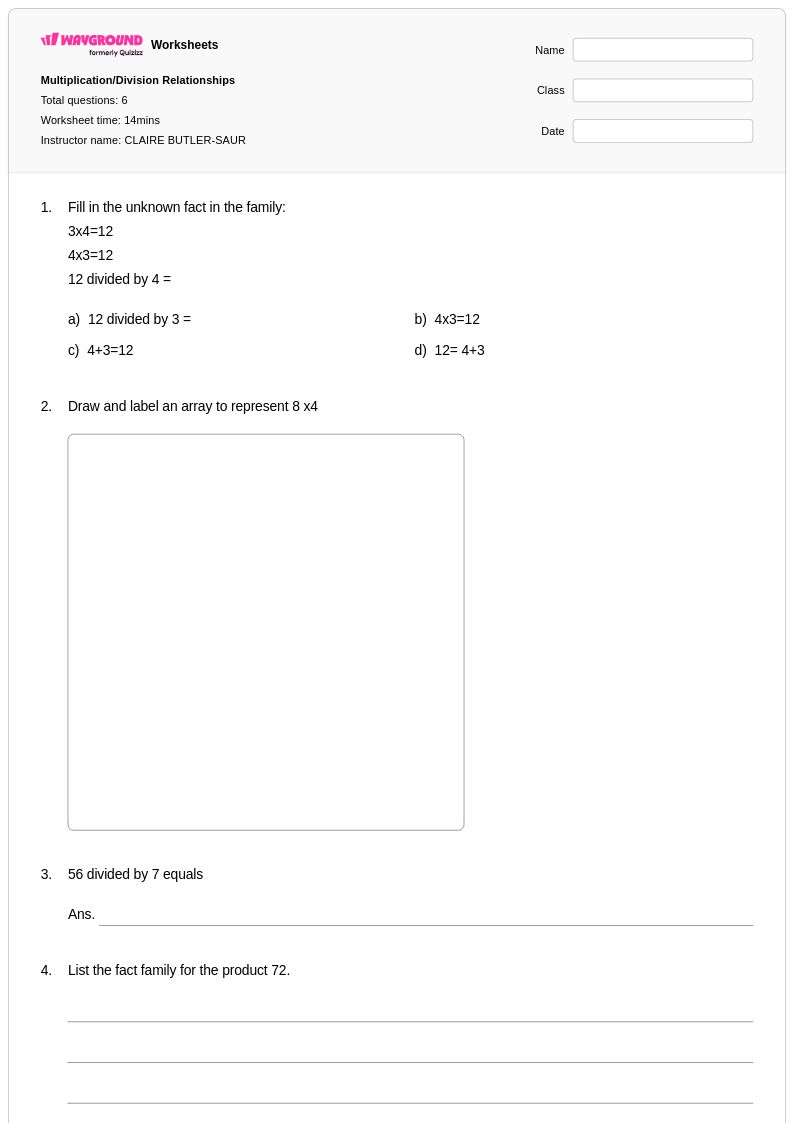
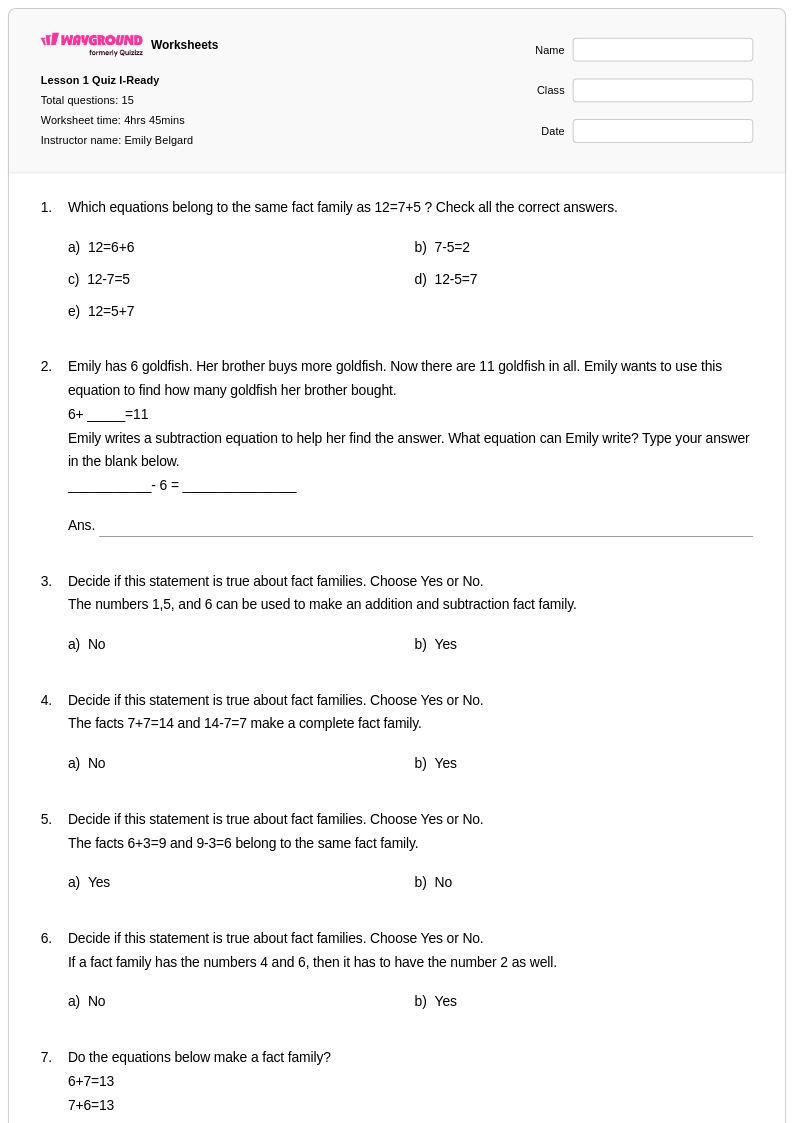
Fact families form the foundation of mathematical understanding for kindergarten students, and Wayground's comprehensive worksheet collection provides engaging practice opportunities that help young learners recognize the relationships between numbers in addition and subtraction equations. These carefully crafted worksheets introduce kindergarteners to the concept that numbers can be combined and separated in predictable patterns, such as understanding that 2 + 3 = 5, 3 + 2 = 5, 5 - 2 = 3, and 5 - 3 = 2 all belong to the same number family. Each worksheet strengthens critical foundational skills including number recognition, pattern identification, and early algebraic thinking while building confidence in mixed operations. Teachers can access complete answer keys alongside each printable resource, and the free pdf format ensures easy distribution for both classroom instruction and home practice problems.
Wayground, formerly Quizizz, empowers kindergarten teachers with millions of teacher-created fact family resources that support differentiated instruction and flexible lesson planning. The platform's robust search and filtering capabilities allow educators to quickly locate worksheets aligned with specific learning standards and customize content to match individual student needs and abilities. Teachers can seamlessly transition between printable pdf worksheets for traditional paper-and-pencil practice and digital formats for interactive learning experiences, making these resources ideal for remediation with struggling learners, enrichment for advanced students, and ongoing skill practice across diverse classroom settings. The extensive collection ensures that educators have access to varied problem types and visual representations that help kindergarten students master fact families while developing essential number sense and computational fluency.
FAQs
How do I introduce fact families to kindergarteners?
Keep the numbers tiny — start with trios like 1, 2, 3 or 2, 3, 5 — and make it physical before it's written. Have students use counters to show 2 and 3 making 5, then push them apart to show 5 breaking into 2 and 3. Once they've done that with their hands, connect it to the written equations. At this age, the goal isn't memorization; it's the intuition that putting together and taking apart are two sides of the same action.
What fact family practice is appropriate for kindergarten?
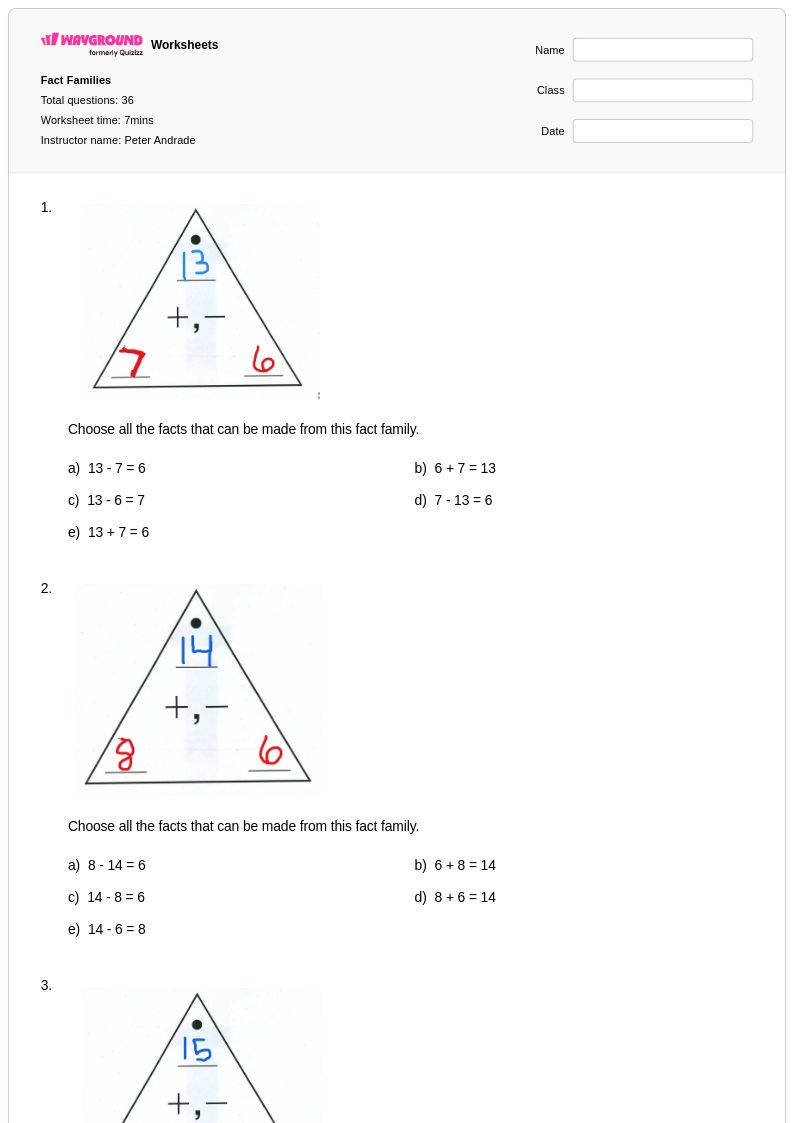
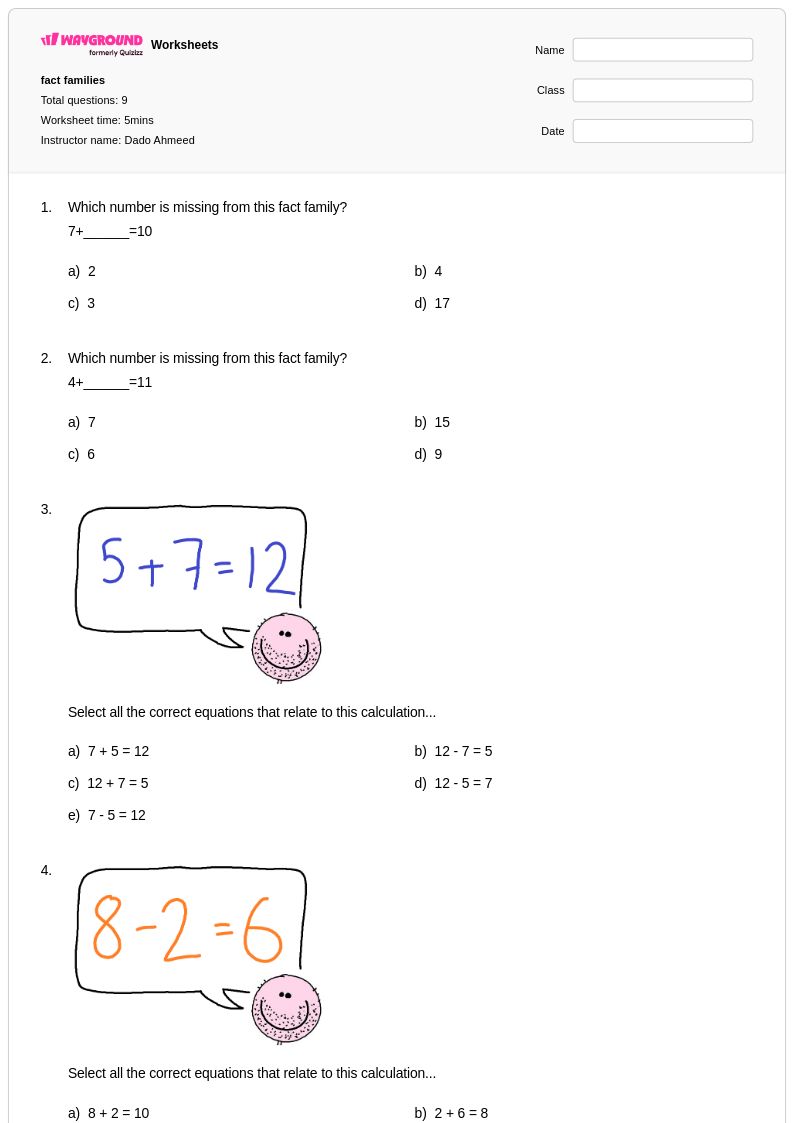
Kindergarteners should work with number trios within 5 or 10 at most. Good practice formats include: filling in a missing number in a fact family triangle, matching a picture (e.g., 3 red apples and 2 green apples) to its four equations, and completing a partial equation set when two are given. Avoid asking kindergarteners to generate all four equations independently from scratch — that's a first-grade expectation. The worksheet exercises should scaffold toward that skill, not assume it.
What misconceptions do kindergarteners have about fact families?
Most kindergarteners don't yet see addition and subtraction as related — they treat them as completely different procedures. So when shown 2 + 3 = 5, they won't automatically know 5 - 2 = 3; they'll try to count back from scratch. A second common confusion: students mix up which number is the whole and which are the parts, especially when the larger number appears first in a subtraction sentence. Concrete objects and consistent use of the triangle visual help anchor both ideas.
How do I use Wayground's kindergarten fact families worksheets?
Download the printable PDF for paper practice — it includes a complete answer key so you can check work quickly during or after the lesson. For schools managing screen time, paper worksheets let kindergarteners practice with pencil and manipulatives alongside the sheet. If you do assign digitally, Wayground lets you host the worksheet as an interactive quiz, which works well for whole-class display on a projector or for students on tablets.
Are fact families part of the kindergarten Common Core math standards?
Common Core introduces the foundational ideas behind fact families in kindergarten through the operations and algebraic thinking strand, where students learn to decompose numbers up to 10 in multiple ways and understand addition as putting together and subtraction as taking apart. The explicit four-equation fact family structure is formalized in first grade, but kindergarten work with number bonds and part-part-whole relationships is the direct prerequisite — students who can fluently decompose 7 into 3 and 4 are ready to write the full fact family in first grade.
How can I support kindergarteners who are struggling with fact families?
For students who need more support, Wayground's Read Aloud feature reads each question aloud — helpful for kindergarteners who can't yet read independently. You can also generate a version of the worksheet with a larger font size or wider spacing, which reduces visual clutter for young learners still developing fine motor control. Pair those accommodations with smaller number sets (trios within 5) until the part-part-whole concept is solid before moving to larger numbers.