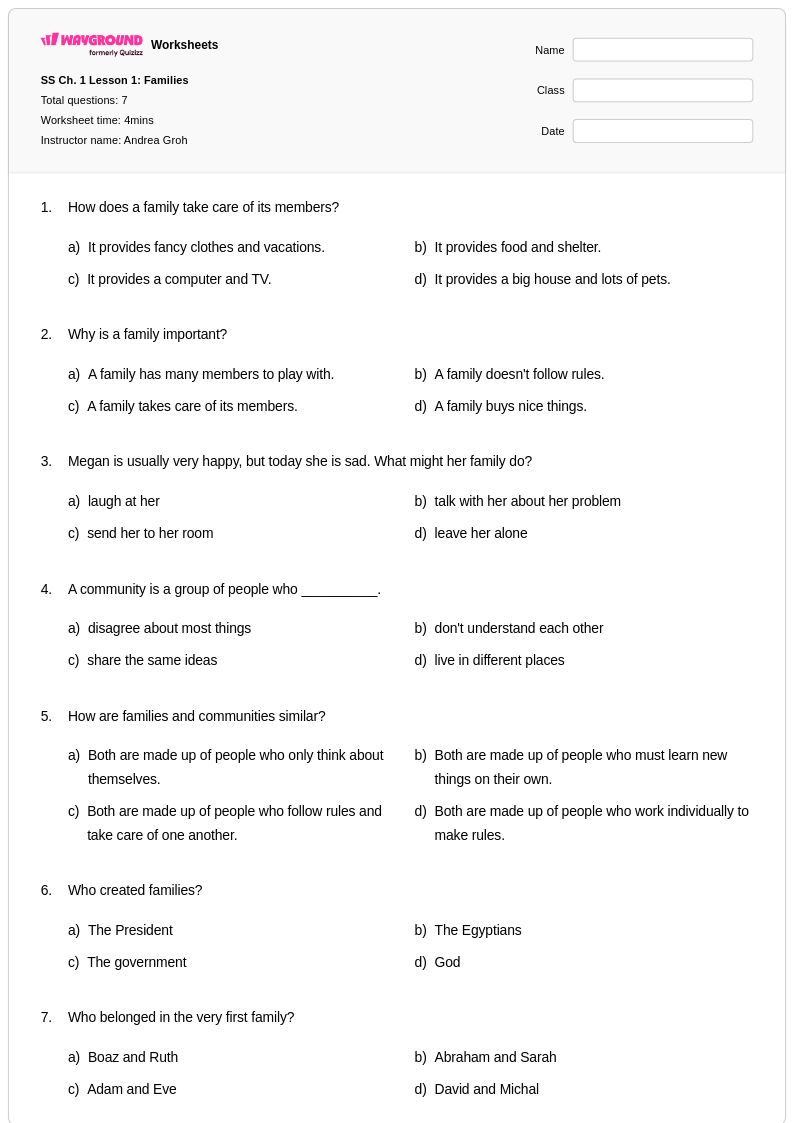
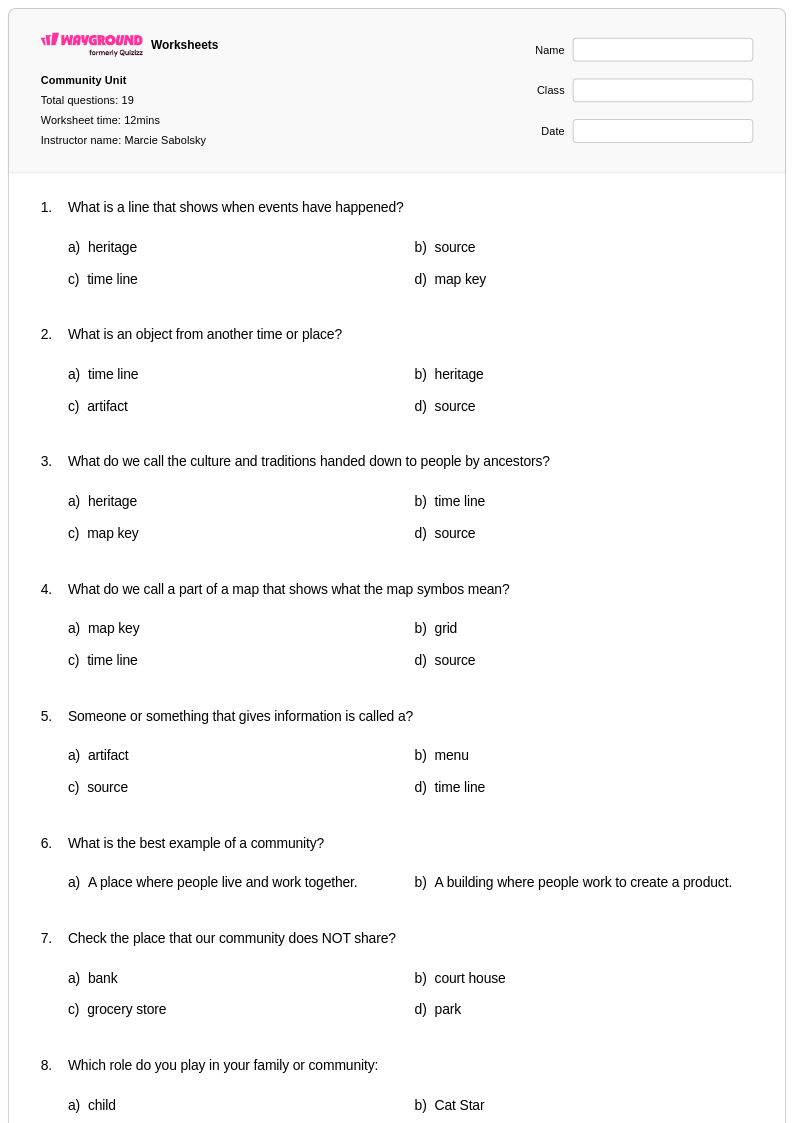
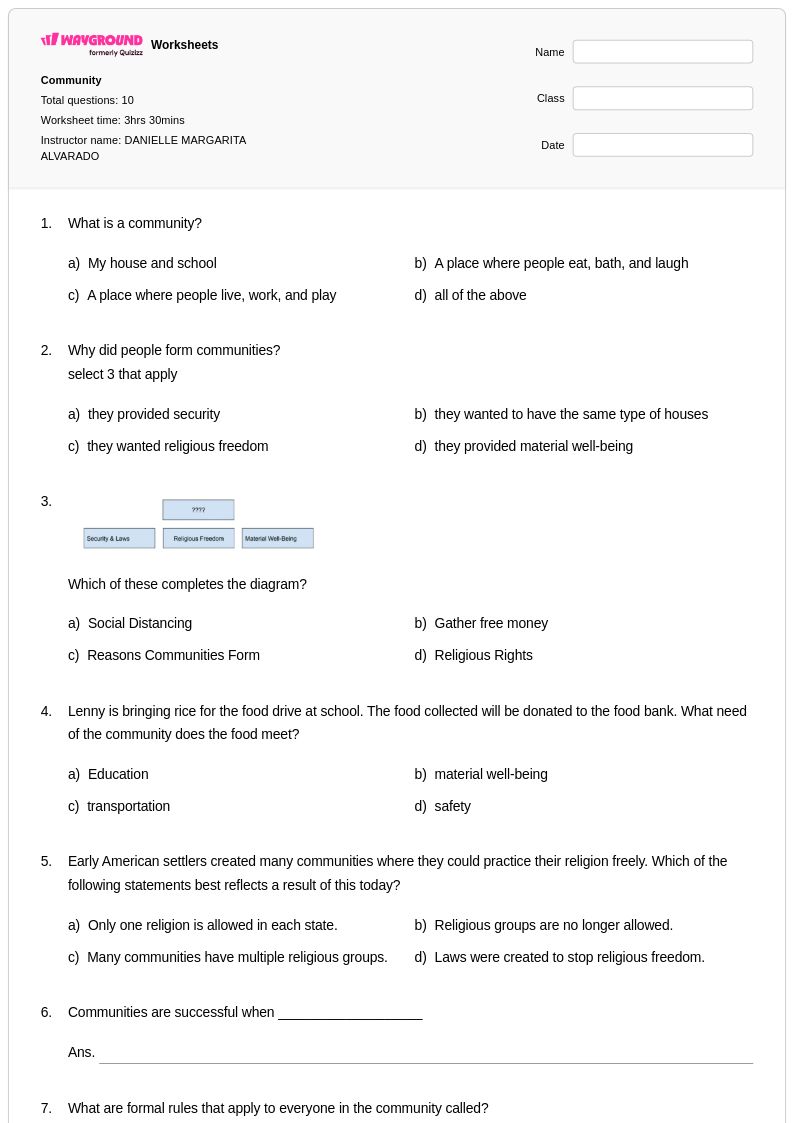
Free Printable Family Roles Worksheets for Class 2
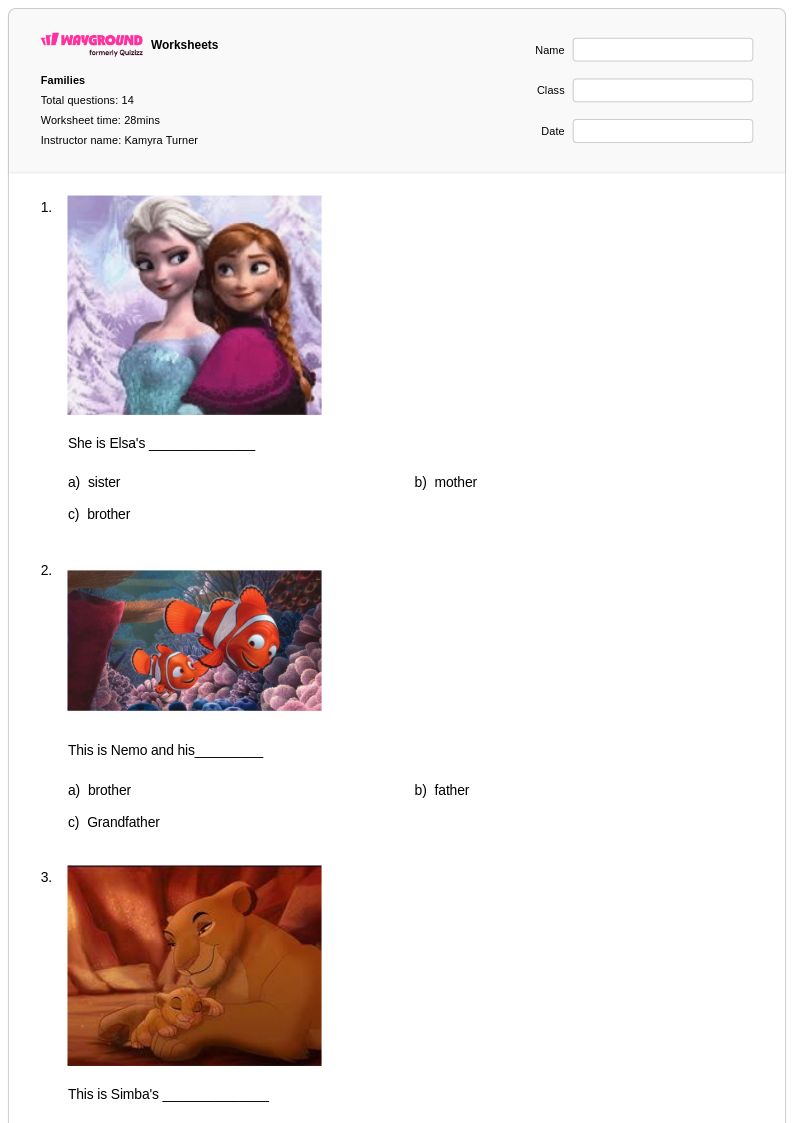
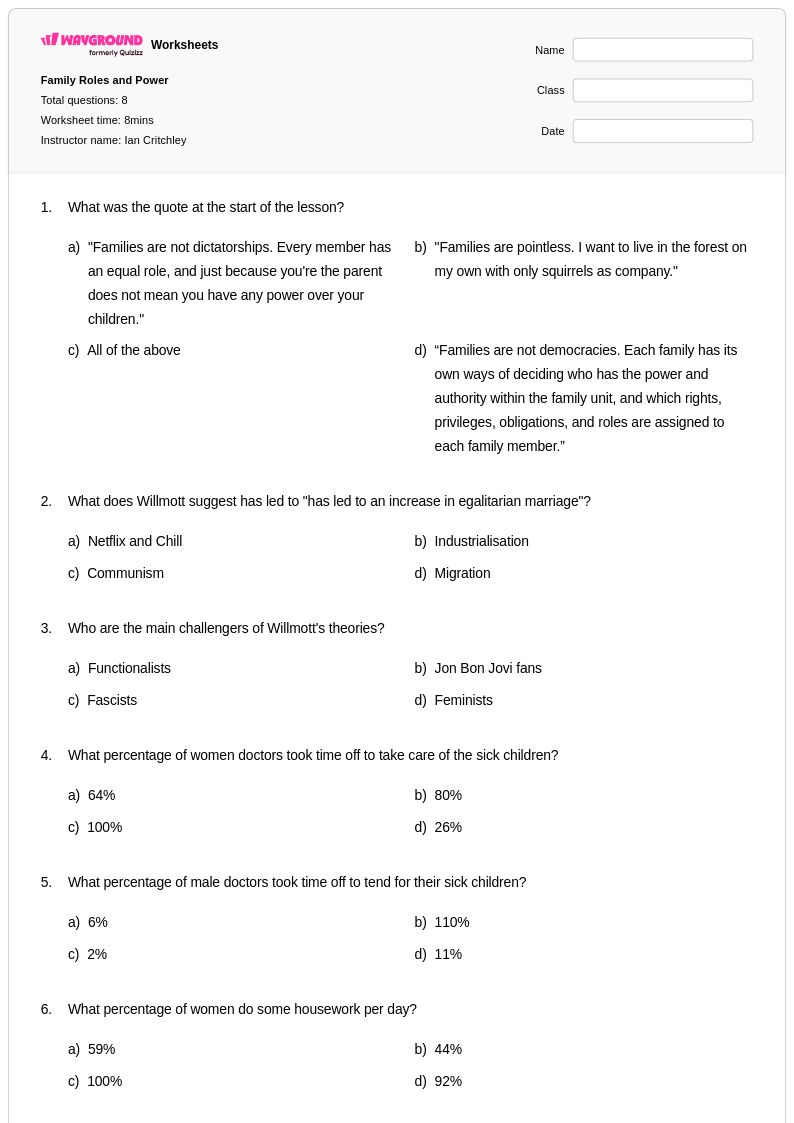
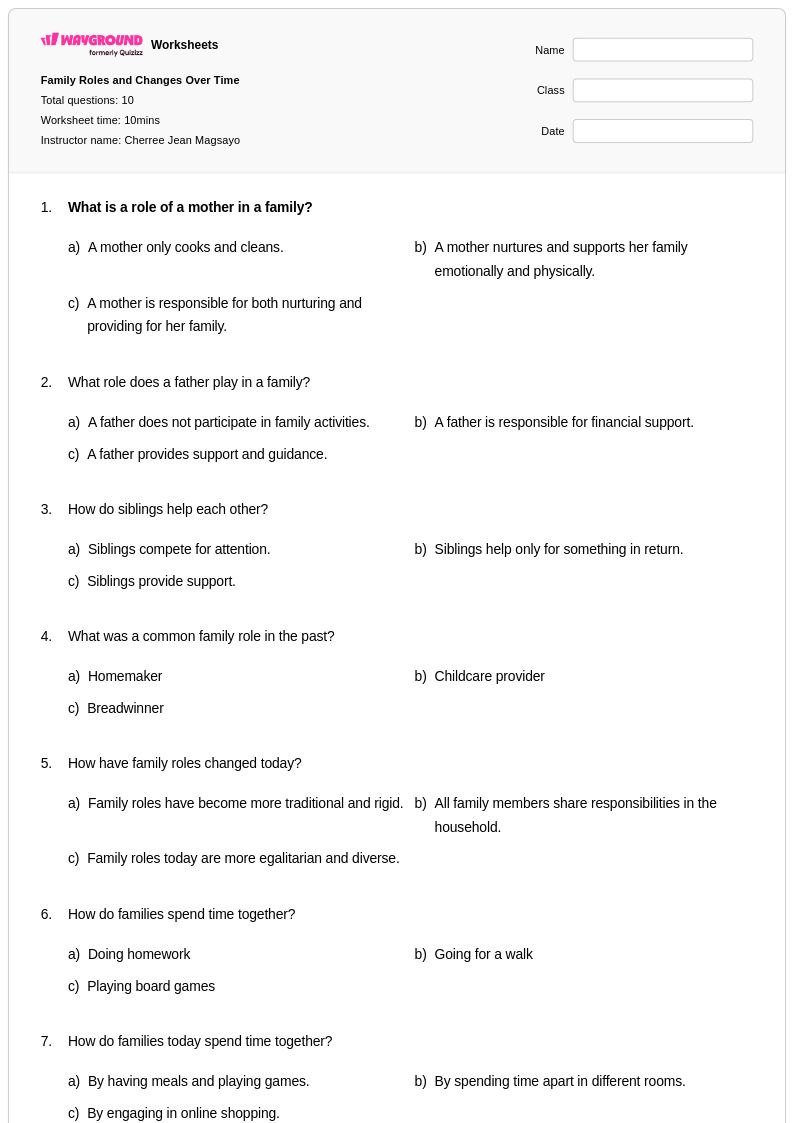
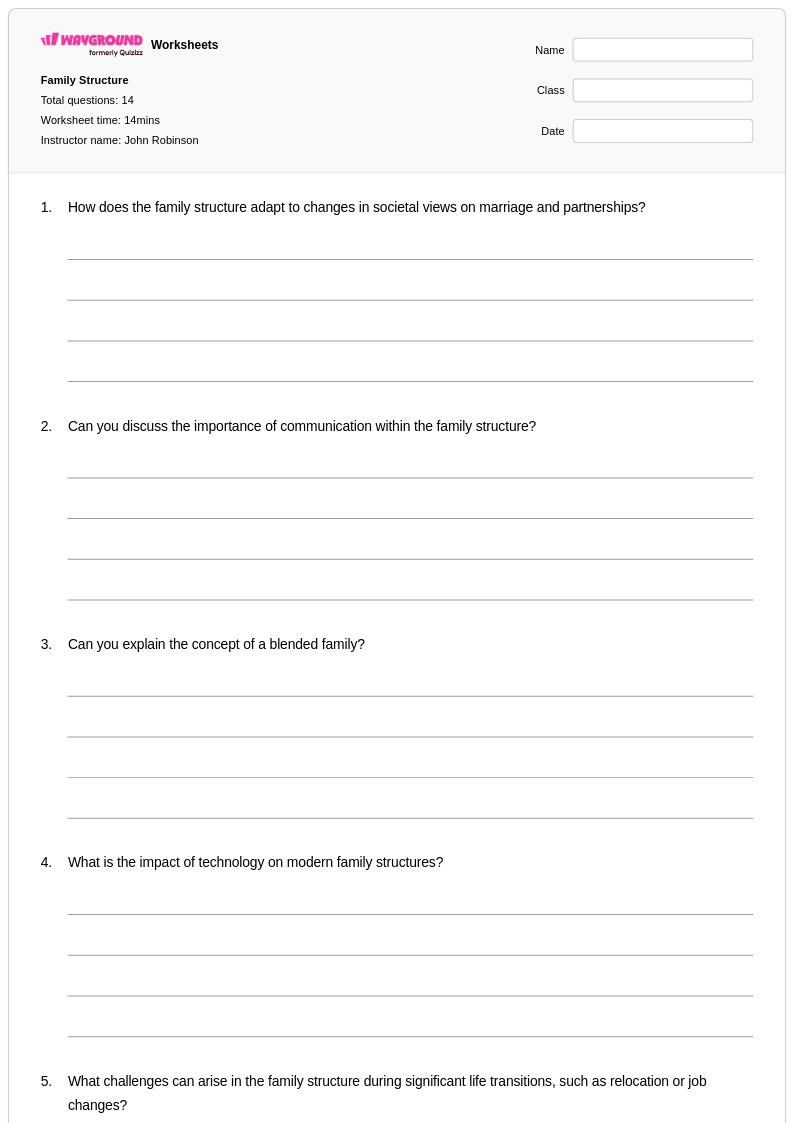
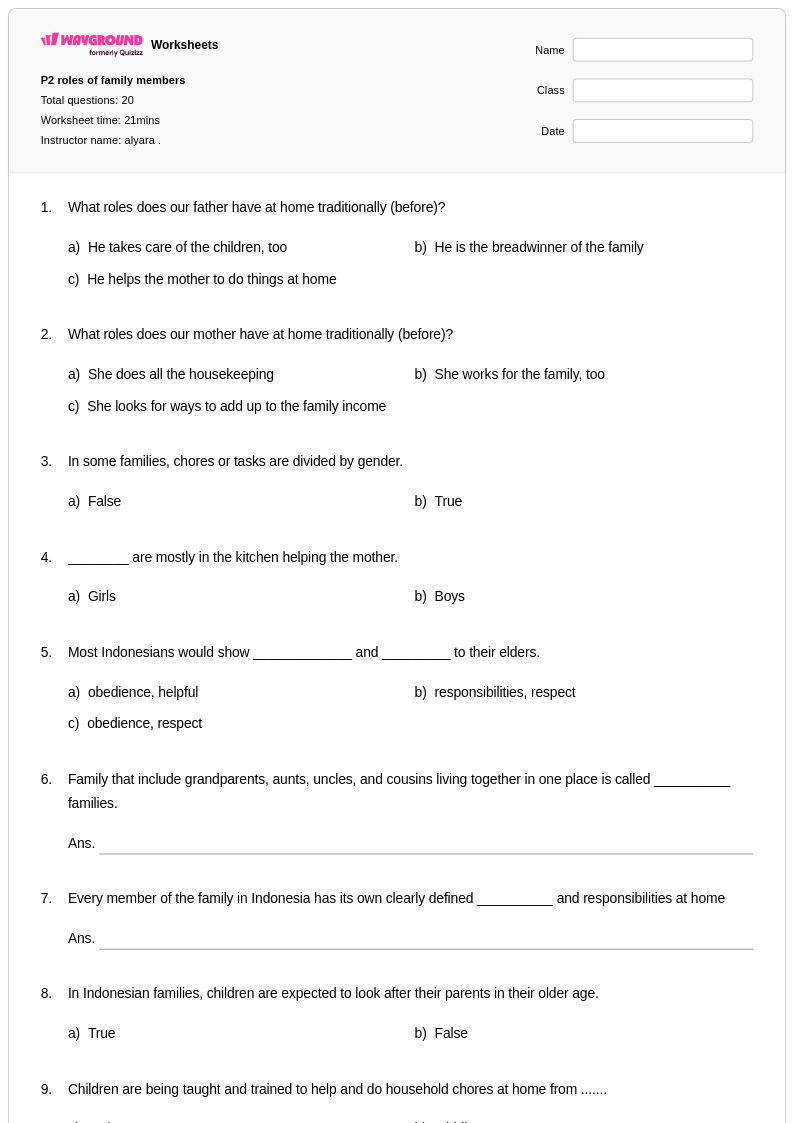
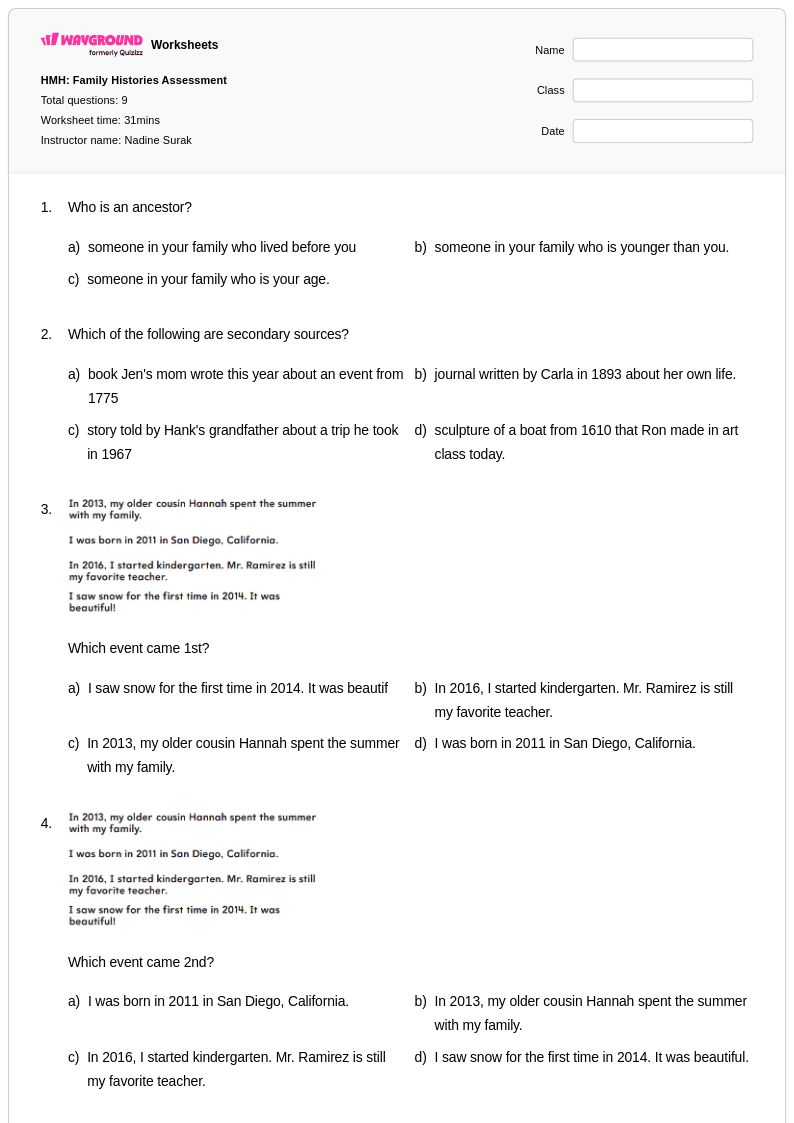
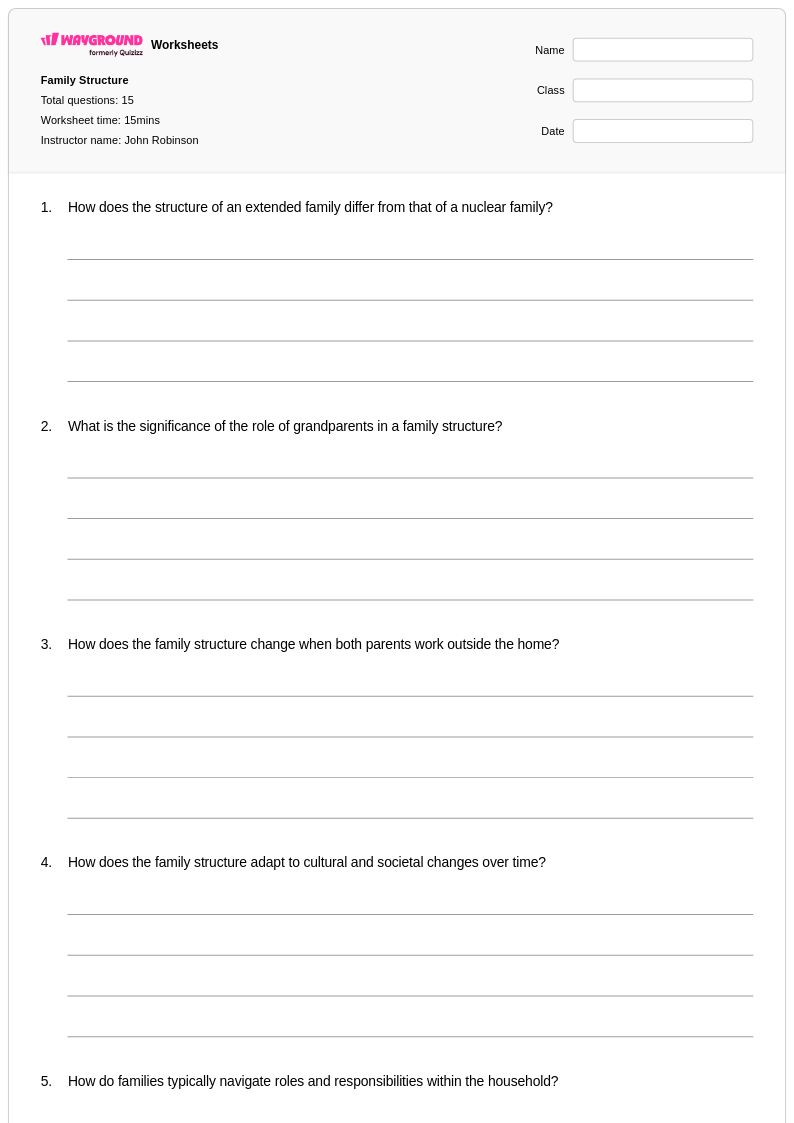
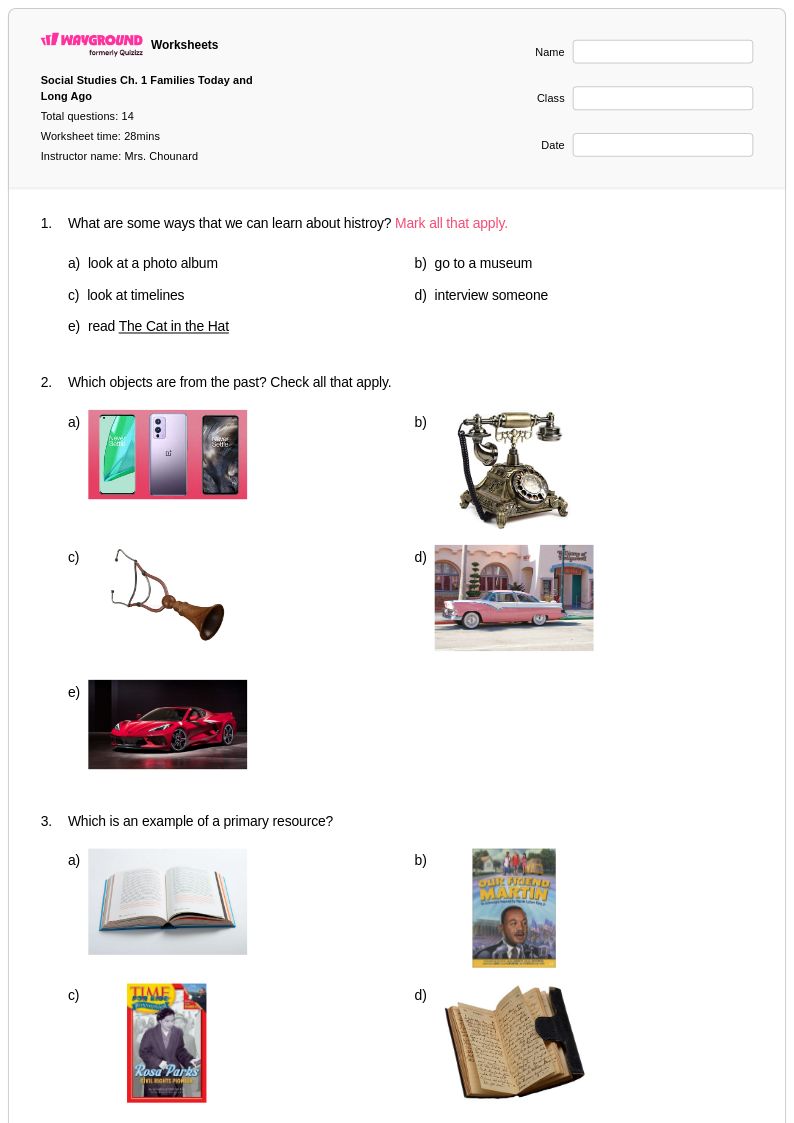
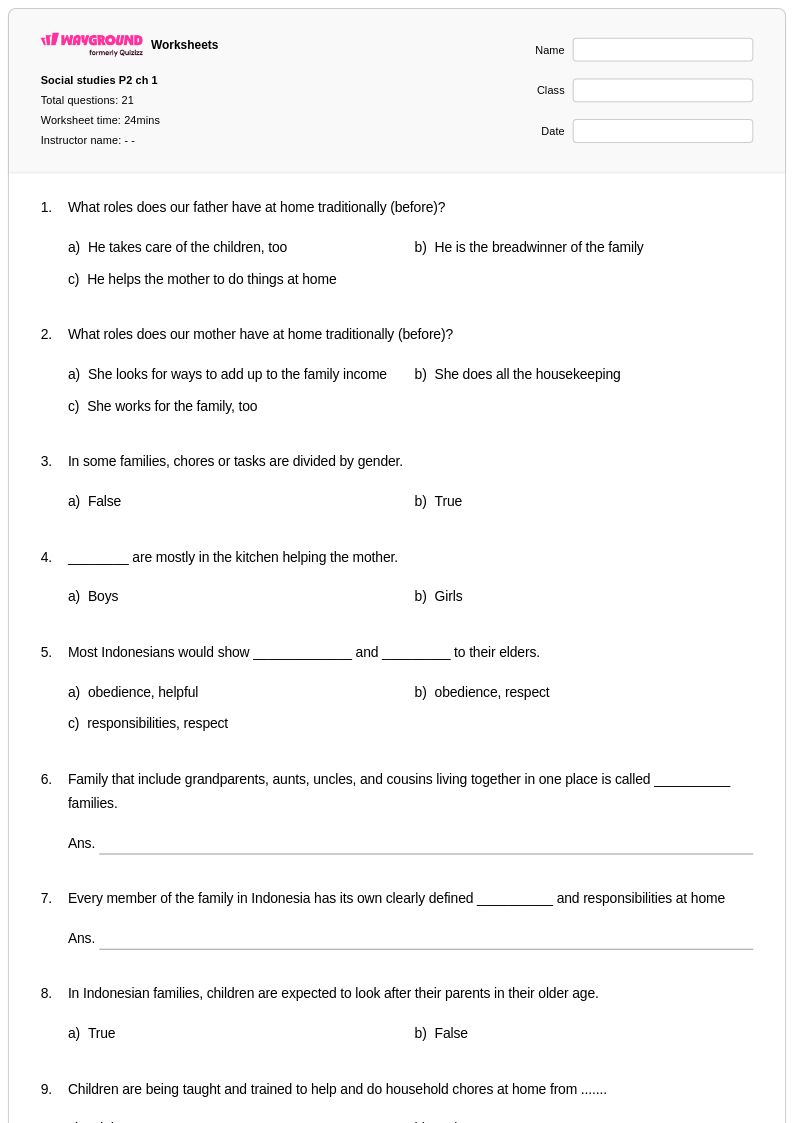
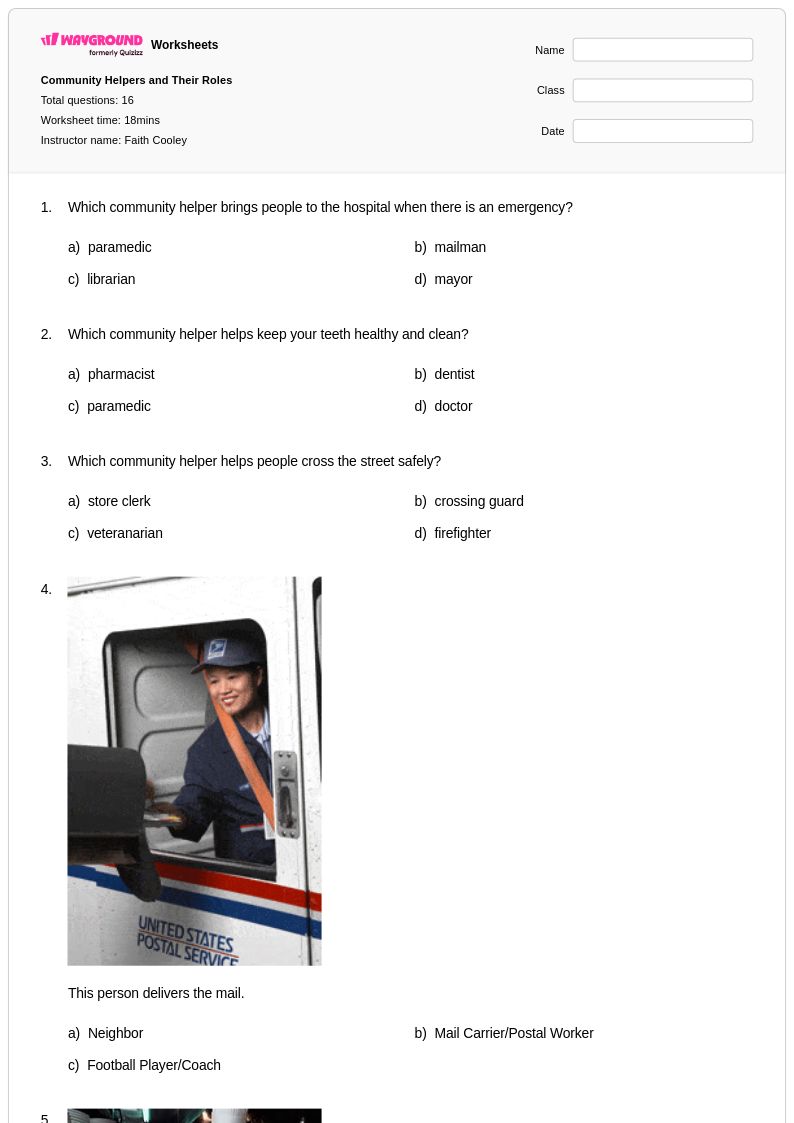
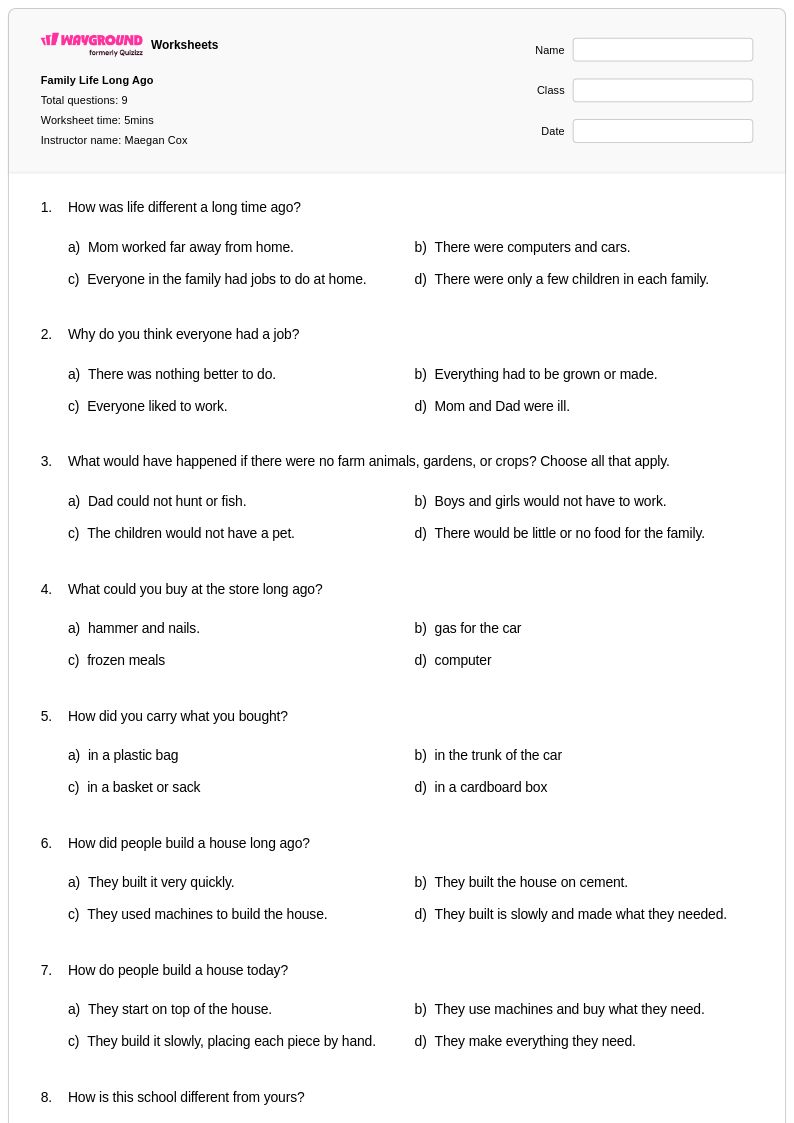
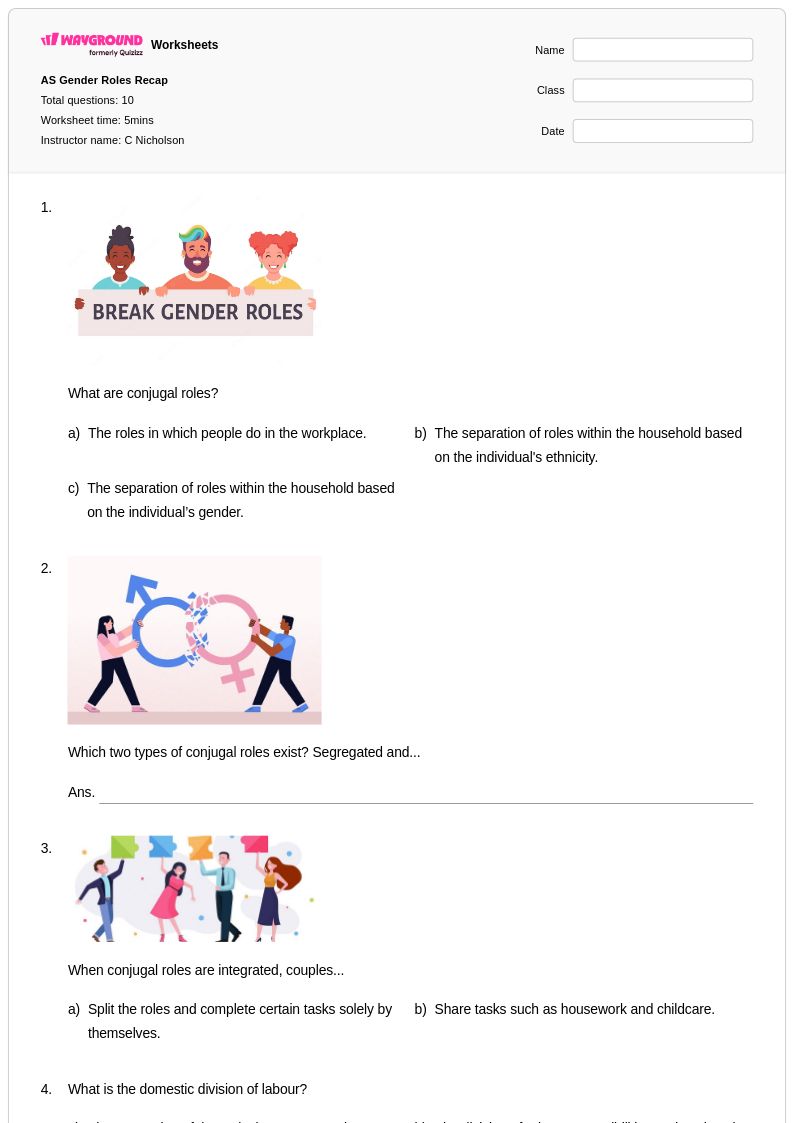
Wayground's free Class 2 Family Roles worksheets and printables help students explore different family members' responsibilities and contributions through engaging practice problems with complete answer keys in downloadable PDF format.
Explore printable Family Roles worksheets for Class 2
Family roles worksheets for Class 2 students available through Wayground (formerly Quizizz) provide essential foundational learning about how family members contribute to household functioning and community life. These carefully designed resources help young learners identify different responsibilities within families, understand how roles may vary across cultures and family structures, and recognize the importance of cooperation and mutual support. The worksheets strengthen critical social studies skills including observation, comparison, and cultural awareness through engaging practice problems that encourage students to reflect on their own family experiences while learning about diverse family configurations. Teachers can access comprehensive materials including detailed answer keys, free printable resources, and pdf formats that support both classroom instruction and independent practice.
Wayground's extensive collection of millions of teacher-created resources ensures educators have access to high-quality, standards-aligned materials that address family roles concepts at the Class 2 level with appropriate developmental considerations. The platform's robust search and filtering capabilities allow teachers to quickly locate worksheets that match specific learning objectives, while built-in differentiation tools enable customization for diverse student needs and learning styles. Available in both printable and digital formats including downloadable pdf versions, these resources support flexible lesson planning whether teachers need materials for whole-group instruction, small-group activities, or individual skill practice. The comprehensive nature of these worksheet collections makes them invaluable for initial concept introduction, targeted remediation for struggling learners, and enrichment opportunities that deepen students' understanding of family dynamics and cultural diversity.
FAQs
How do I teach family roles in a culturally responsive way?
Teaching family roles effectively requires centering diverse family structures from the start rather than treating any single model as the default. Use comparative activities that ask students to examine how responsibilities are distributed across different cultural, generational, and economic contexts. Anchoring discussion in students' own family experiences before introducing broader examples builds both engagement and critical thinking about why family roles vary across societies.
What activities help students practice understanding family roles and responsibilities?
Effective practice activities include role comparison charts, where students map responsibilities across different family types, and primary source analysis tasks that ask students to identify how cultural or historical context shapes family dynamics. Perspective-taking exercises, such as writing from the viewpoint of a family member in a different culture or time period, help students move beyond surface-level recognition toward genuine analytical understanding of how family roles function within communities.
What misconceptions do students commonly have about family roles?
A common misconception is that family roles are fixed or universal, when in fact they shift significantly across cultures, economic conditions, and time periods. Students also tend to conflate biological family structure with the distribution of responsibilities, not recognizing that who does what within a family is shaped by social norms, not just biology. Explicitly comparing family structures across different societies and historical periods helps students challenge these assumptions with evidence.
How can I use family roles worksheets to support students from diverse family backgrounds?
Choose worksheets that present a wide range of family structures, including multigenerational households, single-parent families, and non-traditional arrangements, so all students see their own experience reflected in the content. Frame activities around analysis and comparison rather than evaluation, which prevents any structure from being implicitly positioned as superior. On Wayground, teachers can also enable the Read Aloud accommodation for students who need audio support, and adjust font size and display themes through Reading Mode to reduce barriers for diverse learners.
How do I use Wayground's family roles worksheets in my classroom?
Wayground's family roles worksheets are available as printable PDFs for traditional classroom use and in digital formats for technology-integrated environments, making them flexible for in-person, hybrid, or remote instruction. Teachers can also host worksheets as a quiz directly on Wayground, allowing for streamlined assignment and student progress tracking. Each worksheet includes a complete answer key, so teachers can use them for independent practice, small group work, or formative assessment without additional preparation.
How do family roles connect to broader social studies standards?
Family roles are directly tied to social studies standards around cultural awareness, community structures, and civic identity, particularly in early and middle grades. Understanding how responsibilities are distributed within families introduces students to concepts like social norms, gender roles, economic interdependence, and generational knowledge transfer. These skills build foundational analytical capacity that students carry into more complex units on community systems, cultural comparison, and historical change.