
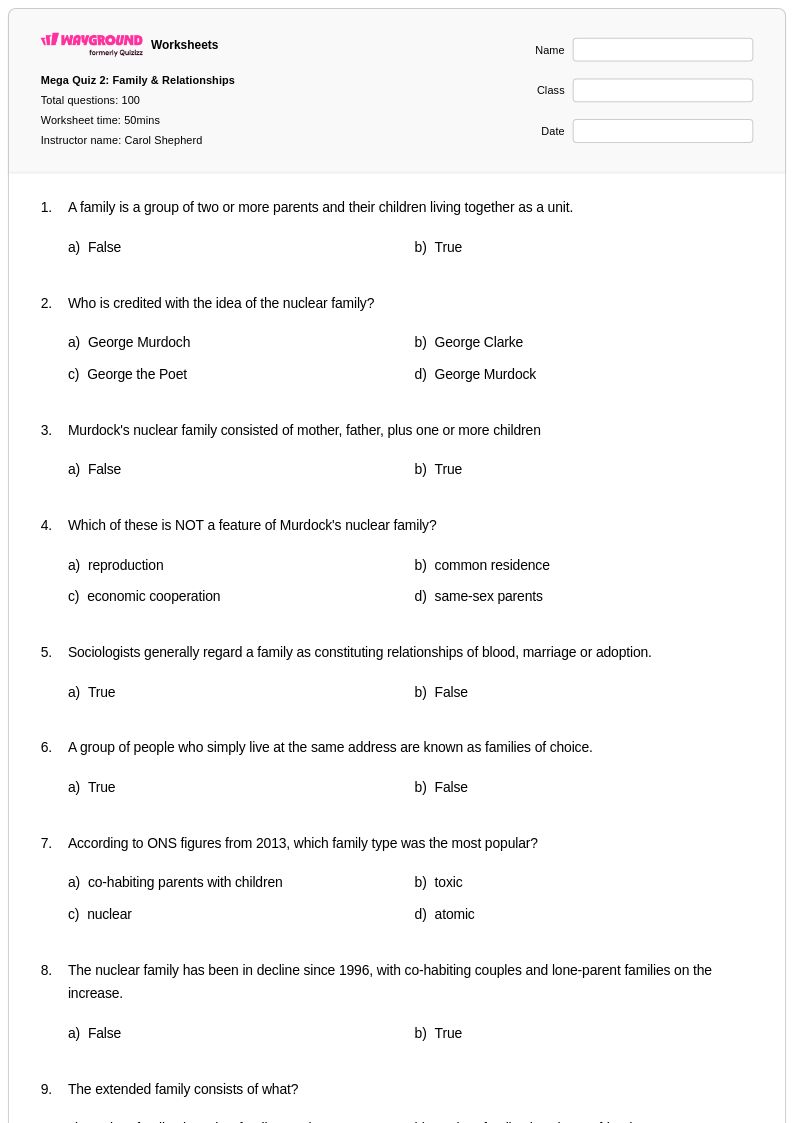
100 Q
1st - 12th
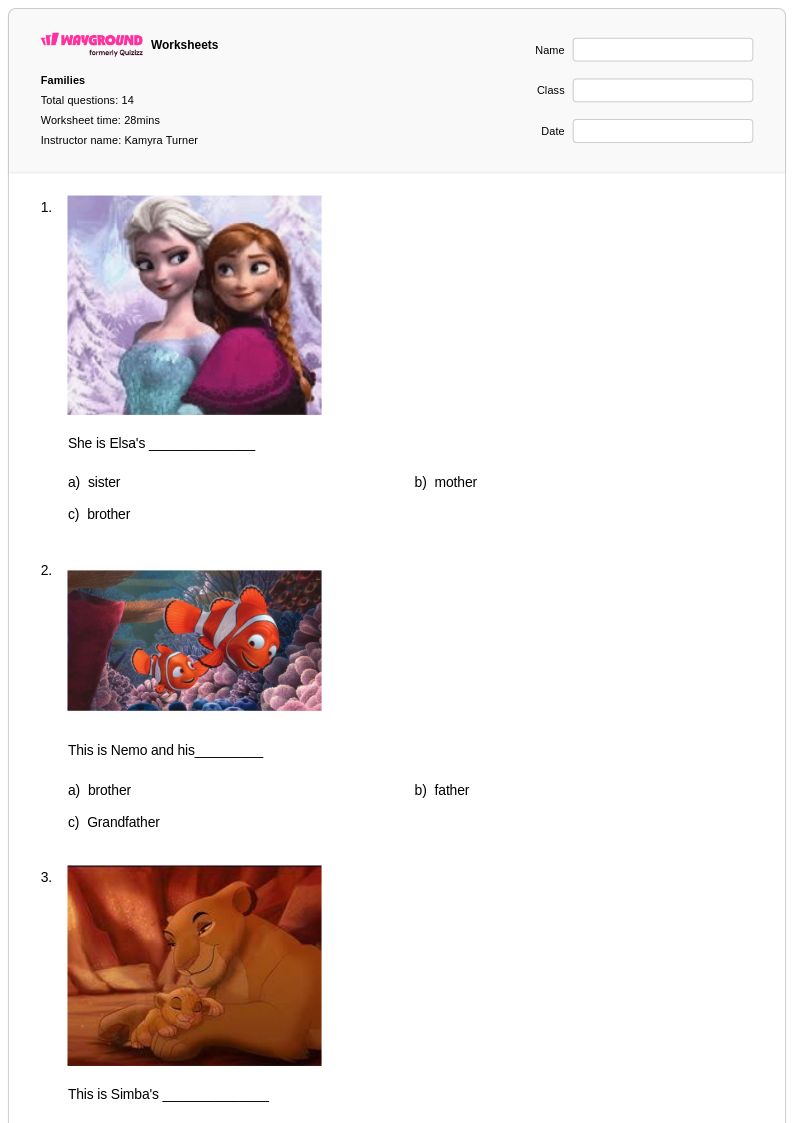
14 Q
2nd
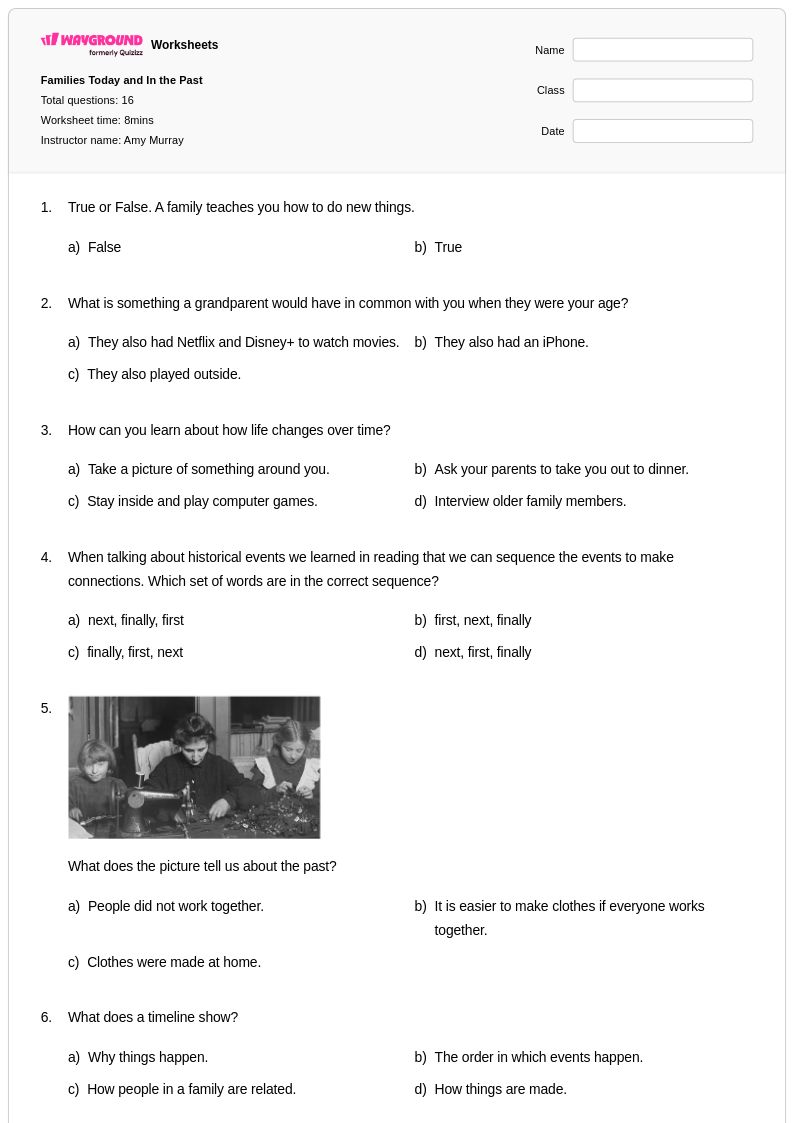
16 Q
2nd
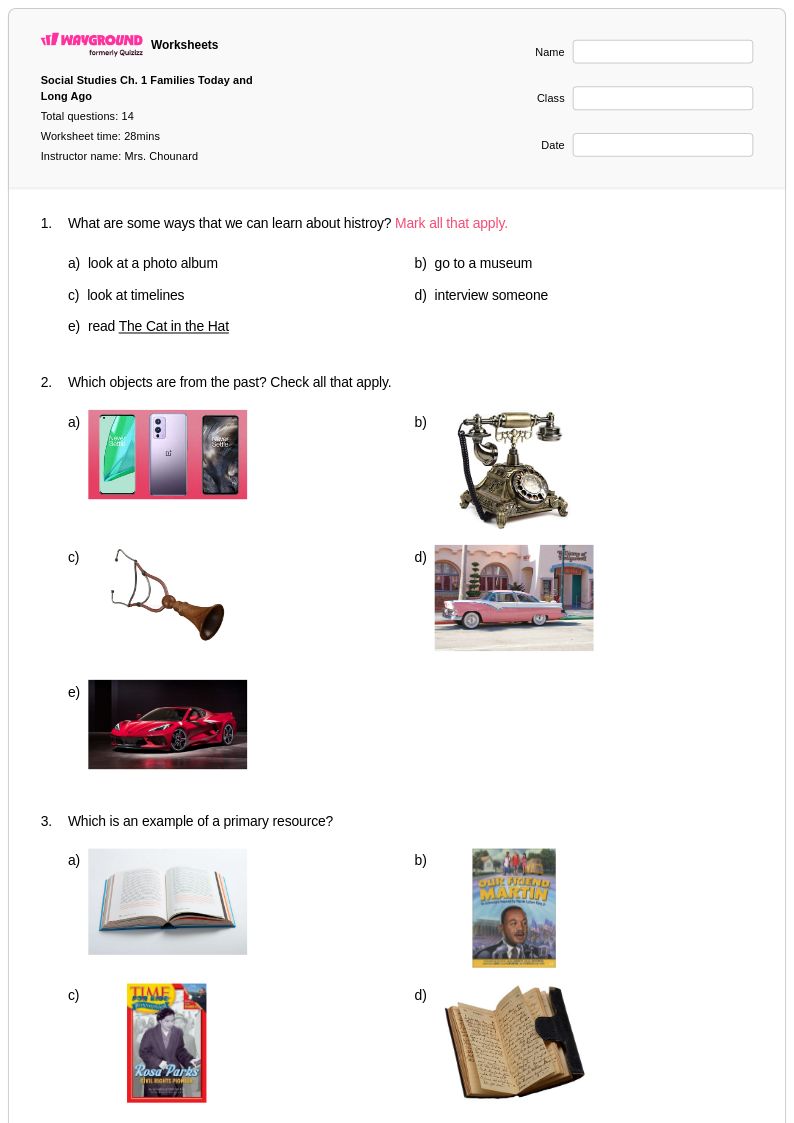
14 Q
2nd
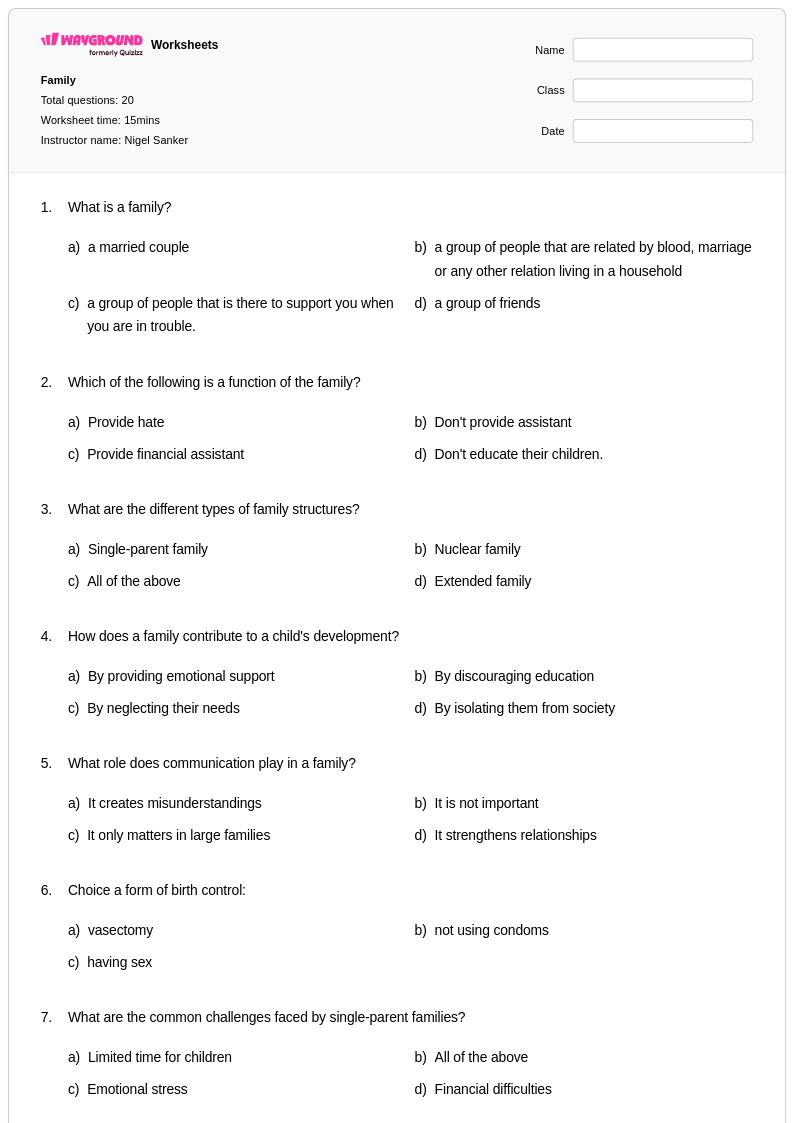
20 Q
2nd - Uni
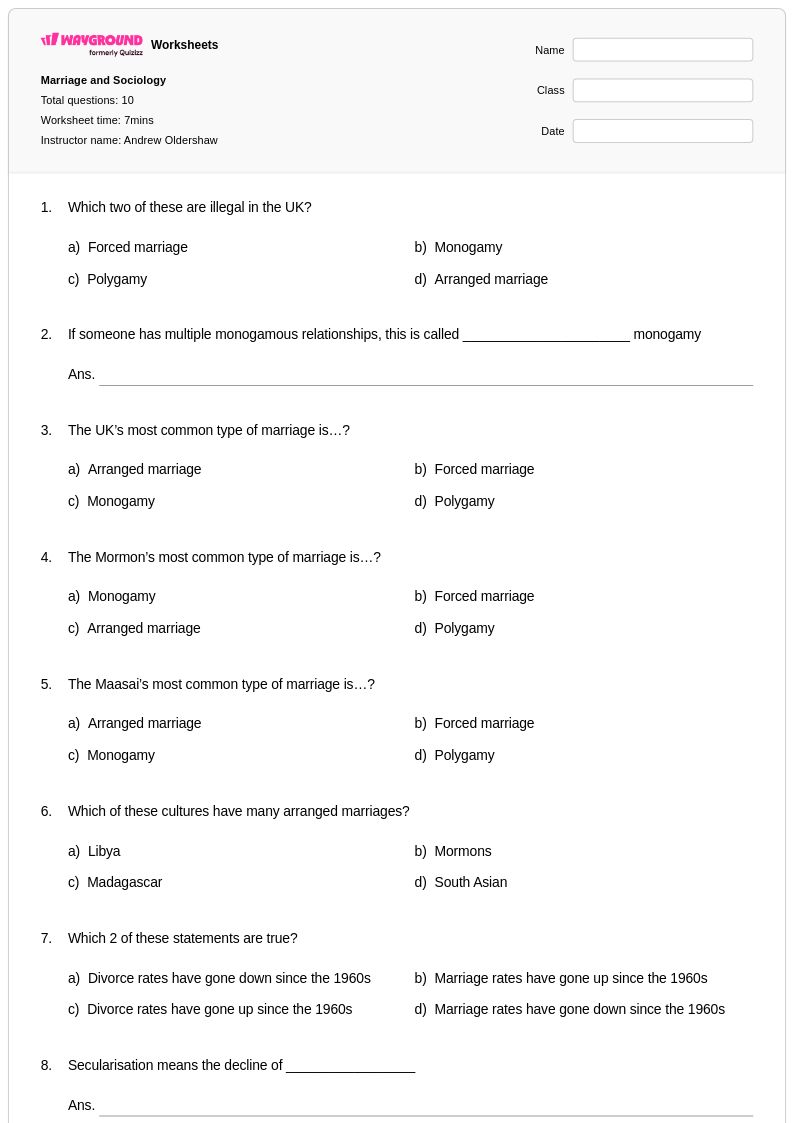
10 Q
1st - 4th
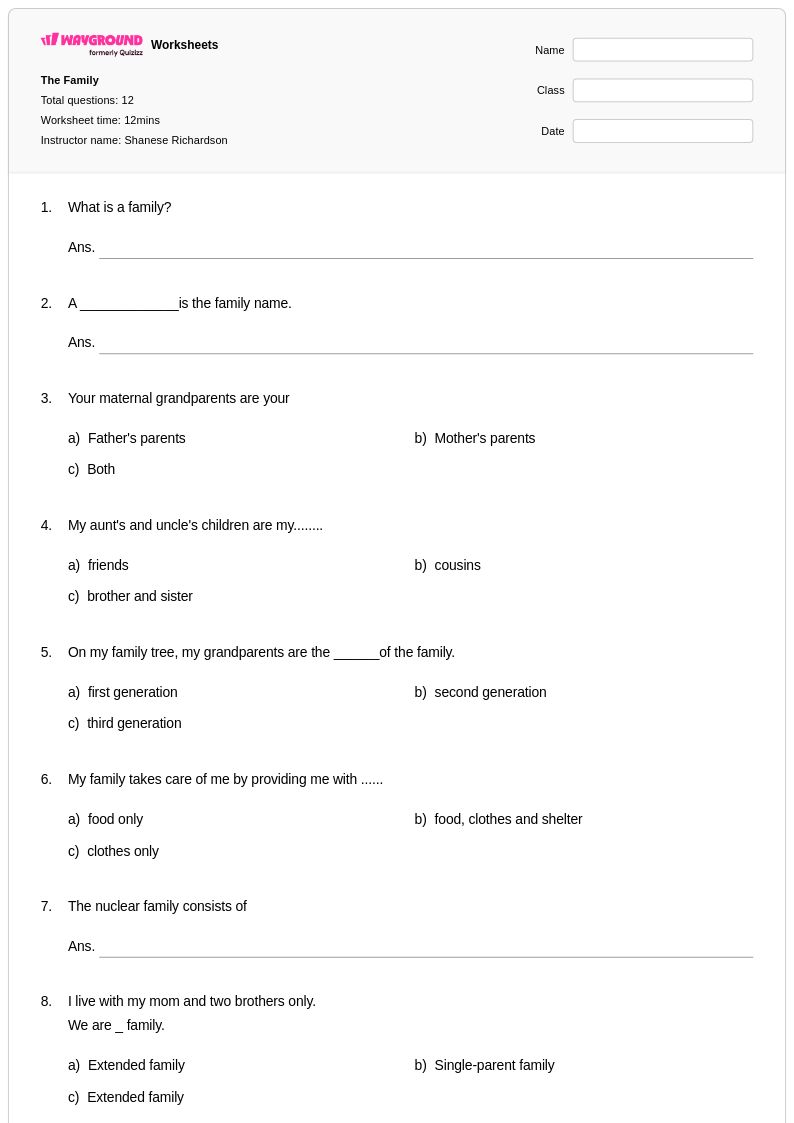
12 Q
2nd
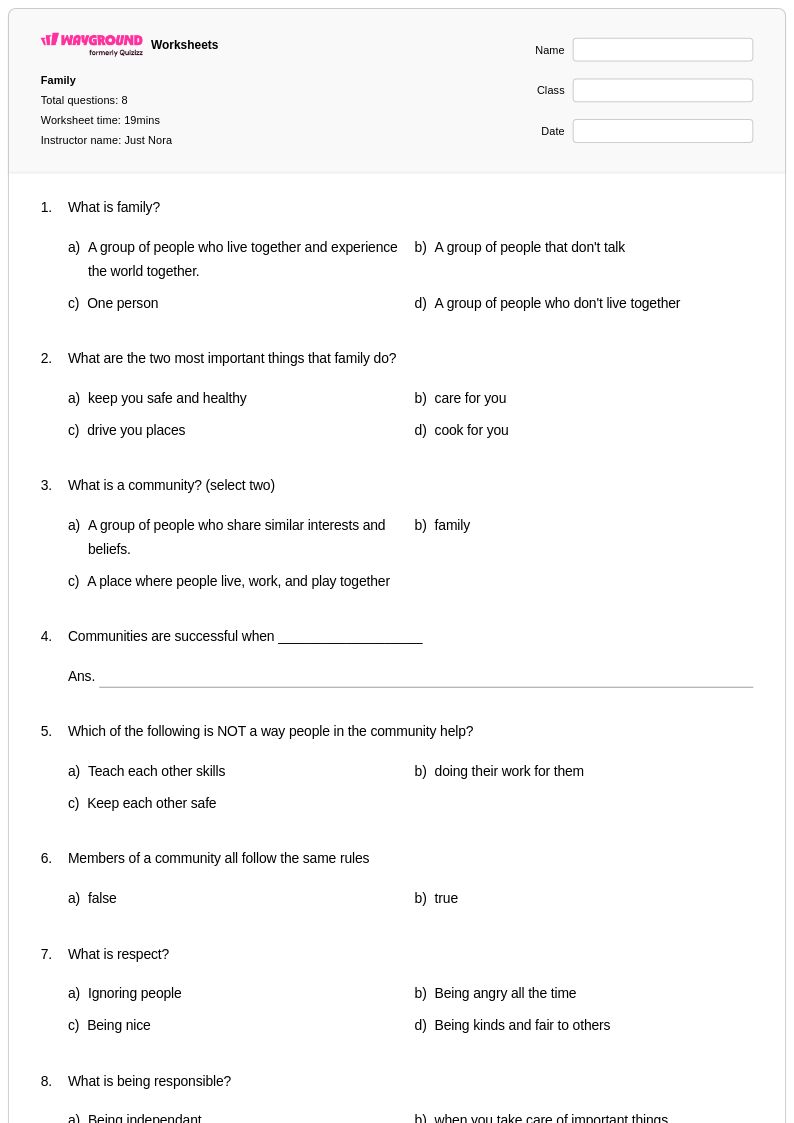
8 Q
1st - 5th
20 Q
2nd
14 Q
2nd
9 Q
2nd
12 Q
1st - 2nd
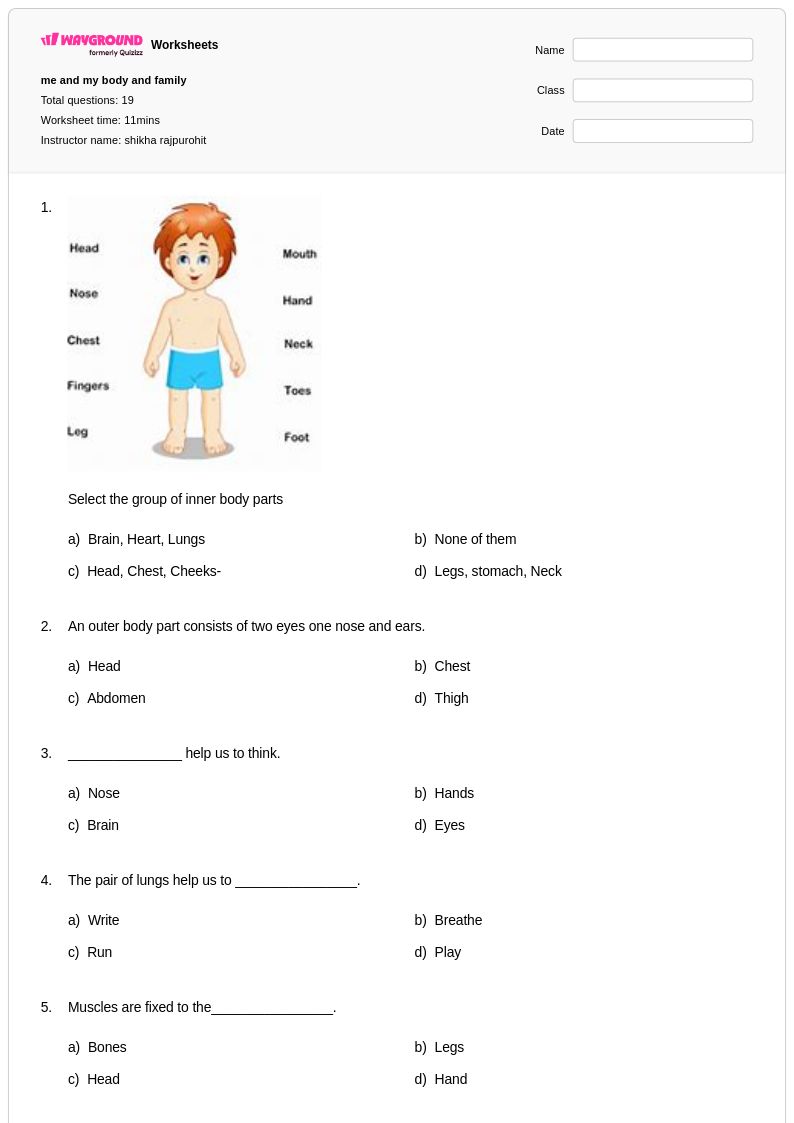
19 Q
1st - 2nd
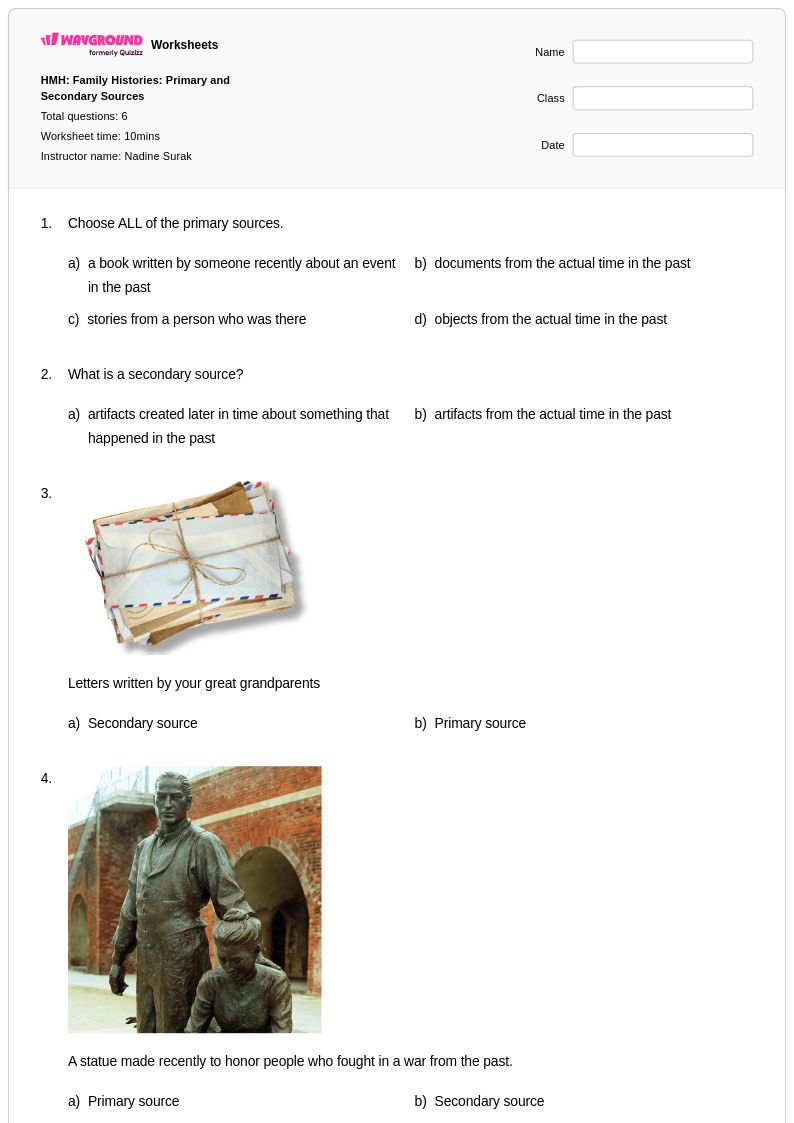
6 Q
2nd
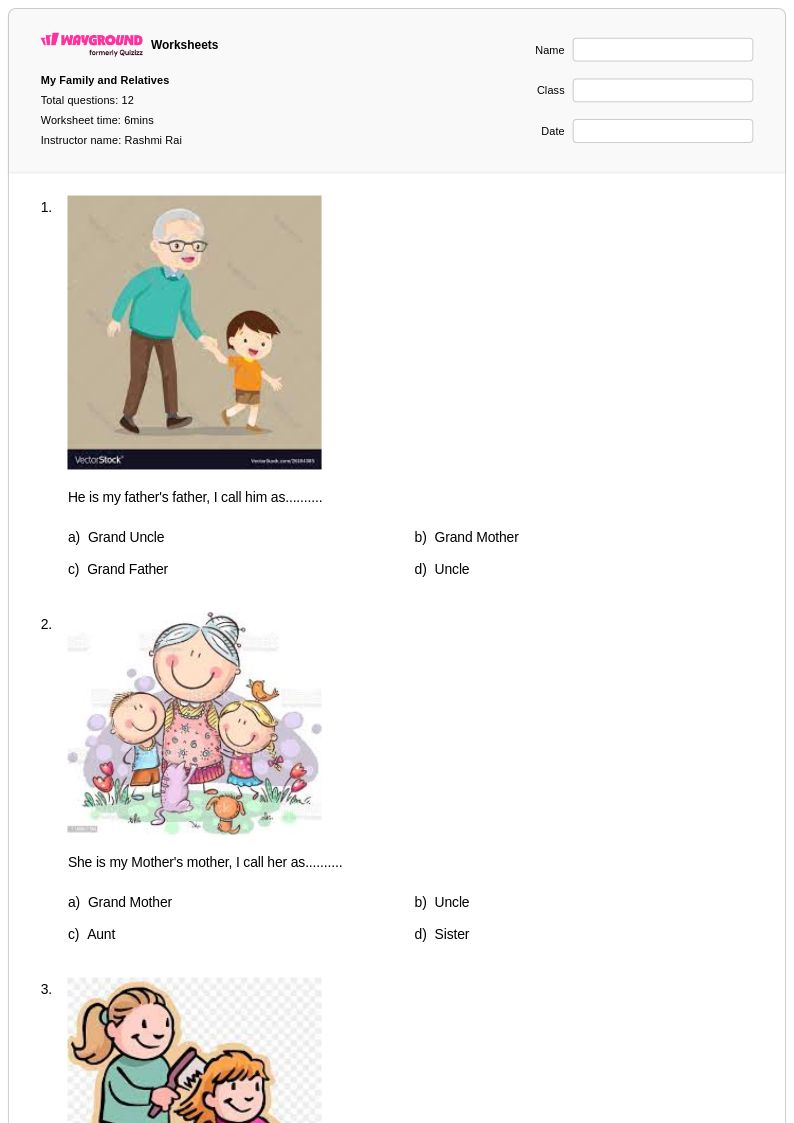
12 Q
2nd - 4th
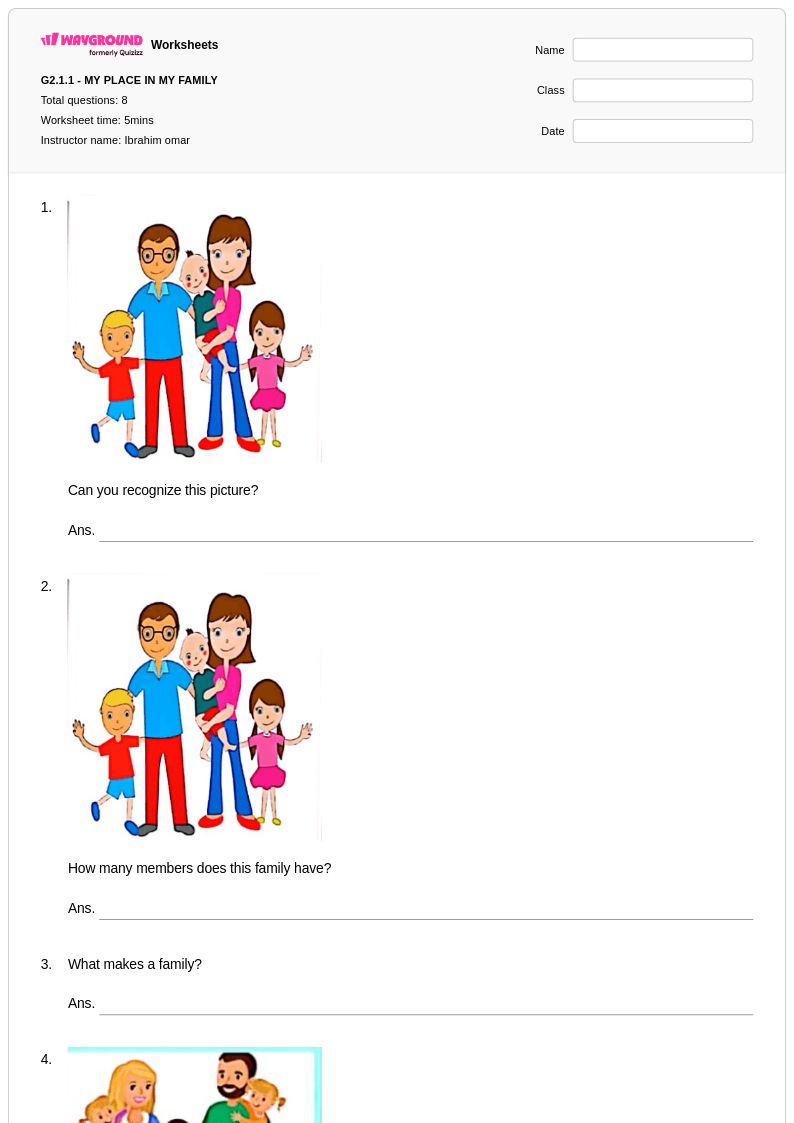
8 Q
2nd
21 Q
1st - 5th
20 Q
2nd
18 Q
2nd
8 Q
1st - 3rd
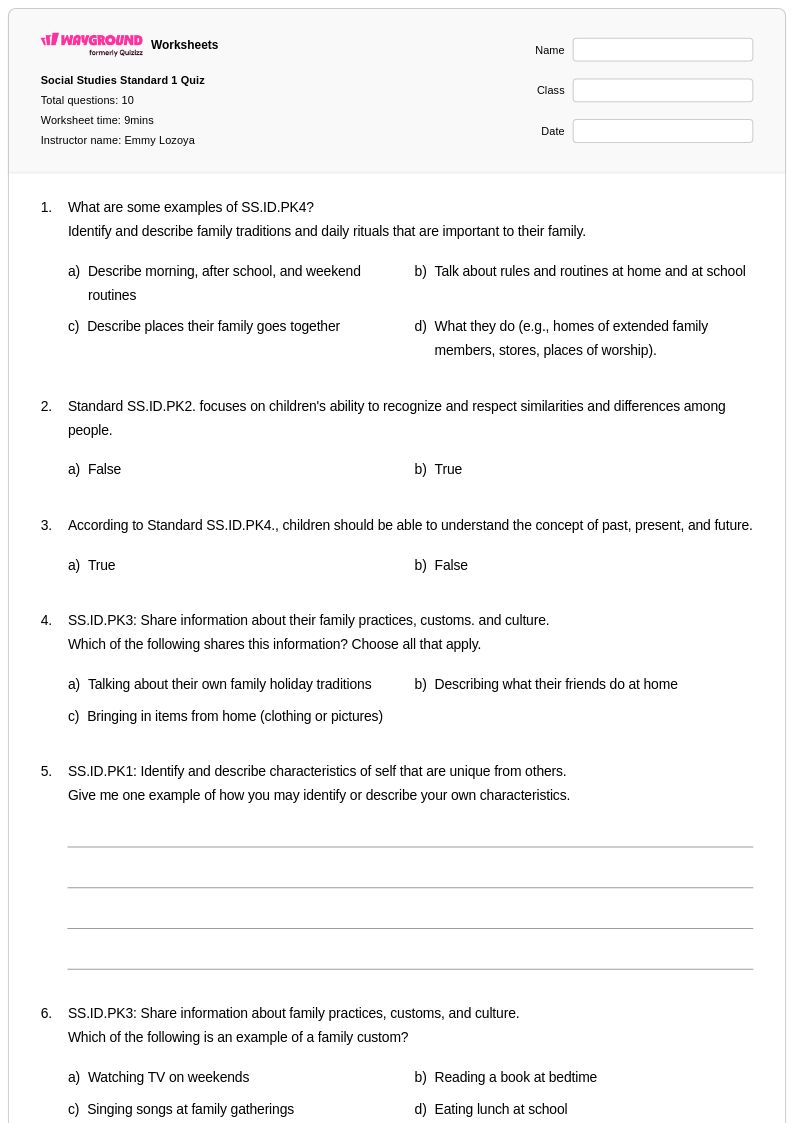
10 Q
2nd - Uni
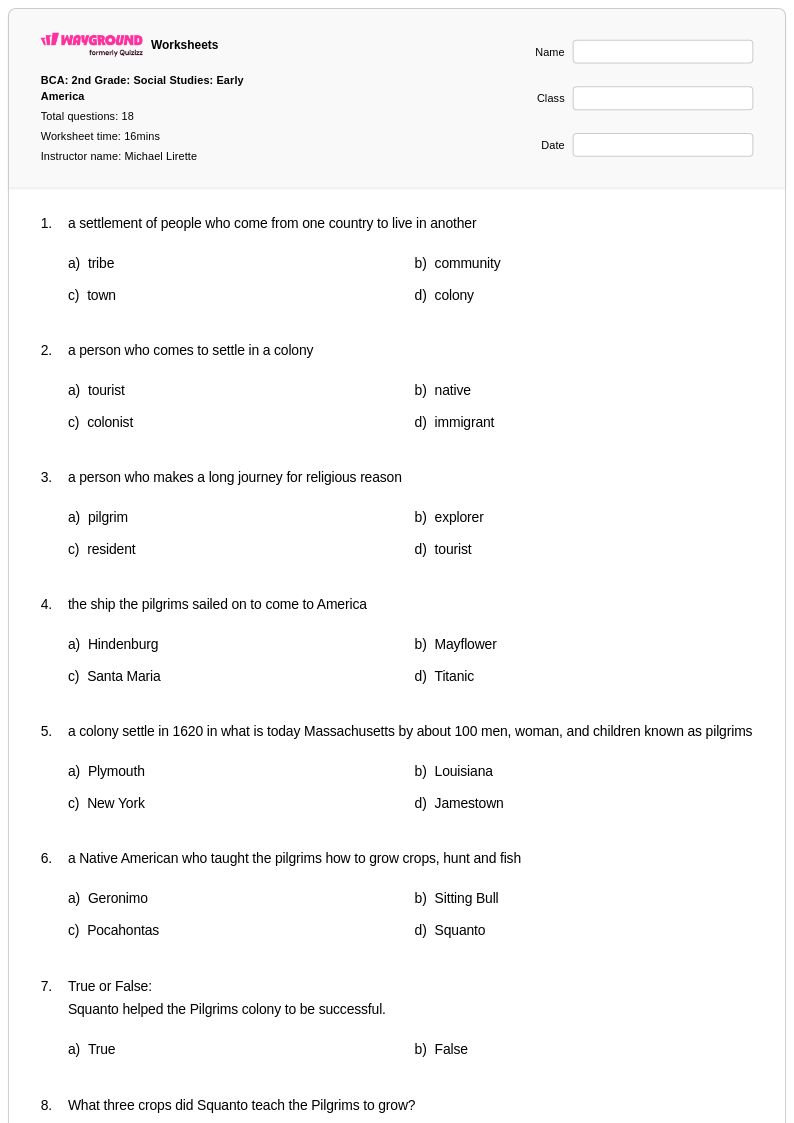
18 Q
2nd
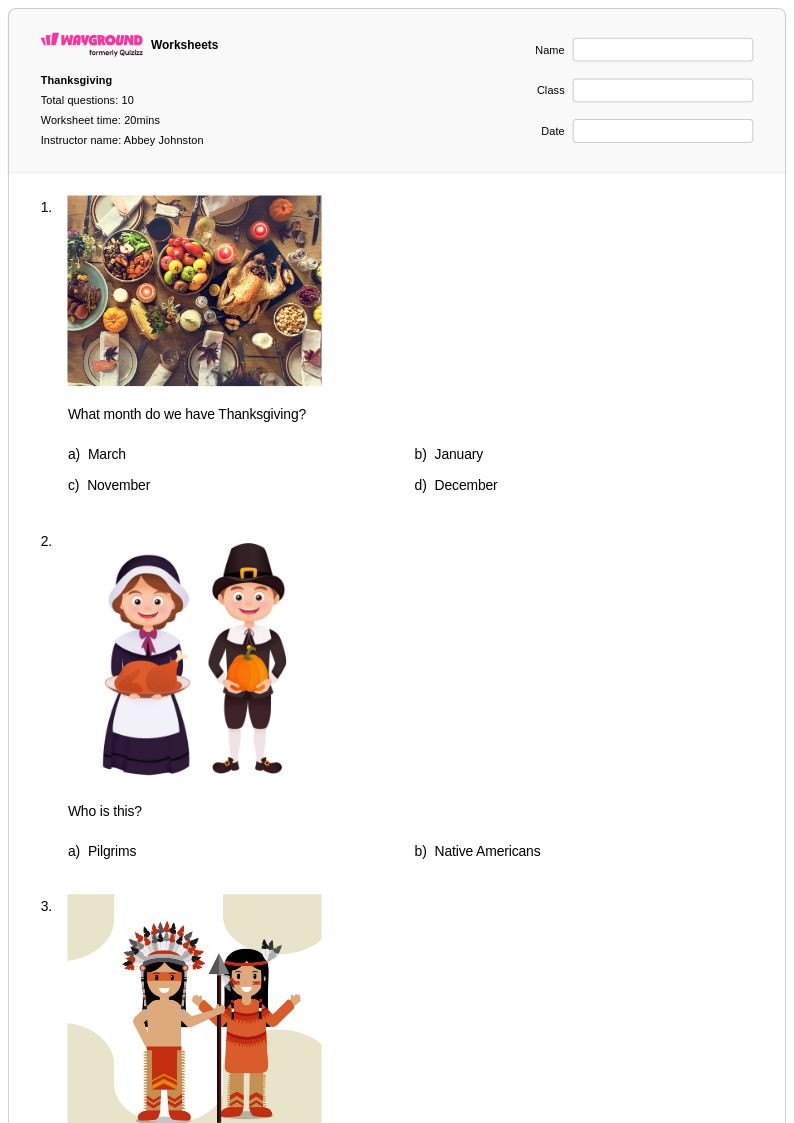
10 Q
KG - 2nd
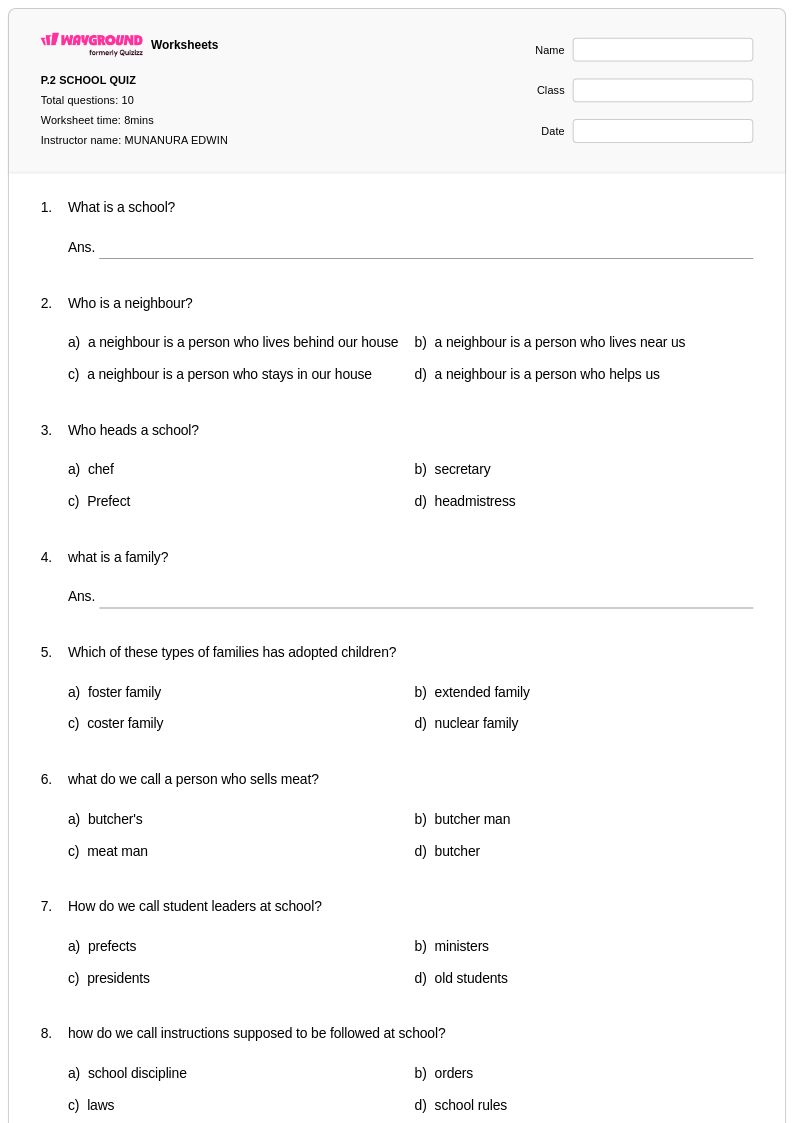
10 Q
2nd - 4th
Explore Marriage and Family Relationships Worksheets by Grades
Explore Other Subject Worksheets for class 2
Explore printable Marriage and Family Relationships worksheets for Class 2
Marriage and family relationships worksheets for Class 2 students available through Wayground (formerly Quizizz) provide essential foundational learning about the diverse structures and dynamics that define families across different communities and cultures. These carefully designed educational materials help young learners recognize and appreciate various family configurations, understand the roles and responsibilities within family units, and explore how marriage customs and family traditions vary across different cultural backgrounds. The worksheets strengthen critical social studies skills including cultural awareness, empathy development, and community understanding through age-appropriate activities, discussion prompts, and reflective exercises. Each printable resource includes comprehensive answer keys and practice problems that allow students to explore concepts like family roles, cultural celebrations, and relationship dynamics while building vocabulary related to kinship, traditions, and community structures. These free educational materials serve as valuable tools for introducing Class 2 students to the rich diversity of family experiences while fostering respect and understanding for different cultural practices surrounding marriage and family life.
Wayground (formerly Quizizz) empowers educators with access to millions of teacher-created resources focused on marriage and family relationships, offering robust search and filtering capabilities that make it simple to locate materials perfectly suited for Class 2 social studies instruction. The platform's comprehensive collection includes standards-aligned worksheets that support differentiated instruction through customizable features, allowing teachers to modify content complexity and focus areas to meet individual student needs and learning objectives. These versatile resources are available in both printable pdf formats for traditional classroom use and digital formats for interactive learning experiences, providing flexibility for diverse teaching environments and learning preferences. Teachers can efficiently plan comprehensive units on community and cultures by utilizing these materials for skill practice, remediation support for struggling learners, and enrichment opportunities for advanced students, while the extensive filtering system helps locate specific content related to cultural diversity, family structures, and relationship dynamics that align with curriculum goals and classroom objectives.
FAQs
How do I teach marriage and family relationships in a social studies class?
What exercises help students practice analyzing different family structures and marriage customs?
What misconceptions do students commonly have about marriage and family relationships across cultures?
How can I differentiate marriage and family relationships worksheets for students at different ability levels?
How do I use Wayground's marriage and family relationships worksheets in my classroom?
How do economic and religious factors influence family structure, and how can I teach this effectively?