Free Printable Marriage and Family Relationships Worksheets for Kindergarten
Explore Wayground's free kindergarten marriage and family relationships worksheets and printables that help young learners understand different family structures, roles, and traditions through engaging practice problems with complete answer keys.
Explore printable Marriage and Family Relationships worksheets for Kindergarten
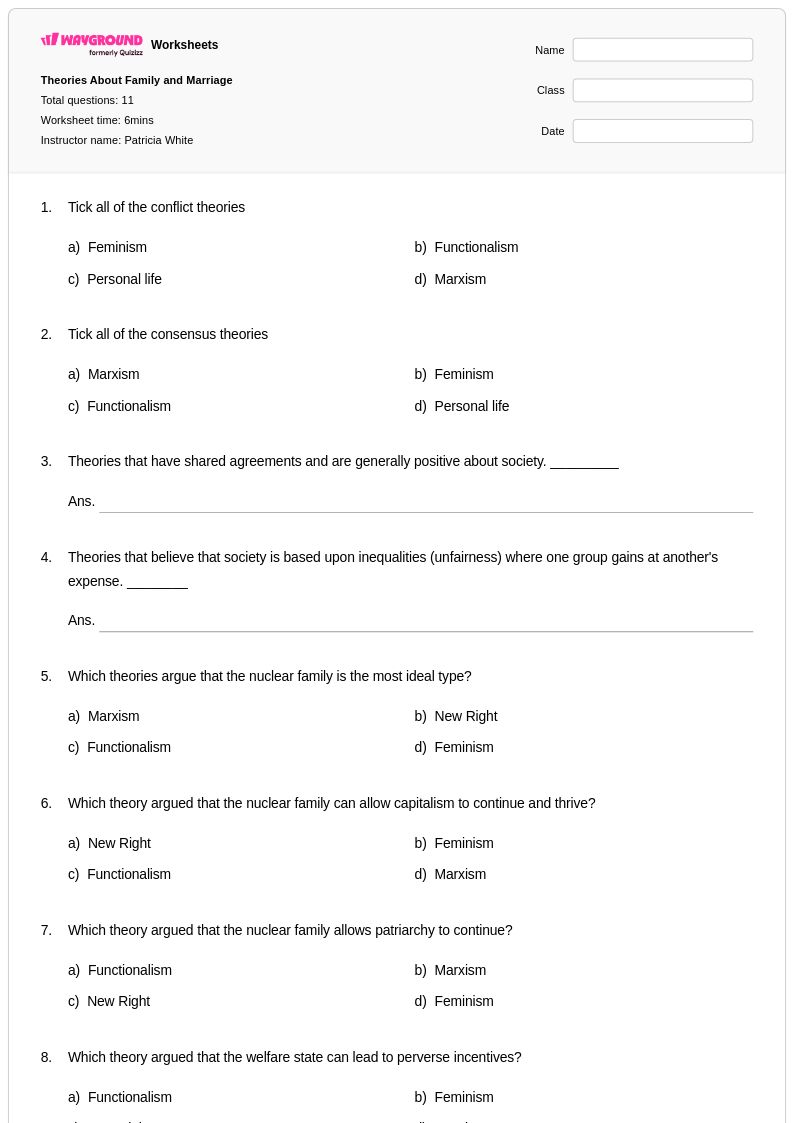
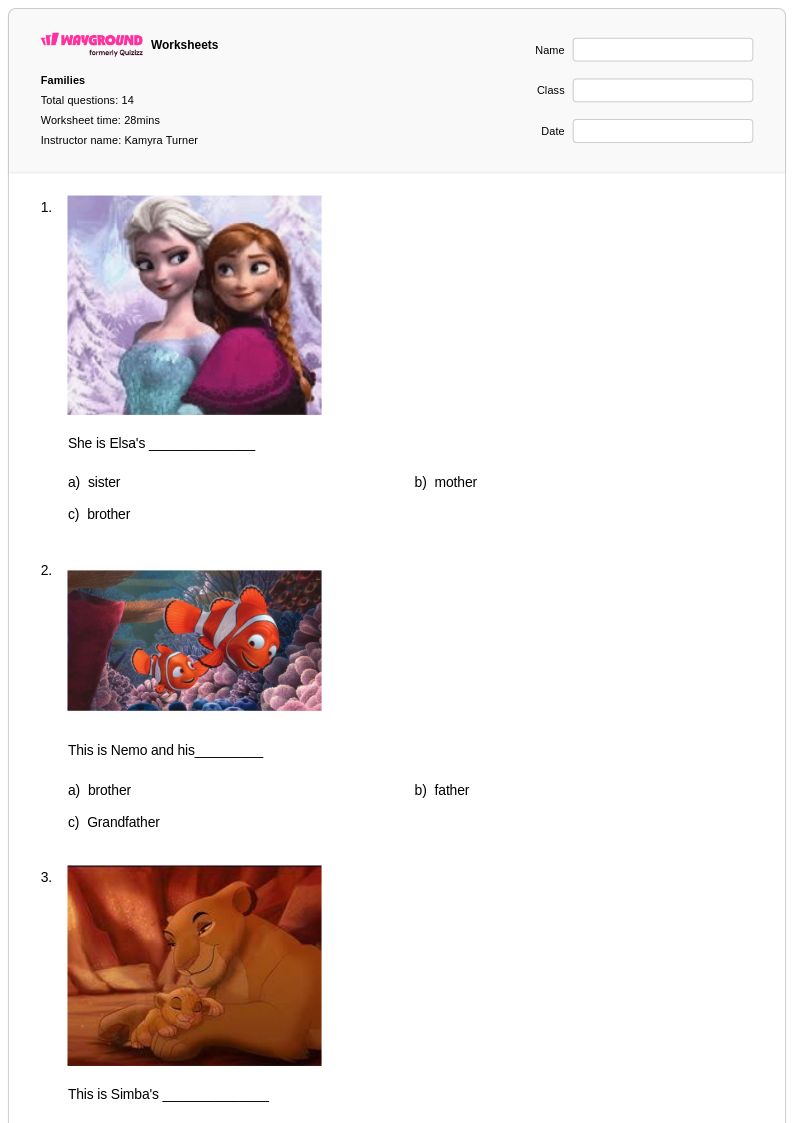
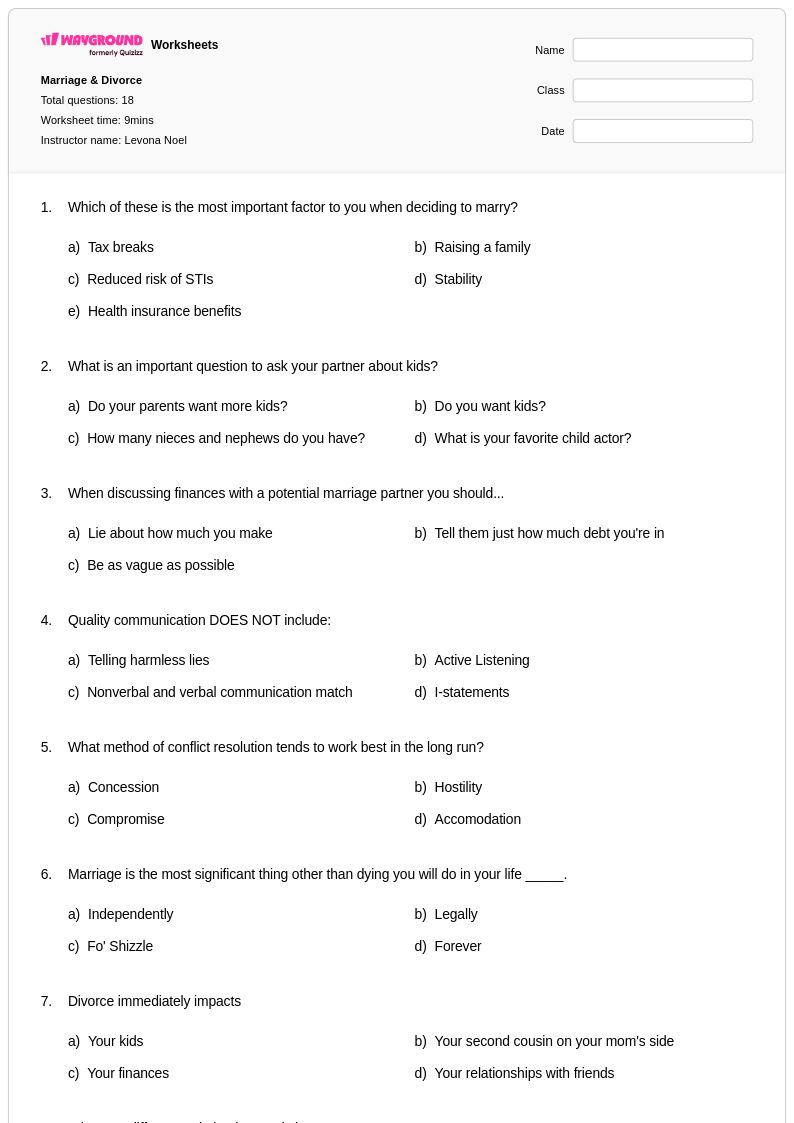
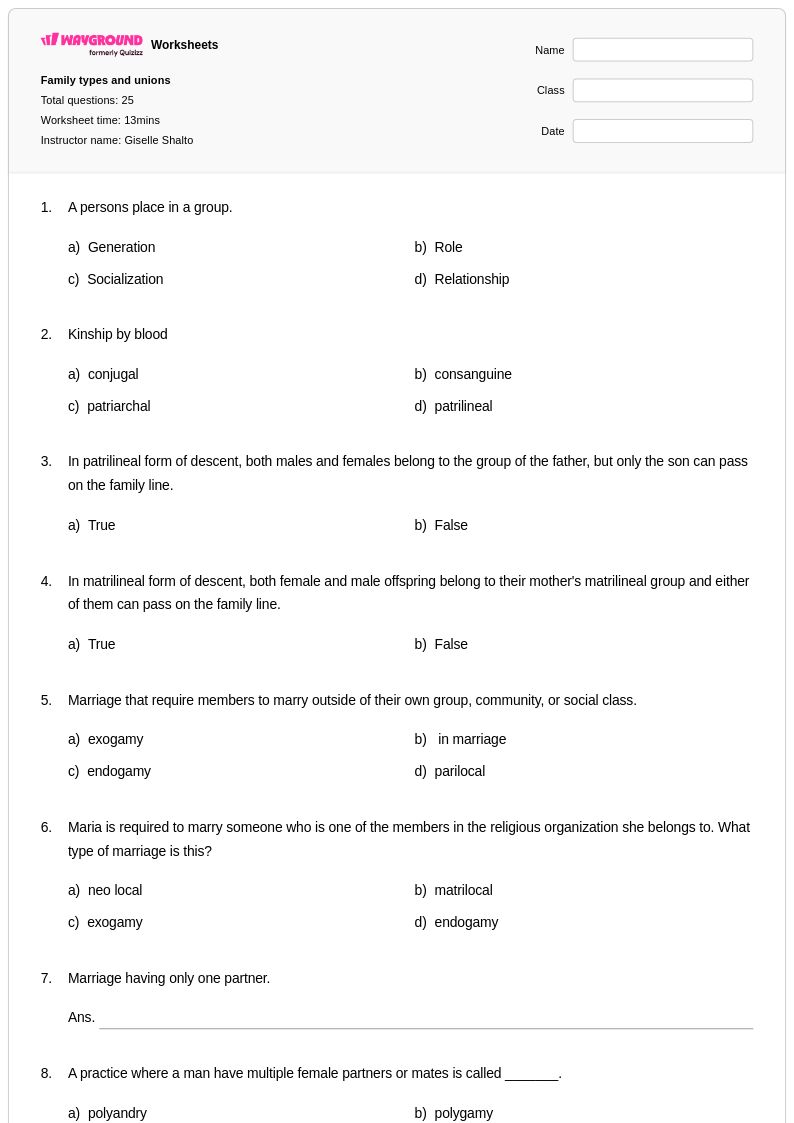
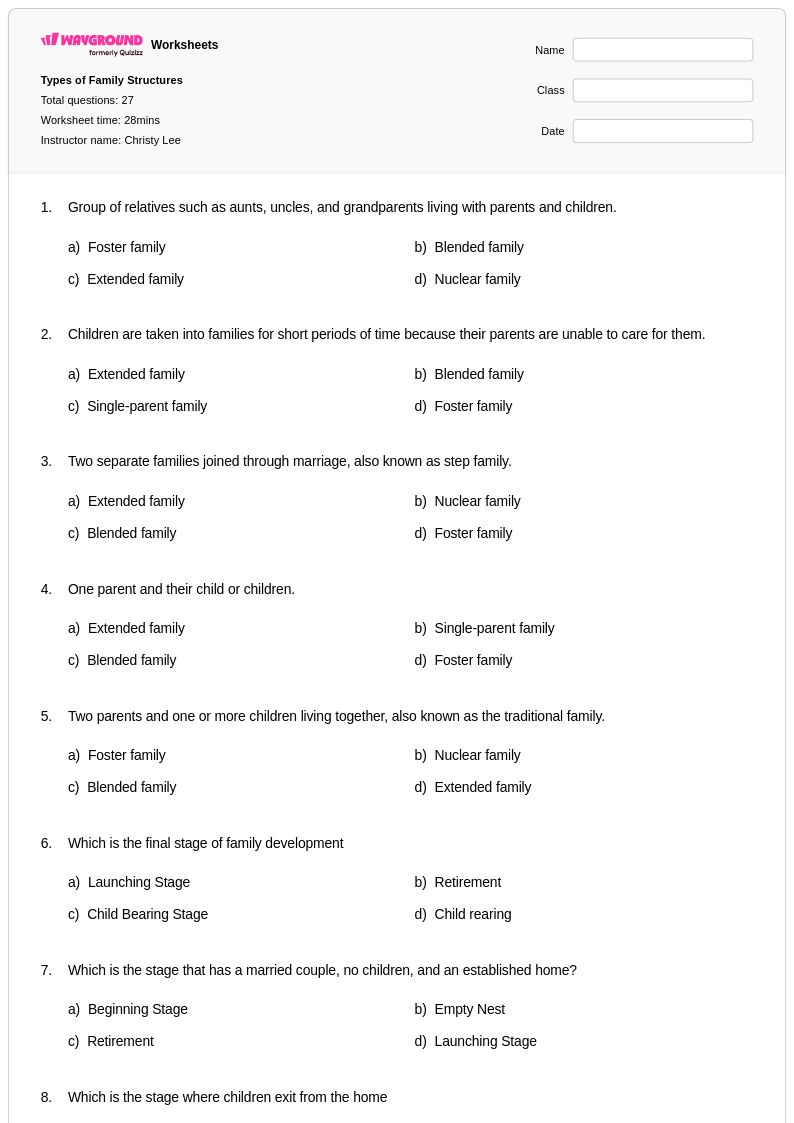
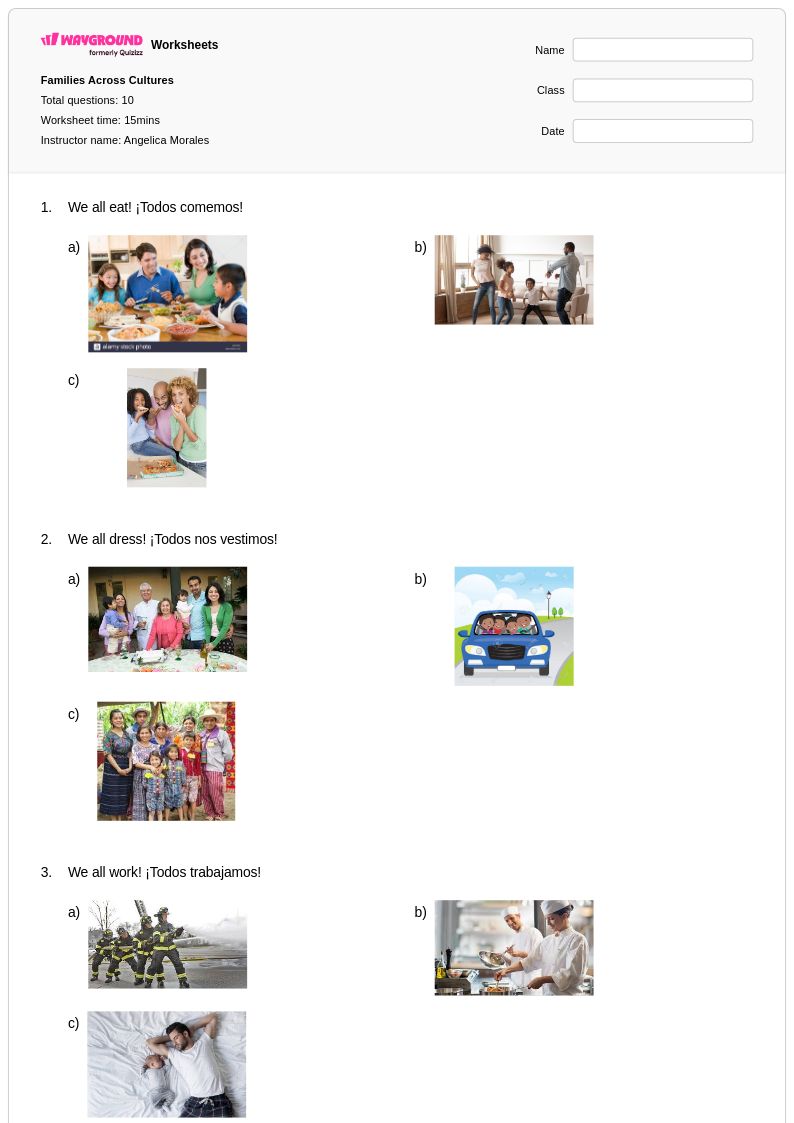
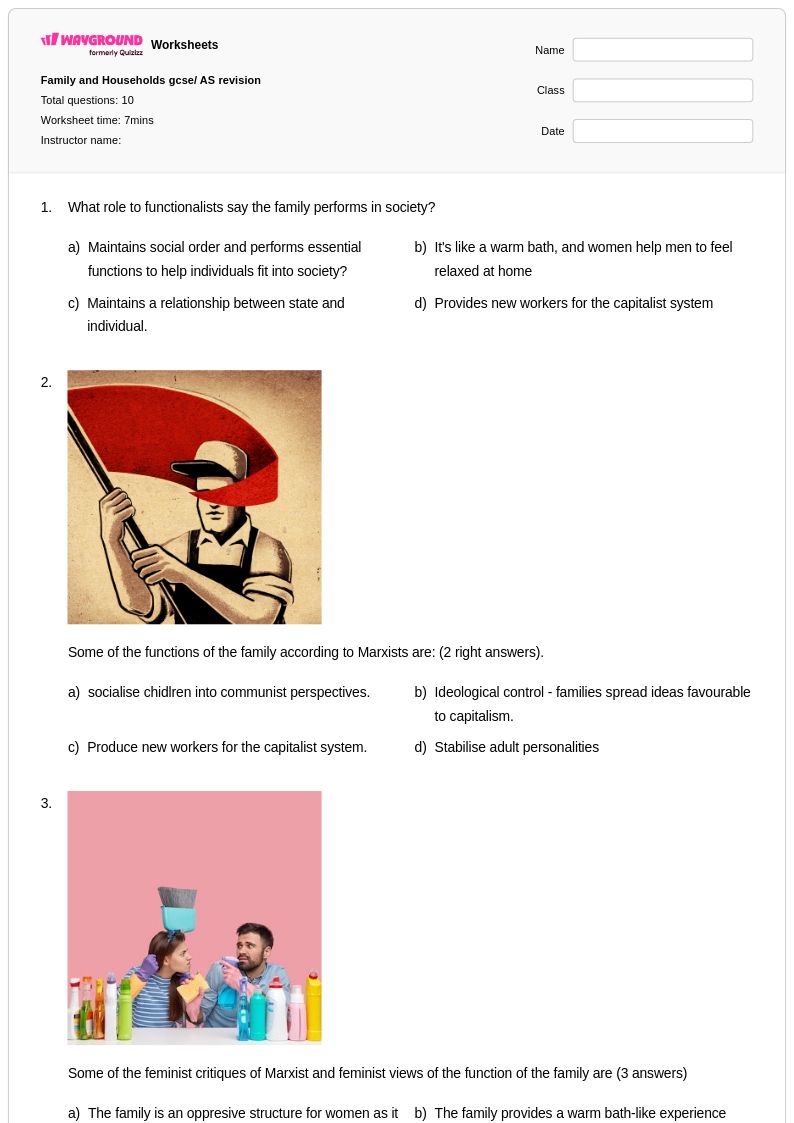
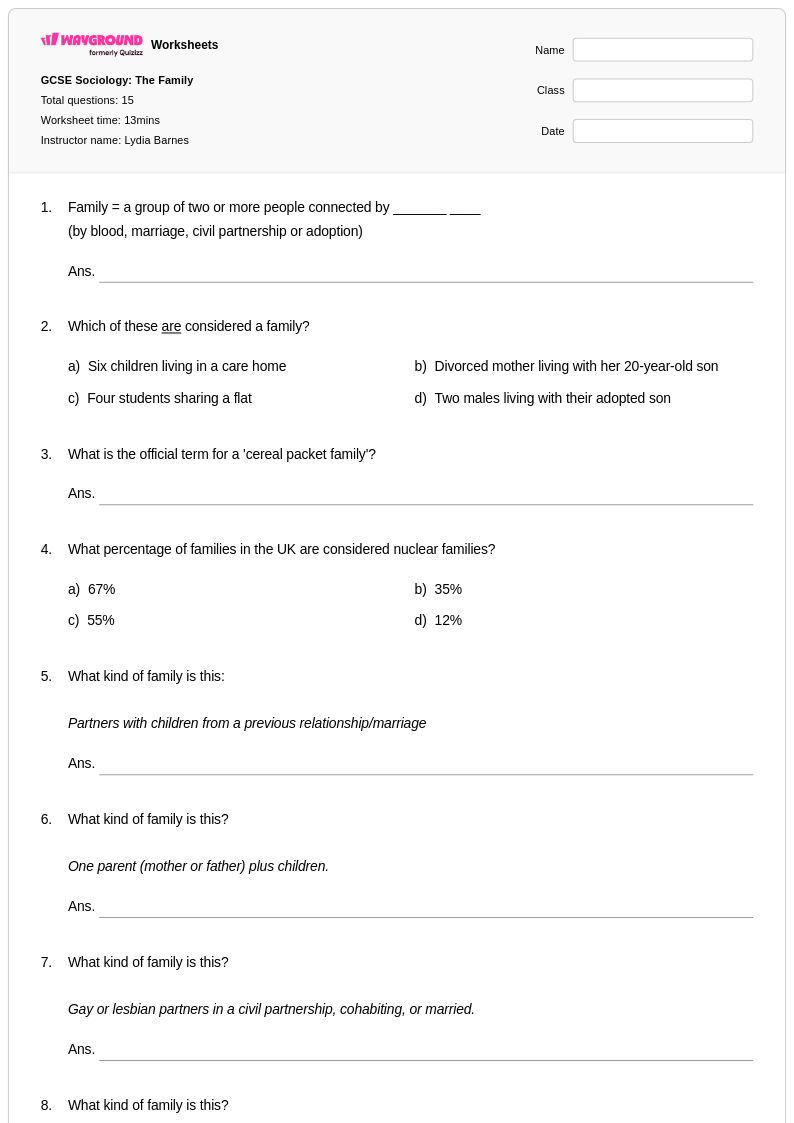
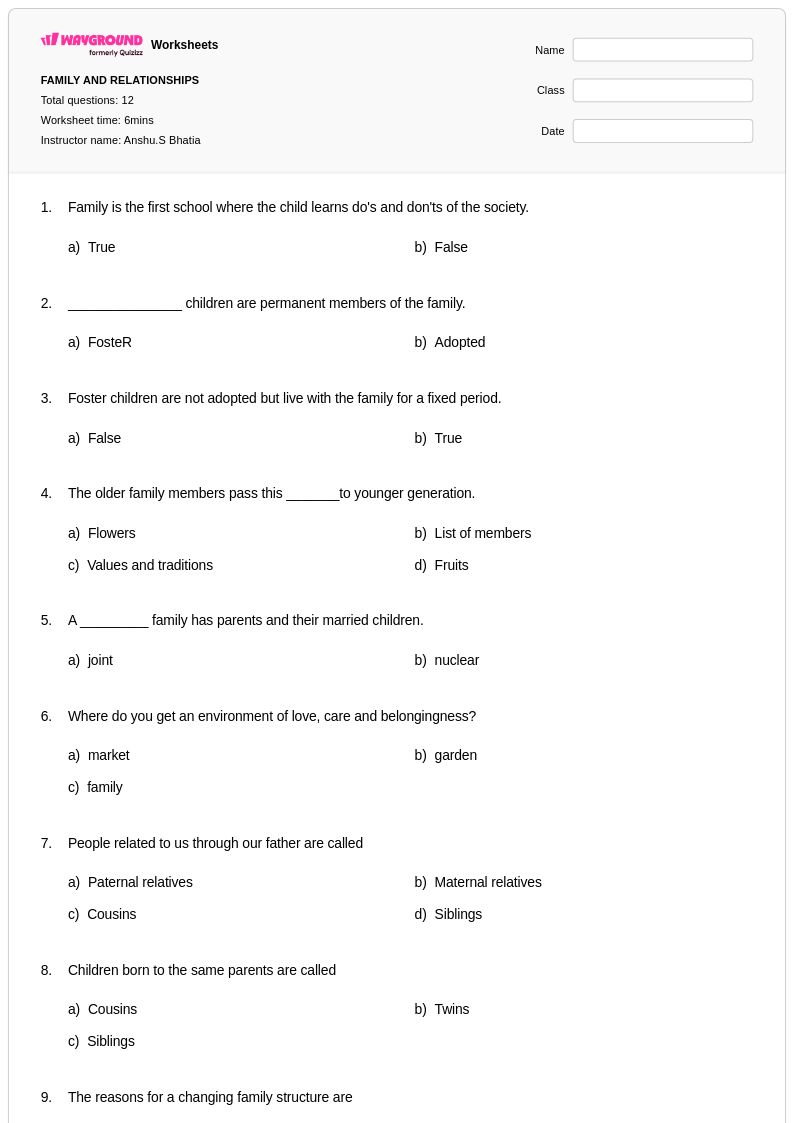
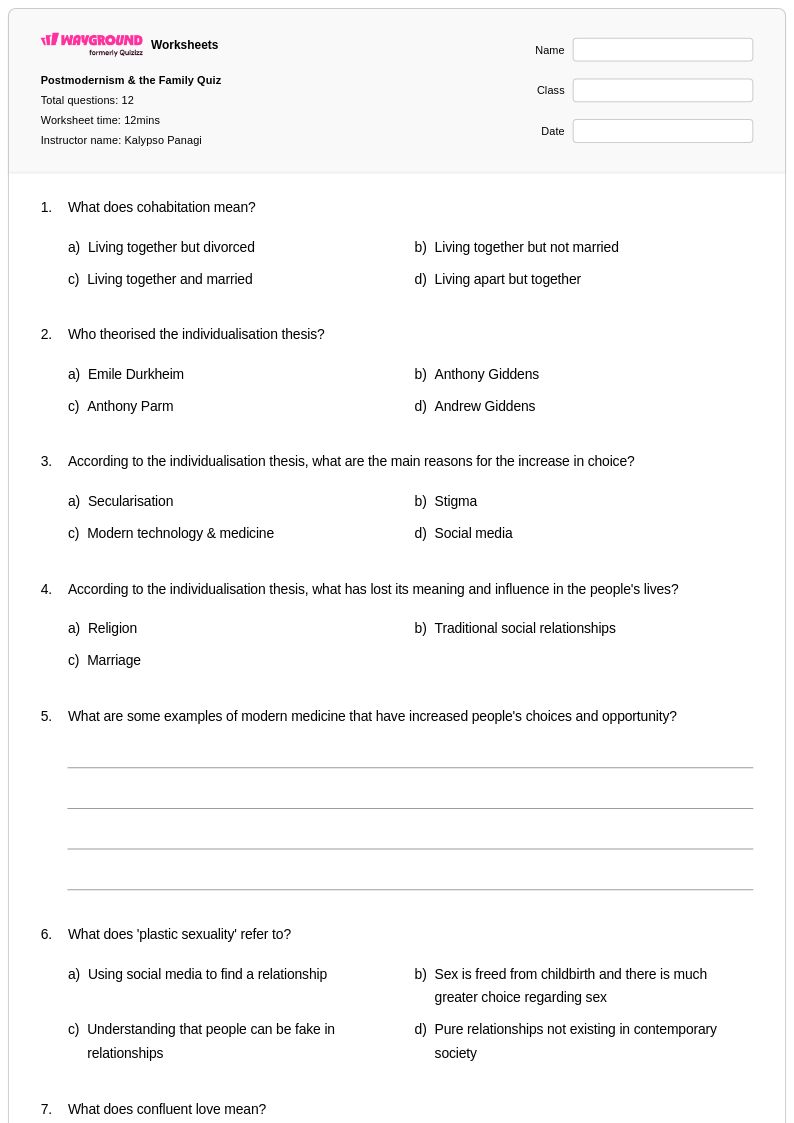
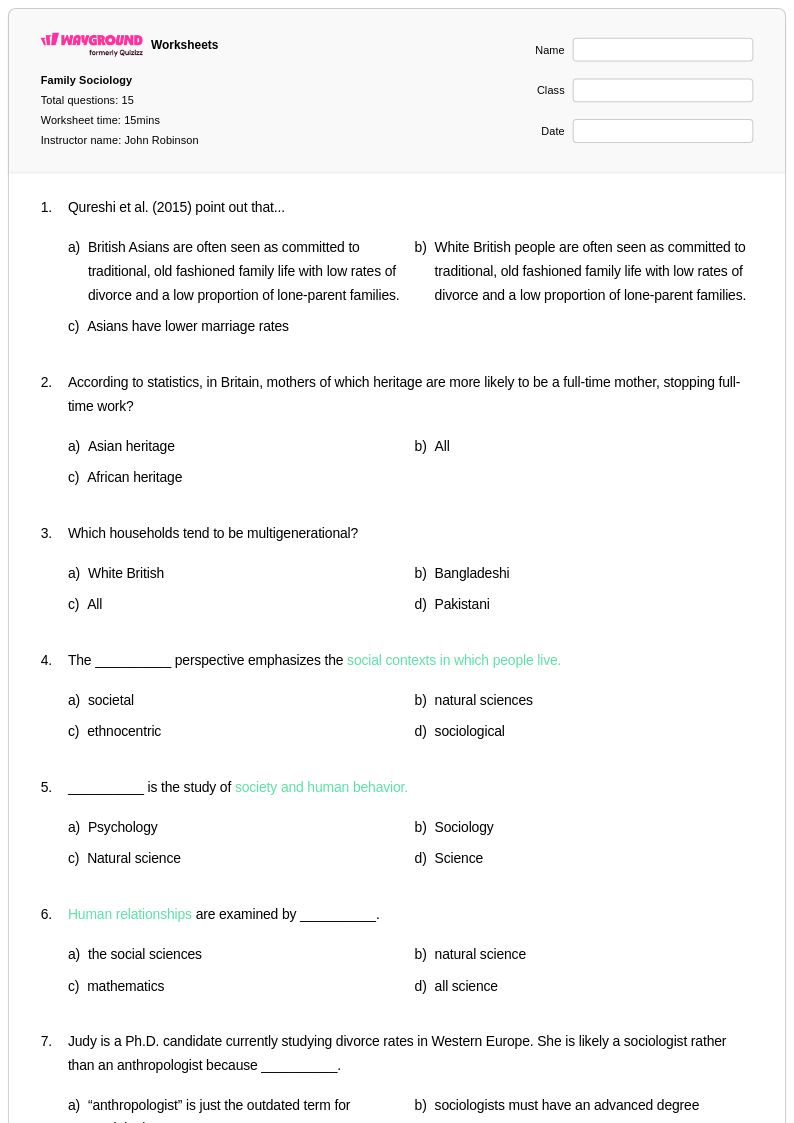
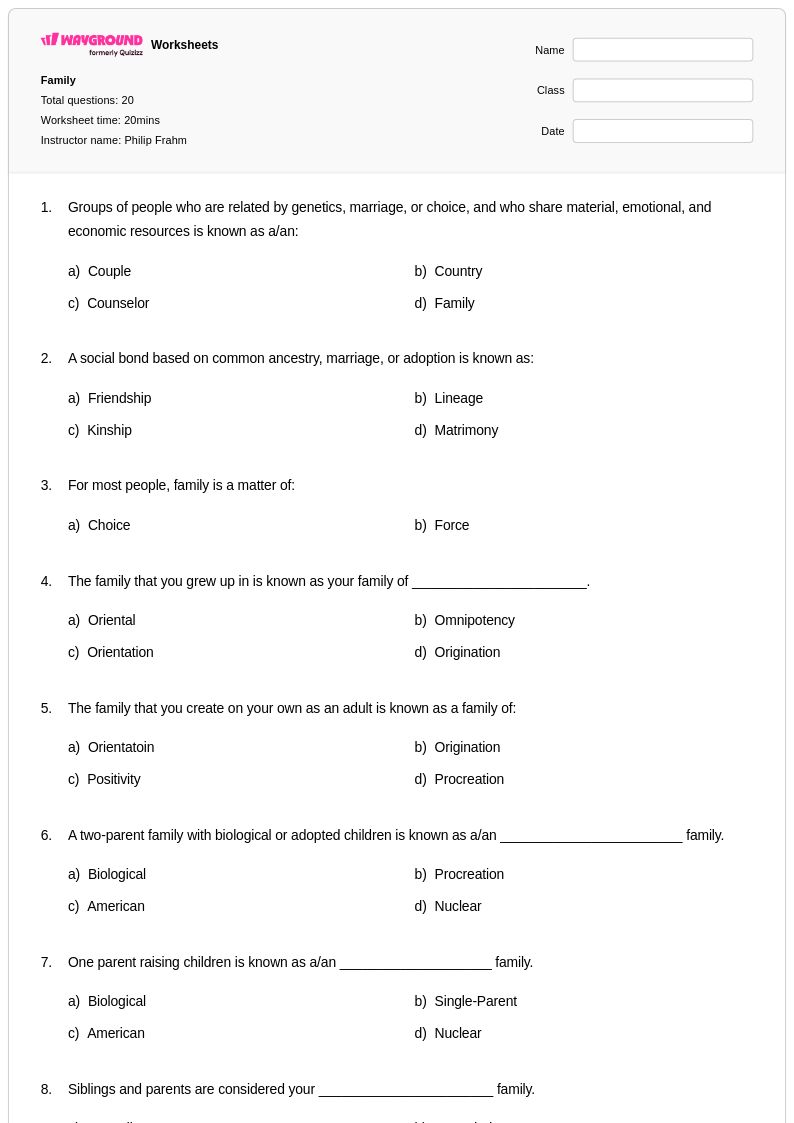
Marriage and Family Relationships worksheets for kindergarten students through Wayground (formerly Quizizz) introduce young learners to fundamental concepts about family structures, relationships, and community connections. These educational resources help kindergarteners develop social awareness by exploring different types of families, understanding roles within families, and recognizing how families contribute to their communities. The worksheets strengthen essential social studies skills including identification, comparison, and basic analytical thinking while building vocabulary related to family relationships and cultural diversity. Teachers can access comprehensive materials that include practice problems focusing on family member identification, relationship mapping activities, and cultural traditions exploration, with each worksheet collection providing answer keys and free printable pdf options to support classroom instruction and home learning.
Wayground's extensive collection of teacher-created resources offers millions of marriage and family relationships materials specifically designed for kindergarten social studies instruction. The platform's robust search and filtering capabilities allow educators to quickly locate age-appropriate content that aligns with early childhood social studies standards and supports diverse learning needs. Teachers benefit from differentiation tools that enable customization of worksheets to match varying skill levels within their classrooms, while the availability of both printable and digital formats, including downloadable pdfs, provides flexibility for different teaching environments. These comprehensive resources support effective lesson planning by offering ready-to-use materials for initial instruction, targeted remediation for students needing additional support, enrichment activities for advanced learners, and consistent skill practice opportunities that reinforce understanding of family dynamics and community relationships.
FAQs
How do I teach marriage and family relationships in a social studies class?
Teaching marriage and family relationships effectively starts with grounding students in the range of family structures found across cultures, from nuclear and extended families to single-parent households and blended families. Teachers should use comparative analysis activities that ask students to examine how economic conditions, religious traditions, and social norms shape family formation in different societies. Connecting these structures to students' own communities helps make abstract concepts concrete and personally relevant.
What exercises help students practice analyzing different family structures and marriage customs?
Worksheets that ask students to compare and contrast family configurations, such as extended versus nuclear families or arranged versus romantic partnerships, build analytical skills while reinforcing content knowledge. Structured activities that require students to identify how cultural, religious, and economic factors influence marriage customs give them a framework for evaluating diverse kinship systems. Practice with real-world cultural examples helps students move beyond memorization toward genuine comparative thinking.
What misconceptions do students commonly have about marriage and family relationships across cultures?
A common error is assuming that the Western nuclear family is the universal or default family structure, when in fact extended and multigenerational households are the norm in many societies worldwide. Students also frequently conflate arranged marriages with forced marriages, failing to distinguish between culturally negotiated partnerships and coerced unions. Addressing these misconceptions directly with comparative examples and guided analysis helps students develop more accurate and culturally respectful understanding.
How can I differentiate marriage and family relationships worksheets for students at different ability levels?
On Wayground, teachers can apply student-level accommodations such as reduced answer choices to lower cognitive load for struggling learners, or enable Read Aloud for students who benefit from audio support when engaging with complex cultural texts. Extended time settings can be configured per student, ensuring that learners who need more processing time can work through nuanced concepts about kinship and family dynamics without added pressure. These accommodations are saved and reusable across future sessions, making differentiation manageable at scale.
How do I use Wayground's marriage and family relationships worksheets in my classroom?
Wayground's marriage and family relationships worksheets are available as printable PDFs for traditional classroom use and in digital formats for technology-integrated environments, giving teachers flexibility depending on their instructional setting. Teachers can also host worksheets directly as a quiz on Wayground, enabling real-time student responses and built-in assessment. All worksheets include answer keys, which reduces grading time and supports consistent feedback across individual study and whole-class discussion.
How do economic and religious factors influence family structure, and how can I teach this effectively?
Economic factors such as land ownership, labor needs, and poverty levels directly influence whether families organize as nuclear or extended units, while religious beliefs shape expectations around marriage eligibility, gender roles, and household authority. Teaching this connection works best through case study comparisons where students analyze specific cultural examples rather than abstract generalizations. Worksheets that prompt students to trace cause-and-effect relationships between social conditions and family organization build the analytical depth required for higher-order social studies thinking.