Free Printable Travel and Tourism Worksheets for Kindergarten
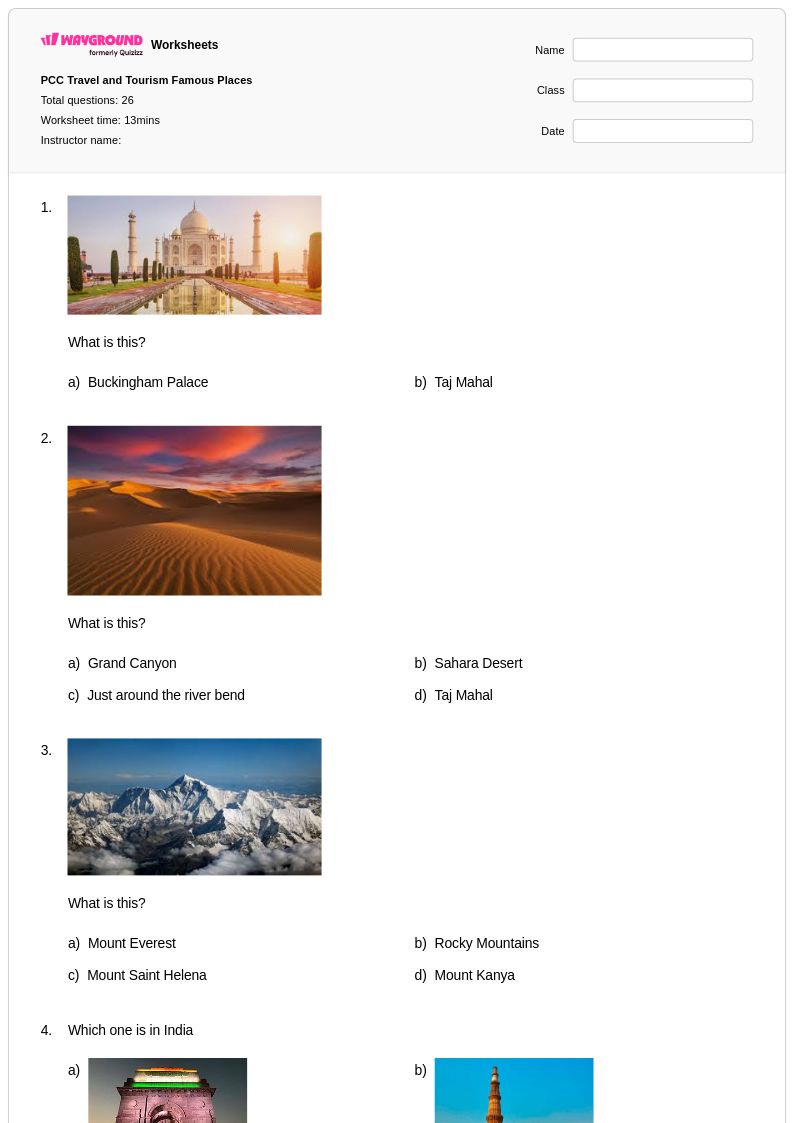
Free kindergarten travel and tourism worksheets and printables help young learners explore different places, transportation methods, and cultural experiences through engaging practice problems with comprehensive answer keys.
Explore printable Travel and Tourism worksheets for Kindergarten
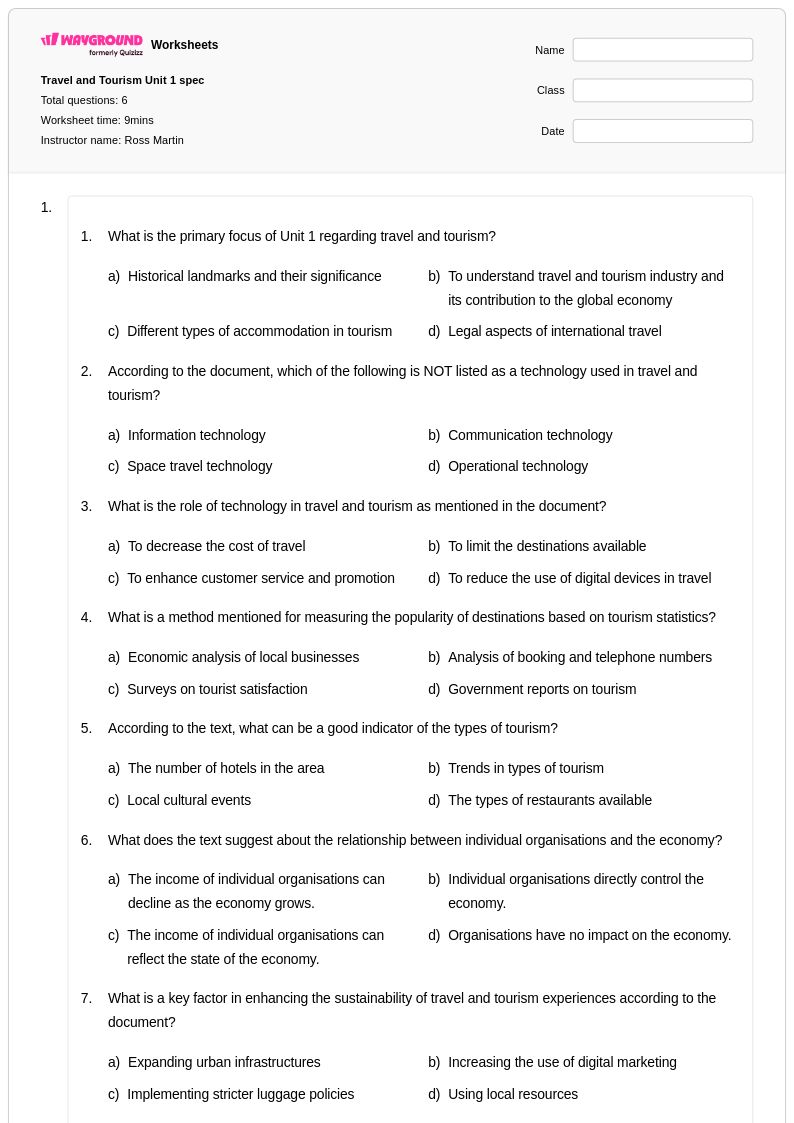
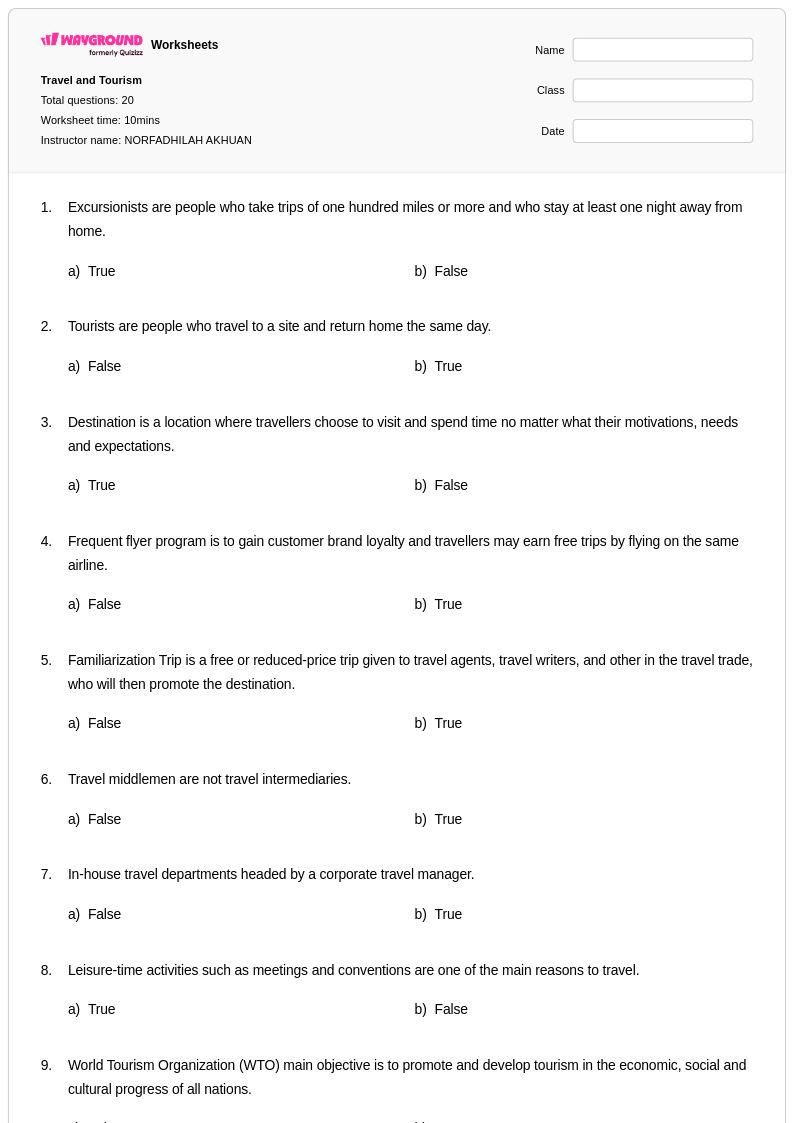
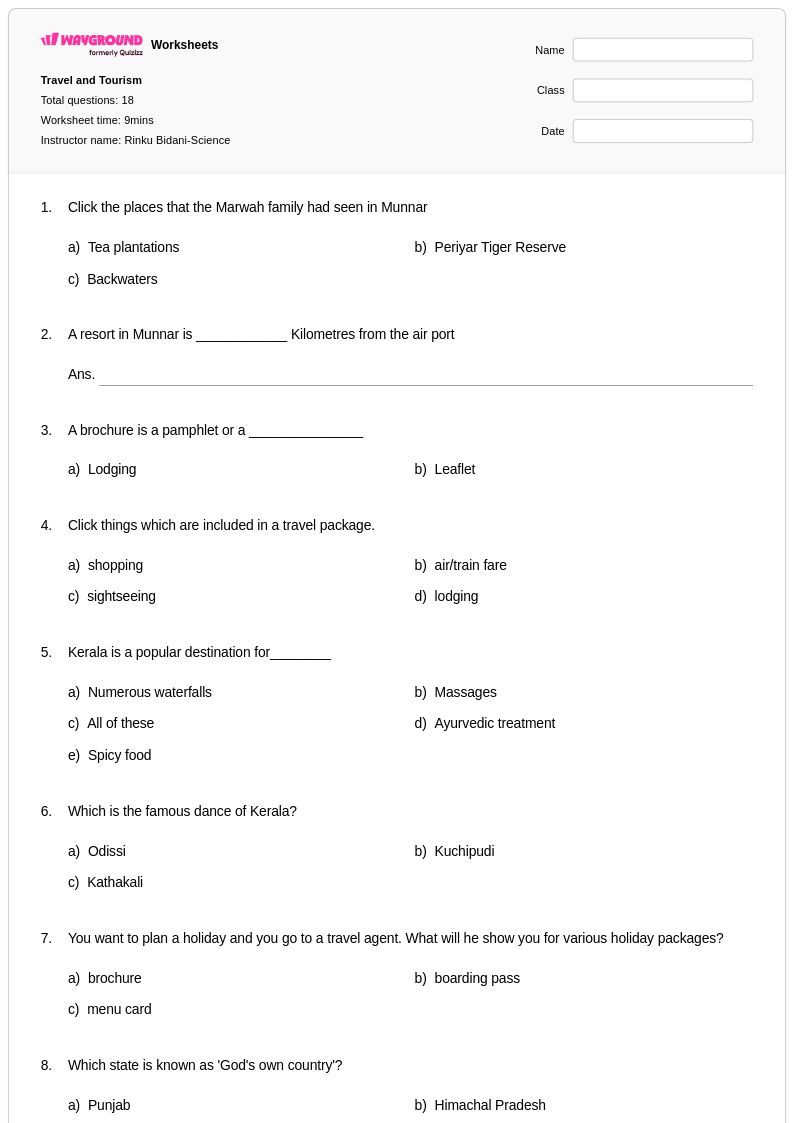
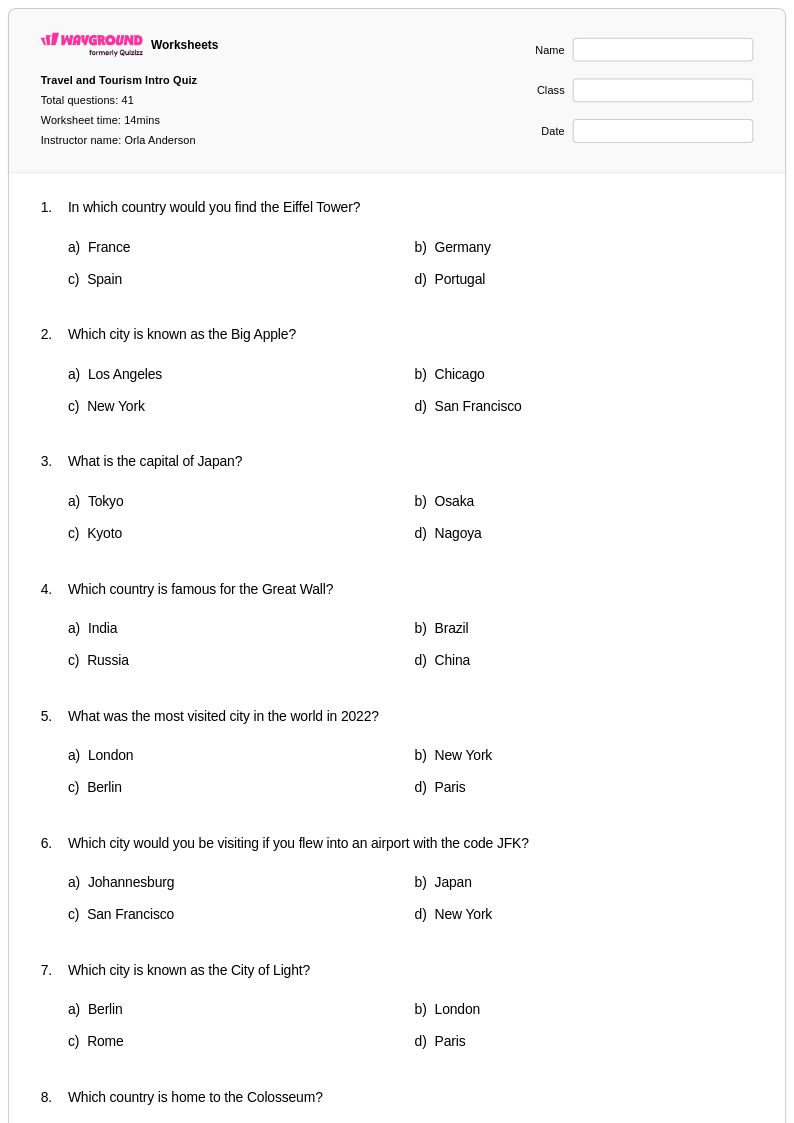
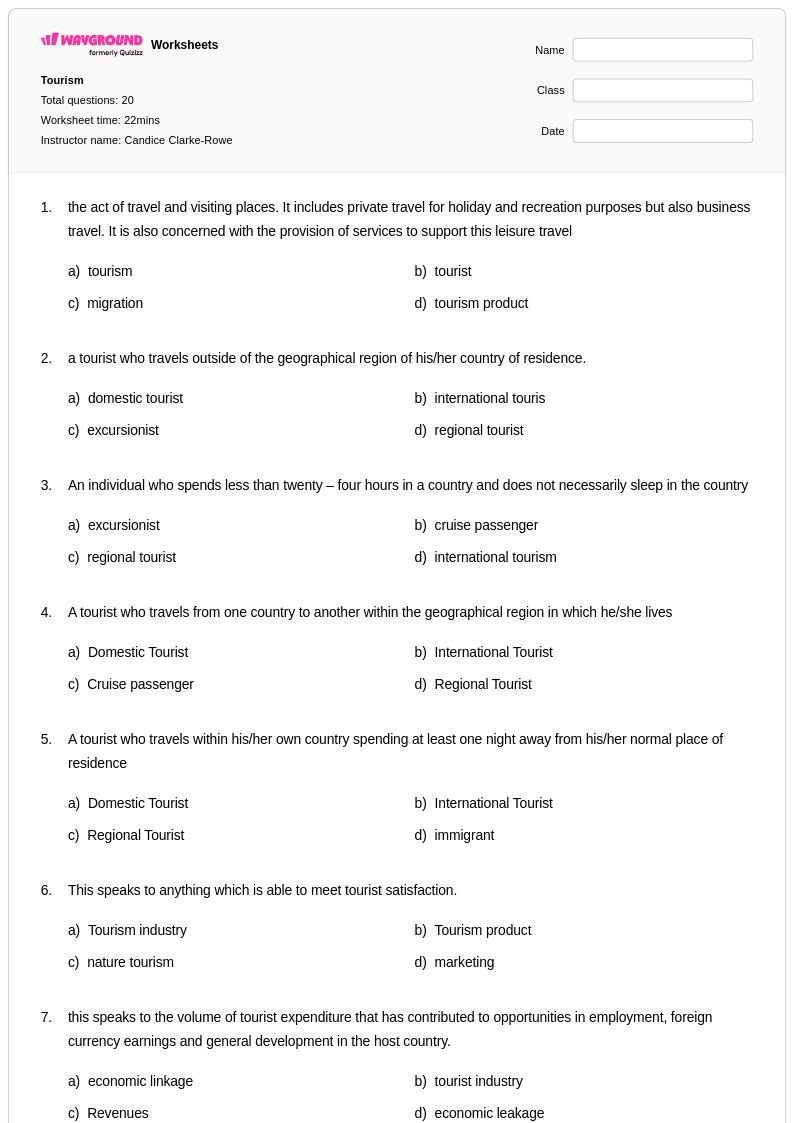
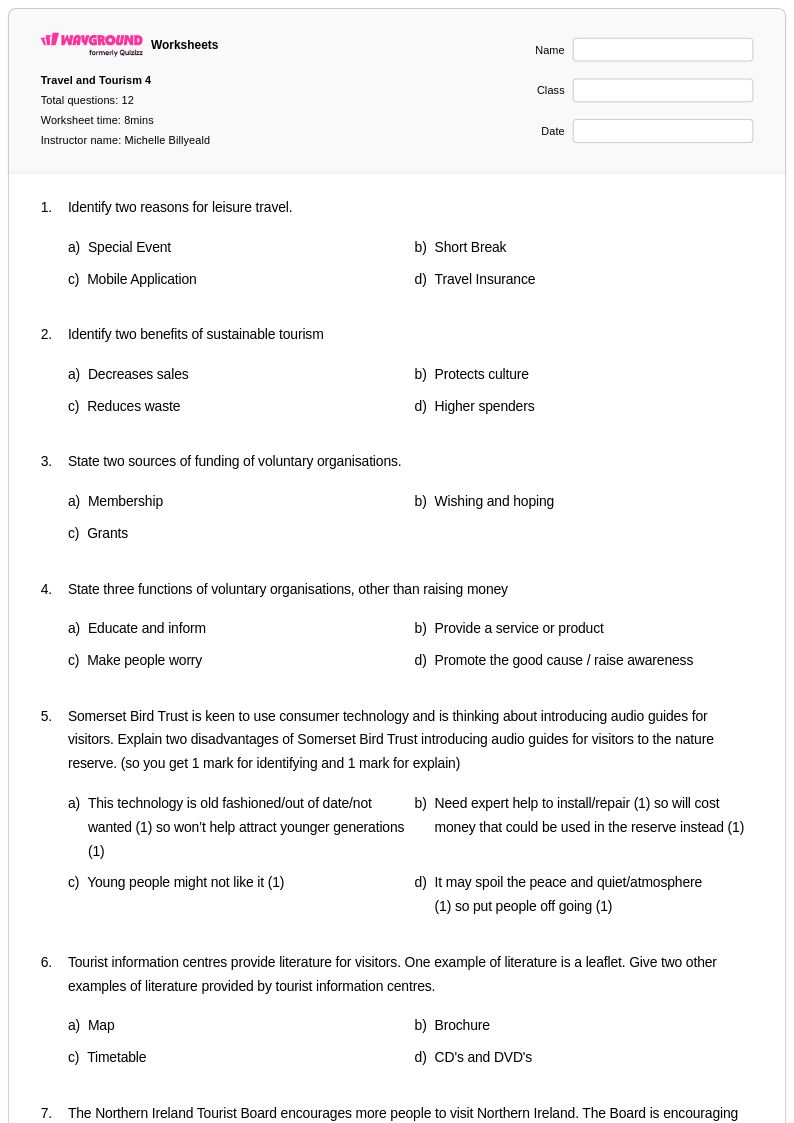
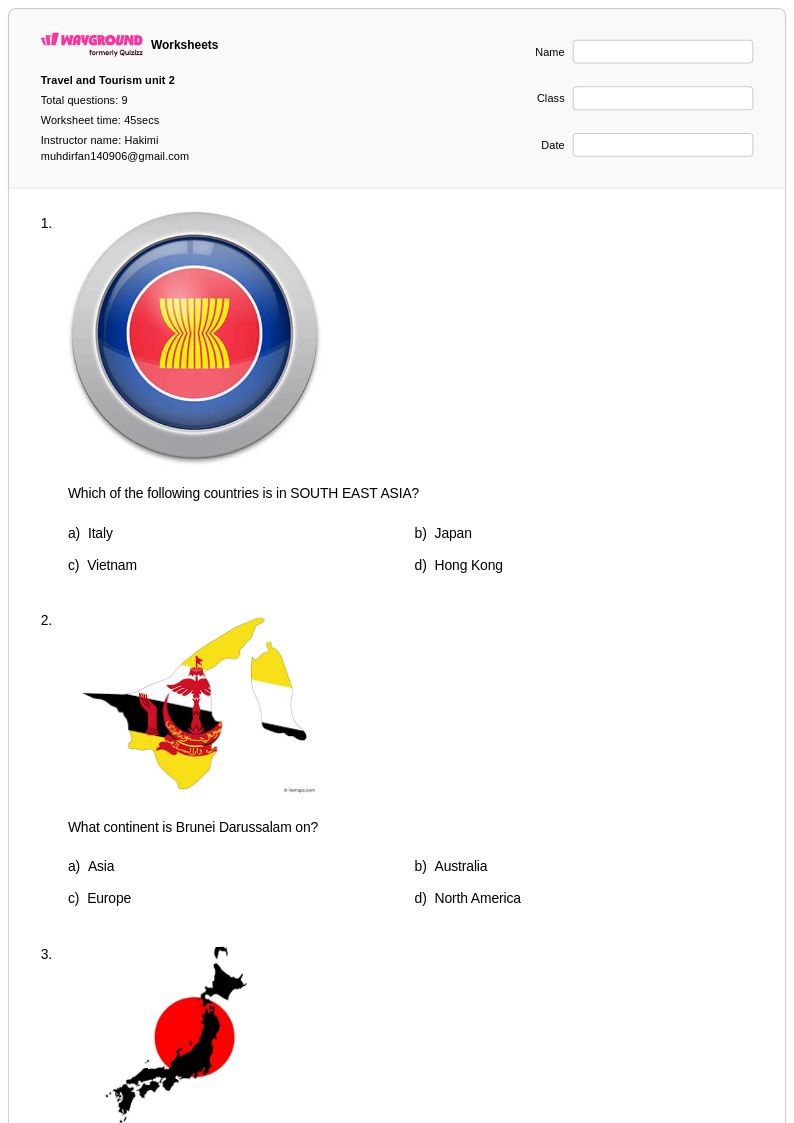
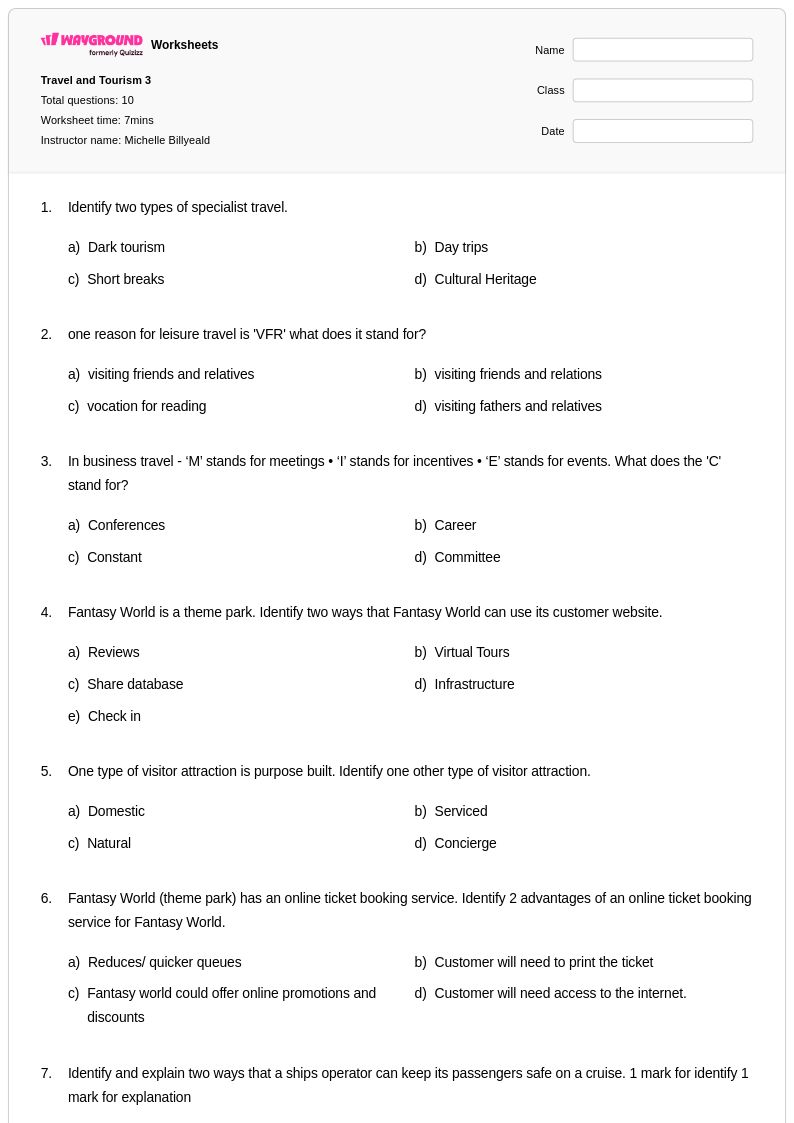
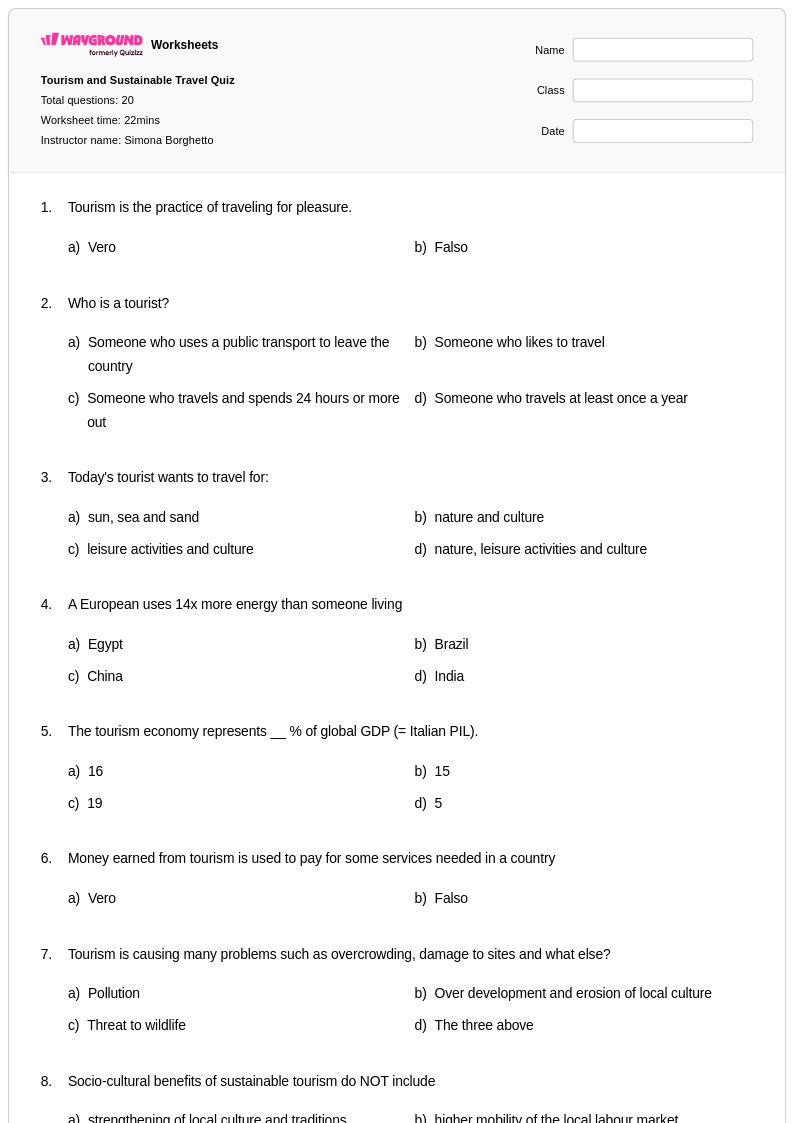
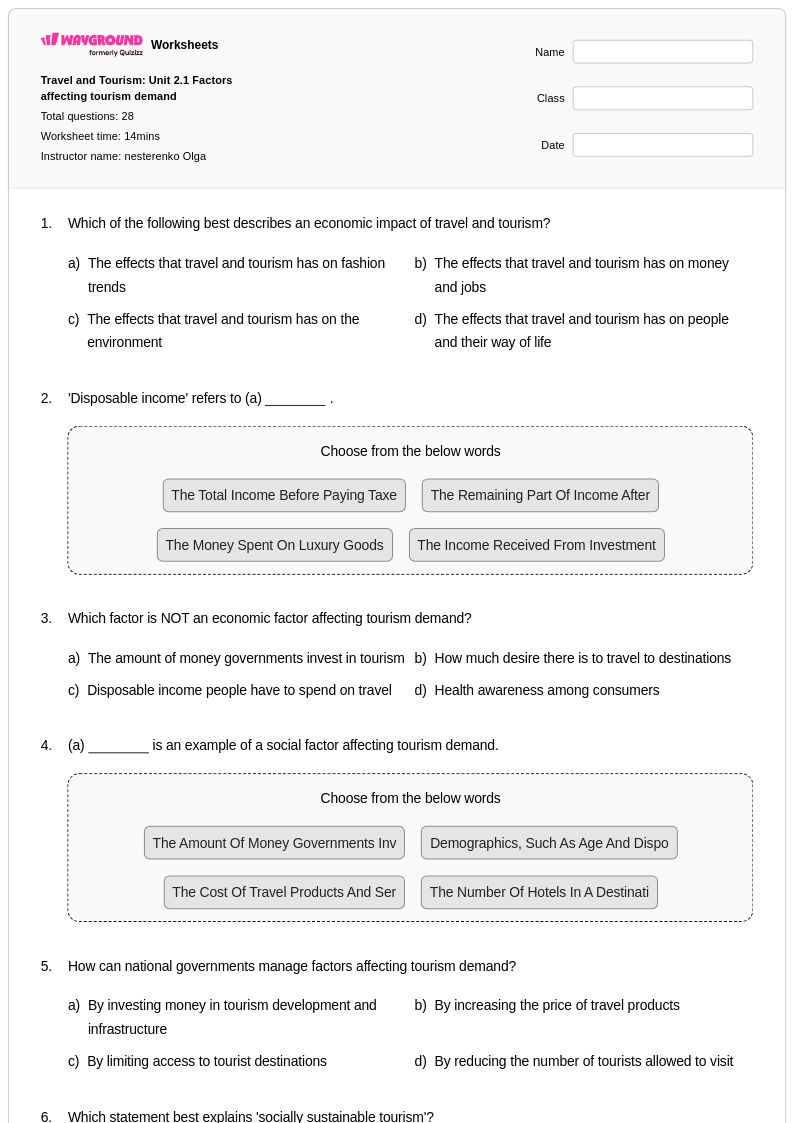
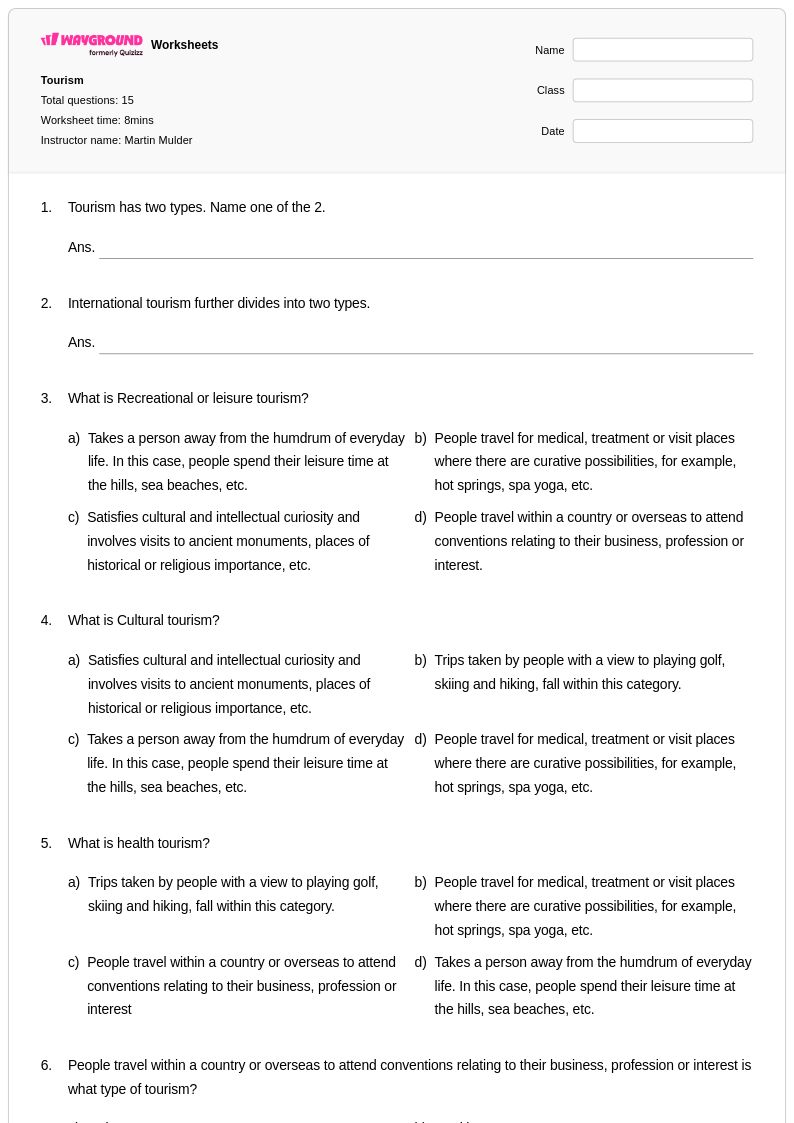
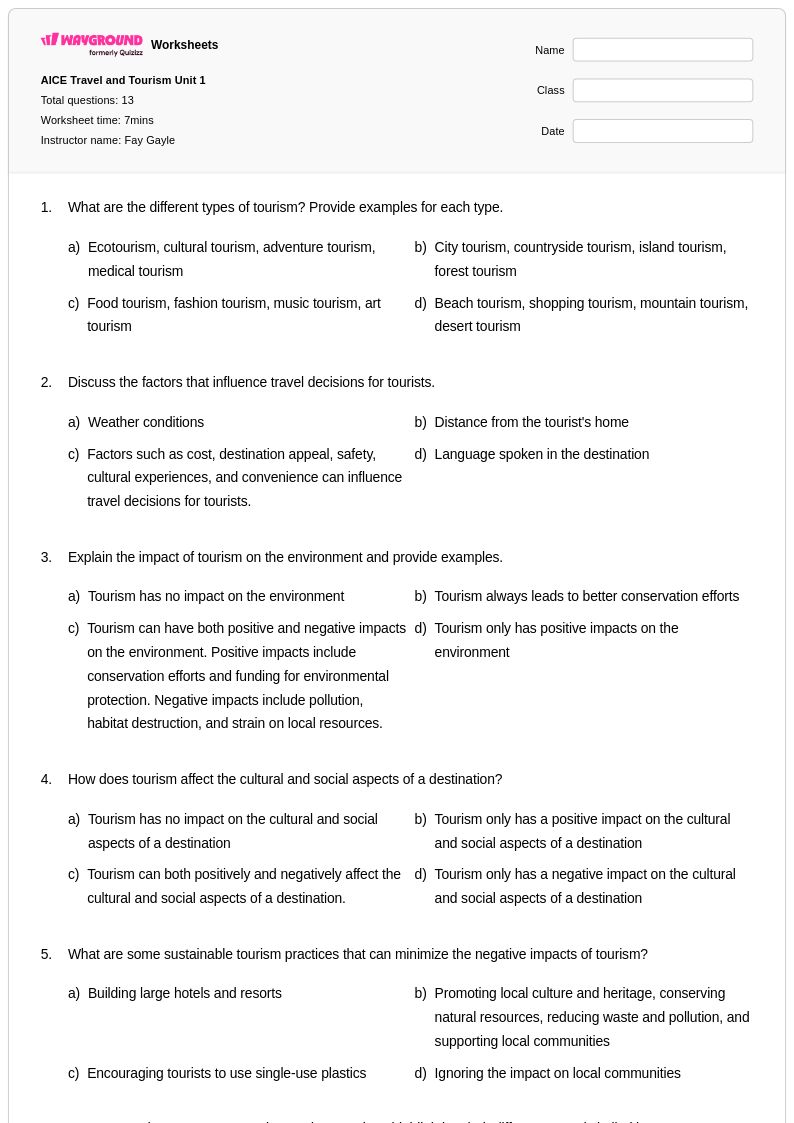
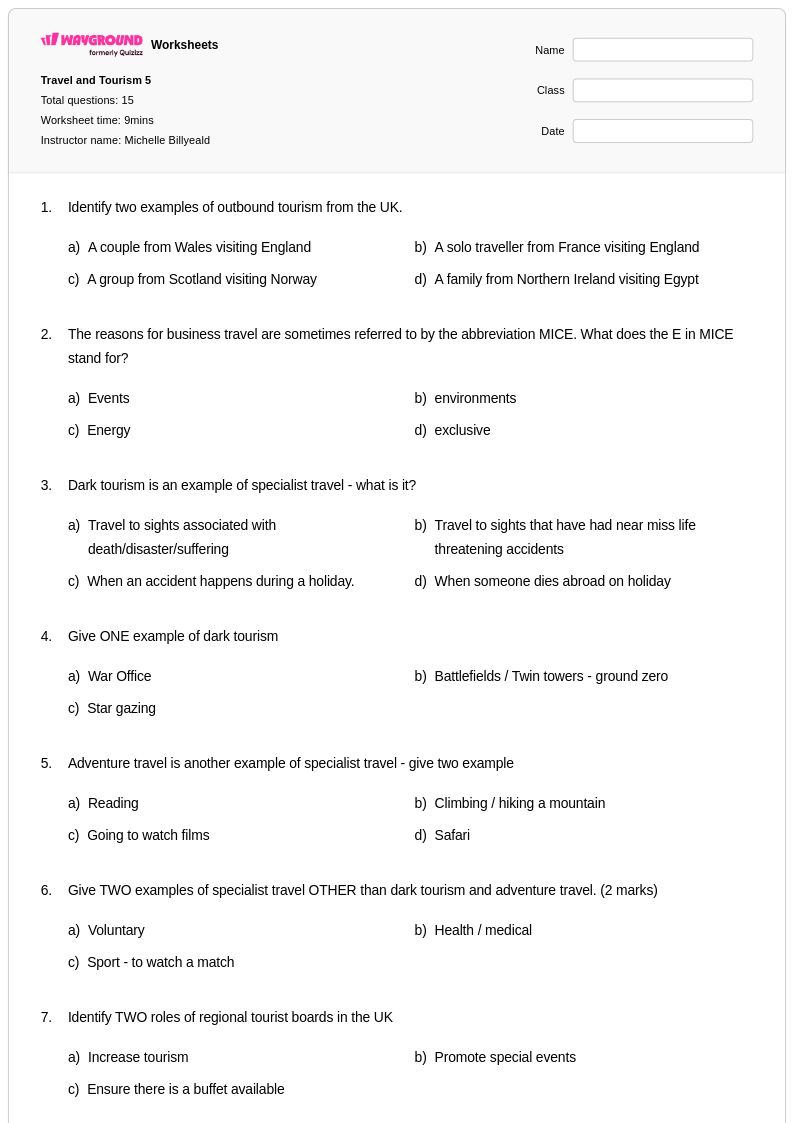
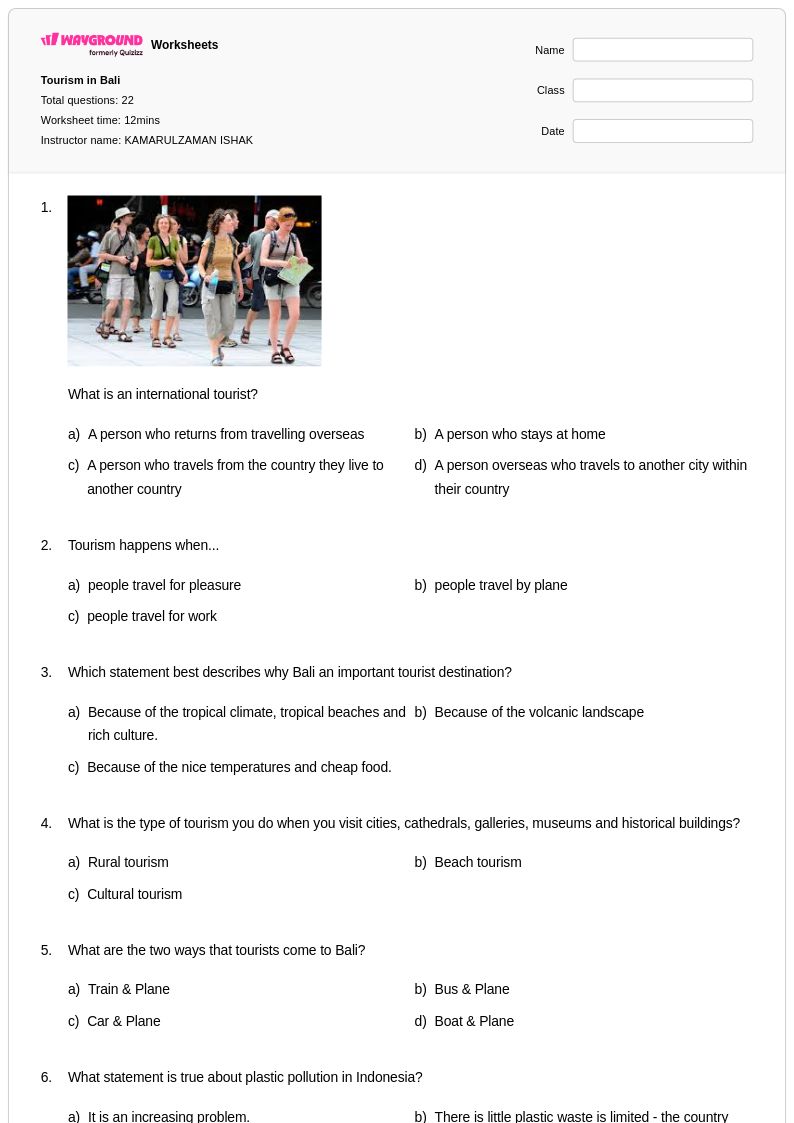
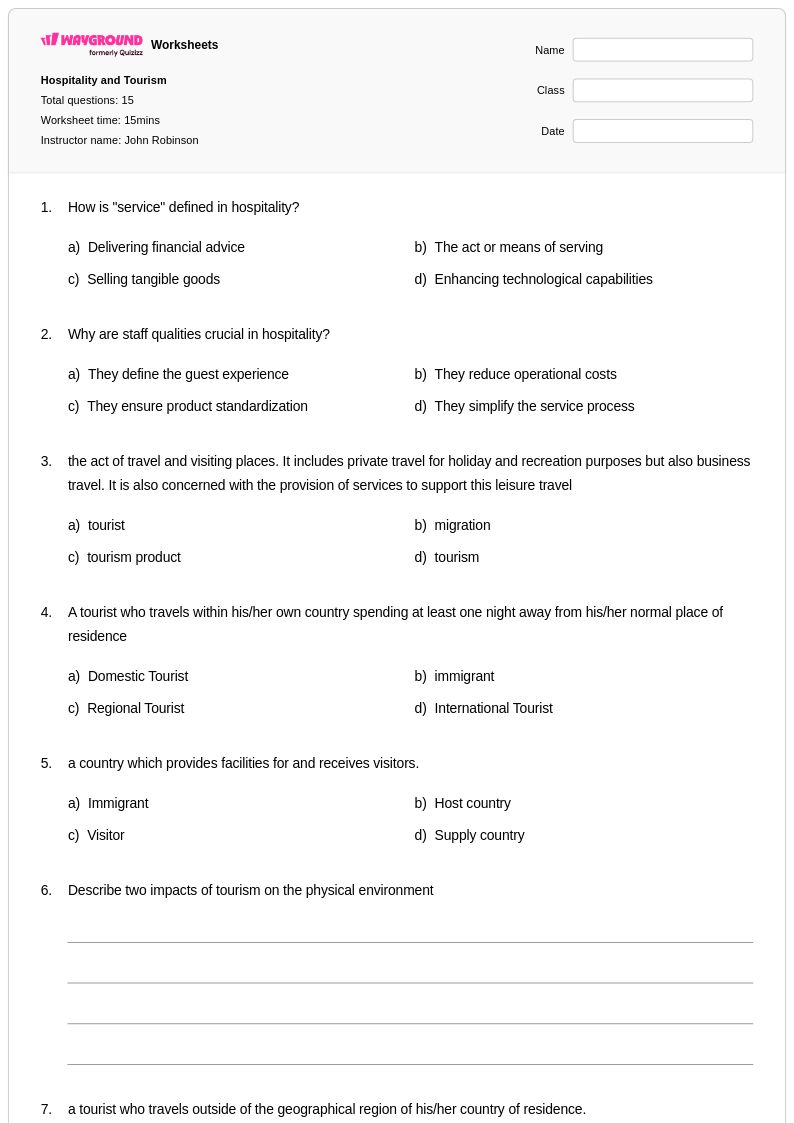
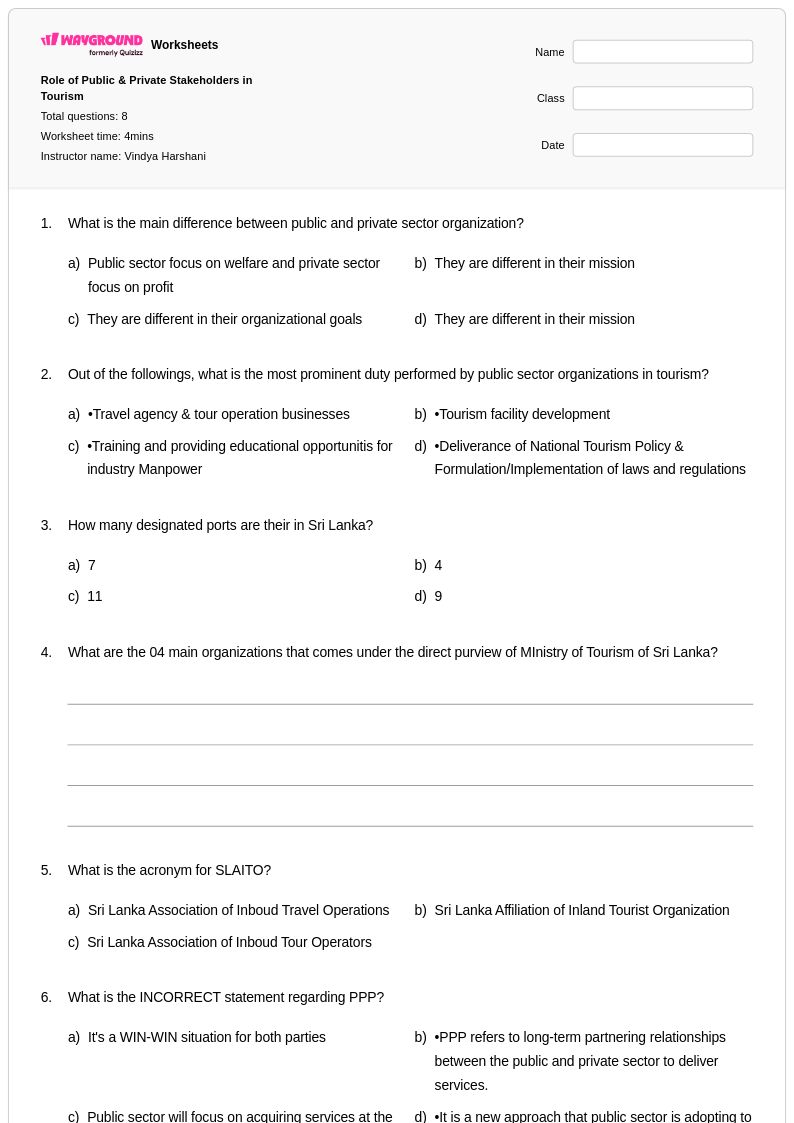
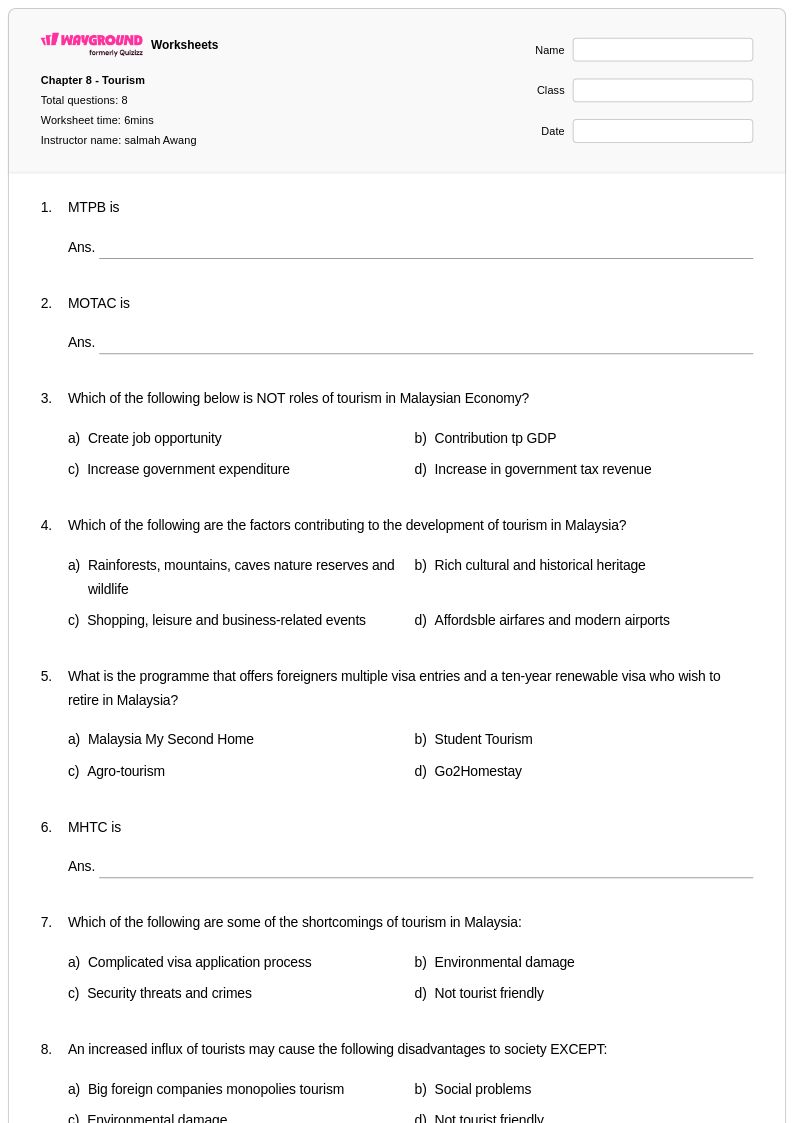
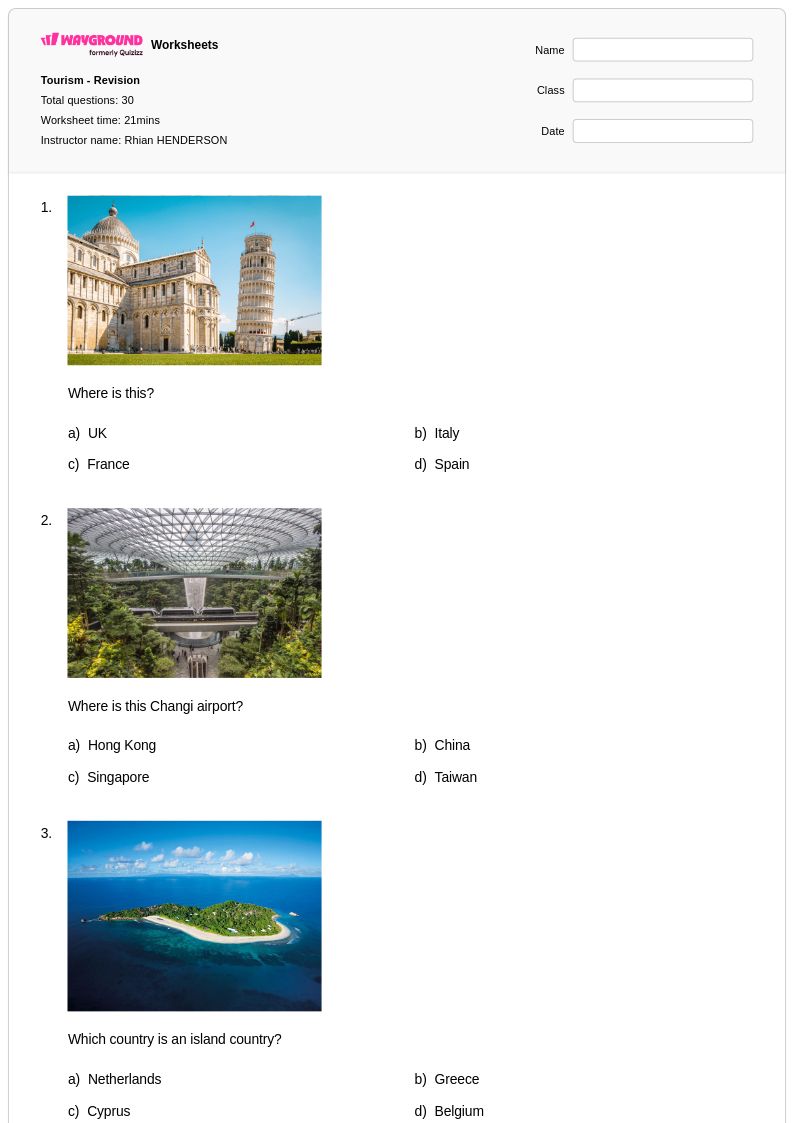
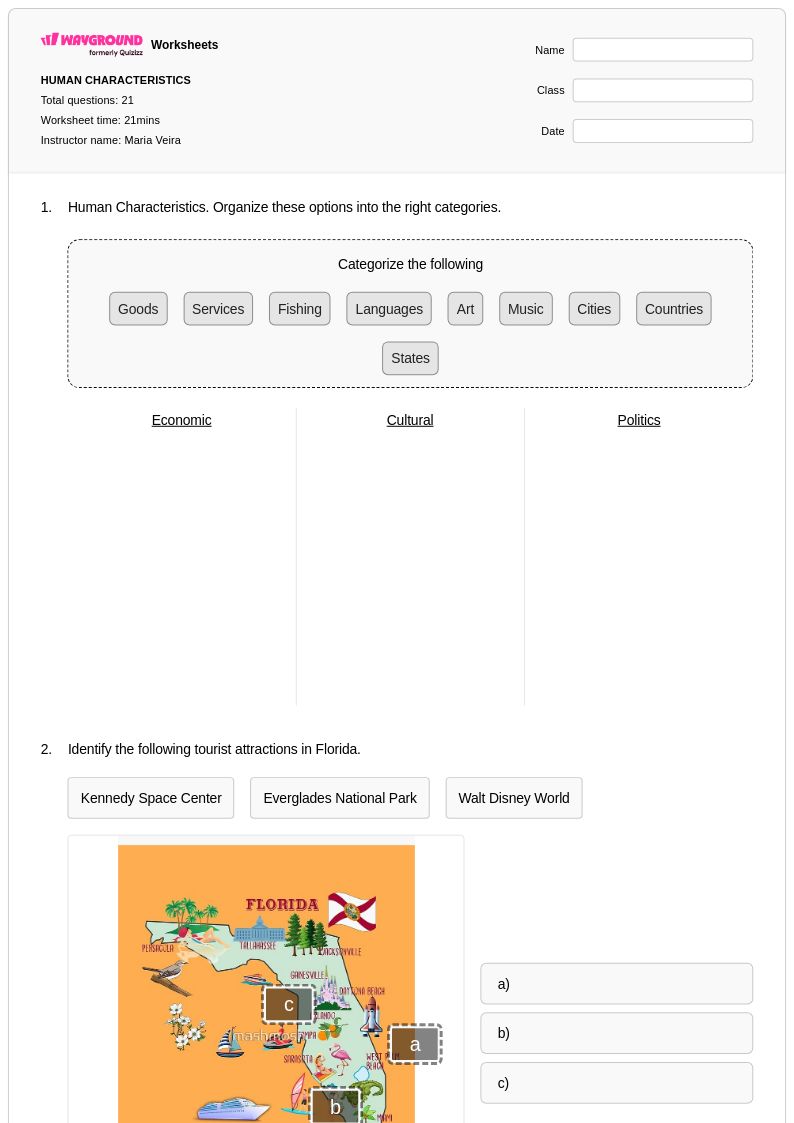
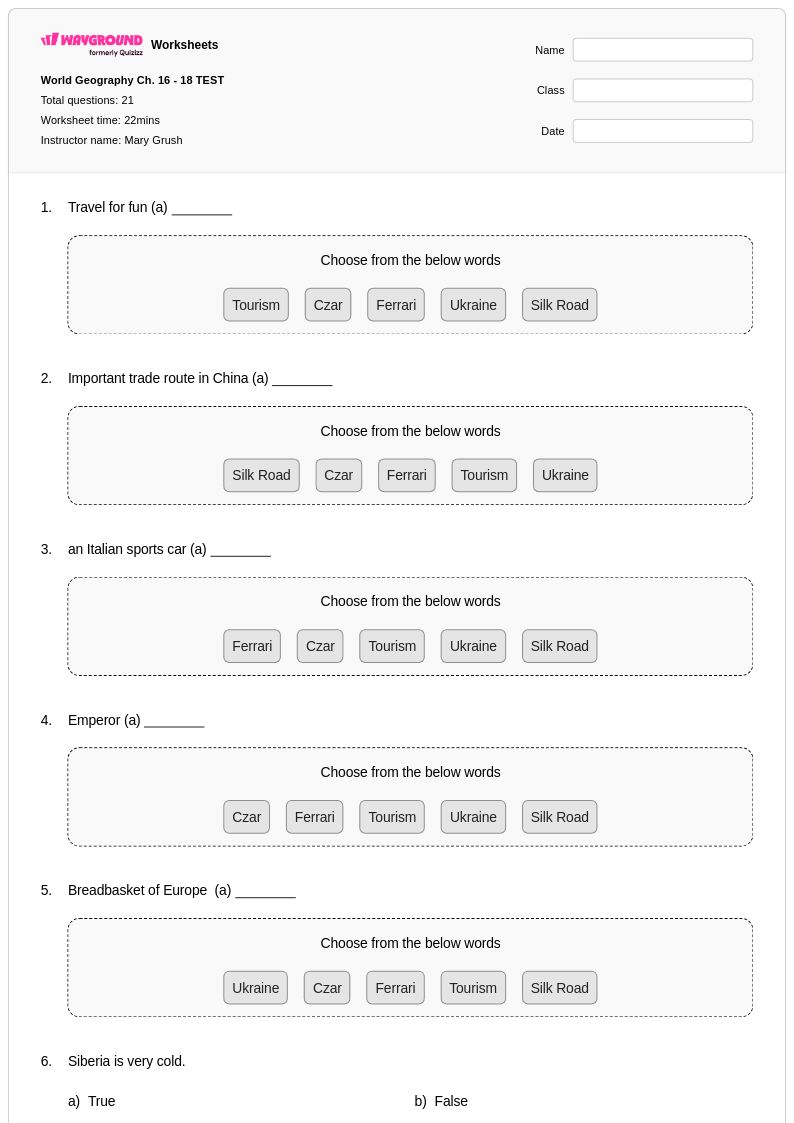
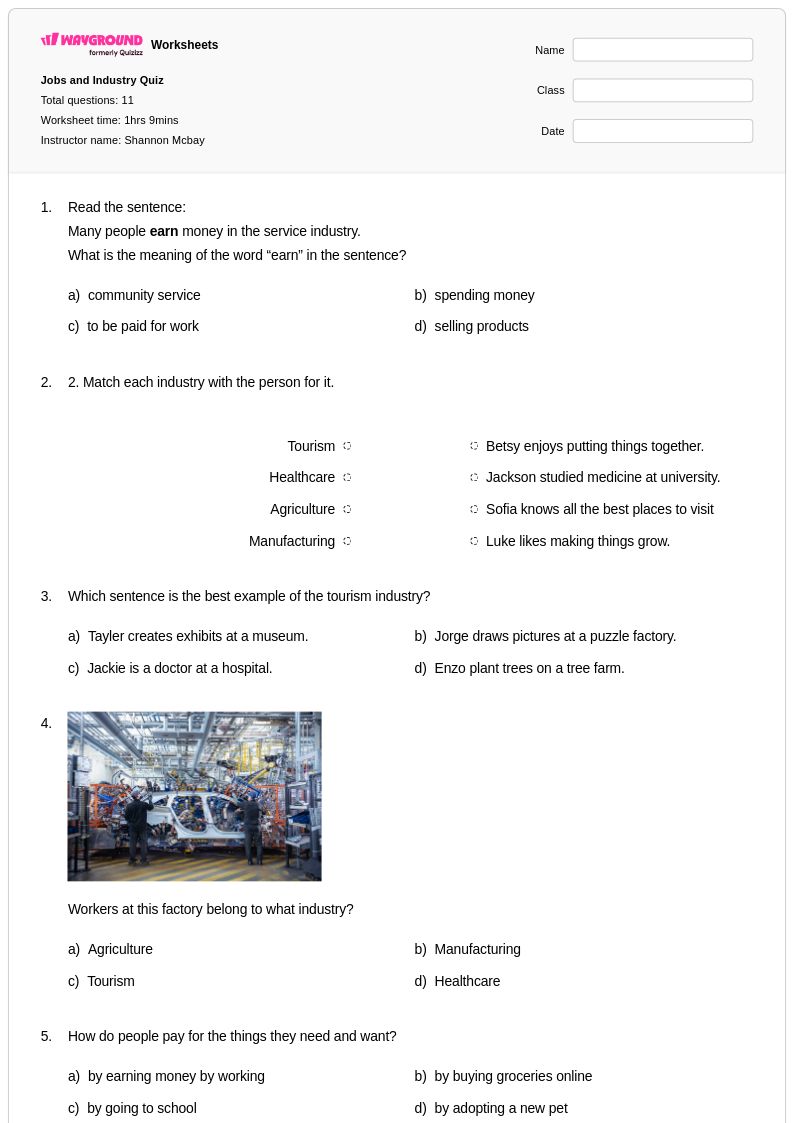
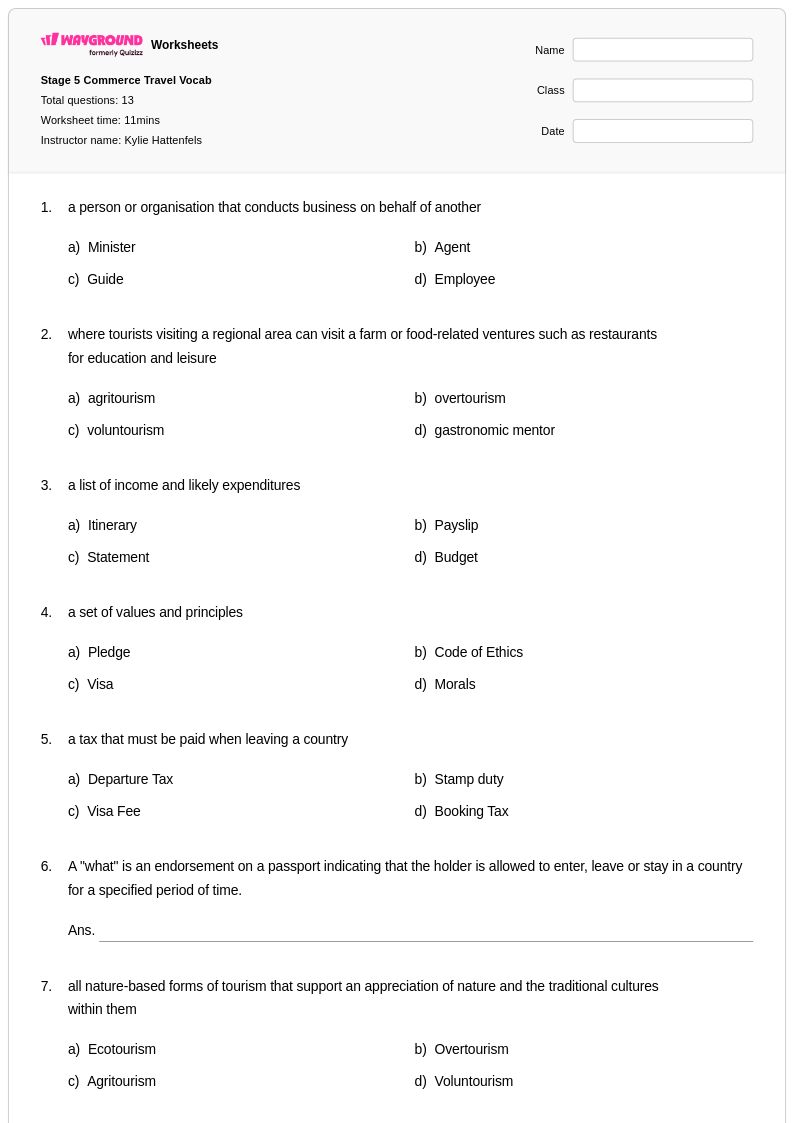
Travel and tourism worksheets for kindergarten students through Wayground (formerly Quizizz) introduce young learners to the exciting world of exploration while building foundational social studies skills. These carefully crafted educational resources help kindergarteners develop cultural awareness, geographic understanding, and appreciation for diverse communities around the globe. The worksheets focus on age-appropriate concepts such as different types of transportation, famous landmarks, cultural traditions, and vacation destinations that families might visit. Each printable activity strengthens critical thinking skills, vocabulary development, and observational abilities while encouraging students to make connections between their own experiences and the broader world. Teachers can access comprehensive answer keys and practice problems that support both independent work time and guided instruction, with free resources available in convenient pdf format for immediate classroom use.
Wayground's extensive collection of millions of teacher-created resources provides educators with robust support for implementing travel and tourism curriculum in kindergarten classrooms. The platform's advanced search and filtering capabilities allow teachers to quickly locate worksheets that align with specific learning objectives and state standards while accommodating diverse student needs through built-in differentiation tools. Flexible customization options enable educators to modify content difficulty, add personalized instructions, or incorporate local community connections that make learning more relevant for their students. These versatile materials are available in both printable and digital formats, making them ideal for traditional classroom settings, remote learning environments, or hybrid instruction models. Teachers can seamlessly integrate these resources into lesson planning for skill practice, use them for targeted remediation with struggling learners, or deploy them as enrichment activities for advanced students ready to explore more complex cultural concepts.
FAQs
How do I teach travel and tourism concepts in a social studies or geography class?
Effective travel and tourism instruction connects geographic knowledge to real-world economic and cultural systems. Teachers can anchor lessons in case studies of specific destinations, asking students to analyze how factors like climate, infrastructure, and cultural heritage attract visitors. Pairing map skills with data on tourist arrivals or GDP contributions from tourism helps students see the interdisciplinary nature of the field and builds both analytical and geographic literacy.
What kinds of exercises help students practice travel and tourism skills?
Practice exercises for travel and tourism should move beyond simple recall and ask students to interpret data, evaluate trade-offs, and apply geographic reasoning. Useful activity types include analyzing tourism statistics to identify economic dependencies, mapping popular travel corridors, comparing the cultural diffusion patterns created by mass tourism versus eco-tourism, and examining real transportation or hospitality scenarios. These tasks develop critical thinking alongside content knowledge.
What misconceptions do students commonly have about the impact of tourism?
A frequent misconception is that tourism is uniformly beneficial to host communities, when in reality it can drive up local costs, strain natural resources, and erode cultural traditions alongside its economic benefits. Students also often conflate tourism revenue with broad community wealth, overlooking how profits frequently flow to multinational hospitality companies rather than local residents. Addressing these misconceptions early helps students develop a more nuanced understanding of tourism's role in global economic systems.
How can I use travel and tourism worksheets to support different types of learners in my classroom?
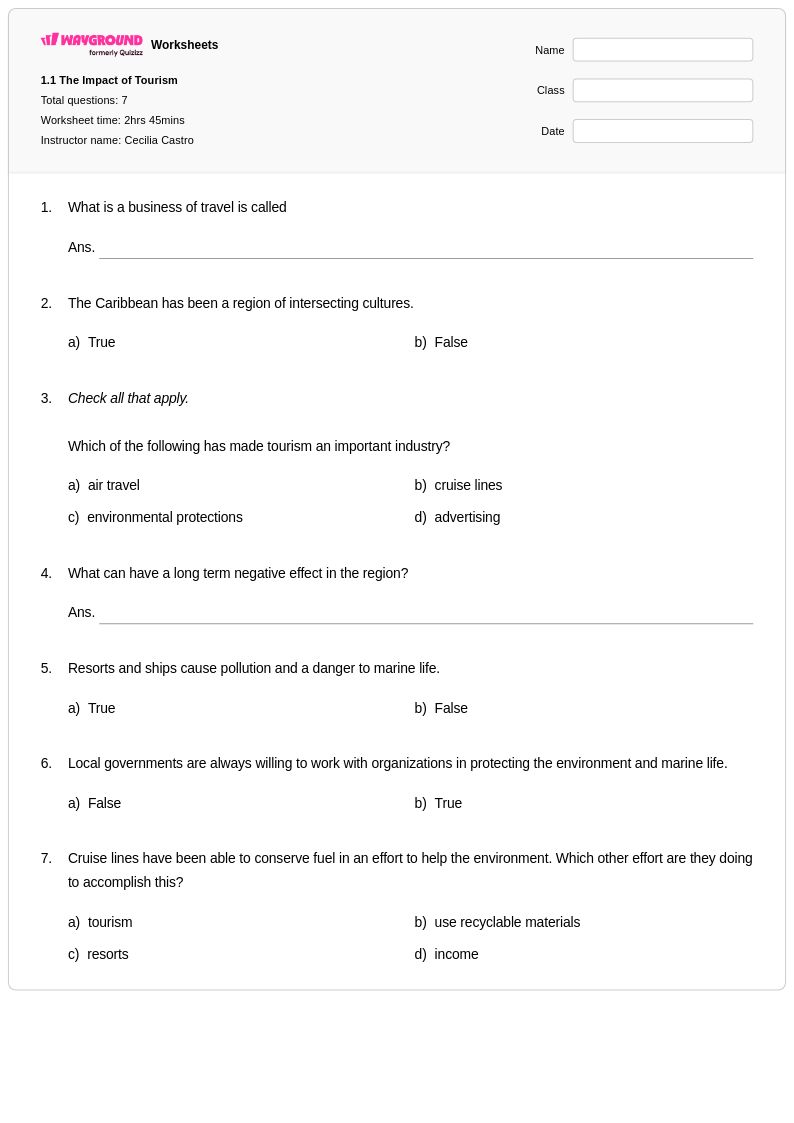
Travel and tourism worksheets on Wayground are available in both printable PDF and digital formats, making them accessible across traditional and technology-integrated classrooms. When hosting worksheets digitally on Wayground, teachers can apply student-level accommodations such as read aloud for English language learners or students with reading challenges, reduced answer choices to lower cognitive load for struggling learners, and extended time for students who need it. These settings are saved per student and reapply automatically in future sessions without disrupting the experience for the rest of the class.
How does tourism connect to broader geography and economics curriculum standards?
Travel and tourism is a natural bridge between geography and economics standards because it requires students to apply knowledge of physical environments, cultural regions, trade systems, and population patterns simultaneously. Topics like the role of transportation networks in enabling global mobility, the economic multiplier effect of tourist spending, and the concept of cultural diffusion all appear in standard social studies frameworks. Teaching tourism through this interdisciplinary lens gives students a concrete, relevant context for abstract economic and geographic principles.
What are common errors students make when interpreting tourism data or maps?
Students frequently misread tourism data by focusing only on visitor volume rather than considering revenue per visitor, seasonality, or regional distribution of economic benefit. On maps, a common error is assuming that geographic proximity drives tourism flows, when political relationships, visa accessibility, and marketing all play significant roles. Guiding students to interrogate the source, scale, and context of tourism data before drawing conclusions is an essential analytical habit to build.