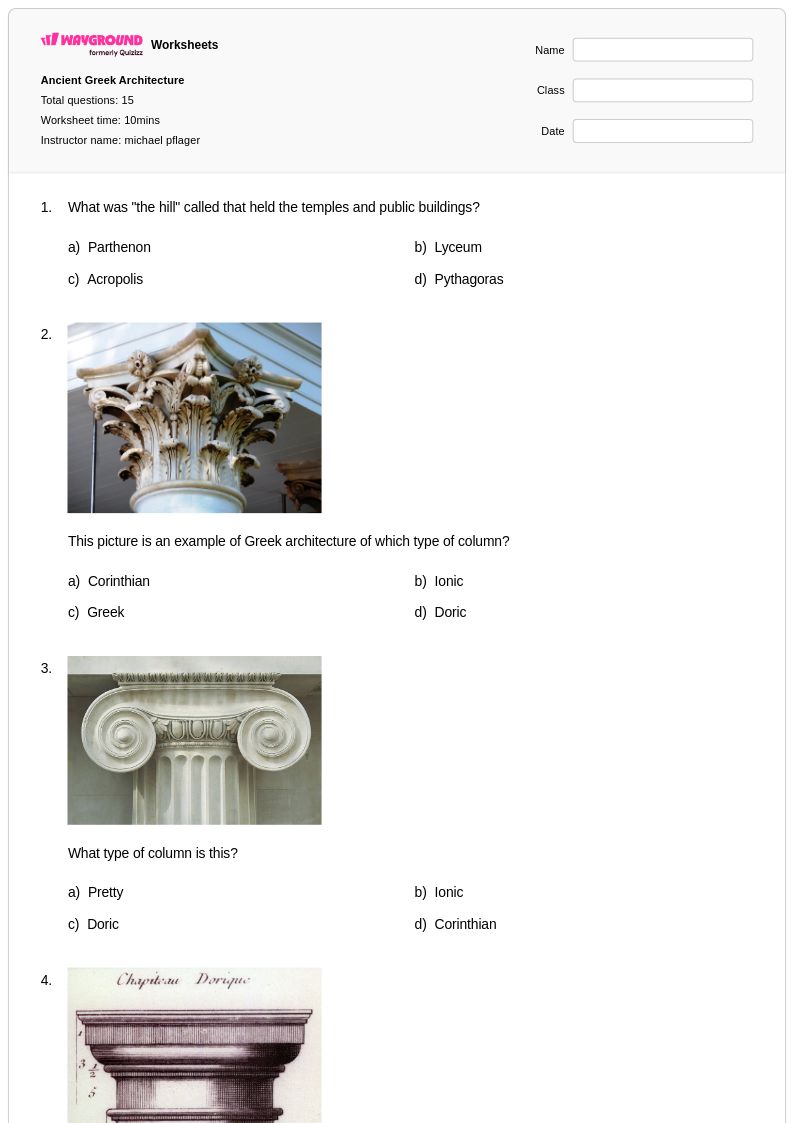
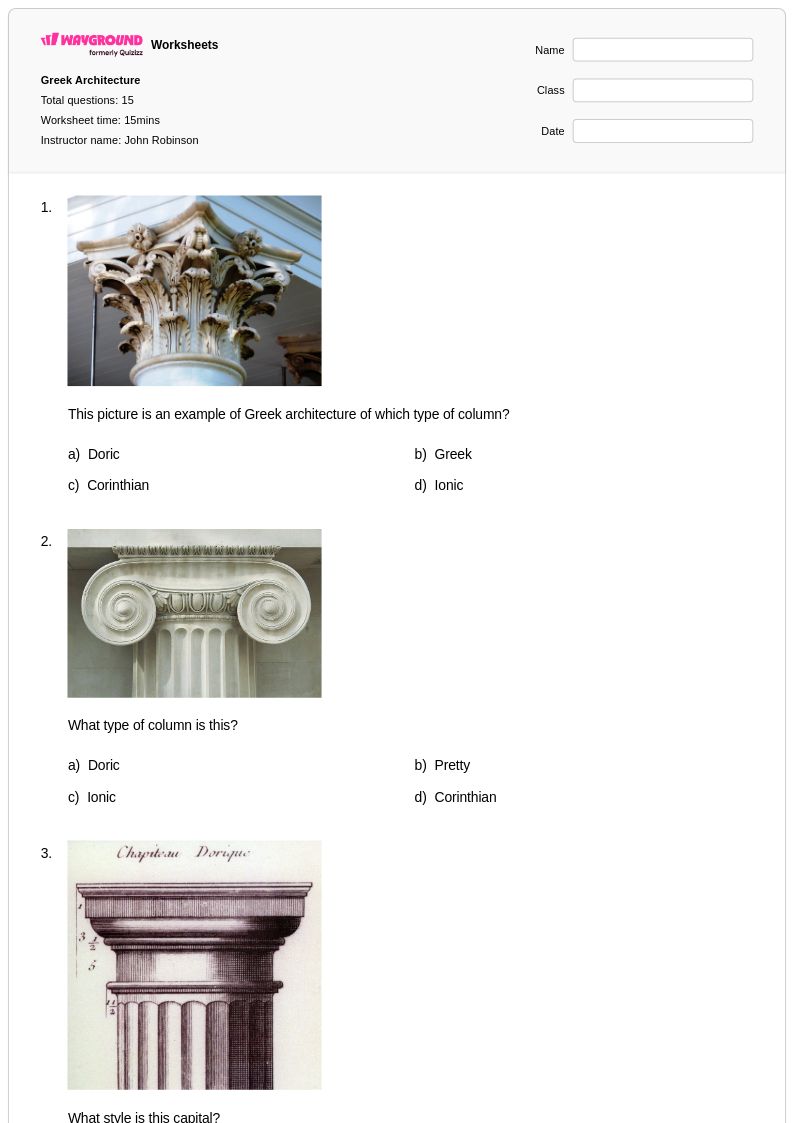
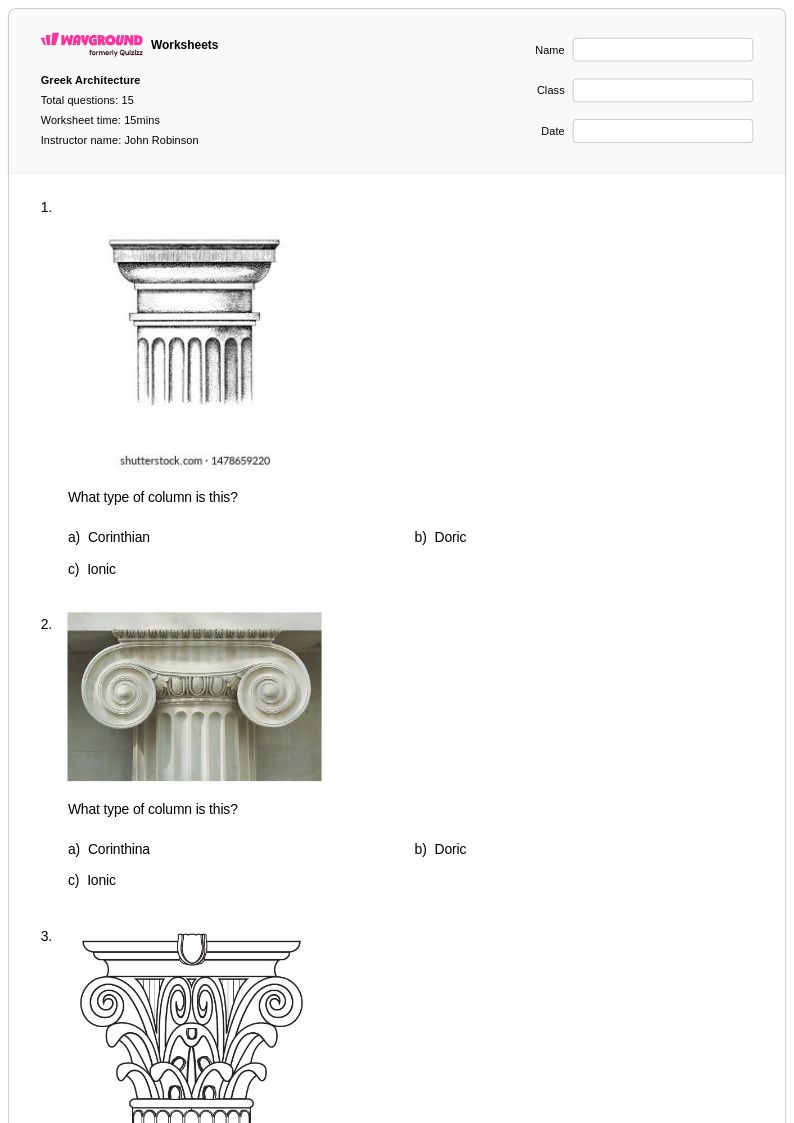
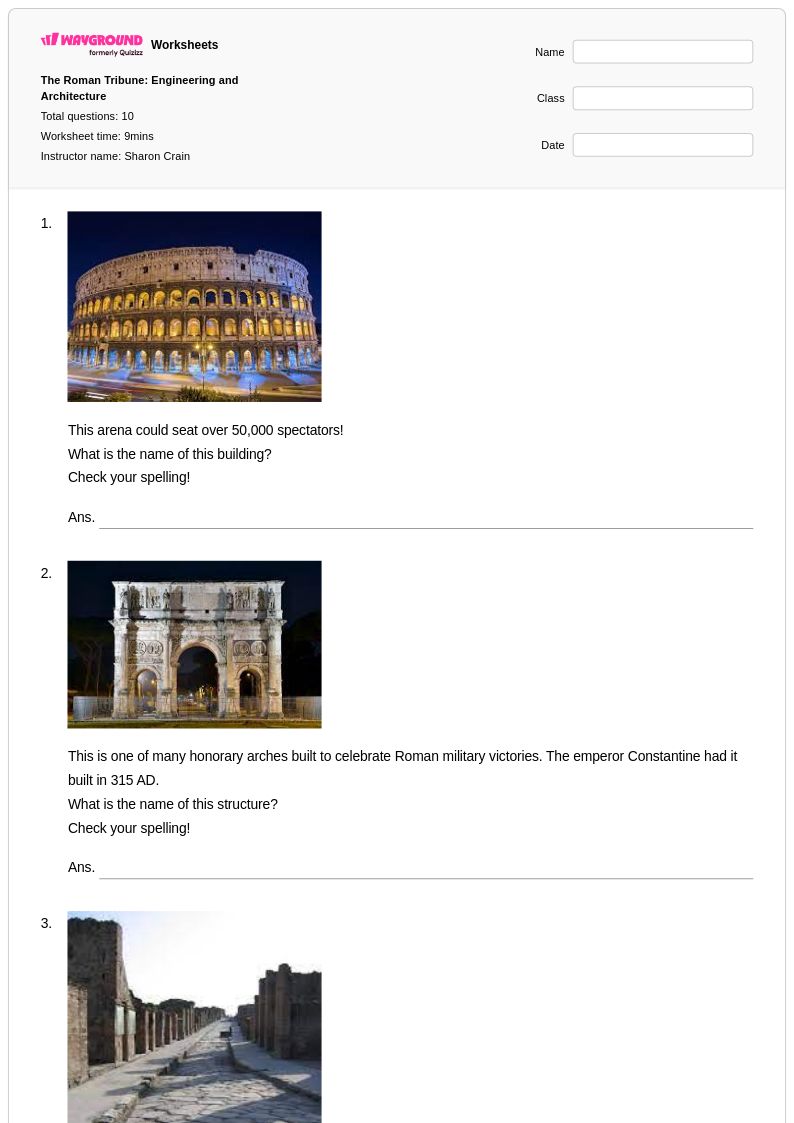
Free Printable Architecture Worksheets for Kindergarten
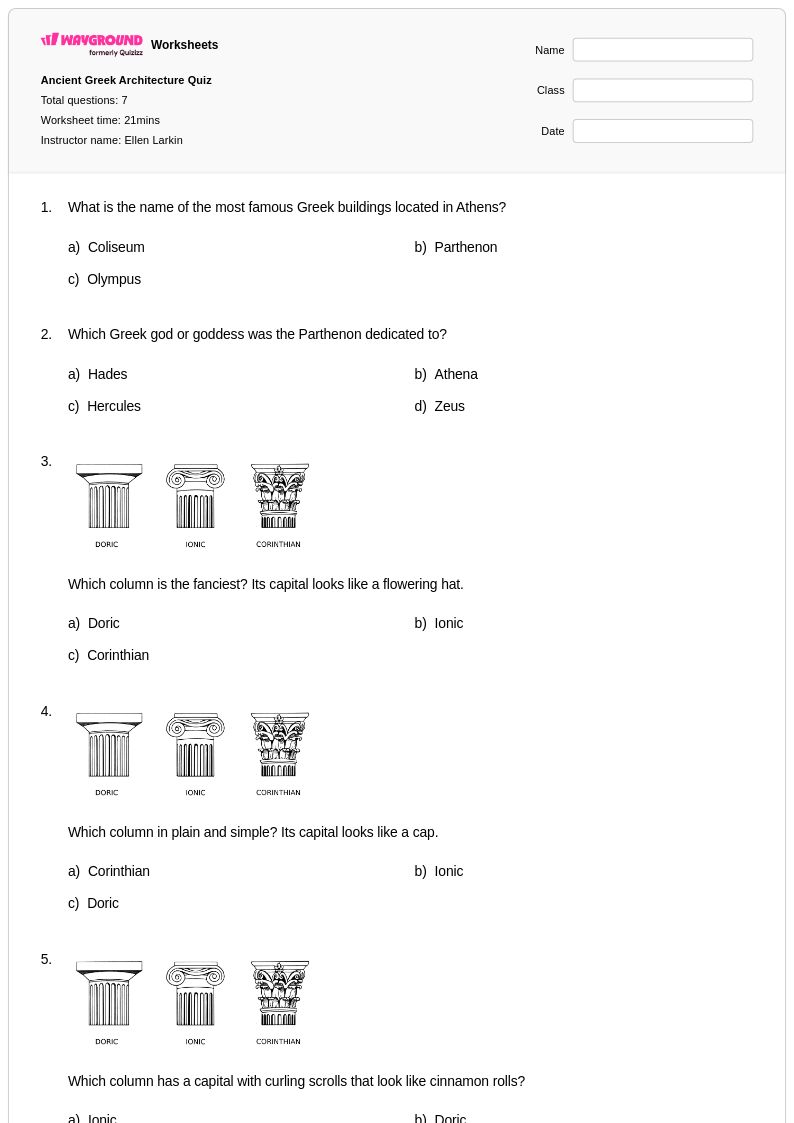
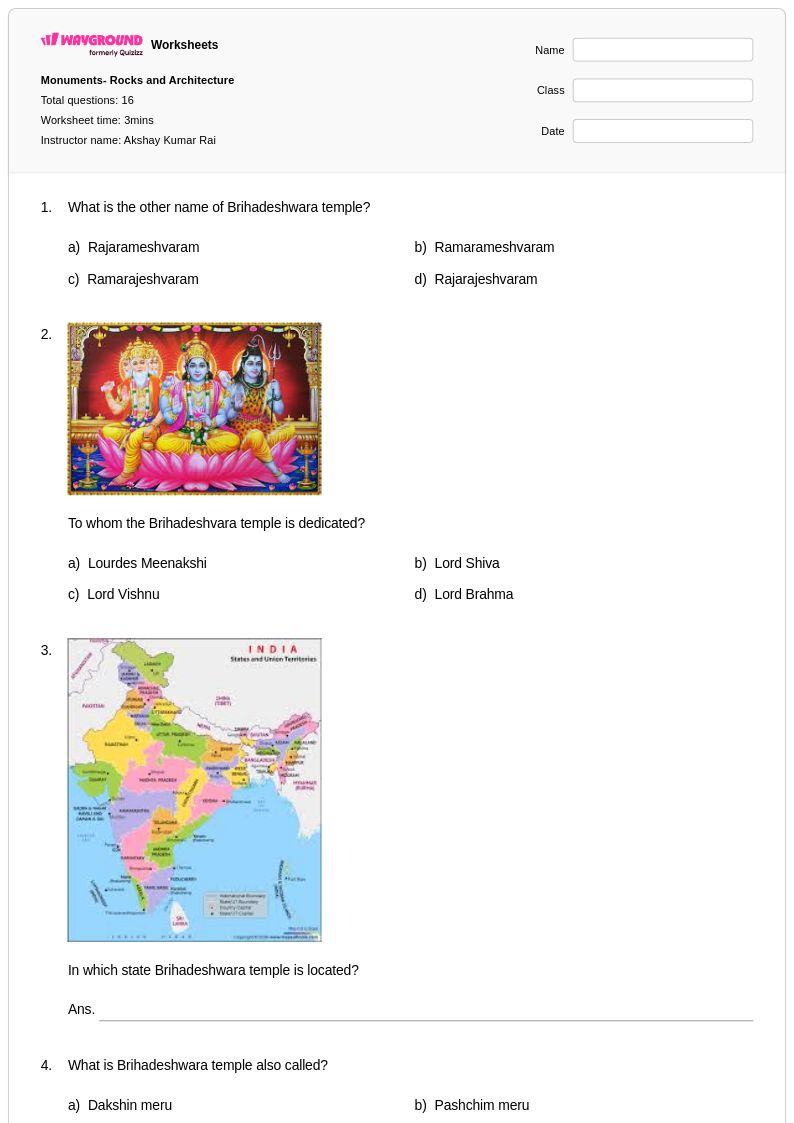
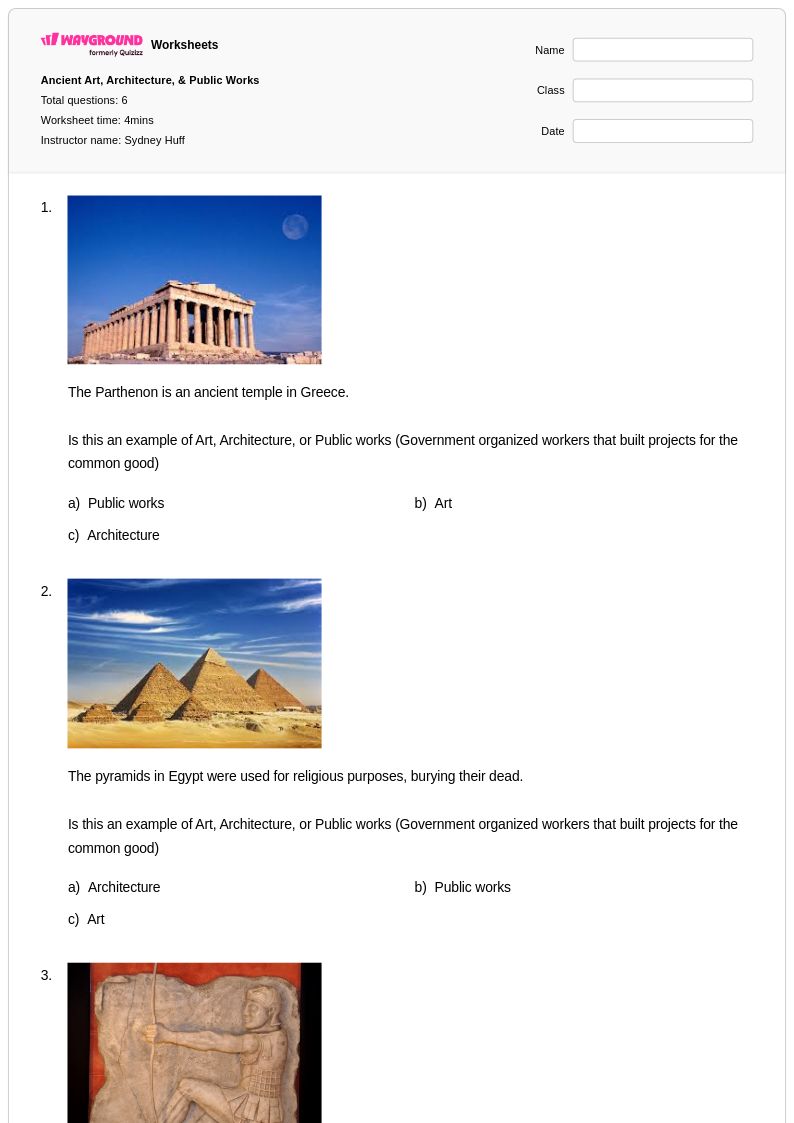
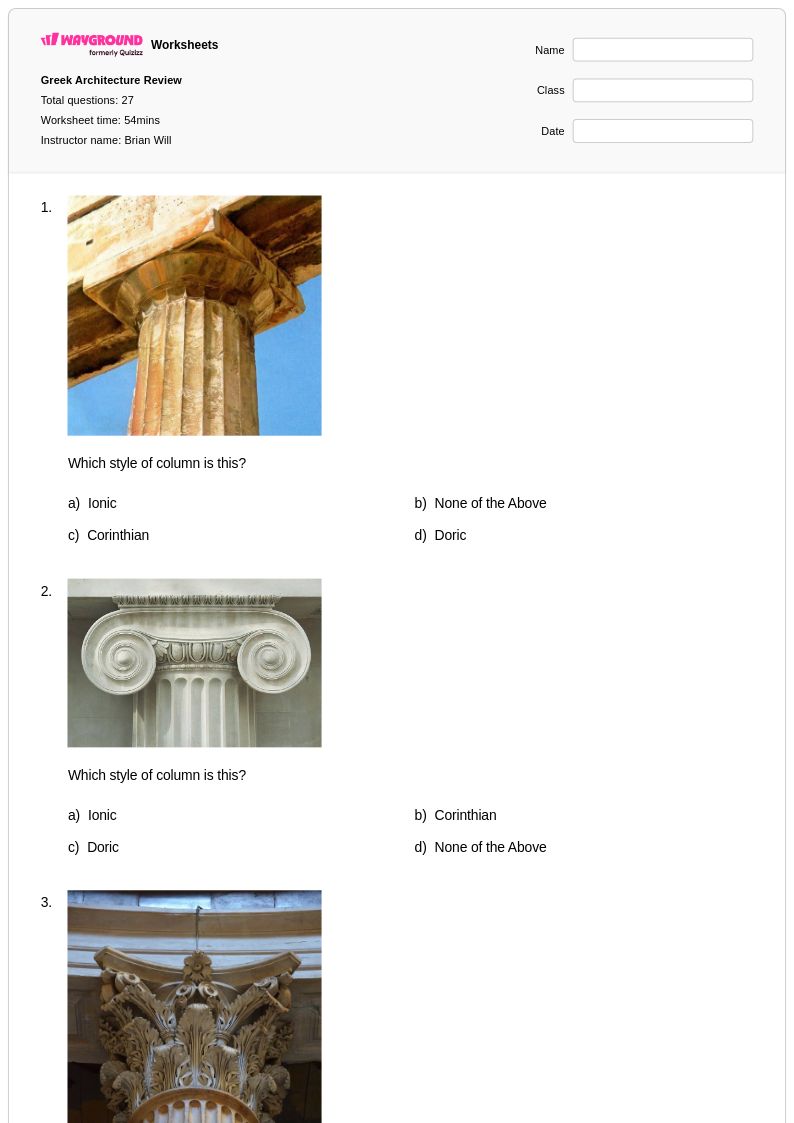
Explore Wayground's free kindergarten architecture worksheets and printables that help young learners discover different building styles, structures, and cultural designs through engaging practice problems with complete answer keys.
Explore printable Architecture worksheets for Kindergarten
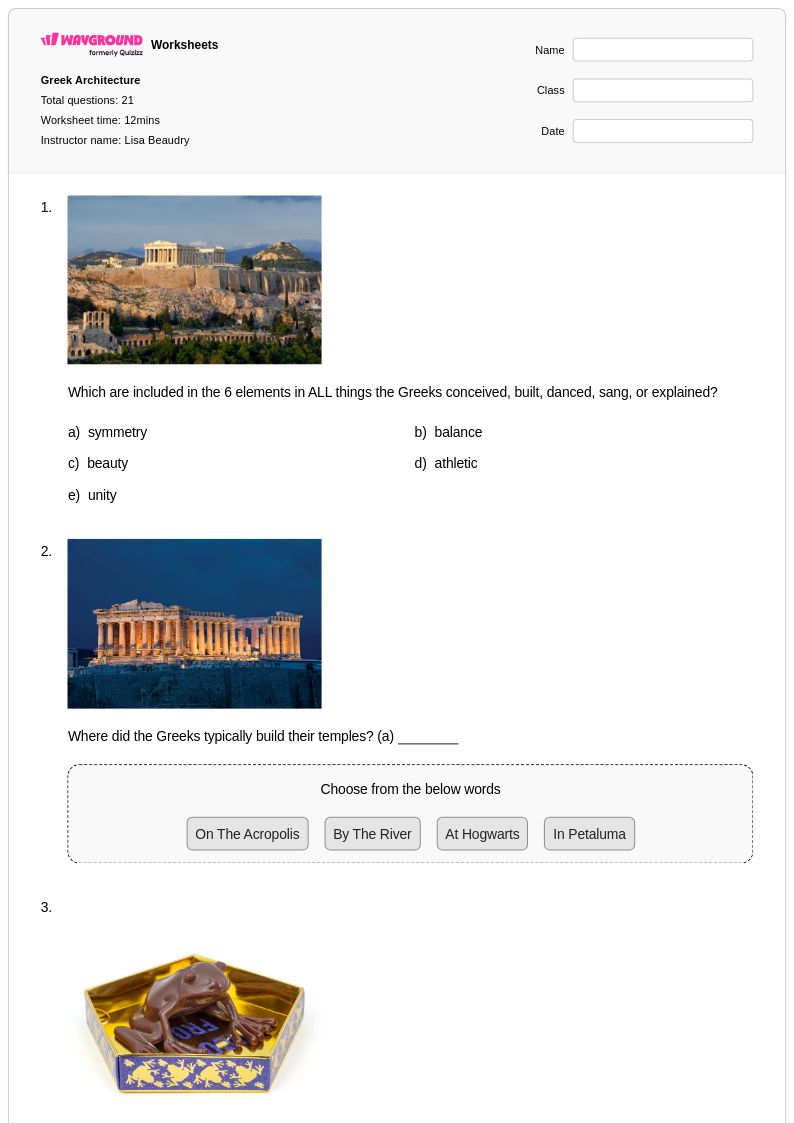
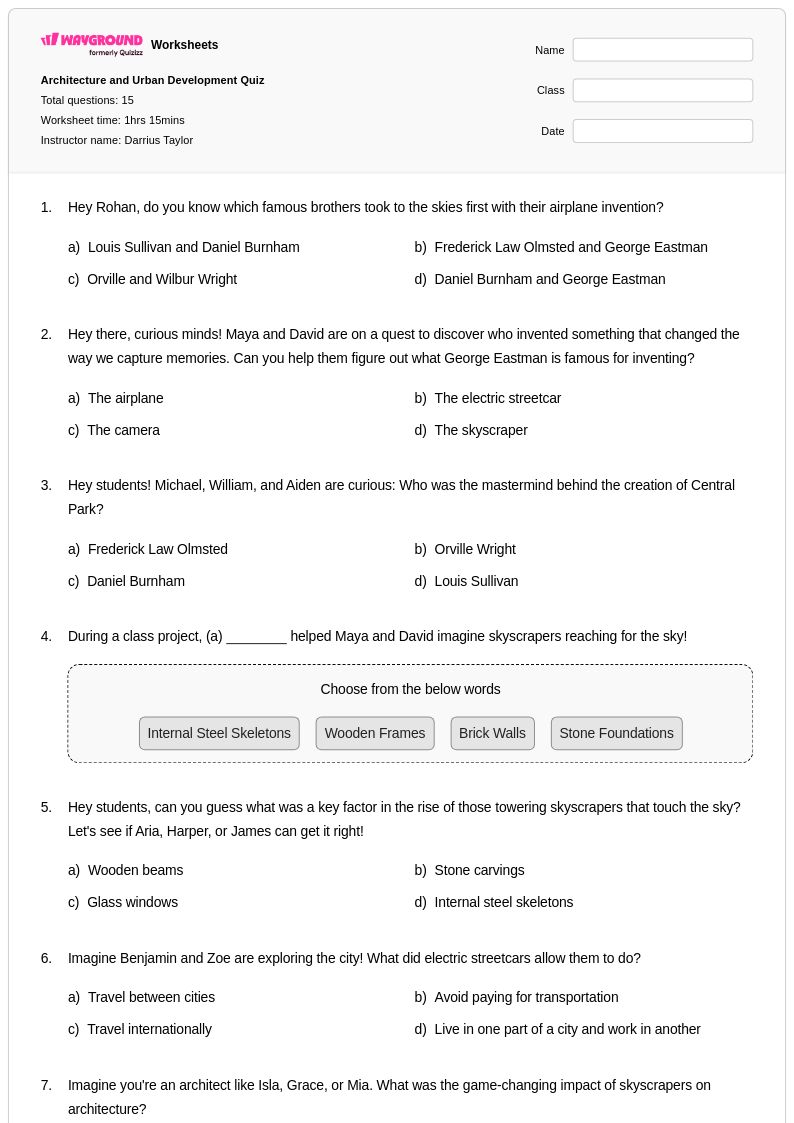
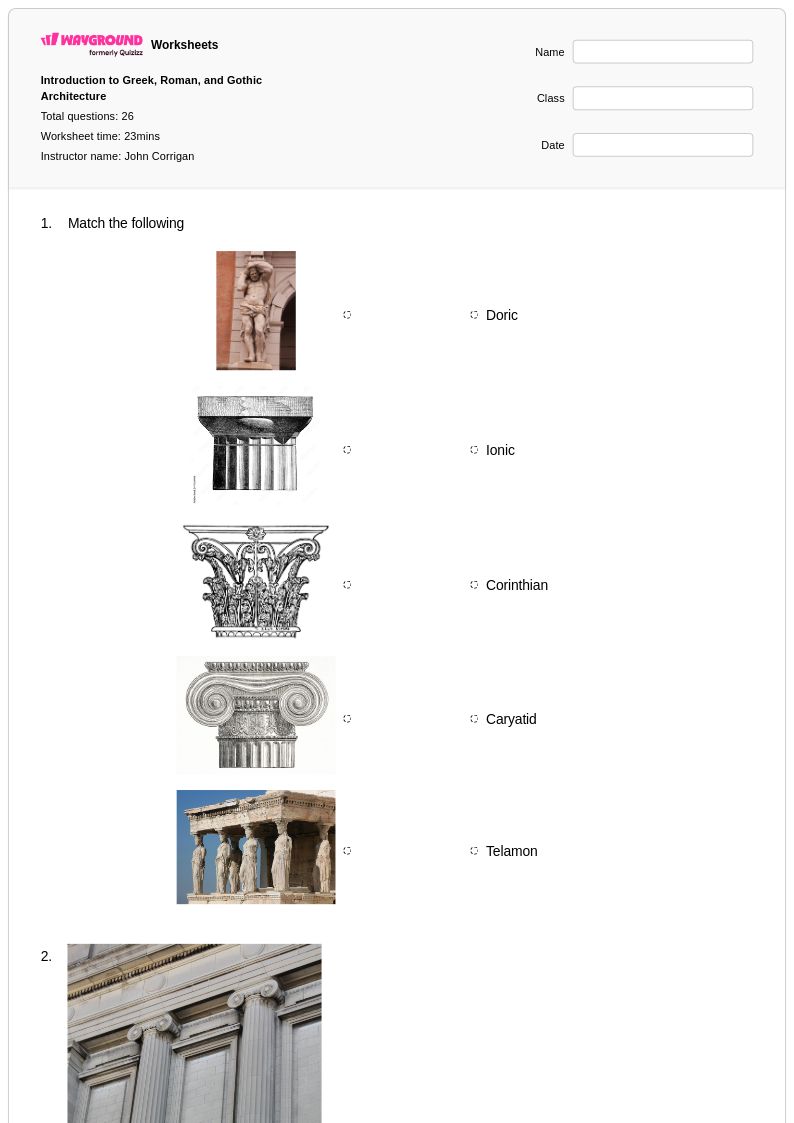
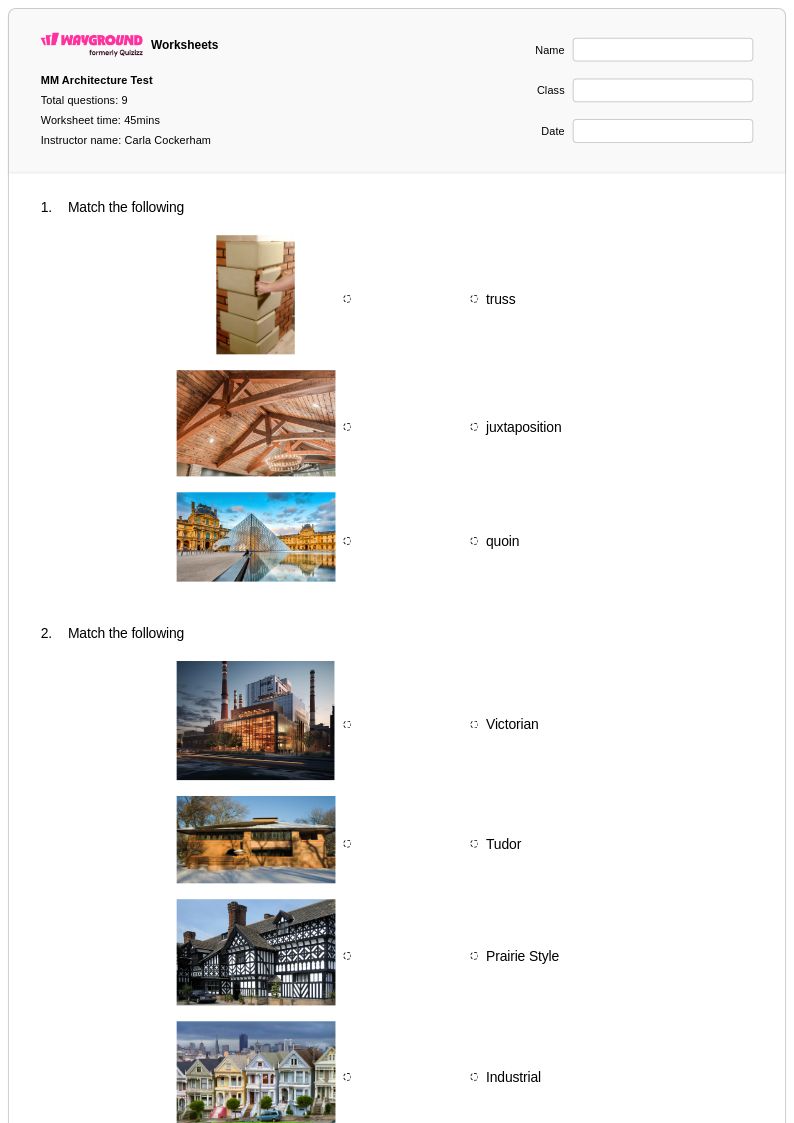
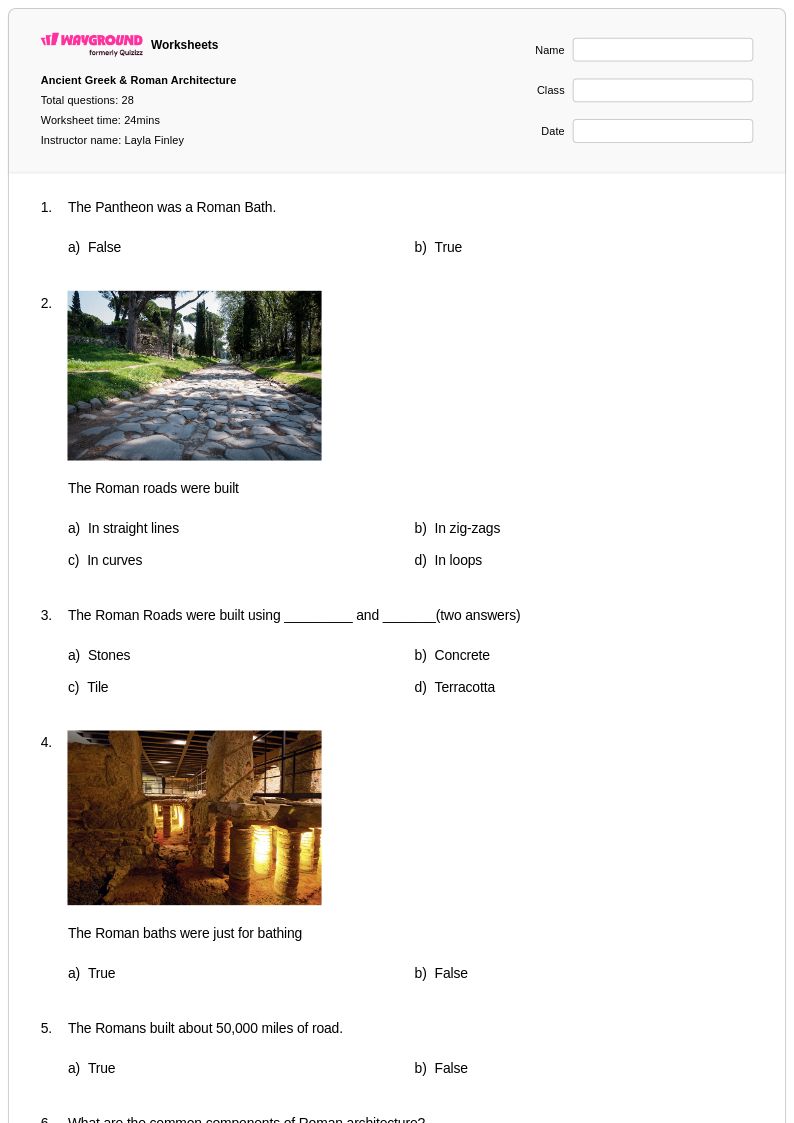
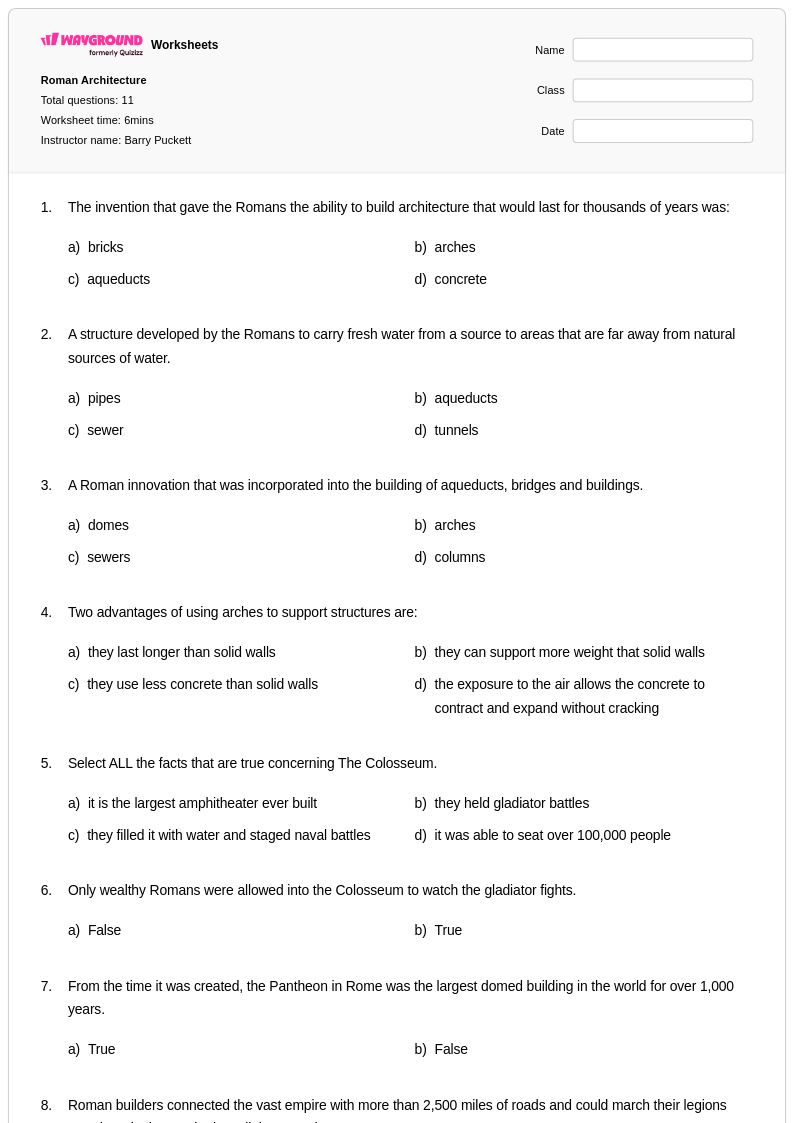
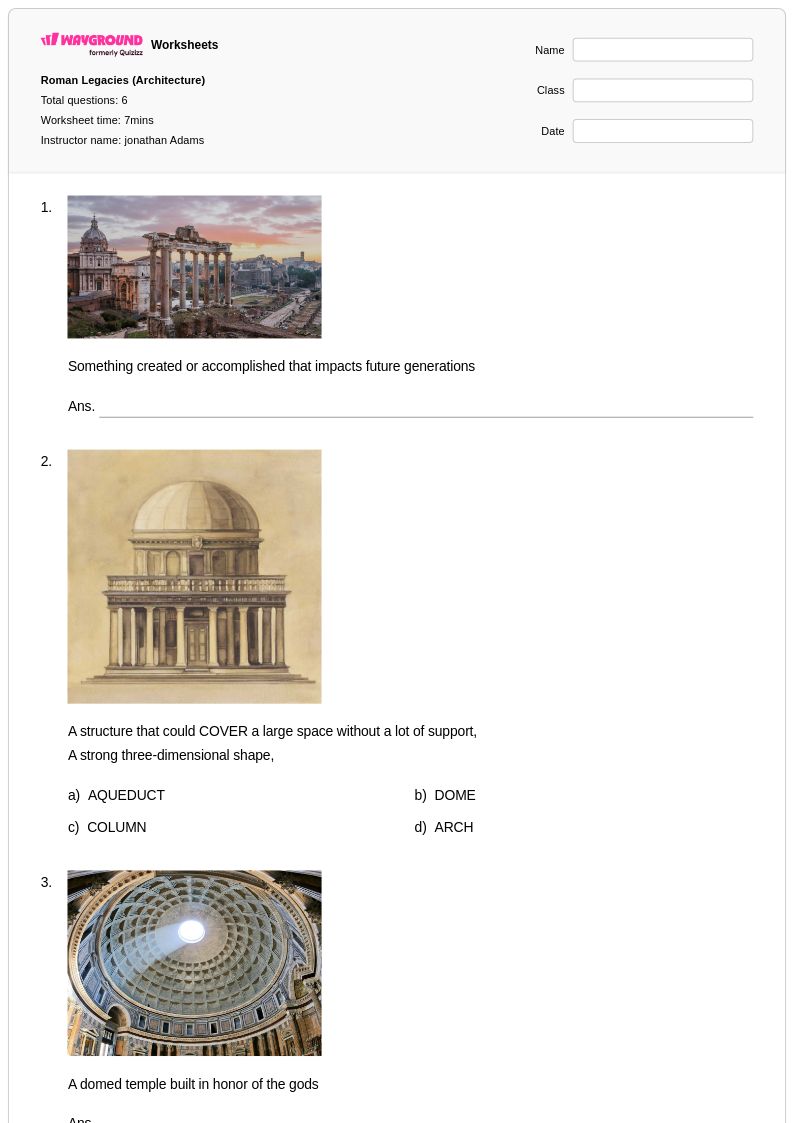
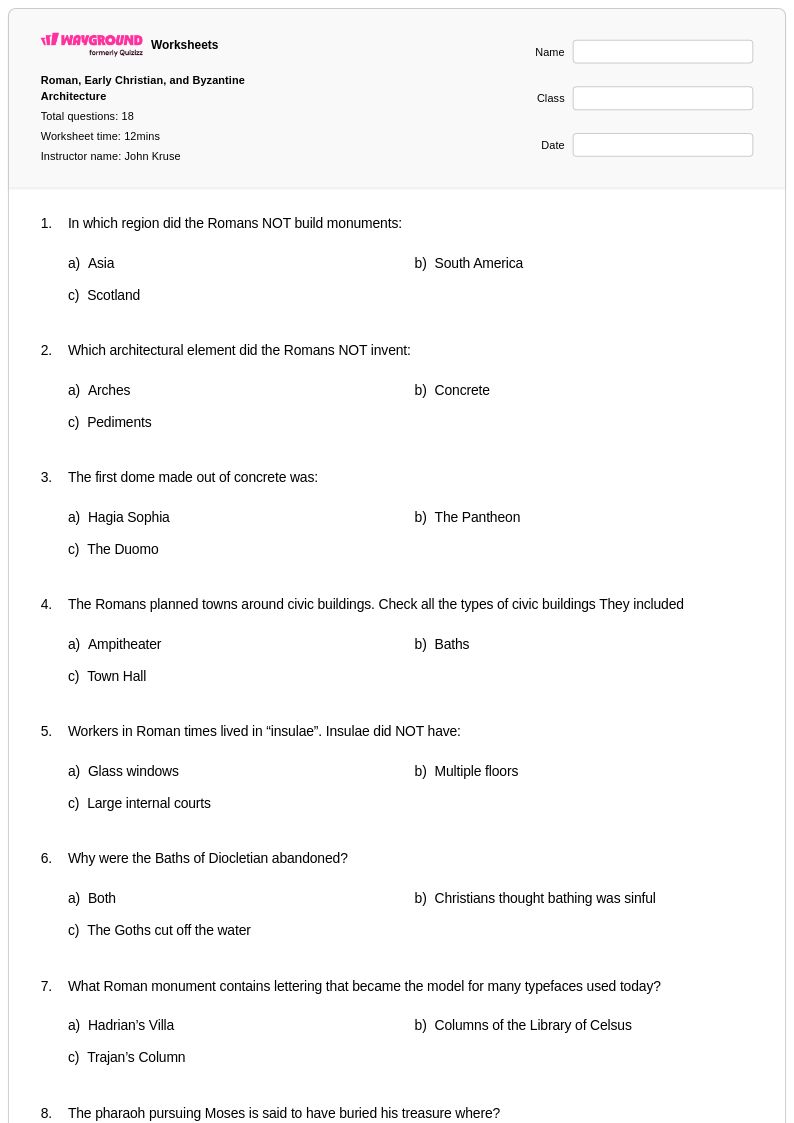
Architecture worksheets for kindergarten students introduce young learners to the fascinating world of buildings, structures, and design within their communities and cultures. These comprehensive educational resources help develop critical observation skills as children explore different types of buildings, identify architectural features, and understand how structures serve various purposes in their neighborhoods. The carefully crafted practice problems encourage students to recognize patterns in building design, compare residential and commercial structures, and appreciate cultural influences on architecture around the world. Each worksheet collection includes detailed answer keys and is available as free printable pdf resources, making it simple for educators to incorporate hands-on architectural exploration into their social studies curriculum while building foundational visual literacy and cultural awareness skills.
Wayground, formerly Quizizz, provides educators with an extensive library of millions of teacher-created architecture worksheets specifically designed for kindergarten-level learning. The platform's robust search and filtering capabilities allow teachers to quickly locate materials that align with curriculum standards and match their students' developmental needs. These versatile resources are available in both printable pdf format and interactive digital versions, offering educators the flexibility to customize content for differentiation and adapt materials for various learning styles. Teachers can efficiently plan engaging architecture lessons, provide targeted remediation for students who need additional support, offer enrichment opportunities for advanced learners, and create meaningful skill practice sessions that connect young children to the built environment in their communities while fostering cross-cultural understanding through architectural diversity.
FAQs
How do I teach architecture to students who have no background in it?
Start by grounding students in the idea that every building is a response to a set of needs: structural, cultural, climatic, and social. Use familiar local buildings as entry points before introducing historical or global examples. From there, guide students to identify recurring architectural elements such as arches, columns, and facades, and ask them to hypothesize why those features appear where they do. Building from observation to analysis prevents students from treating architecture as purely aesthetic and helps them engage with it as a record of human decision-making.
What exercises help students practice analyzing architectural styles?
Effective practice exercises ask students to compare two or more structures from different cultures or time periods, identifying shared and divergent elements and explaining what those differences reveal about each society. Labeling diagrams of architectural features, matching building styles to their historical context, and analyzing how geography and climate shaped design choices are all productive formats. These exercises build the analytical vocabulary students need to move from describing what a building looks like to explaining what it communicates.
What misconceptions do students commonly have about architecture?
The most common misconception is that architecture is primarily about aesthetics rather than function, culture, and context. Students often assume that ornate or monumental buildings are automatically more significant than vernacular or utilitarian structures, which can skew their understanding of how everyday communities shaped the built environment. Another frequent error is treating architectural styles as isolated inventions rather than as products of cultural exchange, trade, and geographic constraint. Addressing these misconceptions directly helps students develop a more nuanced reading of structures across different societies.
How do I use Wayground's architecture worksheets in my classroom?
Wayground's architecture worksheets are available as printable PDFs for traditional classroom use and in digital formats for technology-integrated learning environments, so they can be distributed as paper handouts, assigned as homework, or hosted as a digital quiz on Wayground. Each worksheet includes a complete answer key, which supports independent student work and makes it easier to provide timely feedback. Teachers can use these materials for direct instruction, small-group practice, or enrichment activities, depending on where students are in their understanding of architectural analysis.
How can I differentiate architecture instruction for students at different skill levels?
For students who need additional support, reduce the cognitive load by focusing on a single architectural element at a time and providing visual references alongside written prompts. Advanced students benefit from open-ended comparative tasks that require them to synthesize information across multiple cultures or time periods without scaffolding. On Wayground, teachers can apply individual accommodations such as read aloud, reduced answer choices, and extended time to specific students, ensuring that all learners engage with the same content at an appropriate level of challenge.
How does studying architecture connect to broader social studies and history curriculum?
Architecture functions as primary source evidence for how societies organized power, religion, commerce, and daily life, which makes it a natural fit within history and social studies curriculum. Analyzing a cathedral, a marketplace, or a government building alongside written historical records gives students a more complete picture of a time period than text alone can provide. This cross-disciplinary approach also strengthens visual literacy and evidence-based reasoning skills that transfer across subject areas.