Free Printable Tabernacle Worksheets for Kindergarten
Discover free kindergarten Tabernacle worksheets and printables from Wayground that help young learners explore this important cultural and religious concept through engaging practice problems with answer keys.
Explore printable Tabernacle worksheets for Kindergarten
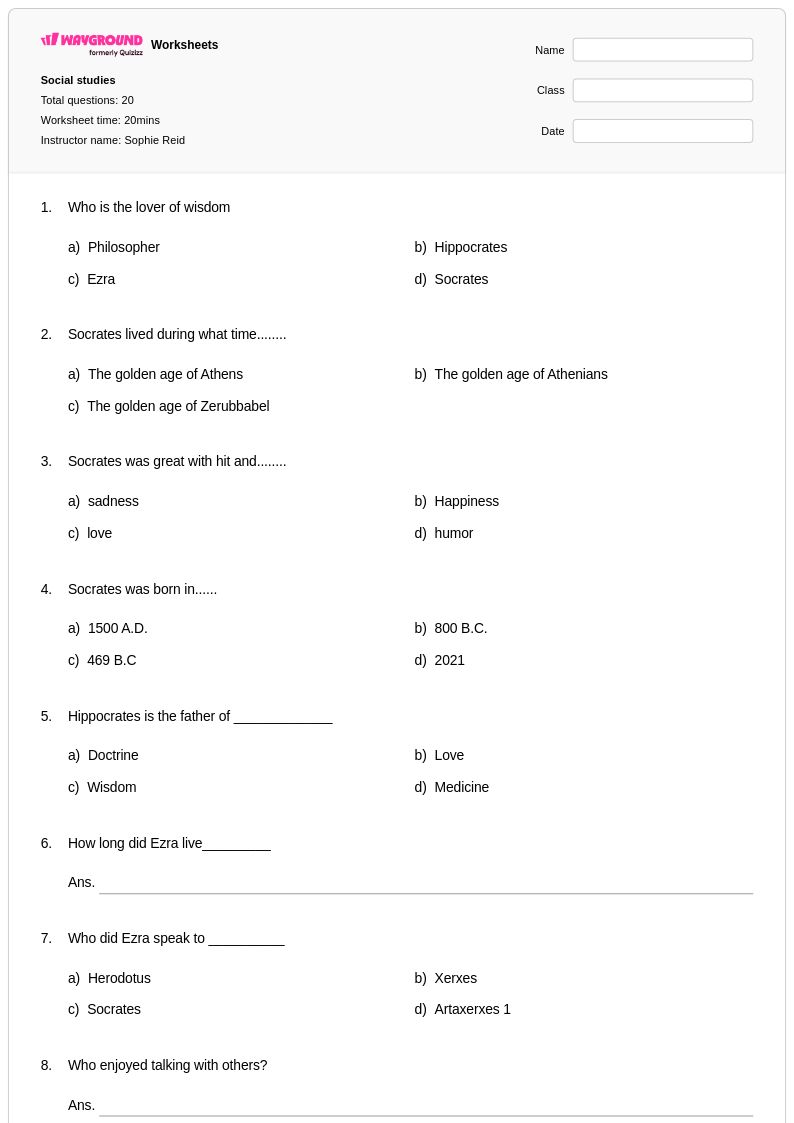
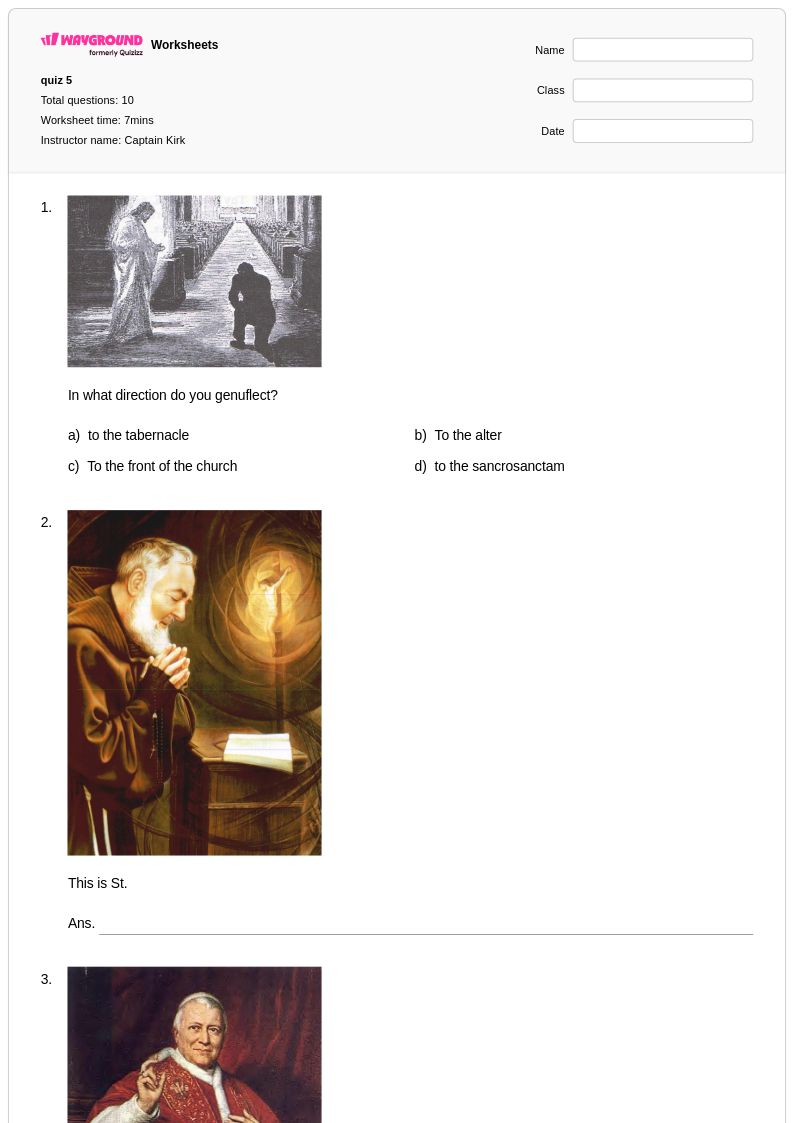
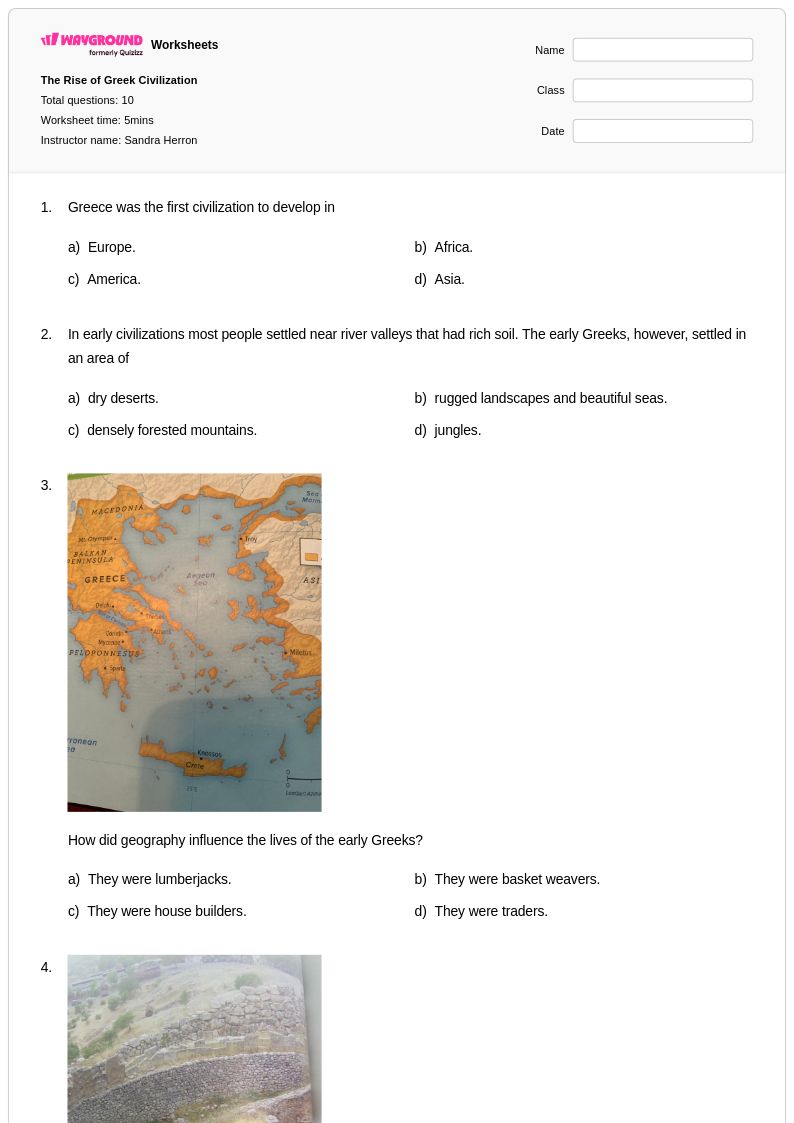
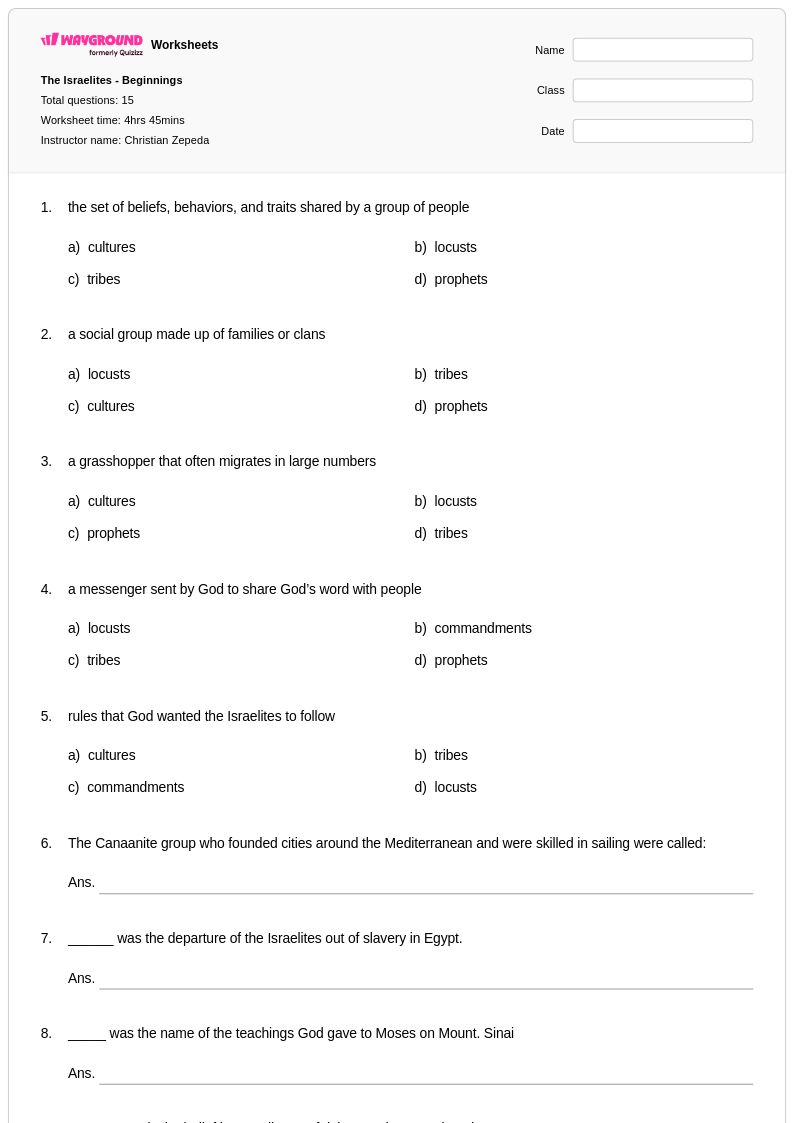
Tabernacle worksheets for kindergarten provide young learners with an engaging introduction to this important religious and cultural structure through age-appropriate social studies activities. These educational resources help kindergarten students develop foundational understanding of community traditions and cultural practices while strengthening essential skills such as visual recognition, basic reading comprehension, and cultural awareness. The collection includes carefully designed practice problems that encourage students to identify key features of the tabernacle, understand its significance in different communities, and make connections to their own cultural experiences. Each worksheet comes with a comprehensive answer key to support accurate assessment, and the free printable format ensures easy classroom implementation and home practice opportunities.
Wayground, formerly Quizizz, empowers educators with an extensive library of millions of teacher-created tabernacle resources specifically designed for kindergarten social studies instruction. The platform's robust search and filtering capabilities allow teachers to quickly locate materials that align with curriculum standards and meet diverse learning needs within their classrooms. These differentiation tools enable seamless customization of content difficulty and presentation style, while the dual availability in both printable pdf format and interactive digital versions provides maximum flexibility for various teaching environments. Whether used for initial concept introduction, skill reinforcement during remediation, or extended learning through enrichment activities, these comprehensive worksheet collections streamline lesson planning and provide consistent opportunities for meaningful cultural learning and community understanding practice.
FAQs
How do I teach the Tabernacle to students in a history or religious studies class?
Teaching the Tabernacle is most effective when students first understand its structural layout before moving into its symbolic and ceremonial significance. Begin with a visual overview of the Tabernacle's architectural elements, such as the Holy of Holies, the altar, and the courtyard, then guide students to connect each element to its religious or communal function. Pairing visual diagrams with guided analysis activities helps students build context before engaging with broader themes of ancient religious practice and cultural identity.
What kinds of practice activities help students understand the Tabernacle's significance?
Effective practice activities for the Tabernacle include labeling diagrams of its architectural components, matching symbolic meanings to ceremonial objects, and short-answer questions that ask students to explain the Tabernacle's role within ancient Israelite community life. Sequencing activities that walk students through ceremonial functions also reinforce comprehension of how the structure was used in religious practice. These formats deepen understanding beyond memorization and push students toward contextual analysis.
What misconceptions do students commonly have about the Tabernacle?
A common misconception is that the Tabernacle was a permanent structure, when in fact it was a portable, tent-based sanctuary designed for use during the Israelites' period of wilderness travel. Students also frequently confuse the Tabernacle with the later Temple in Jerusalem, missing the distinctions in permanence, location, and historical context. Addressing these errors directly through comparison activities helps students develop a more accurate and nuanced understanding of both structures.
How can I use Tabernacle worksheets in my classroom?
Tabernacle worksheets on Wayground are available as printable PDFs for traditional classroom use and in digital formats for technology-integrated learning environments, giving teachers flexibility regardless of their classroom setup. Teachers can also host worksheets as a quiz directly on Wayground, which supports interactive engagement and allows for streamlined formative assessment. Each worksheet includes a complete answer key, making them practical for independent student work, guided instruction, or review sessions.
How do I differentiate Tabernacle instruction for students with different learning needs?
For students who need additional support, scaffolding strategies such as word banks, partially completed diagrams, and sentence starters can make Tabernacle content more accessible without reducing rigor. On Wayground, teachers can apply individual student accommodations including Read Aloud, reduced answer choices, and extended time, each of which can be configured per student and saved for future sessions. These tools ensure that all learners can engage meaningfully with Tabernacle content at an appropriate level.
How does studying the Tabernacle fit into a broader social studies or ancient civilizations curriculum?
The Tabernacle connects naturally to broader units on ancient civilizations, religious practices, and the relationship between community structures and cultural identity. It serves as a concrete case study for analyzing how ancient peoples expressed spiritual beliefs through architecture and ritual, which aligns with standards in comparative religion, world history, and cultural studies. Using the Tabernacle as a focal point helps students develop transferable skills in historical analysis and cross-cultural comparison.