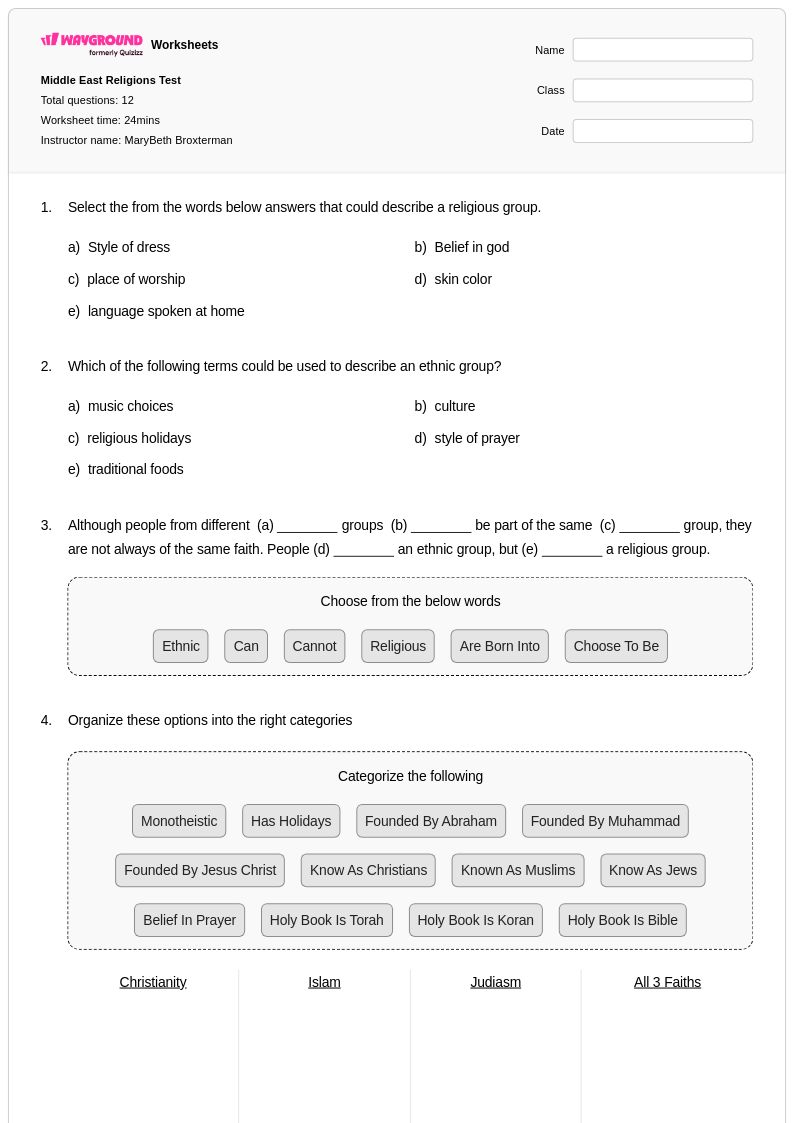
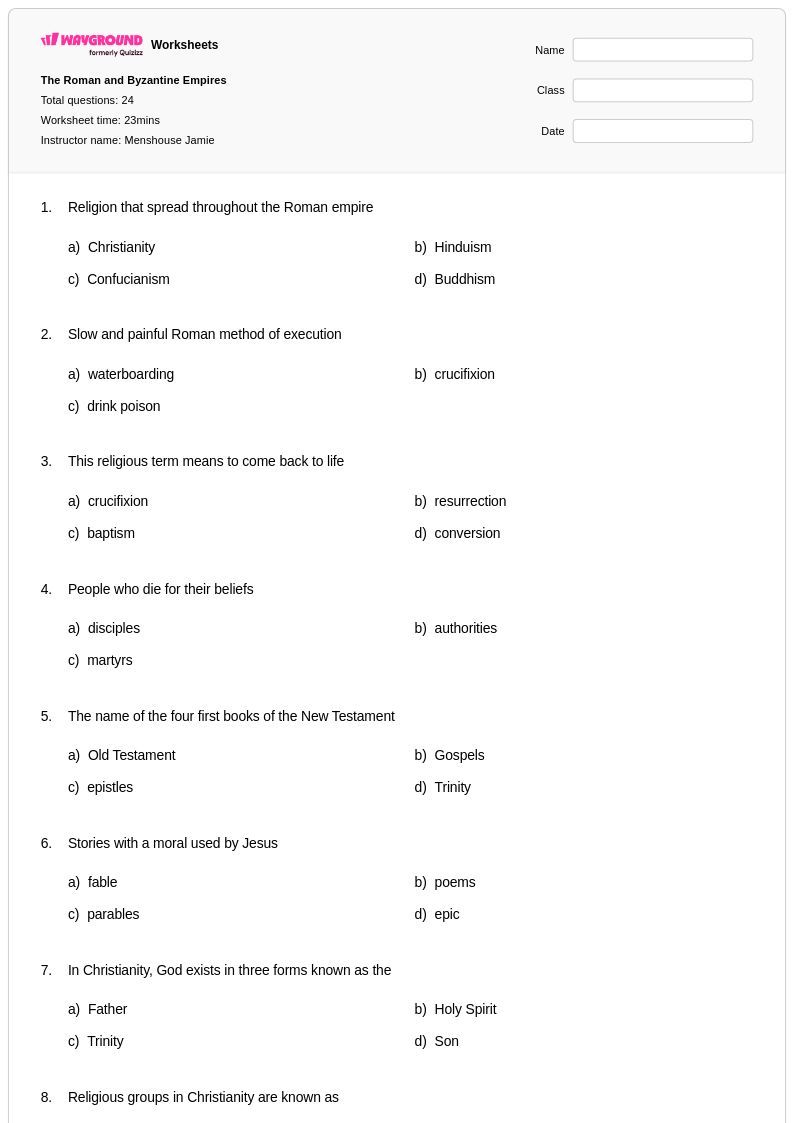
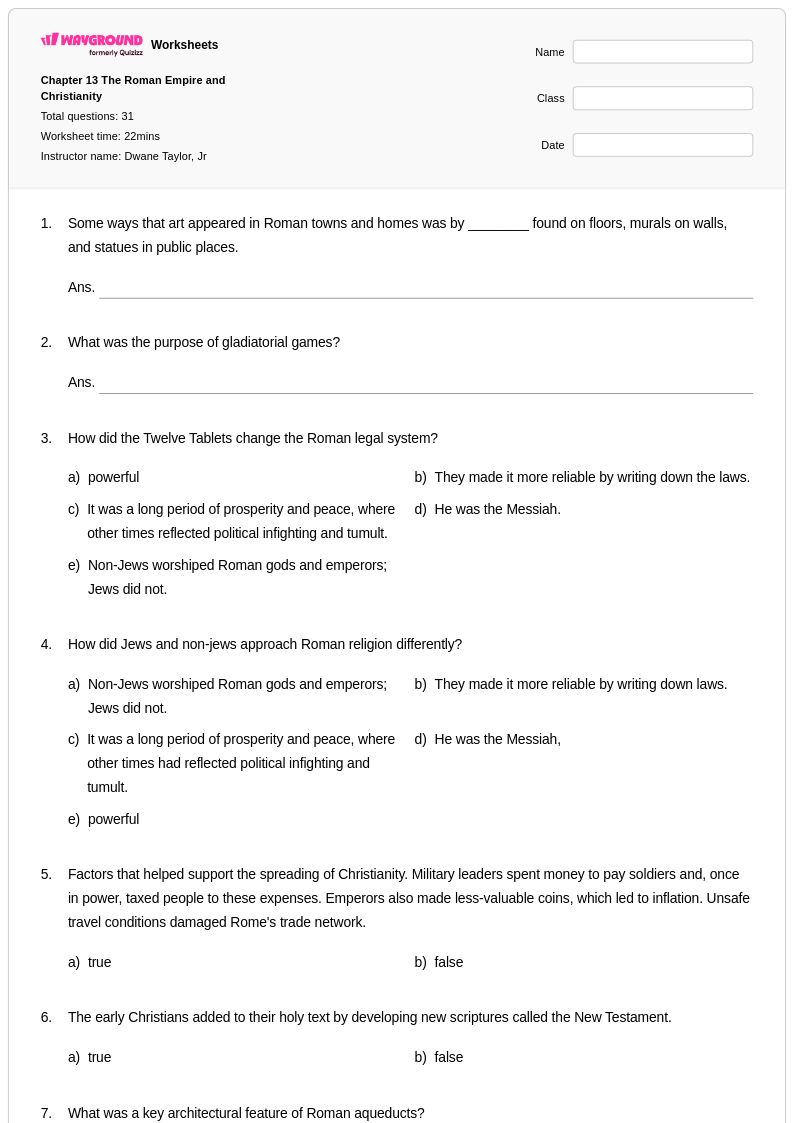
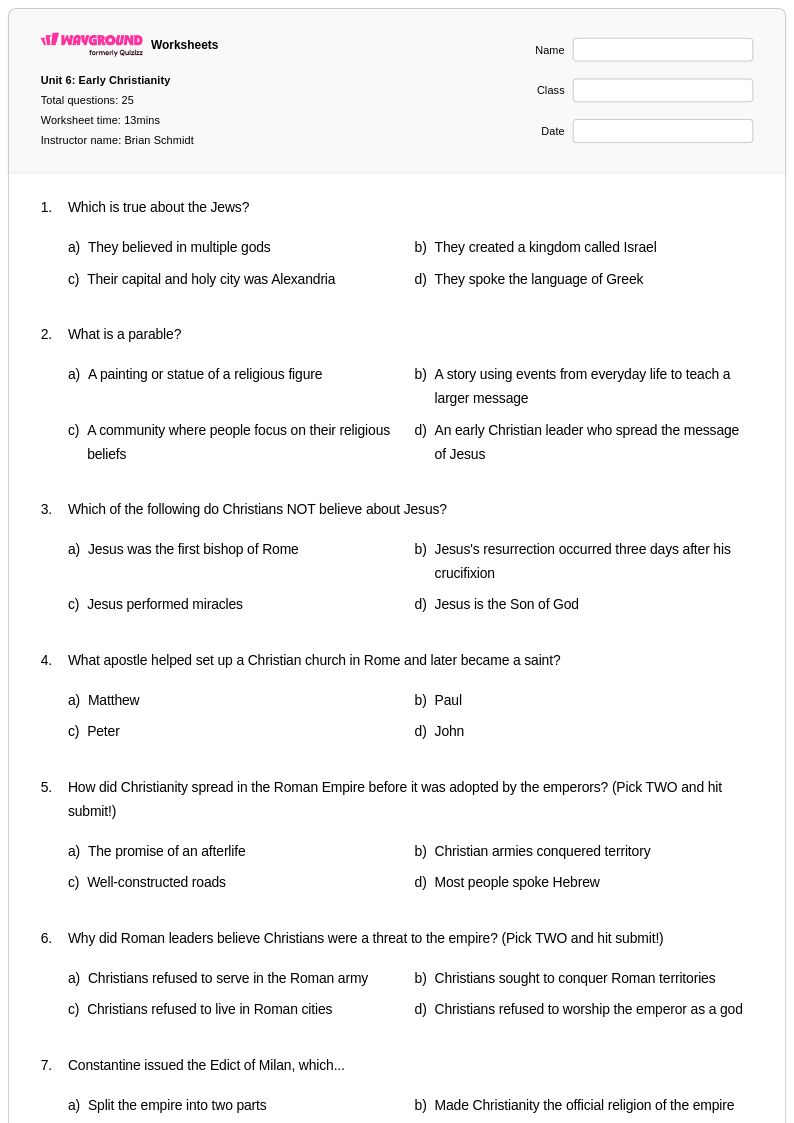
Free Printable Parables of Jesus Worksheets for Kindergarten
Discover free kindergarten printable worksheets and practice problems focused on the Parables of Jesus, helping young learners explore meaningful stories and their lessons through engaging activities with complete answer keys available.
Explore printable Parables of Jesus worksheets for Kindergarten
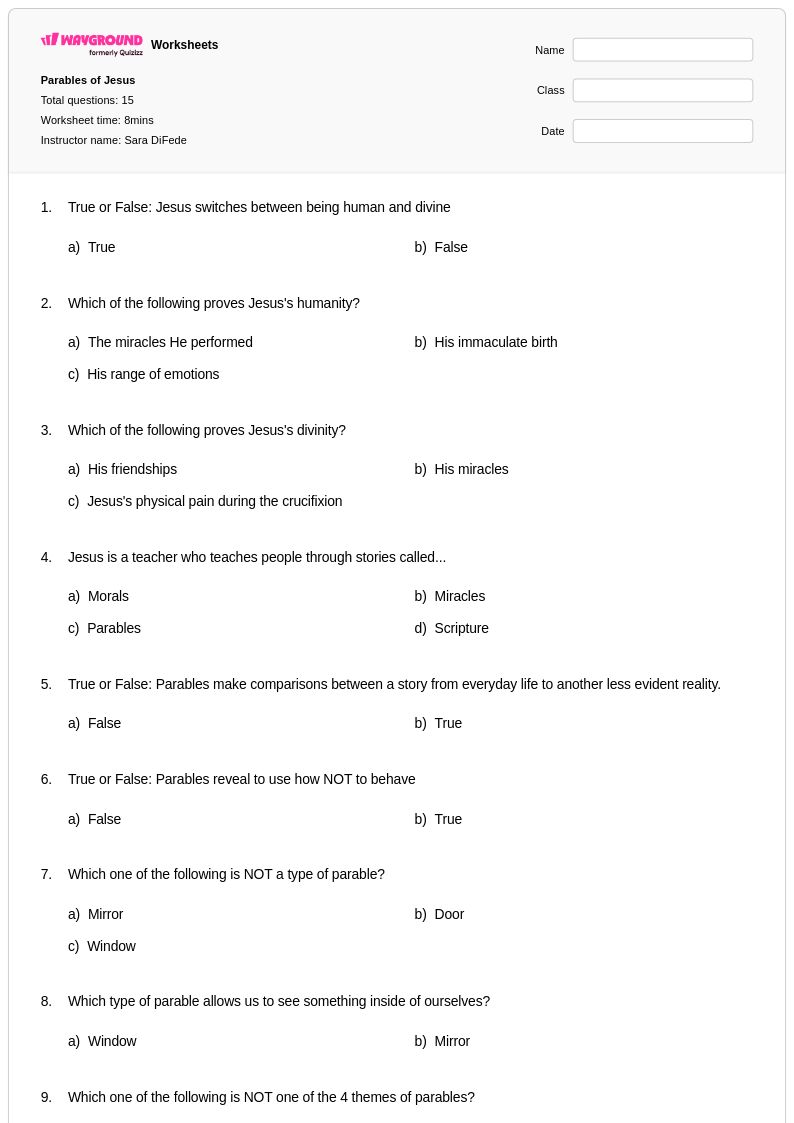
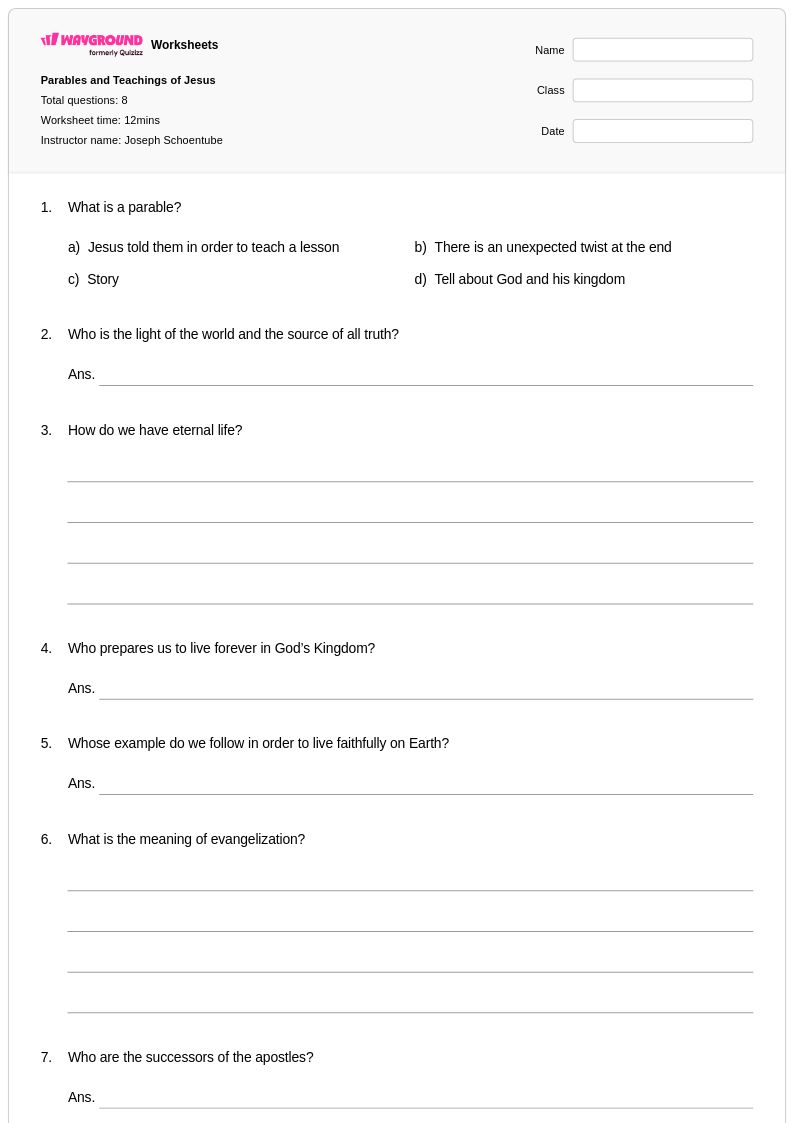
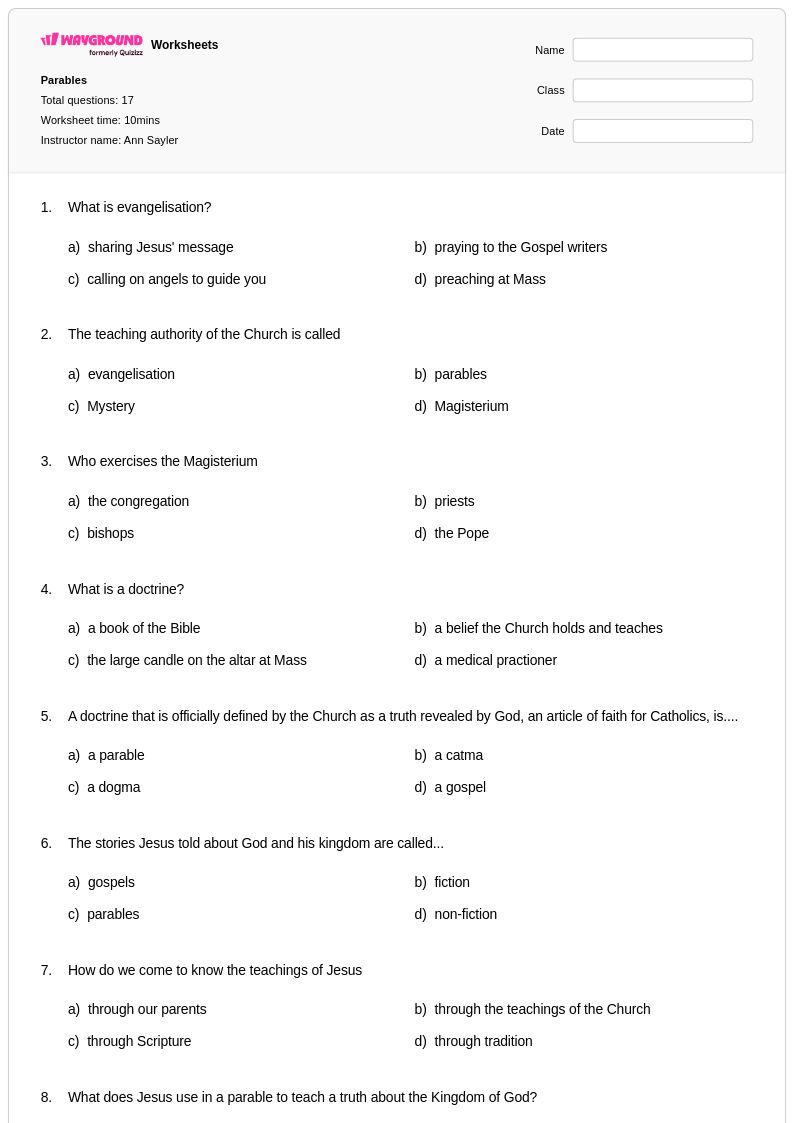
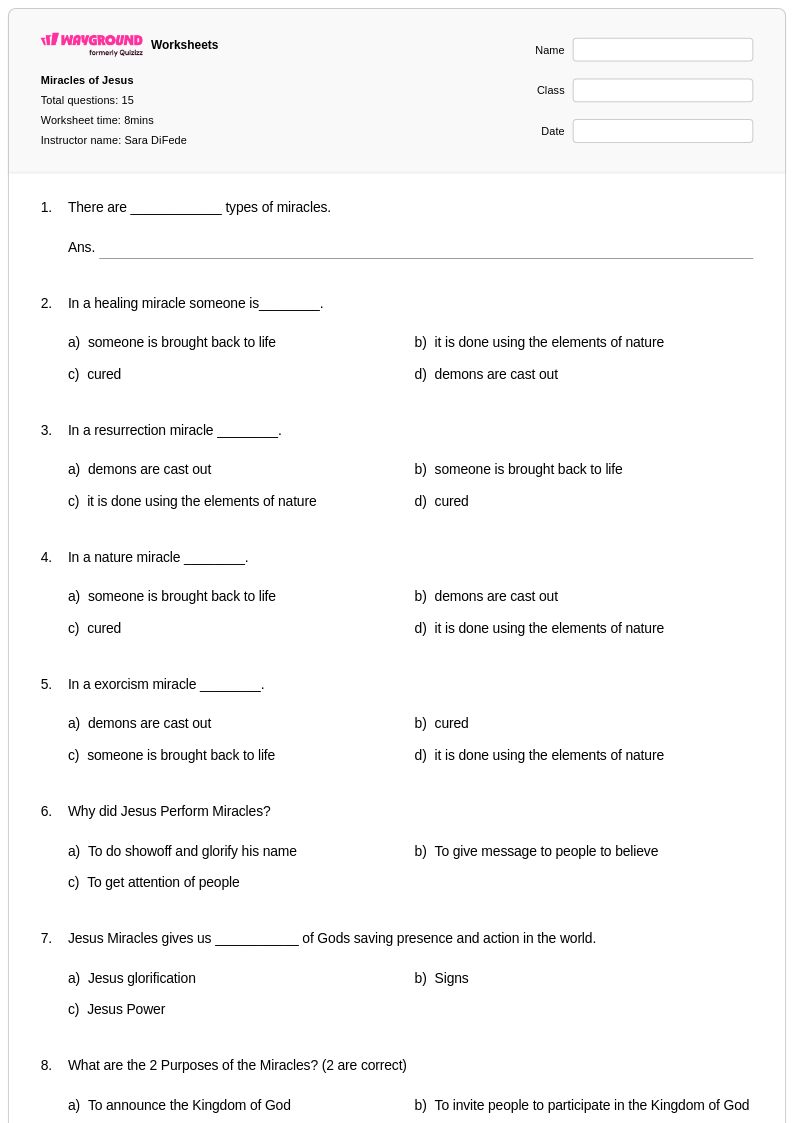
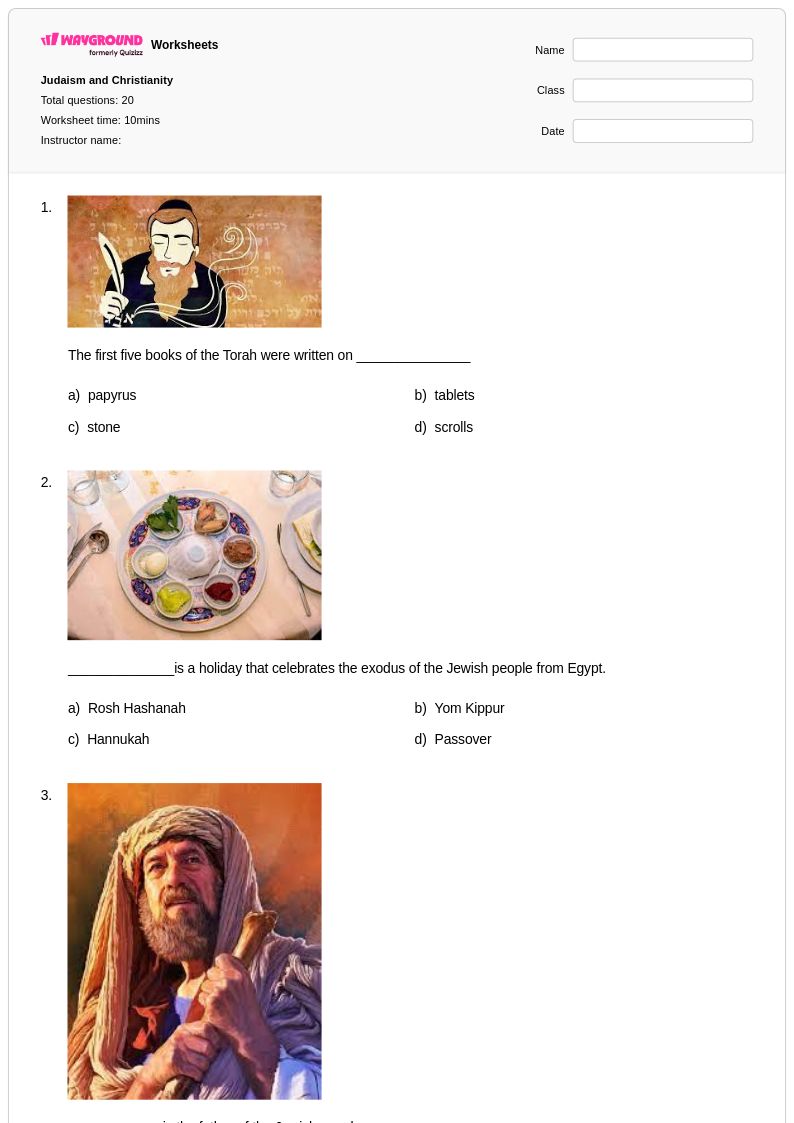
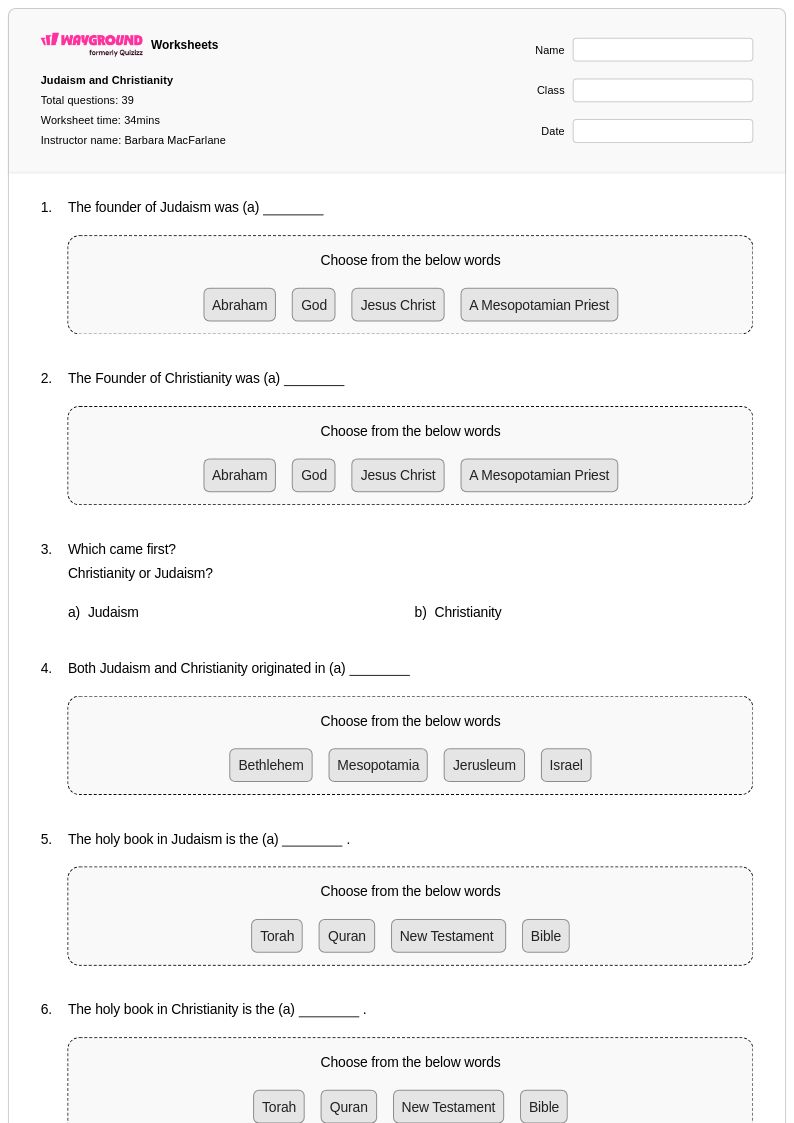
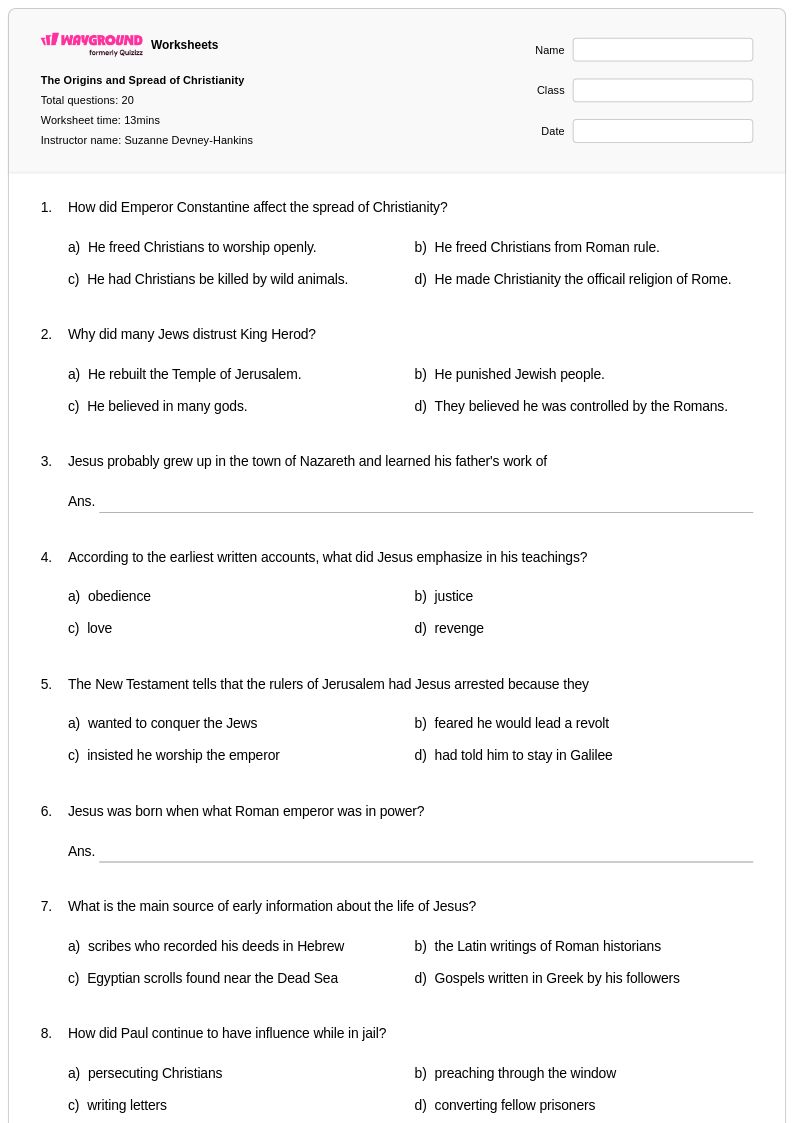
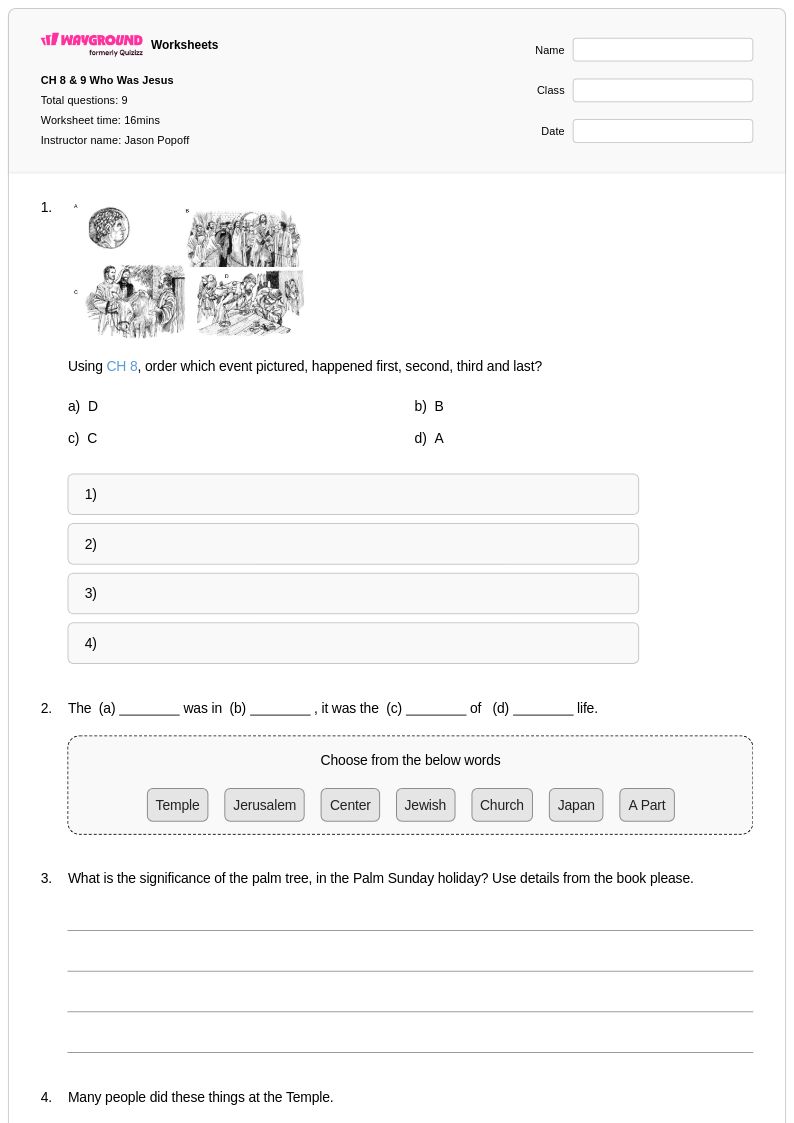
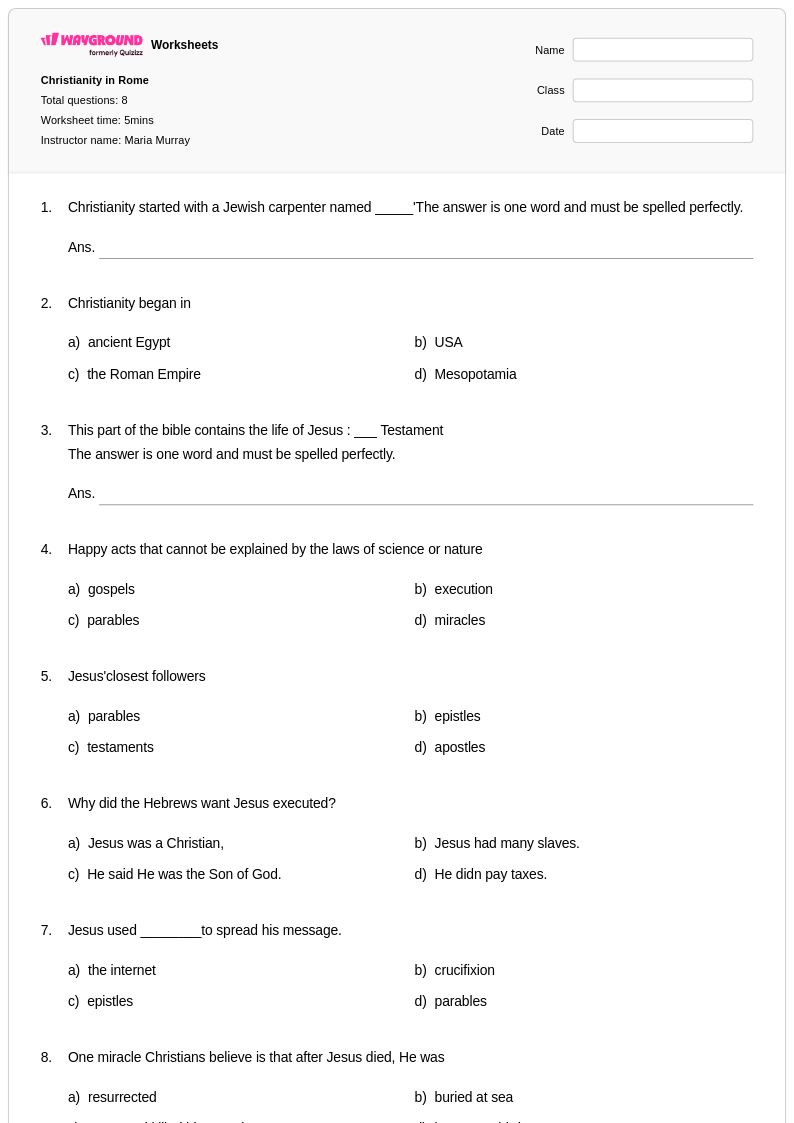
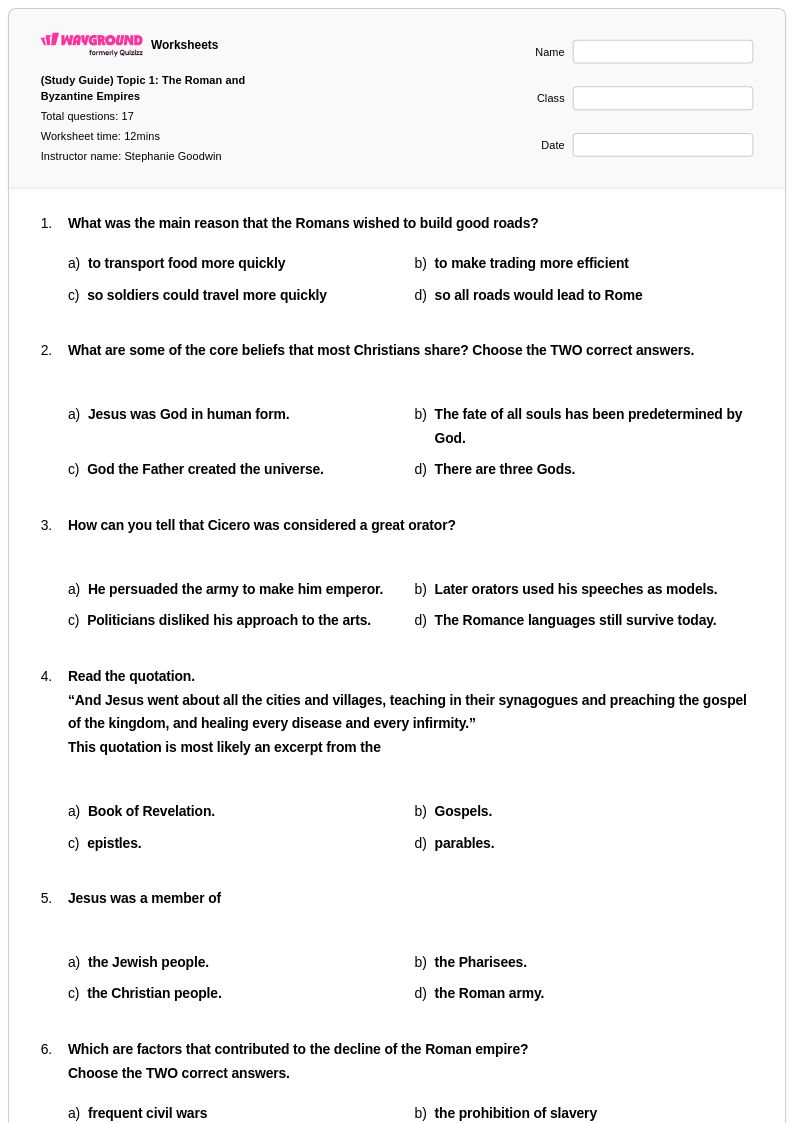
Parables of Jesus worksheets for kindergarten students provide an engaging introduction to these timeless moral teachings while building foundational social studies skills around community and cultures. These educational resources help young learners explore simple Bible stories that emphasize values like kindness, sharing, and helping others through age-appropriate activities and illustrations. Each worksheet focuses on developing reading comprehension, critical thinking, and moral reasoning skills as students identify characters, sequence events, and discuss the lessons within familiar parables such as the Good Samaritan or the Lost Sheep. Teachers can access complete answer keys and free printable materials that include coloring pages, simple matching exercises, and discussion prompts designed specifically for early elementary students. These practice problems encourage kindergarteners to connect biblical teachings with their own experiences in family, school, and community settings.
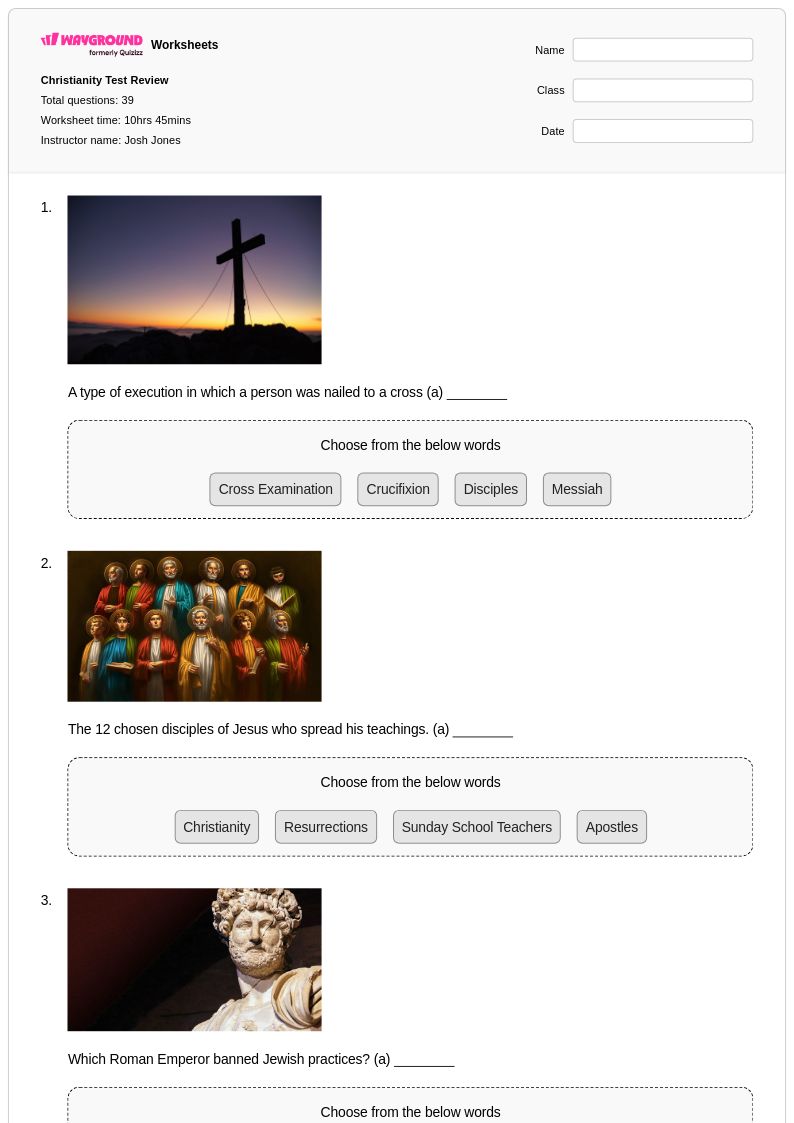
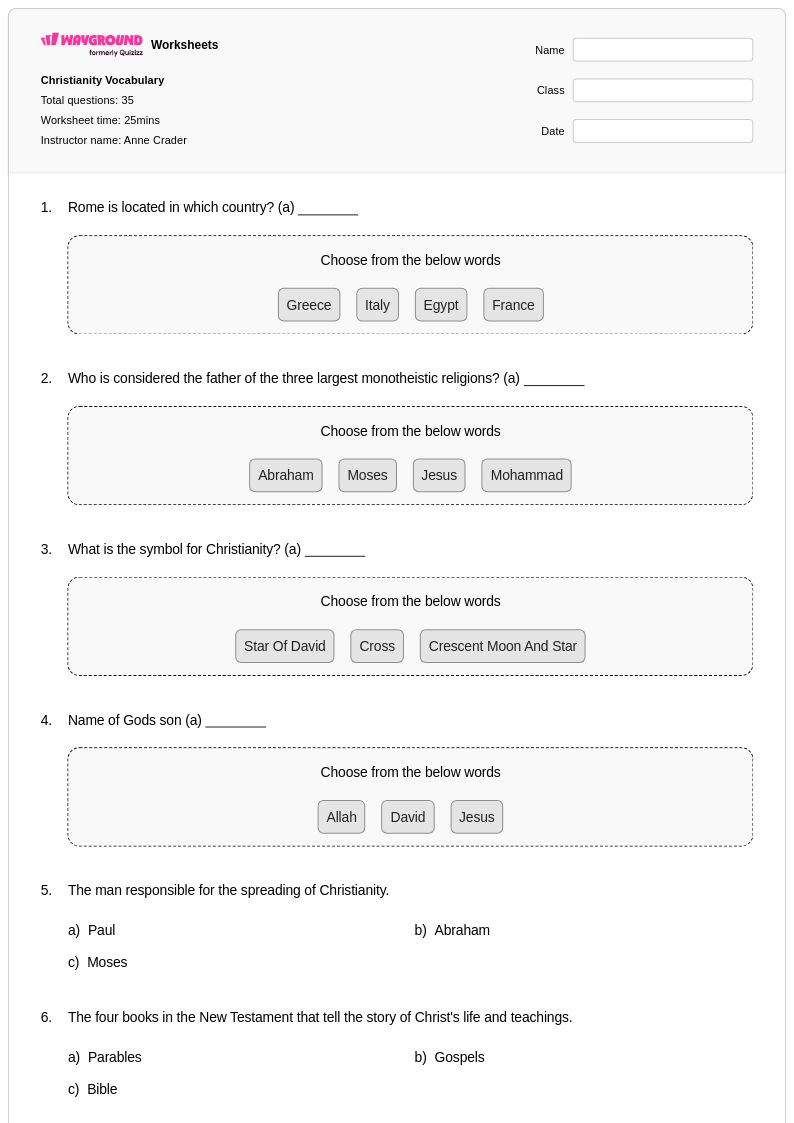
Wayground, formerly Quizizz, supports educators with an extensive collection of teacher-created resources covering parables and other religious studies topics suitable for kindergarten classrooms. The platform's robust search and filtering capabilities allow teachers to quickly locate age-appropriate materials that align with their curriculum standards and learning objectives. These differentiation tools enable instructors to customize worksheets for diverse learning needs, offering both printable pdf formats for traditional classroom use and digital versions for interactive learning experiences. Teachers can efficiently plan lessons that integrate moral teachings with social studies concepts, using these resources for skill practice, remediation for struggling learners, and enrichment activities for advanced students. The comprehensive collection ensures educators have access to professionally designed materials that make complex spiritual concepts accessible and meaningful for young children while fostering discussions about community values and cultural traditions.
FAQs
How do I teach the Parables of Jesus in a Social Studies classroom?
In a Social Studies context, teaching the Parables of Jesus works best when framed around their cultural and historical impact rather than religious doctrine. Start by grounding students in the social structures of ancient communities, then use specific parables like the Good Samaritan or the Parable of the Talents to examine how these stories shaped community values, social obligations, and moral norms. Encouraging students to compare parables across different cultures deepens their understanding of how similar narrative traditions appear throughout history.
What exercises help students analyze the moral lessons in the Parables of Jesus?
Effective practice exercises include guided annotation tasks where students identify the symbolic meaning of key characters or objects, and comparison activities that place a parable alongside a culturally similar story from another tradition. Worksheets that ask students to trace the societal impact of a parable, such as how the Prodigal Son has influenced ideas about forgiveness and family in Western communities, push analysis beyond surface-level retelling and build genuine critical thinking skills.
What common mistakes do students make when interpreting the Parables of Jesus?
The most frequent error is treating parables as straightforward narratives rather than layered symbolic texts, which causes students to miss the moral or cultural argument embedded in the story. Students also tend to interpret parables through a modern lens without accounting for the social hierarchies and community structures of the ancient world, leading to misreadings of character roles and motivations. Prompting students to ask 'What would this character represent to the original audience?' before they begin analysis helps correct both errors.
How can I use Parables of Jesus worksheets to support different reading levels in my class?
Wayground's digital worksheets support several built-in accommodations that make differentiation manageable without creating separate materials for every learner. The Read Aloud feature can assist students who struggle with complex texts by reading questions and content aloud, while reduced answer choices can lower cognitive load for students who need additional support during interpretation tasks. Font size and theme adjustments through Reading Mode also help students with visual accessibility needs engage with the material more comfortably.
How do I use Wayground's Parables of Jesus worksheets in my classroom?
Wayground's Parables of Jesus worksheets are available as printable PDFs for traditional classroom use and in digital formats for technology-integrated environments, so they fit both paper-based and device-based instruction. Teachers can also host worksheets as a quiz directly on Wayground, which streamlines assignment and collection in digital settings. Each worksheet includes a complete answer key, supporting both independent student work and teacher-led review sessions.
How do the Parables of Jesus connect to broader Social Studies curriculum standards?
The Parables of Jesus connect to Social Studies standards around cultural analysis, historical context, and the examination of how belief systems shape social structures and community values. Analyzing parables like the Good Samaritan or the Parable of the Talents gives students practice applying concepts such as civic responsibility, economic thinking, and intercultural comparison within a historical narrative framework. This makes them versatile anchor texts for units on ancient civilizations, world religions, or the history of ethics and moral philosophy.