
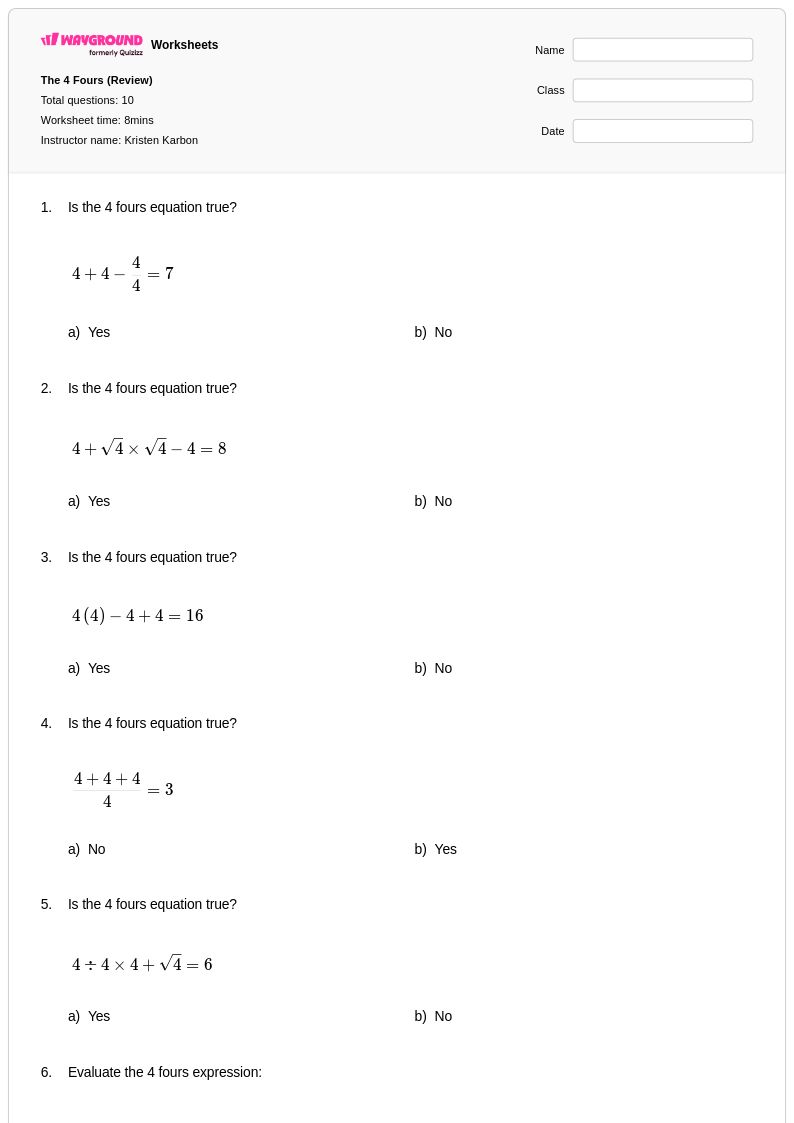
10 Q
4th - 6th
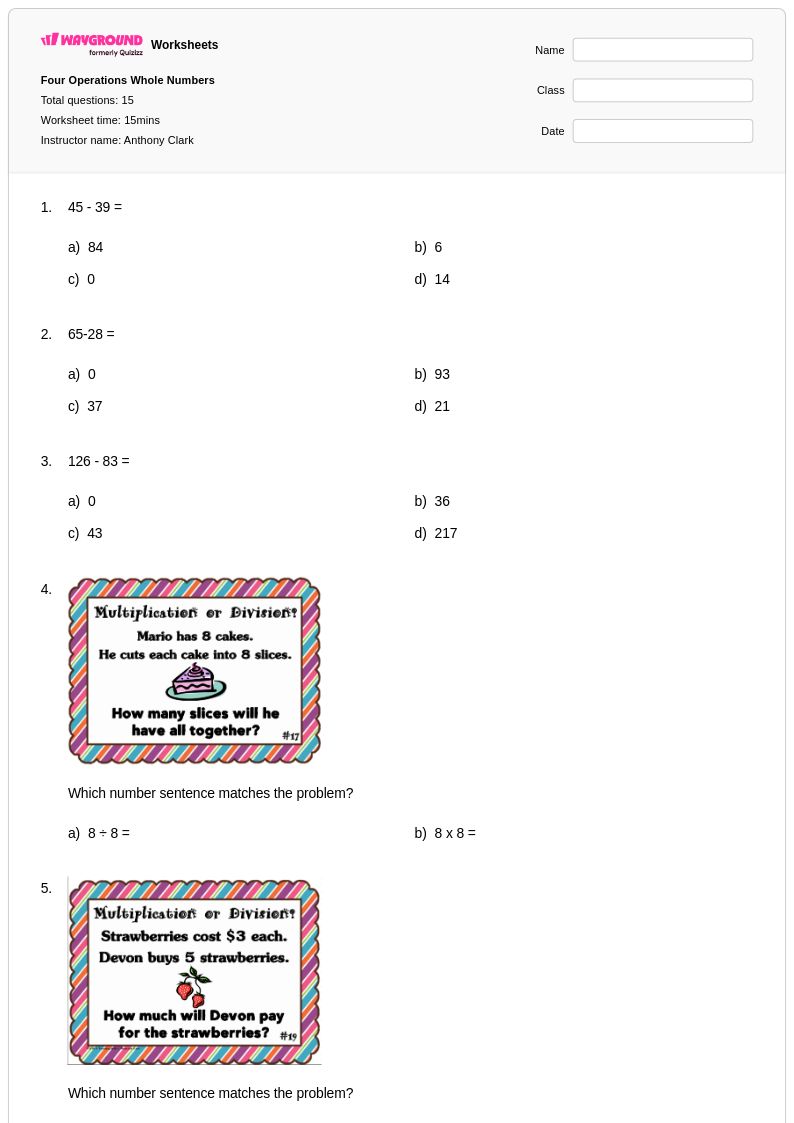
15 Q
6th - Uni
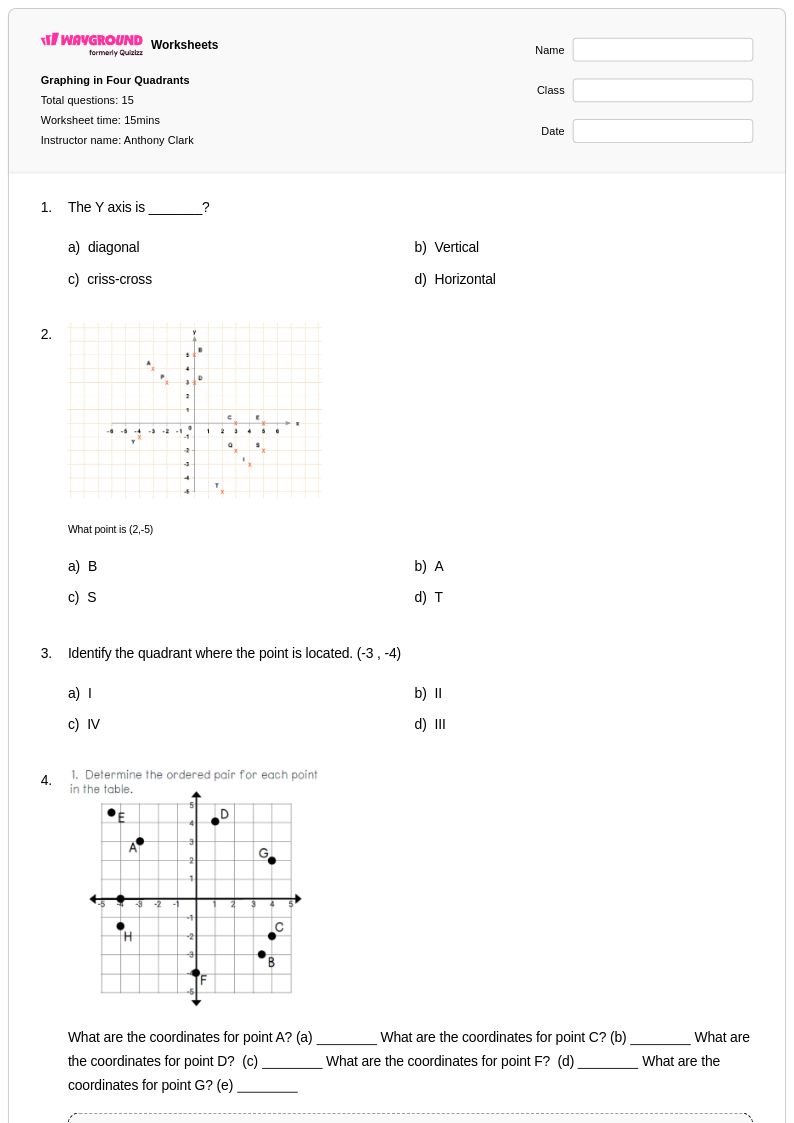
15 Q
6th - Uni
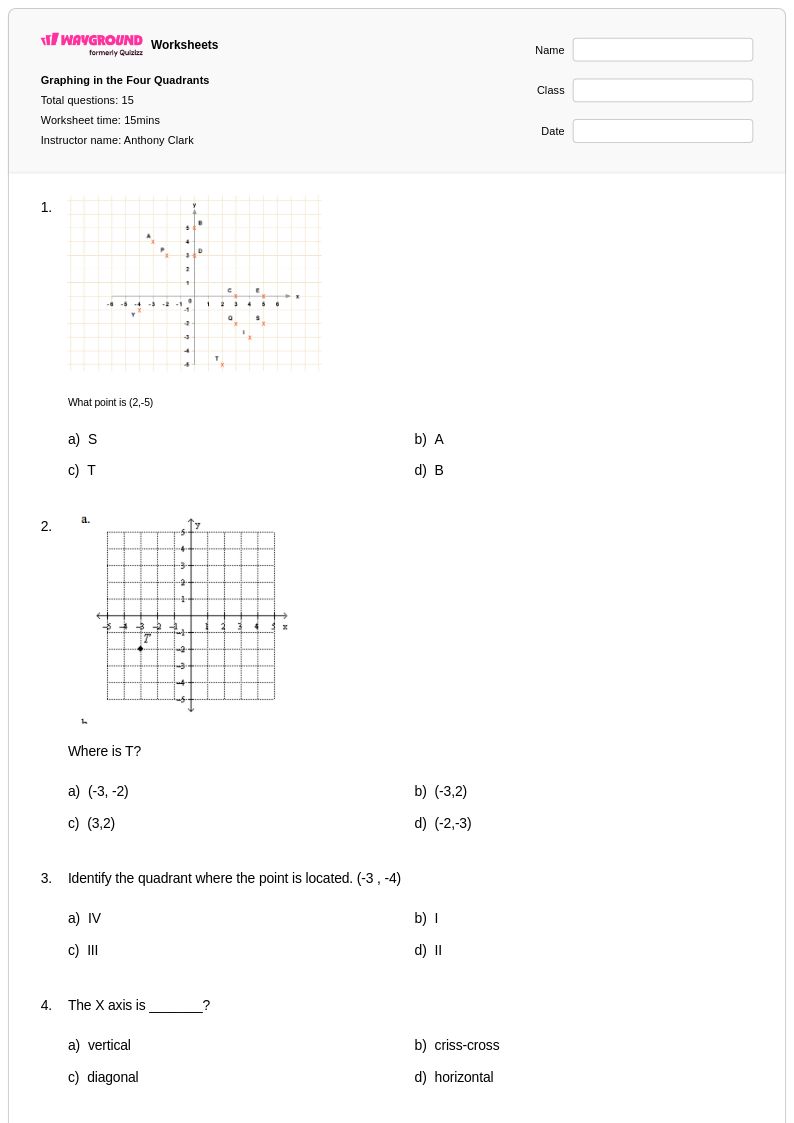
15 Q
6th - Uni
15 Q
6th - Uni
19 Q
2nd - Uni
15 Q
4th - Uni
20 Q
5th - Uni
15 Q
6th - Uni
15 Q
6th - Uni
20 Q
5th - Uni
15 Q
6th - Uni
15 Q
4th - 6th
12 Q
6th
16 Q
6th
10 Q
6th - Uni
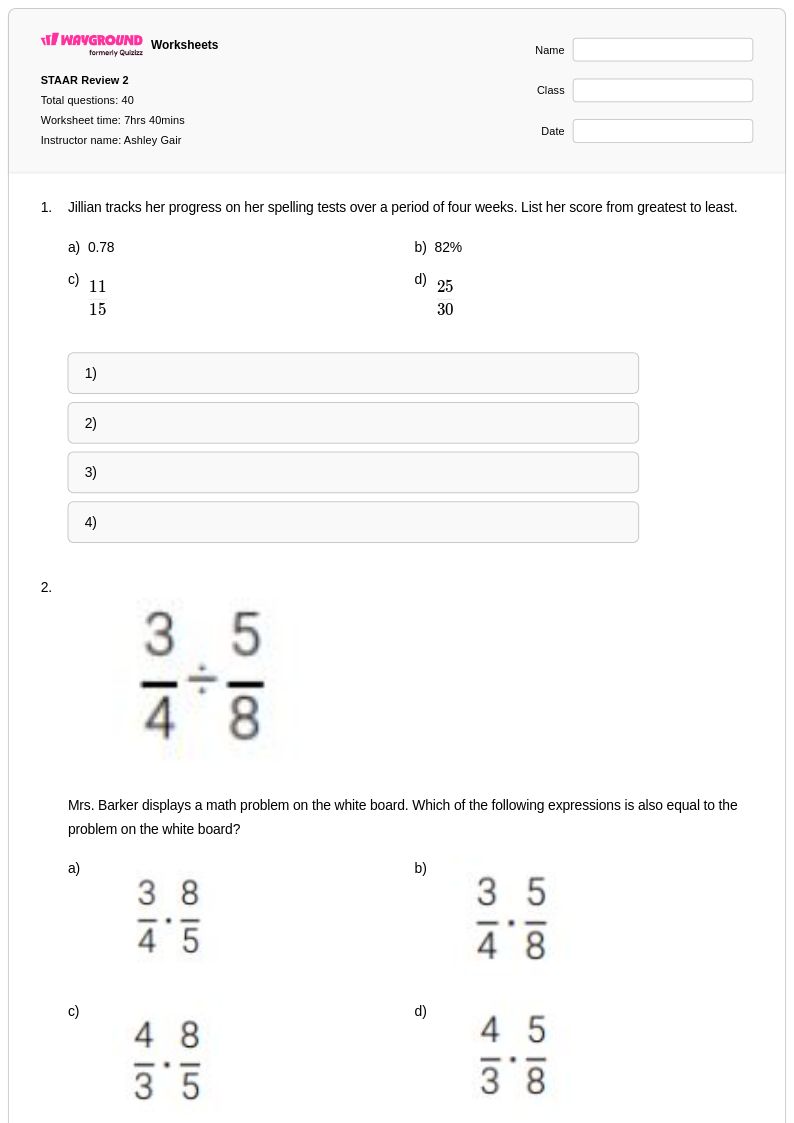
40 Q
6th
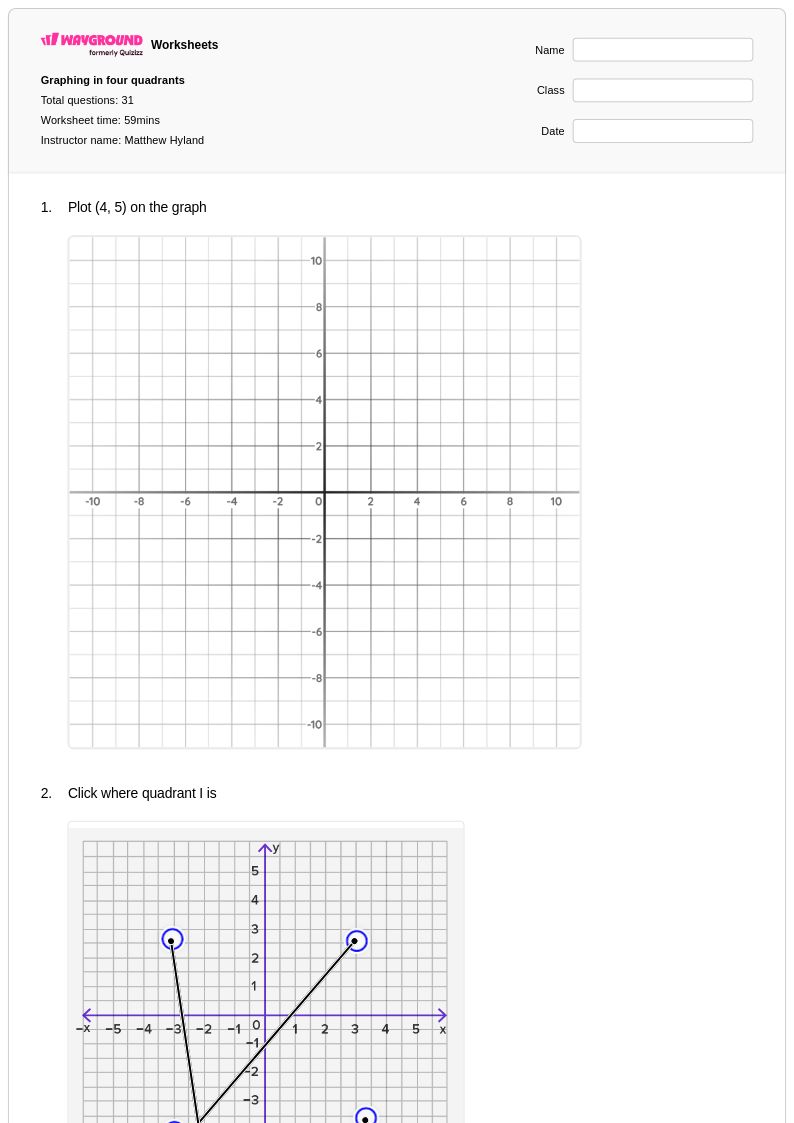
31 Q
6th - 8th
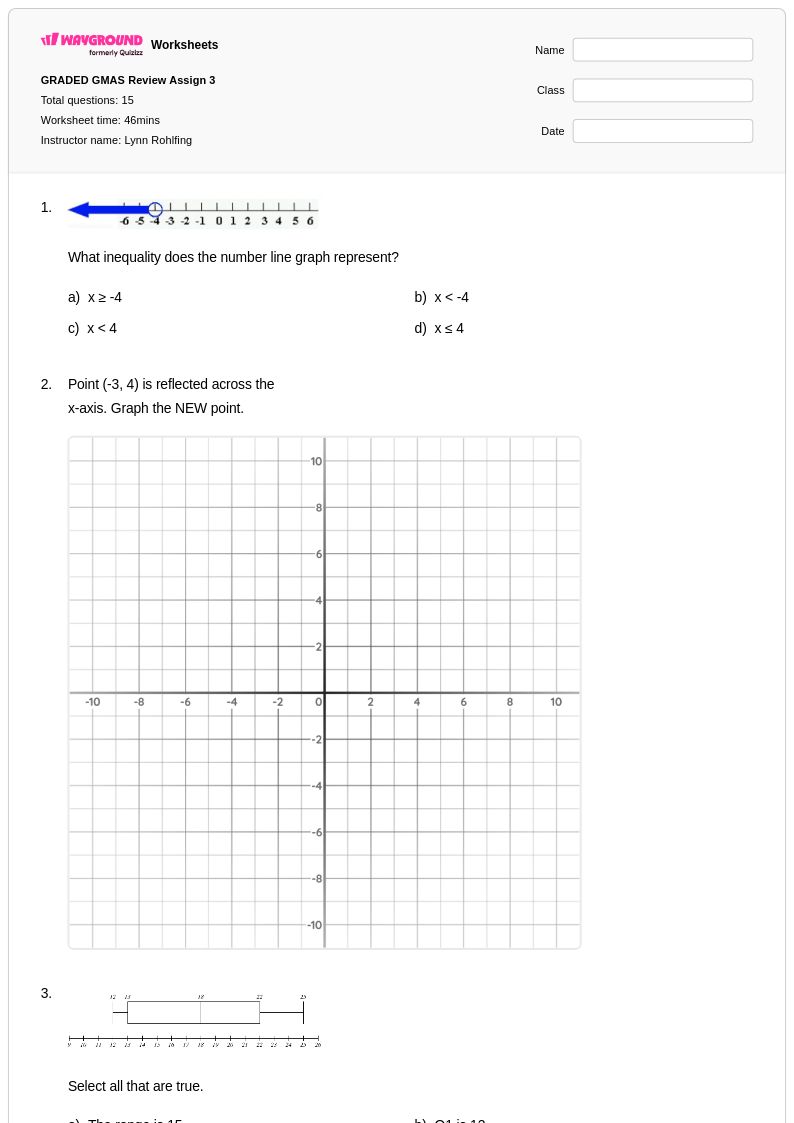
15 Q
6th
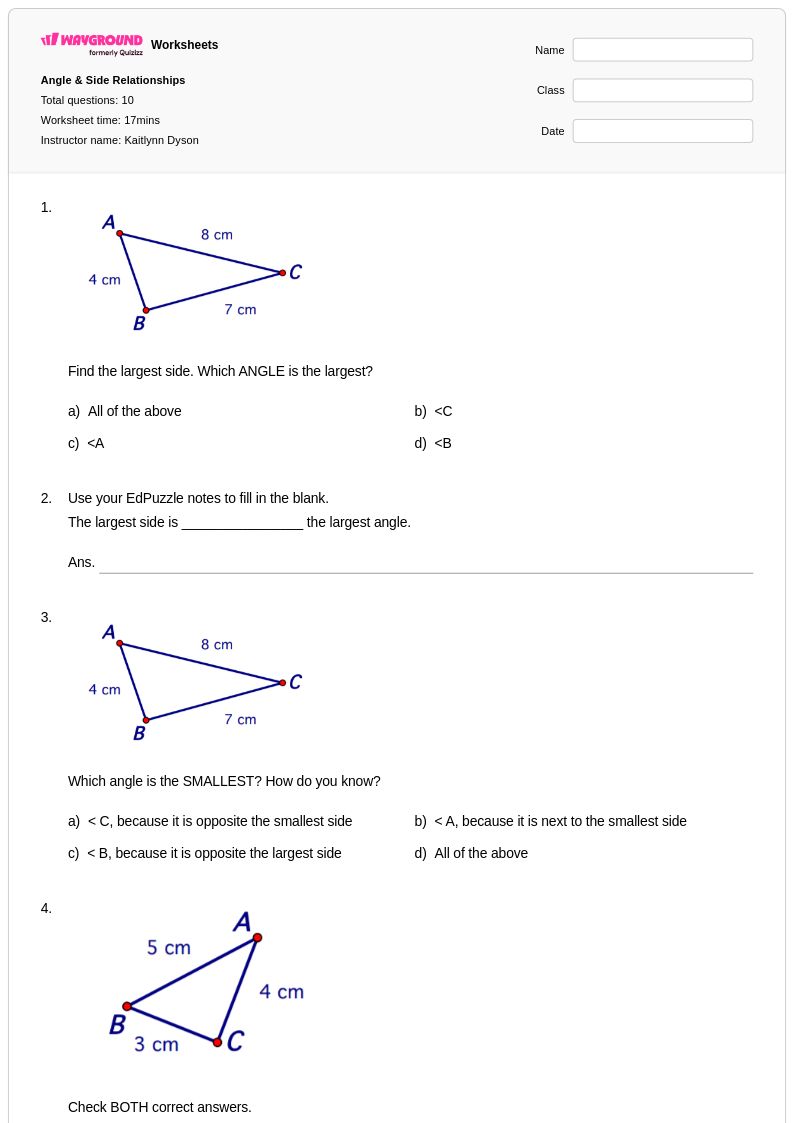
10 Q
6th
14 Q
5th - 7th
10 Q
6th
20 Q
6th
20 Q
5th - Uni
Explore Four Fours Puzzle Worksheets by Grades
Explore Other Subject Worksheets for class 6
Explore printable Four Fours Puzzle worksheets for Class 6
Four Fours Puzzle worksheets for Class 6 students provide an engaging mathematical challenge that strengthens critical thinking, problem-solving, and arithmetic skills through creative number manipulation. These printable resources task students with using exactly four instances of the number 4, along with various mathematical operations, to create expressions that equal target numbers from 1 to 100. Each worksheet includes carefully structured practice problems that progressively build complexity, helping sixth graders develop algebraic thinking, order of operations mastery, and mathematical creativity. The comprehensive answer key accompanying each pdf allows students to verify their solutions while discovering multiple pathways to reach the same numerical goal, reinforcing the concept that mathematical problems often have numerous valid approaches.
Wayground, formerly Quizizz, supports mathematics educators with an extensive collection of Four Fours Puzzle resources drawn from millions of teacher-created materials specifically designed for Class 6 instruction. The platform's robust search and filtering capabilities enable teachers to quickly locate worksheets that align with their curriculum standards and match their students' varying skill levels. Differentiation tools allow educators to customize difficulty levels and modify problem sets to accommodate diverse learners, while the availability of both digital and printable pdf formats provides flexibility for classroom implementation, homework assignments, or remediation activities. These comprehensive resources streamline lesson planning while offering targeted skill practice that challenges students to think beyond traditional computational methods, making mathematical exploration both accessible and intellectually stimulating for sixth-grade learners.
FAQs
Is the Four Fours puzzle still challenging for 6th graders?
How can I connect the Four Fours puzzle to 6th-grade algebraic concepts?
What specific 6th-grade skills do these worksheets target?
What are common challenges for 6th graders with this puzzle?
How can I use this 6th-grade Four Fours worksheet with my students?
How does this puzzle support the 6th-grade math curriculum?