Free Printable Government Spending Worksheets for Class 12
Class 12 government spending worksheets from Wayground help students master fiscal policy concepts through comprehensive printables, practice problems, and answer keys that explore federal budgets, deficit spending, and economic impacts.
Explore printable Government Spending worksheets for Class 12
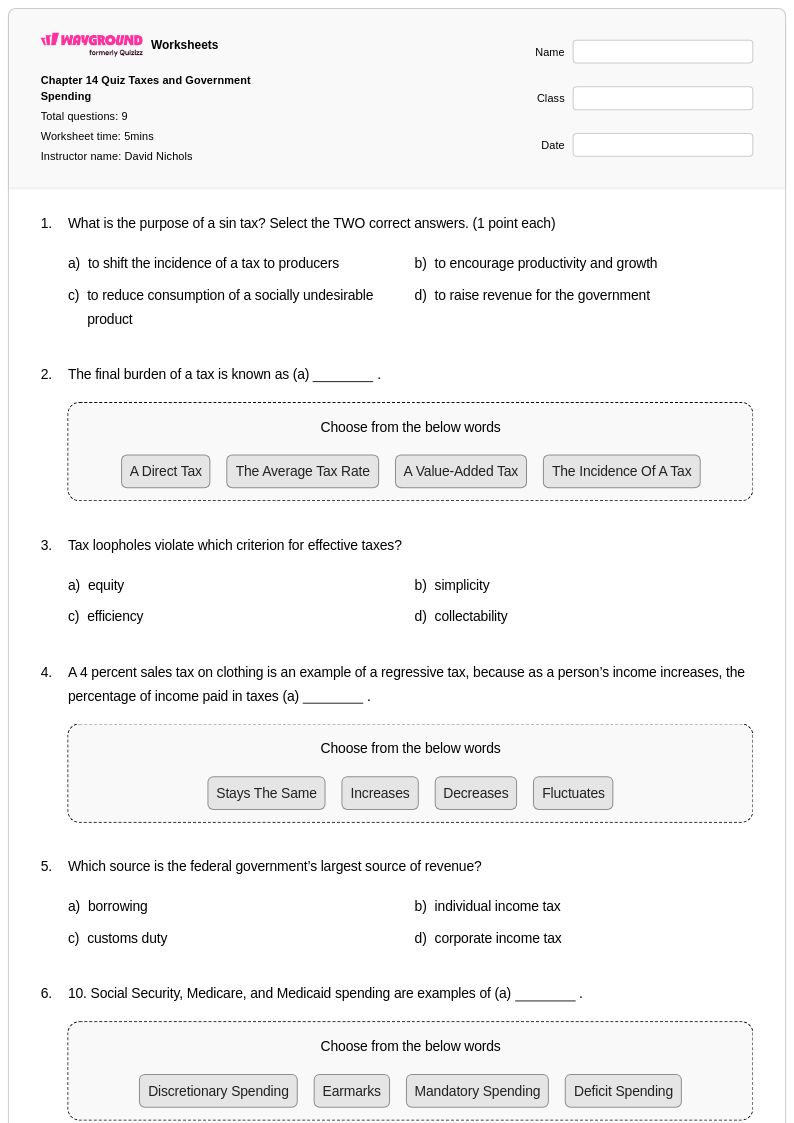
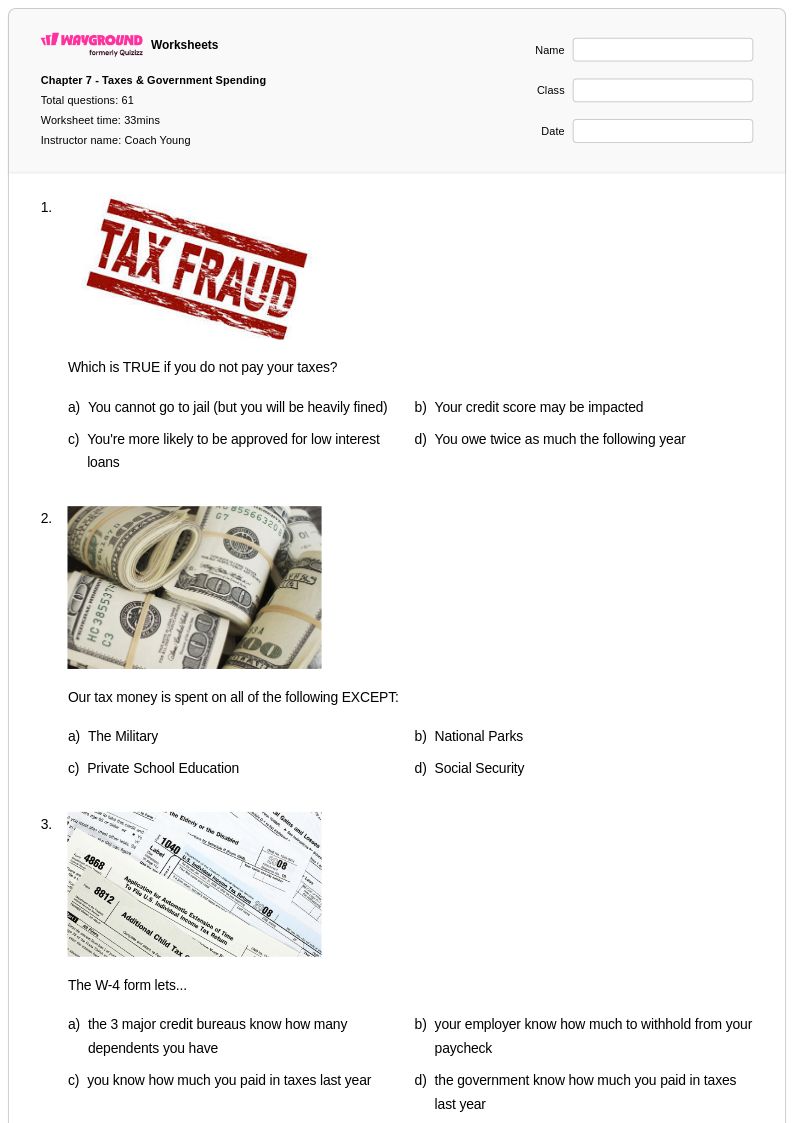
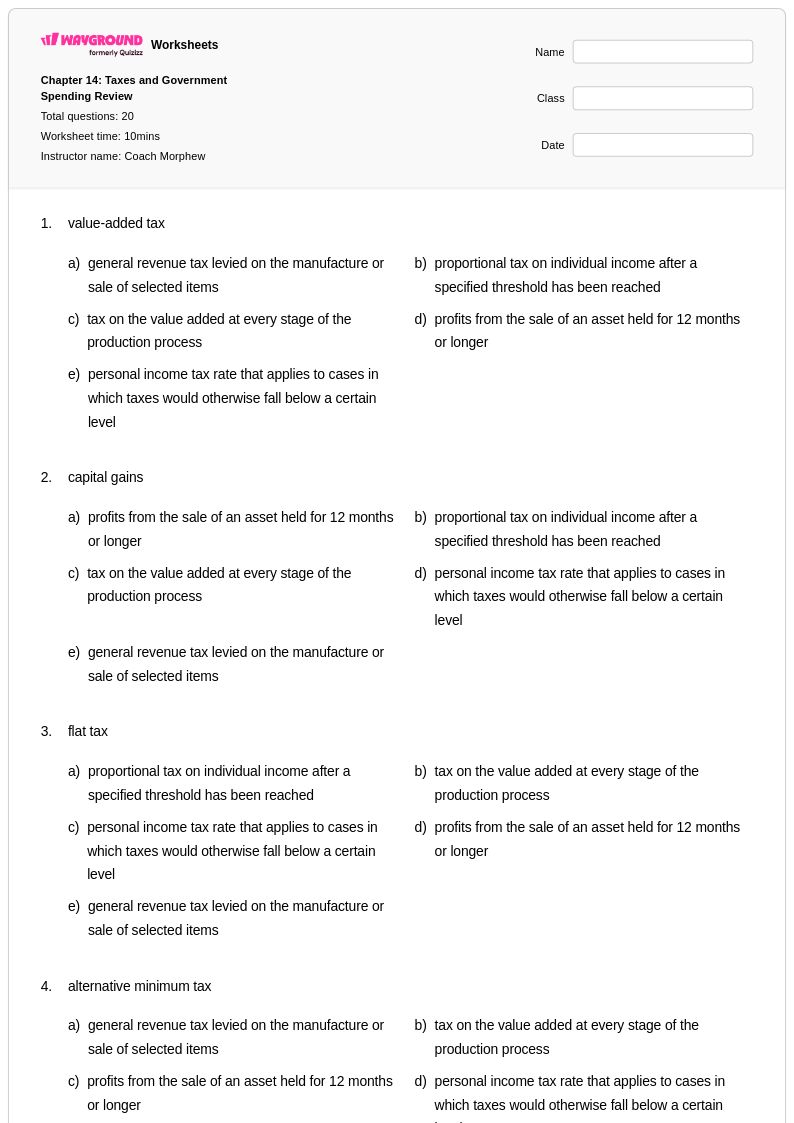
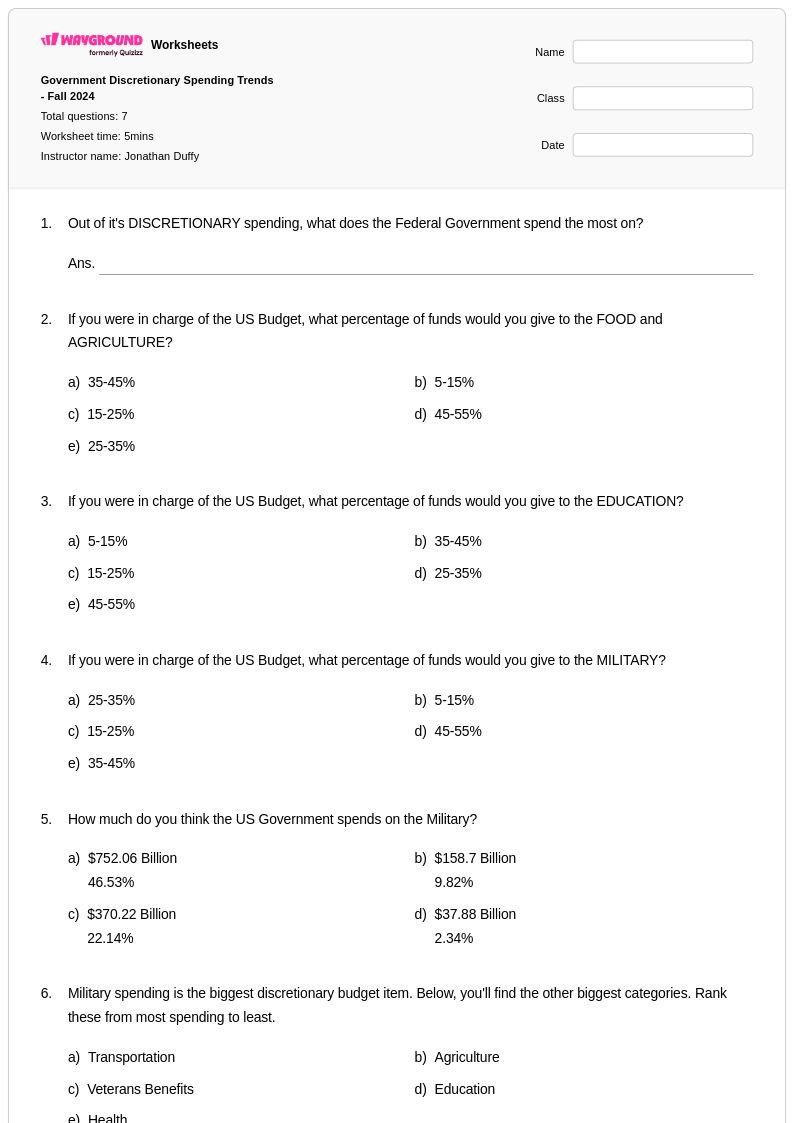
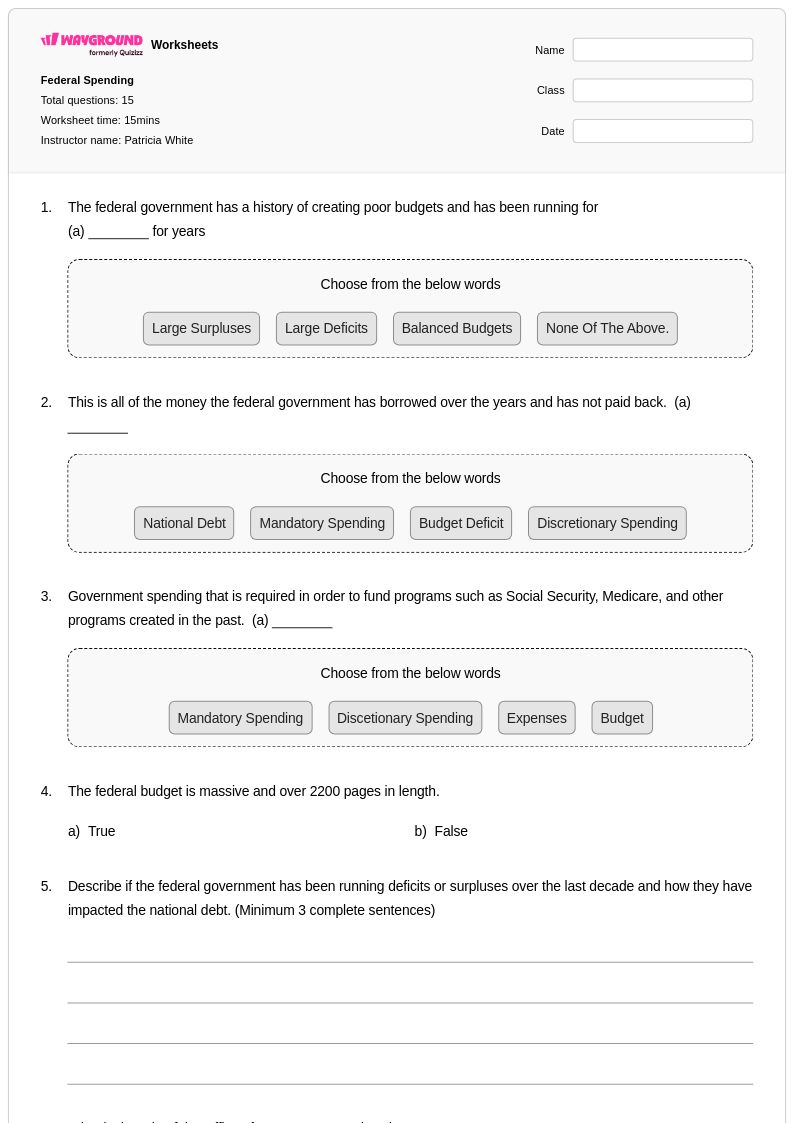
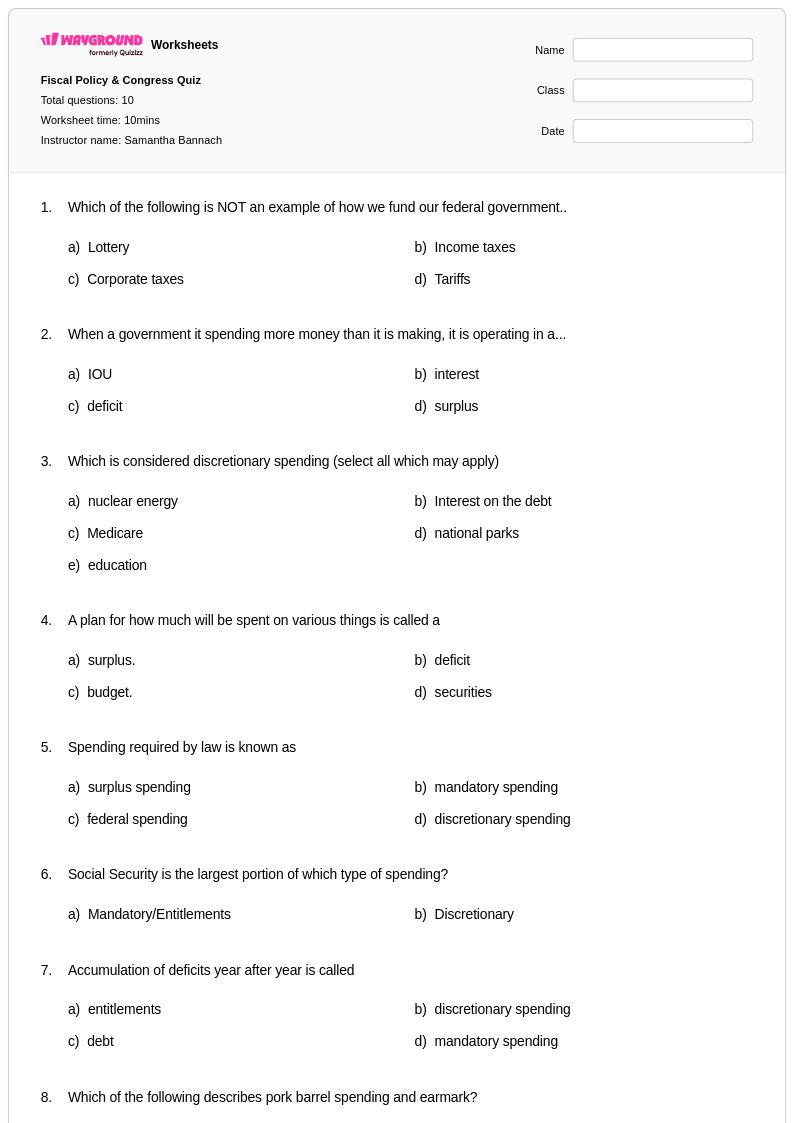
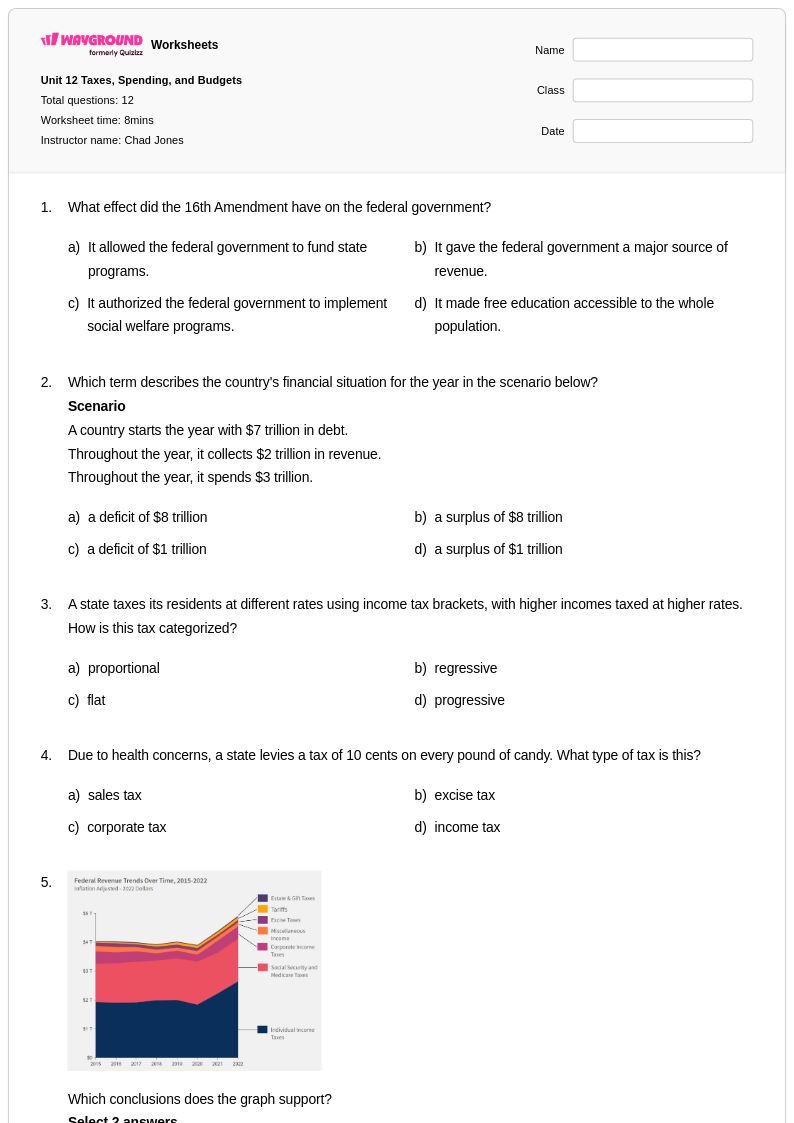
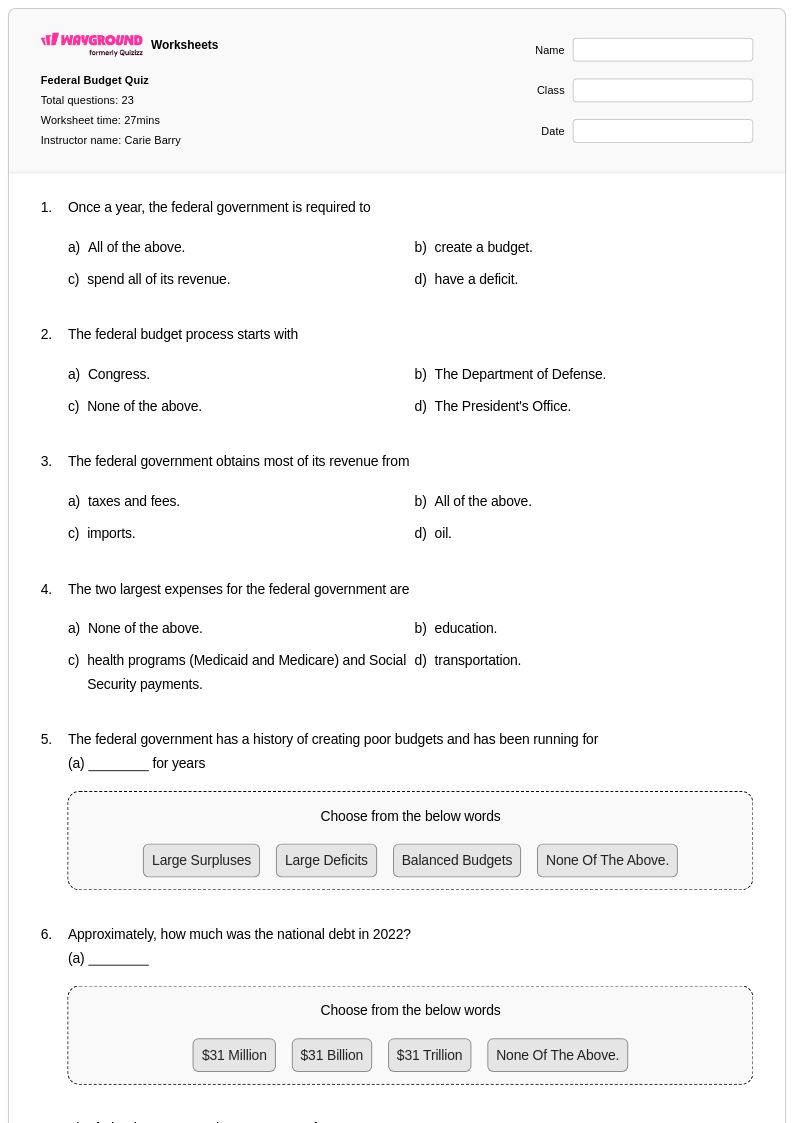
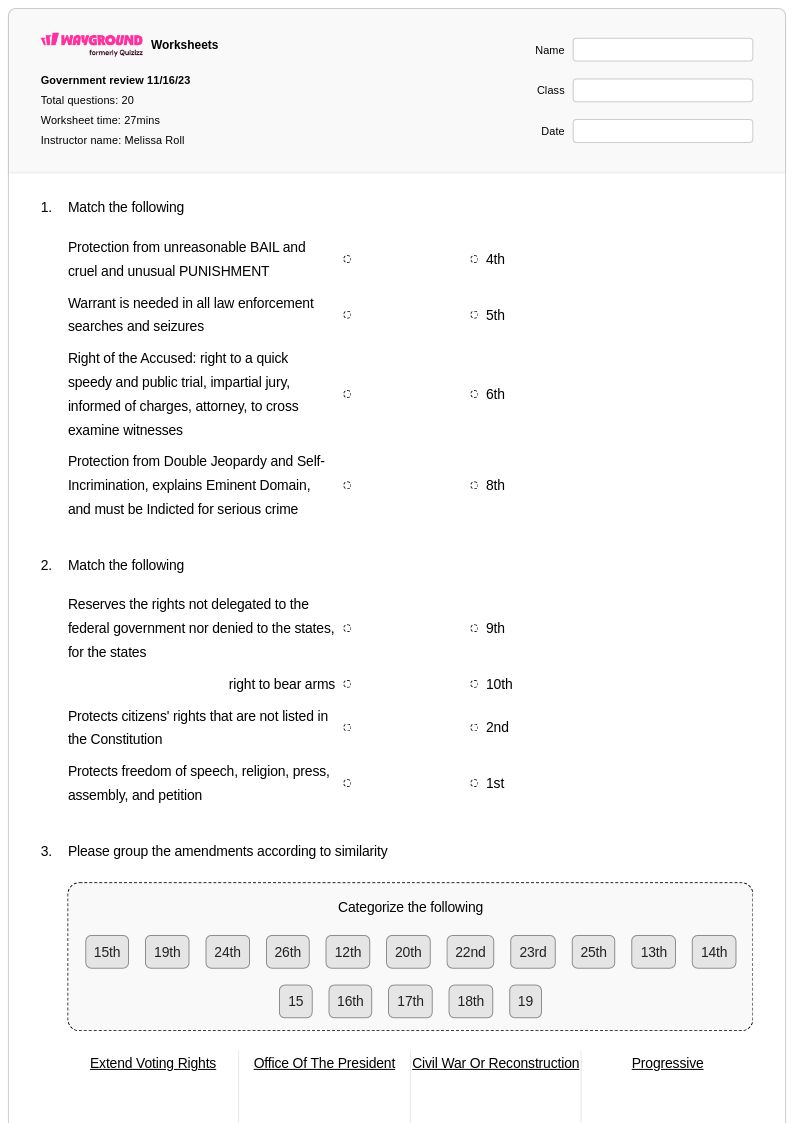
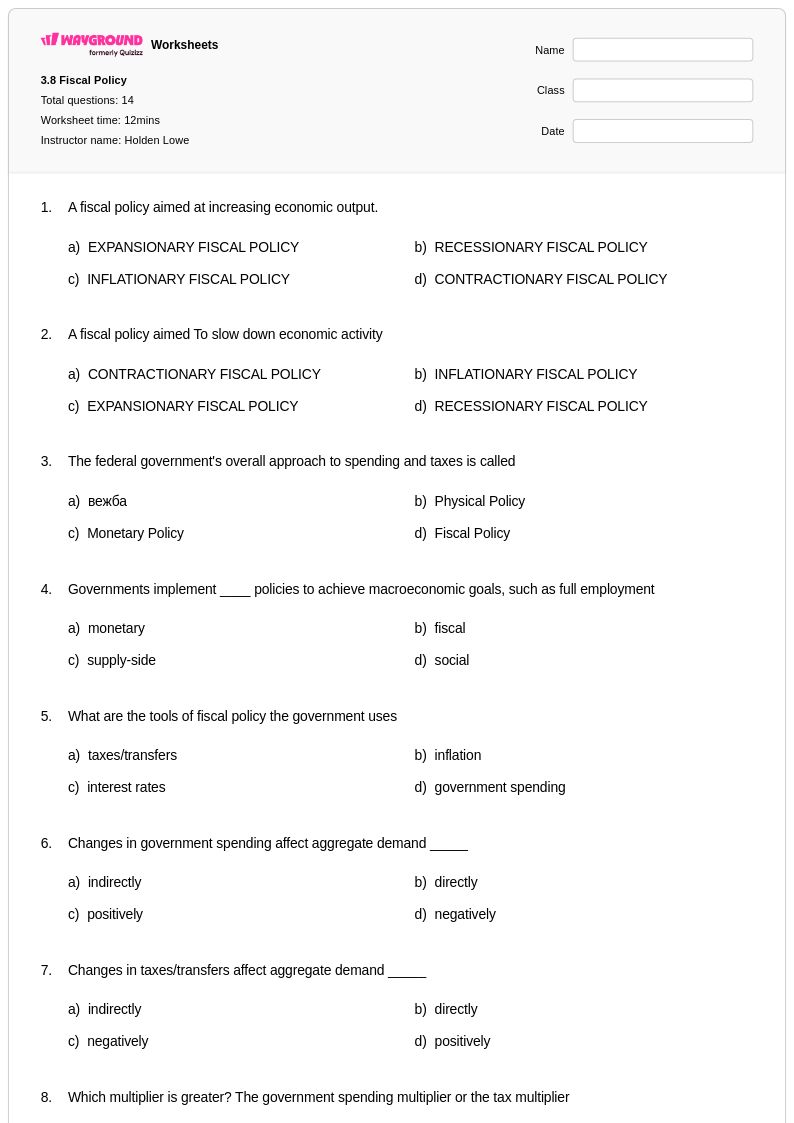
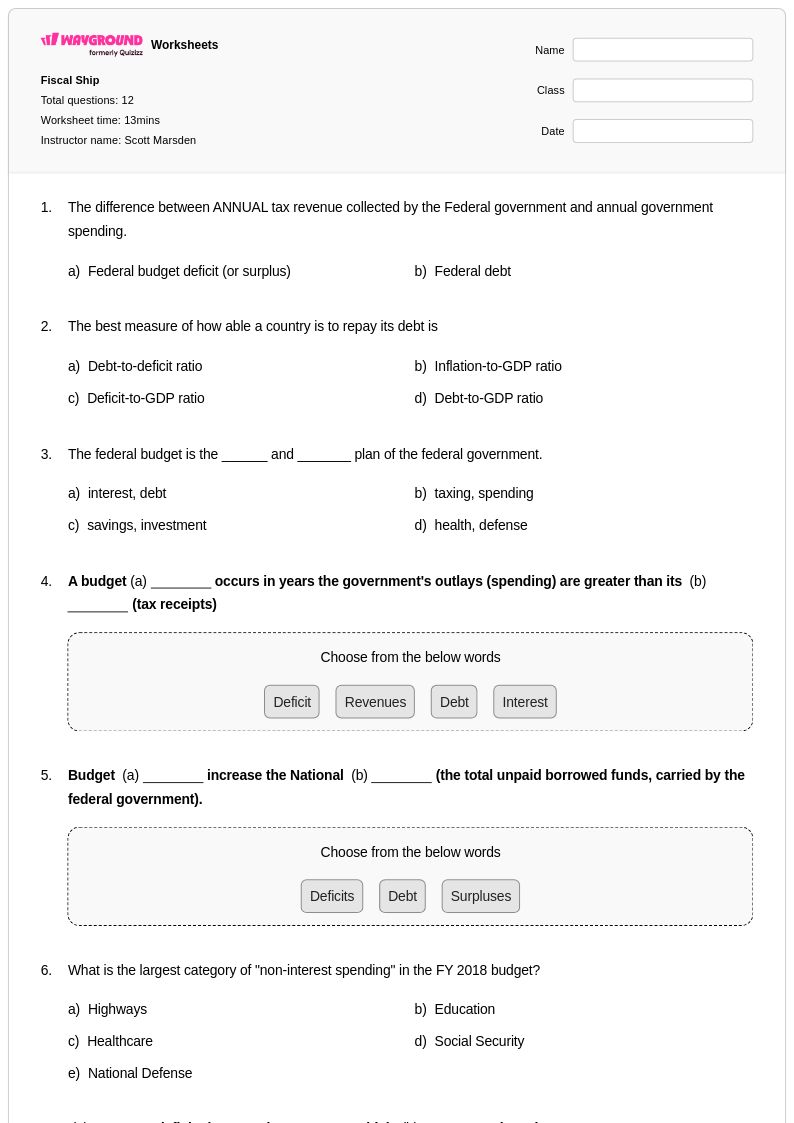
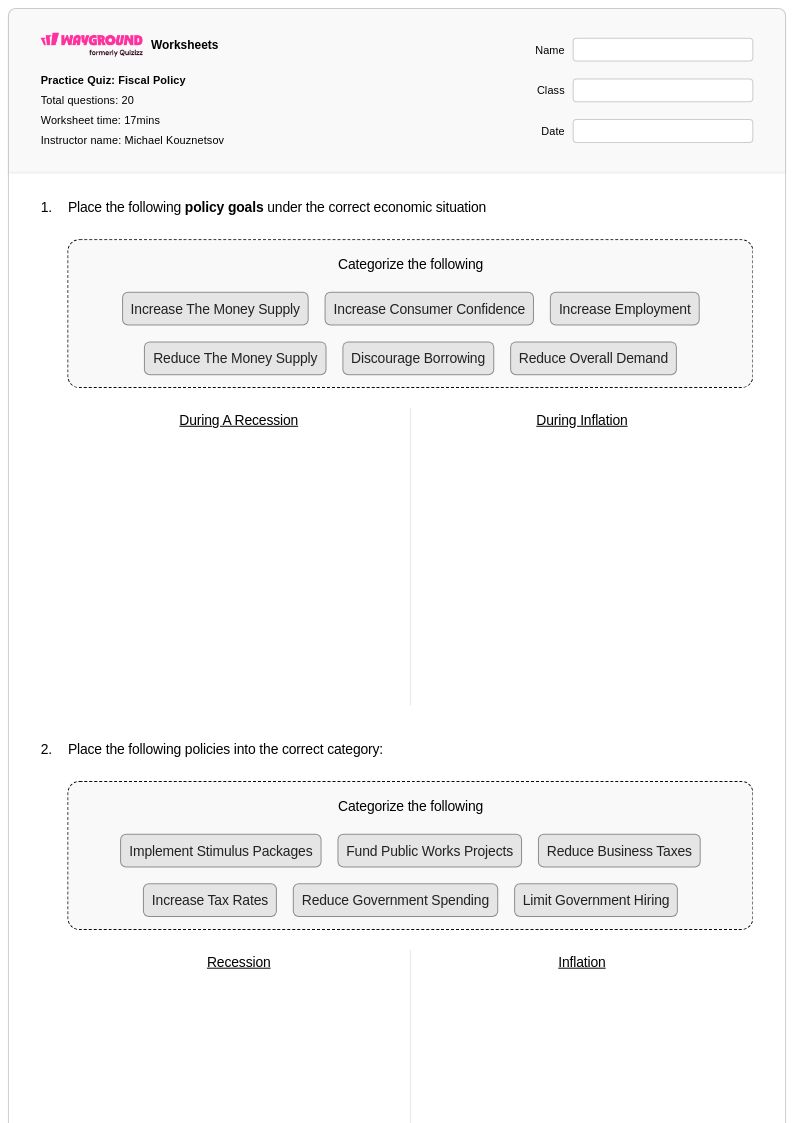
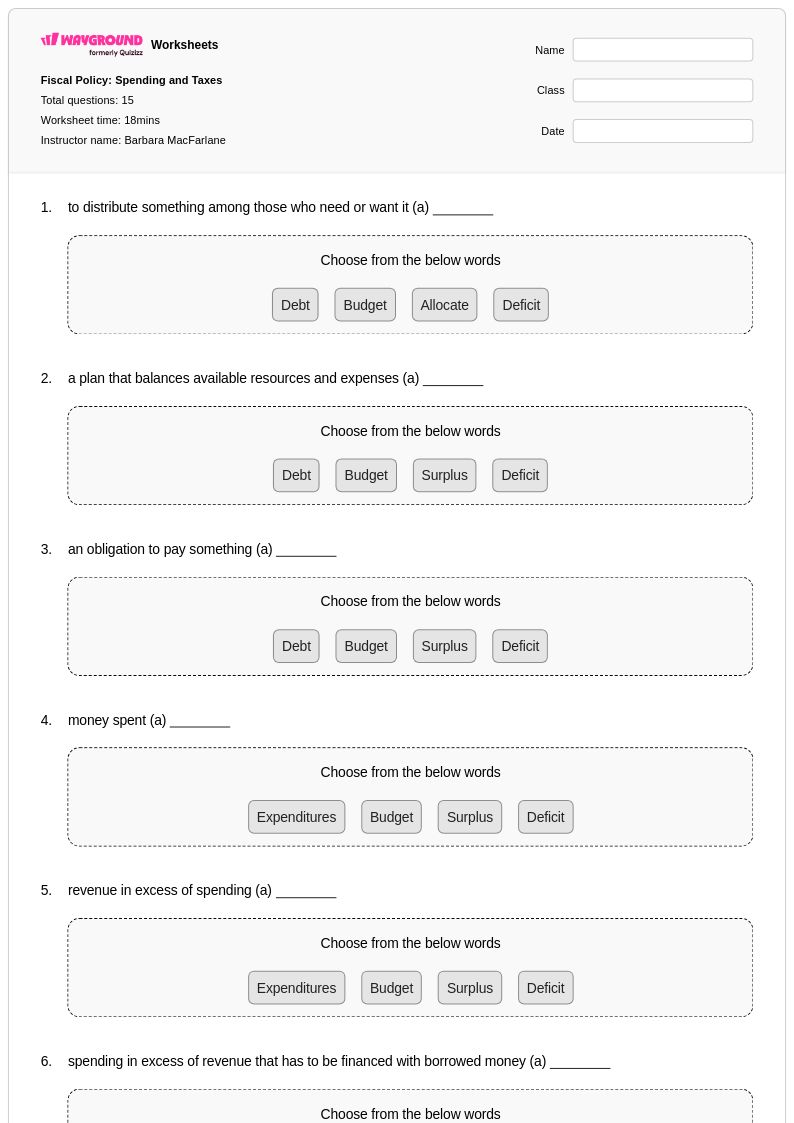
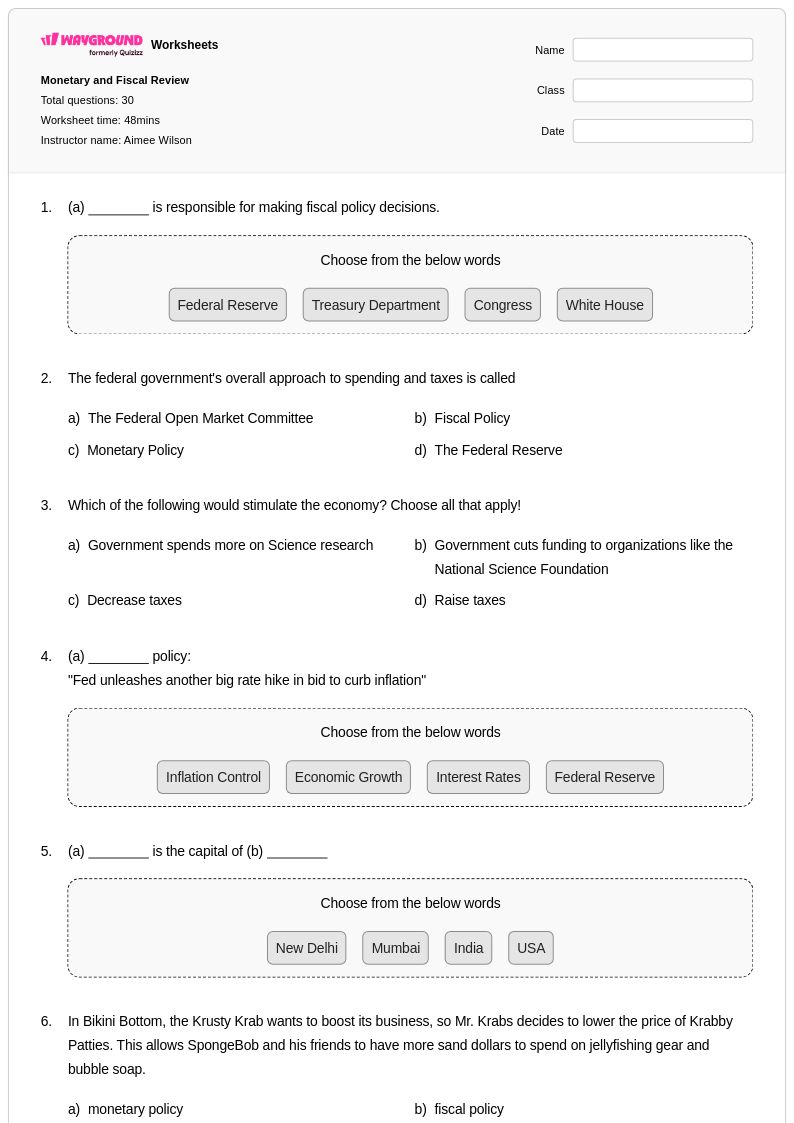
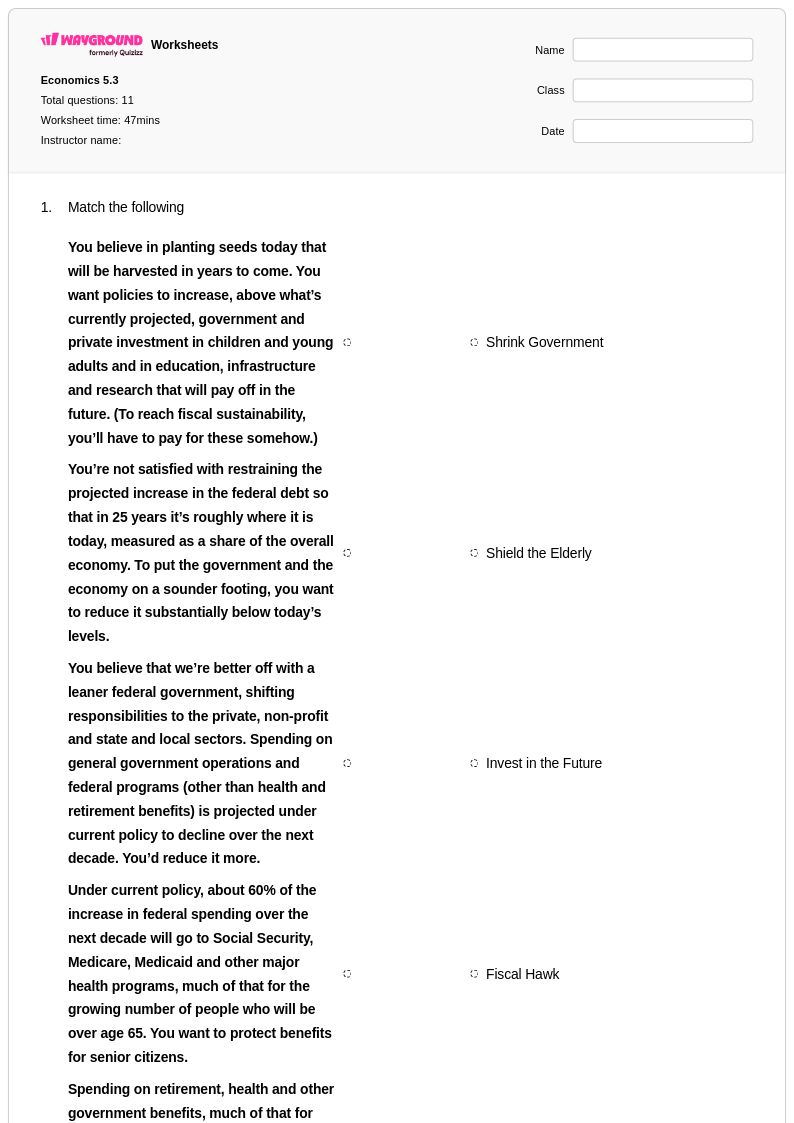
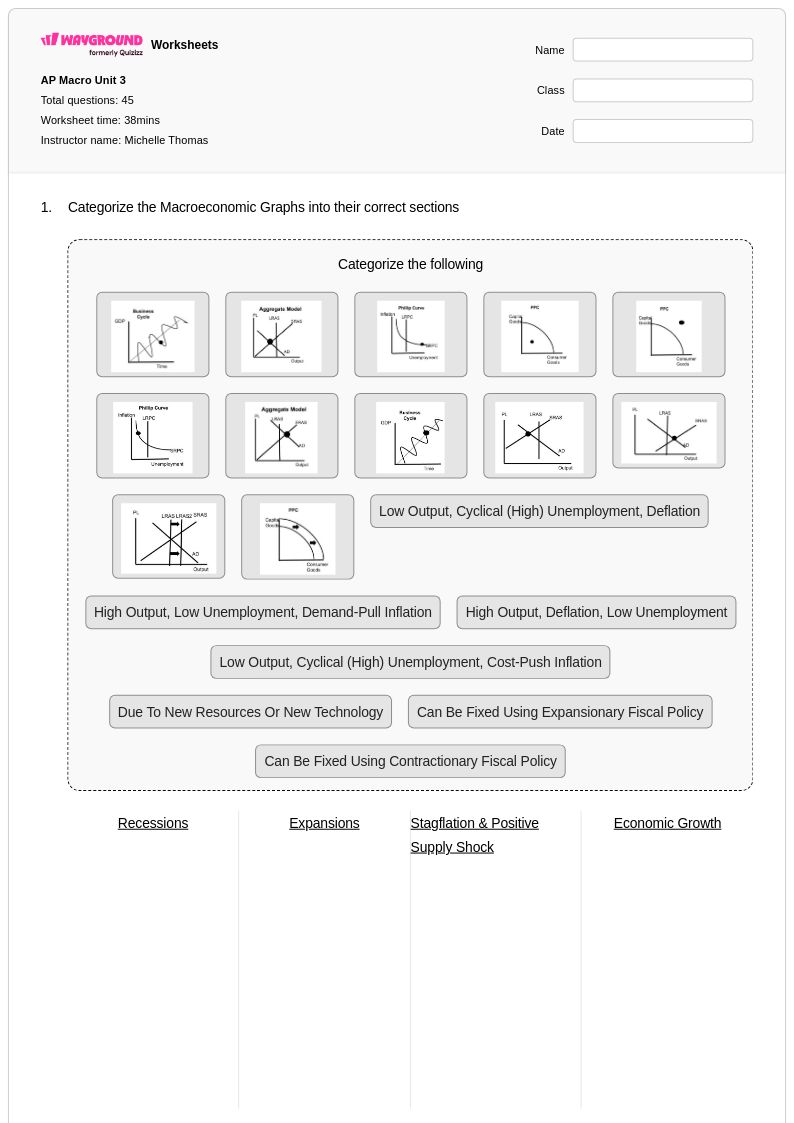
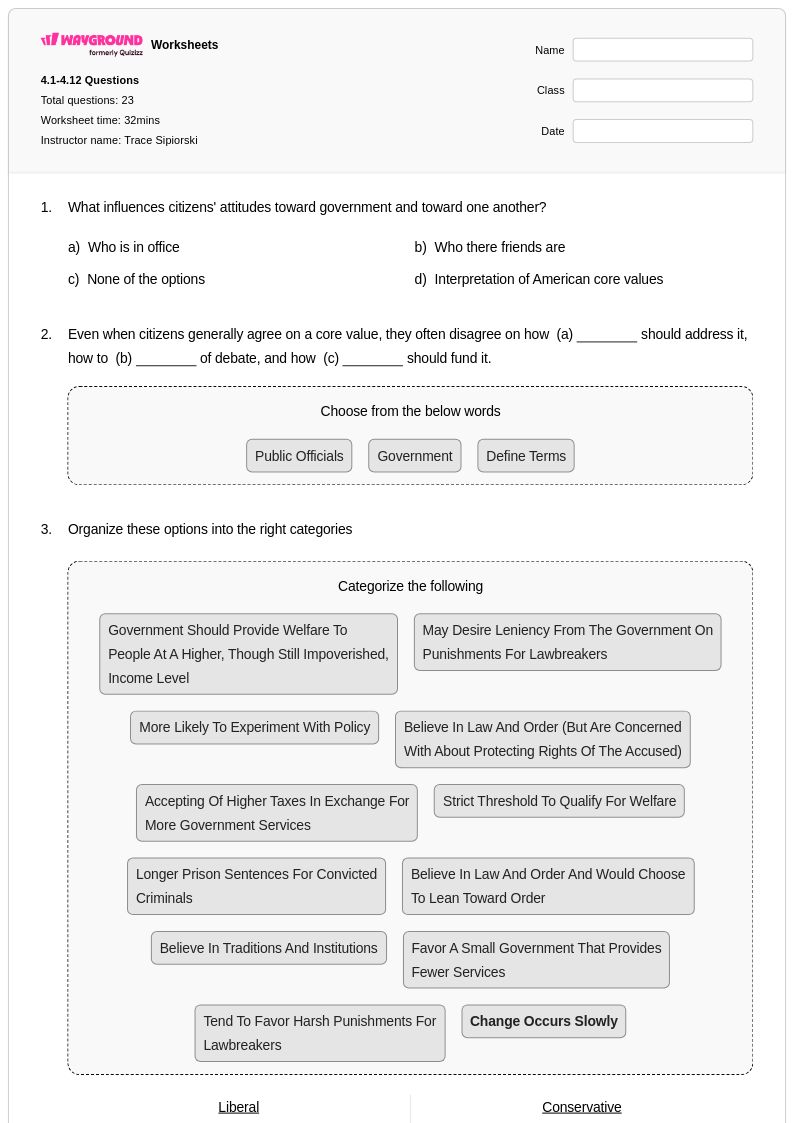
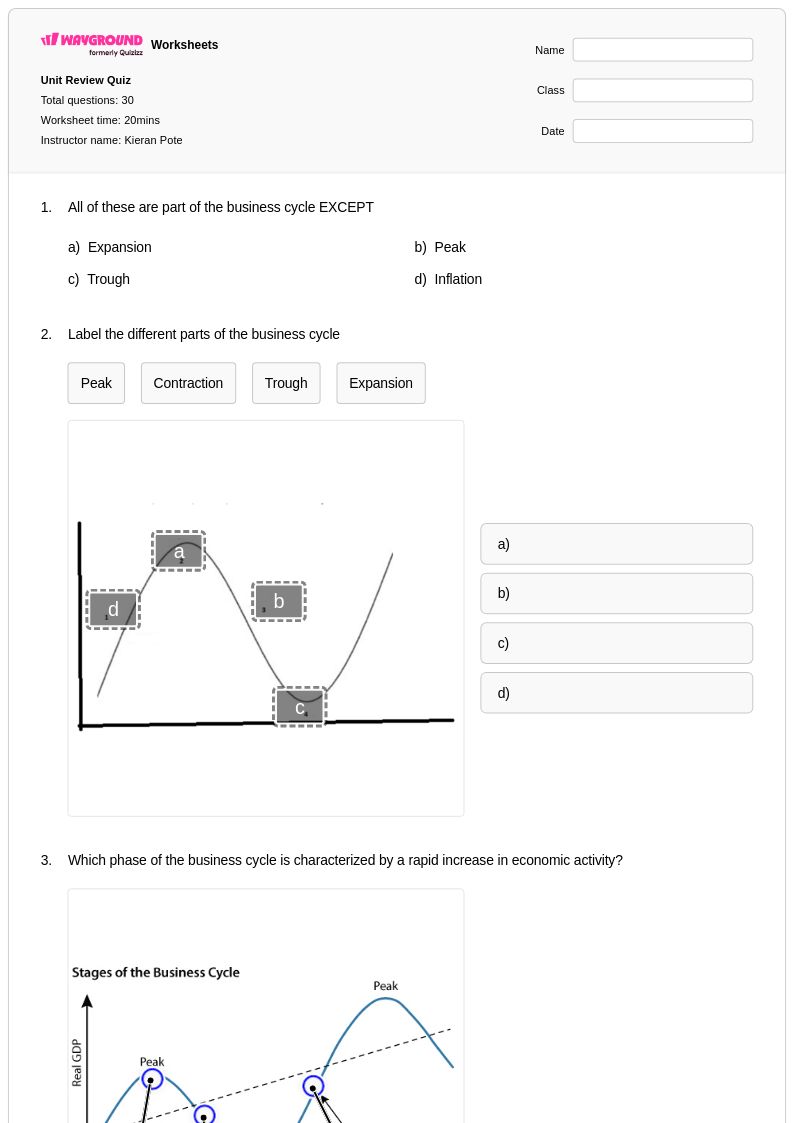
Government spending worksheets for Class 12 students available through Wayground (formerly Quizizz) provide comprehensive coverage of fiscal policy concepts essential for advanced economics education. These expertly crafted resources help students analyze federal budget allocation, examine the multiplier effect of government expenditures, and evaluate the economic impact of public investment decisions. The worksheets strengthen critical thinking skills by challenging students to interpret government spending data, compare different fiscal policies, and assess the trade-offs between various public programs. Each worksheet includes detailed answer keys and practice problems that guide students through complex scenarios involving deficit spending, debt management, and the role of government expenditure in economic stabilization. These free printables offer structured opportunities for students to master sophisticated economic principles while developing analytical skills necessary for college-level coursework.
Wayground's extensive collection draws from millions of teacher-created resources, ensuring educators have access to diverse and well-developed government spending materials that align with state and national economics standards. The platform's robust search and filtering capabilities allow teachers to quickly locate worksheets targeting specific aspects of fiscal policy, from Keynesian economics to supply-side theory applications. Advanced differentiation tools enable instructors to customize content complexity, making these resources suitable for both remediation and enrichment activities across diverse learning needs. Available in both printable pdf formats and interactive digital versions, these worksheets support flexible lesson planning while providing consistent skill practice opportunities. Teachers can seamlessly integrate these materials into their curriculum planning, using them for formative assessments, homework assignments, or intensive review sessions that reinforce understanding of government spending's role in macroeconomic policy.
FAQs
How do I teach government spending to students?
Teaching government spending effectively starts with helping students distinguish between the major categories of public expenditure: mandatory spending (like Social Security and Medicare), discretionary spending (like defense and education), and interest on debt. From there, teachers can use real federal or state budget documents as primary sources, asking students to analyze where money goes and why those priorities exist. Connecting spending decisions to visible community outcomes, like roads, schools, and emergency services, helps students move from abstract fiscal concepts to tangible real-world understanding.
What exercises help students practice analyzing government budgets?
Effective practice exercises for government budgets include having students interpret pie charts of federal expenditures, compare budget allocations across different years or administrations, and evaluate trade-offs between competing spending priorities. Budget simulation activities, where students allocate a fixed pool of funds across categories, are particularly powerful because they force students to grapple with scarcity and fiscal trade-offs directly. Practice problems that ask students to calculate percentage breakdowns or identify which programs fall under discretionary versus mandatory spending reinforce both math and civics skills simultaneously.
What misconceptions do students commonly have about government spending?
One of the most persistent misconceptions is that all government spending is discretionary, meaning students often don't realize that a large portion of the federal budget is legally obligated through entitlement programs and cannot be cut without changing the law. Students also frequently confuse the federal deficit with the national debt, treating them as the same concept rather than understanding that the deficit is an annual shortfall while the debt is the cumulative total. A third common error is assuming that government spending and taxation always balance, which overlooks deficit spending and the role of borrowing in public finance.
How can I use government spending worksheets in my classroom?
Government spending worksheets on Wayground are available as printable PDFs for traditional classroom use and in digital formats for technology-integrated environments, including the option to host them as a quiz directly on Wayground. Printable versions work well for guided note-taking, small-group analysis, or independent practice with real budget scenarios, while digital formats allow for self-paced completion and immediate feedback. Both formats include complete answer keys, making them practical for formative assessment, homework, or bell-ringer review activities.
How does government spending connect to fiscal policy, and how do I explain that connection to students?
Government spending is one of the two primary tools of fiscal policy, alongside taxation, that governments use to influence economic conditions like growth, employment, and inflation. When an economy slows, governments may increase spending to stimulate demand, a strategy called expansionary fiscal policy, while cutting spending during periods of high inflation is contractionary fiscal policy. Helping students trace a specific spending decision, such as an infrastructure bill, to its intended macroeconomic effect builds the analytical reasoning needed to evaluate real policy debates.
How can I differentiate government spending lessons for students at different skill levels?
For students who need additional support, focusing on basic budget categories and using visual aids like labeled pie charts or color-coded spending breakdowns can reduce cognitive load while maintaining conceptual access. Advanced students can be challenged with comparative analysis tasks, such as evaluating how spending priorities shift between administrations or modeling the economic effects of a proposed budget change. On Wayground, teachers can apply accommodations such as reduced answer choices, extended time, and read-aloud settings to individual students, allowing the same worksheet to serve the full range of learners in a single class without singling anyone out.