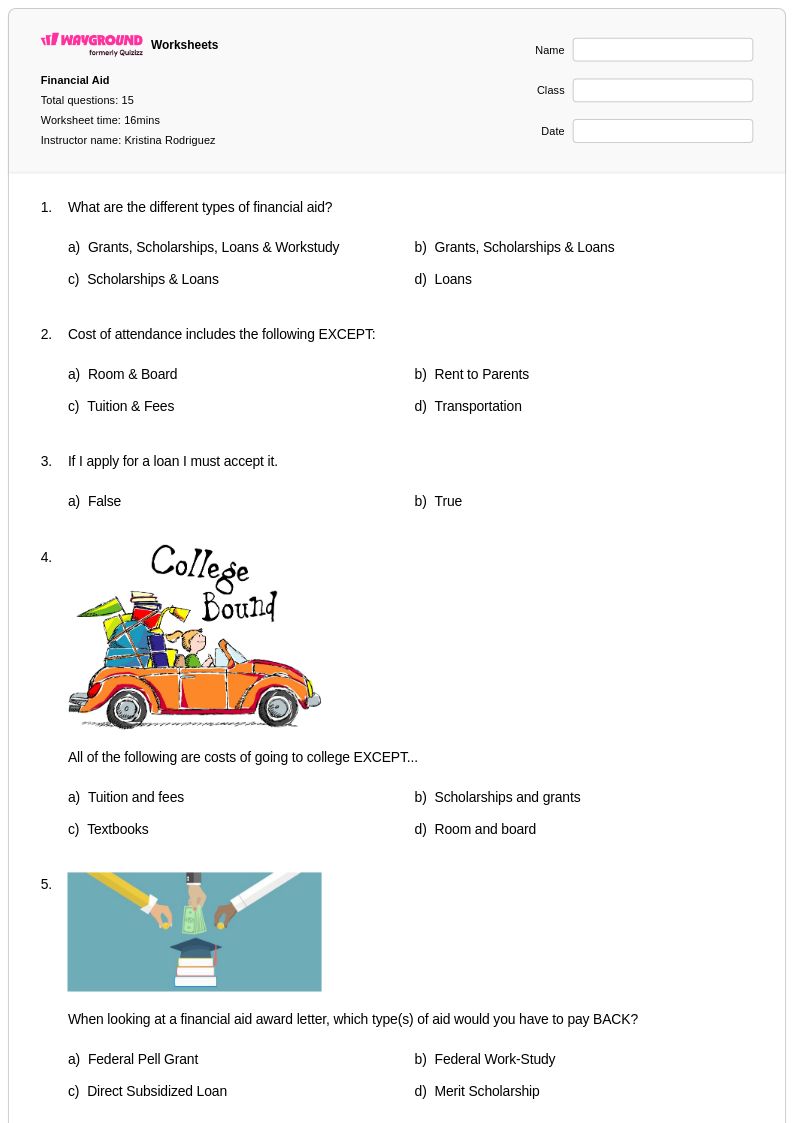
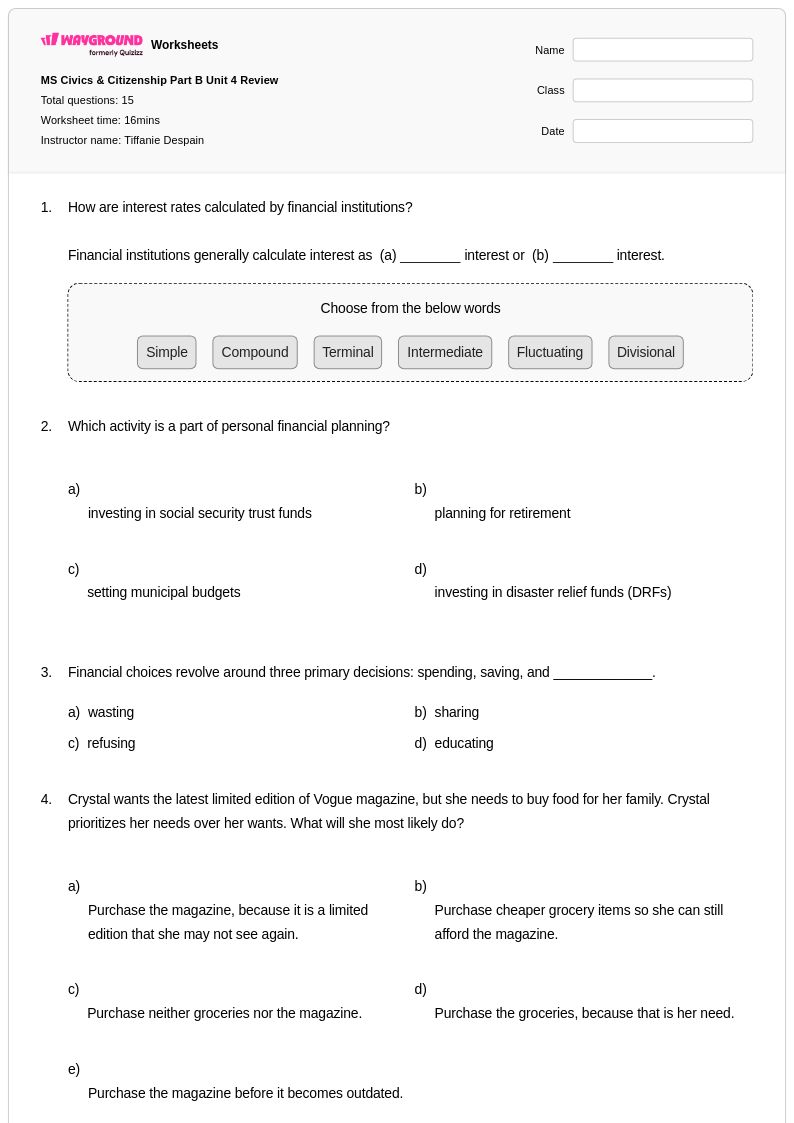
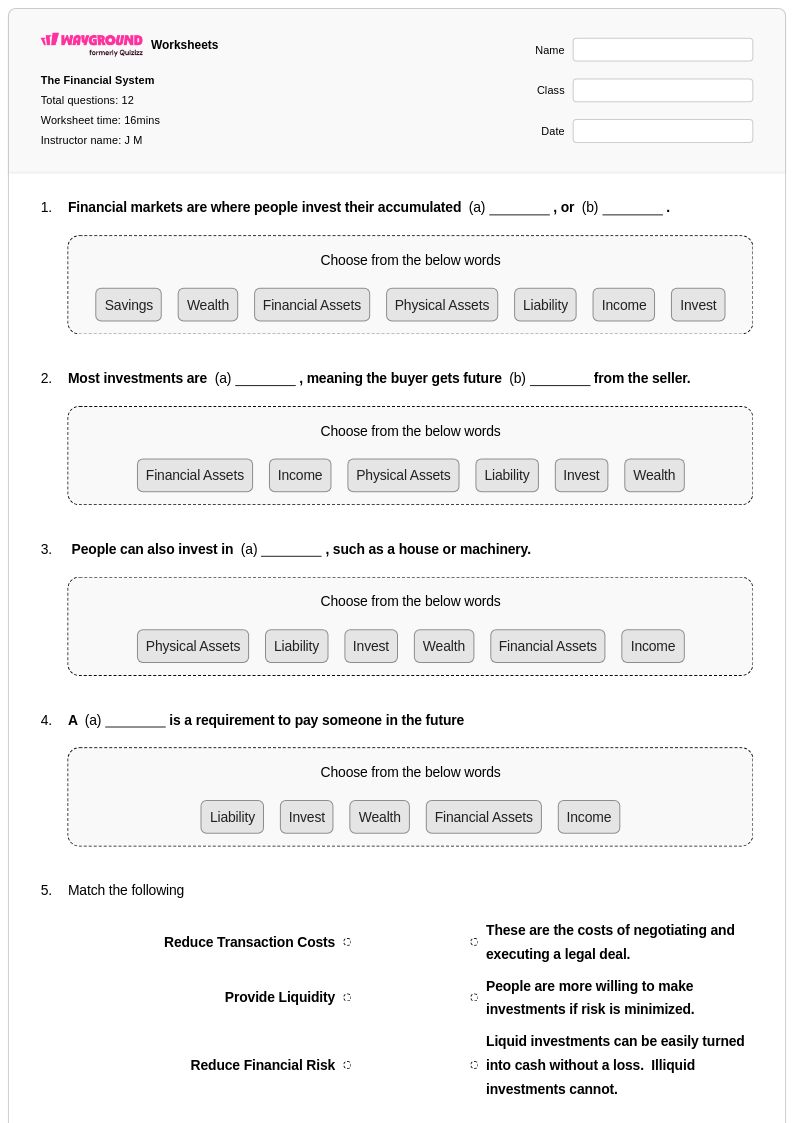
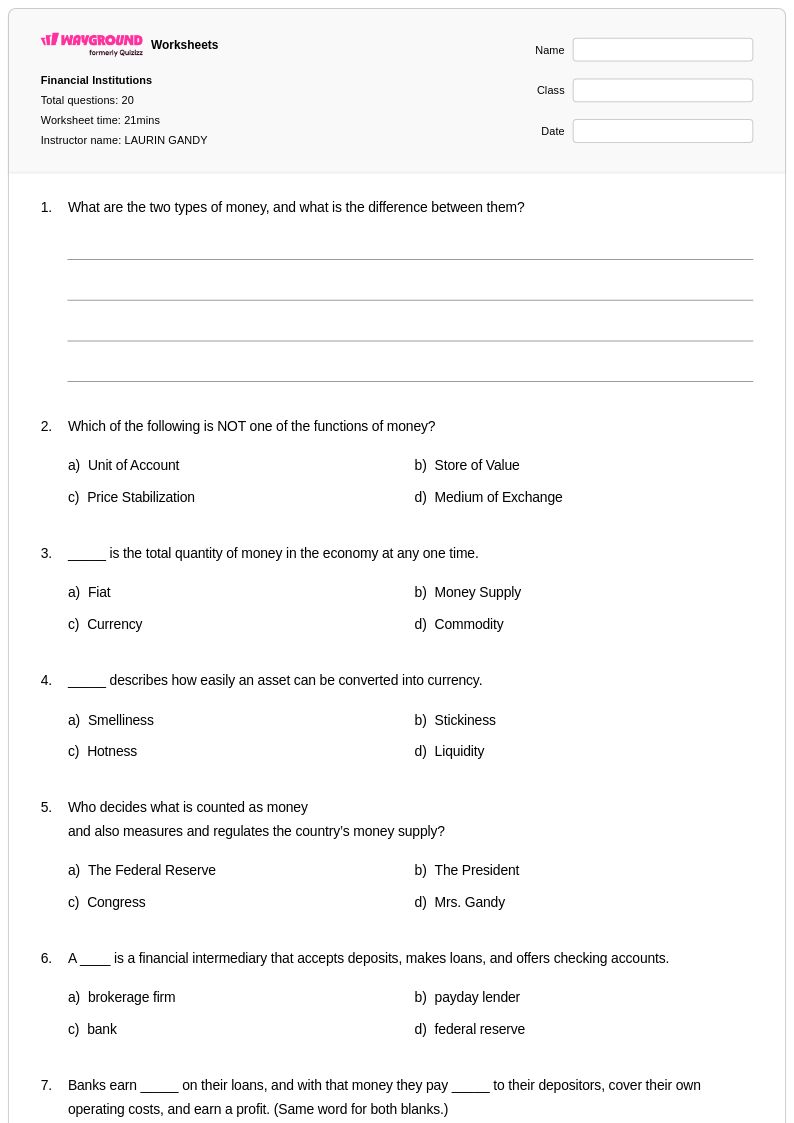
Free Printable Hamilton's Financial Plan Worksheets for Class 12
Explore Class 12 Hamilton's Financial Plan worksheets and printables that help students analyze Alexander Hamilton's economic policies, featuring practice problems, PDF resources, and answer keys for comprehensive U.S. History learning.
Explore printable Hamilton's Financial Plan worksheets for Class 12
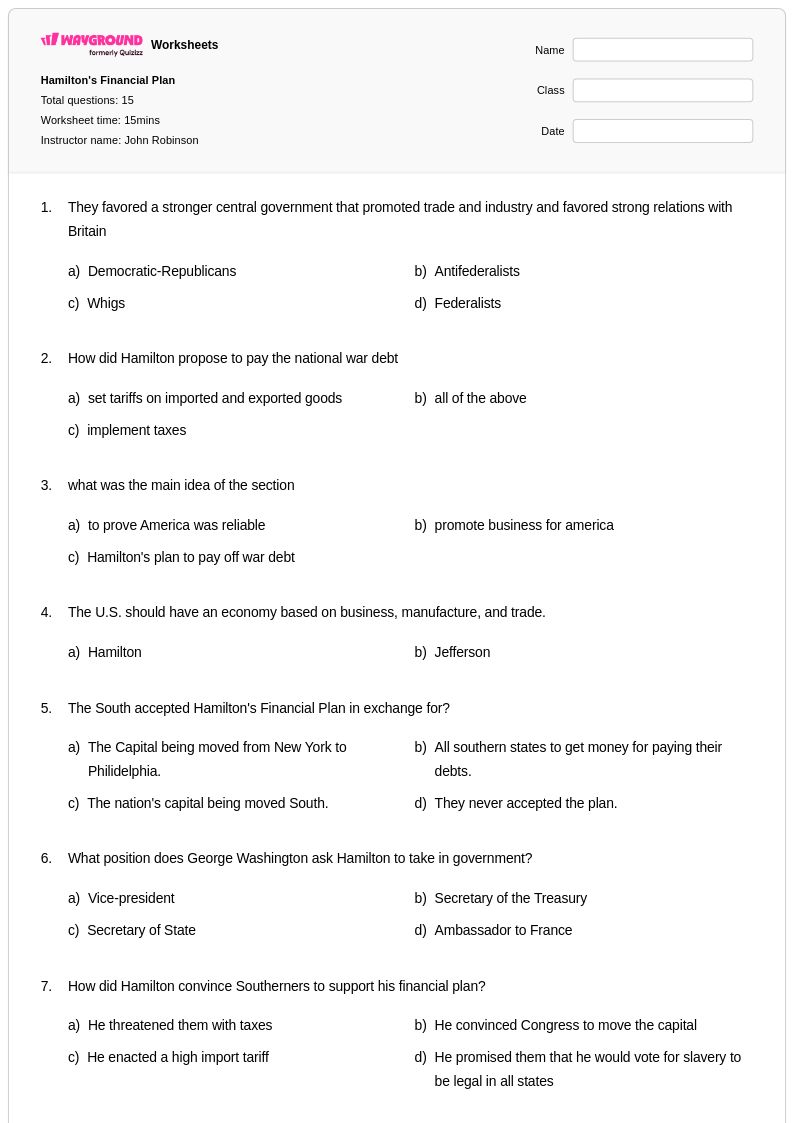
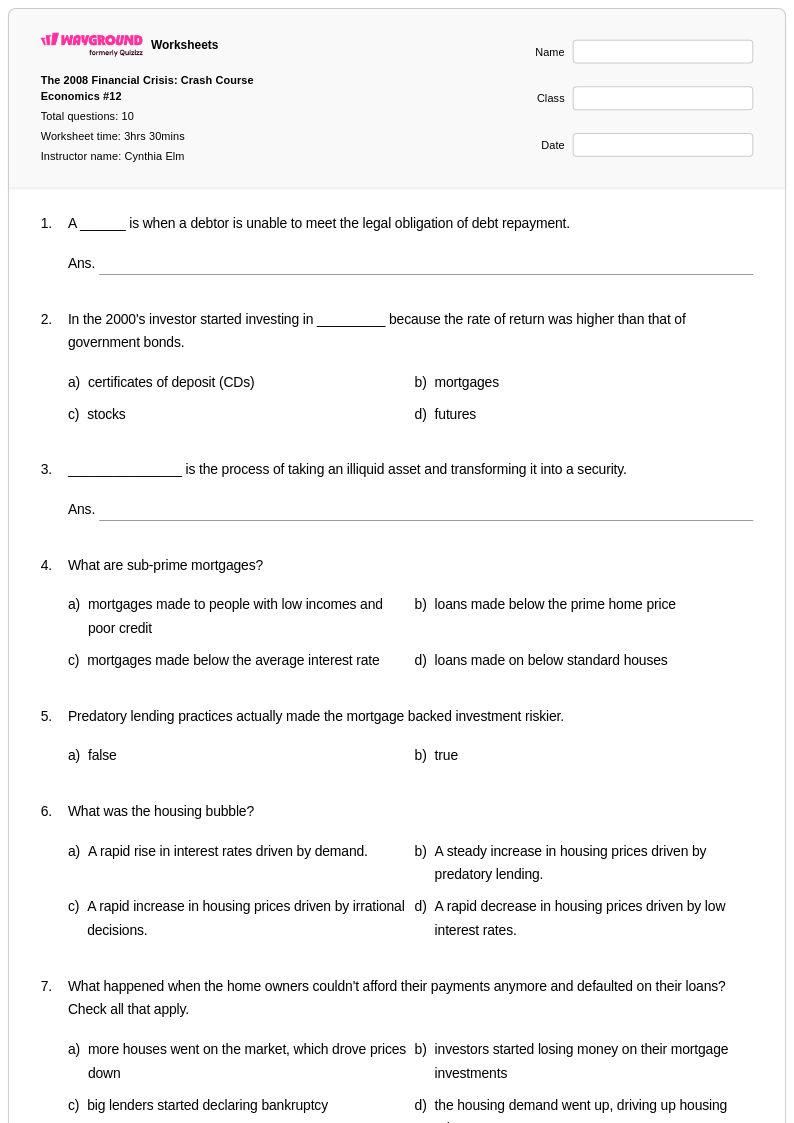
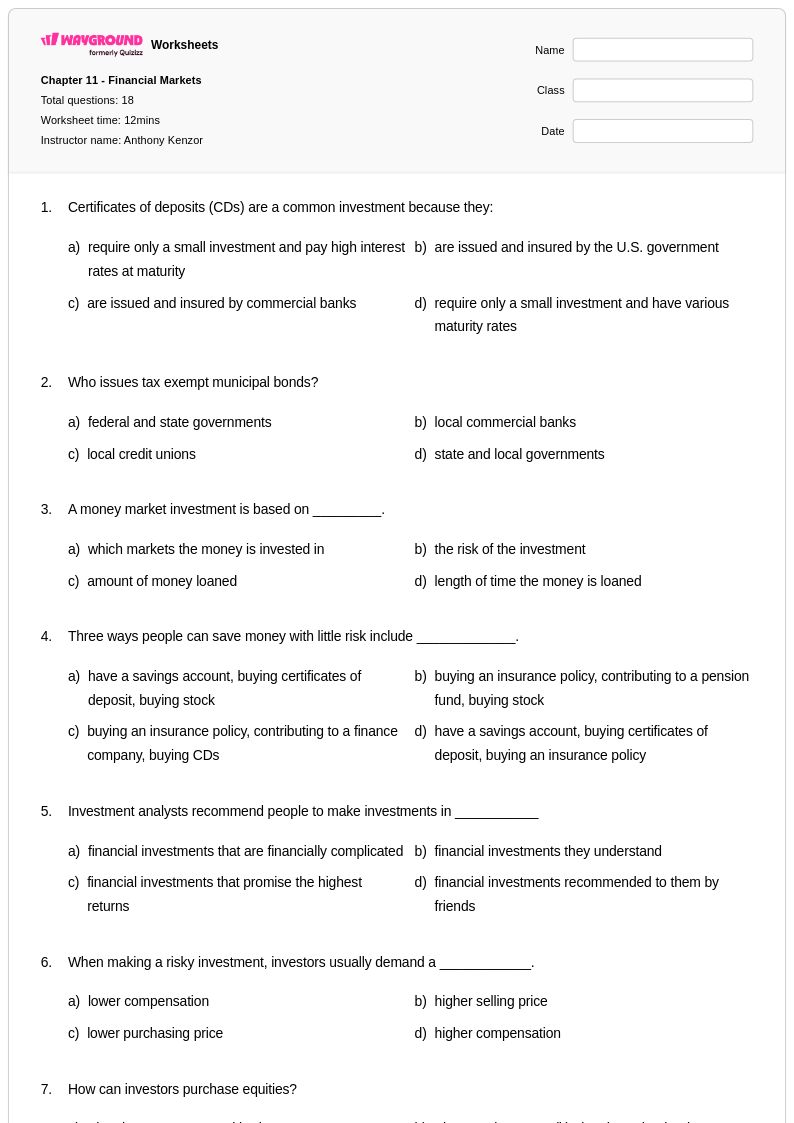
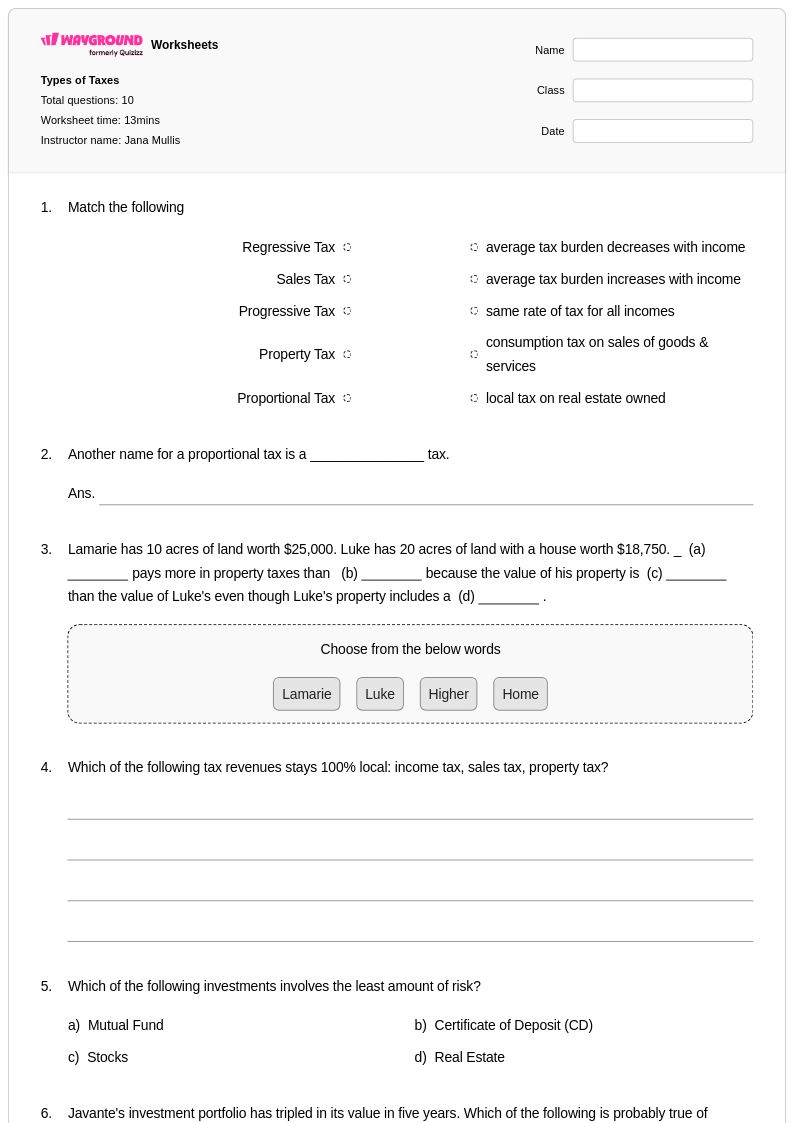
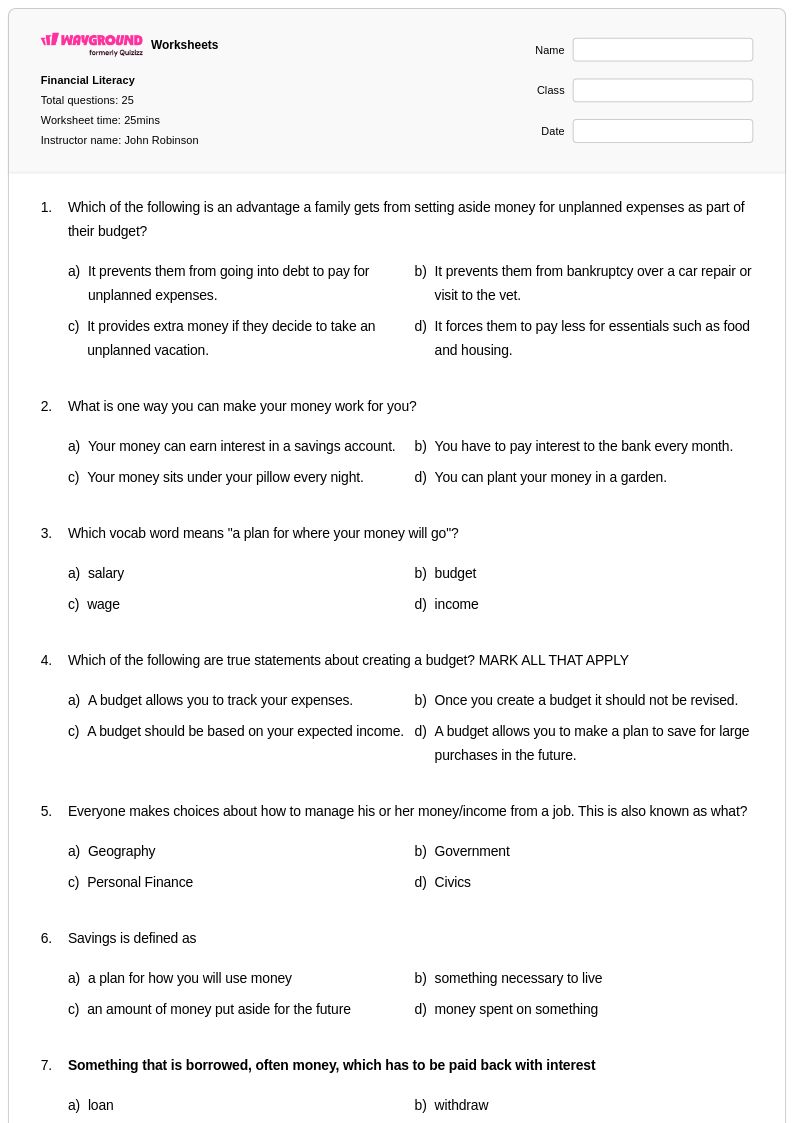
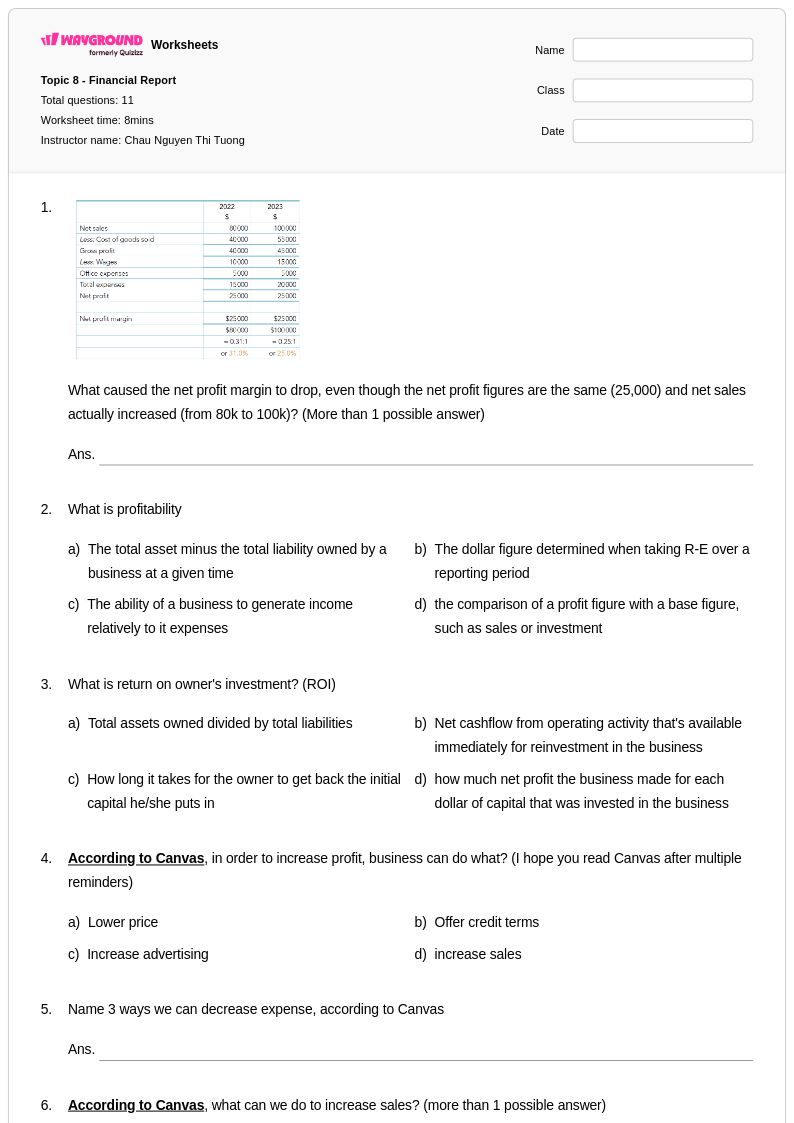
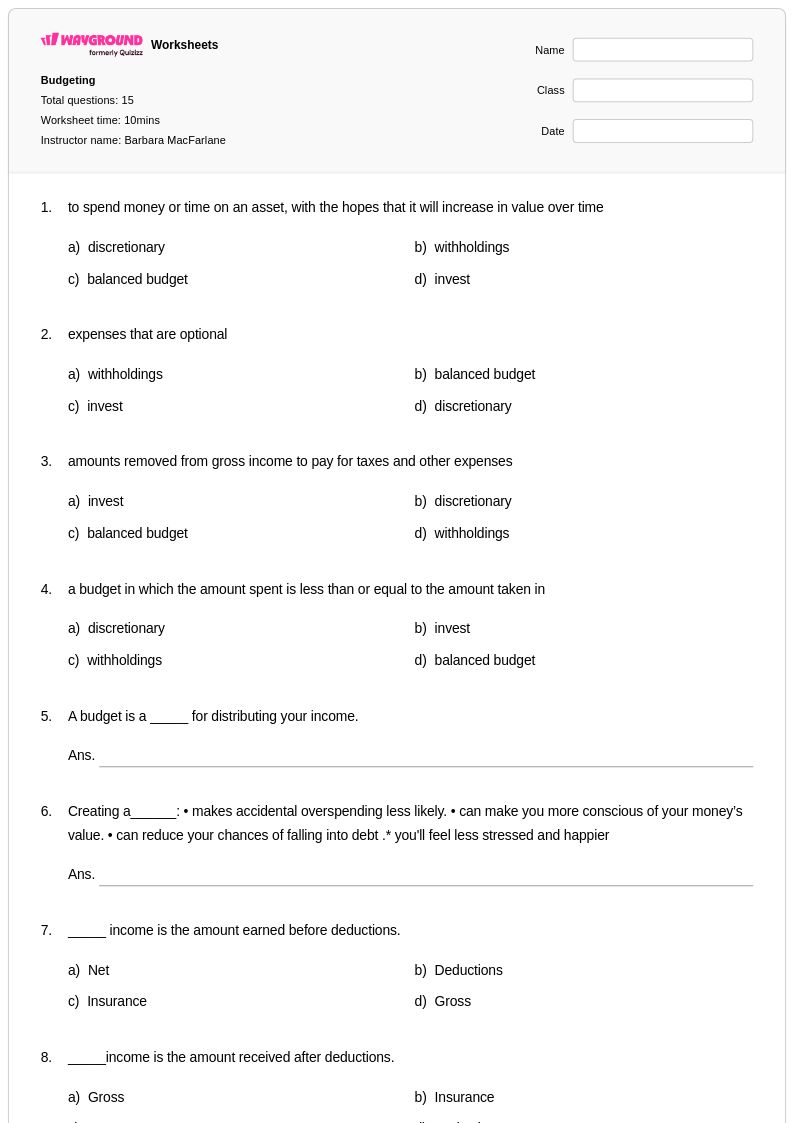
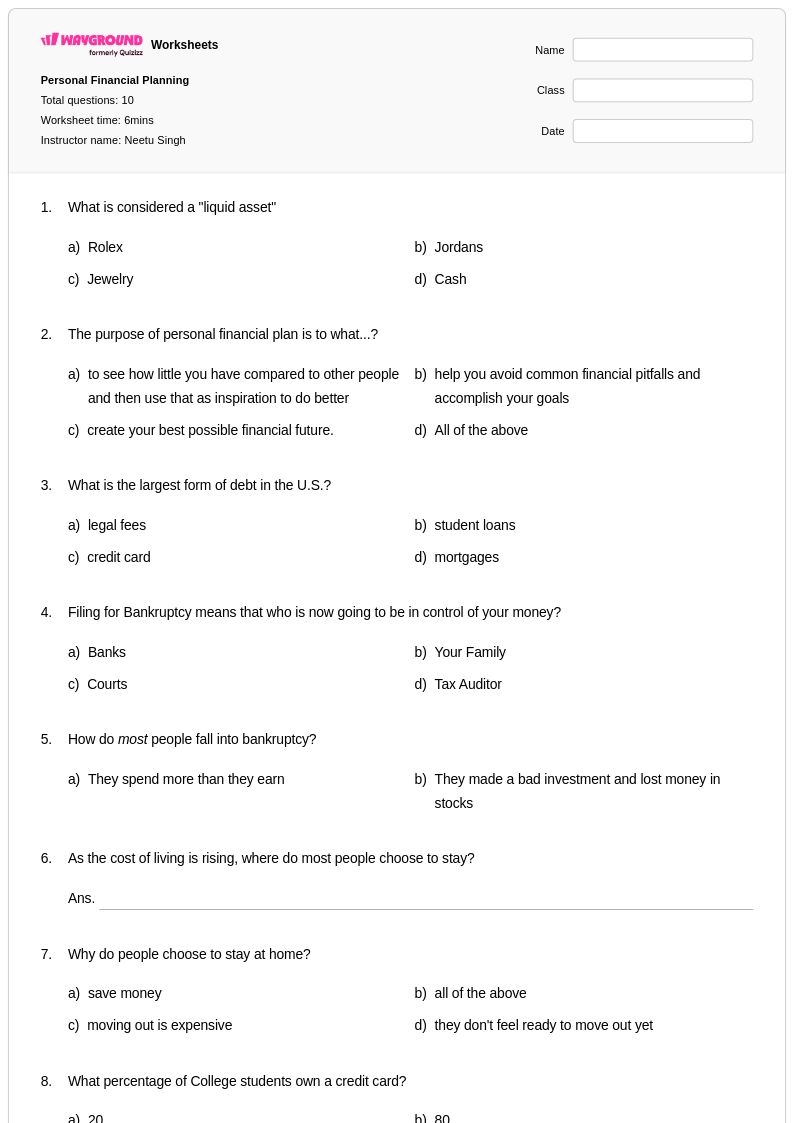
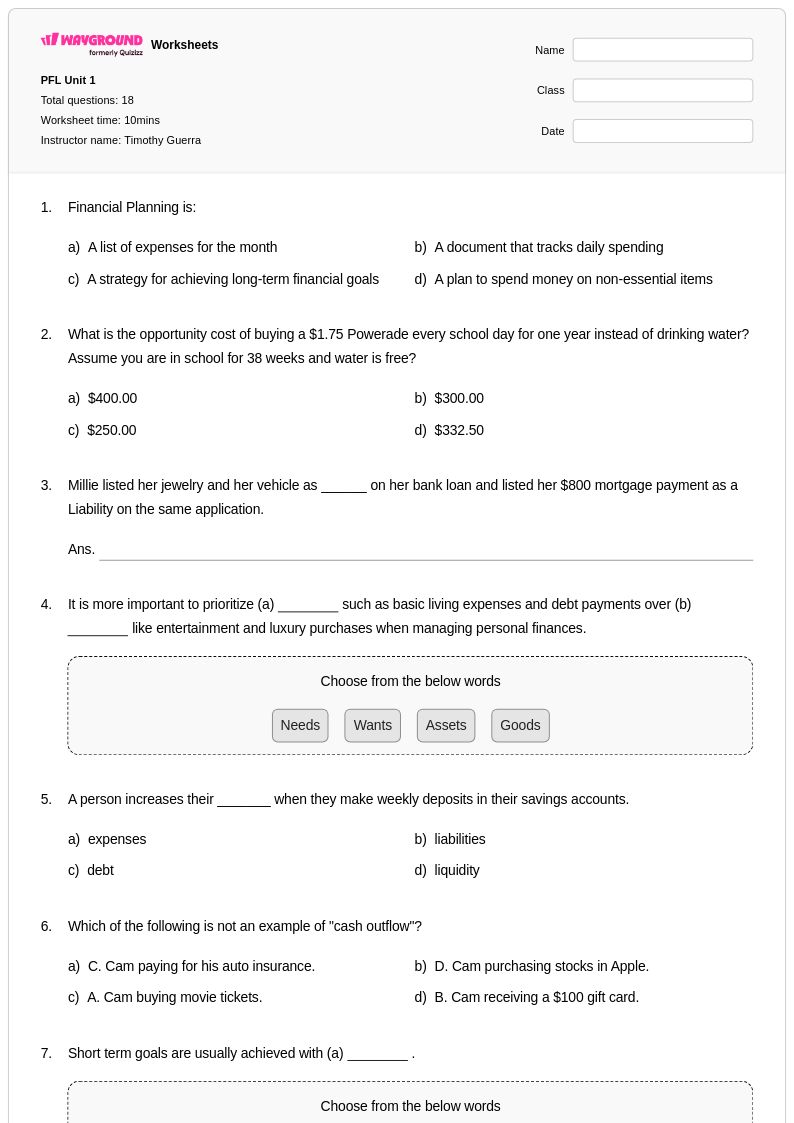
Hamilton's Financial Plan worksheets for Class 12 students available through Wayground (formerly Quizizz) provide comprehensive coverage of Alexander Hamilton's groundbreaking economic policies that established the foundation of America's financial system. These expertly designed worksheets guide students through the complexities of Hamilton's three-part financial program, including federal assumption of state debts, creation of a national bank, and implementation of protective tariffs. Students develop critical analytical skills as they examine primary source documents, evaluate the political and economic debates between Federalists and Democratic-Republicans, and assess the long-term impact of Hamilton's vision on American capitalism. Each worksheet includes detailed answer keys and practice problems that challenge students to connect Hamilton's policies to broader themes of federalism, constitutional interpretation, and sectional tensions in the early republic, making these free printables invaluable resources for advanced historical thinking.
Wayground (formerly Quizizz) empowers educators with millions of teacher-created resources specifically designed to support Class 12 U.S. History instruction on Hamilton's Financial Plan and related topics. The platform's sophisticated search and filtering capabilities allow teachers to quickly locate worksheets that align with state and national standards while meeting diverse classroom needs through built-in differentiation tools. Teachers can seamlessly customize existing materials or create original content, accessing resources in both printable pdf format and interactive digital versions that accommodate various learning preferences and technological environments. These flexible worksheet collections support comprehensive lesson planning by providing materials suitable for initial instruction, targeted remediation for struggling learners, enrichment activities for advanced students, and ongoing skill practice that reinforces understanding of Hamilton's economic legacy and its enduring influence on American financial institutions.
FAQs
How do I teach Hamilton's Financial Plan to my students?
Start by grounding students in the post-Revolutionary War context: the federal government was drowning in debt, states had conflicting financial obligations, and there was no unified currency or credit system. From there, introduce Hamilton's three-part plan — federal assumption of state debts, establishment of a national bank, and protective tariffs — as a sequence of interlocking solutions rather than isolated policies. Using primary source documents alongside structured analysis activities helps students understand not just what Hamilton proposed, but why it was politically explosive.
What exercises help students practice analyzing Hamilton's Financial Plan?
Effective practice exercises include document-based questions drawn from Hamilton's reports to Congress, compare-and-contrast activities pairing Federalist and Democratic-Republican perspectives on the national bank, and cause-and-effect charts tracing how debt assumption shifted power from states to the federal government. Practice problems that ask students to evaluate the long-term economic impact of tariff policy are especially useful for deepening comprehension beyond surface recall.
What are common misconceptions students have about Hamilton's Financial Plan?
Students often conflate the national bank with a modern commercial bank, missing its role as a tool for stabilizing federal credit and managing currency. Another frequent error is treating Hamilton's plan as universally accepted, when in fact it sparked fierce opposition from Jefferson and Madison over constitutional authority and regional economic fairness. Students also tend to underestimate the significance of debt assumption, viewing it as a bookkeeping move rather than a deliberate strategy to bind wealthy creditors' interests to the success of the federal government.
How does the Federalist vs. Democratic-Republican debate connect to Hamilton's Financial Plan?
Hamilton's Financial Plan was one of the primary fault lines that crystallized the divide between Federalists and Democratic-Republicans. Federalists supported a strong central government with broad implied powers, making the national bank and debt assumption logical extensions of federal authority. Democratic-Republicans, led by Jefferson and Madison, argued that a national bank was unconstitutional and that Hamilton's plan favored Northern merchants and financiers at the expense of Southern agrarian interests, making this debate a direct gateway to teaching the origins of the two-party system.
How can I use Hamilton's Financial Plan worksheets in my classroom?
Hamilton's Financial Plan worksheets on Wayground are available as printable PDFs for traditional classroom distribution and in digital formats for technology-integrated or hybrid learning environments, and can also be hosted as a quiz directly on Wayground. Printable versions work well for structured in-class analysis or homework assignments, while digital formats support self-paced review and immediate feedback. Teachers can also use Wayground's accommodation settings to apply extended time, read-aloud support, or reduced answer choices for individual students who need additional support.
How do I differentiate Hamilton's Financial Plan instruction for different skill levels?
For struggling learners, scaffold the content by pre-teaching key vocabulary — assumption, tariff, national debt, credit — before asking students to engage with primary sources or analytical questions. On-level students benefit from structured document analysis frames that guide their reading without over-simplifying the material. Advanced students can be challenged with evaluative tasks such as defending or critiquing Hamilton's plan using evidence, or comparing it to a modern economic policy debate. Wayground's accommodation tools allow teachers to assign extended time or reduced answer choices to specific students without disrupting the rest of the class.