Free Printable Light Refraction Worksheets for Class 7
Explore Class 7 light refraction worksheets and printables from Wayground that help students master how light bends through different materials with engaging practice problems, free PDF downloads, and complete answer keys.
Explore printable Light Refraction worksheets for Class 7
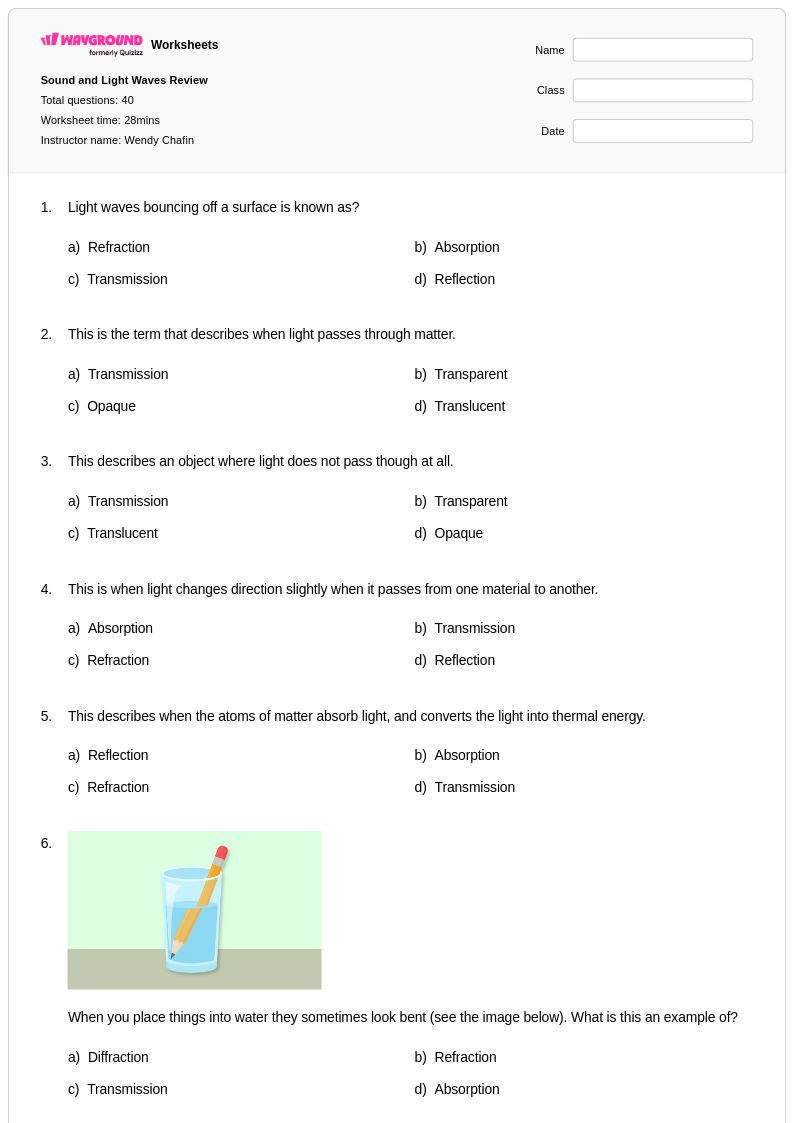
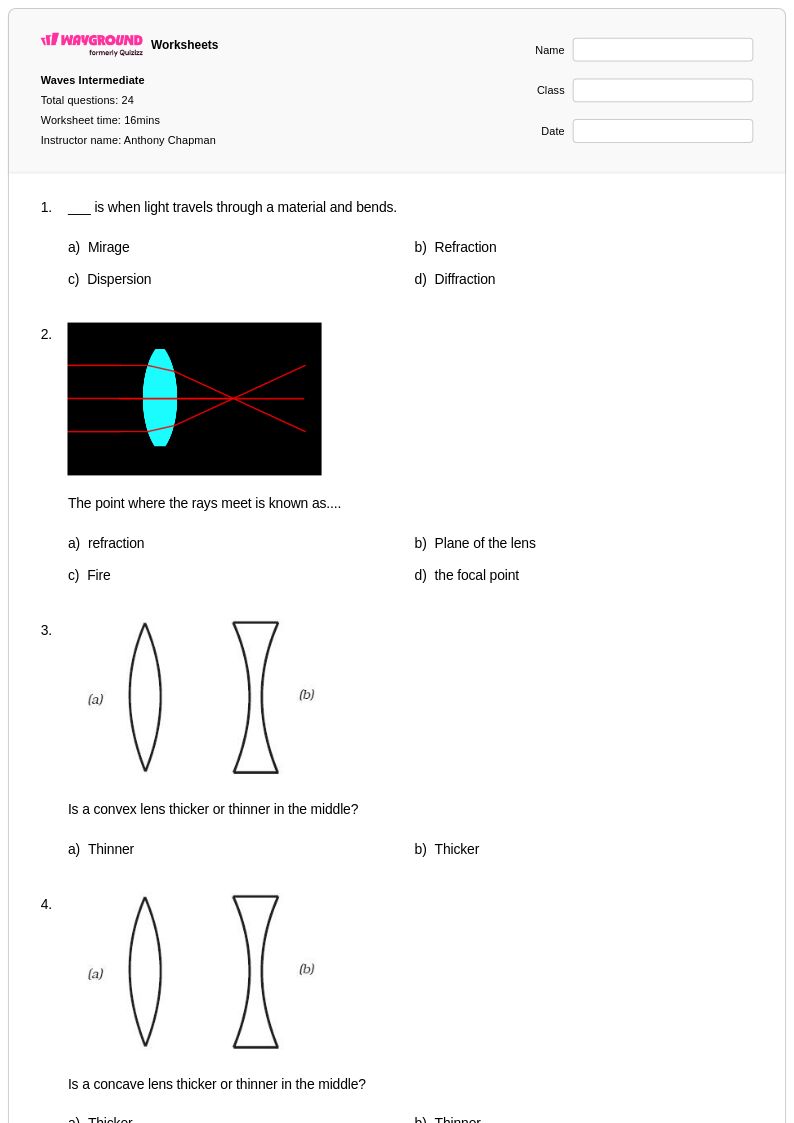
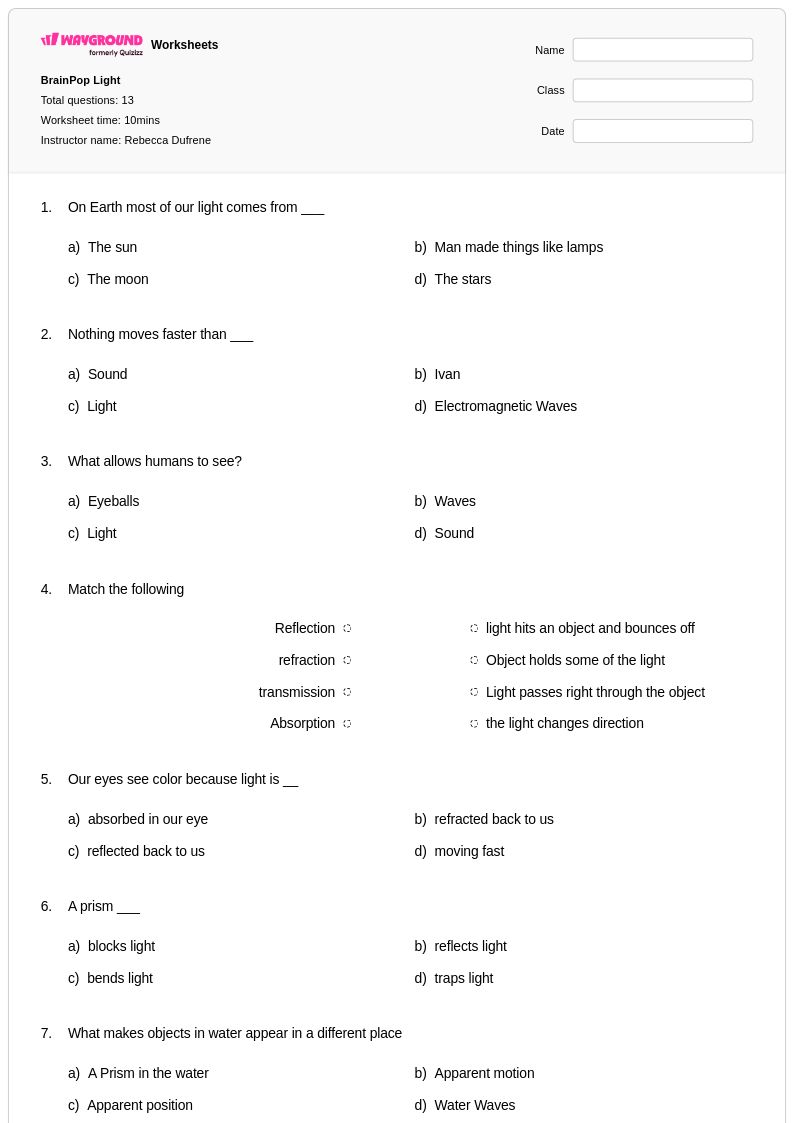
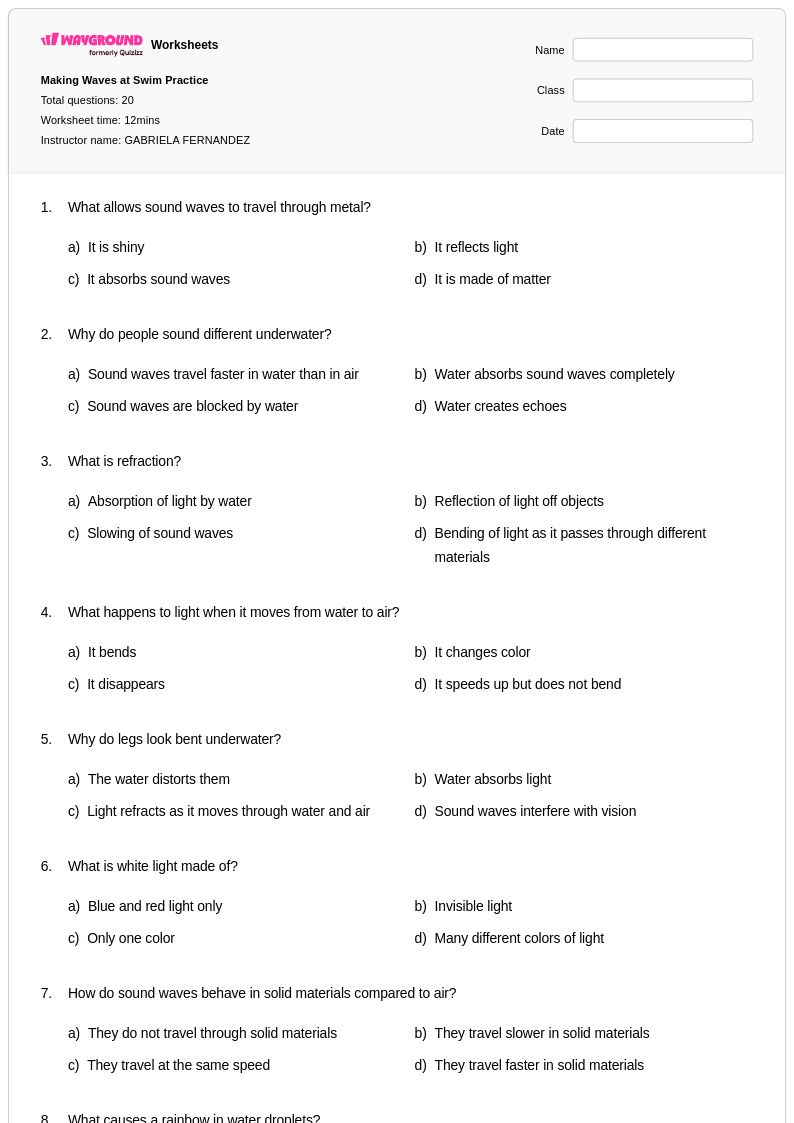
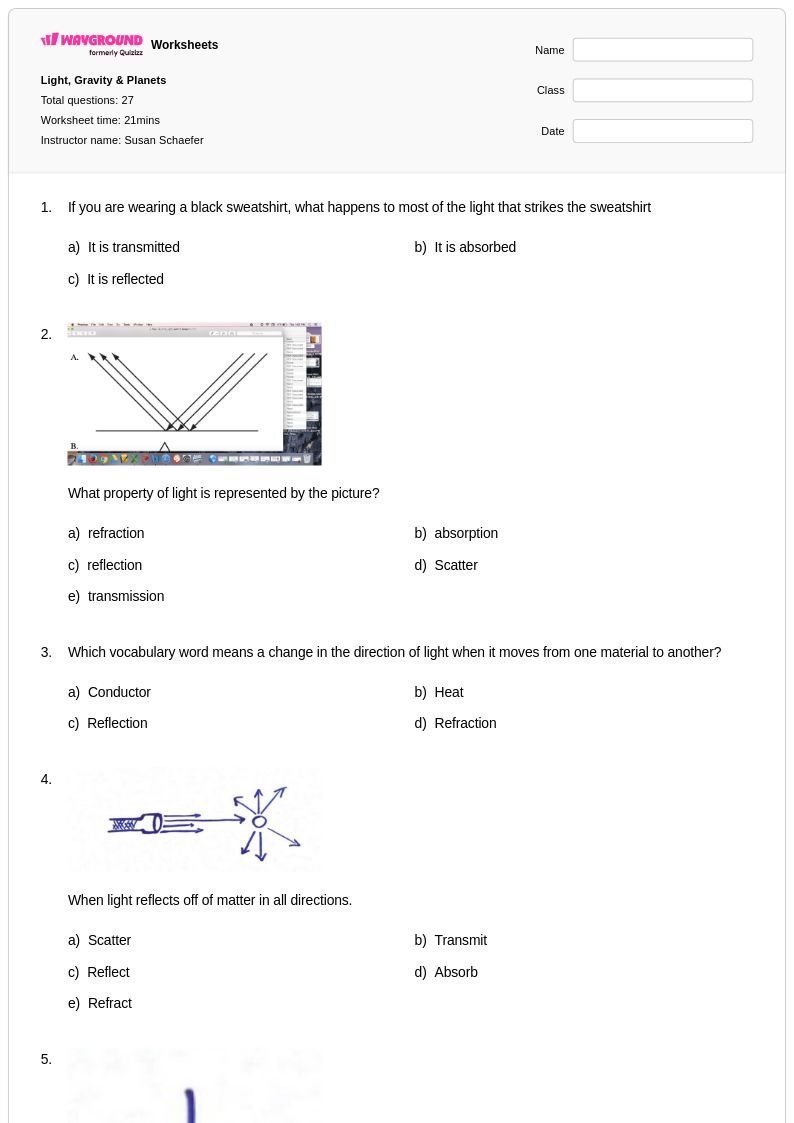
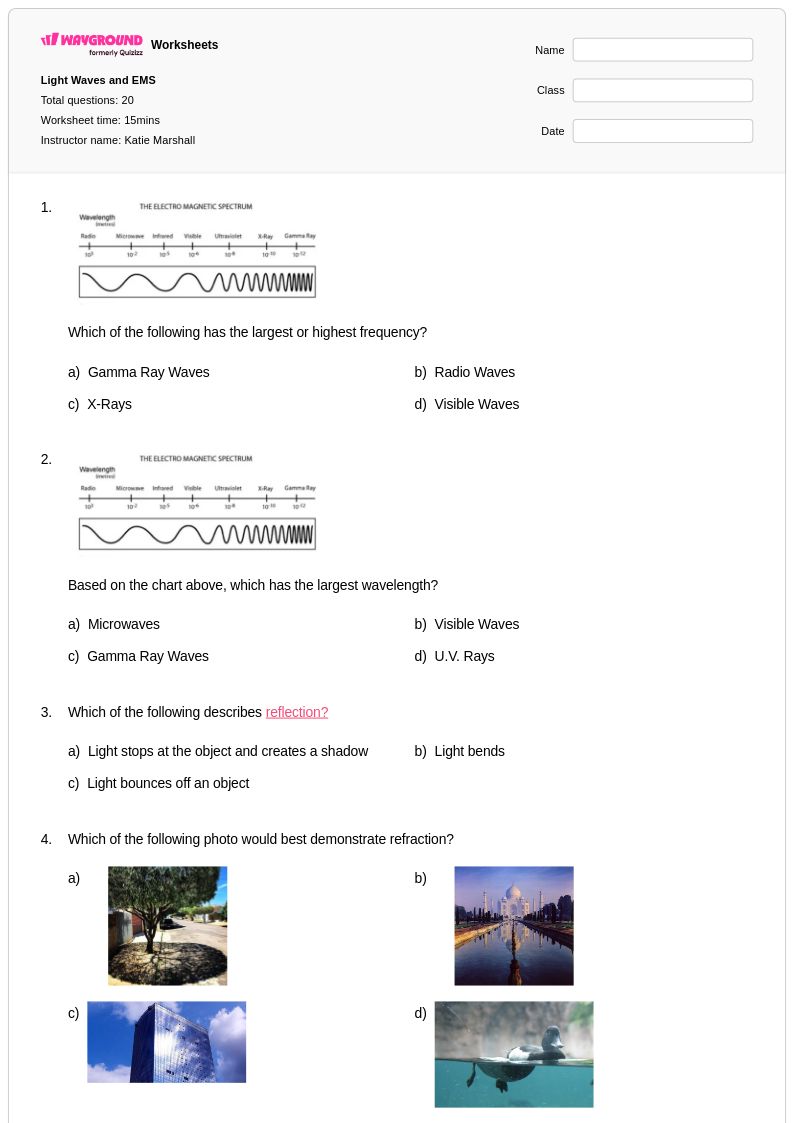
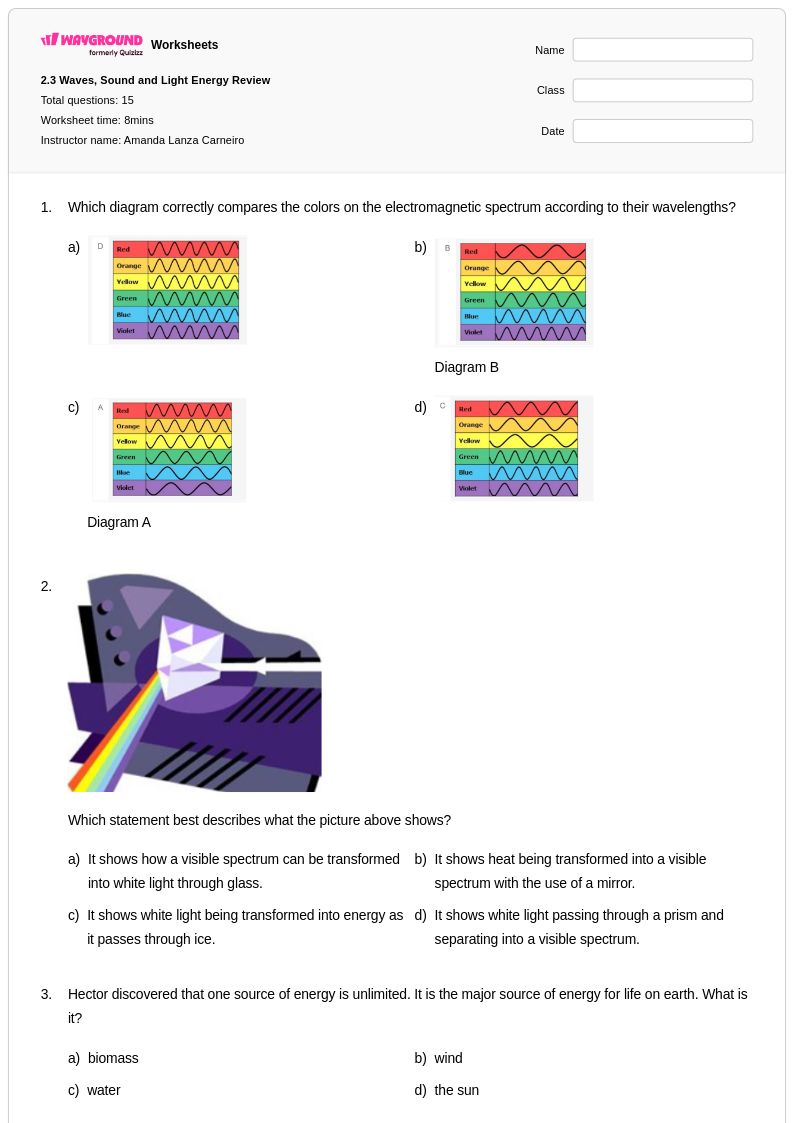
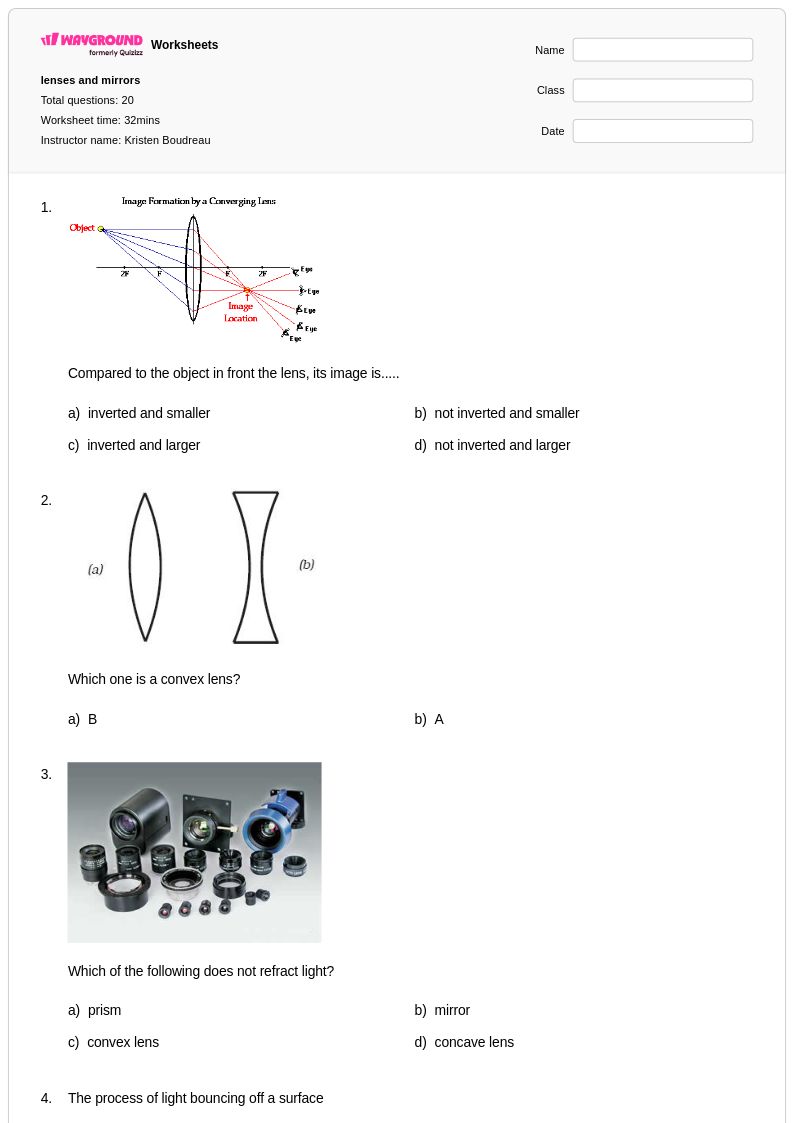
Light refraction worksheets for Class 7 students available through Wayground (formerly Quizizz) provide comprehensive coverage of how light waves bend when passing through different materials and media. These educational resources strengthen students' understanding of fundamental optical principles, including Snell's law applications, the relationship between light speed and medium density, and real-world phenomena such as why objects appear bent in water or how lenses focus light rays. The worksheet collection includes detailed practice problems that guide students through calculating angles of incidence and refraction, identifying normal lines in ray diagrams, and explaining how light behavior changes at material boundaries. Teachers can access these resources as free printables in pdf format, complete with answer keys that facilitate efficient grading and enable students to check their understanding of complex refraction concepts.
Wayground (formerly Quizizz) empowers educators with millions of teacher-created light refraction resources that support diverse instructional needs through advanced search and filtering capabilities aligned with science education standards. The platform's differentiation tools allow teachers to customize worksheet difficulty levels, ensuring that Class 7 students receive appropriate challenges whether they need remediation support or enrichment activities. These versatile materials are available in both printable and digital formats, including downloadable pdf versions that maintain formatting consistency across different devices and classroom settings. Teachers can efficiently plan comprehensive light refraction units by accessing ready-to-use practice exercises, diagnostic assessments, and skill-building activities that address varying learning styles and academic readiness levels, ultimately supporting systematic physics instruction and improved student outcomes.
FAQs
How do I teach light refraction to middle and high school students?
Start by grounding students in the concept that light changes speed when it moves between materials with different optical densities, which causes it to bend at the boundary. Use hands-on demonstrations — a pencil in a glass of water or a laser pointer through a glass block — to make the bending visible before introducing Snell's law mathematically. Once students can predict bending direction (toward or away from the normal), connect the concept to real-world applications like eyeglass lenses, fiber optics, and prisms to reinforce relevance.
What exercises help students practice Snell's law and refraction calculations?
Effective practice includes angle-of-refraction calculations using Snell's law (n₁sinθ₁ = n₂sinθ₂), identifying the normal line and measuring incident and refracted angles from diagrams, and determining whether light speeds up or slows down when crossing a boundary. Scaffolded problems that begin with given index-of-refraction values and progress to multi-step optical pathway problems help students build procedural fluency before tackling conceptual application questions. Ray diagram exercises, where students draw the refracted ray for a given scenario, are particularly effective for reinforcing both the math and the geometry.
What mistakes do students commonly make when learning about light refraction?
The most common error is confusing the angle of incidence and refraction with the angle measured from the surface rather than from the normal — this single misunderstanding leads to systematically wrong Snell's law calculations. Students also frequently reverse the bending direction, expecting light to bend away from the normal when entering a denser medium rather than toward it. A third persistent misconception is conflating reflection with refraction, particularly when total internal reflection is introduced, so explicit comparison activities between the two phenomena are essential.
How do I differentiate light refraction instruction for students at different levels?
For struggling students, focus on the conceptual model first — use visual diagrams and simple rules about bending direction before introducing Snell's law — and consider reducing the number of answer choices on practice problems to lower cognitive load. Advanced students can extend into critical angle calculations, total internal reflection, and multi-media optical pathway problems. On Wayground, teachers can apply accommodations such as reduced answer choices or Read Aloud support to individual students, so differentiated settings can run simultaneously in the same session without singling anyone out.
How do I use Wayground's light refraction worksheets in my classroom?
Wayground's light refraction worksheets are available as printable PDFs for traditional classroom use and in digital formats for technology-integrated or remote learning environments, and teachers can also host them directly as a quiz on Wayground. The included answer keys make them suitable for independent practice, small-group work, or teacher-led instruction without additional prep. Digital versions allow teachers to assign worksheets to individual students or whole classes and track completion, making them equally effective for in-class practice and homework.
How does light refraction differ from light reflection, and how do I teach the distinction?
Reflection occurs when light bounces off a surface and remains in the same medium, while refraction occurs when light passes through a boundary into a new medium and changes speed, causing it to bend. The confusion between the two increases when teaching total internal reflection, where refraction appears to stop and reflection takes over entirely. Teach the distinction by having students trace ray diagrams for both phenomena side by side, emphasizing that the normal line is the reference for both angle measurements, which helps students apply the correct law to each situation.