Free Printable Light Waves Worksheets for Class 11
Explore Class 11 light waves worksheets and printables that help students master wave properties, electromagnetic spectrum concepts, and optical phenomena through comprehensive practice problems with detailed answer keys.
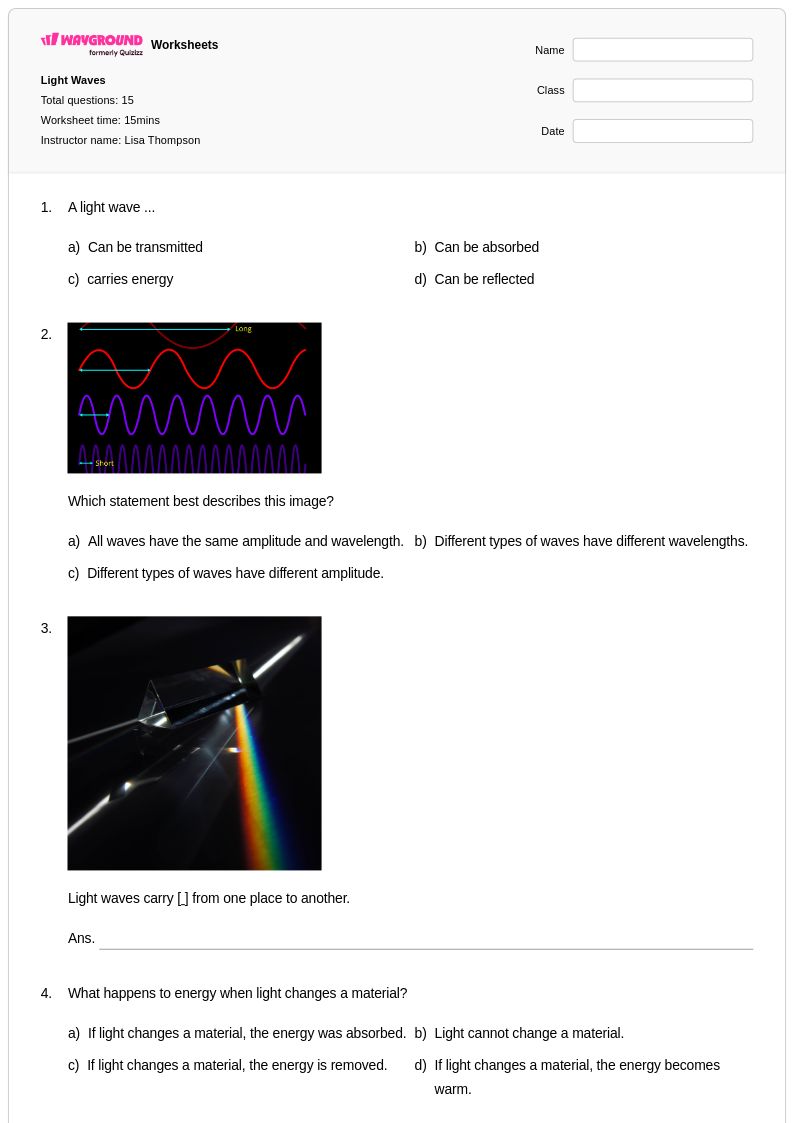
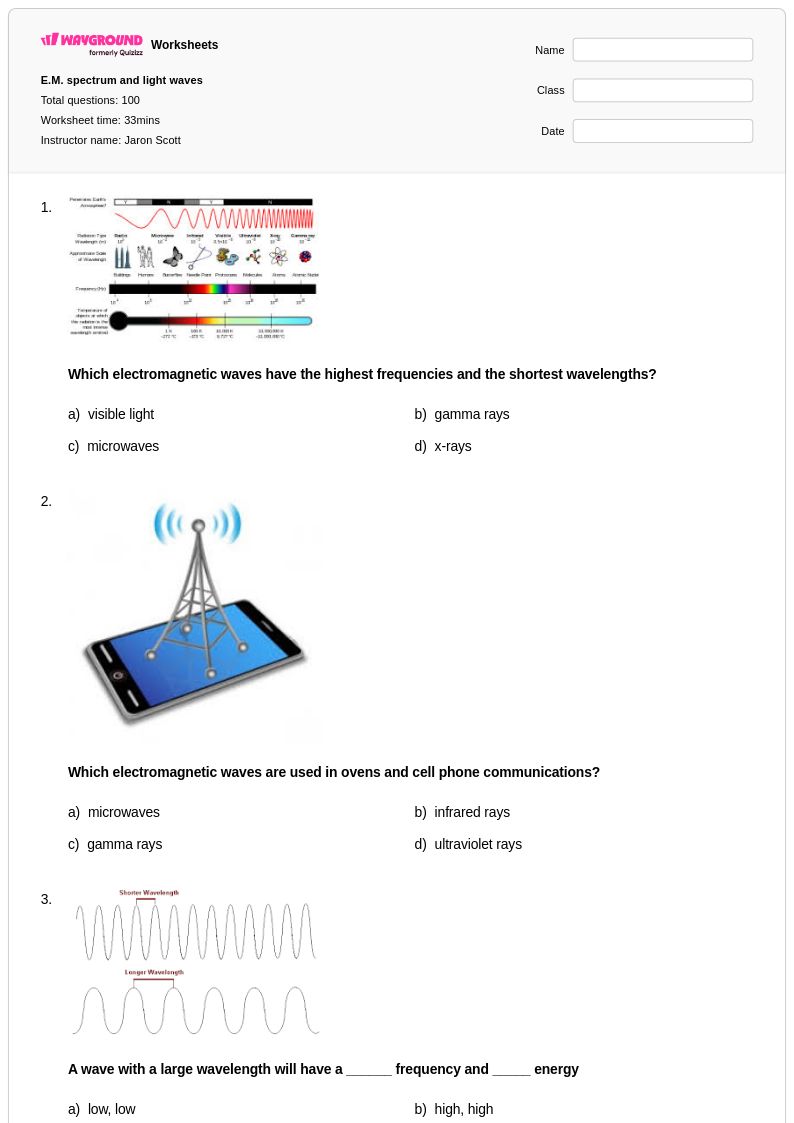
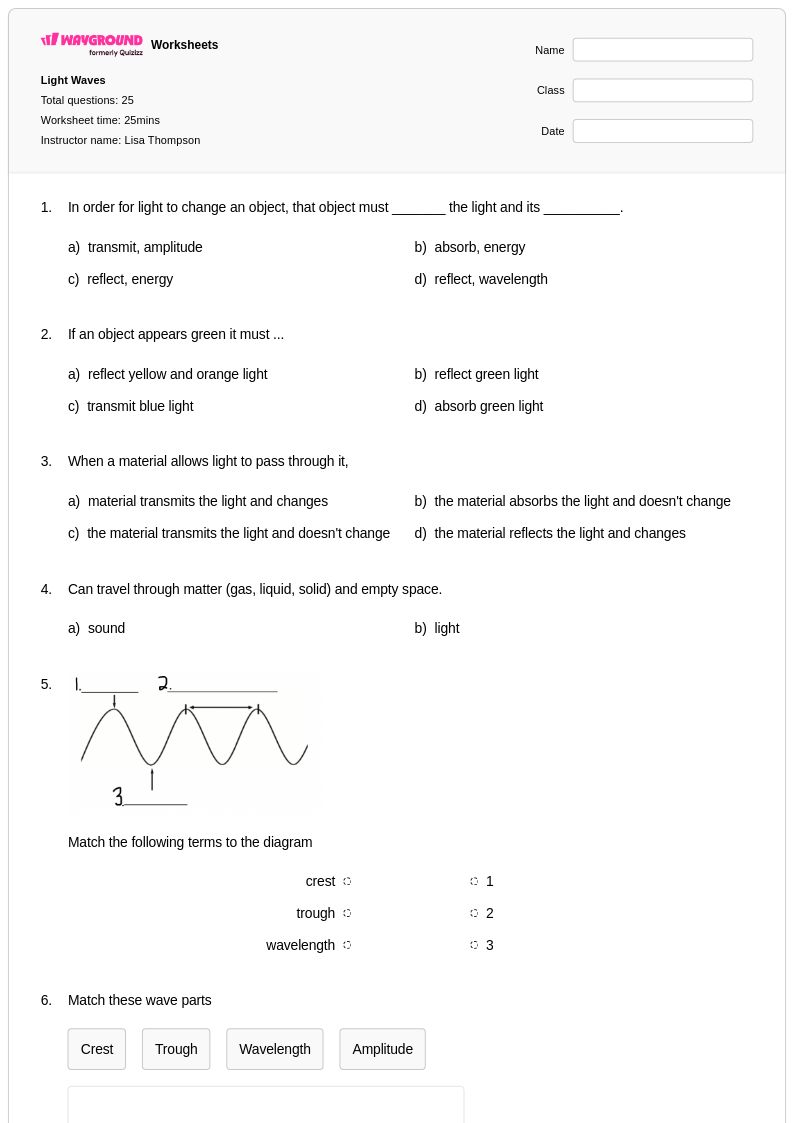
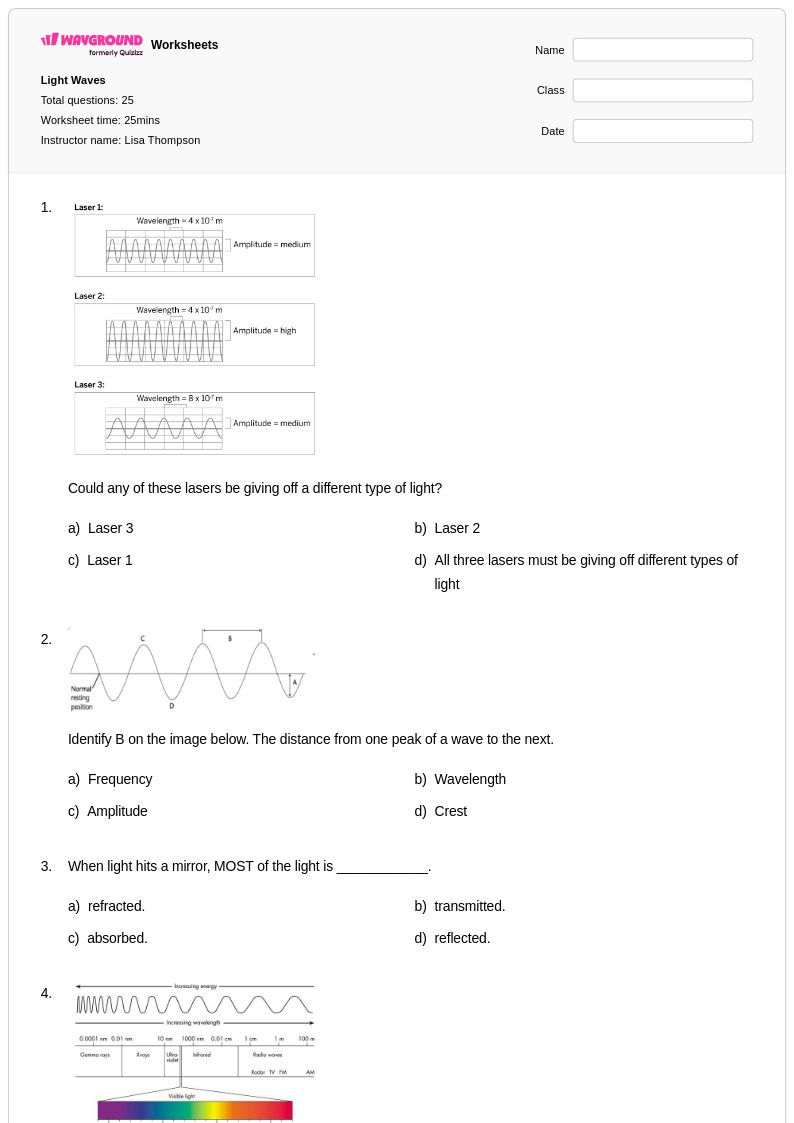
Explore printable Light Waves worksheets for Class 11
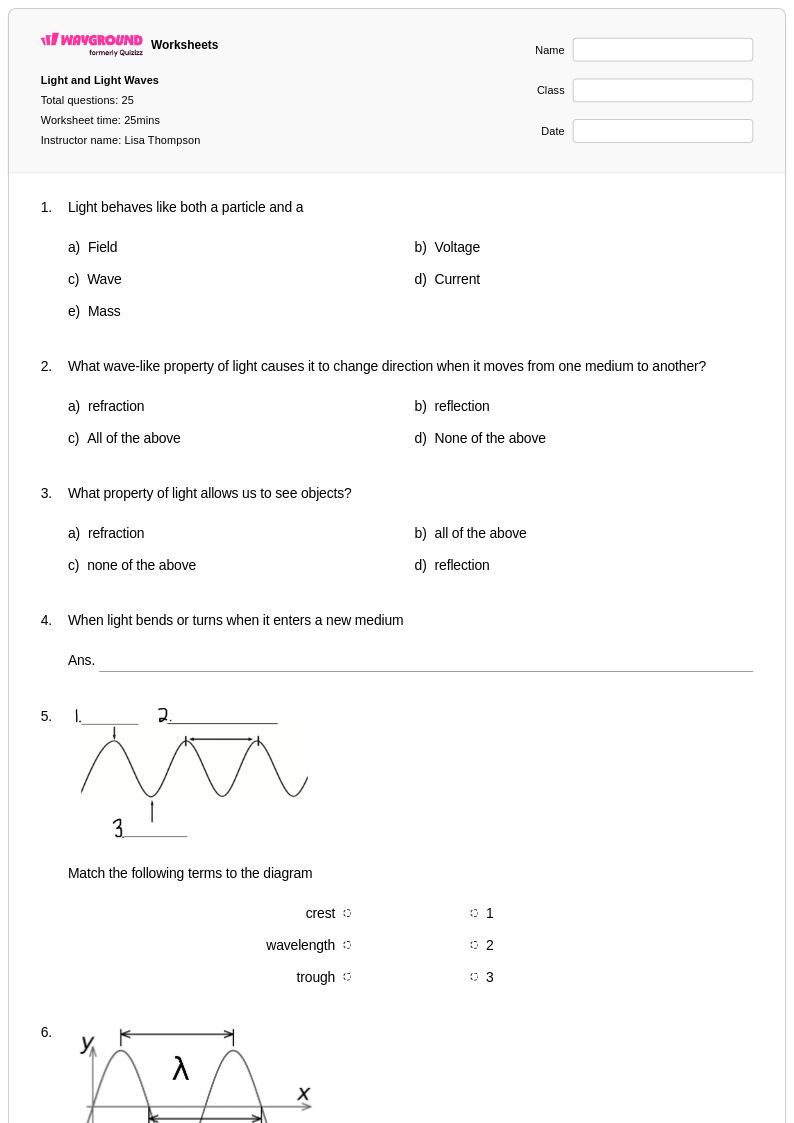
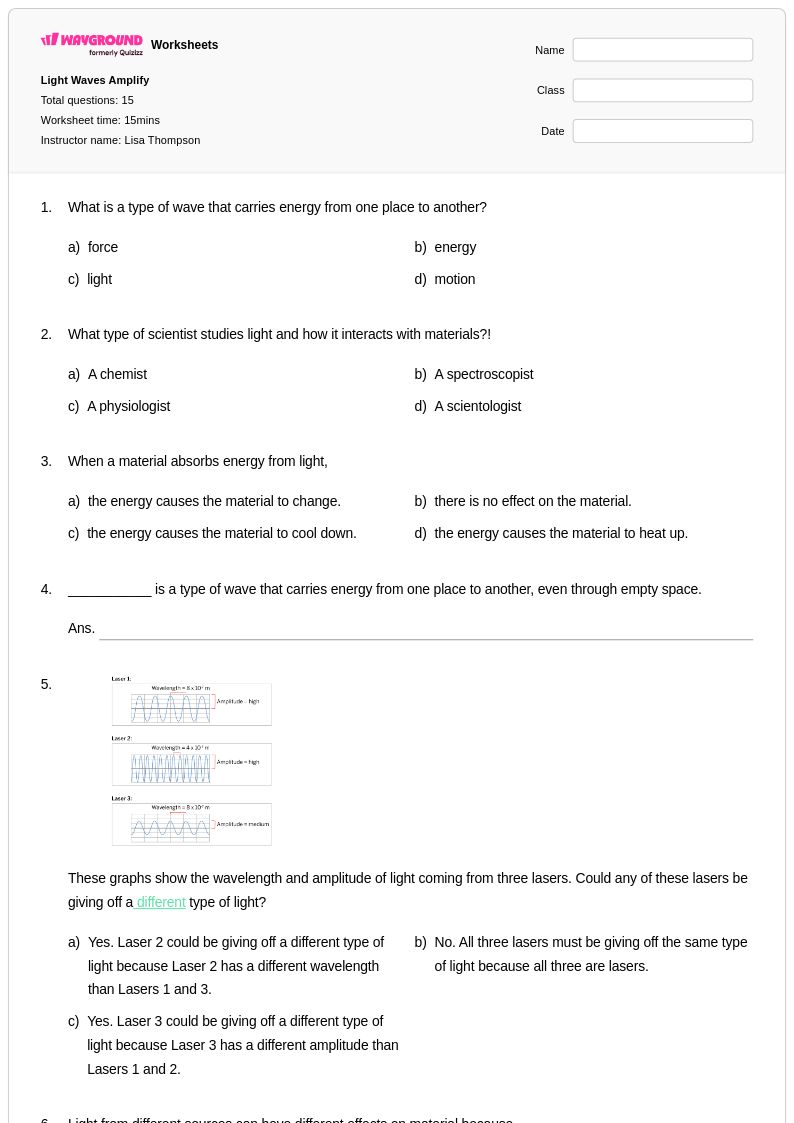
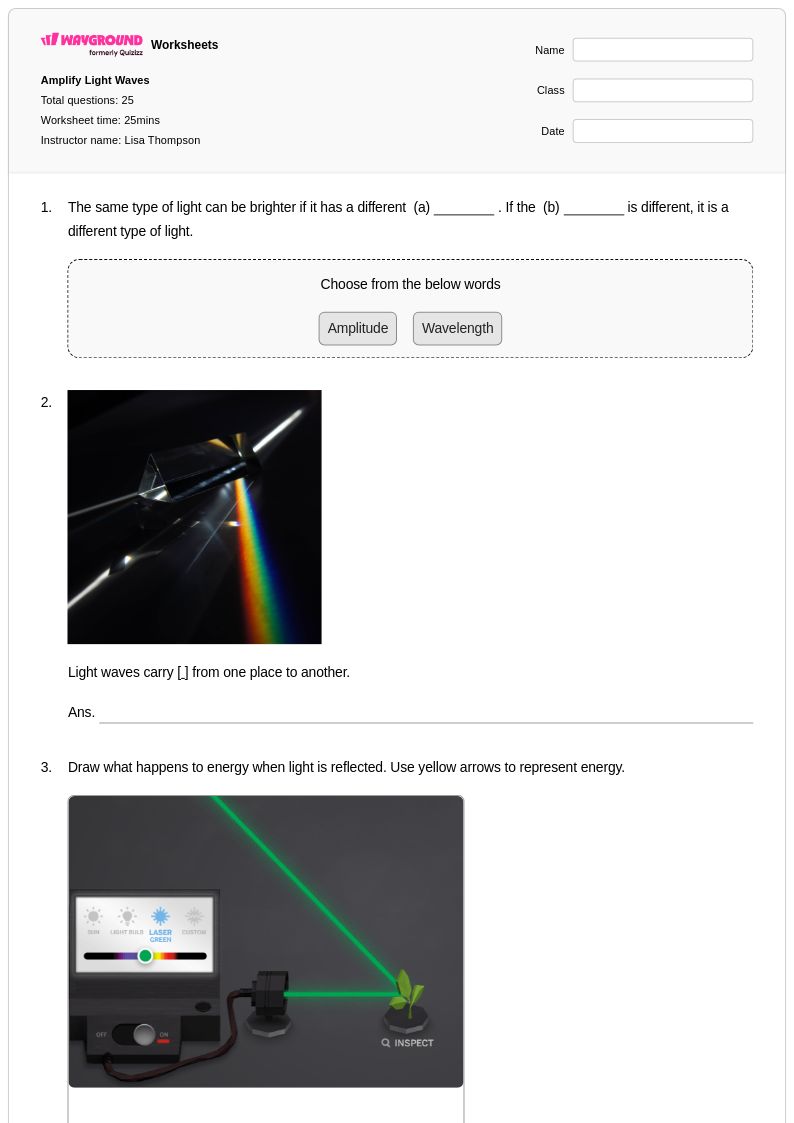
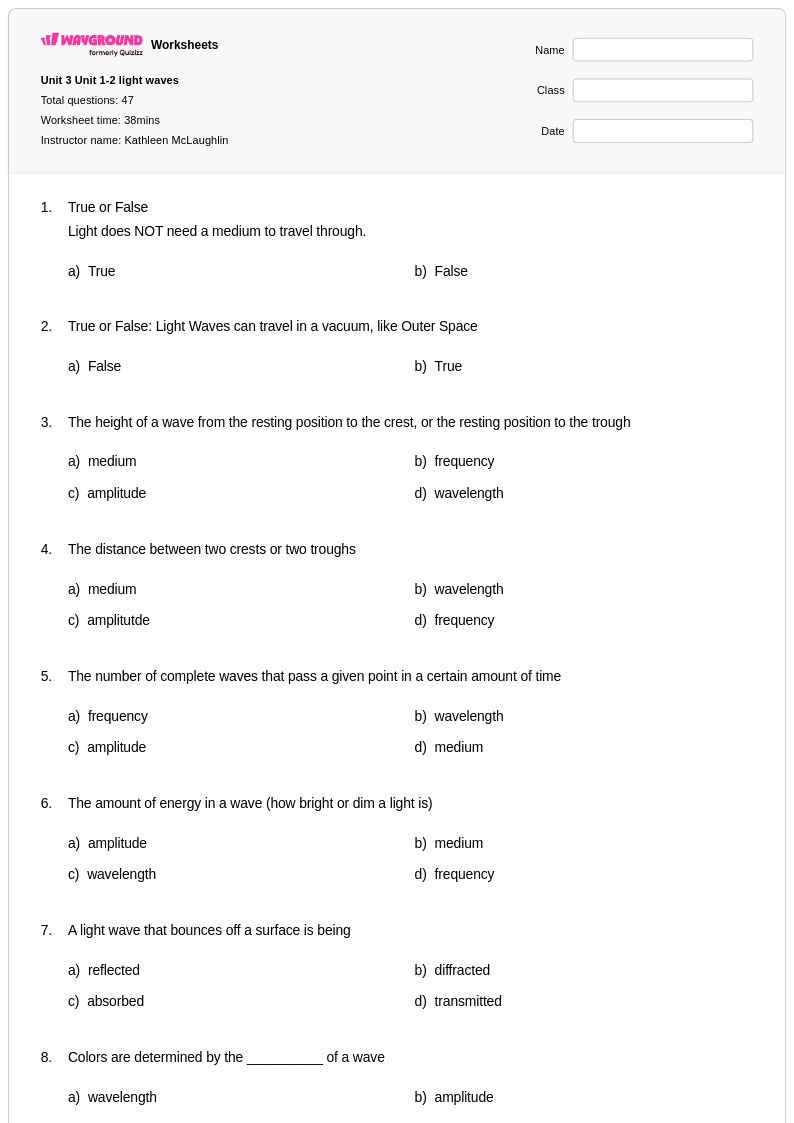
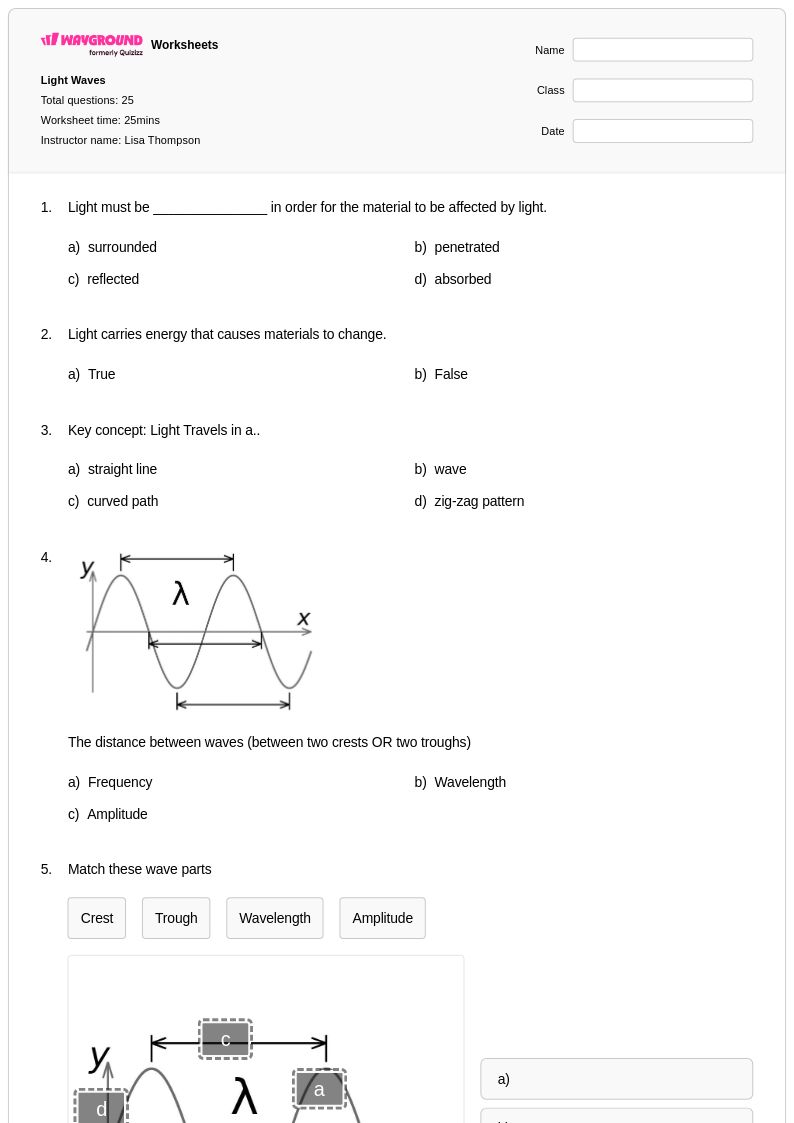
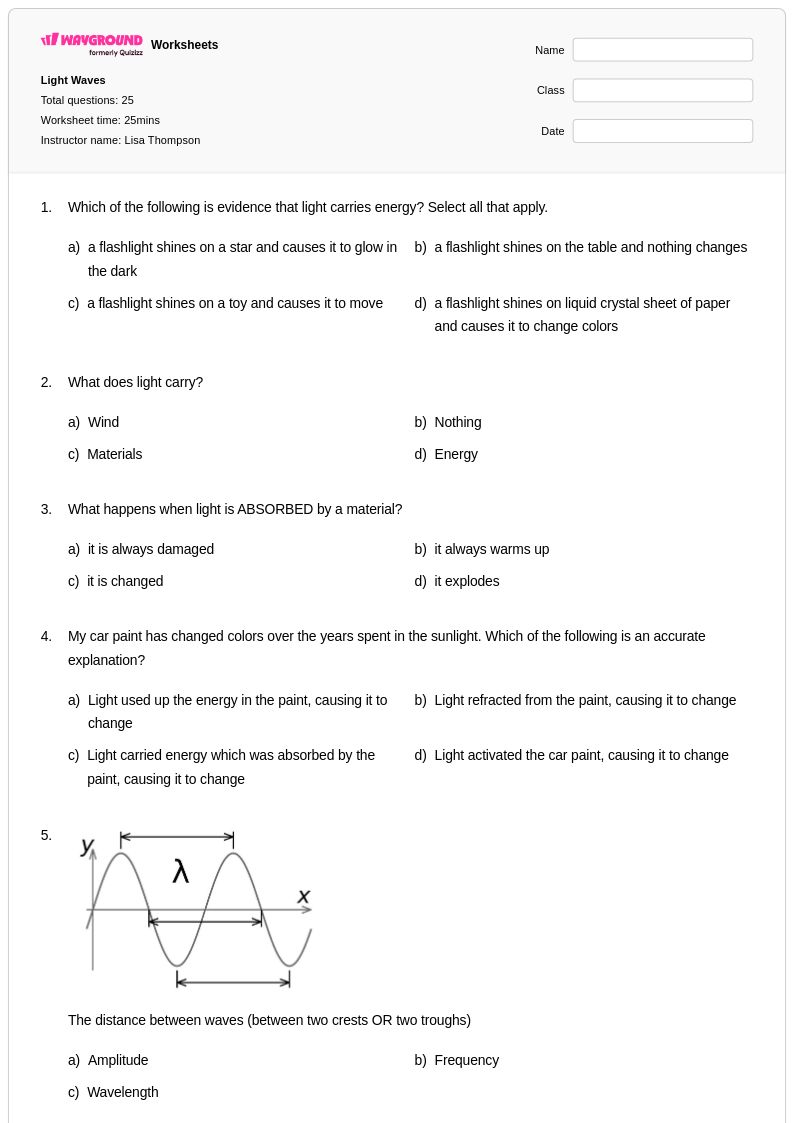
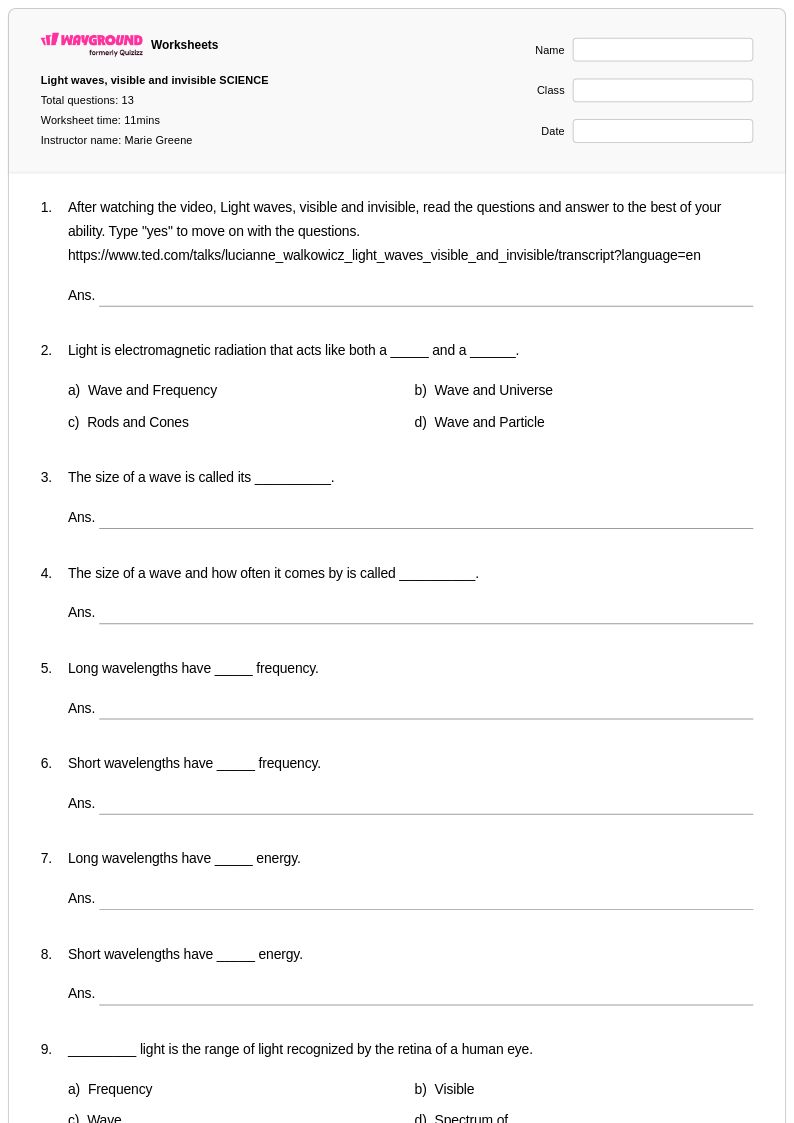
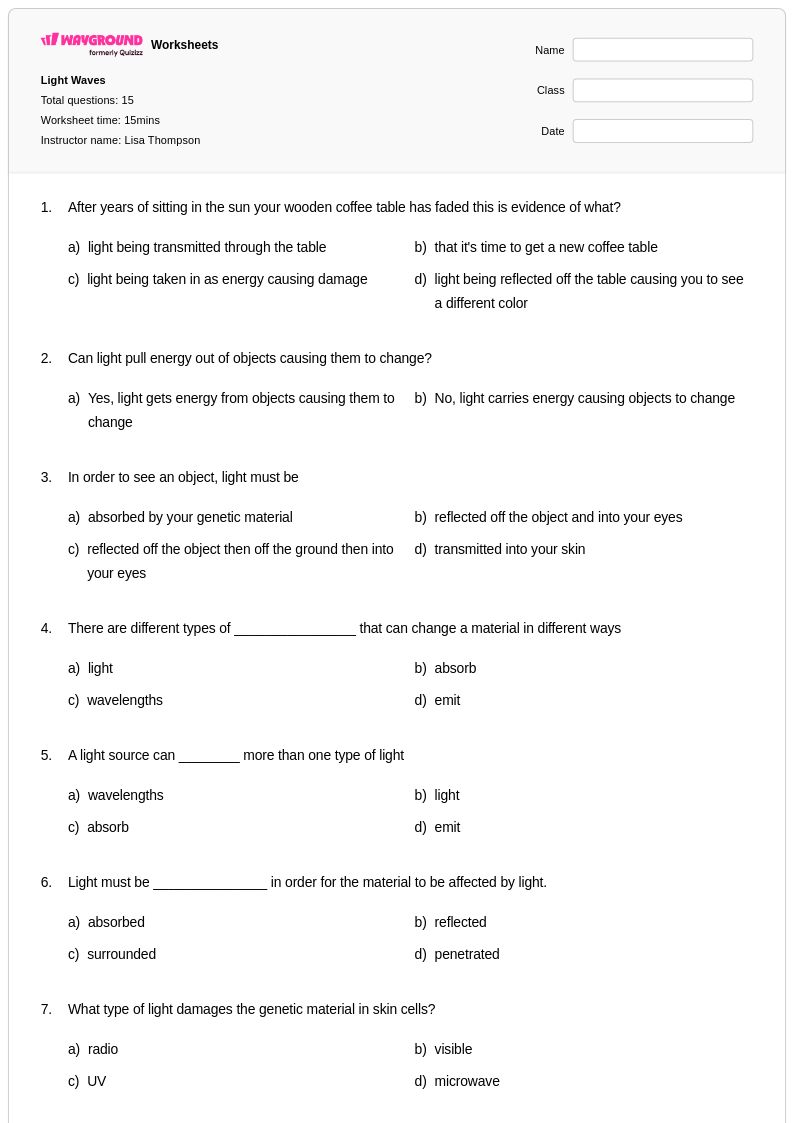
Light waves worksheets for Class 11 physics students available through Wayground provide comprehensive practice with electromagnetic radiation, wave properties, and optical phenomena. These expertly designed resources strengthen students' understanding of wave-particle duality, electromagnetic spectrum analysis, interference patterns, and light behavior through various media. The worksheets feature detailed practice problems covering reflection, refraction, diffraction, and polarization concepts, with accompanying answer keys that support independent learning and self-assessment. Teachers can access these free printables in convenient PDF format, offering structured exercises that build proficiency in calculating wavelength, frequency, and energy relationships while exploring real-world applications of optical physics principles.
Wayground's extensive collection of teacher-created physics resources provides educators with millions of high-quality materials specifically designed for Class 11 light waves instruction. The platform's advanced search and filtering capabilities allow teachers to quickly locate worksheets aligned with curriculum standards, while built-in differentiation tools enable customization for diverse learning needs and ability levels. These digital and printable resources support comprehensive lesson planning, targeted remediation for struggling students, and enrichment opportunities for advanced learners. Teachers can seamlessly integrate these versatile materials into classroom instruction, homework assignments, and assessment preparation, ensuring students develop strong foundational skills in wave optics and electromagnetic theory through systematic practice and application.
FAQs
How do I teach light waves to middle or high school students?
Start by establishing the wave model of light, focusing on the relationship between frequency, wavelength, and wave speed before introducing the electromagnetic spectrum. Use visual diagrams to show how different regions of the spectrum differ in wavelength and energy, then build into behaviors like reflection, refraction, and diffraction through hands-on demonstrations or structured inquiry activities. Connecting abstract wave properties to real-world applications, such as how lenses work or why the sky appears blue, helps students anchor these concepts in observable phenomena.
What types of practice problems help students master light wave properties?
Problems that require students to calculate frequency, wavelength, or wave speed using the wave equation (v = fλ) are foundational for building fluency with light wave properties. Diagram-based questions asking students to identify wave behaviors such as refraction at a boundary or diffraction around an obstacle reinforce conceptual understanding alongside the math. Sequencing tasks that ask students to order electromagnetic waves by frequency, wavelength, or energy are also highly effective for consolidating spectrum knowledge.
What mistakes do students commonly make when learning about the electromagnetic spectrum?
A common error is confusing the inverse relationship between frequency and wavelength, with students often assuming higher frequency also means longer wavelength. Students also frequently misplace the position of visible light within the broader electromagnetic spectrum, particularly underestimating how narrow the visible range is. Another persistent misconception is treating light as exclusively a wave or exclusively a particle rather than understanding its dual nature, which becomes important in more advanced optics content.
How do students often confuse reflection and refraction?
Students tend to conflate these two behaviors because both involve a change in the direction of light. The key distinction is that reflection occurs when light bounces off a surface and remains in the same medium, while refraction involves light passing into a new medium and bending due to a change in speed. Diagram practice showing light rays at boundaries, with labeled angles of incidence and refraction, is one of the most reliable ways to address this confusion directly.
How can I use light waves worksheets from Wayground in my classroom?
Wayground's light waves worksheets are available as printable PDFs for traditional classroom use and in digital formats for technology-integrated learning environments, and they can also be hosted as interactive quizzes directly on the Wayground platform. Teachers can assign them as in-class practice, homework, or assessment prep, with complete answer keys included for efficient grading. For classes with diverse learners, Wayground supports accommodations such as read aloud, extended time, reduced answer choices, and adjustable reading modes that can be configured per student without disrupting the rest of the class.
How do I differentiate light waves instruction for students at different levels?
For struggling learners, begin with concrete wave diagrams and vocabulary-focused activities before introducing calculations, and use Wayground's reduced answer choices accommodation to lower cognitive load on assessments. On-level students benefit from structured problem sets that build from identifying wave properties to applying the wave equation in context. Advanced students can be extended into polarization, interference patterns, or introductory quantum optics concepts, and Wayground's customization tools allow teachers to modify existing worksheets to match these differentiated objectives.