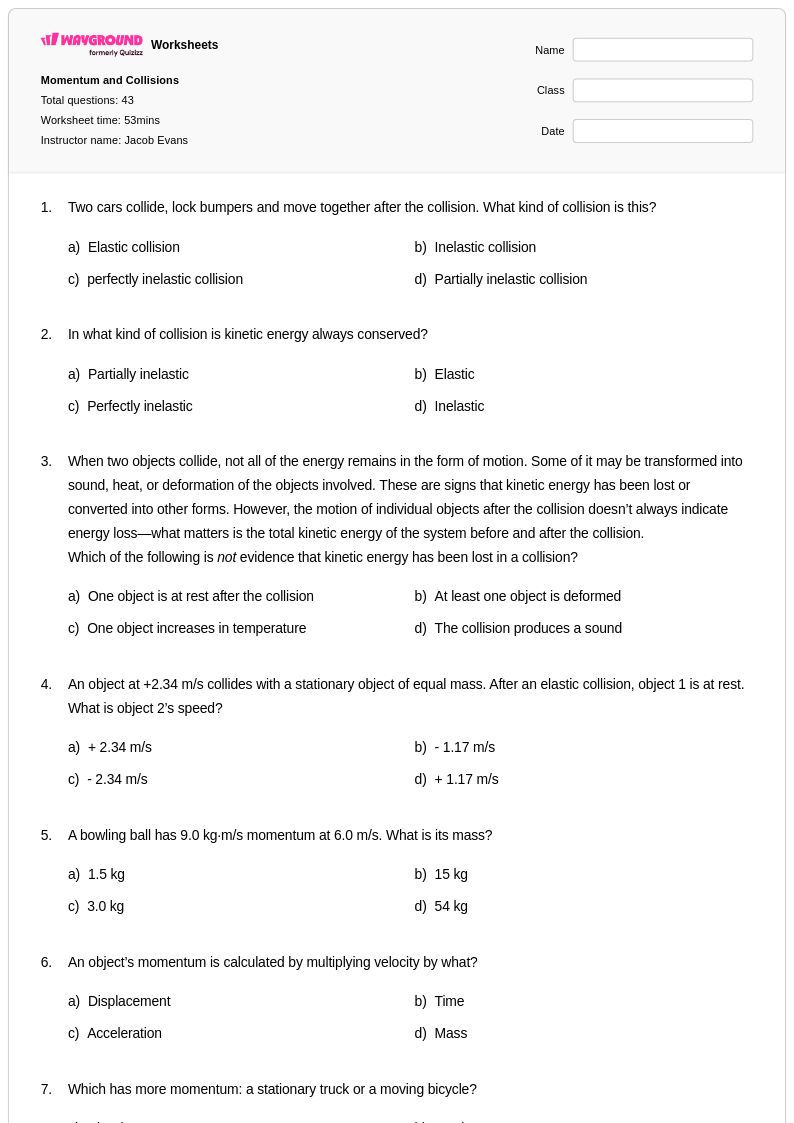
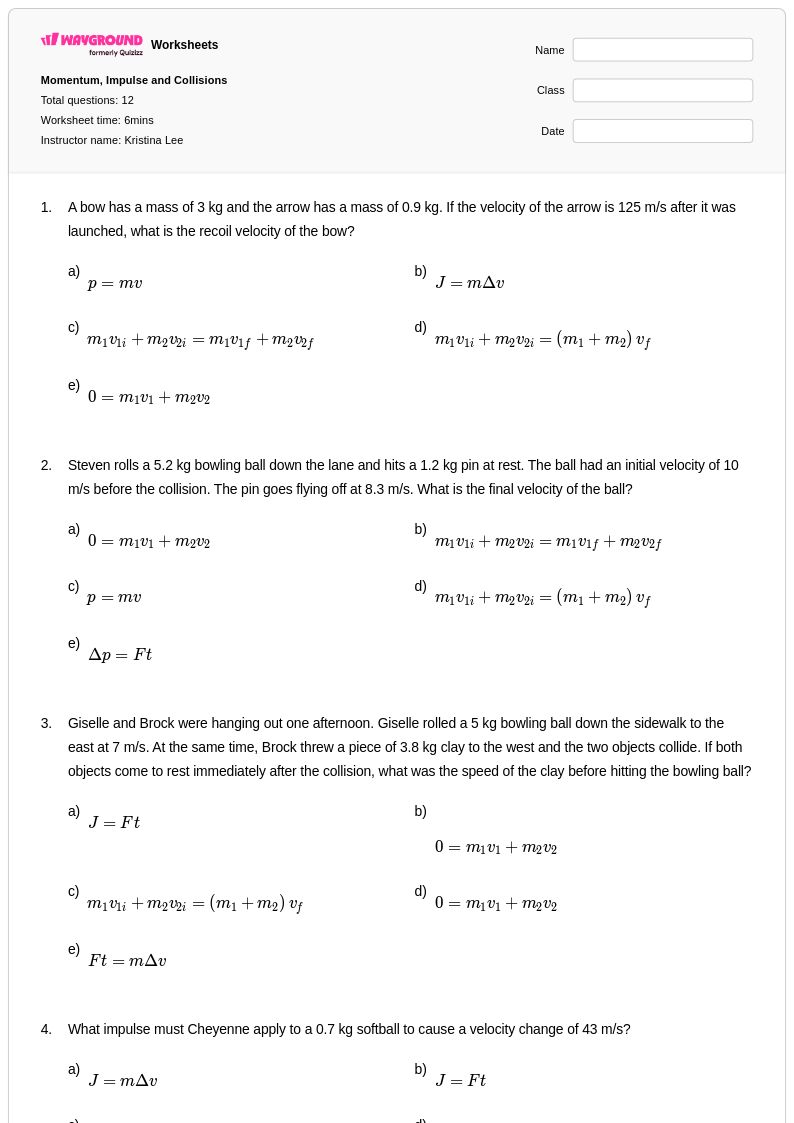
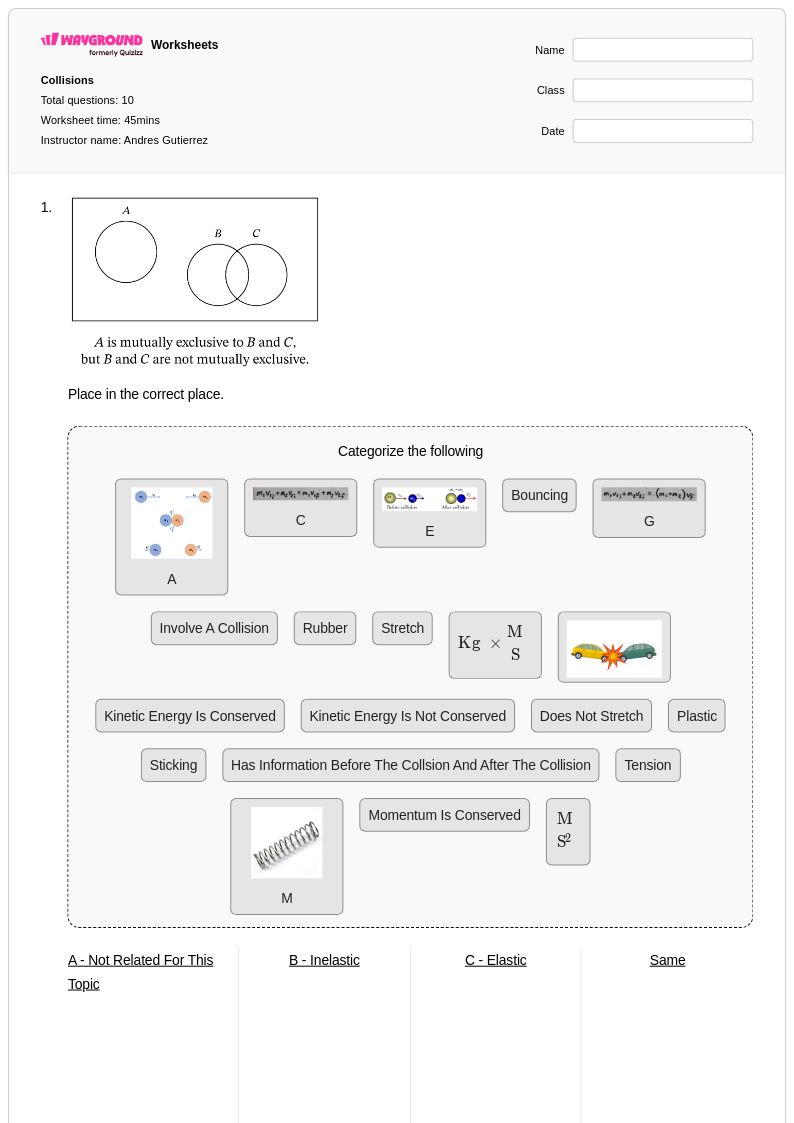
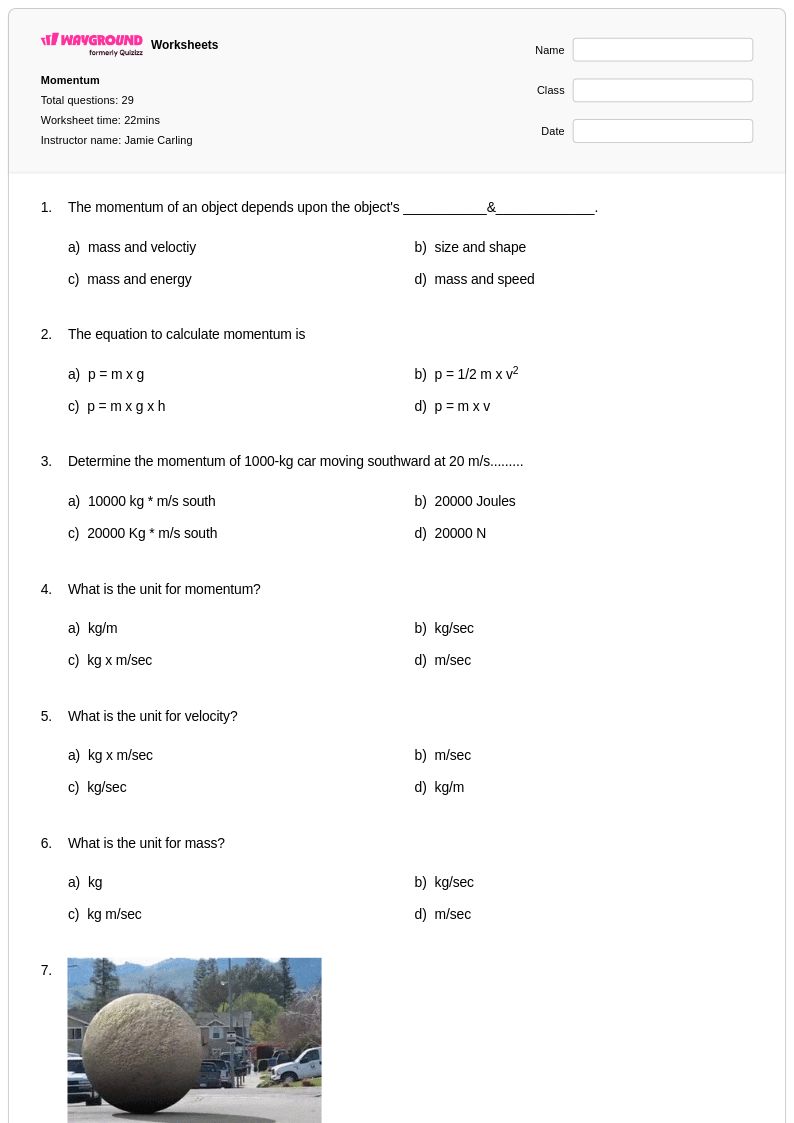
Free Printable Momentum and Collisions Worksheets for Class 11
Class 11 momentum and collisions worksheets from Wayground provide comprehensive practice problems and answer keys, helping students master collision physics through engaging printables and free PDF resources.
Explore printable Momentum and Collisions worksheets for Class 11
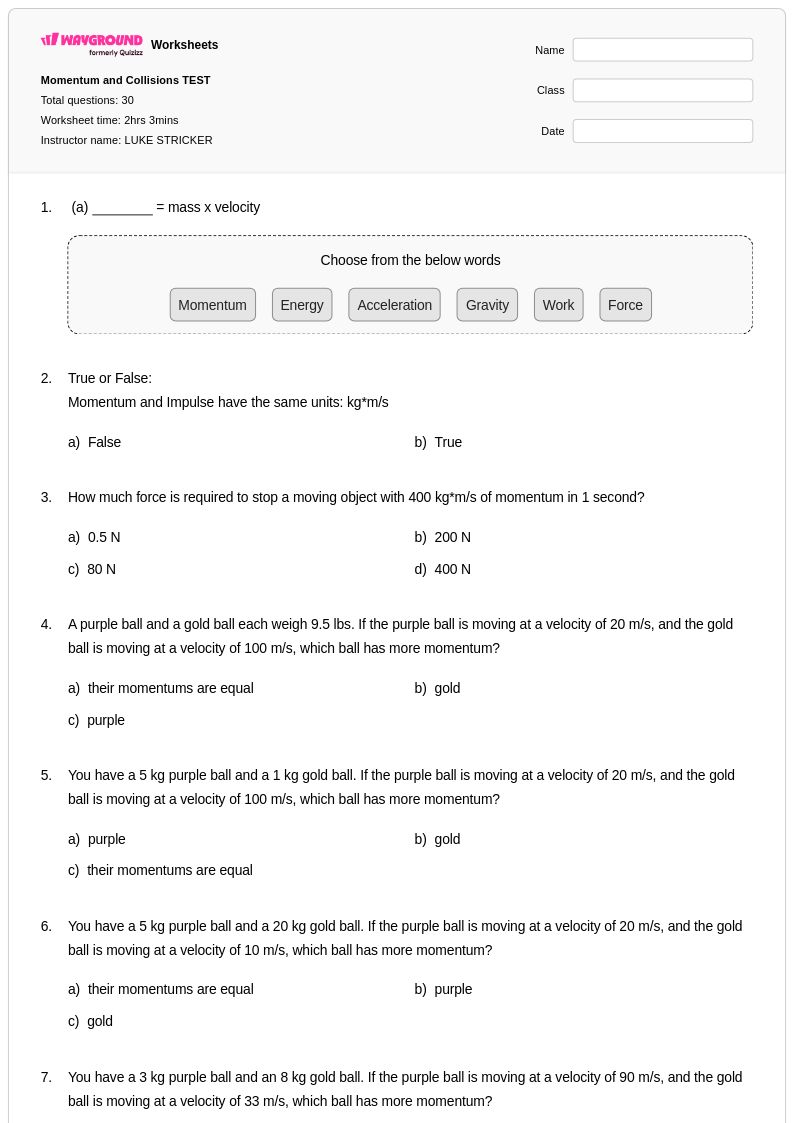
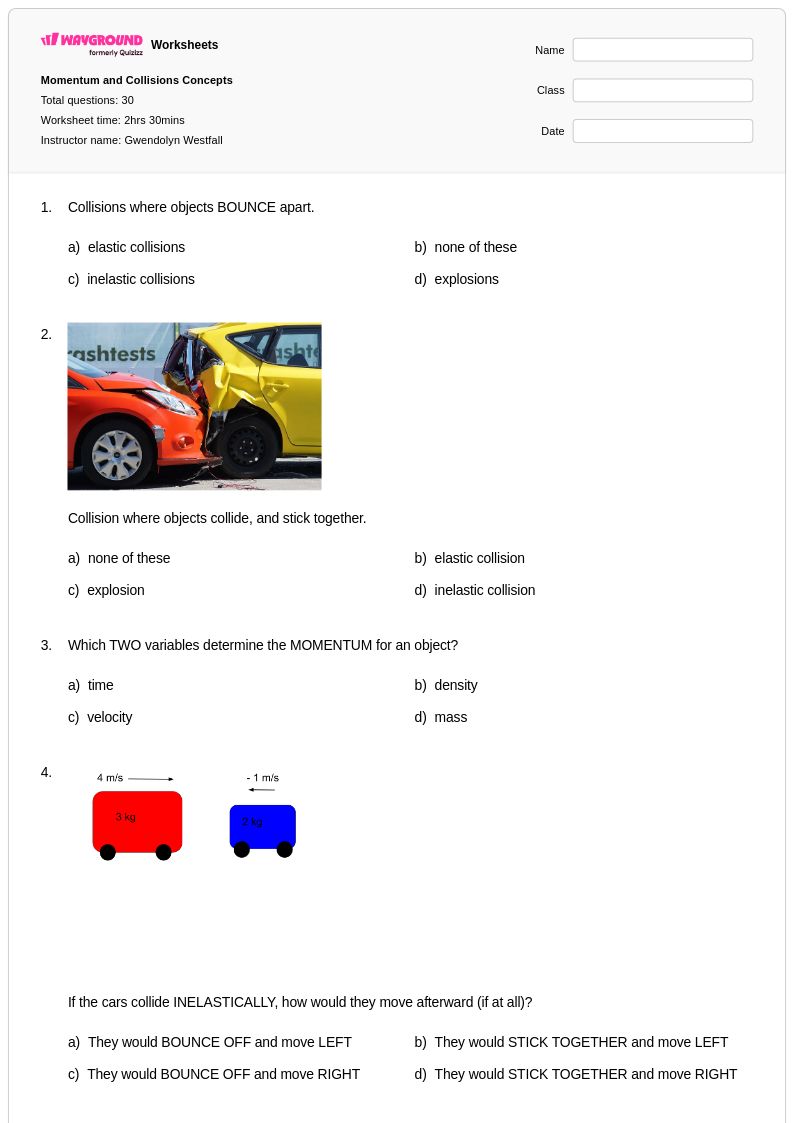
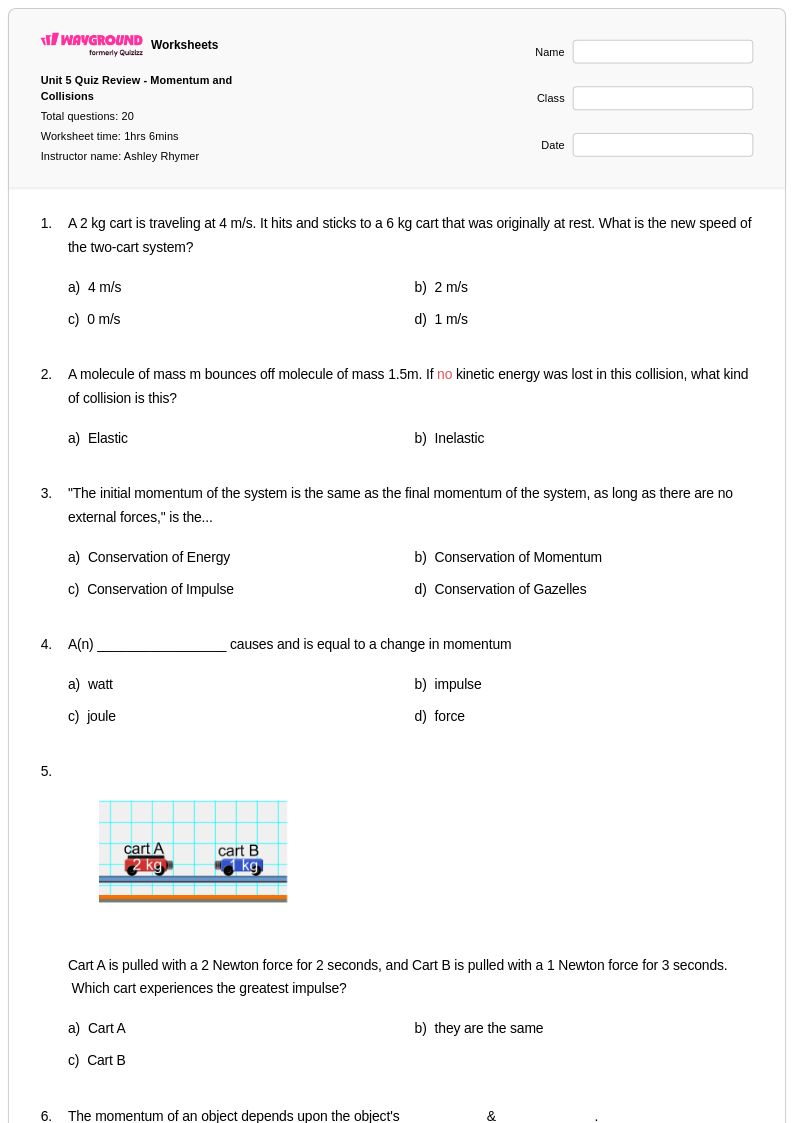
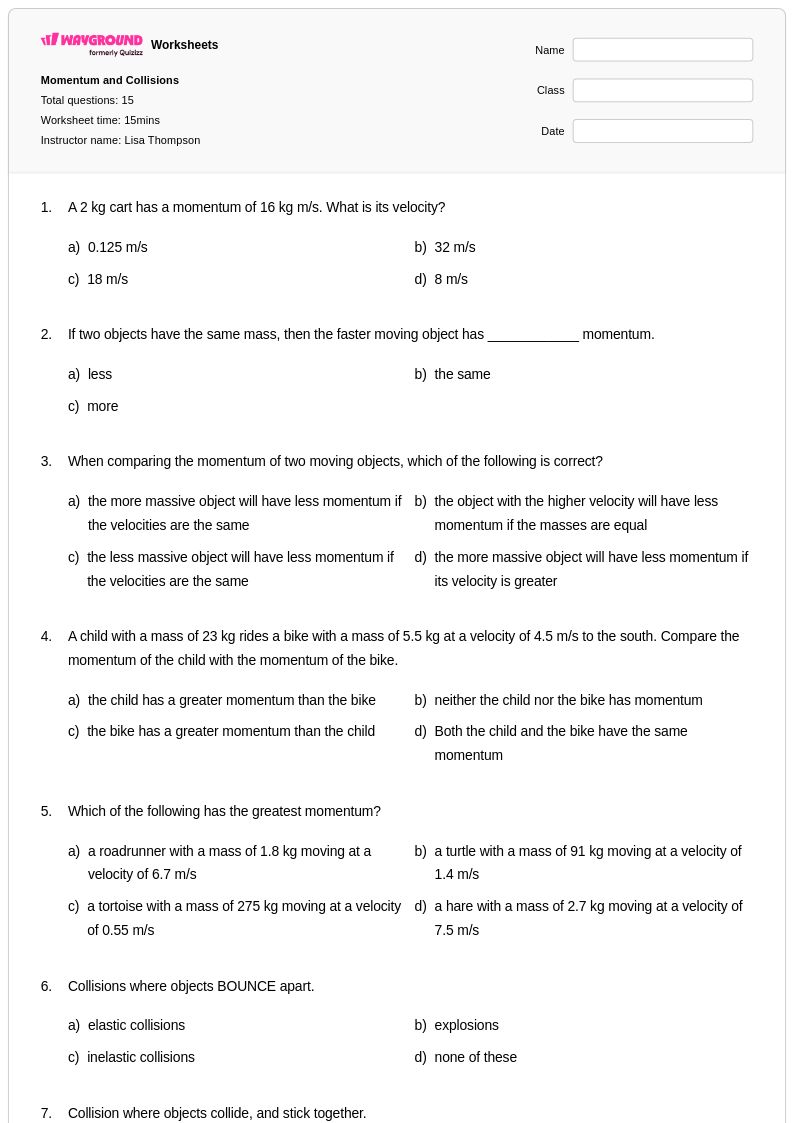
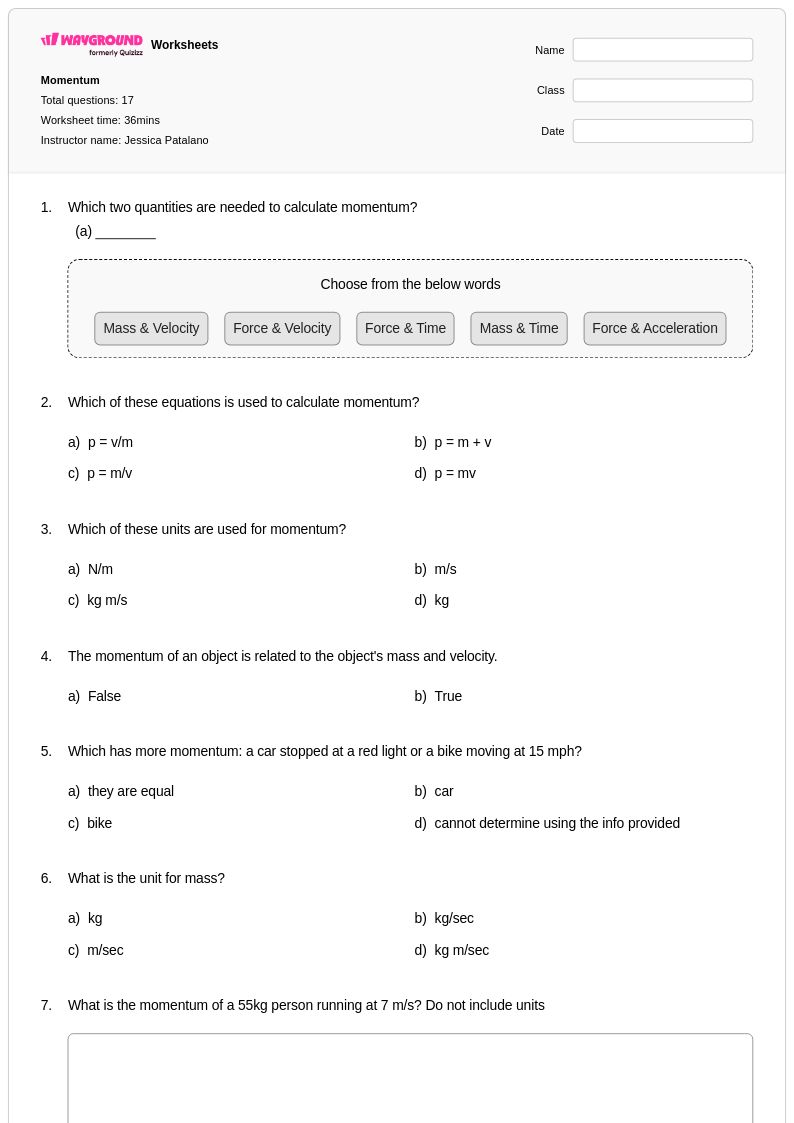
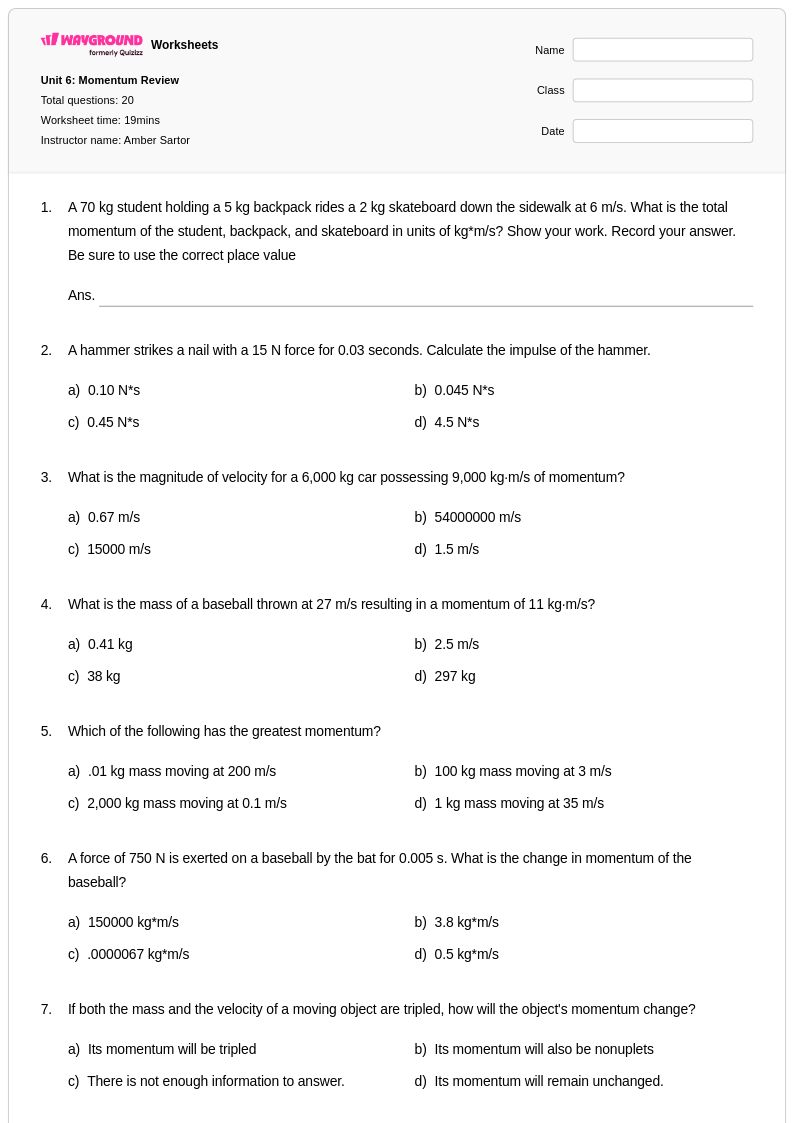
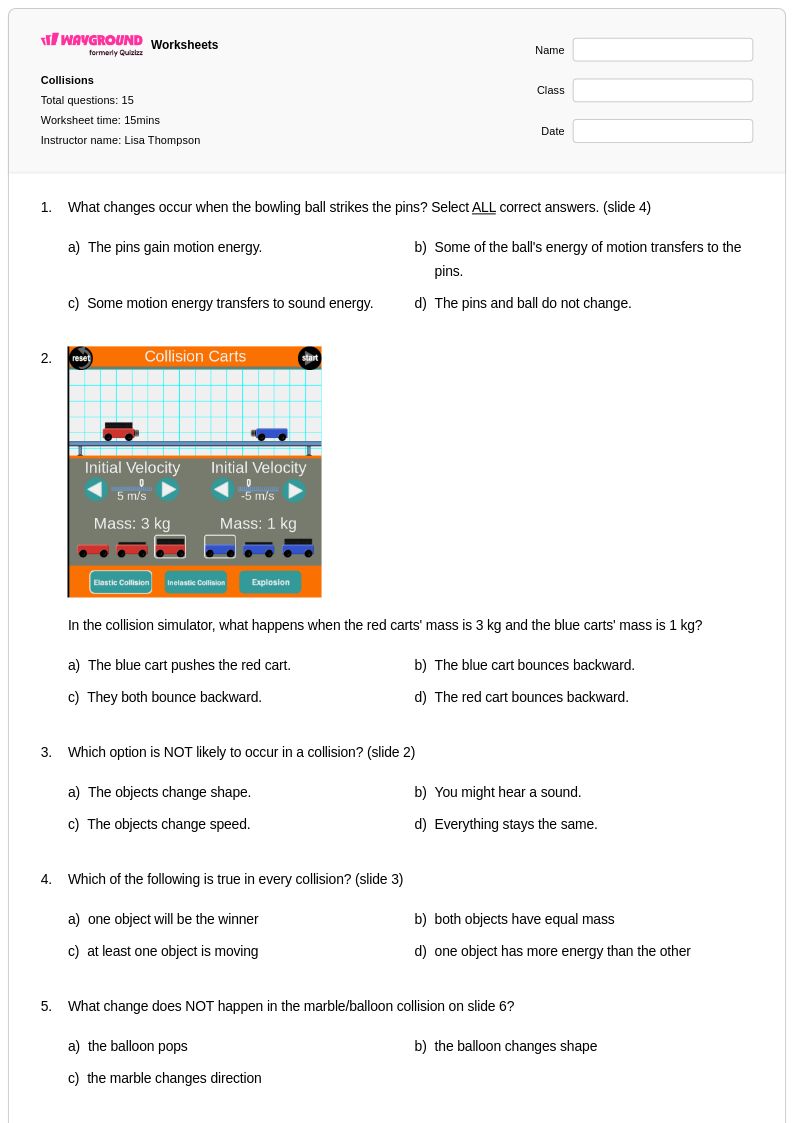
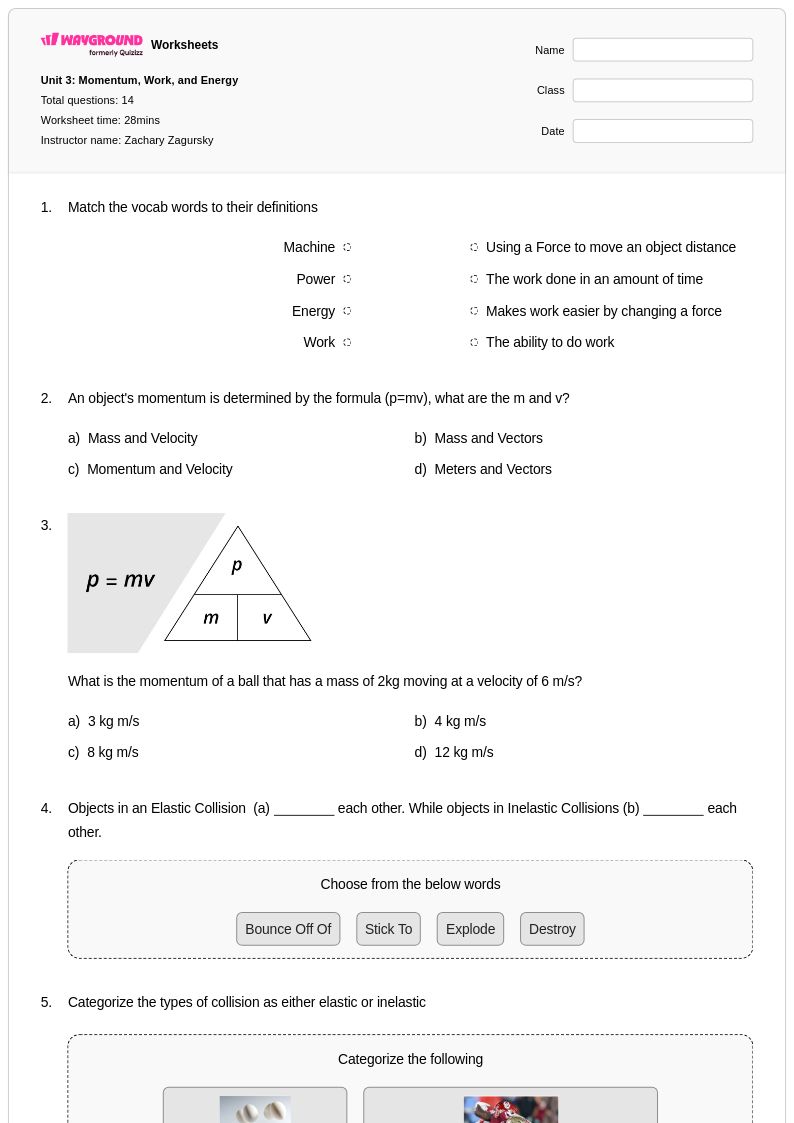
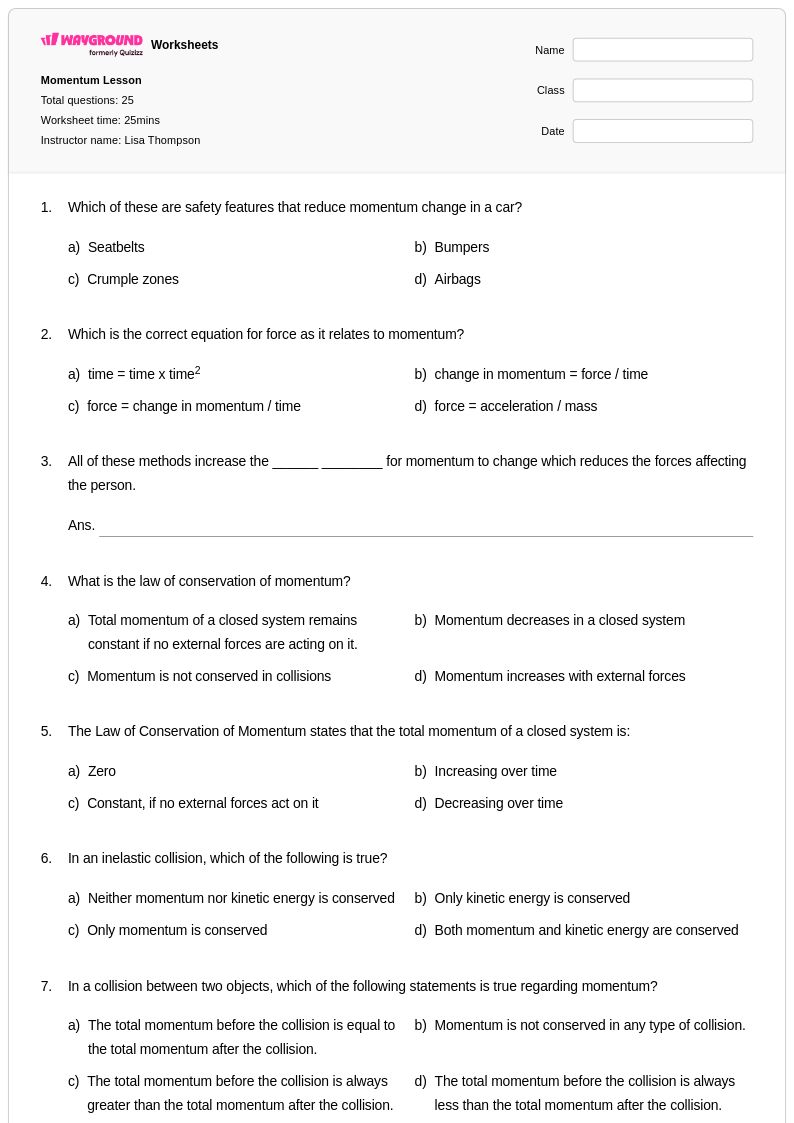
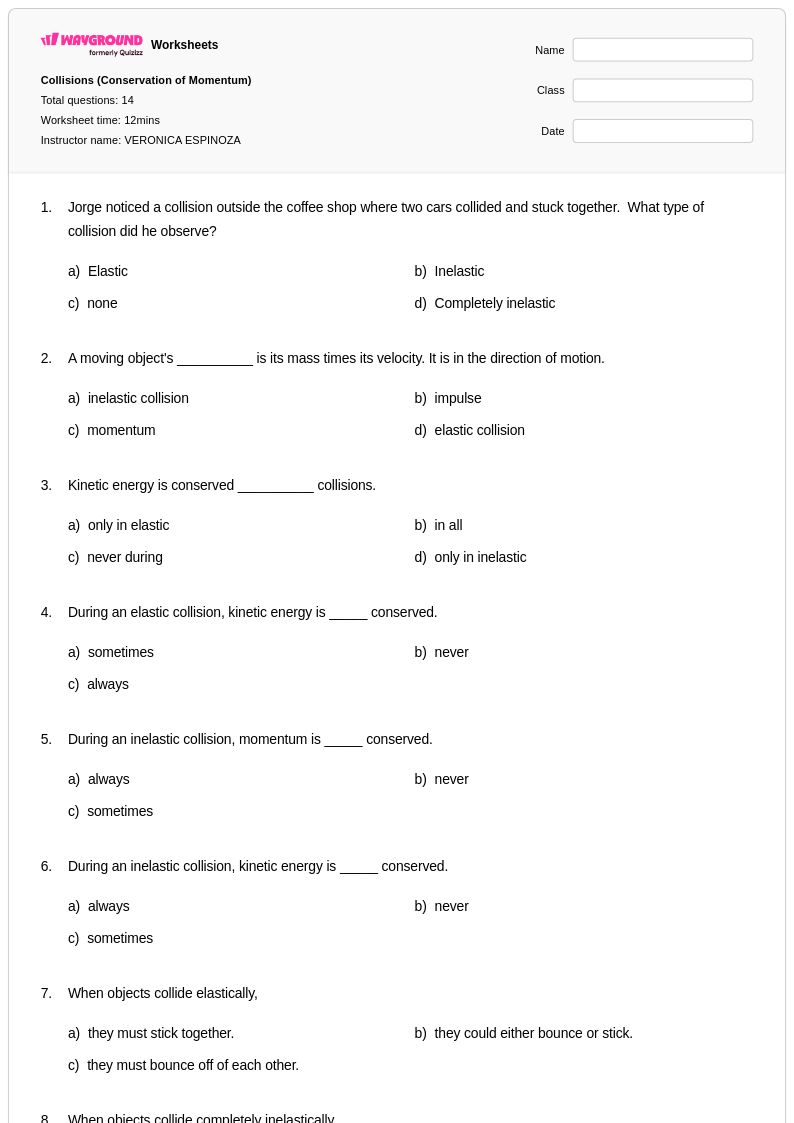
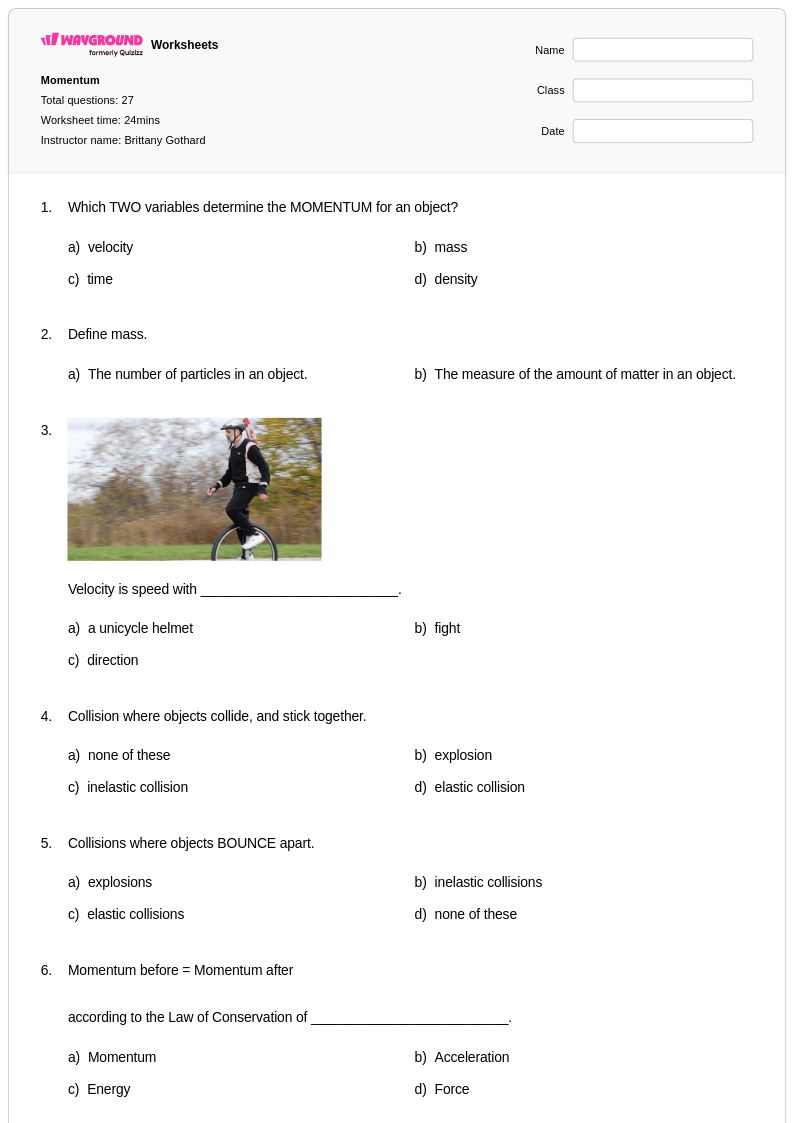
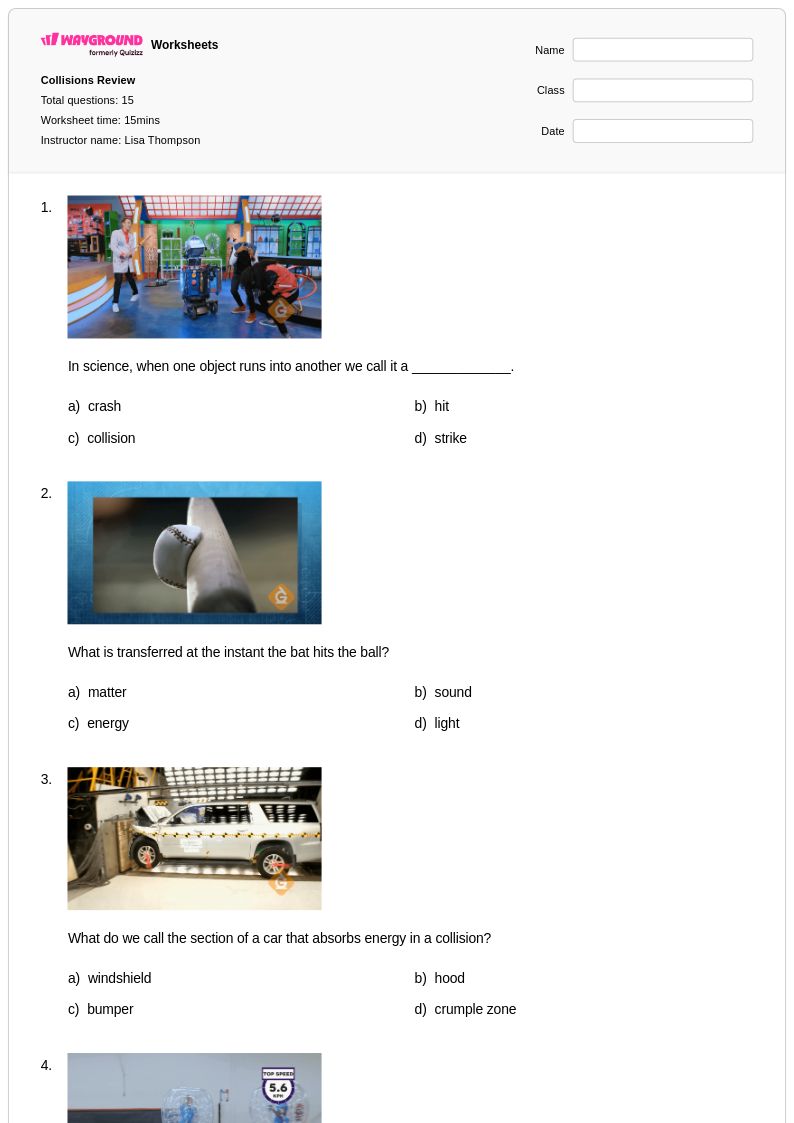
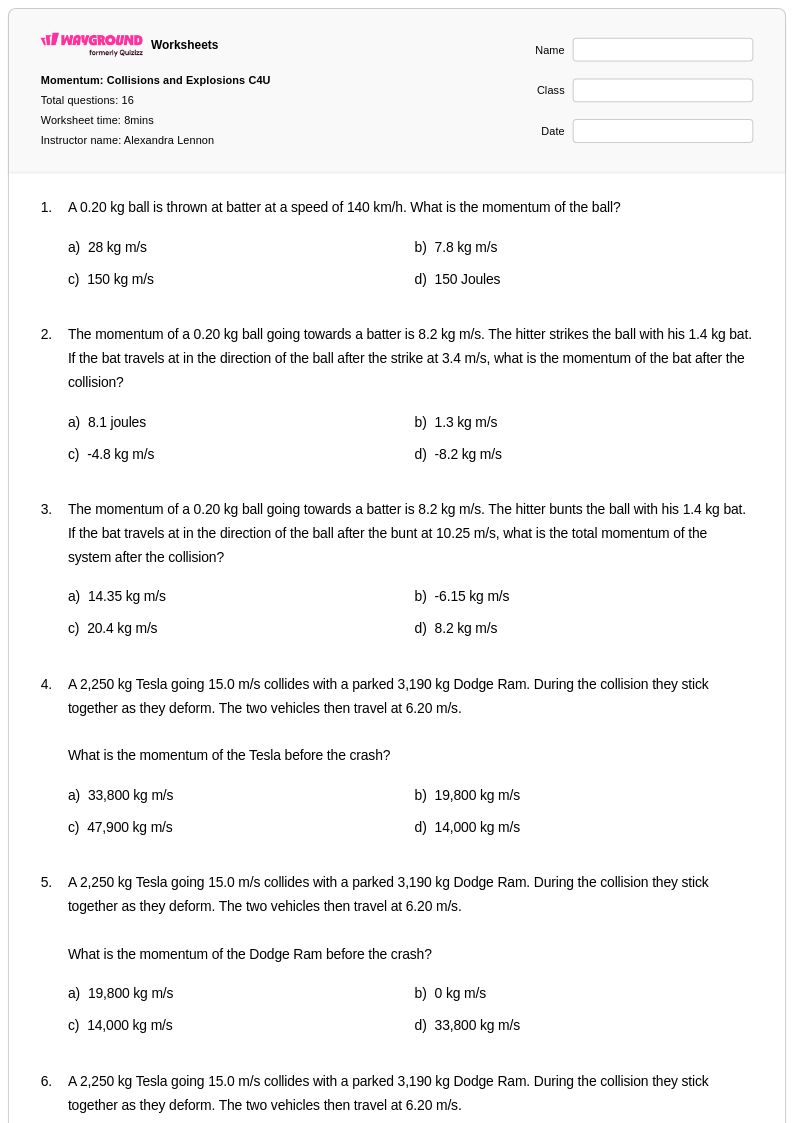
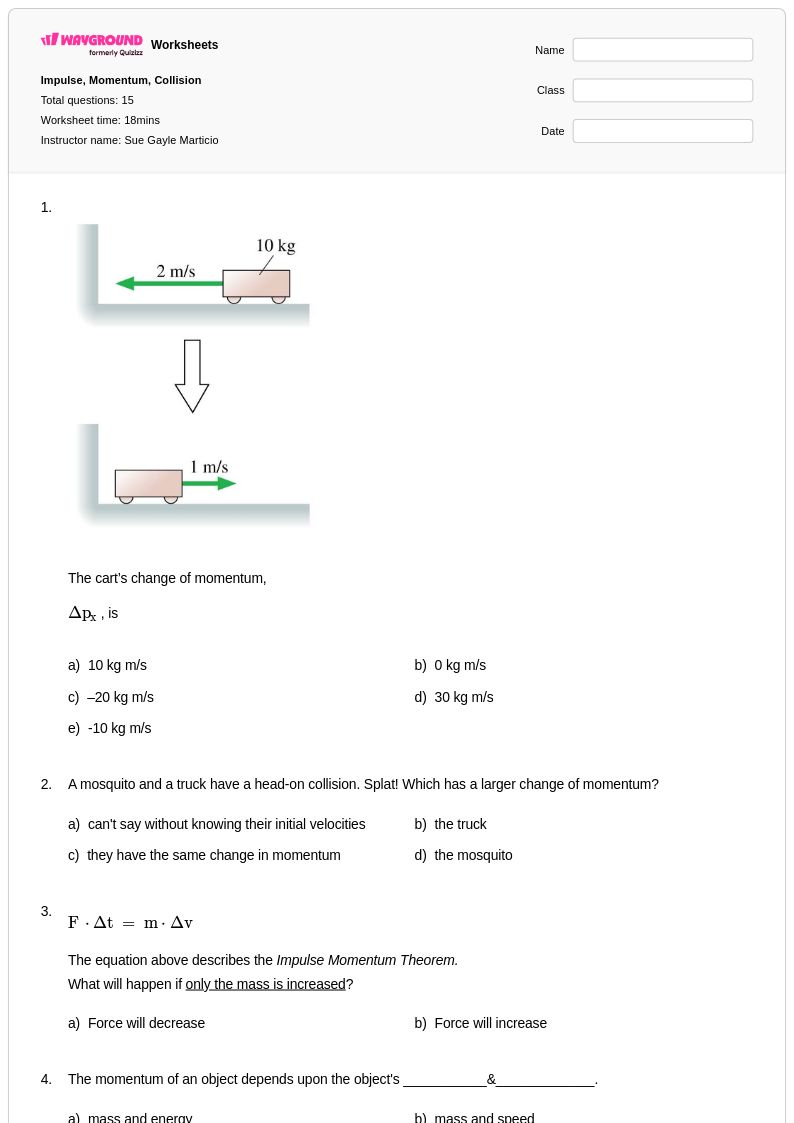
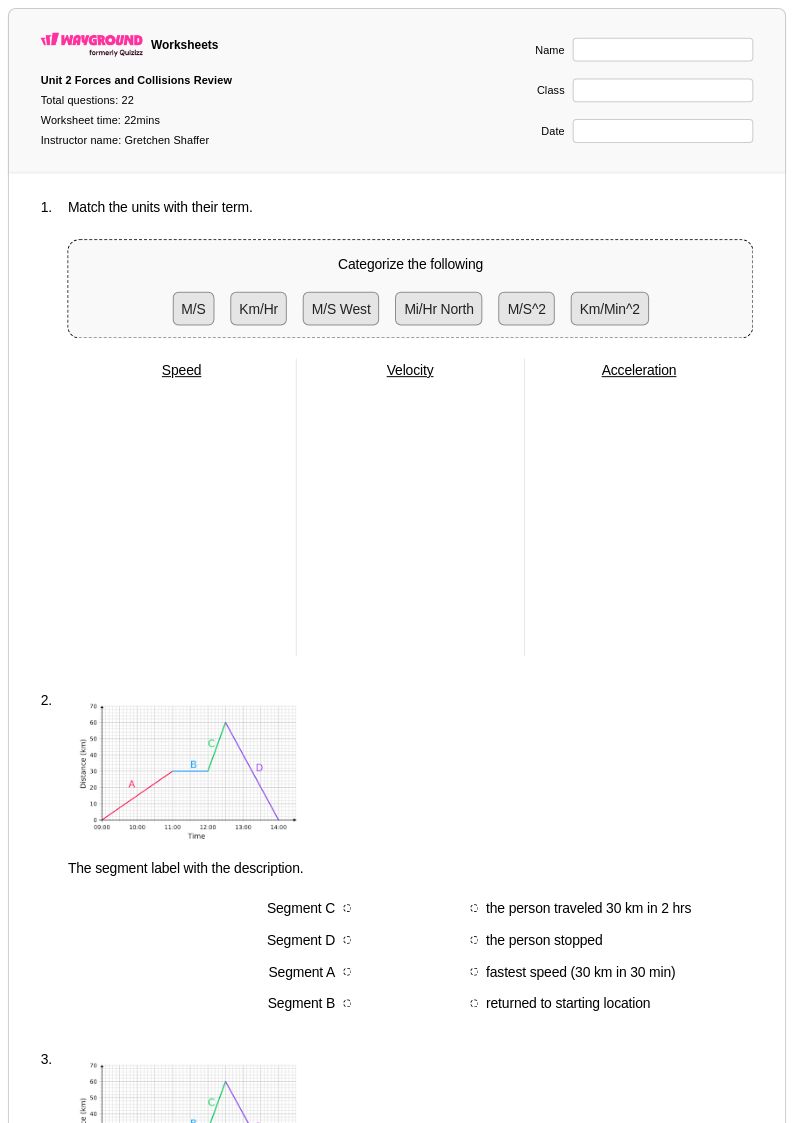
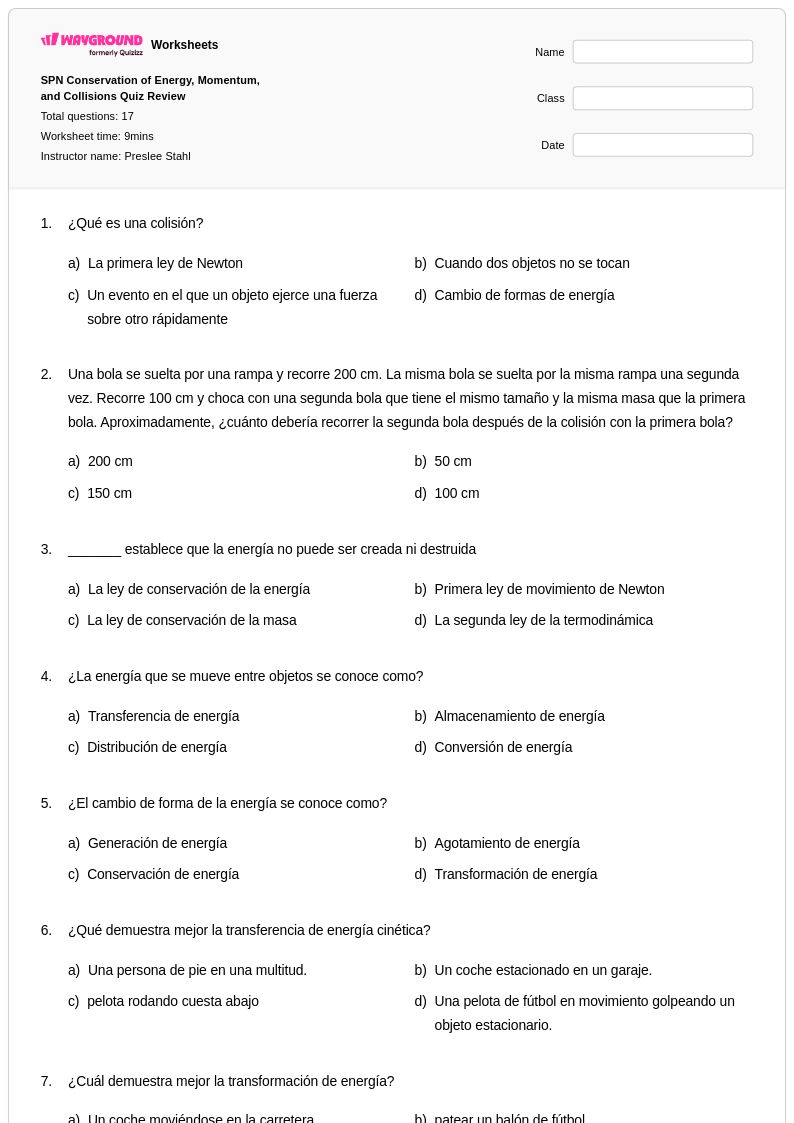
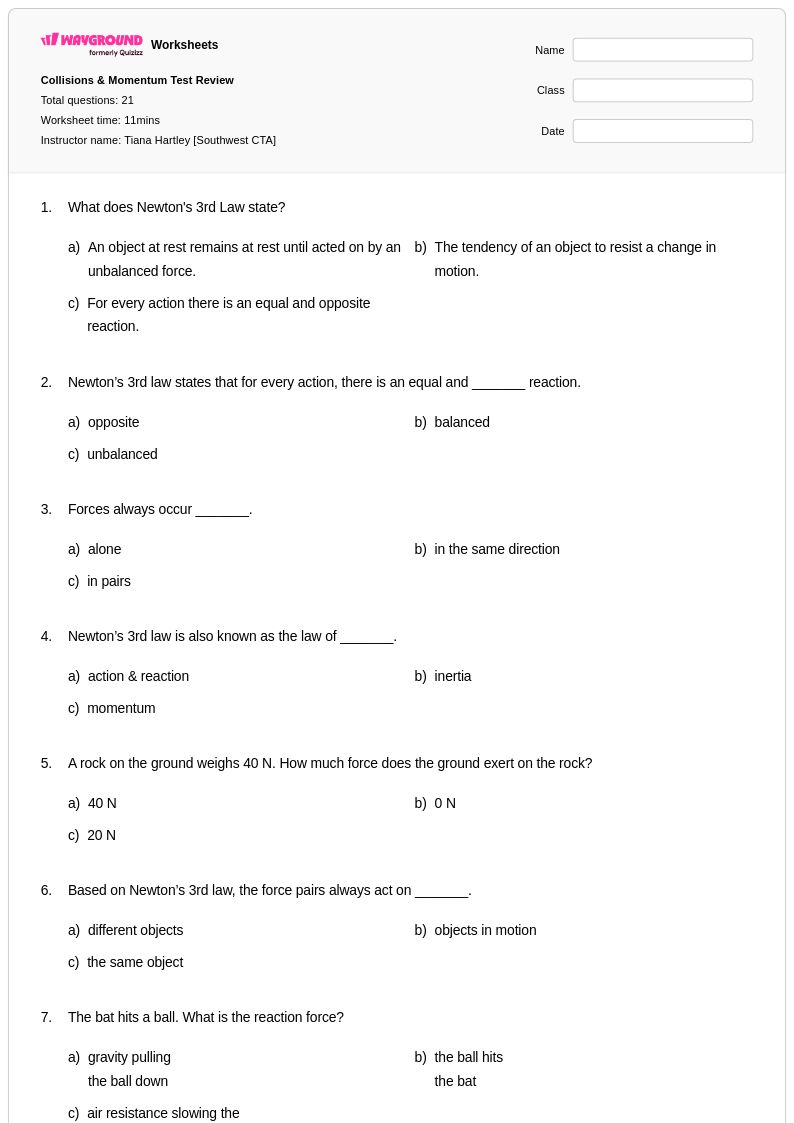
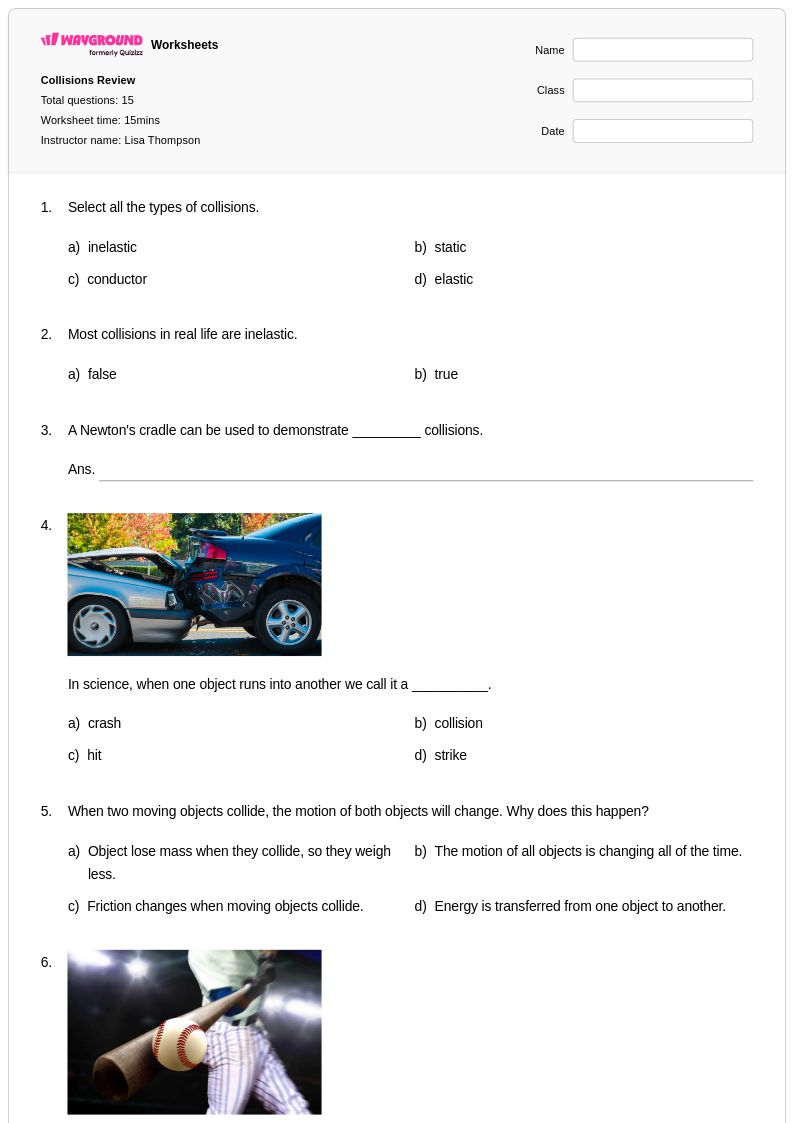
Class 11 momentum and collisions worksheets available through Wayground (formerly Quizizz) provide comprehensive coverage of fundamental physics concepts including conservation of momentum, elastic and inelastic collisions, and impulse-momentum theorem applications. These expertly designed resources strengthen students' analytical problem-solving abilities through systematic practice with collision scenarios, momentum calculations, and real-world physics applications. Each worksheet collection includes detailed answer keys that guide students through complex multi-step problems, while printable pdf formats ensure accessibility for both classroom instruction and independent study. The free practice problems progress from basic momentum calculations to advanced collision analysis, helping students master the mathematical relationships between mass, velocity, and momentum in various physical systems.
Wayground's extensive collection of momentum and collisions worksheets draws from millions of teacher-created resources, offering educators powerful search and filtering capabilities to locate materials precisely aligned with Class 11 physics standards and learning objectives. The platform's differentiation tools enable teachers to customize worksheet difficulty levels and problem types, supporting both remediation for struggling students and enrichment opportunities for advanced learners. These resources are available in both printable and digital pdf formats, providing maximum flexibility for lesson planning, homework assignments, and targeted skill practice sessions. Teachers can efficiently organize collision physics instruction using worksheets that seamlessly integrate conceptual understanding with quantitative problem-solving, while robust filtering options help identify materials that address specific momentum topics or accommodate diverse classroom needs.
FAQs
How do I teach conservation of momentum in physics class?
Start by building students' understanding of momentum as a product of mass and velocity before introducing the principle that total momentum in a closed system remains constant. Use concrete demonstrations such as cart collisions on a frictionless track or billiard ball scenarios to make the abstract law tangible. Once students can visualize the concept, transition to algebraic problem-solving with progressively complex collision scenarios, distinguishing elastic collisions (where kinetic energy is conserved) from inelastic ones (where it is not).
What practice problems best help students understand momentum and collisions?
Effective practice should progress from basic momentum calculations using p = mv, to single-object impulse problems, and then to multi-object collision scenarios requiring conservation of momentum. Problems that ask students to distinguish between elastic and inelastic collisions are especially valuable because they force conceptual reasoning alongside calculation. Including real-world contexts such as vehicle crashes or sports impacts helps students connect the math to observable events.
What mistakes do students commonly make when solving momentum and collision problems?
One of the most frequent errors is failing to treat momentum as a vector quantity, which causes sign errors when objects move in opposite directions. Students also commonly misapply conservation of momentum to systems that are not closed, ignoring external forces like friction. In two-dimensional collision problems, a third common mistake is combining x- and y-components instead of resolving and conserving them independently.
How do I help students tell the difference between elastic and inelastic collisions?
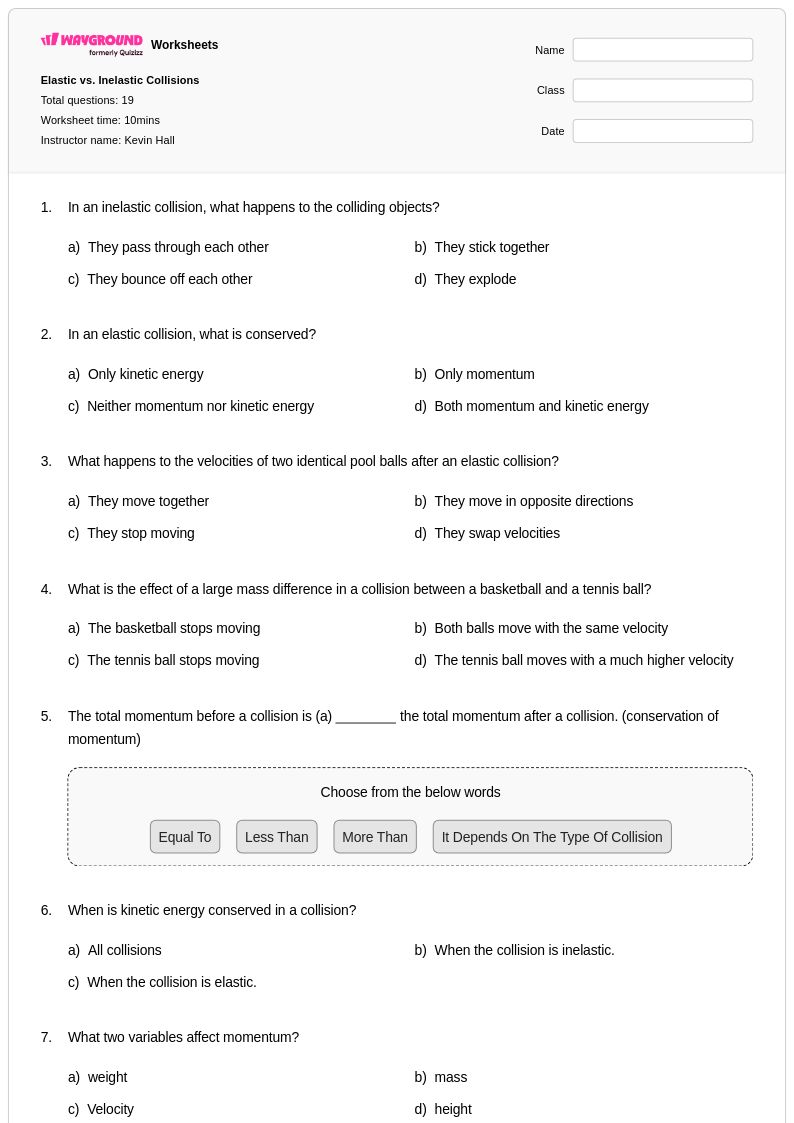
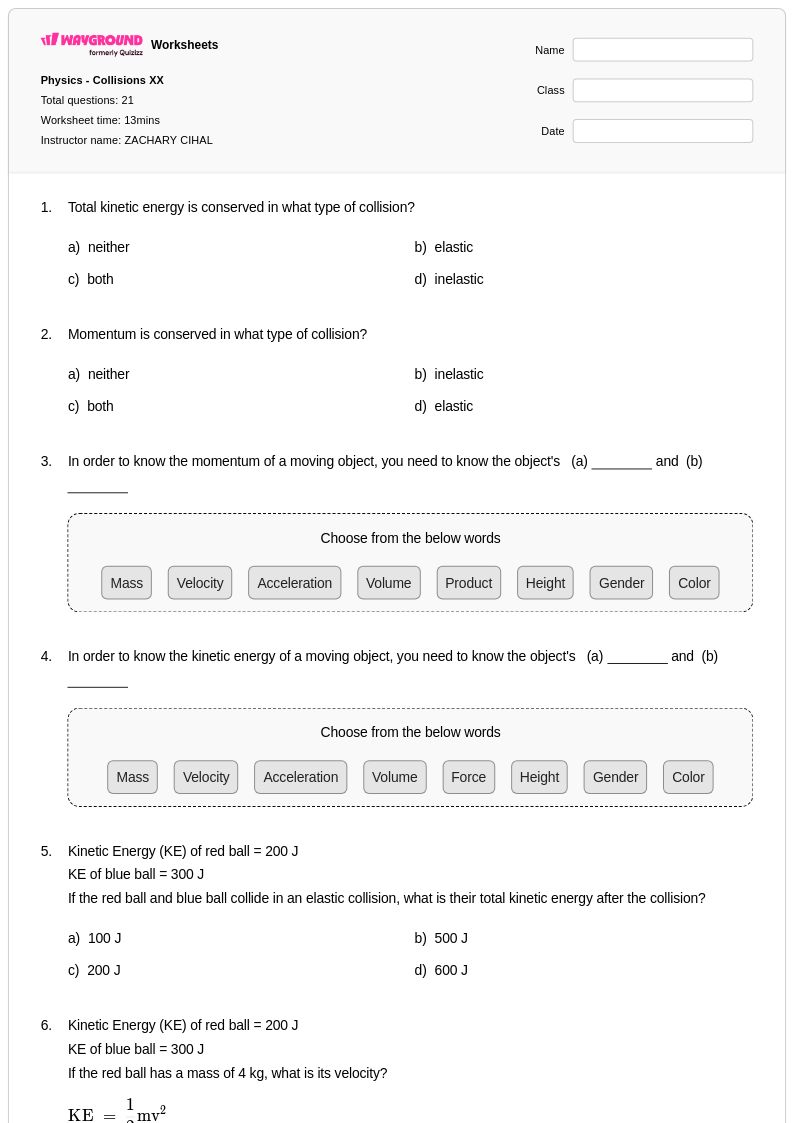
Emphasize that both collision types conserve momentum, but only elastic collisions also conserve kinetic energy. A practical classroom approach is to have students calculate total kinetic energy before and after a collision and compare the values. If kinetic energy is lost, the collision is inelastic; if it is perfectly preserved, it is elastic. Reinforcing this with worked examples and error-checking exercises helps students apply the distinction reliably under test conditions.
How do I use Wayground's momentum and collisions worksheets in my physics class?
Wayground's momentum and collisions worksheets are available as printable PDFs for traditional classroom use and in digital formats for technology-integrated learning environments, and can also be hosted as a quiz directly on Wayground. Teachers can use them for initial instruction, targeted remediation, or enrichment depending on student proficiency. All worksheets include detailed answer keys so students can verify their work and self-identify gaps, making them effective for both guided practice and independent review.
How can I differentiate momentum and collision instruction for students at different levels?
For struggling students, begin with single-variable momentum problems before introducing conservation equations, and use Wayground's reduced answer choices accommodation to lower cognitive load during digital practice. Advanced students can be directed toward two-dimensional collision problems and scenarios that require distinguishing elastic from inelastic outcomes. Wayground also supports read-aloud and extended time accommodations for individual students, allowing the same worksheet to serve multiple learner profiles without additional preparation.