
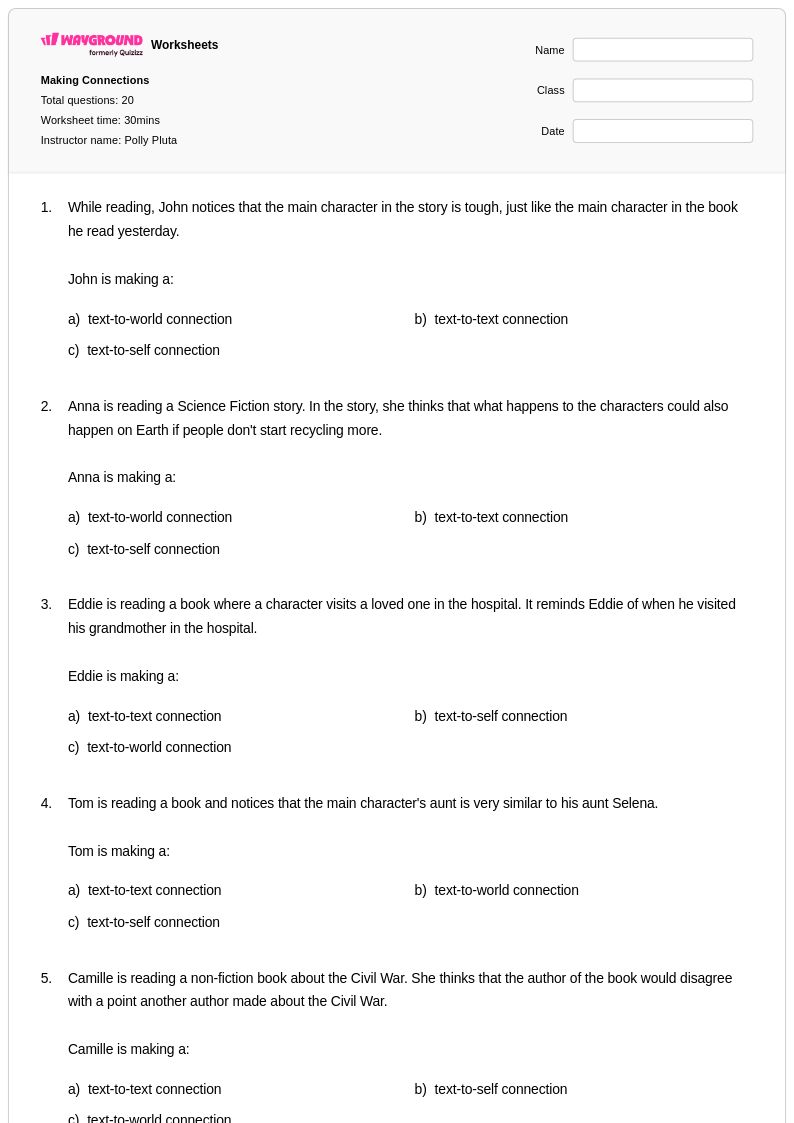
20Q
3rd - 5th
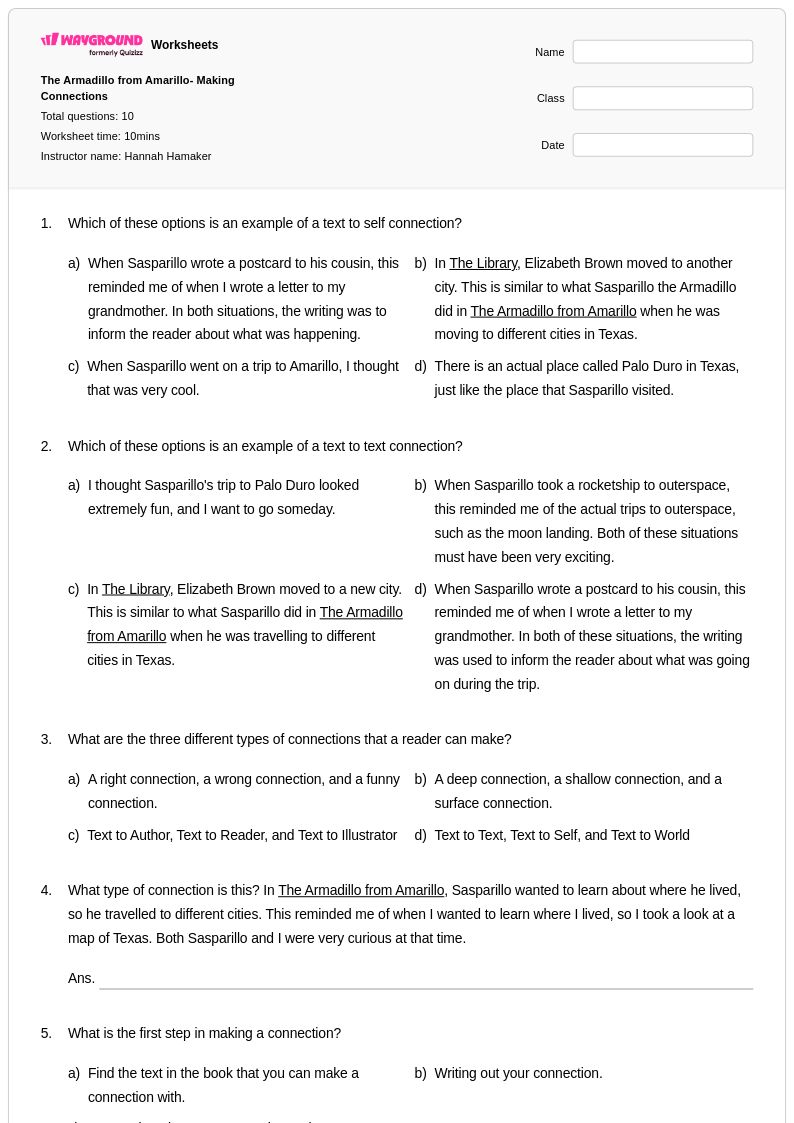
10Q
3rd - 5th
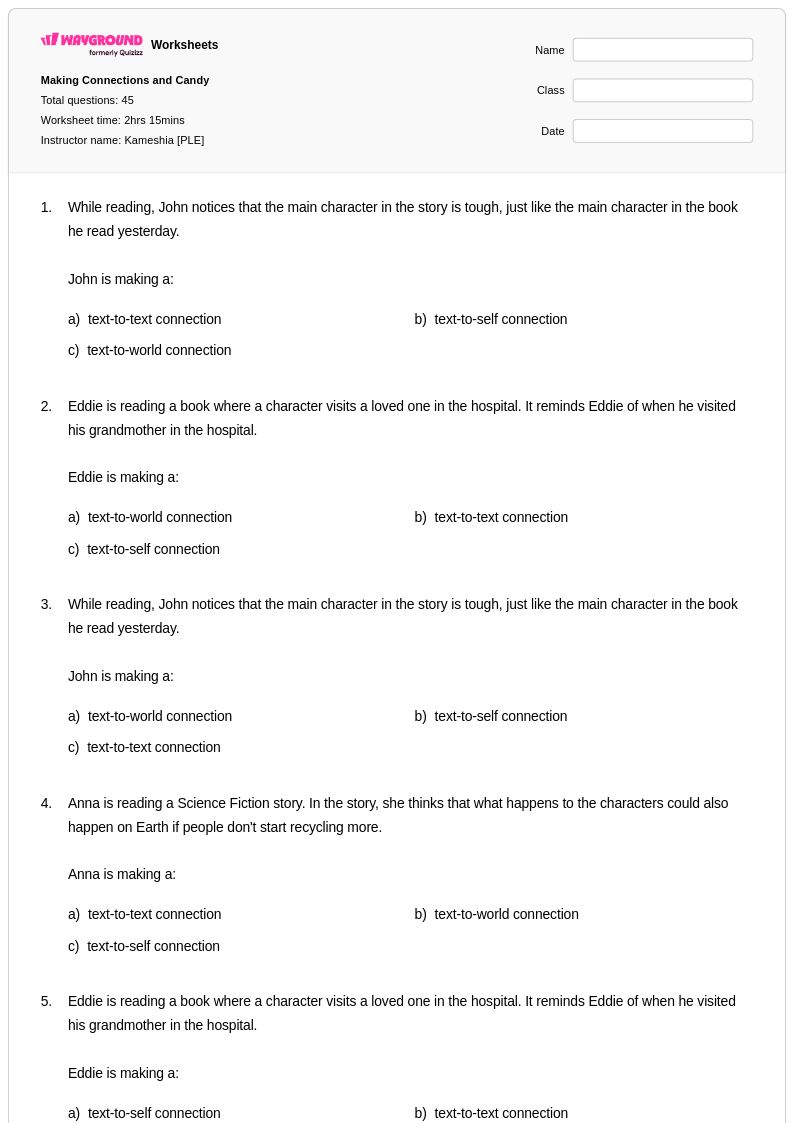
45Q
3rd
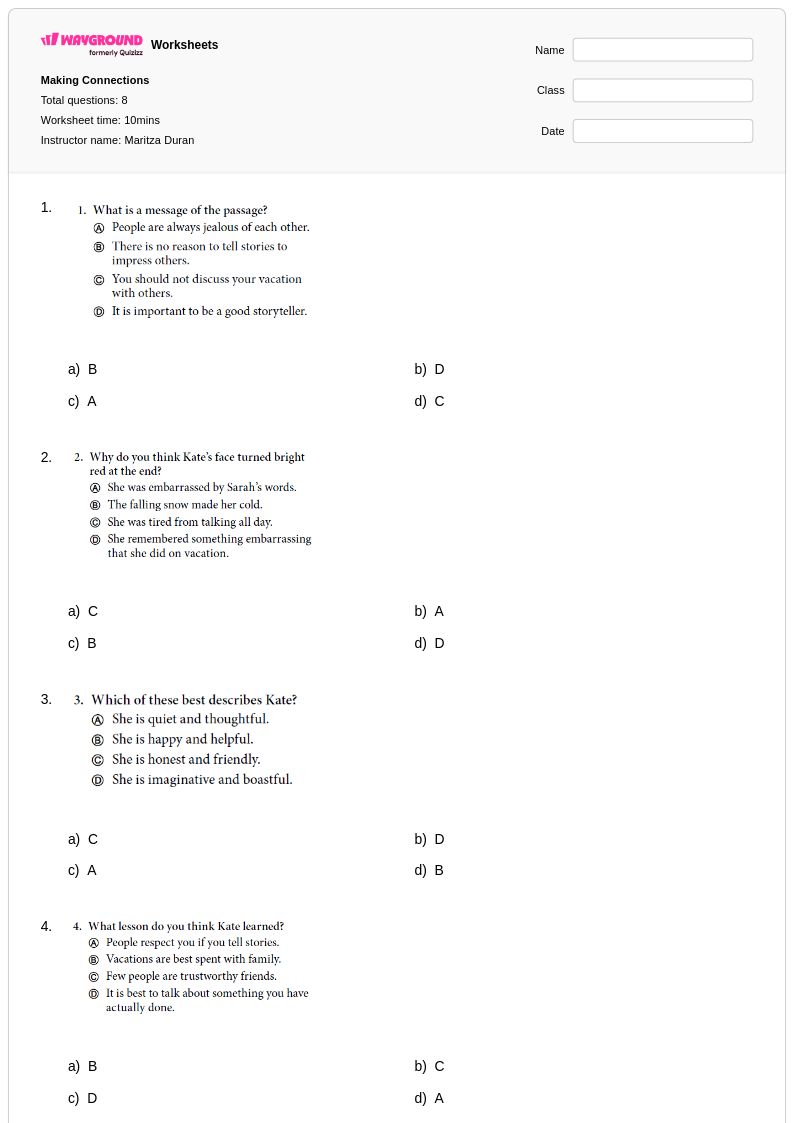
8Q
3rd - 4th
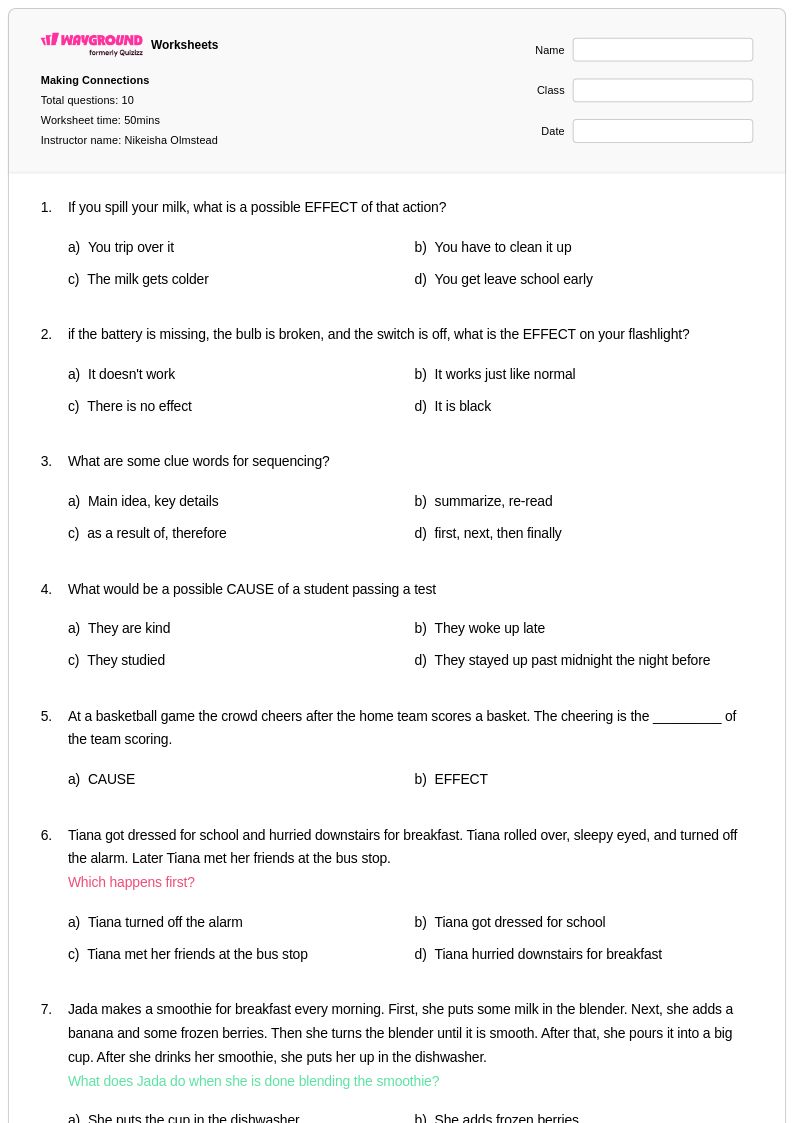
10Q
2nd - 3rd
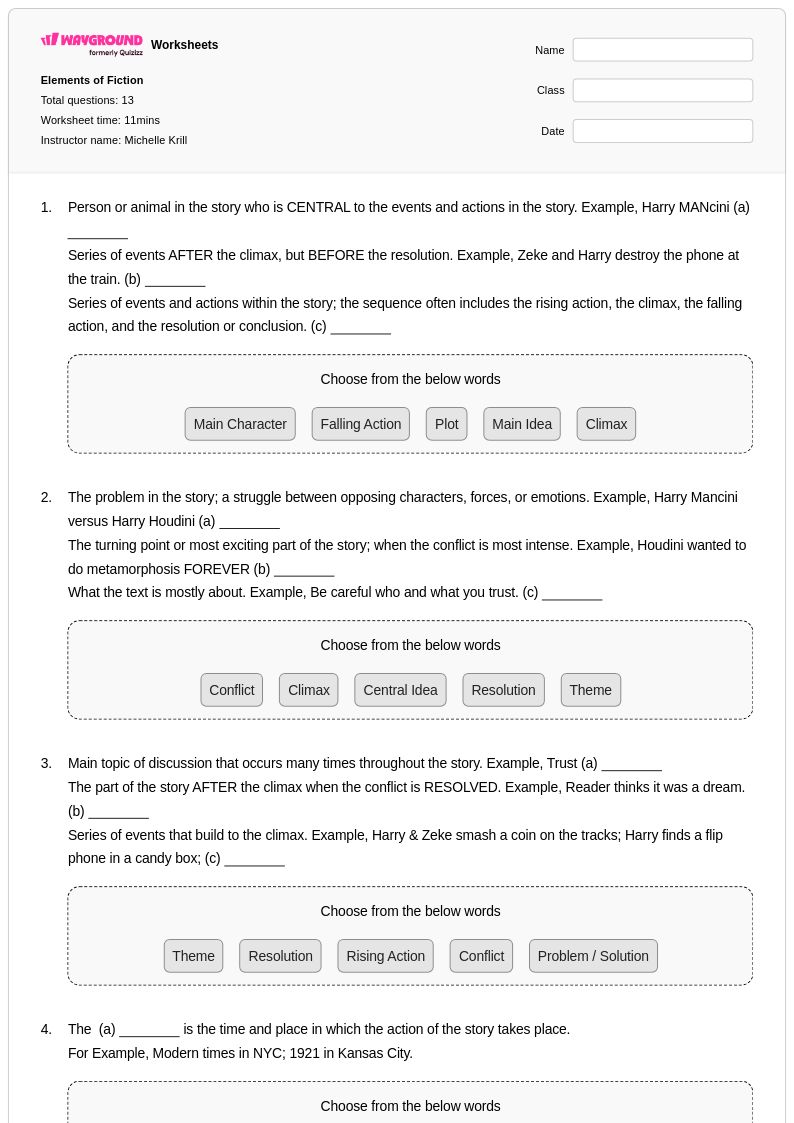
13Q
3rd
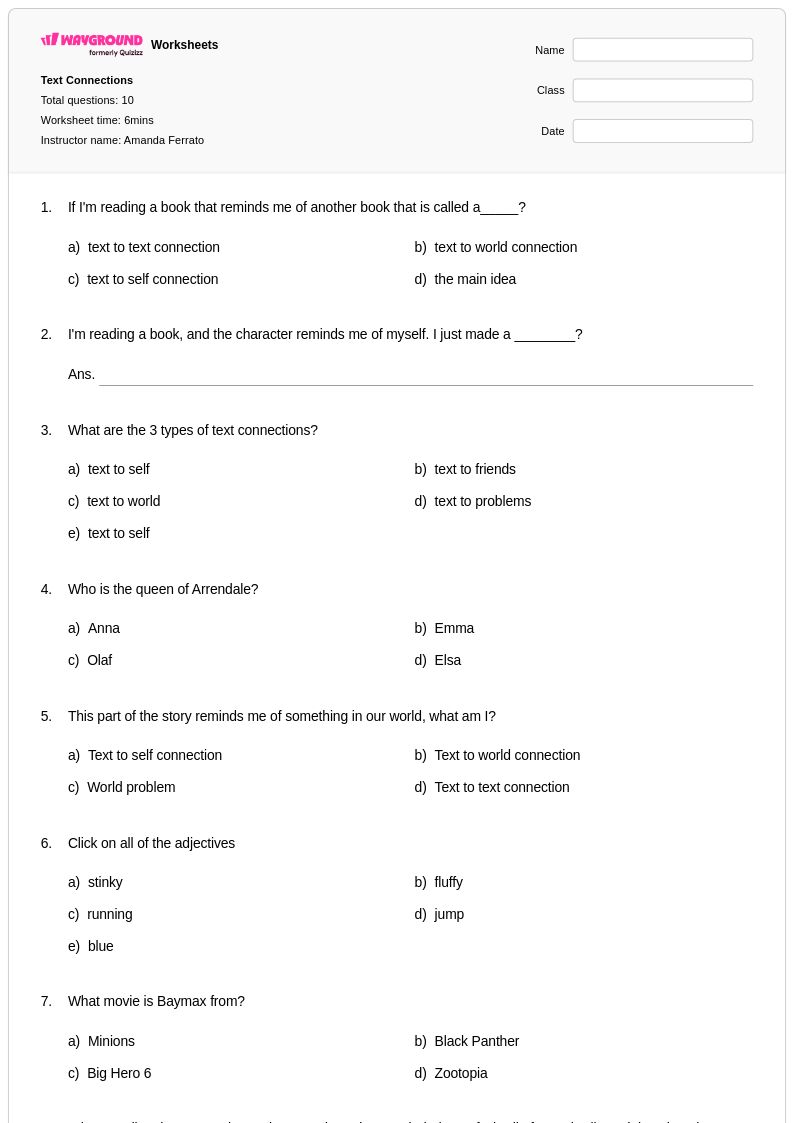
10Q
2nd - 3rd
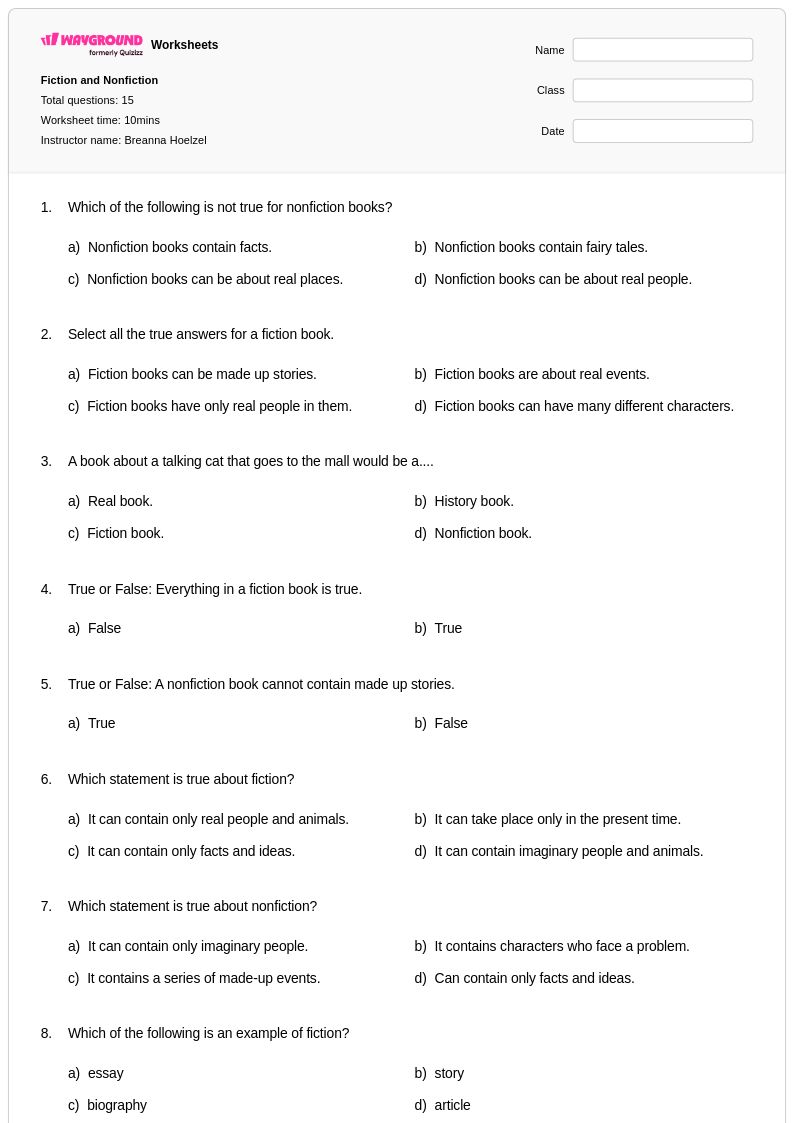
15Q
3rd - 5th
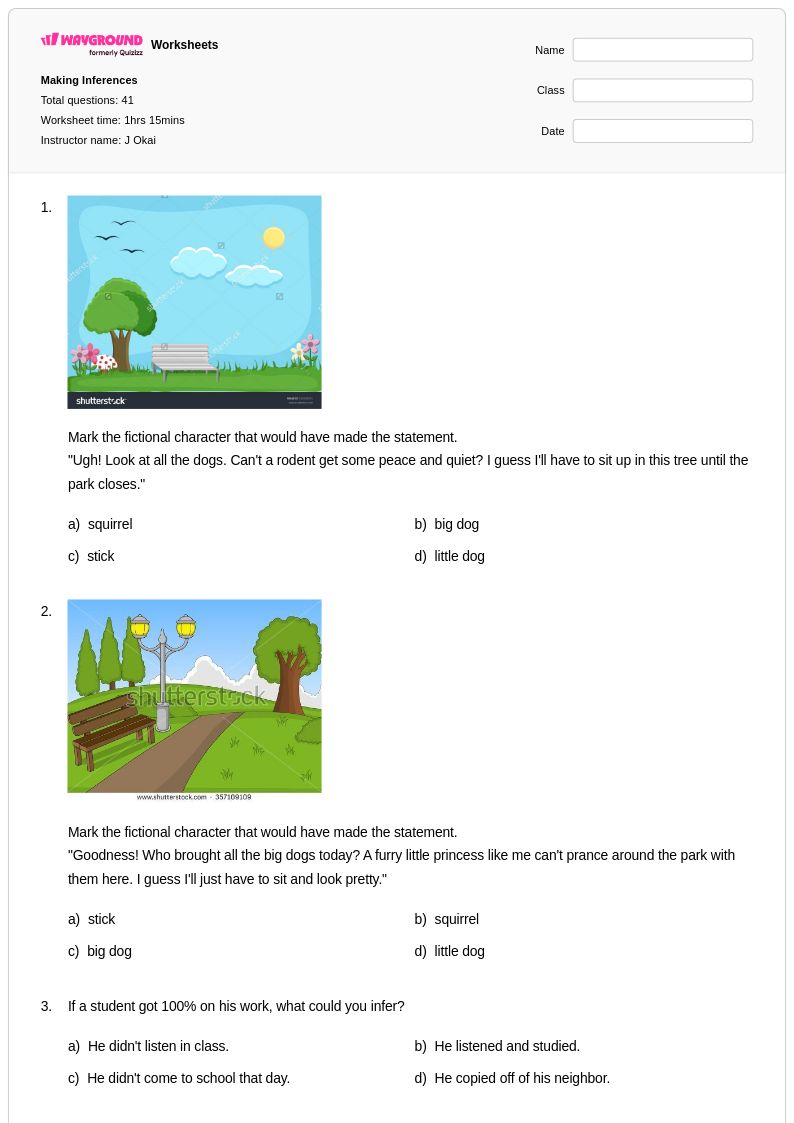
41Q
1st - 5th
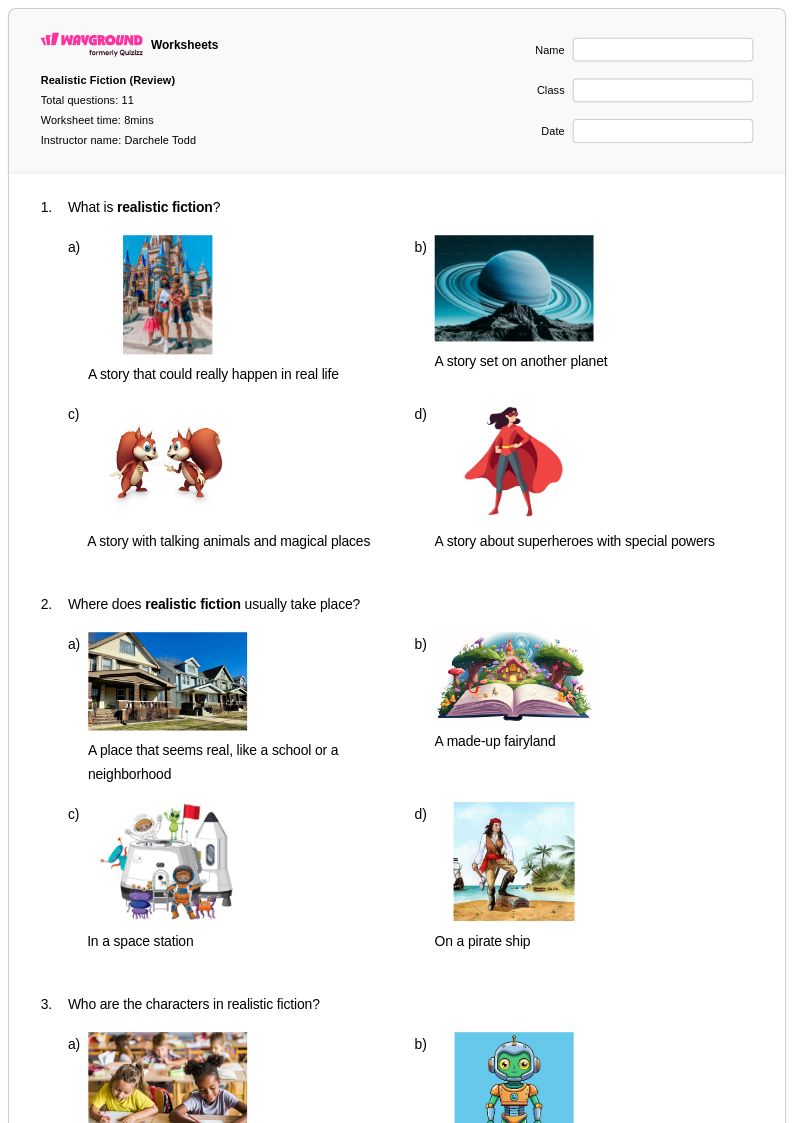
11Q
3rd
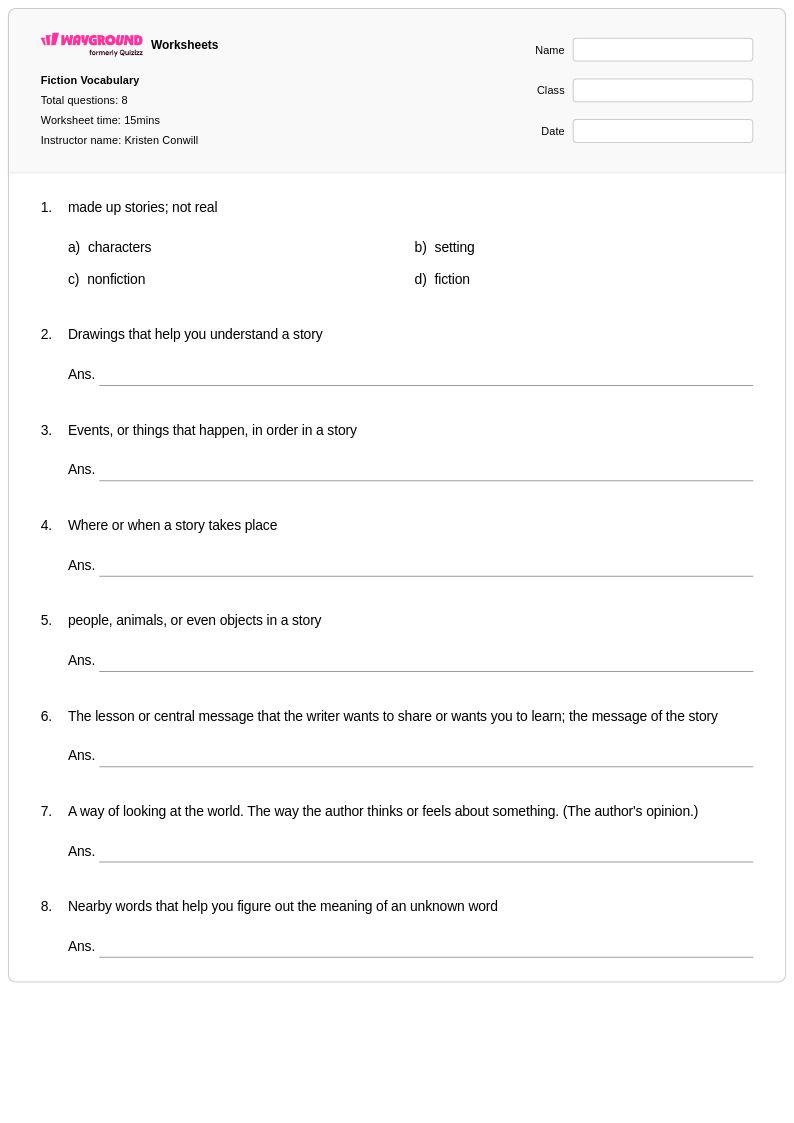
8Q
3rd
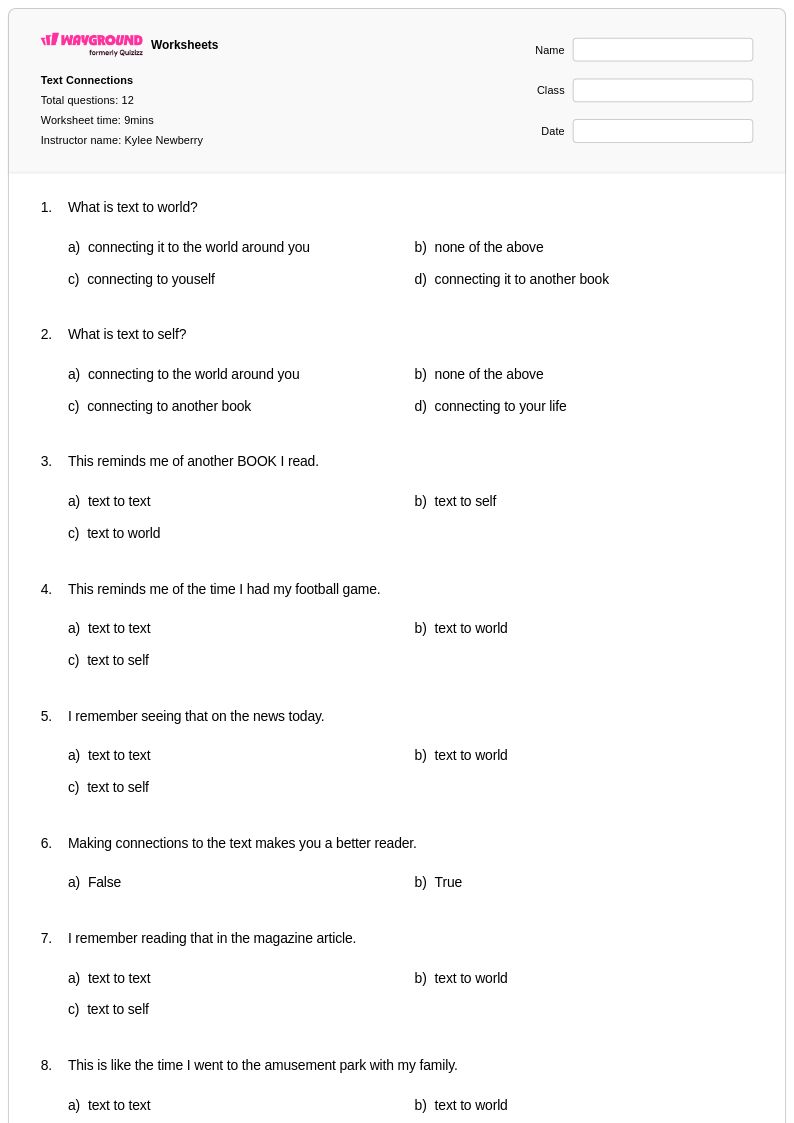
12Q
2nd - 4th

20Q
3rd - 5th
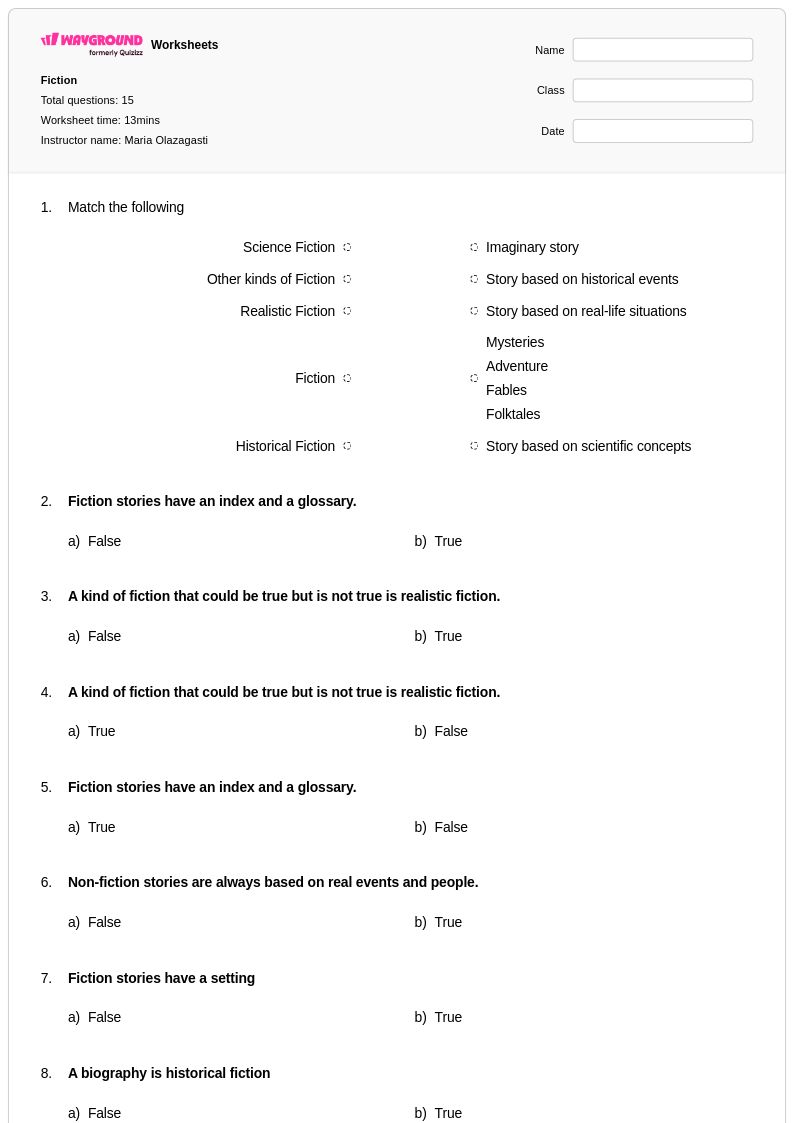
15Q
3rd
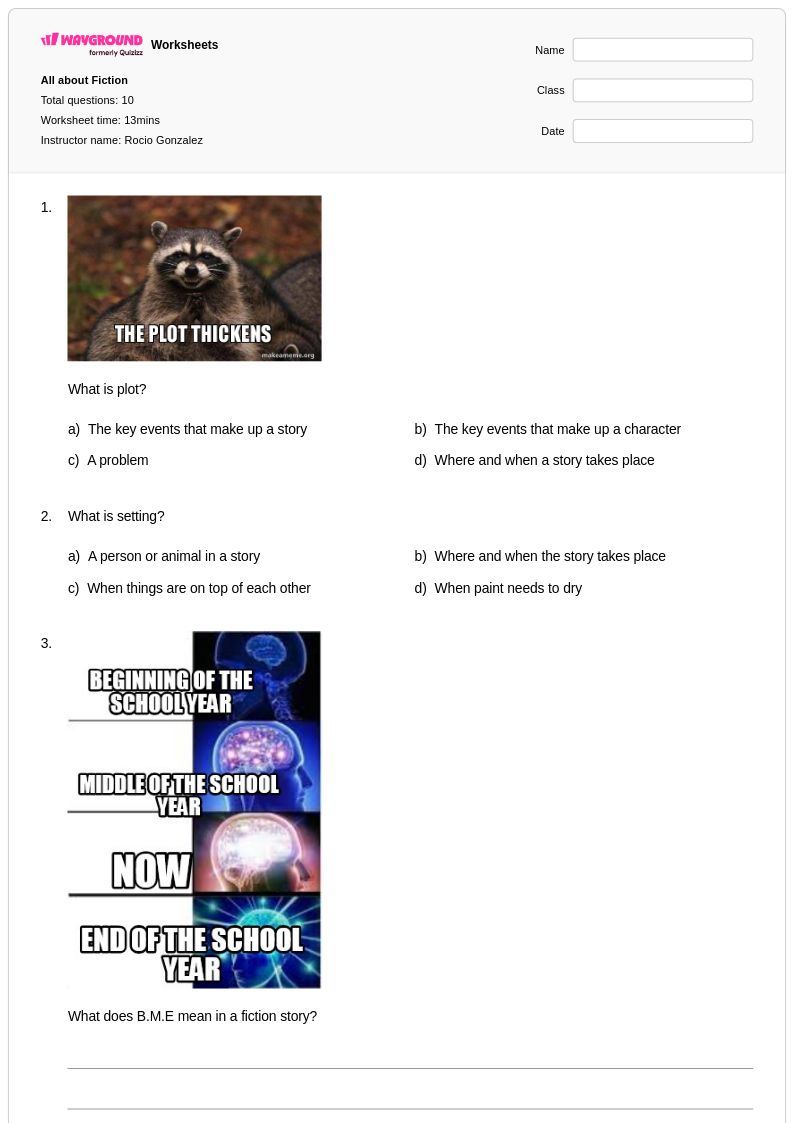
10Q
3rd
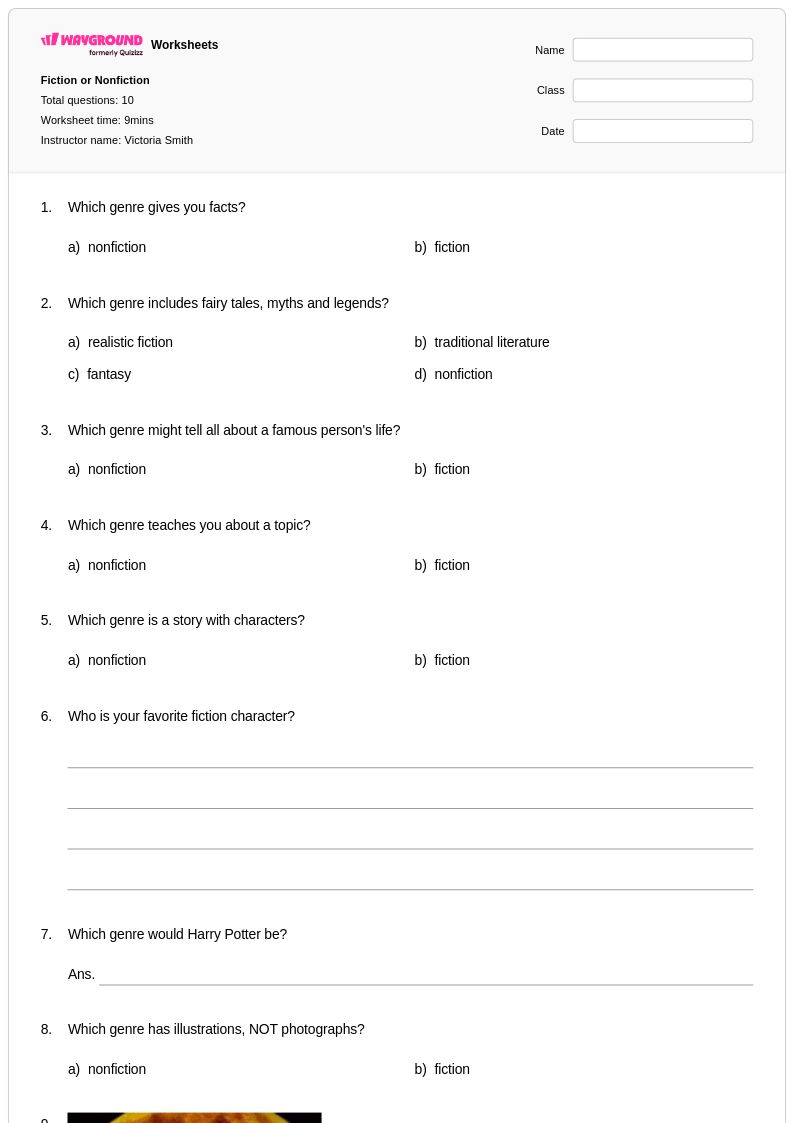
10Q
1st - 5th
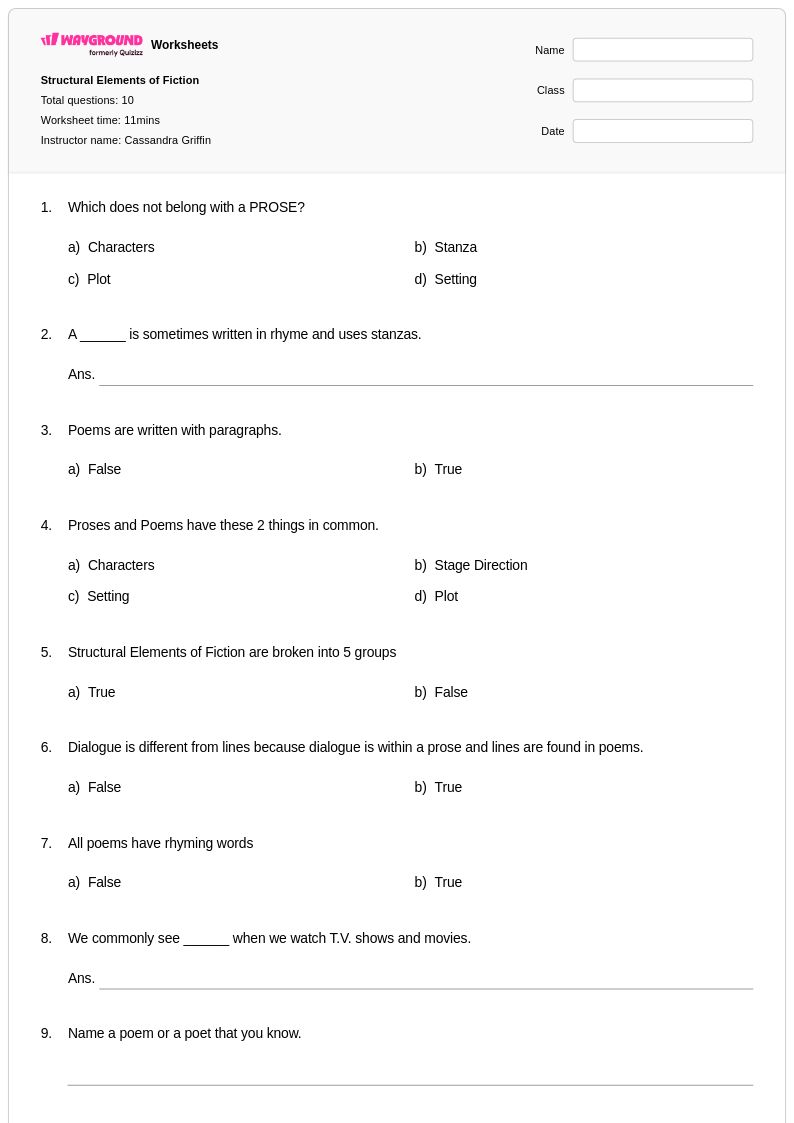
10Q
3rd - 5th
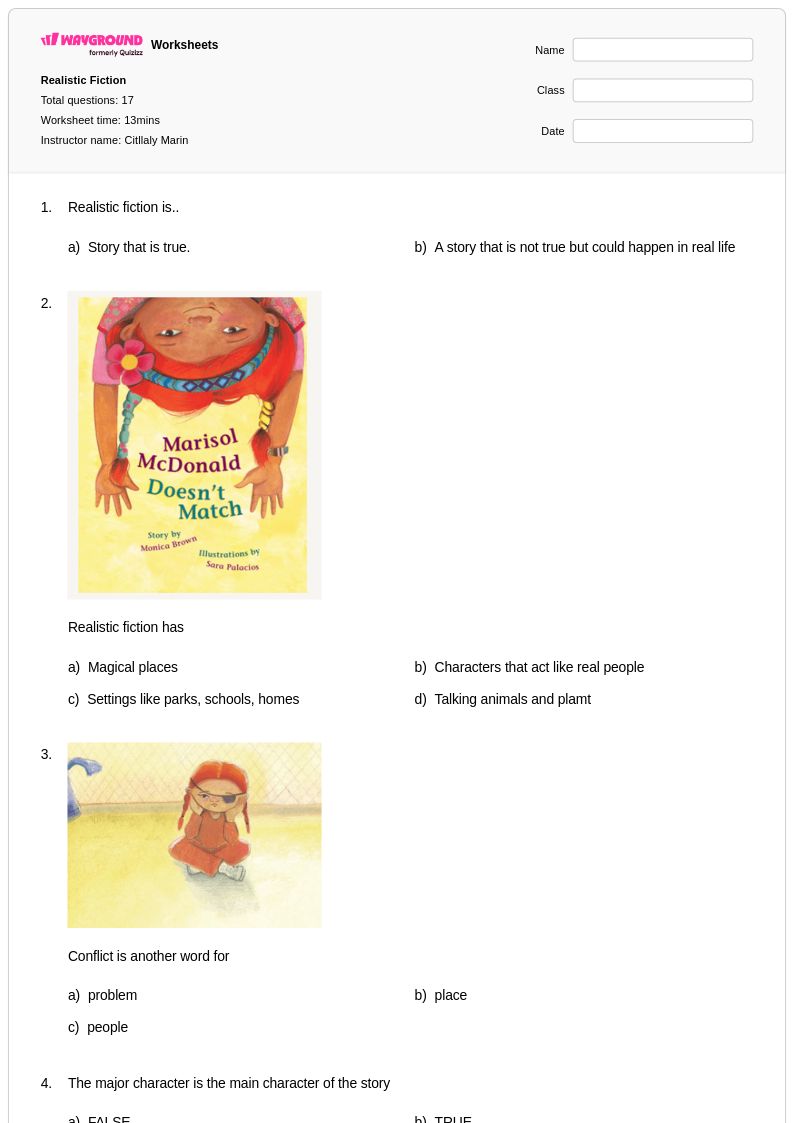
17Q
3rd
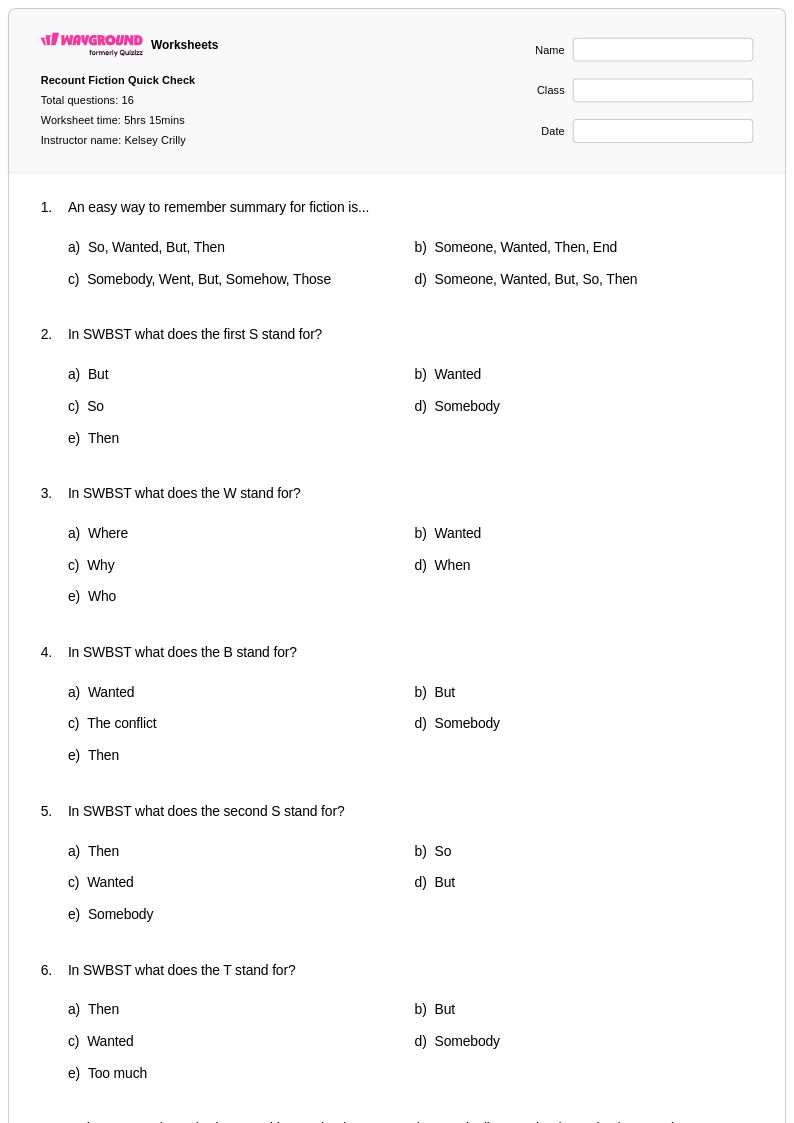
21Q
3rd
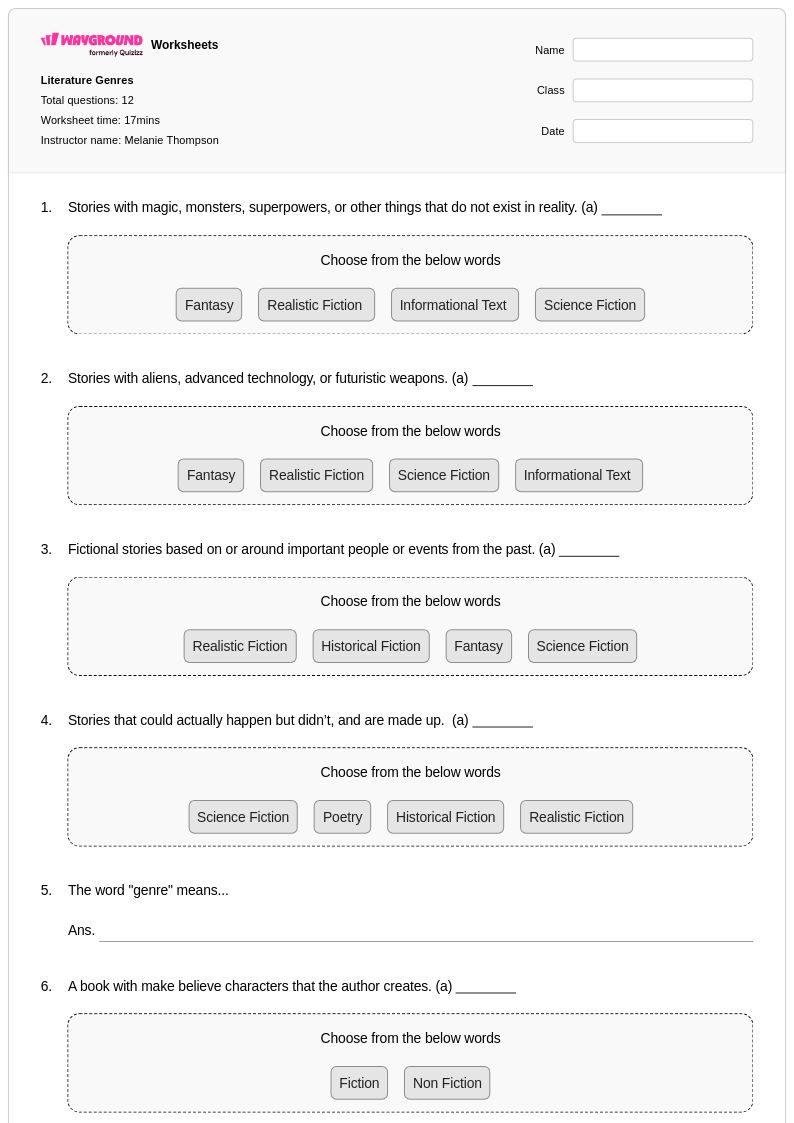
12Q
3rd - 5th
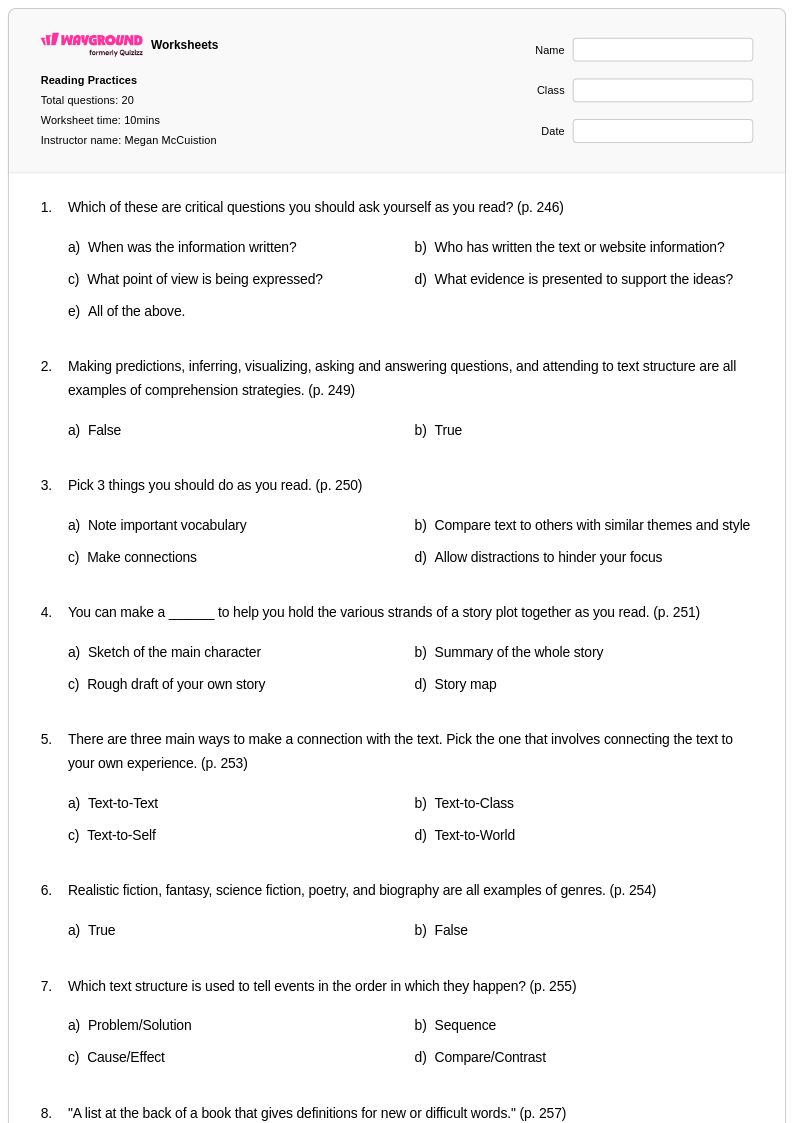
20Q
3rd - 5th
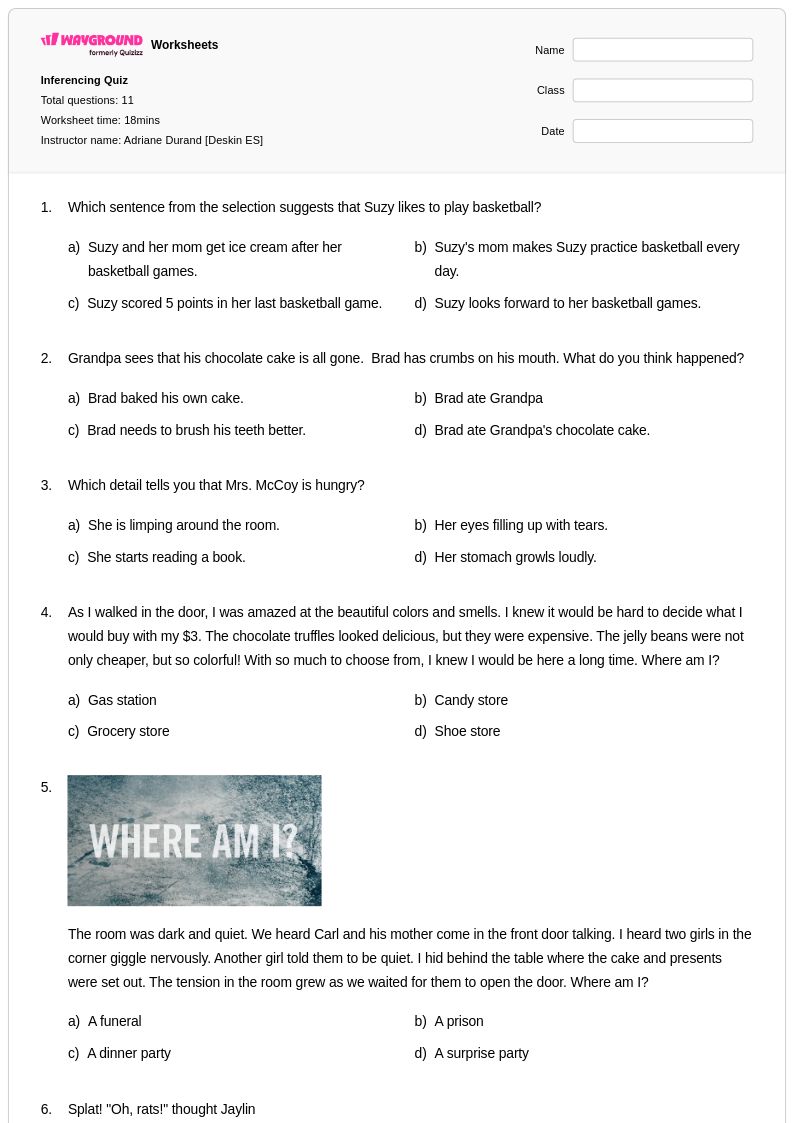
11Q
1st - 5th
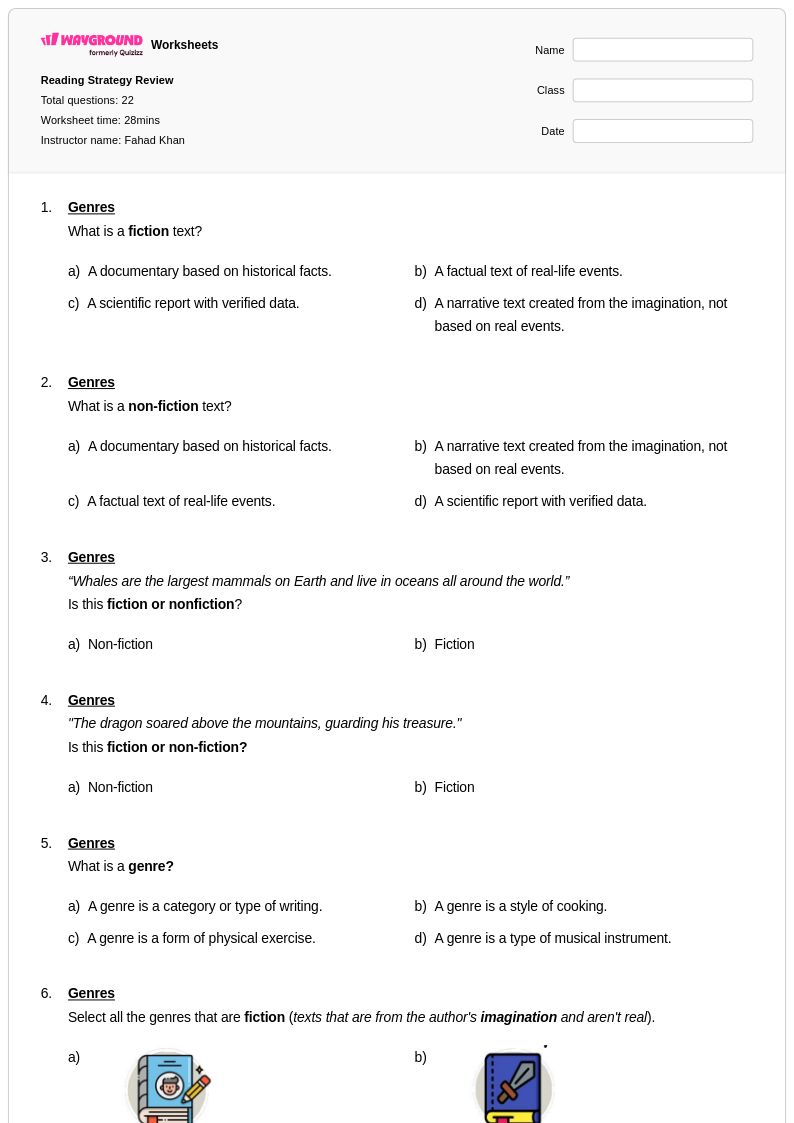
26Q
1st - 6th
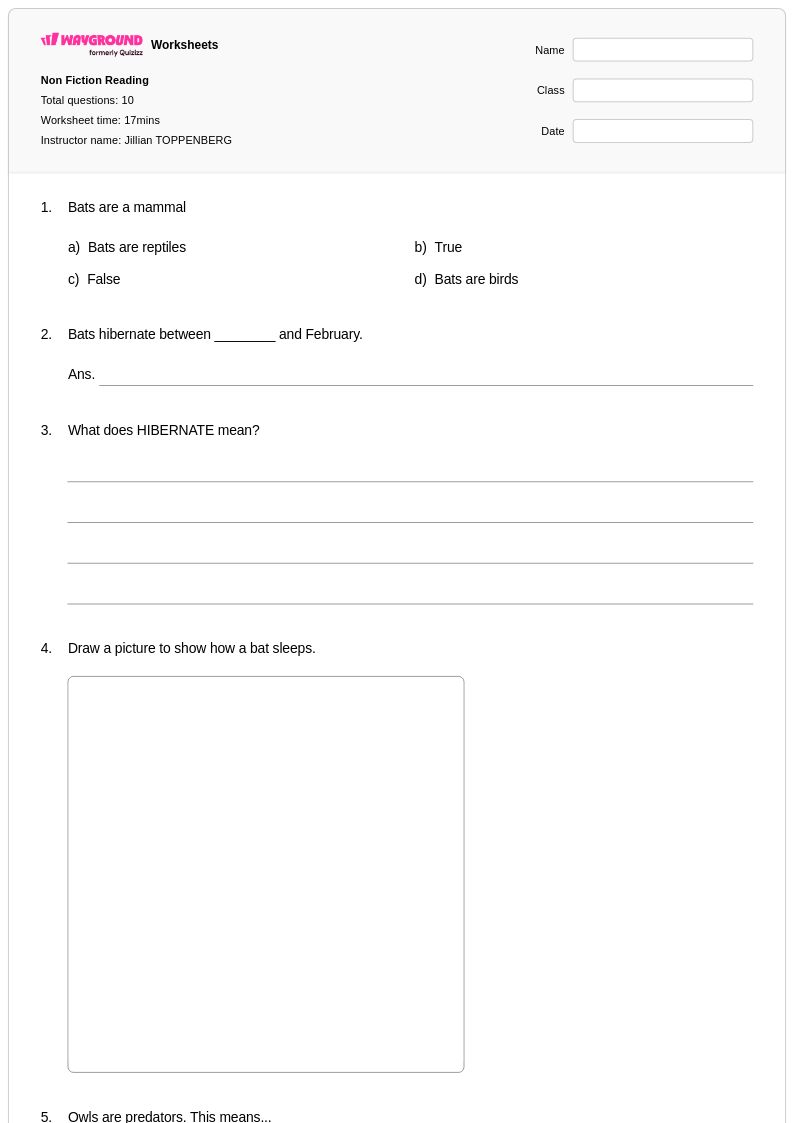
10Q
3rd
Explorar Making Connections in Fiction hojas de trabajo por grados
Explore otras hojas de trabajo de materias para class 3
Explore printable Making Connections in Fiction worksheets for Class 3
Making connections in fiction for Class 3 students becomes an engaging and systematic process through Wayground's comprehensive worksheet collection that builds essential reading comprehension skills. These carefully designed worksheets guide young readers through the fundamental strategy of linking fictional stories to their personal experiences, other texts they have encountered, and the broader world around them. Students practice identifying text-to-self connections by relating characters' emotions and experiences to their own lives, text-to-text connections by comparing plots and characters across different stories, and text-to-world connections by recognizing how fictional events mirror real-world situations. Each worksheet includes structured practice problems that scaffold learning from basic identification exercises to more complex analytical tasks, complete with answer keys that support independent learning and provide clear explanations for teachers and parents. These free printable resources offer varied formats and difficulty levels to accommodate different learning styles while strengthening critical thinking and deeper comprehension skills that are foundational for advanced literary analysis.
Wayground's extensive platform, featuring millions of teacher-created resources, provides educators with powerful tools to seamlessly integrate making connections worksheets into their Class 3 reading instruction. The platform's robust search and filtering capabilities allow teachers to quickly locate materials aligned with specific reading standards and learning objectives, while differentiation tools enable customization based on individual student needs and reading levels. Teachers can access these resources in both printable PDF formats for traditional classroom use and digital formats for interactive learning experiences, making lesson planning more flexible and responsive to diverse classroom environments. The comprehensive collection supports targeted remediation for struggling readers who need additional practice with connection strategies, enrichment opportunities for advanced students ready to explore more sophisticated textual relationships, and regular skill practice that reinforces comprehension strategies throughout the academic year. This systematic approach to making connections in fiction helps educators build confident, analytical readers who can engage deeply with literature while developing the metacognitive awareness essential for lifelong reading success.
FAQs
How do I teach students to make connections while reading fiction?
What are the three types of connections students should make when reading fiction?
What exercises help students practice making connections in fiction?
What mistakes do students commonly make when identifying connections in fiction?
How can I differentiate making-connections instruction for struggling and advanced readers?
How do I use Making Connections in Fiction worksheets from Wayground in my classroom?