
15 Q
3rd
15 Q
3rd
15 Q
3rd
21 Q
2nd
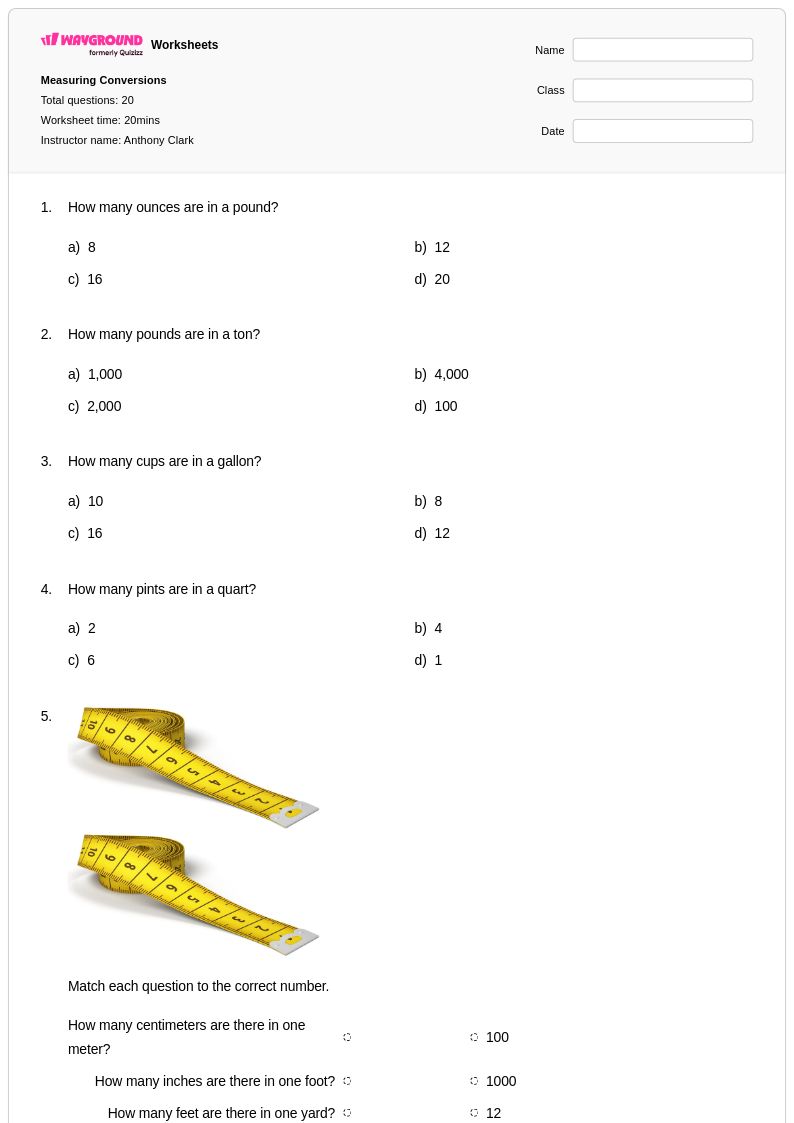
20 Q
5th - Uni
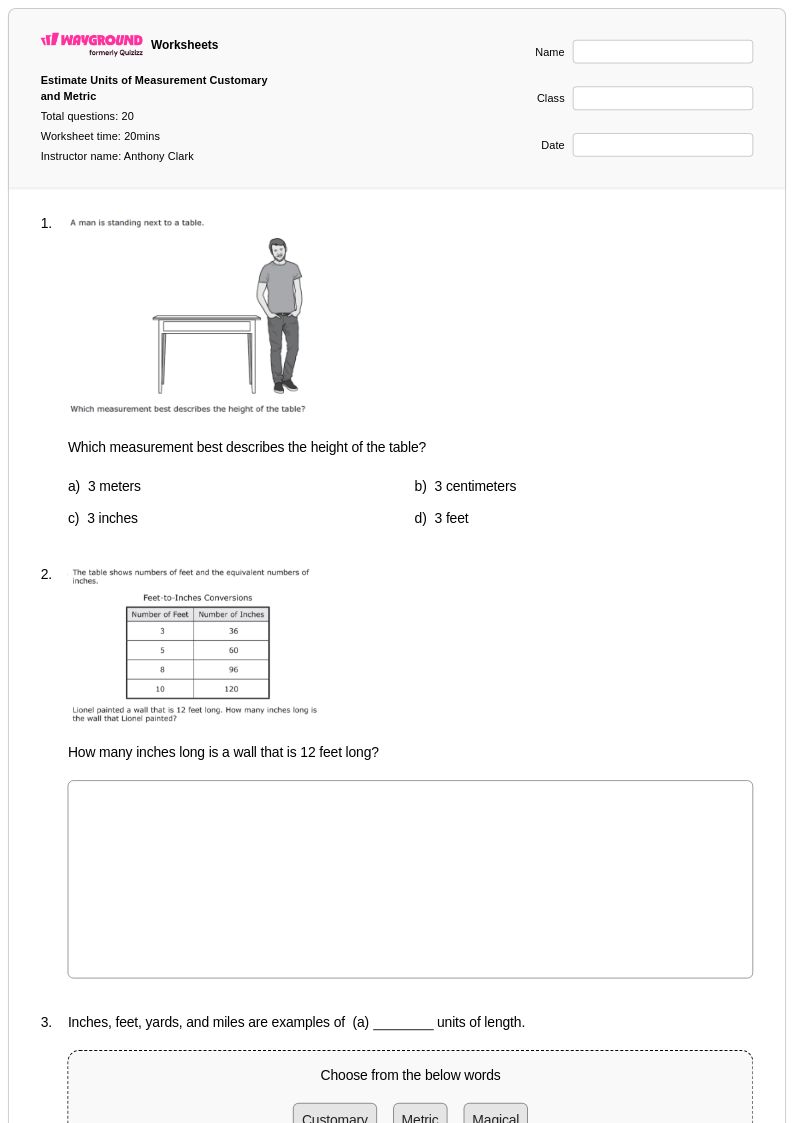
20 Q
4th - Uni
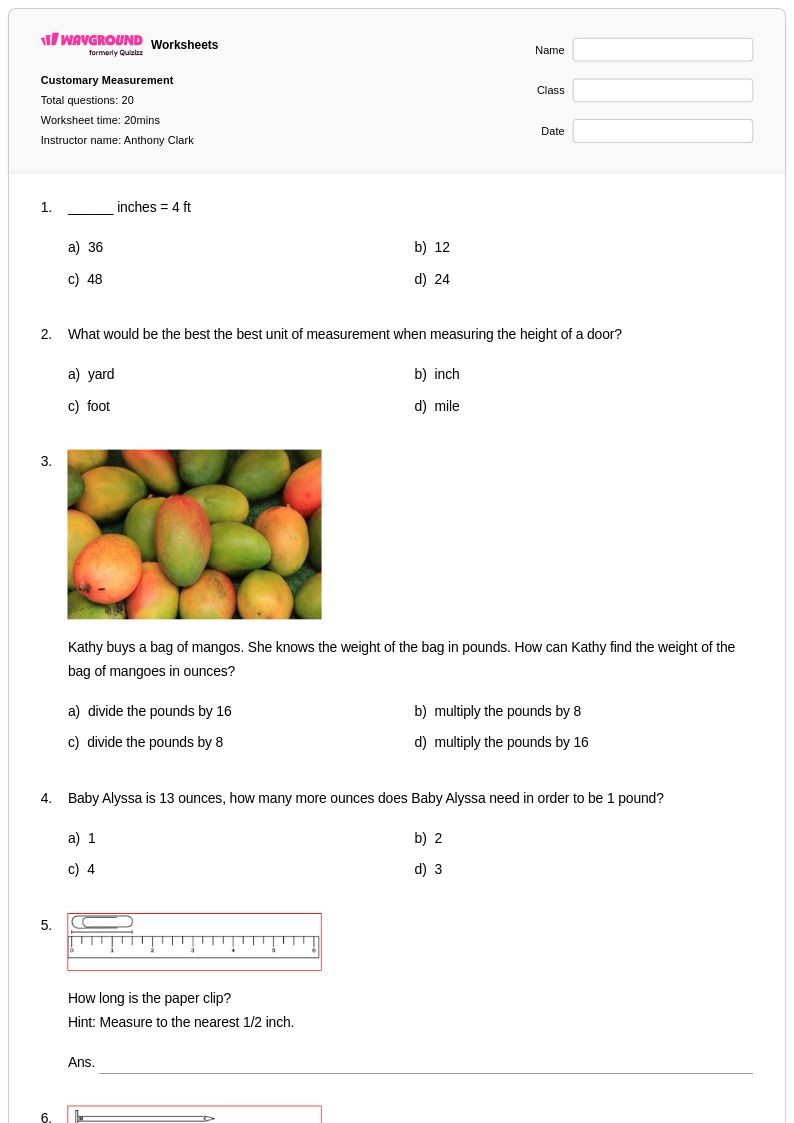
20 Q
4th - Uni
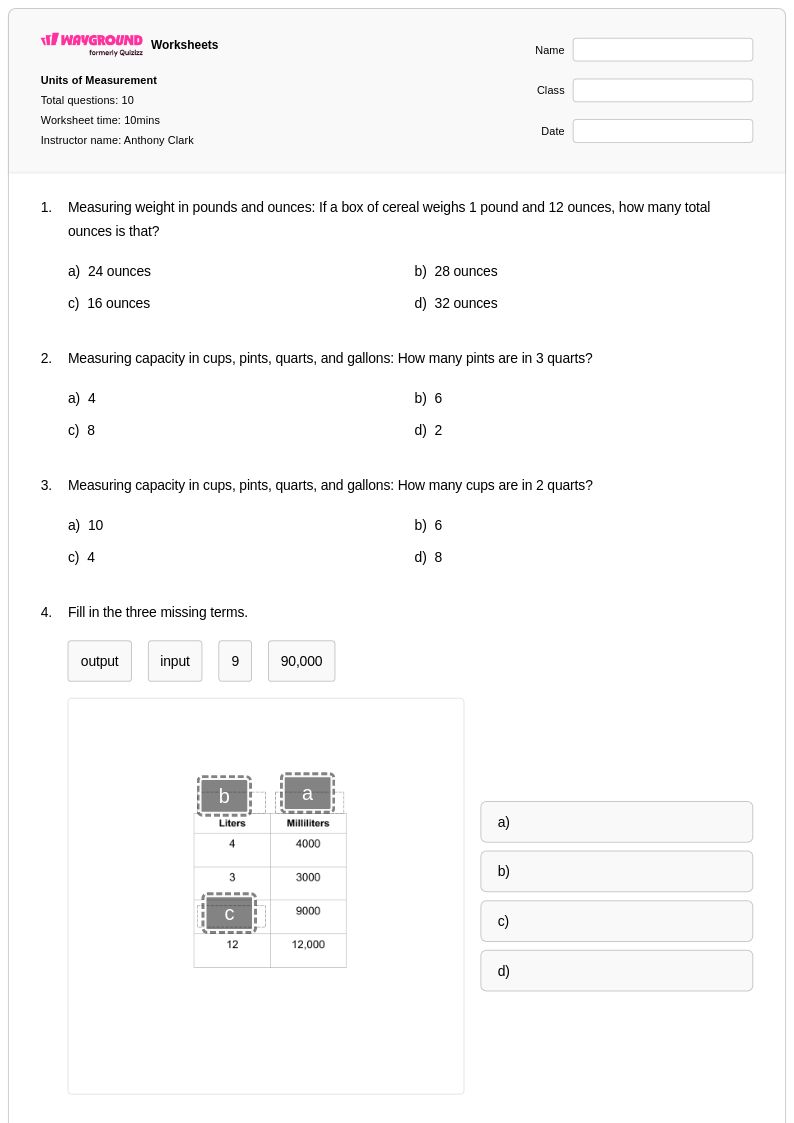
10 Q
4th - Uni
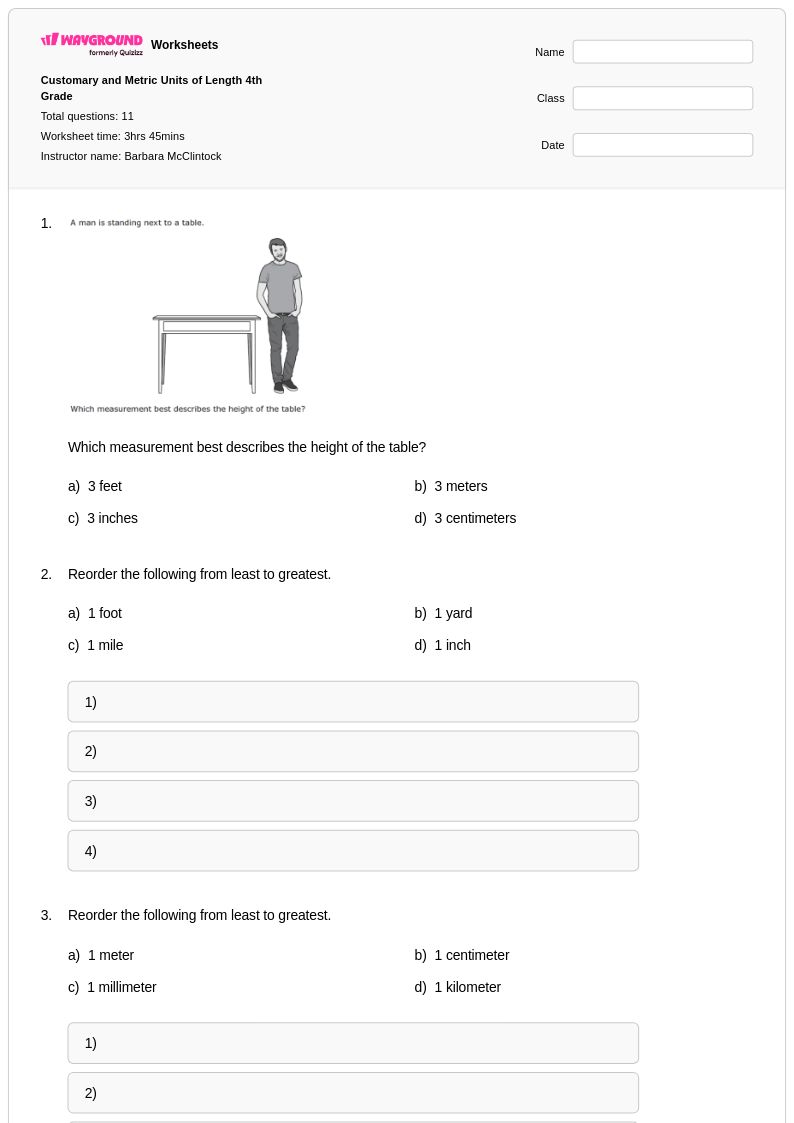
11 Q
4th
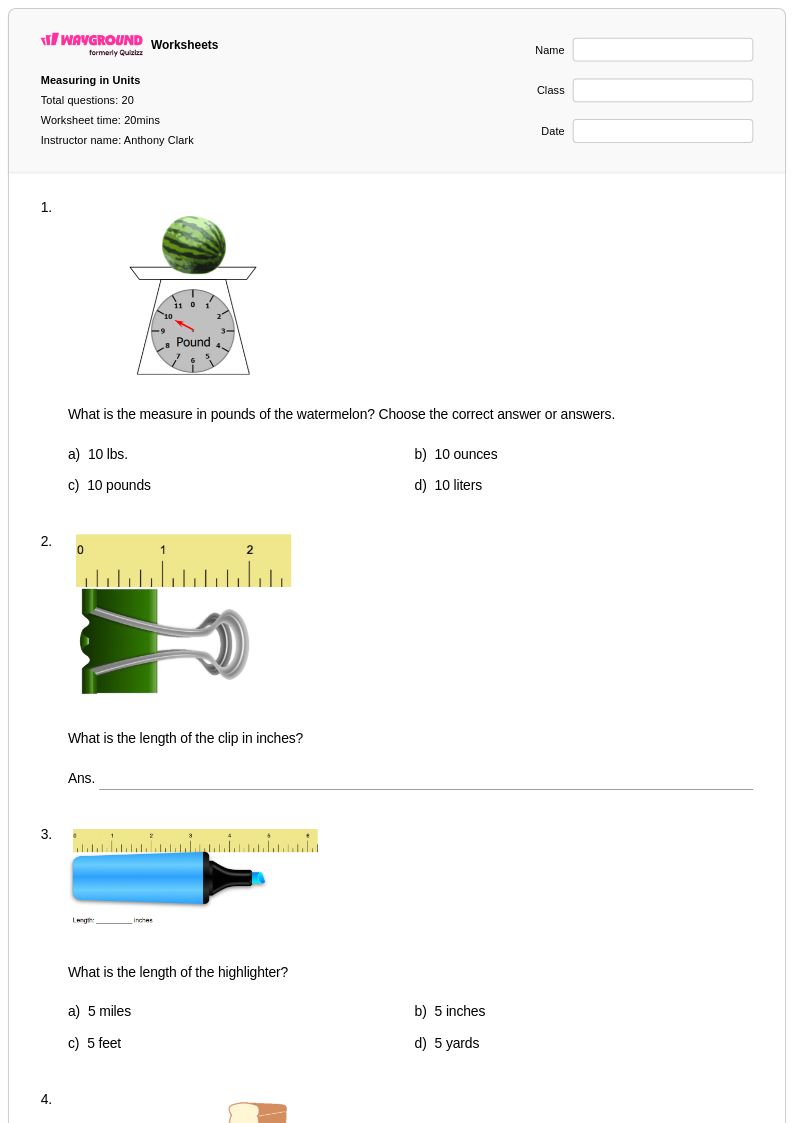
20 Q
4th - Uni
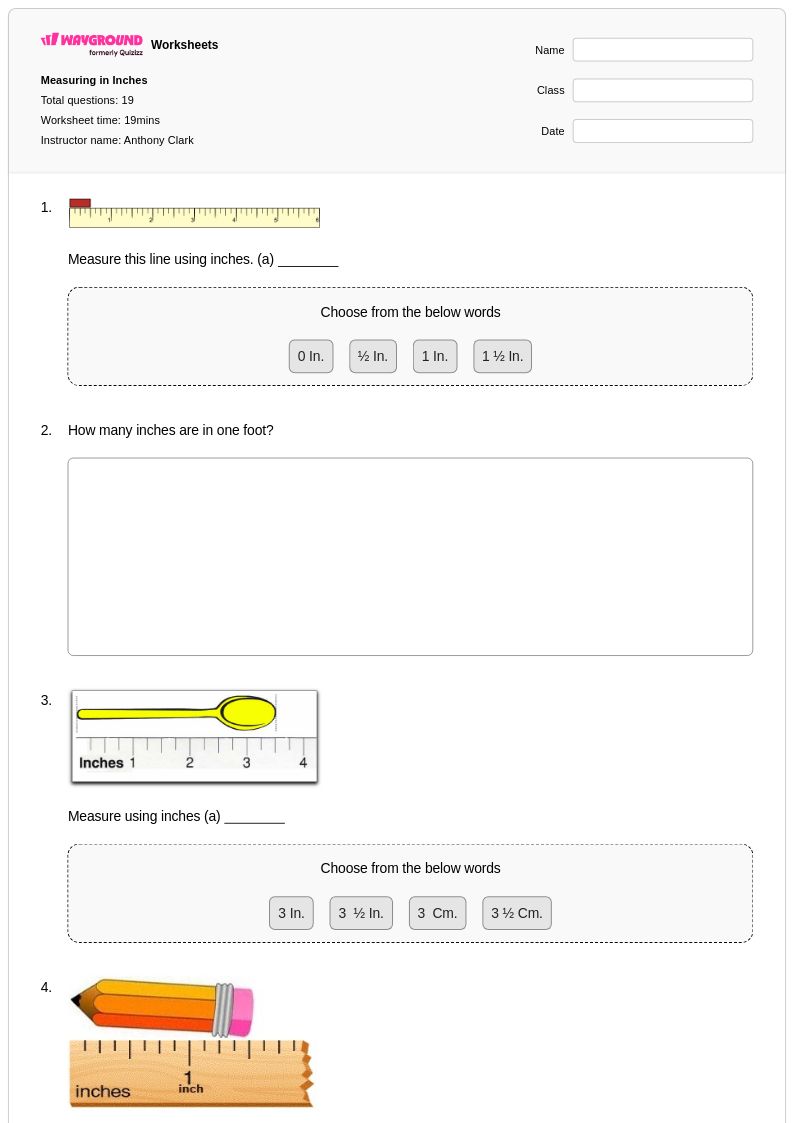
19 Q
3rd - Uni
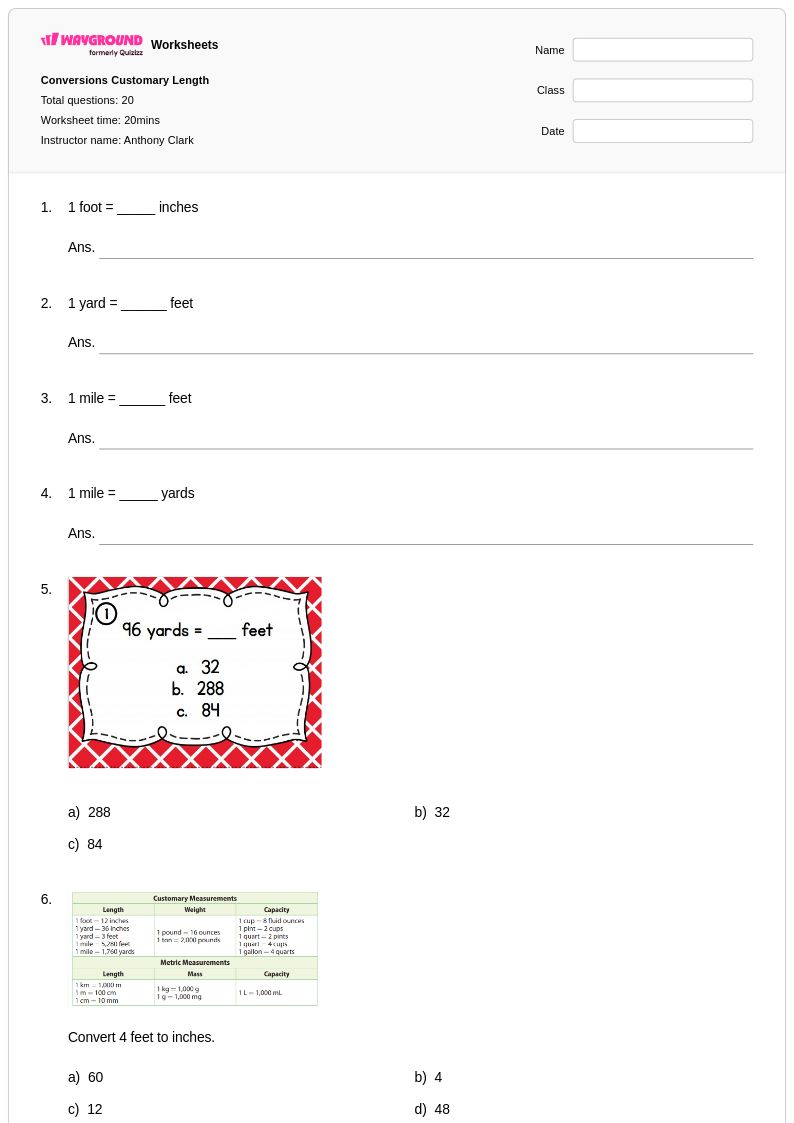
20 Q
5th - Uni
20 Q
4th - Uni
20 Q
2nd
20 Q
5th - Uni
20 Q
4th - Uni
16 Q
5th
9 Q
4th - Uni
16 Q
2nd - Uni
20 Q
5th - Uni
20 Q
4th
13 Q
2nd
12 Q
2nd
Explore Other Subject Worksheets for kindergarten
Explore printable Measuring in Yards worksheets for Kindergarten
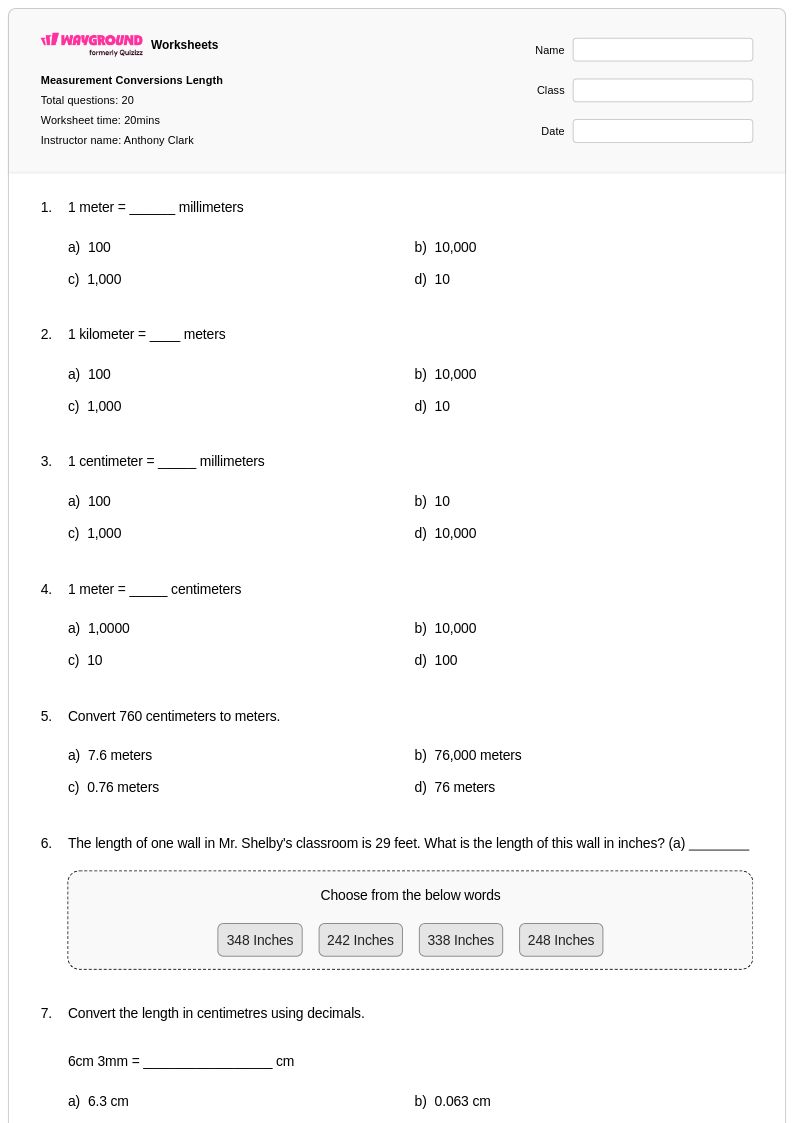
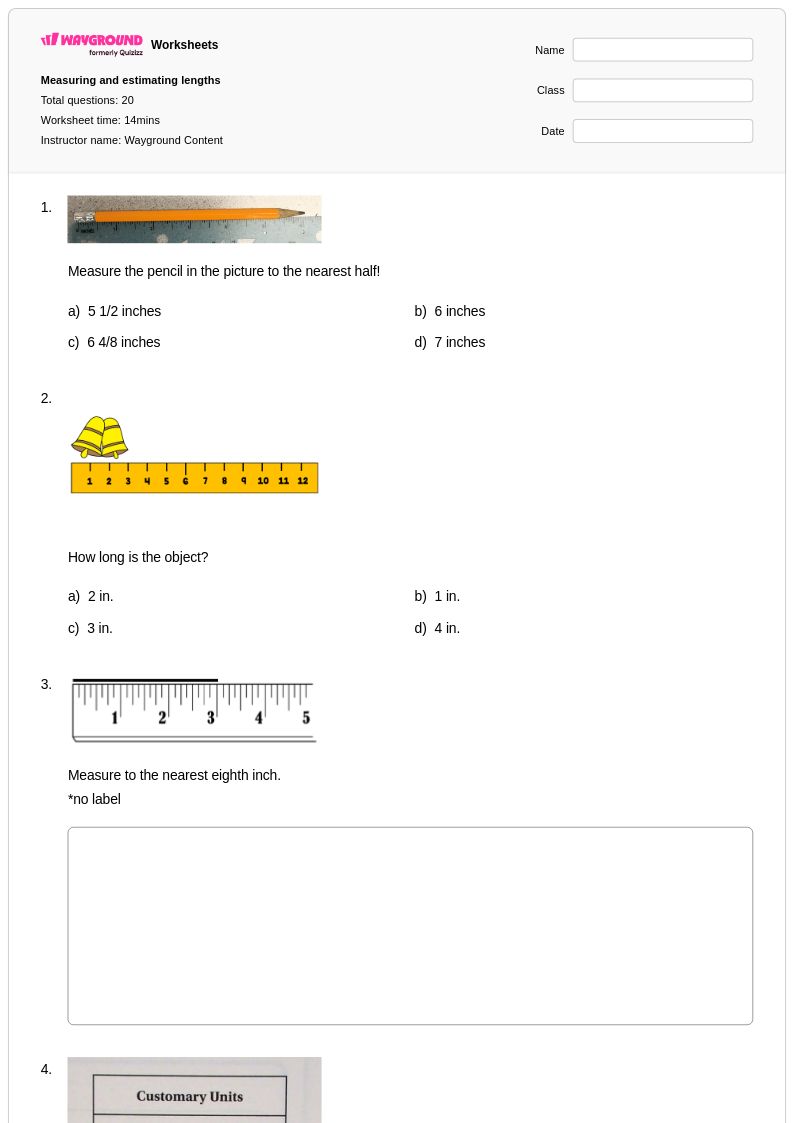
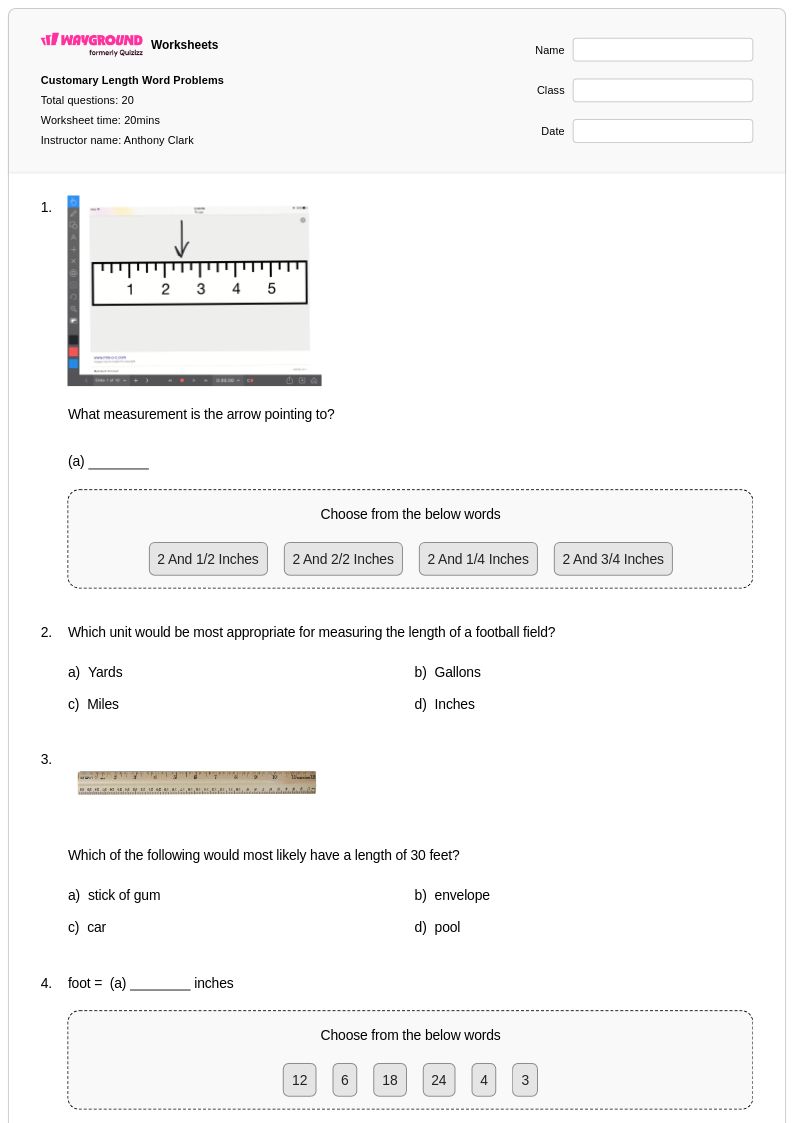
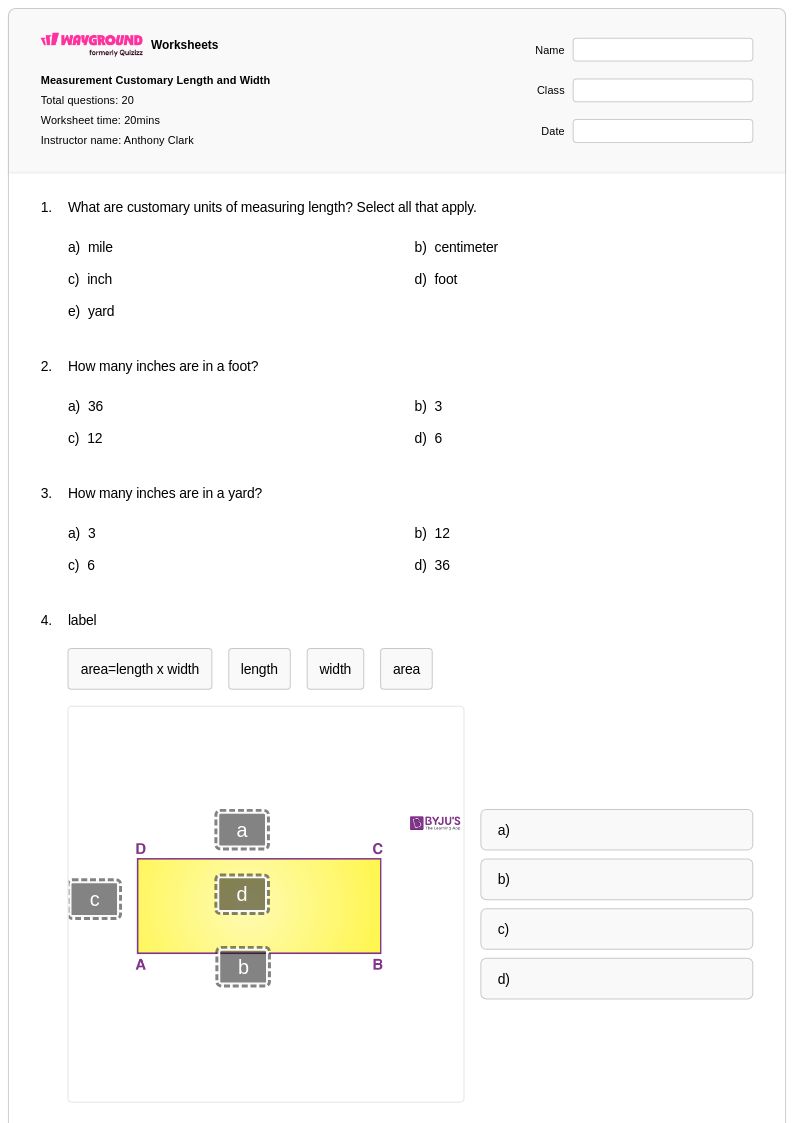
Measuring in yards worksheets for kindergarten students available through Wayground (formerly Quizizz) introduce young learners to this fundamental unit of imperial measurement through age-appropriate, hands-on activities. These comprehensive worksheets focus on helping kindergarteners develop spatial awareness and measurement concepts by comparing familiar objects to the yard unit, such as identifying items that are longer or shorter than a yard stick. The practice problems emphasize visual learning and concrete comparisons rather than abstract calculations, allowing students to build foundational measurement skills through engaging exercises. Teachers can access complete answer keys alongside each printable worksheet, ensuring efficient grading and immediate feedback opportunities that support student learning progression in early measurement concepts.
Wayground (formerly Quizizz) empowers educators with an extensive collection of teacher-created measuring in yards resources specifically designed for kindergarten-level instruction. The platform's robust search and filtering capabilities allow teachers to quickly locate worksheets that align with early childhood measurement standards and match their students' developmental needs. These differentiation tools enable seamless customization of content difficulty, while the availability of both printable pdf formats and digital versions provides maximum flexibility for diverse classroom environments. Whether planning initial measurement instruction, providing targeted remediation for struggling learners, or offering enrichment opportunities for advanced kindergarteners, teachers can efficiently select from millions of high-quality resources that strengthen spatial reasoning and early measurement skills through systematic practice with yard-based comparisons.
FAQs
How do I teach the concept of a yard to kindergarteners?
What are some good practice activities for measuring in yards with young learners?
What shows that a kindergartener understands the concept of a yard?
How does this topic align with kindergarten math standards?
How can I use these kindergarten yard measurement worksheets?
What grade do students learn about yards?