Free Printable Newton's Laws of Motion Worksheets for Class 10
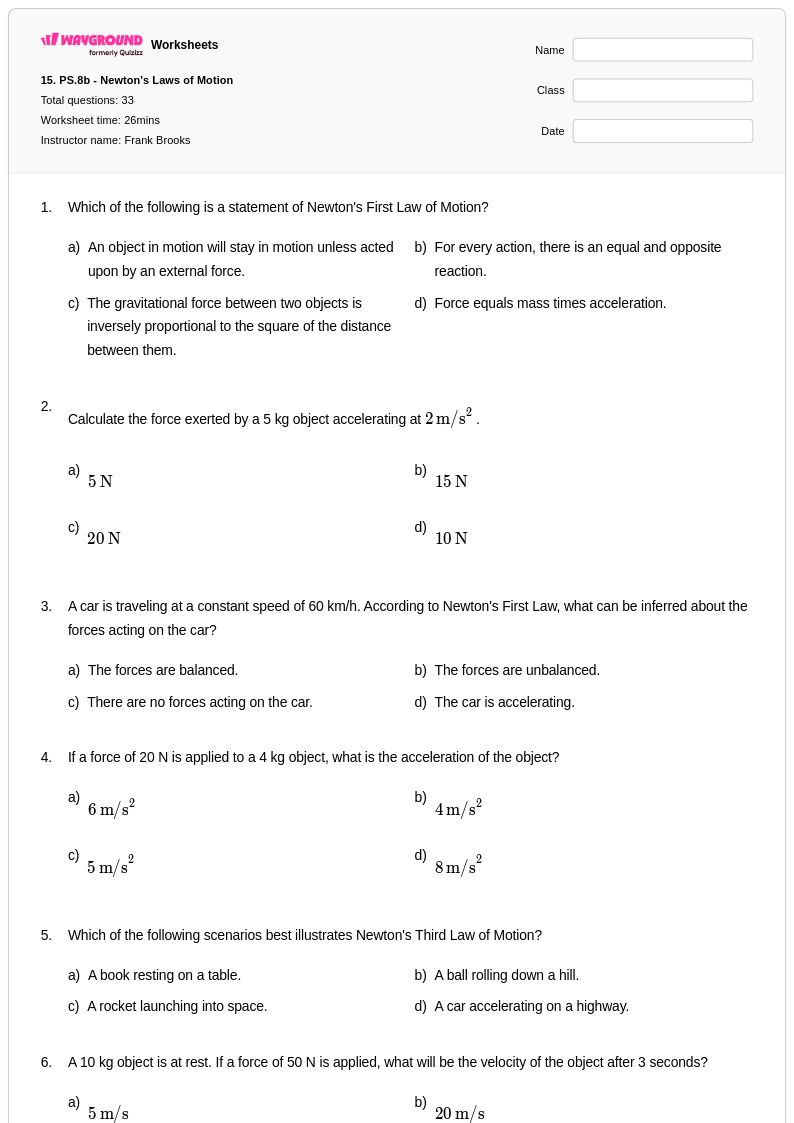
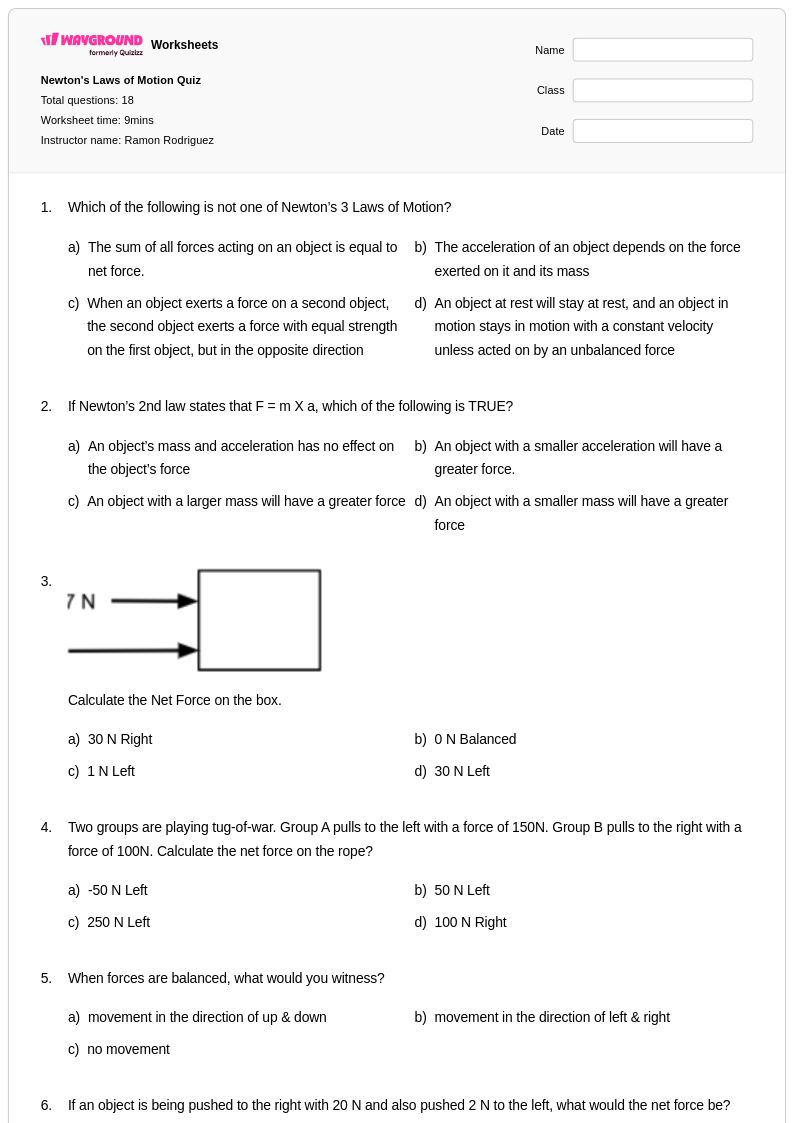
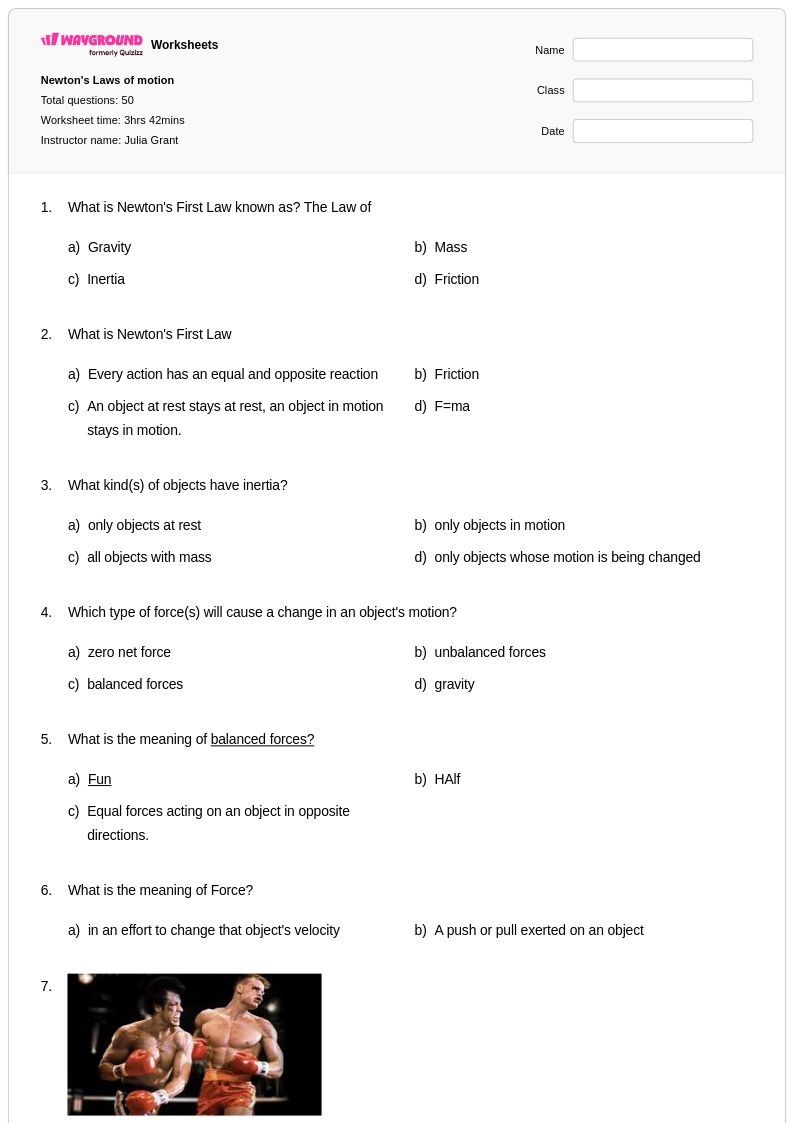
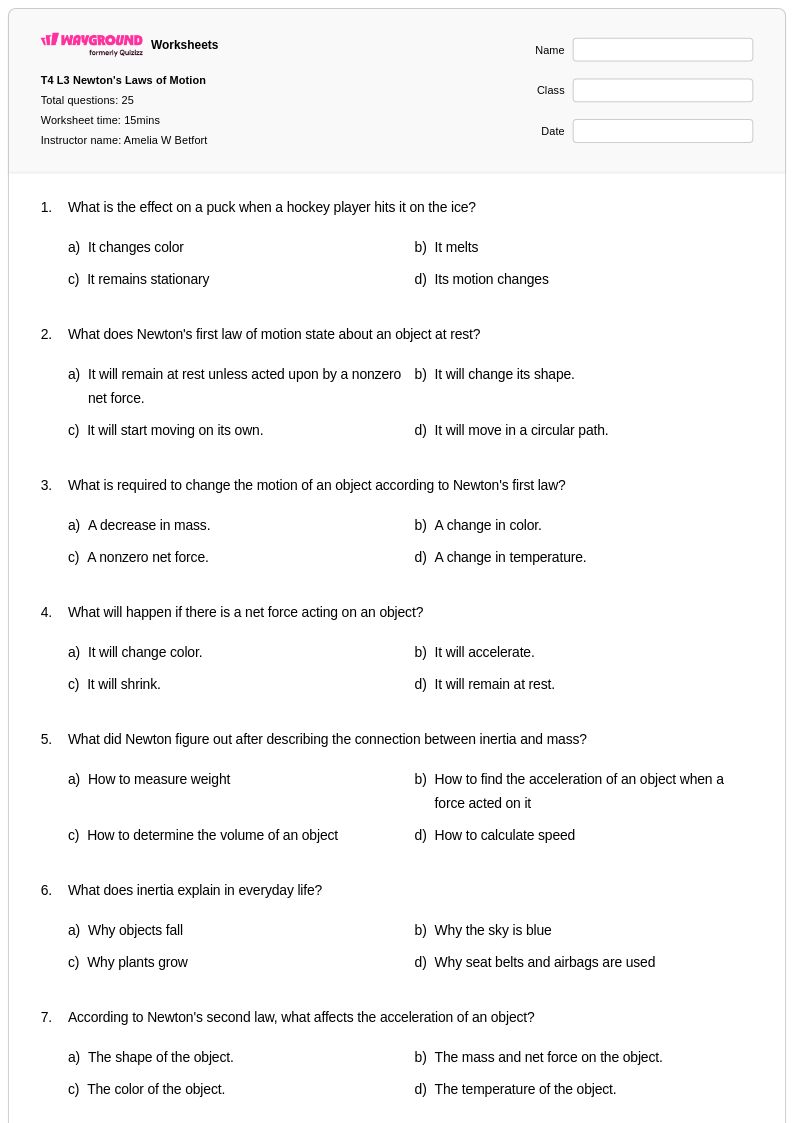
Class 10 Newton's Laws of Motion worksheets from Wayground offer comprehensive printables and practice problems with answer keys to help students master force, acceleration, and motion principles through engaging PDF exercises.
Explore printable Newton's Laws of Motion worksheets for Class 10
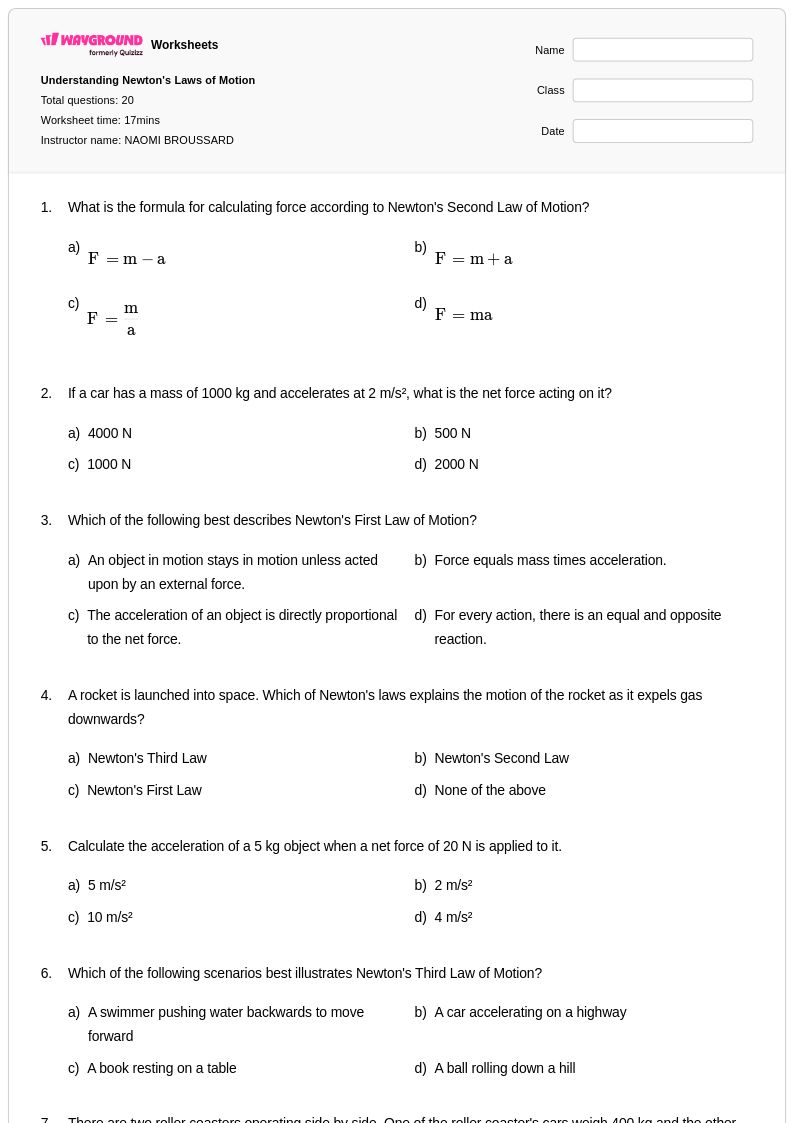
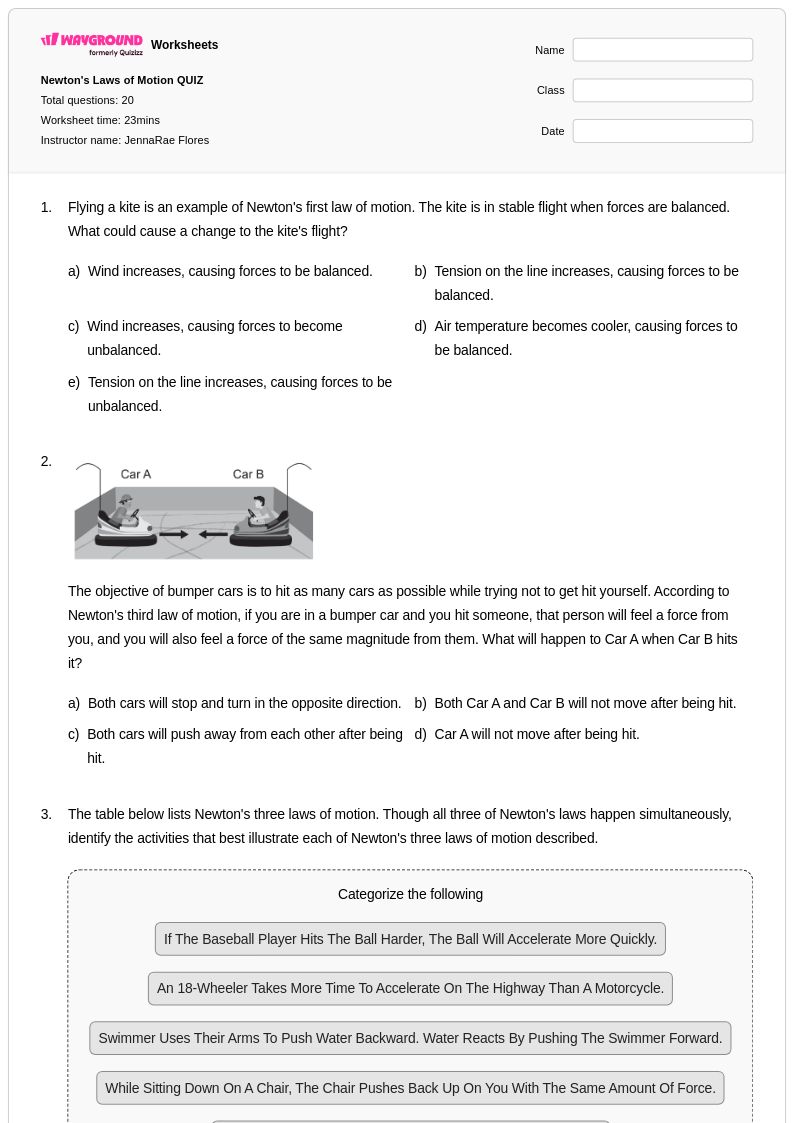
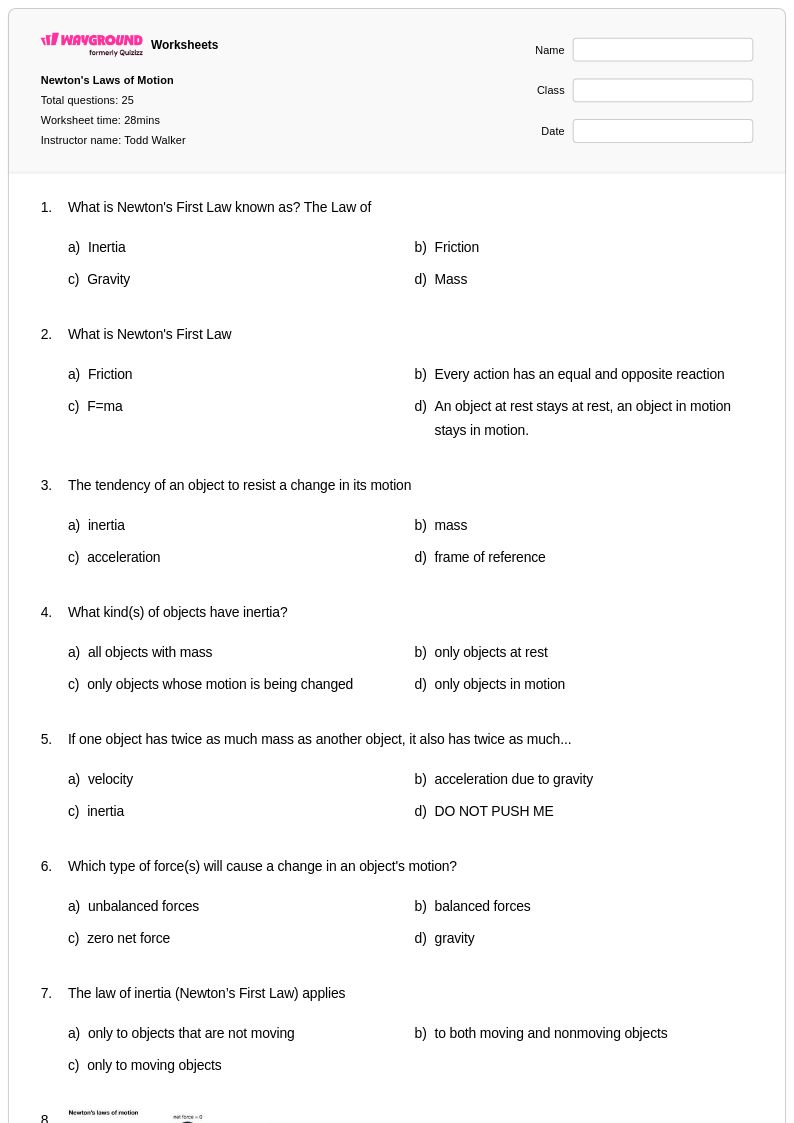
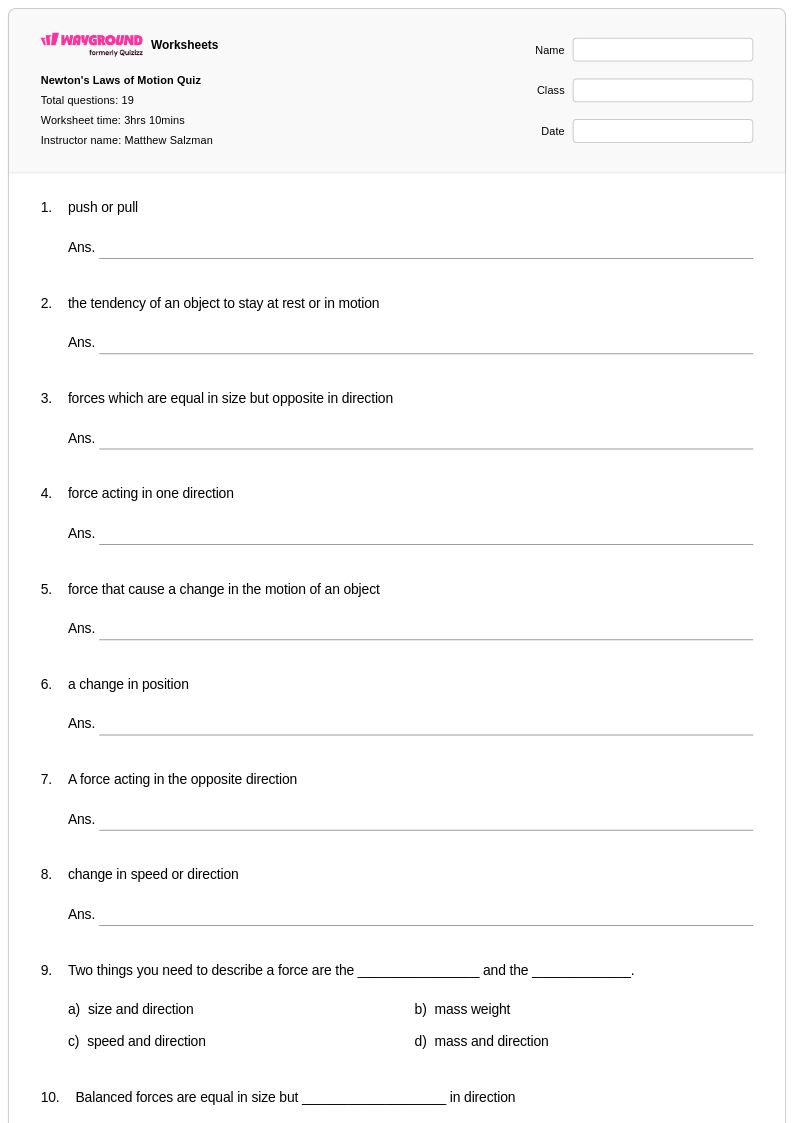
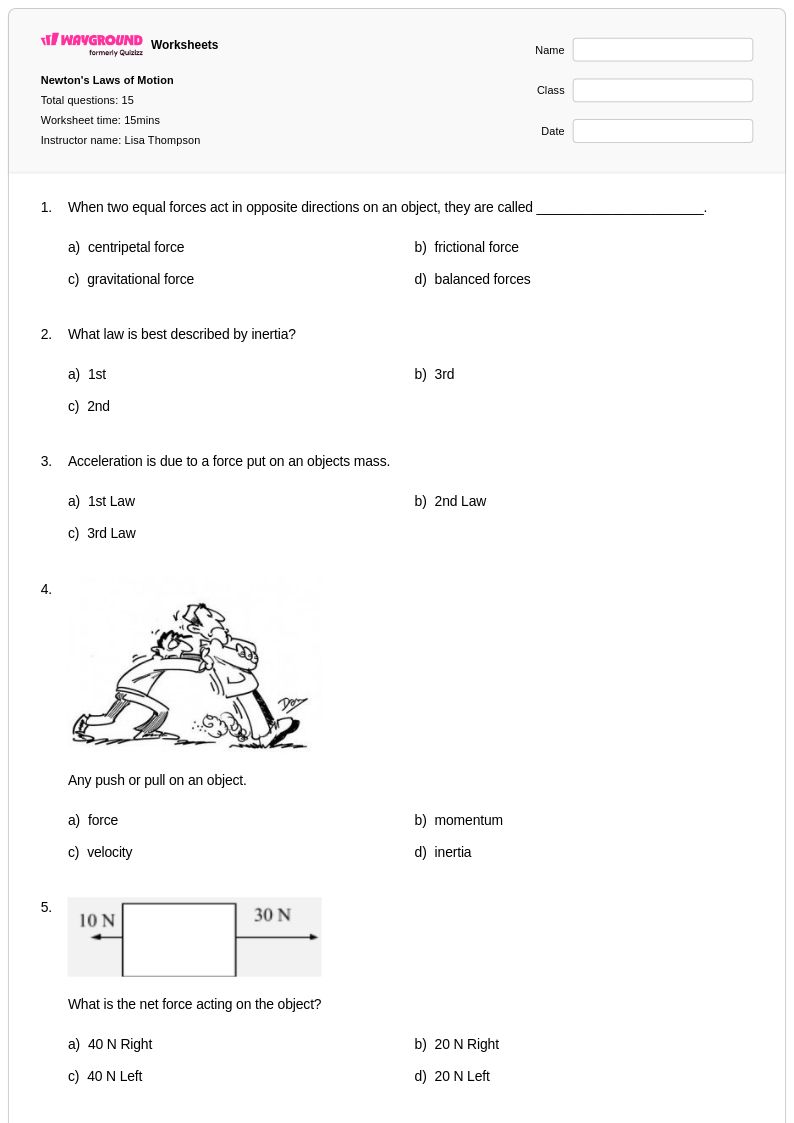
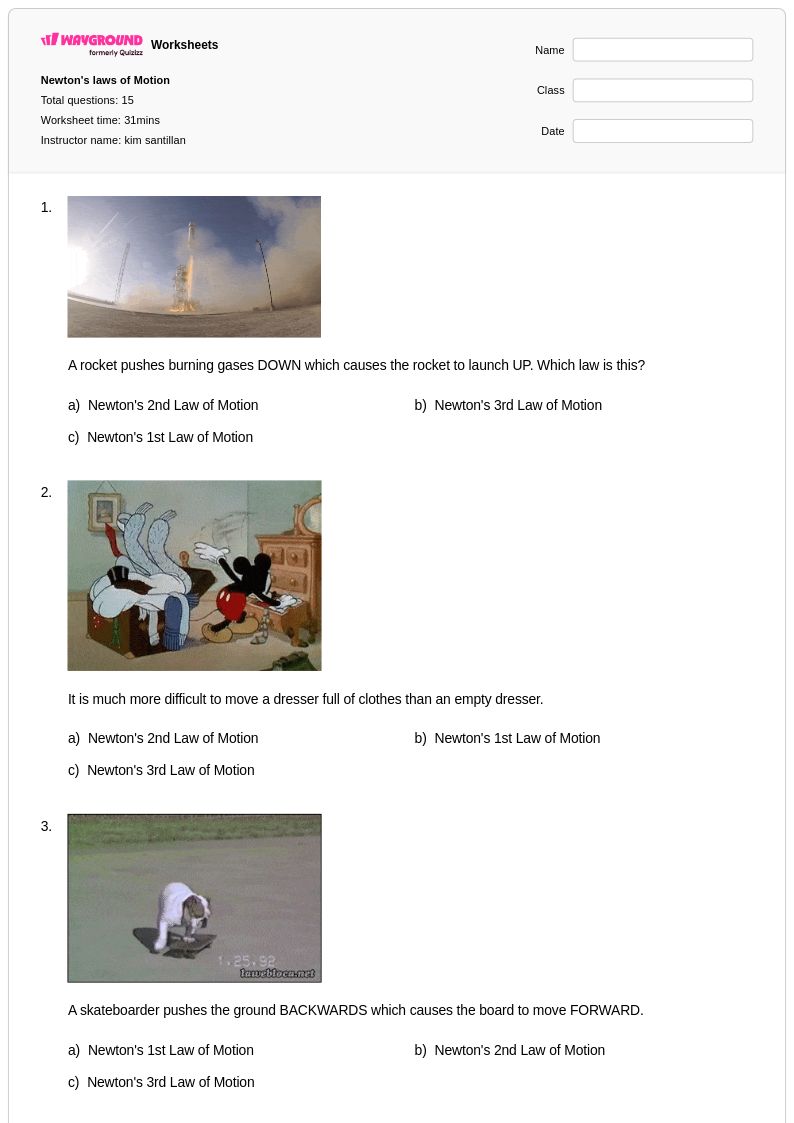
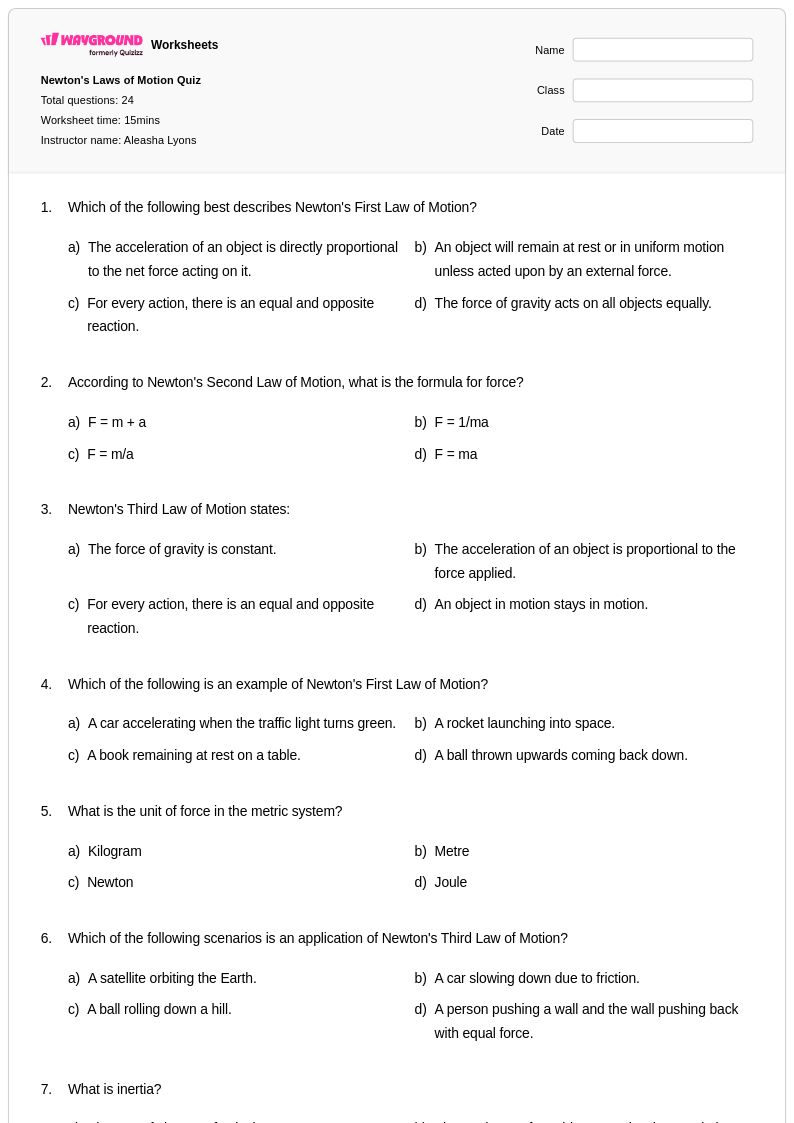
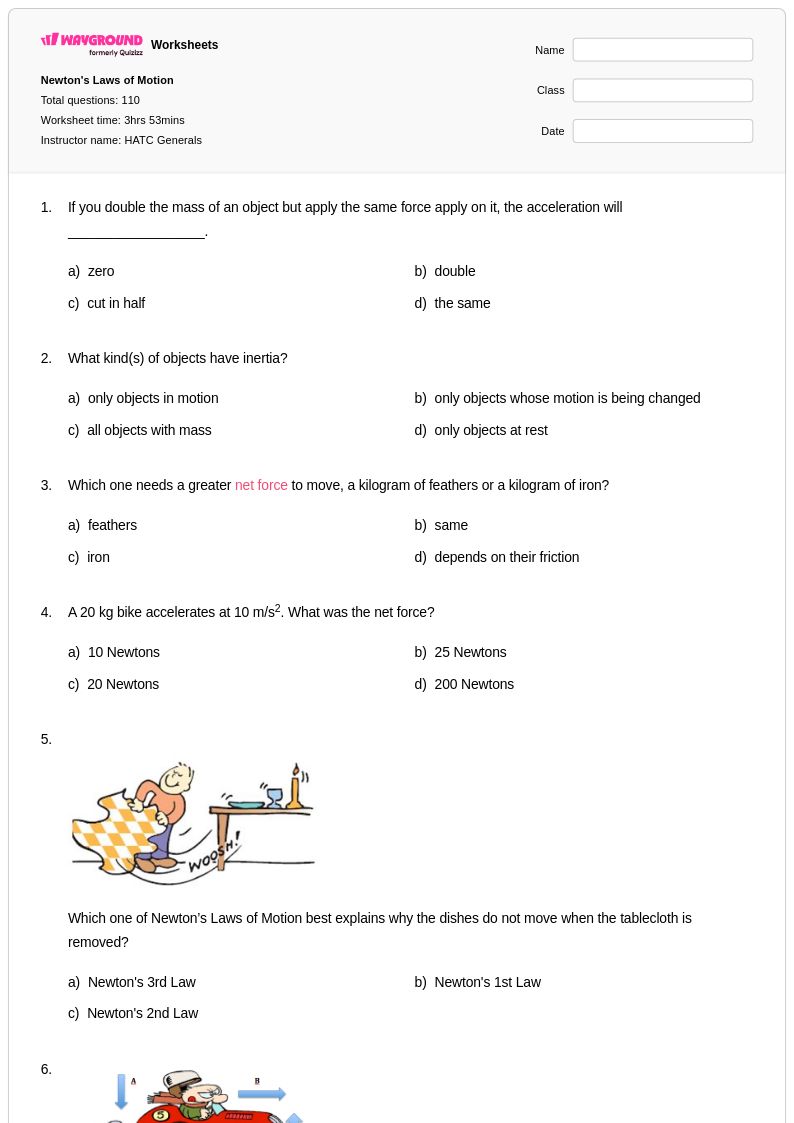
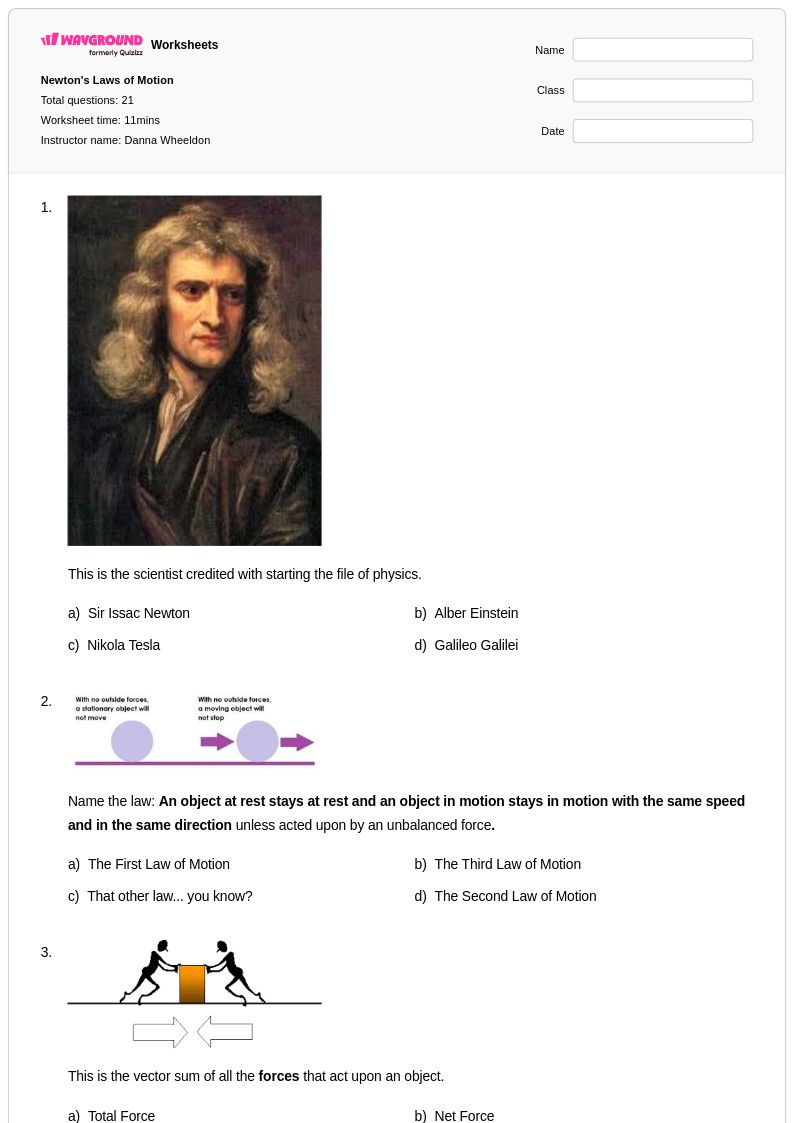
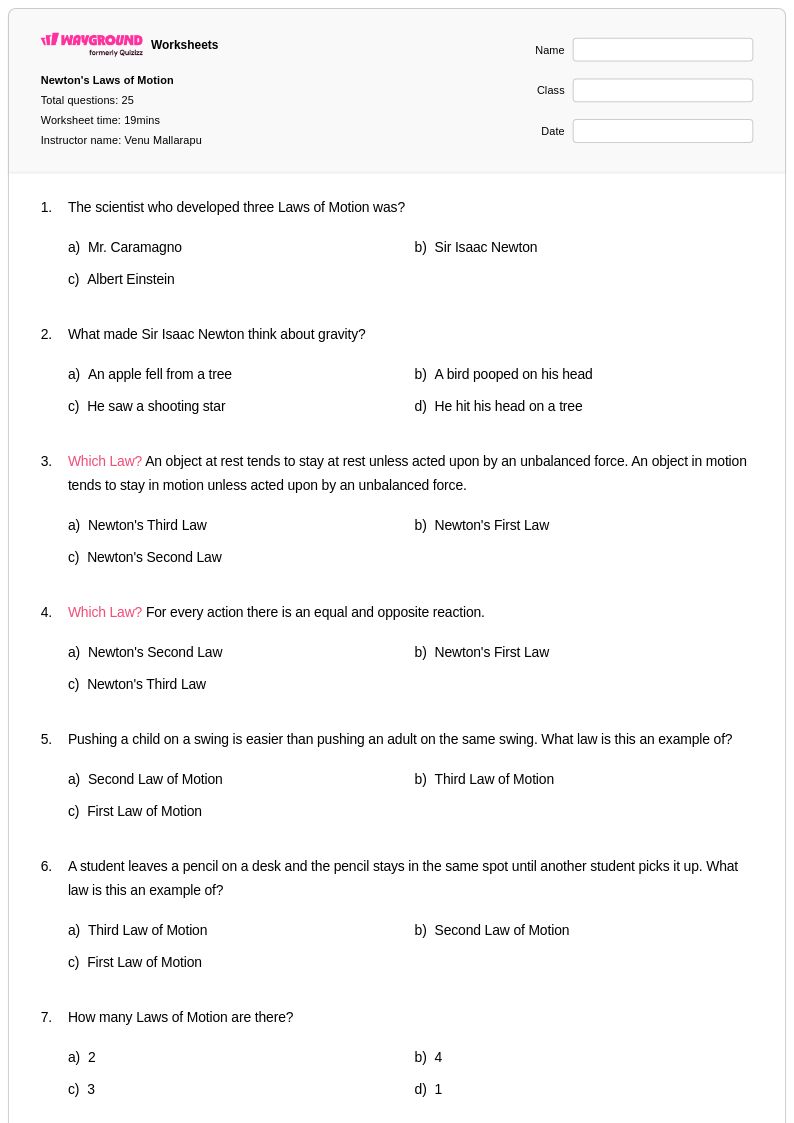
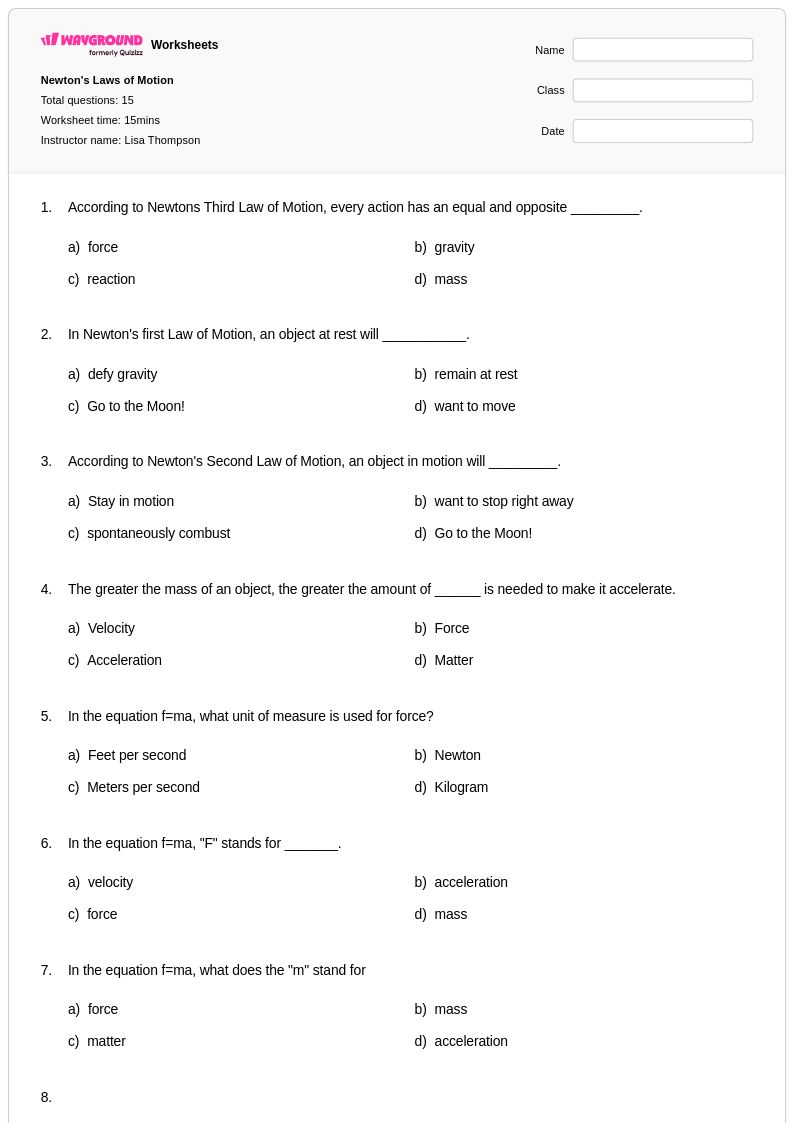
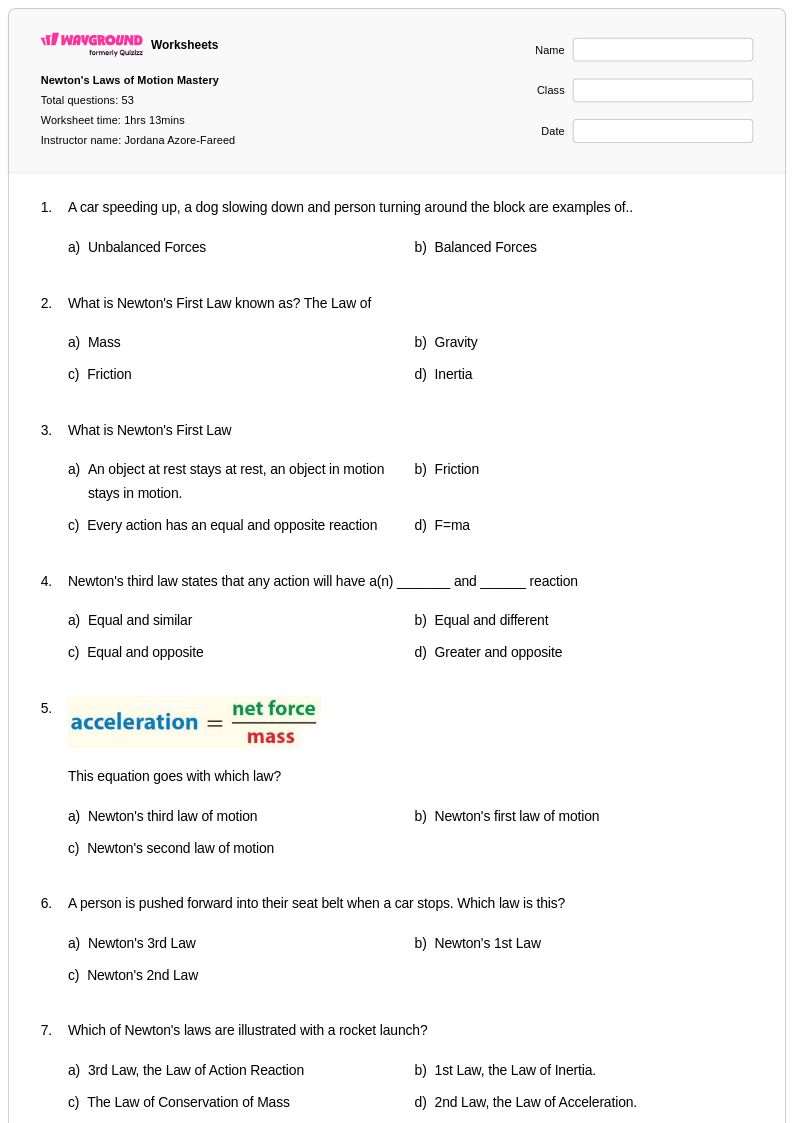
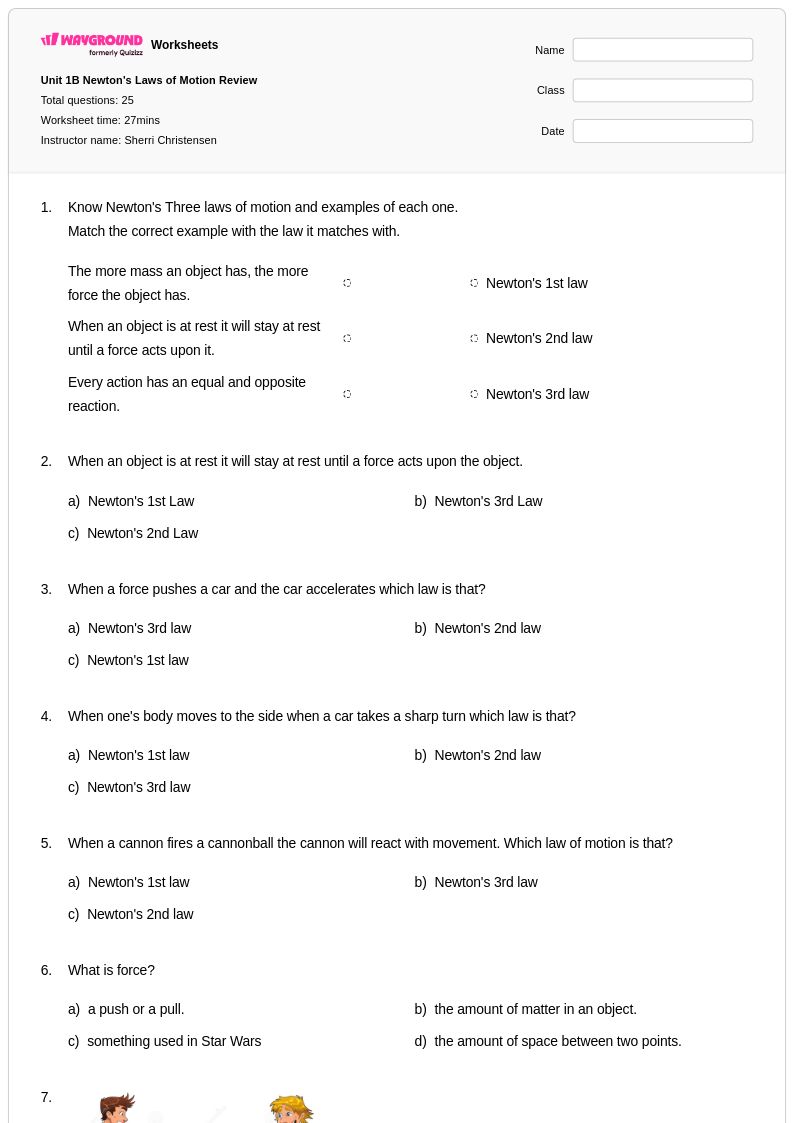
Newton's Laws of Motion worksheets for Class 10 students available through Wayground (formerly Quizizz) provide comprehensive practice with the fundamental principles that govern force, mass, and acceleration relationships in physics. These carefully designed worksheets strengthen students' understanding of Newton's first law of inertia, second law relating force to acceleration, and third law of action-reaction pairs through systematic problem-solving exercises and conceptual applications. Students engage with real-world scenarios involving balanced and unbalanced forces, calculate net forces and accelerations, and analyze motion in various contexts from simple mechanical systems to complex multi-body interactions. Each worksheet includes detailed answer keys and step-by-step solutions, ensuring students can verify their work and identify areas needing additional focus. Available as free printables in convenient PDF format, these practice problems range from basic conceptual questions to advanced mathematical applications that prepare students for higher-level physics coursework.
Wayground (formerly Quizizz) empowers educators with an extensive collection of millions of teacher-created Newton's Laws of Motion resources specifically curated for Class 10 physics instruction. The platform's robust search and filtering capabilities allow teachers to quickly locate worksheets aligned with specific curriculum standards and learning objectives, whether focusing on conceptual understanding or quantitative problem-solving skills. Advanced differentiation tools enable educators to customize worksheet difficulty levels, modify problem sets for diverse learning needs, and create targeted interventions for remediation or enrichment activities. Teachers benefit from flexible format options, accessing materials as printable PDFs for traditional classroom use or digital versions for online learning environments. This comprehensive resource collection streamlines lesson planning by providing ready-to-use materials that support skill practice across all three laws, from identifying forces in equilibrium situations to calculating momentum changes in collision problems, ensuring students develop mastery of these essential physics concepts.
FAQs
How do I teach Newton's three laws of motion in sequence?
Start with Newton's First Law by building intuition around inertia using everyday examples like a ball rolling on a flat surface or a passenger lurching forward when a car brakes. Move to the Second Law by introducing the relationship F = ma with simple force and acceleration problems before scaling to multi-variable scenarios. Introduce the Third Law last, using action-reaction pair diagrams to help students distinguish between equal forces acting on different objects rather than the same one. Anchoring each law to a concrete real-world scenario before introducing formulas significantly reduces confusion.
What practice problems help students master Newton's Second Law?
Students build fluency with Newton's Second Law through progressive F = ma problems that first hold one variable constant before requiring students to solve for all three quantities. Effective practice includes problems drawn from real contexts such as calculating the force needed to accelerate a car, analyzing a rocket's thrust, or determining the acceleration of a pushed shopping cart. Mixing conceptual questions with calculation problems ensures students understand the proportional relationship between force, mass, and acceleration rather than just applying a formula mechanically.
What misconceptions do students commonly have about Newton's Laws?
One of the most persistent misconceptions is that a moving object requires a constant force to keep it moving, which directly contradicts Newton's First Law. Students also frequently confuse Newton's Third Law action-reaction pairs by assuming the forces cancel each other out, failing to recognize that the forces act on different objects and therefore do not affect the same system's net force. A third common error is treating mass and weight as interchangeable when applying Newton's Second Law. Explicitly addressing these misconceptions with targeted problems and counterexamples before students practice independently can prevent them from becoming entrenched.
How can I use Newton's Laws of Motion worksheets in my classroom?
Newton's Laws of Motion worksheets on Wayground are available as printable PDFs for traditional classroom use and in digital formats for technology-integrated or remote learning environments, giving teachers flexibility in how they assign and collect work. Teachers can also host worksheets directly as a quiz on Wayground, enabling real-time student responses and immediate feedback. For students who need additional support, Wayground's accommodation tools allow teachers to enable features like read aloud, extended time, or reduced answer choices on an individual basis without disrupting the rest of the class.
How do I help students connect Newton's Laws to real-world situations?
Grounding each law in familiar scenarios dramatically improves retention and conceptual transfer. For the First Law, car crash safety and seatbelt function are highly effective anchors. Rocket propulsion and sports scenarios work well for the Second Law, since students can reason about why a heavier object accelerates less under the same force. Action-reaction pair examples like walking, swimming, and jumping help make the Third Law concrete. Asking students to identify and label forces in these scenarios before solving any calculations reinforces the conceptual framework behind the math.
What types of activities work best for assessing student understanding of Newton's Laws?
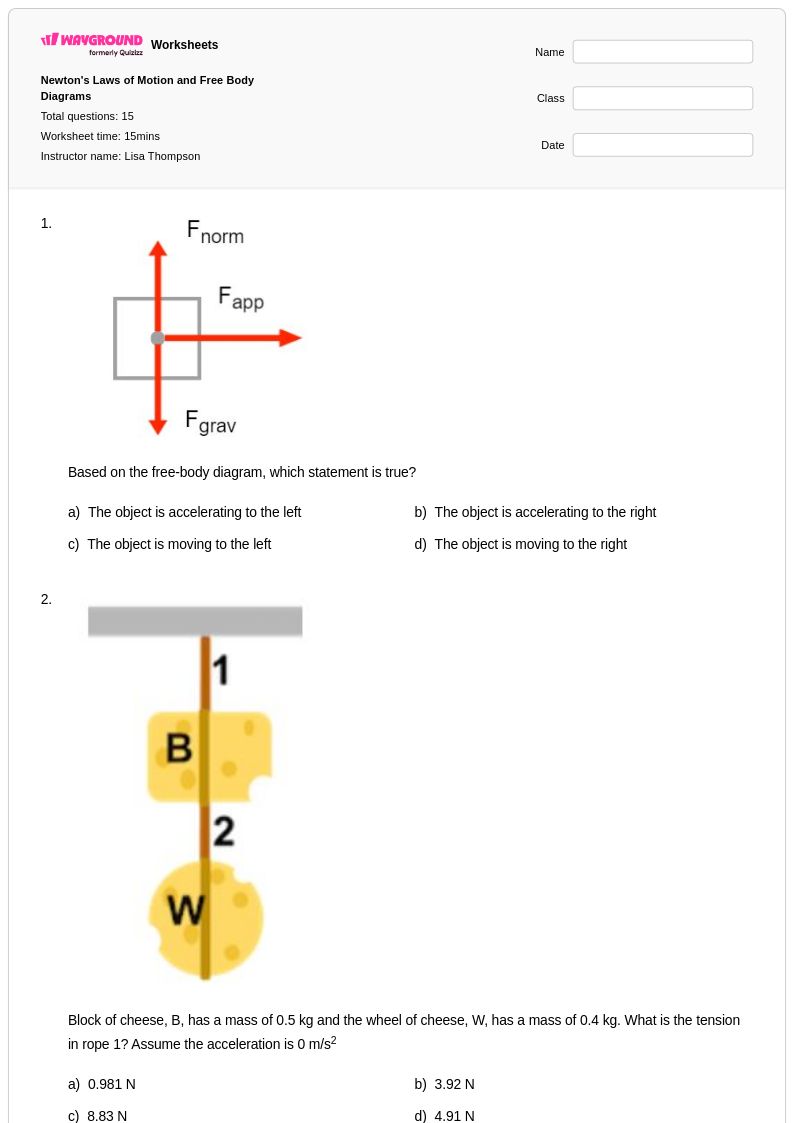
A well-rounded assessment of Newton's Laws should include both calculation problems and conceptual questions, since students can memorize formulas without understanding the underlying principles. Asking students to draw and label free-body diagrams tests whether they can correctly identify and represent forces acting on an object. Scenario-based questions, such as analyzing what happens to acceleration when mass doubles but force stays constant, reveal whether students have internalized the proportional relationships rather than relying on rote application of F = ma.