Free Printable Paraphrasing Worksheets for Class 3
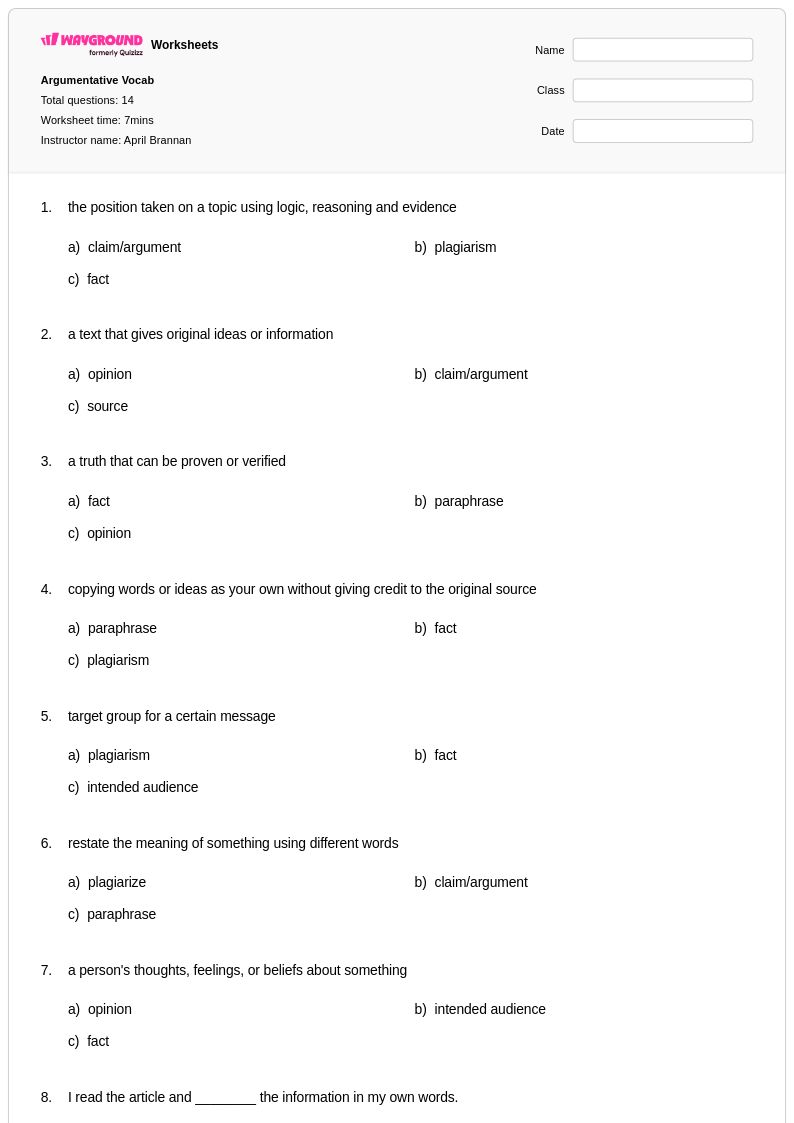
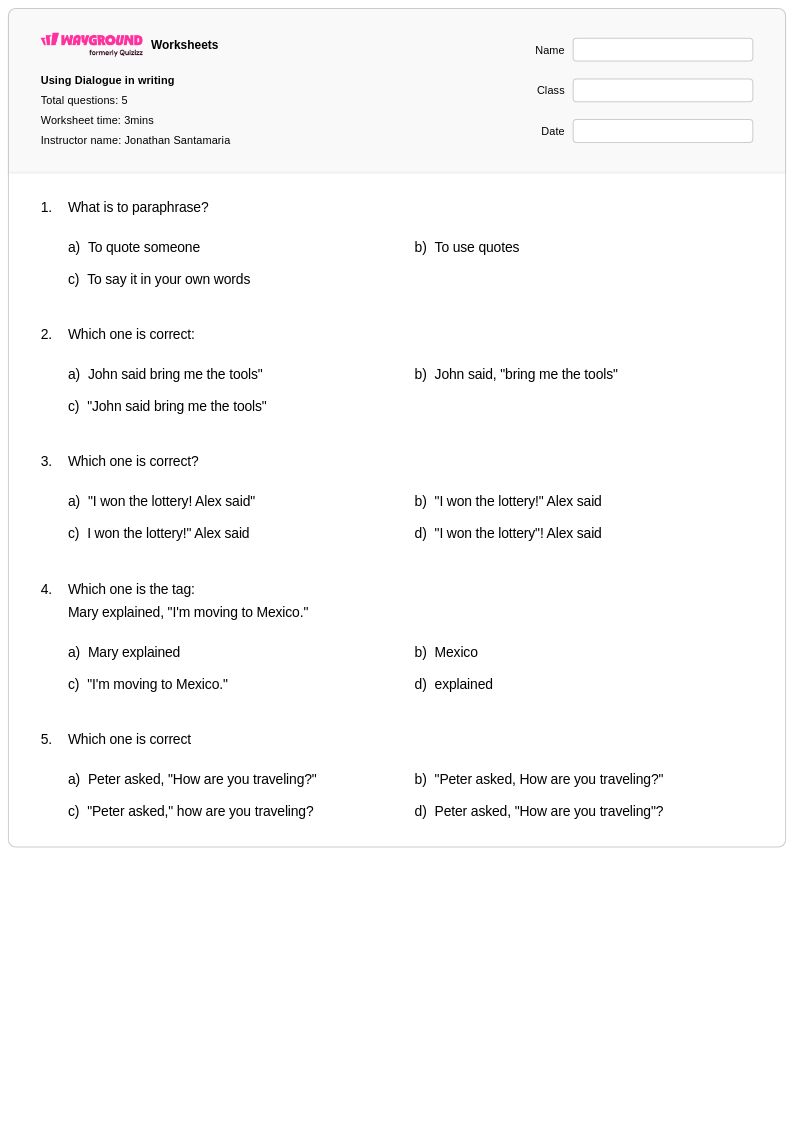
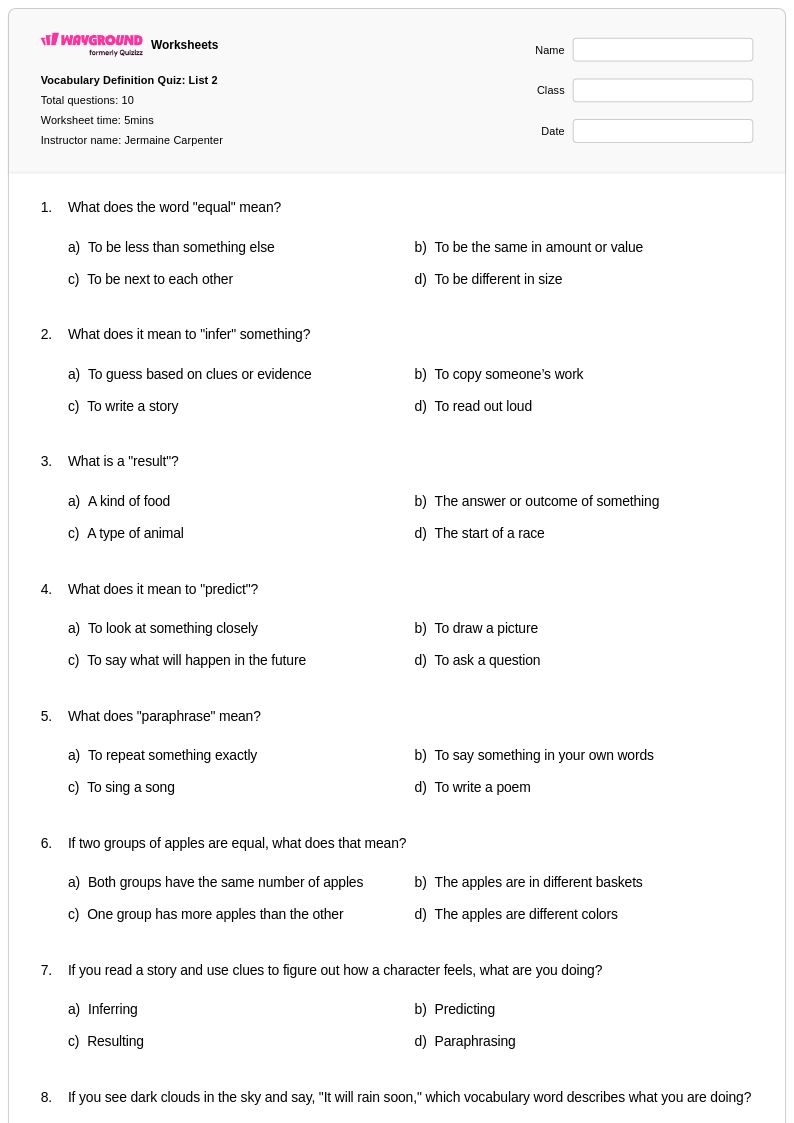
Class 3 paraphrasing worksheets from Wayground help students master restating text in their own words through engaging printables, practice problems, and comprehensive answer keys for effective reading comprehension skill development.
Explore printable Paraphrasing worksheets for Class 3
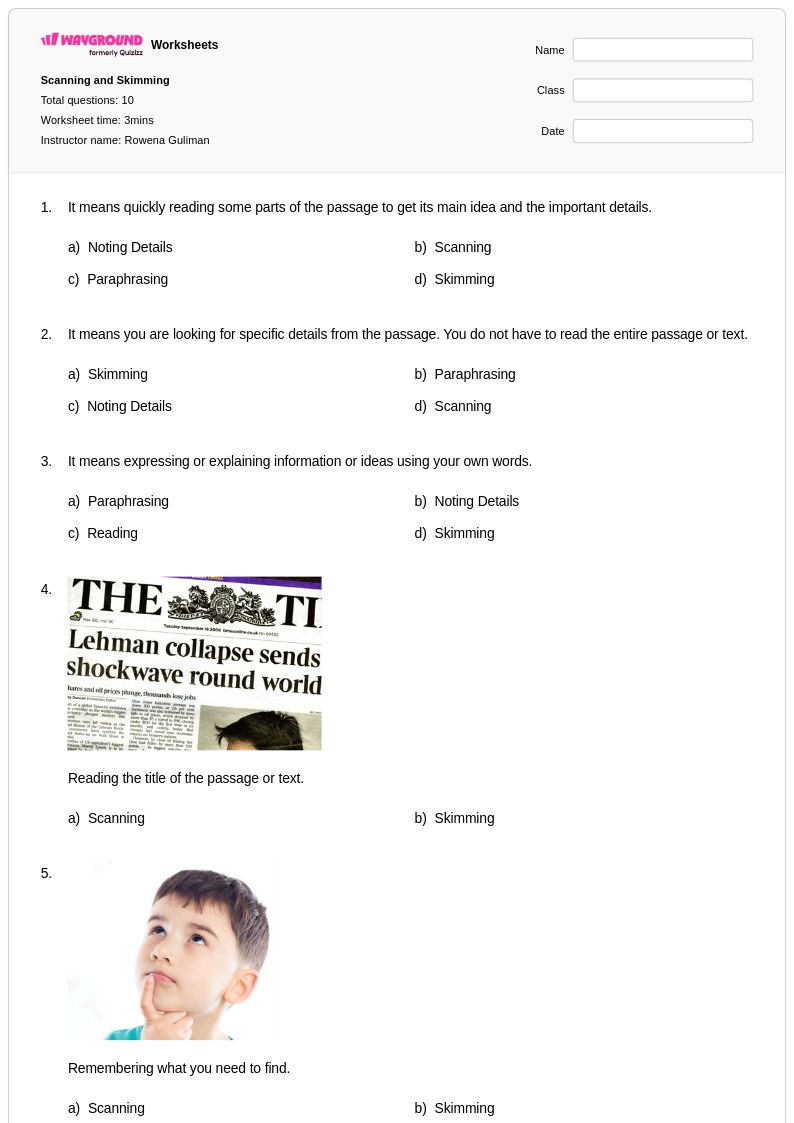
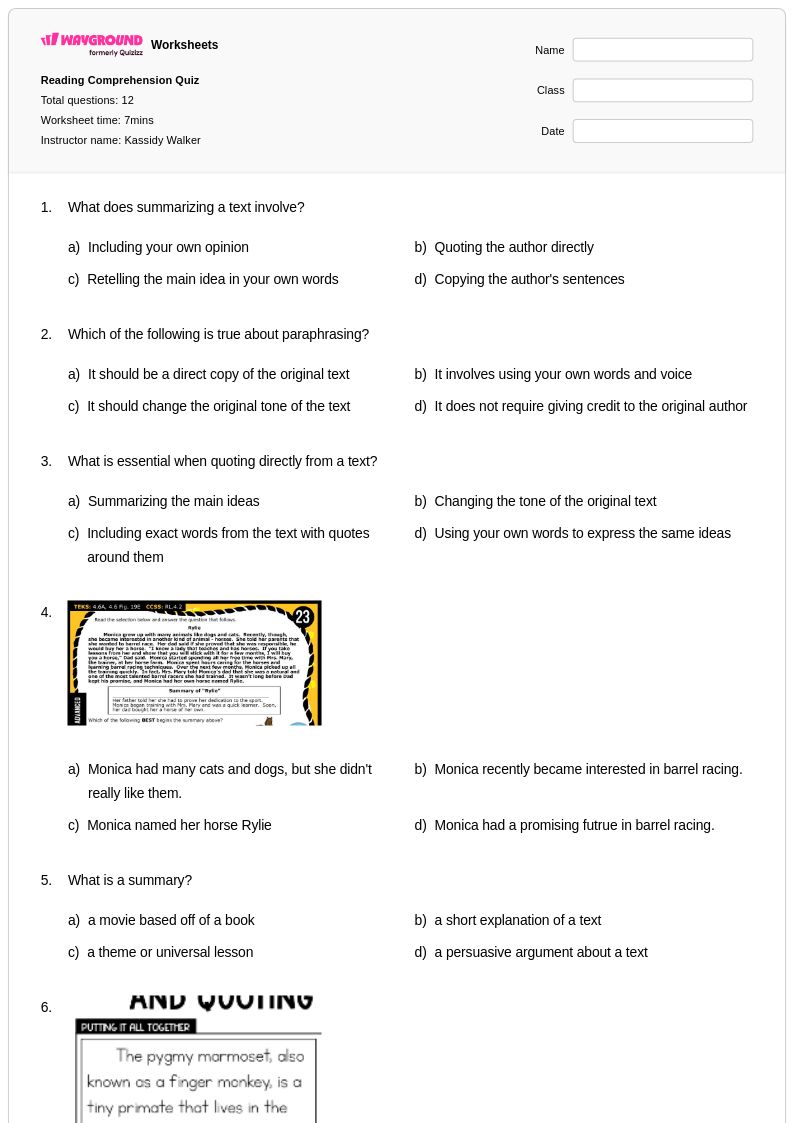
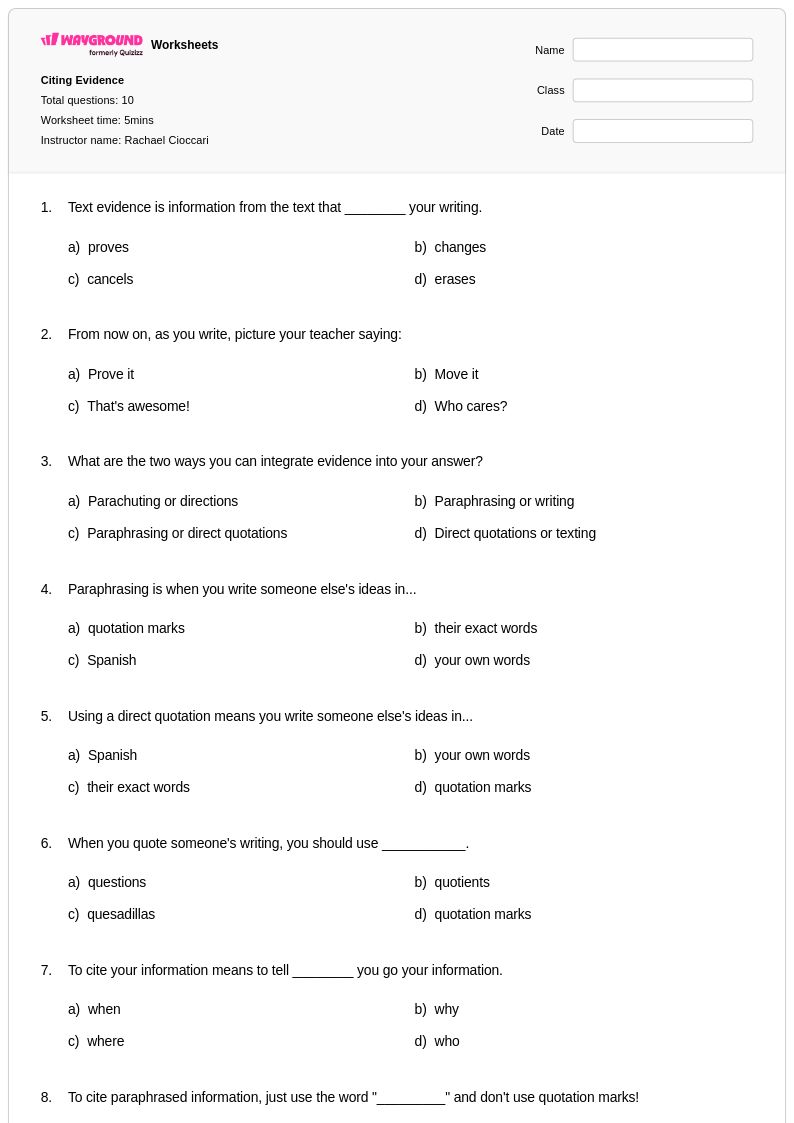
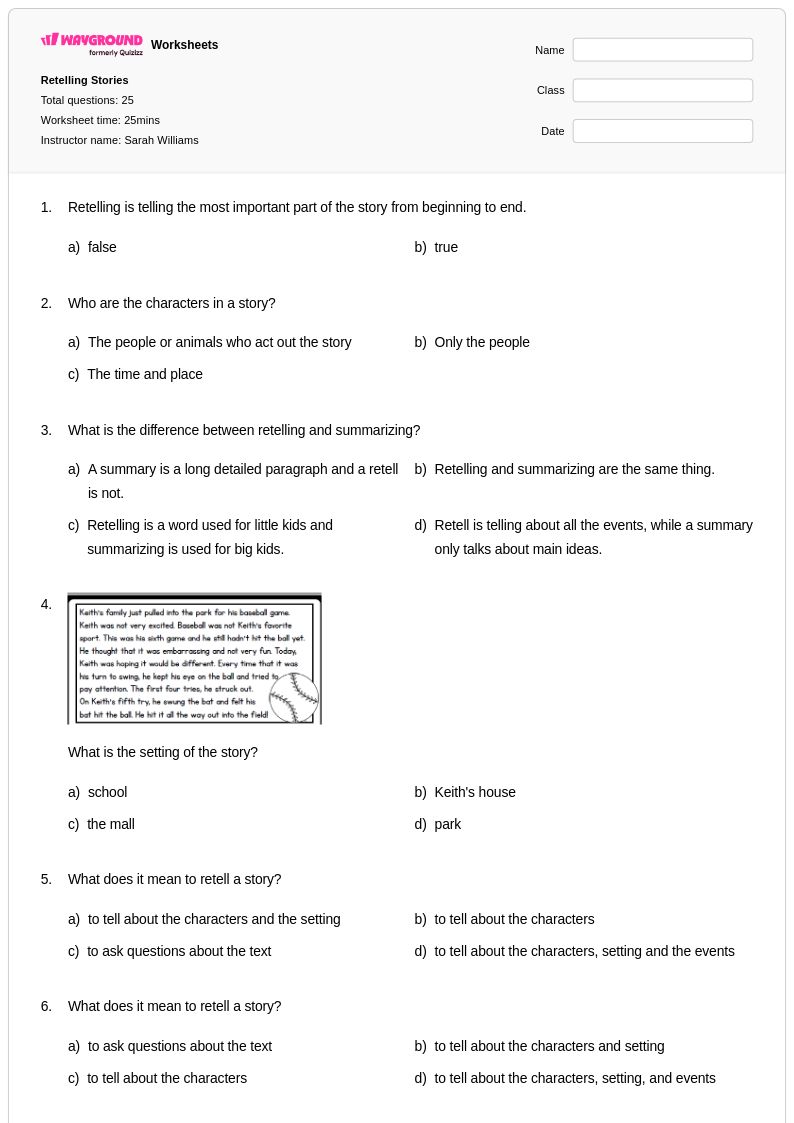
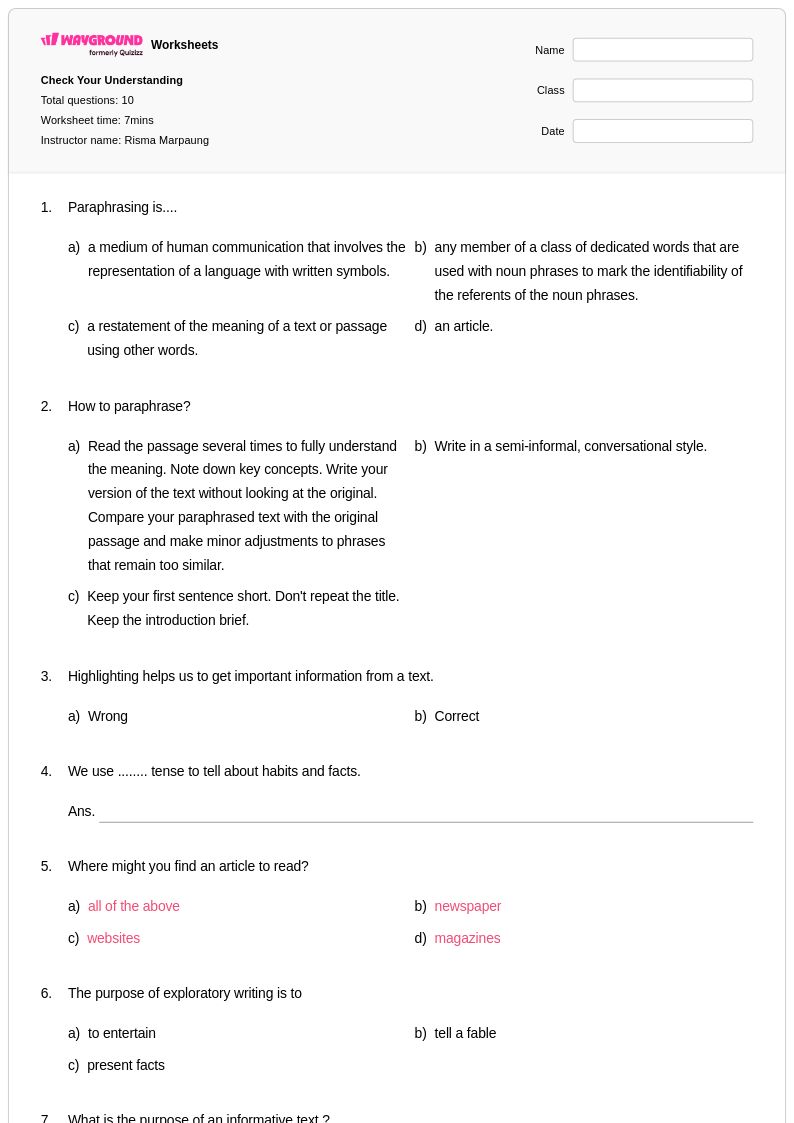
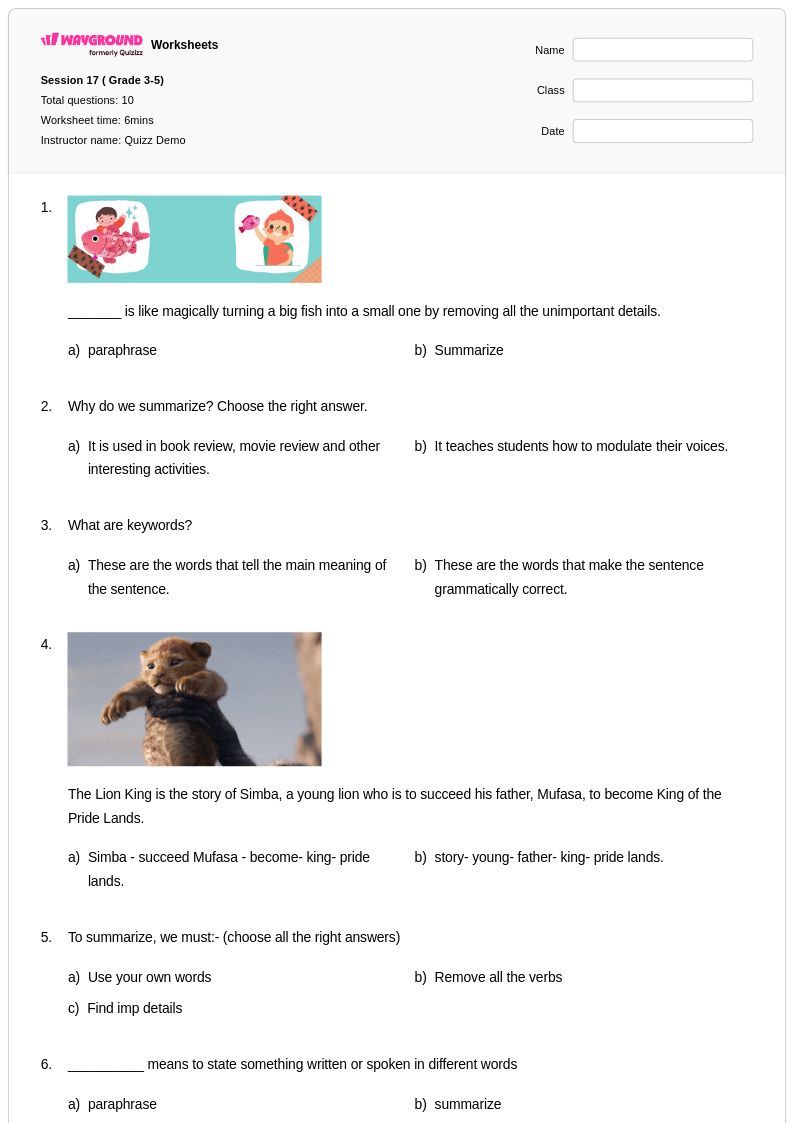
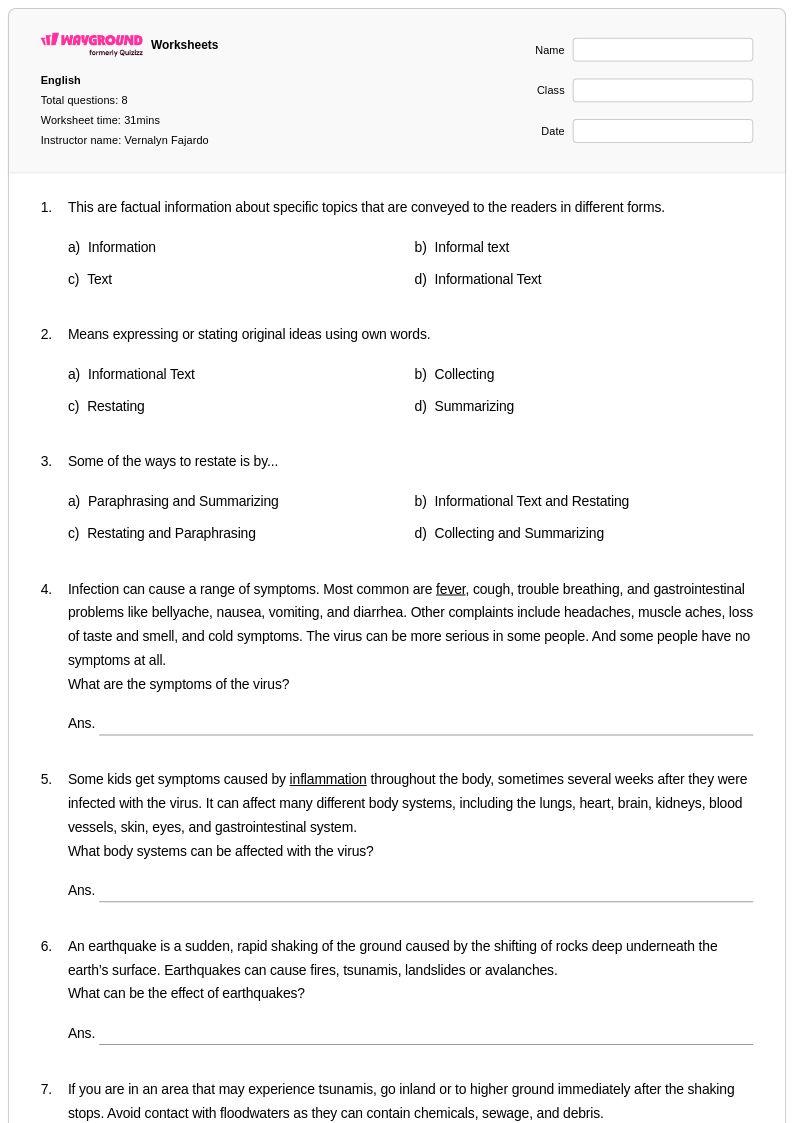
Paraphrasing worksheets for Class 3 students available through Wayground (formerly Quizizz) provide essential practice in one of the most fundamental reading comprehension strategies. These carefully designed resources help young learners develop the critical skill of restating information in their own words while maintaining the original meaning of the text. Students engage with age-appropriate passages and practice problems that guide them through the process of identifying key ideas, eliminating unnecessary details, and expressing concepts using different vocabulary and sentence structures. Each worksheet comes with a comprehensive answer key that enables teachers to assess student understanding and provide targeted feedback. These free printables strengthen students' ability to demonstrate comprehension, improve their vocabulary usage, and build confidence in expressing ideas clearly and accurately.
Wayground (formerly Quizizz) supports educators with an extensive collection of teacher-created paraphrasing resources that span millions of worksheets designed specifically for Class 3 reading comprehension instruction. The platform's robust search and filtering capabilities allow teachers to quickly locate materials aligned with curriculum standards and differentiate instruction based on individual student needs. Teachers can customize these versatile worksheets to match their specific lesson objectives and classroom requirements, with materials available in both printable pdf formats for traditional classroom use and digital formats for technology-integrated learning environments. This comprehensive resource collection streamlines lesson planning while providing educators with reliable tools for skill practice, remediation for struggling readers, and enrichment opportunities for advanced learners, ensuring that all students receive appropriate support in mastering this essential reading comprehension strategy.
FAQs
How do I teach paraphrasing to students who struggle with it?
Start by modeling the process explicitly: read a sentence aloud, identify the key idea, and then demonstrate how to restate it using different vocabulary and sentence structure while keeping the original meaning intact. A useful scaffold is the 'read, cover, rewrite, compare' method, where students read a passage, set it aside, write the idea in their own words, and then check their version against the original. Gradually release responsibility by moving from whole-class modeling to guided practice and finally independent application.
What exercises help students practice paraphrasing?
Effective paraphrasing practice includes sentence-level rewriting tasks, synonym substitution exercises, and passage-level rewording activities that increase in complexity. Students benefit from comparing their paraphrases side-by-side with the original text to evaluate accuracy and word choice. Structured worksheets that guide learners from identifying the main idea to crafting a full restatement help build this skill systematically before students apply it independently in reading and writing tasks.
What is the difference between paraphrasing and summarizing?
Paraphrasing restates a specific passage or idea in different words at roughly the same length, preserving all of the original meaning and detail. Summarizing condenses a larger text down to its most essential points, necessarily leaving out supporting detail. Students often confuse the two, so explicitly teaching both side-by-side with concrete examples helps clarify when each skill is appropriate.
What mistakes do students commonly make when paraphrasing?
The most common error is near-copying, where students change only a few words or swap synonyms while keeping the original sentence structure intact — this is sometimes called 'patchwriting' and does not constitute genuine paraphrasing. Students also frequently lose the original meaning by misidentifying the key idea before they begin restating. Teaching students to put the source text face-down before writing their paraphrase is one of the most effective strategies for breaking the habit of leaning on the original wording.
How can I differentiate paraphrasing instruction for students at different reading levels?
For struggling readers, begin with short, simple sentences and provide sentence frames or word banks to scaffold the restatement process, reducing cognitive load while keeping the skill goal intact. On-level students can work with paragraph-length passages and compare paraphrases in pairs to evaluate accuracy. Advanced students benefit from paraphrasing complex or technical texts and then reflecting on how their word choices shift tone or emphasis, deepening their understanding of language precision. Wayground's built-in accommodation tools, including reduced answer choices and read-aloud support, allow teachers to apply these adjustments digitally at the individual student level without disrupting the rest of the class.
How do I use Wayground's paraphrasing worksheets in my classroom?
Wayground's paraphrasing worksheets are available as printable PDFs for traditional classroom use and in digital formats for technology-integrated or remote learning environments. Teachers can assign them as in-class practice, independent homework, or host them directly as a quiz on Wayground for real-time student responses. Each worksheet includes a complete answer key, so teachers can use them for self-paced practice, peer review, or targeted small-group instruction depending on where students are in developing their paraphrasing skills.