Free Printable Paul Revere's Midnight Ride Worksheets for Class 3
Discover free Class 3 printable worksheets and practice problems about Paul Revere's Midnight Ride that help students learn this pivotal American Revolution moment through engaging activities with answer keys included.
Explore printable Paul Revere's Midnight Ride worksheets for Class 3
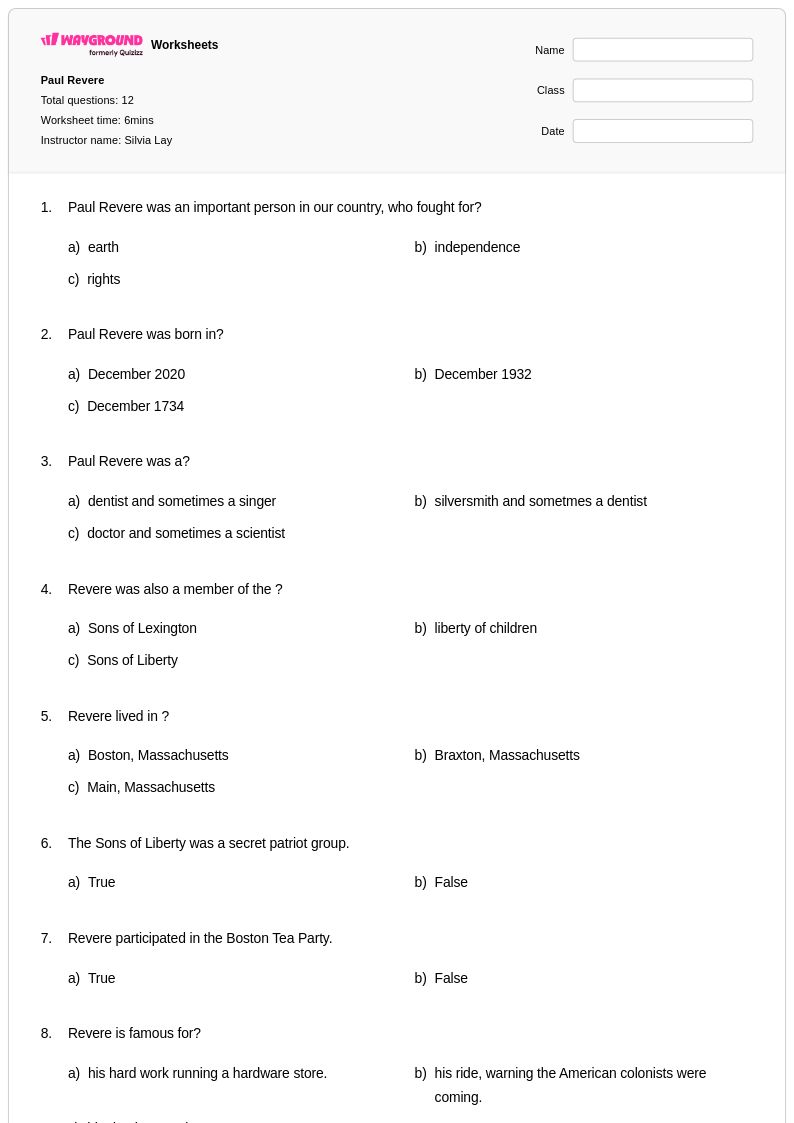
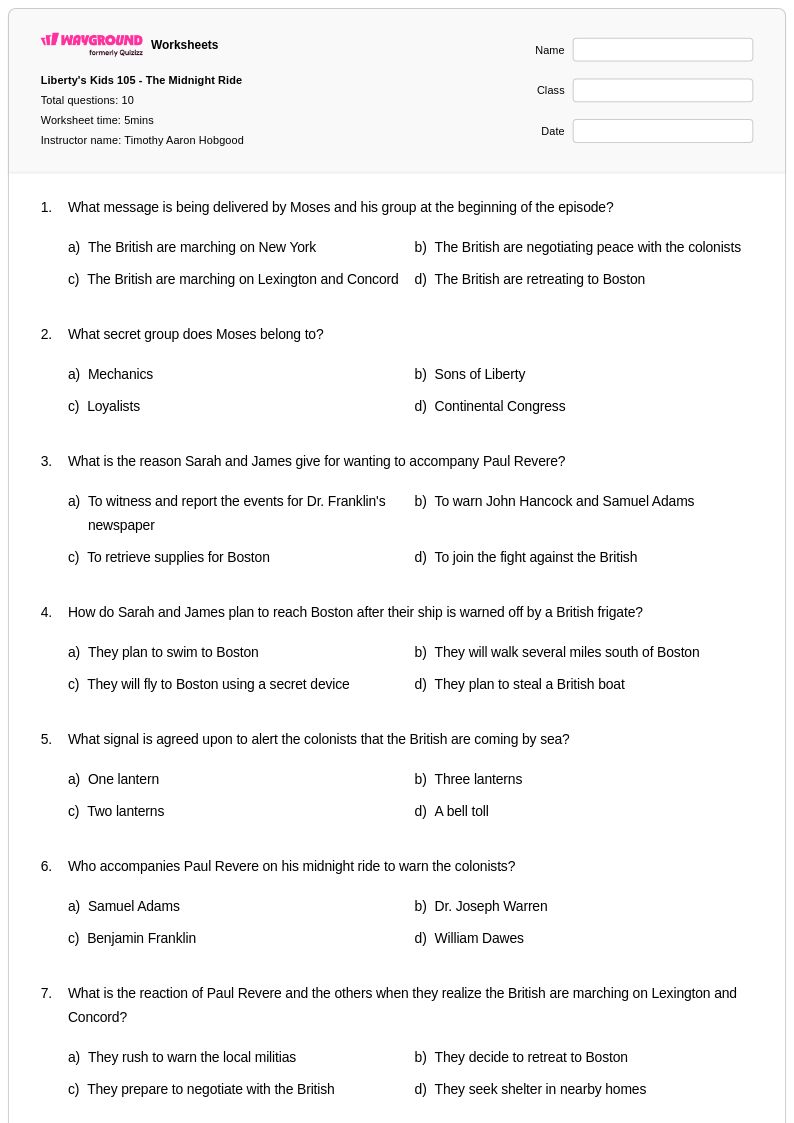
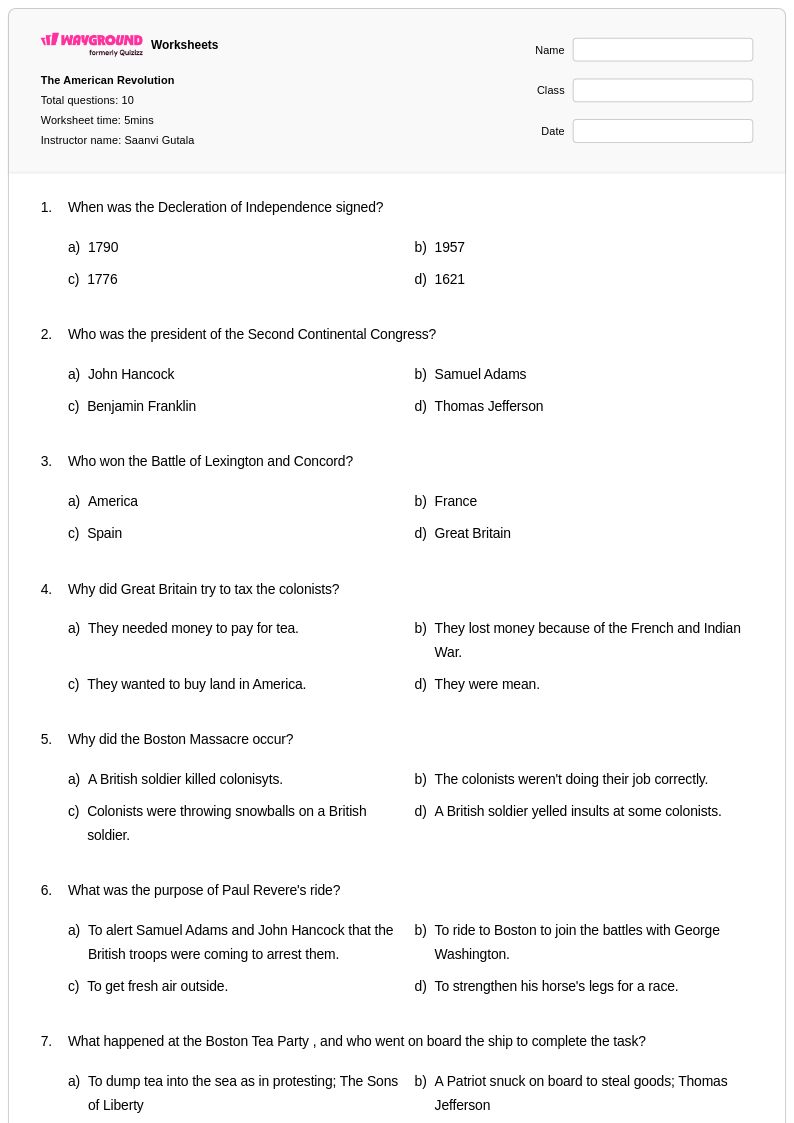
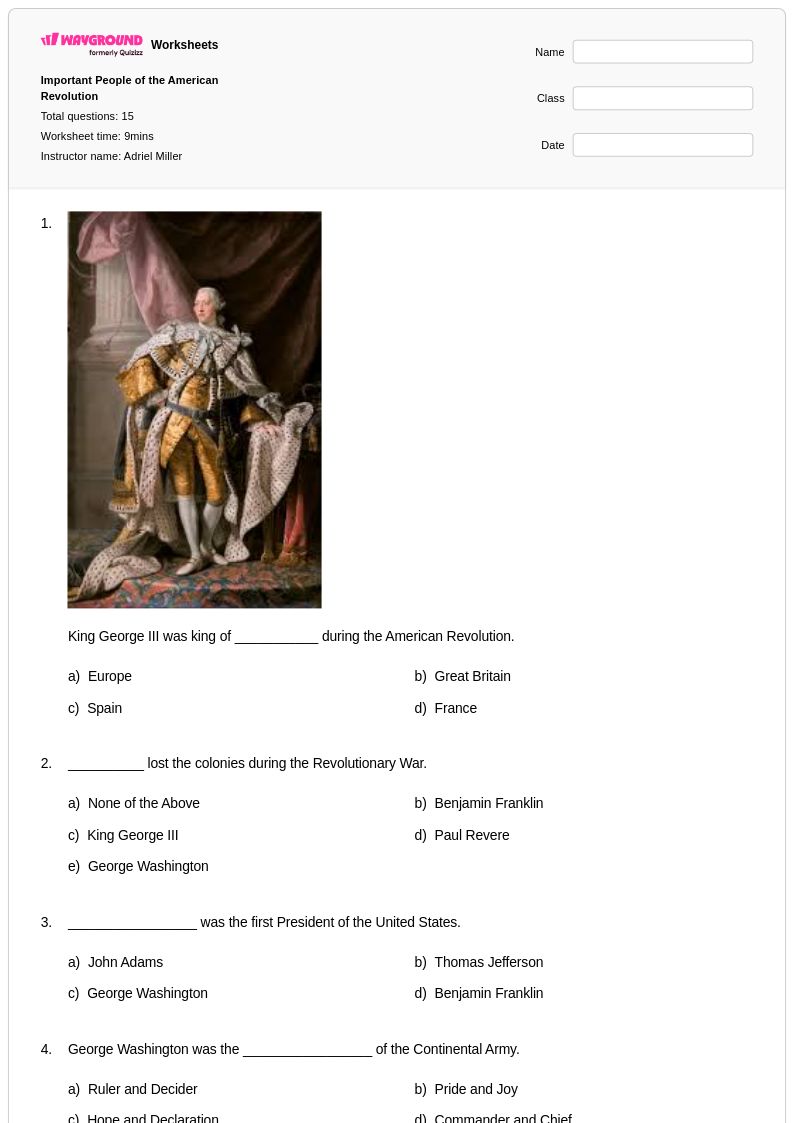
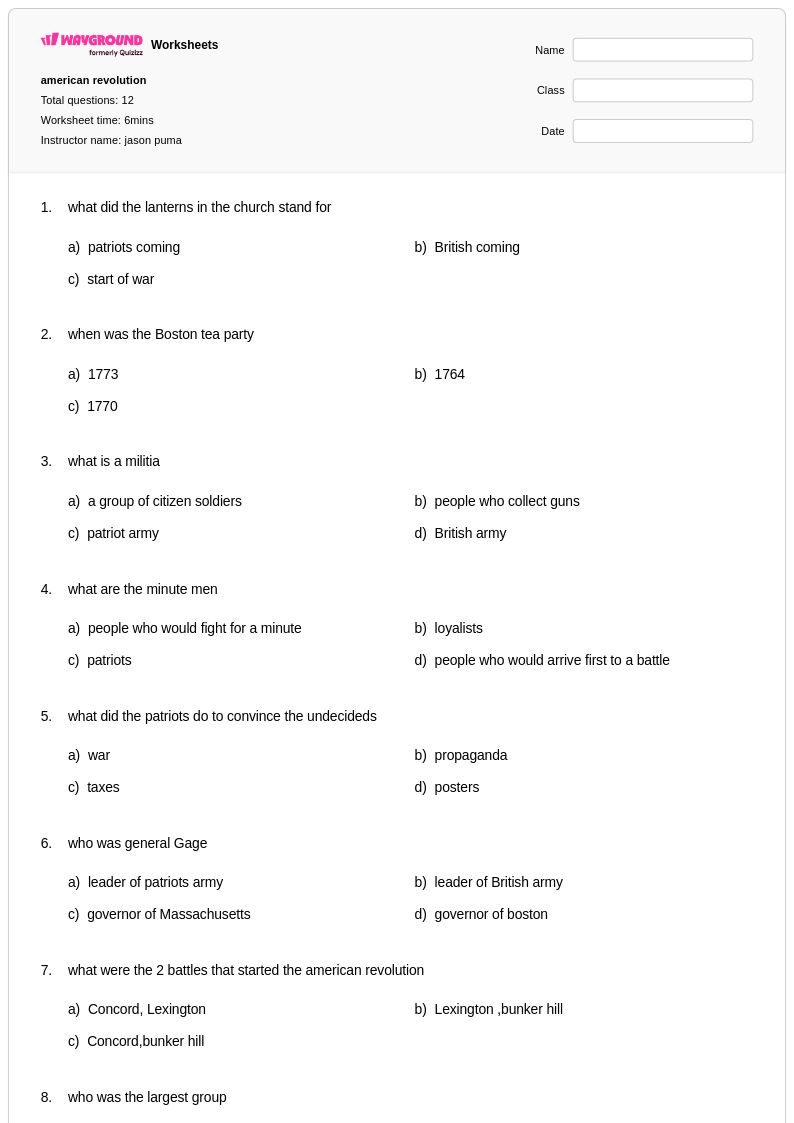
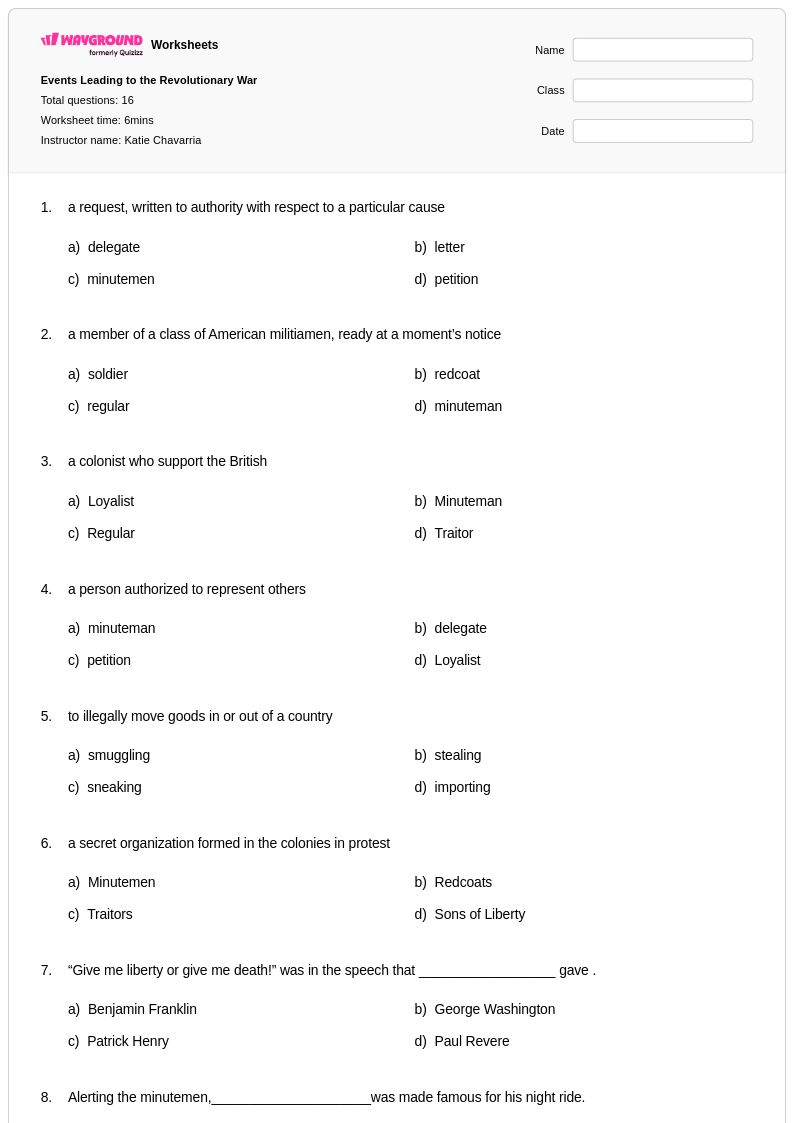
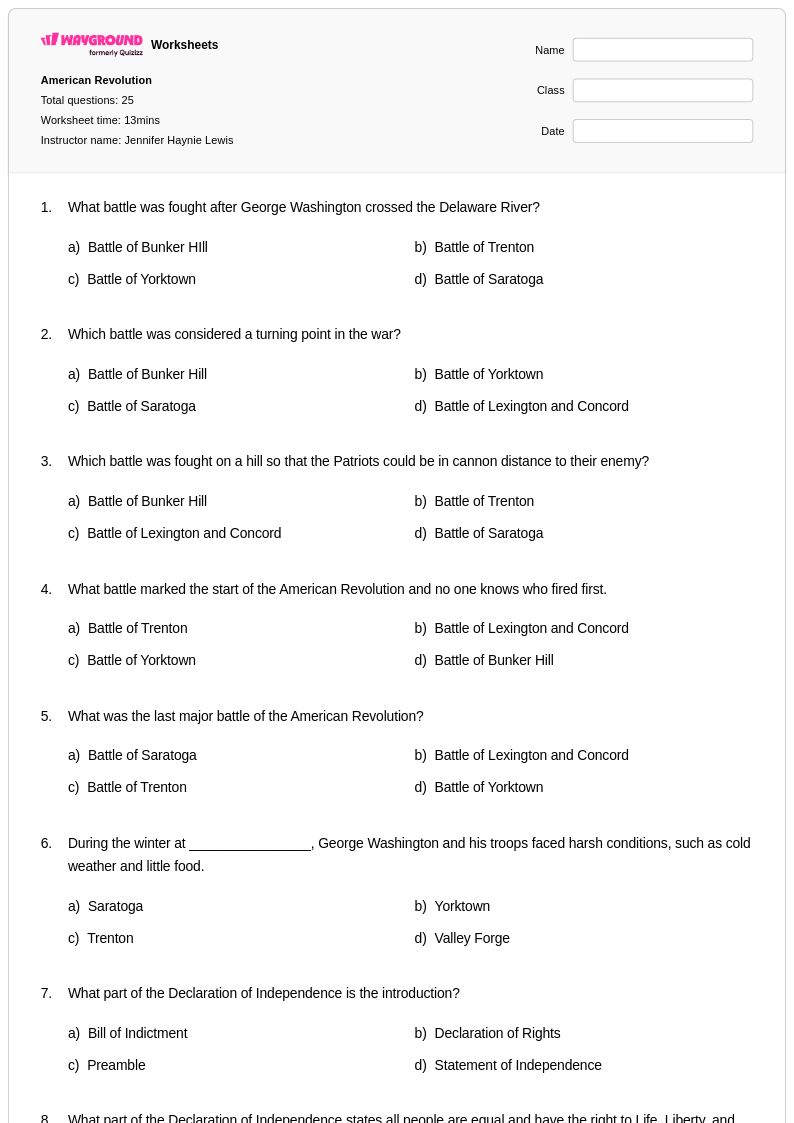
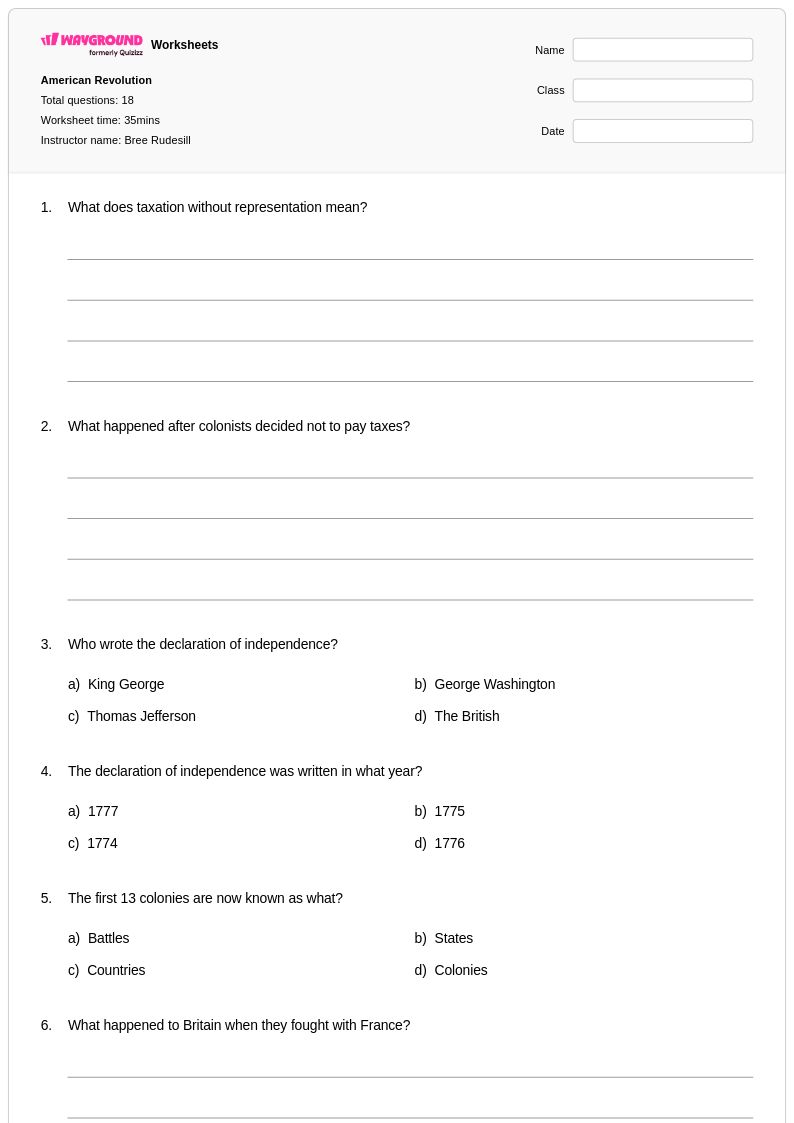
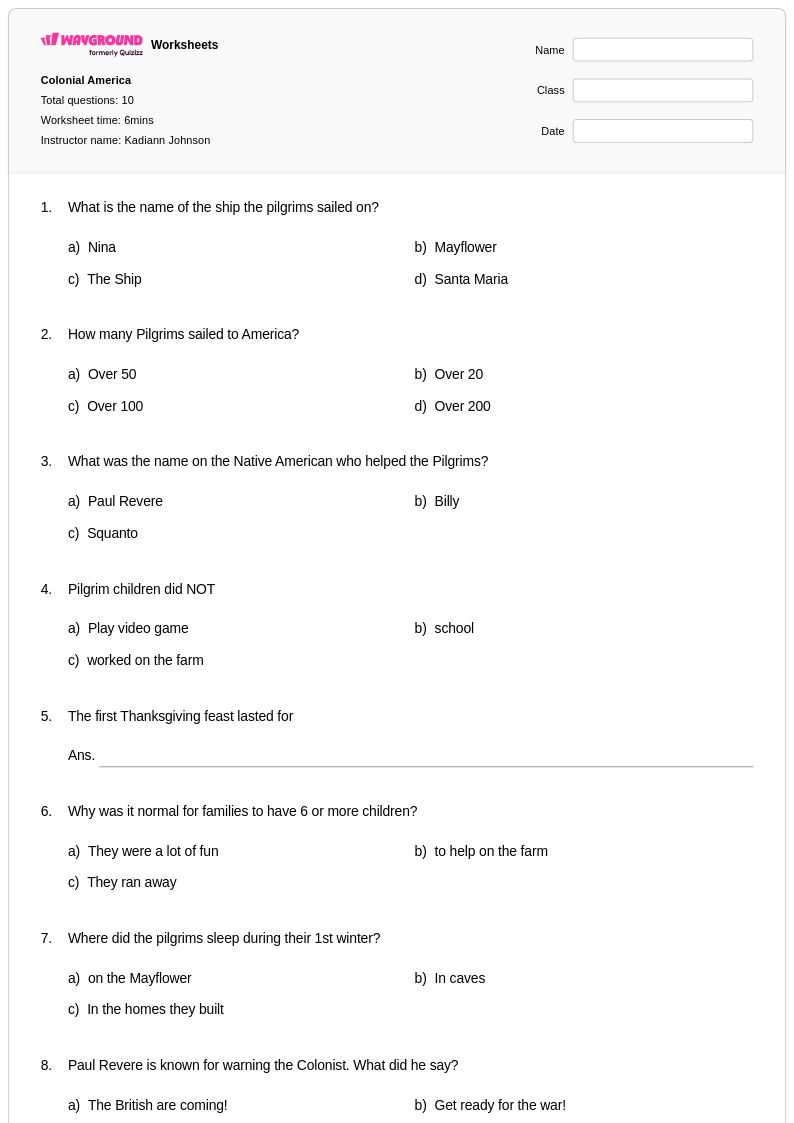
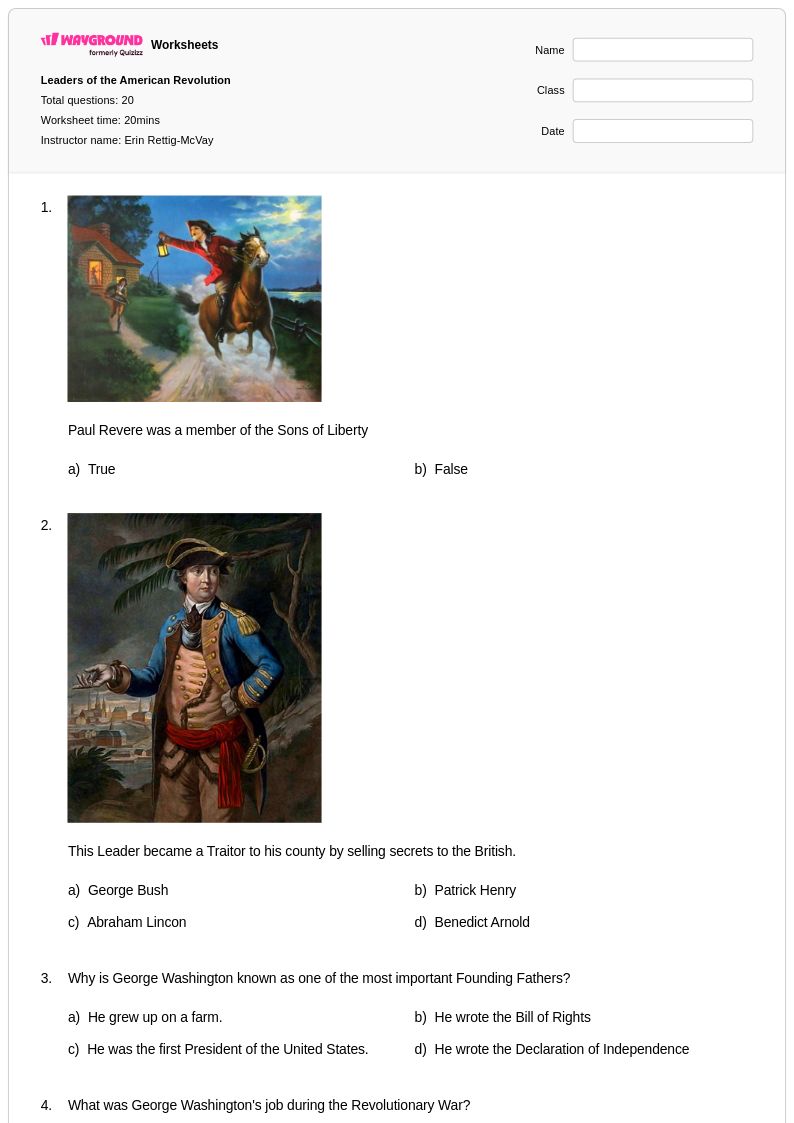
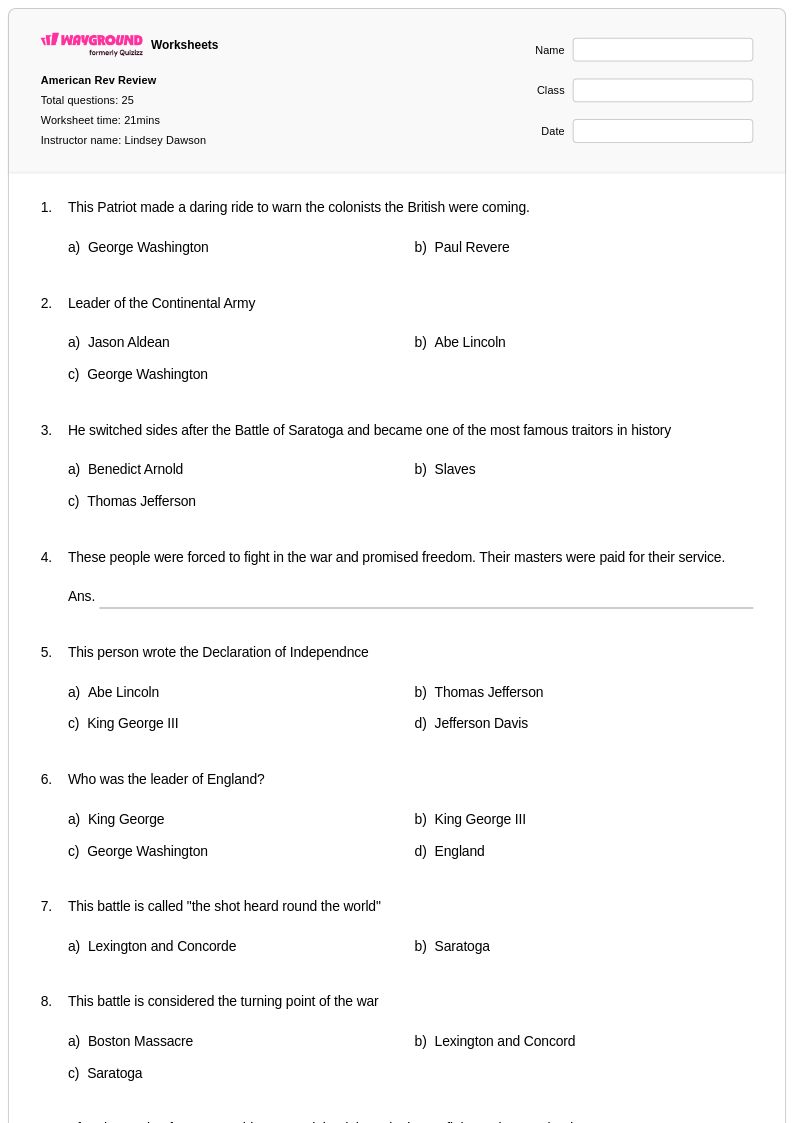
Paul Revere's Midnight Ride worksheets for Class 3 available through Wayground (formerly Quizizz) provide young learners with engaging educational materials that bring this pivotal moment in American history to life. These carefully crafted worksheets strengthen essential social studies skills including reading comprehension, historical sequencing, cause-and-effect analysis, and critical thinking about colonial America. Students develop their understanding of primary and secondary sources while practicing map skills as they trace Revere's famous route from Boston to Lexington and Concord. The collection includes free printables with comprehensive answer keys, allowing teachers to efficiently assess student progress and provide immediate feedback. Practice problems focus on key vocabulary terms, timeline construction, and analysis of Revere's role in warning colonial militias about approaching British forces, helping third-grade students connect individual actions to larger historical events.
Wayground (formerly Quizizz) empowers educators with millions of teacher-created resources specifically designed for Paul Revere's Midnight Ride instruction, featuring robust search and filtering capabilities that allow quick access to grade-appropriate materials. The platform's standards alignment ensures worksheets meet curriculum requirements while differentiation tools enable teachers to modify content for diverse learning needs and reading levels. Flexible customization options allow educators to adapt existing worksheets or create personalized versions that target specific learning objectives, whether for whole-class instruction, small group activities, or individual practice. Available in both printable PDF format and interactive digital versions, these resources support comprehensive lesson planning while providing valuable tools for remediation, enrichment, and ongoing skill development in elementary social studies education.
FAQs
How do I teach Paul Revere's Midnight Ride in a way that goes beyond the legend?
Start by presenting Henry Wadsworth Longfellow's famous poem alongside primary source accounts of April 18, 1775, then ask students to identify where the two diverge. This side-by-side comparison builds critical thinking by helping students distinguish historical fact from myth — for example, that William Dawes and Samuel Prescott also rode that night, and that Revere never completed his journey. Framing the lesson around the question 'What did the legend leave out, and why does it matter?' gives students a concrete analytical task while grounding them in historical inquiry.
What activities help students understand why Paul Revere's ride was historically significant?
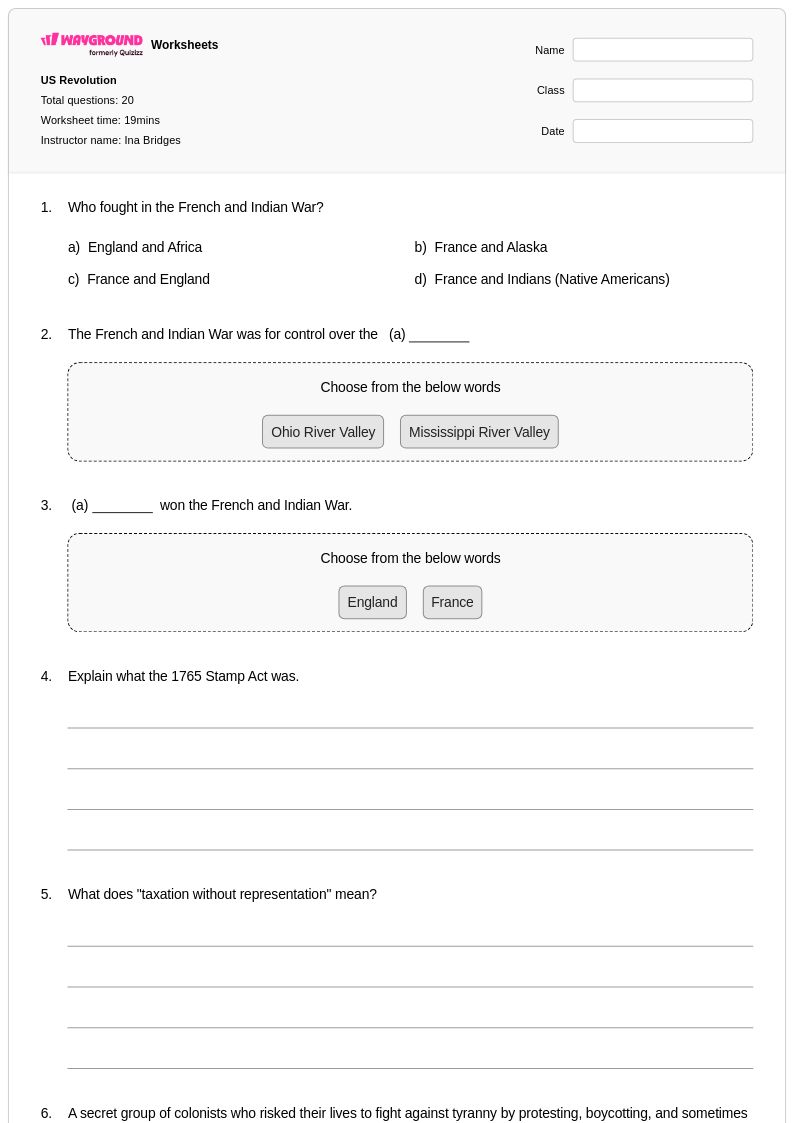
Chronological sequencing activities are highly effective — when students arrange events leading from the Boston Massacre through the ride to Lexington and Concord, they see the ride as a link in a chain rather than an isolated act of heroism. Cause-and-effect mapping also works well: students trace how colonial communication networks, including the Sons of Liberty's relay system, made coordinated resistance possible. These exercises shift the focus from a single man on a horse to the organized resistance movement that event represented.
What common mistakes do students make when learning about Paul Revere's Midnight Ride?
The most persistent misconception is that Paul Revere shouted 'The British are coming!' — in reality, colonists still considered themselves British, and the warning was about Regulars, not a foreign army. Students also frequently credit Revere alone for the alarm, overlooking Dawes, Prescott, and the broader network of riders. A third error is treating Longfellow's 1861 poem as a factual account rather than a romanticized retelling written 86 years after the event. Addressing these misconceptions explicitly, before students entrench them, is more effective than correcting them after the fact.
How can I use Paul Revere's Midnight Ride worksheets to practice close reading with primary sources?
Close reading works best when students have a specific analytical lens — rather than asking students to 'read carefully,' give them a guiding question such as 'What does this source reveal about how colonists organized resistance?' Worksheets that pair Longfellow's poem with a historical account of the ride are particularly useful because students can annotate both texts, track differences, and draw evidence-based conclusions. This builds the skill of evaluating source perspective and purpose, which is central to historical literacy.
How do I use Wayground's Paul Revere's Midnight Ride worksheets in my classroom?
Wayground's Paul Revere's Midnight Ride worksheets are available as printable PDFs for traditional classroom use and in digital formats for technology-integrated or remote learning environments, and teachers can also host them as a quiz directly on Wayground. All worksheets include complete answer keys, making them practical for independent student work, guided instruction, or targeted remediation. The platform's filtering tools allow teachers to quickly locate materials aligned with specific social studies standards or differentiated by reading level, reducing planning time without sacrificing instructional alignment.
How can I differentiate Paul Revere's Midnight Ride instruction for students at different reading levels?
For below-level readers, scaffold the primary source analysis by pre-teaching key vocabulary — 'Regulars,' 'militia,' 'alarm rider' — before students encounter the texts. For on-level students, structured comparison activities between the poem and historical accounts build both comprehension and analytical skills. Advanced learners can evaluate multiple perspectives by examining loyalist viewpoints of the same events, asking why a British officer might have recorded the night differently. When using Wayground's digital format, the Read Aloud accommodation can support students who need audio access to text, and font size and theme adjustments in Reading Mode can reduce visual barriers for students with accessibility needs.