Free Printable Road to Revolution Worksheets for Class 3
Explore Wayground's free Class 3 Road to Revolution worksheets and printables that help students discover the key events leading to the American Revolution through engaging practice problems and comprehensive answer keys.
Explore printable Road to Revolution worksheets for Class 3
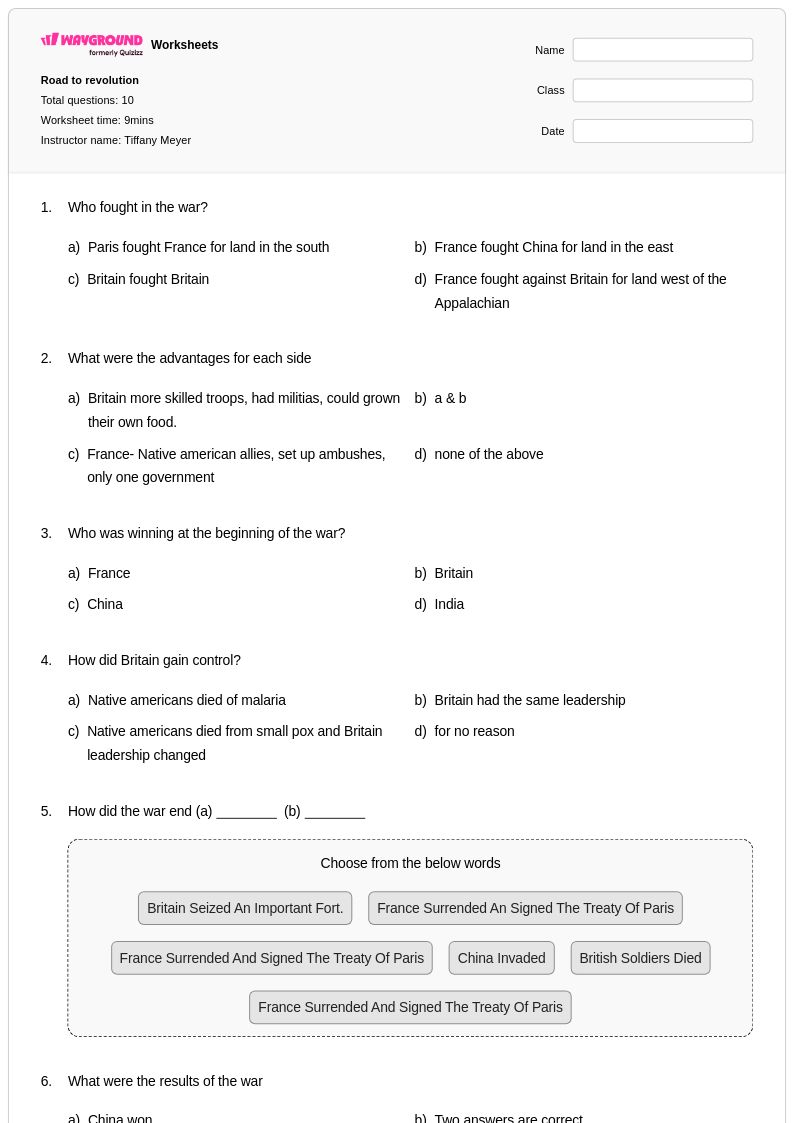
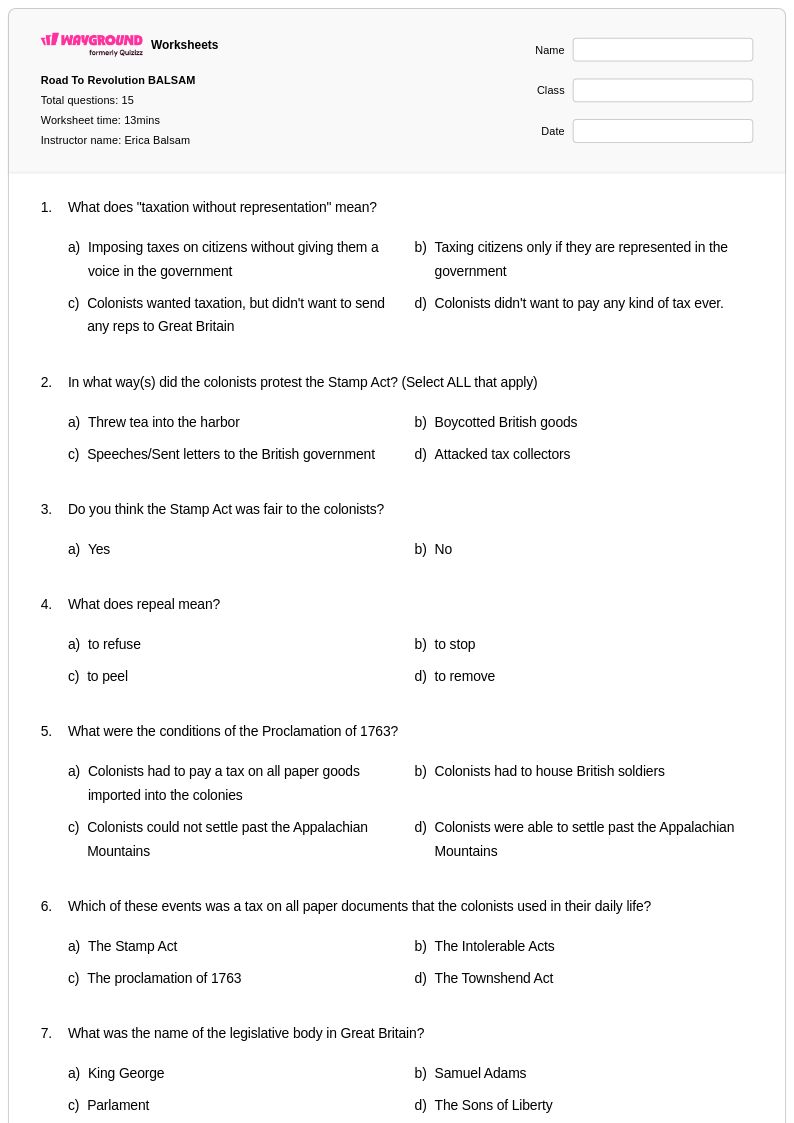
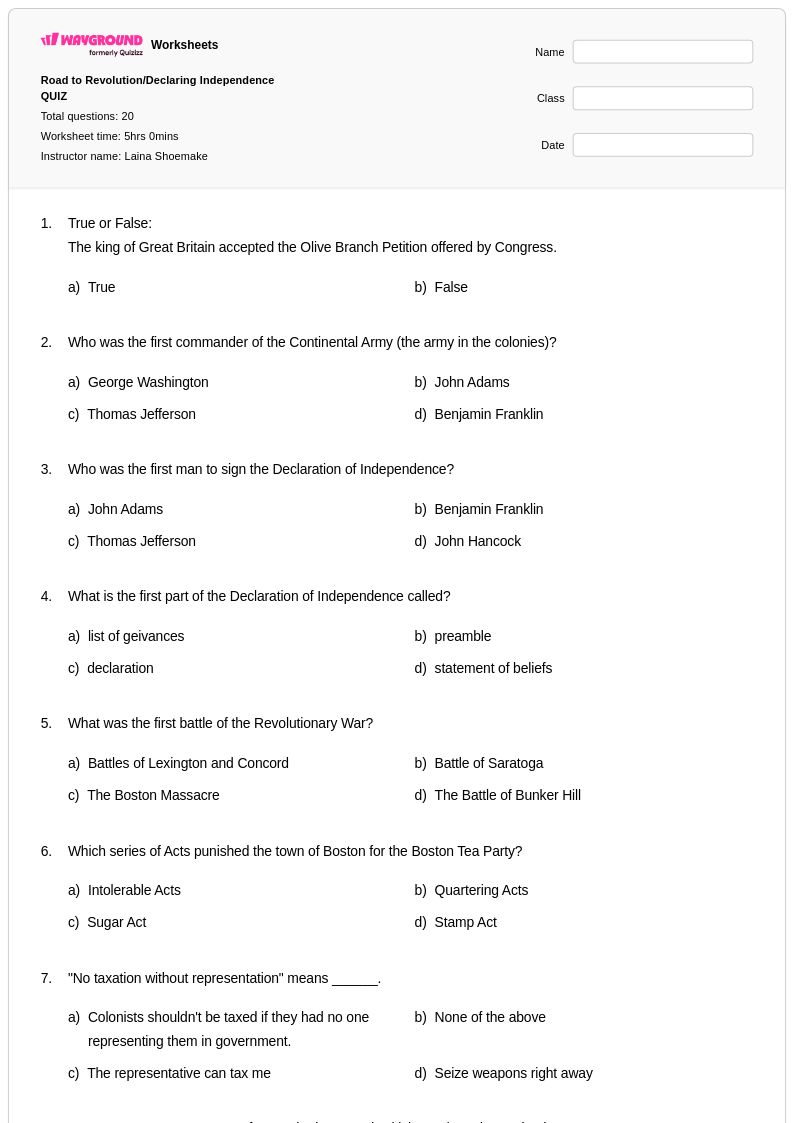
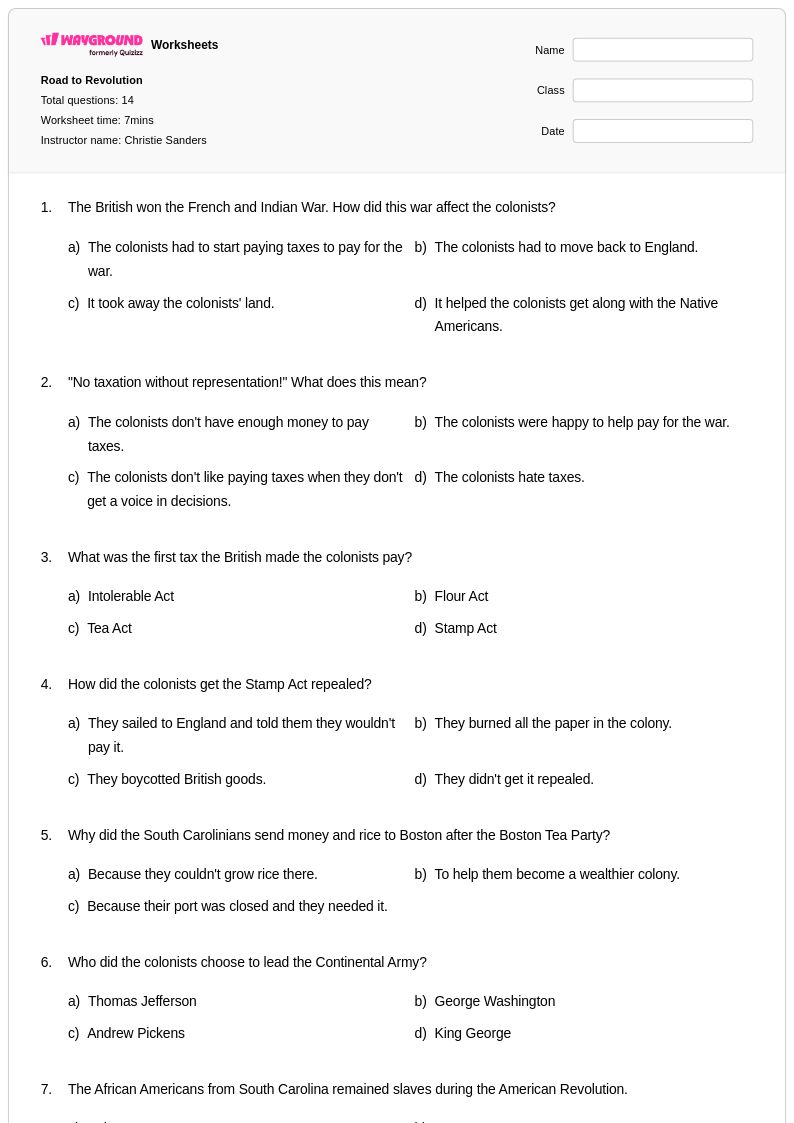
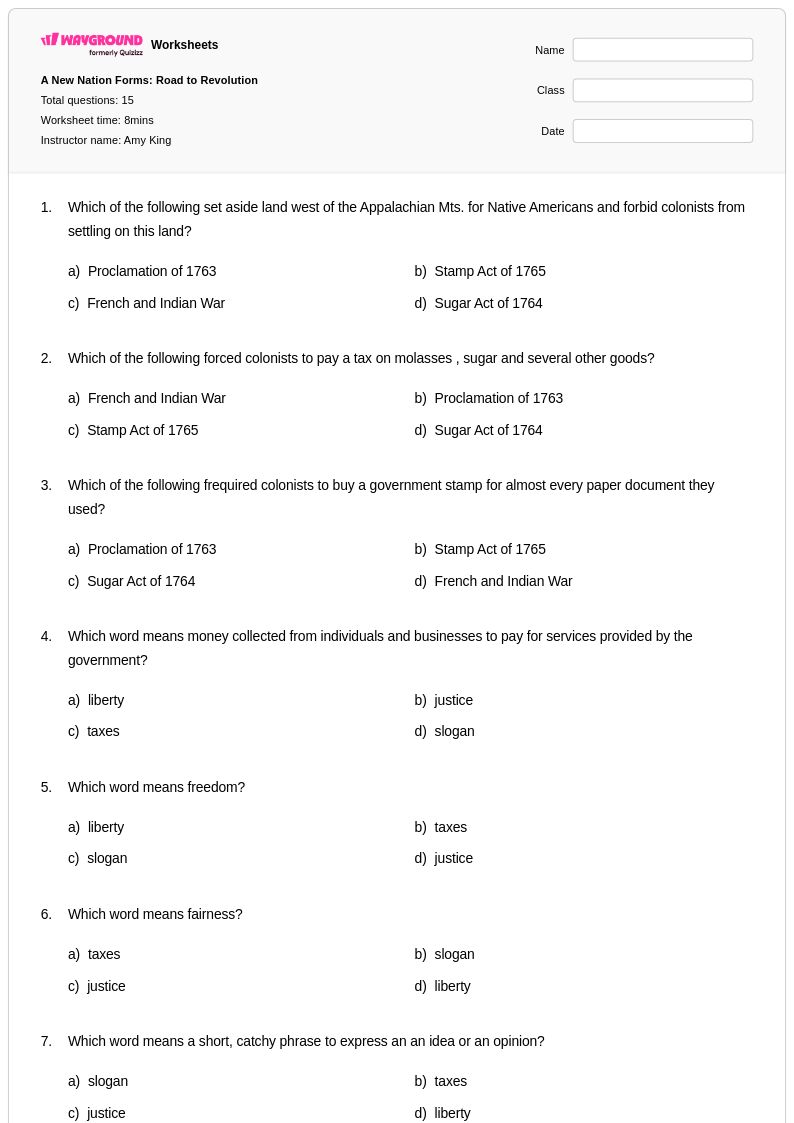
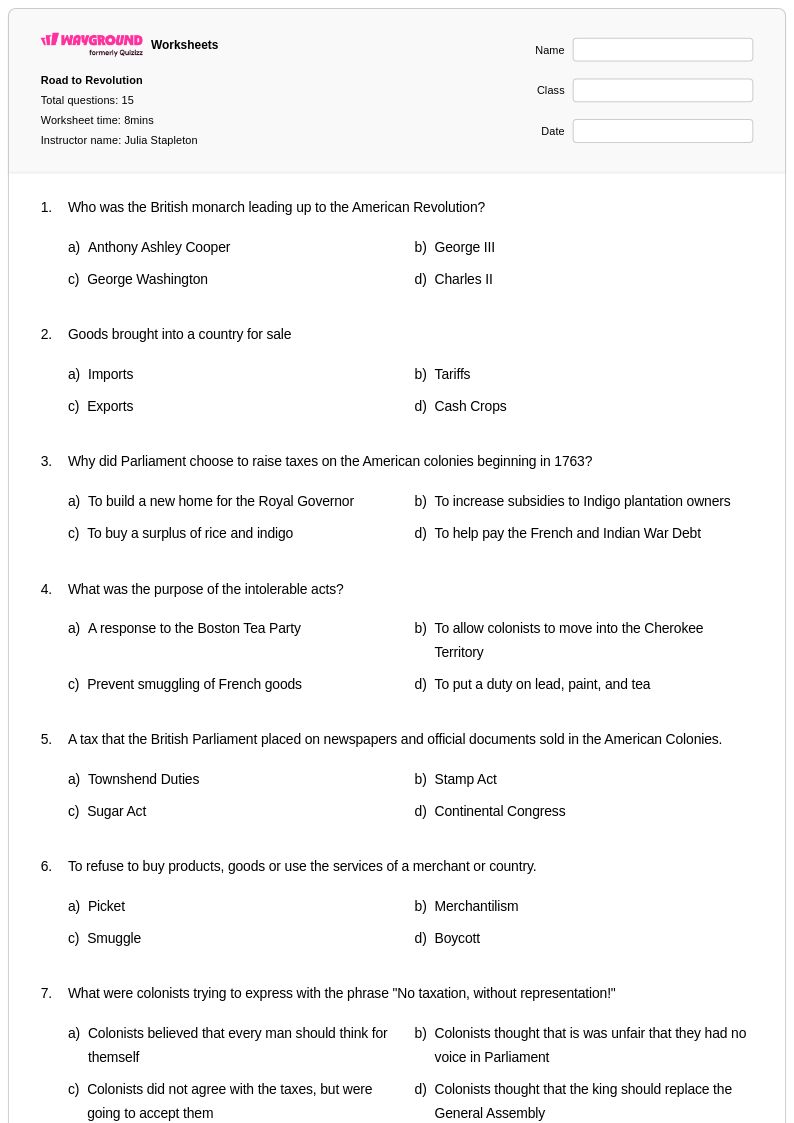
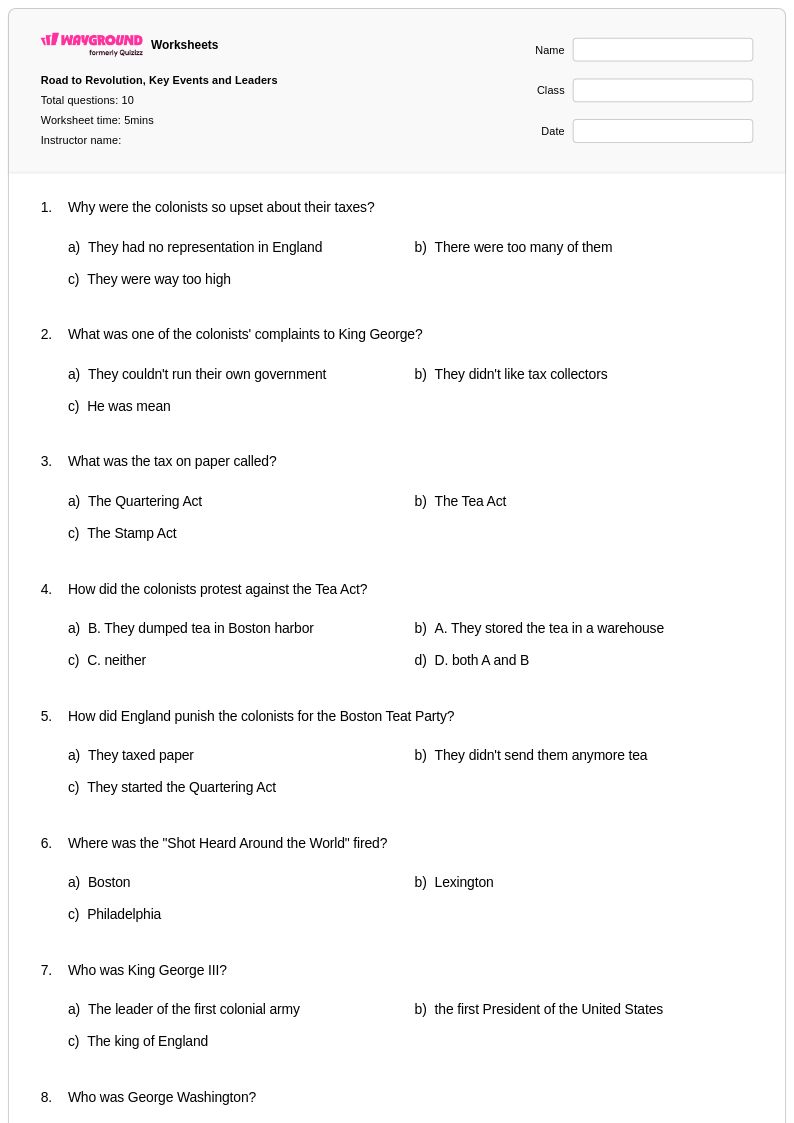
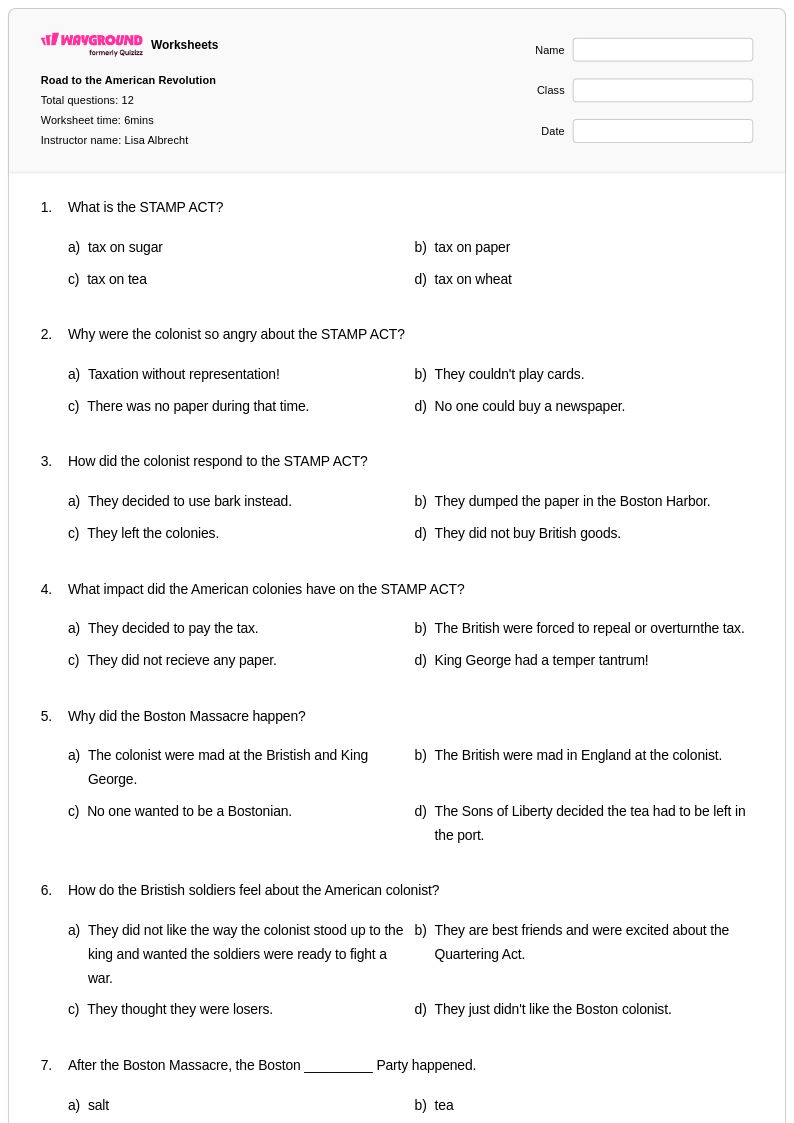
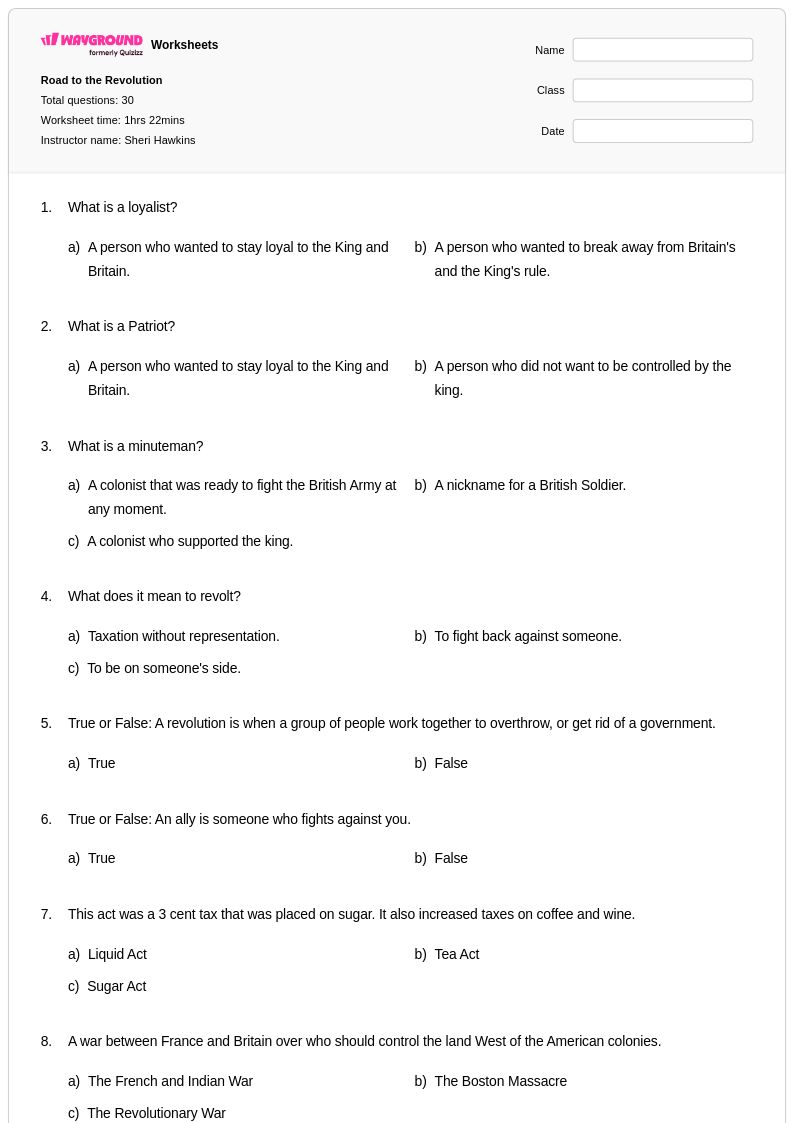
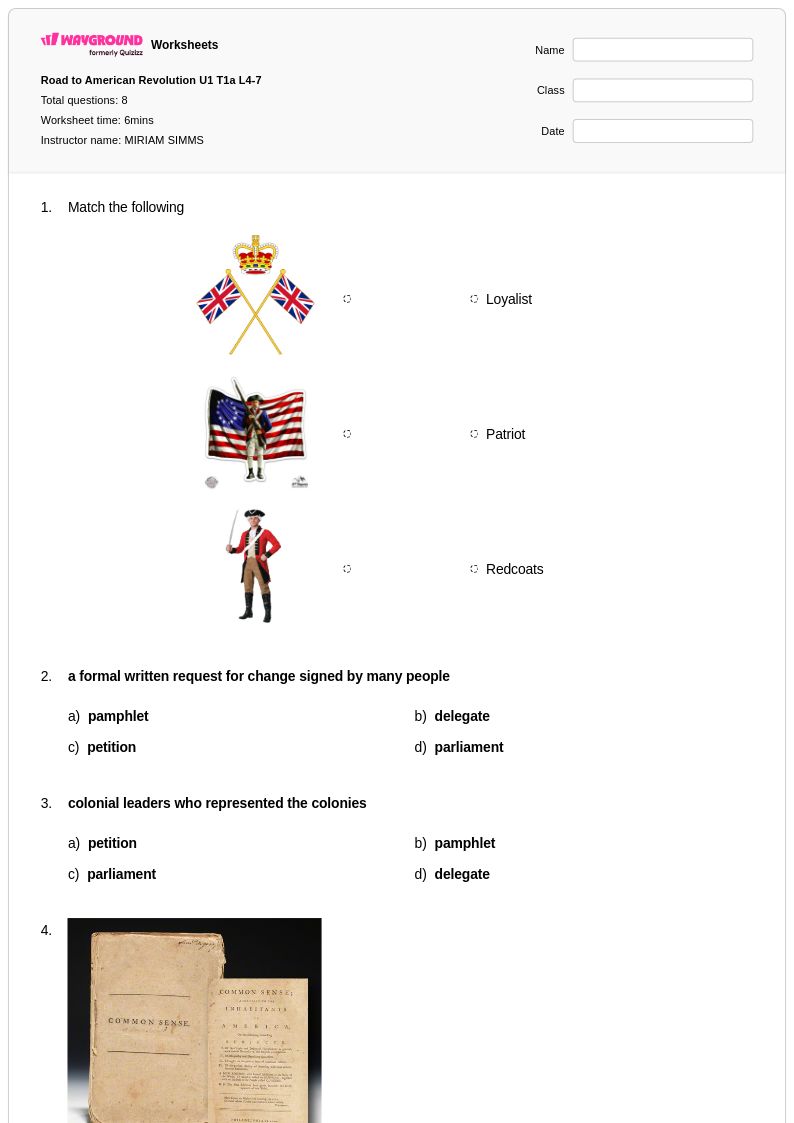
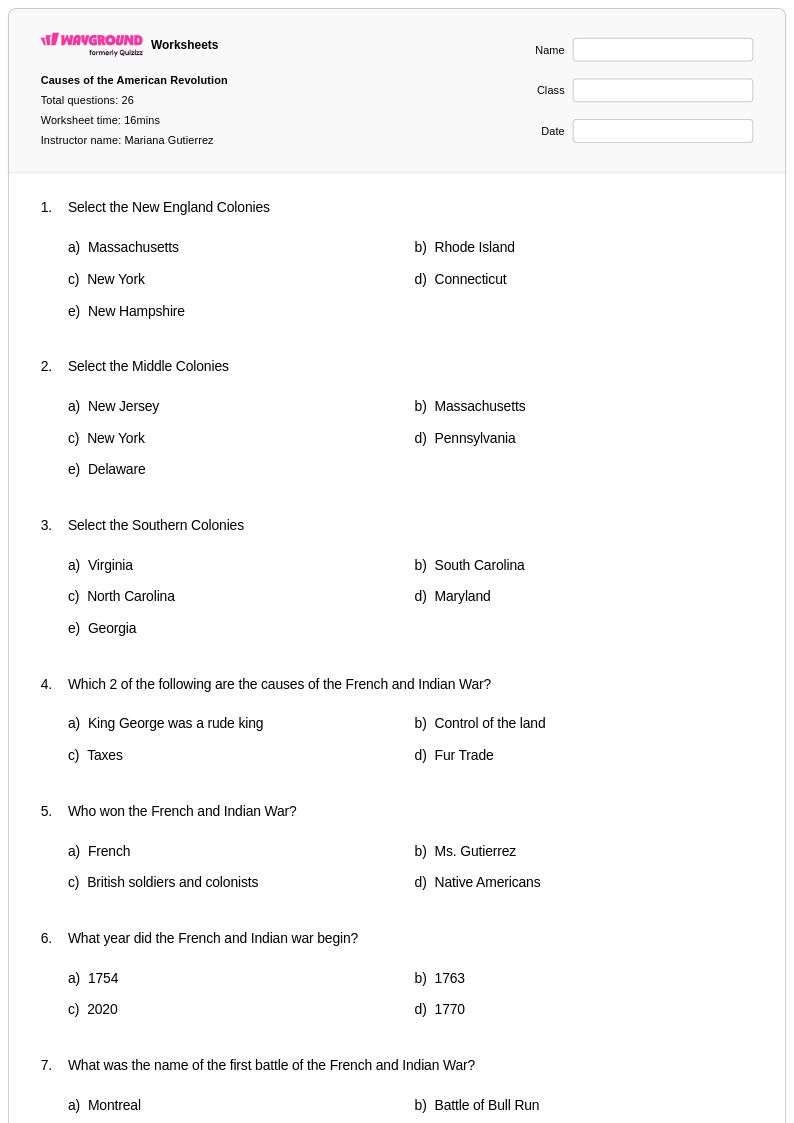
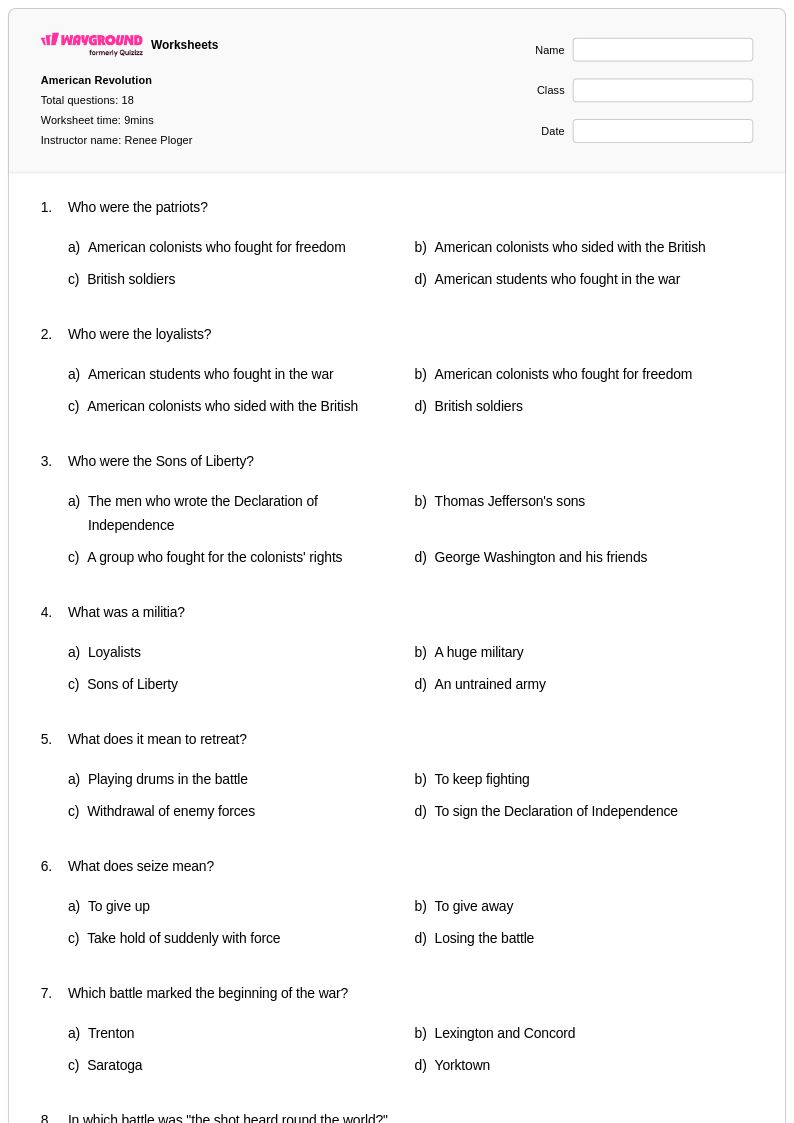
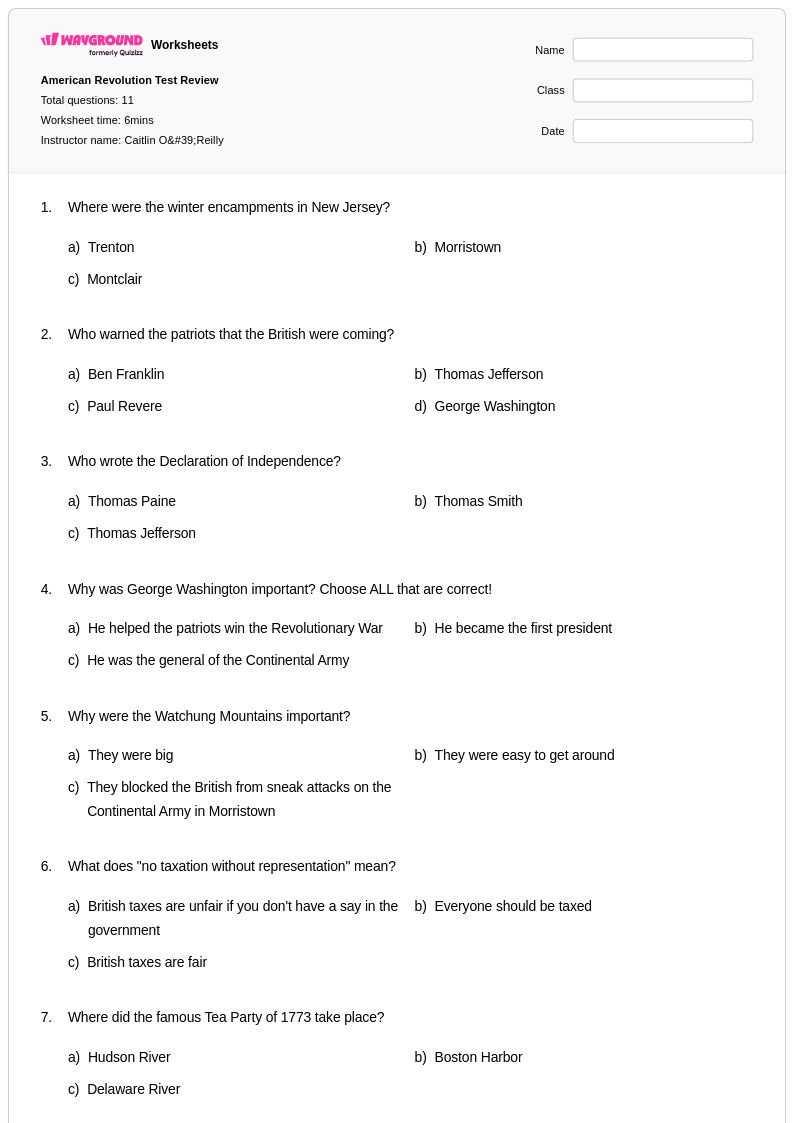
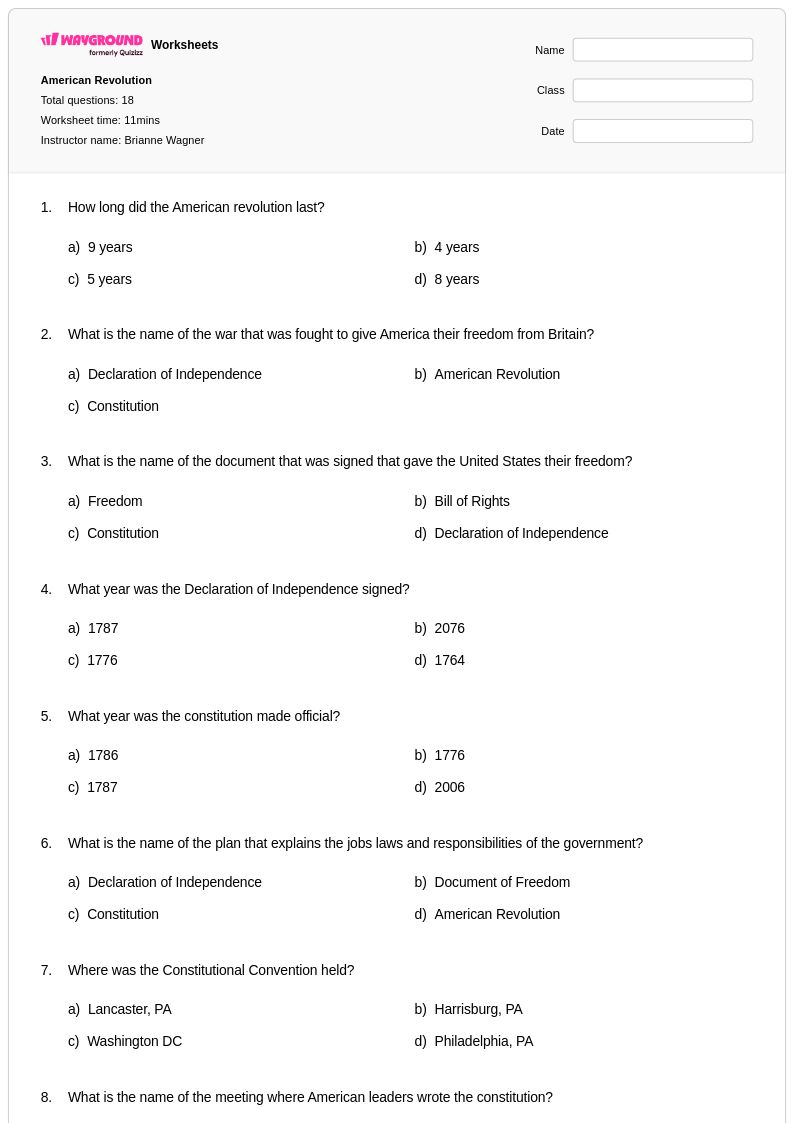
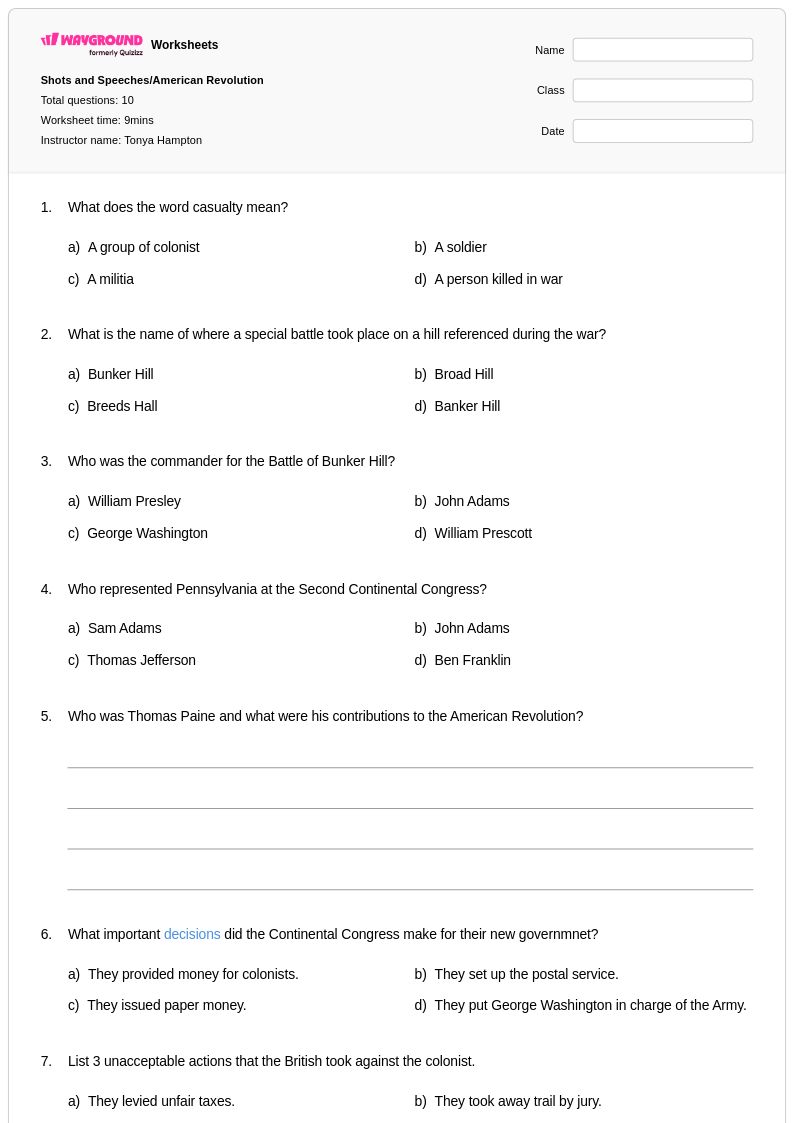
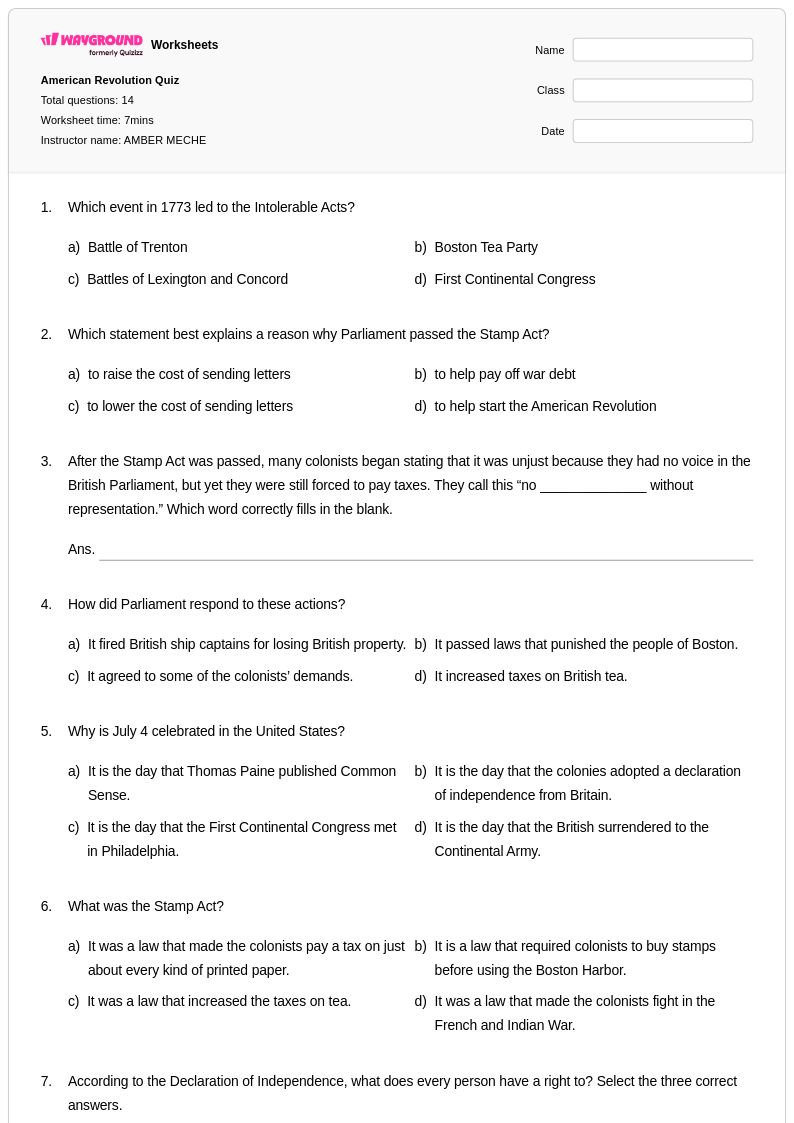
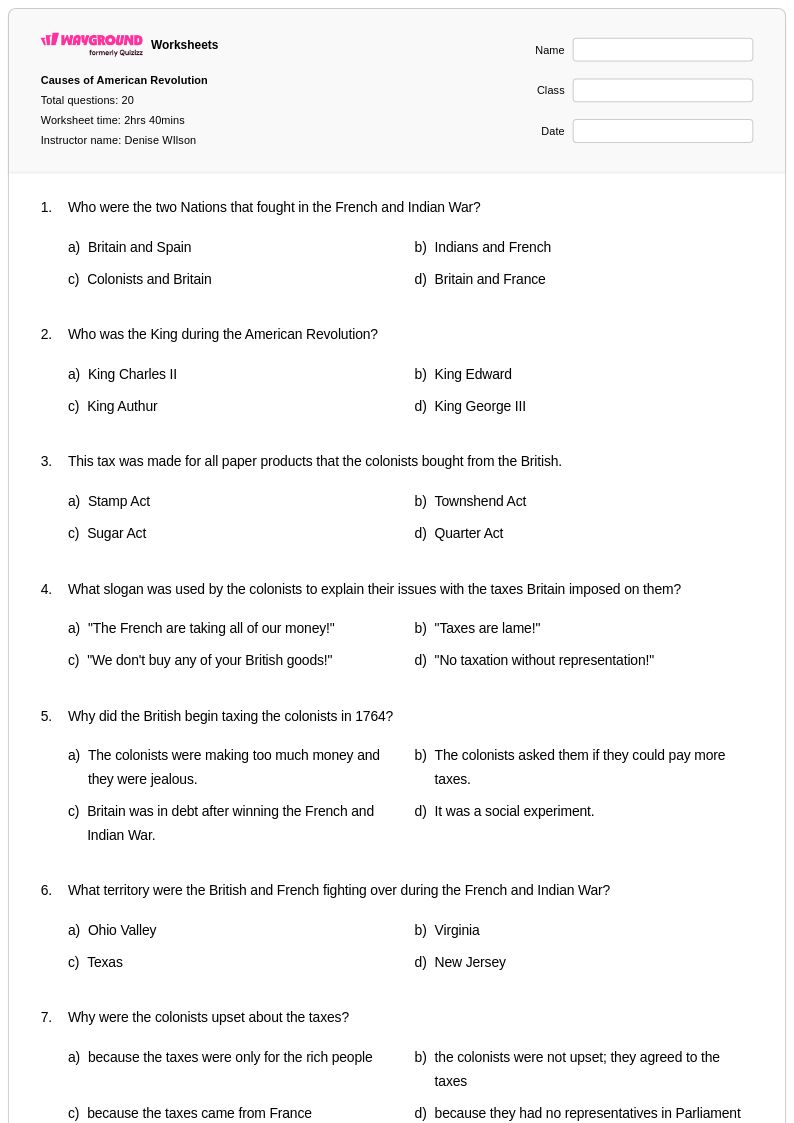
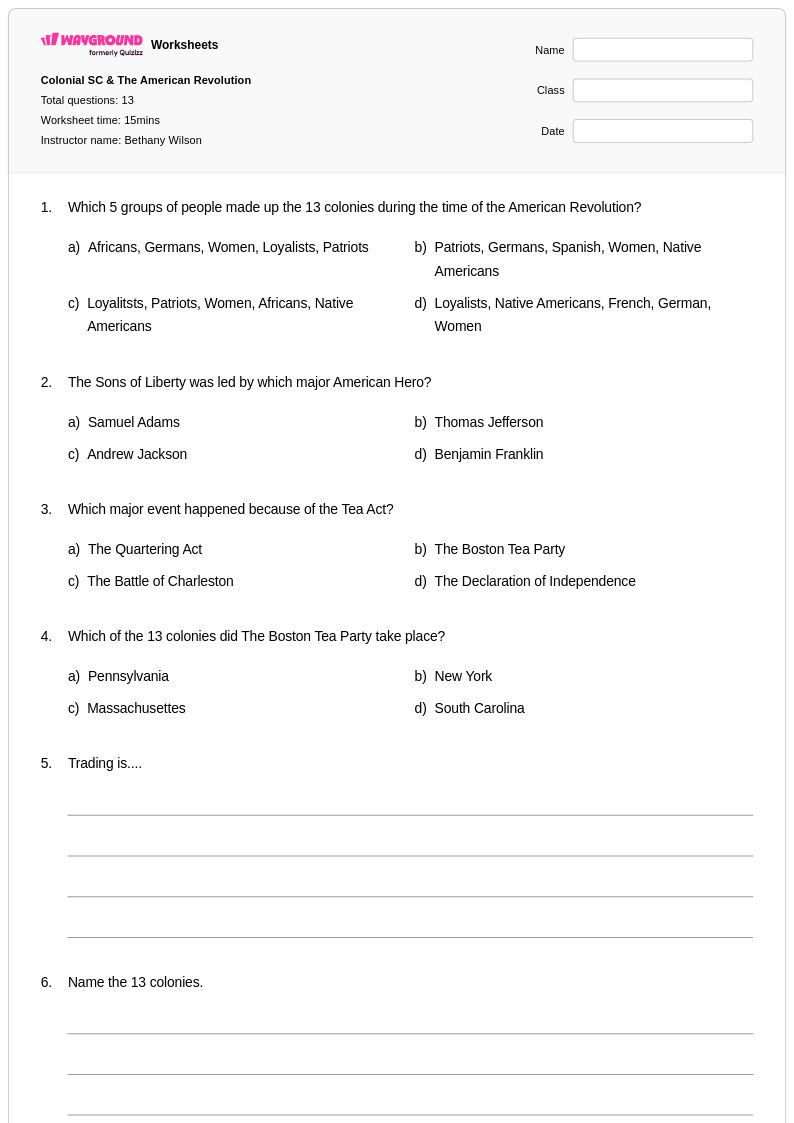
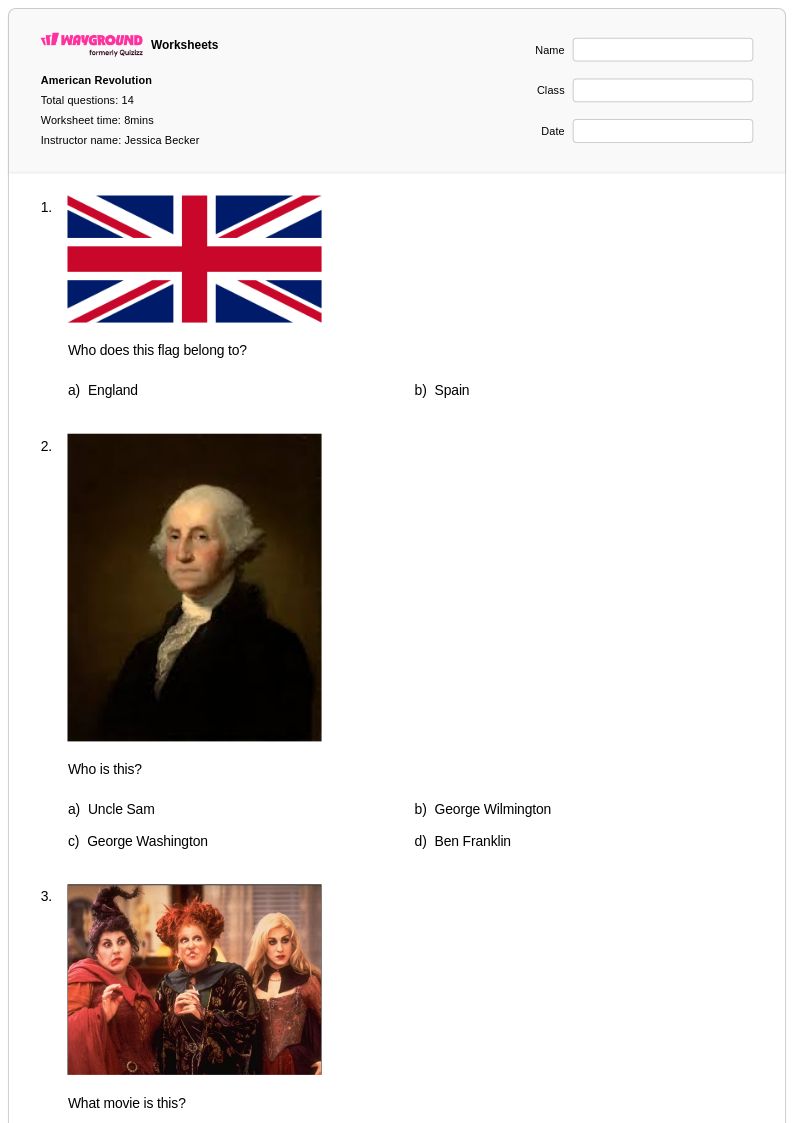
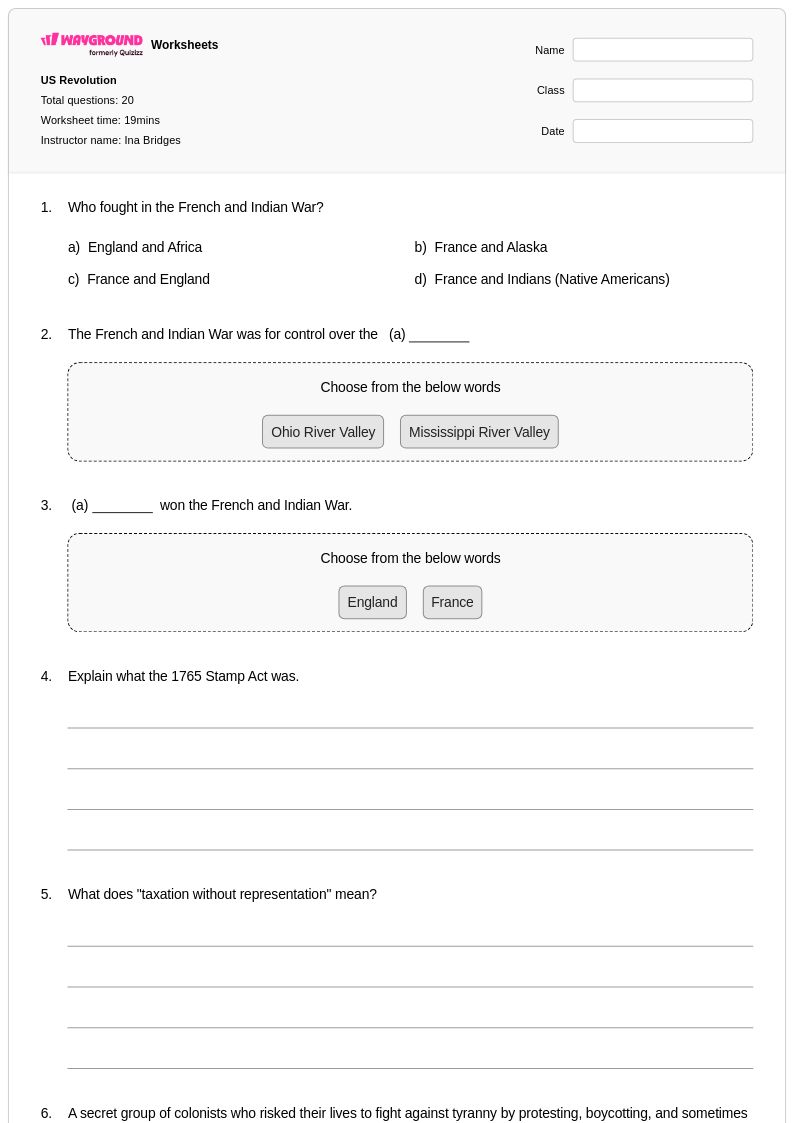
Road to Revolution worksheets for Class 3 students available through Wayground (formerly Quizizz) provide young learners with engaging activities that explore the events and tensions that led to the American Revolution. These carefully designed educational materials help third-grade students understand fundamental concepts such as British taxation policies, colonial protests, and key incidents like the Boston Tea Party through age-appropriate exercises and visual aids. The worksheets strengthen critical thinking skills by encouraging students to analyze cause-and-effect relationships while building foundational knowledge about pre-revolutionary America. Teachers can access comprehensive practice problems with accompanying answer keys, and these free printable resources are available in convenient pdf format to support both classroom instruction and independent study.
Wayground (formerly Quizizz) empowers educators with an extensive collection of millions of teacher-created resources specifically designed for Road to Revolution instruction at the elementary level. The platform's robust search and filtering capabilities allow teachers to quickly locate standards-aligned materials that match their specific curriculum requirements and student needs. Advanced differentiation tools enable instructors to customize worksheets for various learning levels within their Class 3 classrooms, while the flexible format options support both traditional printable activities and modern digital learning environments. These comprehensive features streamline lesson planning while providing teachers with versatile options for remediation, enrichment, and targeted skill practice that helps students develop a solid understanding of the complex historical factors that sparked America's fight for independence.
FAQs
How do I teach the Road to Revolution in a way that helps students understand cause and effect?
Teaching the Road to Revolution is most effective when structured as a sequence of escalating tensions rather than isolated events. Start with the French and Indian War to establish British debt and colonial friction, then trace how each policy — the Stamp Act, Townshend Acts, and Intolerable Acts — pushed colonists further toward rebellion. Having students map cause-and-effect chains between events builds chronological reasoning and helps them see revolution as a process, not a sudden break.
What are the most important events students need to know on the Road to Revolution?
The core events students should master include the Stamp Act crisis, the Boston Massacre, the Tea Act and Boston Tea Party, and the Intolerable Acts, which directly triggered colonial mobilization. The French and Indian War is essential as the economic and political backdrop that set British-colonial tensions in motion. The sequence culminates at Lexington and Concord, where tensions finally turned into armed conflict.
What exercises help students practice analyzing the Road to Revolution?
Effective practice exercises include primary source analysis of colonial pamphlets and British parliamentary debates, timeline sequencing activities that require students to order events and explain their connections, and cause-and-effect graphic organizers. Multiple-perspective comparison tasks — asking students to evaluate the same event from a Patriot, Loyalist, and British government viewpoint — are especially valuable for developing historical interpretation skills.
What mistakes do students commonly make when studying the Road to Revolution?
The most common misconception is that all colonists supported independence — students often overlook Loyalist perspectives and the genuine divisions within colonial society. Students also tend to treat revolution as an inevitable outcome rather than understanding how specific British policies created specific grievances. Another frequent error is conflating the chronology: students mix up the sequence of the Stamp Act, Townshend Acts, and Intolerable Acts, which undermines their ability to analyze how tensions escalated over time.
How can I use Road to Revolution worksheets to differentiate instruction for students at different skill levels?
Road to Revolution worksheets can be differentiated by adjusting the complexity of primary sources provided, the scaffolding in cause-and-effect prompts, and the number of answer choices in assessment questions. On Wayground, teachers can apply student-level accommodations such as reduced answer choices to lower cognitive load for struggling learners, extended time for students who need it, and Read Aloud support for those with reading difficulties — all without other students being notified. These settings can be saved and reused across future assignments.
How do I use Road to Revolution worksheets on Wayground in my classroom?
Road to Revolution worksheets on Wayground are available as printable PDFs for traditional classroom use and in digital formats for technology-integrated learning environments, including the option to host them as an interactive quiz directly on the platform. Teachers can filter resources by curriculum standard or learning objective to quickly find materials that fit their lesson plan. Digital formats allow for real-time tracking of student responses, making it easier to identify conceptual gaps and plan targeted follow-up instruction.