
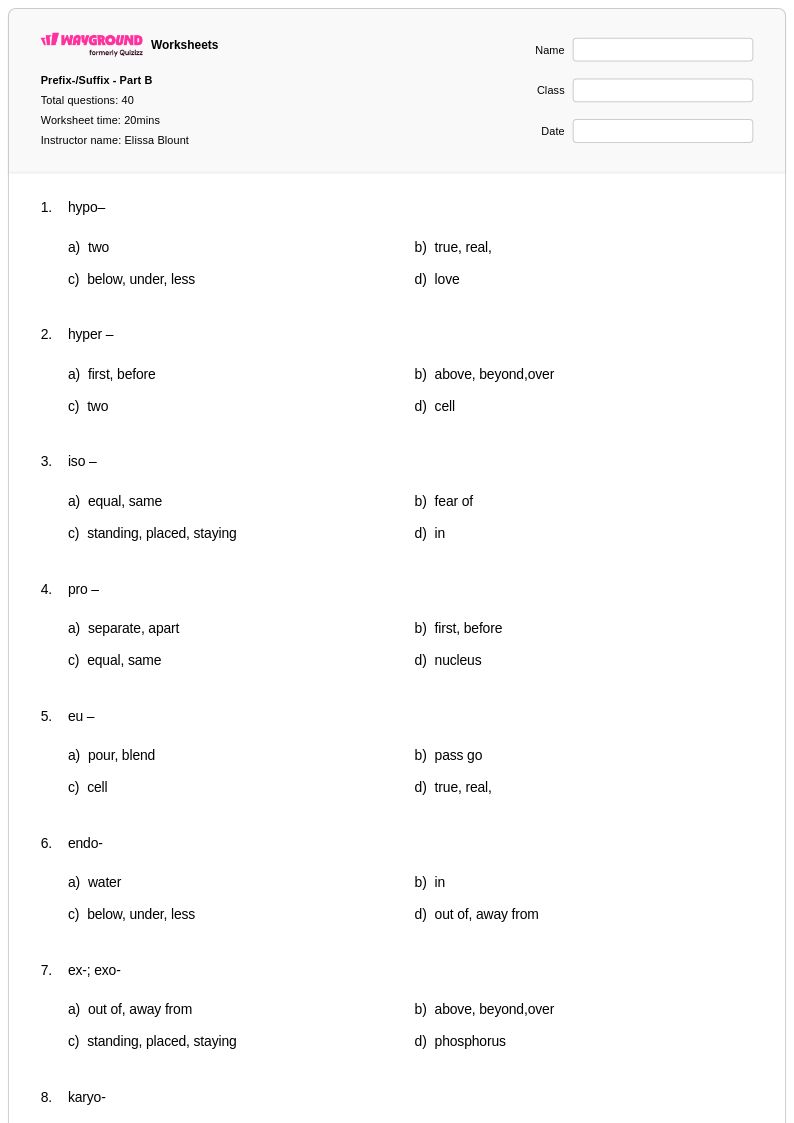
40 Q
10th
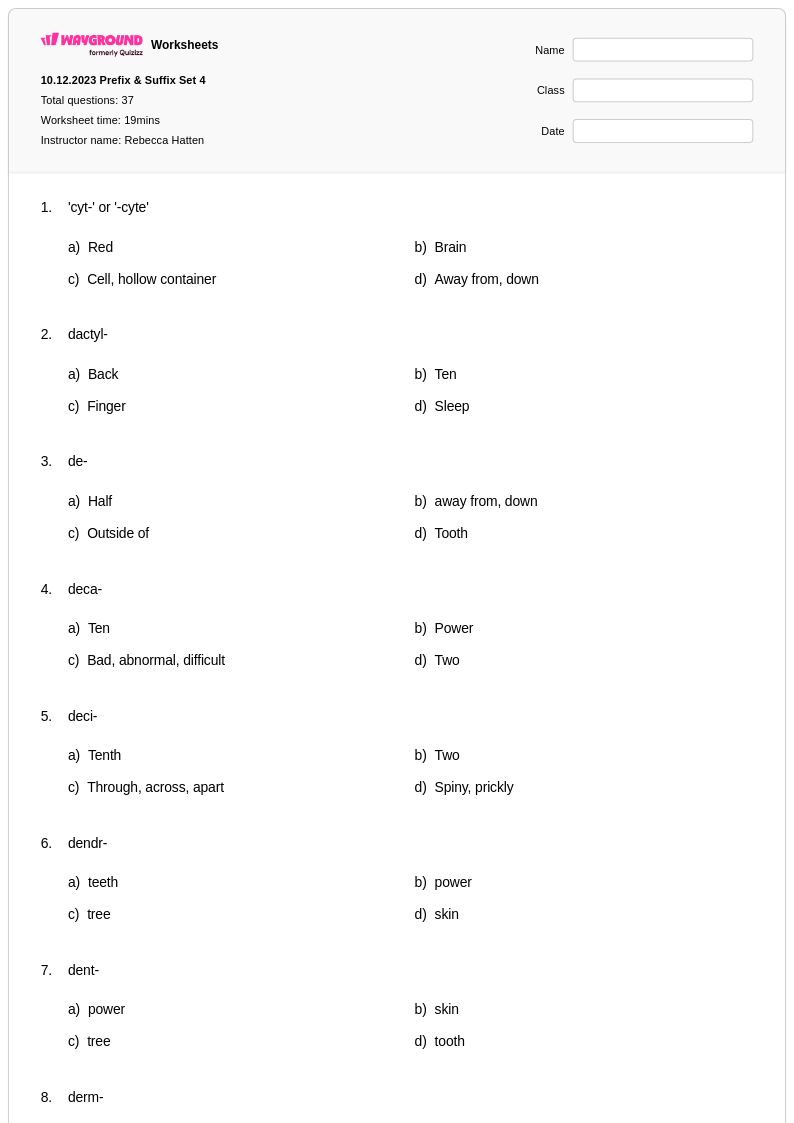
37 Q
12th
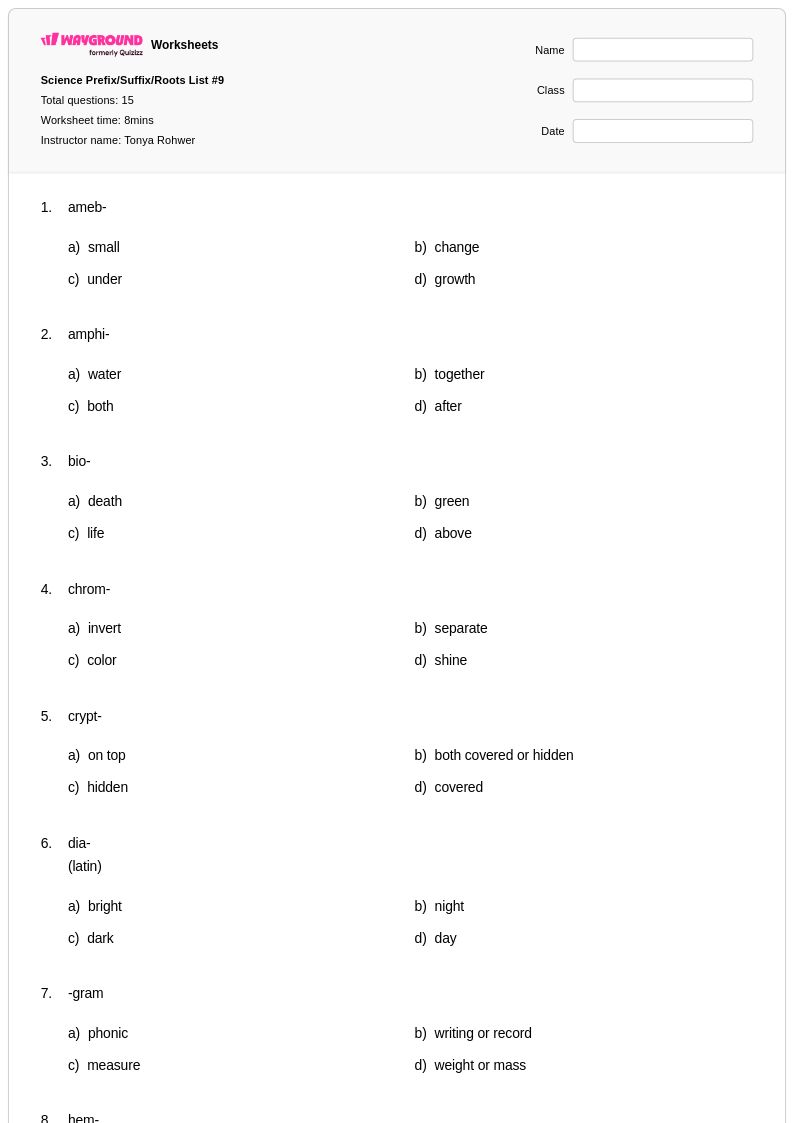
15 Q
8th
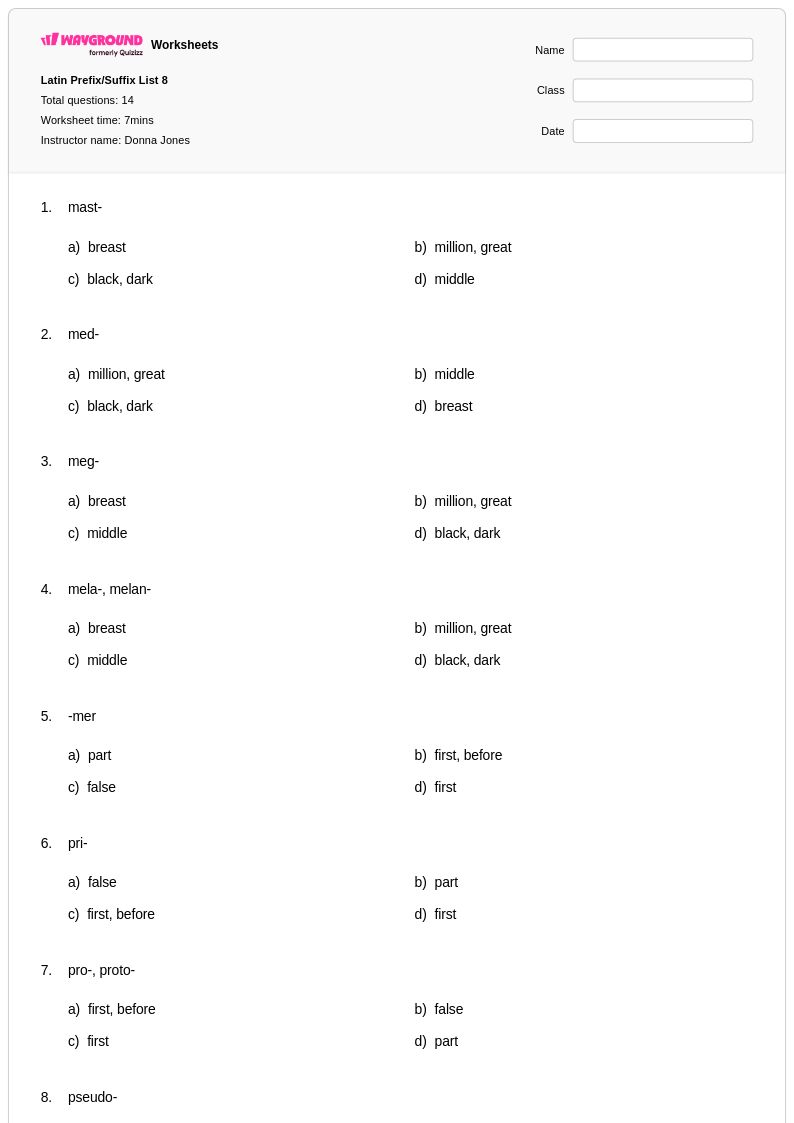
14 Q
6th - 8th
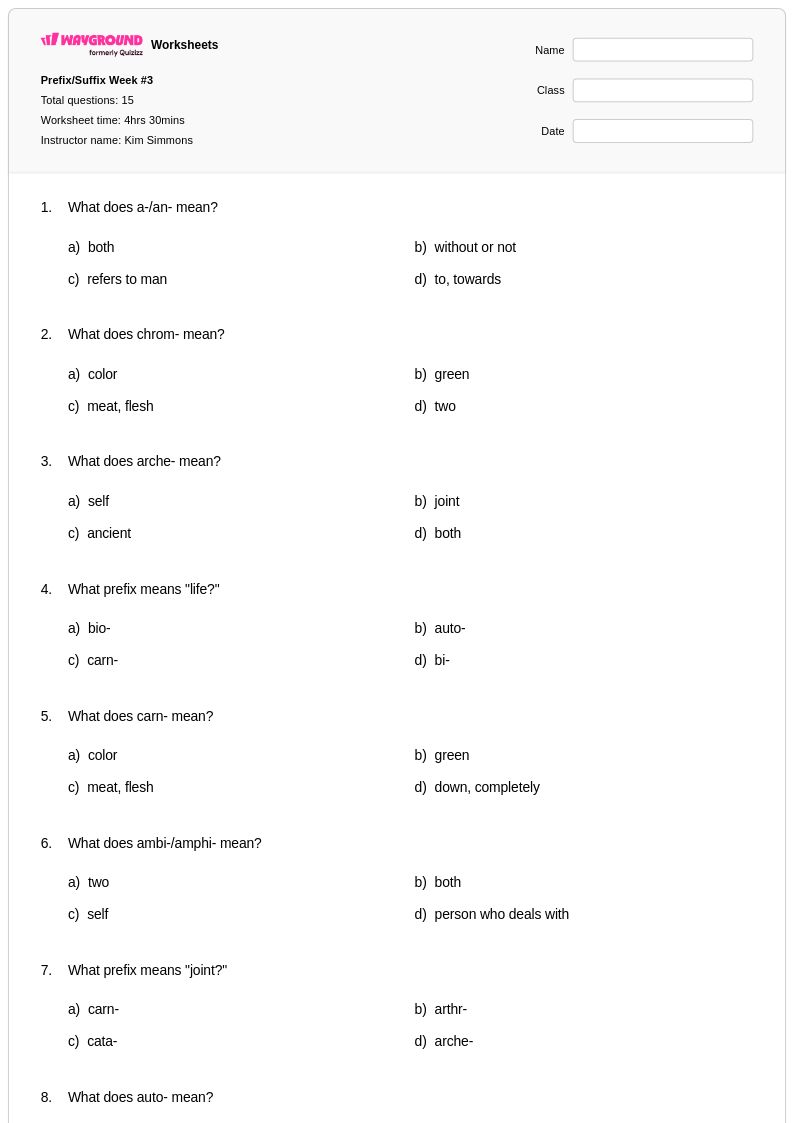
15 Q
7th
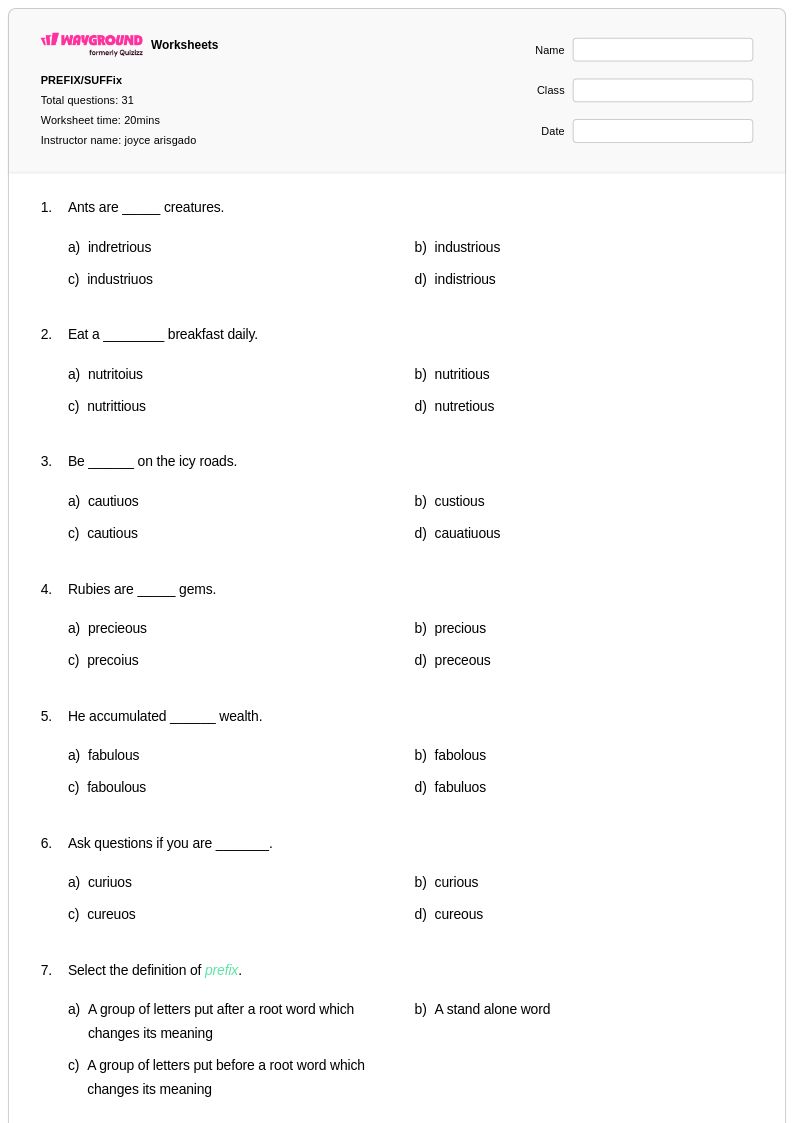
31 Q
6th
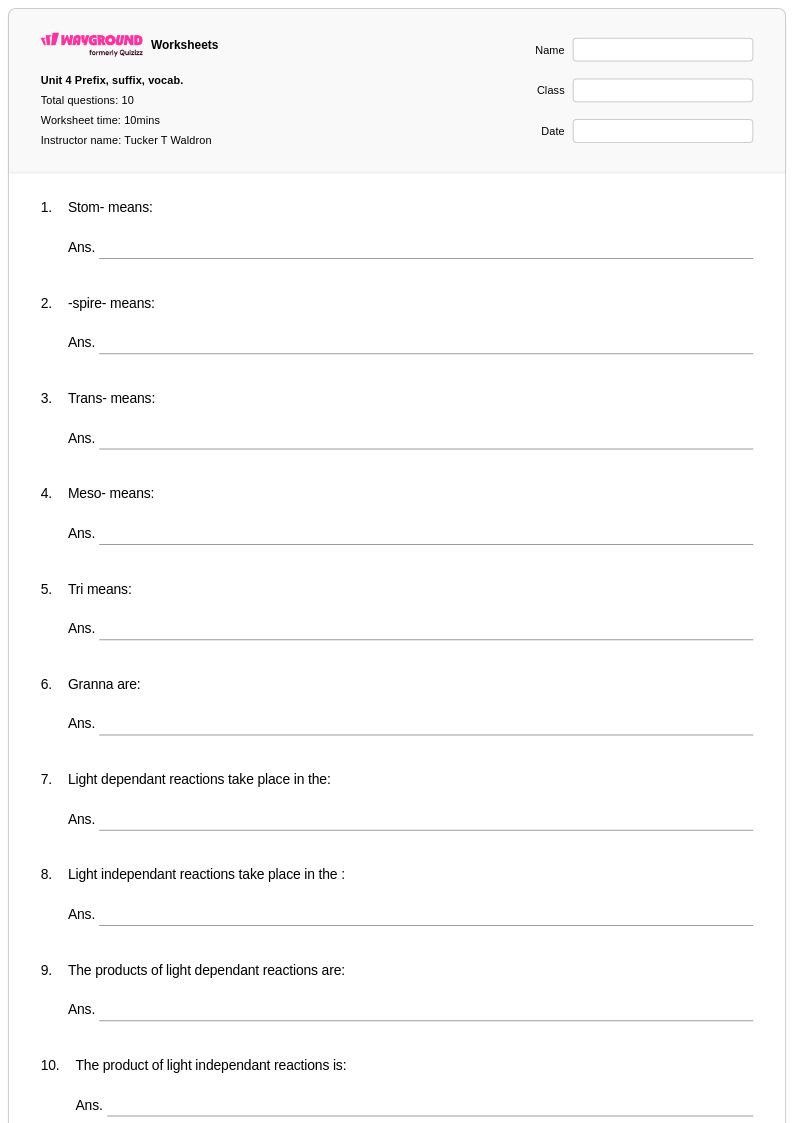
10 Q
8th - 9th
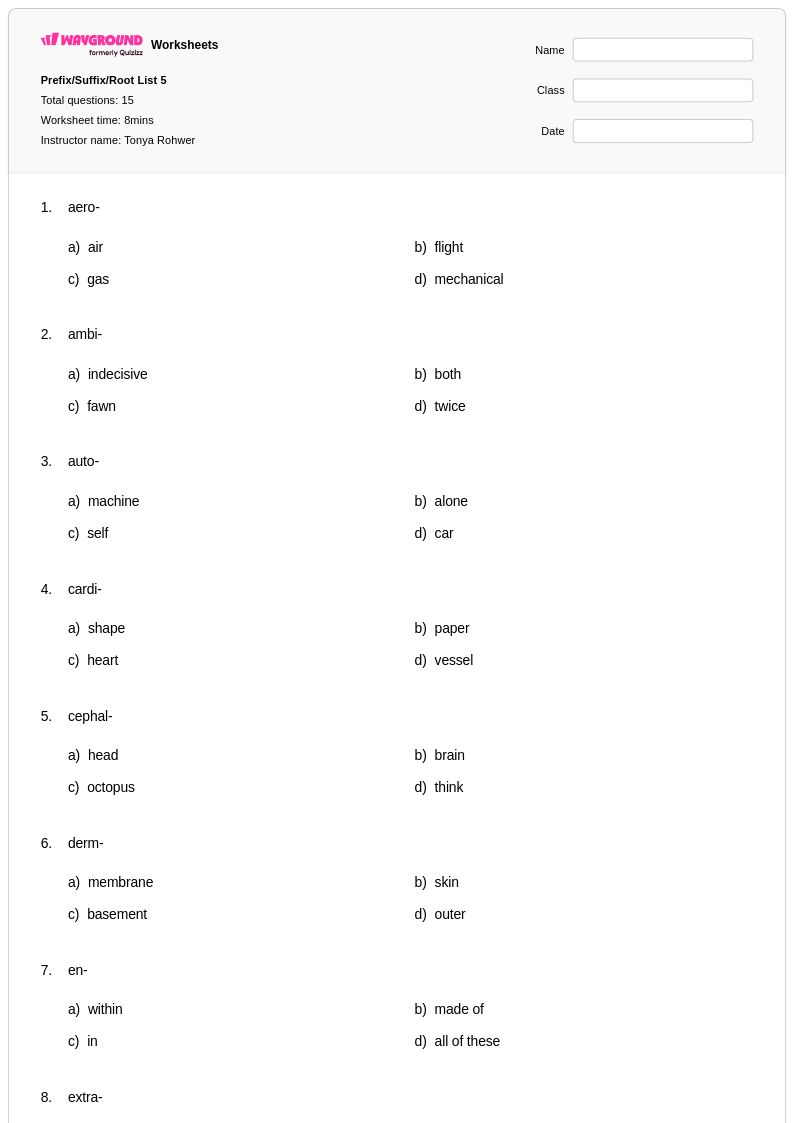
15 Q
7th - 8th
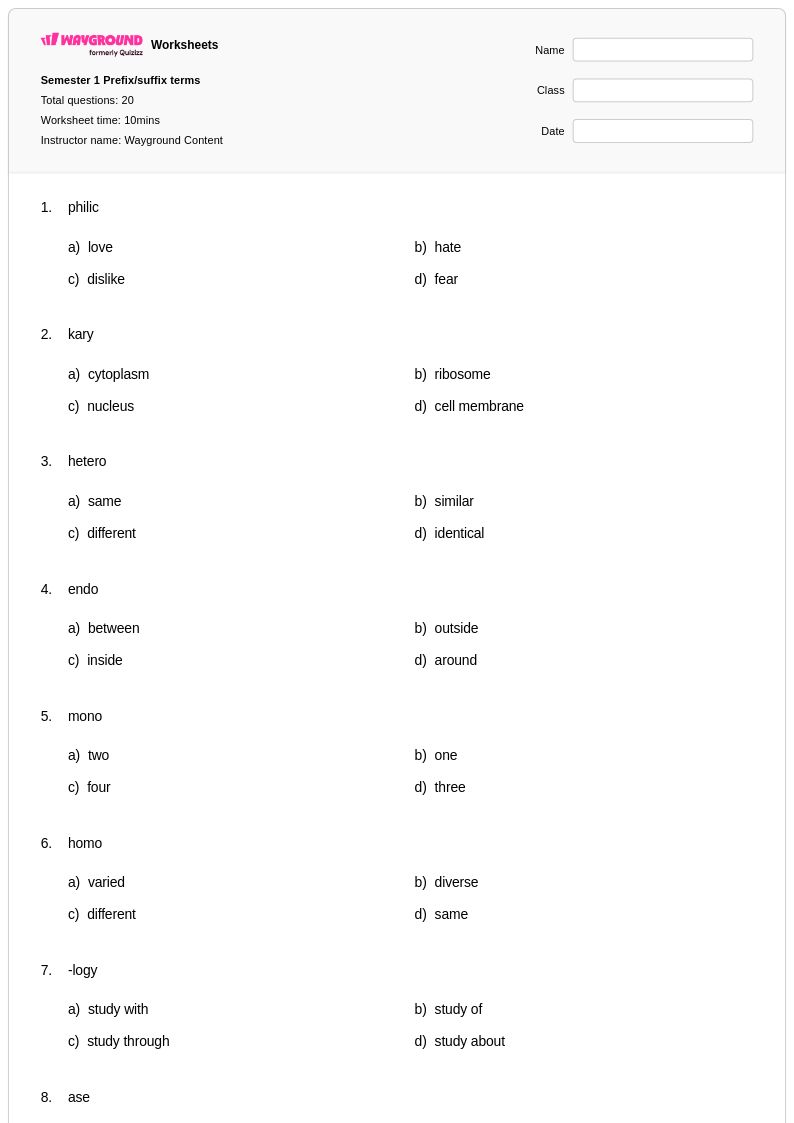
20 Q
9th
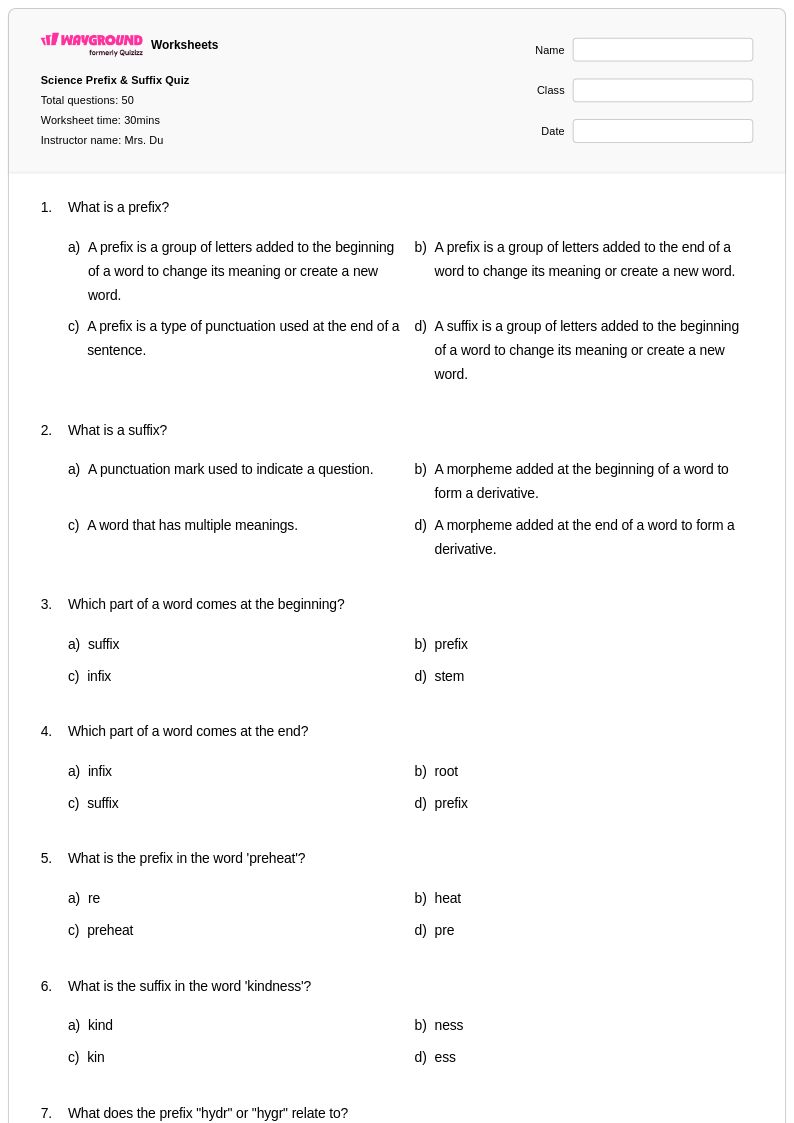
50 Q
6th - 8th
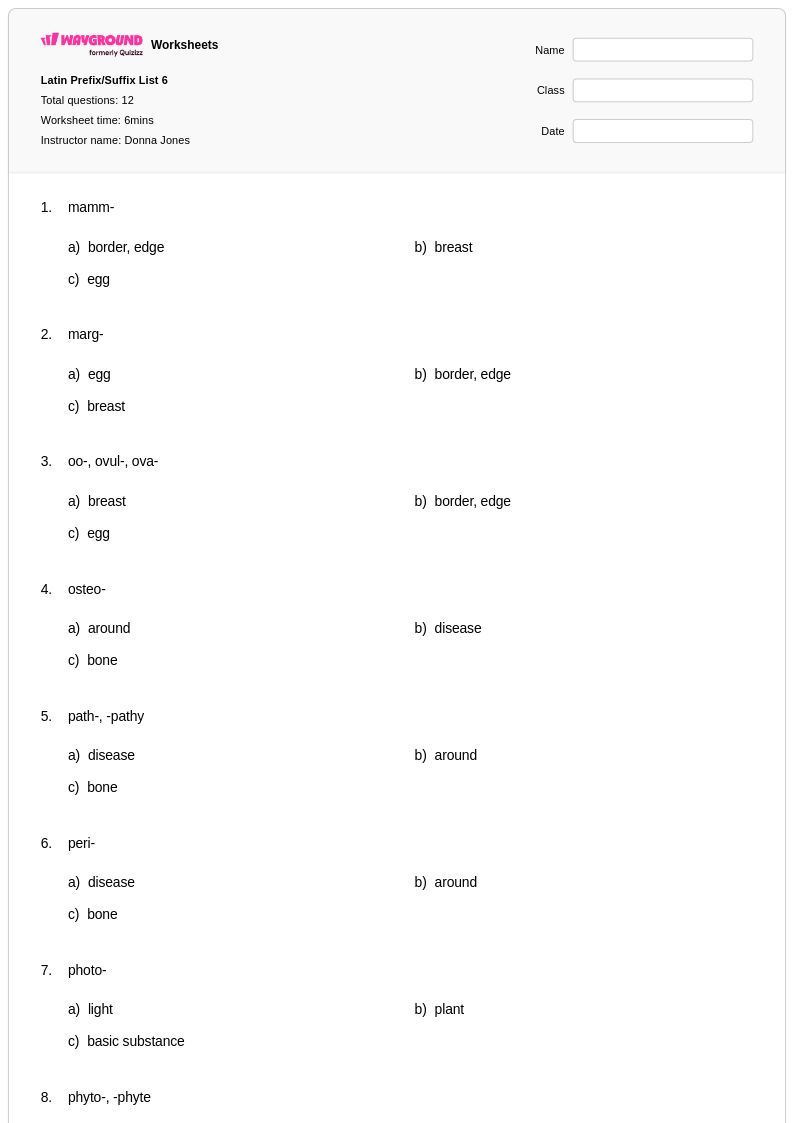
12 Q
8th
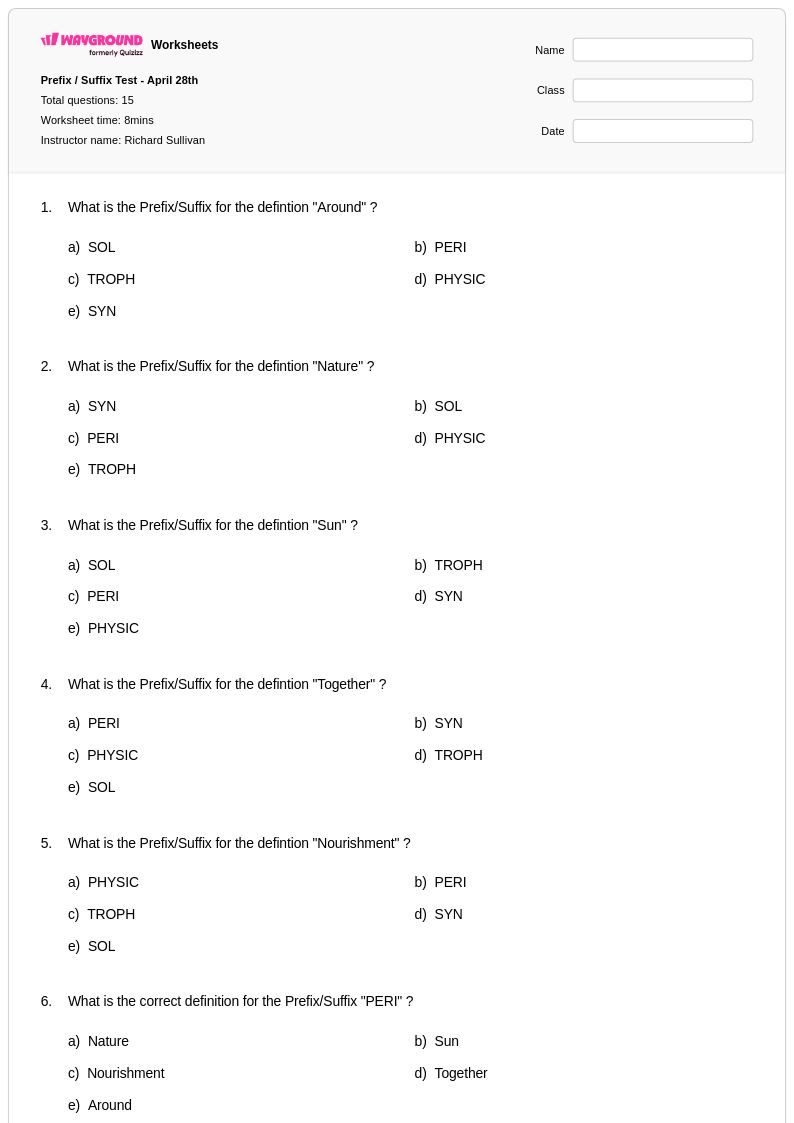
15 Q
5th
35 Q
6th
15 Q
8th
24 Q
6th - 8th
14 Q
11th
19 Q
12th
19 Q
12th
30 Q
12th
13 Q
KG - Uni
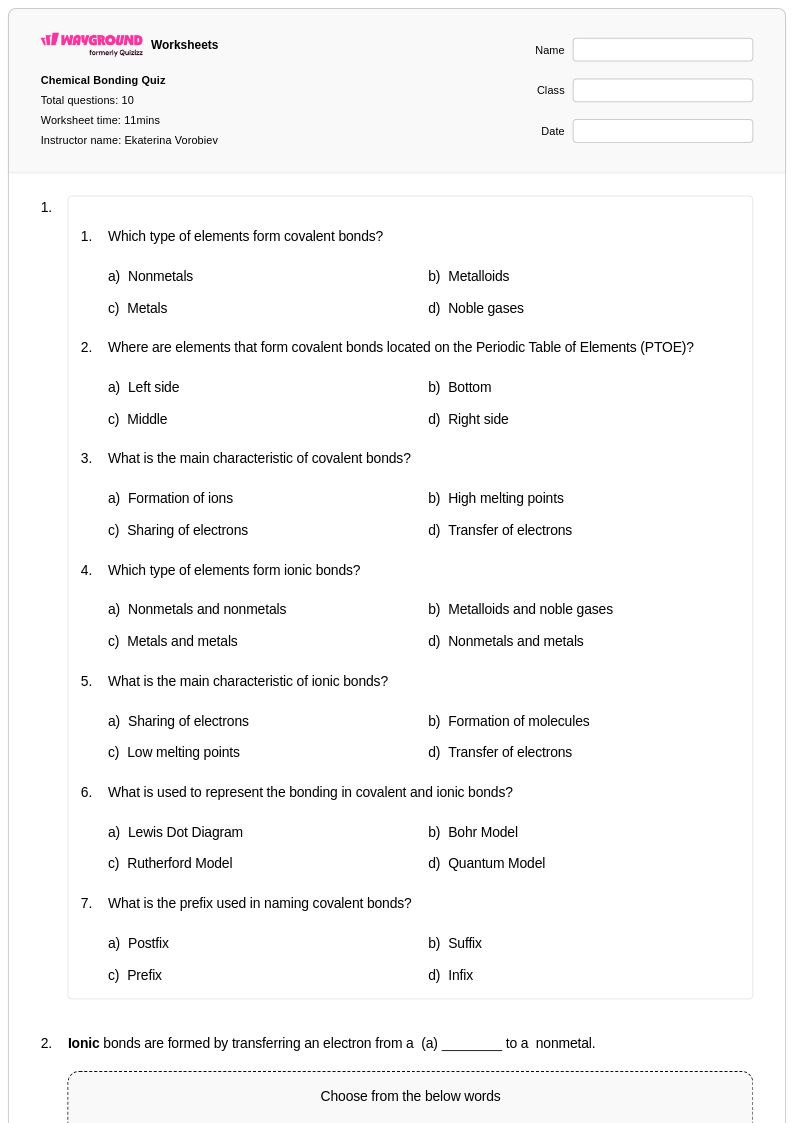
17 Q
8th
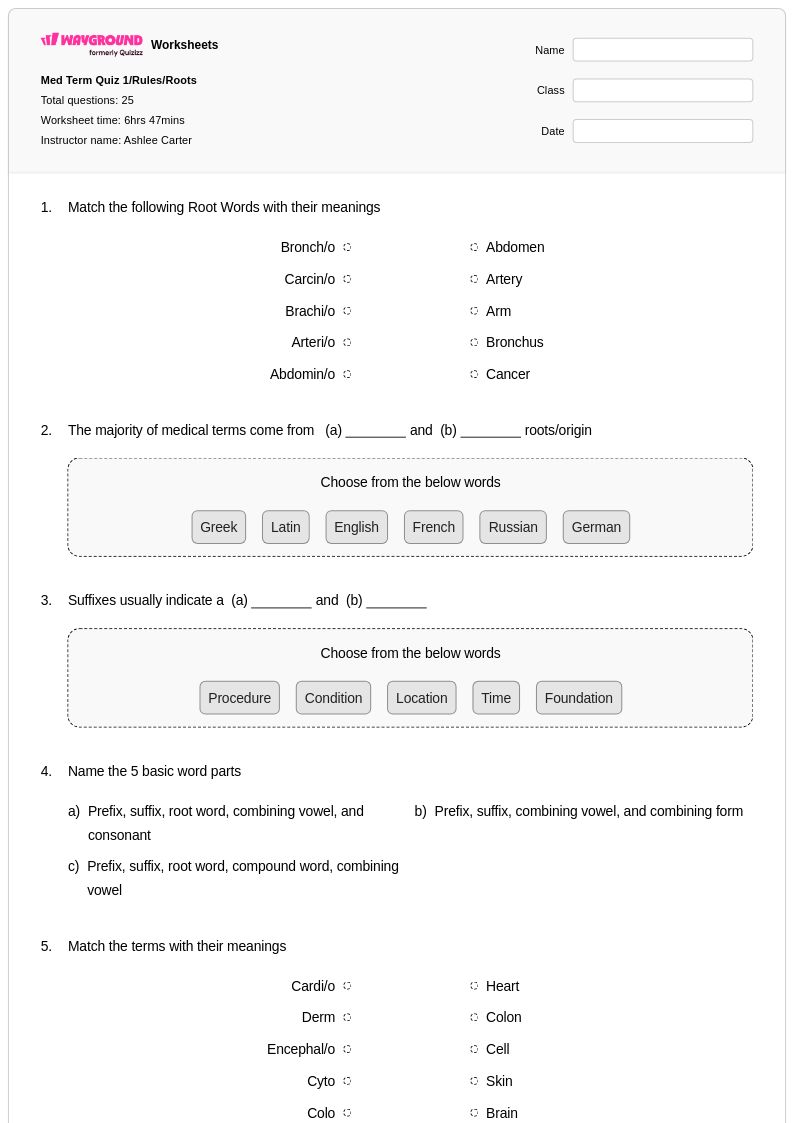
25 Q
9th - 12th
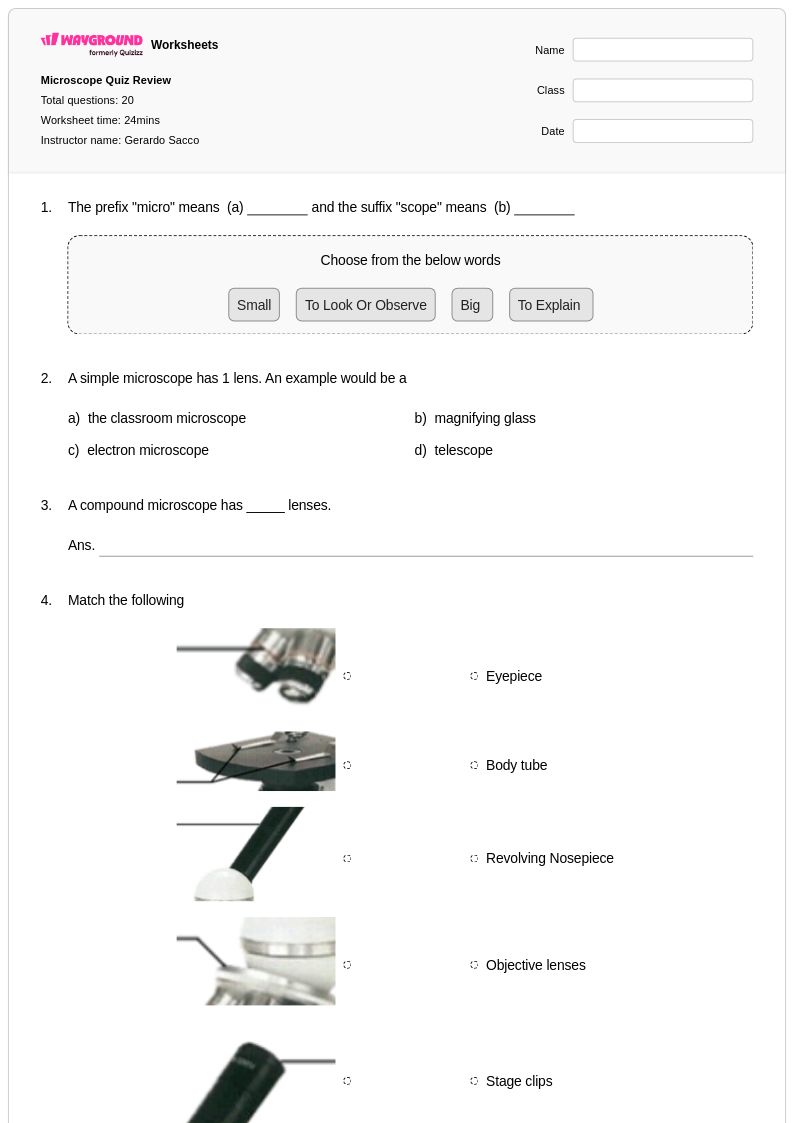
20 Q
7th - Uni
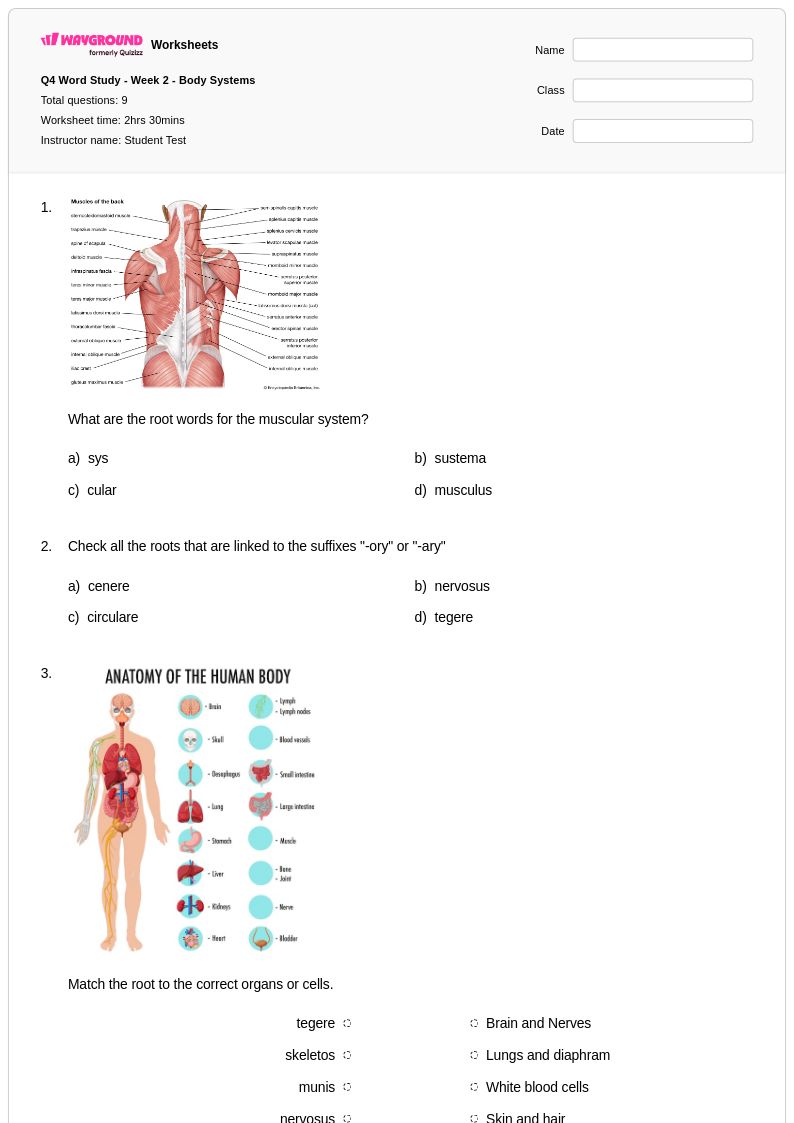
9 Q
6th - 8th
Explore Prefix Suffix Worksheets by Grades
Explore Other Subject Worksheets for kindergarten
Explore printable Prefix Suffix worksheets for Kindergarten
Prefix and suffix worksheets for kindergarten students provide essential early literacy foundation through engaging biology-themed activities that introduce young learners to word structure concepts. These carefully designed practice materials help kindergarteners recognize common prefixes like "re-" and "un-" alongside simple suffixes such as "-ing" and "-ed" within age-appropriate science vocabulary, building critical phonemic awareness and reading comprehension skills. The worksheets feature colorful illustrations of plants, animals, and natural phenomena to maintain student engagement while reinforcing word recognition patterns, with comprehensive answer keys and free printable pdf formats making them accessible for both classroom instruction and home practice. Each activity incorporates repetitive practice problems that allow children to identify, match, and manipulate word parts while exploring basic biological concepts like growth, movement, and animal behaviors.
Wayground, formerly Quizizz, empowers kindergarten teachers with an extensive collection of prefix and suffix worksheets specifically tailored for early elementary science education, drawing from millions of teacher-created resources that span diverse learning objectives and skill levels. The platform's robust search and filtering capabilities enable educators to quickly locate materials aligned with specific learning standards while offering powerful differentiation tools that accommodate varying student abilities and learning paces. Teachers can seamlessly customize existing worksheets or create entirely new materials, with flexible options for both digital classroom integration and traditional printable pdf distribution, supporting comprehensive lesson planning that addresses remediation needs, skill practice opportunities, and enrichment activities. This versatile resource collection streamlines curriculum development by providing ready-to-use materials that bridge vocabulary development with scientific concept introduction, ensuring kindergarten students build strong foundational literacy skills within meaningful content contexts.
FAQs
How do I teach biology prefixes and suffixes effectively?
What exercises help students practice biology prefix and suffix recognition?
What mistakes do students commonly make when learning biological prefixes and suffixes?
How do I differentiate prefix and suffix instruction for students at different levels?
How can I use Wayground's prefix and suffix worksheets in my classroom?