Free Printable Punnett Squares Worksheets for Class 11
Class 11 Punnett Squares worksheets from Wayground offer free printable PDFs with practice problems and answer keys to help students master genetic inheritance patterns and probability calculations in biology.
Explore printable Punnett Squares worksheets for Class 11
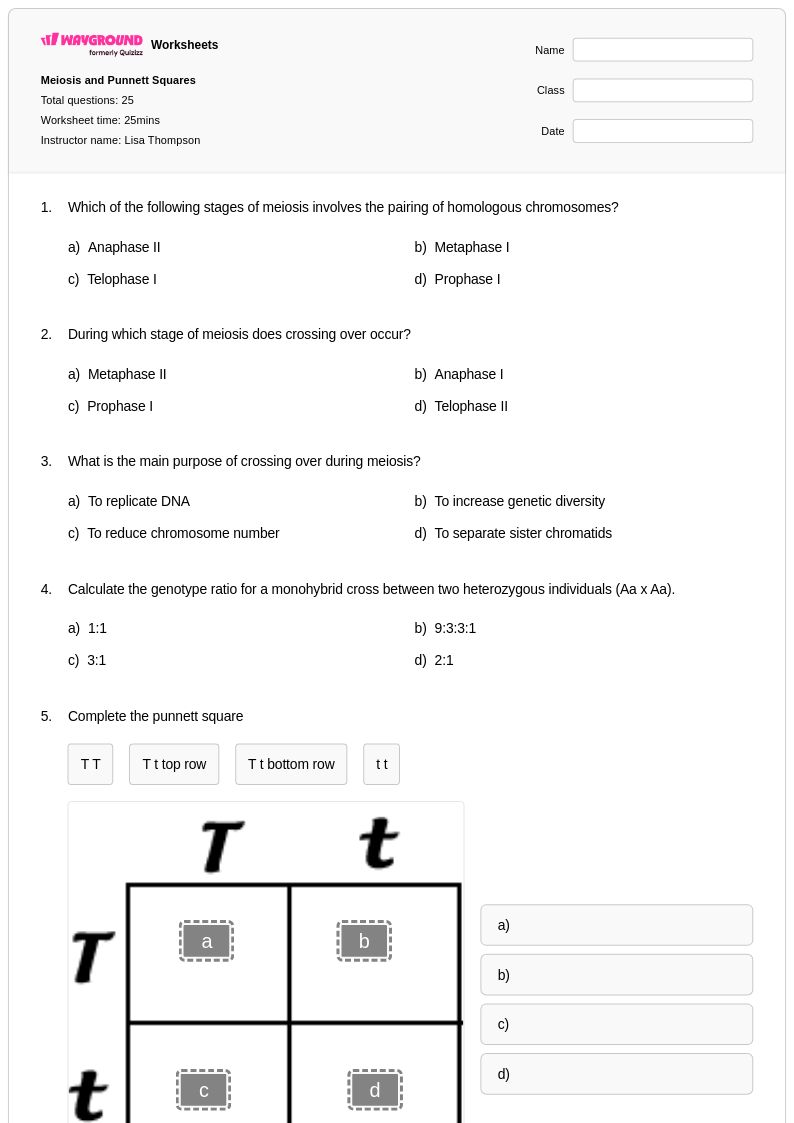
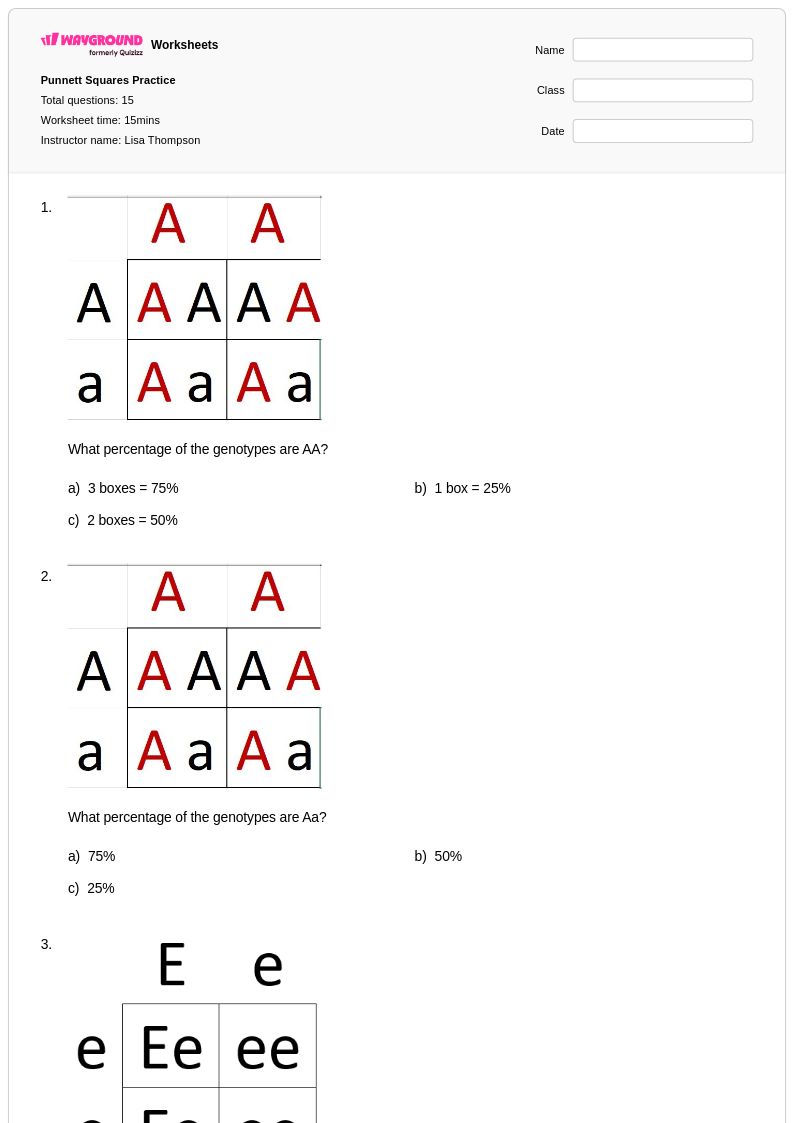
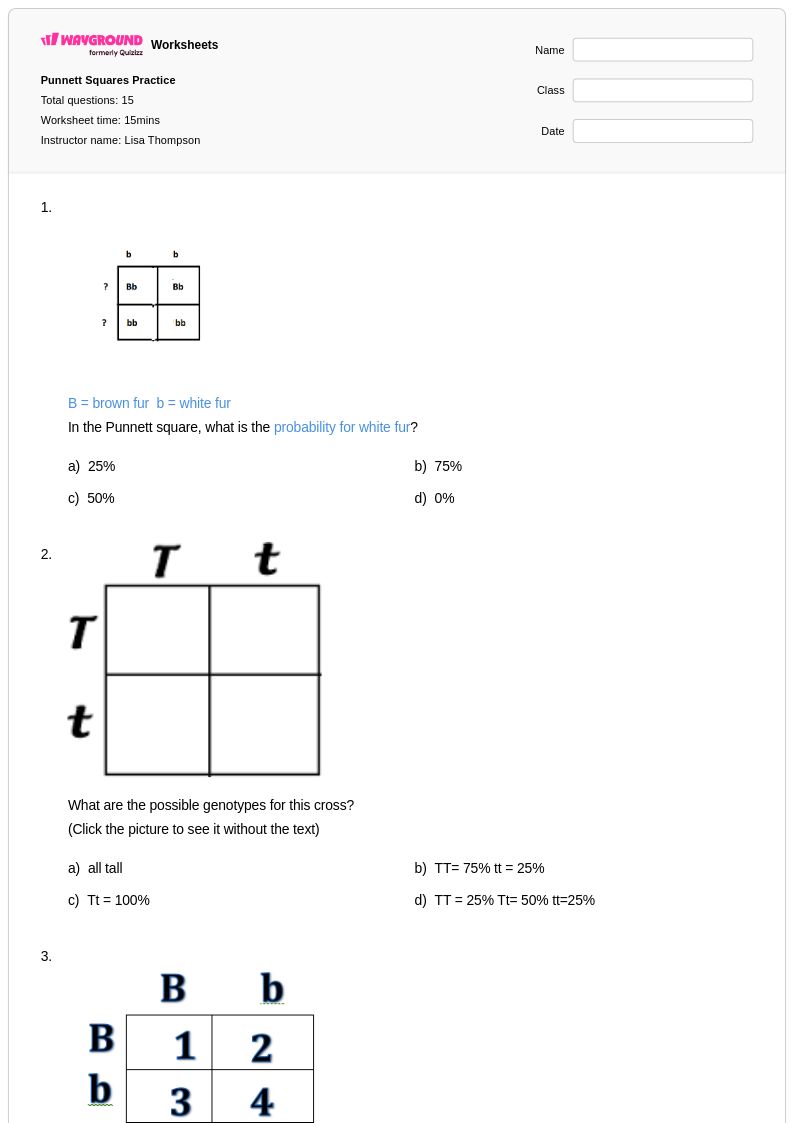
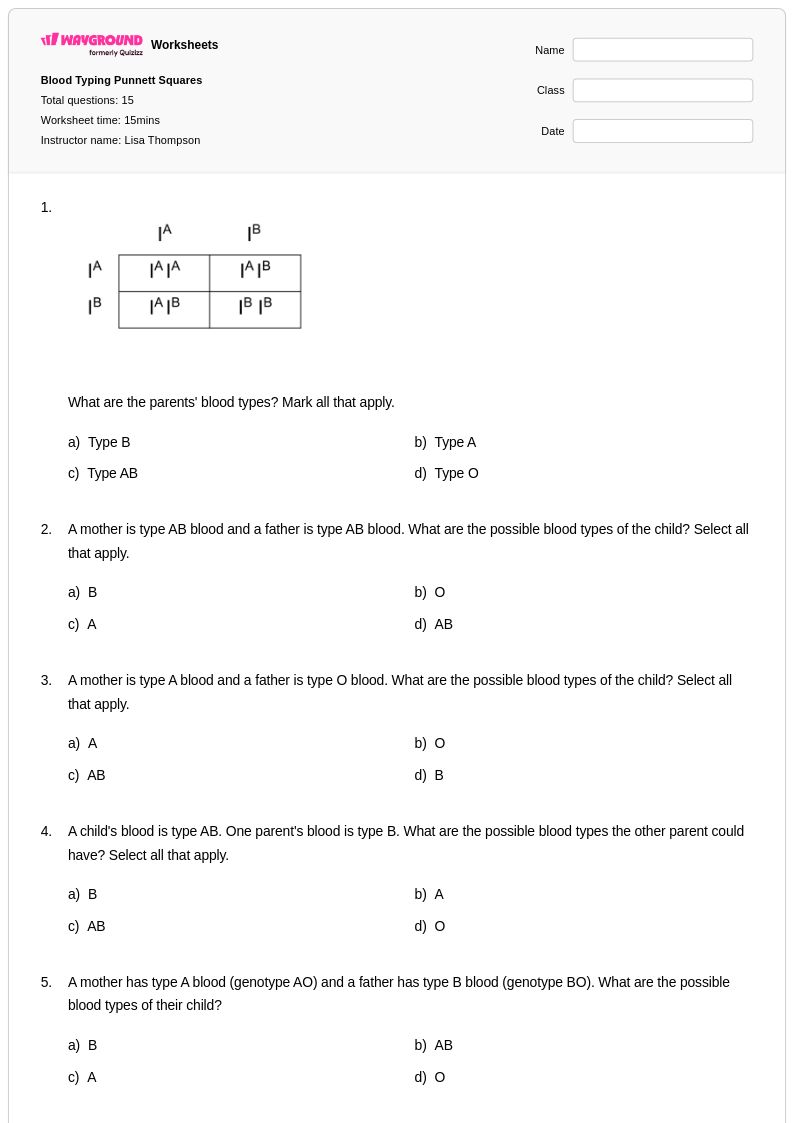
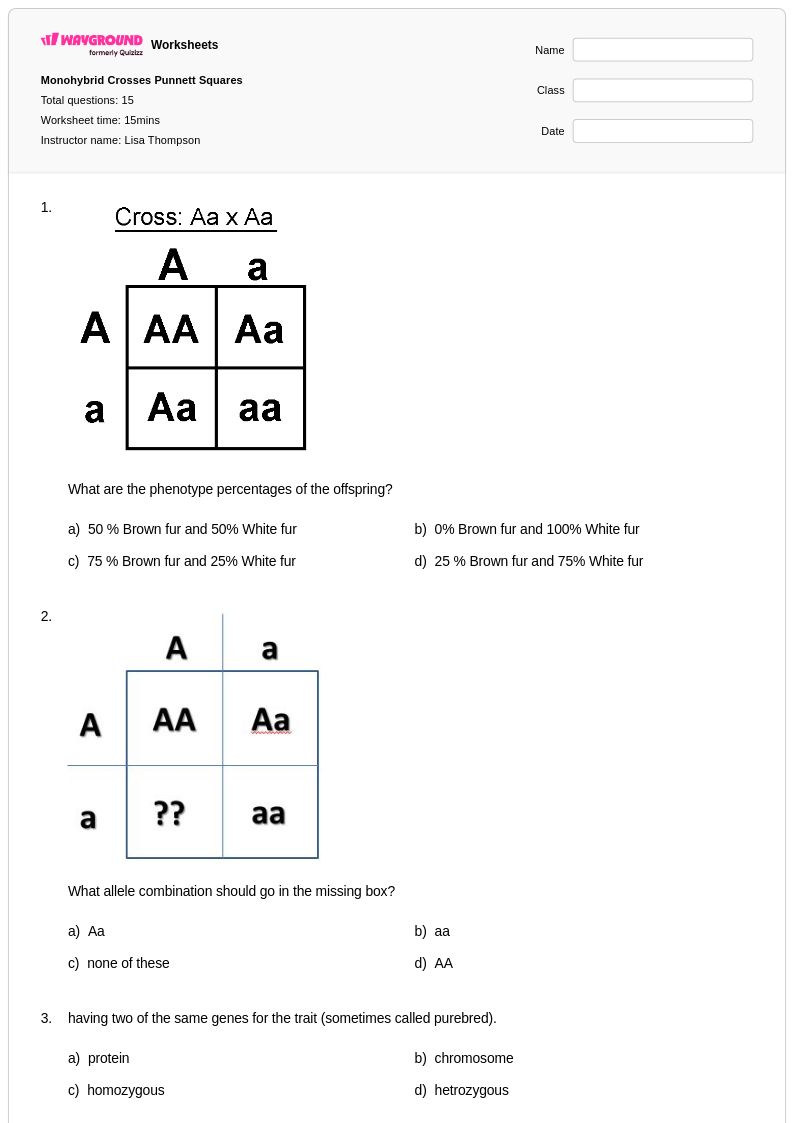
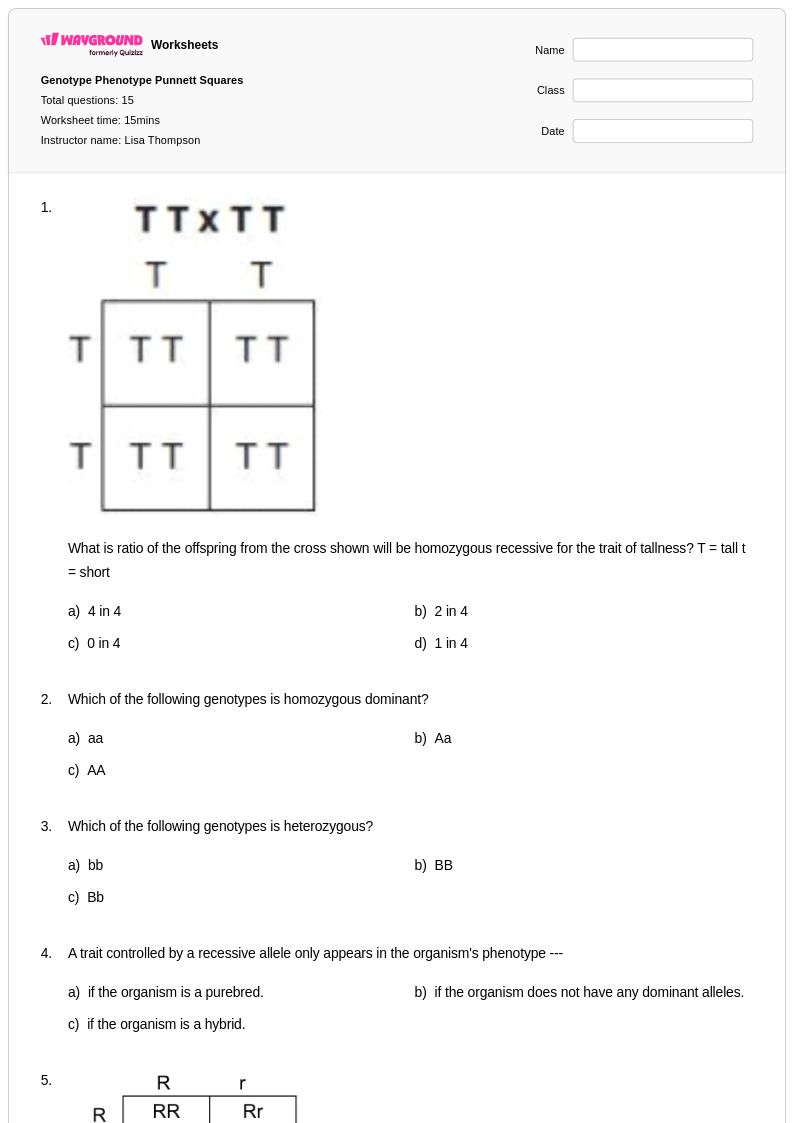
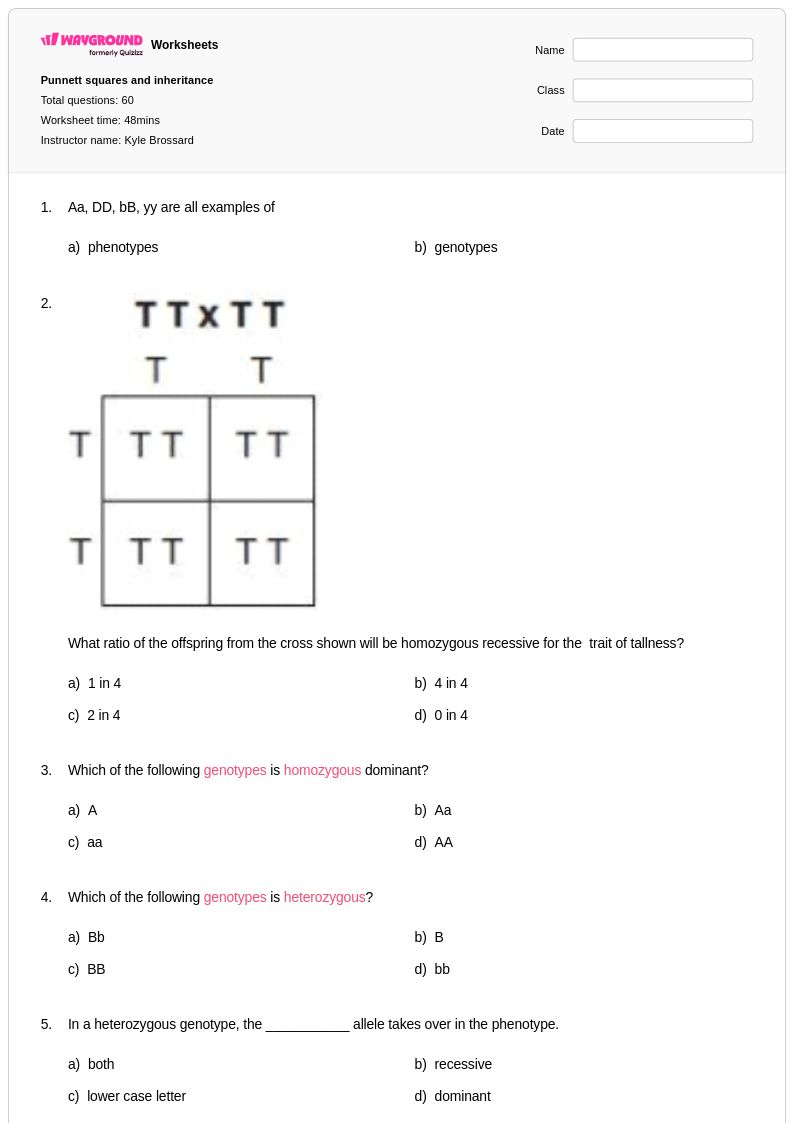
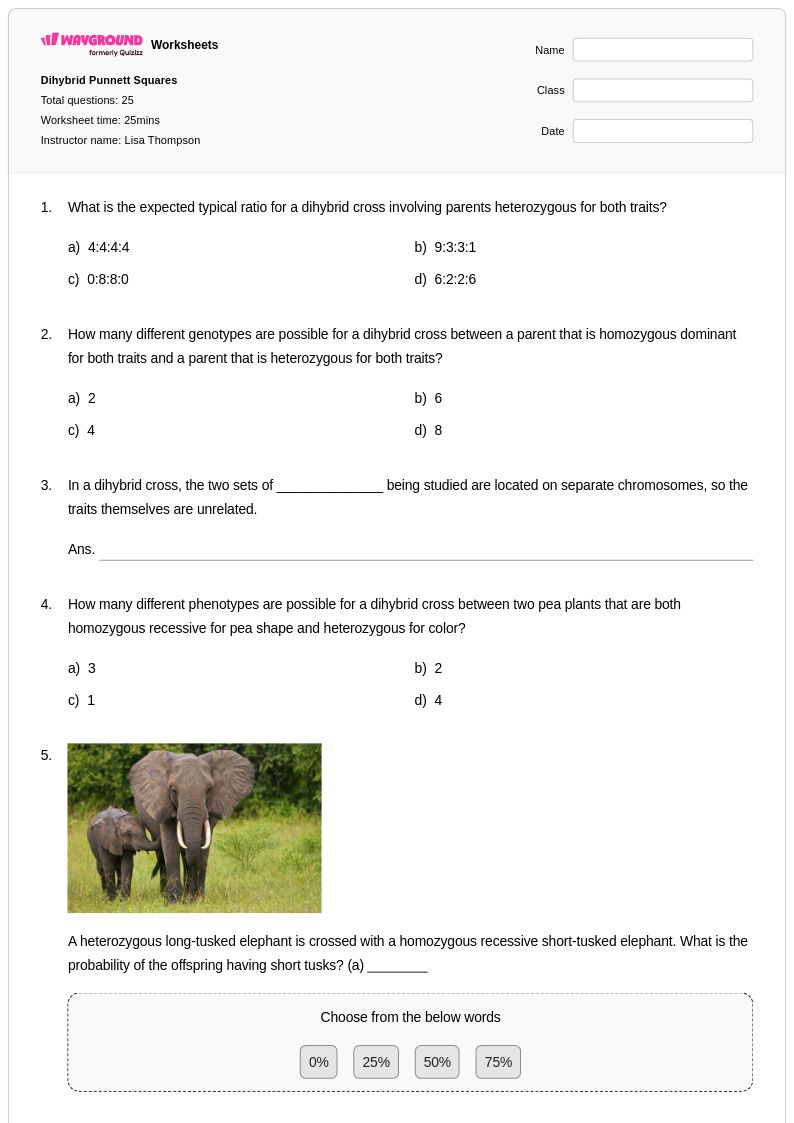
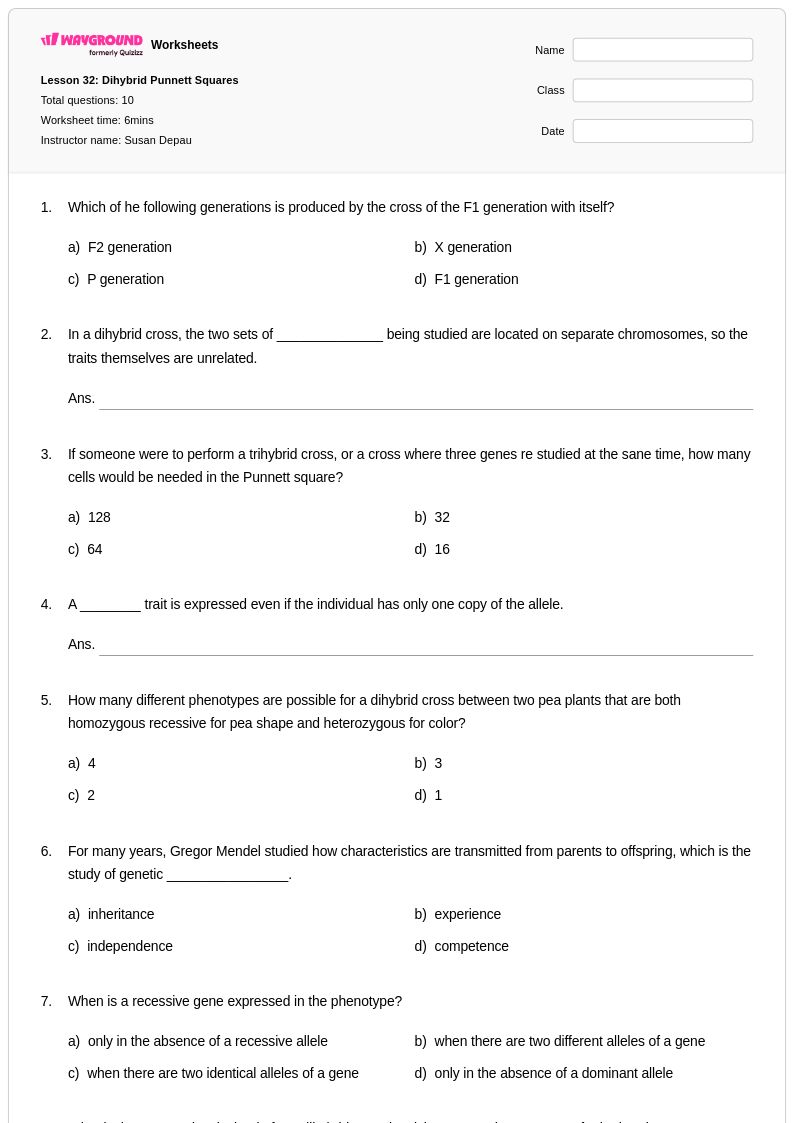
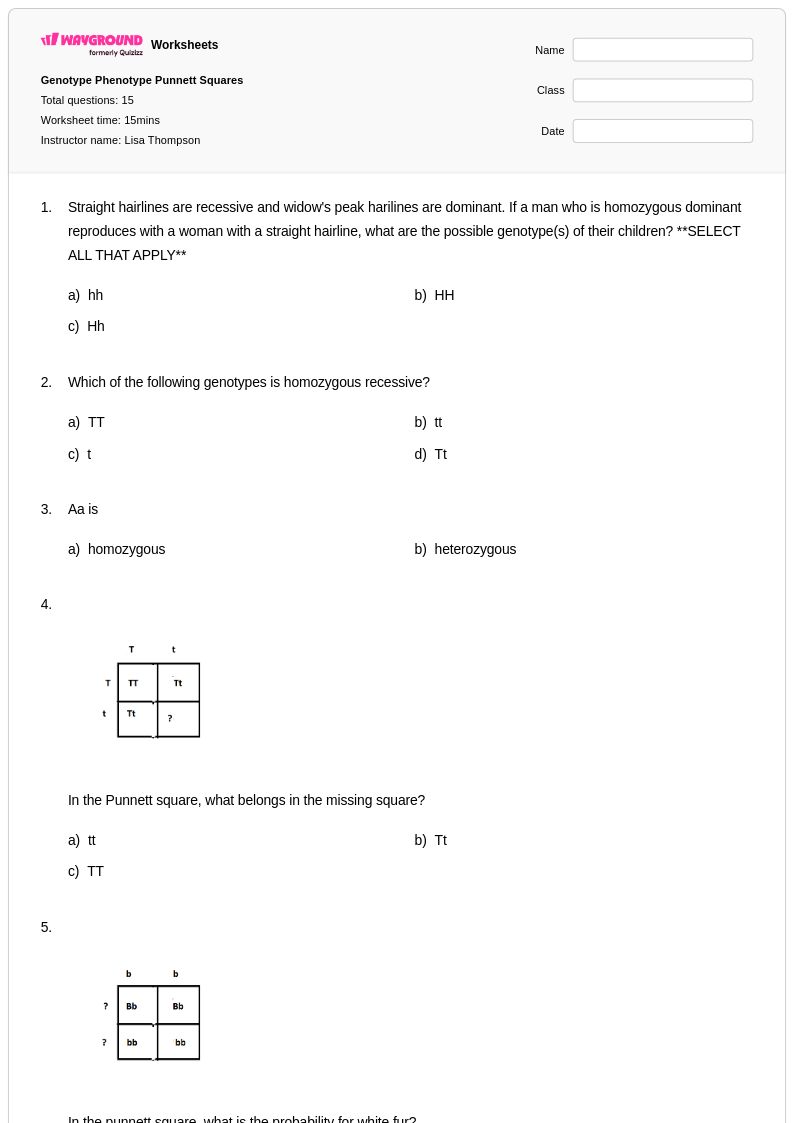
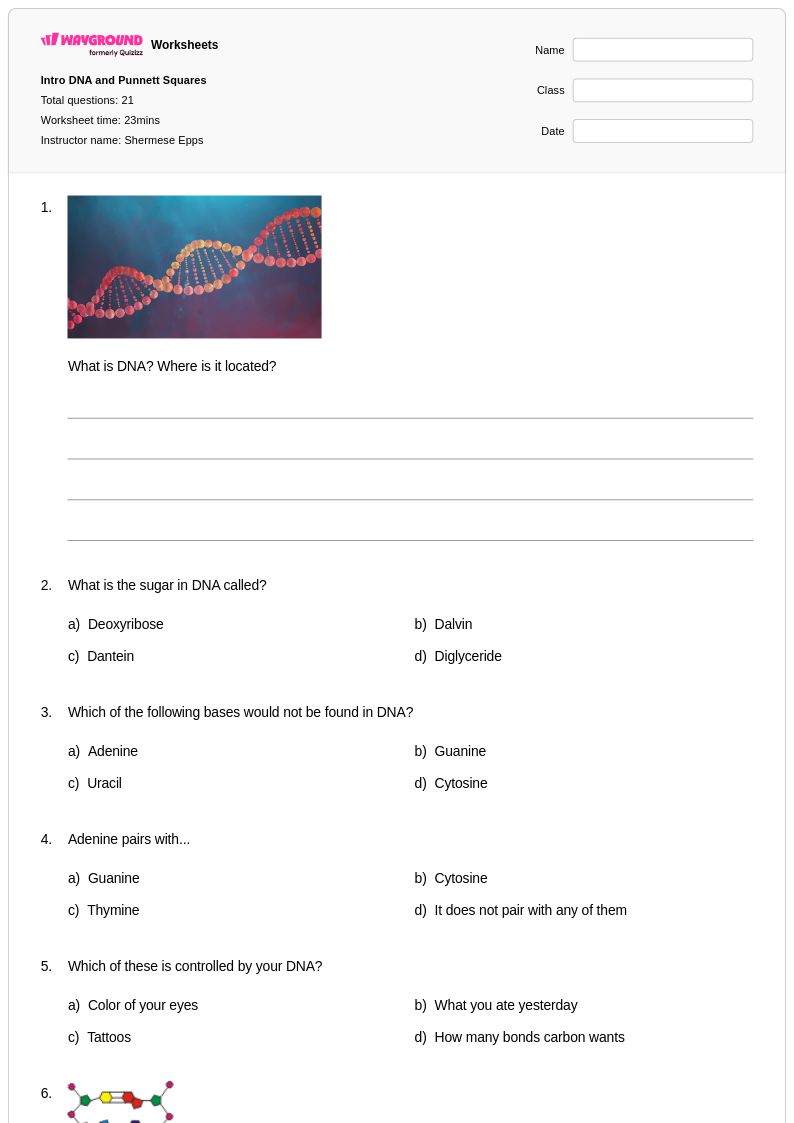
Punnett squares serve as fundamental tools in Class 11 biology, helping students visualize and predict genetic inheritance patterns through systematic probability calculations. Wayground's comprehensive collection of Punnett square worksheets guides students through progressively complex scenarios, from basic monohybrid crosses to advanced dihybrid and test crosses involving multiple alleles and codominance. These practice problems strengthen critical thinking skills by requiring students to analyze parental genotypes, determine possible gamete combinations, and calculate phenotypic and genotypic ratios in offspring. The worksheets include detailed answer keys that support independent learning and self-assessment, while printable PDF formats ensure accessibility for both classroom instruction and homework assignments. Free resources cover essential concepts including dominant and recessive traits, incomplete dominance, sex-linked inheritance, and pedigree analysis.
Wayground, formerly Quizizz, empowers biology teachers with millions of educator-created Punnett square resources that align with state and national science standards for Class 11 genetics instruction. The platform's advanced search and filtering capabilities allow teachers to quickly locate worksheets targeting specific genetic concepts, inheritance patterns, or difficulty levels appropriate for their students' needs. Robust differentiation tools enable educators to modify existing materials or create customized practice sets that address diverse learning styles and academic abilities within their classrooms. These resources are available in both digital and printable PDF formats, providing flexibility for traditional paper-based activities or technology-enhanced learning environments. Teachers utilize these comprehensive worksheet collections for lesson planning, targeted remediation of struggling students, enrichment opportunities for advanced learners, and ongoing skill practice that reinforces mastery of genetic problem-solving techniques essential for success in upper-level biology coursework.
FAQs
How do I teach Punnett squares to beginners?
Start with single-trait monohybrid crosses using clearly dominant and recessive alleles before introducing more complex scenarios. Have students practice labeling alleles along each axis of the grid before filling in offspring combinations, and explicitly distinguish between genotype and phenotype at every stage. Once students are confident with basic crosses, advance to dihybrid grids, incomplete dominance, codominance, and pedigree-integrated problems in a structured sequence.
What exercises help students practice Punnett squares?
Effective practice exercises begin with monohybrid crosses using straightforward dominant and recessive traits, then progress to dihybrid crosses requiring students to track two independent traits simultaneously. Including problems that ask students to calculate both genotypic and phenotypic ratios separately reinforces that these are distinct outcomes. Scenario-based problems involving incomplete dominance or codominance deepen understanding by showing students that inheritance patterns extend beyond simple dominant-recessive relationships.
What mistakes do students commonly make when completing Punnett squares?
One of the most frequent errors is placing both parental alleles on the same grid axis instead of separating one parent's alleles across the top and the other's down the side. Students also commonly confuse genotypic ratios with phenotypic ratios, treating them as interchangeable when they are not. A third persistent misconception is interpreting probability ratios as guaranteed outcomes, leading students to expect exactly three tall plants for every one short plant rather than understanding these as likelihoods across large sample sizes.
How do I use Punnett square worksheets in my classroom?
Punnett square worksheets on Wayground are available as printable PDFs for traditional classroom use and in digital formats for technology-integrated learning environments, including interactive quizzes hosted directly on Wayground. Printable versions work well for guided practice, stations, or homework, while digital formats support remote learning and instant feedback. Both formats include detailed answer keys, making them suitable for independent practice, small group work, or self-assessment activities.
How do I differentiate Punnett square instruction for students at different skill levels?
Differentiation should begin with scaffolded problems that provide partially completed grids for struggling learners before moving to fully open-ended crosses. Wayground's differentiation tools allow teachers to assign materials filtered by difficulty level and genetics subtopic, ensuring that advanced students work with dihybrid and non-Mendelian crosses while foundational learners consolidate monohybrid skills. For students who need additional accessibility support, Wayground also offers accommodations such as read aloud, extended time, and reduced answer choices, which can be assigned to individual students without affecting the rest of the class.
At what grade level should students learn Punnett squares?
Punnett squares are typically introduced in middle school life science around grades 6 through 8, where students first encounter Mendelian genetics and basic heredity concepts. The content is revisited and extended in high school biology, usually in grades 9 through 12, where dihybrid crosses, pedigrees, incomplete dominance, and codominance are incorporated. The appropriate entry point depends on whether students have foundational vocabulary around alleles, dominant and recessive traits, and basic probability.