Free Printable Who What When Where Why Questions Worksheets for Class 3
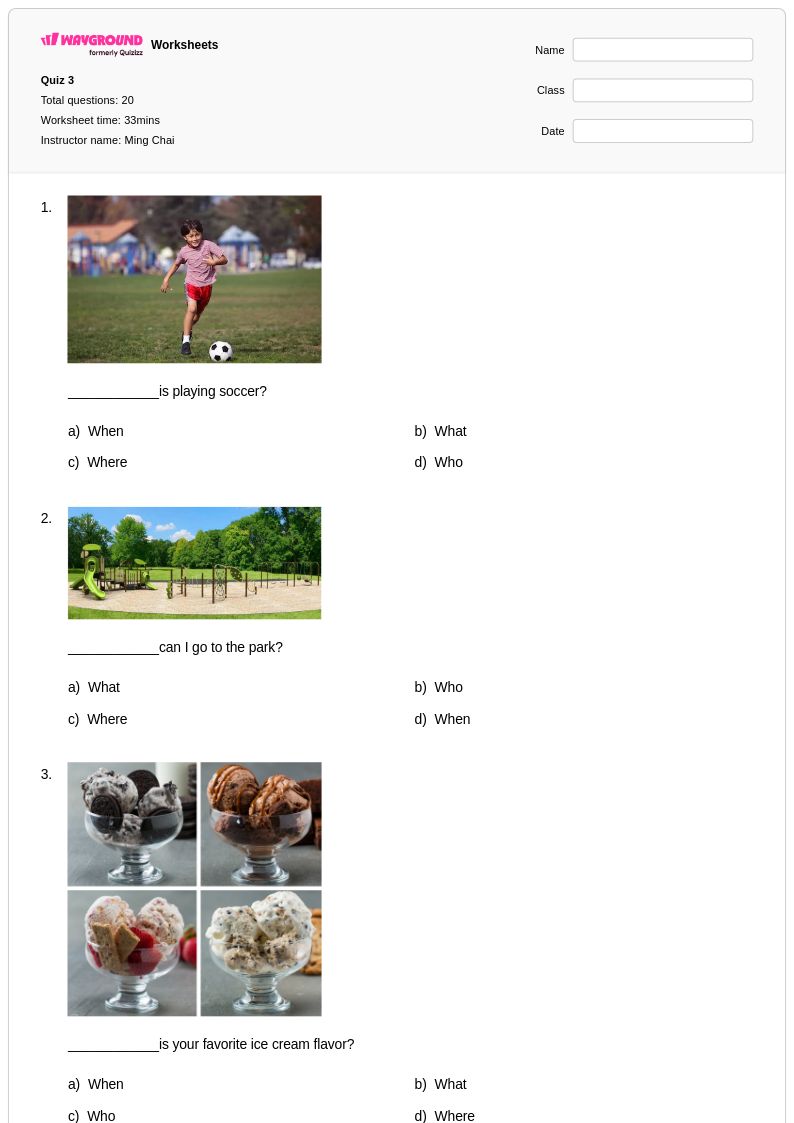
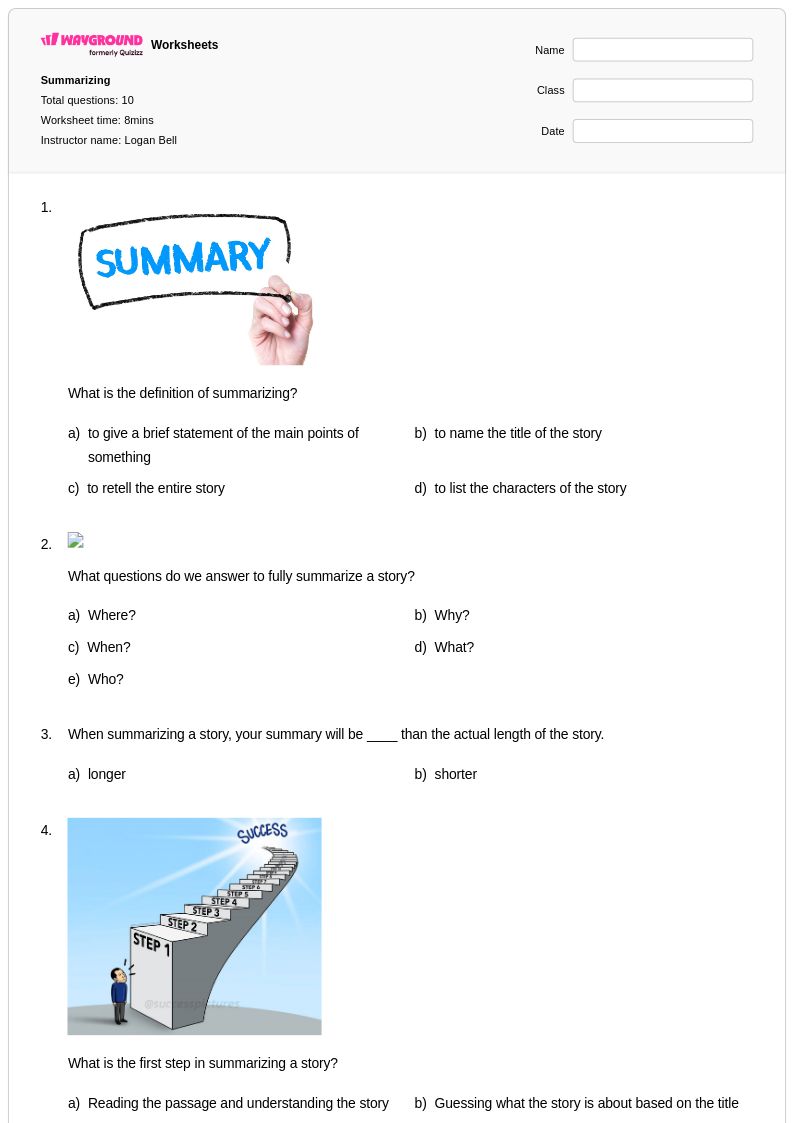
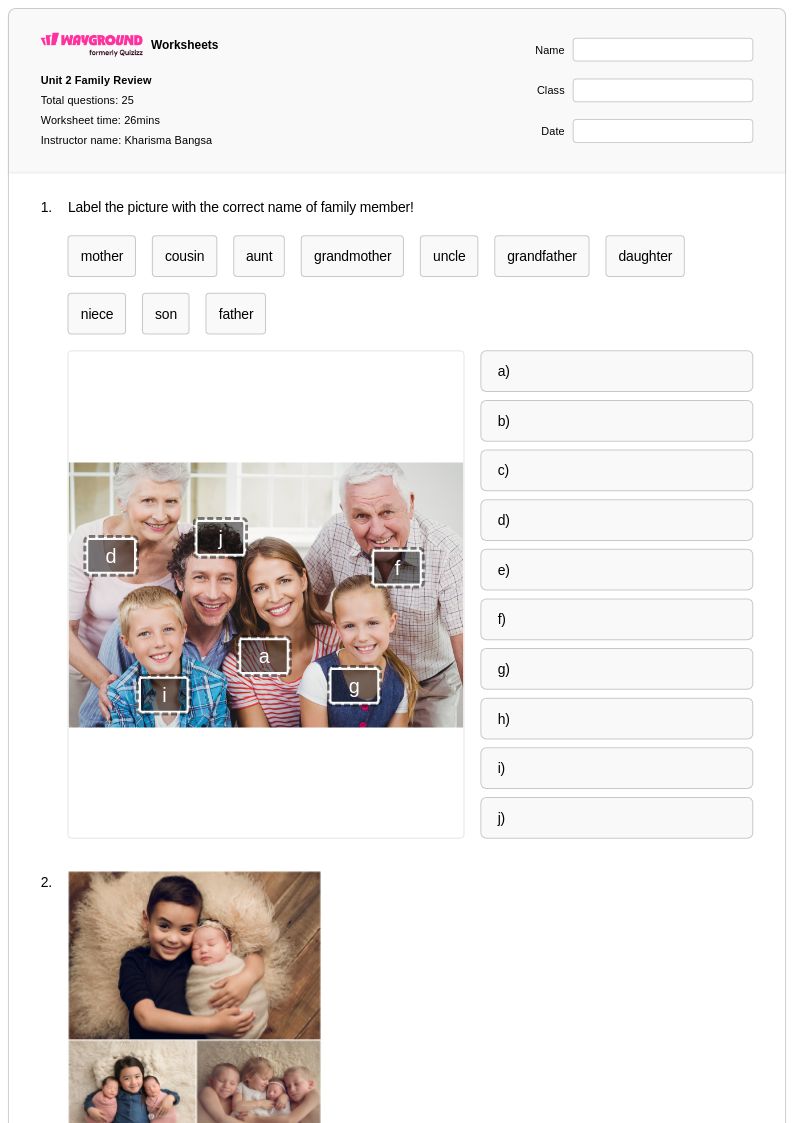
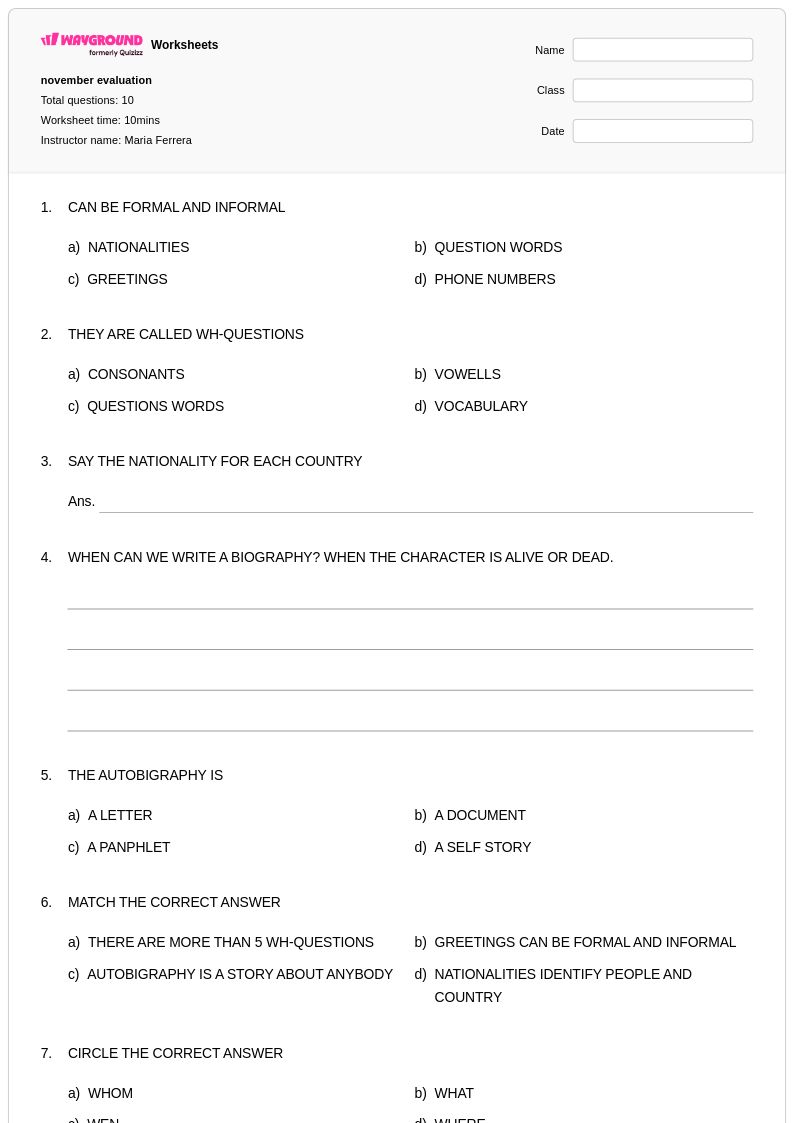
Class 3 students can master Who, What, When, Where, Why questions with Wayground's free printable worksheets and practice problems, complete with answer keys to strengthen reading comprehension skills.
Explore printable Who What When Where Why Questions worksheets for Class 3
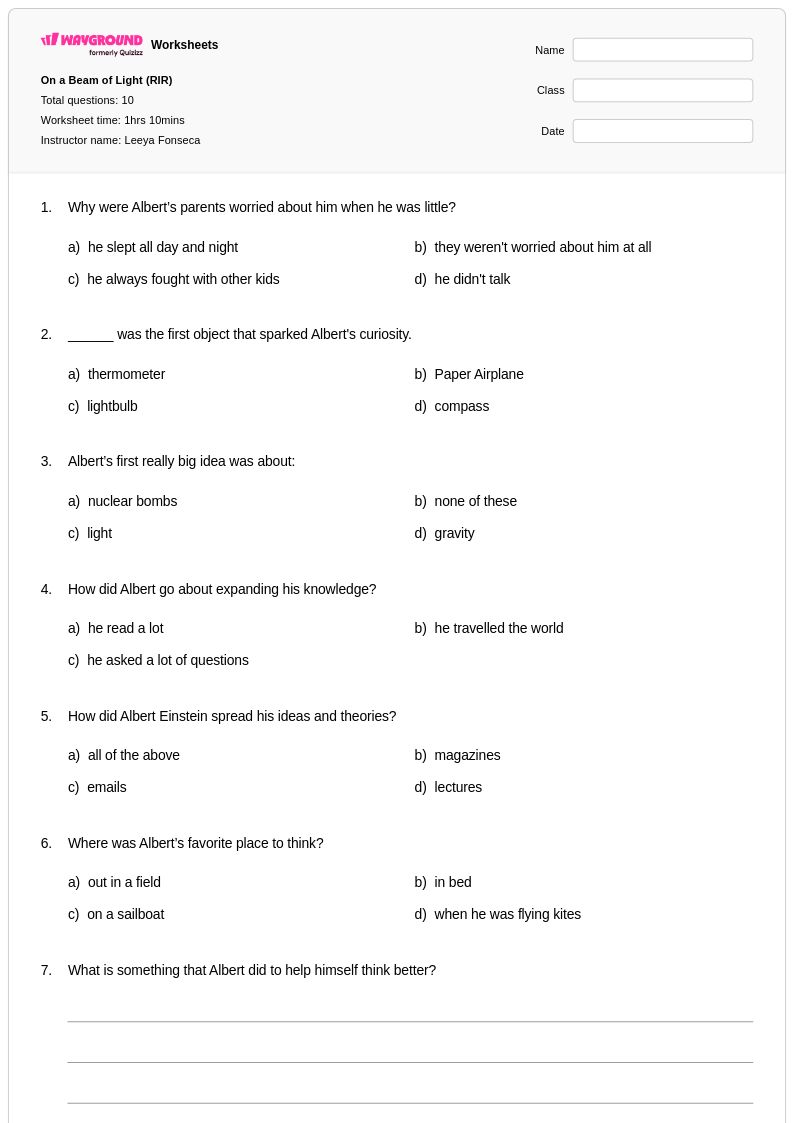
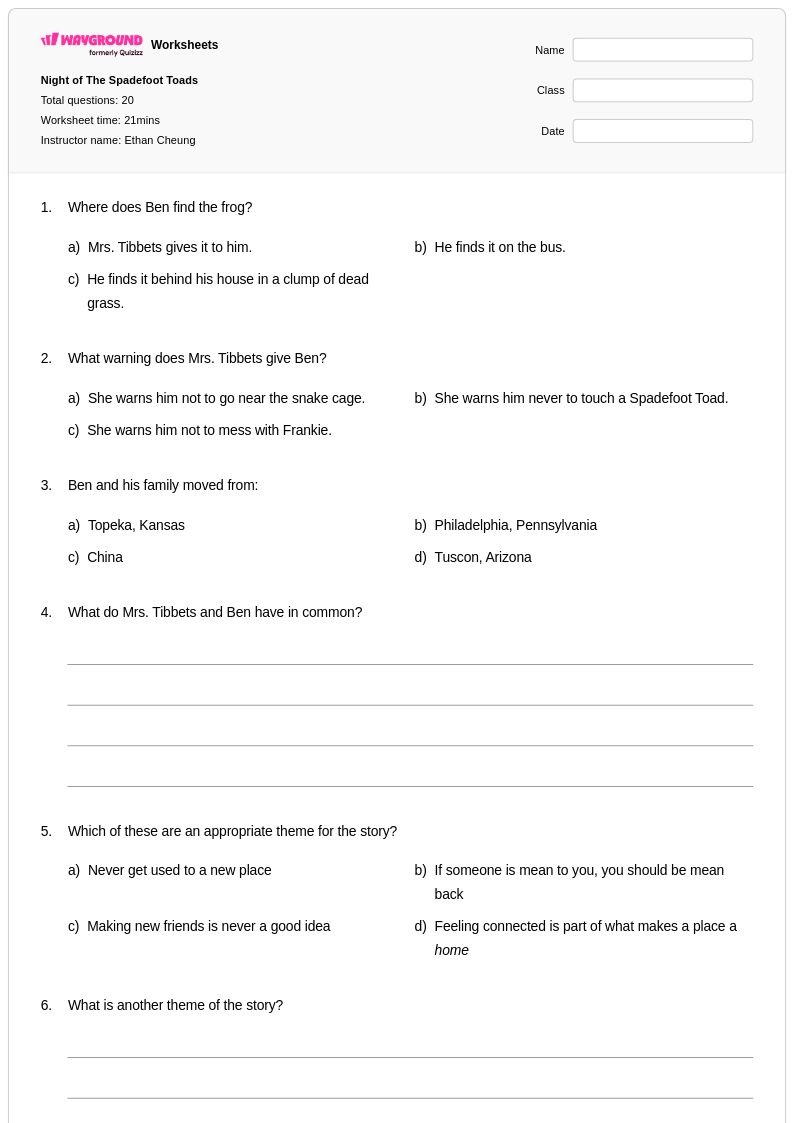
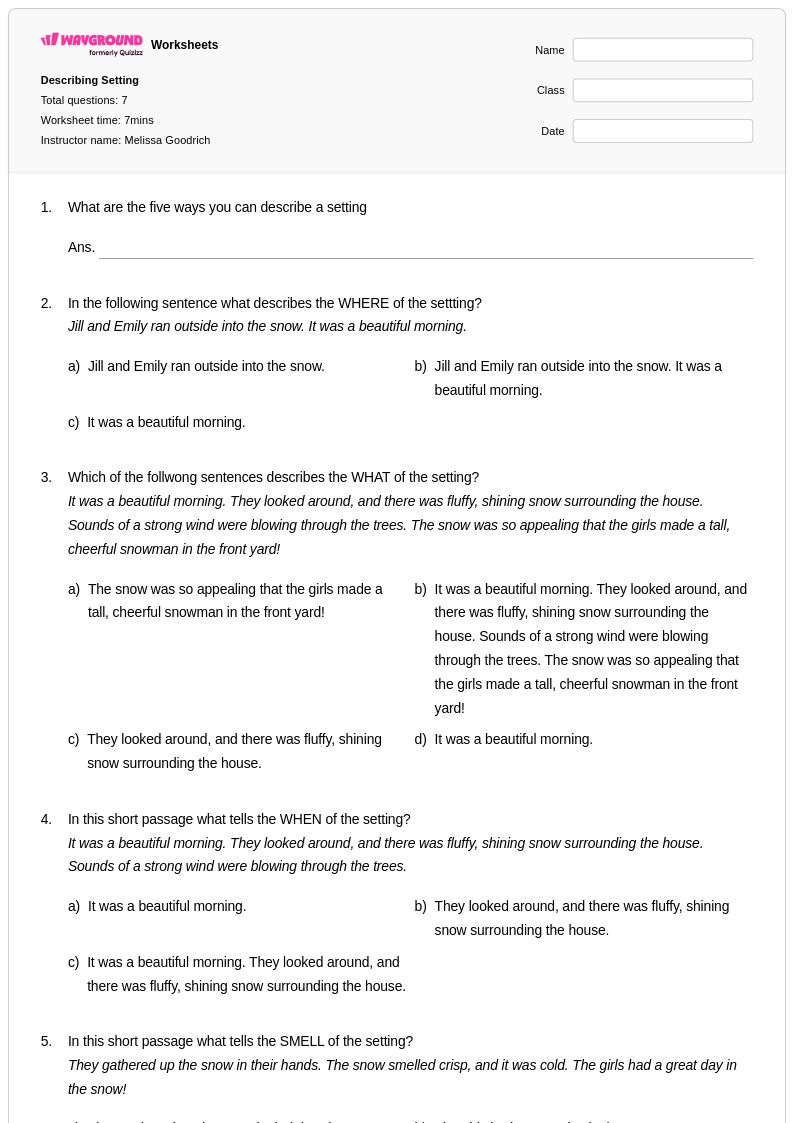
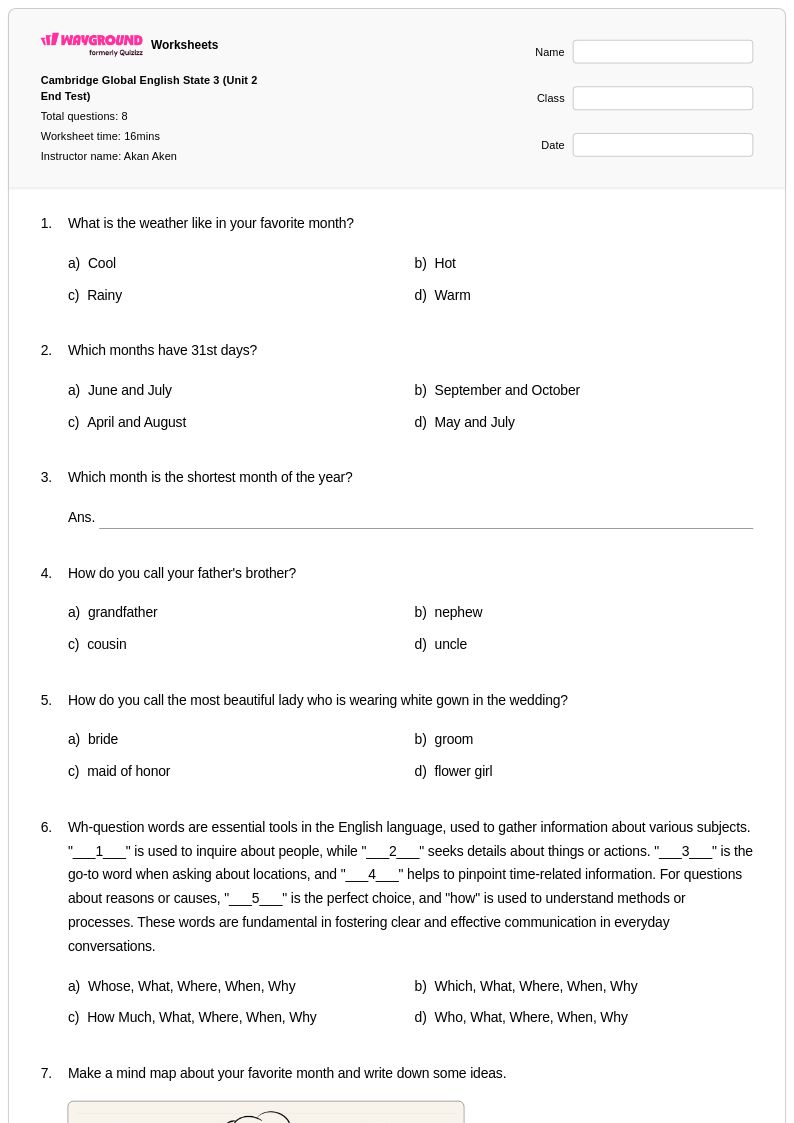
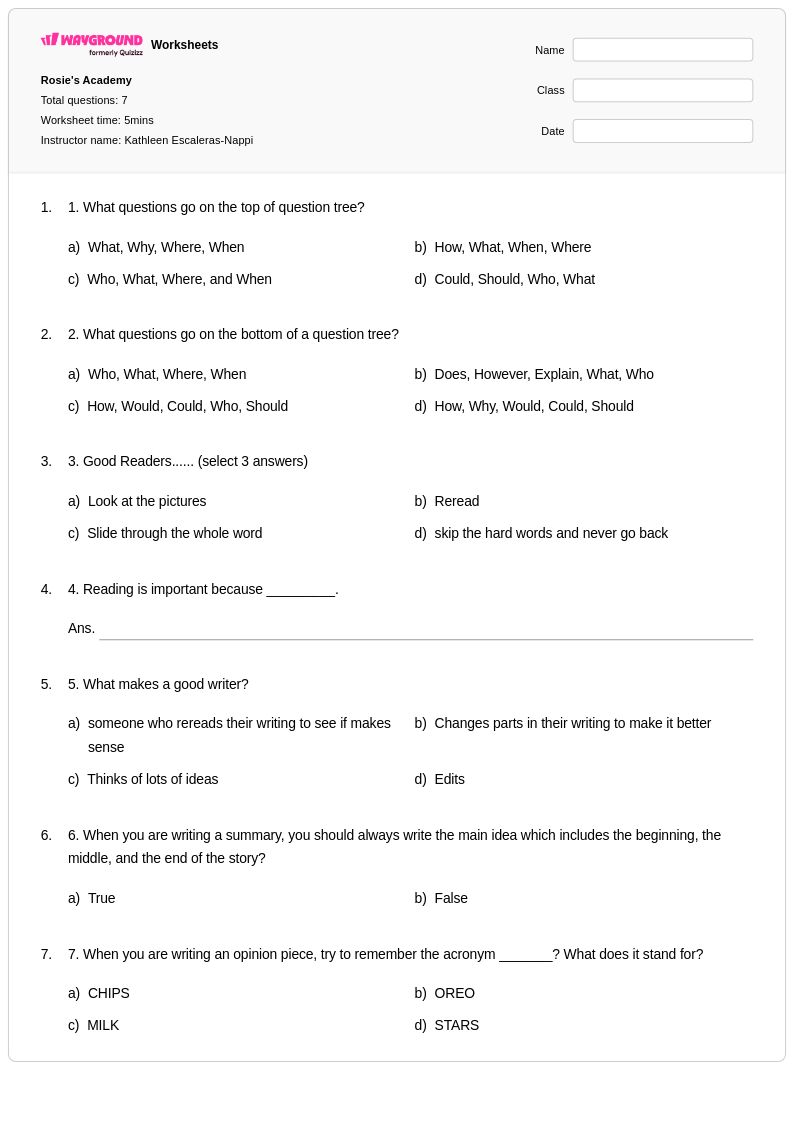
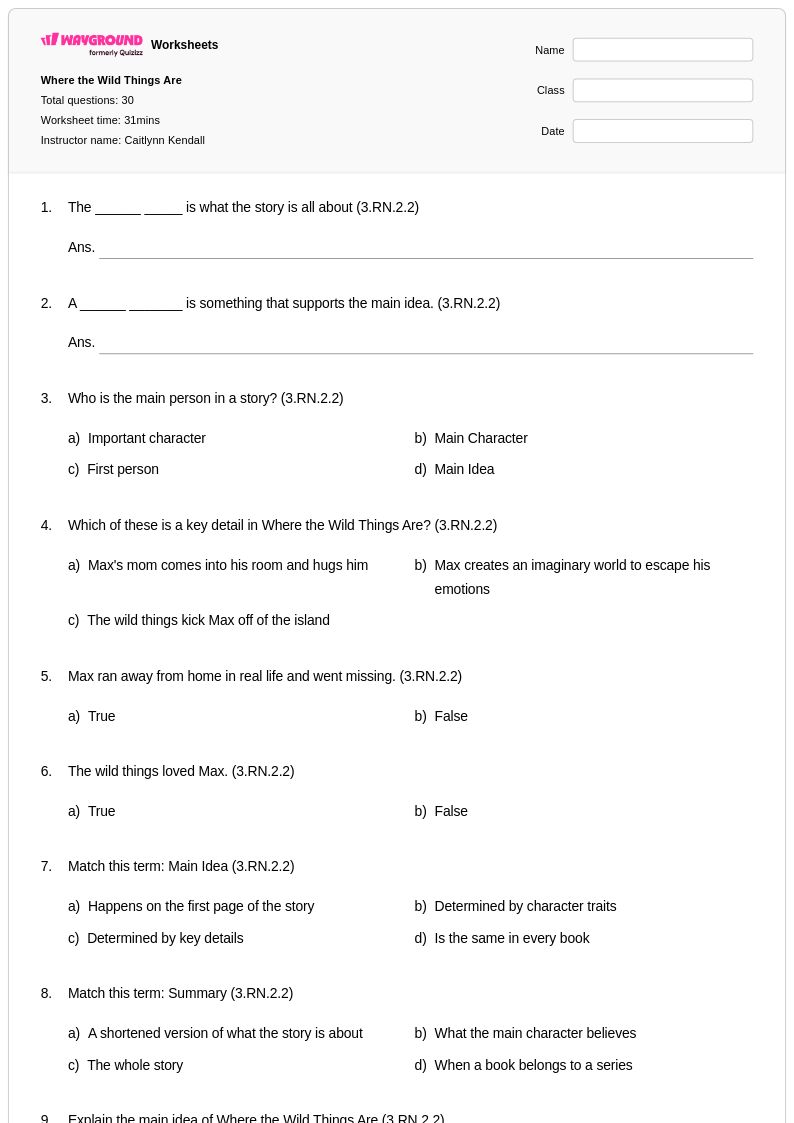
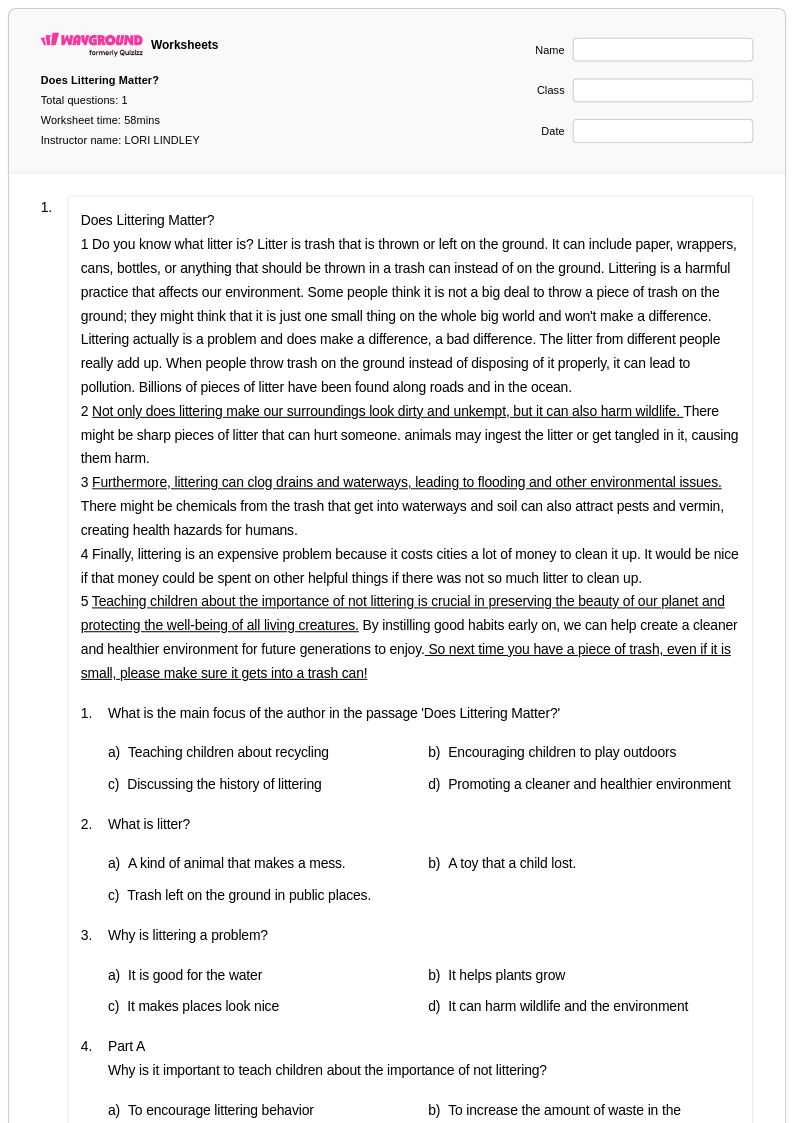
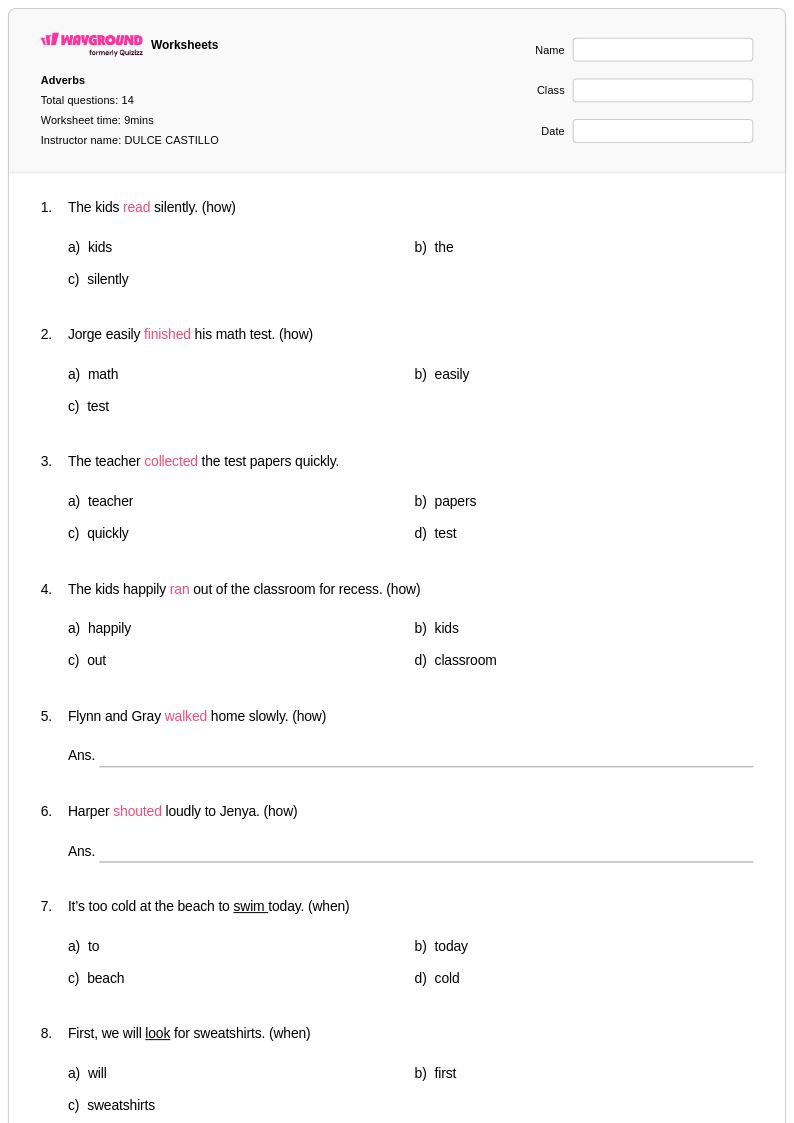
Who What When Where Why questions form the foundation of reading comprehension skills for Class 3 students, and Wayground's extensive worksheet collection provides targeted practice to master these essential inquiry strategies. These carefully designed worksheets guide third-grade learners through the systematic process of identifying key story elements by asking the fundamental questions that unlock meaning in any text. Students develop critical thinking abilities as they practice extracting specific information about characters, events, settings, timing, and motivations from age-appropriate passages. The comprehensive answer key accompanying each worksheet enables immediate feedback and self-assessment, while the free printable format ensures accessibility for classroom instruction and home practice. These practice problems progressively build students' ability to approach any reading material with a structured questioning framework that enhances comprehension and analytical thinking skills essential for academic success.
Wayground's robust platform, formerly Quizizz, empowers educators with millions of teacher-created resources specifically focused on Who What When Where Why questioning strategies for Class 3 reading comprehension. The platform's advanced search and filtering capabilities allow teachers to quickly locate worksheets that align with specific curriculum standards and match their students' diverse learning needs. Differentiation tools enable seamless customization of content difficulty and question formats, supporting both remediation for struggling readers and enrichment for advanced learners. Available in both printable PDF format and interactive digital versions, these worksheet collections integrate seamlessly into lesson planning while providing flexible options for individual practice, small group work, and whole-class instruction. Teachers can efficiently track student progress through structured skill practice that builds the questioning habits necessary for deep reading comprehension across all subject areas.
FAQs
How do I teach the Five W's to students who struggle with reading comprehension?
Start by anchoring each question word to a concrete role: Who identifies people or characters, What identifies events or actions, When identifies time, Where identifies place, and Why identifies cause or motivation. Use short, familiar texts first so students can focus on the questioning strategy rather than decoding. Gradually increase text complexity once students can consistently locate each type of information independently.
What exercises help students practice Who What When Where Why questions?
Structured worksheets that present a passage followed by targeted Five W's questions are among the most effective practice tools because they train students to read with a purpose. Having students fill in a Five W's graphic organizer after reading reinforces the habit of identifying each element systematically. Varying text types across fiction, nonfiction, and informational passages ensures students can apply the strategy flexibly rather than only in one genre context.
What mistakes do students commonly make when answering Five W's questions?
The most frequent error is confusing What and Why — students often describe an event (What) when asked to explain a reason (Why), or vice versa. Another common mistake is copying entire sentences from the text rather than identifying the specific detail the question targets. Students also frequently skip the Where question when setting details are embedded in the middle of a passage rather than stated at the opening.
How can I use Who What When Where Why worksheets to support different reading levels in the same class?
Assign the same Five W's worksheet to all students but apply Wayground's reduced answer choices accommodation for students who need additional scaffolding, lowering the cognitive load without altering the core skill being practiced. The Read Aloud feature can be enabled for students who struggle with decoding so they can focus their attention on comprehension rather than word recognition. Extended time settings can also be applied per student, allowing each learner to work at an appropriate pace while the rest of the class follows standard session timing.
How do I use Who What When Where Why worksheets on Wayground?
Wayground's Five W's worksheets are available as printable PDFs for traditional classroom use and in digital formats for technology-integrated environments, including the option to host them as a quiz directly on Wayground. Teachers can filter resources by reading level and text complexity to find the right fit for their class, then assign them for independent practice, small group work, or assessment preparation. Each worksheet includes a complete answer key, so grading and feedback can be handled efficiently without additional preparation.
How do Who What When Where Why questions build critical thinking skills?
The Five W's framework trains students to approach any text as a set of answerable questions rather than passive reading, which is the foundation of analytical thinking. Answering Why questions in particular requires students to move beyond locating explicit details and begin making inferences about cause and motivation. Over time, students who practice systematic inquiry through the Five W's develop stronger habits for evaluating information in both literary and informational contexts.