
 Worksheets
7th ACP Chem review
Total questions: 75
Worksheet time: 59mins
Name
Class
Date
1.
What is Carbons Atomic number.
a)
6
b)
7
c)
3
d)
9
2.
What atomic symbol is Iron.
a)
Fe
b)
I
c)
Id
d)
Sd
3.
How many electrons does Iron have?
a)
29
b)
27
c)
26
d)
20
4.
Salt dissolves in water.
a)
Physical change.
b)
Chemical change.
5.
How many atoms are in 2HIO₃
a)
29
b)
10
c)
46
d)
92
6.
How many neutrons does Cobalt have?
a)
16
b)
37
c)
32
d)
30
7.
The group number tells us how many _________ there are in an element.
a)
groups
b)
valence electrons
c)
energy levels
d)
chemicals
8.
The ________________ tells you how many energy levels are used in an element.
a)
group number
b)
atom
c)
protons
d)
period number
9.
The element Tellurium has the atomic mass of 127.60 and its atomic number is 52. How many neutrons are in the element Tellurium?
a)
179.60
b)
127.60
c)
52
d)
76
10.
The inner energy level can only hold ______ electrons.
a)
1
b)
0
c)
2
d)
18
11.
The characteristics or properties of metals include
a)
shiny and solid
b)
ductile and malleable
c)
lose electrons
d)
all of the above
12.
How many valence electrons do elements in group 17 have in their outer energy level?
a)
7
b)
17
c)
1
d)
0
13.

Is this a correct representation of the Bohr Model for Sodium (Na)?
a)
no
b)
yes
14.
Which particle does not contribute mass to the atom?
a)
Proton
b)
Neutron
c)
Electron
d)
Nucleus
15.
Which particle contributes the negative charge to the atom?
a)
proton
b)
electron
c)
neutron
d)
nucleus
16.
Water is an element?
a)
true
b)
false
17.
Most of the mass in an atom is made up of _____________________?
a)
protons and electrons
b)
protons and neutrons
c)
neutrons and electrons
d)
electrons and quarks
18.
What is the standard unit of mass at the atomic level?
a)
centimeters
b)
millimeters
c)
amu
d)
milligrams
19.
what is the symbol for gold?
a)
Au
b)
Ag
c)
G
d)
Gd
20.

a)
Chlorine wants to lose 7 electrons
b)
Chlorine wants to gain 1 electron
c)
Chlorine is stable
21.
This rule says that the amount of atoms in the reactants is equal to the amount of atoms in the products...
a)
Conservation of Energy
b)
E=MC2
c)
Conservation of Mass
d)
Rule of 8
22.
The central region of an atom where its neutrons and protons are is its
a)
nucleus
b)
electron cloud
c)
core
d)
center
23.

What is the number of protons that the element in this image contain?
a)
14
b)
7
c)
15
d)
18
24.
Salt has a chemical formula of NaCl. Salt is a...
a)
Compound
b)
Element
c)
Mixture
d)
None of the Above
25.
How many elements are represented in the compound?
Na2CO3
Na2CO3
a)
1
b)
2
c)
3
d)
4
26.
How many atoms make up one molecule of Na2CO3?
a)
1
b)
2
c)
3
d)
6
27.
How many atoms of sulfur in one molecule of 3H2SO4?
a)
1
b)
3
c)
4
d)
6
28.
What parts of the atom move around outside the nucleus
a)
atomic mass units
b)
electrons
c)
protons
d)
neutrons
29.
A substance that cannot be broken down into a simpler substance is called ______________
a)
a mixture
b)
a componud
c)
a suspension
d)
an element
30.
What is a valence electron?
a)
They are the power house of the atom
b)
The only atom of importance
c)
They are the electrons involved in bonding
d)
not the answer
31.
_______ are horizontal rows of elements that contain increasing numbers of protons.
a)
groups
b)
periods
c)
squads
d)
class
32.
a proton has this charge
a)
negative
b)
positive
c)
neutral
d)
all of the above
33.
a neutron has this charge
a)
negative
b)
positive
c)
neutral
d)
all of the above
34.
An atom with _?_ valence electron would be most reactive.
a)
8
b)
1
c)
4
d)
6
35.

How many protons are in this element?
a)
1
b)
16
c)
32
d)
8
36.
What group is Mg in?
a)
Group 2
b)
Group 7
c)
Group 6
d)
Group 1
37.
What is a compound.
a)
Two and a half particles
b)
Two particles
c)
Two or less particles
d)
Two or more particles
38.

The atoms along the staircase are called
a)
metals
b)
nonmetals
c)
metalloids
d)
noble gases
39.
Which is a halogen?
a)
Helium
b)
Chlorine
c)
Oxygen
d)
Neptune
40.
Which is an alkali metal?
a)
Magnesium
b)
Iron
c)
Sodium
d)
Europium
41.

Which of these element is the least metallic?
a)
Potassium (K)
b)
Carbon (C)
c)
Sulfur (S)
d)
Neon (Ne)
42.
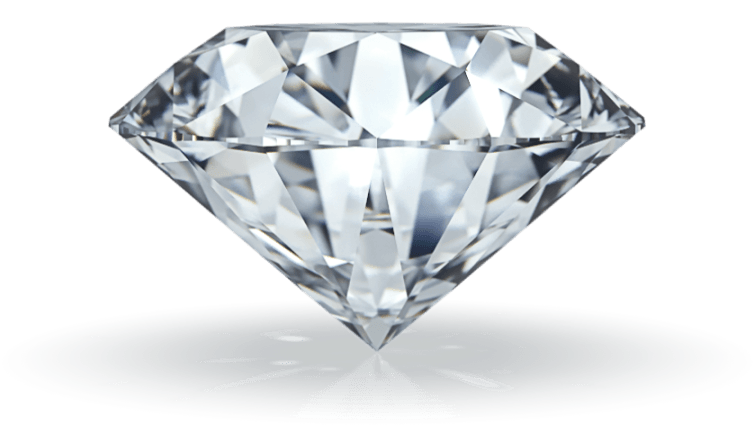
Diamonds are a pure form of what element?
a)
Carbon
b)
Oxygen
c)
Silicon
d)
Silver
43.

Most of the elements on the periodic table are classified as _____.
a)
Metals
b)
Nonmetals
c)
Metalloids
d)
Periods
44.

The yellow atoms are called
a)
metals
b)
nonmetals
c)
metalloids
d)
noble gases
45.

The period for Bromine is ___________.
a)
3
b)
2
c)
4
46.

Beryllium is in group number______.
a)
Group 2
b)
Group 3
c)
Group 4
d)
Group 7
47.
The periodic table has __ periods.
a)
18
b)
8
c)
2
d)
7
48.
An element's identity is determined by the number of
a)
electrons.
b)
protons.
c)
neutrons.
d)
valence.
49.
Elements in the same ________ are more chemically similar.
a)
group
b)
period
c)
club
d)
table
50.
Which elements have the most similar chemical properties?
a)
K and Na
b)
K and Ca
c)
K and Cl
d)
K and S
51.
What period and group is Silver (Ag)?
a)
Period 2, Group 1
b)
Period 3, Group 16
c)
Period 5, Group 11
d)
Period 2, 14
52.
The periodic table has __ groups.
a)
8
b)
7
c)
18
d)
2
53.
Which element is not a metal?
a)
Ni
b)
B
c)
Hg
d)
Al
54.

In what section would Transition Metals be found?
a)
purple
b)
light blue
c)
yellow
d)
red
55.

Which part is known as the atomic mass?
a)
Cu
b)
29
c)
63.546
d)
copper
56.

Is this equation balanced?
a)
yes
b)
no
c)
Not enough information
57.
Is the equation balanced?: 2H2O + O2 --> 4MgO + 3Fe
a)
Yes
b)
No
58.
Balance this equation
_Al +_HCl --> _H2 +_AlCl3
_Al +_HCl --> _H2 +_AlCl3
a)
2, 6, 3, 2
b)
it is already balanced
c)
4, 12, 3, 4
d)
2, 1, 4, 5
59.
Balance this equation-
__P4 + __O2 --> __P2O3
__P4 + __O2 --> __P2O3
a)
it is already balanced
b)
2, 1, 3
c)
1, 2, 3
d)
1, 3, 2
60.
Balance this equation
_N2 + _H2 --> _NH3
_N2 + _H2 --> _NH3
a)
1,2,3
b)
1,3,2
c)
1,1,2
d)
2,1,1
61.
Balance this equation.
_Mg + _Cl2 --> _MgCl2
_Mg + _Cl2 --> _MgCl2
a)
1, 2,1
b)
already balanced
c)
2,1,1
d)
1,1,2
62.
What is the little number after an element in a chemical equation called.
Example: H2
Example: H2
a)
Coefficient
b)
Subscript
c)
Atom
d)
Equation
63.
What is the arrow in a chemical equation...
H2 + O --> H2O
H2 + O --> H2O
a)
Reactants
b)
Products
c)
Yields
d)
Chemical Equation
64.
When balancing equations a ____ can be placed to the left of a formula of a substance to make the equations balanced
a)
charge
b)
subscript
c)
random number
d)
coefficient
65.
How many atoms of aluminum are on each side of the following equation: 4Al + 3O2 --> 2Al2 O3
a)
2
b)
6
c)
1
d)
4
66.
What are/is the reactants of this chemical equation?
2Fe + 3H2SO4 → Fe(SO4)3 + 3H2
2Fe + 3H2SO4 → Fe(SO4)3 + 3H2
a)
Fe(SO4)3 + 3H2
b)
2Fe + 3H2SO4
67.
What is the right part of a chemical equation called...
H2 + O --> H2O
H2 + O --> H2O
a)
Reactants
b)
Products
c)
Yields
d)
Chemical Equation
68.
At the end of chemical reactions, what is the total mass of the reactants compared to the total mass of the products?
a)
the product is doubled
b)
the product is half the mass of the reactants
c)
the mass is the same
d)
the mass changes depending on the reaction
69.

This picture of a football is here for no reason.
Click CONTINUE to move on.
Click CONTINUE to move on.
a)
CONTINUE
b)
I don't follow directions.
70.
All matter is made of what?
a)
energy
b)
atoms
c)
electrons
d)
compounds
71.

The experiment used by Ernest Rutherford to discover the nucleus of an atom.
a)
Cathode Ray Experiment
b)
Gold Foil Experiment
c)
Reflector Experiment
d)
Plum Pudding Experiment
72.

J.J. Thomson provided evidence that an atom...
a)
is the smallest particle of matter
b)
contains negatively charged particles
c)
has an overall negative charge
d)
has an overall positive charge
73.
The protons and neutrons have the mass of -
a)
1 amu
b)
10 amu
c)
100 amu
d)
too small to have a mass
74.
The first person to ever talk about an atom was
a)
Democritus
b)
Rutherford
c)
Dalton
75.

Who came up with the model in which electrons orbit the nucleus in specific levels?
a)
JJ Thomson
b)
Earnest Rutherford
c)
Niels Bohr
d)
Erwin Schrodinger
100 %

