
 Worksheets
Astronomy Review
Total questions: 51
Worksheet time: 26mins
Name
Class
Date
1.
What is a rotation?
a)
When an object orbits another object
b)
When an object spins half way
c)
When an object spins one time on its axis
d)
When you get to the bottom of a line up.
2.
The moon seems to change shape from day to day in a cycle that lasts about a month as it goes through _.
a)
revolutions
b)
phases
c)
rotations
d)
eclipses
3.
As the moon's shape appears to get smaller, we say that the moon is _.
a)
swelling
b)
waxing
c)
waning
d)
disappearing
4.
Phases of the moon in which the moon appears to be getting larger are referred to as _.
a)
waxing
b)
waning
c)
new
d)
eclipse
5.
Which of the following words describe the phases of the moon?
a)
none, quarter, half, three quarters, full
b)
new, crescent, quarter, gibbous, full
c)
dark, light, half, quarter, blue
d)
first quarter, second quarter, third quarter, fourth quarter
6.
One complete revolution of the Earth around the sun takes about
a)
one rotation
b)
half a year
c)
one year
d)
one season
7.
The Earth takes about __________________ hours to complete one rotation of its axis.
a)
12
b)
24
c)
14
d)
28
8.
At all times the moon is half lit up by the sun.
a)
true
b)
false
9.

What type of telescope is pictured above?
a)
reflective
b)
refracting
c)
Space
d)
radio
10.
As the Earth travels around the sun, this tilt causes different areas of the Earth’s surface to get different amounts of daylight at different times of the year. The angle of the Sun’s rays to the surface also causes areas to have more or less of the Sun’s energy. This causes the ________.
a)
months
b)
day and night
c)
seasons
d)
years
11.
A ______ eclipse occurs when the moon passes between Earth and the sun, blocking the sunlight from reaching Earth. The moon's shadow then hits Earth.
a)
solar eclipse
b)
lunar eclipse
c)
vernal equinox
d)
autumnal equinox
12.

A body that orbits a planet is a...
a)
Meteor
b)
Asteroid
c)
Satellite
d)
Comet
13.

A light year is...
a)
The distance light will travel in 1 year
b)
The time it takes light to travel 1 year
c)
The average distance from Earth to the sun
d)
The distance from Earth to Polaris
14.

At position A, which hemisphere would have summer?
a)
Northern hemisphere
b)
Southern hemisphere
15.
What is the origin of the universe called?
a)
The Hubble Glitch
b)
The Big Crunch
c)
The Big Bang
d)
The Big Collapse
16.
The earth has seasons because.......
a)
the temperature of the sun changes
b)
The earth rotates
c)
The earth is tilted
d)
The distance between the earth and sun changes
17.

Most stars are identified as ___________ on an H-R Diagram?
a)
Supergiants
b)
Giants
c)
Main Sequence
d)
White Dwarf
18.

Which season is taking place in the Southern Hemisphere in Position 1?
a)
Winter
b)
Spring
c)
Summer
d)
Fall
19.

Which season is taking place in the Northern Hemisphere in Position 1?
a)
Winter
b)
Spring
c)
Summer
d)
Fall
20.

What type of galaxy is this?
a)
Spiral
b)
Elliptical
c)
Irregular
d)
Irrational
21.
Which color has the longest wavelength?
a)
Red
b)
Yellow
c)
Green
d)
Violet
22.

What are the outer planets made up of?
a)
Gas
b)
Rings
c)
Rocks
d)
Moons
23.

What type of tides would this arrangement of earth-moon-sun create?
a)
neap tide
b)
spring tide
c)
new moon tide
d)
full moon tide
24.

What was the first element to form within the universe?
a)
Hydrogen
b)
Helium
c)
Carbon
d)
Oxygen
25.
The inner and outer planets are separated by...
a)
a wall
b)
the asteroid belt
c)
Earth's moon
d)
Pluto
26.
Why do stars shine in their core?
a)
Burning gas
b)
Nuclear fission
c)
Nuclear fusion
27.
Why can our sun never become a black hole?
a)
Not cool enough
b)
Not enough mass
c)
Not enough luminosity (absolute magnitude)
28.
A ball of ice and dirt that melts and leaves behind a trail as it approaches the sun is a _______.
a)
Comet
b)
Asteroid
c)
Meteor
d)
Metorite
29.
What effect can solar storms have on Earth?
a)
They can burn off the atmosphere
b)
They can disrupt radio signals and destroy satalites
c)
They cause earthquakes at the equator
d)
They create mass extinction
30.
Kepler's first law states that the orbits of the planets around the sun are
a)
Circles
b)
Ellipses
c)
Spheres
d)
irregular shapes
31.

What does the Big Bang theory suggest?
a)
The universe was just there
b)
The Milky Way is the only solar system
c)
The universe is continually expanding
d)
The universe is collapsing in toward a single point
32.

The difference between a meteor and meteoroid is:
a)
Size
b)
Weight
c)
Position in space
d)
Distance to Earth
33.

The greater the mass, the ______the gravity
a)
Lower
b)
Greater
c)
Smaller
d)
Heavier
34.

The two things that affect gravity are:
a)
Size/distance
b)
Size/weight
c)
Distance/weight
d)
Rotation/revolution
35.

When a comet approaches the Sun...
a)
Its tail gets shorter
b)
The tail disappears
c)
The tail gets longer
d)
The tail blows toward the Sun
36.
What part of the moon do we see from Earth?
a)
all of it
b)
the same side
c)
none of it
d)
only one quarter
37.
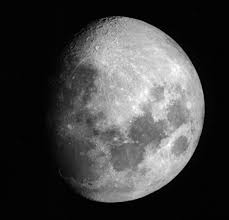
Name the moon phase
a)
waning crescent
b)
waxing crescent
c)
waning gibbous
d)
waxing gibbous
38.
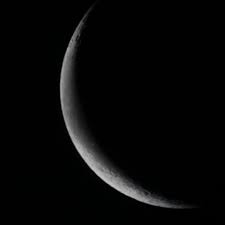
Name the moon phase
a)
waning crescent
b)
waxing crescent
c)
waning gibbous
d)
waxing gibbous
39.
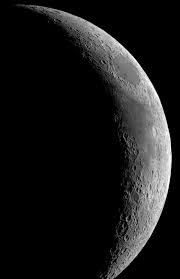
Name the moon phase
a)
waning crescent
b)
waxing crescent
c)
waning gibbous
d)
waxing gibbous
40.
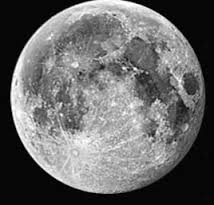
Name the moon phase
a)
First Quarter
b)
Last Quarter
c)
New Moon
d)
Full Moon
41.

Which star is the coldest?
a)
yellow star
b)
red star
c)
orange star
d)
blue star
42.

In the diagram given, what happens as we move to the left?
a)
Stars Get Larger
b)
Stars get Colder
c)
Stars get hotter
43.
Our solar system is located in the
a)
Milky Way galaxy.
b)
Andromeda galaxy.
44.
The Earth’s axis of rotation is tilted to what degree?
a)
90
b)
30.5
c)
180
d)
23.5
45.

Light that is red-shifted indicates
____________.
____________.
a)
movement away
b)
movement towards
c)
object is stationary
d)
a wobble effect
46.
The law of universal gravitation is credited to whom?
a)
Einstein
b)
Beckett
c)
Rose
d)
Newton
47.
What two main factors keep a planet in motion?
a)
mass and size
b)
weight and mass
c)
force and motion
d)
gravity and inertia
48.
Longest day of the year
a)
Autumnal Equinox
b)
Summer Solstice
c)
Winter Solstice
d)
Vernal Equinox
49.
Shortest day of the year
a)
Autumnal Equinox
b)
Summer Solstice
c)
Winter Solstice
d)
Vernal Equinox
50.
One year is...
a)
355 days
b)
355 1/4 days
c)
365 days
d)
365 1/4 days
51.
What direction does Earth rotate and revolve?
a)
clockwise
b)
counterclockwise
100 %

