
 Worksheets
Biology Genetics Test
Total questions: 100
Worksheet time: 2hrs 47mins
Name
Class
Date
1.
Sally has the genotype Tt for her height. Which is the dominant allele?
a)
T
b)
t
c)
Tt
d)
HEIGHT
2.
If Sally has the genotype Tt, the gene combination would be considered
a)
HOMOZYGOUS DOMINANT
b)
HETEROZYGOUS
c)
HOMOZYGOUS RECESSIVE
d)
SEMIRECESSIVE
3.
Rebecca has the genotype Tt for her height. Which is the dominant allele?
a)
T
b)
t
c)
Tt
d)
HEIGHT
4.
If Jim has the genotype Tt, the gene combination would be considered ________________
a)
HOMOZYGOUS DOMINANT
b)
HETEROZYGOUS
c)
HOMOZYGOUS RECESSIVE
d)
SEMIRECESSIVE
5.
Tall alleles are completely dominant to short alleles. Since Rebecca has the genotype Tt, what will her phenotype be?
a)
tall
b)
short
c)
medium
d)
Tt
6.
Brian has 2 recessive alleles for blue eyes. What would be his genotype?
a)
Bb
b)
Blue
c)
bb
d)
brown
7.
Which of the following represents a homozygous genotype?
a)
aa
b)
Bb
c)
tT
d)
AaBb
8.
Changing the codon AGC to AGA represents a _________________ mutation
a)
substitution
b)
frameshift
c)
insertion
d)
deletion
9.
A frameshift mutation:
a)
replaces one nucleotide for another
b)
joins 2 amino acids together
c)
can change each amino acid after the mutation
d)
is never harmful to the organism
10.
Which of the following cells are products of meiosis?
a)
kidney cells
b)
nerve cells
c)
egg cells
d)
blood cells
11.
A cow has a total of 80 chromosomes in its diploid cells. How many chromosomes does its haploid gametes contain?
a)
80
b)
40
c)
160
d)
20
12.
A pair of chromosomes that are alike in size, structure and contain information for the same genes are called:
a)
somatic chromosomes
b)
polar chromosomes
c)
heterozygous chromosomes
d)
homologous chromosomes
13.
During prophase I of meiosis, homologous chromosomes are positioned side by side. They exchange segments of the chromosomes, created new combinations. This is known as:
a)
segregation
b)
polygenic inheritance
c)
asexual reproduction
d)
crossing over
14.
At which stage of meiosis do the sister chromatids separate?
a)
cytokinesis
b)
anaphase I
c)
metaphase II
d)
anaphase II
15.
For cats, having a long tail (T) is dominant to having a short tail (t). A cat with a short tail, breeds with a cat which is heterozygous for having a long tail. What is the correct genotypes of the parents?
a)
TT and tt
b)
Tt and Tt
c)
TT and TT
d)
tt and Tt
16.
Will Smith is heterozygous for Type A blood. His wife Jada has Type AB blood. What are their genotypes?
a)
IAIA and IAIB
b)
IA i and IAIB
c)
AA and AB
d)
IAIB and IAIB
17.
What are the chances of Will and Jada having a child with Type A blood if Will is heterzygous for blood type A and Jada has AB blood.
a)
0%
b)
25%
c)
50%
d)
75%
19.
Aa, DD, bB, yy are all examples of
a)
genotypes
b)
phenotypes
19.
Aa, DD, bB, yy are all examples of
a)
genotypes
b)
phenotypes
20.
AA and Aa always show up as
a)
dominant
b)
recessive
21.
Which of the following genotypes is homozygous dominant?
a)
A
b)
Aa
c)
AA
d)
aa
22.
Which of the following genotypes is heterozygous?
a)
Bb
b)
BB
c)
bb
d)
B
23.
In a flowering plant species, red flower color (R) is dominant over white flower color (r). What is the genotype of any red-flowering plant resulting from this species?
a)
rr
b)
R
c)
RR
d)
RR or Rr
24.
Which of the characteristics is a lion least likely to pass on to its offspring?
a)
fur color
b)
length of tail
c)
scars on leg
d)
body size
25.
In a heterozygous genotype, the ___________ allele takes over in the phenotype.
a)
recessive
b)
dominant
c)
lower case letter
d)
both
26.
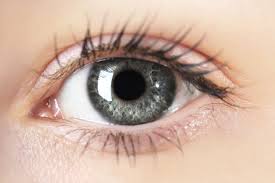
What you see, or the physical appearance.
a)
Genotype
b)
Phenotype
c)
Homozygous
d)
Heterozygous
27.
B = brown eyes
b = blue eyes
What is true about these two brothers that have brown eyes?
One has genotype BB the other Bb.
b = blue eyes
What is true about these two brothers that have brown eyes?
One has genotype BB the other Bb.
a)
they have same phenotype and genotype
b)
they have different genotypes and phenotypes
c)
they have same phenotype but different genotypes
d)
they have same genotype but different phenotypes
28.
aa always shows up as
a)
dominant
b)
recessive
29.
Which of the following is a phenotype?
a)
Aa
b)
red hair
c)
heterozygous
d)
DNA
30.
Which of the following is homozygous dominant?
a)
Yy
b)
Y
c)
yy
d)
YY
31.
Which of the following is homozygous recessive?
a)
Tt
b)
tt
c)
TT
d)
T
32.
What gender has an X and a Y chromosome?
a)
male
b)
female
c)
transgender
d)
all of the above
33.
How many alleles (letters) does a child get from each parent for each trait?
a)
1
b)
2
c)
3
d)
4
34.
Dominant alleles are represented by a:
a)
Male gene
b)
lowercase letter
c)
recessive trait
d)
capital letter
35.
W=white hair
w= non-white hair
If you cross a horse with WW and a horse with ww what fraction of the offspring would be expected to have white hair?
w= non-white hair
If you cross a horse with WW and a horse with ww what fraction of the offspring would be expected to have white hair?
a)
none
b)
3/4
c)
1/2
d)
all
36.
A characteristic that an organism can pass on to its offspring through its genes is ___________
a)
Trait
b)
Gene
c)
Allele
d)
Dominant
37.

This image shows a...
a)
Punnett Square
b)
Phenotype
c)
Genotype
d)
Dominant allele
38.
What does heterozygous mean?
a)
An organism that has the same genes for a trait (TT or tt)
b)
An organism that has different genes for a trait (Tt)
c)
When neither gene is fully dominant; offspring is a mixture of both
d)
the different forms of a trait (hair color--> brown, blonde, red
39.

What are the possible genotypes for this cross?
a)
TT = 25% Tt= 50% tt=25%
b)
all tall
c)
TT= 75% tt = 25%
d)
Tt = 100%
40.
G = green, g = yellow
The genotype for a yellow plant is...
The genotype for a yellow plant is...
a)
GG
b)
Gg
c)
gg
d)
all of the choices result in yellow
41.
Which of the following alleles is homozygous (purebred) recessive?
a)
Tt
b)
tt
c)
TT
d)
t
42.

Genotype refers to the ...
a)
physical expression of the genes
b)
the possible combination of alleles in a gene
c)
whether an allele is dominant or recessive
d)
how an organism will appear
43.
An organism's genetic make-up:
a)
phenotype
b)
genotype
c)
dominant
d)
recessive
44.
How many alleles (letters) do each person carry for a trait?
a)
1
b)
2
c)
3
d)
4
45.

T - tall and t = short
In the punnett square below, what belongs in the missing square
In the punnett square below, what belongs in the missing square
a)
tt
b)
Tt
c)
Bb
d)
TT
46.
A mutation that does NOT alter the protein production is called a
a)
deletion mutation
b)
inversion mutation
c)
silent mutation
d)
transverse mutation
47.
What causes mutations?
a)
Mistakes in replication or environmental substances
b)
The amino acids
c)
Passed down by genetics
d)
It's how your born
48.
What is a visual display of the chromosomes arranged by size, shape, and banding patterns?
a)
syndrome
b)
amniocentesis
c)
karyotype
d)
pedigree
49.

Which change below would result in a different Amino Acid?
3'-GCT-5'
3'-GCT-5'
a)
GTT
b)
TCT
c)
TCC
d)
GCA
50.
What mutation has occurred here?
T-G-A-C-C-A
T-G-A-G-C-A
T-G-A-C-C-A
T-G-A-G-C-A
a)
Substitution
b)
Deletion
c)
Insertion
d)
Frameshift
51.
During Transcription produces a molecule that is complimentary to a template strand of DNA. What is it?
a)
DNA
b)
tRNA
c)
mRNA
d)
rRNA
52.
What is the correct mRNA strand from this DNA?
CAC-GTG-ACA-GCG
CAC-GTG-ACA-GCG
a)
GTG-CAC-TGT-CGC
b)
CAC-GUG-ACA-GCG
c)
GUG-CAC-UGU-CGC
53.
DNA molecule segment is : TTACGCAAG
The mutated DNA segment is TTCGCAAG. This is an example of ___ mutation.
The mutated DNA segment is TTCGCAAG. This is an example of ___ mutation.
a)
Substitution
b)
Deletion
c)
Insertion
d)
Inversion
54.
DNA molecule segment is : TTACGCAAG
The mutated DNA segment is TTACGCAAC. This is an example of ___ mutation.
The mutated DNA segment is TTACGCAAC. This is an example of ___ mutation.
a)
Substitution
b)
Insertion
c)
Inversion
d)
Translocation
56.

Which of the following best describes a DNA molecule?
a)
double helix
b)
contains ribose
c)
made of amino acids
d)
contains Uracil
56.
Which of the following best describes a DNA molecule?
a)
double helix
b)
contains ribose
c)
made of amino acids
d)
contains Uracil
57.

Why is DNA important?
a)
it is very small and very complicated
b)
it's in everything
c)
it serves as the blueprint for traits of all living things
d)
because we eat it every day for energy
58.
Mutations:
a)
are permanent changes in the DNA sequence or structure
b)
produce allelic variation
c)
are more likely to be harmful than beneficial
d)
all of the above
59.
Where does a cell contain it's genetic material?
a)
nucleus
b)
nucleolus
c)
cytoskeleton
d)
golgi
60.
DNA replication happens...
a)
before Mitosis
b)
during prophase
c)
during metaphase
d)
during telophase
61.
A type of substitution in which no amino acids change is called
a)
Missense
b)
Nonsense
c)
Silent
d)
Deletion
62.

illustration shows.
a)
sickle cell
b)
hemophilia
c)
turner's
d)
tay-sachs.
63.
Identify the SUBSTITUTION mutation form the following:
ATG CCA AAT
ATG CCA AAT
a)
ATG TCA AAT
b)
ATG CCT AAA T
c)
ATC CA AT
d)
ATG CCA AAT
64.
What is the first step in protein synthesis?
DNA->mRNA
DNA->mRNA
a)
transcription
b)
translation
c)
replication
65.
What is the final step in protein synthesis?
mRNA-->protein
mRNA-->protein
a)
transcription
b)
translation
c)
replication
66.
Why is the order of amino acids so important?
a)
The order of amino acids dictates what shape the protein will fold into.
b)
It is not important. The protein folding chamber will force the protein to fold into the correct shape.
67.
Which organelle is DNA usually found in?
a)
cell membrane
b)
vacuole
c)
chloroplast
d)
nucleus
68.

DNA is often considered the "______________" of life.
a)
Blueprint
b)
Mistake
c)
Swimming Pool
d)
Smelly Cheese
69.
What are the building blocks of proteins call?
a)
DNA
b)
RNA
c)
Ribosomes
d)
Amino Acids
70.
Guanine bonds with ______________.
a)
Adenine
b)
Guanine
c)
Cytosine
d)
Thymine
71.
Adenine bonds with ______________.
a)
Guanine
b)
Thymine
c)
Cytosine
d)
Adenine
72.

What is shown in the diagram shown?
a)
DAN
b)
RAN
c)
DNA
d)
RNA
73.

This diagram can be used to -
a)
translate codon into protein
b)
transcribe DNA into RNA
c)
duplicate DNA
d)
cell division
74.

In a molecule of double-stranded DNA, the amount of Adenine present is always equal to the amount of
a)
cytosine
b)
guanine
c)
thymine
d)
uracil
75.
Are all mutations bad?
a)
Yes
b)
No
76.
Any change in the sequence of DNA is...
a)
transgenic shift
b)
Single Genotype
c)
Monohybrid Trait
d)
Mutation
77.
ATTTGAGCC- Original
ATTGAGCC - Mutated
The example above is an example of a
ATTGAGCC - Mutated
The example above is an example of a
a)
Insertion- Frameshift
b)
Deletion- Substitution
c)
Deletion -Frameshift
d)
All of the above
78.
A frameshift mutation can occur with either _________ or __________ mutations.
a)
Addition, division
b)
Deletion, substitution
c)
Addition, substitution
d)
Addition, deletion
79.
mRNA is read in chunks of three, called...
a)
quadralets
b)
anticodons
c)
codons
d)
capsids
80.
Would a mutation in the DNA of a skin cell be passed on to an organism's offspring?
a)
Yes, because any change to the DNA is passed on to the offspring
b)
Maybe. Sex cells only use half of the body's genetic code. It might get the copy of a gene that wasn't mutated.
c)
No. Only mutations that occur in the gametes (sex cells) are passed on to the offspring
d)
Without knowing the animal, it would be hard to tell whether or not the mutation would be passed on.
81.
Why are insertion and deletion mutations so harmful?
a)
They change all of the codons from the mutation on down the line, which changes the amino acid sequence
b)
They insert things that an organism doesn't need.
c)
They often delete things that organisms need.
d)
Insertion and deletions are not any more harmful than substitution mutations.
82.
How are mutations passed on to offspring?
a)
Any mutation that an organism acquires in its life can be passed on to the offspring through its gametes (sex cells)
b)
Only mutations that occur in the gametes can be passed on to the offspring
c)
Mutations are not usually passed on to the offspring. A mutation stays within the original organism.
d)
Mutations are not passed to offspring. They only occur within developing embryos.
83.
If the Diploid number of Carrots is 18, the haploid number is
a)
18
b)
9
c)
27
d)
36
84.
Chromosomes that have the same sequence of genes, that have the same structure, and that pair during meiosis
a)
homologous chromosomes
b)
tetrads
c)
synapsis
d)
crossing over
85.
The union of male and female gametes to form a zygote
a)
sperm
b)
egg
c)
fertilization
d)
tetrads
86.

Which genetic abnormality is shown in this karyotype?
a)
Partial Addition of Y
b)
Partial Deletion #7
c)
Extra Chromosome at # 21
d)
Monosomy of X
87.

What is the gender of the individual whose karyotype is seen in the image?
a)
Male
b)
Female
88.

Name that process
a)
Mitosis
b)
Meiosis
c)
Mutation
d)
Cell Cycle
89.
What is another reason we need meiosis?
a)
So the offspring has genes from both parents
b)
So the offspring has genes from one parent
c)
So the offspring has genes from neither parents
d)
So the offspring makes its own genes
90.
Chromosomes exchange genetic material during
a)
crossing over
b)
replication
c)
synthesis
d)
translation
91.
A human zygote should have _____ chromosomes inside.
a)
46
b)
23
c)
92
d)
64
92.
When homologous chromosomes match up, they form a structure call a ___________.
a)
tetrad
b)
triad
c)
diploid
d)
gamete
93.
The chromosomes that pair up during meiosis, are called __________ chromosomes.
a)
homozygous
b)
asexual
c)
homologous
d)
genes
94.
Which of these cells would be produced through meiosis?
a)
skin cells
b)
liver cells
c)
brain cells
d)
sperm cells
95.

Which process and type of resulting cells are represented?
a)
mitosis, gametes
b)
mitosis, body cells
c)
meiosis, gametes
d)
meiosis, body cells
96.

When an area of a chromatid is exchanged with the matching area on a chromatid of its homologous chromosome, _________________ occurs
a)
crossing over
b)
mutagenesis
c)
hybridization
d)
fertilization
97.

Which cellular process is shown?
a)
meiosis
b)
endocytosis
c)
mitosis
d)
phagocytosis
98.
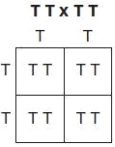
What ratio of the offspring from the cross shown will be homozygous recessive for the trait of tallness?
a)
0 in 4
b)
1 in 4
c)
2 in 4
d)
4 in 4
99.

What type of chromosomal mutation is this?
a)
Inversion
b)
Translocation
c)
Deletion
d)
Duplication
100.
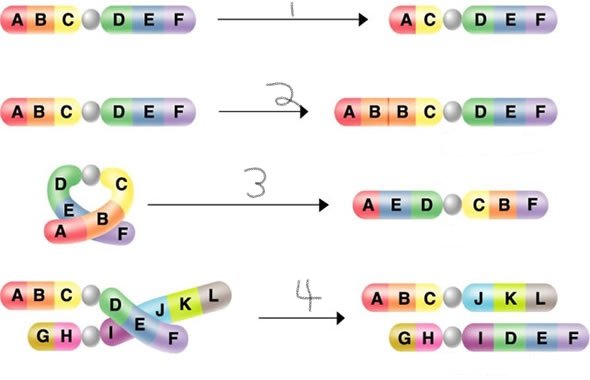
Which of these is the correct order for the chromosome mutations in the image (from top to bottom)?
a)
(1) duplication, (2) inversion, (3) substitution, (4) translocation
b)
(1) deletion, (2) duplication, (3) inversion, (4) translocation
c)
(1) deletion, (2) insertion, (3) translocation, (4) inversio
d)
(1) substitution, (2) duplication, (3) translocation, (4) inversion
100 %

