
 Worksheets
Cells and Transport in Cells
Total questions: 54
Worksheet time: 54mins
Name
Class
Date
1.

This picture represents what type of cell transport?
a)
endocytosis
b)
exocytosis
c)
osmosis
d)
passive transport
2.
This uses energy
a)
endocytosis
b)
exocytosis
c)
both
3.
What kind of transport does not require energy?
a)
Active
b)
Vacuole
c)
Passive
d)
Na/K Pump
4.
What structure of the cell forms a frame that holds the cell up in the cytoplasm?
a)
centrioles
b)
cell wall
c)
flagella
d)
cytoskeleton
5.
What is something that prokaryotic and eukaryotic cells have in common?
a)
They have a nucleus.
b)
They are multi-cellular.
c)
They have DNA.
d)
They have organelles that are membrane-bound.
6.
What is facilitated diffusion?
a)
Transport that uses proteins to help move molecules across the membrane.
b)
Movements of substances through a membrane.
c)
When molecules spread from High to Low concentration on their own.
d)
When pressure pushes something through a membrane.
7.
All of the following statements are true about prokaryotic cells EXCEPT
a)
No nucleus
b)
They are simple and small
c)
Have a cell wall
d)
Have organelles
8.
Movement of materials through a vesicle into the cell that requires energy is
a)
exocytosis
b)
endocytosis
c)
osmosis
d)
simple diffusion
9.
What are the 2 parts of a phospholipid?
a)
Hydrophobic head, hydrophilic tails
b)
Hydrophobic heads, hydrophobic tails
c)
Hydrophilic heads, hydrophobic tails
d)
Hydrophilic heads, hydrophilic tails
10.
What is an isotonic solution?
a)
When solutions are in equilibrium
b)
When the solution has more solute
c)
When the solution has less solute
d)
Has a greater pressure
11.
Which of the following is correct about the Golgi?
a)
Digests waste materials
b)
Protection and Support
c)
Modifies and packages molecules
d)
cellular movement
12.
Molecules using simple diffusion move from
a)
high to low concentrations
b)
low to high concentrations
c)
no concentrations
d)
both concentrations
13.

Water has diffused ___________ of this cell.
a)
into
b)
in and out of
c)
out of
14.

This is a ____.
a)
Golgi body
b)
plasma membrane
c)
lysosome
d)
cell wall
15.
If the sodium concentration inside a cell is greater than outside the cell, how can a cell take in more sodium?
a)
osmosis
b)
diffusion
c)
active transport
d)
passive transport
16.
if you put a plant in salt water it will ...
a)
swell because water diffuses into the cells
b)
swell because water diffuses out of the cell
c)
shrivel because water diffuses out of the cell
17.
Two different solutions are separated by a membrane permeable only to water. How will molecules move?
a)
solutes will move by dissolving
b)
water will move by active transport
c)
solutes will move by osmosis
d)
water will move by osmosis
18.
Your gums are swollen. How will rinsing with warm salt water help the swelling?
a)
swollen gums will absorb the salt
b)
salt lowers the temp
c)
salt goes against the concentration gradient
d)
water in the gums has diffused out of the cells
19.

This picture represents which type of cellular transport?
a)
passive transport
b)
endocytosis
c)
exocytosis
d)
osmosis
20.

The cell below is in a _____________ solution.
a)
Hypertonic
b)
Hypotonic
c)
Isotonic
21.

The cell below is in a _________ solution.
a)
Hypotonic
b)
Hypertonic
c)
Isotonic
22.
A cell in an isotonic solution will
a)
swell
b)
shrink
c)
stay the same size
d)
impossible to tell
23.
When many organ systems work together it can form...
a)
organ
b)
cells
c)
organ system
d)
organism
24.
The brain is a part of which organ system?
a)
nervous
b)
skeletal
c)
muscular
d)
digestive
25.
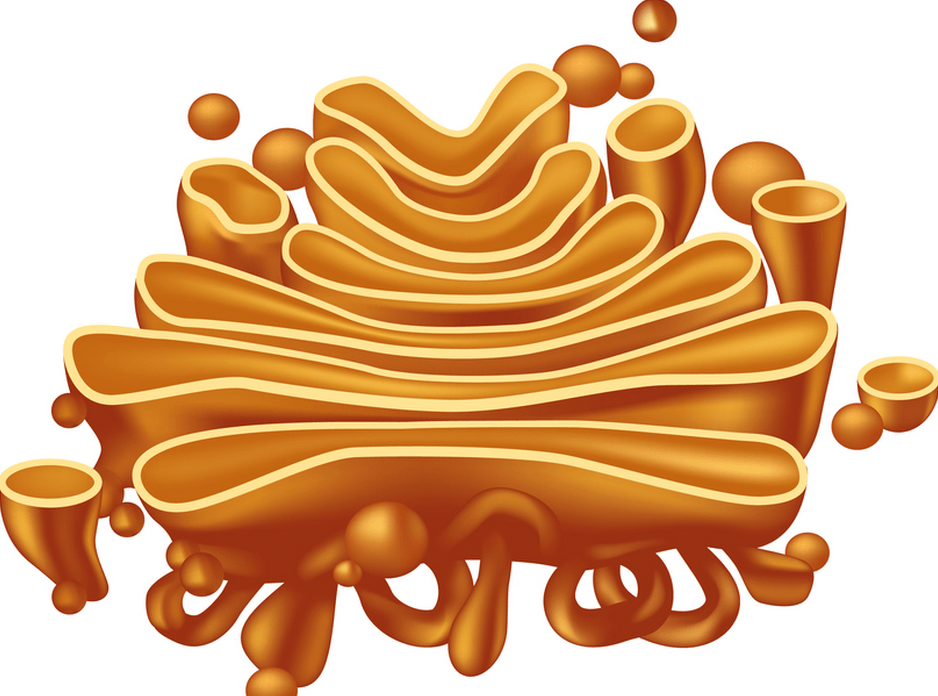
I am a protein packaging and shipping machine! Who am I?
a)
vacuole
b)
ribosome
c)
mitochondrion
d)
golgi apparatus
26.
Which of the following is directly involved in the transportation of materials inside/within the cell?
a)
Endoplasmic Reticulum
b)
Vacuole
c)
Lysosome
d)
Mitochondria
27.
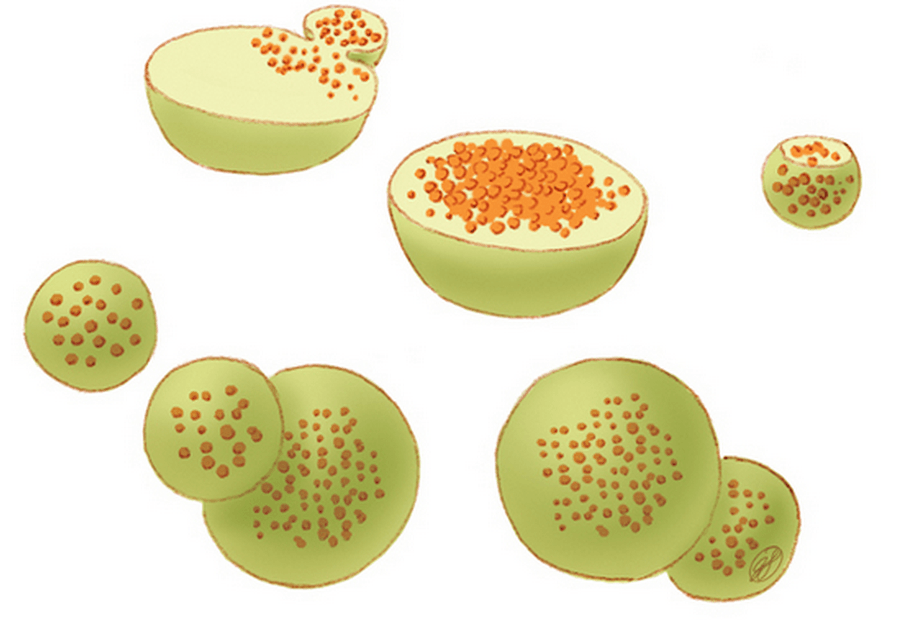
You might think of me as the trash collector, but recycler is maybe more accurate. What am I?
a)
mitochondria
b)
lysosome
c)
vacuole
d)
ribosome
28.
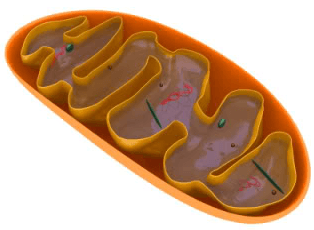
What are tiny organelles that convert glucose into ATP?
a)
Ribosomes
b)
Vesicles
c)
Cytoskeleton
d)
Mitochondria
29.
A group of cells that have similar functions? Examples are nervous, epithelial, muscle and connective
a)
cells
b)
tissues
c)
organs
d)
atoms
30.

I make proteins for the cell. What am I?
a)
ribosome
b)
mitochondria
c)
chloroplast
d)
lysosome
31.

What is this?
a)
mitochondria
b)
lysosomes
c)
chloroplast
d)
endoplasmic reticulum
32.

Under a microscope, what kind of cells lack membrane-bound internal organelles?
a)
Prokaryotes
b)
Eukaryotes
c)
Plants
d)
Animals
33.

The picture illustrates a
a)
Prokaryotic Plant Cell
b)
Prokaryotic Animal Cell
c)
Eukaryotic Plant Cell
d)
Eukaryotic Animal Cell
34.
packages proteins for delivery
a)
Endoplasmic reticulum
b)
ribosomes
c)
golgi apparatus
d)
lysosomes
35.

What am I?
a)
Nucleus
b)
Golgi Body
c)
Mitochondrion
d)
Plasma Membrane
36.

The endoplasmic reticulum is often covered in ribosomes. Which structure is the endoplasmic reticulum?
a)
Structure 2
b)
Structure 3
c)
Structure 7
d)
Structure 8
37.
Organelles inside nucleus function is to make ribosomes
a)
Golgi Body
b)
Lysosome
c)
Rough E.R.
d)
Nucleolus
38.
This organelle helps transport proteins.
a)
Ribosomes
b)
Rough E.R.
c)
Golgi Body
d)
Smooth E.R.
39.
This organelle makes/transports fats or lipids.
a)
Rough E.R.
b)
Smooth E.R.
c)
Golgi Bodies
d)
Lysosomes
40.
This nucleotide is made in the mitochondria and is fuel for all cells.
a)
Chloroplasts
b)
Glucose
c)
ATP
d)
ADP
41.
This specialized cell is loaded with mitochondria so the cells have plenty of ATP to avoid fatigue.
a)
Smooth Muscle
b)
Striated Muscle
c)
Pholem
d)
Cardiac Muscle
42.
This type of muscle is involuntary. These muscles make up your digestive system, among other things.
a)
Striated Muscle
b)
Cardiac Muscle
c)
Xylem
d)
Smooth Muscle
43.

What is the difference between rough and smooth ER?
a)
There is no difference.
b)
Plants have rough ER, animals have smooth ER.
c)
What type of injuries the Doctors treat.
d)
Rough has ribosomes, smooth does not.
44.

Using this image, what organelle is D?
a)
Endoplasmic Reticulum
b)
Flagella
c)
Rough ER
d)
Smooth ER
45.
The diverse parts of the cell membrane are free to move past one-another. This describes the...
a)
Fluid Mosaic model of the cell membrane
b)
The semi-permeable quality of the cell membrane
c)
Protective quality of the cell membrane
d)
Amphapathic quality of a phospholipi
46.
All of the following are functions of cholesterol EXCEPT...
a)
to form weak bonds to the surrounding phospholipds
b)
to keep the cell membrane from falling apart when very hot
c)
to keep the cell membrane from freezing solid when very cold
d)
to break up old phospholipids and make new ones
47.
Phospholipids are so special because...
a)
they are part hydrophobic and part hydrophilic: amphipathic
b)
they are completely polar
c)
they are completely non-polar
d)
they have no charge
48.
Large and charged molecules...
a)
must go through proteins to cross the membrane
b)
can move through the membrane via simple diffusion
c)
must break open the cell membrane to enter
d)
can not ever pass through the cell membrane
49.

What does this organelle do?
a)
Used in Mitosis
b)
Used for storage
c)
Jelly-like substance
d)
Stomach of the cell
50.

Why does cholesterol sit in the fatty acid tails of the phospholipids
a)
Because cholesterol is a lipid and nonpolar
b)
Because cholesterol is a lipid and polar
51.

Hydrophilic portion of cell membrane?
a)
A
b)
C
c)
D
d)
E
52.

Hydrophobic region of the cell membrane?
a)
E
b)
B
c)
C
d)
A
53.
What does "bilayer" mean?
a)
one layer
b)
two layers
c)
laminated
d)
bilateral
54.
When cells take in a liquid through active transport, what is it called?
a)
Exocytosis
b)
Phagocytosis
c)
Pinocytosis
d)
Osmosis
100 %

