Wayground logo

Free Printable Worksheets

Font size

S
M
L
XL
Worksheets

SBI3C Plant Unit Test June 2022

Total questions: 72

Worksheet time: 2hrs 11mins

Name
Class
Date
1.

Tissue that transports water and dissolved material around the plant

a)
Reproductive Tissue
b)
Vascular Tissue
c)
Epidermal Tissue
d)

Photosynthetic Tissue

2.
The female part of the flower is known as the ____.
a)
stamen
b)
anther
c)
filament
d)
pistil
3.
The male part of the flower is known as the _____.
a)
stamen
b)
pistil
c)
ovary
d)
petal
4.
Type of root
a)
fibrous root 
b)
taproot
5.
Which structure of the plant absorbs water and nutrients from the soil?

a)
stem
b)
leaves
c)
roots
d)
flowers
6.

The part of the plant that makes most or all of its glucose.

a)
stem
b)
leaves
c)
roots
d)
flower
7.
Xylem and Phloem are both __.
a)
Transpiration
b)
Absorption
c)
Photosynthesis
d)
Vascular tissue
8.
Moves water UP
a)
Xylem
b)
Phloem
9.

Moves glucose from leaves to roots

a)
Xylem
b)
Phloem
10.
Roots absorb water into the __.
a)
Xylem
b)
Phloem
11.
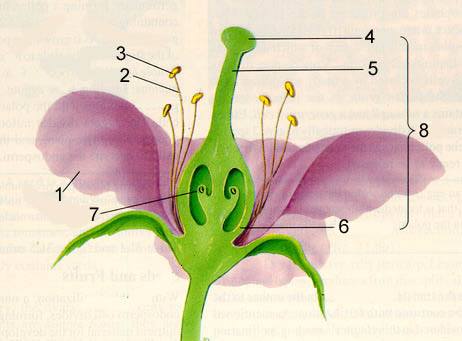
What is #3 pointing to?
a)
stigma
b)
filament
c)
ovary
d)
anther
12.
What is #4 pointing to?
a)
anther
b)
style
c)
stigma
d)
ovary
13.
What is #6 pointing to?
a)
stigma
b)
style
c)
ovary
d)
petal
14.
What is the source of energy for photosynthesis?
a)
carbohydrates-chemical
b)
sunlight-radiant
c)
heat-thermal
d)
television-electrical
15.
What gas is released by plants during photosynthesis?
a)
sulfur
b)
carbon dioxide
c)
oxygen
d)
hydrogen
16.

What is NOT a reactant for photosynthesis?

a)
light
b)
glucose
c)
water
d)
carbon dioxide
17.

What is a product of photosynthesis?

a)

glucose

b)

water

c)

light

d)

carbon dioxide

18.
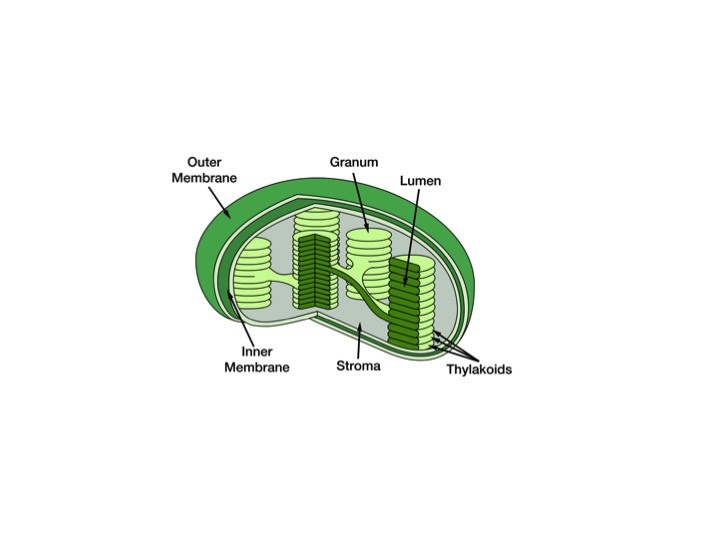
What pigment absorbs sunlight for photosynthesis?
a)
chloroplast
b)
thylakoid
c)
grana
d)
chlorophyll
19.
Autotroph or heterotroph?
a)
Autotroph
b)
Heterotroph
20.
Autotroph or heterotroph?
a)
Autotroph
b)
Heterotroph
21.
Chloroplasts are...
a)
Structures of animal cells to produce ATP
b)
Organelles where lipids are elaborated
c)

Organelles in plants where glucose is made

d)
Waste organelle of plants
22.
The main source of energy for all life comes from ____.
a)
the Earth
b)
the moon
c)
the sun
d)
the food we eat/make
23.
The transfer of pollen, containing the sperm cells, to the female part of the flower. 
a)
seed disperal
b)
pollination 
c)
germination
d)
fertilization
24.
Thigmotropism
a)
response to light
b)
response to touch
c)
response to gravity
d)
response to water
25.
Phototropism
a)
response to light
b)
response to touch
c)
response to gravity
d)
response to water
26.
Gravitropism
a)
response to light
b)
response to touch
c)
response to gravity
d)
response to water
27.
Is seed production:  sexual or asexual?
a)
sexual
b)
asexual
c)
neither
d)
both
28.
What does an ovule become when it is pollinated?
a)
a seed
b)
a sprout
c)
a fruit
d)
it stays an ovule
29.
Which tropism uses the hormone "auxin" that causes cells on the shady side of the plant to get longer?
a)
Phototropism
b)
Geotropism
c)
Transpiration
d)
Photosynthesis
30.
Which of the following is true of plant transport?
a)
Xylem moves glucose from the roots to the leaves
b)
Xylem moves water from the roots to the leaves
c)
Phloem moves glucose from the roots to the rest of the plant
d)
Phloem moves water from the roots to the leaves
31.
The stalk connecting the ovaries and stigmas.
a)
filament
b)
pistil
c)
style
d)
anther
32.
Part of the plant that attracts insects for pollination
a)
Root
b)
Stem
c)
Leaf
d)
Flower
33.
Small grains that contain a plant's male reproductive cells.
a)
stamen
b)
pollen
c)
anther
d)
stigma
34.
The part of the flower on which the pollen grains land.
a)
pistil
b)
stamen
c)
style
d)
stigma
35.
The part of a flower that produces the male reproductive cells.
a)
anther
b)
style
c)
stigma
d)
filament
36.

Pollen contains the

a)

female gamete

b)

male gamete

c)

seed

d)

egg

37.
 ____________ are plants existing today whose seeds are contained within cones.
a)
Angiosperms
b)
Gymnosperms
38.
Alternation of generations refers to a life cycle in which the organism cycles between ___________ and ___________ generations.
a)
Haploid / Diploid
b)
Male / Female
c)
Tall / Short
d)
Fat / Slim
39.
What part of the flower will turn into a fruit?
a)
petal
b)
ovary
c)
ovule
d)
stamen
40.
What is the waxy layer on leaves?
a)
Chloroplasts
b)
Plastic
c)
Wax
d)
Cuticle
41.
All plants have a _____ stage life cycle.
a)
1
b)
2
c)
3
d)
4
42.
A seed is a form of ____ reproduction.
a)
sexual
b)
asexual
c)
non-
43.
The two groups of seed plants are....
a)
angiosperms and gymnosperms
b)
vascular and nonvascular
c)
spores and seeds
d)
short and tall
44.
The main function of the leaves of a plants is....
a)
carry out photosynthesis
b)
support the plant
c)
get water to all plant parts
d)
anchor the plant
45.
___ is the process in which plants make food.
a)
reproduction
b)
fertilization
c)
photosynthesis
d)
binary fission
46.
Vascular seed plants that produce seeds in flowers are called....
a)
gymnosperms
b)
angiosperms
47.
Gases pass in and out of a leaf through the what?
a)
vascular tissue
b)
mouth hole
c)
stomata
d)
cell wall
48.
Which structure regulates gas exchange during the processes of photosynthesis and respiration?
a)
R
b)
Q
c)
S
d)
T
49.

Fruit are picked before they are ripe and _______ is used at the store to force them to ripen.

a)
Gibberillin
b)
Auxin
c)
Ethylene
d)
Testosterone
50.
Cell walls of plants are made of?
a)
Phospholipids
b)
Chitin
c)
Cellulose
d)
Chlorophyll
51.
Examine this diagram of a flower.  Where does pollination occur?
a)
1
b)
2
c)
3
d)
4
52.
Which statement describes the role of flowers in plant survival?
a)
 Flowers can absorb carbon dioxide for sugar production.
b)
 Flowers produce oxygen through cellular respiration.
c)
 Flowers contain cells that carry out photosynthesis.
d)
 Flowers contain cells that produce gametes.
53.
Grass needs energy to live. How does grass get energy?
a)
Air
b)
Sunlight
c)
Water
d)
Soil Nutrients
54.
Plants that produce seeds in cones are called
a)
angiosperms
b)
gymnosperms
55.
Plants that grow their seeds in a flower are called
a)
angiosperms
b)
gymnosperms
56.
What gives the leaf its green color?
a)
photosynthesis
b)
sugar
c)
chlorophyll
d)
sunlight
57.
Plants take in what gas?
a)
Carbon 
b)
Nitrogen
c)
Oxygen
d)
Carbon Dioxide
58.
What does  a plant produce for humans?
a)
Carbon Dioxide
b)
Oxygen
c)
Water
d)
Sunlight
59.

Which of the following do plants not need to survive?

a)

sunlight for photosynthesis

b)

water

c)

carbon dioxide from the atmosphere

d)

to grow next to other plants

e)

nutrients from soil

60.

Which of these are products of photosynthesis?

a)

carbon dioxide and water

b)

water and glucose

c)

glucose and oxygen

d)

water and oxygen

e)

carbon dioxide and glucose

61.

Bacteria live in nodules of some legume plants for the purpose of:

a)

photosynthesis

b)

nitrogen fixation

c)

urban forestry

d)

cellular respiration

62.

The use of plants to remove or degrade chemicals,

metals, or other toxins in water, soil, and air is called

a)

photosynthesis

b)

phytoremediation

c)

nitrogen fixation

d)

sustainable agriculture

e)

urban forestry

63.

Which statement about the ecosystem services of

plants is false?

a)

Plants are a source of food for other organisms.

b)

Plants provide habitat for other organisms.

c)

Plants are not involved in the cycles of matter on Earth.

d)

Plants provide fibres used to make clothing and building materials.

e)

Plants are a source of medicines.

64.

What is a monoculture?

a)

growing crops using natural pest management

b)

growing a variety of crops on the same plot of land

c)

growing crops using less fossil fuels

d)

growing a single crop on a large piece of land

65.

____ is the field of science that

deals with the long-term planning, planting, and

maintenance of forests, trees, parks, and gardens in city

environments?

a)

ecology

b)

phytoremediation

c)

sustainable agriculture

d)

urban forestry

66.

The idea that things can be produced to meet the needs

of society now as well as ensure the ability of future

generations to meet their own needs is called

a)

ecology

b)

ecosystem services

c)

sustainability

d)

urban forestry

67.

Which of the following is NOT a function of roots?

a)

anchoring a plant

b)

absoring water and minerals

c)

storing carbohydrates

d)

photosynthesis

68.

Fibrous roots

a)

have 1 main larger root with smaller roots on the sides

b)

have many smaller roots that grow from the base of the stem

c)

store large quantities of food for the plant

d)

grow deeper in the soil than tap roots

69.

Flower organs that protect the flower bud are called:

a)

petals

b)

sepals

c)

styles

d)

stigmas

70.

Which of the following would cause a vine to attach to the wall of a house?

a)

gravitropism

b)

thigmotropism

c)

phototropism

71.

A goal of sustainable agriculture is to:

a)

produce a low crop yield

b)

reduce the profit level

c)

maintain a balanced ecosystem

d)

manage insect pests with pesticides

72.

Large forests are said to be carbon sinks, as they:

a)

reduce levels of CO2 in the atmosphere

b)

increase levels of CO2 in the atmosphere

c)

increase the amount of carbon in the soil

d)

decrease the oxygen levels in the atmosphere