
 Worksheets
Chem. Sem. 2 Review
Total questions: 89
Worksheet time: 3hrs 7mins
Name
Class
Date
1.
What is the molar mass of Carbon?
a)
6
b)
12
c)
20
d)
40
2.
How many moles is 4 grams of Calcium?
a)
0.10 moles
b)
10 moles
c)
44 moles
d)
160 moles
3.
How many moles are in 6x10²² particles of CO2?
a)
0.1 moles
b)
4.4 moles
c)
10 moles
d)
264 moles
4.
How many atoms are in 3.5 moles of copper?
a)
3500 Cu atoms
b)
6.02 *1023 Cu atoms
c)
2.1 * 1024 Cu atoms
d)
2.2 *1023 Cu atoms
5.
How many molecules are in 100 g of C6H12O6?
a)
180.18 g
b)
3.34 x 10²³
c)
6.02 x 10²³
d)
6.02 x 1025
6.
How many particles are in a mole?
a)
602
b)
602 million
c)
602 moles
d)
6.02 x 10²³
7.
What are the units for molar mass?
a)
grams
b)
amu
c)
grams/mole
d)
liters
8.
What is the molar mass of B2(CO3)3?
a)
81.632 g/mol
b)
94.842 g/mol
c)
38.822 g/mol
d)
201.648 g/mol
9.
What is the molar mass of B2(CO3)3?
a)
81.632 g/mol
b)
94.842 g/mol
c)
38.822 g/mol
d)
201.648 g/mol
10.
What is the percent by mass of magnesium in MgO?
a)
20%
b)
40%
c)
50%
d)
60%
11.
What is the percent composition by mass of sulfur in the compound MgSO4 (gram formula mass = 120 g/mol)?
a)
20%
b)
27%
c)
46%
d)
53%
12.
3. According to Boyle's law, at constant temperature, as the pressure of a given sample of gas is increased, the volume will –
a)
Increase
b)
Decrease
c)
Remains the same
13.
5. As per Charles' Law if temperature of any gas is increased its volume will -
a)
increase
b)
decrease
c)
remains the same
14.
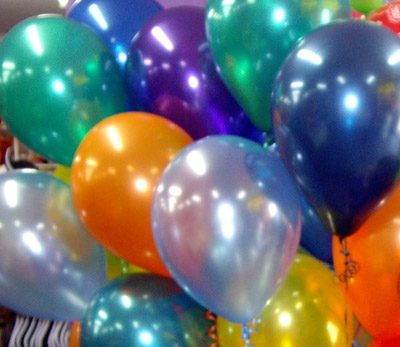
If a balloon is cooled what will happen to the volume?
a)
Volume will increase
b)
Volume will decrease
c)
Volume will not change
15.
Which of the following would increase the (gas) pressure of a system?
a)
Increase the Temperature
b)
Pump in more gas
c)
Decrease the volume
d)
All of these
16.
Gases have...
a)
A definite shape and volume
b)
A definite shape but no definite volume
c)
No definite shape but a definite volume
d)
No definite shape or volume
17.
Gases have...
a)
A definite shape and volume
b)
A definite shape but no definite volume
c)
No definite shape but a definite volume
d)
No definite shape or volume
18.
When the temperature of matter increases the particles...
a)
speed up and move closer
b)
speed up and move farther apart
c)
slow down and move closer together
d)
slow down and move farther apart
19.
What is 50 C in Kelvin?
a)
223
b)
323
c)
100
d)
50
20.
What is 50 C in Kelvin?
a)
223
b)
323
c)
100
d)
50
21.
If you increase the pressure of a constant volume of gas, what will happen to the temperature?
a)
Increase
b)
Decrease
c)
Stay the same
d)
It will Blow Up
22.
How do you convert Celsius to Kelvin?
a)
Add 273
b)
Subtract 273
c)
You can't convert those
d)
They are the same thing
23.
How do you convert Celsius to Kelvin?
a)
Add 273
b)
Subtract 273
c)
You can't convert those
d)
They are the same thing
24.
What about gasses can be measured?
a)
Pressure and Volume
b)
Temperature, Volume, and Pressure
c)
Volume and Temperature
d)
Pressure, Temperature, Volume, and Moles
25.
What is 0.00 degrees Kelvin known as
a)
No such thing
b)
Very cold
c)
Freezing point of Water
d)
Absolute Zero
26.
You have a gas that has a pressure of 2 ATM and a volume of 10L. What would be the new volume if the pressure was changed to 1 ATM?
a)
5 L
b)
20 L
c)
It would stay at 10L
d)
1 L
27.
Which of the following would increase the pressure on a system?
a)
Increase the Temperature
b)
Pump in more gas
c)
Decrease the volume
d)
All of these
28.
What law combines all 3 factors (pressure, temperature, and volume)
a)
Combined Gas Law
b)
Charle's Law
c)
Boyle's Law
d)
Avagadros Ideal Gas Law
29.
Which of the following is NOT a unit of pressure?
a)
Torr
b)
mL
c)
psi
d)
kPa
30.
100 degrees Celsius is equal to _______ Kelvin.
a)
0 K
b)
273 K
c)
173 K
d)
373 K
31.
What is the new volume of the gas if the pressure on 350 L of oxygen at 720 mm Hg is decreased to 600 mm Hg?
a)
420 L
b)
29.16 L
c)
4200.0 L
d)
291.6 L
32.
A gas occupies 4.98 L at 2.6 atm of pressure. What volume does it occupy at 1.8 atm pressure?
a)
12.9 L
b)
0.72 L
c)
7.2 L
d)
3.44 L
33.
There are 65 liters of helium in a balloon at 35 K. If the temperature of the balloon is increased to 40 K, what will the new volume of the balloon be?
a)
40 L
b)
70 L
c)
74.3 L
d)
75.9 L
34.
There are 40 liters of helium in a balloon at 100 K. If the temperature of the balloon is increased to 200 K, what will the new volume of the balloon be?
a)
80 L
b)
45 L
c)
54 L
d)
45.33 L
35.
A helium balloon with a volume of 1.8L at 1.0 atm and 293K is released into the air. As it rises, the pressure drops to 0.7atm and the temperature drops to 263K
a)
2.31 L
b)
0.43 L
c)
1.50 L
d)
2.57 L
36.
What is the temperature of natural gas in an oil pipeline if we know there are 0.91 moles of the gas in the pipeline and the volume of the pipeline is 5.43 L and the gas is exerting a pressure of 4.21 atm?
R = 0.082 (L x atm) / (K x mol)
R = 0.082 (L x atm) / (K x mol)
a)
306 °C
b)
579.4 °C
c)
33.4 °C
d)
- 19.3 °C
37.
At room temperature and pressure, what volume would 14g of nitrogen gas occupy?
a)
14 L
b)
24 L
c)
48 L
d)
12 L
38.
How many liters would you need to make a 1 M solution if you have 6 mol of Sodium Hydroxide?
a)
2
b)
3
c)
4
d)
6
39.
What is the molarity of 4 g of NaCl (MM=58.45) in 3,800 mL of solution?
a)
0.018 M
b)
0.0011 M
c)
1.052 M
d)
0.062 M
40.
How many moles of NaCl are present in a solution with a molarity of 8.59 M and a volume of 125 mL?
a)
1074 mol
b)
0.069 mol
c)
1.07 mol
d)
62.7 mol
41.

At 40˚C, at what point is the solution saturated with KCl?
a)
20g
b)
30g
c)
40g
d)
50g
42.
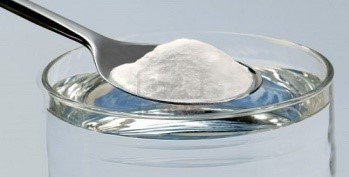
In this mixture, which of the following will be the solute?
a)
The water in the glass
b)
The glass that holds the final mixture
c)
The solution containing both powder and water
d)
The powder on the spoon
43.
If we are making Kool-aid with sugar, Kool-aid powder, and water, which part is the solvent?
a)
water
b)
powder
c)
sugar
d)
powder and sugar
44.
What is the symbol for heat?
a)
q
b)
H
c)
J
d)
∘C
45.
The heat content of a system at constant pressure is called
a)
entropy
b)
enthalpy
c)
heat
d)
energy
46.
The capacity to do work or transfer heat
a)
temperature
b)
energy
c)
power
d)
enthalpy
47.
The heat required to raise the temperature of a SUBSTANCE by 1∘C
a)
calorie
b)
joule
c)
specific heat
d)
4.184 J
48.
The heat required to raise the temperature of WATER 1∘C
a)
calorie
b)
joule
c)
specific heat
d)
energy
49.
Chemical reactions where both q and H are negative are considered
a)
spontaneous
b)
nonspontaneous
c)
exothermic
d)
endothermic
50.
Chemical reactions that absorb energy are called
a)
endothermic
b)
fast
c)
slow
d)
exothermic
51.
The study of heat changes that accompany chemical reactions and phase changes
a)
energy
b)
chemistry
c)
work
d)
thermochemistry
52.
Formula for solving specific heat problems
a)
q = mcΔT
b)
H = ΔH x moles
c)
H = ΔH x grams
d)
products - reactants
53.
Convert 42 kJ into joules
a)
0.042 J
b)
175.73 J
c)
42000 J
d)
10.04 J
54.

The following graph shows a(n)
a)
endothermic reaction
b)
exothermic reaction
c)
increase in entropy
d)
decrease in entropy
55.
An endothermic reaction feels _____ to the touch
a)
warm
b)
cool
56.

What type of reaction is shown?
a)
reactants
b)
endothermic
c)
exothermic
d)
products
57.
124 joules of heat are added to a piece of lead (specific heat = 0.128 J/goC). It is heated to 100.0oC, and then lowered into a calorimeter filled with water. The lead’s temperature decreases to 28.8oC. What is the mass?
a)
150 g
b)
13.6 g
c)
4 g
d)
1130 g
58.
What is the specific heat capacity of silver metal if 55 grams of the metal absorbs 47.3 joules of heat and the temperature rises 15 degrees Celcius?
a)
0.033 J/gC
b)
0.057 J/gC
c)
39000 J/gC
d)
.0455 J/gC
59.
If a substance has a pH of 10 it is considered
a)
Acidic
b)
Basic
c)
Neutral
60.
Bases release ____________ ions when they break down or dissociate.
a)
Hydrogen (H+)
b)
Hydroxide (OH-)
c)
Chlorine (Cl-)
d)
no
61.
A(n) ______ is a substance with a pH less than 7
a)
Acid
b)
Alkaline
c)
Base
d)
Buffer
62.
A solution with a pH of 8.6 would be...
a)
Acid
b)
Base
c)
Neutral
d)
Acid and Base
63.
What are properties of acids?
a)
Bitter, slippery, ph above 7
b)
Sour, reacts with metals, ph below 7
c)
Sour, reacts with metals, ph above 7
d)
Bitter, ph of 7, does not react with metals
64.
What are properties of a base?
a)
Slippery, bitter, does not react with metals, pH above 7.
b)
Slippery, bitter, reacts with metals, pH below 7.
c)
Sour, reacts with metals, pH below 7
d)
Sour, reacts with metals, pH above 7.
65.
What might happen if you mixed a strong acid with an equally strong base?
a)
You would see an explosive chemical reaction.
b)
The acid would destroy the base.
c)
The base would destroy the acid.
d)
You'd wind up with a pH-neutral substance.
66.
Which of the following substances would have the greatest concentration of H+ ions?
a)
Ammonia with
pH 13
pH 13
b)
Water with
pH 7
pH 7
c)
Milk with
pH 5
pH 5
d)
Lemon juice with
pH 2
pH 2
67.
What is the pH of a solution that has a [H+] of 2.5 x 10⁻⁵?
a)
4.60
b)
5.0
c)
2.5
d)
7
68.
What is the [OH-] if the [H+] is 1.0 x 10⁻³M?
a)
1.0 x 10⁻³ M
b)
6.02 x 10⁻²³ M
c)
1.0 x 10⁻¹⁴ M
d)
1.0 x 10⁻¹¹ M
69.
What is the [H+] if the pH is 4.0?
a)
1.0 x 10⁻¹⁰ M
b)
1.0 x 10⁻⁴ M
c)
1.0 x 10⁻¹⁴ M
d)
1.0 x 10⁻⁷ M
70.
What is the pOH of a solution that has a pH of 2?
a)
10
b)
12
c)
14
d)
1
71.
What is the pH of a solution where the [H+] is 1.0 x 10⁻¹¹?
a)
11
b)
13
c)
14
d)
1
72.
What is the conjugate base of HCO3-?
a)
HCO3-
b)
H2CO3-
c)
H2CO3
d)
CO32-
73.

What is the conjugate acid in the following equation?
a)
PO43-
b)
HNO3
c)
NO3-
d)
HPO42-
74.

What is the conjugate base in the following reaction?
a)
HCO3-
b)
HCl
c)
H2CO3
d)
Cl-
75.
Which is not a part of an atom's nucleus?
a)
Neutron
b)
Proton
c)
Electron
d)
All are part of the nucleus
76.
The Law of Conservation of Mass is not always followed with nuclear reactions.
a)
True
b)
False
77.
Most nuclear reactors use:
a)
Fission
b)
Fusion
78.
The least penetrating type of radiation
a)
Alpha particle
b)
Beta particle
c)
gamma ray
79.

This is an example of...
a)
Fission reaction
b)
Fusion reaction
c)
Decomposition reaction
d)
Combustion
80.
Takes two small nuclei and combines them into a larger nucleus
a)
fission
b)
fusion
81.
When one large nucleus is split into two smaller nuclei, the process is nuclear _____.
a)
Fusion
b)
Fission
c)
Tracing
d)
Decay
82.

In order of most to least penetrating radiation we have
a)
Alpha , Beta, Gamma
b)
Beta , Gamma , Alpha
c)
Gamma, Beta, Alpha
d)
Gamma, Alpha, Beta
83.
What happens when the number of protons in an atom changes?
a)
The number of electrons changes too
b)
Usually nothing happens, unless the atom is radioactive
c)
The atomic nucleus explodes
d)
It becomes a completely different atom, with different properties
84.
When nuclei decay, an element stays the same.
a)
True
b)
False
85.
Chemical reactions only occur when
a)
The sub atomic particles within the nucleus change
b)
very large amounts of energy are released
c)
bonds are broken and formed
d)
an atom changes into a different atom
86.
2H2(g) + O2(g) → 2H2O(l)
This is an example of a chemical reaction becasue
This is an example of a chemical reaction becasue
a)
new atoms are formed
b)
types of atoms are unchanged and keep their identity
c)
there are no new bonds
d)
huge amounts of energy will be released
87.
U → Ba + Xe + Cs
because this is a nuclear reaction;
because this is a nuclear reaction;
a)
large amounts of energy change will occur
b)
it Involves changes in numbers of proton, neutrons and electrons
c)
it will not be affected by increase in temperature and pressue
d)
All of the answers
88.
Isotopes that are unstable are called
a)
Radiation
b)
Radioisotopes
c)
special isotopes
d)
sub atomic
89.
why do unstable isotopes emit ratiation
a)
to get a more stable atomic configuration
b)
to gain in energy
c)
to bond with other isotopes
d)
to lose or gain electrons from valence shells
100 %

